MENDIP DISTRICT COUNCIL COMMUNITY HEALTH SERVICES LICENSING STREET TRADING POLICY - Mendip ...
←
→
Page content transcription
If your browser does not render page correctly, please read the page content below
Annex 3

           MENDIP DISTRICT COUNCIL

       COMMUNITY HEALTH SERVICES
               LICENSING

             STREET TRADING POLICY

Author: Olivia Denis

Document Name: Street Trading Policy 2021 - 2026

Document Number: ST21

Effective Date: TBC 2021

Date due for review: TBC 2026

Responsible for review: Licensing

                                    1
Annex 3

Version: 2

             2
Annex 3
Version control
Version Comments Author / Reviewer Date
1 Updated Policy Olivia Denis 28/05/2021
1 Licensing Board Decision Olivia Denis 21/07/2021
Dissemination
Version Reviewer Method Date
1 Consultees Email 02/06/2021
1 Licensing Board Meeting 21/07/2021
Full Council
Publication of current version
Version Location Date
1 Website 02/06/2021
1 Hard copies 02/06/2021
2 Website
2 Hard copies
Approvals for current version
Version Name Date
1 Licensing Board 21/07/2021
2 Full Council
Published
3Annex 3
CONTENTS PAGE
District Map 4
1.0 Introduction 4
1.1 What is street trading 4
1.2 Street Trading on Private Land 5
1.3 Exemptions 5
1.4 Local Exemptions 6
1.5 Types of Street Trading 6
1.6 Idling of Stationary Vehicles 7
1.7 The Application Process 7
1.8 Considerations made when issuing a consent 8
1.9 Renewals 8
2.0 Transfer of Consent 9
2.1 Surrender of Consent 9
2.2 Compliance 9
Appendix A Standard Conditions 10
4Annex 3
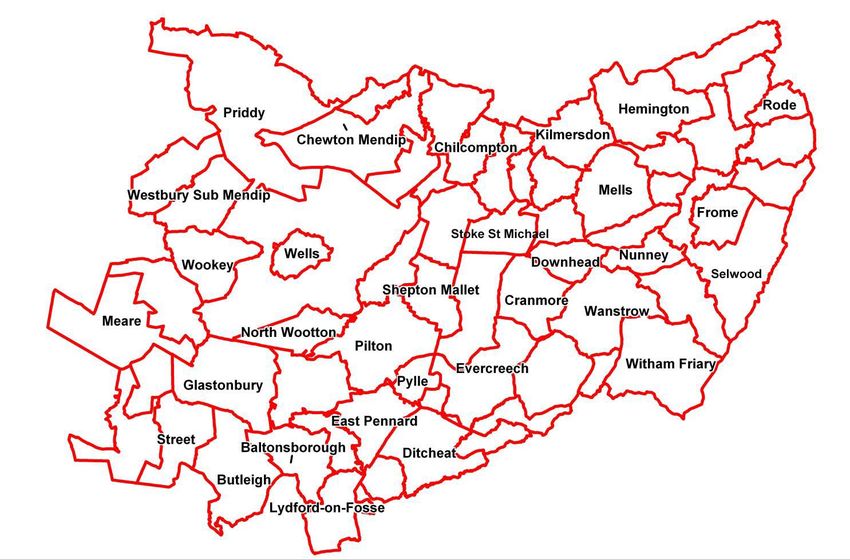
MAP OF THE DISTRICT
The Map below shows the area covered by Mendip District Council
1.0 INTRODUCTION
The Council’s street trading policy’s aim is to create a street trading environment
which complements premises based trading, is sensitive to the needs of
residents, provides diversity and consumer choice, and seeks to enhance the
character, ambience and safety of local environments.
The policy recognises the importance of street trading to Mendip and that it can
add to the vibrancy and vitality whilst not adding to nuisance and crime and
disorder.
This policy will be the subject of monitoring and review after 5 years.
1.1 WHAT IS STREET TRADING
Street trading means selling, exposing or offering for sale any article in a street.
The term ‘street’ includes any road, footway or other area to which the public
have access without payment.
Mendip District Council has adopted Schedule 4 of the Local Government
(Miscellaneous Provisions) Act 1982 for the whole of its area and has designated
all streets in the area as ‘consent streets’, meaning any person trading without a
consent commits an offence under this Act.
5Annex 3
The effect of this designation is that street trading in any street is prohibited,
subject to legal exemptions, without first obtaining a street trading consent from
the Mendip District Council.
The suitability of goods to be sold will be considered on a case by case basis with
reference to the principle aims of this legislation. The Council will be mindful and
take account of all relevant matters, including local shopping needs, diversity,
balance and conflict with nearby commercial shops and trading vehicles.
Applicants and consent holders should ensure that the articles being offered or
exposed for sale are not of a nature that may cause harm or offence and that the
manner of offering or exposing the articles for sale is not of a nature that may
cause harm or offence.
This includes all streets, car parks, parks and all adjacent paved, grassed and
ornamental areas.
Street trading includes the following activities:
• Trading from mobile and static structures, including kiosks
• Ice-cream vans (static and mobile)
• Mobile artists and musicians who sell their recorded work on the street
• Sale of Christmas Trees and other festive items
• Sale of arts, crafts and jewellery
• Sale of food and drink (any sale of alcohol will also require licensing under
the Licensing Act 2003)
1.2 STREET TRADING ON PRIVATE LAND
Street trading consents are required to trade in ‘streets’ as defined by the 1982
Act which includes private land, including (but not limited to) land owned, leased
or maintained by the Council, private roads, lay bys, car parks and industrial
estates;
“street” includes — any road, footway, beach or other area to which the public
have access without payment; and a service area as defined in section 329 of the
Highways Act 1980.
The issue of whether a specific place is subject to control by street trading will be
a legal question that will be considered on the individual circumstances
concerned.
6Annex 3
1.3 EXEMPTIONS
The 1982 Act contains a number of exemptions from the control of street trading:
• Pedlars acting under the Pedlars Act 1871
• Trading in a charter market or statutory market or fair
• Trading on a trunk road picnic area under Section 112 of the
• Highways Act 1980
• News vendors selling only newspapers or periodicals
• Petrol filling station forecourts
• Premises used as a shop or in a street adjoining premises so used and as
part of the business or shop
• Rounds men who have defined customers and defined routes
• Trading in a kiosk placed on, in or over a highway under the Highways Act
1980
• Operation of facilities for recreation or refreshment under the Highways Act
1980
• Undertaking a permitted street collection on behalf of a charity
1.4 LOCAL EXEMPTIONS
Mendip District Council has decided to exempt trading that takes place in certain
circumstances, each case will be judged on its own merits. The exemption
applies to trading taking place in the following circumstances:
• Fetes, carnivals or similar community based and run events, organised for
charitable purposes and/or where there is no private gain by the organisers
• Non-commercial or charitable events
• Farmers markets, including producer-managed marketplace for local
producers to sell their own produce direct to local people
• Sales of articles by householders on land contiguous with their homes
• Any trading that takes place on privately managed shopping centres
1.5 TYPES OF STREET TRADING
The types of consents issued by this Authority are detailed below:
Static Consents – This will be for those wishing to trade on a street, at the same
location, more than twice a week and/or for more than 4 hours a day. This
consent is likely to require planning permission.
Examples would be; burger/snack vans in laybys by the side of the road.
7Annex 3
Short Term Mobile Consents - This will be for those wishing to trade regularly at
the same location, not more than twice a week and less than 4 hours a day. A
separate licence would be required for each location traded in. This consent will
not usually require planning permission.
Examples would be; food vendors such as fish and chips vans serving rural
locations.
Hawker (sometimes known as ‘itinerant’) - This will be for those wishing to
trade at different locations within the district, for no longer than 20 minutes and do
not return to the same location or within 200m, on the same day. No planning
permission is required.
Examples would be; sandwich vendors and ice creams vans.
1.6 IDLING OF STATIONARY VEHICLES
Mendip District Council actively discourage the unnecessary idling of stationary
vehicles and may take action under other legislation where it is considered that
either nuisance, detriment to amenity or potential health effects are likely to be
caused. It is appreciated that it may not always be within the means of a hawker
or mobile van operator to invest in technologies which do not rely on the vehicle’s
engine or other source emitting pollutants whilst powering the trading function.
However where opportunities to invest in more environmentally friendly
technologies arise, then these should be pursued. Where a vehicle does not
employ environmentally friendly technologies the applicant should ensure that
they can demonstrate the necessity for vehicle idling and that the locations and
durations chosen are commensurate with avoiding pollution impacts on local
communities. Further advice can be obtained from the Environment and
Community Protection Team.
1.7 THE APPLICATION PROCESS
A completed application must be submitted to the Licensing Team which includes
a fully completed application form, fee and other required documents as specified
on the form.
Applicants must clearly display two public notices at the location they wish to
trade from for the duration of the representation period. Hawker applications will
be advertised solely on the Council’s website.
A Street Trading application pack can be obtained from the Mendip District
Council Website www.mendip.gov.uk or by contacting the Licensing Team on
0300 303 8500 or by emailing licensing@mendip.gov.uk
8Annex 3
Only once a fully completed application is accepted will the consultation process
of 14-days begin.
The application will be sent out for consultation to the following agencies listed
below, as well as being advertised on the Council’s website.
• Avon and Somerset Constabulary
• Somerset County Council
• Devon, Plymouth, Somerset and Torbay Trading Standards
• District Councillor for the Ward (responsible for the location proposed)
• Town or Parish Council (responsible for the location proposed)
• Mendip District Council Internal Departments: Neighbourhood Services,
Markets Team, Build Enforcement Technical Team, Environmental Health
1.8 CONSIDERATIONS TAKEN INTO ACCOUNT WHEN ISSUING A
CONSENT
• There is enough space for the trading to take place without causing an
inconvenience to persons using the street
• Is the applicant fit and proper to hold a consent
• Has the applicant previously been refused or had a consent revoked by
this or any other Authority
• The grant of a consent would not promote crime and disorder, public
nuisance, or have an adverse effect on public safety
• That the grant of a consent would have a positive, rather than a negative
impact in the locality. This may include matters of corporate priority to the
Council such as air quality.
• The specific products sold by an applicant
• The quality of the products being sold
• Whether the application will give the consumer more choice in terms of
products, quality and price
If no representations are received at the end of the representation period the
consent will be granted, a physical copy of the consent will be sent to the
applicant and should be clearly displayed on site.
9Annex 3
If representations are received, mediation will be carried out between all parties
concerned but there is no right of appeal in legislation against the final decision
made by the Licensing Authority.
If an application for a street trading consent is refused, the application fee will be
refunded to the applicant minus an administrative charge.
1.9 RENEWALS
Applicants must submit a renewal application, at least four weeks before the
expiry of their current consent if they want to continue trading. If a renewal is not
received before the expiry of the current consent, a new application will be
required, with full consultation. The trader will not be permitted to trade until the
new consent is issued.
2.0 TRANSFER OF CONSENT
There is no legal provision for the transfer of a consent.
2.1 SURRENDER OF CONSENT
If a consent holder no longer wishes to hold a street trading consent they can
surrender it by returning to the Licensing Team and it shall cease to be valid.
2.2 COMPLIANCE
Any complaints will be investigated and appropriate action taken.
Persons trading without a street trading consent, applicants who fail to disclose
relevant information, traders who breach conditions or display unsuitable
behaviour will be the subject of enforcement action in accordance with the
Council’s Corporate Enforcement Policy.
There are a range of enforcement actions available, including but not limited to; a
verbal warning, a written warning, prosecution and revocation of consent.
10Annex 3
APPENDIX A - STANDARD CONDITIONS
1 The Consent Holder shall only street trade in goods specified by the
Consent.
2 Street trading must only be carried out during the hours of the Consent.
3 A Consent Holder is restricted to street trading in the locations identified on
the Consent.
4 Short Term Mobile Street Trading within Consent Streets is restricted to a
four hour duration, after which the van/cart/barrow or vehicle must be
moved a minimum distance of 200 metres before Street Trading again.
Return is prohibited within 24 hours. Amendments to these time
restrictions may be considered with prior written approval from the
Licensing Team.
5 At the end of each Street Trading period the van/cart/barrow or other
vehicle shall be removed from the Street Trading location within one hour
of the end of the Street Trading time shown on the Consent.
6 The Street Trading Consent should be displayed on or in the
van/cart/barrow or other trading vehicle during all Street Trading activity
and available for inspection by a police officer or other officer authorised by
the Council.
7 The Consent Holder shall immediately notify the Council of any changes
affecting the terms of the original Consent.
8 Consent Holders are prohibited from setting out their goods or advertising
material on the surface of the carriageway or pavement.
9 The Consent Holder shall provide sufficient containers as may be
necessary for the depositing of all litter arising from their trade.
10 The Consent Holder must ensure that the immediate vicinity of their Street
Trading activity is kept free from litter at all times during trading and all
sites must be left free from litter and waste when trading has ceased.
11 Consent Holders must not damage in any way, either wilfully or
negligently, any part of the Consent Street where they trade.
12 All Street Trading units must be equipped with safe and adequate lighting
when trading during the hours of darkness.
11Annex 3
13 The use of loud speakers, horns, flashing lights or any other instruments
used to attract the attention of potential customers is not permitted, with
the exception of ice cream vans.
14 The holder of a Street Trading Consent must hold Public Liability
Insurance policy with a limit of indemnity of up to £5 million for any one
incident.
15 The holder shall produce the certificate of insurance and any renewal
thereof, within 24-hours of the original expiry date.
16 If the Consent Holder trades from any Council owned land, they must
indemnify the Council against any claims in respect of injury, damage, or
loss arising out of the grant of this consent.
17 Mobile ice cream vans and fast food takeaways are not permitted to
trade within 200 metres of the curtilage of any school or education
establishment.
18 Where gas fuelled appliances are used by a trader, the complete gas
installation should be examined for soundness at least once per year. The
correct operation of each gas appliance, including any safety devices
fitted, must be checked annually by a competent person. This person must
be Gas Safe registered for the type of equipment they are testing and they
type of gas supply being used e.g. commercial mobile catering equipment
and LPG gas supply. A copy of the competent person’s report must be
given on new applications and with a renewal application.
19 The consent is personal to the trader and is not transferrable.
20 The consent holder may only site the permitted structure at the approved
location(s).
21 The consent holder shall write to the Council giving details of the new
home address or new address of the registered office within seven days of
change.
22 The consent holder shall write to the Council giving full details of any
conviction(s), caution(s) or fixed penalty notice(s) imposed within seven
days of the imposition of the conviction(s), caution(s) or fixed penalty
notice(s).
23 In addition to these conditions, the council may also impose conditions
which are specific to individuals consents to trade.
12You can also read


