MFA - School of Visual Arts
←
→
Page content transcription
If your browser does not render page correctly, please read the page content below
Social Documentary Film
MFA
Documentary                                                    Located in the heart of New York City, “SocDoc” is
                                                             a part of the most active documentary film commu-

film has
                                                             nity in the world. Students work directly with accom-
                                                             plished filmmakers—who are faculty, mentors and

changed
                                                             collaborators—giving students the benefit of their
                                                             expertise. The department also works to foster a
                                                             direct line into the production community that will be

dramatically
                                                             their best network after graduation.
                                                               SocDoc alumni have made an impressive impact.
                                                             Alumni films have received more than a million dol-
                                                             lars in production funding from Sundance Institute,
over the years, evolving into a fully realized art form.     ITVS, Just Films/Ford Foundation, Jerome Founda-
Growing audiences watch nonfiction in theaters, on TV        tion, CAAM, IDFA Bertha Fund, Chicken & Egg Pic-
and online to see fresh global stories, and be inspired by   tures, Tribeca Film Institute Frameline, and others.
the lives of change-makers, artists and everyday people.     They have won an Emmy and the Student Academy
These stories delve into our history, inspire action and     Award, and received multiple nominations. Alumni
let us discover distant regions and our own neighbor-        have earned industry support via international film
hoods with a fresh eye. But, as evolutions in technology     markets, have been broadcast on TV, received the-
make it easier to make film, more content competes for       atrical release in the U.S. and around the world,
the opportunity to be seen. So, it becomes vital to have     received countless views online, and played top-tier
the talent to produce a film that stands out. Those with     festivals including Berlin, IDFA, SXSW, Hot Docs,
true fluency in the form—and a network of like-minded        Busan and Tribeca.
artists and mentors—have a crucial advantage.                  Now in our tenth year, MFA SocDoc is proud to
   SVA’s Social Documentary Film MFA program fos-            inspire and support the next generation of documen-
ters filmmakers who are technologically and artistically     tary filmmakers. No matter a film’s topic or style—
assured. Students make many films throughout the             personal, political, comic, or revolutionary—docu-
program; each allows them opportunities to experiment        mentary increases our awareness of the world, and
and hone their craft with support, guidance and cri-         ourselves. At SVA, we are committed to realizing that
tique. They are introduced to the industry through an        potential, and we welcome the opportunity to add you
unparalleled faculty of active, award-winning filmmak-       to our community of storytellers.
ers, as well as through internships, guest speakers, film
festivals, screenings, and other events.                                                 —Maro Chermayeff, chair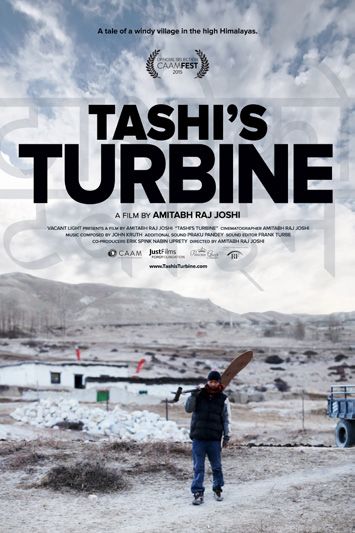
About the
Program
SVA’s MFA program in Social Documentary
Film provides a solid foundation in the funda-
mentals of nonfiction filmmaking, as well as
an immersion into the critical and analytical      the art of documentary film, while mastering
process necessary to conceptualize and             the tools and techniques needed to tell com-
develop significant, socially relevant film.       pelling stories. Each student will complete
This program represents the convergence of         five to seven documentary shorts, in addition
the art of filmmaking, journalistic research,      to other class assignments.
and social activism.                                   During the second year, students focus on
     Our program is open to qualified students     their thesis films, and courses are designed
from varying backgrounds—prior filmmaking          to support them in their production. Each
experience is encouraged but not required.         student will direct his or her own film, primarily
Ultimately, we are looking for passionate,         filmed in the summer between first and second
insightful individuals who know how to tell        year, and serve as a key production crew-
a great story, and are eager to learn how best     member on at least one other thesis project.
to share these stories through documentary.        These thesis projects must be reviewed and
     Working with documentary filmmakers           approved by the thesis committee and the
as teachers and mentors in a collaborative         department chair in order for the student to
environment, the MFA Social Documentary            be eligible for degree conferral.
Film program will not only teach students              Degree candidates must successfully
how to tell a story, it will guide them toward     complete 60 credits, including all required
a lifelong career in filmmaking.                   courses, with a cumulative grade point
     The first year’s core curriculum is devoted   average of at least 3.0. A residency of two
to exploring the past, present and future of       academic years is required.

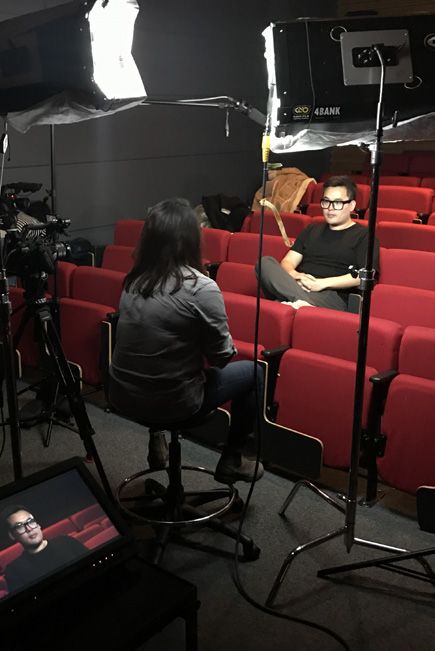
                                                                  Interview workshop featuring alumnus Poon
                                                                  Watchara-Amphaiwan (2015).

4                                                                     MFA SOCIAL DOCUMENTARY FILM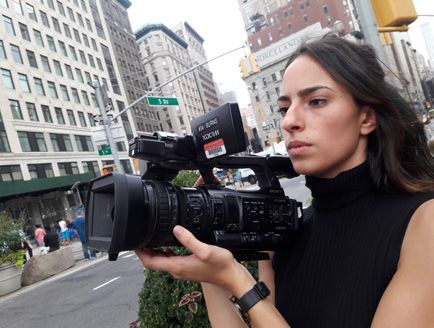
CASE STUDY
Amitabh Joshi & Erik Spink
Vacant Light
Founders
Illuminate
Stories in the
Shadows Amitabh Joshi (top)
and Erik Spink both
graduated from MFA Social
Documentary Film in 2013.
The Himalayan village of Namdok is remote,
windswept and cold. Largely neglected by the
government of Nepal, it lacks basic infrastructure,
including electricity. But Tashi Bista, who grew
up in Namdok, has a dream—to bring light to his
village by installing a makeshift wind turbine. His
mission is a beacon of hope for his community,
where lives can be changed by just one light.
6 MFA SOCIAL DOCUMENTARY FILM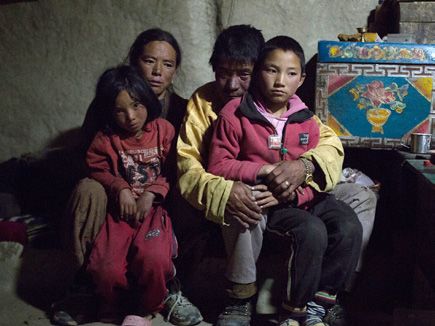
This is the story of Tashi’s Turbine, a
    ABOVE: Amitabh and Erik in the
    SocDoc facilities. OPPOSITE: The     feature-length documentary directed by
    poster from the film Amitabh began   Amitabh Joshi and produced by Erik Spink,
    as his thesis.
                                         who both received their MFAs from SVA in
                                         2013 and together founded the production
                                         company Vacant Light shortly after gradu-
                                         ating. The film started out as Joshi’s senior
                                         thesis. Through support from the Princess
                                         Grace Foundation, the Ford Foundation and
                                         a grant for student artists, Joshi was able to
                                         make the story into a feature-length docu-
                                         mentary. Collaboration with Spink as well as
                                         consultation with the SocDoc faculty enabled
                                         Joshi to “truly find the essence of Tashi’s
                                         story.” Additional grants followed and the
                                         film had its world premiere at the Center for
                                         Asian American Media Festival (CAAMFest)
                                         in 2015 and a broadcast premiere on the PBS
                                         WORLD Channel in 2016.
                                             Through Vacant Light, Spink and Joshi
                                         have produced a variety of projects, including
                                         feature-length documentaries, digital educa-
                                         tion programs, and original branded content
                                         for companies, institutions and non-profits.

8                                                         MFA SOCIAL DOCUMENTARY FILM     9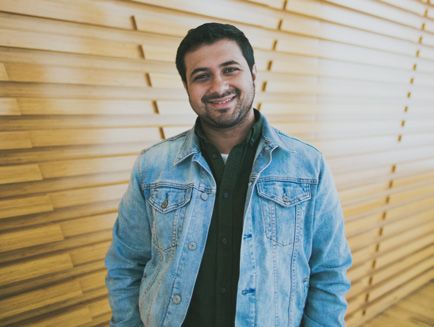
The topics covered in the films produced          because he wanted to build a foundation in
through Vacant Light vary widely, but there       documentary production. “I was in search
are certain themes that do emerge, “From          of a program that allowed a comprehensive
the start of Vacant Light we have focused on      filmmaking experience, one in which there
stories of so-called ordinary people scaling      was space to explore,” he says.
impossible mountains. We aim to illuminate            Joshi explains that some students come
the stories that sit humbly in the shadows.”      to the program with concrete ideas for films
    Joshi and Spink credit SVA and the            that are driven by activism, “but others end
storytelling skills they learned here for their   up finding something more character-driven,
ability to work in several different modes of     and others might decide on a personal film.”
nonfiction film. Both men came to the MFA         He says that the story at the heart of Tashi’s
Social Documentary Film program soon after        Turbine started as a film that focused on a
finishing their undergraduate degrees. Spink      character, but themes of alternative energy
came to the program with a background in          and sustainability naturally emerged.
cinema history and theory, but “I felt like I         Whether a student’s motivation for
needed more time developing my skills as a        documentary film derives from a passion for
director and producer,” he explains. “I was not   journalism, activism, the art of filmmaking—
truly learning how to make a film. I wanted       or any combination of these—the SocDoc
that experience and a network of mentors.         Department is very accommodating. As Spink
Once I learned about the work of Maro Cher-       says, “Each student finds a mode of filmmak-
mayeff [chair of SocDoc], I was determined        ing that is most suited for him or her and
to enroll.” Joshi was drawn to the program        pursues that road intensely into the thesis
                                                  year and beyond.” That description certainly
                                                  applies to Tashi’s Turbine, as well as to the work
Stills from Tashi’s Turbine.                      the two do at Vacant Light (vacant-light.com).

                                                                                                 11
Curriculum/                                                                               Second Year
Sample Program                                                                            FALL
                                                                                           Process and Style III
                                                                                                                                     CREDITS
                                                                                                                                           0
                                                                                           Thesis: Directing                              6
Graduates must complete 60 credits, including all                                          Thesis: Editing                                3

required courses and the thesis project. A matriculation                                   Thesis: Producing
                                                                                           Visiting Artists: Documentary Masters
                                                                                                                                           3
                                                                                                                                           3
of two academic years is required.
                                                                                          SPRINGCREDITS

First Year
                                                                                           Process and Style IV                           0
                                                                                           Thesis: Directing Lab                          6
                                                                                           Thesis: Editing Lab                            6
                                                                                           Thesis Review and Presentation                 3

FALLCREDITS
 Cinematography and Sound I	                                                       3
 Directing I	                                                                      3
 Editing I	                                                                        3
 Editing, Camera and Sound Labs I                                                  0
 Process and Style I                                                               0
 Producing I                                                                       3
 Visionary Journalism I                                                            3

SPRINGCREDITS
 Cinematography and Sound II                                                       3
 Directing II                                                                      3
 Editing II	                                                                       3
 Editing, Camera and Sound Labs II                                                 0
 Process and Style II                                                              0
 Producing II                                                                      3
 Thesis: The Pitch                                                                 0
 Visionary Journalism II                                                           3

                                      Students filming on the streets of New York City.

12                                           MFA SOCIAL DOCUMENTARY FILM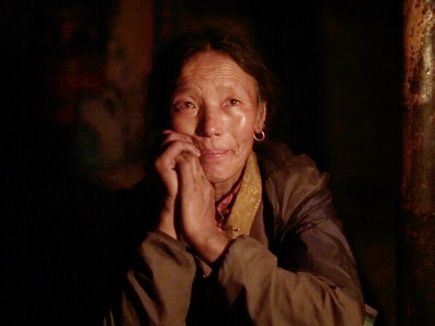
Course
                                                                                                     EDITING I & II
                                                                                                     If viewing a film is understood to be an interpretive process, then the orchestration of image
                                                                                                     and sound, and the rate at which information is disseminated, is critical to the endeavor. The

Offerings
                                                                                                     editor transforms footage from observation to an engrossing experience. These courses exam-
                                                                                                     ine the critical role that editing plays in nonfiction programs, and look at how the editing room
                                                                                                     is often the arena where the structure and narrative arc are created. Classic and contemporary
                                                                                                     documentaries will be screened to provide students with a fundamental understanding of edit-
                                                                                                     ing styles, aesthetics and techniques. Topics will cover a wide range of subjects—from continu-
                                                                                                     ity of motion to montage, jump-cut,
                                                                                                     music usage and program struc-              EDITING, CAMERA AND SOUND LABS
                                                                                                     ture. Finally, these courses will           In addition to the core classes and the Process and
                                                                                                     explore voice-over narration, sound         Style guest lecture series, students in the first year
A sample of our course descriptions follows.                                                         design, music and other postpro-            attend two lab sessions per week. One lab covers camera

All course descriptions can be found online at                                                       duction techniques to further the
                                                                                                     story and deepen the experience.
                                                                                                                                                 and sound, and one covers editing—both labs deal
                                                                                                                                                 with the nitty-gritty of how to use all of the equipment.
sva.edu/mfasocdoc/curriculum.                                                                                                                    The labs provide students with hands-on opportunity
                                                                                                                                                 to get comfortable using microphones, cameras and
                                                                                                     PROCESS AND STYLE                           editing software, especially AVID, as storytelling tools,
                                                                                                     I, II, III & IV                             while also opening up the core classes to discussions
                                                                                                     Independent voices from the field           of aesthetics and style.
                                                                                                     will share their professional expe-
CINEMATOGRAPHY AND                                                                                   riences and offer diverse perspectives in documentary             PRODUCING I & II
SOUND I & II                                                                                         film. Primarily in this course, documentary filmmakers            Multifunctional and multidimen-
Success in the film industry requires fluency     DIRECTING I & II                                   will screen their new films and discuss their careers.            sional in approach, the role of a doc-
in the cinematic language and an immersion        The potency of any documentary relies on           Additional lecturers will discuss a range of specialized          umentary film producer is to initiate,
in the world of production techniques. Begin-     the instincts of the director, whose acuity        topics, including new technologies and new platforms;             coordinate, supervise and control
ning with the use of image and sound as the       of mind and eye must be able to translate          film festivals and distribution; the relationship between all matters in the realization of a
tools of storytelling, these courses focus on     intellectual content into an aesthetic experi-     subject and filmmaker; the pitch; job opportunities and           film project, such as fund-raising
gaining a comprehensive grasp of the tech-        ence. These courses will address topics that       career advancement. These courses are required in                 and hiring key personnel. Beginning
nical and creative demands of documentary         include how to most effectively tell a story,      both years of the program.                                        in the first semester, students will
filmmaking. Through class and lab sessions,       how to conduct meaningful and informative                                                                            receive a full grounding in what
a range of equipment—cameras, tripods,            interviews and how to navigate the relation-                                                   they need to know to proceed with their first assigned
lighting instruments, audio recorders and         ship between subject and filmmaker. With                                                       projects. All key aspects of documentary production will
microphones—will be explored. Students will       an emphasis on originality as it applies to                                                    be covered in these courses, from pitch, grant writing
then focus on a broad spectrum of nonfiction      the documentary, students will explore new                                                     and budget preparation, to production set-up, account-
techniques, including how to use camera           media and a variety of directing styles, tones                                                 ing, scheduling, crew management and postproduction
angles, sound and lighting to convey meaning      and techniques. Included will be an extensive                                                  workflow. Students will learn how to analyze a project
and further their narrative. Finally, on-camera   study of documentary film history and theory,                                                  and apply this analysis in cost and project manage-
interviewing skills—the essence of much of        which will examine a wide range of texts and                                                   ment, from preproduction rights to editing and film
the documentary experience—will receive           films and look at such genres as realism,                                                      distribution. In addition, they will learn how to imple-
a thorough examination.                           formalism, cinéma vérité, essay, feminism                                                      ment production arrangements singular to the field of
                                                  and postmodernism. Class assignments will                                                      documentaries. How to read, understand and negotiate
                                                  emphasize the interview technique, with                                                        contracts with vendors, crewmembers and distributors
                                                  exercises involving interviews within the                                                      will be included.
                                                  class itself as well as with family and friends,
                                                  and “man on the street” interviews with
                                                  anonymous pedestrians.

14                                                                  MFA SOCIAL DOCUMENTARY FILM                                                                                                           15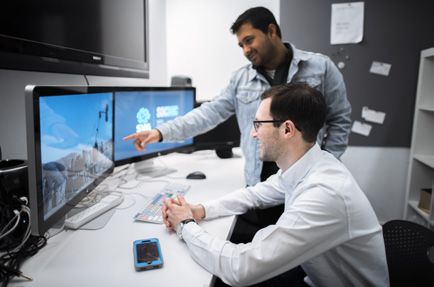
THESIS: THE PITCH                       VISIONARY JOURNALISM I & II                                   THESIS: EDITING
Getting an idea off the ground and         The field of social documentary film is as much about      On average, in documentary
maintaining the momentum is often journalism as it is about filmmaking; therefore, it is              films there is a ratio of 10 hours
one of the most difficult facets of a      paramount that the journalistic process be compre-         of footage shot for every minute
production, even for talented film-        hensively examined. From finding and researching           in the final film. This course will
makers. Yet without the proverbial         a story to writing a treatment and a shooting script,      address the challenge of managing
green light, even the best ideas           learning and adhering to established journalistic ethics   the sheer bulk of media that will        THESIS REVIEW AND PRESENTATION
atrophy by the wayside. Using their        is of primary importance. This course will engender        have been amassed for the thesis         During their final semester, students will present their
own project ideas, students will           an understanding of the ethical standards inherent in      film. While shooting may continue        thesis projects to a team of faculty advisors for review,
articulate their vision clearly and        print and broadcast journalism and nonfiction writing      throughout much of this period,          advice and critique, and will introduce their documen-
concisely and deliver this pitch to        as they relate to social documentary. Working within       students will be required to block       taries to the film community at large.
a panel of film industry                                               these structures, we will      out the basic sequence from what
professionals and            THESIS: DIRECTING                         approach how to successfully   has already been filmed, and hew         VISITING ARTISTS:
faculty. Students will       This course will guide students           tell a story—from origin of    the narrative together into a rough      DOCUMENTARY MASTERS
answer questions and         through the process of bringing           concept to finished project.   cut. The goal is to bring projects       To help forge relationships between experts in docu-
address comments             their thesis ideas and script to                                         into readiness for fine-tuning and       mentary film and MFA SocDoc students, these sem-
posed by the panel.          fruition. Of central focus will be                                       finishing in the spring semester.        inars offer in-depth study and discussion of the craft
The course objectives        the aesthetic and overall style           THESIS:                                                                 of documentary storytelling. Seminar topics include
are to build confidence      considerations for thesis films.          DIRECTING LAB                  THESIS: EDITING LAB                      creative producing and personal filmmaking, and vary
in the presentation          Emphasis will also be placed on the       Bolstered by critiques of      This course will encompass all of        each year based on student interest and changes in
of ideas and master a        student-director’s communication          professional film directors    the finishing touches for the thesis     the field.
professional pitch, in       with the producer, cinematographer,       and fellow classmates,         film projects, including opening
addition to securing a       sound recordist and other personnel students will gain additional        titles, closing credits, sound editing   THESIS: PRODUCING
well-conceived topic         who will assist on the project and        insights and the technical     and mixing, visual effects, color        Half of producing is getting the film made; the second
for their graduate           help to make each student’s thesis        resources to develop their     correction and film scoring. A pro-      half is getting the film seen. Filmmakers need to know
thesis film.                 vision a reality.                         thesis films. Directors’       fessional editor, under whose guid-      how to reach their audience; and how to maximize in
                                                                       cuts of thesis films will be   ance students will strengthen their      an ever-changing marketplace. In this course, stu-
                                                                       screened and analyzed,         editorial acumen while completing        dents will build upon the previous Producing classes to
                                                                       and students will have the     their thesis films, will supervise the   strengthen their skills at conceiving and pitching ideas
                                                                       opportunity to incorporate     editing lab.                             and executing those projects on budget. Using their
                                                                       valuable suggestions into                                               thesis films as a model, students will also discuss the
                                                                       the final work.                                                         division of distribution rights, and strategies for fund-
                                                                                                                                               ing, distribution and marketing, and finding the most
                                                                                                                                               advantageous position in the marketplace.

16                                                                   MFA SOCIAL DOCUMENTARY FILM                                                                                                      17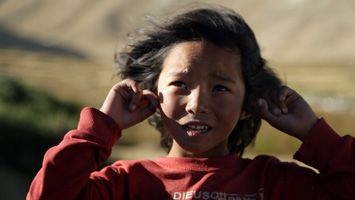
Alumni Faculty
Notable
Daniela Alatorre
head of documentary
Alexa Karolinski
director, Oma & Bella
Bao Nguyen
director, Live From To learn more about the faculty members
programming, Morelia Film
Festival (Mexico)
(Berlin International
Film Festival)
New York! (NBC)
visit: sva.edu/mfasocdoc/faculty.
David Osit
Adam Banicki Mark Kendall director, Thank You for
VP of video, Fatherly.com director, La Camioneta Playing (PBS POV, Maro Chermayeff Micah Fink Robert Richman
(SXSW Film Festival) Emmy Winner 2017) chair; director, Half the Sky; filmmaker, The Abominable cinematographer,
Sasha Friedlander producer, Marina Abramovic: Crime; Mann v. Ford The September Issue;
director, Where Heaven Meets Olga Lvoff Enes Ozdil The Artist Is Present Paradise Lost
Hell (PBS), Grit (HotDocs) director, When People Die documentary commissioning Richard Hankin
They Sing Songs (NHK Japan; producer, TRT World (Turkey) Julie Anderson editor, The Jinx Jerry Risius
Yuqi Kang Russian theatrical release) executive producer, cinematographer, The Devil
director, A Little Wisdom The Talk (PBS) Tom Hurwitz, ASC Came on Horseback; Anthony
(Busan Film Festival) cinematographer, Bourdain: No Reservations
Axel Baumann Queen of Versailles;
cinematographer, Wild Man Blues Amy Schewel
Liberia: An Uncivil War producer, archival researcher
Amitabh Joshi Soundtracks: Songs that
Alan Berliner director, Tashi’s Turbine Defined History
filmmaker, Nobody’s Business;
First Cousin Once Removed Ross Kauffman E. Donna Shepherd
Documentary film
filmmaker, Born into Brothels editor, Soundbreaking
Mira Chang (CNN Films)
producer, A Path Appears Beth Levison
is like a perfect
producer, 32 Pills: Toby Shimin
Lori Cheatle My Sister’s Suicide editor, Buck;
producer, 51 Birch Street; My So-Called Enemy
marriage between
Captivated: The Trials of Mark Mandler
Pamela Smart production sound, Erik Spink
Going Clear: Scientology producer, Tashi’s Turbine
my love for images and
Peter Chelkowski and the Prison of Belief
filmmaker, Carnival Roots J. T. Takagi
Kat Patterson sound recordist,
my passion for social
Ann Collins cinematographer, Strong Island
editor, Swim Team 12th and Delaware
Deborah Dickson Samuel D. Pollard
issues. So this program filmmaker, Lalee’s Kin;
Ruthie & Connie
filmmaker, 4 Little Girls,
When the Levees Broke
seemed perfect.”
Michael Epstein Thom Powers
filmmaker, MAKERS: Once and programmer, Toronto
For All; LennoNYC International Film Festival;
artistic director, DOC NYC
—Bao Nguyen, MFA 2011
18 MFA SOCIAL DOCUMENTARY FILM 19Application
Below is just a sample
Lecturers of guest lecturers who
have spoken with our
students.
Robyn Hutt
truTV
Julie Goldman
Life, Animated
Process
APPLICATION REQUIREMENTS
Michael Kantor Lauren Greenfield For detailed instructions, visit: sva.edu/grad/howtoapply
& Susan Lacy (retired) The Queen of Versailles Online Application and $80 Application Fee: sva.edu/apply
PBS American Masters Statement of Intent/Personal Statement
Zachary Heinzerling
Résumé
Simon Kilmurry Cutie and the Boxer
International Documentary Letters of Recommendation
Association Kirsten Johnson Official College Transcript
cinematographer
Christine Le Goff Some international applicants may be required to submit the following:
ZED (France) Ellen Kuras Proof of English Proficiency
cinematographer Copy of Permanent Residency Card
Sheila Nevins (retired)
Declaration of Finances
& Nancy Abraham Zhao Liang
HBO Documentary Behemoth Verification of Finances
Foreign Transcript Evaluation
Molly Thompson Ross McElwee
A&E IndieFilms Sherman’s March DEPARTMENTAL REQUIREMENTS
For specific guidelines about these requirements, visit: sva.edu/grad/deptreq
FILMMAKERS Muffie Meyer Portfolio (video sample up to 10 minutes)—accepted at svagrad.slideroom.com
Grey Gardens
Writing Sample (documentary treatment)
Natalia Almada
El General Brett Morgen
Kurt Cobain: Montage of Heck DEADLINES
Joe Berlinger For information on application deadlines, visit: sva.edu/grad/timeline
Paradise Lost D. A. Pennebaker &
Chris Hegedus IMPORTANT LINKS
FILM INDUSTRY Doug Block Dont Look Back FAQ: sva.edu/grad/faq
51 Birch Street
International students: sva.edu/grad/intl
Vee Bravo & Yoruba Richen
José Rodriguez Marshall Curry The New Black Tuition and fees: sva.edu/tuition
Tribeca Film Institute If a Tree Falls Visit SVA: sva.edu/grad/visit
Nanfu Wang
Tamara Gould Abigail Disney Hooligan Sparrow
ITVS Fork Films
Frederick Wiseman
Judith Helfand Yance Ford Titicut Follies
Chicken & Egg Pictures Strong Island
Pamela Yates
Beth Hoppe Alex Gibney Granito
ABC News Taxi to the Dark Side
20 MFA SOCIAL DOCUMENTARY FILM 21Contact Us We encourage applicants to visit our department. Contact us
directly to schedule a department tour or sign up to attend an
Information Session. For more information and to register,
ACCREDITATION
The School of Visual Arts has been autho-
rized by the New York State Board of Regents
The Interior Design program leading to the
Bachelor of Fine Arts in Interior Design is
accredited by the Council for Interior Design
go to: sva.edu/grad/visit. (www.highered.nysed.gov) to confer the Accreditation (accredit-id.org), 206 Grand-
If you have any questions about the application process, degree of Bachelor of Fine Arts on graduates ville Avenue, Suite 305, Grand Rapids, MI,
contact Graduate Admissions at 212.592.2107 or email: of programs in Advertising; Animation; Car- 49503-4014.
gradadmissions@sva.edu. tooning; Computer Art, Computer Animation
and Visual Effects; Design; Film; Fine Arts; The Master of Arts in Teaching in Art
Maro Chermayeff, chair Illustration; Interior Design; Photography and Education program is accredited by the
Rose Vincelli Gustine, director of operations Video; Visual and Critical Studies; and to con- Council for the Accreditation of Educator
Timothy Doyle, assistant to the chair fer the degree of Master of Arts on graduates Preparation (CAEP).
Kristian Gonzales, senior systems administrator of the programs in Critical Theory and the
Joseph Eisenstein, video production manager Arts; Curatorial Practice; Design Research, The Master of Professional Studies in Art
Writing and Criticism; and to confer the Therapy degree program is approved by the
Tel: 212.592.2919 degree of Master of Arts in Teaching on grad- American Art Therapy Association, Inc., and
Email: mfasocdoc@sva.edu uates of the program in Art Education; and as such meets the Education Standards of
Site: sva.edu/mfasocdoc to confer the degree of Master of Fine Arts the art therapy profession.
Department site: mfasocdoc.sva.edu on graduates of programs in Art Practice;
Art Writing; Computer Arts; Design; Design
facebook.com/SVAMFASocDoc for Social Innovation; Fine Arts; Illustration CREDITS
twitter.com/socdoc as Visual Essay; Interaction Design; Photog- © 2018, Visual Arts Press, Ltd.
instagram.com/SVASocDoc raphy, Video and Related Media; Products Executive creative director:
vimeo.com/svasocdoc of Design; Social Documentary Film; Visual Anthony P. Rhodes
Narrative; and to confer the degree of Master Creative director: Gail Anderson
of Professional Studies on graduates of the Design: Ryan Durinick
programs in Art Therapy; Branding; Digital Editorial: Sheilah Ledwidge, Abby Kreh
Photography; Directing; Fashion Photogra- Case study writer: Rachel Leff
phy. Data required by the U.S. Department of Case study photographer: Jeremy Cohen
To be in close
Education on “Gainful Employment” for each
of the above programs may be found on each
individual program page at sva.edu/ge. The School of Visual Arts does not discrimi-
proximity The School of Visual Arts is accredited by
the Middle States Commission on Higher
nate on the basis of gender, race, color, creed,
disability, age, sexual orientation, marital sta-
tus, national origin or other legally protected
and receive feedback from so Education (msche.org), 3624 Market Street,
Philadelphia, PA 19104, 267.284.5000. The
Commission on Higher Education is an insti-
statuses.
The College reserves the right to make
many accomplished faculty tutional accrediting agency recognized by the
U.S. Secretary of Education and the Council
changes from time to time affecting policies,
fees, curricula and other matters announced
members really helps you find
on Higher Education Accreditation. in this or any other publication. Statements in
this and other publications do not constitute
The School of Visual Arts is an accredited a contract.
your voice as a filmmaker.”
institutional member of the National
Association of Schools of Art and Design
(nasad.arts-accredit.org).
—Amitabh Joshi, MFA 2013
22 MFA SOCIAL DOCUMENTARY FILM 23School of Visual Arts 209 East 23rd Street, NYC sva.edu/grad
You can also read


