"Mind YOUR mind on the Frontline" - National ...
←
→
Page content transcription
If your browser does not render page correctly, please read the page content below

Self-Care Handbook

Addressing the Psychological Needs of Frontline and
  Healthcare Staff in Response to the COVID-19
                     Outbreak

       “Mind YOUR mind
         on the Frontline”
                               Authors
                 Emma Bohan, Assistant Psychologist
           Louise Hannigan, Psychologist in Clinical Training
                   Marie Walsh, Senior Psychologist

                    Published 8th of April 2020
TABLE OF CONTENTS
                                                                                       Page

1. INTRODUCTION                                                                         2

2. PREPARATION PHASE                                                                    3

2.1 Overview                                                                            3
2.2 Possible Concerns During The Preparation Phase                                      3
2.3 Recommendations to Support Your Psychological Well-being during the Preparation     4
   Phase
3. ACTIVE PHASE                                                                         7

3.1   Overview                                                                          7
3.2   Psychological First Aid                                                           7
3.3   Possible Concerns During The Active Phase                                         7
3.4   Recommendations to Support Your Psychological Well-being During The Active        8
      Phase

4. STAFF BEING TESTED FOR COVID-19 & SELF-ISOLATION                                     11

4.1 Overview                                                                            11
4.2 Possible concerns whilst waiting on test results                                    11
4.3 Recommendations to Support Your Psychological Well-being while in Self-isolation    12
    (whether or not, you have COVID-19)
4.4 Receiving a COVID-19 diagnosis as a frontline worker                                13
4.5 Recommendations to Support Your Psychological Well-being Post-diagnosis             14

5. RECOVERY PHASE                                                                       15

5.1 Overview                                                                            15
5.2 Possible Concerns During the Recovery Phase                                         15
5.3 Recommendations to Support Your Psychological Well-being in the Recovery Phase      15

6. APPENDICES                                                                           18

6.1 Appendix A - Stepped Psychological Response                                         18
6.2 Appendix B - Brief Relaxation Exercises                                             19
6.3 Appendix C - Daily Schedule Template                                                20

7. ADDITIONAL RECOMMENDED RESOURCES AND WEBSITES                                        21

8. REFERENCES                                                                           22

                                              1
1. INTRODUCTION

Minding your Emotional Wellbeing and Building Resilience during the COVID-19 Outbreak
The wellbeing and emotional resilience of frontline and healthcare workers are key components of maintaining,
essential health care services during the Coronavirus (COVID-19) outbreak. In this handbook, ‘frontline’ can also refer
to family and carers, of individuals supported by services, so therefore, certain aspects of this handbook may be of
relevance to this group.

Anxiety, fear and panic is a common experience amongst frontline and healthcare staff during this time. This handbook
seeks to provide practical advice and resources to support the well-being of staff, during each psychological, response
phase to COVID-19. The psychological response phases are namely, (1) The Preparation Phase, (2) The Active Phase,
and (3) The Recovery Phase.

Self-care, is a necessity to protect healthcare workers, and build resilience in the face of psychological adversity. Self-
care, for frontline and health care workers, can be complex and challenging, given, that many individuals in these roles
are used to prioritising the needs of others, over their own needs.

A self-care strategy, should be multi-faceted and phased properly to support the sense of control and contribution of
health care providers, without making them feel unrealistically responsible for the lives of persons supported.

Most importantly, this is unprecedented. And, you are doing very difficult and very important work, by supporting
those most in need.

                       “Remember, it is okay, not to be okay”

                                                            2
2 PREPARATION PHASE

    2.1 Overview
During the early stages of the COVID-19 outbreak, you may experience different emotions at different stages. Over
the coming days and weeks, you may feel anxious thinking about what could happen, or you may feel a heightened
state of ‘readiness’. You may also feel stressed, scared, sad, overwhelmed, angry, guilty, helpless, or even numb, or
you may not feel any of these. There may be times when you feel you are coping well, and times you feel that you are
coping less well. These are all normal responses to an extremely, challenging situation. Everyone is different, and
everyone will experience different emotions, at different times.

    2.2 Possible Concerns During The Preparation Phase
The following, are a range of common concerns that may arise for you, at this time:

    a) Worry about what is to come - You may experience anxiety about the virus in relation to ‘what’ is coming and
       ‘when’ it is coming. ‘Not knowing’, and feelings of uncertainty, naturally give rise to anxiety. This is a normal
       response to unprecedented circumstances.

    b) Feelings of being overwhelmed from the news reports and social media - You may experience a range of
       emotions in response to the regular updates on the news and your social media feed. You may feel
       overwhelmed and helpless. Regular exposure, to worrying news, may give rise to feelings of anxiety.

    c) Worry about family, friends and loved ones - You may have children at home as a result of crèche or school
       closures. You may be concerned about the consequences of this, and whether or not you have appropriate
       measures in place for them while you are at work. You may fear the loss of vulnerable family members, friends
       and loved ones, from the disease. You may want to protect your vulnerable family members, friends and loved
       ones, but feel powerless, in how to do so.

    d) Fear of infection - You may worry about the implications of being in contact with the virus and the risk of
       infection for you. You may worry about the range of consequences of being directed to self-isolate and take
       time off work. You may also fear the implications of infection, for your family, your friends, and those closest
       to you.

    e) Increased demands in your work place - You will likely experience an increase in your workload, and a surge
       in care demands, during the course of this outbreak. For example, you could be asked to work longer hours,
       provide support to an increasing number of people supported, and you will likely need to keep up to date with
       best practice on information regarding the virus. You may be redeployed to new areas of work. This increase
       in demands may lead to feelings of exhaustion, or burn-out.

    f)   Financial circumstances - You may have valid financial concerns about a reduced household income over the
         course of the COVID-19 crisis. This may be for a variety of reasons, for example, you may have chosen to work
         fewer hours for childcare purposes, or your partner’s income may have been negatively affected by the
         economic effects of the crisis.

    g) Negative perceptions from others - You may worry about being associated with the disease when you are out
       in public. You may fear that you are going to be socially excluded, or placed in self-isolation, as a result of being
       associated with the disease.

                                                             3
2.3 Recommendations to Support Your Psychological Well-being During The Preparation Phase

To promote resilience and psychological wellness, in the context of the above challenges, you may wish to implement
some of the following self-care strategies:

    a) Be patient with yourself in the face of adversity

                     Increased stress and anxiety, in this uncertain time is a normal and understandable reaction. You
                     are facing a pandemic, which is largely, out of your control. Your body may respond to this
                     complicated situation by exhibiting signs of anxiety (i.e. increased heart rate, rapid breathing,
                     irritability, tense muscles, insomnia, headaches, sweating, shaking and/or worrying thoughts).

These signs of anxiety are simply telling you, that your body is trying to protect you from a threat (be that a real or
perceived threat). In response to the threat, your body triggers the ‘fight or flight’ response, whereby your body is
communicating to you, that you need to run away, or fight this threat. In doing so, your body prepares physically i.e.
through a burst of adrenaline and an increase in cortisol, which aims to energise you and make you alert. This in turn,
can lead to an increase in your heart rate and a change in breathing (which may feel scary at the time).

The key, here, is to remember that these feelings will pass. You will feel safe, calm, and contained again. In times of
increased anxiety, relaxation activities will help you to alleviate physical symptoms in the moment (see Appendices).

In addition, focusing on what you can control, as opposed to, what is outside your control, will help to reduce overall
anxiety levels during this time. Writing out a list of what is in your control during this uncertain time, will help you to
regain feelings of control. You may include, for example, planning and eating healthy meals, scheduling times to phone
and check-in on family, friends and loved ones, scheduling and following an exercise routine, and practicing self-care
as outlined in his handbook.

    b) Reduce time spent looking at fearful information on the news and social media

                        News, be that on the television, the newspaper or online, does not always present a balanced
                        account. Generally, news reports focus on the bad news (i.e. people who have died as a result
                        of the COVID-19 outbreak, as opposed to those who have recovered).

                       To prevent your mind and brain from being overwhelmed, reduce your time spent looking at
fearful information on the news and on your social media feed. Perhaps introduce a routine, whereby, you limit
yourself to checking the updates to once per day from accurate sites and sources.

    c) Practice basic bodily care and take time-out for refreshment

                      It is important to continue to meet your physical-care needs, in terms of basic bodily care and
                      refreshment. Eat, drink and sleep regularly. Take breaks. Keep to your structure and routine as
                      much as possible in terms of when, and how, you carry out these activities. Humans thrive on
                      structure and routine. Structure and routine foster feelings of, predictability and reassurance,
                      which are pivotal, during uncertain times.

You may also wish to schedule time on a daily basis to engage in a soothing or refreshing activity to encourage time-
out and down-time for your mind and body i.e. going for a bath to wind-down in the evening after work, practicing
meditation or mindfulness, or using a journal to note your daily gratitude list.

                                                            4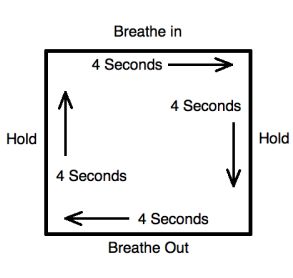
d) Avoid using unhelpful coping strategies

                      Unhelpful coping strategies may seem appealing in the moment, however, their perceived
                      benefits are normally short-lived.

                      For example, excessive caffeine, sugar, tobacco, alcohol and/or drugs. These items may provide
short term-relief, but, generally have negative longer-term implications i.e. energy drinks may provide you with a
burst of false energy, however you may feel a ‘crash’ shortly after.

    e) Regular peer consultation and supervision

                          Connect with your colleagues and receive support from them. A sense of connectedness, and
                          social support, is vital when facing adversity and challenging times. Attend and engage in
                          regular supervision, where possible.

                        Communicate in a manner which is wholly positive. Infectious outbreaks can isolate people
and result in fear and anxiety. Battle this through positive collaboration; communicate with your colleagues in an
optimistic manner, compliment your colleagues, and attempt to work together in a solution-focused style.

    f)   Practice relaxation exercises

                           Schedule relaxation activities into your daily routine and/or practice these during times of
                           increased anxiety. These exercises have a vast array of benefits for your mind and body.
                           These may include deep abdominal breathing, mindfulness, meditation, and progressive
                           muscular relaxation.

For example, deep, slow breathing helps to stimulate our parasympathetic nervous system (the system which calms
and soothes us).

Mindfulness meditations help us shift our focus to the present, as opposed focusing on ruminations about the past or
future. Of particular worth, mindfulness can help us to observe our thoughts, and make a conscious decision on which
thoughts to focus on and give energy to.

Progressive Muscle Relaxation (PMR) is an effective technique for reducing overall body tension as well as
psychological stress. By tensing your muscles before relaxing them, you enable yourself to relax them more
thoroughly, letting go of physical and psychological tension. Free Apps for download include ‘Smiling Mind’, ‘Insight
Timer’, ‘Stop, Breathe and Think’ and ‘UCLA Mindful’.

    g) Eat a healthy and nutritious diet

                       The importance of maintaining a healthy and nutritious diet cannot be overlooked in terms of
                       your overall well-being. Healthy and satiating food, will provide you with much required
                       energy, during this demanding time. Moreover, this will boost your immune system and help
                       to protect you from the virus.

Try, insofar as possible, to maintain a healthy and varied diet. Try to consume, three main meals per day and try to eat
at the same time, daily. Eat a rainbow of food, which may include protein, carbohydrates, vegetables/fruit and healthy
fats. Aim for 2 litres of water per day and limit caffeine, sugar and junk-food intake. However, do not criticise yourself
for reaching for that bar of chocolate, or take-away during this complicated time.

                                                            5
h) Engage in physical exercise
Physical exercise is important for your well-being in terms of managing your physical health, and
also, in terms of lifting your mood and decreasing anxiety. Scheduling exercise into your daily
routine will also help to provide structure and routine to your day.
Physical exercise can include getting out for a walk or run in your local area, participating an online
yoga class, a gym class, or any other creative means (as long as you are adhering to governmental guidelines).
“There is nothing certain, but the uncertain”
63. ACTIVE PHASE
3.1. Overview
While you are working during the ‘peak’ of the virus outbreak, you may experience a surge of emotions including high
stress, anticipatory anxiety and even excitement, as a result of planning with limited time. During this psychological
response stage, you may feel the need to rise quickly to the challenge. However, rising quickly can affect your thinking,
your boundaries may start to slip, and survival behaviours may start to emerge. As you continue through this
psychological response phase, your energy may start to deplete. You may find yourself in automatic pilot. This can be
a time of psychological challenge. Neglecting your psychological well-being, during this phase, can have an effect on
overall wellbeing.
During the active phase, you may be required to work directly with people who have received a diagnosis of COVID-
19. In addition, you may experience redeployment from your normal professional role in the services. For example,
multidisciplinary staff may be redeployed to work in a frontline role.
As a frontline staff member, you may also be required to work in an isolation unit. Isolation units have been set-up
within the services to provide specialised medical supports to individuals who have been diagnosed with COVID-19. If
an individual you support deteriorates, you may be asked to support them in a more specialised hospital setting.
It is important to prepare for every eventuality. In a worst-case scenario, healthcare workers may experience some
very difficult things, such as extreme ill-health of clients, or even loss of life.
In your role, you may also hear about others’ pain and suffering. Crisis situations, can be very challenging and it can
be extremely difficult to bear the pain and suffering of others. These experiences can indeed affect you and your fellow
professionals.
3.2. ‘Psychological First Aid’
During this phase, ‘Psychological First Aid’ is recommended as an alternative approach to debriefing, as currently,
there is mixed evidence regarding the effectiveness and use of ‘formal debrief’, in response to a global pandemic.
‘Psychological First Aid’ is an evidence-informed approach, which involves the provision of humane, supportive and
practical help to individuals, in the immediate aftermath of a crisis event (see breakdown of ‘Psychological First Aid’
steps in the recommendation section, on page 9, for further information and Appendix A of this handbook for a visual
reference).
3.3. Possible Concerns During The Active Phase
You may experience specific stressors while you are working, during the outbreak and providing support to individuals
diagnosed with the virus. These stressors may include the following:
a) The risk of infection transmission - It is likely that due to the risk of infection transmission, visiting restrictions
will be put in place for individuals supported, who have been diagnosed with COVID-19. You may be
apprehensive about communicating these restrictions to the person supported, and their loved ones. You may
also worry about the risk of infection transmission for you, and the implications for your family, friends, and/or
loved ones.
7b) The awareness and implementation of best practice measures, policies, procedures and guidelines - You will
likely experience pressure to keep up to date with best practice measures, policies, procedures, and guidelines,
in terms of supporting individuals supported with a diagnosis of COVID-19.
c) Equipment challenges and shortages - You may experience equipment challenges. The available equipment
may be uncomfortable. It may also limit mobility and communication. In addition, shortages of necessities
occur. You may experience feelings of anxiety, frustration and helplessness in relation to, these challenges and
shortages.
d) The physical effects of working in the midst of the outbreak - You may find yourself experiencing physical
discomfort in relation to the personal protective equipment that you are required to use. You may feel
isolated, as a result of the restrictions regarding physical contact with others, during and, outside of work.
e) Conflicting personal and professional demands - You will likely experience a complexity of personal and
professional demands, while you are working during the COVID-19 outbreak. You may have to temporarily
separate from vulnerable family, friends and/or loved ones, while you are working with people who have a
diagnosis of COVID-19. You may have to perform your general day-to-day work duties, in addition to the extra
demands, required to provide support to individual’s with COVID-19. You may find yourself experiencing, inner
conflict about the prioritisation of competing demands and needs.
f) Implications of providing emotional support - You may find yourself providing emotional support, as well as
medical care, to individuals supported. Emotional distress can be increasingly difficult to manage. You may
feel that it is impacting on your own psychological well-being.
3.4. Recommendations to Support Your Psychological Well-being During The Active Phase
To promote your resilience in these trying times, the following evidence-based advice is recommended to healthcare
workers:
a) Regularly seek accurate information and guidance regarding best practice
Schedule a regular time during each shift to check for updates to measures, policies, procedures
and guidelines, in supporting people with a diagnosis of COVID-19. Develop a systematic
communication system in consultation with your managers and colleagues. For example, create
a specific COVID-19 folder for your unit, and update regularly with best practice developments. Allow yourself time to
read and familiarise yourself with updates on commencement of each shift.
b) Brainstorm alternative methods of communication for individuals supported who have visiting restrictions in
place
It may be challenging to communicate visiting restrictions to the people you support and their
families. Use easy-read materials to explain the reasoning behind these restrictions to the
people you support (link with Speech and Language Therapy and/or Psychology regarding the
development of appropriate Social Stories).
Brainstorm alternative methods of communication for the people you support, so that social contact can be
maintained with family, friends, and loved ones i.e. perhaps using video interactive technology.
8c) Ensure you have access to physical safety needs
COVID-19 is pushing our threat system. To help yourself to feel safe, ensure to meet your basic
physical needs; eat regularly, stay hydrated, take adequate rest breaks, practice stress
management techniques etc.
Meeting your basic physical needs, will help you to feel grounded and thus, reduce the feeling of threat or anxiety,
resulting from this unprecedented outbreak.
d) ’Psychological First Aid’
‘Psychological First Aid’, as defined previously, involves the provision of humane, supportive
and practical help, in the immediate aftermath of a crisis event. Meeting your physical safety
needs, access to reliable information, utilising peer support and ‘Psychological First Aid’, are
recommended as ‘first line’ responses, to support psychological wellbeing, in a stepped
response, to the COVID-19 pandemic.
‘Psychological First Aid’, as opposed to debriefing, encourages individuals’ to voice their own story and experience, in
a voluntary manner, with a chosen relevant person. In doing so, you may choose to share your story or experience
with your fellow colleagues or with management.
e) Foster a spirit of hope and patience
This will be a long road. It will be challenging. However, it is important to be patient with
yourself, and the circumstances, in facing this adversity. This will end. A mind-set of hope will
help you to overcome the most challenging of circumstances.
f) Check in regularly with colleagues, family, and friends
Due to government guidelines and social distancing recommendations, you may experience
certain restrictions in your personal life, with regards to physical contact with your family,
friends, and loved ones. However, ensure to schedule regular check-ins to reduce feelings of
isolation. Human connection is vital, when facing adversity. Trial alternative methods of social
contact, such as video calling on Skype, Google Hangouts, or WhatsApp.
g) Focus on your efforts on what is, within your power
Acknowledge, what you were able to do to help others, and recognise the limits to what you can
do. Remind yourself of the efforts you have made to care for others, and acknowledge the
aspects of your work that had a positive outcome. It is important that you are realistic in your
expectations of what is possible for you to achieve in your professional role.
Worrying about things that are out of your control might include, wondering about what the future holds, how the
virus will affect you, your family, the country, or the world. It’s a natural thing to get lost in worries like these. However,
the more emphasis placed on what is outside of your control, the greater sense of hopelessness and anxiety, you are
likely to feel.
9h) Take brief relaxation/stress management breaks
Try to manage your anxiety, by avoiding the over-generalisation or catastrophizing your fears.
Focus on the facts and on what is within your control. Remember, feeling anxious is a normal
response to these unprecedented circumstances. These feelings will pass.
Making efforts to implement relaxation and stress management techniques, whilst working
front-line during the peak of crisis, may sound very difficult, or even impossible. However, some short relaxation
techniques may provide relief to symptoms of stress and anxiety.
Apps such as Breathe, Calm and Headspace can guide you, through short relaxation exercises. There are also some
simple instructions to brief relaxation exercises included in the Appendix B of this handbook.
i) Talk about your experience through regular peer consultation and supervision
Work in partnership, or in teams, to reduce feelings of isolation. Schedule and attend regular
peer consultation and supervision. This will help to maintain, a sense of connectedness. If you
feel comfortable doing so, voice your concerns, your feelings and story, during this testing time.
It is likely that your colleagues will relate.
You may witness colleagues in emotional distress. This may be difficult to witness and you may
be unsure, of how to respond to them. “This is tough, are you okay?” may be a helpful response, if you are comfortable
in doing so.
NB: It is advised, that peer consultation and supervision does not take the form of single-session debriefing. Instead,
it is recommended that a non-intrusive, compassionate, attitude is shared between co-workers. Staff are encouraged,
to allow peers to talk about their experiences, as little or as much, as they wish to. It is important to never push for
information or ask for the retellings of events. Instead, focus on practical assistance with immediate needs; providing
safety and comfort, and establishing connections, with primary support networks and social resources.
j) Rest and relax between shifts.
When you are exposed to high-pressure environments, it can be hard to ‘wind-down’ outside
of work hours. However, this has never been more pertinent. Many of the self-care activities
outlined previously, in this document, are relevant for implementation during your time off
work e.g. mindfulness/relaxation, exercise, reading.
k) Seek help, if you need it
If you are having upsetting thoughts or memories about events you experience, or extreme
nervousness or sadness, have difficulty sleeping, or drink a lot of alcohol or take drugs, it is
important to get support from someone you trust. Speak to a health care professional or, if
available, a mental health specialist if these difficulties persist.
104. STAFF BEING TESTED FOR COVID-19 & SELF ISOLATION
4.1. Overview
In your role, you may be at increased risk of contracting COVID-19. If you present with symptoms associated with the
virus, you may be asked to self-isolate, and to undergo the appropriate testing.
Self-isolation whilst waiting on test results, can be the cause of significant fear, anxiety and stress. This is a normal
response, to dealing with uncertain circumstances and upheaval to your daily life.
4.2. Possible concerns whilst waiting on test results
While waiting on test results you may be concerned about:
a) The possibility of receiving a positive COVID-19 test result - When advised to self-isolate, it is common to fear
the possibility that you are infected, or indeed fear that you may have infected others. Some people may
experience catastrophic appraisals of any symptoms they experience, during a period of imposed self-
isolation. This is common amongst individuals that have been exposed to an infectious disease. It can be
intensified by circulation of misinformation and scare-mongering. It is important therefore, that all
information you access during this period, is from a reliable source.
b) The impact your absence from work, may have on persons you support, in your day-to-day job - As a health
care professional, there may be individuals whom you support that you are concerned about, whilst you are
in self-isolation. Your concern may be for their health in these circumstances, or you may have other concerns
about their wellbeing or safety. As a healthcare professional, it can be difficult to ‘switch off’ from your
responsibilities. Remind yourself, that your self-isolation is both to protect you, and those that you support.
c) The impact your absence from work may have on other staff - You may also find yourself concerned about,
the impact of your absence on other staff members, whilst you are in self-isolation. You may experience
feelings of guilt, wondering whether the staff team are coping with the surge in care in demands. To ease
unnecessary guilt, try to remind yourself that your self-isolation is to protect you, those that your support, and
your fellow staff team.
d) The impact on your role as a mother/father/brother/sister/son/daughter/partner - Self-isolation will, of
course, impact upon your personal life too. You may be concerned about the health and well-being of your
family members. You may feel angry or resentful, that your professional role may have put you at risk, of
becoming infected with COVID-19. This may have a knock-on effect on your personal life and relationships. It
is normal to feel such emotions, and it is important that you have an avenue, to express such emotions e.g.
someone to talk to, a diary, artwork etc.
e) Your mental/emotional health - Increased stress and anxiety during self-isolation is a common experience.
Indeed, it is normal to feel isolated and lonely during this time too. Continue to practice things, that usually
give you stress relief, albeit, with the adaptations necessary in your current circumstances. The next section
gives examples of healthy ways to manage current stressors.
114.3. Recommendations to Support Your Psychological Well-being while in Self-isolation (whether
or not, you have COVID-19)
If you are feeling unwell due to the illness, seek and follow the advice of a medical professional with regard to choosing
the most appropriate recommendations for you, at this time. Whether you test positive for COVID-19, or not, self-
isolation can be a very trying period of time. The advice below is recommended, to support your psychological
wellbeing whilst in isolation.
a) Keep in contact with family and friends via phone or video calls
Make sure that you stay in touch with friends, family and neighbours. This can to help to ease any
feelings of loneliness you and others may experience while in isolation. Technology can help with this
enormously.
Call or video call your friends, colleagues and relatives regularly to see how they are.
Create group conversations, calls or video calls, with neighbours, family or friends using apps like WhatsApp, Facebook
Messenger, or Viber. Share how you’re getting on and ask other people how they are.
b) Maintain structure in your day as much as possible, with a regular sleeping and eating routine
Being out of normal routine through self-isolation, can in itself cause difficulties for many
individuals. Some people who are self-isolating, may have difficulties with sleep (insomnia),
feelings of restlessness or sadness, or may start to feel demotivated.
To combat these problems, it is important to maintain clear structure to your day. Having a set schedule for meal times
and a set bedtime can help you to stay on track. A daily schedule template can be found in Appendix C of this handbook.
Planning out activities and setting goals can also keep you motivated and help to reduce the experience of low mood..
It can be useful to break larger goals down, into smaller more short-term manageable goals.
c) Read books and magazines
Try to limit the amount of time reading and watching news articles, to that which is necessary.
Excessively checking for updates can be exhausting, both physically and emotionally.
Take a break from reading COVID-19 related material, and pick up a book or magazine, that
maybe you haven’t had time to read in the past. Again, there are many free-access and low-cost
books available online, from websites such as, Amazon Kindle or Audible.
d) Reinvent or transform yourself
If you are feeling well enough, self-isolation, can be used as a time to reinvent yourself, in
terms of taking up a new interest or hobby. You may find that you now have the time and
energy to try out a past-time you have always intended to. For example, you may have always
wanted to learn how to play a musical instrument, how to stitch or how to bake.
If you are stuck for ideas, there are endless ideas on google. You may also want to set yourself a personal challenge or
goal. For example, you may wish to practice yoga every morning for a week, or you may like to read a book per week.
12Be creative, but also, ensure you don’t push yourself too hard. As always, follow the advice of a medical professional,
with regards to implementing any physical hobbies, interests or past-times.
e) Continue to engage in physical exercise if possible
Following medical advice, is particularly important with regards to your engagement in physical
activity, if you have been given a diagnosis.
Home based exercises, and following HSE advice on physical activity guidelines, could be beneficial
to you both mentally and physically, during the course of self-isolation.
If you are feeling well and given the all clear by a medical professional to engage in physical exercise, the following are
some ideas for you to adopt:
1. Walk extra steps in-doors or using stairs – even one step up and down- is better than sitting or lying most of
the day. You may already have an activity-tracker on your watch or smart phone, that can help you track daily
movement
2. Dance to your favourite music
3. Use a skipping rope
4. Use home cardio machines if you have access
5. Be creative -- If watching TV, get up during every add break (or periodically) and do a lap around your home
or an active chore e.g. do the laundry, do the dishes, or take out the bins
6. There is vast access to online fitness classes and exercise demonstrations via social media and YouTube. Many
websites, apps, and gyms have made access to their content free of charge. Your local gym may also be
releasing content online, check out their social media accounts
4.4. Receiving a COVID-19 diagnosis as a frontline worker
If you receive a positive test result, and receive a diagnosis of COVID-19, you may be concerned about:
a) Your physical health - It is normal to experience some concern about your health having received a diagnosis
of COVID-19. Try to avoid over-using the internet to research your symptoms. Rely only, on advice from trusted
sources.
b) The possibility that you may have infected others -You may be worried that you carried the infection long
enough to pass it on to others; your family, friends, colleagues, or clients you work with. Whilst these are all
possibilities, remember, that this is a highly infectious disease, and you are not the sole-carrier. Contact-tracing
will likely occur, and this is to protect the health of your friends, family, and community and limit further
spread of the disease.
c) Negative perceptions from others - Individuals exposed to, and who contract an infectious disease can
experience negative perceptions from others. Sometimes, this is as a result of misinformation about the
disease, or a misrepresentation of the facts associated with it. COVID-19 is an infectious disease that can affect
anyone exposed to it. In your role as a healthcare worker, you may have been at higher risk of contracting the
infection. This may be due to the number of individuals you interact with on a daily basis, or because, you
were caring for an individual who was already infected. This should not warrant the experience of negative
perceptions from others.
134.5. Recommendations to Support Your Psychological Well-being Post-diagnosis
The following are a list of activities recommended, to support your wellbeing post-diagnosis:
a) Follow the medical advice of your GP/Public Health/Occupational Health Doctor
It is pertinent, that you follow medical advice during this time period, and seek informed advice
from qualified professionals only. The experience of COVID-19 is unique to the individual, with
a range of severity.
b) Be self-compassionate.
Self-compassion entails being warm towards oneself, when encountering pain and personal
challenges, rather than, ignoring them or hurting oneself with self-criticism. Do not be hard on
yourself for contracting COVID-19.
Self-kindness, is an antidote to fear. Kindness regulates fear, through connection and warmth,
similar, to what we might experience with a dear friend. Some guided self-compassion exercises and meditations can
be found at: https://centerformsc.org/practice-msc/guided-meditations-and-exercises/
“A moment of self-compassion, can change your entire day”
145. RECOVERY PHASE
5.1. Overview
Recovery and long-term psychological impacts should be considered. It is important, when the crisis is over that we
do not return immediately to business as usual, without considering the long-term psychological needs of our
workforce.
5.2. Possible Concerns During the Recovery Phase
There are many ways in which people may respond to a crisis, such as a global health pandemic:
a) Staffs’ experience may impact on their emotional wellbeing in a range of ways - Some individuals may
experience no upset, or only experience mild, temporary and predictable levels of distress in the recovery
phase. Some others, may be somewhat more distressed, but continue to function appropriately in their daily
lives. Finally, some individuals may experience higher levels of distress, at a level that has a negative impact
on their ability to function in their daily lives appropriately. These individuals may recover relatively quickly,
given appropriate assistance, but some may also develop further difficulties that require further psychological
assessment and/or intervention.
b) Exhaustion and Feeling Overwhelmed - In the recovery phase, it is natural to experience a degree of exhaustion
and exposure to feeling overwhelmed. Exposure to high levels of adrenaline, for a sustained period of time,
will take some time to recover from.
c) Secondary Stressors - In addition to the primary stressors of stress and anxiety experienced, as a direct result
of working during this time of crisis, a number of secondary stressors could also be experienced. These may
include, disruption and dislocations in people’s lives, in terms of attachments, families, homes, employment,
communities and recreation.
5.3. Recommendations to Support Your Psychological Well-being In The Recovery Phase
a) Opportunities for decompression
You could implement, many of the stress and anxiety management techniques discussed in this
document, in the recovery phase. In addition, decompression should include allowing additional
time for taking stock, reflecting on events, and integrating these experiences. For many, this is a
gradual process that can be worked through alone, or, with the social support from others.
However, some individuals may require additional support, in the form of psychological assessment and/or
intervention (see Appendix A for ‘Stepped Psychological Response’), to facilitate reflection and processing of
experiences. Psychological assessment and/or intervention may be necessary for individuals, who continue to struggle,
post the implementation of lower levels of psychological care i.e. through meeting basic physical needs, accessing
reliable information, utilising peer support and ‘Psychological First Aid’. It is important, that you discuss any concerns
you have, relating to your psychological or mental health during the recovery phase. Interventions, during the recovery
phase, should NOT entail ‘single-session stress debriefing’, but should facilitate, the time necessary, for you to explore
distressing thoughts and memories with an appropriate professional.
15b) Active listening
In the recovery phase of this crisis, active listening will benefit you and your colleagues. Again, a non-
intrusive, compassionate attitude, should be fostered by co-workers, supervisors and frontline staff.
Individuals, should have opportunity to talk about experiences as little or as much as they wish to,
with no pressure to share information, or to re-tell events.
c) Management could organise active learning events that involve healthcare staff at all levels
Frontline staff will have had a unique experience over the course of the crisis. In the recovery
phase, their experience and expertise should be valued and listened to, in the development of
future preparedness, crisis-management and mitigation plans.
d) Organise thanks and rewards for ‘the everyday going above and beyond’
It can be beneficial to express gratitude and organise thanks and rewards for colleagues that have
worked above and beyond, what is generally expected as part of their role. Staff will have gone
to great lengths to carry out their daily job, in very difficult circumstances, and this should be
acknowledged. This will benefit staff morale, and interdisciplinary relationships.
e) Ongoing peer support
It is advised that on-going peer consultation and support continues for the months and years
post-crisis. The recovery phase will not take place overnight. Rather, it will be an on-going
process, requiring staff to work together and support each other through a period of
readjustment.
f) Management could carry out a needs assessment of staff
A needs assessment of staff, would involve taking note of what they found helpful during this time,
what ongoing input would they want now, and in the future. Line management should emphasise,
access to employee wellbeing resources and services, or advise staff in, how they might access
evidence-based psychological therapies.
g) Everyone is different, voice what you need
All individuals will respond to stress in a unique way. There are a variety of reasons why one
person may experience heightened distress, when another may not, whilst exposed to a similar
situation. Try not to compare yourself directly, to your colleagues or other individuals. Your
feelings, and experience, are valid, regardless of how others may have responded to similar
circumstances. Seek appropriate support, if, and when you need it.
16h) Remember, positives can also come from this
Many people experience personal growth or development in response to psychological challenges
and adveristy. Try to be open, to recognising your own strengths in overcoming the challenges you
have experienced during this trying time. Going forward, this experience may provide you with hope
and optimisim, when faced with adversity in the future.
“Grow through your experiences”
176. APPENDICES
6.1. Appendix A
Stepped Psychological Response
Figure 1, explains the stepped delivery of formal psychological care, to frontline and healthcare staff, in response to
the COVID-19 outbreak. Figure 1, is based on the model that has been developed by the British Psychological Society
(2020), in response to the COVID-19 pandemic.
Figure 1. Stepped psychological response
186.2. Appendix B
Brief Relaxation Exercises
One Minute Relaxation Exercise
Place your hand underneath your navel, so you can feel the gentle rise and fall of your belly as you breathe. Breathe
in. Pause for a count of three. Breathe out. Pause for a count of three. Continue to breathe deeply for one minute,
pausing for a count of three after each inhalation and exhalation.
Or alternatively, while sitting comfortably, take a few slow deep breaths and quietly repeat to yourself "I am" as you
breathe in and "at peace" as you breathe out. Repeat slowly, two or three times. Then, feel your entire body relax into
the support of your chair.
Two Minute Relaxation Exercise
Count down slowly, from 10 to 0. With each number, take one complete breath, inhaling and exhaling. For example,
breathe in deeply, saying "10" to yourself. Breathe out, slowly. On your next breath, say "nine", and so on. If you feel
lightheaded, count down more slowly to space your breaths further apart. When you reach zero, you should feel more
relaxed. If not, go through the exercise again.
Three Minutes Relaxation Exercise
While sitting, take a break from whatever you're doing. Check your body for tension. Relax your facial muscles and
allow your jaw to open slightly. Let your shoulders drop. Let your arms fall to your sides. Allow your hands to loosen,
so there are spaces between your fingers. Uncross your legs or ankles. Feel your thighs sink into your chair, letting
your legs fall comfortably apart. Feel your shins and calves become heavier, and your feet grow roots into the floor.
Now, breathe in slowly, and breathe out slowly.
Square Breathing Relaxation Exercise
This breathing exercise is illustrated here:
1. Breathe in for 4 seconds
2. Hold breath for 4 seconds
3. Breathe out for 4 seconds
4. Count to 4 before beginning the cycle again
Progressive Muscular Relaxation Exercise
Get yourself into a comfortable sitting position. Apply muscle tension to a specific part of your body by squeezing this
body part until you can feel tension, and counting to 5, while you take a breath in. Really squeeze, the body part.
Perhaps, you may like to start with your hand by making a fist as you squeeze and tense. Next, count to 5 again as you
relax this body part. Exhale, as you relax and release the tension, counting to 5. Remain in this relaxed state for 15
seconds, before moving on to the next body part.
The different muscle parts in your body you may like to focus on during this exercise may be your feet, your hands,
your legs (upper and lower), your buttocks, your stomach, your chest, your neck and shoulders, your mouth, your eyes
and finally, your forehead.
196.3. Appendix C
Daily Schedule Template
207. ADDITIONAL RECOMMENDED RESOURCES AND WEBSITES
Coronavirus (COVID-19) Information
Health Service Executive (HSE)
www2.hse.ie/coronavirus/
Irish Government
www.gov.ie/en/news/7e0924-latest-updates-on-covid-19-coronavirus/
European Centre for Disease Prevention and Control (ECDC)
www.ecdc.europa.eu/en/covid-19-pandemic
World Health Organisation
www.who.int/health-topics/coronavirus
Mindfulness, Relaxation and Wellbeing
Headspace – mindfulness for your everyday life
www.headspace.com
Calm – sleep, meditation and relaxation
www.calm.com
Down Dog – yoga app
www.downdogapp.com
Cosmic Kids Yoga
www.youtube.com
Harvard Medical School – 6 relaxation techniques to reduce stress
www.health.harvard.edu/mind-and-mood/six-relaxation-techniques-to-reduce-stress
Joe Wicks ‘The Body Coach Tv’
www.thebodycoach.com/
General Wellbeing Advice for Healthcare Workers
Mind the Frontline – a mental health resource for all healthcare workers
www.mindthefrontline.com
COVID Trauma Response Working Group – trauma informed responses to the COVID outbreak
www.traumagroup.org/
Advice for HSE Staff Responding to COVID-19. Prepared by Daniel Flynn, Principal Psychology Manager,
Cork/Kerry Mental Health Services
www.youtube.com – search ‘Calm – tips for healthcare workers to manage our emotional response to
unprecedented circumstances’
218. REFERENCES
American College of Sports Medicine (March 17, 2020). Staying active during COVID-19. Exercise is Medicine.
https://www.exerciseismedicine.org/support_page.php/stories/?b=892
British Medical Journal Opinion (March 16, 2020). COVID-19: Home based exercise activities could help during
self- isolation. https://blogs.bmj.com/bmj/2020/03/16/covid-19-home-based-exercise-activities-could-
help-during-self-isolation/
The British Psychological Society (March 31, 2020). The psychological needs of healthcare staff as a result of the
Coronavirus pandemic. https://www.bps.org.uk/events/psychological-needs-healthcare-staff-during-
covid-19
Brooks, S. K., Webster, R. K., Smith, L. E., Woodland, L., Wessely, S., Greenberg, N. & Rubin, G. J. (2020). The
psychological impact of quarantine and how to reduce it: Rapid review of the evidence. The Lancet,
395, 912-920.
doi: 10.1016/S0140-6736(20)30460-8
Brymer, M., Jacobs, A., Layne, C., Pynoos, R., Ruzek, J., Steinberg, A., Vernberg, E. & Watson, P. (2006).
Psychological First Aid, Field Operations Guide, 2nd Edition. National Child Traumatic Stress Centre and
National Center for PTSD. Retrieved March 30, 2020, from
https://www.ptsd.va.gov/professional/treat/type/PFA/PFA_V2.pdf
Centre for the Study of Traumatic Stress. (2020). COVID-19 pandemic response resources. Uniformed Services
University. https://www.cstsonline.org/resources/resource-master-list/coronavirus-and-emerging-
infectious-disease-outbreaks-response
COVID Trauma Response Working Group. (2020). Coping with stress: Advice for hospital staff during the COVID
pandemic. Retrieved March 31, 2020 from https://www.traumagroup.org/
Darnall, B. D. (March 27, 2020). Staying Sane and Current on COVID-19: Advice and resources, by specialty, for
those caring for patients. MedPage Today.
https://www.medpagetoday.com/infectiousdisease/covid19/85660
Greenberg, N., Docherty, M., Gnanapragasam, S. & Wessely, S. (2020). Managing mental health challenges
faced by healthcare workers during covid-19 pandemic. BMJ, 2020, 368.
doi: 10.1136/bmj.m1211
Harris, R. (2020). ‘FACE COVID’: How to respond effectively to the Corona crisis [eBook edition]. The Happiness
Trap. https://www.actmindfully.com.au/wp-content/uploads/2020/03/FACE-COVID-eBook-by-Russ-
Harris-March-2020.pdf
Hobfoll, S. E., Watson, P. J., Bell, C. C., Bryant, R. A., Brymer, M. J., Friedman, M. J., et al. (2007). Five essential
elements of immediate and mid-term mass trauma intervention: Empirical evidence. Psychiatry, 70(4),
283-315
doi: 10.1521/psyc.2007.70.4.283
Howard, L. (March 19, 2020) Worry and anxiety about the coronavirus. They Are The Future.
https://theyarethefuture.co.uk/worry-anxiety-coronavirus/
Intensive Care Society (2020). Wellbeing Resource Library.
https://www.ics.ac.uk/ICS/Education/Wellbeing/ICS/Wellbeing.aspx?hkey=92348f51-a875-4d87-8ae4-
245707878a5c
Mathieu, F. (2007, March). Transforming compassion fatigue into compassion satisfaction: Top 12 self-care tips
for helpers [Conference Session]. Compassion Fatigue Conference: Compassion Fatigue Awareness
Project, Kingston, Ontario, Canada. https://www.compassionfatigue.org/pages/Top12SelfCareTips.pdf
22Menschner, C. & Maul, A. (2016). Strategies for encouraging staff wellness in trauma-informed organizations.
Center for Health Care Strategies, Inc. https://www.chcs.org/resource/strategies-encouraging-staff-
wellness-trauma-informed-organizations/
National Child Traumatic Stress Network and National Centre for PTSD (2006). Psychological first aid: Field
operations guide. www.nctsn.org and www.ptsd.va.gov
NATO Joint Medical Committee. (2008). Psychosocial Care for People Affected by Disasters and Major Incidents:
A Model for Designing, Delivering and Managing Psychosocial Services for People Involved in Major
Incidents, Conflict, Disasters and Terrorism. NATO.
https://www.coe.int/t/dg4/majorhazards/ressources/virtuallibrary/materials/Others/NATO_Guidance
_Psychosocial_Care_for_People_Affected_by_Disasters_and_Major_Incidents.pdf
PTSD: National Centre for PTSD. (2020). Managing healthcare workers’ stress sssociated with the COVID-19
virus outbreak. U.S. Department of Veteran Affairs.
https://www.ptsd.va.gov/covid/COVID_healthcare_workers.asp
UNICEF. (2020). Briefing note on addressing mental health and psychosocial aspects of COVID-19 Outbreak.
UNICEF – for every child. https://www.unicef.org/documents/briefing-note-addressing-mental-health-
psychosocial-aspects-coronavirus-disease-covid-19
Varnum, P. (March 16. 2020). Managing mental health during coronavirus - experts around the world share insights.
World Economic Forum. https://www.weforum.org/agenda/2020/03/covid19-coronavirus-mental-
health-expert-insights/
Williams, R., Bisson, J. & Kemp, V. (2014). Principles for responding to people’s psychosocial and mental health
needs after disasters. Occasional Paper, 94. https://www.apothecaries.org/wp-
content/uploads/2019/02/OP94.pdf
Williams, R. & Kemp, V. (2020). Caring for healthcare practitioners. BJPsych Advances, 26(2), 116-128.
doi: 10.1192/bja.2019.66
World Health Organization. (March 18, 2020). Mental health and psychosocial considerations during the
COVID-19 outbreak. https://www.who.int/docs/default-source/coronaviruse/mental-health-
considerations.pdf
Zhang, J., Wu, W., Zhao, X. & Zhang, W. (2020). Recommended psychological crisis intervention response to the
2019 novel coronavirus pneumonia outbreak in China: A model of West China Hospital. Precision
Clinical Medicine, 3(1), 3-8.
doi: 10.1093/pcmedi/pbaa006
23“Mind YOUR mind
on the Frontline”
This self-care handbook was developed and produced by the Psychology Department, in the Brothers of Charity
Services Ireland – Galway Services, in response to the COVID-19 outbreak.
The information contained in this handbook is accurate as of April 2020.
Published 8th of April 2020
24You can also read


