2017 MULTILINGUAL ELECTION SERVICES - Los Angeles County Registrar
←
→
Page content transcription
If your browser does not render page correctly, please read the page content below
2017
MULTILINGUAL
ELECTION
SERVICES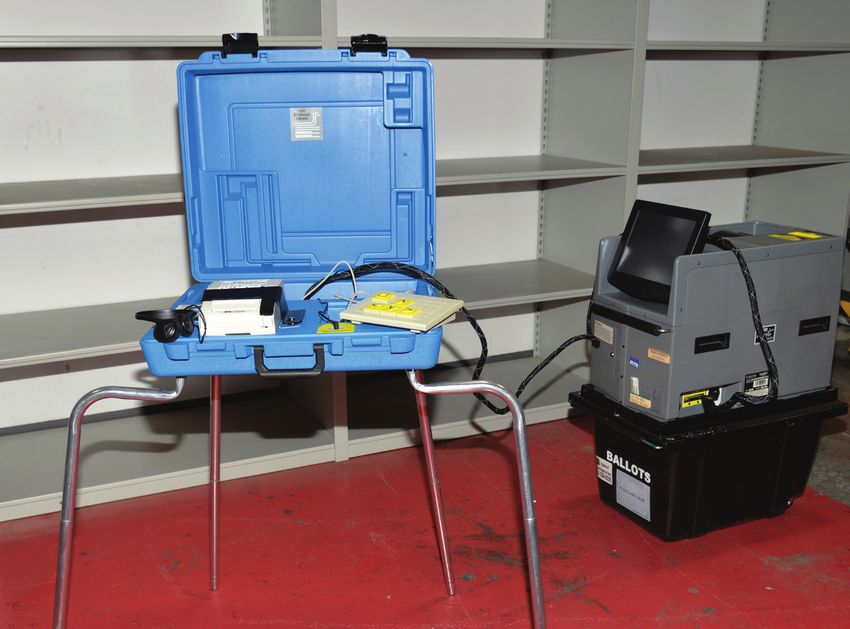
TABLE OF CONTENT

     P3.   Introduction

     P4.   Demographics

  P5-26.   Multilingual Voter Services

   P5-8.   1. Language Targeting System

  P9-10.   2. Translated Election Materials

 P11-13.   3. Polling Place Information

 P14-17.   4. Bilingual Pollworkers

 P18-20.   5. Website with Translated Information

 P21-22.   6. Multilingual Hotline

 P23-24.   7. Audio Ballot

 P25-26.   8. Community and Voter Outreach

 P27-28.   9. Minority Media Outreach

   P28.    10. After Election Day – Post Election

   P29.    11. Technical Assistance to Other Election Jurisdictions

 P29-30.   12. Election Day Poll Monitoring Program

 P31-32.   Voting Solutions for All People (VSAP)

 P33-34.   Conclusion and Recommendations

                                          -2-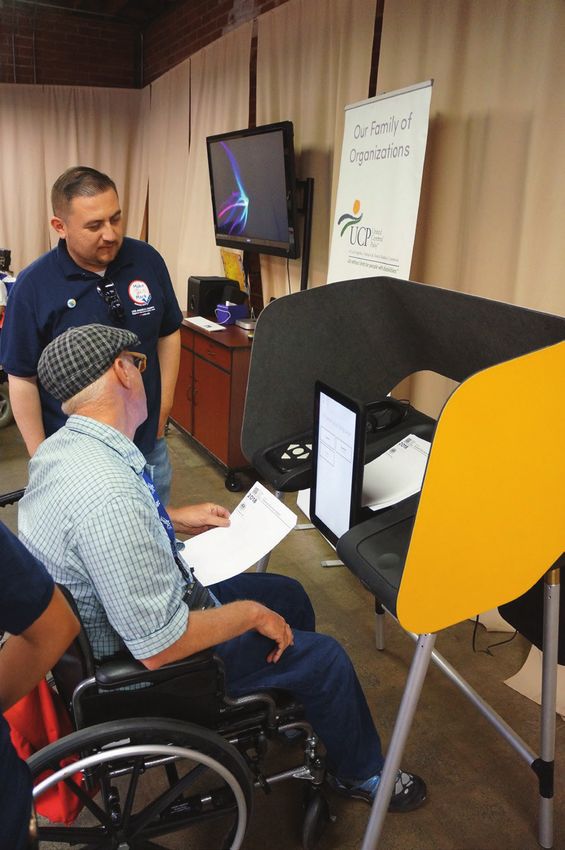
INTRODUCTION
The purpose of this evaluation report of “Multilingual Election Services 2017” is to provide a
comprehensive assessment of the multilingual services offered by the Los Angeles County Registrar-
Recorder/County Clerk for the November 2016 General Election and March 2017 Consolidated
Municipal Election. Los Angeles County established this process to comply with State and federal
language accessibility requirements, and to achieve the objective of providing fair, accessible, and
transparent election services for all voters. This report describes the numerous services the
Department provides for those with language needs, as well as its accomplishments as it continues
to serve a diverse electorate.

The Future of Voting in Los Angeles County
The Registrar-Recorder/County Clerk has faced challenges with the current aging voting system,
InkaVote Plus. The decision was made to develop a new voting system that conforms to the diverse
needs of Los Angeles County voters. The Department is in the process of developing and implementing
a new voting experience through its, Voting Solutions for All People (VSAP), which focuses on a human-
centered approach to voting and therefore a more inclusive voting experience for all voters.

Department Accomplishments Providing
Multilingual Services for Voters
                Multilingual Services Highlights in 2016 and 2017

    Translated the “Voting                                                    Disseminated election
   and Elections” section of           Recruited more than 6,000         information in English, Spanish,
      the website in all 9           bilingual pollworkers for the          and Asian language media
                                        November 2016 General              outlets, including television,
     federally mandated
                                       Election, over 3,000 for the           online, print, and radio
          languages                    March 2017 Consolidated
                                     Municipal Election, and hired
   Provided assistance to 7                                              Provided Armenian, Farsi and
                                        218 and 187 multilingual
     additional language              reservists respectively to be      Russian election materials for
    speaking communities            pollworkers in case of no-shows            L.A. City election
  (Bengali, Gujarati, Russian,          or any other last minute          consolidation due to SB 415
   Armenian, Punjabi, Urdu,             changes on Election Day
          and Farsi)
                                                                             Changed Multilingual
                                                                             Hotline number from
      Offered a New Voter               Answered a total of 1,635
                                                                              1-800-481-8683 to
     Information Kiosk that             Multilingual Hotline calls
                                                                               1-800-815-2666
 provides a three-dimensional         leading up to the November
  display of election laws and      2016 General Election, resulting
  voter rights at every polling     in 23,183 minutes of assistance       Supplied translated election
      place on Election Day                     for voters                materials to 212,823 voters

                                                 -3-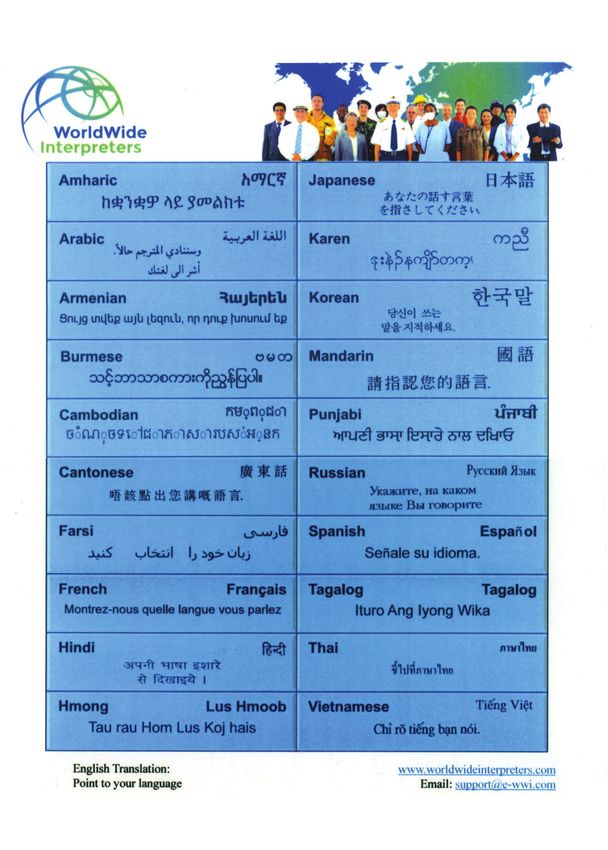
DEMOGRAPHICS
With an electorate larger than 42 of the 50 states, Los Angeles County is the largest and most
diverse county election jurisdiction in the nation, serving over five million voters in 16 different
languages. Composed of 88 cities and 2,649 square miles of unincorporated areas, the County
administers elections across 500 political districts. This complexity means that on Election Day, the
Department manages more than 25,000 volunteers and nearly 5,000 polling places in a single day.

In addition to its size, the County has a large diverse population

                                                             Multilingual population
                    Total of 10,116,705
                                                          largely comprised of Latinos
                residents (California Dept.
                                                           (47.7%) and Asians (13.7%)
                  of Finance May 2016)
                                                            inhabitants (2010 Census)

                                                                               Over three million foreign
                                                                               born residents, making it

                                         L.A.
                                                                               the largest number in the
                                                                                nation, and almost two
                                                                               million of these are voting

                                        County
                                                                                      age citizens

                                                                                56.1% of the population
                                                                                speak a language other
                                                                               than English at home and
                                                                                43.9% speak English less
                                                                                    than “very well”

                                                                      Spanish (39.5%) and
                                                                    Asian and Pacific Islander
                 For the November 2016 election,                   languages (10.8%) are the
               the Department processed 212,823                      predominant minority
             requests for translated election material,             languages spoken in the
              with the majority of the requests being                       County
                      for Spanish and Chinese

                                                    -4-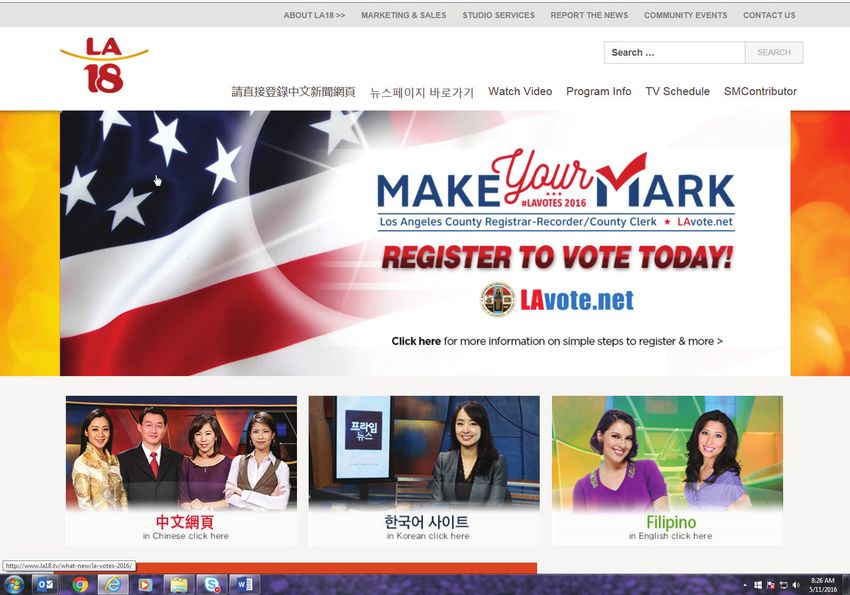
MULTILINGUAL VOTER SERVICES
Creating an ideal election experience for each voter starts before the voter registers to vote. The
Registrar-Recorder/County Clerk strives to comply with all legal standards and fulfill voter needs.

  1       Language Targeting System

Standard of Service
The Department has developed a comprehensive targeting system that integrates demographic
data and language assistance requests. To produce a current view of the County’s language minority
electorate, this data-driven system targets voting precincts containing a large number of minority
language residents. The system also identifies which language(s) need assistance, and in which precincts.

The language targeting database system includes data from:
• The 2010 United States Census
                                                    • Language assistance request form
• The 2012-2016 American Community                    community groups, and
  Survey (ACS)
                                                    • Assisted Voter Tally Cards
• Voter registration requests for materials
  in a language other than English

November 2016 and March 2017 Evaluation Results
For the November 2016 Election, the Department received 212,823 requests for translated election
material and 278,063 requests for translated materials or the March 2017 Election, with most
requests being for Spanish and Chinese (see charts on pages 6-7).

Following the release of the Census Data in December 2016, the Department contracted with Asian
American Advancing Justice (AAAJ) to revise its “surname” component of the targeting system. Staff
demographers compiled data to adjust “Census” component of the system. Although the Department
is no longer mandated to provide language assistance in Japanese, Hindi and Thai, language assistance
for those three languages will continue. Providing the additional language assistance will ensure
consistency of services, solidify infrastructure and honor existing partnerships with those communities
and voters.

Targeted Precinct Reports for the November 2016 and March 2017 Elections are provided on the
following pages.

                                                   -5-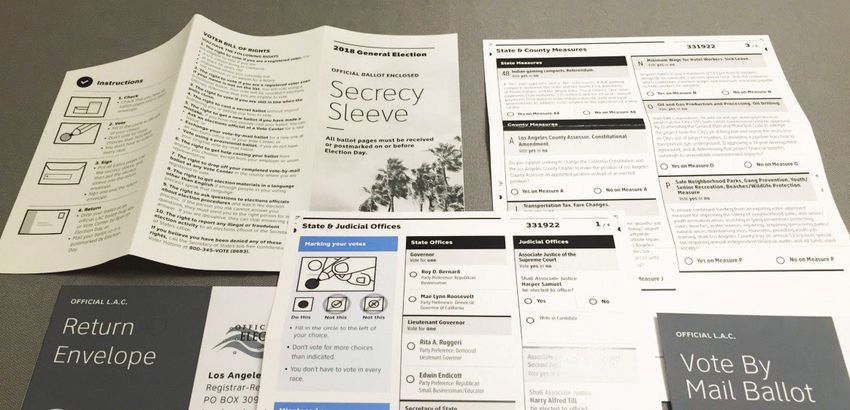
MULTILINGUAL VOTER SERVICES

                             TARGETED PRECINCTS REPORT
   Date of Election: November 8, 2016                             Type of Election: General
           Chinese                                Japanese                                    Korean
Required   Recruited    % Recruited   Required    Recruited    % Recruited     Required       Recruited    % Recruited

  693        628         90.62%          47          46          97.89%           558           577          67.56%
           Spanish                                Tagalog                                  Vietnamese
Required   Recruited    % Recruited   Required    Recruited    % Recruited     Required       Recruited    % Recruited

 4,787      4,216        80.03%         178          178          100%            174           148          85.06%
           Armenian                           Cambodian/Khmer                                 Russian
Required   Recruited    % Recruited   Required    Recruited    % Recruited     Required       Recruited    % Recruited

  238        201         85.04%          81          73          90.16%           80             40           50%
            Hindi                                   Thai                                      Bengali
Required   Recruited    % Recruited   Required    Recruited    % Recruited     Required       Recruited    % Recruited

  77          64         84.42%          24          24           100%             0              0           100%
           Gujarati                                Arabic                                       Farsi
Required   Recruited    % Recruited   Required    Recruited    % Recruited     Required       Recruited    % Recruited

   0          0           100%           6            6           100%            124            82          66.09%
                     Total
                                                  Note: Armenian, Russian, Bengali and Farsi are not required languages.
Required    Served      % Recruited   Precincts   Los Angeles County translates these languages in response to
                                                  community requests.
 7,067      6,085        92.73%        4,523

                                                     -6-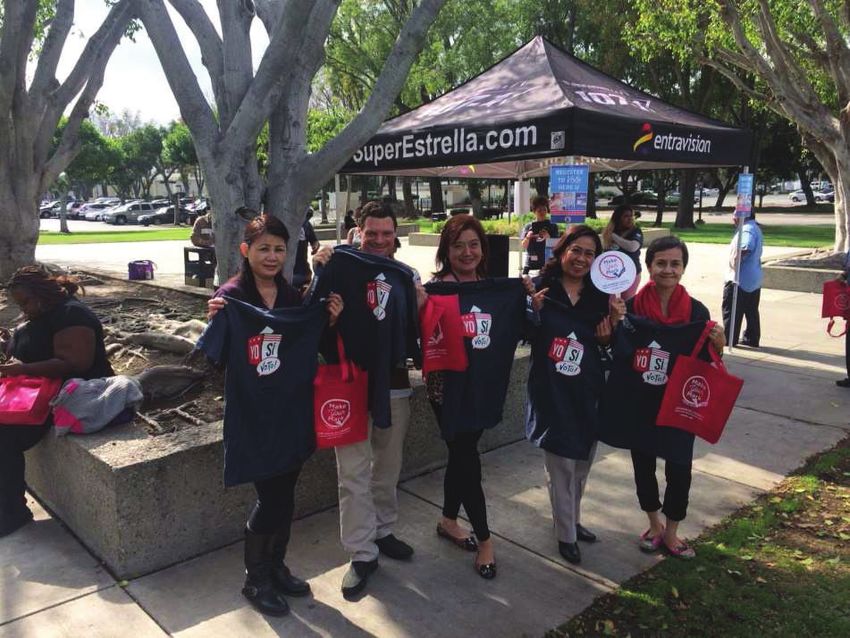
MULTILINGUAL VOTER SERVICES

                               TARGETED PRECINCTS REPORT
        Date of Election: March 7, 2017                            Type of Election: Special
             Chinese                                Cantonese                                  Japanese
Required     Recruited    % Recruited   Required     Recruited   % Recruited     Required       Recruited    % Recruited

  297          294             99%         2            2           100%            22             22           100%
             Korean                                  Spanish                                   Tagalog
Required     Recruited    % Recruited   Required     Recruited   % Recruited     Required       Recruited    % Recruited

  371          267             72%       2,543        2,281          90%            111           111           100%
           Vietnamese                               Armenian                              Cambodian/Khmer
Required     Recruited    % Recruited   Required     Recruited   % Recruited     Required       Recruited    % Recruited

  102          100             98%        151          132           87%            36             36           100%
             Russian                                  Hindi                                       Thai
Required     Recruited    % Recruited   Required     Recruited   % Recruited     Required       Recruited    % Recruited

  54            54          100%           47           47          100%            22             22           100%
             Bengali                                 Gujarati                                   Arabic
Required     Recruited    % Recruited   Required     Recruited   % Recruited     Required       Recruited    % Recruited

   0            0           100%           0            0           100%             4              4           100%
              Farsi
Required     Recruited    % Recruited

  98            89             91%
                       Total
                                                    Note: Armenian, Russian, Bengali and Farsi are not required languages.
Required      Served      % Recruited   Precincts   Los Angeles County translates these languages in response to
                                                    community requests.
 3,860        3,461            89%       2,543

                                                       -7-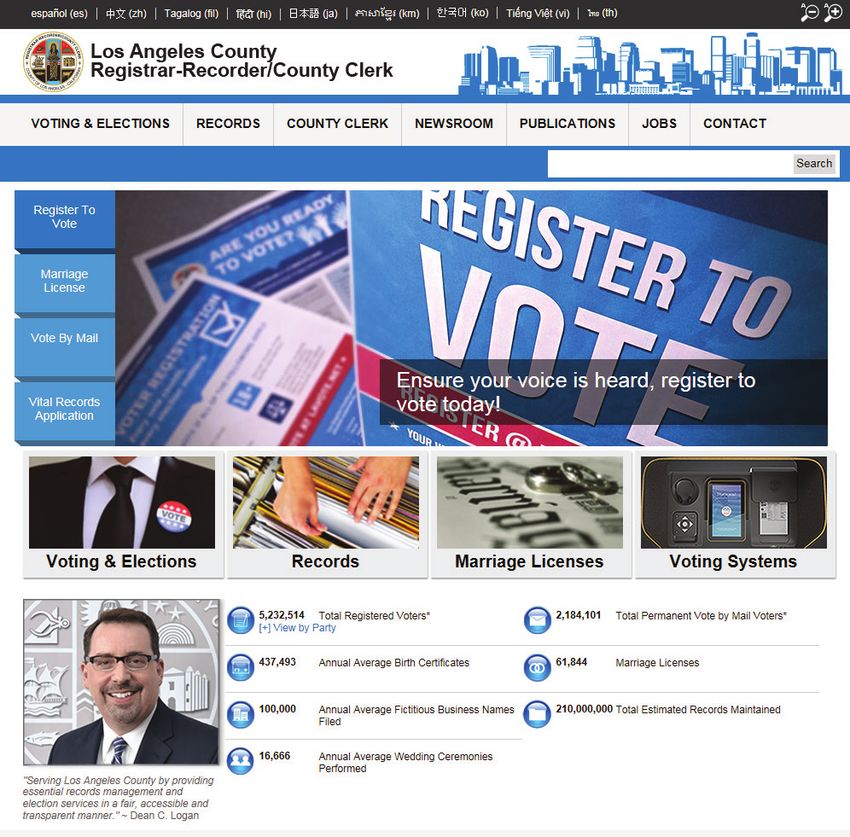
MULTILINGUAL VOTER SERVICES
Assisted Voter Tally card results – Precinct specific reports are used in the next election's Targeting System.
Note: Armenian, Russian, Bengali, Hindi, Japanese, Thai and Farsi were not required languages.
Los Angeles County translates these languages in response to community requests.

            November 8, 2016                     ASSISTED VOTERS TALLY CARD
       PRESIDENTIAL PRIMARY                      Assistance requests from voters in the precincts

            No requests        Bengali            Chinese             Gujarati             Hindi       Japanese   Khmer
           for assistance          7                999                    18                44          37          26
                               Korean             Spanish             Tagalog               Thai      Vietnamese Other
Precinct
TOTALS                            634              12,614                  300               32          182        822
                 584         Audio Ballot                                Blind,               Additional information /
                                                 Wheelchairs      visually or hearing
                               request                                                          Pollworker request
                                                                       impaired
                                  336               2463                  1,056                         389

                        March 7, 2017
       CONSOLIDATED MUNICIPAL &
                                                    ASSISTED VOTERS TALLY CARD
              SPECIAL ELECTIONS                     Assistance requests from voters in the precincts
                No      Armenian Bengali            Chinese        Farsi        Gujarati     Hindi      Japanese Khmer
           requests for
            assistance     15      0                   1             18            0              2           6          0
                          Korean       Russian      Spanish       Tagalog         Thai     Vietnamese     Other
Precinct
TOTALS                      634          19            94            4             2              1           1
               31           Audio Ballot                                 Blind,               Additional information /
                                                  Wheelchairs     visually or hearing
                              request                                  impaired                 Pollworker request

                                   2                   79                  32                             8

                                                            -8-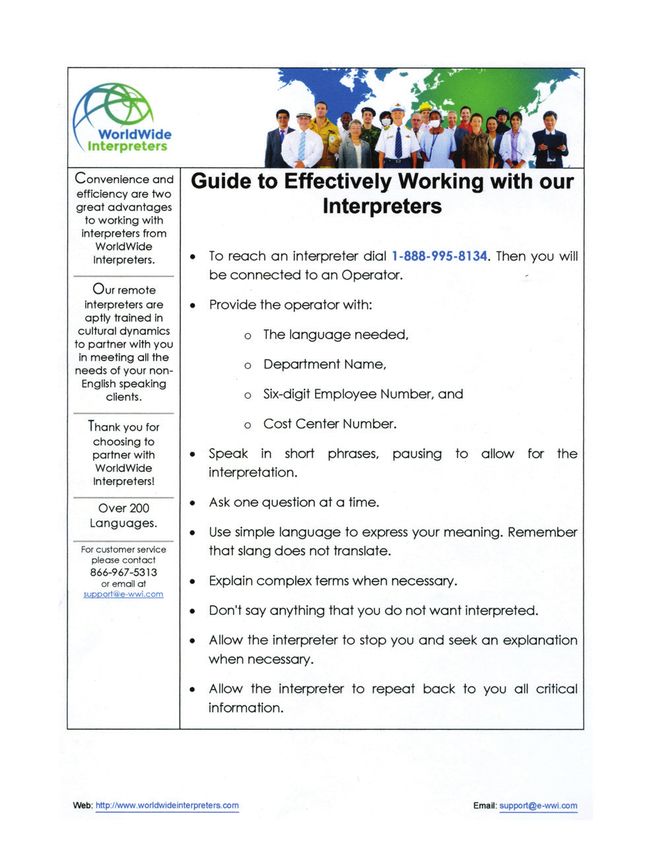
MULTILINGUAL VOTER SERVICES

  2       Translated Election Materials

Standard of Service
In order to provide residents with the opportunity to fully engage in the electoral process, the
Department transliterates candidates’ names and provides translated materials in the covered
languages. Materials are translated into Chinese, Japanese, Korean, Spanish, Tagalog/Filipino,
Vietnamese, Hindi, Khmer, and Thai. During the November 2016 General Election, the Department
oversaw the translation and review of approximately, 4,581,463 words and the transliteration and
review of about 72,135 words. Staff also added terms to translation glossaries in 2016-2017, for a total
of 54 words. Below is a list of materials that are translated/transliterated into the mandated languages:

• Sample Ballot Booklets                                 • Translated Election Materials Request Form
• Voter Instructions                                     • Translation Glossaries
• Vote by Mail, Emergency Vote by Mail and               • Bilingual Pollworker Flyers
  Permanent Vote by Mail Applications                    • Documents requested through the
• Voter Registration Forms                                 Multilingual Hotline
• Outreach Materials

California Election Code Sec. 14201 mandates that a sample ballot (with the ballot measures and
instructions) be printed in applicable languages and posted in the affected polling place if 3% or
more of the voting age residents in that precinct are members of a single language minority and lack
sufficient skills in English. The Department’s Translation Services Unit, under the Ballot Management
Section, conducts translation services, document review and answers calls from the Multilingual
Hotline. While a few small jobs are translated by our staff, most of the documents the Department
produces are translated by several vendors. The contracted vendors used are Language Line Service,
Inc., TransPerfect Translation, International, Inc., and WorldWide Interpreters, Inc. The vendors also
transliterate candidates’ names in those languages that do not use Roman characters. After the
vendor returns the translated documents and transliterations to the Department, bilingual staff
reviews, corrects and approves them before they are finalized and printed.

In addition to translation, the Sample Ballot Booklets are also printed and mailed out by a vendor.
Translated Sample Ballots Booklets were provided to voters two weeks before the November 2016
and March 2017 Elections. Approximately 234,440 translated Sample Ballot Booklets were mailed to
multilingual voters in the mandated languages and 607 ballot groups for the November 2016
Election, while 230,573 translated Sample Ballot Booklets were mailed to multilingual voters in the
mandated languages and 108 ballot groups for the March 2017 Election.

                                                   -9-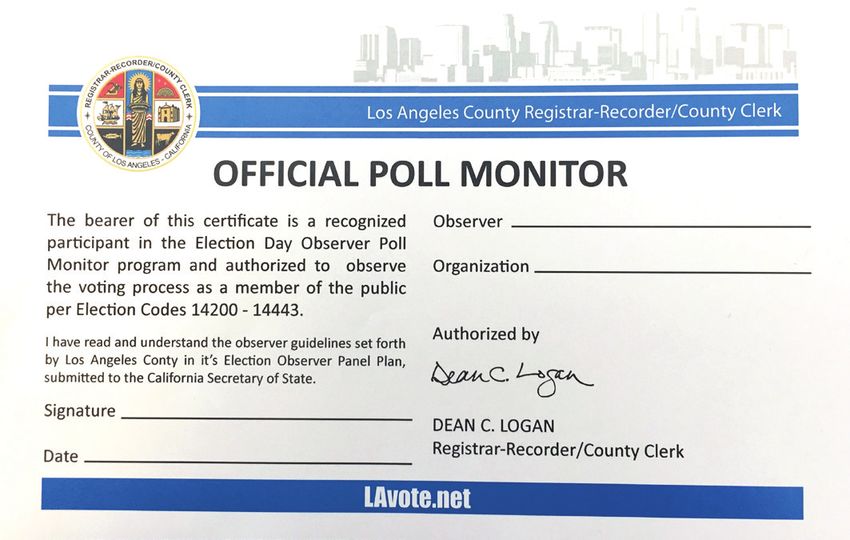
MULTILINGUAL VOTER SERVICES
November 2016 and March 2017 Evaluation Results         Number of Sample Ballot Booklets Mailed
100% service provided or translated:
                                                            Total # of   November     March
• Sample Ballot Booklets                                    Booklets       2016       2017

• Voter Instructions                                       Armenian         N/A        187
                                                            Chinese        28,084     28,701
• Vote by Mail, Emergency Vote by Mail and
                                                              Farsi         N/A          7
  Permanent Vote by Mail Applications
                                                              Hindi         400        390
• Voter Registration Forms
                                                            Japanese       2,029       2,063
• Outreach Materials                                         Khmer          370        424

• Translated Election Materials Request Form                 Korean        25,177     25,031
                                                            Russian         N/A        1,221
• Glossaries
                                                            Spanish       154,858     159,234
• Bilingual Pollworker Flyers/Application                   Tagalog        6,469       6,357

• Documents requested through the                             Thai          542        734
  Multilingual Hotline                                    Vietnamese       7,354       7,323

                                               - 10 -
MULTILINGUAL VOTER SERVICES
3 Polling Place Information
Standard of Service
The Department provides signs, forms, and other translated information at all of the polling sites in the
mandated languages. All of the translated documents available at the polls are bundled together with
the corresponding translated Sample Ballot Booklet and delivered to the polls where it is known as the
Multilingual Kit. The materials inform voters of the languages offered at the site for pollworker
assistance, to notify voters of their rights, and provide the voter with ballot information in the minority
language assisting them in casting an accurate ballot.
Translated information at the polling place (including the Multilingual Supply Kit):
• Multilingual translation of the Official Sample Ballot (each precinct receives Spanish, English and any
other targeted language specific to that precinct)
• In all official languages:
- Multilingual translation of Provisional/ - Voter Information Kiosk (includes)
Vote by Mail materials - “Voter Bill of Rights”
- “No Electioneering” sign - “Tampering” poster sign
- Pollworker Language signs - Voter Instructions and Regulations
- “Multilingual Audio Point To” card - “Telephone Referral” Cards
- “Vote Here” polling place sign - “Voter Oath” translation page
- “We Speak” language sign - “Replacement Envelope”
- “Curbside Voting” sign
The Department’s Election Operations Center (EOC) handles distribution of multilingual polling place
information. Once the materials are translated and approved by the Ballot Management Section, the
EOC then requests the list of ballot group consolidations. Large and complex documents are sent to
a vendor for printing while smaller projects are printed by the Department's own Printing Services
Unit. Once delivered to the EOC, the translated Sample Ballot Booklets are sorted according to
assigned Check-in Center and sequence number. Sorting ensures that the translated Sample Ballot
Booklets are included in the supplies for the specific targeted precinct. Every precinct receives a
packet of multilingual information and instructions that are displayed to assist voters in mandated
languages.
Translations are also available for review on the website and Sample Ballot Booklets are available in
all targeted languages for display at the polling sites.
- 11 -MULTILINGUAL VOTER SERVICES
November 2016 and March 2017 Evaluation Results
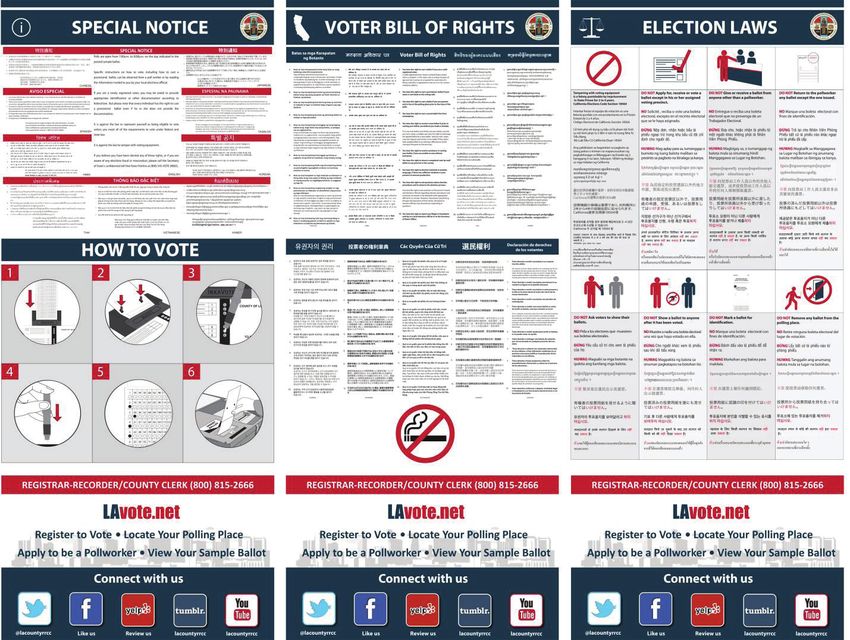
The Voter Information Kiosk, placed at each polling place, continues to be an effective method of
providing crucial voting information to the public since its inception in the 2014 Primary Election. The
kiosk provides an “easy to display” view of the voter’s rights, election laws, and instructions on how to use
the voting machines.
Armenian, Farsi and Russian were added to the Kiosk for the March 2017 Consolidated Municipal Election
to accomodate L.A. City Elections.
Voter Information Kiosk:
The Voter Information Kiosk provides visual notice of election laws and voter rights in a three-
dimensional display at every polling place on Election Day.
- 12 -MULTILINGUAL VOTER SERVICES
The Community Group Survey results indicate that of the respondents who visited polls on Election
Day, 92% observed the multilingual materials displayed properly.
Survey Q18
- 13 -MULTILINGUAL VOTER SERVICES
4 Bilingual Pollworkers
Standard of Service
The Department recruited over 6,000 multilingual pollworkers to serve voters with limited English
proficiency (LEP) for the November 2016 General Election. In addition, the Department recruited
over 3,000 multilingual pollworkers to serve LEP voters the March 2017 Consolidated Municipal
Election. These pollworkers provided assistance to voters by answering questions at the polls,
explaining how to mark the ballot, providing voters with information regarding voting procedures,
and providing voters with assistance using the voting machines. The services provided by
pollworkers at the polls provides minority language voters with a better understanding and helps
them feel more comfortable with the voting process.
Multilingual pollworkers are hired for the following languages:
• Arabic • Chinese • Korean • Tagalog/Filipino
• Armenian • Farsi • Mandarin • Thai
• Bengali • Gujarati • Punjabi • Urdu
• Cambodian/Khmer • Hindi • Russian • Vietnamese
• Cantonese • Japanese • Spanish
Recruitment for multilingual pollworkers is a function of the Department’s Pollworker Services Section
with numerical goals developed using the Language Targeting Report.
Pollworker training takes place starting 3-5 weeks prior to an election. In a major election, the
Department provides over 475 classes. Every pollworker receives the same training, whether bilingual
or not. The Department may provide interpreters for classes offered in targeted areas. During training,
the instructors discuss cultural sensitivity for minority language voters and the importance of the Audio
Ballot Booth (ABB) for those voters requiring language assistance.
In addition, the Department partners with member of the Voting Accessibility Advisory Committee
(VAAC), Community and Voter Outreach Committee (CVOC), and Asian Americans Advancing Justice
(AAAJ) for advice and assistance with training. During a major election, the Department offers a
preview of the pollworker class before training actually begins. This allows the community to have a
voice in the process and content of the pollworker training.
- 14 -MULTILINGUAL VOTER SERVICES
November 2016 and March 2017 Election Evaluation Results
The Department recruited over 6,000 bilingual pollworkers (see chart below) for the November 2016
and over 3,000 for the March 2017 Elections. In addition, 218 multilingual reservists were hired for
the November 2016 General Election and 187 multilingual reservists were hired for the March 2017
Consolidated Municipal Election to cover positions in the event an assigned pollworker does not report
to their assignment or any other last minute changes on Election Day.
The Legal Permanent (LPR) Program has continued to be instrumental in the recruitment of multilingual
pollworkers. During the November 2016 General Election 491 LPR’s were recruited and 105 for the
March 2017 Consolidated Municipal Election. The LPR Program has been extremely effective reducing
the need to hire interpreters and therefore replacing the Interpreter Program. No interpreters were
utilized for the November 2016 and March 2017 Elections.
November 2016 Multilingual Pollworkers Recruited
Armenian Arabic Bengali Chinese Farsi
202 6 0 628 82
Gujarti Hindi Japanese Khmer Korean
82 65 46 73 377
Russian Spanish Tagalog Thai Vietnamese
40 4216 178 24 148
TOTAL: 6085
March 2017 Multilingual Pollworkers Recruited
Armenian Arabic Bengali Cantonese Chinese
144 35 30 2 294
Farsi Gujarti Hindi Japanese Khmer
89 0 47 22 36
Korean Russian Spanish Tagalog Thai
267 54 2281 111 22
Vietnamese
100
TOTAL: 3461
- 15 -MULTILINGUAL VOTER SERVICES
Election Guide and Checklist
The Election Guide and Checklist training manual provide pollworkers with training references for
providing assistance to LEP voters, in addition to the pollworker training class attended before
Election Day.
- 16 -MULTILINGUAL VOTER SERVICES
- 17 -MULTILINGUAL VOTER SERVICES
5 Website with Translated Information
Standard of Service
For the November 2016 General Election and March 2017 Consolidated Municipal Election, the
Department’s website provide several translated documents including:
• Vote by Mail, Permanent Vote by Mail and Emergency Vote by Mail Applications
• Bilingual Pollworker Flyer/Application
• Translated Elections Material Request Form
November 2016 and March 2017 Election Evaluation Results
The Community Survey responses indicate the updated website has been a useful tool for all voters. The
survey revealed that 93% of those surveyed have accessed the website to review election information.
More than 75% of the organizations surveyed promoted the website on their respective websites. Most
respondents utilized the website to access or download Vote by Mail Applications and/or educational and
outreach information and to find their Polling Place location (see page 20 for Survey Q14).
Website with Translated
Election Materials
The Department’s website
homepage provides several
translated document including:
• Vote by Mail Application
• Permanent Vote by Mail
Application
• Emergency Vote by Mail
Application
•
Bilingual Pollworker Flyer/
Application
• Translated Elections Material
Request Form
• Entire “Voting and
Elections” section is
translated in all 9 federally
mandated languages
- 18 -MULTILINGUAL VOTER SERVICES
Note: LAVote.net offers translated election materials in all supported languages and consist of Vote by Mail Applications,
Bilingual Pollworker Application, Translated Election Material Request, Election Materials Information and Translation Glossary.
- 19 -MULTILINGUAL VOTER SERVICES
Survey Q14
- 20 -MULTILINGUAL VOTER SERVICES
6 Multilingual Hotline
Standard of Service
The Multilingual Assistance Hotline is a toll-free number offered by the Department that allows limited
English proficient (LEP) residents to speak with someone in his/her own language regarding elections.
Hotline staff members answer a wide range of calls, including requests for translated election materials,
inquiries about voter registration, questions regarding Vote by Mail applications and ballots, and
requests for polling place locations. This service allows residents to receive verbal assistance in the
language of their choice. The hotline is available year-round at 1-800-815-2666 Option 3.
The hotline is housed within the Election Information Section of the Department. When a resident calls
the number, a staff member within the section will either take the call or direct it to one of the bilingual
staff members in the Translations Services Unit.
However, if a call is received and no one in the Department is available, the hotline staff member will
contact the Department’s contracted interpreter service. The contracted interpreter service providers
for the November 2016 and March 2017 elections were Language Line Service, Inc., TransPerfect
Translation, International, Inc., and WorldWide Interpreters, Inc. These companies provide interpreters
for numerous languages. When a staff member calls this service, a three-way call is activated with the
caller, interpreter, and staff member. The calls are then coded in the system so that the caller receives
future information in his/her specific language. The majority of the calls coming into the hotline during
a major election begin after the Sample Ballot Booklets are mailed.
November 2016 and March 2017 Election Evaluation Results
The Department received a total of 2,183 Multilingual Hotline calls leading up to the November 2016
General Election, resulting in 25,053 minutes of in house assistance both over the phone and in person for
limited English proficient (LEP) voters. In addition, the March 2017 Consolidated Municipal Election
yielded a total of 851 Multilingual Hotline calls received, resulting in 9,470 minutes of both over the
phone and in person assistance for limited English proficient (LEP) voters.
- 21 -MULTILINGUAL VOTER SERVICES
November 2016 General Election
In-person Language Assistance
Multilingual Hotline Calls
# of Minutes # of in-Person # of Minutes
Language # of Calls Received
Assisting Assistance Provided Assisting
Chinese 117 1,255 35 945
English 19 205 0 0
Farsi/Armenian 2 15 0 0
Hindi 3 41 0 0
Japanese 4 47 6 200
Khmer 4 85 1 25
Korean 314 5,875 10 295
Spanish 1,110 14,380 2 15
Tagalog 30 575 0 0
Thai 0 0 0 0
Vietnamese 32 705 12 390
TOTAL 1,635 12,183 66 1,870
March 2017 Municipal Election
In-person Language Assistance
Multilingual Hotline Calls
# of Minutes # of in-Person # of Minutes
Language # of Calls Received
Assisting Assistance Provided Assisting
Armenian 42 622 0 0
Chinese 65 775 8 270
English 3 35 0 0
Farsi 8 120 0 0
Hindi 3 55 0 0
Japanese 6 75 2 77
Khmer 0 0 3 50
Korean 138 2,885 1 40
Russian 1 20 0 0
Spanish 315 3,811 0 0
Tagalog 13 230 1 30
Thai 1 15 0 0
Vietnamese 17 300 2 60
TOTAL 612 8,943 17 527
- 22 -MULTILINGUAL VOTER SERVICES
7 Audio Ballot
Standard of Service
The Department records audio ballots in 10 languages to provide an alternative means of voting for
those with disabilities and language assistance needs. The audio ballots are incorporated into the
Audio Ballot Booth (ABB) and assist voters with the use of a keypad and headset. One ABB is located
at every poll site and is offered to all voters. Audio ballots are available in:
• Chinese (both Mandarin and Cantonese) • Thai • Armenian
• Korean • Japanese • Farsi
• Khmer • Hindi • Russian
• Spanish • Tagalog/Filipino
• Vietnamese • English
Audio ballots are recorded by Merrill Corporation for major elections and reviewed and corrected by
the Department's bilingual staff. Ballots must be delivered to the vendor 50 days before an election, it
takes appoximately 20 days for the completion of the recordings. The recording of the ballots must be
finalized at least 30 days before an election in order to be imported onto the ABB and ready for
distribution to the polls. The Department's staff has the resources to translate and record the audio
ballot for small elections.
- 23 -MULTILINGUAL VOTER SERVICES
November 2016 and March 2017 Election Evaluation Results
The Audio Ballot Booth with translations of the ballot in 13 languages was available in each polling place
for both elections.
November 8, 2016 ASSISTED VOTERS TALLY CARD
PRESIDENTIAL PRIMARY Assistance requests from voters in the precincts
No requests Bengali Chinese Gujarati Hindi Japanese Khmer
for assistance 7 999 18 44 37 26
Korean Spanish Tagalog Thai Vietnamese Other
Precinct
TOTALS 634 12,614 300 32 182 822
584 Blind, Additional information /
Audio Ballot Wheelchairs visually or hearing
request Pollworker request
impaired
336 2463 1,056 389
March 7, 2017
CONSOLIDATED MUNICIPAL &
ASSISTED VOTERS TALLY CARD
SPECIAL ELECTIONS Assistance requests from voters in the precincts
No Armenian Bengali Chinese Farsi Gujarati Hindi Japanese Khmer
requests for
assistance 15 0 1 18 0 2 6 0
Korean Russian Spanish Tagalog Thai Vietnamese Other
Precinct
TOTALS 634 19 94 4 2 1 1
31 Audio Ballot Blind, Additional information /
request
Wheelchairs visually or hearing
impaired Pollworker request
2 79 32 8
- 24 -MULTILINGUAL VOTER SERVICES
8 Community and Voter Outreach
Standard of Service
The Department’s Community and Voter Outreach Section participates in various activities that
seek to educate, inform, and increase voter participation throughout the County. Activities include
providing presentations to community groups, staffing booths and disseminating information at
local fairs, registering residents at cultural events, and attending community meetings. While
conducting outreach, staff members provide translated materials to those areas with a large
number of minority language residents. The Department staff attends approximately 12 events per
month during a non-election period and up to 12 events per week during a major election.
Translated voter education materials are provided at outreach events in all mandated languages. These
materials include:
• Voter Registration Forms • “Ready to Vote” Flyer
• Voter Bill of Rights • “Voter Registration” Flyer
• League of Women Voters’ “Easy Voter Guide” • “Provisional Voting” Flyer
in Chinese, Spanish, Korean, and English. • “Translated Election Materials Request” Form
• “CA State Voter Information” Pamphlet • “Permanent Vote By Mail” Application
Prior to a major election, the Department hires up to seven temporary staff members to assist with the
Outreach Section’s scheduled activities. Since the permanent staff in this section are bilingual in
Spanish, the Department strives to hire temporary staff who are fluent in other covered languages. In
the effort to recruit temporary bilingual staff, the Department’s Human Resources Division recruit
multilingual staff by creating job bulletins that specify which languages are needed for the position
and placing job announcements on language-specific job sites.
As of August 2017, the Community and Voter Outreach Section began conducting voter registration
at the Naturalization Ceremonies, previously conducted solely by the Department’s Affidavit
Distribution Section. The collaboration between both sections has increased voter registration at the
ceremonies by 12%.
The Department also participates in the Community Voter Outreach Committee (CVOC), which is a
partnership involving the Department, citizens, community groups, and advocacy organizations.
Members of the CVOC collaborate with Department to ensure elections are fair, accessible and
transparent for all voters. The CVOC's mission is to facilitate communication between the community
and the Department and collaborate on methods to educate, engage, and provide quality service to
all voters.
- 25 -MULTILINGUAL VOTER SERVICES
November 2016 and March 2017 Election Evaluation Results
During the November 2016 and March 2017 Election cycles, the Community and Voter Outreach Team
registered eligible voters, disseminated election information, and staffed a phone bank set up to receive
and resolve Election Day issues at the polls. In total, the four-person team registered 1,617 new voters
leading up to the November 2016 Election and 673 new voters leading up to the March 2017 Election.
Although the CVOC has had a Multilingual Outreach Subcommittee, in July 2017 the Department
launched an official Language Assistance Advisory Committee (LAAC). The purpose of this subcommittee
is to discuss and advise the Department on multilingual services and help coordinate outreach in minority
language communities. In addition, the Community Voter Outreach Section partners with government
agencies, schools, and over 20 national and community organization to reach minority language
communities.
- 26 -MULTILINGUAL VOTER SERVICES
9 Minority Media Outreach
Standard of Service
The Department’s Media and Communications Section disseminates election information to various
print and broadcast ethnic media outlets to inform voters of Vote by Mail deadlines, voter registration
dates, voting on Election Day and other election-related information.
November 2016 and March 2017 Election Evaluation Results
The Media and Communication Team worked with Asian and Spanish language media to promote
election and recruit multilingual pollworkers.
Pertinent voting information is released as follows:
• 20 articles per election were released in a multilingual language
• Over 1,000 commercial spots were played in Spanish, Chinese, Korean, Tagalog and Japanese during
the November 2016 and March 2017 elections
• 33.6 million impressions were earned specifically to multilingual voters
• Through 2016 and 2017 the Department established paid partnerships with: LA 18, Entravision and
LBI Media and utilized earned media with Univision and Telemundo in a joint effort with NALEO
News Release
FOR IMMEDIATE RELEASE CONTACT
Sept. 26, 2016 Brenda Duran: (562) 462-2726
Media & Communications: (562) 462-2648
bduran@rrcc.lacounty.gov
mediainfo@rrcc.lacounty.gov
L.A. County Registrar of Voters Kicks Off Large Scale Media Campaign to Get Out the Vote
LOS ANGELES – Los Angeles County Registrar-Recorder/County Clerk (RR/CC) Dean C. Logan is proud to
announce a large-scale, multilingual media campaign with leading media outlets in Los Angeles County
encouraging voters to “Make Your Mark.”
The RR/CC will partner with: CBS Radio, Entravision, Facebook, iHeart Media, LA 18, LBI Media, Pandora,
Power 106, Univision Radio, Super Estrella, Que Buena and ScreenVision Media to promote key election
dates and information. The various languages included in the campaign are English, Spanish, Korean,
Chinese, Filipino and Hindi.
“We hope to empower the LA County community with key information they will need to exercise their
democratic right this November,” said Dean Logan. “These partnerships will allow us to do that with an
unprecedented reach.”
The campaign is focused on three aspects: voter registration, voter options, and encouraging voters to turn
out and vote on Election Day. The multi-level campaign will reach voters through radio, television, outdoor
media and various digital/social media platforms as well as movie theaters.
Don’t forget to Make Your Mark in the Presidential General Election on November 8, 2016.
The mission of the Registrar-Recorder/County Clerk is to serve Los Angeles County by providing essential
records management and election services in a fair, accessible and transparent manner. For more
information, visit lavote.net.
- 27 -MULTILINGUAL VOTER SERVICES
10 After Election Day – Post Election
No post-election report was submitted by community groups for the November 2016 and March 2017
Elections. All poll monitoring observations were reported and resolved on Election Day.
- 28 -MULTILINGUAL VOTER SERVICES
11 Technical Assistance to Other Election Jurisdictions
Standard of Service
The Department provides other election jurisdictions, such as King County (Washington), Harris County
(Texas), and Arizona’s Office of the Secretary of State with assistance in the following issues:
• Identifying multilingual voters • Establishing a multilingual voter database
• Identifying bilingual pollworkers • Identifying materials to be translated
• Engaging with ethnic community groups
In addition, representatives from the Department have served on the federal Election Assistance
Commission’s Asian and Pacific Islander Language Task Force and Hispanic Language Task Force and
have provided advice on assisting limited English proficiency voters.
November 2016 and March 2017 Election Evaluation Results
The Department provided service to the following jurisdictions:
• The California Secretary of State Language Access Survey
• Reviewed and made recommendations to the California Assembly Bill 918
• San Diego Registrar of Voters outreach team
12 Election Day Poll Monitoring
Standard of Service
Representatives from civic and community organizations who will be visiting the polling places
are encouraged to participate in this program by reporting problems that arise on Election Day to
the Department. Participants are provided with dedicated contact information that can be used to
communicate directly with Department staff.
On Election Day, Department staff responds to reports from community poll monitors. Issues reported
are followed up on and resolved by election staff throughout the day. The following list provides
examples of typical issues resolved through the use of this program:
• No bilingual pollworker at a targeted precinct
• A precinct in need of an additional pollworker
• Language ability of some bilingual pollworkers was not proficient
• Translated election materials were not displayed at a polling place
- 29 -MULTILINGUAL VOTER SERVICES
November 2016 and March 2017 Election Evaluation Results
The Community and Voter Outreach Section conducts a poll monitoring briefing two weeks before
the election for community groups interested in observing Election Day activities at polling places.
The Community and Voter Outreach and Legislation teams staff the poll monitoring hotline phones to
respond to observations as reported.
POLL MONITOR PROGRAM
November 2016 General Election
247 March 2017 Consolidated Municipal Election
154
93
26
16 10
# of Calls Received # of Calls Escalated # of Calls Resolved
The post-election Community Survey indicated that 93% of the groups responding stated that the
Department was responsive to their calls and resolved their concerns.
Election Day Poll Monitoring Program
- 30 -VOTING SOLUTIONS FOR ALL PEOPLE (VSAP)
Los Angeles County is faced with a unique challenge when it comes to voting. It is not only the
largest voting jurisdiction in the nation, it also has the most diverse population. In 2009, the
Registrar-Recorder/County Clerk decided to embark in the challenging task of replacing its current
aging InkaVote Plus voting system.
Research and development of the Voting Solutions for All People (VSAP-previously known as
Voting Systems Assessment Project) began with extensive research with the goal of gathering
data and utilizing feedback from community groups, focus groups and other relevant sources. The
VSAP Advisory Committee was formed as a result of the research findings, to help define the best
process for implementing a more accessible, accurate, and secure voting system while remaining in
compliance with Election Code. Under the advisement of the committee, the 14 distinct principals
to guide in the development and implementation of a new voting system were developed. Those
principals include transparency, variety of voting options, privacy and, easy and accessible voting.
Further review of the research findings led to an assessment of existing voting systems in the market.
Through this assessment it became evident that there was not a system in the market that could
meet the unique voting needs of the Los Angeles County electorate.
In 2013, after review of many firms, the Department partnered with IDEO, an award winning global
design firm who is known for its human-centered design approach. The goal of the partnership was
to analyze data gathered since the projects inception and develop the specific elements of the new
voting experience. After conducting additional research which heavily focused on accessibility and
assessing feedback from community groups, the partnership identified the components of the new
voting experience consisting of:
• a new touchscreen Ballot Marking Device (BMD) with voting options in all the supported
languages and accessible voting booth
• a new Vote by Mail (VBM) experience
• an innovative Interactive Sample Ballot (ISB)
• a modernized Tally System
• strategically located Vote Centers
• expanded Early Voting
• Electronic Pollbooks with real-time capability
The culmination of these elements will yield a new and improved voting experience that addresses
the concerns with the current voting system by entirely reimagining the voting process and
expanding the opportunities voters have to cast their ballot.
- 31 -VOTING SOLUTIONS FOR ALL PEOPLE (VSAP)
VSAP’s Progress 2016-2017
The Department is currently in the Manufacturing and Certification phase of the project. In this phase
the Department will review proposals for the components requiring manufacturing by a third party
contractor. During this phase the components requiring internal elaboration will be developed. As
the components are finalized they will require certification by the Secretary of State. In addition, the
Department will partner with experts who will conduct geo-spatial analysis and additional research to
determine vote center and VBM drop-off Locations that are accessible and strategically located.
The Registrar is planning for partial implementation of the new voting experience by November 2018
with the goal of full implementation by 2020. Full language accessibility has been a major consideration
in all phases of the development of the VSAP.
Additional detailed information about the VSAP can be found online at: VSAP.lavote.net.
- 32 -CONCLUSION AND RECOMMENDATIONS
The Registrar-Recorder/County Clerk invests in this evaluation report to ensure fair, accessible and
transparent election services for all voters and to identify compliance with State and federal directives.
This project identifies twelve areas of work that contributes to the efforts to serve the Multilingual
Voters of Los Angeles County. Most of these areas were able to successfully reach their established
goal for the November 2016 and the March 2017 Elections. Limitations were identified and process
improvements have been suggested for the future elections.
The Language Targeting System compiles data and successfully identified the targeted precincts
needs. For the November 2016 Election, 3 of the 9 mandated languages were recruited at 100% of the
goal and overall recruitment resulted in 93% of the goal being met. Recruitment in the Korean
Community (68% recruitment) has improved due to partnerships with Korean community groups,
however the Department will continue improve recruitment in this community.
The Multiningual Kit available a the polling place, along with additional translated election
materials supplied by the Department, provides limited English proficient (LEP) voters with a full
array of information in their language of choice to be utilized to fulfill their voting needs.
The Department’s website with complete language translation became available in June of 2015.
Translations for voter information and contracts for language assistance by phone continued to be
available on the website. Multilingual citizens may register to vote on the California Secretary of State’s
website which may be accessed through the Department’s website LAVote.net. Those voters may
also check their vote by mail status, voter registration status or download related forms at LAVote.net.
Election-related educational materials, VBM Applications, Request for Translated Election Materials,
Pollworker Application and Translated Glossaries are available for download.
There has been a steady increase of voters using the Multilingual Hotline to obtain election
information. Seasonal multilingual staff in the Ballot Management Section continue to provide this
important service (see page 22 for the data). Similar numerical data is not kept in the Election
Information Section where the first contact is made for Multilingual Hotline callers using he
Department’s communication system. To validate staffing and services to voters, an effort should be
made to document the number of multilingual Voters calls handled by the Election Information
Section.
The Department has established partnerships with various community group who serve voters with
limited English proficiency (LEP). The launch of the Language Accesssibility Advisory Committee
(LAAC) is expected to improve collaboration with these communities. Currently those partnerships
are geared toward activities and not materials. Prior to 2010, minority language community groups
assisted the Multilingual Services Section by reviewing translated Sample Ballot Booklets to make
sure they were adequate for the Los Angeles community. These partnerships would be beneficial
and would ensure checks and balances related to election materials are in place.
- 33 -CONCLUSION AND RECOMMENDATIONS
The Community and Voter Outreach Section was able to disseminate translated materials and to
register voters at community events. With the inclusion of the City Clerks to the CVOC, more
partnerships were built among government agencies and community groups.
The Media and Communication Section has successfully increased outreach and dissemination
of election information through minority media outlets using various media platforms.
Community groups involved with the Poll Monitoring Program continue to be a valuable resource.
When problems are reported to a trained observer the Department can successfully address issues as
they occur on Election Day.
Upon VSAP's implementation, it is expected to eliminate a separate voting device for voters requiring
language assistance. The new Ballot Marking Devices have been developed to accommodate all
voters.
Overall, the activities designed to ensure Multilingual Access to Elections have been successful.
Increased staffing, media campaigns, partnership with community groups and materials distribution
will continue to result in improved voter outreach and pollworker recruitment efforts in the
targeted communities for future elections.
- 34 -You can also read


