NEXT-GENERATION WIRELESS IN - LOGISTICS A DHL PERSPECTIVE ON THE EVOLUTION OF WIRELESS NETWORKS AND THE FUTURE OF IOT IN LOGISTICS
←
→
Page content transcription
If your browser does not render page correctly, please read the page content below
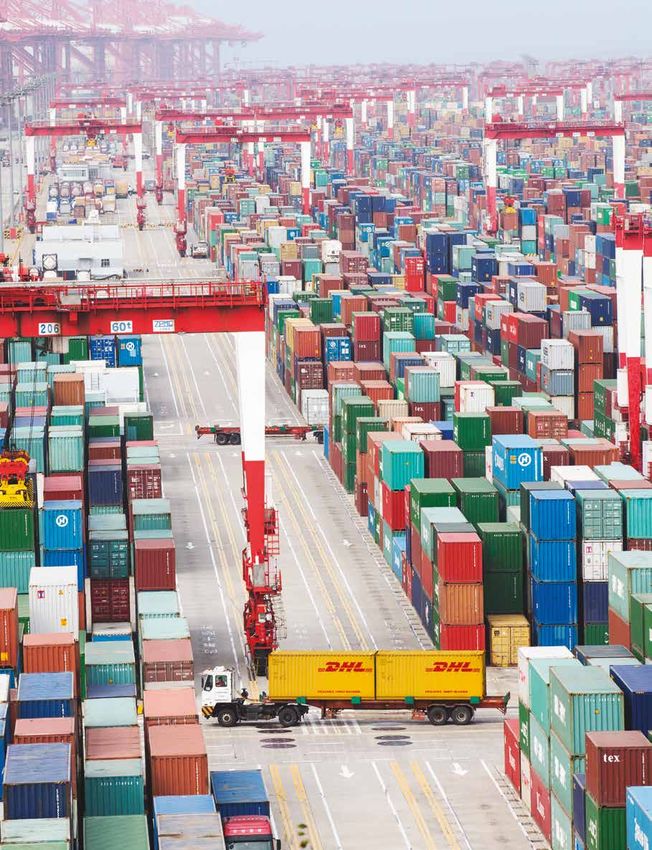
Next-Generation
      Wireless in
    LogisticsA DHL perspective on the
             evolution of wireless
             networks and the future
             of IoT in logistics

                                        1
Contents Preface
Preface How did you access this report? There’s a very wireless communication technologies is In this report, we have pooled the logistics
good chance that you did so via some type of now creating new opportunities for industry and technology expertise within DHL to help
1 Understanding Next-Generation Wireless 4
wireless technology, perhaps using Wi-Fi or to improve visibility, enhance operational you answer the following questions:
1.1 Wireless Has Changed the World 4 cellular data on a mobile device. efficiency, and accelerate automation. These
■ What is next-generation wireless? Why
1.2 Connecting Everyone, Everything, Everywhere 7 next-generation wireless technologies will
As we write this, the value of wireless is it relevant for logistics and why now?
enable the next step in the communication
1.3 Next-Generation Wireless: No One Size Fits All 9 networks has become especially vivid.
revolution, moving beyond today’s goal of ■ Which next-generation wireless
Millions around the world are staying at
1.4 Why Is It Happening Now? 12 connecting everyone to a new world in which technologies are relevant for logistics
home, with new quarantine and social
everything, everywhere can be connected. and what new use cases will they
2 Next-Generation Wireless Technologies & Logistics Use Cases 13 distancing rules as part of the global response
enable?
2.1 Short-Range Network Technologies 15 to the COVID-19 pandemic. With physical The digital revolution has already
movement restricted, digital activity has transformed asset-light industries from ■ How can I get started applying next-
2.2 Local Area Networks 20
seen an unprecedented spike. Remote access media and entertainment to financial generation wireless in my supply chain?
2.3 Wide Area Networks 23 systems, media streaming services, and video services. Now the rapid evolution of the
calling technologies have become critical Internet of Things (IoT) is allowing more Looking ahead, we believe next-generation
2.4 Low-Power Wide Area Networks 27
links to the outside world as people strive to asset-heavy industries, from automotive wireless technologies will be critical in
2.5 Global Area Networks 32 maintain contact with friends, families, and and manufacturing companies to healthcare advancing the visibility, autonomy, and
3 Building a Fully Connected Future for Logistics 35 work colleagues. providers, to accelerate their own digital predictability of logistics operations. None
transformations. Our own sector, logistics, will of these benefits will accrue automatically,
3.1 Total Visibility, Large-Scale Autonomy & Perfecting Prediction 38 Even before the crisis, wireless however. To take advantage of better
be both a major beneficiary of the IoT-enabled
communication technology was making wireless connectivity in logistics operations,
3.2 Risks & Challenges of Next-Generation Wireless 40 digital revolution and an enabler of it.
headlines. Much recent interest has focused companies will have to overcome
3.3 Implementing Next-Generation Wireless in your Supply Chain 42 on 5G mobile data networks that are being IoT is already alive and well in logistics, and many challenges, from reducing power
4 Conclusion & Outlook 44 rolled out in many countries. 5G promises a this new generation of wireless technologies consumption to meeting complex standards
host of benefits for end users, businesses, and will usher in an era of expanded capabilities and regulatory frameworks.
Next-Generation Wireless Technology Cheat Sheet 46
telecommunication system operators alike that build upon today’s successes. The ability
Sources 47 including higher speeds, greater capacity, to monitor, track, and interact with assets We believe that there has never been a more
and tailored services for a new generation of through wireless connections will make exciting time to explore next-generation
Pictorial Sources 48
smart connected devices. supply chains faster, more flexible, more wireless technologies, and we are eager to
Further Information 50 efficient, more predictable, and more resilient. begin this journey together with you, our
It is important to recognize, however, that customers and partners.
Recommended Reading 51
progress across a wide range of different
Matthias Heutger Markus Kueckelhaus
Senior Vice President Vice President
Global Head of Innovation & Commercial Innovation & Trend Research, DHL
Development, DHL
2 3
UPDATED!
                                                                                                   Maslow's hierarchy of needs

                                                                                                        Connectivity
                                                                                                   is increasingly                         Self-actualization       Desire to become the most that one can be
                                                                                                   seen as a
                                                                                                   basic human                                         Esteem       Respect, self-esteem, status, recognition, strength, freedom
                                                                                                   need.
                                                                                                                                            Love & belonging        Friendship, intimacy, family, sense of connection

                                                                                                                                                Safety needs        Personal security, employment, resources, health, property

          Chapter 1                                                                                                                      Physiological needs
                                                                                                                                                                                              WIFI
                                                                                                                                                                    Air, water, food, shelter, sleep, clothing, reproduction

                                                                                        Figure 1

                                                                                        The wireless communication technology             Apple App Store had 552 apps for download        networks are quicker, easier, and cheaper

    Understanding Next-Generation Wireless                                             underpinning the smartphone revolution
                                                                                        helped create a second wave in the internet
                                                                                                                                          whereas today it has 2.2 million and Google
                                                                                                                                          Play has 2.8 million. Instant, convenient
                                                                                                                                                                                           to build than their wired counterparts. In
                                                                                                                                                                                           less-developed economies, mobile networks
                                                                                        revolution. In 2000, only half of Americans       access has been instrumental in the success      have brought internet access to hundreds
                                                                                        accessed the internet every day, almost           of thousands of these online services, from      of millions of people. In Africa, for example,
                                                                                        exclusively from a desktop or laptop              email and online banking to social media         the internet now reaches almost 40% of the

                 1.1 WIRELESS HAS CHANGED THE WORLD                                     computer. By 2016, nearly 287 million people      platforms and e-commerce.                        population, up from around 0.5% at the turn
                                                                                        in the US were accessing the internet, and                                                         of the millennium.
                                                                                                                                          Wireless technology has achieved much more
                                                                                        nine out of ten did so almost exclusively from
                 For many people around the world, it is hard to imagine life           mobile devices. Put differently, in 2008 the
                                                                                                                                          than mere convenience, however. Wireless
                 without wireless access to the internet. Alongside food, water,
                 and shelter, Wi-Fi is increasingly seen as a necessity in today’s                                                                                                            Figure 1: Maslow’s updated hierarchy of needs.
                                                                                                                                                                                              Source: DHL (2020)
                 modern world.                                                                                                                                                                Figure 2: The launch of the iPhone in 2007 and its
                                                                                                                                                                                              subsequent adoption pushed cellular data transmission far
                                                                                                                                                                                              beyond usage levels of previous devices.
                 It did not take long for wireless connectivity to become ubiquitous.                                                                                                         Source: MacStories (2017)

                 The first 3G mobile phone networks capable of high-speed data
                 transmission were only introduced in 2002. The launch of the
                 iPhone in 2007 pictured in figure 2 triggered the smartphone
                 revolution, putting a fully functional multimedia computer into the
                 pocket of millions of consumers.

                                                                                        Figure 2

4                                                                                                                                                                                                                                                         5
Figure 3 shows an overview of mobile and they are. And the market shows no signs of
mobile internet use in several key African slowing down, with a CAGR of 14.4% through
countries. Globally, 4.5 billion people have 2023 and annual shipments of 75 million
internet access, with 3.5 billion smartphone tracking devices. Within the manufacturing
users. Perhaps more interestingly, as of 2019 sector, machines operating at remote sites are
a mobile device was the only form of internet monitored centrally via wireless links. Already
access available to 2.75 billion people, around today, B2B devices and machinery connected to
three quarters of all internet users. the internet are expected to number 5.8 billion
Figure 4
by the end of 2020.
Wireless technology has not just helped people Experience has shown that people’s appetite
get online. Many of the same technology For all its extraordinary success so far, wireless for connectivity is constrained by the devices
stacks used to connect people to the mobile technology still has plenty of work to do. and networks they use. Just over a third of
internet have also brought billions of things Almost half the people in the world still do mobile device connections today use 4G, the
online using wireless technology across not have access to the internet. Access to fastest widely available technology, but they
various industries. In the energy sector, 14% wireless data networks remains patchy. Huge account for 72% of all mobile data use. Around
of all electricity meters in use globally are swathes of the Earth’s surface are beyond the half of the devices connected to today’s
considered smart meters – they use wireless range of conventional mobile data networks. mobile networks are smart (offering advanced
networks to exchange energy consumption and Even in highly developed regions, plenty of multimedia and computing capabilities), but
price information between homes and energy rural locations have poor or non-existent those devices generate 92% of mobile data
suppliers. In logistics and transportation, GPS coverage. In busy urban centers, demand traffic.
tracking devices on vehicles and shipping for connectivity often exceeds supply, with Figure 5
containers like the ones in figure 4 use mobile congestion slowing data transfer rates to the While the number of devices already world’s remaining connectivity white spots, the cloud-based video platform Zoom shown
networks to let their owners know where frustration of users. connected to the Internet of Things (IoT) shifting online access from the ubiquitous in figure 5 became the de-facto tool for many
is estimated to be around 20 billion, there to the universal. To do that, technology must homebound professionals and their families.
are many billions more for which today’s achieve three major objectives:
Mobile & mobile internet penetration – wireless communication options are unviable,
This young technology company experienced
1. Bring everyone online
Percentage of adult population in key African countries being too expensive, too power hungry, or
a 728% increase in the download rate of its
mobile app, from 56,000 daily downloads
simply incapable of providing the necessary 2. Bring everything online
in January 2020 to 2.13 million daily
performance or coverage.
3. Deliver connectivity everywhere downloads in March 2020.
ALGERIA NIGERIA KENYA If wireless technology is to fulfil its potential, Everyone
these limitations will need to be overcome.
Wireless connectivity has already helped
92% 61% 89% 50% 86% 43%
Addressing that challenge is the goal of Figure 3: In key African countries, mobile and mobile
to connect more than half the world’s
not just a single technology like 5G but internet represent the most pervasive form of connectivity.
87% 57% 84% 35% 82% 26% population to the internet, and it is expected Source: DW (2019)
a collection of new and emerging “next-
to connect another billion people in the Figure 4: The logistics and transportation industries are the
generation” wireless technologies. main drivers of GPS tracking device adoption.
next five years alone. The benefits of that Source: Samsara (2019)
IVORY COAST TANZANIA
1.2 CONNECTING connectivity are hard to overestimate: even Figure 5: Zoom meetings have gone from a startup niche
activity to a household name during the COVID-19 crisis.
EVERYONE, EVERYTHING, with millions adhering to social distancing,
quarantine ordinances, and home office
Source: Business Insider (2020)
90% 52% 86% 35%
EVERYWHERE policies in the wake of COVID-19, humans
82% 28% 77% 17%
Next-generation wireless describes the latest can still communicate with each other, trade
advances in a series of wireless technologies. with each other, learn from each other, and
SOUTH AFRICA MOZAMBIQUE Beyond the current hype surrounding 5G, entertain each other with more freedom than
known technologies like Wi-Fi and Bluetooth at any other time in history.
and lesser-known technologies like low-
87% 63% 60% 22% Where home office policies were a luxury
power wide area networks (LPWANs) and
for senior managers and forward-looking
83% 54% 45% 9% low-Earth orbit (LEO) satellites are all making
corporations, this mode of working
significant progress, advancing capabilities
became an overnight necessity for many
Owns mobile Uses mobile internet Men Women for the modern world. These next-generation
professionals at some point in the first
wireless technologies are intended to fill the
quarter of 2020. Perhaps most spectacularly,
Figure 3
6 7
Figure 6
As the world moves online, connectivity
is rapidly becoming a necessity. People Figure 7
without access to the internet are Just as connecting people created demand Often these systems are deployed in remote
increasingly excluded from vital services for new services, higher performance, and and hard to reach places, communicating
and opportunities. As one example, 500 greater network capacity, so the growth of regularly and reliably while consuming
million people in India have internet access, the Internet of Things is driving demand for minimal power.
of whom 450 million have smartphones, connectivity across an ever-greater range of
and yet 1.3 billion people in India still do At the other extreme, shown in figure 8,
product types and conditions. And this new
not have internet access. One solution from an emerging generation of virtual- and
generation of devices requires an extremely
Google, as announced in 2019, is to use augmented-reality (VR and AR) systems
broad range of connectivity.
Google Assistant on inexpensive feature will need extremely high data rates and low
phones by dialing a free hotline. This brings Some machine monitoring systems like the latency to share ultra-high-resolution video
modern internet-like experiences to a large one from industrial IoT startup Augury shown content, generated and modified in real-time Figure 10
new population that would otherwise be left in figure 7 must be able to oversee fleets of in response to user actions.
behind in the progress of the modern world. machinery that operate unattended for years.
1.3 NEXT-GENERATION proportion of internet congestion. According
Closing this digital divide may be one of the WIRELESS: NO ONE SIZE to the telecommunications giant Vodafone,
one fifth of internet traffic travels across its
key social and economic challenges of the FITS ALL networks and it experienced the equivalent
coming years, and it won’t be easy to do. of six months’ demand growth in March 2020
To achieve these goals, next-generation
alone. The earliest European countries to
Everything wireless technology must meet a broad
variety of user and industry requirements. introduce lockdown policies, Spain and Italy,
If the challenge of connecting the world’s Networks need to accommodate rapidly saw internet traffic surges of up to 50%.
people is entering its latter stages, the rising levels of traffic, as users’ appetite
Figure 9 Perhaps most importantly, next-generation
challenge of connecting the world’s objects for data-intensive services increases and
is only just beginning. According to the Everywhere wireless networks must also support the
as billions of new devices vie for network
requirements of IoT systems. These may
Bluetooth Special Interest Group, 48 billion access. They must operate at higher speeds
To connect everyone and everything, only need to exchange a few bytes of data in
devices will have internet access by 2021. to support demand from consumers for
next-generation wireless must overcome each transmitted message but must do so
the challenge of geography. Universal high-definition video streaming and online
The majority of those devices will no with complete reliability with minimal power
connectivity requires networks that operate gaming. In enterprises, increasing use of data
longer be computers or smartphones consumption and at the lowest possible
everywhere there are people and things. That analytics and machine learning platforms
but automobiles, machines, personal hardware cost.
includes remote rural communities in low- place greater demands on the collection and
possessions, and appliances that
income countries, underground rail networks processing of data both at the edge and in
communicate with each other, usually
in major cities, and busy music festivals in the the cloud. Wireless networks must enable Figure 9: Bringing connectivity everywhere presents a
wirelessly. That number represents a ten-fold significant geographical challenge for the logistics industry.
countryside. If a device depends on wireless end users, professional or private, to perform Source: Vodafone (2020)
increase in connected devices over today’s
connectivity to do its job, the networks it these functions seamlessly and reliably in Figure 10: Next-generation wireless must enable end users,
levels. Figure 8
professional or private, to deploy a host of applications
uses must reach all the places that the device the busiest cities and the most remote rural seamlessly and reliably anywhere in the world.
might go. For some devices, especially those communities. Source: Getty Images (2017)
Figure 6: Google plans to bring its Google Assistant to feature phones in India via a free hotline. Source: TechCrunch (2019)
used to track and monitor logistics assets,
Figure 7: Whether designed-in or retrofitted, industrial machinery is increasingly becoming connected to the Internet of Things. As depicted in figure 10, the world’s cities
Source: Augury (2020) this will require networks that encompass the
and urban centers hit hardest by the
Figure 8: VR and AR will raise the bar, making new wireless connectivity demands in order to render high-resolution graphics and world’s oceans, deserts, and polar ice-sheets
video content. Source: BD Tech Talks (2020) coronavirus crisis also experienced a larger
as depicted in figure 9.
8 9
UNDERSTANDING WIRELESS TECHNOLOGY
Almost without exception, modern wireless networks exchange data using electromagnetic waves. The electromagnetic spectrum is a Different frequencies offer different advantages and disadvantages for ■ Throughput. Not every packet of data transmitted across a
continuum with low-frequency long waves at one end and high-frequency short waves at the other. network designers. Low frequencies are better at operating over long wireless network will be successfully picked up by the recipient.
distances while high frequencies support faster speeds. Different Lost packets are present until a complete message is received, and
Visible light, the most familiar electromagnetic waves to most of us, wireless networks occupy a broad range of frequencies at the lower end
services working in the same range of frequencies can interfere with one the term throughput is used to describe the actual rate of data
occupies a slice of the spectrum with frequencies of around 1015 Hz of the spectrum, generally referred to as radio waves between 103 Hz
another, so some parts of the spectrum are licensed by government exchange achieved.
(waves per second). The electromagnetic waves used to carry data in (1 kHz) and 1010 Hz (10 GHz).
communications agencies and militaries, limiting their use to permitted
■ Latency. This is the time required for a round-trip message
operators and services.
between two communication partners across a network. Latency is
The electromagnetic spectrum & communication technology explained A number of specialist terms describe the characteristics and important in communications with a high degree of interactivity,
performance of different wireless technologies. Here is a guide to some such as online gaming or the real-time control of vehicles or
of the most common, as well as visuals in figures 11 and 12 to help put industrial equipment. It is related to the speed of the network and
Satellite the following in context: the distance travelled by the message. Satellite data systems, for
4G UWB 5G
example, can achieve high absolute transmission speeds but they
2G/3G ■ Frequency. This is the part of the spectrum in which the usually suffer from high latency.
Bandwidth
technology operates. Some wireless technologies can work at
LTE CAT-M
Bluetooth
several different frequencies, or channels, depending on local
RFID
Characteristics of wireless networks
Sigfox
Sigfox
licensing requirements or the generation of the technology in use.
Wi-Fi
Wi-Fi
LoRa
LoRa
LoRa
NFC
NB-IoT & 5G performance
■ Bandwidth. Wireless systems do not normally operate at a single
fixed frequency but across a range of frequencies. That range is
z
z
Hz
Hz
Hz
Hz
Hz
Hz
z
z
z
z
z
24 z
z
z
z
kH
kH
GH
GH
GH
GH
GH
GH
GH
GH
GH
M
M
M
M
M
M
known as bandwidth. The theoretical maximum data-carrying
3
5
2
4
6
1
6
,6
40
0
3
1
0
8
5
0
Looking at the
12
2,
2,
2,
3,
30
43
45
70
86
91
95
10
capacity of a wireless channel is closely related to its bandwidth, characteristics of wireless
wireless communication hence the term broadband is used to describe high-speed, high- networks, 5G shows a data
0 103 technologies 109 1021 rate that is over 50x faster
capacity networks.
than LTE
Hz kHz MHz GHz EHz ■ Data rate. Measured in bits per second, this is the maximum data
transmission speed of a given wireless channel.
FREQUENCY/BANDWIDTH
■ Capacity. This is a measure of the maximum number of users or
Direct Extremely low Low Radio Micro- Infrared Ultra- Gamma
current frequency frequency waves waves radiation violet X-Rays rays devices that a network can support. It depends on the design of the LATENCY
Non-ionizing radiation Ionizing radiation network and the speed, latency, and throughput requirements of
DATA RATE
connected devices.
Computer TV Broadcast Microwave Visible Diagnostic Radiation
THROUGHPUT
Mobile Phone Therapeutic ■ Range. The physical distance from a host/originating device in
Figure 11 which wireless technology can transmit information.
Figure 11 Figure 12
Between these extremes there are hundreds No single approach will be able to meet all For a better understanding of wireless
of other current and emerging use cases, these diverse requirements. Instead, the technology, refer to the separate section
each with their own unique combination next-generation wireless world will involve an which outlines core attributes relevant to all
of speed, bandwidth, range, power, and ecosystem of competing and complementary wireless technologies. It also clarifies technical
cost requirements. Some smart tags used technologies. Makers of products and services terminology used throughout this report –
in product identification and tracking, for will need to pick the most suitable wireless terms that you are likely to encounter on your
example, only need to communicate over a approach for their specific application. As journey to bring IoT and next-generation
distance of a few centimeters. Others require already the case today, many applications wireless into your supply chain.
consistent levels of coverage across the entire will use a combination of approaches,
surface of the Earth. switching between technologies and networks Figure 11: A diagram of the electromagnetic spectrum, highlighting the bands capable of data transmission. Source: DHL (2020)
according to service availability or application- Figure 12: Ookla’s Speedtest app can be used to test connectivity performance on any device. Source: DHL (2020)
specific communication needs at the time.
10 11
1.4 WHY IS IT HAPPENING
Logistics is undergoing disruption from digital technology
NOW?
Wireless and digital technology will soon
Digital maturity
Disruption occured
bring everyone online. Already entire Fully digitalized players own market MEDIA
industries have been disrupted and
Asset light
reinvented for the digital era. Media, banking, Disruption moves ongoing
TELECOMMUNICATIONS,
Online players on the rise, incubents INSURANCE & BANKING
insurance, and telecommunications have partially leverage digital RETAIL
been the first industries swept up by a wave
of digital technology. Unlike these relatively AUTO-MOBILITY
asset-light verticals, the next industries
LOGISTICS*
on the brink of disruption, shown in figure
Disruption changes to be seen Sector entering major
13, have asset-heavy business models Very few disruptive digital disruptive waves
Asset heavy
players or improvements of HEALTHCARE
and operations. These industries include value chain
retail, automotive, and logistics; they will
ENERGY
have to first connect everything in order
to truly leverage the capabilities of digital
transformation. Assuming these industries
succeed, researchers at McKinsey Global
Institute predict a fully digitalized world in
Figure 13
Point of digitalization journey
Chapter 2
the IoT technology stack are enabling new visibility, infrastructure simplification, further
which two thirds of all enterprise EBIT, and
capabilities such as 5G, Wi-Fi 6, and other optimization, and data-driven decision
three quarters of revenue, will come from
wireless innovations in their newest product making. Logistics will then also discover new
efficiencies and new opportunities in digital
offerings. opportunities for efficiency gains to increase
supply chains.
service quality at lower cost.
The next generation of wireless technologies
Although IoT is not a new trend in logistics,
the industry is benefitting from an increasing
technology push. Wireless technologies have
coming to market will play a pivotal role in
turning logistics into a truly digital industry.
The recent arrival of 5G has sparked interest
among supply chain leaders about the ext-Generation Wireless Technologies
N
& Logistics Use Cases
As illustrated in figure 14, by connecting capabilities offered by next-generation
made significant progress in recent years
everyone and everything in all the places wireless technologies. The next chapter
across all parts of the wireless spectrum
(everywhere) that global supply chains examines precisely what these technologies
to advance the reach and capabilities of
operate, logistics can achieve unparalleled are, exploring the next-generation wireless
IoT. Technology companies at all levels of
technology ecosystem and considering
In the previous chapter of this report, we looked at the way
how all this will transform the business of wireless connectivity has already had a huge impact on business,
logistics. technology, and society. There are still plenty of places, people,
and objects sitting beyond the reach of today’s wireless
technologies. These cannot be addressed because current wireless
technologies are unable to deliver the necessary combination of
geographical reach, technical capability, and low cost.
This chapter takes a deeper dive into emerging next-generation
wireless technologies capable of addressing those gaps. For each
technology, we outline its key benefits and major use cases, with
particular focus on applications in the field of logistics.
Figure 13: Industries at different stages of adopting digital
technology. Source: DHL (2020)
Figure 14: Next-generation wireless will bring unparalleled
visibility to supply chains. Source: Web Ecommerce Pros (2019)
Figure 14
12 13
2.1 SHORT- Despite widespread use in other areas, early
RFID
Ranges of next-generation wireless technologies RANGE NETWORK attempts to introduce RFID tags in logistics
failed spectacularly. The technology was
TECHNOLOGIES anticipated as a breakthrough, a replacement Data rate 640 kBit / s
Short-range Local area Wide area Wide area Satellite Radio Frequency Identification for the ubiquitous barcode label used to
technologies networks networks networks networks Energy
(RFID) identify products and shipments during consumption Low
cellular low power
transportation and storage. RFID held the
RFID technologies are designed to provide promise of low-cost, end-to-end supply Range 100 m
low-cost, short-range sharing of small chain visibility that barcodes could not
Infrastructure Proprietary
amounts of data. As the name suggests, deliver. The aim of the change was efficiency investment antennas
this technology is typically used to identify improvement, since information can be
Availability Dedicated
objects. Common applications include access exchanged not just bi-directionally but also infrastructure
cards for buildings, as in figure 16, and public read at a distance without requiring line of
Global
transit systems, security tags on retail goods, sight between tag and reader, and a single
Up to 50 km Figure 17
and contactless payment card systems. reader can collect information from multiple
Up to 500 m Today, there is a resurgence of interest in new
tags.
Up to 100 m RFID is actually a family of related RFID applications thanks to cheaper tags,
technologies shown in figure 17 which use In practice, however this promise was like the one shown in figure 18, as well as
10 cm to 100 m different frequencies to provide different never realized beyond a handful of lower-cost, more readily available reading
performance characteristics. Most RFID implementations. RFID tags, though equipment. The popularity of RFID has also
systems are passive: the tag or card inexpensive, were not cost-competitive benefited from the integration of near-field
containing the RFID chip and antenna has no to simple printed labels. A lack of global communication (NFC) technologies into
power source of its own. Instead, it harvests standards across reading infrastructure and many smartphones (see next section).
its energy from radio waves transmitted by tags, as well as a swarm of heterogeneous
the reading device. Active tags, which contain proprietary systems, made global
their own battery, offer higher data rates and deployments complicated and expensive.
longer transmission ranges, but the trade- Also, multiple stakeholders had to be
off is increased cost per device. RFID is a involved to ensure availability of uniform,
bi-directional communication protocol; a tag consistent infrastructure across complex and
can both send information to a reader as well inherently fragmented supply chains.
as receive information from it.
Figure 15
As previously noted, different end uses ■ Local area network technologies such ■ Global area network technologies,
require different types of wireless as wireless fidelity (Wi-Fi), light fidelity involving low-Earth orbit and geospatial
connectivity. To meet the needs of an (Li-Fi), and ultra-wideband (UWB) satellites, connect devices across large
ever-growing variety of applications, next- connect devices across distances of a parts of the Earth’s surface. They are
generation wireless technologies differ in few meters to a few hundreds of meters. typically used to provide connectivity
terms of speed, capacity, power requirements They are typically used to provide in remote locations and to maintain
and, one of the most fundamental coverage across a specific area, such as connection to devices that may travel
differentiators, range. The latter shown in a home, office, warehouse, or factory. long distances in ships and aircraft.
figure 15 can be categorized in the following
■ Wide area network technologies such
broad groups:
as 5G, Sigfox, LoRa, LTE-M, and NB-IoT
■ Short-range network technologies connect devices across distances of a
such as radio frequency identification few hundred meters to several hundred
(RFID), near-field communication (NFC), kilometers. They are typically used
and Bluetooth connect devices across to provide coverage at a regional or
distances of a few millimeters to several national level. In the remainder of this
tens of meters. They are typically used report, we will delineate low power wide Figure 16
for connectivity within the same room area networks and traditional cellular Figure 16: Many building access cards in enterprises use RFID. Source: Deister Electronic (2020)
Figure 15: The ranges of different next-generation wireless
or between different parts of a single networks as separate groupings of wide technologies. Source: DHL (2020) Figure 17: Technical details of RFID technology. Source: DHL (2020)
larger object. area network technologies.
14 15
the customer and employee experience, as NFC Logistics Use Cases companies can make use of the technology
NFC
shown in figure 19. In addition to 80% faster across extended networks without the need
stocktaking in stores, using RFID tags in Shipment Condition Monitoring to deploy proprietary equipment as with RFID
Data rate 430 kBit / s DHL routinely equips sensitive
clothing and Bluetooth beacons in stores in the past. As the component cost continues
has greatly enriched customer points of pharmaceutical shipments with logging to go down, NFC could be used for a host
Energy
consumption Low
interaction. RFID tags are combined with a devices like the SmartSensor near-field of other use cases that require short-range
smart mirror and tablet in changing rooms to communication temperature device shown transmission.
Range 10 cm
help recognize customers, allowing them to in figure 23. SmartSensors can record
call for help, recommending different sizes Infrastructure not just temperature but also humidity, Bluetooth
Smartphone
investment shock, light, and even air pressure during Bluetooth is a two-way short-range
and colors, and even matching with other
Every transit. Earlier iterations of these loggers communication technology. Whereas NFC
similar or complementary clothing articles. Availability
Figure 18 smartphone is great for transferring small amounts of
RFID paired with mobile payment simplifies required proprietary readers to access
Figure 19
Emerging RFID applications tend to involve their data, but the latest version uses NFC, data over a very short distance, Bluetooth
the checkout process by remembering Figure 21
well-controlled environments where allowing authorized users to read data was designed for a more extended range
customers, orders, and returns history.
the availability of tags, readers, and the Near-Field Communication (NFC) via a dedicated app on a conventional of connectivity between devices. Originally
necessary software links can be assured. smartphone. This change has simplified intended as a replacement for the data
A newer technology derived from RFID,
Technology benefits remain the same: data technology deployment and improved the communication cables used to link desktop
near-field communication (NFC), might be
transfer without the need for a line-of-sight user experience. computers with printers, scanners, and
the innovation that finally allows RFID to fulfil
connection and the ability to complete other peripherals, Bluetooth has evolved
its original potential. As outlined in figure In logistics applications, the key advantage
multiple simultaneous reads. over more than a quarter of a century to
21, NFC uses the same basic protocols as its of NFC technology over RFID is its ubiquity. become a mainstay of short-range wireless
RFID Logistics Use Cases simpler cousins but in a more flexible way. A With over 2 billion NFC devices in existence, connectivity in both consumer and business
single NFC device can operate as an RFID tag
In the logistics sector, RFID is now being used applications. The first commercial Bluetooth
or as a reader. Two NFC devices can use the
to automate inventory management and device was a wireless earpiece for a mobile
technology for bi-directional communication.
asset tracking across warehousing and retail phone, and today the technology is used to
stores, as well as enabling end-to-end supply NFC technology is built into a large number connect not only headphones and fitness
chain visibility of goods. of modern smartphones and other consumer trackers like in figure 24, but also speakers,
devices. It powers “touch-to-pay” services such computer keyboards and mice, toothbrushes,
Intelligent Retail Stores & Inventory as Apple Pay and Google Pay, for example, and bicycle pumps.
Management Figure 20
shown in figure 22. NFC technology integrated
Autonomous Inventory & Asset Perhaps more promising than inventory into products such as wireless headsets
Apparel retailer Lululemon uses RFID
Tracking visibility with RFID is asset tracking. Working allows users to pair with their smartphones by
technology to provide retail information on
with customers in the healthcare sector, DHL touching the two devices together.
in-store inventory to its sales associates. The Cobot manufacturer Fetch Robotics has paired Figure 23
has implemented an RFID-based system to aid
company says that the system has increased up with control systems provider Surgere to the tracking of medical equipment and devices
inventory accuracy to 98%, with staff build TagSurveyor, an autonomous mobile in busy hospitals. Using a network of readers,
using a handheld device to tell customers robot with in-built RFID readers shown the system can pinpoint the location of an
immediately if their desired product is in figure 20. The machines do inventory asset to within one or two meters, cutting the
available in the store. tracking and cycle counting autonomously time wasted searching for equipment by more
in large warehouse environments where than two thirds. In addition, hospital staff
Sportswear brand Nike is rolling out RFID
they can roam the aisles reading the tags of can use a handheld scanner to indicate that a
technology across many of its product lines, Figure 21: Technical details of NFC technology.
products on the shelves without the need for specific item is in use, ensuring colleagues are Source: DHL (2020)
with tags built into shoes and other products.
tedious and sometimes dangerous human directed only to items that are available. Figure 22: NFC is the technology behind mobile contactless
The company says it is using its system to
intervention. Important to note here is that payments thanks to its short transmission range.
track inventory at multiple points in the Source: 9to5Mac (2020)
for a 100% accurate stock count, all stock
supply chain, from manufacturing plants to Figure 23: This DHL SmartSensor uses an NFC-based
units must be equipped with an RFID tag that logger to track the temperature of sensitive shipments
the storerooms of its retailer customers. Figure 18: RFID labels today can be printed, significantly across the supply chain. Source: DHL (2018)
is readable within range of the robot. Even lowering costs. Source: Universe of Delivery (2018)
Fashion retailer Inditex has developed an accuracy of 98% may not be good enough Figure 19: The rollout of RFID across Inditex stores has
decreased stocktaking time by 80%. Source: Inditex (2020)
a series of innovations based on RFID to for warehouse operations with hundreds of
Figure 20: Fetch Robotics has developed an autonomous
increase efficiency and improve customer thousands of stock units. mobile robot equipped with RFID readers to automate
inventory stock counting. Source: Fetch Robotics (2019)
service in its retail stores, as well as enhance
Figure 22
16 17
those of previous versions or communicate
over four times the distance at lower speeds.
Features in the most recent versions of the
Bluetooth 5 specification have potential to
significantly extend the capabilities of devices
using the protocol. For example, devices
can infer each other’s relative angle and
distance, which is useful for location tracking,
and new options allow the creation of mesh
networks to relay messages from device to
device across longer distances. In the right
circumstances, that could allow Bluetooth to
operate in roles previously requiring longer-
range local area network technologies.
Figure 24 Bluetooth Use Cases in Logistics
Part of the reason for Bluetooth’s success Bluetooth 4, launched in 2010 saw the
In logistics, Bluetooth technologies are being
is the continual evolution of the technology introduction of Bluetooth Low Energy (BLE)
applied in a growing range of tracking and
since its inception. That process is managed outlined in figure 25. The approach extends
monitoring applications, mainly around the
by the Bluetooth Special Interest Group the range of the technology from 10 to 300
use of Bluetooth beacons. Bluetooth beacons
(SIG), a non-profit standards organization meters, while reducing energy consumption
are simple, low-cost devices that can be
with more than 20,000 members, including and the cost of components. BLE has since
attached to packages or pallets, totes, unit
several of the world’s biggest technology been widely adopted in IoT applications.
load devices (ULDs), and other pool assets in
companies.
Further developments are on their way. The logistics networks. The beacons communicate Figure 27
latest iteration, Bluetooth 5, offers extra with fixed base stations nearby or with mobile
Autonomous Asset Interaction Condition Monitoring with Sensor
flexibility for devices which can achieve short- devices in workers’ hands, allowing specific Figure 24: Bluetooth is the technology behind many
Mesh Networks mainstay wireless accessories such as headphones,
distance communication speeds up to twice items to be easily located. One of the most challenging aspects of smartwatches, and other smartphone and computer
peripherals. Source: Fitbit (2020)
deploying robots in an existing warehouse Bluetooth beacons are also making their way
Figure 25: Technical details of Bluetooth Low Energy.
environment is the multitude of offline assets out into the supply chain. Roambee produces
Source: DHL (2020)
Bluetooth Low Energy (BLE) and obstacles the robot must be able to low-cost BLE tags that can be included in
Figure 26: An MiR picking robot with the ability to open
navigate around. The autonomous mobile every carton in a container or on a pallet, for doors and use elevators with the help of Bluetooth beacons.
Source: Mobile Industrial Robots (2020)
Data rate 1 MBit / s robots that move products around factories example. Those beacons communicate with
Figure 27: The combination of BLE tags and a “mother”
and warehouses like the one shown in figure a “mother” sensor attached to the load. The GSM sensor from Roambee allows logistics operators to
Energy 26 can now use Bluetooth to communicate system confirms all items in the shipment are track multi-piece shipments with unparalleled visibility.
consumption Very low Source: DHL (2020)
with local building controls. Robotics company present; it also uses a mobile data connection
Range 100 m Mobile Industrial Robots (MiR) outfitted a to send an alert if the shipment is tampered
multistory warehouse with Bluetooth beacons with or broken down for storage and onward
Infrastructure Bluetooth
investment gateways to allow the robots to intelligently interact distribution.24 This can be particularly helpful
with the other previously offline assets. By when tracking high-value goods or sensitive
Availability Every
smartphone activating a Bluetooth beacon by proximity, shipments such as bulk pharmaceuticals and
the robots are able to open automated doors, machinery, especially for airfreight. Building
for example, and access elevators completely up ULDs can often require breaking down
Figure 25
autonomously. pallets to meet the contour of the given
aircraft. In some cases multiple pallets may
end up in separate ULDs or trucks and yet
sensor networks like those from Roambee
can ensure these multi-piece shipments arrive
together at their destination.
Figure 26
18 19Wi-Fi 6
Data rate 9.6 GBit / s
Energy
consumption Medium
Range 50 m
Infrastructure Upgrade WiFi
investment network
Availability Dedicated Figure 30 Figure 31 Figure 33
infrastructure
Empowering Robotics & Wearables and outfitting of seasonal staff with the spectrum, it holds the promise of immunity
Deployment appropriate equipment. Wi-Fi 6 holds from the congestion problems that afflict
Figure 28 the promise to provide headroom in the current generations of Wi-Fi. This also means
With the growth of warehouse robotics
2.2 LOCAL AREA Figure 29
estimated at a CAGR of 12% through 2027,
wireless network to deploy up to hundreds it is suitable for operation in environments
NETWORKS are limited in the number of simultaneous
connections they can support. The result
Wi-Fi 6 is available now but, since it requires
new hardware and software both in devices the logistics industry is embracing a new
of new scanners, mobile workstations,
and additional items of material handling
where radio frequencies can present safety
issues, including healthcare settings and
normal in warehouse automation. Industry
Wi-Fi is interference, congestion, and poorer and network infrastructure, its widespread equipment like those in figure 31. facilities handling hazardous goods.
performance. adoption may take some time. Upgrade analysts have an even more bullish outlook
In high-income countries, Wi-Fi is one of the cycles could be long and costly as the cabling, on the growth of industrial wearables with Li-Fi Though still in its infancy, perhaps the
most well-known and widely used wireless The latest iteration of Wi-Fi, which goes by an estimated 50% CAGR through 2024 biggest value-add of Li-Fi is the cost
gateways, switches, and other infrastructure Wi-Fi might be the dominant player in
technologies. Not only is it fast, with data the brand name Wi-Fi 6 or the technical as augmented, mixed, and virtual reality reduction from eliminating dedicated
may need replacement. Regulators in many wireless local area networks but it isn’t
rates up to 3.46 Gbps, but it also offers wide standard 802.11ax, is the industry’s attempt headsets finally break through to widespread network cabling and equipment, especially in
countries are expected to allow devices to the only one. One emerging alternative to
range indoors and is the de-facto wireless to provide a more robust solution to its use in daily operations. The common thread green-field builds of new logistics facilities.
operate in the new part of the spectrum the use of radio frequencies is networking
technology for private homes, public spaces, modern challenges. Outlined in figure 28, the in both of these technologies is that fast, The Li-Fi infrastructure is effectively built-
during 2020, a change that will add welcome systems that operate with visible light. Li-Fi
and every computer and smartphone in use technology offers peak speeds of 9.6 Gbps, reliable Wi-Fi connections are an essential in along with the lighting, as in figure 33.
additional capacity. technology takes advantage of the fact that
today. around three times faster than its predecessor, enabler for their deployment, as they require Scanning equipment, pack tables, and other
LED light sources can adjust their brightness
but most of the changes in the new standard Wi-Fi 6 Use Cases in Logistics reliable, high-frequency communication fixed machinery can be deployed wherever
The biggest challenge facing Wi-Fi today is its extremely rapidly, allowing them to transmit
are designed to improve the performance of with a warehouse management system there is visible light and can benefit from
own success. The technology uses unlicensed Within indoor logistics environments such a signal by flickering at speeds too fast to be
busy networks with multiple devices. (WMS) to perform their tasks. Already today, high-throughput secure connectivity. In this
parts of the radio spectrum, usually around as warehouses, cross-docks, and sorting detected by the human eye. An optical sensor
DHL is using fleets of autonomous mobile way, the material and labor costs of cabling
the 2.4 GHz and 5 GHz frequencies, with Wi-Fi 6 allows a router to communicate with facilities, Wi-Fi is already the standard in a receiving device, however, can see the
robots from Locus Robotics, as seen in figure are avoided.
the available frequencies divided up into a twice as many devices simultaneously in a wireless technology. Wireless scanners are changes and decode the information.
29, for assisted order picking. Wearables,
number of overlapping channels. In busy one-to-many fashion in parallel with many the most ubiquitous and important tool in the
smart glasses, and ring scanners, shown in Signify (formerly Philips Lighting) is a pioneer
environments – and that means most homes, devices. In practice this can dramatically warehouse, and almost unequivocally use
figure 30, are an increasingly commonplace in this space, having recently launched its
offices, and urban spaces today – multiple increase capacity in environments like sports Wi-Fi. Logistics users are likely to welcome
innovation within DHL facilities. Trulifi system, depicted in figure 32. This
Wi-Fi networks are likely to be in operation, stadiums where many people might want the additional capacity offered by Wi-Fi 6,
can be integrated into the lighting units
all competing for the same limited parts of access to the same data streams. as the number of devices on their networks Flexible Peak Equipment Scalability
used to illuminate rooms and public spaces,
the radio spectrum. Also Wi-Fi gateways continues to rise.
Wi-Fi 6 also includes features designed Wi-Fi 6 also allows more wired devices to and suitable light sources and sensors are
specifically for IoT devices which often make the jump to wireless. In warehouses commercially available as dongles for laptops
prioritize low power consumption over high and manufacturing environments, that and mobile devices. Because Li-Fi operates
Figure 30: Ring scanners and other wearable technology
data rates. Those devices can schedule check- Figure 28: Technical details of Wi-Fi 6. Source: DHL (2020) simplifies the installation and maintenance in the visible light spectrum and not the radio place greater demands on supply chain Wi-Fi infrastructure.
Source: DHL (2020)
in times with a router, allowing them to shut Figure 29: Locus Robotics’ swarm navigation and fleet of equipment, and makes it easier for
management depends on Wi-Fi connectivity in warehouses Figure 31: Better Wi-Fi infrastructure is critical to quickly
down their radio systems to save energy and and fulfillment operations. Source: DHL Supply Chain (2019) owners to rapidly reconfigure their spaces onboard new equipment during peak operating times.
Source: Miles Data Technologies (2020)
then quickly reconnect to send or receive data. to accommodate changes in processes or
Figure 32: Li-Fi delivers Wi-Fi capabilities via the visible light
demand. During the busy holiday seasons, spectrum at speeds up to 250 Mbps. Source: Signify (2020)
fulfillment operations become overwhelmed Figure 33: Li-Fi simplifies delivering Wi-Fi coverage in
with order volumes, requiring the onboarding facilities by being built into lighting systems.
Source: Signify (2019)
Figure 32
20 212.3 WIDE AREA 5G
■ Massive Machine Type Communication
(mMTC) connections are designed
NETWORKS specifically for IoT devices, with an
Data rate 500 GBit / s
Cellular Technology & the emphasis on low-cost, low-power
Rise of 5G Energy
Very high
consumption, and the ability of
consumption
networks to support large numbers
The wireless wide area networks used of devices.
Range 500 m
by modern mobile phones are based on
cellular radio technologies. In these systems, New antennas
■ Ultra-Reliable Low-Latency
Figure 34 Figure 35 Infrastructure
investment & more towers Communications (URLLC) network
network operators install base stations, or
Ultra-Wideband (UWB) base stations located around a warehouse, localize assets over a greater distance while
connections are designed to support
masts, across the area they wish to serve. Limited public
sorting facility, or similar distribution center. requiring less infrastructure and it isn’t Availability deployments
Each mast creates a cell which can cover equipment that depends on robust
Originally derived for radar positioning and It should be noted that RTLS can be provided hindered by the physical layout of dense
an area anything from a few meters to wireless connections for real-time
communication technology in the mid-20th by other network technologies, including warehouses and sorting equipment. Figure 37
several kilometers around the base station. control activities. This new type of
century, ultra-wideband is today making a Bluetooth, Wi-Fi, and RFID, but makers capacity it provides. 5G networks will be connection is expected to be important
comeback in the industry – with more impact of dedicated UWB location technologies
Warehouse Layout Optimization Devices in a cell exchange data or voice calls
able to support up to 1 million connections in future mobility applications, such as
than at its inception – for smaller-scale with the cell’s base station and, behind the
claim that these systems offer unparalleled Going a step beyond positioning individual per square kilometer, ten times more than
scenes, network software manages hand- communications between autonomous
positioning to localize assets indoors. range, localization accuracy, and power items, UWB can be used to gain a detailed today’s 4G systems. Technical details of 5G vehicles and traffic infrastructure, and
offs between cells to provide a seamless
consumption benefits. picture of the operations of an entire are depicted in figure 37.
UWB is attractive for industrial indoor experience as a device moves from cell for connecting industrial equipment.
positioning applications because it is spread facility. This allows managers to identify to cell.
Efficiency in logistics operations – especially In another departure from earlier networks,
opportunities to reduce congestion and cut ■ Network Slicing allows network
across a large number of frequencies with sorting, fulfillment, and distribution – relies 5G technology has also been designed to operators to segment and allocate
a range of up to 200 meters. This means no travel times by reconfiguring the space. DHL The first cellular networks were built
on a host of totes, as seen in figure 35, as well support a wider range of use cases. The
and Redpoint Positioning, a leader in UWB- primarily to support mobile telephony dedicated portions of the 5G spectrum
disturbance to other wireless technologies as roller cages and other material handling International Telecommunication Union to specific applications with tailor-made
in a relatively large space. UWB can safely based real-time location services for industry, services but since 2009 they have been
equipment. In addition to managing the flow Radiocommunication Sector (ITU-R), which
have partnered to deliver a host of intelligent supporting more data traffic than voice requirements, such as a guaranteed data
coexist among existing Wi-Fi networks and of goods, it has become essential to also sets the standard for global mobile networks, capacity and latency.
Bluetooth devices. Thanks to leveraging warehousing applications. By equipping parts calls. Cellular technologies have evolved
manage the flow of these handling units. has defined four fundamental scenarios that
high frequencies on the electromagnetic of a warehouse in Singapore with Redpoint in response to this changing demand, with
UWB positioning solutions like the Kinexon future 5G networks should support:
spectrum, UWB signals can also penetrate UWB tags, the DHL team has been able to third- and fourth-generation networks
solution shown in figure 34 can be used
obstacles like walls and doors. This greatly improve worker safety by creating proximity (called 3G and 4G by the industry) providing ■ Enhanced Mobile Broadband (eMBB)
to locate and manage the usage of such Figure 37: Technical details of 5G. Source: DHL (2020)
simplifies the infrastructure requirement alerts to avoid collisions with forklifts and higher speeds and greater capacity to is the evolution of today’s 4G networks,
equipment and tools in busy environments. Figure 38: 5G-capable phones are becoming available from
to achieve effective UWB coverage across a material handling equipment. Beyond safety, support fast downloads and multimedia offering more capacity for operators and
all major smartphone makers.
This is becoming increasingly prevalent in Source: Nikkei Asian Review (2019)
given area. Also UWB generates short pulses tracking the movement of materials, assets, content streaming. higher speeds for end users.
manufacturing and production environments
that can be measured very precisely. This and people has helped realize productivity
today. Like Wi-Fi, however, mobile networks are
enables applications based on the technology gains through reduced congestion, improved
facing a capacity crunch. The combination
to achieve precision location readings down The key advantage of UWB in a real-time resource planning, and better workload
of increasing user numbers, rising data
to even a few millimeters. location system is the precision of the allocation.
consumption per device, and the growth in
technology – it provides localization down to
UWB Logistics Use Cases IoT device connections means that demand
a few centimeters compared to Wi-Fi which
will exceed supply across today’s networks
may be accurate to a few meters. Additionally
For the logistics industry, UWB brings the by the middle of the current decade. The
the range and reach of UWB makes it more
promise of highly accurate visibility through industry is responding to this challenge
attractive than Bluetooth or RFID, as it can
indoor positioning of materials, assets, and with the roll out of its own next-generation
personnel in increasingly complex warehouse wireless solution: 5G.
environments.
Figure 34: German startup Kinexon has a portfolio of indoor
positioning systems based on ultra-wideband for industrial 5G networks will offer similar peak speeds to
Real-Time Location Systems applications. Source: Kinexon (2020)
Wi-Fi 6, with the first commercial networks
Figure 35: Managing the flow of logistics assets in complex
expected to deliver speeds of up to 10 Gbps.
One family of technologies that is of indoor environments is boosted by UWB-based real-time
location systems. Source: Bloomberg (2018) Much higher speeds have already been
particular interest in the logistics industry is
Figure 36: UWB offers the potential to optimize facility achieved in test conditions. As with Wi-Fi,
real-time location systems (RTLS). In these layout and thereby boost productivity. Source: DHL (2019)
however, speed is only part of the story. The
systems, tags attached to people or objects
biggest benefit of 5G for operators and the
exchange short messages with a number of
majority of users is expected to be the extra
Figure 36 Figure 38
22 23You can also read


