NPS NURSING NEWS MAY 2021 - Nursing Policy Secretariat - Ministry of Health ...
←
→
Page content transcription
If your browser does not render page correctly, please read the page content below
Nursing Policy Secretariat
British Columbia Ministry of Health

MAY 2021
NPS NURSING NEWS
CONTENTS

               3     Message from NPS Executive
               5     Get to know your Association - Nurses and Nurse Practitioners
                     of British Columbia
               6     RN/RPN Prescribing: Responding to the Opioid Overdose Public
                     Health Emergency
               6     Surgical renewal in B.C.: Building capacity of anesthesia care teams
               7     Health Career Access Program (HCAP): update
               8     Transformative Nursing (BSN) Practice Education and Transition
                     Model Project: Update
               9     Transformative Nursing (BSN) Practice Education and Transition
                     Model Project: Research Collaboration
               9     Nursing Now: Share your story, contribute to global research
               10    Midwifery Update
               11    Nurse Spotlight

                    11       Tammi Guimond
                    12       Tobi Reid
                    13       Dr. Jennifer Beaveridge, MScN, DNP, NP-F
               14    Nursing in the time of COVID-19
               15    COVID-19 Immunization: From vaccine hesitancy to confidence

NURSING POLICY SECRETARIAT                                        STATUS UPDATE - MAY 2021   2
MESSAGE FROM NPS EXECUTIVE (Part 1)

Dear colleagues,
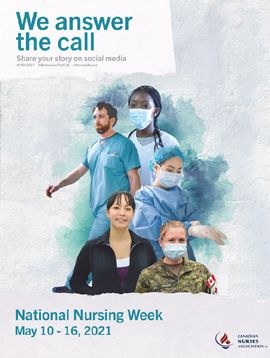
The province’s annual proclamation of Nursing Week, May 10th - 16th
corresponds to another year where we continued to be challenged as individual
practitioners and in our respective professions by the dual public health
emergencies (COVID-19 and the opioid overdose crisis). This year’s theme for
National Nursing Week is #WeAnswertheCall as established by the Canadian
Nurses Association (CNA) (in parallel with International Nurses Day, celebrated
May 12th on Florence Nightingale’s birthday). This theme strongly resonates with
the Nursing Policy Secretariat as we have witnessed nurses over the past year at
all levels answering the call to service, and going above and beyond to deliver
quality and safe care for persons; their families and caregivers; and communities
in British Columbia. Many retired and non-practicing nurses have also given their
time and energy informally in their communities, and more formally by seeking
temporary emergency registration to support the pandemic response.
                                                                                     Dr. Natasha Prodan-Bhalla
We are also remembering Diane Law, a patient-care co-ordinator at Peace Arch         DNP, MN, NP(A), BScN
Hospital in White Rock and much beloved nursing colleague, wife, daughter,           Chief Nurse and Professional
and friend who was the first nurse in Canada to lose her life to complications of    Practice Officer
COVID-19. We will not soon forget her lifelong dedication to answering the call      Nursing Policy Secretariat
to service and selfless sacrifices she made to support the pandemic response.        Ministry of Health

We would also like to take this opportunity to acknowledge the contribution
of midwives in the health care system. May 5th has been proclaimed by the
province as Midwives’ Day to celebrate and recognize the work of midwives
in providing safe and quality care for pregnant people and families across the
province. Midwives have also arisen to meet the health care challenges as a
result of COVID-19, demonstrating a laudable dedication to families to support
them during this important time in life. Read on to learn about one of many
registered midwives, Tobi Reid who is making a difference for B.C. families.

   “Resilience is never an individual act…we are only as strong as
   the communities we are part of.”
   Tobi Reid, Registered Midwife, South Community Birth Program.
                                                                                     Joanne Maclaren
                                                                                     RN, BSN, MN, CHE
                                                                                     Senior Director, Nursing Policy,
It hasn’t been easy to answer the call under the challenging circumstances           Practice, & Education
that are often felt most acutely by health care providers in direct service.         Nursing Policy Secretariat
Health care providers at all levels have shown a remarkable ability to adapt,        Ministry of Health
persevere, and rise to meet the ever-present challenges. However, we know the
emotional and physical toll of doing so can be substantial given the unrelenting
response needed for the dual public health emergencies in B.C. and to address
the increasingly complex care needs throughout the health care system.

NURSING POLICY SECRETARIAT                                                      STATUS UPDATE - MAY 2021           3
MESSAGE FROM NPS EXECUTIVE (PART 2)

In response, government, health authorities, and other partners are working on
establishing the necessary infrastructure to build quality care environments that
enable optimal health not just for the people we serve, but for providers as well.

As part the 2019 collective bargaining negotiations, $8.5 million has been
committed over three years for a new organization that will address workplace
safety, i.e., the independent BC Health Care Occupational Health and Safety
Society (OHS Society). The OHS Society will be dedicated to addressing
occupational health and safety issues that include promoting a safe and healthy
work environment and organizational safety culture through prevention of
injury initiatives, safe workloads, safe work practices and healthy workforces.
Additionally, to respond to the increasing reports of nurse and other health
care worker burnout, the Ministry of Health and the Ministry of Mental Health         Zak Matieschyn
and Addictions in collaboration with health authorities and labour partners           NP(F), MN, BScN
are reviewing opportunities to increase and enhance available psycho-social           Clinical Director, Nurse Practitioners
supports to build and strengthen resilience to support the ongoing response           Nursing Policy Secretariat
to COVID-19.                                                                          Ministry of Health

Nursing Week serves as a reminder that our strength as individuals and in our
chosen profession is a collective and mutually reinforcing one. We look outward
to support people on their health care journey, but we also need to look inward
to support each other and continue to evolve the profession. Every gesture
bestowed on a colleague in the spirit of kind, compassionate care for each other
strengthens our collective resilience and gives us hope for a brighter future.

We encourage you to read Tobi Reid’s reflections and those of exemplary nurses
across the province in our Spotlight, and about initiatives that demonstrate how
nurses, and other health care providers have risen to the commitment to answer
the call for the betterment of their profession and the health care system.

We would also like to invite you to attend a zoom webinar with guest speaker
Michael Villeneuve, CEO, Canadian Nurses Association in celebration of Nursing
Week hosted by the Nursing Policy Secretariat, Nurses and Nurse Practitioners of
British Columbia (NNPBC) and Sigma Xi Eta at-Large Chapter. This event is being
held on May 10th at 3 p.m. To register, go to: https://zoom.us/webinar/register/
WN_KrDAK8VUTHGqjmiaI-gROg

Finally, we thank you and commend you for your bravery, strength, and
for continuing to answer the call. We are all the better for it.

With our deepest thanks and appreciation,
Natasha, Joanne, Zak, & the NPS Team.

NURSING POLICY SECRETARIAT                                                       STATUS UPDATE - MAY 2021                4
GET TO KNOW YOUR ASSOCIATION -
           NURSES AND NURSE PRACTITIONERS OF BRITISH COLUMBIA

                                                                       The Association of Nurses and Nurse
                                                                       Practitioners of BC (NNPBC) is the
                                                                       link between nurses, policymakers,
                                                                       and government. NNPBC advocates for
                                                                       healthy public policy, promotes excellence
                                                                       in nursing practice, increases nurses’
                                                                       contribution to shaping the health system,
                                                                       and influences decisions that affect nurses
                                                                       and the public they serve. By bringing all
                                                                       nursing designations into one association,
                                                                       they ensure that there is a united nursing
                                                                       voice influencing public and social policy in B.C.

                                                                       To facilitate this work, NNPBC provides
                                                                       access to and offers a host of services and
                                                                       programs that enhance nursing practice
                                                                       and ensures that nursing remains at the
forefront of advocacy. Recently, NNPBC advocated for the inclusion of RN and RPN prescribing to help mitigate the
dangers of a toxic street drug supply. They also stepped up their advocacy efforts in support of a safer drug supply
and decriminalization of the current drug supply.

In addition to hosting Decision Support Tools, and a series of educational webinars, NNPBC recognizes the most
important part of their work is remaining connected to nurse members who provide them valuable information
about their work and how the Association can help to ensure that issues that impact nursing are brought to the table.

Nurses are the largest group of health care providers in the province which means that it is their expertise and
voice that should be at the forefront of health and social policy development and implementation. NNPBC looks
forward to working with their members to make this a reality.

Learn more about what NNPBC offers:
•• NNPBC Info Sheet
•• ‘What does my professional association do’ info sheet
•• Who’s who in nursing
•• Nursing Three-Pillars

NURSING POLICY SECRETARIAT                                                       STATUS UPDATE - MAY 2021             5
RN/RPN PRESCRIBING: RESPONDING TO THE OPIOID
           OVERDOSE PUBLIC HEALTH EMERGENCY

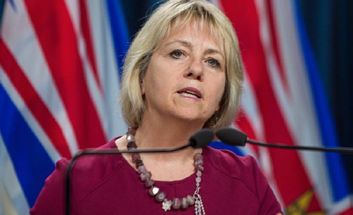
To help address the worsening situation of overdose
deaths arising from the dual public health emergencies
(opioid overdose crisis and COVID-19 pandemic) Dr.
Bonnie Henry issued a Provincial Health Officer order
on September 16, 2020 authorizing Registered Nurses
(RNs) and Registered Psychiatric Nurse (RPNs) who have
additional educational preparation and experience to:
•• order and interpret diagnostic tests to make a
   diagnosis of a substance use condition or substance
   use disorder
•• make a diagnosis of a problem substance use
   condition or substance use disorder                       Thirty nurses enrolled in the early adopter cohort have
•• prescribe controlled drugs to people who are              completed their training, with the second cohort well
   diagnosed as having a problem substance use               underway (totaling 82 nurses who have completed or
   condition or substance use disorder; and                  are in enrolled in training). A training pathway is under
•• refer people with a problem substance use                 development to additionally support prescribing of
   conditions or substance use disorder to primary           methadone and Kadian with a targeted launch date of
   care and specialized health and social services           July 2021.

           SURGICAL RENEWAL IN B.C.: BUILDING CAPACITY OF
           ANESTHESIA CARE TEAMS

To continue to build the surgical system’s capacity
and keep up with the ongoing demand over the long
term, the Ministry of Health is continuing to implement
the actions outlined in the surgical renewal plan –
A Commitment to Surgical Renewal in B.C.
The COVID-19 pandemic created an increased demand
for anesthesia care providers to help address the back
log of surgeries and to continue to address surgical wait
times, an ongoing priority area of focus for the Ministry
of Health. Although significant progress has been made       and availability of human resources will be central to
to date, the demand for anesthesia care continues to         building anesthesia capacity in the province. One of
increase. As a result, B.C. will need more anesthesia        the roles being examined to build capacity within ACTs
providers over the long term along with care models          is the utilization of nurses to provide anesthesia care.
that optimize roles within the anesthesia care team (ACT).   Nurses have delivered safe and quality anesthesia care
                                                             in many countries across the world and may provide an
Examining the holistic human resource needs for              opportunity to help address service gaps in B.C. in the
anesthesia care including the complexity of care             medium and long term using a team-based care approach.

NURSING POLICY SECRETARIAT                                                       STATUS UPDATE - MAY 2021           6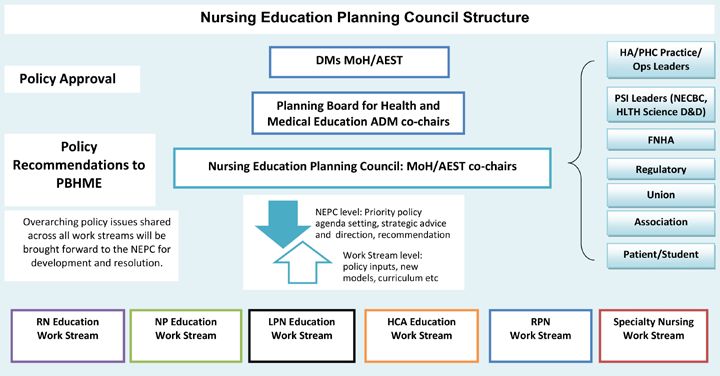
HEALTH CAREER ACCESS PROGRAM (HCAP): UPDATE

In September 2020, the Ministry of Health launched          for HCAP. Since the launch of the provincial expression
the Health Career Access Program, introducing a new         of interest process in September 2020, nearly 1,400
entry-level non-clinical support role –the Health Care      HCSWs have been hired in both the public and private
Support Worker (HCSW) in long term care and assisted        long-term care and assisted living sectors. Work is
living sites in B.C. HCAP supports the increased need for   also underway to offer more HCAP opportunities
an additional 3,000 staff in this sector while providing    in Indigenous communities and to recruit more
a path for applicants with no health care experience        Indigenous participants to the HCAP program.
to get hired as an HCSW and receive sponsored Health
Care Assistant (HCA) education to enable them to            HCAP has also been featured on WorkBC, including a
become fully qualified and Registered HCAs.                 new video to introduce the health care assistant role as
                                                            an in-demand career opportunity.
The MoH has been working with the Ministry of
Advanced Education and Skills Training (AEST), post-        Here’s what students in the program have told us about
secondary partners as well as public and private            their experience:
employers to support the hiring and training process

   “The experience so far for me has been amazing. I really enjoy being at the long-term care home
   and assist in my role as a Support Worker while I continue to learn to become a Health Care Assistant.
   Schooling is manageable with the courses and the instructor is great. It gave me a different perspective
   personally being at the long-term care home during this time of COVID-19, where a lot of vulnerable
   adults are affected.

   You can tell the residents at the care home really enjoy our presence whether doing an activity with them,
   sharing a conversation, or just sit beside them, and enjoy their meal and keep them company. …It created
   a job opportunity for me, as I was laid off from my job due to the pandemic. Also, a rewarding opportunity
   to help those that needs us most right now. Everyone have been so kind and nice throughout as well,
   from acceptance of the program, the interview process, and the on-going support. Thank you!

   “Thank you so much for … the program – it is my dream and I want to give myself a better future.”

NURSING POLICY SECRETARIAT                                                      STATUS UPDATE - MAY 2021          7
TRANSFORMATIVE NURSING (BSN) PRACTICE EDUCATION
           AND TRANSITION MODEL PROJECT: UPDATE

The Nursing Policy Secretariat with Ministry of              Work Underway
Advanced Education and Skills Training (AEST) and
the Nursing Education Planning Council (NEPC)                •• The New Graduate Transition Working Group is
partners from practice, education, regulatory, union            developing a policy framework to renew B.C.’s New
and government are continuing work on the BSN                   Graduate Transition Program.
practice education and transition model project.             •• The Learning Pathway Framework Working Group
The project’s aim is to modernize and strengthen the            is developing an overarching framework to support
efficiency, effectiveness and sustainability of registered      Post-Secondary Institutions and Health Authorities
nurse undergraduate education and new graduate                  partnerships in piloting learning pathways in
transition to the practice setting. This work aligns            complex practice areas in the upper year/ final
with the education recommendations in the Nursing               practicum of the BSN program.
Policy Secretariat’s Priority Recommendations report
priority recommendations and builds on the                     •• The initial three priority learning pathways include:
Nursing Education Planning Council (NEPC) Report.                 rural/remote, perioperative, and high acuity/other.

                          See how this work fits into the governance structures for
                            the Nursing Education Planning Council as follows:

NURSING POLICY SECRETARIAT                                                        STATUS UPDATE - MAY 2021           8
TRANSFORMATIVE NURSING (BSN) PRACTICE EDUCATION AND
TRANSITION MODEL PROJECT: RESEARCH COLLABORATION
Closing the Gap: The Preparation and Integration of
Newly Graduate Nurses (NGN) Into the B.C. Workforce:
2020 Convening & Collaborating 2020 Convening
& Collaborating (C2) 2020 Award
The Michael Smith Foundation for Health Research (MSFHR) Convening
& Collaborating (C2) Program promotes knowledge exchange and
meaningful collaboration by supporting researchers, trainees, and
research users in co-developing research that can directly impact patients
and a diverse range of stakeholders.
Co-developing research by engaging with stakeholders helps ensure
the research is relevant and can increase the likelihood of leveraging the
award into additional funding from national and international sources.
It also helps build knowledge translation (KT) capacity, experience, and
skills in B.C.’s research and health professional trainees.
Preparation and Integration Of Newly Graduate Nurses (NGN) Into the BC Workforce was selected as a 2020
award recipient to support opportunities for B.C.’s health authorities, nursing education institutions, professional
nursing organizations and associations to participate in Knowledge Sharing and New Nurse Transition Program
Implementation Forums. A key outcome of the forums will be to create a plan to operationalize the Transition
Model implementation and evaluation strategies and establish research plans for a phased roll-out and evaluation
of the model. A second outcome of the forums will be the formation of an Advisory Group to continue the work of
accountability for implementation and evaluation of the model throughout the B.C. health regions.
The NPS is working with Dr. Judy Duchscher (Lead) and other partners on this work. The research being conducted
is beneficial to the NPS BSN model project work as it will facilitate a further dialogue about ways to better support
newly graduated nurses in B.C.
NURSING NOW: SHARE YOUR STORY, CONTRIBUTE TO GLOBAL RESEARCH
Nursing Now, a global campaign launched to raise the status and profile of
nursing aims to empower nurses to take their place at the heart of tackling 21st
Century health challenges. Nursing Now is looking to learn more about nurses’
roles and work environments; well-being at work; and impact of COVID-19.
Contributing to the global research base regarding the impact of the pandemic on
the nursing and midwifery workforce can support the development of effective
solutions on local and international levels. We encourage all nurse to use their
voice to contribute to the collective understanding of the experience of nurses
around the globe by taking this anonymous, 20-30 minute survey (available at:
https://research.unisa.edu.au/redcap/surveys/).
NURSING POLICY SECRETARIAT STATUS UPDATE - MAY 2021 9MIDWIFERY UPDATE
On September 21, 2020, the Ministry of Health
(ministry) aligned nursing and midwifery within one
policy area in the Nursing Policy Secretariat (NPS).
This organizational change was implemented to build
collaborative policy connections between nursing
and midwifery and to support strategic direction for
midwifery within the ministry and with external health
system partners.
As part of this collaborative work, NPS, in partnership
with the Midwives Association of British Columbia
(MABC), established the Midwifery Advisory Committee
(MAC). The MAC brings representatives from the
ministry, MABC, and key midwifery and health system
partners in the province together to collaborate and
consult on matters pertaining to midwifery practice
in B.C., health system priority issues and integration of
midwives in the broader health system.
The MAC will bring system-wide leadership and
coordination in addressing midwifery health system •• Serve as a consultative body to health system
policy issues with the following strategic objectives: partners regarding midwifery, maternity care,
primary care, and other health system policy issues.
•• Identify and promote opportunities for midwifery
engagement in broader health system planning. NPS is also working with MABC to address priority issues
•• Expand the role of midwifery in primary care, health raised by midwives. Recently, this collaborative work
authorities and the larger health system. has helped facilitate midwives to support the province’s
•• Identify and advance opportunities to support pandemic response including streamlining access to
midwifery integration into primary care. personal protective equipment for midwives, enabling
midwives to conduct COVID-19 testing and provide flu
•• Address issues of maternity care in primary care
vaccinations, and securing compensation for midwives’
through collaboration with health system partners.
pandemic service delivery activities.
•• Improve and provide role clarity of midwifery
governance within the ministry.
NURSING POLICY SECRETARIAT STATUS UPDATE - MAY 2021 10Nurse Spotlight
We asked nursing and midwifery exemplary leaders a few rapid focused questions to learn more about them
and get their sage advice on building resiliency, an important part of being a healthy practitioner and effectively
responding to practice demands during these challenging times.
Tammi Guimond
Nurse and Policy Analyst, for NNPBC
Chairperson for the Board of Directors, Nisga’a Valley Health Authority
1. What have you learned about yourself as a nurse or the health care
community as a result of the evolving COVID-19 pandemic?
•• I’ve struggled morally with working in a domain different than direct care, but
I learned that I could help in a different way and remain connected professionally
and emotionally to my nursing peers. I dug into policy and advocacy work that
voiced what nurses need to function in this pandemic. I’m grateful for my position
in the association that affords me the opportunity to advocate for all nurses.
•• I am proud to be part of a health care community that rose up and challenged COVID-19 in a very exceptional,
yet direct way: by the use of infection control. I learned the health care community is incredibly responsive. I’m
so proud of that.
2. How do you foster your own resilience and well-being during these challenging times, and what
strategies would you recommend to other nurses to boost their resilience?
•• Resilience is built by rest and finding new ways to cope. As the Board Chair for the Nisga’a Nation, for months
I received daily information about confirmed cases and deaths of the people, as well as all the information about
what was being done to control the virus. At the association, we tirelessly advocated for nurse’s wellness. All of
this necessitated forced rest times. I fostered myself by walking with my dog, and I increased my collection of
day-wear jammies for fun! I use Facetime for family-time ... my baby granddaughter is one, so Facetime is pure
joy! She knows how to get Grammi on the phone already. Being crafty and outsmarting the virus by masking
and washing hands when I am out makes me feel resilient.
•• I recommend joy-days filled with treats, and pure silence occasionally to re-set. My power went off for hours
recently. I discovered pure silence undoes the damage of constant information. I highly recommend!
3. How do you think COVID-19 will impact nursing/ healthcare into the future?
•• To say healthcare is enormously impacted is an understatement. The virus has given us a new reference
point about health of the larger community, and a new perspective of global wellness. We are so aware now
how quickly a virus can spread globally, and we will continue to see heightened measures of action globally.
I think we will see standards of practice, guiding policies, the nursing environment and see increased amounts
of readily available resources (such as PPE) to better support nursing working safely. I think the adaptability
possessed by nurses will continue to increase exponentially. The profile of the nurse has changed due the
pandemic, it will be a challenging profession to enter, but I am hopeful that new nurses will come to know
rewards of nursing. It’s been incredible to watch the dedication of my peers. I am very proud to be a nurse and
support my colleagues.
NURSING POLICY SECRETARIAT STATUS UPDATE - MAY 2021 11Nurse Spotlight
Tobi Reid
Registered Midwife
South Community Birth Program
Vancouver, B.C.
1. What have you learned about yourself as a midwife or the health care
community as a result of the evolving COVID-19 pandemic?
•• As a new registrant, I never anticipated I would graduate into a global pandemic.
At an individual level, I’ve learned that I know and am capable of more than I think
am. At a community level, I’ve learned that I’m part of a very creative and supportive
network - I’m amazed at how health care professionals have come together in a
myriad of resourceful ways to keep ourselves and the communities we serve safe. Midwifery involvement in the
COVID-19 vaccination roll-out, mentorship support for new practitioners, and exploring innovative avenues for
virtual care are a handful of examples.
2. How do you foster your own resilience and well-being during these challenging times, and what
strategies would you recommend to other midwives to boost their resilience?
•• To answer this question, I’ll reference a quote from an interview I just listened to with Drs Emily and Amelia
Nagoski: “the cure for burnout isn’t and can’t be self care. It has to be all of us caring for each other.” Resilience
is never an individual act, and we are only as strong as the communities we are part of. For me, boosting
resilience is about safe working conditions, appropriate compensation, system-level mental health supports,
and acknowledging our interdependence.
3. How do you think COVID-19 will impact midwifery/healthcare into the future?
•• COVID-19 has highlighted injustices within the healthcare system and the world at large. There is a renewed
shift towards addressing the root causes of health disparities for communities who have been made vulnerable
through policy choices and systems of oppression. I’m hopeful we can apply the lessons learned in this pandemic
towards the provision of more inclusive, accessible, and affirming health care in the years ahead.
•• I’m also seeing a heightened interest in out-of-hospital and community health care during this pandemic.
Midwifery clinics are experiencing an increased demand for home births as healthy families elect to birth in
the safety and comfort of their own homes. I feel privileged to be part of a profession that supports choice of
birthplace during such a transformative moment in people’s lives.
NURSING POLICY SECRETARIAT STATUS UPDATE - MAY 2021 12Nurse Spotlight
Dr. Jennifer Beaveridge, MScN, DNP, NP-F
Regional Department Head, VCH Department of Nurse Practitioners
Director, Nurse Practitioners, Professional Practice
Family Nurse Practitioner
Adjunct Professor UBC, UNBC, UViC -
Vancouver Coastal Health
1. What have you learned about yourself as a nurse or the health care
community as a result of the evolving COVID-19 pandemic?
•• I have really grown as a healthcare leader and as a frontline NP through the pandemic.
My understanding of the ‘population and public health’ lens versus an individual
lens in healthcare decision-making was a steep learning curve and challenged me
as a leader. Who knew I was going to have to know so much about the agricultural industry! However, that
became necessary when considering how to support temporary agricultural workers coming to B.C. from
outside Canada.
•• Looking back on this year, I am coming out a different person. I have changed and grown so much. I have
realized how much we can do virtually, including building and maintaining relationships! I also have learned
to truly value my family time, and to live more in the moment.
•• I have witnessed the dedication, compassion and commitment from health care providers and specifically NPs
throughout the pandemic. I have been in awe on how so many have gone well above and beyond, working
tireless hours to ensure timely and quality care is available to our most vulnerable clients through the pandemic.
This has further deepened my love of being an NP and will continue to influence and inspire me throughout
the rest of my career.
2. How do you foster your own resilience and well-being during these challenging times, and what
strategies would you recommend to other nurses to boost their resilience?
•• This year has really pushed me to learn to adapt, be flexible and quickly change direction. It has been exhausting
and many days heartbreaking. The dedicated teams I have worked with have kept me energized and inspired to
keep going even on the darkest days. I work with an incredible group of healthcare providers and leaders. There
are four of us on the VCH NP leadership team - three NPs and one administrative assistant. Our connection and
support for each other this year will remain prominent in my heart and mind for many years to come. I could
not have made it through this without this team of incredible leaders; we each had turns holding each other up
when we could not do it ourselves.
•• My recommendations to boost resilience is to start with being kind and forgiving to yourself, and then to apply
that to others. I also think the key is have a close group of supportive colleagues that you can go to for support.
Zoom sessions over cocktails where you can vent, cry and laugh are key!
3. How do you think COVID-19 will impact nursing/ healthcare into the future?
•• I think we have all learned so much about ourselves professionally and personally. A lot of positive change
occurred that we need to continue. I think we all recognize we cannot go backward but only forward. From
our ability to provide virtual care, create faster processes for decision making, to how we truly collaborate and
provide team-based care. One amazing feature that has come out of the pandemic is the partnerships between
the health authorities. I am incredibly proud of how the Health Authority NP leaders came together across the
province to support each other as leaders; to support the frontline NPs; to share resources and workflows; and
to find creative ways to ensure individuals, families and in particular vulnerable populations received care when
they needed it. The partnerships that have developed will only continue to grow stronger in the future and that
will have a significant positive impact on patient care, and on the NP profession.
NURSING POLICY SECRETARIAT STATUS UPDATE - MAY 2021 13NURSING IN THE TIME OF COVID-19
Nursing in B.C. continues to evolve and adapt to the changing health
care landscape. Here are a few highlights of the collective response of
health system partners:
•• Activation of Temporary Emergency Registration (TER) for all nursing
registrant classes – as of April 30th, 2021 there have been 923 RNs, 144
LPNs and 13 RPNs register for TER.
•• Online fast track BCIT education program developed to support delivery
of high acuity/ critical care – Focused Education Preparation Advancing
Frontline Registered Nurses (FEPA)
•• Currently 12,500 learners (mainly registered nurses; some allied health/
physicians) have participated (90% completion rate).
•• PHO order enabled LPNs to perform nasopharyngeal and throat swabs
without an order for duration of the pandemic.
•• PHO order enabled nursing professions (registered and non-registered)
to assist in the mass immunization clinics, including identification of the roles they could perform, supervision
requirements and required education.
•• Work is underway with AEST to support continuity and completion of clinical placements to support graduation
of all health science students, including nurses and HCAs. Provincial guideline: Student Practice Education
Guideline for Health Care Settings During COVID-19 Pandemic developed in July 2020.
NURSING POLICY SECRETARIAT STATUS UPDATE - MAY 2021 14COVID-19 IMMUNIZATION: FROM VACCINE HESITANCY
TO CONFIDENCE
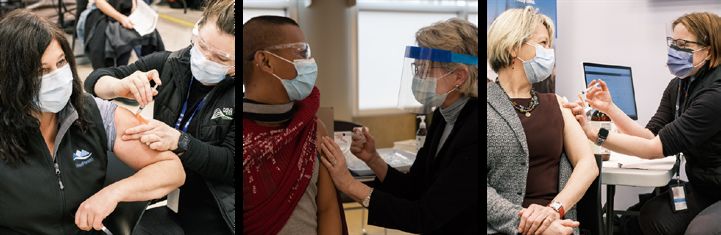
B.C. is undertaking the largest immunization vaccine myths and misinformation may prevent some
campaign in the province’s history. Nurses have been individuals from seeking out the vaccine. Nurses and
at the forefront of supporting the campaign. This has midwives have a role to play in supporting behaviour
been a life saving measure for many British Columbians change by the public (and sometimes their colleagues)
including seniors, essential workers, Indigenous people, by adopting (and sustaining) all the layers of protection,
clinically vulnerable people, and health care providers. including immunization (based on evidence-informed
At the time of this release, 1,877,330 doses of Pfizer- information) and other public health measures to save
BioNTech, Moderna and AstraZeneca-SII COVID-19 lives and put an end to the pandemic.
vaccines have been administered, 91,731 of which are
second doses. To learn more about how to support evidence-informed
conversations on vaccines and immunization see the
While B.C. is making good headway in delivering NNPBC blog, Tackling Vaccine Hesitancy: A Nursing
COVID-19 immunizations to people who want them, Approach
NURSING POLICY SECRETARIAT STATUS UPDATE - MAY 2021 15THANK YOU FROM THE PROVINCIAL NURSING AND ALLIED
HEALTH COUNCIL (PNAHC)
The Provincial Nursing and Allied Health Council (comprised
of nursing and allied health leaders) would also like to extend their
sincere thanks to all nurses in British Columbia during National Nursing
Week 2021. This year’s theme #WeAnswerTheCall is a testament to
the extraordinary response of nurses in the face of dual public health
emergencies - the COVID-19 pandemic and the opioid overdose
crisis, and the ongoing complexity of health system needs.
As the largest group of health care providers in the province, you
play a vital role in our health care system, and your impact has never
been more apparent. You continue to answer the call to service,
and courageously protect and support the health and well being
of individuals, families, and communities in B.C. Our lives have been
touched by your tireless, compassionate care, and healing presence,
particularly over the course of the past year.
You have given us all strength and hope for the future, and know
that you are a healing human connection for those in your care and
your colleagues across the health care system.
Becky Palmer, Chief Nursing Officer, Rhoda Viray, Director, Professional Practice, Northern Health
First Nations Health Authority
Grant McCullough, Executive Director, Professional
Jacqueline Per, Chief Nursing and Allied Health Practice, Nursing and Clinical Informatics, Providence
Officer and Interim Executive Director, Knowledge and Health Care
Practice Pandemic Planning, Fraser Health
Fiona Karmali, Interim Chief Nursing Officer;
Cheryl Whittleton, Chief Nursing Officer and Executive Director, Professional Practice, Clinical Informatics
Professional Practice Lead, Interior Health and Policy Office, Provincial Health Services Authority
Krista Allan, Vice President, Knowledge, Practice and Lorraine Blackburn, VP Professional Practice and
Chief Nurse Executive, Island Health Chief Clinical Information Officer, Vancouver Coastal Health
Natasha Prodan-Bhalla, Chief Nurse and Joanne Maclaren, Senior Director, Nursing Policy,
Professional Practice Officer, Nursing Policy Secretariat, Practice and Education, Nursing Policy Secretariat, Ministry
Ministry of Health of Health
Sharon Stewart, Executive Director, Allied Health Lorrie Cramb, Director, Allied Health Policy
Policy Secretariat, Ministry of Health Secretariat, Ministry of Health
NURSING POLICY SECRETARIAT STATUS UPDATE - MAY 2021 16Nursing Policy Secretariat British Columbia Ministry of Health For questions regarding the activities of the Nursing Policy Secretariat at the Ministry of Health, please contact: nursingpolicysecretariat@gov.bc.ca
You can also read


