Nurturing care for young children: seeking solutions for addressing disparities heightened by the impact of - COVID-19 - ARNEC
←
→
Page content transcription
If your browser does not render page correctly, please read the page content below
Nurturing care for young
children: seeking solutions for
        addressing disparities
 heightened by the impact of
                     COVID-19
                                                                   ARNEC Webinar Series No. 2

Thank you for joining us. The webinar will begin shortly.
Song: Let’s slow down (from COVID-19 Parenting, https://www.youtube.com/watch?v=j1ShU5pwpaQ)
The Webinar Series 2.0 is brought to you by
Our focus in this second webinar series

policy and program solutions to address conditions of
disparity among young children heightened by COVID-19

                         Webinar no. 1
                         early learning opportunities for young
                         children during and beyond the pandemic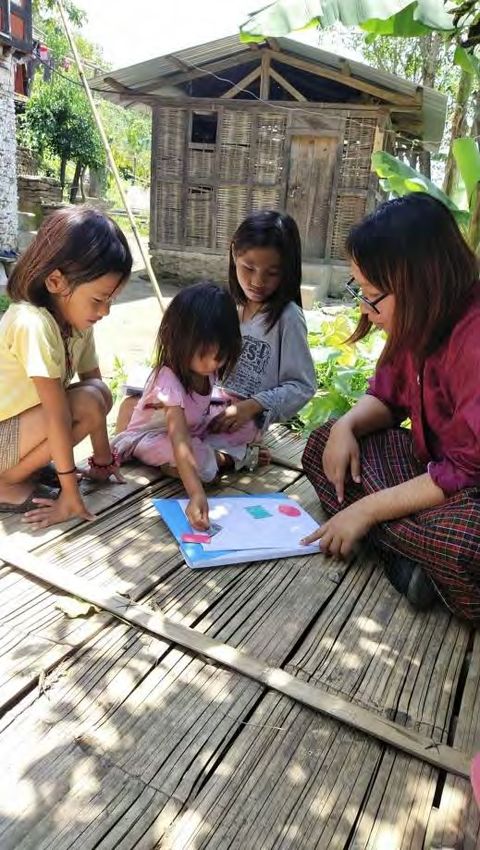
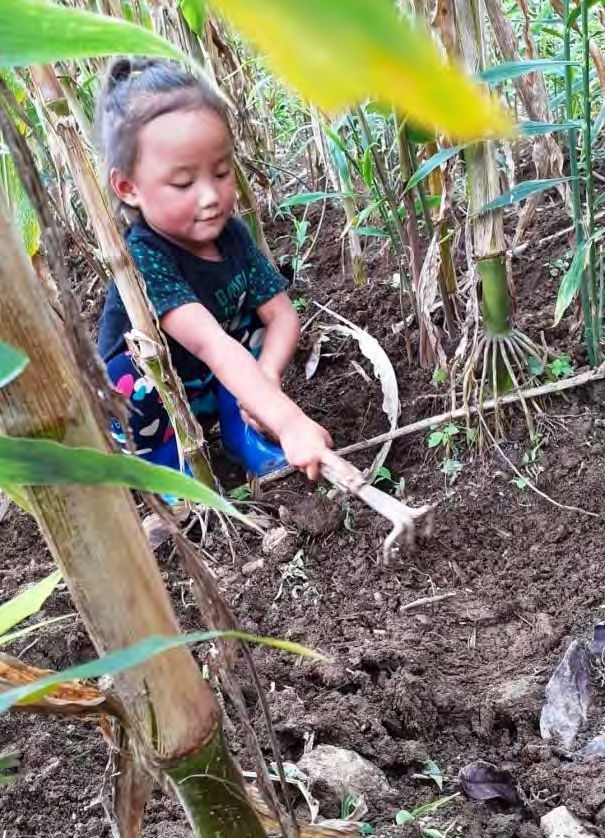
Impact is worst for marginalised
children who were vulnerable even
before the pandemic:
   • Children with delays and disabilities;
   • Children living in poverty;
   • Children living in informal settlements;
   • Children living in rural and remote
     communities;
   • Children of refugees and migrants; and
   • Children of ethnic and linguistic minorities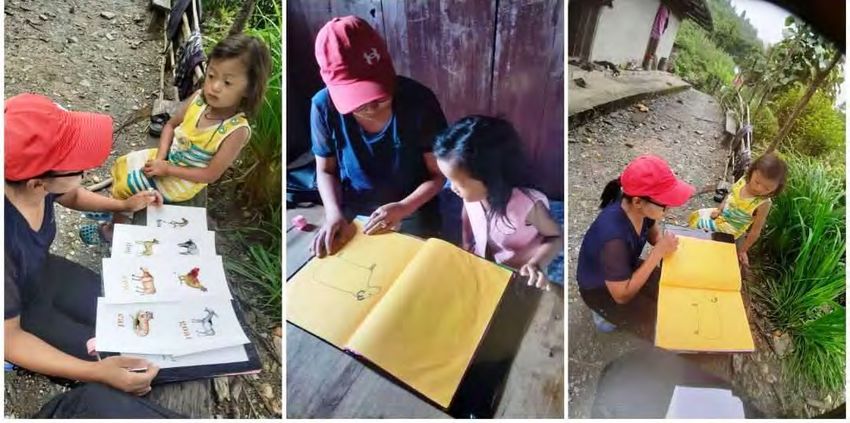
Objectives
• Present local or country-level solutions to
  promote nurturing care and inclusive ECD,
  including the redesign of policies and
  programs targeting marginalised young
  children and their families;
• Discuss evidence-based studies and
  emerging good practice at local and
  country levels; and
• Trigger conversations around cross-country
  and multisectoral advocacy in support of
  the well-being of children and reforms in
  policies and programs for inclusive ECD.
Our moderator
                        Mita Gupta
                        • Early Childhood Development Specialist and
                          Disability Inclusive Education Focal Point, UNICEF
                          Regional Office for South Asia

Photos credit: UNICEF
Gentle reminders
  Please note that the webinar will be recorded, and resources shared will be made available on the
  ARNEC’s website afterwards.

  Please use the Question & Answer (Q&A) feature located in your ZOOM Meeting Control to ask
  questions. You can upvote a question by clicking the thumbs up.

  Join us as ARNEC’s member to be informed of the next webinar.
  https://arnec.net/signup. Like and follow us on Facebook to get regular updates!

     We would like to request your feedback on the webinar, please help us to complete the short survey
     using the link sent after the session.
Photos credit: UNICEF
Key questions
 1. What challenges did the pandemic introduce in the delivery of early learning services,
    especially for the most vulnerable groups?

 2. What are the long-term effects of COVID-19 on early learning opportunities and readiness for
    school based on experience from other similar crisis situations in the past?

 3. What policy changes or developmental interventions are being designed or implemented to
    support home-, facility-, and institution-based early learning opportunities in the context of
    pandemic adjustments?

  4. How do governments/ countries ensure that they address the early learning needs of the most
         vulnerable and marginalised groups of young children?
Photos credit: UNICEF
Key questions

  5. What are the possible entry points for collaboration with other sectors within your
  program implementation?

  6. What preparations have been made for the re-opening of ECE services in your country,
  in terms of governance, safety, teachers’ training, and parental communications and
  support?

  7. What challenges remain? What key messages would you like to share? What is your
  call to action?
Photos credit: UNICEF
Our speaker and presenters

                        Dr. Kate Moriarty
                        Senior Advisor, Strategic Engagement & Dialogue,
                        Inter-Agency Network for Education in
                        Emergencies (INEE)

Photos credit: UNICEF
                        • How do emergencies and crises such as COVID-19 impact the
                          quality of learning of young children, especially those in
                          vulnerable situations?
Rokhaya Diawara
Education Programme Specialist and Global Early
Childhood Care and Education Adviser, UNESCO
Headquarters
Photos credit: UNICEF
• Guidance on reopening ECE servicesKarma Gayleg
ECCD Specialist, Ministry of Education,
Bhutan
Photos credit: UNICEF
• Pandemic-induced policy adjustments for early
learning opportunities in BhutanNikki Reyes
Planning Officer, Policy and Programs Unit, ECCD Council
of the Government of the Philippines
• ECCD home-based programs: an alternative approach to
learning continuity especially for the most vulnerable groups
Photos credit: UNICEF
of young children in the Philippines
• Presentation prepared in collaboration with Erwin Taleon,
Khara Uy, and Patrick VicerraEarly education in emergencies:
the challenge of COVID-19
Kate Moriarty, INEE
ARNEC Webinar, December 20202● INEE is an open, global network working to ensure the right
to a quality, safe, and relevant education for all who live in
emergency and crisis contexts.
● As part of our work, we support and promote a multi-
sectoral approach to ECD across all humanitarian settings -
that includes quality health care, adequate nutrition,
protection, play and early education- with a focus on equity
and inclusion for the most marginalised children.
INEE ECD Task Team aims to serve as a community of practice for stakeholders working in the field of ECD in emergencies, to:
➔ Develop and disseminate practical tools and publications with aim of improving delivering of ECD and early education in crisis,
promoting the INEE Minimum Standards for Education: Preparedness, Response and Recovery.
➔ Support advocacy efforts for improved investments, policy and commitments to action related to young children in
emergencies
➔ Identify the needs for capacity sharing of relevant stakeholder to improve programmes and policies for young children and
their families in crisis contexts.The early years are critical, including for the most marginalised and
those in vulnerable situations
Robust evidence shows nurturing care and quality holitistic
ECD . . .
★ Essential for a child’s optimal development.
★ Protect children’s physical, cognitive and social and
emotional development:
○ Mitigating risk of ‘toxic stress’
○ Reducing exposure to other child protection
risks.
★ Participation in early education sets strong
foundations for future life chances, it is important for
tackling the twin challenges of equity and learning
throughout education.
★ Early education is highly cost-effective strategy to
improve economic prosperity and stability, yielding
long-term economic and social returns.Quality ECD and early education in emergencies provides vital support
● Young children growing up in crisis settings are often in
precarious situations, with risk of physical and
emotional harm impacting their immediate safety and
well-being and their long-term development.
● A number of challenges threaten their ability to flourish,
including separation from parents or primary caregivers,
physical injury, loss of the stability and comforts of
home and community, experiencing or witnessing
violence.
● Young children affected by emergencies are at risk
‘toxic’ stress.
© A Oberstadt, IRC
Access to safe, quality early education can help
mitigate the harmful effects conflict and crisis.Betwen a quater and Pre-primary has low and declining levels of support from the donor community . . . ➢ 16 of the top 25 donors to education either gave nothing or reduced their previous spending on pre-primary education in 2017. ➢ In 2017 pre-primary share of total education aid was just 0.5%
COVID-19 and Global Education Emergency
The COVID-19 pandemic has added additional
challenges in the already complex and insecure contexts
of crisis-affected countries, compounding risk for the
youngest children.

 ●    Restrictions to ECD services
 ●    Community early learning centres and school
      closures
 ●    Lack of and challenges of delivering distance
      education for the youngest children
 ●    Increased pressure on parents and caregivers
 ●    Increased child protection risks

Young children are missing out on critical support
needed at a time when 90% of brain development is
taking place.

 Marginalised children and those in crisis contexts
       are at risk of being left further behind.
Early Education Programming during COVID-19
The COVID pandemic disrupted ability to provide early education services
➔ INEE Members rapidly adapted their programming. One example . . .
● In 2019, the LEGO Foundation awarded a $100 million grant to bring early ECD learning to 800,000 pre-primary and
primary school aged refugee children in Ethiopia, Uganda and Tanzania. The project, “PlayMatters: Sparking Lifelong
Learning,” is led by a coalition of humanitarian relief organizations - including the International Rescue Committee,
who co-chair the INEE ECD Task Team.
● PlayMatters’ interventions were in their nascent stages of development when the COVID-19 pandemic forced
school closures. While ministries of education and other service providers focused on delivering an at-home
academic curriculum, PlayMatters prioritized addressing caregiver stress and mitigating learning loss through
playbased methodologies that engage the whole family in reading, math, and social and emotional learning (SEL)
activities.
● PlayMatters also produced PlayMatters at Home Radio Programs which incorporated activities from the packets and
provided health and hygiene messages in a series of broadcasts. Caregivers reported that the tone was friendly and
easy to understand and the songs were especially fun and engaging for children.INEE ECD Task Team supporting safe return to
early education
Safe Back to School Guide:
Annex 7: Additional considerations for Early Learning Programmes
(ELPs)
Focuses on three specific challenges:
● Prevention of COVID-19 transmission
● Small group learning
● Home learningConsiderations for ELP Managers or Administrators: ● Prepare reopening plan with parents. ● Identify measures to improve the adult-child ratio for physical distancing. ● Ensure teachers are trained on positive classroom management, MHPSS, safeguarding, social-emotional learning, infection prevention, etc. ● Divide the class into small groups for physical distancing. ● Organize materials into kits that can be used with small groups. ● Promote children’s wellbeing and social-emotional learning ● Use stories, songs and activities to promote good handwashing and respiratory hygiene. ● Follow a regular schedule for contacting families about home learning.
Protect, prioritise and invest
                     in the youngest children during and after crisis

All stakeholders should work together to address the needs of the youngest
children through holistic approaches to ECD and quality early education.

  ●   Include funding for early childhood development and childcare services
      in all national COVID-19 responses and all humanitarian responses.
  ●   Provide opportunities for distance early education, consulting and
      supporting parents and caregivers.
  ●   Take a contextualised and balanced approach to decision-making on
      the closure and reopening of early education centres/schools
  ●   Ensure safe back to school guidelines are followed to reduce
      transmission as early education reopens.
  ●   Donors should prioritize pre-primary education and early cognitive
      support as part of their initial emergency investments and long-term
      strategies during all crisis. Allocating 10% of all education aid to pre-
      primary education
  ●   Governments, donors and all stakeholder should adopt specific
      measures to reach the most marginalised in all contexts.
Thank you for listening
For more information, please visit
https://inee.org/task-teams/early-childhood-developmentadditional resources Leaving the Youngest Behind: Declining aid to early childhood education the publication on donor aid to pre-primary education was published by Theirworld in 2019 Weighing Up the Risks: School Closures and reopening under COVID-19 https://inee.org/resources/weighing-risks-school-closure-and-reopening-under-covid-19 INEE Minimum Stardards can be found on https://inee.org/standards Education in Emergencies Competency Framework https://inee.org/resources/education-emergencies-competency-framework The EiE Competency Framework builds on the INEE Minimum Standards to articulate a set of required, valued and recognized competencies for the humanitarian and education in the emergencies sectors.
Global Guidance for reopening ECCE settings
Where are we about school closures due to COVID-19 as of 01-Dec
Where are we about school closures due to COVID-19 as of 01-Dec

Number of students impacted by school status, level and sex (in millions)
                            Closed due to COVID-19                      Fully open                      Partially open                   Academic break
                              Total            Female             Total         Female              Total            Female            Total        Female
Pre-primary                            35                17                92              44                 79                 38             5             2
Primary                               127                61               305             145                266              129              27            13
Secondary                             118                58               217             102                242              117              13             7
Tertiary                               43                22                94              48                 86                 45             5             2
Total                                 322               158               708             339                674              329              49            24

 Number of students impacted in Asia region Pre-primary by sex (in millions)

Central and Southern Asia

                     Closed due to COVID-19                      Fully open                        Partially open                       Academic break

                      Total           Female             Total             Female               Total              Female             Total         Female

Pre-primary                   12                6                   1                 0                 47                  23                 0             0

Northern Africa and Western Asia

Pre-primary                    3                2                   1                 1                  3                   2                 0             0

Eastern and South-Eastern Asia

Pre-primary                    3                2                  57                27                  6                   3                 0             0
Objective and alignment with other frameworks/guidance
To serve planning for reopening: policy, financing, safe operations, learning, reaching the most
marginalized and well-being/protection.
Linked to The World Health Organization (WHO) guidance for reopening schools based on careful
risk assessment
This Global Guidance on Reopening ECE Settings is aligned with the Framework for Reopening
Schools and the WHO guidance, but provides additional content specifically for ECE settings.
UNESCO, UNICEF, World Bank, WFP and UNHCR ‘Framework for Reopening Schools’, June
2020,
WHO, ‘Considerations for School-related Public Health Measures in the Context of COVID-19’,
WHO, Geneva, 14; September 2020, p. 1,
As new evidence on the epidemiology of COVID-19 emerges, the content may be updated accordingly;
any subsequent revisions to the guidance noteOverview of the principles
Guiding Principle Description
Take time to plan and Develop data-based strategies to address a full range of factors that are crucial for
reopening, including how to resource, finance and safely operate the ECE setting. These
1 prepare for reopening of ECE plans should be clearly communicated to teachers, children, parents and community
settings members.
Ensure ECE settings can Develop plans to adapt facilities, lesson plans, curricula and teaching methods to integrate
maintain child-friendly and measures for COVID-19 prevention and hygiene protocols. Young children’s opportunities
2
developmentally appropriate for social engagement, learning and play should be maintained and the ECE classroom
should continue to offer safe and inclusive learning environments for all children.
practices
Ensure staff have training Teachers, directors and other personnel will need practical guidance to adapt activities and
3 prior to reopening and routines and training to identify socio-emotional needs along with regular opportunities to
share and process their experiences.
support once opened
Protect children while More than ever, young children need interaction and stimulating learning activities.
4 Reopening strives to bring children back to routine and comfort in the environments where
engaging in play and learning they play and learn.
Establish healthy hygiene Support children to develop good hygiene practices by integrating age-appropriate
information about the virus into the curriculum and safety and health measures into
5 behaviors and practices enjoyable and stimulating learning activities. Capitalize on teachable moments to help
among young children children understand why measures are being taken to keep them and others healthy.Continued…
Prevent disease
School leadership can take steps to minimize community spread, including regular monitoring of
transmission and establish staff and children’s health, minimizing the entry of non-personnel into the building, separating
6 sick staff and children (without stigma) and record keeping. Ensure flexible leave policies and paid
procedures if staff and sick leave for staff.
children become unwell
Partner with families to
ensure good transition from Communicate with families and parents clearly, positively and openly, in languages they
7 home to ECE settings and understand through a variety of channels. This includes informing families and engaging them to
support effective prevention measures and providing ongoing support to children at home.
ensure open ongoing
communication
Adopt a coordinated and
Recognizing that the pandemic has multifaceted impacts on young children – especially the most
integrated approach to vulnerable – ECE reopening plans should be inclusive of additional supports and referral
8 ensure children’s holistic mechanisms. This encompasses child protection, mental health and psychosocial support, health
and rehabilitation, nutrition and other issues that may emerge as a result of the COVID-19
needs are met when they confinement.
return to ECE settings
Consider barriers that may prevent vulnerable children from returning to school (fees, uniforms,
Make adaptations to reach supplies, etc). Learning materials/platforms, public health information and communication
9 the most vulnerable should be offered in multiple, accessible formats. Modifications should be made to ensure water,
hygiene and sanitation services are accessible. Plan for continuity of assistive services if schools
children and families are reclosed.
Plan ahead to support
teachers, children and In consultation with national and local education and public health authorities, policymakers and
10 managers should be prepared if ECE services need to be fully or partially closed again due to a
parents/caregivers in the resurgence of COVID-19 cases or other pandemic-related emergency.
event of reclosureReopening: how to proceed?
Policymakers will need to
determine which locations,
age groups and spaces within
ECE facilities (classrooms,
common areas, playgrounds)
should be prioritized for
reopening
Rapid data collection
Preparation
(e.g., surveys, interviews,
Develop a contingency plan focus group discussions)
for continuity of learning if among parents and early
ECE services are closed again childhood educators may
be conducted
share feedback
with respondentsContinued…
Safe operation of ECE sett
• Daily hygiene and health
practices
• Safety and hygiene for
preparing and serving meals for
young children
• Minimizing community spreadFeedback on how the guidance is being used
English
French
Arab
Spanish
Child well-being and development
• Physical distancing in ECE settings
• Arrangements for learning
Communication about the protocol
• Insite the ECCE center
• Drop-off and pickup
• Child wellbeingConclusion • Reopening still a challenge for policymakers, • Inclusive cooperation and clear communication between stakeholders is vital • flexibility is essential
Additional Resources to the Global Guidance on Reopening ECE settings

  • Annex 1 Continuing professional support for ECE teachers and directors

  • Annex 2 Suggested questions for parents and other caregivers on reopening ECE
    settings

  • Annex 3 Key messages for teachers on reopening ECE settings

  • Annex 4 Key message for early learners on reopening ECE settings

  • Annex 5 Key messages for parents on reopening ECE settings

  https://www.unicef.org/media/82951/file/Additional-resources-for-global-
  guidance-on-reopening-early-childhood-education-settings.pdf
Thank you
Learn more: www.unesco.org/education
@UNESCOPandemic Induced Policy Adjustments for
Early Learning Opportunities in Bhutan
Karma Gayleg
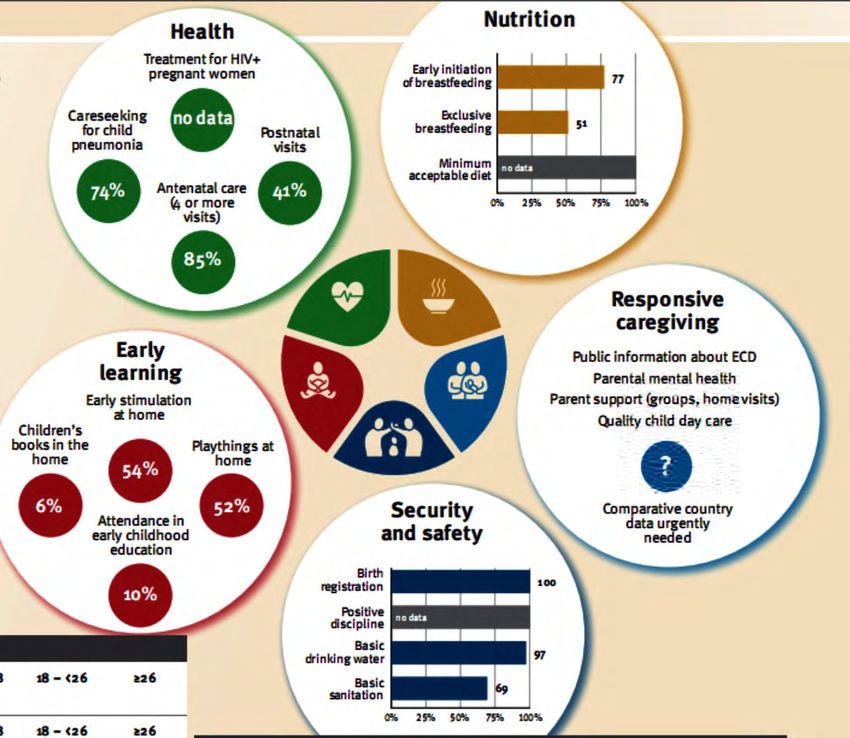
Ministry of Education, BhutanBackground: Nurturing Care
Responsive
Caregiving
ECCD parenting
education: 24%
24
%
Source: ARNEC Country Profile, BhutanEffects of the Pandemic on Children and Families
Parenting: Closure of ECCD
Economic impact
Centres:
and pandemic stress
of parents may have More than 9000
had an impact on children aged 3-5
health, nutrition & have been home
bound since March
parenting ability Disruption of
daily lives and
learning of
young children Exposure to
Increased
vulnerability to unlimited Screen
abuse: time
In such a stressful vulnerability to
time, children are extended / unlimited
vulnerable to screentime and
violence and abuse. inappropriate
content
kama@2020COVID-19 Response Interventions 1. Developed and distributed ECCD in Emergency package to ensure continuity of learning for children 2. Translated and distributed COVID-19 Parenting Guide to help families cope with the emergency. 3. ECCD facilitators provided remote learning support and support through Home visits and online learning 4. ECCD facilitators’ stories documented to provide a platform for sharing good practices and showcasing efforts of ECCD facilitators.
COVID-19 Response Interventions
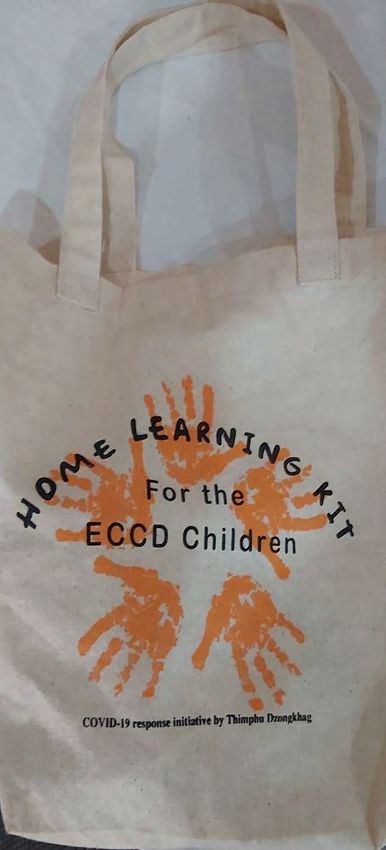
5. Supplied soaps and home
learning kits targeting vulnerable
children

6. Conducted webinar and virtual
meetings with ECCD Facilitators
and DEOs to support and mentor
them.

7. Built WASH Facilities in
selected ECCD Centres
prioritizing vulnerable
communities

8. Private ECCD Centres
reopened since July, following
COVID-19 protocols
How effective have ECCD Interventions been?
   •   Survey included 208 respondents who were all ECCD Facilitators
   •   Review workshop of DEOs and ECCD Facilitators

                    Reach and Effectiveness of the Interventions
       50
                              44
       40
       30
       20          22                     21
                                                                        % of respondents
       10                                            11
        0                                                       2
            76-100 % 51-75% 26-50% 1-25%           0%
            coverage coverage coverage coverage coverage
         TYPES OF INTERVENTIONS USED ACROSS BHUTAN (Survey of 40% OF ECCD Facilitators)

Online interventions                                         56 %
Home visits                                                  69 %
Send home activities                                         18%
Instructions on child engagement for parents                 20 %
Why was the online ONLY intervention not
effective for all in every location?
60
56 % of respondents
50
40
30
20 18
15
11
10
0
No Network No smart Cannot use No time
coverage phones smart phonePolicy Adjustments and Way Forward
• National multisectoral strategic plan for ECCD being developed, to be
completed and launched by June 2021 – recognizing the need for holistic
Multisectoral
Strategic Plan care (NCF)
• ECCD networks established in 13 of the 20 districts to support the national
level technical committee for ECCD
Strengthening
ECCD Network • Formation of networks in all districts to be completed by June 2021
• Piloting of Caring for Caregivers package in 3 districts planned to support
psychosocial well being of parents
Caring for • Home based interventions to be piloted as an alternative model for enhancing
Caregivers access to ECCD services since it was found effective and viable
• Reopening guideline and protocols developed
Reopening • All ECCD Centres to reopen by March 2021, except those in red zones
PlanIt truly takes a village to raise a child. This we realize, even
more, in times of crisis
THANK YOU
And Thank YOU ARNEC & Unicef for your
support during the CrisisHome-based
Early Childhood Care
& Development
Program
The 2020 ExperienceBackground
• Child Development Centers nationwide have
been closed due to COVID19
• Child Development Workers have been recruited
to help in the Social Amelioration Program
• Differences in safety protocols mean variations in
community mapping abilities and program
delivery
• Apart from COVID19, strong typhoons have also
disrupted program deliveryCOVID19 Response
• Center-based Program in Alternative Venue
Weekly session with parents
> suggested activities for the home
• Regional Fora thru Zoom with 17 regionsThe long-term plan: Home-based ECCD Program
How is the Home-based Program different?
                                                 Home-based ECCD Program

 Goal             The program shall cultivate in parents developmentally appropriate practices to support
                  responsive caregiving
 The teacher      Parents/Caregivers as teachers to their own children
                  CDWs to take up supporting role to parents
 Designing        Home activities are modified to integrate concepts and skills
 activities       Home activities are highlighted as rich source of learning opportunities for children
                  CDWs and parents/caregivers work together to come up with activities
                  Eventually, parents/caregivers will be able to come with their own activities
 Group sessions   Group sessions are facilitated by Parents/Caregivers

 Online groups    Online communities as support group among parents/caregivers
2020 Pilot Implementation
Antipolo City Bustos Marikina City Taytay
Urban Rural Urban Rural
2 supervisors 1 supervisor 2 supervisors 2 supervisors
3 facilitators 3 facilitators 3 facilitators 3 facilitators
0-2 y/o: 5 parents 0-2 y/o: 0 parents 0-2 y/o: 0 parents 0-2 y/o: 5 parents
3 y/o: 5 parents 3 y/o: 0 parents 3 y/o: 5 parents 3 y/o: 2 parents
4 y/o: 5 parents 4 y/o: 9 parents 4 y/o: 5 parents 4 y/o: 4 parents
Template from Slidesgo and FreepikInitial findings
Child Development
Worker is the perceived Play vs Study
professional
Parents feel closer Home-based Saved on money
to their child ECCD
Program
Need for regular Time management
peer interaction is a challenge
Template from Slidesgo and FreepikUltimately, we want to strengthen the home to be able to withstand disruptions in macro-level systems
Maraming Salamat!
   Thank you!
Closing
program
Requests and reminders

         Your views matter.              You will receive the webinar
         Please evaluate us.             documentation summary by
        Click on the QR code above
   Photos credit: UNICEF

       or click link found in the chat
                                              email tomorrow.
                      box:
       https://tinyurl.com/y3xaky5h
Requests and reminders
Download the presentations Next webinar: health &
from the ARNEC website. nutrition in January 2021
Photos credit: UNICEFYou can also read


