OCCUPATIONAL THERAPY A FUTURE IN - OCCUPATIONAL THERAPY - WHAKAORA NGANGAHAU - AUT
←
→
Page content transcription
If your browser does not render page correctly, please read the page content below
OCCUPATIONAL THERAPY - WHAKAORA NGANGAHAU

                                            A FUTURE IN
                                            OCCUPATIONAL
                                            THERAPY
WHAT IS OCCUPATIONAL THERAPY?
One of the most creative of the health                 Occupational therapists are also an integral
professions, occupational therapists (nga              part of the mental health sector, helping
kaiwhakaora ngangahau) work with people who            people with mental health issues regain the
face challenges in their capacity and capability to    confidence to return to work – through planning,
do everyday things because of injury, illness or       skills development, and liaison with potential
life circumstances. Occupational therapists take       employers.
a holistic approach to assessment and treatment
                                                       Population health is another area in which
of people of all ages, helping them access more
                                                       occupational therapists may work. Population
fulfilling and independent lives.
                                                       health focuses on improving the health of
It is a varied and diverse role. An occupational       groups of people, encouraging participation in
therapist (OT) could be working with children          occupation to improve, maintain and restore
with disabilities to participate in school or social   health.
activities by helping them improve their motor or
                                                       If you have a strong interest in the ways that
social skills or ensuring they can access the built
                                                       people interact with the environment, are an
environment.
                                                       active listener and practical problem solver, and
Supporting a person’s rehabilitation back              enjoy engaging, motivating and advocating for
home after illness or injury is another common         people to regain their physical and mental health,
occupational therapist role. This would require        then occupational therapy may be a great career
focusing on the person’s participation in self-        for you.
care or leisure activities, such as showering,
managing their home, or participating in their
local community.
Private occupational therapy practices
                                                           You work within a general practice employed by an
   OUTLOOK AND TRENDS                                      experienced occupational therapist. You work with
                                                           clients of all ages, completing occupational/functional
   Our ageing population, an increased focus by
                                                           assessments, to enable people to get back to doing what
   Government on the value of work, and a growing
                                                           they need or want to do, at home, in the community or in
   acknowledgement of the difference rehabilitation
                                                           the workplace. The job includes work-based and home
   can make to recovering from injury or gaining
                                                           visits and may involve a health and safety role.
   independence with physical disabilities or
   mental health issues are creating a demand for          Public health service
   occupational therapists.                                You are employed by a District Health Board in an acute
                                                           or community-based context working in hospitals,
   Philosophical shift - An increasing number of           primary health care clinics and community clinics. You
   occupational therapists work in private practice and    could be helping someone manage their daily life while
   primary/population health as the philosophy of the      recovering from an acute injury or illness, supporting
   profession shifts from ‘treatment’ to ‘prevention’.     their rehabilitation and recovery through occupation,
                                                           and/or enabling people to get back to doing what they
   Specialisations growing - There is growth in            need or want to do, at home, in the community, or in the
   specialist areas such as employment placement,          workplace.
   driving, assessment, mental health, paediatrics,
   community development, lifestyle management and         Private hospitals and rest homes
   research.                                               Similar to public health roles but you are employed by a
                                                           private provider.
   Desire for independence in living - Elderly people      Educational facilities
   need access to occupational therapy to remain           You are employed by a special needs unit or as teacher
   independent and active. People with long term           support in mainstream classrooms within primary
   conditions are also accessing occupational therapy      and secondary schools, helping students physically
   to find ways to better manage their lives in their      participate in class activities. Alternatively, you could be a
   own homes.                                              Ministry of Education contractor. Some tertiary providers
                                                           also have occupational therapists on staff, often in
   Occupational therapists needed                          student support roles.
   everywhere - A lot of occupational therapy
   employment opportunities are found in non-              ACC (Accident Compensation Corporation)
   government and community organisations. There is        You are employed as a case manager to assess people’s
   also increased potential for occupational therapists    injuries and their ability to cope in the home and
   to set up their own business once they gain             the workplace. This requires home and work-based
   experience.                                             assessments.

   Thinking outside the square to gain
   experience - Early in their careers occupational
   therapy graduates may have to gain the experience
   wanted by employers by taking jobs outside main
   cities, or working for organisations that have not
   traditionally employed occupational therapists, such
   as primary health providers, GP practices, youth or
   health promotion agencies.

WORK SETTINGS
Occupational therapists are registered health
professionals who work across a range of organisations
in health and social care, including commercial, non-
government and community organisations. This could be
Marae, workplaces, prisons, aged care facilities, mental
health services, special needs and care facilities. OTs
also work in research and education. Common settings
include:
CAREER ROLE EXAMPLES                                          PERSONAL QUALITIES
With experience, occupational therapists can specialise       • Interested in motivating people physically and mentally
in areas such as paediatrics, geriatrics, mental health,      • Enjoy working with people of all ages, ethnicities and
physical disabilities and rehabilitation services (recovery     environments
from accidents). A number of OTs move from clinical
                                                              • Flexible, creative and passionate about people and their
occupational therapy into roles such as community
                                                                health
development officers, rehabilitation advisors, researchers
or case managers.                                             • Tenacious, assertive and prepared to stand one’s
                                                                ground as a professional
Community occupational therapist/key worker
Involves coordinating an individual’s care in consultation    • Practical yet creative client centred problem solver
with a health professional team, including psychologists,
mental health support workers, and nurses. This requires      SALARY GUIDE
occupational therapy assessment and intervention skills                                                  Salary (per year)
of people in their home, community or workplace.
                                                               Graduate occupational
Injury management/rehabilitation occupational                                                           $51,275 (2019) -
                                                               therapists employed by
therapist                                                                                             $69,222 (by mid-2020)
                                                               Auckland District Health Board
Involves identifying the barriers preventing clients with      Occupational therapists up to            $52,813 (2019) -
injuries from returning to their pre-injury work and           5 years’ experience                    $71,299 (by mid-2020)
establishing ways to overcome those barriers. Includes
work site assessments, return to work planning and             Advanced occupational
                                                               therapists – depending on                $81,492 - $112,171
social rehabilitation assessments, including home help,                                                    (2020 figures)
educational needs and housing modifications.                   responsibility and experience.
                                                               Occupational therapists
Graduate rotational hospital occupational therapist                                                    $45,000 - $110,000
                                                               working in private practice
A rotational role involves developing your occupational
therapy skills and knowledge within a range of wards          Sources: Careers NZ/District Health Boards/PSA, Allied, Public
                                                              Health and Technical: Multi Employer Collective Agreement 2018-
and services, while also learning to work within a team
                                                              2020, Trade Me, healthcaresalaryinfo.com
of health professionals including (for example) doctors,
nurses, social workers, and physiotherapists.                 Salary range is indicative of the New Zealand job market
                                                              at the time of publication (early 2019) and should only be
                                                              used as a guideline.

SKILLS AND KNOWLEDGE
Occupational therapists are trained to assess and help          THE AUT ADVANTAGE
day-to-day rehabilitation of people of all ages recovering
                                                                AUT is the only university in New Zealand offering a
from illness or injury, encouraging them to engage
                                                                Bachelor of Health Science in Occupational Therapy.
and be motivated. The competencies required by the
                                                                Otago Polytechnic in Dunedin and WinTec in Hamilton
Occupational Therapy Board of NZ are:
                                                                offer a degree in occupational therapy.
• Ability to facilitate and enable occupations for
  people through engaging their needs, preferences
  and capacities in the context of their environment to       FURTHER STUDY OPTIONS
  optimise ability and functional independence.               Postgraduate certificate, diploma, master’s and doctoral
• Ability to act, and justify actions, in compliance with     level study in occupational therapy is offered through AUT.
  ethical, legal, professional and safety requirements.
                                                              Research areas currently offered at AUT include
• Competent in acknowledging and working with the             community participation and psychosocial rehabilitation,
  socio-cultural values of the client/tangata whaiora,        occupational practice and occupation-based interventions,
  family/whānau and significant others.                       sensory modulation, evidence informed mental health
• Highly skilled communicators who establish                  interventions, child, youth and family participation and
  and maintain effectual therapeutic and working              older adults.
  relationships.
• Capable of contributing positively to the client’s/         PROFESSIONAL ACCREDITATION
  tangata whaiora experience and their ability to             Occupational therapists are registered health
  participate and ensure effective use of resources.          professionals and must have a current annual practising
• Professional, collaborative and supportive of service       certificate (APC) from the Occupational Therapy Board of
  and team goals and colleagues.                              New Zealand (OTBNZ) to practice.
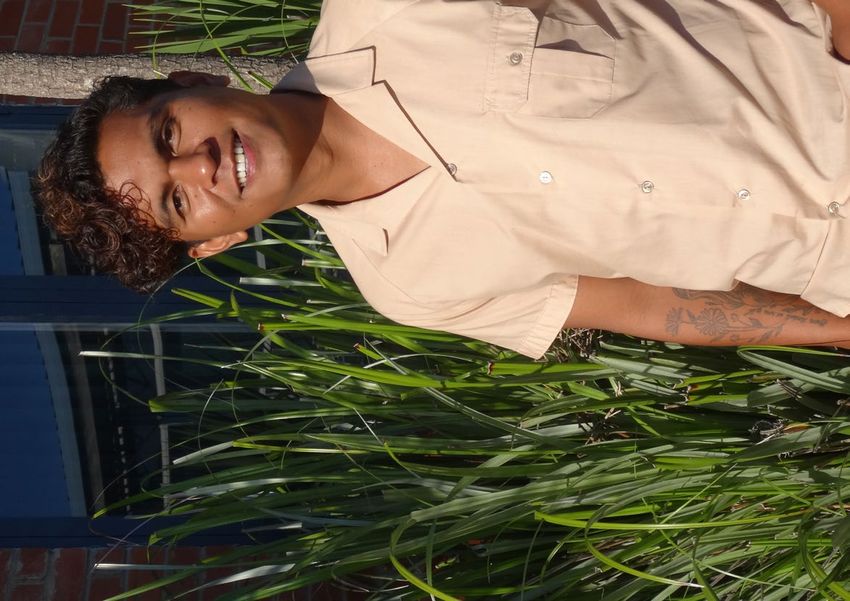
Roberto Jatulan
                                                        Occupational Therapist, Buchanan Rehabilitation Service
                                                        Bachelor of Health Science in Occupational Therapy

                                                        I help people who are experiencing mental illness pursue
                                                        their dreams and aspirations at Buchanan Rehabilitation
                                                        Service, an integrated inpatient clinical and rehabilitation
                                                        service for the Auckland and Waitemata District Health
                                                        Boards.
                                                        I find working in mental health is where I have the most
                                                        opportunity to help people and keep learning myself.
                                                        It wasn’t an area I thought of working in when I started
                                                        studying but after my first placement at Mason Clinic, I
                                                        realised I wanted to work in mental health.
                                                        We conduct a lot of functional and standardised
                                                        assessments for our clients. These assessments help
                                                        us view our clients as a whole person, and suggest
                                                        appropriate groups, activities, and interventions that are
                                                        available for them.
                                                        We also help our clients learn strategies – sensory
EMPLOYER COMMENT                                        modulation techniques – to cope with symptoms such as
                                                        anxiety, distress, irritability and low moods. The cool thing
“The task orientated aspect to the role is obviously    about this is the clients can continue using these when
important from an OT perspective but relationships      they leave.
are key. Roberto’s passion for people, bubbly           We also do a lot of liaison work. When a client is in
personality and ability to make great relationships     rehab, they often identify occupational goals such as
with clients are key in a health professional role      wanting to work again or be able to drive again or study.
– especially in mental health. Rob also has the         As OTs we find resources in the community, liaising with
important combination of an excellent sense of          organisations and helping clients get referred to these
humour and good clinical reasoning. He wants the        networks.
best for the people he is working with and advocates    Being an occupational therapist opens the door to many
strongly for this.                                      opportunities and is a career where you feel you are able
New graduates need to find a point of difference. As    to contribute to the betterment of other people’s lives.
a recruiting manager I get lots of CVs. I look at CVs   When I graduated six years ago, I worked at the Allan
and my eyes light up when I see someone who has         Duffy Recovery Centre for 18 months as a recovery
a different CV or a unique experience or hobby with     support worker, then moved into a mental health
transferrable skills. Making yourself memorable (in a   professional role at Te Ara Takahanga for 2½ years. I
positive way) means you stay known to the potential     moved to Buchanan Rehabilitation Services two years ago.
employer.”
                                                        There’s no greater feeling than being able to empower
Dianne Bartlett                                         clients who have been victims of missed opportunities
Clinical Team Leader, Buchanan Rehabilitation Centre    due to their mental illness.”
OCCUPATIONAL THERAPY - WHAKAORA NGANGAHAU
USEFUL WEBSITES
OTNZ-WNA Occupational Therapy NZ
Whakaora Ngangahau Aotearoa
www.otnz.co.nz/occupational-therapy/
occupational-therapy-career/
frequently-asked-questions/
Occupational Therapy Board of New Zealand
– Kaihaumanu Turoro o Aotearoa
www.otboard.org.nz
FURTHER INFORMATION
For further information about Occupational
Therapy studies and the Bachelor of Health
Science, visit: www.aut.ac.nz/ot
FUTURE STUDENTS
Contact the Future Student Advisory team for
more information: www.aut.ac.nz/enquire
futurestudents@aut.ac.nz
@AUTFutureStudents
CURRENT AUT STUDENTS
Contact the Student Hub Advisors team for more
information: 0800 AUT UNI (0800 288 864)
www.aut.ac.nz/enquire | studenthub@aut.ac.nz
@AUTEmployabilityandCareers
EMPLOYABILITY & CAREERS
For other Future Career Sheets visit:
www.aut.ac.nz/careersheets
For employability and career support, AUT
students can book an appointment through
https://elab.aut.ac.nz/
NORTH CAMPUS
90 Akoranga Drive, Northcote, Auckland
CONNECT WITH US NOW
@autuni @AUTuni
AUTUniversity @autuni
The information contained in this career sheet
is correct at time of printing, August 2019.You can also read


