Office EMEA Office Investment Perspective 2018 - JLL
←
→
Page content transcription
If your browser does not render page correctly, please read the page content below
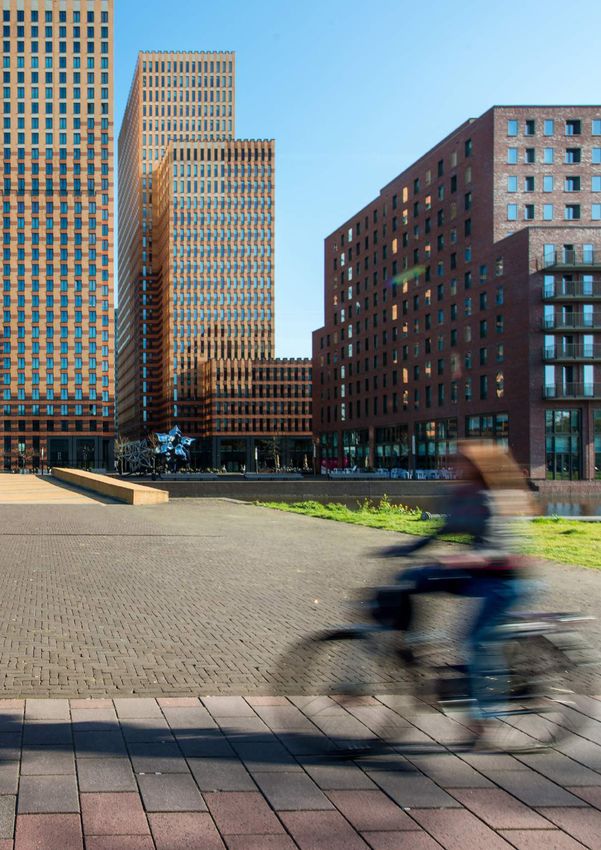
Office EMEA Office Investment Perspective 2018

2                                                                          EMEA Office Investment Perspective 2018

Contents
A letter from Peter Hensby                                                  3

2017 – Record investment across continental European office markets         4

Four key themes                                                             6

Where are we in the cycle?                                                  8

International capital                                                      10

2017 Hotspots - a review                                                   12

2018 Hotspots - supply-led growth: an introduction                         14

Spotlight on Amsterdam - Europe’s newest global city                       18

Workplace - powered by Human Experience: an investor perspective summary   20

Contacts                                                                   23
EMEA Office Investment Perspective 2018                                                                                       3

A letter from
Peter Hensby
As we move quickly through Q1 2018,       on record. Particularly striking was        landscape differently as, against a
the future already appears bright for     the fact that, after lagging behind         background of record pricing, you
real estate investment after what was     the Americas for the last ten years,        seek to gain best value and achieve
a very strong year in 2017 – in fact      EMEA was the most active real estate        your investment ambitions. The focus
the best on record. EMEA investment       region globally.                            for investors for 2018 should be on
volumes were up 20% on 2016                                                           seeking out income driven returns
reaching a post-GCF high of €264bn.       Going forward, the continued weight         and rental growth. To help with this,
                                          and increasing diversity of capital         we look at some of the key trends
This was powered by Continental           attracted to real estate, underpinned       expected in 2018, review our hotspots
Europe’s largest markets of Germany       by strong GDP predictions across            predictions for 2017 and importantly,
and France and alongside a major          most markets, means that we foresee         set the scene for further rental growth
return to form of the UK after the 2016   investor demand for real estate             hotspots across the region.
post Brexit vote dip.                     remaining robust. Whilst investors          We hope you find our Office
                                          are inevitably seeking out wider            Perspective useful and informative.
The signs were there for the UK at        opportunities across new property           Please contact myself or anyone in
the end of 2016 and, as we predicted,     classes, the office sector has remained     the team if you would like to discuss
returning investor demand particularly    strong. However, also dominating            any of our findings and ideas.
from overseas investors, meant that       many an investor debate is where we
the UK regained its title as Europe’s     are in the cycle and can it continue?
                                                                                      Best wishes,
largest investment market. Strong         Will concerns over pricing, interest rate
                                                                                      Peter
growth was also seen in the Nordics,      rises and politics impact demand?
the Netherlands and Southern Europe
with Portugal and Italy recording their   In this report we offer some ideas
largest total office investment volume    for looking at the office investment

“Dominating many an investor
 debate is where we are in the cycle
 and can it continue?”
  Peter Hensby
  Head of Offices Pan-EMEA Capital Markets
4 EMEA Office Investment Perspective 2018
2017 - Record investment
across continental European office markets
Office investment surged above
2016’s post referendum lull in 2017. UK
€121.7bn Asian investors continue to favour
the UK market taking a 34% share €31.9bn
33%
Europe (including UK) of total office investment. However
16% Ç y-o-y there was also a noticeable uptick
in activity from other sources of +
capital including German, US and
global funds.
€ 89.7 bn
Continental Europe
11% Ç y-o-y
After 9 months, total
investment in the French
office market was 41% down
on 2016. However, a record
Q4 saw investment in
France surpass the UK and
Germany for the quarter and
took 2017 total investment France
5% above 2016. The post
election potential “Macron” €19.4bn
+5%
effect has boosted H2
investment and provides
good momentum going
forward.
Belgium and Luxembourg
reported relatively flat year
on year movements in total
Benelux
office investment, however, €11bn
+26%
the Netherlands reported
a 43% increase. Better Spain, Italy,
than expected economic Portugal
performance is feeding €7bn
through into strong real
estate fundamentals placing
-3%
tailwinds behind the Dutch
Politcal events in Spain stifled overall
market.
investment in the region in 2017.
However, excluding Spain, the region
would have posted a 5% increase
year on year with both Portugal and
Italy reporting their largest total
office investment on record.EMEA Office Investment Perspective 2018 5
7%
11%
Nordics 2017
€15.7bn 51% investment 8%
+55% by purchaser 4%
The Nordic region and by region
recorded the highest
office investment
figures since 2006. 19%
Finland and Norway
were the largest and n Americas n Middle East & Africa
second largest markets
in the region for the n Asia Pacific n European (Cross Border)
first time in history n Global n European (Domestic)
and both markets saw
the highest amount of
investment on record. Occupier context
Demand to remain well above 10-
year average
• Europe 11%
• Berlin 39%
• Milan 18%
• Frankfurt 10%
• Paris 4%
Germany (FY 2018-19 v 10-year average take-up)
2017 saw Germany report
the second largest amount €23.8bn Office development modest
+3%
of investment on record,
across most of Europe
since 2007. While year on
year growth in investment • Europe +5%
has slowed, investor appetite • Paris -19%
remains strong. This has • Hamburg -16%
driven office yields to • Amsterdam -40%
amongst the lowest in the • Madrid -55%
European market. (FY 2018-19 v 10-year average
completions)
Grade A vacancy at record low
• Stockholm 2.7%
• Hamburg 2.3%
• Munich 1.3%
• Berlin 0.7%
• Paris CBD: 0.5%
CEE Recovering markets continue
€3.8bn to provide upside
-24%
The CEE market • Madrid 5.1%
reported an expected • Barcelona 4.3%
drop in total office • Lisbon 3.9%
investment following • Prague 2.5%
a record breaking • Brussels 1.7%
2016. However, in a
historic context, 2017’s
total investment is the Continued opportunity in
third highest for total “next to best” locations
investment on record. Amsterdam – Sloterdijk / Teleport
Munich – East
Prague – Prague 1
Stockholm – Solna / Sundbyberg
Stuttgart – Vaihingen-Möhringen6 EMEA Office Investment Perspective 2018
Four key themes
for 2018
1. Cashflow focused investment
With pricing at record lows, investors will increasingly focus on income as the
main driver for returns. Performance is unlikely to come via yield compression
and therefore will target rental growth. Underpinned by tenant quality, supply /
demand dynamics and location will inform decision making.
2. Greater risk appetite
Underpinned by improving economic growth and strong real estate
fundamentals, investors will look to increase their risk exposure seeking higher
returns. Institutional capital is unlikely to compromise on asset quality and
location and will look to focus on funding developments / refurbishments in
central locations rather than moving to new geographies in search for yield.
3. Increased regulation
While real estate markets are not directly affected by the new European
MiFID II Directive, we believe its impact will be felt in 2018. For investment
firms MIFID 2 is expected to result in higher governance costs. Size matters
and therefore, we wouldn’t be surprised if we will see more consolidation
in the real estate fund management industry as we recently saw between
Aberdeen and Standard Life and also the recent mergers in Finland between
Etera and Ilmarinen as well as Varma and Elo.
4. Future proofing investment
Will existing assets today be as relevant in 10 years and continue to attract
occupiers? Investment strategy is focusing on “Future Proof” assets that look
at city / location and asset specific criteria. Analysis of current real estate
holdings will also result in repositioning of portfolios as investors sell-off
assets most at risk of future obsolescence.EMEA Office Investment Perspective 2018 7
2018 – The search for growth in a highly
competitive landscape
Despite a divisive political climate globally and In 2018 we expect both prime office yields and policy
throughout Europe, the real estate market in 2017 has rates in Europe to be broadly stable. In the Eurozone,
continued to outperform. The weight of capital seeking we do not expect to see rates rise before the end
to access the sector remains significant and, despite being of 2019 and when Central Banks do start to tighten
deep into the cycle, investors are actively looking for new monetary policy it will be a slow reversion rather
ways to deploy funds. Total European commercial real than swift hikes. As a result, we expect the effect on
estate investment in 2017 was €264bn, which represents a real estate yields to be marginal. If we look to the US,
20% increase on 2016, making it the largest ever on record, where policy rates have increased by 100bps, the
surpassing the €245bn reported in 2007. Reporting a 34% effect on prime office yields has been only a 10bps
increase in activity on 2016 levels, the UK seems to have outward shift. However, due to strong rental growth,
shrugged off some Brexit concerns and remains Europe’s capital values have continued to increase. In Europe,
largest investment market. The Netherlands recorded rental growth is improving due to record low vacancy
€18bn of investment which represents a growth rate of rates across European cities, limited development
81% year on year while Germany was 4% up on a post response and an improving outlook in the European
financial crisis record of €50bn in 2016. pipeline. Therefore, we expect to see income growth
offsetting any interest rate movements and positive
Appetite for real estate shows no sign of abating and
growth in capital values to continue.
we expect similar levels of investment activity in 2018.
A combination of manipulated monetary policy, real
estate’s relative performance versus other asset classes How will investors approach 2018?
and record levels of dry powder raised by global real Investors will need to be more creative in accessing
estate funds will underpin activity in 2018. Total capital deals and look beyond the traditional sectors and
raised has continuously reached new peaks throughout gateway cities. We will also see a continued focus
2017 as a result of institutional investors globally on larger asset sizes as it allows investors to deploy
allocating more money to real estate. With many pension significant amounts and rapidly increase exposure to
funds, insurance companies and sovereign wealth funds the sector or certain markets. With pricing at record
still under allocated, this is likely to continue for some highs the focus will be on income driven returns and
time. As a result, the European real estate market will rental growth; whether this be in growth markets,
continue to be a crowded and highly competitive market. growth sectors or growth of AUM via the acquisition of
real estate platforms.
Will inflationary pressures impact investment
decisions in 2018?
Potential interest rate rises could have significant impact
on the real estate sector and investment demand. It is
clear that the Global Central Banks are slowly paving
the way towards higher interest rates for the first time
since the financial crisis. With the Bank of England raising
interest rates for the first time in a decade in 2017 and the
European Central Bank slowing down their Quantitative
Easing programme, it is an issue that investors are
watching closely.8 EMEA Office Investment Perspective 2018
Where are we in the cycle?
Where are we in the cycle? enabling investors to arbitrage between markets as
the improving global economy is spreading to more
While investors are starting to feel uneasy now that
markets.
we are entering the 10th year of this cycle, we haven’t
seen the traditional red flags that would signal we are
However, this should be seen in context: bond yields
nearing the end.
are even lower and the spread between prime real
Further complicating this is the de-coupling of regions estate yields and real interest rates is much higher
and markets; i.e. Italian banks are still offloading NPLs than in previous cycles offering some protection.
while the US banks finished this years ago.
But maybe the biggest difference compared to 2007 is
in the capital structure:
What are the major differences in
• Firstly regulation has limited leverage, while the
comparison to previous cycles?
low long-term rates have led to owners extending
Simply put, there is a lot more money chasing real debt maturities
estate investment, which is combined with low
• Secondly the global search for yield, combined
interest rates, low inflation and more restrictions on
with restrictions on development, have resulted
debt financing resulting in record low yields.
in an increase in (semi-)permanent capital real
estate owners from all over the world
JLL’s view
In short, the foundation of market liquidity and
We may be more than half way through the current pricing in this cycle seems to be built on much
cycle but what we see is a mid-cycle rotation. steadier ground than in 2001-2008.
Not all markets are at the same stage of the cycle
How long can Europe hold out?
Policy rates (%)
7
ECB, BoE vs FOMC policy rate lag
6
5
4
3
2
1
0
-1 6m 3m 18m 18m 27m...
98
99
00
01
02
03
04
05
06
07
08
09
10
11
12
13
14
15
16
17
19
19
20
20
20
20
20
20
20
20
20
20
20
20
20
20
20
20
20
20
Source: Bloomberg FOMC ECB BoEEMEA Office Investment Perspective 2018 9
Uncertainty around European interest rate rises lead Stages of the cycle
investors to rotate up the risk curve Stage 1 – Yield compression as
• Typically the ECB tracks FOMC movement by 18 months; yet we are investors buy into “yield” assets
currently at 27 months and counting. While this reflects the more Stage 2 – Improving economy
advanced stage of the US market, it also shows the disparity of increases demand for space and
markets within the Eurozone rents which creates cash flow
• Despite recent market activity driving up bond yields and inflation growth
numbers coming in higher than expected, consensus is for a Stage 3 – Prime yields trade
continuation of the current low interest rate environment, although at or below previous peaks
potentially at slightly elevated levels while adjacent fringe locations
• Nevertheless, even if rates rise there is no evidence that prime and regional cities still
yields will follow at the same pace. This will be driven by tight have a significant discount:
supply and rental growth exceeding inflation; therefore the relation Investors rotate into these
is likely to be with real interest rates rather than nominal rates late-cyclical markets
• Additionally, the spread over real rates is still significantly high so Stage 4 – in anticipation of an
the impact is more likely to be a shrinking spread rather than rising economic slowdown and with
property yields assets fully priced, investors return
to defensive positions
• But what does this mean for real estate investors? We expect to see
more investors targeting opportunities to move up-the-risk-curve
directing investments towards these late-cyclical markets
(or sub-markets).
Value add not yet priced below last peak
Prime office yields (%) – cyclical low and high
Prime CBDs Core cities City submarkets Value add markets
10
Defensive Yield Early Cyclical Cyclical Late Cyclical
9
8
7
6
5
4
3
2
n
rc o
Du a
sb m
n he H en
ice e
Ba n Ant o
el ila rp
n
h
ris lin
Fr CBD
M rt
h
or n f
-e E
st lm
M m
rid
re re Par blin
Loeg Neg F
onio io
rid Br ity
rid co ls
er ry
ris ch y
ut ter
tte m
er i
ria
- P or
- N ndo or
em agu
on
Ba Osl
r
ila
St ster
Pa an her
D
th - W
ric
Du nic
W rda
e
u
nt
rc - M we
ndoc oc
- P da
da
Ro r Ri
ad
Pa er
-C
Am kho
de de - L
ife
a ofi
ad
M - S ss
ris Lo seld
- O es
kf
M
el
Zu
u
ip
n
B
er
-
a
u
an
e
on n
as as is
oc
s
ie
ad e
T
-S
M
N
ila
ila
ad
sÁ sÁ
M
M
M
Pa
va va
ue ue
-N -N
a a
on on
el el
Last peak Last trough Q4 2017
rc rc
Ba Ba
Source: JLL Last peak Last trough Q4 201710 EMEA Office Investment Perspective 2018
International capital
Americas
€8.1bn
“As we observe the rise of the
nation state, property industry
trends underpin a continued
endorsement of globalisation”
Peter Hensby
Global*
Head of Offices Pan-EMEA Capital Markets €10bn
Cross-border purchaser by source of capital
2017: $65bn
13%
13%
2007: $102bn
17% 39%
29% 51%
7%
4% 3% Asia-Pacific
buyers increase
24% by 21% from
2007-2017
n Americas n Middle East
n Asia Pacific n EU
n GlobalEMEA Office Investment Perspective 2018 11
Cross-border purchasers by source of capital in Europe
South Hong South Other
Global USA Korea China Kong Singapore Africa Israel UAE Mid East
€7.9bn €4.0bn €2.2bn €2.1bn €1.6bn €1.4bn €0.8bn €0.7bn €0.7bn €0.6bn
Asia
€13.3bn
Total office
investment volumes
Africa Middle East in Europe in 2017:
€2.8bn €7bn
€121.7bn
Middle East private-sector Reforms in China mean Hong Kong and South
participation grows through capital will remain Korean capital focused
£11.2bn
sophisticated syndicators of £11.2bn
consistent but specialised £11.2bn
on the office sector
capital and the introduction
of public REITs
New REIT laws in Saudi Arabia Established Chinese groups Chinese investors with Hong Kong
provide a new channel for private may divest from existing office subsidiaries will be constrained
investment into real estate. Limited holdings to align investment by new regulation, providing a
supply of domestic institutional- strategies with their core competitive advantage to the
grade real estate could accelerate business. This may lead new mature and experienced Hong
the need to invest overseas and groups to explore gateway Kong investors who seek yield
with a 25% allowance, we could and strategic locations from a and diversification in Europe. With
see a resurgence of private Middle business perspective. significant exposure to the London
Eastern capital. market, we expect the wave of
Hong Kong capital to move out
into mainland Europe.12 EMEA Office Investment Perspective 2018
2017 Hotspots Berlin
Proximity to growth sector talent
pools and strong demand for new
- a review office development areas.
% Annual Rental
Germany Growth 2017
Hauptbahnhof-Europacity +6.4
Hotspots Mediaspree +27.5
Mitte +7.5
Average Rental
Growth +7.2%
Stockholm
European Average Affordability vs CBD and a lack
of suitable options elsewhere in
Rental Growth Stockholm.
+4.1%
% Annual Rental
Sweden Growth 2017
At the start of the year we used Solna /
+14.3
Sundbyberg - Arenastaden
our in-depth market insights to
identify 10 office submarkets that
we expected to outperform in a
European context. With average Stuttgart
rental growth of +7.2% y-o-y in Record low vacancy and a modest
2017 (compared to the European development pipeline.
average of +4.1%), our predictions
were on track. % Annual Rental
Germany Growth 2017
These locations all featured City Centre +4.7
robust property fundamentals, City Centre Edge +10.5
strong occupier demand and a
catalyst which differentiated the
market, which in turn drove solid Barcelona
rental growth. Urban renewal, improved
transport connections and a
These drivers of growth are still thriving TMT sector.
relevant at the start of 2018 and
% Annual Rental
we expect this to underpin rental Spain Growth 2017
growth in these submarkets in
22@ - Placa de las Glories +8.5
the foreseeable future.EMEA Office Investment Perspective 2018 13
Munich Madrid
New high quality office and Connectivity and cost
residential developments and effectiveness.
affordability.
% Annual Rental % Annual Rental
Germany Growth 2017 Spain Growth 2017
East +13.5 Mendez Alvaro +7.0
Amsterdam Luxembourg
& Utrecht City
Demand spill from prime submarkets New tram route unlocks
in Amsterdam. Redevelopment of improved demand. Limited
Utrecht Central Station. As incentives new development.
decrease in Amsterdam South-East we
expect headline rental growth to be
stronger in 2018.
% Annual Rental % Annual Rental
Netherlands Growth 2017 Luxembourg Growth 2017
South-East +0.0
Kirchberg +2.9
Utrecht +9.1
Frankfurt Paris
Slight uptick in 2017 on the back The end of 2017 saw exceptional
of improving demand and office take-up levels across Paris, with
withdrawals. We expect rental the central submarkets expected
growth in the banking district to see healthy growth in 2018. The
to accelerate as Grade A supply benefits of Grand Paris will be felt in
tightens in 2018. the future.
% Annual Rental % Annual Rental
Germany Growth 2017 France Growth 2017
Banking District +2.7 Paris 3/4/10/11 +2.7
City +0.0 Southern Inner Rim -1.514 EMEA Office Investment Perspective 2018
2018 Hotspots
supply-led growth: an introduction
In the context of a modest 2021 Forecast
development cycle and record low Where will supply be in 2021 compared to the steady
state vacancy rate?
vacancy across many European office
markets, the supply side is likely to
City Rank Score
play an increasingly important role
Amsterdam 1 1
in driving rental growth over the next
Munich 2 0.97
3-4 years. JLL’s Supply Sensitivity Dublin 3 0.94
Index provides new insights into Bucharest 4 0.91
market performance by exploring Utrecht 5 0.88
the relationship between vacancy Stuttgart 6 0.85
rates and net effective rents. This Stockholm 7 0.82
is a different and forward-looking Manchester 8 0.79
alternative to traditional forecasts, Dusseldorf 9 0.76
which allows us to identify potential Hamburg 10 0.74
Birmingham 11 0.71
(supply-led) rental growth hotspots
Frankfurt am Main 12 0.68
across Europe. In this section, we
Prague 13 0.65
introduce two of seven metrics that Barcelona 14 0.62
we have developed for analysis Glasgow 15 0.59
purposes.
Source: JLL
Initially, our Index identifies a steady
state vacancy rate for each market Amsterdam: Stockholm: Frankfurt:
As at Q4 2017 Even with demand Development
(i.e. the vacancy rate at which net vacancy stands at record high levels pipeline has picked
effective rents are stable). From its 700bps below there is no sign of a up significantly in
steady state, the Index then looks at the stable rate substantial supply the last 18 months.
equivalent. Net response. Market Nevertheless,
future vacancy (2021 Forecast), rental effective rents wide vacancy to vacancy to remain
sensitivity to vacancy (Sensitivity) and were up 10% in remain between around 270bps
2017 alone. By 7.5% – 8%. Lowest below the stable
five other metrics that will dictate 2021 vacancy is in 15 years. rate equivalent.
rental growth prospects. Please forecast to drop to
contact us for further information on around 1100bps
below the stable
the full analysis or to request a copy rate equivalent,
of our forthcoming full Rental Growth indicating plenty of
growth to come.
Hotspots 2018 report.EMEA Office Investment Perspective 2018 15
Sensitivity
In which market do rents respond strongest to changes in vacancy?
City Rank Score
Leeds 1 1 Budapest:
Budapest 2 0.97 Budapest records substantial rental changes
on the back of vacancy fluctuations. Prime
Prague 3 0.94 rents jumped 10% when vacancy dropped
Stockholm 4 0.91 230bps to 11.3% between Q3 2016 – Q1 2017.
Stuttgart 5 0.88
Moscow 6 0.85 Warsaw:
High levels of supply in recent years (2013-16)
Bristol 7 0.82 have muted rental growth. Supply constraints
Warsaw 8 0.79 in 2006-08 and again in 2012 were followed by
Berlin 9 0.76 a substantial rental response.
The Hague 10 0.74
Edinburgh:
Dublin 11 0.71 As a relatively small market (in a European
Birmingham 12 0.68 context) supply changes usually trigger
Edinburgh 13 0.65 a strong response in rents. As vacancy
dropped below 7% in 2014, Edinburgh
Amsterdam 14 0.62 rental growth has since outperformed the
London - City 15 0.59 UK regional average.
Source: JLL
Rental growth upside
Final ranking (total score - weighted)
1. Amsterdam 8. Dublin
0.81 0.62
3
2. Stuttgart 9. Utrecht
7 0.80 0.61
12
8 11 13 3. Stockholm 10. Warsaw
14 1 10
9
0.74 0.61
2 5
4 4. Munich 11. Manchester
0.65 0.55
5. Prague 12. Leeds
6 0.63 0.54
15
6. Barcelona 13. Hamburg
0.63 0.54
7. Edinburgh 14. Birmingham
0.62 0.53
Source: JLL
Weighted Index Score: Q4 2017 distance from Intercept (vacancy rate at which net 15. Madrid
effectives rents are stable), 2021 distance from intercept, rental sensitivity to vacancy, Net
additons as % of stock, rental growth forecast (‘18-19) and current to 2021 vacancy rate.
0.5316 EMEA Office Investment Perspective 2018 Spotlight on Amsterdam Europe’s newest global city Across 2017, Amsterdam continued to demonstrate its huge appeal to a broad range of corporate occupiers and real estate investors from across the globe. It is clear that the city’s real estate markets are in a healthy position, and that this is set to continue across 2018. However, the bright outlook for the Dutch capital goes well beyond the current cycle. This small city, with a population of just 1.5 million people, is set to punch well above its weight on the global stage for the foreseeable future.
EMEA Office Investment Perspective 2018                                                                                                                          17

Amsterdam – ‘established world city’?

We believe that Amsterdam is in the middle of a                                         Based on this all-round offer, it is considered one of
transformation from a mid-sized European city to a                                      a handful of global ‘Contenders’ which are gaining
sought-after hub for international businesses, capital                                  enough global visibility, reach and functions to begin
and talent, presenting a challenge to rival cities many                                 to challenge the ‘Big Seven’ global cities. Amsterdam
times its size. Burgeoning strengths in the key sectors                                 is now viewed as a peer of San Francisco, Toronto,
of finance, technology and creative industries are                                      Sydney and Madrid, despite its comparatively
combined with a high quality of living and a smart,                                     small size.
sustainable development framework.

The order of ‘established world cities’

                                   London
               The ‘Big Seven’

                                   New York

                                   Paris

                                   Singapore

                                   Tokyo

                                   Hong Kong

                                   Seoul

                                   Los Angeles

                                   Shanghai

                                   Beijing

                                                                                                             More cities are now
               The ‘Contenders’

                                   Amsterdam

                                   Chicago                                                                    competing with the
                                   San Francisco                                                           ‘Big Seven’ for talent,
                                   Toronto
                                                                                                            capital and business
                                   Madrid

                                   Sydney

                                   Washington DC
                                                                                                                                        Score

                                  40               50           60                 70                 80                 90                100

Scored from 44 indices selected on the basis of range, robustness and currency. Cities ranked by percentile performance in each index. Equal weighting between
each of seven categories (corporate presence, gateway functions, market size, infrastructure platform, talent, specialisation and innovation, and soft power).
Source: The Business of Cities, JLL, 2017
18 EMEA Office Investment Perspective 2018
Amsterdam’s global strengths
Both physically and digitally, Amsterdam
Attracted over
is positioning itself as a major global
centre for flows of people, information $10bn
of real estate investment
and business:
since 2015
1. International connectivity
The world-class Schiphol Airport is one of Europe’s
leading ‘hub’ airports, while there are also
international rail links to Belgium and Germany. This
allows Amsterdam to act as a ‘gateway to Europe’ for
multi-national companies. Office take-up
reaches c.400,000
2. Digital infrastructure
Amsterdam hosts the world’s largest internet
exchange, a growing number of data centres and fast
broadband. This digital offer has attracted a number of
sq m for the second
year in a row.
60%
international tech giants, as well as helping to nurture
the city’s own start-up ecosystem. Local success
stories include Booking.com, TomTom and WeTransfer.
3. Talent attraction
As talent becomes increasingly important in
corporate decision-making, Amsterdam’s diverse
and highly-skilled population is a key draw. The city
of real estate deals
involved a cross-border
buyer or seller
(2015-2017)
combines a strong local education offer and a highly
internationalised workforce, which is drawn to the city
by its reputation for cosmopolitan living and a wide
range of cultural options.
7th globally
for ‘Investment Intensity’
(a measure of real estate
investment in proportion to
Rated as a ‘Highly Transparent’ market in economic size)
JLL’s Global Real Estate Transparency Index.EMEA Office Investment Perspective 2018 19
Future-ready city
Amsterdam’s current position is strong, but it is clear that the city’s leadership also has a vision for its future. Its
reputation as a highly attractive, liveable and relevant city should be secure for years to come.
1. ‘Smart city’ 2. Building for the future
Amsterdam is leading the way as a ‘smart city’. The In 2018, the city’s Noord district will be connected to
city has developed a successful programme utilising the Metro system for the first time. This will involve
its digital and innovation strengths to ensure the city expansion of Amsterdam Zuid station, part of a raft
responds to the changing needs of its citizens and of infrastructure upgrades improving the city’s major
businesses. This covers areas from the ‘circular’ and business district at Zuidas. Housing is another high
‘sharing economies’ to issues of energy, water and priority, and the city continues to develop innovative
sustainability. housing solutions.
The ‘Holland Metropole’
Amsterdam should not be viewed in isolation. With the
Netherlands’ three other major cities within an hour’s
journey, Amsterdam is able to leverage the unique
strengths of these cities, which include:
1. Rotterdam
Europe’s largest seaport
2. The Hague Amsterdam
Home to numerous international institutions and 2
key decision-making functions 3
3. Utrecht 1
A cultural hub, and home to one of the Netherlands’
largest universities.
Together, this region of around 7 million people plays
host to a number of Europe’s best universities, a globally
competitive pool of skilled talent and outstanding
international connections by land, air and sea.20 EMEA Office Investment Perspective 2018
Workplace
powered by Human Experience: Top 5 innovative
workplaces
an investor perspective summary
The future of real estate is more human than you think An ideal work environment is a mixture
of collaborative space and support
In an age of automation, flexible working and the gig economy, physical
services. Our research lists 5 types of
workspace is being re-evaluated. With offices continuing to be in
space currently being most provided,
demand, albeit in new ways, investors need to begin to look beyond
tried and tested, and which employees
the corporate occupier and towards its employees. The satisfaction and
need and expect their office to provide.
productivity of the people who are using the workspace day in, day out
are new markers of business success for both occupiers and investors.
JLL’s extensive occupier research, Future of Work: powered by Human 1. Community spaces
Experience based on 7,350 completed surveys by office occupiers, 56% For example: coffee / tea
explores how real estate can be used to influence employee experience areas, lounges, etc.
in the workplace. JLL has now looked at what these workplace changes
mean for developers and investors and some of our findings are
summarised here. For the full report, please visit https://capitalmarkets. 2. Spaces dedicated to
jll.com/report/human-experience-investors/. 50% collaborative working
For example: internal,
1. Flexibility: employees want it, tenants need it,
can you offer it?
informally arranged
co-working spaces or
dedicated project rooms.
Lease terms will become more flexible
Tech enabled dispersed employees are becoming increasingly mobile 3. Service desks
and will therefore demand greater choice on where, how and when 33% For example: concierge,
they work. Landlords offering greater flexibility will have the upper hand. IT desk, dry cleaning
• Under-utilised common areas can serve as on-demand coworking service, etc.
spaces. Establish your own flexible space concept or collaborate
with existing operators
• TheEMEA Office Investment Perspective 2018 21
2. Putting people at the centre of
portfolio strategy
3. Employee satisfaction: A new
measure of success
Companies expect their real estate to help attract Traditional measures, such as occupancy and cost
and retain talent. Despite workforces becoming more savings, will no longer tell the full story. These
dispersed, the office environment will remain the periodic measurements should be supplemented
focal point of most organisations. Investors can help with real-time data which gauges employee
future-proof buildings by concentrating on: satisfaction (i.e. space usage, health and wellbeing,
and community and experience). This will enable
Community and experience
investors to measure the impact of a building on
Creating a community spirit and a unique experience the human experience, which in turn influences
at work that attracts and retains talent is key. To occupancy, rental income and capital / operating
enhance the human experience, landlords should expenses.
consider practical office layouts, including community
spaces, collaborative environments, service desks, Conclusion
creative spaces and incubator / accelerator space. The most forward-thinking businesses today are
Health and wellbeing using their corporate real estate, whether they own
or rent it, as a way to improve staff engagement. For
Health and wellbeing is crucial to the human investors, building in flexibility, focusing on space
experience. Future-proofed offices will need to cater that enables a positive human experience, and being
for this. Investors should consider providing space / able to present companies with measurable impact
facilities such as gyms, meditation rooms, yoga is an opportunity to boost net operating income.
classes, medical consultation rooms, nutritionists, By moving to a more service-oriented and flexible
etc. WELL certification can help quantify the health lease model, tenants are likely to become stickier,
and wellbeing performance. with ancillary services providing more income and
shortened voids. For the full report visit: https://
capitalmarkets.jll.com/report/human-experience-
investors/.
Swapping enclosed offices for access to innovative Adoption of agile working
environments
80 76% 80
60%
60 54% 60 58%
%
49 49%
44%
43% 41% 40%
40 37% 40
25% 24% 26%
23% 22%
18% 19%
20 16 % 20
10%
2%
0 0
CN US ESP UK GER FRA NL CN US UK ESP GER NL FRA
Global average: 42% 25% Percentage of respondents who work at least one day or more
per month in other places outside traditional workspace.
Completely ready Certainly not ready22 EMEA Office Investment Perspective 2018 See the world Differently Our EMEA office capital markets specialists combine experience, financial expertise, insights and perspectives to help clients seek out new opportunities and achieve their investment ambitions. Pan European Peter Hensby Gemma Kendall Alexandra Bryant Matt Richards Chris Staveley +44 207 399 5422 +44 207 087 5226 +44 207 087 5277 +44 207 399 5458 +44 207 399 5340 peter.hensby@eu.jll.com gemma.kendall@eu.jll.com alexandra.bryant@eu.jll.com matthew.richards@eu.jll.com chris.staveley@eu.jll.com EMEA Debt Chris Holmes Ben Roger-Smith Graeme Parry Alberto Segurado Linus Ericsson London London Milan Madrid Stockholm +44 207 399 5728 +44 207 087 5043 +39 02 85 86 86 98 +34 91 789 11 00 +46 70-952 54 05 chris.holmes@eu.jll.com ben.roger-smith@eu.jll.com graeme.parry@eu.jll.com alberto.segurado@eu.jll.com linus.ericsson@eu.jll.com Corporate Finance Christian Hepp Dan Jones Peter Evans Matilde Attolico Zeynep Fetvaci +44 207 087 5197 +44 207 087 5146 +44 207 399 5026 +44 207 087 5094 zeynep.fetvaci@eu.jll.com christian.hepp@eu.jll.com dan.jones@eu.jll.com peter.evans@eu.jll.com matilde.attolico@eu.jll.com +44 (0)7922 582773 Research Robert Stassen Alex Colpaert Benjamin Russell Daniel Bumpstead +44 203 147 1117 +31 65 06 71 152 +44 207 852 4402 +44 207 852 4140 robert.stassen@eu.jll.com alex.colpaert@eu.jll.com benjamin.russell@eu.jll.com daniel.bumpstead@eu.jll.com
EMEA Office Investment Perspective 2018                                                                                                     23

Belgium                     Czech Republic              Finland                      France                       Germany

Adrian Glatt                Mike Atwell                 Christian Hohenthal          Francois Blin                Marcus Luetgering
+32 25 50 26 28             +420 227 04 3191            +358 40 737 5050             +33 1 40 55 18 54            +49 89 290088 158
adrian.glatt@eu.jll.com     mike.atwell@eu.jll.com      christian.hohenthal@         francois.blin@eu.jll.com     marcus.luetgering@eu.jll.com
                                                        eu.jll.com

Hungary                     Ireland                     Italy                        Luxembourg                   MENA

Benjamin Perez-             John Moran                  Silvio Sancilio              Vincent Van Bree             Gaurav Shivpuri
Ellischewitz                +353 1 6731 637             +39 0285868646               +32 25502665                 +971 4 426 6957
+36 1 8026 242              john.moran@eu.jll.com       Silvio.Sancilio@eu.jll.com   vincent.vanBree@eu.jll.com   gaurav.shivpuri@jll.com
benjamin.perez@eu.jll.com

Netherlands                 Poland                      Portugal                     Romania                      Russia

Dré van Leeuwen            Tomasz Puch                  Fernando Ferreira            Silviana Badea               Evgeniy Semenov
+31 20 5407912             +48 22 167 0025              +351 213 58 3239             +40 2 1302 3426              +7 495 737 8000
dre.van-leeuwen@eu.jll.com tomasz.puch@eu.jll.com       fernando.ferreira@eu.jll.com silviana.badea@eu.jll.com    evgeniy.semenov@eu.jll.com

Spain                       SSA                         Sweden                       Switzerland                  UK

Paola Erhardt               Anthony Lewis               Tom Lindahl                  Jan Eckert                   Alistair Meadows
+34 91 789 11 21            +27 11 507 2200             +46 0 702 40 72 05           +41 442 157 510              +44 207 852 4092
paola.erhardt@eu.jll.com    anthony.lewis@eu.jll.com    tom.lindahl@eu.jll.com       jan.eckert@eu.jll.com        alistair.meadows@ eu.jll.com

UK

Julian Sandbach             Rob Jackson
+44 207 399 5973            +44 207 399 5029
julian.sandbach@ eu.jll.com robert.jackson@eu.jll.com
Locations
Belgium Italy Romania
Avenue Marnixlaan 23 Via Agnello 8 Victoria Centre,
B-1000 Brussels 20121 Milano 145 Calea Victoriei
+32 2 550 25 25 +39 02 85 86 861 10th Floor, Sector 1
010072 Bucharest 1
Czech Republic Luxembourg
+40 21 302 3400
Myslbek, Na Příkopě 21 Atrium Business Park
11000 Praha 1 41, rue du Puits Romain Russia
+420 2 2423 4809 L-8070 Bertrange 2 Letnikovskaya St.
+352 46 45 40 Bldg. 1, 115114 Moscow
Finland
+7 495 737 8000
Eteläesplanadi 22 A MENA
FI-00130 Helsinki Emaar Square Spain
+358 20 7619 960 Building 1 Office 403 Paseo de la Castellana 79–4ª
Sheikh Zayed Road 28046 Madrid
France
PO Box 214029 +34 91 789 11 00
40-42 rue la Boétie
Dubai UAE
75008 Paris South Africa
+971 4 426 6999
+33 1 40 55 15 15 Office 303, 3rd Floor, The Firs
Netherlands Cnr Biermann and Cradock
Germany
Kantoorgebouw Atrium Avenue Rosebank,
Wilhelm-Leuschner-Strasse 78
Strawinskylaan 3103 Johannesburg, 2196
60329 Frankfurt am Main
1077 ZX Amsterdam +27 11 507 2200
+49 69 2003 0
+31 20 540 54 05
Sweden
Office capital markets
Poland Birger Jarlsgatan 25
also in Berlin, Cologne,
Warsaw Spire 111 41 Stockholm
Düsseldorf, Hamburg,
Plac Europejski 1 +468 453 50 00
Leipzig, Munich and
00-844 Warsaw
Stuttgart Switzerland
+48 22 167 0000
Prime Tower, Hardstrasse 201
Hungary
Portugal 8005 Zurich
1054 Budapest
Edifício Heron Castilho +41 44 21575 00
Szabadság tér 14. 4. Emelet
Rua Braamcamp,
+36 1 489 0202 UK
n.º 40–8º Esq.
30 Warwick Street
Ireland 1250-050 Lisboa
London W1B 5NH
Styne House +351 213 583 222
+44 20 7493 4933
Upper Hatch Street
Dublin 2
+ 353 1 673 1600
capitalmarkets.jll.com
© 2018 Jones Lang LaSalle IP, Inc. All rights reserved. The information contained in this document is proprietary to Jones Lang LaSalle and shall be used
solely for the purposes of evaluating this proposal. All such documentation and information remains the property of Jones Lang LaSalle and shall be kept
confidential. Reproduction of any part of this document is authorized only to the extent necessary for its evaluation. It is not to be shown to any third party
without the prior written authorization of Jones Lang LaSalle. All information contained herein is from sources deemed reliable; however, no representation
or warranty is made as to the accuracy thereof.You can also read


