Open call "CLEAN" Compact LinEar Accelerator for sterilizatioN - National Coordinator: Luigi Faillace (INFN-LNF)
←
→
Page content transcription
If your browser does not render page correctly, please read the page content below
Open call
                                 “CLEAN”
                 Compact LinEar Accelerator for sterilizatioN
                      National Coordinator: Luigi Faillace (INFN-LNF)

                               Istituto Nazionale di Fisica Nucleare
                                   Laboratori Nazionali di Frascati

Luigi Faillace                      Riunione di Gruppo V, Sezione di LNF, 07 Luglio 2020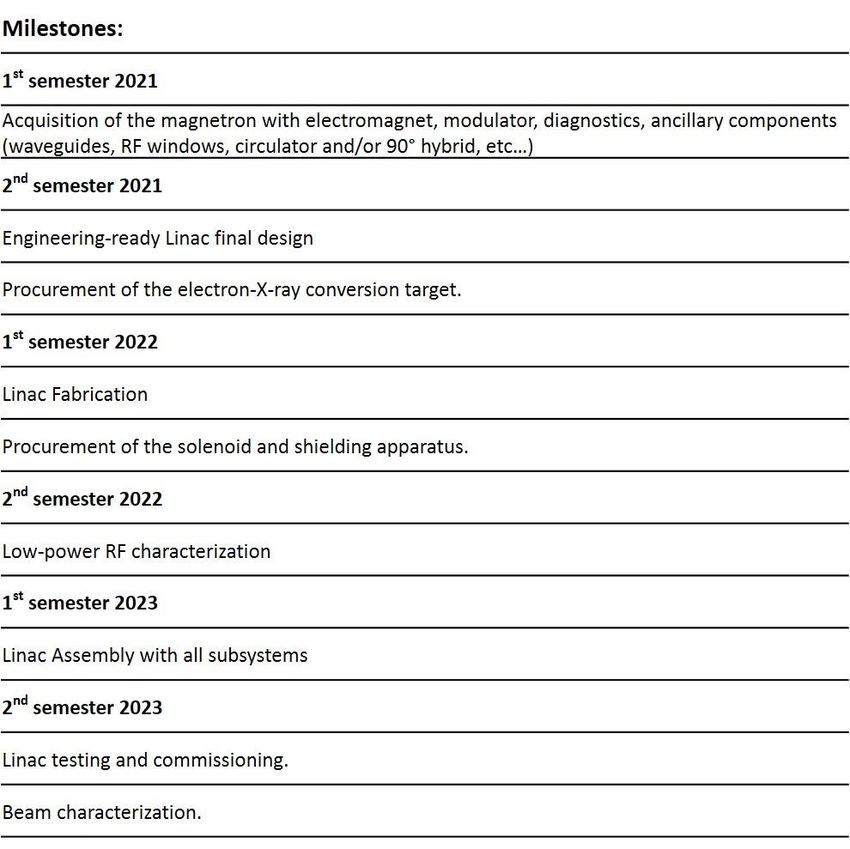
Working Group Description

                                          Scientific Proposal

                                          State of the art

 Outline
                                          Objectives and Methodology of the Proposal

                                          Project Organization in Working Packages

                                          Funding Requested

Luigi Faillace   Riunione di Gruppo V, Sezione di LNF, 07 Luglio 2020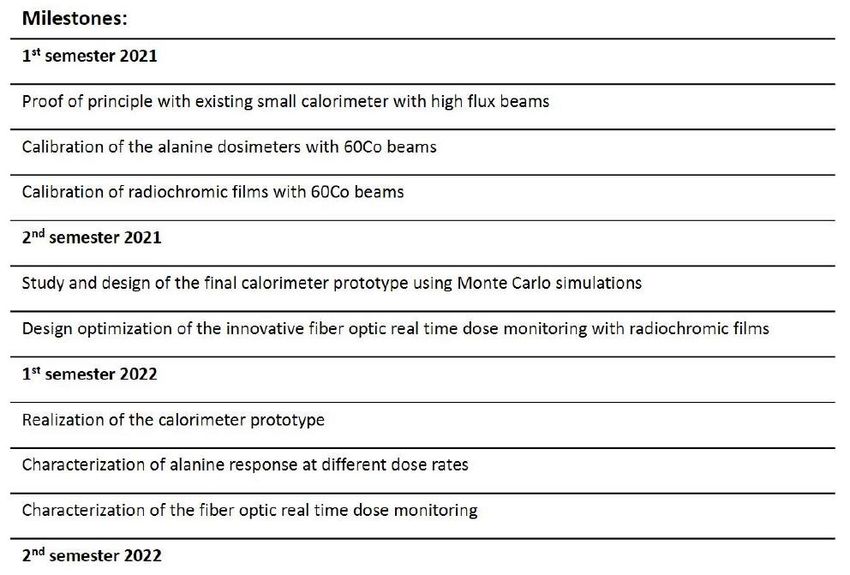
Working Group Description                • INFN-LNF                                                    • INFN-
                                                    Frascati                                                      Roma1
                                                                          Luigi Faillace,          Mauro
                                                                        WP1 Responsible           Migliorati,
                                                                        Claudio Marcelli,           WP3
                                                                        WP2 Responsible          Responsible
  Research Areas
  1) Particle Accelerators;
                                                                               Francesco         Pierluigi
  2) Detectors;
                                                                               Romano,           Paolucci,
  3) Interdisciplinary Applications of
                                                                                 WP4               WP5
  INFN technology.                                                            Responsible       Responsible
                                                  • INFN-                                                       • INFN-
                                                    Catania                                                       Napoli

  External Participants                           Working Packages

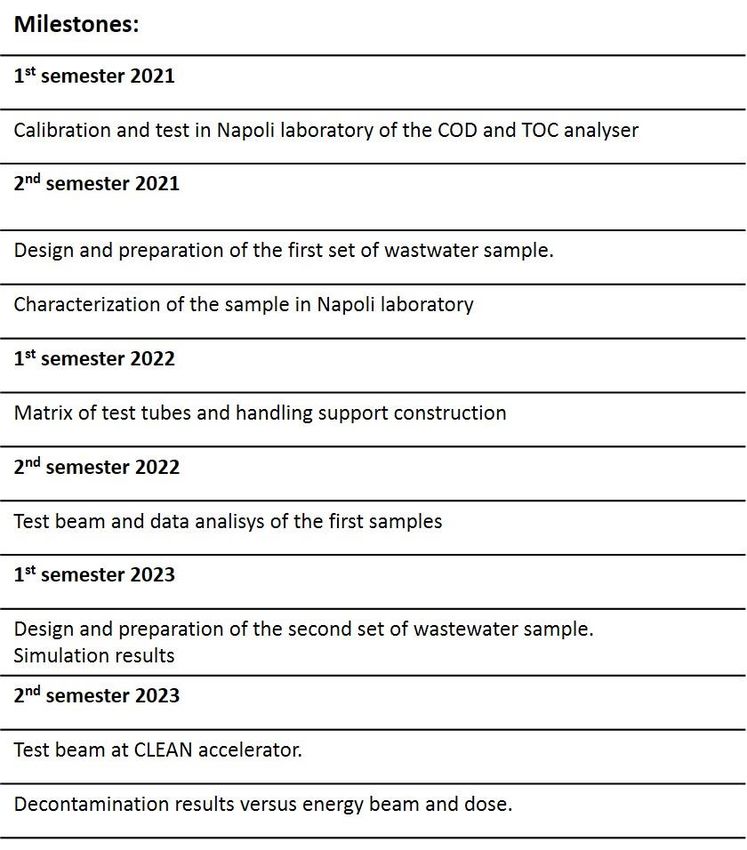
  Sapienza University                             • WP 1 – Linac RF Design
  University of Palermo                           • WP 2 – Linac engineering, fabrication, installation and commissioning
  University of Naples Federico II                • WP 3 – Beam Dynamics and Optics Design
  Comeb srl                                       • WP 4 – Development of new-generation of absolute and on-line Dosimetry
                                                  • WP 5 – Experimental Setup and Case study
  INAIL
Luigi Faillace                           Riunione di Gruppo V, Sezione di LNF, 07 Luglio 2020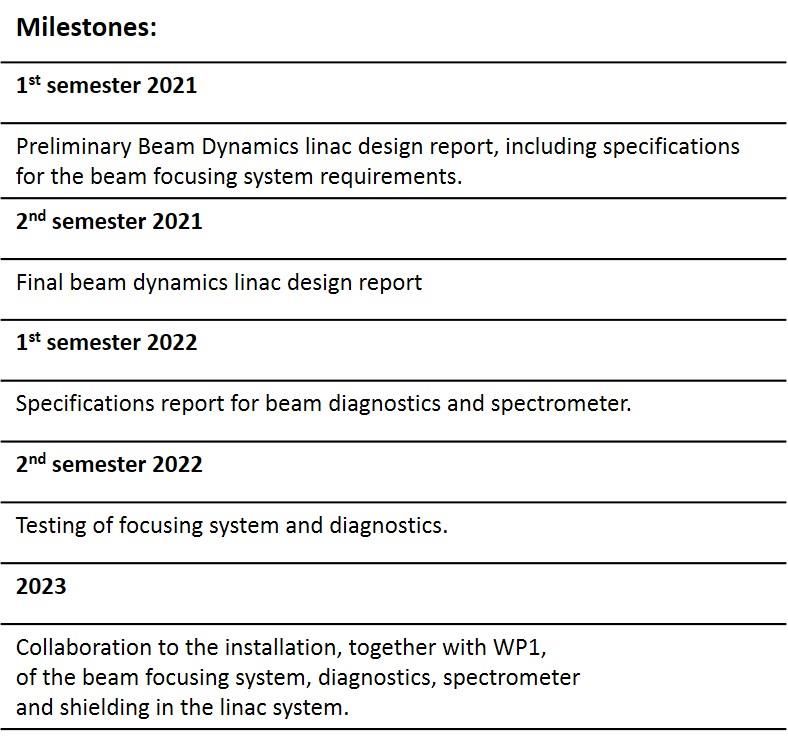
Introduction

❑ Inactivation of pathogenic agents like bacteria and                                 The CLEAN project aims at triggering the evolution of the
                                                                                             radiation sterilization technique towards
  viruses      (including   SARS-Cov-2)    on       materials,
  substances, clothes, protective devices, foods and                                     compact, cost-effective, and company-scale solutions.
  waters, is posing high risks to community and is of                            Objectives:
  great concern nowadays.                                                        ➢ design, realization and demonstration of an innovative high average
                                                                                   power C-Band linac, able to deliver both an electron beam
❑ Any failure in the inactivation process is likely to have                        (ultrashort pulses with high peak current) and high-energy X-rays
  dramatic consequences on health and safety,                                      via electron-target conversion
  particularly whereby vaccines or effective treatments                          ➢ obtain radiation doses within seconds up to several kGy → Such
                                                                                   sterilization doses are currently achieved in tens of minutes/hours in
  are not yet available.
                                                                                   industrial gamma irradiators.
❑ Extreme "exposures" are required to make sure that                                                                       Specific Targets
  sterilization processes are effective and fast.                                    •    water contaminants
                                                                                     •    Personal Protective Equipment (PPE)
                                                                                     •    other substances and small-to-large material volumes whereby
                                                                                          other sterilization systems might have shown no effectiveness
                                                                                          or slow production rate and/or the generation of dangerous
                                                                                          disposal.
      Luigi Faillace                                       Riunione di Gruppo V, Sezione di LNF, 07 Luglio 2020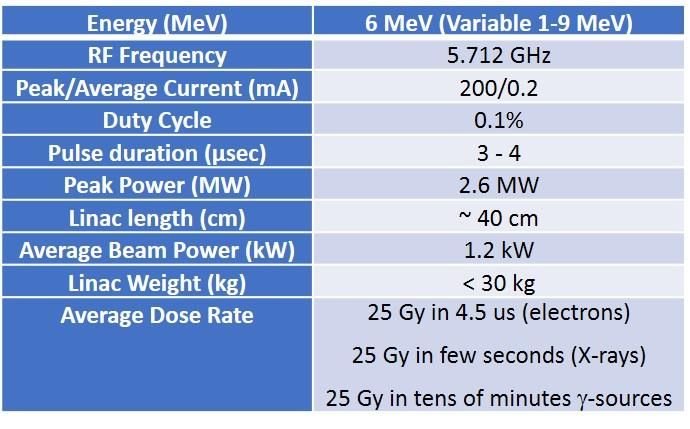
State of                                               Application                         Beam energy           Average Current

             the art                Research                  High-Energy Physics                              >1GeV          10’s µA - 10’s mA
                                   Medical Area                     Diagnostics                                                    > 1 µA
                                                                   Radiotherapy                               4-25 MeV          10 nA – 1 µA
                                                                                                                             (X-rays of 200-500
                                                                                                                          cGy/min@1m, flux of 107-8
                                                                                                                              photons/s/mm2)
                                                          Radioisotopes Production                    Up to 70-90 MeV           Up to 10 mA
                                                                   FLAH therapy                           Up to 7 MeV             >10’s µA
                                                                 Blood Irradiation                            1-2 MeV             >10’s µA
                                     Industry                  Material Processing                            < 10 MeV           10-150 mA
                                                                    Sterilization                             < 10 MeV          Up to 10 mA
                                                       Non-Destructive Testing (NDT)                                               > 1 mA
                                     Security                    Cargo Scanning                               < 10 MeV         0.1 mA – 1 mA
                               Environmental Area      Water, flue gas treatment, etc.                        0.7-5 MeV           5-10 mA
Current approach for sterilization:
     • RF accelerators such as the IBA Rhodotron are large machines, not transportable;
     • gamma ray sources: 137Cs and 60Co → half-life time of these sources allows operation up to about a few years before they are
        replenished but the storage of these sources represents a safety threat;
     • ethylene oxide (EtO) → lengthy cycle time, a high-cost, and its potential hazards to patients and staff who work on the sterilization
        process line;
      Luigi Faillace                                   Riunione di Gruppo V, Sezione di LNF, 07 Luglio 2020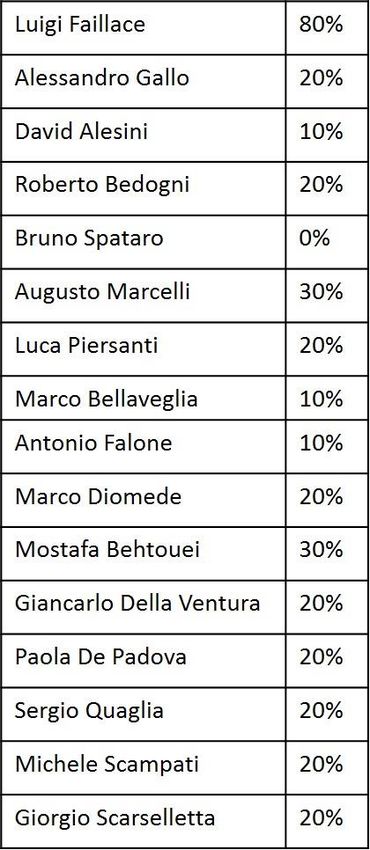
Novelty of the proposed system

▪ Novel approach with the CLEAN project:
   • Portability;
   • Tunable output energy, at (very) fast rate, e.g. as low as some ms from pulse to pulse;
   • Long life cycle and modularity;
   • Linac-based machines have lower costs compared with DC machines;
   • development and adoption of new cost-effective methods for the fabrication of RF accelerating
     structures in order to be conceived for future in-series production in small facilities ;
   • development of a novel on-line dose measurement systems, to avoid saturation phenomena which
     preclude the use of current state of the art dosimeters.
    Luigi Faillace                          Riunione di Gruppo V, Sezione di LNF, 07 Luglio 2020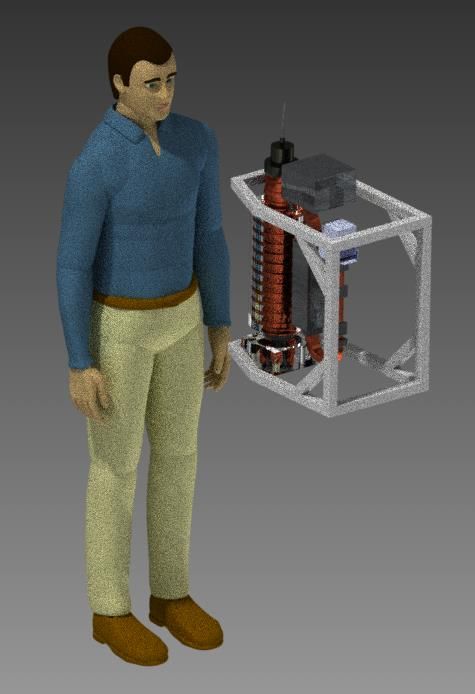
Objectives and Methodology of the Proposal

                                  The main research activities that will be performed in order to
                                  achieve our target are summarized in the following:
                                  1. Development of an optimized RF and beam dynamics design
                                  in order to achieve the proposed C-band linac features:
                                  compactness, low-cost, variable output beam current;
                                  2. The development of self-shielding is an important task. This
                                  machine is designed to be utilized by hospitals, private
                                  companies and any sterilization facilities where self-shielding is
                                  mandatory;
                                  3. The development of a dual-mode operation scheme: electron
                                  beams for high-dose requirements in short amount of time for
                                  low-depth materials (up to 10 kGy integrated dose in a few
                                  seconds and penetration depth up to at least 5 cm) and X-rays
                                  (for the sterilization of thick materials);
                                  4. The development of a new-generation of accurate high-flux
                                  dosimeters and of real-time dose monitoring.

Luigi Faillace   Riunione di Gruppo V, Sezione di LNF, 07 Luglio 2020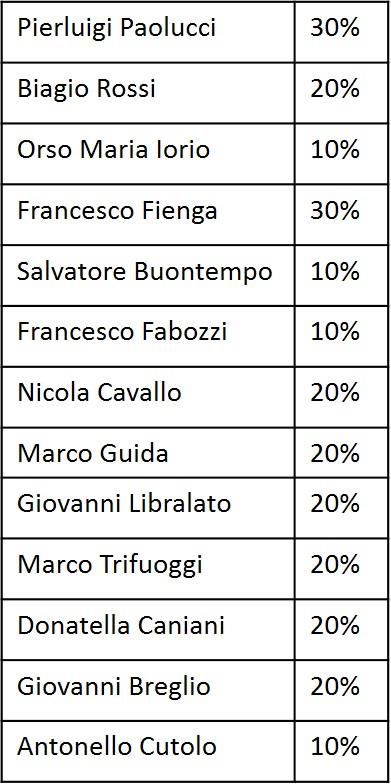
WP1 - Linac RF Design
                                           Local Coordinator: Luigi Faillace – INFN-LNF

INFN-LNF, which has a long experience in particle accelerators, is to provide the RF, beam dynamics design of the linac as well as
its commissioning. INFN-LNF will lead WP1.

The main features which will have to be provided for the proposed linac are summarized, but not exhaustively, in the following:

1. Compactness. RF simulations will be carried out in order to obtain a compact geometry for the C-band linac operating at
   5.712 GHz. Novel geometries will be optimized in order to reduce the costs for linac machining and to avoid high-cost
   temperature bonding processes, such as brazing and diffusion bonding.
2. High Average current. The C-Band technology allows to achieve very high gradients and higher shunt impedance, which,
   properly optimized, will allow for reduction of the total length around half a meter with peak RF power consumption of few
   MW's. An ad-hoc cooling system will be engineered to handle average power in the kW range.
3. Low-cost. Different fabrication scenarios will be investigated in order to achieve a cost-effective solution. As an example, the
   machining of the linac in two halves made out of hard copper and welded together on the outer surfaces (using TIG or EBW
   techniques) will noticeably reduce the production time and overall the costs, compared with vacuum or hydrogen brazing.
     Luigi Faillace                              Riunione di Gruppo V, Sezione di LNF, 07 Luglio 2020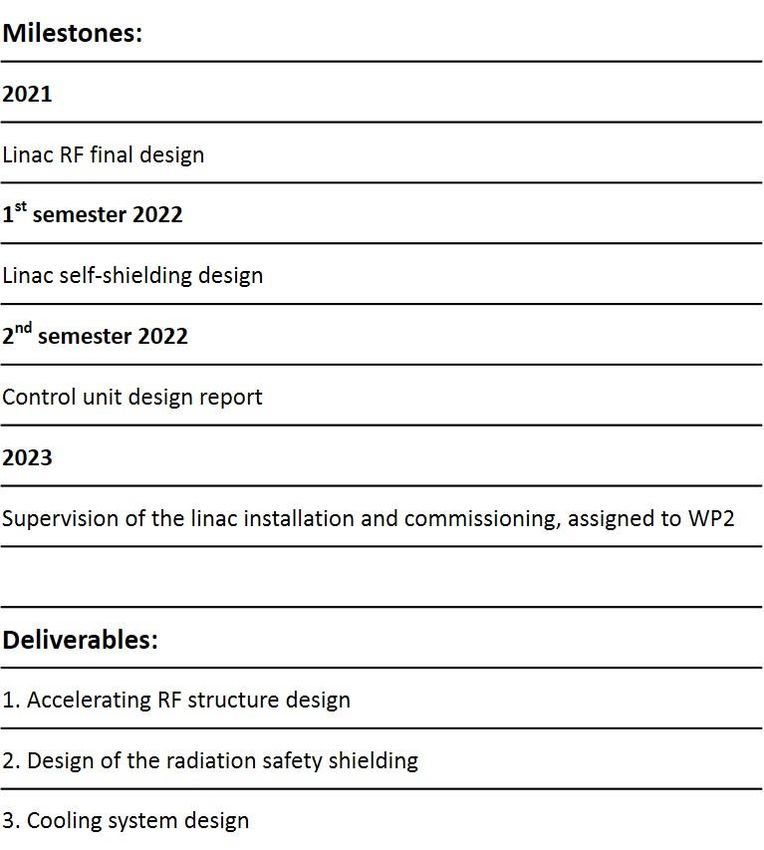
WP2 - Linac engineering, fabrication, installation and commissioning
                                       Local Coordinator: Augusto Claudio Marcelli – INFN-LNF

INFN-LNF (WP2 together with WP1) will supervise this task.
The external and co-financing private company, Comeb srl, will perform the following:
• Linac engineering, fabrication, installation and support to the testing and commissioning of the whole linac-plus-irradiation
• Engineering of the whole linac assembly structure which will include all the subsystems, including the RF power source
  (magnetron), the waveguide system for RF power distribution, vacuum pumps, the monitoring system, the electronics rack
  with gun driver and modulator for the magnetron, the cooling system and control units for the mechanical, electrical control
  of the linac.
• Engineering of the architecture that can host the whole linac assembly, including the focusing solenoid and the self-shield
  apparatus →At first, we will design the structural support system for the high-power tests inside a bunker*.
• The first prototype that will be installed and tested will be high-capital as it applies to all innovative machines built for the first
  time.
• The aim of this proposal is also to market strategy in order to develop following linacs which have a cost of about 1/3 or less
  than the prototype for the production in series. Therefore, we will also proceed to the engineering of an architecture which is
  more suitable and compatible with hospitals, private company and other sterilization facilities.

*In the case of unavailability of the bunker for the linac commissiong at INFN-LNF, one option is foreseen in order to mitigate this risk: INFN- LNS
(Laboratori Nazionali del Sud).
      Luigi Faillace                                    Riunione di Gruppo V, Sezione di LNF, 07 Luglio 2020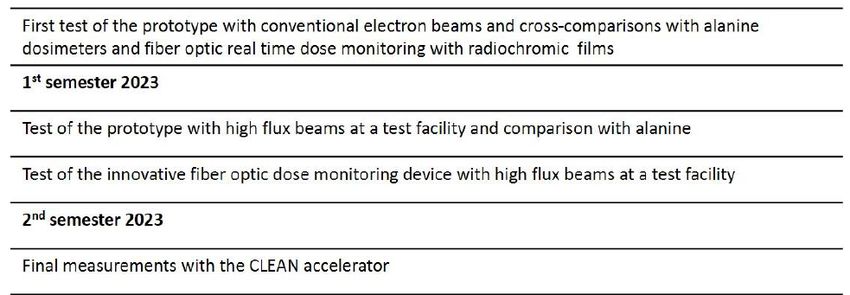
WP3 - Beam Dynamics and Optics Design
                                        Local Coordinator: Prof. Mauro Migliorati – INFN-Roma1

INFN-Roma 1 will lead WP3. In order to meet the challenging specifications of the linac main features, an extensive program of beam dynamics
simulation will address the following tasks, in parallel with WP1:

1. Large output beam energy range. Unlike accelerators for high-energy physics, the variability of the output energy range is very limited for
industrial and medical linacs. We propose a C-band linac which will be able to have not only to operate in the same range but also the possibility
for operating at a lower energy value.
2. Determination of maximum beam current. We estimate that our proposed linac will be able to operate at a maximum current of 200 mA. This
option will be investigated and supported by accurate beam dynamics simulations, including beam break-up and higher order modes estimations.
3. Beam Focusing. The focusing system, typically a solenoid, will be designed and optimized for compact transverse dimensions. The focusing
system will have to be compatible with the self-shielding apparatus that will be installed around the linac.
4. Self-Shielding. Collaborating with WP1 and WP4, Montecarlo simulations of the self-shielding apparatus will be carried out. The challenge is to
integrate the shielding itself with focusing system in the same assembly. Monte Carlo calculations will be needed to "shape" the shielding by: (1)
concentrating it in leaking points, and (2) avoiding unnecessary weight. Tungsten-based materials and alloys will be evaluated in view of reducing
weights and sizes.
The beam dynamics simulations will also involve the dimensioning of the required magnet spectrometer for beam energy measurements. This
task (WP3) will be performed in collaboration with WP1, WP2 and WP4.

      Luigi Faillace                                  Riunione di Gruppo V, Sezione di LNF, 07 Luglio 2020
WP4 Dosimetry
Local Coordinator: Francesco Romano, INFN-CT
Development of detectors for relative, absolute and on-line dosimetry of high-flux beams, implementing novel
approaches with both and passive and active dosimeters.
Objectives:
• Novel approach utilizing a prototype of small portable calorimeter. Calorimeters are accurate dose rate
independent real time dosimeters typically developed and used at National Metrology Institutes, but new
portable prototypes are being recently developed. (INFN-CT)
• To complement and cross compare the calorimetry measurements, a set of irradiations at the same conditions
will be done using alanine detectors. (INFN-CT)
• A novel approach for real-time in-transmission monitor using in-transmission non-destructive technique, based on
the fiber optic technology, scintillating fibers, at the exit of the accelerator. Real-time determination of optical
changes of the radiochromic films induced by radiation (INFN-NA)
• Development of miniaturized SiC-based sensors. (INFN-LNF)
Luigi Faillace Riunione di Gruppo V, Sezione di LNF, 07 Luglio 2020WP5 - Experimental Setup and Case Study
Local Coordinator: Pierluigi Paolucci – INFN-Napoli
A sterilization experiment with electron beams is different than an experiment with gamma sources, as the beam may vary in intensity during the
irradiation. For such a reason the high-current irradiator will be provided with a real-time beam monitor, that should be as transparent as possible.
Silicon carbides or scintillating fiber are intended to operate, possibly in combination, as beam monitors.
The sterilization experiment will be subdivided in three phases:
- Beam monitor calibration. Using well-established high-dose techniques, such as the calorimeter or the alanine, the beam monitor will be calibrated in
terms of absorbed dose in water at a given position (typically the build-up in water equivalent material). A kGy/Monitor units coefficient will be derived.
- According to the sterilization need, the medium to be sterilized will be prepared. For example, to sterilize very thin DPI such as wearable masks, these
should be sandwiched between plastic sheets to ensure the charged particle equilibrium at their position.
- The irradiation will be stopped when the monitor unit indicator (MU) will equalize the desired sterilization dose.
Case-study: drinking water sterilization.
The main goals in the drinking water, wastewater, groundwater and sewer disinfection is to remove recalcitrant compounds and the residual waterborne
bacteria and viruses (vibrio cholera, cryptosporidium, shigella, Escherichia coli, and enteric viruses). Previous studies demonstrated that a dose of few kGy
could be sufficient to effectively reduce many of these chemicals.
This technology is becoming a concrete alternative method to disinfection processes, such as chlorine, UV, and ozone. The main advantages are:
● stability of the disinfection efficiency during the time.
● a very low bacterial regrowth after disinfection.
● large saving in cost of power consumption.
Luigi Faillace Riunione di Gruppo V, Sezione di LNF, 07 Luglio 2020INFN-LNF
activities in
WP1
INFN-LNF
Total FTE: 3.5
Luigi Faillace Riunione di Gruppo V, Sezione di LNF, 07 Luglio 2020INFN-LNF
activities in
WP2
INFN-LNF
Total FTE: 3.5
Luigi Faillace Riunione di Gruppo V, Sezione di LNF, 07 Luglio 2020INFN-Roma1
activities in
WP3
INFN-Roma1
Total FTE: 2.5
Luigi Faillace Riunione di Gruppo V, Sezione di LNF, 07 Luglio 2020INFN-CT activities in WP4
INFN-Catania
Total FTE: 2.2
Luigi Faillace Riunione di Gruppo V, Sezione di LNF, 07 Luglio 2020INFN-Napoli
activities in
WP5
INFN-Napoli
Total FTE: 2.4
Luigi Faillace Riunione di Gruppo V, Sezione di LNF, 07 Luglio 2020Financial requests – WP1
Activity N. Description 2021 2022 2023
[k€] [k€] [k€]
WP1.1 Messa a punto del beam monitor rad- 13
tolerant
WP1.2 validazione del beam monitor rad-tolerant 13
and studio di radioprotezione
WP1.3 Messa in opera su macchina del beam 5
monitor e validazione del self-shielding
Post Doc 25 25+25 25
Missions 10 10 13
TOT 48 73 43
WP1 TOT = 164 k€
Luigi Faillace Riunione di Gruppo V, Sezione di LNF, 07 Luglio 2020Financial requests – WP2 INFN-LNF
Activity N. Description 2021 2022 2023
[k€] [k€] [k€]
WP1.1 Magnetron + Electromagnet 77
WP1.2 Modulator 58
WP1.3 E-gun 7
WP1.4 Circulator 13
WP1.5 Gun Driver 13
WP1.6 Vacuum System and Mechanical Structure 36
WP1.7 Cooling Sytem 6
WP1.8 Waveguides+windows 9
WP1.9 Water Load 10
WP1.10 Solenoid 7
WP1.11 Ancillary 88
WP1.12 Mechanical engineering design, fabrication 20 20 30
assembling and support for testing
WP1.13 Ancillary services (documentation, configuration 20 20 30
control, management)
Materials Costs and handling 24 42
SUB-TOT 180 290 60
Comeb srl co-financing 20 20 20
TOT 160 270 40
WP2 TOT = 470 k€
Luigi Faillace Riunione di Gruppo V, Sezione di LNF, 07 Luglio 2020Financial requests – WP3 INFN-Roma1
Activity N. Description 2021 2022 2023
[k€] [k€] [k€]
WP1.1 Hardware and Software for Beam dynamics 10
simulations
WP1.2 Consumables (self-shielding,…) 10
Post Doc 25
Missions 5 5 5
TOT 15 40 5
WP3 TOT = 60 k€
Luigi Faillace Riunione di Gruppo V, Sezione di LNF, 07 Luglio 2020Financial requests – WP4 INFN-Catania and Napoli
Activity N. Description 2021 2022 2023
[k€] [k€] [k€]
WP4.1 CT Portable calorimeter 40
WP4.2 CT Alanine pellets 2 2 2
WP4.3 CT Maintenance EPR spectrometer for alanine 1 1 1
analysis
WP4.4 CT Alanine calibration with 60Co source 3
WP4.5 CT Laboratory consumables for alanine 2 2 2
measurements
WP4.6 CT Phantom for cross-comparison of alanine and 3
calorimeter measurements
WP4.7 CT GafChromic for relative dose distributions 2 2 2
WP4.6 NA Consumables (Silicon carbides or scintillating 10 10 10
fiber, radiochromic films…)
WP4.7 NA Instrumentation 5 5 5
Post Doc 25 25
Missions 5 10 10
TOT 55 100 32
WP4 TOT = 187 k€
Luigi Faillace Riunione di Gruppo V, Sezione di LNF, 07 Luglio 2020Financial requests – WP5 INFN-Napoli
Activity N. Description 2021 2022 2023
[k€] [k€] [k€]
WP5.1 Chemical oxygen demand (COD) COD 10
analyzer
WP5.2 Total organic carbon (TOC) analyzer 10
WP5.3 Matrix of Test tubes 2
WP5.4 Automatic handling system for Matrix 4
WP5.5 Reagents for toxicity analyses, reagents for 10 10 10
chemical analyses, reagents for
microbiological analyses
Post Doc 25
Missions 5 5 5
TOT 37 44 15
WP5 TOT = 96 k€Total financial requests
* (net costs, assuming procurement from Comeb SrL co-financing 60 k€ tot)
Luigi Faillace Riunione di Gruppo V, Sezione di LNF, 07 Luglio 2020You can also read


