Oris Caliber 400 - American Watchmakers - Clockmakers ...
←
→
Page content transcription
If your browser does not render page correctly, please read the page content below

TM
March 2021

                                                                                                              HOROLOGICAL TIMES
                                                                                                                                               Oris Caliber 400
   AMERICAN WATCHMAKERS-CLOCKMAKERS INSTITUTE · SETTING SERVICE STANDARDS AND EDUCATING THE HOROLOGICAL COMMUNITY

                                                                                                                    Single Rollers, Double Rollers, and Their Roller Jewels

                                                                                                                       Restoration Projects Done at WOSTEP in 1991
                                                                                                                          Part 1: Gold Pocket Watch with Carillon
Since 1920
CYCLOMOTION
STOCK #
ELMA-CYCLOMOTION $1,599
(arms not included)
Winds up to 12 to 24 watches
Winding speed 1 or 4 rpm
Features automatic on & off timer
Left or right winding rotation
CYCLOMOTION + 6 ARMS ELMA-CYCLO/5190 $1,929
HOLDS 12 WATCHES (as pictured)
CYCLOMOTION + 6 ARMS ELMA-CYCLO/5192 $2,109
HOLDS 24 WATCHES
JULES BOREL & COMPANY
PHONE 800-776-6858 WEB JULESBOREL.COM FAX 800-776-6862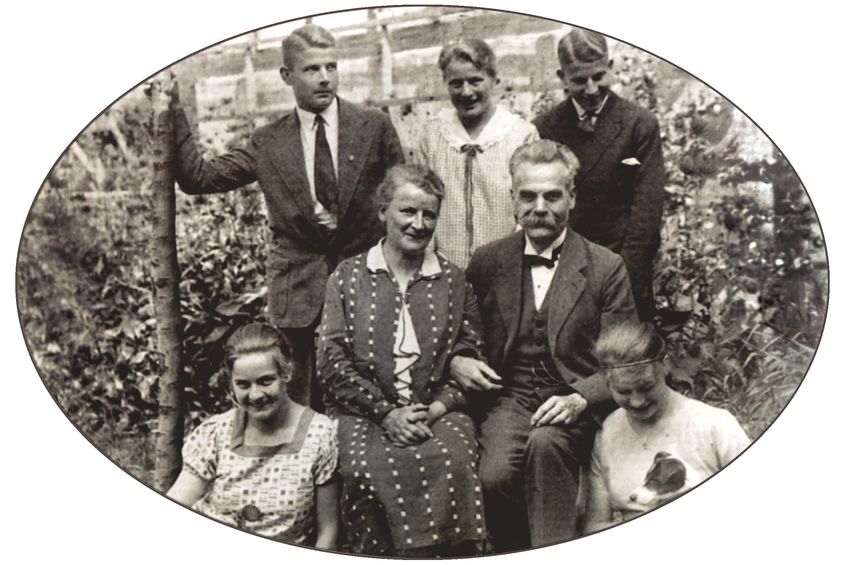
IN THIS VOLUME 45, NUMBER 3, March 2021
Official Publication of the American Watchmakers-Clockmakers Institute
AWCI News eBay’s Luxury Watch Market- TM
March 2021
EXECUTIVE & EDITORIAL OFFICES Board of Director’s place Exceeds Revenue Goals
American Watchmakers- By Kathleen Cardwell Oris Caliber 400
Nominations HOROLOGICAL TIMES
AMERICAN WATCHMAKERS-CLOCKMAKERS INSTITUTE · SETTING SERVICE STANDARDS AND EDUCATING THE HOROLOGICAL COMMUNITY
Clockmakers Institute (AWCI) page 4 page 30
701 Enterprise Drive
Harrison, OH 45030 President’s Message Show Dates: LVMH Watch
866-FOR-AWCI (367-2924) By Justin Harrell, CW21 Week, Watches and Wonders
or 513-367-9800 page 5 Geneva, and More
Fax 513-367-1414 By Kathleen Cardwell
awci@awci.com • www.awci.com
www.facebook.com/MyAWCI
Affiliate Chapter News page 31 Single Rollers, Double Rollers, and Their Roller Jewels
page 41 Restoration Projects Done at WOSTEP in 1991
In Summary Part 1: Gold Pocket Watch with Carillon
Donna Hardy
Managing Editor
New Members/ELM Trust Oris Adds a Small Seconds The Oris Caliber 400. See page 15.
Ext. 305 donna@awci.com Donors/Memoriam Complication to the Caliber 400
page 43 By Donna Hardy
Janette Torres-Gomez page 32 Columns
Graphic Designer &
Assistant Technical Support
Technical Discussions Watchfinder Collects Watches from
From the Workshop
Ext. 302 jgomez@awci.com Restoration Projects Done at Single Rollers, Double Rollers,
Sellers’ Homes and Their Roller Jewels
WOSTEP in 1991 By Donna Hardy By Jack Kurdzionak, CW21, FAWCI
Jason Champion, CW21 Part 1: Gold Pocket Watch with page 32 page 23
Education Director and Watchmaking Specialist
Ext. 303 jason@awci.com
Carillon
By Bernhard Stoeber, CW21
Mike Carpenter, CC21
page 9
Patek Philippe Discontinues
Nautilus Reference 5711/1A
Classifieds
Clock Director By Donna Hardy Buy, Sell, Trade, and
clocks@awci.com Oris Caliber 400 page 32 Employment Opportunities
By Jordan P. Ficklin, CW21 page 44
HOROLOGICAL TIMES page 15 The Deep Space Resonance Watch
ADVISORY COMMITTEE
Bob Little, CC, CW, Chair
Industry News
By Donna Hardy AWCI Directory
Daniel Benson, CMW page 33 Advertisers’ Index
Paul Corn Industry Embraces Online page 46
Andrew DeKeyser, CW21
Platforms Education &
Dale LaDue, CMW21
Jason Ziegenbein, CW21 By Andrew DeKeyser, CW21
page 29
Certification Board of Directors
page 46
AWCI Educational Calendar
Fewer Jewelers Closed Doors in page 6 Fellows
2020, Despite the Pandemic page 46
By Kathleen Cardwell
Horological Education
Around the World Industry Advisory
page 29 Kelloseppäkoulu
Reprinting and reproduction is prohibited without written The Finnish School of Watchmaking Board Members
permission from the American Watchmakers-Clockmakers Espoo, Finland page 46
Institute. Copyright © 2021 by the American Watchmakers- By Kathleen Cardwell
Clockmakers Institute. page 35
Horological Times (ISSNO 145-9546) is published monthly
and copyrighted by the American Watchmakers-Clockmakers OUR VISION:
Institute, 701 Enterprise Drive, Harrison, OH 45030-1696. AWCI’s vision is to have an educated and passionate horological community practicing
Subscription price for the public is $175.00 per year the highest standards and with the resources to provide quality goods and services.
($15.00 per copy). Members subscription is $99.00 which
is included with annual dues of $175.00. Periodicals post- OUR MISSION:
age paid at Harrison, OH 45030 and additional entries. Setting service standards and educating the horological community.
POSTMASTER: Send address changes to Horological Times,
701 Enterprise Drive, Harrison, OH 45030.
Like us on Facebook! Follow us on Twitter! Follow us on Instagram!
www.facebook.com/HorologicalTimes www.twitter.com/AWCInstitute www.instagram.com/americanwatchmakers
Like us on Facebook! Check out our educational videos!
www.facebook.com/MyAWCI www.youtube.com/awci/videos 3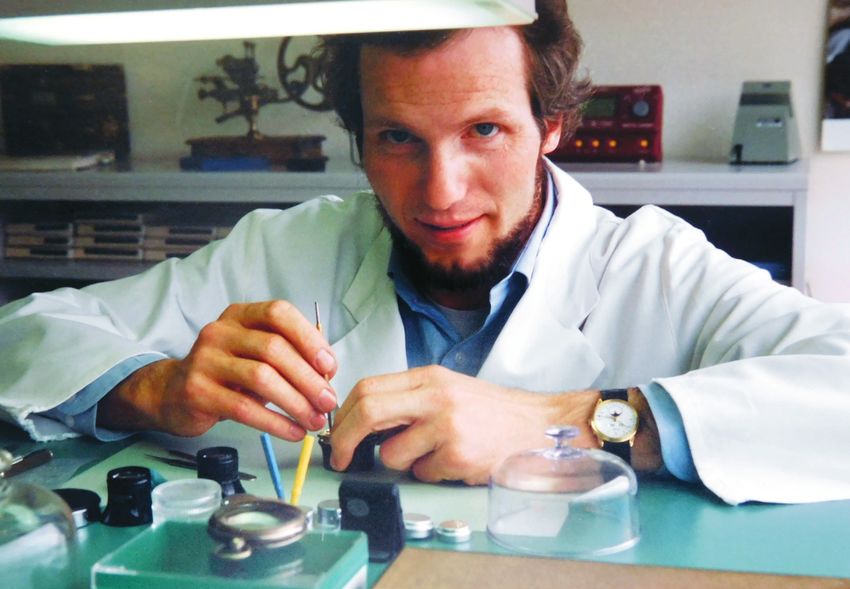
You can shape the future of AWCI
       and the horological industry.
           The Nominating Committee is now accepting nominations for
        individuals who would like to serve on the AWCI Board of Directors.

               Deadline to submit your nomination: April 12, 2021

    Who can I nominate?
    Members may nominate themselves or others they feel are qualified to represent the membership on the board.

    What are the qualifications?
    Board members must be willing to serve, have been a member of AWCI for at least one year, and attest to the
    duties of loyalty, confidentiality, and care.

    What is required of board members?
         ; Board members must have email access and check it on a regular basis. They must be able to attend
           monthly conference calls and travel to attend in person the midyear meeting and the annual meeting
           of AWCI.

         ; Before they take office, board members should become familiar with the Constitution & Bylaws of
           AWCI as well as the basics of parliamentary procedure.

         ; Board members serve for a term of 3 years.

    Are board members compensated for their time?
    Board members are not paid for their time but are compensated for travel and lodging expenses related to their efforts to
    carry out their duties. It is hard work to serve on the Board of Directors and it takes commitment. However, participating
    in shaping the future of AWCI and the industry can be incredibly rewarding.

    How to submit your nomination:
    Go online: www.awci.com/nomination
    Scan QR Code: Nomination Form
    Mail to:
    Board of Directors Nominating Committee
    American Watchmakers-Clockmakers Institute
    701 Enterprise Drive
    Harrison OH 45030
    Or email to: nominatingcomm@awci.com
    Or call: 866-367-2924/513-356-9800 ext. 303                                                    www.awci.com/nomination

4                                                                                                                    March 2021
a message from the
                                     president                                             JUSTIN HARRELL, CW21

                          A     nother month has passed,        There are opportunities and jobs for horologists
                                  and our headquarters in available all over this country. How can someone
                            Harrison, Ohio, is gearing start at ground zero in this industry and become
                            up to host one of the largest a clockmaker or watchmaker without attending a
                            cat-herding events of the last full-time program? It is not impossible, but almost.
                            decade. Many famous feline Before the lockdown, both the watch and clock
                            wranglers will be in atten- education committees and the Board of Examiners
                            dance and have met all the were developing tiered programs that would ulti-
        Justin Harrell
      jharrell@awci.com     flying-saucer vaccination re- mately lead to certification. In the past, a mentor
         828-551-0741       quirements. Now, if you’re would be willing to take on an apprentice to get
  still reading this, you might wonder just what in the started in this field. That meant the mentor would
  heck is going on. I just wanted to see who, if anyone, be willing to teach the apprentice at a slow pace,
  is paying attention.                                      and the apprentice would be willing to give his or
        This month’s message is going to sound like her time to the mentor usually without compen-
  a broken record, but here goes. I/WE                                 sation. Labor laws and the squeeze of
  WANT TO HEAR FROM YOU!!! How                                         the American economy have prevented
  is it possible that only two members have
                                                     I would           many opportunities like that. So, how
  contacted me after pleas for participation       love   to see       can we sidestep this obstacle? If a men-
  and input for three months? I’ve put my          at least six tor or jewelry store owner could send
  cell phone number in a magazine for a
  reason. I/WE WANT TO HEAR FROM
                                                   candidates an           apprentice to AWCI first to get the
                                                                       fundamentals down, then the apprentice
  YOU!!! This organization is only as good            on the           could return to the business as an asset.
  as the level of participation it elicits. Send       ballot.         That is how tiered certification will work
  me a note, a question, an idea, anything!                            for AWCI and the industry. It is all about
        Please consider running for the Board of Direc- the money. Invest in the right candidate, and AWCI
  tors. Our nominating committee is looking for vol- will turn that person into a profitable employee for
  unteers to run as two spots need to be filled. On you. We also planned to have more advanced class-
  the page opposite, you’ll find all the information you    es for those who already hold certifications and
  need to nominate someone or yourself. Our elec- want to push their skills to the next level. We must
  tion is going to be slightly delayed this year due to     get back on track with both of these goals as soon
  the inactivity of the institute. If you have run in the   as possible. The pendulum has stopped and needs
  past, please try again. I would love to see at least six some impetus to start again.
  candidates on the ballot. Since I have been involved          Spring is on the horizon, vaccines are rolling out,
  with AWCI, our Board of Directors has consisted of        and watch lovers are as itchy as every other shop-
  the same few people. It is great that these same peo- per to get back out there, spend a bit, and return to
  ple are always willing to contribute. However, that some sense of normalcy. Let’s get ready together to
  does not mean that it’s a “good old boys club” that is take our businesses to the next level after this dark
  not open to change or new direction. If you have any season. We are the best resource for each other, our
  interest in contributing to AWCI’s future, I implore industry, and the future of horology. Send me a text,
  you to put your name in the hat.                          will ya?

Horological Times                                                                                                     5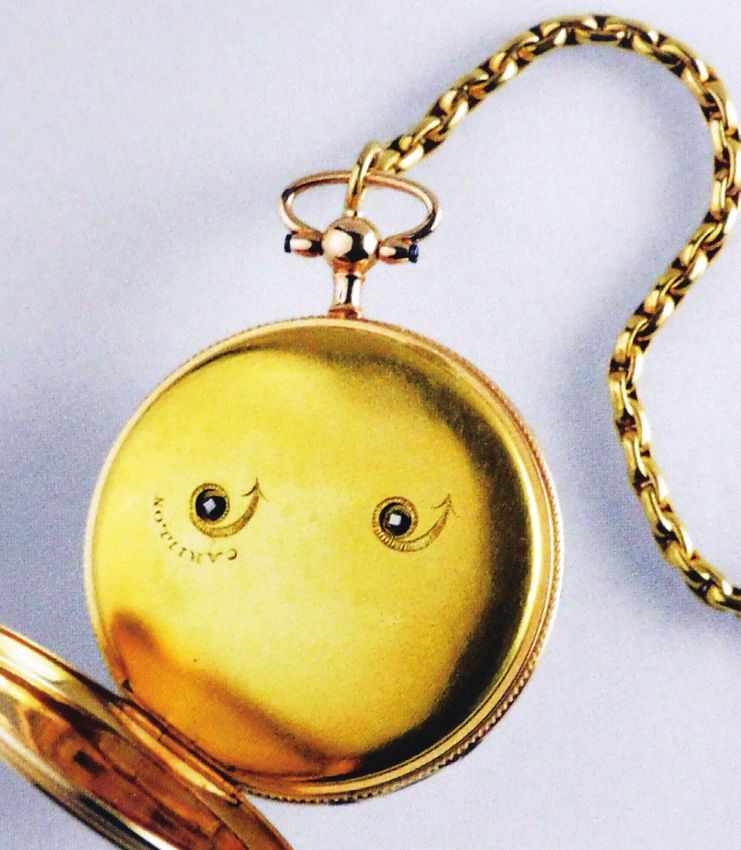
educational calendar
    Check out AWCI’s complete line
    of courses for watchmakers and                         See our catalog for more!
    clockmakers!                                           We can use your help
    AWCI will not be holding classes in Harrison, Ohio,    We are always looking to expand our course cata-
    or on its mobile classroom until projections of the    log and educational resources as well as increase our
    virus subsiding have become more predictable or        team of instructors. During this downtime, we want
    there is a vaccine widely available. In the mean-      to develop new courses and find new instructors who
    time, we invite you to browse our course catalog,      will collaborate with us. Reach out to us at education
    www.awci.com/course-catalog, which offers 46 class-    @awci.com if there is a class you would like to col-
    es for watchmakers, including classes for beginners,   laborate on as an instructor.
    technicians, and, of course, experienced watchmakers       We look forward to receiving your class requests
    who want to sharpen their skills.                      and we hope to have a new list of classes to offer
       In the catalog, you’ll find classes on:             when the pandemic is under control.
        h Introduction to Watchmaking
        h Quartz
        h Vintage Watch
          Repair
        h Tool Making
        h Precision Timing

        We also have 46 classes
    for clockmakers, including
    classes on:
       h American Time-and-
         Strike Movement
       h Advanced Clock
         Repair
       h Introduction to the
         Lathe

6                                                                                                        March 2021
Reserve your spot today. Contact the education director, Jason Champion, CW21,
at 866-FOR-AWCI (367-2924), ext. 303.
Prices reflect members’ discount! Contact us so we can help you find the best course suited to your skill level, expertise, and interests.
$595
N August
Michael will share his knowledge gained from 40 years of experience through his
Herschede Tubular Bell Clocks extensive PowerPoint presentation with over 200 photos focusing on examples
E 11-13
Instructor: Michael Gainey, CC21 of issues before and after a rebuild that are unique to most common Herschede
AWCI Headquarters, Harrison, Ohio Tubular Bell movements.
W Come to AWCI’s well-equipped machine shop to join David Lindow for this prac-
$595 tical, hands-on class where gearing and gear cutting will be practiced. Students
D August Practical Gear Cutting for the Horologist
Session 1
will not only learn the basic setups for cutting horological gears, but they’ll also
learn multiple approaches to tooling as well as theory from a practical stand-
A 11-13 Instructor: David Lindow
AWCI Headquarters, Harrison, Ohio
point. Students will learn about wheel and pinion engagements and gain a fuller
understanding of horological gearing in general. While the focus of the class will
be on making gears and pinions, the skills taught will transfer to general repair
T and improve the success rate of all clock repairers.
E August
$595
Practical Gear Cutting for the Horologist
S 14-16
Session 2
Instructor: David Lindow
See description above.
AWCI Headquarters, Harrison, Ohio
October WATCH 420S:
Vintage Chronograph Short Course
$595 Back by popular demand. In this course, you will go through, theoretically and
practically, different vintage chronograph calibers with emphasis on trouble-
5-7 Instructor: Bernhard Stoeber, CW21
AWCI Headquarters, Harrison, Ohio
shooting, repair, and adjustments to each mechanism. Lemania, Landeron, and
Valjoux calibers will be covered.
https://www.awci.com/webinars
Free/discounted webinars for AWCI members!
You asked for it, you got it!
Many of you have asked for online education. While AWCI’s in-person education is on a hiatus, you can still learn from our excellent
instructors—Tom Schomaker, CMW21; Jason Champion, CW21; Jordan Ficklin, CW21; Bernhard Stoeber, CW21; David LaBounty; and Ken De Lucca.
Missed a webinar? No worries, check out the on-demand webinars. Choose a topic from a list of pre-recorded webinars.
Here are some of the topics we cover.
5 Watch Basics for Beginners and Collectors 5 Explore Watchmaking 5 Professional Essentials
(A Hands-On Digital Webinar for Beginners)
5 Basic Watch Repair Skills 5 Tool Maintenance
5 Hairsprings 5 Workshop 5 Clocks
And more!
Stay involved, sharpen your skills, ask questions, and so much more! Have a topic in mind for a webinar?
Send your suggestions to awci@awci.com!
For additional details about specific courses in comprehensive syllabi form, including complete tool lists,
visit: www.awci.com/classes or contact the education director, Jason Champion, CW21, at 866-FOR-AWCI
(367-2924), ext. 303. For additional calendar events visit: www.awci.com/calendar.
Horological Times 7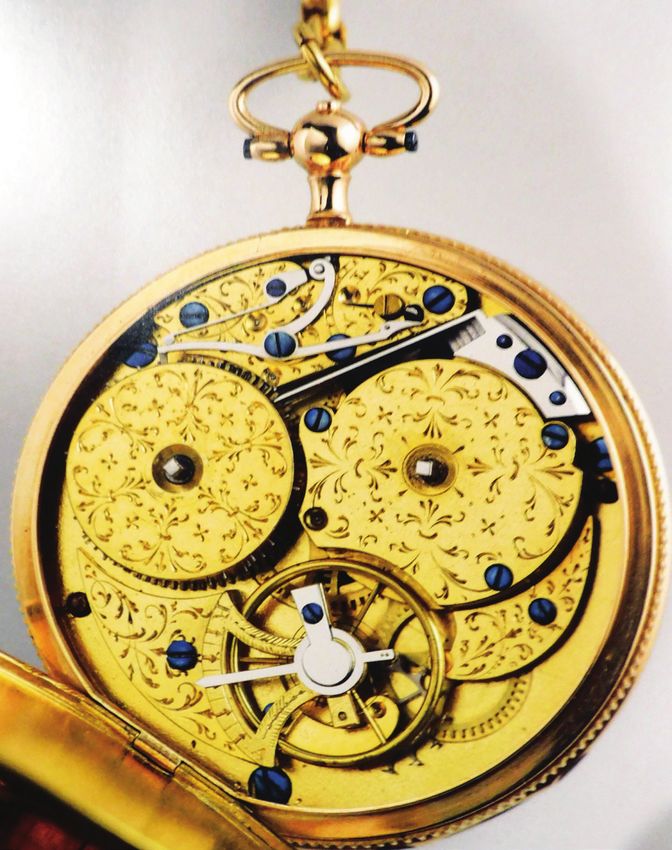
INNOVATION
    COMES ONCE.
    INNOVATING
    GOES FOREVER.

    PRECISION IS PRECIOUS.

                                                 witschi.com

    Distributed by:         Jules Borel & Company: julesborel.com

         Have you recently renovated your retail store?
                      If your retail store has undergone a transition over the
                      past couple of years, making your watch repair workshop
                      attractively visible from the retail sales floor, we want to hear
                      from you!

                      Send us a couple photos and let us know approximately
                      how much you invested in the renovations and what the
                      impact has been on sales and service revenue.

                                                   Email Editor@awci.com.

8                                                                                         March 2021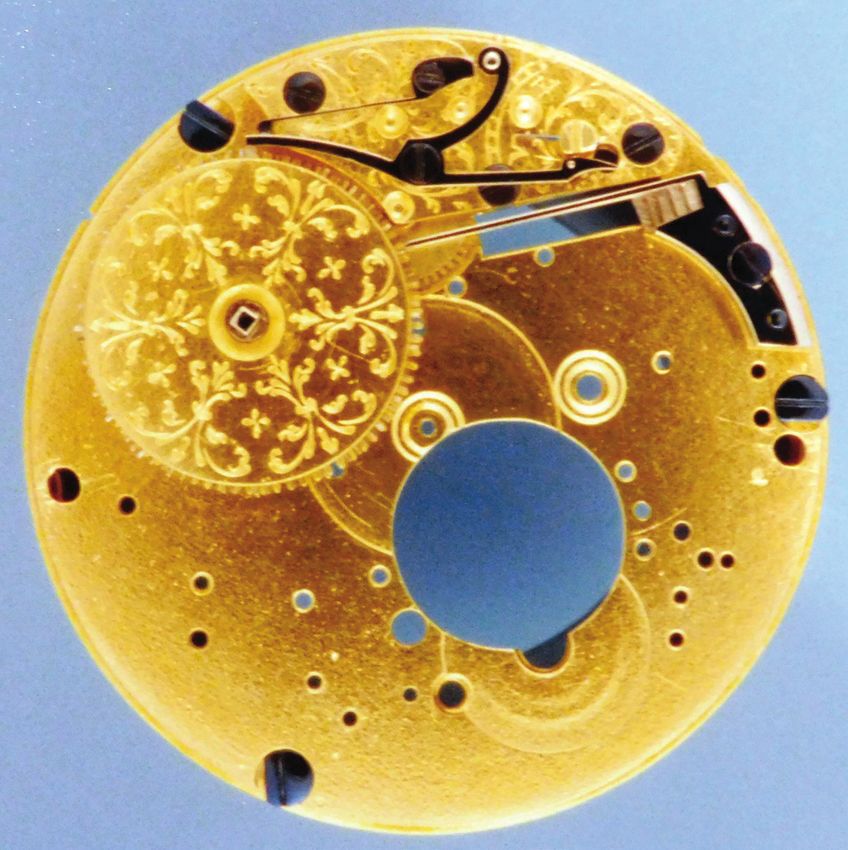
Technical Discussion: Restoration Projects Done at WOSTEP in 1991, Part 1

  Restoration Projects Done at WOSTEP in 1991
  Part 1: Gold Pocket Watch with Carillon
                                                                                                By Bernhard Stoeber, CW21

  Introduction
  The following series of articles was initially pre-                in Neuchatel whenever I traveled to Switzerland.
  pared as a presentation to be given at AWCI’s 60th-                During the following years, our paths also crossed
  anniversary convention in Cincinnati last March. As                a few times in the US. For instance, when we both
  we all know, the onset of the COVID-19 pandem-                     were presenters at AWI’s Mid-Atlantic Conference
  ic forced the convention to be canceled. Late last                 in Lancaster, Pennsylvania, and at other events.
  year, HT’s managing editor, Donna Hardy, asked if                      I grew up in West Germany where my family
  I had ideas for articles that could be published in                owned a watch and jewelry business that my
  HT. Since it is unclear when it will again be possible             grandfather had founded in 1894. Later, my Uncle
  to have in-person meetings and conventions, I sug-                 Josef took over. Following his death in 1958, my
  gested that I write articles based on the presentation             parents continued the business. Unfortunately, my
  that I was going to give at the convention: four res-              father passed away in 1965, when I was 12 years old.
  toration projects done at WOSTEP in 1991.                          My mother was able to run the business (with the
      The origin of this story goes back to the summer               assistance of a great team of dedicated employees)
  of 1986 when Antoine Simonin (Tony) and his wife,                  because she had been involved for many years and
  Josiane, came to New York to promote WOSTEP.                       handled the overall sales activity. She was able to
  This was the first time we met in person, though I                 put my two brothers through college, and I was
  had heard a lot about them and their great work at                 designated next-generation watchmaker, who would
  WOSTEP. Subsequently, I went to visit WOSTEP                       continue the business.

  Fig. 1. Antoine Simonin (right) and the author                     Fig. 2. My parents’ engagement in 1941 with my
  at AWI’s Mid-Atlantic Conference in Lancaster,                     hometown in the background.
  Pennsylvania.

Horological Times                                                                                                           9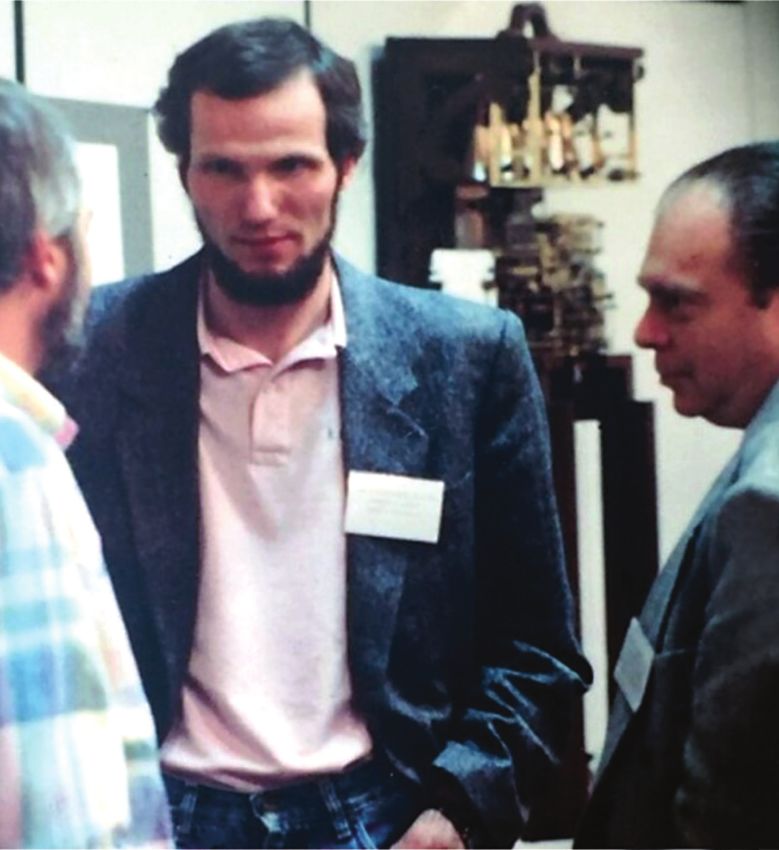
Technical Discussion: Restoration Projects Done at WOSTEP in 1991, Part 1

 Fig. 3. The family of Theodor Stoeber Sr., ca. 1930. Three watchmakers in one photo: Uncle Josef (top left); my
 father, Theodor Stoeber Jr. (top right); and my grandfather, Theodor Stoeber Sr. (middle row).

     Well, life had other plans for me. I did be-                        After our mother passed away in 1988, my broth-
 come a watchmaker and passed my German Master                       ers and I decided to sell the house and family busi-
 Watchmaker exam in 1975, the same year I started                    ness to that young couple who had taken over earlier.
 working for the West-German central service work-                   I thought about how to honor my family. Eventually,
 shop of Omega and Tissot. In 1978, I did a three-                   I decided to invest in my professional training and
 month internship at Omega in Biel/Bienne, followed                  applied to WOSTEP for the Course on Complicated
 by a six-month work stay at Omega in Paris to im-                   Watches.
 prove my French.                                                        In early 1991, I attended WOSTEP after my
     In 1980, our mother retired from the business                   employer at the time, North American Watch
 and leased it to young a couple with a background                   Corporation (today The Movado Group), granted
 in watches and jewelry. In 1983, Omega Switzerland                  me a five-month leave of absence under very favor-
 organized an inter-company transfer for me to join                  able conditions.
 the Omega affiliate in New York City, and I moved
 to the US.

10                                                                                                                March 2021
Fig. 4. At the bench at WOSTEP in Neuchatel in May 1991.
Gold Pocket Watch
with Carillon
Description
This small, open-face pocket watch with car-
illon (music box) was made before 1800 by
Antoine Favre in the Vallée de Joux.
The push button in the pendant activates
the music box on command, and the watch
also has an alarm system. The alarm time is
indicated by the large, blue hand.
The case is made of 18 karat gold and bears
a hallmark used after 1797.
The white enamel dial has Arabic numerals
and an inner track for the alarm. The move-
ment has a cylinder escapement and a three-
armed brass balance wheel with flat hairspring.
Fig. 5. Front view of the watch with chain and Breguet key to
wind and set the watch.
Horological Times 11Technical Discussion: Restoration Projects Done at WOSTEP in 1991, Part 1
Fig. 6. The This carillon was described by Alfred
back cover Chapuis in his book Histoire de la Boîte à Musique
opened. et de Musique Mécanique published in 1955. It
There is one appears to be the first time that the drum is
arbor to wind vertical instead of horizontal, as is common in
the carillon
music boxes.
barrel and
one for the The movement is highly decorated with a
going train. floral pattern and has two distinctive sections:
the going train wheel (on the right) and the train
wheel for the music box (on the left), Figure 9.
Fig. 7. Side view of
the carillon drum
with reeds.
Fig. 8. A drawing
from the book
Histoire de la Boîte
à Musique et de
Musique Mécanique
by Alfred Chapuis.
12 March 2021Work Performed
• Complete service including refinishing of all
steel parts and polishing/bluing screws.
• New crystal and polished case.
According to Tony Simonin, Antoine Favre had
left the Vallée de Joux for the Val-de-Travers to ap-
prentice as a watchmaker. Upon his return, he and
other students who had moved back to the Vallée
de Joux started their own watchmaking businesses.
The pocket watch described here could be consid-
ered one of the first complicated watches produced
in the now famous Vallée de Joux, the “Cradle of
Complicated Watches,” in Switzerland.
Photo Credits
Fig. 1—Courtesy of Peter Wittle.
Figs. 2 and 3—From the author’s personal archives.
Fig. 4—From the author’s WOSTEP reports.
Figs. 5 and 6—Histoire de l’horlogerie à la Vallée de Joux by Marcel Piguet. Used
with Editions Simonin’s permission.
Fig. 7 and 8—From the author’s WOSTEP reports.
Fig. 9—See Figures 5 and 6.
Figs. 10 and 11—From the author’s WOSTEP reports.
Fig. 9. A view of the superbly decorated movement.
Fig. 10. The carillon section of the movement without Fig. 11. Under-dial view of the movement.
the going train.
Bernhard Stoeber is an experienced watchmaker who has worked for more than 40 years for the Swiss watch industry in
Europe, the US, and China (with Omega, Movado Group, and Rolex). He retired from his corporate activities in 2018 and now
lives in Mount Joy, Pennsylvania.
Horological Times 13FREE on-demand webinars!
Take advantage of this great benefit. Once you download the link, you can watch the webinar
any time, any place, as often as you like. You’ll also get the PowerPoint slides to keep as well
as other handouts. Here are just a couple of the great webinars you have at your disposal. See
www.awci.com/educationcareers/webinars/ for more!
Lubrication 1: General
Principles of Lubrication
This webinar, presented by Jason Champion, CW21,
is the first in a series of webinars on lubrication for
professional watchmakers. Topics include the latest
insights from the industry about types of lubricants
and their application and general guidelines for
applying lubricants when technical documentation
is not available. Also covered:
• History of watch lubricants • Sliding friction • Capillary action
• Best practices • Surface tension • Creeping
• Where and when to use lubricants • Stiction • Viscosity
• Oils for faster/low-torque and slower/ • Importance of cleanliness • Specific uses for lubricants
high-torque situations
Handouts
• General Lubrication Chart • Moebius Technical Data Sheet—SYNT-HP1300 9104
• Lubrication table • PowerPoint slides
• Moebius Technical Data Sheet—SYNT-A-LUBE 9010 AWCI Members—FREE Everyone else—$25
The Chronograph
Presented by Jordan Ficklin, CW21, this webinar
presents information on the chronograph, including:
• The history of the chronograph
• Types of chronograph dials
• Types of chronograph scales
• Types of mechanisms
• Operation of the chronograph—including demonstra-
tions with slow-motion video
• Identifying common chronographs, including ETA 7750
and variants, Omega 861 and 1143, modular chrono-
graphs, and Rolex Daytonas 4030 vs 4130
Handout
PowerPoint slides AWCI Members—FREE Everyone else—$25Technical Discussion: Oris Caliber 400
Oris Caliber 400
By Jordan P. Ficklin, CW21
As a watchmaker, I often ignore the hype when
a brand announces the release of a new cali-
ber. Especially since I know that most brands prob-
a solution to a problem that existed when the watch
was shipped from the factory. Also, the watch has
some interesting innovations I had not seen before.
ably won’t sell parts, and I probably won’t get the A full video review of the caliber is available at www.
opportunity to ever work on one. For the past cou- youtube.com/prowatches.
ple of weeks, however, I have had the opportunity When Oris announced the Caliber 400, one
to handle the new Oris Caliber 400. I have put it of the first things I noticed was the interesting
through its paces, partially disassembled it, and ana- way they chose to attach the oscillating weight. It
lyzed some of the concerns raised by collectors since caught my attention because so many brands are
it appeared in the Aquis Date last year. I’m sharing using ball bearings these days, and this movement
my experiences with other watchmakers because clearly did not. I was also a little nervous because a
what I’ve learned may prevent them from chasing two-dimensional picture doesn’t tell the whole story.
Fig. 1. Oris Caliber 400.
Photo used with permission https://www.oris.ch/en/press/detail/184/oris-aquis-date-calibre-400
Horological Times 15Technical Discussion: Oris Caliber 400
Depending on how the clip inter-
acted with the movement, it could
have been disastrous. They did it
right. The oscillating weight is rem-
iniscent of so many of the early au-
tomatic weights from the 1950s and
1960s that are still around today. The
weight is rigidly connected to a tube
that slides over a post that is fixed to
the watch movement. The clip (as ar-
tistic as it is) merely keeps the weight
from rising up, and it does that job
beautifully.
I feel that the overall quality of
the Caliber 400 is better than should
be expected for a brand’s first in-
house caliber. It isn’t perfect, but it
is a well-built machine. The finish is
quite industrial, which is fitting for
a movement that will probably be a
workhorse in the Oris lineup. I be-
lieve the movement will be durable.
Fig. 2. Arrows indicating how to release the stem.
One of the items that immediate-
ly caught my attention was the detent
mechanism for the winding stem. The Caliber 400 Timekeeping
features a stem held in place by two posts opposite First and foremost, a watch must keep time. Before
each other, one secured with a screw and the other opening up the watch or dismantling the movement,
held in place with spring tension. This double mech- I put it on the timing machine to observe its perfor-
anism reduces the likelihood that the stem will ac- mance. The watch had an average daily rate of +5
cidently come out of the watch. To release the stem, with a maximum deviation between positions of six
loosen the screw first and then press down on the seconds at full wind.
detent while pulling on the stem.
It looks as if they designed the Caliber 400
with after-sales service in mind. Often brands
don’t think about what will happen when the
watch needs to be serviced. In this case, how-
ever, it is apparent that the needs of the watch-
maker were considered. The watch comes
apart and goes together easily. Anything that
is out of the ordinary is clearly marked to aid
the watchmaker while servicing it. For exam-
ple, if a watch has two barrels, it can be more
difficult to figure out how to release the pow-
er stored by the mainsprings before servicing
the watch. The click is clearly labeled with an
arrow. Also, the double release for the wind-
ing stem (a feature exceedingly rare in watch-
making) is also well marked. Servicing these
watches should be straightforward for any
watchmaker.
Fig. 3. Arrow indicating how to let down the power.
16 March 2021watch is capable of storing enough energy and oper-
Position Rate
ates with sufficient efficiency to deliver the full five-
Dial Up +3 day power reserve with a little left in the tank. This
Dial Down +5 is important because it means that any issues with
Crown Up +9 power reserve are a result of insufficient winding. The
quality control test demonstrated that a day of stan-
Crown Left +6
dard motion is not enough to fully wind the watch.
Crown Down +3 It is, however, enough to both maintain and add ap-
proximately an additional day of reserve to the watch,
Satisfied with those numbers, I decided to put which varies depending on the customer’s level of
the watch through a full quality-control timing check activity. Having run down 48 hours, one day on the
while I examined the movement in more detail. For final test only wound up the watch enough for it to
the next seven days, I observed the watch’s perfor- run for 95 hours after removing it from the final test.
mance, testing both timing and the automatic wind- This may or may not be a deficiency in this watch.
ing system. The test consisted of the following: Since the design of an automatic winding system has
to balance the need to wind the watch sufficiently
Day 1: Fully wind the watch by hand and place dial up. while not causing too much wear, this may be by de-
Day 2: Crown left. sign. I mention it because some customers have com-
Day 3: 1 rpm final test simulator. plained, and I want to quantify the actual efficiency
Day 4: Crown left. of the winding. Having run down 48 hours, one day
Day 5: Dial up. on the final test only wound up the watch enough for
Day 6: Dial up. it to run for 95 hours after removing it from the final
Day 7: Watch stopped. test. But why?
Over the first five days of the test, the watch It seems that the automatic winding mecha-
averaged just under +5 seconds per day. However, nism on this watch is not as efficient as it needs to
when the watch was on the final test, which simu- be (based both on my tests and on the experiences
lates the constant motion of a watch on the wrist, of some owners). Two key factors in the design con-
the watch neither gained nor lost time. During the tribute to this. First, this watch has a unidirectional
sixth day of the test, as the watch wound down, it winding system: winding in one direction and idling
gained 17 seconds. or “free-wheeling” in the other direction. Plenty of
watch brands and horological textbooks indicate that
Position Daily Gain (Loss) unidirectional systems are equally as efficient as bidi-
rectional winding systems, but they have the advan-
Dial Up +4
tage of being simpler and comprised of fewer parts.1
Stem Left +8
Final Test Simulator +0
Stem Left +11
Dial Up +1
Dial Up +17
Average (five days) +4.8 seconds/day
Average (six days) +6.8 seconds/day
Power Reserve
This seven-day test brought to light one of the com-
plaints I have heard from individuals who have pur-
chased this watch—they don’t seem to get the full
five-day power reserve as advertised by Oris. I fully
Fig. 4. The oscillating weight mounted to the
wound the movement and observed that it ran for 125 movement.
hours before coming to a stop, so we know that the 1. Charles-Andre Reymondin, et al, The Theory of Horology (Neuchâtel: Swiss Federation of Technical
Colleges, Watchmakers of Switzerland Training and Educational Program, 2003).
Horological Times 17Technical Discussion: Oris Caliber 400
Fig. 5. Comparing the oscillating weight of the Oris Caliber 400 (bottom) with the ETA 2824 (top).
If this is the case, why do so many brands spend move the hand) before pushing the crown back in,
the extra money on more complicated bidirectional the hand will not jump. All of this has nothing to do
winding systems? Clearly there must be advantages with the five-day power reserve or double barrels. If
to a bidirectional winding system. Second, the os- anything, it may be related to their desire to keep the
cillating weight is light. In an effort to reduce the watch as slim as possible. Ultimately, this is a result
height of the movement, it appears that Oris has of the engagement of the intermediate setting wheels.
chosen a weight with limited mass around its perim- When you pull out the crown on most watches, the
eter. The weight does have a larger diameter, allow- sliding pinion moves straight in to engage with the
ing it to achieve the same moment of inertia as a setting wheel. Or it may swing in on an arc that tran-
smaller weight using less mass. But this weight falls sects the center of the setting wheel’s axis of rotation,
short. I’m not sure the watch would wind at all if you Figure 6, red circle. In this watch, the arc is too shal-
placed it on the inclined table used by Rolex to test low, and the intermediate setting wheel swings in on
the function of their winding system. an arc that transects the teeth of the setting wheel,
For customers who wear the watch daily, this Figure 6, blue circle, which causes the wheel to ro-
won’t be a problem. They can take it off on Friday tate as the two wheels engage or disengage. (This is
night, and it will still be running on Monday morn- much easier to see in the video, www.youtube.com
ing. By mid-week it should be back up to full wind. /prowatches.) The rotation can be mitigated by having
If, however, they have a full box of watches and plan a narrower or shorter tooth profile.
to wear it for just one day and then wait four or five
days and wear it again for one day, they will likely be
disappointed. As a watchmaker, you can’t resolve this.
It is inherent in the design of the caliber.
Hand Setting
Another concern raised by watch owners is the hand
setting. When you pull out the crown to set the
watch, the minute hand jumps as much as three or
four minutes. Even more concerning is that some-
times when you push the crown back in after having
set the time, the minute hand will jump again (about
one minute.) It can be frustrating when, after you
have meticulously set the time and made sure that all
the hands are in sync, the minute hand jumps!
Oris has indicated that this is a result of design
decisions made to accommodate the five-day power
reserve and the two barrels. Oris has also indicated
that the hand jump can be avoided by turning the
Fig. 6. Setting mechanism of the Caliber 400. The
crown slightly backward before pushing it in. They red circle shows the ideal arc for the engagement
are right about the work-around. If, after setting the without rotation. The blue circle shows the arc of the
time, you turn back the crown a little (not enough to intermediate setting wheel.
18 March 2021I believe this problem could have been avoided At first glance, this is a Swiss lever escapement
during the design phase and can probably be resolved constructed of silicon. Both the escape wheel and the
(or reduced) with some component updates. Ideally, pallet are made from silicon, which offers some ad-
Oris would accomplish this without redesigning the vantages in escapements, namely:
main plate. Until Oris comes up with an update for
the components, turning the crown backwards releas- 1. Silicon has a low coefficient of friction,
es the tension and positions the teeth so that they can which means the escapement, without
separate without forcing rotation. needing any lubricants, will perform ex-
actly the same on the first day of the ser-
The Escapement vice interval as it will on the last.
For a watchmaker, the most exciting thing about this 2. Silicon is antimagnetic.
new watch is the escapement design. It caught me by 3. It can be manufactured to very precise tol-
surprise, and I love what they have done. Oris claims erances.
to have designed an “entirely new escapement”—and
they did. Yes, it is still a Swiss lever escapement, but it Since the first advantage is probably the most im-
has some new and innovative features. portant, I was surprised to see lubrication on the es-
capement. I can’t say for certain why Oris decided to
lubricate the silicon escapement. Perhaps they found
it performs even better when lubricated and found
that the degradation over time had no significant im-
pact on the performance. Maybe the coefficient of
friction for this particular formula of silicon isn’t as
great as advertised. Ultimately, I think watchmakers
know that the main reason the brands are using sil-
icon more often is that it is inexpensive and easy to
produce.
Fig. 7. Illustration of the Caliber 400 escapement.
Used with permission https://www.oris.ch/en/press/detail/184/oris-aquis-date-calibre-400
Fig. 8. The escapement of the Caliber 400 with lubrication poorly applied.
Horological Times 19Technical Discussion: Oris Caliber 400
Certainly, the escapement continues to be antimag- Without the escape wheel in the watch, the pallet
netic (a fact they advertise heavily), but the third advan- can swing freely from side to side, well beyond the
tage is where Oris has made some drastic changes. normal travel of a pallet in a watch. This is because
In a traditional Swiss lever escapement, the pal- the banking is built into the pallet itself. Instead of
let has two adjustable ruby stones. The only reason an oversized locking face, they have designed a pre-
they are adjustable is because with traditional meth- cise locking notch in the pallet. The tooth bottoms
ods, it would be nearly impossible (or at least in- out in this notch, limiting the pallet’s travel. This is
credibly expensive) to machine the escapement with the first time I have seen this feature in an escape-
enough precision to eliminate the need for adjust- ment, and I don’t even know what we should call
ments. With silicon components, however, you can it. It fills the role of both the locking face and the
achieve amazing precision very inexpensively. Think banking surface.
about it: every year the computer industry manufac- I am curious to see how these escapements will
tures billions of silicon chips, each with millions of hold up over time. The banking action is the most
capacitors etched onto the surface with precision forceful of all the escapement actions. Normally that
that rivals anything required in a mechanical device. force is exerted away from any of the critical areas of
Using photoetching, two-dimensional components the escapement. In this design, however, the force is
like the escape wheel and pallet can be inexpensively absorbed by the escape wheel teeth. Will they hold
and precisely produced. Precision is the key word. It up? Only time will tell.
is easy to achieve precision of better than 1 micron Overall, it is exciting to see this type of innova-
with photoetching. In addition to the adjustable tion in a brand’s initial caliber. I think the Caliber
pallet stones, the traditional escapement has either 400 will withstand the test of time. It seems to be de-
banking pins or banking surfaces that limit the mo- signed with modularity in mind. We have already seen
tion of the pallet. This new escapement from Oris Caliber 401 with a sub-seconds, and I expect we will
does not have any traditional banking surfaces. see more complications added to this watch as well.
Fig. 9. The notch for locking and banking. Fig. 10. The escapement showing the tooth locked in
the notch of the exit stone.
Jordan P. Ficklin graduated from the Lititz Watch Technicum with a WOSTEP diploma in 2006. He is a co-owner of the
Cincinnati Watch Company where he designs and assembles watches, and the owner of Cincinnati Watch Repair, an indepen-
dent watch service center meeting the needs of the microbrand and collector communities.
20 March 2021RAPIDLY
GROWING
COMPANY
VORTIC WATCH COMPANY
SEEKING
The Smithsonian Magazine ranked Columbia, PA,
among the top 20 best small towns to visit in the United
States, in part, because of its strength in history.
The National Watch &
Clock Museum provides
a wealth of information
about the art and science
of timekeeping. When
you can’t visit the museum,
Visit NAWCC.ORG
check out the webinars and and click EVENTS
podcasts about horology to view upcoming
for everyone who loves
events and classes.
watches, clocks, and all
things to do with keeping
Contact the Education
time. Listen on Spotify, Department
iTunes, and Sound Cloud. at 717.684.8261, ext. 237
or education@nawcc.org.
Lititz Precision Products offers high quality
equipment for the watch repair
MATADOR 4000 Watch Freedom Ultrasonic Lititz Precision Lititz Wet Pressure
Cleaning Machine Small Parts Cleaner Preciso 47 Watch Tester
Introducing the ultimate Lititz Precision's NEW Preciso 47 heat Wet Pressure Tester for
in manual watch cleaning Freedom affordable source for testing watches, made in the USA
machines. Matador 4000 ultrasonic small parts condersation , 120v, by Lititz Precision. Tests up
from Lititz Precision Products cleaner saves you made in the USA by to 125 Bar.
consists of four stainless steel thousands of dollars! Lititz Precision. 550.000 $3,29500
cleaning/rinsing cups with 590.985 $7,49500 590.767 $43900
one movable ultrasonic
transducer head and a
variable speed/variable
temperature dryer.
590.874 $2,99900
590.874 590.985 590.767 550.000
1-800-487-0408 | CASKER.COM
SERVING JEWELERS & WATCHMAKERS SINCE 1927
Horological Times 21WHY CHOOSE ECKCELLS? STEP UP to the ultimate, fully programmable
six-jar cleaning machine.
“I have been a watchmaker since 1983, and the Wellner THE WELLNER L1 CLEANING MACHINE
Customer Comment:
MADE IN GERMANY
cleaning machine has the widest range of programmability,
best cleaning ability, most complete drying ability, and
quietest operation of any cleaning machine I’ve had the
One machine
opportunity to use. Superior engineering is evident at does it all!
every point in both software and hardware. The fact Quietly cleans,
that it keeps track of how many washes for each jar of rinses, and dries!
solution makes for the greatest ease of serviceability. It is
as if a watchmaker designed the machine to suit modern For more information
on pricing, options, and
production efficiency and the highest performance standards. ” delivery, please contact
~Stan, an AWCI member Jack Kurdzionak
603-726-7646
eckcells@gmail.com
Order line open 9 a.m.- 4 p.m., Mon-Fri, 603-726-7646
Email orders and/or questions ANYTIME to eckcells@gmail.com www.eckcells.com
Show off Your Passion for Horology-and AWCI!
Wear These with Pride! SHOP NOW
www.awci.com/online-store while supp
lies la
st!
Horology T-Shirt Become a m
ember
and save!
Cotton/Polyester Blend AWCI Shoulder Bag
Available in S, M, L, XL Regular $30
$25.00 – members get free shipping Members $27
The AWCI shoulder bag is the perfect
companion to keep everything organized,
secured, and readily accessible when away
from the shop. Constructed with 600 denier
polyester fabric for long-term durability, there
Patches is a roomy main compartment with pockets
and storage slots for electronic devices,
Sew on your apron or lab coat pens/pencils, small tools, business cards, and
$5.00 – Members Only supplies. Handy outside storage pockets can carry larger items. A key clip, durable snap buckles, and
a removable shoulder strap add additional versatility. The AWCI logo is embroidered directly onto the
Rocker $2.00 – Certified Members Only main flap, so it will remain visible for many, many years without peeling or chipping away.
Membership Pin Check out our website
$12.95 for these and other
great items!
If you need assistance, contact
AWCI at 513-367-9800.
22 March 2021From the Workshop
By Jack Kurdzionak, CW21, FAWCI
Single Rollers, Double Rollers,
and Their Roller Jewels
Previously, the study of roller tables and their jewels the large roller and can be used as a single roller or
was included in the curriculum of every watchmak- as part of a double roller which is comprised of the
ing school with good reason. A roller was, and still large roller and a small (safety roller). The American
is, a component of a balance complete that needs to watch factories used single rollers, one-piece double
be removed from the balance complete whenever a rollers, and two-piece double rollers. Some factories
balance staff is replaced or when a roller jewel be- called the large roller a roller table while others called
comes loose and must be secured with fresh shellac. it the roller.
If a roller jewel is broken or missing, the roller jewel
needs to be replaced with a properly sized new one, An Evolution of Skills in Roller Jewel and
and that involves removing and replacing the roller. Roller Table Services
A loose roller table also must be removed so it can be Because the skills needed to be a competent watch-
tightened to secure it to the balance staff. maker are constantly evolving, roller jewel and roll-
Roller table service was an integral skill needed by er table services have now moved from mainstream
a successful watchmaker, and it was a skill supported watchmaking to what I define as traditional or her-
by material houses and watchmaking tool suppliers. itage skills. There are numerous reasons for this evo-
At that time, material houses could supply roller lution. Watch manufacturers that supply spare parts
jewels in every size that a watchmaker would usually are no longer supplying every discreet movement com-
need. In addition to roller jewels, rollers complete ponent to watchmakers. Instead, they supply a larger
with roller jewels were available for just about every component of the watch that contains more than one
application. Tool suppliers contributed their support part. In the past, watchmakers could buy an individ-
with an array of specialized tools for servicing rollers. ual roller jewel. As time progressed, they had to buy
There were tools for measuring slots on pallet forks a complete roller with a jewel even if only the jewel
to determine the size of a needed roller jewel; roller was needed. Now, in many instances, the roller is no
table warmers for cementing roller jewels in place longer available except as part of a balance complete.
with melted shellac; special stakes and stumps for in- Possible rationales for this change might include
stalling roller tables onto the balance staff; and roller requiring fewer items for the spare parts department
tightening tools for adjusting loose double rollers. to stock, and a faster, simpler repair for the watch-
As I was writing this article, I realized that roller maker. If you need to buy a roller table for a modern
nomenclature could be confusing, so before proceed- movement made by ETA or Sellita, I can tell you
ing any further I will clarify what a roller is. Unlike that part is no longer available except as a component
the Swiss Ebauche Cartel, the American watch fac- of a complete balance.2 A missing or broken roller
tories did not have a unified system to either name jewel necessitates the purchase of a complete balance
or number their spare parts. Each factory used its except for a few luxury watch manufacturers that
own name and numbering system. While there were still supply a roller. It is no surprise that, because of
many commonalities in terminology, there were also these changes in material, many watchmakers have
numerous variations. Donald de Carle1 defines the little or no experience with roller service. The “tra-
roller as a disc with an impulse jewel (roller jewel or ditional” skills are just not required to service most
pin) that is attached to a balance wheel. This disc is mechanical watches produced in the past 30 years.
1. Donald de Carle, Watch and Clock Encyclopedia (Bonanza Books, 1977). 2. The same can be said for balance staffs, which are no longer available for ETA or Sellita balances.
Horological Times 23Column: From the Workshop
But for those watchmakers Fig. 1
who wish to service vintage
and antique watches, there is
no substitute for those skills.
You cannot call your favorite
material supplier and order
a new single roller for an 18
size Hamilton movement. You
need to repair it.
Types of Rollers and
Roller Jewels
As part of this larger story,
it helps to explain the var-
ious types of rollers and
roller jewels. At one time I
assumed that every watch-
maker was familiar with the
various configurations for
rollers until a watchmaker,
with decades of experience, Fig. 2
called to place an order for
an American pocket watch
balance staff. This staff was
made in both single and
double roller variations, so I
asked for the type of roll-
er in his watch. He replied
that it had a single roller, so
I supplied a staff for a single
roller balance wheel. After
he received it, he called to
tell me I had supplied an in-
correct staff. I was certain
I had sent the correct staff so
upon further conversation, I
realized he had a one-piece
combination double roller
rather than a single roller.
I exchanged the first staff I
had sent for the correct staff
and was once again reminded that accurate terminolo- pocket watches and wristwatches, Figure 1.3 These
gy is critical when ordering parts. In this case, a double were gradually phased out beginning in the late 19th
roller was a single part rather than a single roller. century until they finally became obsolete around
Perhaps better than detailed, written explanations, 1925. Double rollers were first used exclusively in
a series of pictures can illustrate the various roller the top-grade watches of most companies before
configurations and their matching pallet forks. Single they gradually replaced the single rollers in all other
rollers were most commonly found in old American grades and sizes of watches, Figure 2.4
3. Waltham Watch Company, Watchmaker’s Handbook. (Waltham, 1945), 11.
4. Waltham Watch Company, Watchmaker’s Handbook. (Waltham, 1945), 12.
24 March 2021The single roller did double Fig. 3
duty by supporting the roller
jewel and preventing the es-
capement from overbanking,
Figure 3.5 The roller jewel itself
is similar in profile to what is
used in a double roller, but it
may be somewhat longer. The
roller jewel’s function is to
unlock the escape wheel and
transmit energy from the pallet
fork to the balance wheel. The
passing crescent6 at the edge of
the roller provided the safety
to prevent overbanking. The Fig. 4
upright guard pin on the pal-
let fork blocks the pallet from
accidentally moving from one
banking pin to the other when
the roller jewel is not in the pal-
let fork slot.
The double roller serves
the same dual purpose but sep-
arates the two functions. The
large disc of the double roller
also supports the roller jewel,
and the overall appearance of
the disc is similar to a single
roller, but without the passing
crescent on its edge. The small-
er disc is the safety roller, which
is circular with a passing cres-
cent on its edge. The two rollers
are mounted in parallel planes
on the balance staff. Older
watches often had two-piece
double rollers, the discs of which were separated by a times, the safety roller blocks the pallet fork from
bushing or a shoulder on the balance staff, Figure 4.7 accidentally moving and overbanking. If both roller
One-piece double rollers have the two discs separated types perform the same function, why did the manu-
by a bushing integral to the two rollers, Figure 3. facturers transition to the double roller, which is more
Either execution—single roller or double roll- expensive to manufacture and not as easy to adjust?
er—performs the same function, which is to prevent The answer is clear: a double roller is far more reli-
overbanking of the escapement. The small safety able than a single roller. Due to the geometry of the
roller also has a passing crescent which is positioned two designs, the single roller guard finger was likely
directly in line with the axis of the roller jewel. The to bind on the edge of the roller table and stop the
passing crescent permits the dart (guard pin), po- watch more often than it would on a double roller.
sitioned beneath the pallet fork slot, to pass as the Also, the single roller guard finger could bend slight-
roller jewel is engaged with the fork slot. At all other ly and cause the escapement to overbank.
5. Henry B. Fried, The Watch Repairer’s Manual (New York: Van Nostrand, 1961), 96.
6. De Carle defines this as, “The hollow cut into the edge of a roller to permit the passage of the guard pin.”
7. Henry B. Fried, The Watch Repairer’s Manual (New York: Van Nostrand, 1961), 96.
Horological Times 25Column: From the Workshop
Asking the Right Questions roller to the staff. On occasion, a small piece of hair
Whenever I service an antique or vintage watch has been used to tighten a roller onto a staff. None
movement, I always pay close attention to the roller of these methods are acceptable. The roller must be
jewel and work through a series of questions. Is it either properly tightened for a secure friction fit or
the correct width? Too wide and it will bind in the replaced with a new one.
fork slot. Too narrow and power will be wasted. Is
its length OK? Too long and it could touch the dart Then and Now
of a double roller and stop the watch. The length of Please do not, for one moment, believe that every old-
the roller jewel for a single roller is not as critical as time watchmaker was a highly skilled craftsman or,
it is for a double roller. It needs to be long enough in today’s lingo, a highly skilled craftsperson. There
to function and a little extra length is not detrimen- were skilled watchmakers then and there were others
tal. Is the roller jewel secure or loose? A loose roller who probably wished to have been doing something
jewel wastes power and causes very erratic timekeep- else besides watchmaking. The late Irving Cohen, a
ing. Eventually if it falls out of the roller, the watch watchmaker as well as Boston’s most knowledgeable
will stop. Is it even a jewel? Although not common, material dealer, told me that the majority of Boston’s
someone has occasionally installed a steel needle or a watchmakers of his era (1912-1994) could not install
filed brass pin into the roller table to replace a jewel. a roller jewel. When they needed a roller jewel in-
Although these substitutes will function, they will stalled, they went to Cohen or one of a handful of
not work well or for an extended period. They need other watchmakers8 who had the necessary skills.
to be replaced with a proper roller jewel. Is the sin- Irving and his contemporaries who had those skills
gle roller table cracked? Old steel rollers were often have all passed away. For today’s watchmakers who
very hard and hence quite brittle. If they were forced wish to service vintage and antique watches, the
onto a staff that was slightly oversize, they often skills needed for roller and roller jewel service are a
cracked and could become loose on the balance staff. necessity.
Cracked rollers must be replaced. Finally, is the roller During the past several months, I have received
cemented to the balance staff? If so, it should not several requests from readers to explain how to select,
be. An adhesive, such as crystal cement, Super Glue, fit, and cement roller jewels. Watch for these topics
epoxy, or shellac, may have been used to cement the in an upcoming issue.
8. Irving’s father, Abraham (1885-1968), worked with Irving and was known in Boston as “The Watchmaker’s
Watchmaker” because he possessed almost every special skill needed by watchmakers of his era and was
always willing to assist his clients with difficult repairs.
Jack Kurdzionak, watchmaker and watch material specialist, owned a Boston-area watch sales and service shop for 40 years.
He has a BS (Northeastern University, 1967) and has studied at ETA, WOSTEP, BHI, SGUS, and AWCI, and works for Eckcells
Watch Materials.
26 March 2021Make a Fresh Start!
Let AWCI’s resources refresh your business.
Referrals. A great benefit of being an AWCI member is being in the Find a Professional directory.
Customers can find you simply by visiting www.awci.com or calling AWCI’s office. Let people know
your specialties and your certifications. It’s time to update your directory listing now!
Technical Guides and References. Don’t waste valuable time searching for the information you
need to complete a repair. The Technical Guides and References database is comprehensive, with
everything from Accutron to Zenith. No need to search all over the Internet for a tech guide when
we’ve got them all in one place—easy to download or view on screen.
Marketing Materials. Downloadable marketing materials on the website, such as an AWCI
window sticker and an AWCI Certified logo, will let customers know that you are honest,
reliable, and the best!
Horological Times. HT not only keeps you informed about changes in the industry, it
also is the best place to advertise. Use the classifieds to find a job, hire an employee,
or buy or sell equipment. Or use a display ad to advertise services and products
watchmakers and clockmakers use.
www.awci.com is the website you should be using in 2021!
would you
like to read
what makes
brits tick?
The Horological Journal – published monthly
without fail since 1858 – gives you exclusive
technical articles and practical updates on clock
and watch making.
You’ll find news on the latest issue and
how to get it at www.bhi.co.uk
Horological Times 27Your watch or clock is valuable.
Why take chances?
Your local AWCI Certified watchmaker and clockmaker are
dedicated to competent and professional service.
For more than 60 years, the members of the American
Watchmakers-Clockmakers Institute (AWCI) have
been providing the highest quality of care and service
for watches and clocks. Please use our professional
directory to find a watchmaker or clockmaker near you.
www.awci.com/find-a-professional
Find your local AWCI Certified watchmaker or clockmaker by visiting www.awci.com.
American Watchmakers-Clockmakers Institute
Phone: 513-367-9800, ext. 303 * Toll-Free: 866-367-2924 www.awci.comYou can also read


