Pain Summit Sessions - March 27, 2021 - APTA Michigan
←
→
Page content transcription
If your browser does not render page correctly, please read the page content below
Pain Summit Sessions – March 27, 2021
Complex Regional Pain Syndrome: Interventions to Increase Occupational Performance
Patients diagnosed with complex regional pain syndrome (CRPS)/reflex sympathetic dystrophy (RSD) often experience
intense pain, swelling, and limited range of motion which creates a barrier to engagement in activities of daily living thus
impeding independence. According to the Reflex Sympathetic Dystrophy Association, treatment "must be
individualized." Occupational therapists foster a valuable, patient centered, contribution to the treatment of patients
with these debilitating disorders.
Participants will learn: 1) relevant history of CRPS (Alkali, Al-Majed, & Al-Tahan, 2020), 2) identify the symptoms
(Misidou & Papagoras, 2019) 3) describe the appropriate therapeutic interventions to increase functional performance
(Quintal, Poire-Hamel, Bourbonnais & Dyer, 2018), and 4) describe the importance of inter-professional collaboration
(Franklin & Austin, 2012 & Rome, 2016).

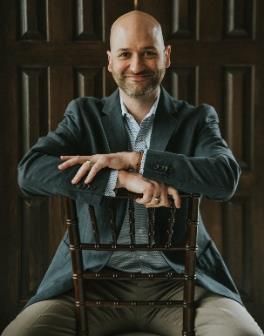
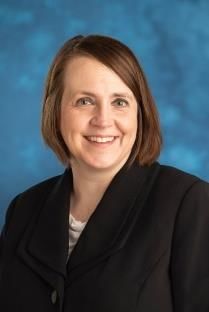
                     Speaker: Sarah Johnson, OTRL
                     Sarah Johnson graduated with a Master of Science in Occupational Therapy in 2015. She has been
                     employed with Michigan Medicine since 2012 where she began as a rehabilitation technician then
                     transitioned into an occupational therapist following graduate school. Sarah completed Michigan
                     Medicine’s hand fellowship program and now works with the inter-disciplinary Brachial Plexus and
                     Peripheral Nerve Program.

A Tale of Two Stories: The Power of Words & How we Affect Conditions for Healing in Patients with Chronic Pain
Treating those experiencing pain can be challenging. Just like being treated for pain. In a journey where clinicians and
patients travel side by side, they often misunderstand the language of the other.

During this session we will explore moments in the patient and clinician journey where communication is key, biases
need to be acknowledged and joint exploration is must. Let’s open our minds to the messiness of the human experience
on both sides of the table and prepare to challenge the culture of our professions and what it means to provide
evidence-based person-centered care that promotes health and well-being.

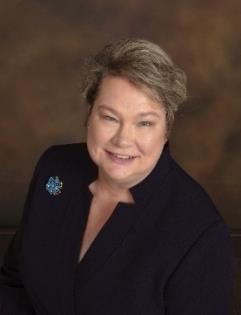
                     Speaker: Amy Eicher, PTA, BSED, MAR
                     Amy Eicher is a best-selling author, educator &, pain coach. She has a reputation for sharing
                     relatable stories and gently challenging the beliefs of patients and clinicians alike. She combines her
                     20-year long journey through pain and her insatiable love of learning to help others understand how
                     the rich complexities of their own stories and pain contributors can help them move beyond pain.
                     Her time as an educator and in youth ministry make her a dynamic and thought-provoking speaker,
                     turning complex research into practical ideas ready to use in your clinic tomorrow. When not reading
                     research or discussing ideas online, she would love to be scuba diving anywhere there is warm water
and a sandy beach. She lives in Normal Illinois with 2 teens and 2 dogs in the perfect little house that pinterest helped
build. Visit her online at www.Restoringvenus.com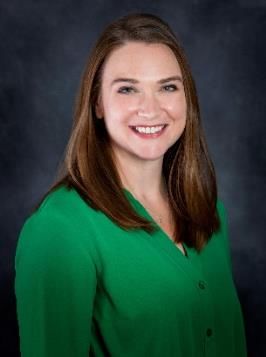
The Clinical Application of Pain Neuroscience Education
In recent years, pain neuroscience education (PNE) emerged as a viable treatment for persistent pain. Current best-
evidence supports its ability to ease pain, disability, fear-avoidance, catastrophizing and limited movement. Additionally,
it has been shown that PNE’s efficacy increases with the addition treatments commonly used by rehabilitation providers
including exercises, manual therapy, mindfulness, relaxation, sleep hygiene and more. With the growing evidence, the
attention now has shifted to the clinical application. How do you incorporate this into various clinical settings? How do
you document and bill for it? How do you merge it with treatments such as manual therapy, dry needling, exercise, etc.
This session will feature three distinct parts. First, attendees will be updated on the evolution, evidence, and current
state at affairs for PNE. In the second part, attendees will be updated on the clinical concept of PNE+ - adding
therapeutic treatments to PNE. The final section will showcase practical, how-to additions of PNE to typical therapeutic
strategies such as exercise and manual therapy. This session is must for anyone treating patients with pain in various
clinical settings.

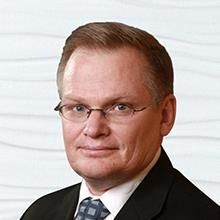
                        Speaker: Adriaan Louw, PT, PhD
                        Adriaan earned his undergraduate, master’s degree and PhD in physiotherapy from the University
                        of Stellenbosch in Cape Town, South Africa. He is an adjunct faculty member at St. Ambrose
                        University and the University of Nevada Las Vegas, teaching pain science. Adriaan has taught
                        throughout the US and internationally for 25 years at numerous national and international manual
                        therapy, pain science and medical conferences. He has authored and co-authored over 80 peer-
                        reviewed articles related to spinal disorders and pain science. Adriaan completed his Ph.D. on pain
neuroscience education and is the Director of the Therapeutic Neuroscience Research Group – an independent
collaborative initiative studying pain neuroscience. Adriaan is a senior faculty, pain science director and vice-president of
faculty experience for Evidence in Motion.

Spring Conference Sessions – March 27, 2021
Healthy and Fast: Treating Young Female Runners to Bridge the Gap Between Health and Performance
This course will provide evidence-based principles for treating the young female runner using a
biopsychosocial approach to promote physical and mental health. Important topics that plague the female
running culture including amenorrhea, RED-S, the female athlete triad, bone stress injuries, and perfectionism
will be discussed with practical ideas on how to address these in the clinic. The course also includes injury
prevention and recovery strategies pertinent to treating all runners.

                         Speaker: Caitlin Noble, PT, DPT
                         Dr. Caitlin Noble is a physical therapist who specializes in treating endurance athletes
                         with a particular interest in the female runner. Dr. Noble earned her Doctorate from the
                         University of Michigan in 2017 and a Bachelor’s of Arts - Journalism degree from
                         Michigan State University in 2008. While at MSU, she competed in cross country and
                         track. She works at McLaren Thumb Region in Bad Axe, Mich. She has spoken on this
                         topic to high school cross country teams and coaches to promote a healthy running
                         culture. Dr. Noble is the creator of the website drkatienoble.com where runners can
                         access expert education about running health.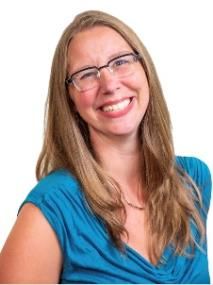
Speaker: Hannah DePaul, PT, DPT, SCS, CSCS
                         Dr. Hannah DePaul is a sports certified physical therapist at Adams Sports Medicine & Physical
                         Therapy. She specializes in working with endurance athletes, with a specific interest in the
                         female runner. Hannah graduated with her Doctorate of Physical Therapy from Duke University
                         in 2013. While studying movement science at the University of Michigan in undergrad she was
                         on the varsity swim team. She is now an avid triathlete having completed the Ironman World
                         Championships 2x.

                          The Year of Telehealth
Telehealth has been used throughout our country in different scenarios, but not in Michigan. It took a pandemic to make
it available and reimbursable for it to truly gain appreciation and traction in our State. In this session you will hear how
Telehealth came to be, why it was a concern for regulators, and how to best utilize this as a platform to treat patients.
Telehealth is actually simpler than one might realize and it is something that we can still offer and should be something
that we continue to offer to patients. Learn how to implement a strong program into your business and understand
many of the ins and outs of how to best perform Telehealth. Further, consider what patients might be best to use this
approach and where and how you might use it within your plan of care.

                        Speaker: Brian Gilbert PT, MSPT, OCS, Cert. MDT, Cert. DN
                        Brian has been a practicing PT for 20 years. He is a graduate of GVSU and is Partner and COO for
                        The Center for Physical Rehabilitation in Grand Rapids, Michigan. Brian led the charge with
                        Telehealth during the onset of the pandemic for The Center. He has served as Chair of the Board
                        of Physical Therapy for the State of Michigan for 5 years and on the Board for 8 years. Currently,
                        Brian serves as a Delegate for Michigan for the APTA. He also serves well as on the Continuing
                        Competence Committee for the FSBPT. Throughout his time with the Board and with the FSBPT
                        he has been part of planning and conversations for the practice of Telehealth for many years.
                        Most recently, Brian was awarded the Distinguished Alumni for GVSU’s PT Program.

Dementia: Differentiating Types and Recognizing Pain
This session will address advanced considerations specific for the PT/PTA working with a person who has dementia. First,
in this age of direct access to rehabilitation services, understanding the differential diagnostics for the various sub-types
of dementia are critical so we can provide appropriate treatment and monitor medications for adverse effects. Further,
there is a growing body of evidence that people with dementia (and their care partners) benefit from healthcare
professionals who are well versed in recognizing and treating pain that may impact quality of life.

                      Speaker: Cathy Ciolek, PT, DPT, FAPTA, GCS
                      Dr. Ciolek is President of Living Well With Dementia, LLC- providing education and consultation to
                      promote well-being and positive expectations for people with dementia. Dr. Ciolek is a Board
                      Certified Geriatric Clinical Specialist (GCS) since 1996 and a Certified Dementia Practitioner® (CDP)
                      as well as a Certified Alzheimer’s Disease and Dementia Care Trainer® (CAADCT), a Certified
                      Exercise Expert for Aging Adults (CEEAA) as well as a Certified Change Management Professional
                      (CCMP). Cathy has been a physical therapist for 30 years, practicing across the continuum of
                      acute care, home health care, outpatient and SNF. She also developed a Memory Cafe with the
                      Mid-County Center in the Pike Creek area. Dr. Ciolek has served in several roles in the APTA and
its components. She is currently the Vice-President of the Academy of Geriatric Physical Therapy and will take over as
President with CSM 2021.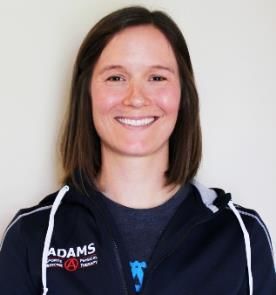
You can also read


