Partners in Care co-design case study
←
→
Page content transcription
If your browser does not render page correctly, please read the page content below
Partners in Care co-design case study
‘Walking with you’ – Preparing for cancer treatment
Northern Cancer Network
Counties Manukau Health

Context
The Northern Cancer Network has identified lung cancer for Māori and endometrial cancer for
Pacific women as having disproportionately high incidence and mortality rates. Māori adults have
the highest registration rates for total cancers and a mortality rate 1.5 times higher than non-Māori
adults.
Endometrial cancer is the most common gynaecological cancer (Shaw et al 2016). The mortality
rate from endometrial cancer increased by 11 percent between 2007 and 2016 in New Zealand; in
Counties Manukau Health it increased by 49 percent. Of the 83 deaths in Counties Manukau
Health from endometrial cancer between 2012 and 2016, 48 percent were Pacific women and 10
percent were Māori (Chan et al 2020). In Counties Manukau, Pacific people make up 21.1 percent
of the population, Māori make up 15.7 percent, and proportionally more people are in the most
deprived section of the population (Ministry of Health 2019b).
Consumers diagnosed with cancer are provided a lot of information prior to their first treatment and
can be overwhelmed by this (Nguyen et al 2019). Diagnosis can be communicated in a variety of
settings, such as an inpatient unit, primary care or a specialist outpatient appointment. Previous
investigations demonstrated that clinical factors, systems and patient factors can impact on
engagement with cancer treatment (Reynolds 2016). Patient factors include cultural beliefs,
understanding of cancer, the role and influence of the family in making treatment decisions, and
socio-economic factors (Reynolds 2017; Statistics New Zealand and Ministry of Pacific Island
Affairs 2011).
The Cancer Action Plan 2019–2029 suggests that a well-resourced approach and improved health
care system could eliminate inequities in cancer survival over time. This can be achieved by
encouraging Māori leadership and partnership at all levels by encouraging consumer leadership,
engagement and co-design (Ministry of Health 2019a). Patient and family engagement offer a
promising pathway toward better quality health care, more efficient care and improved population
health (Carman et al 2013).
Counties Manukau Health joined the Health Quality & Safety Commission’s Partners in Care co-
design programme to explore consumer and health professionals’ experiences from the time of
cancer diagnosis to first treatment.

Aim
The project aimed to:
•   better understand the experiences of Māori with lung cancer and Pacific women with
    endometrial cancer between their initial cancer diagnosis and first treatment
•   apply a co-design approach with patients, family and whānau and health professionals about
    how to better prepare patients for their first cancer treatment.

Partners in Care co-design case study – June 2020                                               Page 1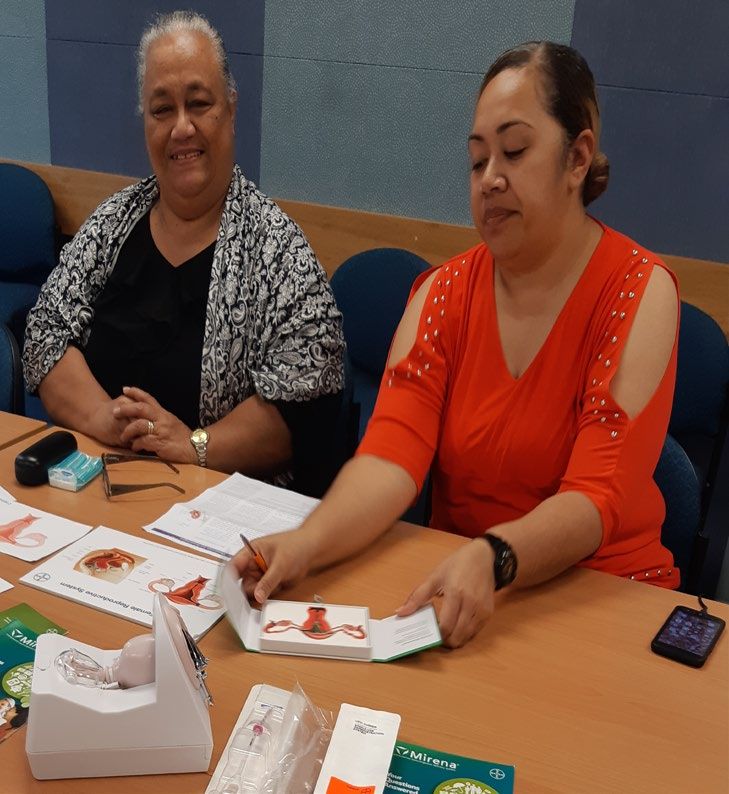
Start up
The start-up phase included creating a project team, gathering and reviewing current
organisational data, and preparing for engagement with consumers and health professionals in
order to capture and understand their experiences.

Project team and consumer representatives
The project team included health professionals (including one who identified as Māori and one who
identified as Pacific) with expertise and experience in the area of cancer (including the identified
cancer streams) and consumers from the Māori and Pacific communities.
The team created a confidential shared folder which provided easy access for all members to
contribute to the project activities. A Gantt chart was used to plan team activities. Weekly meetings
and regular emails ensured ongoing team member involvement.

Principles
The team followed a patient-centred approach together with strong cultural safety principles.
Project meetings opened with a karakia and we adhered to Te Titiri o Waitangi principles by
partnering with consumers to participate and share their knowledge and expertise. Their input was
acknowledged by provision of koha.

Engage
Preparation
To introduce the project to patients, family and whānau, consumer representatives and health
professionals, three ‘elevator pitches’ were prepared. These provided a short narrative to help
people understand what we aimed to achieve. The elevator pitch, consent forms and interview
questions were developed and tested by the team.

Consumers
We identified 19 Māori with lung cancer and 30 Pacific women with endometrial cancer who
received treatment in the period of August 2018 to August 2019. Cancer nurse coordinators
(CNCs) for lung cancer, gynaecology, Pacific people and Māori led the engagement and facilitation
when capturing consumer experiences.

Health professionals
We identified 48 health professionals working directly with consumers on the lung and endometrial
cancer pathway to be interviewed in person, participate in a focus group or complete a survey. An
additional 22 professionals were included, including allied health representatives, general
practitioners (GPs), interpreters, cultural advisors, managers and Cancer Society cancer support
nurse coordinators (CSNC)) (see Table 1).

Capture
Consumers were approached and interviewed at a place of their convenience. Pacific and Māori
consumer representatives provided information about respectful engagement and advised
including whānau at interviews. We explained that participation was voluntary and confidential and
that their feedback would not impact on their care. All data was treated with care and stored
confidentially. Consumers were also given the option to receive final results of the project, should
they wish to see them.
The CNCs for the Pacific population and gynaecology facilitated two in-person interviews and a
focus group meeting specifically with Tongan women. The focus group meeting was conducted in
the Tongan language.

Partners in Care co-design case study – June 2020                                              Page 2
Following the interviews, we developed a survey which was designed to focus on and explore
further the themes identified in the interviews. The survey was sent electronically or by post to the
remaining 17 consumers identified. To optimise engagement, the project team contacted
consumers by phone to make sure they had received and understood the purpose of the survey.
The survey for health professionals posed similar questions to those developed for the consumer
population in order to determine and highlight the similarities and differences in experience.

Table 1: Summary of the consumers who participated by method of engagement
 Group                                              Method of engagement   Number of consumer
                                                    and capture            participants/respondents
 Consumers (lung cancer)                            Interview              2
                                                    Whānau                 3
                                                    Survey (electronic)    1
                                                    Survey (post)          1
 Consumers (endometrial cancer)                     Interview              2
                                                    Focus group            3
                                                    Aiga                   1
                                                    Survey (electronic)    8 (electronic and post)
                                                    Survey (post)
 Total consumer participation                                              Lung cancer: 7
                                                                           Endometrial cancer: 14
 Health professionals (lung stream)
 CNC                                                Interview              2
 Other (senior medical officers (SMOs) etc)         Survey                 2
 Health professionals (gynaecological
 stream)
 CNC                                                Interview              1
 Other (Counties Manukau Health and                 Survey                 4
 Auckland District Health Board,
 SMO/Fellow, nurses, radiation oncology,
 medical oncology)
 Other health professionals
 Management                                         Interviews             2
 Culture (CNCs, interpreters and experts)           Interviews             7
 Allied Health and other (cancer support,
 physiotherapy, dietician, registered nurse
 respiratory clinic, GPs, Cancer Society
                                                    Interviews             16
 CSNC, palliative care)
 Total health professional participation                                   34

We had challenges engaging with consumers with lung cancer beyond capturing some of their
experiences; those who were in our care were in the later stages of the disease and needed to
focus on themselves and their whānau. However limited, the riches obtained as they shared their
experiences were very valuable and are included within the case study.
Recommendations for improvement suggested by consumers from the lung cancer stream were
not pursued for the purposes of this case study, but they were submitted for further attention to
Counties Manukau Health cancer services.

Partners in Care co-design case study – June 2020                                                    Page 3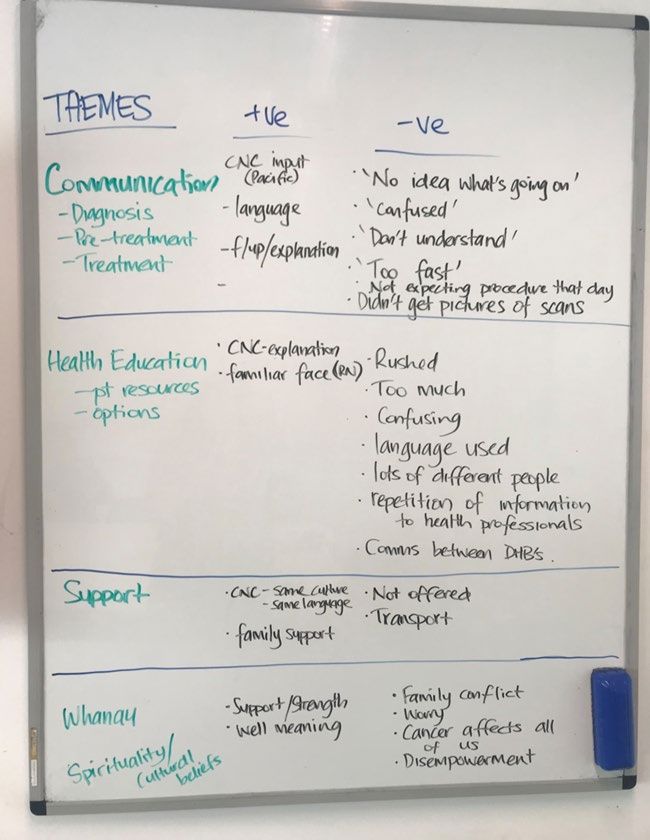
Understand
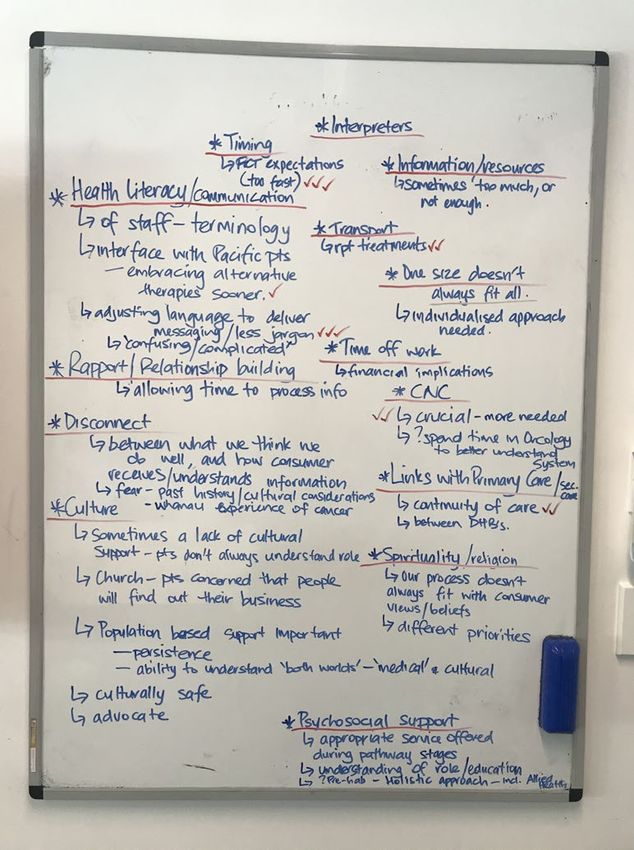
A thematic analysis was undertaken on the data gathered from both consumers and health
professionals (Figure 1). This analysis resulted in seven themes and over 30 ideas for
improvement.

Figure 1: Whiteboard exercise for thematic analysis of consumer and health professionals’ experiences.

               Themes from consumers                           Themes from health professionals

The seven themes and ideas for improvement

1) Communication
Communication was a major theme in all the data gathered. The need to have a support person
and/or whānau present for the initial diagnosis consultation was highlighted, and the suggestion
was made that a phone call could be made to encourage attendance to the appointment. While
clarity about the diagnosis is important, so is the way it is introduced. One interpreter described an
appointment where the health professional said ‘You’ve got cancer’. This felt harsh and could be
improved by eliciting the consumer and whānau’s understanding of the illness first and building on
this. Once the word cancer has been spoken, the rest of the conversation is often a blur for
consumers and whānau. Added to this is the complexity of language and jargon that is unfamiliar
to people; many said that they left the appointment overwhelmed and without a clear
understanding of their diagnosis and what it meant for them. Ongoing discussion to recheck
consumers’ understanding and re-iterate details is critical.
Understanding of, and preparation for, the impact of different treatments was an area that most
consumers said they needed more support in. This includes the need for health professionals to
make a clear distinction on treatment intent. One health professional said, ‘Pacific people believe
that if treatment is discussed, it relates to being curative, even if it may be palliative.’ From the
survey, 60 percent of health professionals thought consumers were not sufficiently prepared for
their first cancer treatment. An interesting finding from the survey was that 7 out of 8 consumers
indicated that they were well informed, which does not resonate with the information obtained from
the focus group and interviews. This may indicate a limitation of the survey which could be
explored further.

Partners in Care co-design case study – June 2020                                                   Page 4
Comments from health professionals:
‘I personally think, everything happens so fast and lots of information is given, it’s hard
to process for anyone. I think it’s important to break down the information and deliver it
bit by bit. Maybe GPs and community support teams should be involved more to
deliver information at their pace.’
‘I think there is a lot of work in ensuring the patient understands their diagnosis, but the
pathway to navigate oncology treatment can be less clear for the patient.’
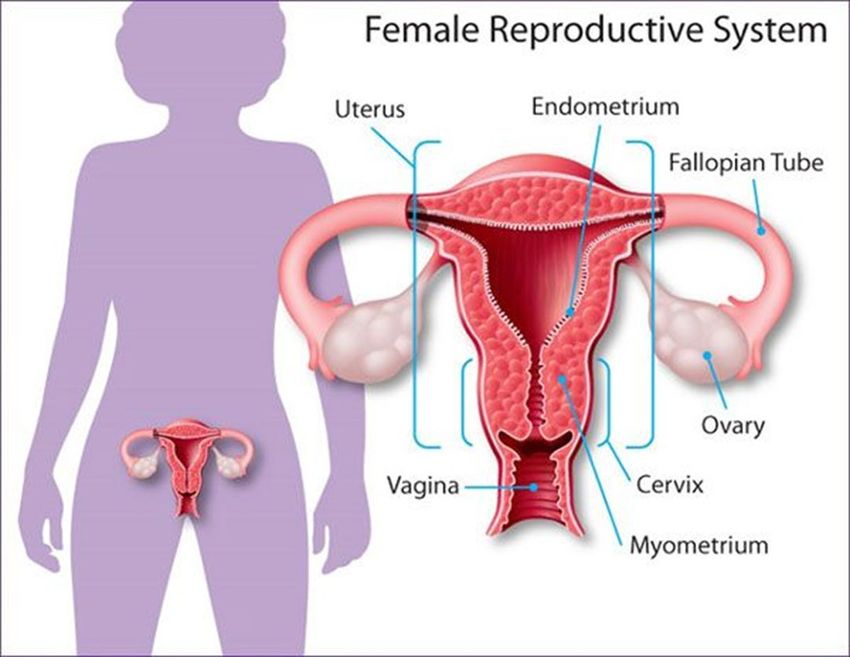
When explaining different types of gynaecological cancers and describing where the cancer is
anatomically, clinicians use a range of different terms. In the focus group, Tongan women
described that they often only used a single term for the whole of their reproductive system rather
than understanding the different components. One woman said, ‘Some of my body parts I don’t
know the name of.’
There often appears to be a ‘mismatch’ between what the health professional is attempting to
explain and what the consumer understands. Below are some of the quotes collected during
interviews.
Comments from consumers:
‘I needed someone to talk to me more about the illness, the next step, explain to me so
that I can make the choice, someone who won’t leave you alone.’
‘At the first appointment, have a whānau advocate, like a case officer, because there
are a lot of things you don’t understand at all.’
Comments from health professionals:
‘They are scared … they ask me questions that I don’t have an answer to…’
(interpreter comment)
‘When the patient is with the doctors and nurses, they disclose only what they think the
medical health professionals can support with (diagnosis and treatment); when the
patient is with the psychology/social team, they disclose more aspects of their life
stresses.’
Making use of an interpreter where needed and clearly understandable visual aids or images
would contribute to better understanding of the diagnosis. In order to see better health outcomes
for Māori and Pacific patients, we need to deliver our message in a way that patients and whānau
can understand and relate to.
2) Health literacy and cultural competency
Health literacy came through as a strong theme for consumers and health professionals.
Consumers described not being able to understand complicated terminology used by health
professionals, being given too much information at once, and not having enough time to process
Partners in Care co-design case study – June 2020 Page 5information. Health literacy has often been considered an issue focused on consumers; however, it
also needs to be considered by health professionals. Health professionals need to reflect on their
understanding of the consumer’s culture and their own culture and behaviours and how they might
impact on the choices consumers make. Being open to a discussion on the traditional medicines of
Māori and Pacific people and their use alongside mainstream medicine may be important to the
consumer, and this could impact on the default rate of consumers who perceive that they need to
choose between one or other therapy in their cancer journey.
Comments from a health professional:
‘Educate yourself, not only about the Treaty, but the generational impact of being
disadvantaged, of white privilege. It is not a colour thing, but being raised differently
impacts your world view. You need to understand a person’s journey to better equip
yourself to look through a non-judgemental lens to provide more equitable care, leaving
your own bias behind.’
3) General support
Both consumers and health professionals appreciated the value of additional supports. This can
include cultural support (provided by interpreters, nurses or navigators), the ability to see patients
at home, and the input from cancer support: psychology and social work, physiotherapy, and
dieticians). The longstanding relationship with the GP was mentioned positively by both GPs and
consumers. Consumers and health professionals acknowledged the value of receiving support
from the same person through the pathway, as this contributes to a more trusting relationship.
Health professionals highly commended the role and input of the CNCs in this regard. Early
engagement with population-based CNCs (Māori and Pacific) has been proven to enhance patient
experience and better engagement with treatment. From the interviews, the experience of CNCs
(Māori and Pacific) indicated that, if this support is not present, it can lead to reduced engagement
with the health system, treatment is reduced and it is likely to result in worse health outcomes. To
achieve equitable health outcomes, we need to focus on those who are more vulnerable.
Considering transport challenges for consumers to attend regular appointments was highlighted by
health professionals, but it was only mentioned by a small number of consumers. Many of the
consumers who engaged with the project had good family support and accessing treatment had
not been a problem for them. Health professionals indicated that they thought attending treatment
can cause financial distress in the form of lost earnings, both for consumers and those
assisting/accompanying them.
Comment from a health professional:
‘When you have social deprivation, you are already disadvantaged and you are dealing
with a serious illness (possibly a life-threatening/life-ending illness) and when you don’t
have enough resource, you are disadvantaged even before you got there to start the
race. So for me – that’s unethical … Absolutely give more support to those who are
inequitably disadvantaged.’
Consumers need to feel supported as part of preparating for treatment. The role of the CNCs –
with specific reference to the Māori CNC and Pacific CNC – and the relationship of the GP are
amplified. Practical support must also be included for vulnerable consumers.
Partners in Care co-design case study – June 2020 Page 64) Family/Whānau/Aiga
Support from family,whānau and aiga for consumers diagnosed with cancer is seen to be a
positive aspect of the patient’s cancer journey. Each family has a unique set of circumstances, and
the quality of information is as important for the extended family as it is for the patient.
We found that some of the consumers we spoke to did not want to worry their family and felt that
sharing their diagnosis with them would be too much of a burden for their family. Some were
worried about their privacy, especially around the site of the cancer.
Comment from a consumer:
‘I have lots of families, but I don’t want them to know what I’m going through … also of
where the cancer is, privacy, there are words I cannot express to them.’
Others said that the treatment decision may not be solely the consumer’s decision. It might be
made collectively, and therefore it is essential that the family understands the diagnosis and
options to make an informed treatment decision together.
Comment from a consumer:
‘I ended up stopping them, for I wanted to see my family first … they had to make me
another date and I would bring them back with me.’
Comment from whānau:
‘…when you hear the word cancer, it affected all of us…’
Effective communication and support should be available and offered to the whānau as required
alongside the person who has cancer.
5) Cultural beliefs and spirituality
Health professionals felt that during the consultation, traditional healing was being discussed and
accommodated as part of the treatment plan and is working well. However, Māori consumer
feedback reflects that not all consumers have a positive experience of this.
Comment from a consumer:
‘The doctor said that they will try our medicine (kawakawa) for two months before
making a decision, then go for a scan to see if anything changes, but none of that ever
happened.’
Partners in Care co-design case study – June 2020 Page 7Comment from a consumer::
‘She [Counties Manukau Health doctor] didn’t like it. But Auckland doctors, they gave us
the opportunity to trial it. The chemo doctor was okay with it, but not the radiation one.’
Traditional treatment is highly regarded by many people and can include a combination of herbal
medicines and fofo (massage). Some Pacific consumers value the community narrative more than
the medical system’s expertise.
Comment from a health professional:
‘Cancer is associated with dying, that treatment doesn’t work, and they would rather
pursue herbal medicines which are advertised on radio by a high-standing Pacific
woman in the community.’
Spirituality is viewed as a wide concept, which could encompass a person’s being – including
those who have gone before. Health professionals need to acknowledge that some consumers
may want to accommodate their faith as part of their treatment. Consumers mentioned that offering
a loto (prayer) to bless the consumer and the medical team before a consultation or surgery would
be valued. To a younger generation, spirituality may mean something different, but most of the
Pacific community are affiliated with some religion.
An understanding of the cultural needs and beliefs of consumers and whānau is needed,
especially to be able to support them through the early stages of their cancer pathway when they
would make decisions about their treatments.
Comment from a health professional:
‘Saying “You can potentially die from this” to obtain engagement is not relevant. In the
Pacific culture death is not feared, it is accepted and embraced as in the hands of God.
The fear is about engaging with the medical system, experiencing side effects. This
impacts on the time that they rather could have spent more quality with family.’
6) Values
Several values were highlighted by both consumers and health professionals during this project,
such as the importance of connection, building relationships, and the need to acknowledge
uniqueness and develop an individualised approach (kotahitanga and whakawhanaungatanga).
Furthermore, we need to be mindful about how patients and whānau are approached and treated
(manaakitanga and rangatiratanga).
Comment from a health professional:
‘A little bit of kindness, manaakitanga goes a long way.’
Consumers and health professionals identified the significance of time and trust. The initial wait
between the referral, initial appointment and diagnosis felt like a long time for some consumers,
Partners in Care co-design case study – June 2020 Page 8while others needed more time to process the information before making a decision to engage with
treatment or not.
Comment from a consumer:
‘Everything went too fast.’
7) Preparation for treatment
Within the Survey Monkey questionnaire, we asked consumers and health professionals the
following question:
What can we do better to support people during the time between finding out about cancer,
and starting treatment?
The responses from the two groups were remarkably similar (see Figure 2 and Figure 3).
Figure 2: Consumers’ responses to the question ‘What can we do better to support people during the time
between finding out about cancer, and starting treatment?’
Partners in Care co-design case study – June 2020 Page 9Advice on how to find information
Cultural support
General Practitioner (GP)
Social work
Psychology
Dietitian
Physiotherapy
Healthy lifestyle advice
Offer prayer before treatment
Group education session
0 10 20 30 40 50 60 70 80
Percentage of respondants
Figure 3: Health professionals’ responses to the question ‘What can we do better to support people during
the time between finding out about cancer, and starting treatment?’
Advice on how to find information
Cultural support
GP
Social work
Psychology
Dietitian
Physiotherapy
Healthy lifestyle advice
Offer prayer before startof treatment
Group education sessions
0 10 20 30 40 50 60 70 80 90
Percentage of respondants
Both consumers and health professionals indicated that healthy lifestyle is of most importance in
preparing endometrial cancer patients for treatment, while cultural support is more significant for
consumers with lung cancer. Health professionals working in this area especially value the input of
social work so that patients can be informed of the variety of support available prior, during and
after treatment.
Partners in Care co-design case study – June 2020 Page 10Comments from health professionals:
‘Education is crucial; endometrial cancer especially affects less health educated
people. Wholesome health advice with green prescription, dietician, and bariatric
referrals should be a routine package for these women. Psychology and cultural
support are a limited resource so far and could help with complex cases where
patients are not understanding or not coping well with a standard management plan.’
‘The better prepared a patient is for surgery, even for a short time, the quicker the
recovery will be – stopping smoking, walking and general fitness, managing diet
especially if diabetic.’
Comment from a consumer:
‘I have decided I need to do some exercise, go on a diet and start to eat the right food.
At the same time, I have to exercise my mind. I grew up in an environment where we
can eat what we want to eat … It makes me feel better and makes me more active.
When I told my children, they were supporting me, encouraging me … we decided to
have a roster to bring the mail from the mailbox … even when we go to restaurants,
they make sure I don’t get something from THAT side.’
We were thankful for the many quotes that consumers and whānau felt able to share with us.
These are represented throughout the case study and within Figure 4.
Figure 4: Selection of quotes from patients
No idea what is ‘No support was ‘All the time ‘Every time it is a different
going on – offered the whole it was so doctor…’
everything went time…’ confusing…’
too fast…‘
‘I wonder if we made the wrong decision. I don’t I have lots of
know, I don’t understand medical terms. I just families, but I don’t
‘I thought it was know mom got cancer and we put our trust in want them to know
going to be a the doctors, and rely on them and we follow what I’m going
discussion so they through and hopefully it turns out good for through…especially
can ask me what mama…’ with this kind of
is my choice, but illness…also of
then they said we where the cancer is,
are going to do ‘When you hear cancer, to me, there is no privacy, there are
the mirena…’ cure…you can go to all of the hospitals, but words I cannot
there is no cure…’ express to them…‘
Improve
We identified over 30 ideas and recommendations for improvement. While our focus for this work
was from diagnosis to first treatment, the conversations ranged from the initial interactions with
primary care, through the outpatient and secondary care settings, and back to primary and
community care. While we aspire and have planned to work through all of the ideas and
Partners in Care co-design case study – June 2020 Page 11recommendations, we decided that the first focus was to improve the information provided for
people who have endometrial cancer and specifically focus on the hysterectomy procedure.
We drew on the learning gathered during the capture phase and used that in the development of a
revised information pamphlet. We aimed to make the language easier to understand, we removed
information that was not deemed to be relevant or helpful, and we asked consumers to select
images from a range of options. The images they selected were quite different to those that health
professionals had previously used. For example, consumers chose an image of a uterus which
was also seen encompassed within the body (Figure 5) rather than an image of the uterus as a
solitary organ as had been used in previous information.
Figure 5: Working with consumers to design a new brochure
Measure
We identified 10 consumers who had a hysterectomy/Mirena procedure following their cancer
diagnosis to evaluate the pamphlet. After we posted and emailed the pamphlet and evaluation
form to the consumers, we contacted them by phone to check they had received it and to ask if
they had any questions about the evaluation form. Four responses were received and indicated
that, overall, the women felt the pamphlet was helpful. Importantly, women commented very
positively on both the language and images used. They also felt that the amount of information
was ‘enough’.
Comments from consumers:
‘For English as my second language it was very easy to understand. It’s pretty much
straight forward thank you.’
‘I found the pamphlet easy to understand with the basic language used ie, ‘tummy’.
Information and visual was good and very easy to understand. Well done!’
While we will seek further responses from women as they use the information pamphlet, we are
very happy that those who have provided feedback so far feel that this new version does provide
useful information in a way they find easy to understand.
Partners in Care co-design case study – June 2020 Page 12This was one of the range of ideas that have been turned into recommendations for action as a
direct result of our co-design work with consumers, whānau and staff. These recommendations
have been presented to the CMH Cancer Steering Group and are being discussed as part of the
work plan for 2020/21. This project has also gained the attention of the Northern Cancer Network,
who have requested our findings to support the development of regional initiatives. These
opportunities are likely to make significant improvements for consumers’ experience of endometrial
cancer diagnosis and treatment throughout the Northern Region.
The value of working as a co-design team
Being able to work in a team provided the ability to discuss and fine-tune drafts such as the
elevator pitch, interview questions and the case study. We obtained valuable guidelines for
approaching the consumer community. We needed to be mindful of keeping consumer input on the
foreground and not to decide on a solution prior the outcome of the results. In some ways, these
are easier said than done, as it requires not only a change in mind-set to consider the consumer
voice, but also a change in the way we do things.
Some members of the project team commented on the value of working with consumers on the
project.
‘Hearing the voice of the patients as part of our ‘It has been incredibly humbling to hear your
project team, and those who participated in stories. As health care professionals we might
interviews and surveys was an incredible know a lot about health but what we need is to
experience. I actually felt while working on this know more about the people we serve. Without
project that a patient is present the whole time – this, we won’t be able to make the positive
every step of the way. Thank you for sharing your difference we hope to make.’
stories, your openness and honesty have
impacted the way I think and work forever.’ Kate Dupper
(Clinical Nurse Specialist, Palliative Care)
Karin Jansen
(Social Worker, Cancer Support) ‘I have truly valued the time I have spent talking
with patients about their cancer journey. It has
‘Thank you for sharing your experience with us. enriched my understanding of what this journey
You have given us invaluable knowledge which will means for patients and their whānau. I feel
help to guide and inform improvements for all privileged to be involved in improving this
people.’ experience.’
Larissa Ferguson Tricia Wenzlick
(Clinical Nurse Manager, Cancer Services and (Cancer Nurse Coordinator)
Palliative Care)
‘It was great to be part of a team committed to listening to patients’ stories and working for change. I was
proud of the GP colleagues we interviewed who shared their desire to walk with their patients on the
cancer journey.’
Sue Tutty
(General practitioner)
The project team
Name Role
Larissa Ferguson Project sponsor, Counties Manukau Health
Karin Jansen Project manager, Counties Manukau Health
Kate Dupper Team member, Counties Manukau Health
Keleni Tupou Team member, Counties Manukau Health
Partners in Care co-design case study – June 2020 Page 13Sue Tutty Team member, Counties Manukau Health Kato Peauafi Consumer team member, Counties Manukau Health Kathy Magolan Team member, Counties Manukau Health Leani Curtis Team member, Counties Manukau Health Patricia Wenzlick Team member, Counties Manukau Health Tanya Weeks Team member, Counties Manukau Health Pauline Whaitiri Consumer team member, Counties Manukau Health References Carman KL, Dardess P, Maurer M, et al. 2013. Patient and family engagement: A framework for understanding the elements and developing interventions and policies. Health Affairs 32(2): 223– 31. https://doi.org/10.1377/hlthaff.2012.1133 Chan WC, Papa D, Lee M. 2020. Gynaecological cancer registration and mortality. In: Counties Manukau Health. Unpublished internal document. Ministry of Health. 2019a. New Zealand Cancer Action Plan 2019–2029 – Te Mahere mō te Mate Pukupuku o Aotearoa 2019–2029. Wellington: Ministry of Health. Ministry of Health. 2019b. Population of Counties Manukau DHB. Wellington: Ministry of Health. https://www.health.govt.nz/new-zealand-health-system/my-dhb/counties-manukau-dhb/population- counties-manukau-dhb Nguyen MH, Smets EMA, Bol N, et al. 2019. Fear and forget: how anxiety impacts information recall in newly diagnosed cancer patients visiting a fast-track clinic. Acta Oncologica 58(2): 182–8. https://doi.org/10.1080/0284186X.2018.1512156 Reynolds LM. 2016. What gets in the way of faster cancer treatment? A review of factors that cause patients to delay or decline treatment. In: Counties Manukau Health.Unpublished internal document. Reynolds LM. 2017. The patient experience of cancer treatment decision-making. In: Counties Manukau Health.Unpublished internal document. Shaw E, Farris M, McNeil J, et al. 2016. Obesity and endometrial cancer. In T Pischon and K Nimptsch (Eds), Obesity and cancer (pp 107–36). Cham: Springer. Statistics New Zealand and Ministry of Pacific Island Affairs. 2011. Health and Pacific peoples in New Zealand. http://archive.stats.govt.nz/browse_for_stats/people_and_communities/pacific_peoples/pacific- progress-health.aspx#gsc.tab=0 Partners in Care co-design case study – June 2020 Page 14
You can also read


