Sexual and Reproductive Health Needs of Women with Polycystic Ovarian Syndrome: A Scoping Review and Narrative Synthesis
←
→
Page content transcription
If your browser does not render page correctly, please read the page content below
Preprint: Please note that this article has not completed peer review.

Sexual and Reproductive Health Needs of Women
with Polycystic Ovarian Syndrome: A Scoping Review
and Narrative Synthesis
CURRENT STATUS:                  POSTED

Mehri Kalhor
Tarbiat Modares University Faculty of Medical Sciences

Eesa Mohammadi
Tarbiat Modares University Faculty of Medical Sciences

Shadab Shahali
Tarbiat Modares University Faculty of Medical Sciences

Leila Amini
Tehran University of Medical Sciences

Lida Moghaddam-Banaem
Tarbiat Modares University Faculty of Medical Sciences

 moghaddamb@modares.ac.irCorresponding Author
ORCiD: https://orcid.org/0000-0002-9849-7451

DOI:
  10.21203/rs.2.11164/v1
SUBJECT AREAS
 Sexual & Reproductive Medicine
KEYWORDS
 Sexual Health, Reproductive Health, Women, Polycystic Ovarian Syndrome

                                                 1
Abstract
Background: Polycystic ovarian syndrome (PCOs) is one of the most common endocrine disorders in
women throughout the world affecting their sexual/ reproductive health (SRH). Objective: This scoping
review aims to identify SRH needs of women with PCOs Methods: PubMed, SCOPUS, Google Scholar,
MEDLINE, Science Direct, Ovid and the Cochrane Library were screened from 2000 to 2019. English or
Persian peer reviewed and gray literature sources were included. In the primary search, 52 articles
were obtained; and finally by narrative synthesis framework for quality assessment, and data analysis
and synthesis 27 articles were analyzed. Results: From the 27 selected articles, 9 main themes were
obtained i.e.: Complications and problems affecting patients, Lifelong effect of PCOs on reproductive
patterns , PCOs and adverse reproductive and pregnancy outcomes, Information needs and
preferences of patients about health outcomes and their application for treatment and management
of lifelong health outcomes, Financial burden of disease, The effect of PCOs on life experiences and
quality of life of affected women, Sexual disorders, Psychological concerns and issues, Femininity
feelings and roles Conclusion: Comparison of the 9 themes developed in this study with SRH needs in
women, revealed that some of the issues, such as psychological challenges, patients' femininity
feelings and roles and financial burden of disease have been ignored in providing SRH services, and
should be taken into consideration.
Background
Health with its different components is an essential part of human life (
1). Today, health and welfare of women, who make up half of the population, is not only
recognized as a human right, but its effect on the health of the family and society has also become
increasingly important (
2).
One of the important aspects of every woman' health during her lifetime is sexual /reproductive
health (SRH) and related needs. According to the World Health Organization (WHO), reproductive
health refers to physical, mental and social well-being related to the reproductive system and its
function (
23,
4).
The issue of reproductive health contains a range of health services throughout life from birth to
death; its aim is to help individuals and families to improve their health (
5,
6).
Without SRH, women will not be able to achieve their other rights too. according to published
statistics on the burden of diseases, 22 percent of lost lives in women of reproductive age is due to
the neglect of reproductive rights and related health problems (
7-9). On the other hand promoting SRH has been considered to be essential in achieving the
Millennium Development Goals (
10) .
An important disease that affecting various aspects of women's health is Polycystic Ovarian Syndrome
(PCOs), which is the most common endocrine disorder in women. This syndrome is a combination of
Hyperandrogenism, chronic anovulation and polycystic ovaries, and is usually associated with insulin
resistance and obesity. This syndrome has major effects on women's lives because of its high
prevalence (varying between 2.2 to 26% in different regions) (
11,
12).
PCOs research has shown that the quality of life of women with PCOs is lower in comparison to other
women. Many aspects of women's health are affected by this syndrome which can significantly reduce
the patients' quality of life (
13,
14).
In recent decades, the focus on the quality of health services has increased significantly. But despite
the significant success of health systems in promoting community health, there is still a considerable
gap in achieving desirable conditions in SRH domain (
315). Therefore taking a comprehensive approach to SRH, enables service providers to
identify needs (
16).
Many studies in women with PCOs have addressed different medical and health needs such as
infertility, metabolic disorders, mental disorders and quality of life (
14), but there is little evidence about sexual /reproductive health needs of women with
PCOs. Therefore, the present scoping review study was performed to identify these needs in women
with PCOs.
Methods
The present study is a “scoping review” about SRH needs of women with PCOs based on English or
Persian peer reviewed and gray literature sources from 2000 to 2019. The method used was Arksey &
O'Malley method (
17).
2-1- Identification of research questions:
According to the research goals, the research question was chosen as follows: What articles have
been published in journals since 2000 about SRH needs of women with PCOs?
Based on this question, the PCC method (population, concept and context) was used for review:
Population: Women with PCOs at reproductive ages.
Concept: Sexual and reproductive health needs of women with PCOs.
Context: Iranian and international publications.
2-2- Selection of the relevant databases
Data bases searched according to our study question were:
Elsevier, Guideline Central, Johns Hopkins Medicine, Oxford Journals, BMJ, Springer, Ovid, MEDLINE,
Science Direct, ProQuest, Scopus, EBSCO host, Cochrane library, Pub med, Google Scholar; and
Iranian data bases including: SID, Magiran, Irandoc, Iran Medex
2-3- Select studies
2-3-1- Exclusion and inclusion criteria
4Criteria for inclusion in the study were: English or Persian peer reviewed and gray literature sources
since 2000 about PCOs patients' SRH needs. Studies about other diseases or groups were considered
as exclusion criteria. The following keywords were used: sexual and reproductive health needs;
women; polycystic ovarian syndrome; health needs; health guidelines; health protocols; women's
needs; women's health needs; reproductive health needs.
2-3-2- Search results and quality appraisal:
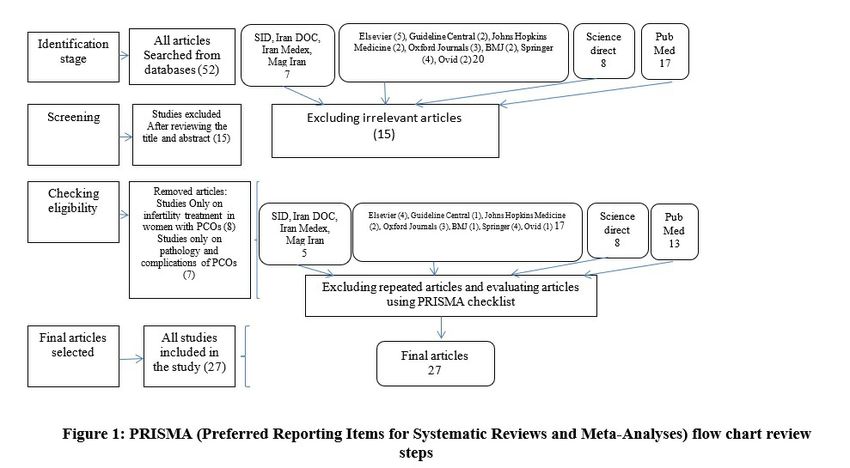
At first, articles related to the research question were identified (52 articles). In the preliminary
review, irrelevant articles were identified and removed. After applying the inclusion and exclusion
criteria and removing irrelevant and repeated articles, 42 articles were selected. For quality
assessment of the articles, PRISMA flow chart and data extraction guide of Popay was used which was
adapted for checking robustness of both qualitative and quantitative studies. The articles were
independently studied by two researchers for quality appraisal and relevance assessment and the
related papers were identified. In case of disagreement, the article was judged by a third researcher (
18,
19). Finally, from 42 articles, 27 papers were selected, of which 25 articles (92.6%) were
published in English and 2 articles (7.4%) were in Persian (Figure 1).
2-4- Critical Appraisal
2-4-1- Methods used in studies
The methods used in selected articles were:
• Descriptive/cross sectional: 5 (%18.5)
• Mixed Methods: 1 (% 3.7)
• Qualitative: 6 (% 22.2)
• Cohort: 2 (% 7.4)
• RCT (randomized controlled trial): 1 (% 3.7)
• Systematic review: 2 (% 7.4)
• Review article: 9 (% 33.4)
• Meta-analysis: 1 (% 3.7)
52-4-2- Study places
Study places included four regions: the United States, Australia, Europe, and Asia (Table 1).
Risk of bias:
For minimizing the risk of bias, the double check process of validation was performed. Also the risk of
bias in the included studies was assessed by Cochrane risk of bias tool and completeness of reporting
outcome data (attrition bias), and selective outcome reporting (reporting bias). Also, by searching on
different websites and platforms, we tried to minimize selection bias in the selection of articles.
Data analysis:
Data was analyzed by narrative synthesis method. It is used when statistical meta-analysis or another
special form of synthesis is not feasible due to substantial methodological and clinical heterogeneity
between studies identified. This method has four main elements: 1- Developing a theory, 2-
Preliminary synthesis of findings of the included studies, 3- Exploring relationships in the data, 4-
Assessing the robustness of the synthesis (19). In "developing the theory", we needed to have a clear
understanding of sexual and reproductive health needs in PCOs women, so we began purposefully
searching and exploring SRH needs and its categories. All articles were initially screened by two
reviewers who independently reviewed titles and abstracts of the studies to accept or reject the full
text paper. Thus after assessing the quality of the articles, the selected articles were identified. In the
second step –"developing a preliminary synthesis of the findings", data was extracted from eligible
studies and converted to primary codes. Reviewers discussed any disagreements in the data
extracted, and referral to a third reviewer was done to resolve any disputes. In the third step
"Exploring relationships in the data ", primary codes were assessed by the reviewers and categorized
based on the found relationships. Finally themes were extracted from the primary codes. In this way,
the primary codes were extracted from the texts of the selected articles, and then the main themes
were formed from these codes. For "Assessing the robustness of the synthesis ", the basic concepts
extracted of articles were performed by three reviewers to be sure of the concordance of the obtained
themes with the texts. Then the primary codes were categorized into specific categories.
Results
696 Primary codes were derived from reviewed material about needs, problems and complications
related to sexual / reproductive health of women with PCOs. Then, 9 themes were extracted from
these 96 Primary codes. Table 2 shows the themes extracted from the selected articles, with number
of articles, and study methodology of related articles in each theme.
Theme A (Complications and problems affecting patients): With 5 primary codes, addresses issues
such as hirsutism, hyperandrogenism, anovulation, acne, endogenous alopecia, menstrual disorders,
cardiovascular complications, insulin resistance, diabetes, obesity and infertility.
Theme B (Lifelong effect of PCOs on reproductive patterns): With 17 primary codes, examines the
importance and distinction of clinical symptoms in all life periods of women with PCOs starting from
adolescence to old age.
Theme C (PCOs and adverse reproductive and pregnancy outcomes): With 11 primary codes,
examines the association between disease complications such as menstrual irregularities,
hyperandrogenism, obesity, Insulin resistance and increased serum LH levels with adverse outcomes
in pregnancy, delivery and infancy such as preeclampsia, preterm delivery, gestational diabetes,
abortion, neonatal LGA (Large for Gestational Age) risk, meconium aspiration, 5 minute Apgar score
less than 7, and increased need for prenatal care and childbirth.
Theme D (Informational needs and preferences of patients about health outcomes and their
application for treatment and management of lifelong health outcomes): With 9 primary codes
addresses the educational and informational needs of women with PCOs with childbearing, prioritizing
health needs, deciding on possible strategies for treatment, and choosing the best lifestyle.
Theme E (Financial burden of disease): With 3 primary codes refers to the annual financial burden of
PCOs, including $ 1.35 million for menstrual dysfunction, $ 533 million for infertility services, $ 1.77
million for diabetes, and $ 622 million hirsutism treatment.
Theme F (The effect of PCOs on life experiences and quality of life of affected women): With 19
primary codes, addresses the impact of physical, psychological, emotional, cognitive and social
aspects of quality of life in women with PCOs. It also examines ways to improve the outcomes of
infertility services in order to improve the quality of the women's lives.
7Theme G (Sexual disorders): With 10 primary codes, explores the impact of disease, its treatments
and complications on women's sexual function.
Theme H (Psychological concerns and issues): With 17 primary codes, examines the effects of disease
complications such as obesity, menstrual problems, infertility, emotional disturbances and hirsutism
on psychological aspects of women's health. It also points to patients concerns such as worries about
physical symptoms, fears of future complications, and challenges of a chronic condition.
Theme I (Femininity feelings and roles): With 5 primary codes, examines the impact of the disease on
social roles of patients as women and mothers, and their responsibilities.
Table 3 shows a sample of extracting primary codes from texts and then forming a theme (theme A).
Discussion
In this study, out of 27 selected articles, 96 primary codes were derived about the needs, problems
and complications related to SRH needs of women with PCOs. Finally, 9 main themes were extracted
from these codes. These 9 themes were compared with the 6 domains of SRH needs in "Assessment
of Sexual Wellness Needs" questionnaire developed by UNFPA (2008) in Zimbabwe, which are: 1. Safe
motherhood, morbidity profile and hygienic practices, 2. Family planning, 3. Sexual history and
practices, 4. Sexually transmitted infections, 5. HIV and AIDS, 6- Sexual and gender-based violence (
20).
In the present study, themes A, B and C are consistent with the first domain in UNFPA questionnaire
which is “safe motherhood”. Themes A, B and C, respectively, investigate the complications of PCOs
on health of women, the effect of disease on patterns women's life and the effect of disease on
reproductive consequences.
In theme A, the articles mentioned that PCOs has various influences on reproductive system (
21). Some complications such as menstrual disorders and infertility directly affect the
reproductive health, also infertility and its consequences can affect the process of pregnancy and the
care needed before, during and after pregnancy. On other hand, menstrual disorders affect ovulation,
pregnancy, and also the choice and use of contraceptive methods (
22-25).
8In theme B, articles emphasized the impact of PCOs on reproductive symptoms of patients throughout
their lives from embryonic period to adulthood, with significant complications of PCOs such as obesity,
hirsutism, and anovulation. Therapeutic methods of disease, can affect the fertility of women in short-
term and long-term. Also, the disease can affect the status of sex hormones, menstrual cycle and
ovulation status, and cause infertility and fertility disorders (
26-28). The point is that this theme refers to the chronic nature of the disease during
women's reproductive life. Some symptoms such as acne, hirsutism and obesity are more likely to
affect teenaged patients; conditions such as menstrual and ovulation disorders, obesity, and the
choice of contraceptive methods affect reproductive aged women, and complications, such as long-
term cardiovascular, and metabolic disorders, and increased risk of cancer more affect women in
premenopausal and menopausal period (
26) . Therefore, in planning for provision of SRH services, in addition to considering overall
complications of the disease, the special problems in each stage of the patients' lives should be
noted.
Theme C demonstrates adverse reproductive outcomes in women with PCOs, such as: pregnancy
complications including: gestational diabetes, preeclampsia, preterm labor, fetal death, neonatal
death, low Apgar scores, meconium aspiration, large for gestational age (LGA) and small for
gestational age (SGA) newborns, and macrosomia (
29,
30). According to the UNFPA reproductive / sexual health needs questionnaire (
20), this theme was related with prenatal care, provision of health care during and after
childbirth, and treatment of obstetrics complications. Rose McDonnell study mentioned that PCOs is
associated with reproductive complications including: miscarriage, hypertensive disorders, gestational
diabetes, and prematurity. Also the study indicated that PCOs has serious complications for women
and their offspring with regard to long and short term reproductive functions, risk of chronic illness,
and congenital anomalies, thus health care resources should be allocated accordingly to meet these
challenges (
931).
Theme D shows informational needs of reproductive aged PCOs patients regarding their fertility,
childbirth and health service preferences. There are few studies on reproductive health priorities of
women with PCOs, and their information about the complications and treatment of their illness, and
its effects on childbearing. Investigating these gaps and informing about childbirth decisions and
identifying health priorities is essential for women with PCOs (
32,
33). Theme D is not related to any of the 6 SRH needs domains in the UNFPA questionnaire (
20). Therefore, it seems that management of the informational needs and launching
educational programs is another necessity for patients with PCOs.
In theme E, financial burden of PCOs in United States includes: $ 1.35 million for hormonal treatments
of menstrual dysfunction, $ 533 million for infertility care, and $ 1.7 billion for diabetes associated
with PCOs, $ 622 million for hirsutism treatment, with an overall value of care assessment for women
with PCOs in reproductive ages being $ 4.36 billion. Considering the cost of disease diagnosis and
treatment, it can be concluded that preventing and screening for this disorder is a financially cost-
effective strategy (
34). None of the SRH needs domains in the UNFPA questionnaire (
20), directly refers to the financial burden of disease. But given today's limited resources, it
is essential to pay attention to this aspect of PCOs and in providing women with SRH services, the
financial burden of each complication of the disease should be assessed, according to the age of the
affected woman.
Theme F is not directly consistent with the domains of the UNFPA questionnaire bet it is indirectly
consistent with the domains of gender-based violence, and sexual behavior (
20). It shows that PCOs affects women's lives from fetal period to death, increasing mortality
rates and reducing women's physical, emotional, and social aspects of quality of life (
35,
36) . Also, the results of these studies showed that women with PCOs had serious health
10concerns which are often ignored in services provided by the health systems. Health service providers
can play an important role in identifying these needs (
37,
38).
Theme G examines sexual dysfunction in patients with PCOs. PCOs may affect female sexual function
because of complications such as ovulation disorders, obesity, and hyperandrogenism. Studies have
indicated PCOs has significant effects on sexual desire and stimulation of the sexual cycle, while
hirsutism affects all sexual domains except for dyspareunia (
39). Also, complications of the disease, such as anovulation, obesity and hyperandrogenism,
affect the sexual function of women with PCOs in regard to desire, stimulation, lubrication, orgasm,
satisfaction, and pain (
40). Studies have shown that among the symptoms associated with PCOs, infertility and hair
loss have more negative effect on sexual function (
37). According SRH needs of UNFPA questionnaire (
20); this theme matches with “sexual history and sexual behavior”. Thus, evaluating sexual
function of women and educating about sexual problems by health service providers is essential in
promoting the sexual health of patients.
Theme H studies psychological concerns in women with PCOs. The most common psychological
concerns of women with PCOs include: fears about physical symptoms, financial burden of the
disease, fears about future complications and chronic diseases. The most common worries and
psychological outcomes are being overweight, menstrual problems, infertility, emotional problems
and hirsutism. But most of the psychological consequences of the illness are underestimated and
overlooked by health services providers (
41). Therefore, patients need to receive special support to reduce their worries so they can
improve their disease management by changing their lifestyle (
42). While the psychological concerns and challenges of patients can affect their
reproductive and sexual health, such as pregnancy, self-esteem, sexuality, gender and sexual
11violence; none of the UNFPA questionnaire domains (
20) is compatible with these concerns. On the other hand, women with PCOs are more
susceptible to mood disorders and depression (
43). In Zangeneh study, clinical signs of PCOs were associated with psychiatric disorders and
it was recommended to consider these disorders in the diagnosis and treatment of PCOs (45).
Therefore, it seems that these women, as soon as the disease is diagnosed, require screening for
psychological disorders and referral to appropriate counseling centers, if needed. (
44).
Theme I looked at the role of femininity in women with PCOs and noted that PCOs symptoms impeded
patients' roles as women and mothers, and affected the meeting of their responsibilities. Women with
PCOs have a small role in portraying women's part in general health (
45). According SHR needs of UNFPA questionnaire(
20); this theme is consistent with the sexual and gender-based violence domain. As
mentioned, women with PCOs get mainly involved in the treatment of physical complications and
slowly forget their social roles and femininity. Therefore, in assessing SRH needs, it is imperative to
consider femininity feelings and roles of the patients.
There are two domains in the UNFPA questionnaire including: "Sexually transmitted infections" and
"Human Immunodeficiency Virus and AIDS"(
20); but in our studies to date, there have been no Special study that addressed these two
domains in patients with PCOs. Studies have shown that HIV-infected women are increasingly exposed
to insulin resistance and fat distribution and obesity, which is a common finding in PCOs patients. But
the studies conclude that among HIV-positive people with severe abdominal fat and hypertension,
there are no common features with PCOs (
46).
Studies have indicated that with increasing age of patients, if there is no suitable management of the
disease process, the risk of cancer is elevated. Rezayat study has shown that PCOs is a common
endocrine disorder that, in addition to producing reproductive problems, is known to be a risk factor
12for breast and reproductive system cancers (including endometrial and ovarian tumors). Obesity and
endocrine disorders that are caused by PCOs are two of the most important risk factors for women's
cancers, including ovarian and breast cancers (
47). Shaebani study also highlights the increased risk of breast and ovarian cancers among
women with PCOs, especially in long-term complications. Therefore, it seems that paying attention to
and screening for cancers in women with PCOs is very important and should be considered as a major
SRH need in them (
48).
Conclusion
The findings showed that in many health systems designed to provide SRH services, the needs of
patients with PCOs were not specifically considered and their needs were approached as ordinary
women. The articles showed that the disease and its complications have a high financial burden that
is often ignored in identifying and evaluating SRH needs of women. Also, the chronic nature of the
disease effects mental status of the patients and the psychological consequences of disease, are
often hidden and not paid attention to. The provision of services to women with PCOs lacks continuity
and integrity, thus in identification and provision of SRH services to these women, there is a gap.
According to evidence, since PCOs can affect the entire life of a woman, patients need different
services, and health systems should try to provide the best of services based on their limited
resources. Therefore, studies such as the present study can offer that SRH needs in women with PCOs
have to be addressed in a complete package in the form of protocols and guidelines that are based on
the actual needs of the patients.
Limitations: The limitations of the present study were that, since many studies did not address the
needs of women's reproductive / sexual health, we had to use all the data and articles published in
this area, including qualitative/ quantitative methods, lectures, and guidelines. Also, due to this
heterogeneity in the methodology of the selected articles, there was no meta-analysis possible.
Abbreviations
PCOs: Polycystic Ovarian Syndrome; SRH: sexual /reproductive health; WHO: World Health
13Organization; PRISMA: Preferred Reporting Items for Systematic Reviews and Meta-Analyses;
Declarations
Ethics approval and consent to participate
Permission to carry out this study and its design was obtained from The Ethical Committee of Tarbiat
modare University (TMU), Tehran, Iran on 25 Septem 2017 with the code: IR.TMU.REC.1396.619
Consent for publication
Not applicable
Availability of data and materials
The data upon which the results are based, which are the articles studied, can be accessed through a
simple internet search.
Competing interests
The authors declare that they have no competing interests.
Funding
The financial process will be funded by Tarbiat Modares University
Authors’ contributions
All the authors contributed to the concept and purpose of the study. MK drafted the first copy of the
manuscript. EM, LM, LA, AP and SHSH revised the manuscript. LM carefully checked the manuscript
for important academic content. All authors approved the final version of the manuscript.
Acknowledgments
This study was part of a thesis project for obtaining PhD degree in Reproductive Health, in Faculty of
Medical Sciences, Tarbiat Modares University, Tehran, Iran. The researchers of this study announce
their appreciation of all the authors of the articles used in this study.
Authors' information (optional)
1-PhD student of reproductive Health, Department of Midwifery and Reproductive Health, Faculty of
Medical Sciences, Tarbiat Modares University, Tehran, 2- PhD of Nursing , Professor, Department of
Nursing, Faculty of Medical Sciences, Tarbiat Modares University, Tehran, Iran.3- PhD of Reproductive
Health, Assistant Professor, Midwifery and Reproductive Health Department, Faculty of Medical
14Sciences, Tarbiat Modares University, Tehran, Iran.4- PhD of Reproductive Health, Assistant Professor,
Department of Reproductive Health, School of Nursing and Midwifery, Iran University of Medical
Sciences, Tehran. Iran. 5- PhD of Maternal and Child Health, Associate Professor, Department of
Midwifery and Reproductive Health, Faculty of Medical Sciences, Tarbiat Modares University, Tehran,
Iran.
References
1. Callahan D. The WHO definition of health. Pharmacy Ethics, eds SmithM, StraussS. 1973:95-104.
2. Cohen M. Towards a framework for women's health. Patient Education and Counseling.
1998;33(3):187-96.
3. Chandra-Mouli V, Svanemyr J, Amin A, Fogstad H, Say L, Girard F, et al. Twenty years after
International Conference on Population and Development: where are we with adolescent sexual and
reproductive health and rights? Journal of Adolescent Health. 2015;56(1):S1-S6.
4. Glasier A, Gülmezoglu AM, Schmid GP, Moreno CG, Van Look PF. Sexual and reproductive health: a
matter of life and death. The Lancet. 2006;368(9547):1595-607.
5. Correa S, Petchesky R. Reproductive and sexual rights: a feminist perspective. Culture, Society and
Sexuality: Routledge; 2007. p. 314-32.
6. Sen G, Batliwala S. Empowering women for reproductive rights. 2000.
7. Murray CJ, Lopez AD, Organization WH. The global burden of disease: a comprehensive assessment
of mortality and disability from diseases, injuries, and risk factors in 1990 and projected to 2020:
summary. 1996.
8. Khani S, Moghaddam Banaem L, Mohammadi E, Vedadhir A, Hajizadeh E. The most common sexual
and reproductive health needs in women referred to healthcare and triangle centers of Sari-2013.
Journal of Mazandaran University of Medical Sciences. 2014;23(1):41-53.
9. Goodarzi MO, Dumesic DA, Chazenbalk G, Azziz R. Polycystic ovary syndrome: etiology,
pathogenesis and diagnosis. Nature Reviews Endocrinology. 2011;7(4):219.
10. Yamin AE, Boulanger VM. Embedding sexual and reproductive health and rights in a
transformational development framework: lessons learned from the MDG targets and indicators.
15Reproductive Health Matters. 2013;21(42):74-85.
11. Teede HJ, Misso ML, Costello MF, Dokras A, Laven J, Moran L, et al. Recommendations from the
international evidence-based guideline for the assessment and management of polycystic ovary
syndrome. Human Reproduction. 2018;33(9):1602-18.
12. Fauser BC, Tarlatzis BC, Rebar RW, Legro RS, Balen AH, Lobo R, et al. Consensus on women’s
health aspects of polycystic ovary syndrome (PCOS): the Amsterdam ESHRE/ASRM-Sponsored 3rd
PCOS Consensus Workshop Group. Fertility and sterility. 2012;97(1):28-38. e25.
13. Bazarganipour F, Taghavi SA, Montazeri A, Ahmadi F, Chaman R, Khosravi A. The impact of
polycystic ovary syndrome on the health-related quality of life: A systematic review and meta-
analysis. Iranian journal of reproductive medicine. 2015;13(2):61.
14. Li Y, Li Y, Ng EHY, Stener-Victorin E, Hou L, Wu T, et al. Polycystic ovary syndrome is associated
with negatively variable impacts on domains of health-related quality of life: evidence from a meta-
analysis. Fertility and sterility. 2011;96(2):452-8.
15. Bearinger LH, Sieving RE, Ferguson J, Sharma V. Global perspectives on the sexual and
reproductive health of adolescents: patterns, prevention, and potential. The lancet.
2007;369(9568):1220-31.
16. Singh S, Darroch JE, Ashford LS. Adding it up: The costs and benefits of investing in sexual and
reproductive health 2014. 2014.
17. Arksey H, O'Malley L. Scoping studies: towards a methodological framework. International journal
of social research methodology. 2005;8(1):19-32.
18. Fleming PS, Koletsi D, Pandis N. Blinded by PRISMA: are systematic reviewers focusing on PRISMA
and ignoring other guidelines? PLoS One. 2014;9(5):e96407.
19. Popay J, Roberts H, Sowden A, Petticrew M, Arai L, Rodgers M, et al. Guidance on the conduct of
narrative synthesis in systematic reviews. A product from the ESRC methods programme Version.
2006;1:b92.
20. UNFPA N. Sexual and reproductive health (SRH) needs assessment among Mobile & Vulnerable
Population (MPV) communities in Zimbabwe. Nedico; 2008.
1621. Jalilian A, Kiani F, Sayehmiri F, Sayehmiri K, Khodaee Z, Akbari M. Prevalence of polycystic ovary
syndrome and its associated complications in Iranian women: A meta-analysis. Iranian journal of
reproductive medicine. 2015;13(10):591.
22. Teede H, Deeks A, Moran L. Polycystic ovary syndrome: a complex condition with psychological,
reproductive and metabolic manifestations that impacts on health across the lifespan. BMC medicine.
2010;8(1):41.
23. Pasquali R, Gambineri A, Pagotto U. The impact of obesity on reproduction in women with
polycystic ovary syndrome. BJOG: An International Journal of Obstetrics & Gynaecology.
2006;113(10):1148-59.
24. Norman RJ, Davies MJ, Lord J, Moran LJ. The role of lifestyle modification in polycystic ovary
syndrome. Trends in Endocrinology & Metabolism. 2002;13(6):251-7.
25. Allahbadia GN, Merchant R. Polycystic ovary syndrome and impact on health. Middle East Fertility
Society Journal. 2011;16(1):19-37.
26. Fauser B, Tarlatzis B, Rebar R, Legro R, Balen A, Lobo R, et al. Consensus on womens health
aspects of polycystic ovary syndrome (PCOS). Human Reproduction. 2012;27(1):14-24.
27. Legro RS, Arslanian SA, Ehrmann DA, Hoeger KM, Murad MH, Pasquali R, et al. Diagnosis and
treatment of polycystic ovary syndrome: an Endocrine Society clinical practice guideline. The Journal
of Clinical Endocrinology & Metabolism. 2013;98(12):4565-92.
28. Bellver J, Rodríguez-Tabernero L, Robles A, Muñoz E, Martínez F, Landeras J, et al. Polycystic ovary
syndrome throughout a woman’s life. Journal of assisted reproduction and genetics. 2018;35(1):25-
39.
29. Roos N, Kieler H, Sahlin L, Ekman-Ordeberg G, Falconer H, Stephansson O. Risk of adverse
pregnancy outcomes in women with polycystic ovary syndrome: population based cohort study. Bmj.
2011;343:d6309.
30. Li Y, Ruan X, Wang H, Li X, Cai G, Du J, et al. Comparing the risk of adverse pregnancy outcomes
of Chinese patients with polycystic ovary syndrome with and without antiandrogenic pretreatment.
Fertility and sterility. 2018;109(4):720-7.
1731. McDonnell R, Hart RJ. Pregnancy-related outcomes for women with polycystic ovary syndrome.
Women's Health. 2017;13(3):89-97.
32. Holton S, Kirkman M, Rowe H, Fisher J. The childbearing concerns and related information needs
and preferences of women of reproductive age with a chronic, noncommunicable health condition: a
systematic review. Women's Health Issues. 2012;22(6):e541-e52.
33. Avery JC, Braunack-Mayer AJ. The information needs of women diagnosed with Polycystic Ovarian
Syndrome–implications for treatment and health outcomes. BMC women's health. 2007;7(1):9.
34. Azziz R, Marin C, Hoq L, Badamgarav E, Song P. Health care-related economic burden of the
polycystic ovary syndrome during the reproductive life span. The Journal of Clinical Endocrinology &
Metabolism. 2005;90(8):4650-8.
35. ZareMobini F, Kazemi A, Farajzadegan Z. A comprehensive mental health care program for women
with polycystic ovary syndrome: protocol for a mixed methods study. Reproductive health.
2018;15(1):46.
36. Amiri FN, Tehrani FR, Simbar M, Montazeri A, Thamtan RAM. The experience of women affected by
polycystic ovary syndrome: a qualitative study from Iran. International journal of endocrinology and
metabolism. 2014;12(2).
37. Kaczmarek C, Haller DM, Yaron M. Health-related quality of life in adolescents and young adults
with polycystic ovary syndrome: a systematic review. Journal of pediatric and adolescent gynecology.
2016;29(6):551-7.
38. Mazloomymahmoodabad S, Ardjmandi M, Farajkhoda T. To Evaluate Health-Related Quality of Life
in Women with Polycystic Ovary Syndrome in Yazd, 2014. Toloo-e-behdasht. 2016;14(6):236-46.
39. Bazarganipour F, Ziaei S, Montazeri A, Foroozanfard F, Kazemnejad A, Faghihzadeh S. Sexual
functioning among married Iranian women with polycystic ovary syndrome. International journal of
fertility & sterility. 2014;8(3):273.
40. Eftekhar T, Sohrabvand F, Zabandan N, Shariat M, Haghollahi F, Ghahghaei-Nezamabadi A. Sexual
dysfunction in patients with polycystic ovary syndrome and its affected domains. Iranian journal of
reproductive medicine. 2014;12(8):539.
1841. McCook JG, Reame NE, Thatcher SS. Health‐related quality of life issues in women with polycystic
ovary syndrome. Journal of Obstetric, Gynecologic, & Neonatal Nursing. 2005;34(1):12-20.
42. NASIRI AMIRI F, RAMEZANI TEHRANI F, SIMBAR M, THAMTAN M, ALI R. Concerns of women with
polycystic ovary syndrome: A qualitative study. Iranian Journal of Endocrinology and Metabolism.
2013;15(1):41-51.
43. Barry JA, Hardiman PJ, Saxby BK, Kuczmierczyk A. Testosterone and mood dysfunction in women
with polycystic ovarian syndrome compared to subfertile controls. Journal of Psychosomatic Obstetrics
& Gynecology. 2011;32(2):104-11.
44. Zangeneh FZ, Jafarabadi M, Naghizadeh MM, Abedinia N, Haghollahi F. Psychological distress in
women with polycystic ovary syndrome from Imam Khomeini Hospital, Tehran. Journal of reproduction
& infertility. 2012;13(2):111.
45. Sanchez N, Jones H. “Less Than A Wife”: A Study of Polycystic Ovary Syndrome Content in Teen
and Women’s Digital Magazines. Journal of medical Internet research. 2016;18(6).
46. Johnsen S, Dolan SE, Fitch KV, Killilea KM, Shifren JL, Grinspoon SK. Absence of polycystic ovary
syndrome features in human immunodeficiency virus-infected women despite significant
hyperinsulinemia and truncal adiposity. The Journal of Clinical Endocrinology & Metabolism.
2005;90(10):5596-604.
47. Rezayat F, Hajiaghayi M, Ramezani Tehrani F, Mosaffa N. Increase Risk of Ovarian and Breast
Cancers in Women with PolyCystic Ovarian Syndrome: a Review. Iranian Journal of Endocrinology and
Metabolism. 2016;18(1):54-62.
48. Shabani Azim F, Dashti N. Review on clinical manifestations and long-term consequences of
polycystic ovary syndrome (PCOS). Laboratory & Diagnosis. 2017;9(36):19-27.
Tables
Due to technical limitations, the table is only available as a download in the supplemental files
section.
Figures
19Figure 1
PRISMA (Preferred Reporting Items for Systematic Reviews and Meta-Analyses) flow chart
review steps
Supplementary Files
This is a list of supplementary files associated with this preprint. Click to download.
Tables 1 - 3.pdf
20You can also read


