Patient safety score: International experiences and the Careggi's Project - S. Albolino*, R. Tartaglia*, G. Villa , A. Mannu *Lab Studi e Ricerca ...
←
→
Page content transcription
If your browser does not render page correctly, please read the page content below
Patient safety score:
          International
          experiences and the
          Careggi’s Project

S. Albolino*, R. Tartaglia*, G. Villa°, A.
Mannu°
*Lab Studi e Ricerca Applicata GRC
° Anestesia e Terapia Intensiva
Centre Careggi Hospital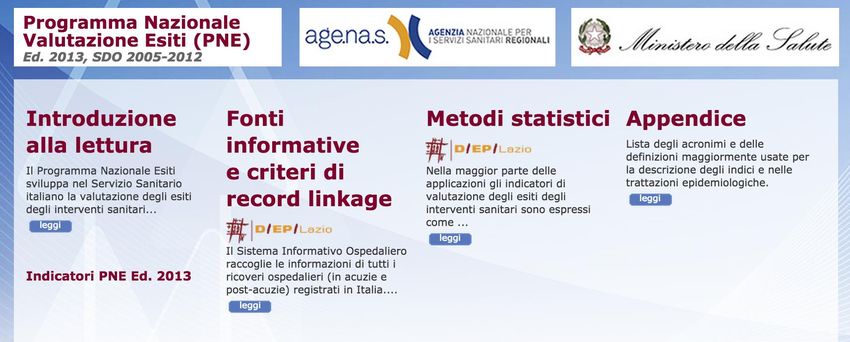
The most important criteria for Q&S

Special eurobarometer, EC 2014
The main information sources on Q&S

 Special eurobarometer, EC 2014

To assess the Q&S of hospitals

 Special eurobarometer, EC 2014
Volume based vs value based system

      ... the only way to control the costs of
      health care lis to improve the outcomes in
      a value based system
      ….. The achievement and the manteinance
      of results have to be evalutated on the
      whole clinical pathways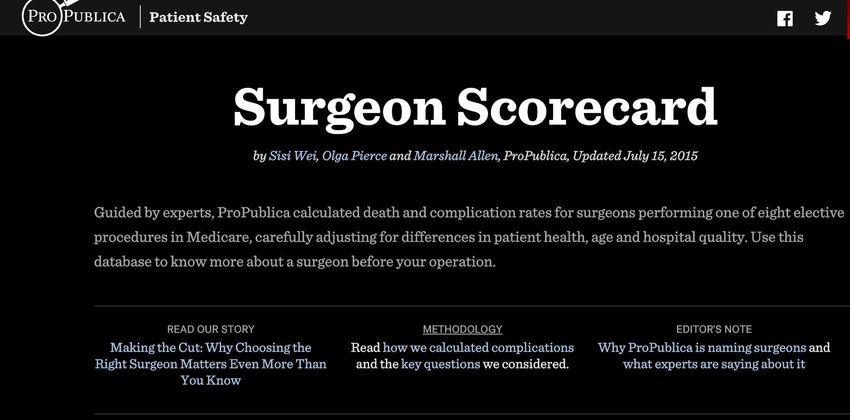
Volume based system vs value based system

     Sylvia M. Burwell
     N Engl J Med 2015; 372: 897-899 5 Marzo 2015

  Goals:
    have 85% of all Medicare fee-forservice payments tied to quality or value by
    2016, and 90% by 2018. Perhaps even more important, our target is to have
    30% of Medicare payments tied to quality or value through alternative
    payment models by the end of 2016, and 50% of payments by the end of
    2018. Alternative payment models include accountable care organizations
    (ACOs) and bundled-payment arrangements under which health care providers
    are accountable for the quality and cost of the care they deliver to
    patients.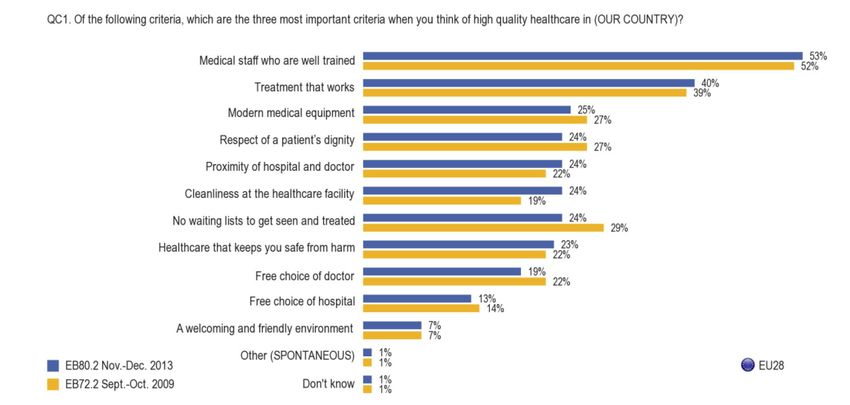
Systems to assess Q&S

   AHRQ patient safety indicators

   EHCI Outcome indicators

   NHS Safety Thermometer

   MeS Sistema bersaglio

   Agenas Programma Nazionale Esiti
                        Tartaglia, Vannucci, Springer 2014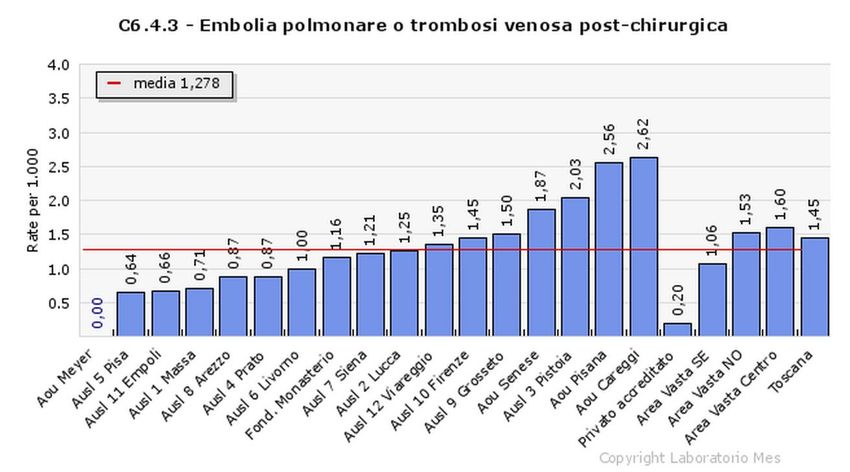
AHRQ Patient Safety Indicators
  Complications of Anesthesia
  Death in Low-Mortality DRGs
  Decubitus Ulcer
  Failure to Rescue
  Foreign Body Left During Procedure
  Iatrogenic Pneumothorax
  Selected Infections Due to Medical Care
  Postoperative Hip Fracture
  Postoperative Hemorrhage or Hematoma
  Postoperative Physiologic and Metabolic Derangements
  Postoperative Respiratory Failure
  Postoperative Pulmonary Embolism or Deep Vein Thrombosis
  Postoperative Sepsis
  Postoperative Wound Dehiscence
  Accidental Puncture or Laceration
  Transfusion Reaction
  Birth Trauma – Injury to Neonate
  Obstetric Trauma – Vaginal with Instrument
  Obstetric Trauma – Vaginal without Instrument
  Obstetric Trauma – Cesarean Delivery
Postoperative sepsis

                       Postoperative pulmonary
                              embolism
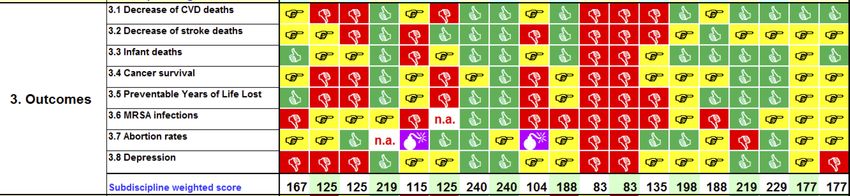
European experience EHCI
Euro Health Consumer Index
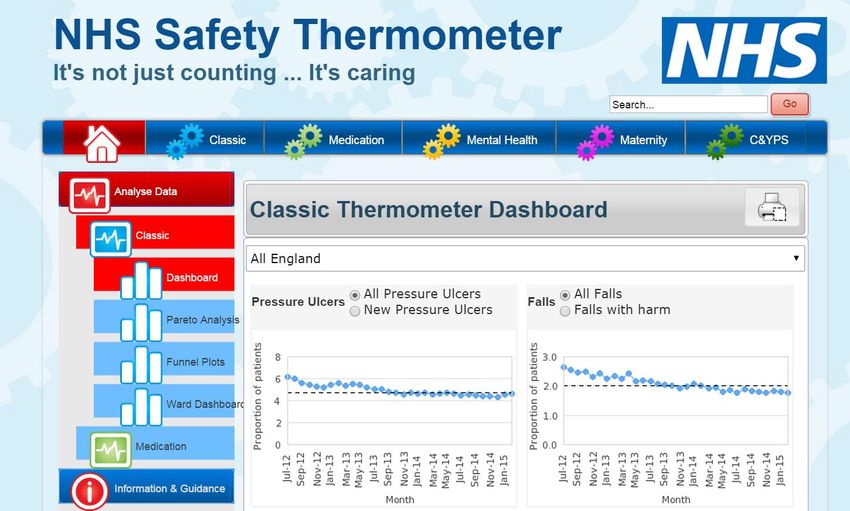
NHS Safety Thermometer
Agenas – Programma Nazionale Esiti
30 days mortality in aortocoronary bypass
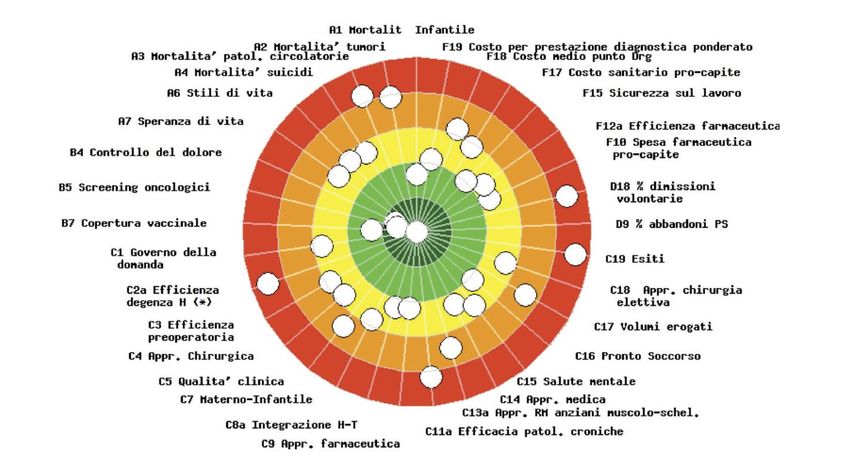
MeS – Target based system
MeS – Target based system
    C6      Rischio clinico e sicurezza del paziente
    C6.1    Indice di richieste di risarcimento

   C6.1.1
            Indice di richieste di risarcimento - eventi in strutture
            ospedaliere
   C6.1.2   Indice di richieste di risarcimento - eventi in strutture territoriali
   C6.1.3   Capacità di gestione del risarcimento
    C6.2    Sviluppo del sistema di incident reporting:
   C6.2.1   Indice di diffusione degli audit
   C6.2.2   Indice di diffusione delle rassegne di Mortalità e Morbilità
    C6.4    Sicurezza del paziente:
   C6.4.1   Sepsi post-operatoria per chirurgia d'elezione

   C6.4.2
            Mortalità intraospedaliera nei dimessi con Drg a bassa
            mortalità
   C6.4.3   Embolia polmonare o trombosi venosa post-chirurgica
    C6.5    Livello di diffusione delle buone pratiche
    C6.6    Capacità di controllo delle cadute dei pazienti
Rate of compensations 2014
ProPublica’s Surgeon Scorecard

Da NEJM N Engl J Med. 2015 Settembre 2
Scoring No Goal — Further Adventures in Transparency
Lisa Rosenbaum, M.D.
ProPublica’s Surgeon Scorecard
A coach in operating theater
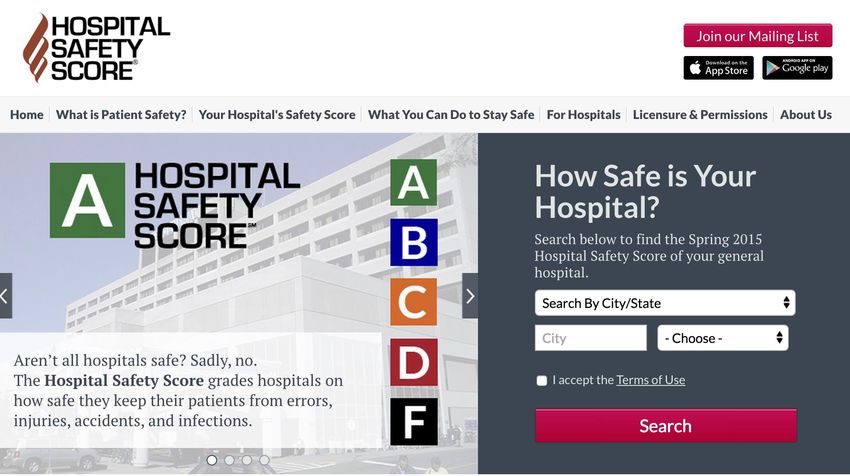
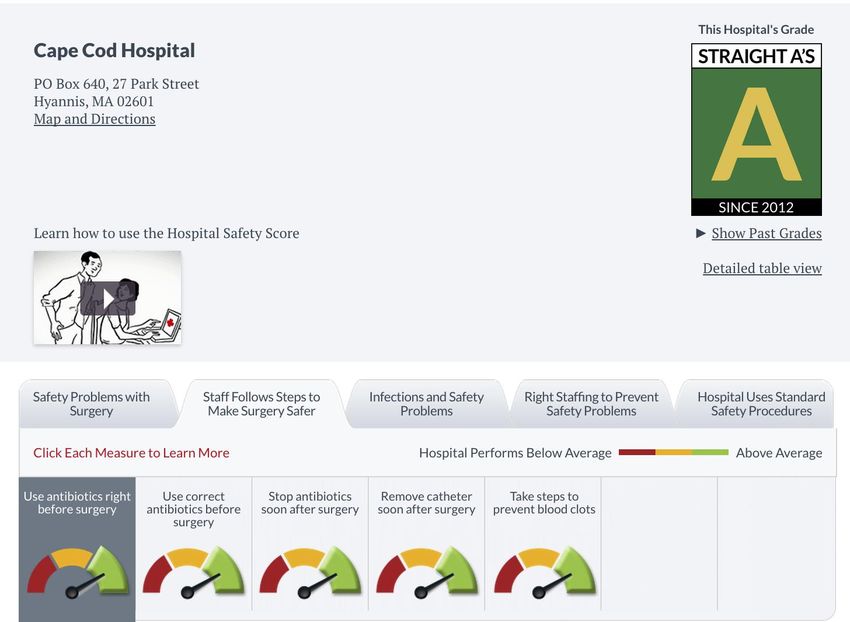
Hospital Safety Score
Hospital Safety Score
Hospital Safety Score

  Process Measures
  represent how often a hospital gives patients recommended
  treatment for a given medical condition or procedure. For example,
  “Use antibiotics right before surgery” measures how often a hospital
  gives patients an antibiotic within one hour before surgery.
  Structural Measures represent the environment in which patients
  receive care. For example, “Doctors order medications through a
  computer” represents whether a hospital uses a special
  computerized system to prevent medication errors.

  Outcome Measures
  represent what happens to a patient while receiving care. For
  example, “Dangerous object left in patient’s body” measures how
  many times a patient undergoing surgery had a dangerous foreign
  object, like a sponge or tool, left in his or her body.
Hospital Safety Score
Hospital Safety Score
Hospital Safety Score
Patient Safety Score in intensive care units
A modality for assessing the safety in critical care
Aim of the safety score project

   Building a composite scoring system, used as an index
   of performance can objectively quantify the
   characteristics of "patient safety" of own intensive care
   unit

   Comparisons of statistical series of single center or
   towards inter-centers with evaluation over time of
   performance of an individual unit and/or the direct
   comparison between different units.
The model

   Dimensions:

                                   Unit organization

        Quality and safety         Process

                                   Outcomes

                 Two levels:

                 - cross-section indicators

                 - specific clinical indicators
Formula of final scoring
Matthew Austin et al.., 2010Partecipants Intensive Care Unit Careggi hospital (Prof. R. De Gaudio) Intensive Care Unit Santa Maria Nuova hospital (Dr. A. Sarti) Intensive Care Unit Prato hospital (Dr. G. Consales)
Preliminary results only for one unit
Strenght and weakness

 Strenght                        Weakness

 - Reaserch based score          - Few available data

 - Simple to calculate           - Long term evaluation
                                   (variability in the life span of
 - Real time results               health care organizations)

 - Score integrate quality and
   quantity variables

 - Direct and indirect costs
   evaluation
Thank you for your attention
In God we trust, all others must
bring data
Edward DemingYou can also read


