PEELING BACK THE BARK: TIMBER TRACKING AND REGULATIONS CONTROLLING THE PERUVIAN FOREST SUPPLY CHAIN - Forest Trends
←
→
Page content transcription
If your browser does not render page correctly, please read the page content below
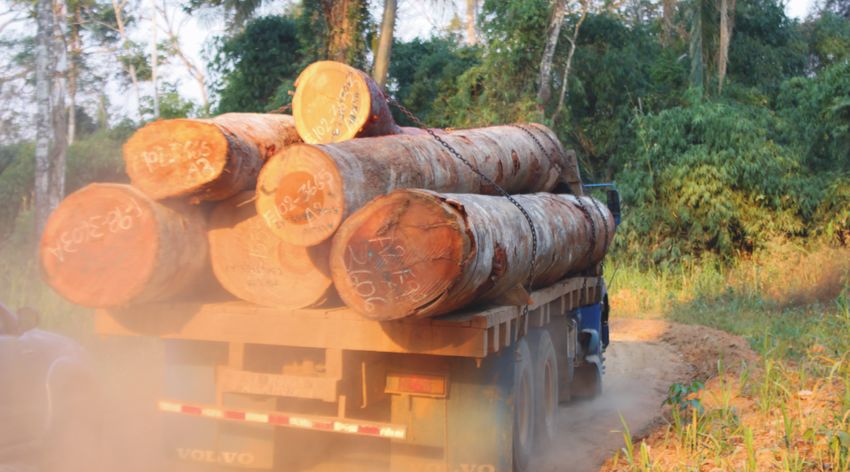
FOREST POLICY TRADE AND FINANCE INITIATIVE
    REPORT | JUNE 2020

PEELING BACK THE BARK: TIMBER
TRACKING AND REGULATIONS
CONTROLLING THE PERUVIAN
FOREST SUPPLY CHAIN
By Alfredo Rodriguez Zunino

This report contains an overview of the Peruvian timber supply chain, its legal
and regulatory framework, and the guidance and tools that have been established
to ensure its legality. It also contains an analysis of current Peruvian Forest Law
applications and regulations, and identifies gaps and challenges to robustly
applying these laws and regulations to the timber supply chain.

INTRODUCTION

In the final quarter of 2019, the Peruvian Forest Service (SERFOR) published three
new sets of “resoluciones ejecutivas” (executive resolutions) to improve tracking
and controls in the forest supply chain. These enforceable directives laid out the
documentation required to comply with the Peruvian Forest Law of 2011 and
subsequent regulations (largely finalized in 2015).

The main directive provides technical explanations related to timber tracking,
while the other two directives mandate changes for forest and sawmill industries.
All authorized forest license holders and sawmills must now use “operation books”
to record the execution of their management plan.
PEELING BACK THE BARK: TIMBER TRACKING AND REGULATIONS CONTROLLING THE
 PERUVIAN FOREST SUPPLY CHAIN
                                                                                                                2
 JUNE 2020

This new format allows forest harvests to be checked against approved management plans
more easily and requires sawmills to reconcile the volume of logs processed against the volume
of wood delivered to the processing mill. These changes are expected to help improve trace-
ability and transparency within the supply chain.

This system should enable interested parties to track timber products more easily from any point
in the supply chain back to the precise standing location of a particular harvesting plot. SERFOR
should be commended for publishing this guidance and the tools necessary to build a transpar-
ent national forest sector. However, SERFOR still lacks an open access database.i1Without
transparency of information, buyers and regulators of Peruvian timber products will still struggle
to conduct due diligence to verify legality and compliance with import regulations, such as the
US Lacey Act or EU Timber Regulation (EUTR).

Background
The Peruvian forestry industry has long struggled to create a rigorous tracking system for its
supply chain because many smallholder players are involved, who – for lack of guidance,
knowledge, or other factors – do not comply with laws and regulations. Falsified licences, un-
verified information, and corruption continue to be a problem. Illegal logging estimations are
high; almost 40 percent of timber consumed (valued at US$155 million) fails to meet the legal
standards set by the Government of Peru.1 If an effective control system were implemented,
related taxes and royalties captured from that timber would boost Peru’s economy by an esti-
mated US$20.5 million annually.2

Meeting International Standards for Legality: With high levels of illegal logging, Peruvian timber
suppliers have struggled to demonstrate that their timber can meet the legal standards required
by large and important export markets such as the United States, Europe, and Australia. While
other timber producing nations have been recovering their exports since the 2008 economic
crisis, Peru’s volume of timber exports has decreased at an annual rate of 5 percent.3

Between 2008 and 2013, two of Peru’s major trading partners – the US and the EU - instituted
new international timber trade regulations prohibiting the import of illegally sourced timber, and
the 2009 US-Peru free trade agreement mandated institutional and regulatory amendments. In
2018, 29% of Peruvian timber exports (by value) were subject to the legality due diligence pro-
cesses of US and European markets – valued at more than $40 million (Figure 1).

However, even larger volumes of timber exports were channelled through unregulated markets,
such as China (42%) and Mexico (10.5%), largely in the form of primary products such as flooring,
mouldings, strips, and sawnwood.

i With support from a national NGO and a USAID funded project, the Loreto regional government has
launched an open-access portal of Forest Management information: http://transparenciagerfor.regionloreto.
gob.pe/. This database system is still being on trialed and updated. It is expected that SERFOR will launch a
similar platform in August 2020.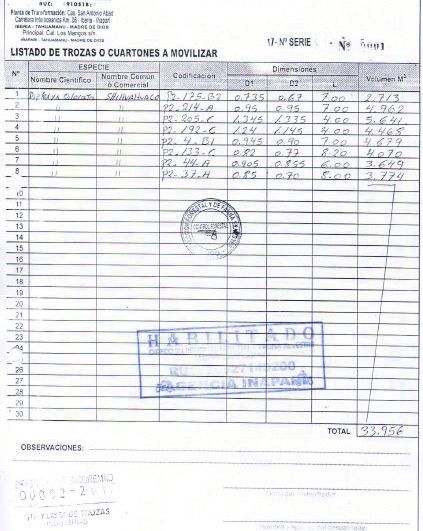
PEELING BACK THE BARK: TIMBER TRACKING AND REGULATIONS CONTROLLING THE
 PERUVIAN FOREST SUPPLY CHAIN
                                                                                                                   3
 JUNE 2020

At the end of 2019, the Government of China amended its Forest Law to require traceability and
legal sourcing for all domestic wood products. To date, it is still unclear whether these amend-
ments would also apply to imported timber products. If so, over 71% of Peruvian timber exports
to the US, Europe, and China would be subject to legality verification.

The Peruvian Forest Law: The Peruvian Forest Law and its regulations govern logging for the
following categories: (i) timber and non-timber forest concessions, (ii) indigenous communities,
(iii) private properties, (iv) local forests, and (v) use contracts.4

FIGURE 1   2018 Peru Exports of Timber Products by Export Market and Timber Product (USD)

                                 Key Governance Body Players

 MINAGRI: Ministerio de Agricultura y Riego (MINAGRI), or, The Peruvian Ministry of Agriculture and Irrigation
 oversees management of Peruvian forests and wildlife.
 SERFOR: Servicio Nacional Forestal y de Fauna Silvestre (SERFOR), or, the Peruvian Forest and Wildlife
 Service. SERFOR is the technical and regulatory body within MINAGRI responsible for implementing the
 Peruvian Forest and Wildlife Law.
 Regional offices: Responsibility for enforcing the Forest Law falls to specialist forest offices within region-
 al governments, especially in the Amazonian regions. These regional forest offices are also in charge of
 developing natural resources surveillance and control systems, deploying field inspections, and granting
 forest rights and management plan licenses.5
 OSINFOR: Organismo de Supervisión de los Recursos Forestales y de Fauna Silvestre (OSINFOR). A separate
 body assigned to the Council of Ministries with a mandate to report to Peruvian Congress, OSINFOR oversees
 the Forest Law by performing post-harvesting audits to ensure legal compliance. ⁶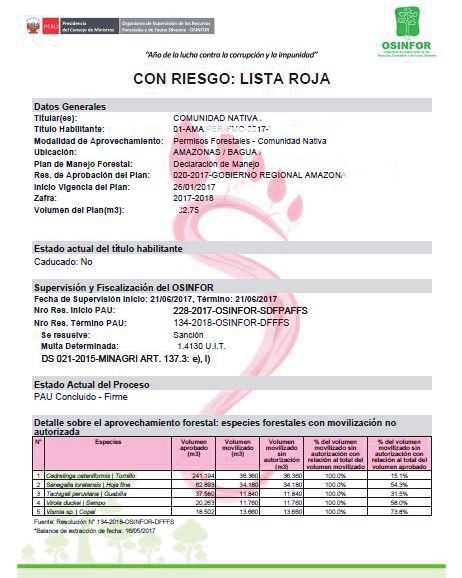
PEELING BACK THE BARK: TIMBER TRACKING AND REGULATIONS CONTROLLING THE
 PERUVIAN FOREST SUPPLY CHAIN
                                                                                                                                      4
  JUNE 2020

Location and Species: Most of Peru’s high-value logging activities occur in the natural primary
forests of the Amazon basin. In 2018, 84% of harvested trees were sourced from just three regions:
Loreto, Ucayali, and Madre de Dios. These regions boast 160 traded wood species. However,
only six native tree speciesii make up almost 50% of the national harvest volume.7

Required Permits Along the Supply Chain
Forest Management Plan licensing: One main function of the Forest Management Plan is to
determine and pre-approve the volume of wood for removal. To access forest resources, all
loggers (e.g. within concessions, indigenous communities, private properties and use contractors)
must submit a Forest Management Plan to request the harvesting licence from a regional forest
office. Loggers are required to hire an independent consultant (or “forest regent”) certified by
SERFOR to develop the plan. Low intensity harvesting operations are exempted from this require-
ment.

The resulting forest management plan license records the following information:

  • Forest management license code
  • Regional (subnational) and local forest office location where the license was granted
  • Date when the license was granted
  • Forest management category and management practices
  • Authorized harvesting plot (and georeferenced vectors)
  • Harvesting season
  • Forest user name or company holder
  • Forest harvesting rights code
  • Name of the forest regent
  • Trees species names and wood volume approved
This information would be incredibly useful for buyers who need to conduct robust due diligence
to demonstrate compliance with the US Lacey Act or EUTR. Unfortunately, the information con-
tained in these license records is difficult to verify and not readily available because they are not
digitized or shared on an open-source system. To obtain copies of the paperwork, interested
parties must submit a request to the local forest office or from the timber supplier, which might
require either some prior knowledge of the timber’s origins or cooperation from the timber sup-
plier.

Harvesting: Once armed with a Forest Management Plan license, loggers can harvest authorized
trees. Harvesters must continually update their balance sheets as they move logs to the forest
log yards. From there, they must move the logs to a primary processing sawmill, which requires
a transport permit bill.

ii. Capinuri (Clarisia biflora), virola (Virola sp.), tornillo (Cedrelinga cateniformis), cumaru (Coumarouna odorata), lupuna (Cho-
risia integrifolia), and cachimbo (Cariniana domesticata).
PEELING BACK THE BARK: TIMBER TRACKING AND REGULATIONS CONTROLLING THE
 PERUVIAN FOREST SUPPLY CHAIN
                                                                                                     5
 JUNE 2020

Sawmills: Sawmills must record the volumes coming in and out of their mills with their own balance
sheets. They must also complete an additional transport permit bill for wood products exiting the
mill or acquire one from a regional forest office. These bills must correspond to an existing log
transport permit bill and use the same forest category licence and forest management licence
codes.

Transport permits: The Forest Law requires all timber transport to be documented. Two docu-
ments are required for both forestry and sawmill industries: 1) a log and wood transport permit
bill (“guías de transporte forestal”) for SERFOR and the regional forest office and 2) a sender
waybill (“guías de remisión”) for the tax authority (SUNAT). Secondary processing industries only
need a sender waybill. Checkpoints run by regional forest offices inspect the loads and their
permits. Documentation can be verified through forest and sawmill operations records (e.g., the
aforementioned balance sheet).8

Logs and wood transport permit bills contain vital information including:

  • The location of the forest plot              • Forest management licence code
  • Authorized transport range dates             • Harvesting plot
  • Forest management category                   • Trees species names and wood volumes
  • Forest category license code                 • Details of the driver and the truck
  • Forest user name or company holder

FIGURE 2   Logs Transport Permit Bill (from the Forest to the Primary Sawmill) and Logs List

                                       Source: GRFFS Madre de Dios, 2017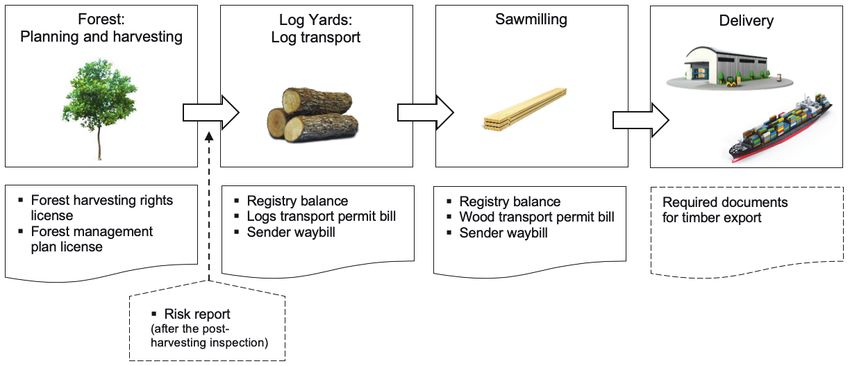
PEELING BACK THE BARK: TIMBER TRACKING AND REGULATIONS CONTROLLING THE
 PERUVIAN FOREST SUPPLY CHAIN
                                                                                                   6
  JUNE 2020

                  Wood Products Transport Permit Bills (from the Primary Sawmill to Next Stage),
    FIGURE 3
                  Checkpoint Stamps at the Back, and Pieces List Appendix

Source: GRFFS Madre de Dios, 2018
PEELING BACK THE BARK: TIMBER TRACKING AND REGULATIONS CONTROLLING THE
PERUVIAN FOREST SUPPLY CHAIN
7
JUNE 2020
Sender Waybill Requested by the Peruvian Tax Authority (SUNAT) Post-Harvesting Audits:
FIGURE 4
Source: SUNAT, 2018
Post-harvesting audits: Once the harvesting season is over, OSINFOR inspects forest
management activities, publishing its findings in the form of either a green or red risk report
(Figure 5). Red (“risky”) reports indicate that the harvesting operations failed to comply with
forest regulations and are thus being sanctioned or suspended. However, OSINFOR forest field
post-harvesting inspections are randomized. Therefore, only a limited number of harvesting
plots – roughly 50% - are inspected each year. While OSINFOR’s audits are not included or
mentioned by SERFOR in the new directives, OSINFOR is the only public organization that
provides an open-source system which allowed buyers to verify that the product has been
legally harvested.
It is worth noting, however, that harvesting plots with CITES species all require a pre-approval
inspection from SERFOR, and then a post-harvesting inspection by OSINFOR.PEELING BACK THE BARK: TIMBER TRACKING AND REGULATIONS CONTROLLING THE
PERUVIAN FOREST SUPPLY CHAIN
8
JUNE 2020
No Risk (Left, Green) and Risky (Right, Red) Reports Emitted After the Post-Harvesting
FIGURE 5
Inspection Performed by the Oversight Body OSINFOR
Source: OSINFOR, 2018
FIGURE 6 Forest Supply Chain Stages and Required Documents to Demonstrate Source LegalityPEELING BACK THE BARK: TIMBER TRACKING AND REGULATIONS CONTROLLING THE
PERUVIAN FOREST SUPPLY CHAIN
9
JUNE 2020
Box 1:
1 OSINFOR’s Available Information Used for Assessing
Potential Risks and Harvesting Compliance
Figure 7 shows a risk analysis tool built upon information from OSINFOR’s statistics database. This
‘traffic light’ matrix can be used to crosscheck timber origin (e.g. region) against land tenure cate-
gory (e.g. forest concessions) and timber species (e.g. ‘virola’).
Risk Rate Analysis Tool for Timber Purchasing Operators Based on OSINFOR
FIGURE 7 Post-Harvesting Inspections Statistics Database Findings by Region, Forest
Category and Timber Species (2018)
Forest Concessions
Non-Timber Forest
Other Categories
Private Forests
Local Forests
Communities
Concessions
Forest
Indigenous
Tree Type
Category
Capiruni
Region
Virola
Loreto
Tornillo
Madre de Dios Capirona
Lupuna
Ucayli
Catahua
Rate Risk Cumaru
High Others
Moderately High
Moderately Low
Low
A field inspection and “no risk” (green) report issued by OSINFOR reduces the risk of illegally harvested
wood entering the market. The procurement policies of key Peruvian timber companies such as Madera-
cre, La Oroza, and Bozovich, already use OSINFOR green reports to assess risk and state that only
products sourced from forests holding an OSINFOR “green” report will be accepted without further in-
vestigation. ⁹, 10, 11
These timber procurement policies also state that logs sourced from uninspected forests can be accept-
ed only after a thorough auditing process, which includes an independent forest field inspection and a
signed commitment that any future OSINFOR report will be shared. Logs harvested from plots with red
risk reports are not accepted at all.
Furthermore, information in OSINFOR risk reports can be cross-checked with the following: (i) the forest
management license code, (ii) the location where the license was granted, (iii) the forest management
practices, (iv) the authorized harvesting plot, (v) the forest operator or holder’s name, (vi) the forest tenure
license code, (vii) the name of the independent forest regent, (viii) the supervision date, (ix) the harvest-
ing season, and (x) the sample of trees inspected.PEELING BACK THE BARK: TIMBER TRACKING AND REGULATIONS CONTROLLING THE
PERUVIAN FOREST SUPPLY CHAIN
10
JUNE 2020
The new enforceable directives: The latest directives from 2019 set the scene and clarify the
supply chain by explaining the differences between primary and secondary processing industries,
for example. They also list the documents and tools available for timber tracking and add new
templates for the operating books to boost accountability.12
The operating books now required for forest log yards and primary processing sawmills have
instated uniform record keeping. This increases accountability by allowing wood volume balance
sheets to be compared against approved forest management plans, harvested log volume, and
wood volume produced.13, 14
The directives cite forest management plans, operating books, and transport permit bills to track
timber. They have also proposed digital tools to manage these documents, which are still being
developed and tested.
Gaps and Challenges
Large scale, formalized wood sector operations have higher running costs than their smaller
counterparts, even after taking bribery payments into account.15 To avoid extra costs and pa-
perwork, it is tempting for large companies to source wood from smaller suppliers operating on
the black market rather than harvesting their own forests.
Lobbying efforts by those opposed to new systems: Lack of technical resources and capac-
ities are common obstacles to the implementation of regional level strategies. However, in this
case, the Peruvian wood industry and regional forest officers are united in opposing the new
operating book system. To date, they have not accepted the argument that the books are an
essential part of the improved controls, reducing the chance of legal and illegal wood mixing.
SERFOR is struggling to implement new operating books because local loggers, sawmills, and
regional forest officers argue that they will increase operating costs. The previous forest oper-
ating book template required tree logs to be measured only once upon arrival at the logging
yards. To improve traceability along the supply chain, the October 2019 directives now require
forest operations to also measure the total stem length of the tree as soon as it is felled, and
again when it is cut into logs. Primary wood processing industries that could use a simple oper-
ating book template must now refer back to the previous forest stage. Secondary industries
must also keep balanced books but are not required to adopt the new operating book template.
To date, opponents to Peru’s new system have not accepted the argument that 1) the operating
books are an essential part of reducing the chance of mixing legal and illegal wood, and 2) EU
operators and buyers with strong procurement policies need the more detailed data required
by the new system to verify legality.PEELING BACK THE BARK: TIMBER TRACKING AND REGULATIONS CONTROLLING THE
PERUVIAN FOREST SUPPLY CHAIN
11
JUNE 2020
Independent control systems: The majority of loggers and sawmills do not have digitized record
keeping and still rely on paper balance sheets. The German International Cooperation (GIZ) has
developed an open-code software called DataBosque (DataForest). It can be used both as a
management and decision-making platform –enabling companies to track wood and monitor
costs, machines, and workers in one place.16 In 2018, GIZ formally transferred the software to
SERFOR and trained its officers on its use. However, as of January 2020, only an estimated 50
logging companies out of 3,651 in Peru use DataBosque. Four primary processing industries are
testing a beta version of DataIndustria (DataIndustry), which is a similar tool for tracking wood at
the sawmilling stage. 17, 18 A few private companies have developed their own tracking software
systems.19
Lack of an open platform system: Peruvian wood buyers need to compare the data found in a
transport permit bill with data from the relevant forest management plan to check whether the
resultant volume falls within the approved range. Information such as product owner, truck licence
plate number, or even the driver’s name is needed to crosscheck information from previous
shipments. Doing so is an important part of ruling out the risk of double counting or fraudulent-
ly reusing documents. Digitized records and open access to all official paperwork would stream-
line this process and increase the chances of exposing and preventing illegal activity.
System under construction: The National Forest and Wildlife Information System (SNIFFS) is a
web-based platform designed to support both forest officer activities and users’ needs. When
complete, SNIFFS can be used to compile, organize, and search for data by categories such as
control, inventories, monitoring, marketing, knowledge management, statistics, forest land records,
regulations’ data base, and outreach. Despite being a required tool, it is still under development.20
The Forest Law states that the legality of timber products depends on all transport permits being
entered into and verified through the control section of SNIFFS – to be implemented at an as
yet unspecified point in the future.
OSINFOR is currently the only public organization that provides an open-source system capable
of verifying that a product has been legally harvested. However, its use is limited to forest har-
vesting operations and cannot be applied to the entire supply chain.
Limitations of OSINFOR: The problem remains that, until the new operating book system is
universally adopted, and the associated tools are ready to use, the old documentation system
does not prove the source of timber loads to a satisfactory standard when compared with other
widely-accepted international timber legality standards. Neither SERFOR nor the regional forest
offices operate an open-source system through which interested parties can verify documents
and demonstrate the legality of a Peruvian timber product. Thus far, OSINFOR’s post-harvesting
inspection reports are the most reliable and useful proof of compliance with national and inter-
national timber trade regulations.
Analysis of the OSINFOR database shows that, in 2018, the agency carried out a total of 515
inspections in Loreto, Madre de Dios, and Ucayali. This inspection rate represents only 40% of
the operational management plans issued in these regions in 2018 (1,277 total). These 2018 in-
spections uncovered 341,538.50 cubic meters of illegally logged wood, which was 99.1% of thePEELING BACK THE BARK: TIMBER TRACKING AND REGULATIONS CONTROLLING THE
PERUVIAN FOREST SUPPLY CHAIN
12
JUNE 2020
total national illegal volume found by OSINFOR that year. Forty-three “risky” (red) forest man-
agement plans were the result of regional officials signing off on management plans that includ-
ed “ghost” trees (i.e. trees that did not really exist).
Timber purchasing agents, operators, and enforcement officials in regulated markets can use
the information within OSINFOR’s post-harvesting inspections to assess potential risks, but not
to prove that wood was legally sourced under any of SERFOR’s enforceable directives. In addi-
tion, OSINFOR’s post-harvesting inspections focus exclusively on forest management and har-
vesting and do not verify subsequent supply chain stages.
Insufficient protocols for wood control processes: All key governmental stakeholders in the
timber supply chain play a role in controlling forest resources and products. However, the new
timber control directives do not designate specific role(s) to each. This lack of clarity could prove
problematic when, for example, wood loads must be transported along trans-regional roads
because control protocols and technical information vary between regional checkpoints. In
extreme cases where protocols are absent, there is greater risk of contradictory behaviours or
responses from regional checkpoint officers. To address this, SERFOR recently announced a
forthcoming public consultation on the proposed protocol for the terrestrial transport of timber.21
Poor communication between government bodies: Integrated management systems, if well
designed and implemented properly could support improved communication and cost-efficien-
cy for both the private sector and forest regulatory bodies. For example, a national decree
currently states that regional forest offices must provide OSINFOR with information about forest
category licenses and forest management license codes no later than 15 days after approval.
22 Despite this regulation, 85% of that information was delayed in 2018. Information from three
regions, Loreto, Madre de Dios, and Ucayali, accounted for 90% of that delay. Such delays
prevent timely post-harvesting inspections by OSINFOR, which increases the risk of illegal ac-
tivity going undetected.23
No system to compile transport bills: In theory, the new directives and application of SNIFFS
as a management tool should make it possible to trace timber products to the exact location of
felling using the transport permit bill alone. Trees are given a unique code in each forest man-
agement plan, which should appear in the bill.
However, transport permit bills are still handwritten, increasing both the margin of error and risk
of forgery (Figure 2 and Figure 3) and making it nearly impossible to authenticate. Some trans-
port permit bills are printed by regional forest offices (Figure 8), which makes them official
documents for proof for transport. However, the lack of a secure open-source database through
which these can be filed and examined makes it difficult to verify legitimacy of these documents
(i.e. access to a printer makes document fraud/forgery quite simple).PEELING BACK THE BARK: TIMBER TRACKING AND REGULATIONS CONTROLLING THE
PERUVIAN FOREST SUPPLY CHAIN
13
JUNE 2020
FIGURE 8 Wood Products Transport Permit Bill Printed out by the Ucayali Region Forestry Office
Source: DGFFS Pucallpa, 2019
Instead, those attempting to conduct due diligence must crosscheck transport permit bills with
documents from earlier stages of the supply chain, such as forest management plan licenses,
OSINFOR reports (if existent), and registry balance sheets (only if provided by the supplier).
However, crosschecking documents in this manner (if tracking them all down is even possible
across regions and offices) does not provide information sufficient to prove legality (i.e. can only
prove wider area from which the timber originates rather than felling location of tree).PEELING BACK THE BARK: TIMBER TRACKING AND REGULATIONS CONTROLLING THE
PERUVIAN FOREST SUPPLY CHAIN
14
JUNE 2020
Centralized platform on SNIFFS website not yet in full use: SERFOR is still designing and
testing a powerful centralized platform (‘módulo de control’, or, control module) to manage
transport permit bills on the SNIFFS website. Handwritten documents will be transferred to the
digital system, where agents and operators will be able to verify all the information needed to
comply with regulations and their own procurement policies. Currently, the control module demo
allows users to consult Forest Management Plans and track wood; it even includes photographs
of the trucks being inspected along road checkpoints.
Paired with OSINFOR’s database, SERFOR’s system will enable due diligence to be performed
on all forest plots with a risk report. However, due to cost and time constraints, as well as push-
back from industry and regional forest departments, only 15 of the total 1420 valid forest man-
agement plans have been incorporated into the new system. 24, 25
Tools guidance for implementing new directives not yet available: Many of the tools needed
to implement the latest directives and enable rigorous tracking are yet to be released and have
no clear timescale for implementation. SERFOR has developed paper-based templates for the
new operating books which were rolled out in March 2020 for forest operations and August for
primary sawmills. They have also developed training sessions to help transition industry to the
new system. However, there is no clear guidance on how to conduct wood product verification
or where to find appropriate tools for timber tracking. Instead, SERFOR suggests that the re-
sponsibility for implementing the new directives will be transferred to one of its offices at an
unspecified time in the future.
These cracks in the system are made increasingly evident by the many requests for additional
information and loads still being refused despite due diligence being conducted by agents and
operators. Buyers have shared the following main grievances: (i) missing, incomplete, or incorrect
documents, including those without stamps or signatures, (ii) information incoherence (e.g. dif-
ferent licences codes between documents or unrealistic yield factors), (iii) double counting
balances (e.g. same transport bill presented several times to prove different shipments), and (iv)
careless confessions (e.g. mixing documents and loads, by mistake or otherwise).26
Closing Gaps and Tackling Challenges
Stakeholders and Buyers: Governance bodies with overlapping functions coupled with poor
communication and the absence of open access record keeping leaves the Peruvian timber
industry with a literal paper trail that is rife with opportunities for forgery, corruption, and wider
illegal activity.
Private companies that wish to continue sourcing from the Peruvian timber industry should
collaborate with government organizations and timber trade federations to support and encour-
age the development of a robust tracking system.PEELING BACK THE BARK: TIMBER TRACKING AND REGULATIONS CONTROLLING THE
PERUVIAN FOREST SUPPLY CHAIN
15
JUNE 2020
Interested Parties should have a thorough understanding of timber source risk categories and
relevant timber tracking systems, as well as an idea of whether suppliers are trained, implement-
ing the new operation books, and using SNIFFS to track the transport permit bills registry.
If a timber supplier or agent is not willing to be scrutinized, that should be a red flag. To avoid
this situation in the future, companies should: 1) try to stay away from products with long and
complex supply chains (e.g. those involving numerous unrelated small forest plots and sawmills)
and 2) avoid suppliers who hold a large area of well-managed forests with low harvesting rates
– they are likely sourcing from smaller suppliers located in different regions.
Instating more complex measures requires an adjustment, but it will also increase the industry’s
ability to track timber and uncover illegal activity. For example, for some species and products
it is possible to estimate tree population locations, dispersion, and harvesting and sawmilling
yield rate factors can all be estimated. Operators and enforcement offices can then compare
these estimates to supplier figures, either by requesting documents or by selecting sample
documents from previous loads and calculating their own yield factors. If reliable data is not
available, the next best data source or comparable data should be used as a proxy. For example,
Peru’s southern neighbouring country, Bolivia, has set a proxy legal sawmilling yield factor of
54.59% when processing Dipteryx spp.27
Government and Enforcement: SERFOR must focus its efforts and limited public funding re-
sources on fixing and enforcing the timber control system. Until enforcement is strengthened,
other interventions will provide little benefit.
It is also critical to implement a more rigorous tracking system that can be verified by enforcement
authorities and buyers but cannot be altered for unauthorized purposes. A few such systems
have been designed for use in Peru, supported by donors like USAID and GIZ, but are not yet
operational (e.g. formal implementation of SNIFFS is yet to occur).
Competent authorities and enforcement agencies should collaborate with their Peruvian coun-
terparts, such as SERFOR, and seek updated information on national verification tools on a
regular basis. Cross-checking can be strengthened by improving inter-institutional relationships,
sharing experiences with shipment enforcement from Peru and identifying gaps in the system.
A shift in culture and perception needs to occur in both Peruvian government and private sectors
– boosting the country’s timber industry will require stakeholders to begin seeing the new control
system as an opportunity. More specifically, that the new measures are a market incentive to
attract new green investments in the industry, thereby reducing risks and fostering a favorable
investment environment.
More seamless collaboration between Peruvian and international stakeholders will be no small
task, but is ultimately essential to the sustainable growth of the timber industry and to reducing
the quantity of illegal timber reaching global markets.PEELING BACK THE BARK: TIMBER TRACKING AND REGULATIONS CONTROLLING THE
PERUVIAN FOREST SUPPLY CHAIN
16
JUNE 2020
APPENDIX
Checklist and Quick Guidance for Assessing Documents and Data when
Sourcing Timber from Peru
Request a chart describing the chain of custody and recording all relevant data. This chart must
show all sources at all stages of the supply chain. Also, request hard copies of the following doc-
uments at a minimum:
• Forest management plan license granted by the regional or local forest office (“resolu
ción de aprobación del plan de manejo”)
• Risk report from the oversight body (OSINFOR)
• Logs transport permit bills from the forest to the sawmill (“guía de transporte forestal”
de trozas)
• Sawmill stock-taking (input and output), registry balances or operating books.
• Wood transport permit bills from the sawmill to the next stage (“guía de transporte f
orestal” de productos)
• Sender waybills (“guías de remisión”)
The following chart shows the information that should be present in each document, whether it
requires crosschecking, and how to do so.PEELING BACK THE BARK: TIMBER TRACKING AND REGULATIONS CONTROLLING THE
PERUVIAN FOREST SUPPLY CHAIN
17
JUNE 2020
FIGURE 10 Documents and Data Checklist
Forest Management OSINFOR Transport Permit Bill Sawmill Transport Permit Bill Sender
Plan License Risk Report (Logs) Record Balances (Wood) Waybills
Forest harvesting right code
X O O O
(“código del título”)
Name of forest user or hold-
X O O O
er (“titular”)
Forest management license
code (“Resolución del plan X O O O
de manejo”)
Date license was granted X O
Location X O O X
Forest management practic-
es (“modalidad de aprove- X O O O
chamiento”)
Harvesting plot authorized
X O O O
(“numero de PO o PC”)
Harvesting season (“zafra”) X O
Name of forest regent (“re-
X O
gente forestal”)
Trees species names and
X
volume authorized
Post-harvesting supervision X
date
Audited tree names X
Authorized transport range
dates X XPEELING BACK THE BARK: TIMBER TRACKING AND REGULATIONS CONTROLLING THE
PERUVIAN FOREST SUPPLY CHAIN
18
JUNE 2020
OSINFOR
Forest Management Transport Permit Bill Sawmill Transport Permit Bill Sender
Risk Report
Plan License (Logs) Record Balances (Wood) Waybills
Product owner X O X X
Truck driver information X X O
Tree species name and vol-
X O X O
umes transported
Final destination of goods
(customer name and ware- X O
house address)
*Verify whether the log
volume falls under the *Compare yield rates.
authorized range. The wood volume should
*Check and keep records match the sawmill output
Approved harvesting
Crosscheck information on the product owner stocktaking.
rights, licenses, and forest
against that recorded in (“propietario del pro- *Check and keep records
management licenses
OSINFOR risk reports. ducto”) and truck driver of the product owner and
must be registered in the
Available here: (“transportista”) truck driver.
Additional necessary steps: oversight body database.
https://observatorio.osin- *Check and keep records *Check and keep records
Available here:
for.gob.pe/Observatorio/ of the log list (“lista de of the products list (“lista
https://observatorio.osin-
Home/Menu trozas”). de piezas”).
for.gob.pe/HistorialTH/
*Crosscheck and compare *Crosscheck with previous
with previous loads (if loads (if any) to avoid
any) to avoid double double counting.
counting.
X Data is present in, and originates from, this document.
O Data is present in the document but should be crosschecked with previously received documents.
Information contained within document (such as dates and volumes) should be cross-checked for inconsis-
tencies (forgeries and fraudulence, for example)PEELING BACK THE BARK: TIMBER TRACKING AND REGULATIONS CONTROLLING THE
PERUVIAN FOREST SUPPLY CHAIN
19
JUNE 2020
Additional Recommendations and Sources of Information:
• If the Peruvian wood supplier is already registered and using the national timber
tracking system (“registro de guías”), most of the information will be available here:
http://web.serfor.gob.pe/SNIFFSs/consultas.do. Request the registration code from
your supplier (“número de registro”).
• A record of authorized forest regents can be accessed here: http://dir.serfor.gob.pe/
index.html. Look for “registros nacionales” and then “registro de regentes”.
• Authorized private companies can be found here: https://e-consultaruc.sunat.gob.pe/
cl-ti-itmrconsruc/frameCriterioBusqueda.jsp. Query the system by tax license code
(“número de RUC”), personal ID, or name. Check for “activo” (active) and “habido”
(existing).
• If buying Forest Stewardship Council (FSC) products, check that their FSC license is
still valid here: https://info.fsc.org/PEELING BACK THE BARK: TIMBER TRACKING AND REGULATIONS CONTROLLING THE
PERUVIAN FOREST SUPPLY CHAIN
20
JUNE 2020
END NOTES
•
1
Apoyo Consultoría (2018): Evaluación Sectorial de Exposición a los Riesgos de Lavado de
Activos y Financiamiento del Terrorismo del Sector Maderero en el Perú. Superintendencia de
Banca, Seguros y AFP y Cooperación Alemana para el Desarrollo (GIZ) en el Perú. Available at:
https://www.sbs.gob.pe/prevencion-de-lavado-activos/Publicaciones/Estudios-Tecnicos/
Estudios-de-Analisis-De-Riesgos
•
2
Rodriguez y Prins (2010): Análisis económico sobre la incapacidad de recaudación tributaria
del estado peruano frente al sector forestal.
•
3
Queried at: http://www.adexdatatrade.com/
•
4
SERFOR (2015): Ley Forestal y de Fauna Silvestre N° 29763 y sus Reglamentos.
•
5
Congreso de la República (2002): Ley Orgánica de Gobiernos Regionales N° 27867
•
6
Presidencia de la República (2008): Decreto Legislativo N° 1085 passing the national decree
for the establishment of the OSINFOR.
•
7
SERFOR (2019): Perú Forestal en Números 2018.
•
8
SERFOR (2015): Ley Forestal y de Fauna Silvestre N°29763 y sus Reglamentos, Titulo XXV:
Transporte, transformación, y comercialización de productos y subproductos forestales.
•
9
Maderera Bozovich S.A.C. (2016): Política de Compras Responsables: Sistema de Gestión de
Debida Diligencia. Available at: http://www.bozovich.com/wp-content/uploads/2017/02/
MBS-Politica_de_Compras_Responsables.pdf
•
10
Maderacre (2016): Protocolo de Compras Responsables de Madera. Available at: http://
maderacre.com/wp-content/uploads/2014/06/Protocolo-de-Compras-Responsables-CMRA.pdf
•
11
La Oroza (2018): Política de Abastecimiento Responsable. Available at: http://laoroza.pe/
wp-content/uploads/B2a-Pol%C3%ADtica-de-Abastecimiento-Responsable-La-Oroza-Es-
pa%C3%B1ol-2018.pdf
•
12
SERFOR (2019): Resolución de Dirección Ejecutiva N° 230-2019-MINAGRI-SERFOR-DE
passing the technical document named “tracking of timber forest sources”.
•
13
SERFOR (2019): Resolución de Dirección Ejecutiva N° 264-2019-MINAGRI-SERFOR-DE
passing the “operation books” updated template for forest operators.
•
14
SERFOR (2019): Resolución de Dirección Ejecutiva N° 265-2019-MINAGRI-SERFOR-DE
passing the “operation books” updated template for primary processing sawmills.
•
15
Gretzinger (2016): Financiamiento para el aprovechamiento forestal y la produccion de
madera en la Amazonia peruana. Un análisis de las estructuras de costos, los flujos de caja y
el requerimiento de capital. Programa Contribucion a las Metas Ambientales del Peru (ProAm-
biente II). Cooperacion Alemana para el Desarrollo (GIZ).
•
16
Pariona, W. (2017): Importancia de la trazabilidad en la gestión del aprovechamiento forestal
del Perú. Available at : https://www.serfor.gob.pe/wp-content/uploads/2017/10/08-William-Pario-
na.pdf
•
17
ITP/CITEmadera (2018): La Industria de la Madera en el Perú. Identificación de las barreras y
oportunidades para el comercio interno de productos responsables de madera, provenientes
de fuentes sostenibles y legales en las MIPYMES del Perú. FAO, ITP – CITEmadera. Available
at: http://www.fao.org/documents/card/es/c/I8335ES/PEELING BACK THE BARK: TIMBER TRACKING AND REGULATIONS CONTROLLING THE
PERUVIAN FOREST SUPPLY CHAIN
21
JUNE 2020
•
18
Hotz, H. (2019): La tecnología contribuye a combatir la tala ilegal en el Perú. Sector Network.
GADeR-ALC. Cooperación Alemana para el Desarrollo (GIZ). Available at: https://energypedia.
info/images/a/ac/P-Peru-Tecnologia-tala.pdf
•
19
SERFOR (2017): Seminario Internacional: Herramientas de gestión y comercio responsable
de madera. (Seminario Internacional: Herramienta de gestión y comercio responsable de la
madera). Available at: http://repositorio.serfor.gob.pe/handle/SERFOR/692 (Seminario Interna-
cional: Herramienta de gestión y comercio responsable de la madera).
•
20
https://www.serfor.gob.pe/SNIFFSs
•
21
SERFOR (2020): Resolución de Dirección Ejecutiva N° 038-2020-MINAGRI-SERFOR-DE
releasing the “protocol for timber control” to public consultation.
•
22
Presidencia de la República (2017): Decreto Legislativo N° 1319 passing the national decree
to promote the “legal timber trade”.
•
23
Queried at: https://observatorio.osinfor.gob.pe/Estadisticas/Home/Reportes/11
•
24
Queried at: http://web.serfor.gob.pe/SNIFFSs/consultas.do (a record code of the transport
permit bill is required for inquiries).
•
25
SERFOR (2018): Módulo de Control del Sistema Nacional de Información Forestal y de Fauna
Silvestre (MC’SNIFFSS). Available at: https://globaltimbertrackingnetwork.org/wp-content/
uploads/2019/01/3.1.-MC-SNIFFSS-ER-GTF_GTTN.pdf
•
26
Forest Trends (2019): Applying Due Diligence and Risk Management: The case of Peruvian
timber shipments. Method and findings. Asia Pacific TREE meeting. Singapore 2019.
•
27
Autoridad de Fiscalizaci[on y Control Social de Bosques y Tierra (2016): Resolucion RA-ABT-
065-2016. Estandarizacion de promedios de rendimientos de aserrios de las principales
especies comerciales de la Macro-Region Tropico Humedo. Available at: http://abt.gob.bo/
images/stories/formularios-reglamentos/2016/27-09/RA-ABT-065-2016_opt.pdf
Forest Trends works to conserve forests and other ecosystems through the creation and wide adoption with support
of a broad range of environmental finance, markets and other payment and incentive mechanisms. from:
This brief was released by Forest Trends’ Forest Policy, Trade, and Finance program, which seeks to
create markets for legal forest products while supporting parallel transformations away from timber
and other commodities sourced illegally and unsustainably from forest areas.
Other policy and information briefs can be found at www.forest-trends.org.You can also read


