Plagiarism Policies in Germany Prof. Dr. Debora Weber-Wulff - The effective anti-plagiarism policy. The models of the institutional solutions ...
←
→
Page content transcription
If your browser does not render page correctly, please read the page content below

fotolia, Gerhard Seybert

Plagiarism Policies in Germany

Prof. Dr. Debora Weber-Wulff
The effective anti-plagiarism policy.
The models of the institutional solutions, Warsaw
2012-05-09
Who am I?

    • Professor for Media and Computing at the
      Hochschule für Technik und Wirtschaft Berlin
    • Doctorate in theoretical computer science, but
      major research areas in eLearning and Web 2.0
    • Member of German “Computing & Ethics”
      working group
    • Plagiarism researcher since 2002

2 / 33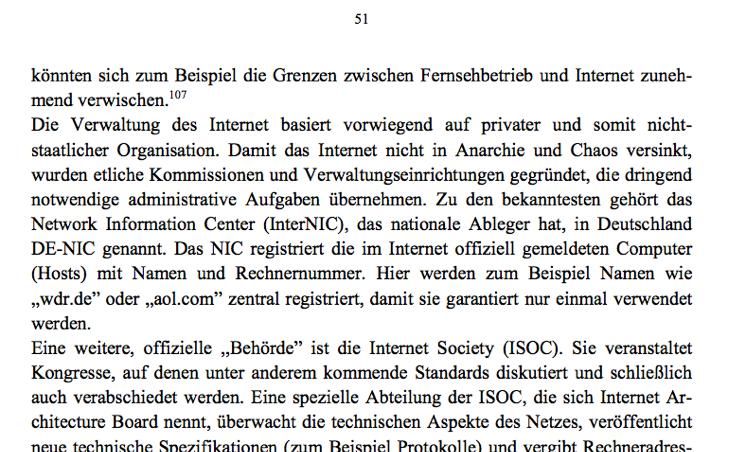
But mostly I am known as the “Huntress”

3 / 33
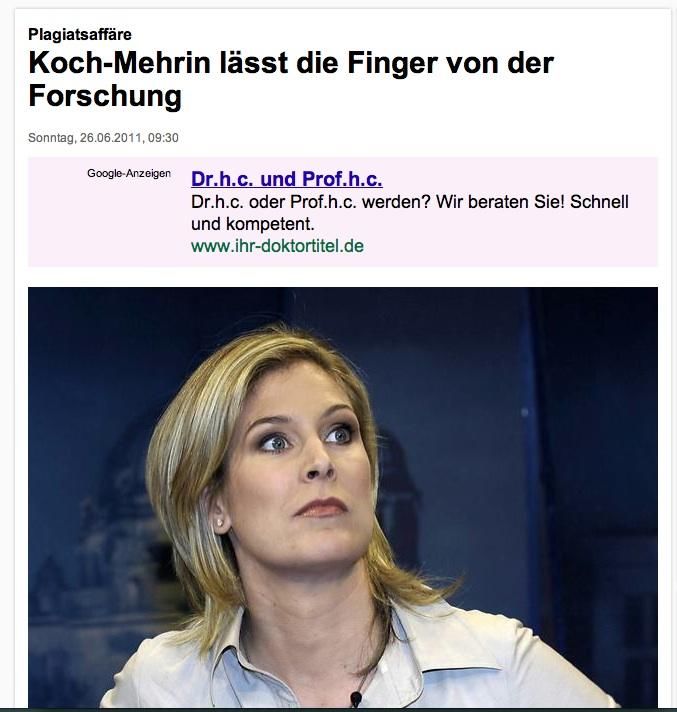
Germany has a Plagiarism Problem

    • Not just with students!
    • Scientific misconduct is rampant.

                                       Bundesarchiv, B 145 Bild-F079100-0022 / CC-BY-SA

4 / 33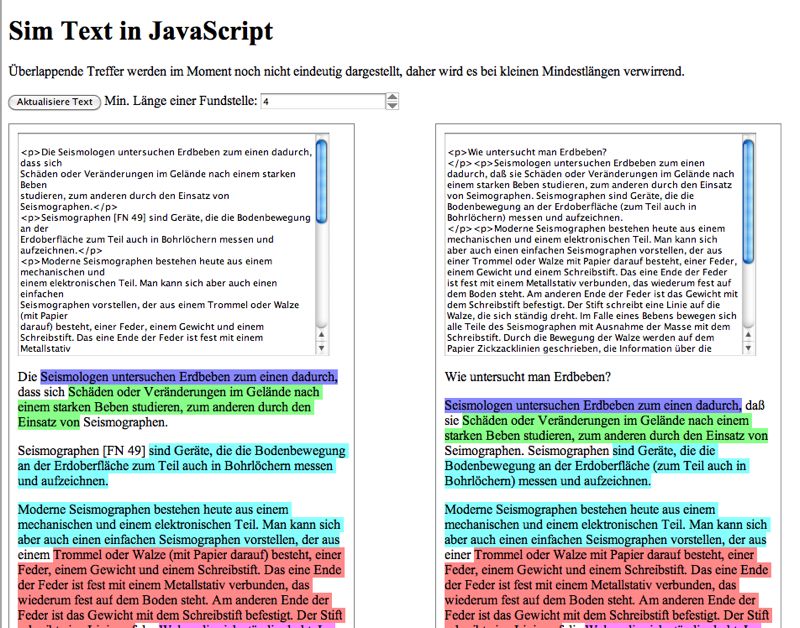
Many dissertations have been found
to be plagiarisms

5 / 33
Tertiary Education in Germany

     • According to the HRK, there are 387 officially
       recognized institutions of higher education in 165
       towns and cities throughout Germany.
     • More than 16,000 degree programs are offered at
       universities, universities of applied sciences,
       (Fachhochschulen) and colleges of
       art, music, or film.
     • Only 3% of all students attend a
       private institution
       (they charge tuition).

                                    DeStatis, CC-BY-SA, 2006

6 / 33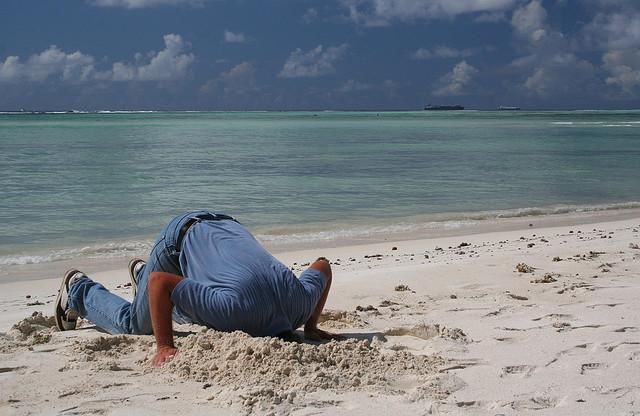
Responsibility for Education and Research

    • In Germany, education is the responsibility of the
      states (Länder) and part of their constitutional
      sovereignty (Kulturhoheit der Länder).
    • There are 16 states, each has a Minister of
      Culture / Education / Research (Kultusminister).
    • Berlin has two - a Senator for Education and a
      different Senator for Research
    • The Kultusministerkonferenz is a coordinating body.
      This has 16 subcommittees, numerous working
      groups, and 5 commissioners

7 / 33
More organizations

    • The DFG (Deutsche Forschungsgemeinschaft) is a
      research funding organization
    • There are more: Fraunhofer-Gesellschaft, Leibniz-
      Gemeinschaft and the Stiftung Preußischer
      Kulturbesitz
    • The Allianz der Wissenschaftsorganisationen : Alexander
         von Humboldt-Stiftung, der Deutsche Akademische Austauschdienst,
         die Deutsche Akademie der Naturforscher Leopoldina, die Deutsche
         Forschungsgemeinschaft, die Fraunhofer-Gesellschaft, die Helmholtz-
         Gemeinschaft, die Hochschulrektorenkonferenz, die Leibniz-
         Gemeinschaft, die Max-Planck-Gesellschaft und der Wissenschaftsrat.

8 / 33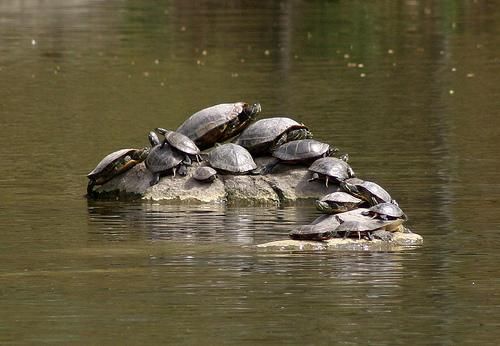
German Policy on Good Scientific Practice
    up until 1998

                                       Flickr, CC-BY-SA, tropical.pete, 2008

9 / 33
Hermann / Brach

     • Cancer researchers Friedhelm Hermann
       and Marion Brach, from the University of
       Ulm manipulated and fabricated data for many
       years.
     • The authors Marco Finetti and Armin Himmelrath
       detailed this case and others in the book
       Der Sündenfall. (“The Fall from Grace”)
     • They detail how the financing of science and the
       acceptance of scientific endeavor in society
       needed visible mechanisms for good scientific
       practice.

10 / 33
DFG Empfehlungen der Kommission "Selbstkontrolle in der Wissenschaft", Jan 1998 • “Wissenschaftliche Arbeit beruht auf Grundprinzipien, die in allen Ländern und in allen wissenschaftlichen Disziplinen gleich sind. Allen voran steht die Ehrlichkeit gegenüber sich selbst und anderen. Sie ist zugleich ethische Norm und Grundlage der von Disziplin zu Disziplin verschiedenen Regeln wissenschaftlicher Professionalität, d.h. guter wissenschaftlicher Praxis. ... 11 / 33
DFG Empfehlungen der Kommission "Selbstkontrolle in der
 Wissenschaft", Jan 1998

   • ... Sie den Studierenden und
     dem wissenschaftlichen
     Nachwuchs zu vermitteln,
     gehört zu den Kernaufgaben
     der Hochschulen. Die
     Voraussetzungen für ihre
     Geltung und Anwendung in der
     Praxis zu sichern, ist eine
     Kernaufgabe der
     Selbstverwaltung der
     Wissenschaft.”
                                      Flickr, cc-by-nc, s m johnson, 2005

12 / 33
DFG Recommendations -
General Principles of good scientific practice
• Use state-of-the-art practice
• Document your results
• Consequently doubt all of your results
• Strict honesty with respect to the contributions
of partners, competitors, and previous work
• Mutual vetting of results
13 / 33DFG Recommendations -
General Principles of good scientific practice
• Cultivate fitting organizational structures for
research groups with explicit responsibility of the
leadership for good scientific practice
• Good mentoring of doctoral students
• Quality before quantity in peer review
• Keep primary data for 10 years
14 / 33What to do?
• What should a
person do who
discovers a
plagiarism?
• What if the
plagiarist is a
mentor or a
colleague or an
important
researcher?
Flickr, cc-by-nc-sa, TheMM,
2006
15 / 33DFG Procedural Rules
• A documentation of the plagiarism should be
made, preferably on paper with a side-by-side
comparison.
• The ombud for good scientific practice at the
university is informed.
• The ombud investigates the case, collecting
evidence and giving the accused a chance to
defend themselves.
• Everything is kept confidential
• The ombud may recommend sanctions
16 / 33Ombudsmann für die Wissenschaft
• The DFG has set up an ombud body
• They have developed a curriculum “Good
Scientific Practice” for Courses in Science and
Medicine
• They look into cases of scientific misconduct
• Open for all scientists, not just DFG researchers
17 / 33Ombudsmann Report 2010
• 52 submissions
• 18 cases were opened + 6 cases left from 2009
• 11 were completed, 2 referred to other bodies
• 29 cases from previous years continued:
Year Carried over Completed
2009 14 11
2008 9 7
2007 4 3
2006 2 2
18 / 33Ombudsmann Report 2010
• 12 cases in medicine
• 8 cases in natural sciences
• 3 cases in humanities
• 1 case in business studies
• Major problems: Authorship questions /
“honorary authorship”, research restrictions,
mentoring of doctoral dissertations, cooking
data, review misconduct
• Only three of the cases were plagiarism (this
contrasts sharply with the VroniPlag experience)
19 / 33Ombudsmann Report 2010
• Many universities still don’t list their ombuds
people on their homepages!
• Name change so that it is clear that the body is
for all science in Germany, not just for DFG
research.
20 / 33But still: Flickr, CC-BY-NC-SA, Floksor, 2010
• Many people don’t know
about the ombud.
• The ombuds don’t
generally have sufficient
staff.
• They don’t have very
sharp sanctions if they do
determine that scientific
misconduct has taken
place.
21 / 33At the individual university level
• Plagiarism seems to run rampant at student level
• There is plagiarism on the degree thesis
(Bachelor and Master) level
• There is plagiarism in
doctoral dissertations
• There is plagiarism in
habilitations
• Professors have been found
to have plagiarized
• And very little is done!
Flickr, CC-BY-NC, johncudw2399, 2009
22 / 33Current solutions?
• Universities are insisting on sworn oaths that the
student has used good scientific practice.
• A few universities are offering writing courses.
• Many are purchasing software, either for
occasional use or for testing everything.
Problem: The software doesn’t work very well.
23 / 33Collaborative Plagiarism Detection 24 / 33
Chatzimarkakis’ Dissertation

25 / 33
Looking for sources traditionally

     •    German National Library
     •    Periodicals database
     •    OPACs
     •    Google Books
     •    (Interlibrary) loans
     •    One’s own collection of
          books?

26 / 33
VroniPlag Tools
• http://de.vroniplag.wikia.com/wiki/VroniPlag_Wi
ki:Tools
• WikiBlame
• Sim-texter
• Report generator
27 / 33Is there more?
• If there is a possibility of more, an entire
chapter might be scanned.
• OCR recognition
• sim_text
• If a fragment is found,
it is documented
Bundesarchiv, Bild 183-28554 -0007/
Heinz Funck / CC-BY-SA
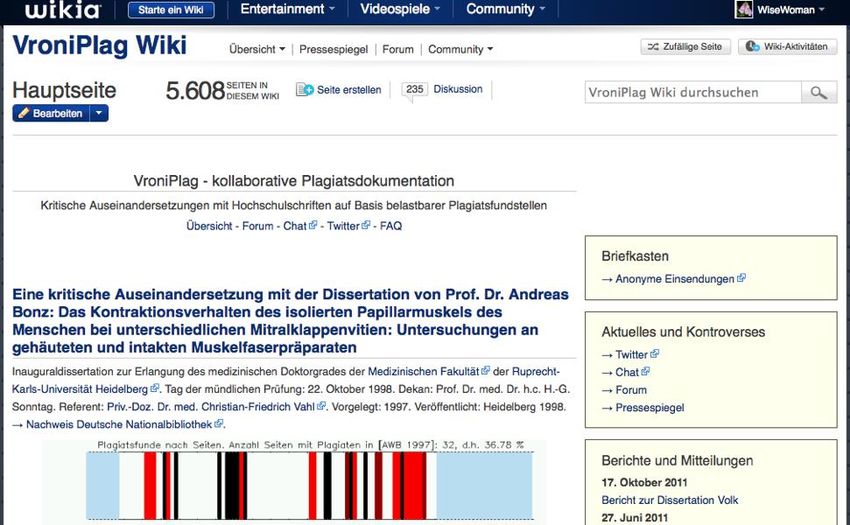
28 / 33Home page with title information 29 / 33
The universities are informed

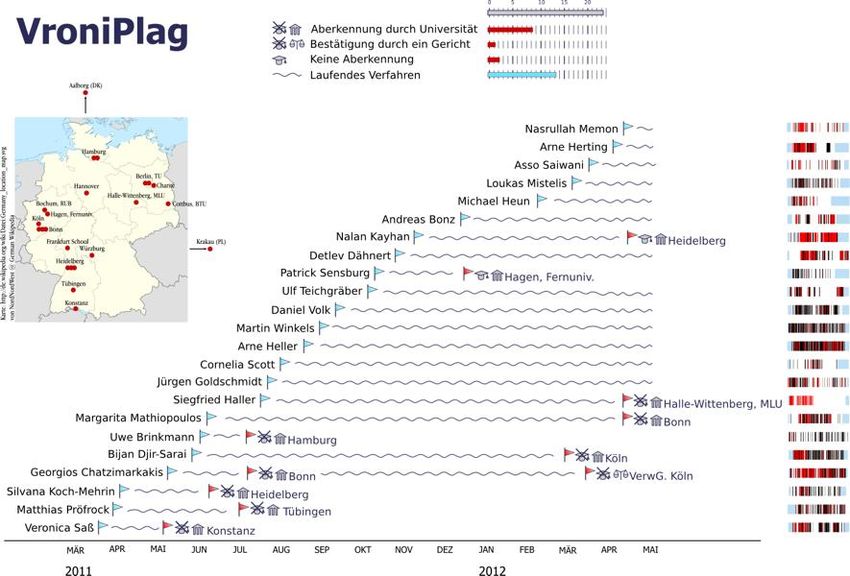
30 / 33
And the work continues

                                   CC-BY-SA, MarcusB / VroniPlag, 2012

31 / 33
What should be done?
• There needs to be a national plagiarism
information center that advises the universities.
• Dissertations and scientific papers need to be
published as open access material, to make it
easier for software to assist in locating possible
sources
• There needs to be a control sample taken from
each university and each department to
determine how bad the situation is and to
suggest remedies.
32 / 33Thank you for your attention!
• Home page:
http://www.f4.htw-berlin.de/
~weberwu/
c. 2011, HTW Berlin /
• Plagiarism blog (in English): Jennifer Weber
http://copy-shake-paste.blogspot.com/
33 / 33You can also read


