Planning healthy-weight environments- a TCPA reuniting health with planning project
←
→
Page content transcription
If your browser does not render page correctly, please read the page content below
planning healthy-
weight environments –
a TCPA reuniting health
with planning project

Andrew Ross and Michael Chang
planning healthy-weight environments
                                                                                                                                                                    a TCPA reuniting health with planning project

             Town and Country Planning Association
                                                                                            planning healthy-weight
             17 Carlton House Terrace, London SW1Y 5AS
             +44 (0)20 7930 8903    tcpa@tcpa.org.uk   www.tcpa.org.uk                      environments –
Planning Healthy-Weight Environments – A TCPA Reuniting Health with Planning Project        a TCPA reuniting health with
By Andrew Ross and Michael Chang
Published by the Town and Country Planning Association                                      planning project
December 2014

The Reuniting Health with Planning project webpages are at

                                                                                            foreword
http://www.tcpa.org.uk/pages/health.html

Printed with vegetable-based inks on chlorine-free paper from sustainably managed sources
by RAP Spiderweb Ltd, Oldham

                                                                                            Obesity is a public health crisis. Unless we improve on current trends, we estimate that one in three people in
Supported by                                                                                England will be obese by 2034 and one in ten will develop type 2 diabetes. The implications of these projections
                                                                                            are daunting: obesity on this scale is not only a threat to the mental and physical health of millions of individuals,
                                                                                            but a burden on overstretched services, with potentially profound social and economic consequences.

                                                                                            Turning the tide on this epidemic is a priority. Public Health England has recently set out its commitment to
                                                                                            addressing obesity, with specific actions ranging from campaigns to promote healthier eating and combat
                                                                                            inactivity, to supporting local authorities in delivering whole-systems approaches to reduce obesity. But we do
                                                                                            so in the certain knowledge that a problem of such scale, complexity and urgency is going to require a range of
                                                                                            responses, as all of us – from local to national stakeholders – take action and share our learning. It is now widely
                                                                                            acknowledged that the unhealthy habits and lifestyles that contribute to obesity do not exist in a vacuum. They
                                                                                            are shaped by a web of interrelated factors – by our upbringing, how and where we live (our homes, our
                                                                                            neighbourhoods), our jobs, and our social networks, to name just a few key influences. Attempts to reduce
                                                                                            obesity cannot rely on changing individual habits, one person at a time, without taking into account the power
                                                                                            of the environment to entrench old habits or support new ones.

                                                                                            We have a lot to learn about how to create environments which help to maintain healthy weights, and more to
                                                                                            learn about how we can turn this new knowledge into action. This is new territory for all of us – from public
                                                                                            health to local government. It will require new ways of working together and effective partnerships across
                                                                                            different sectors and different professions.

                                                                                            Such collaborations are not simple things to get right. But they can be made easier by resources such as
                                                                                            Planning Healthy-Weight Environments. This document includes a resource that can help to create a common
                                                                                            understanding of what the evidence shows and what elements to focus on in order to bring about a healthy-
                                                                                            weight environment – elements such as encouraging active travel, improving access to green open spaces,
                                                                                            helping people to feel connected and safe in their neighbourhoods, and supporting people to eat more healthily.
                                                                                            Crucially, the resource also sets out the range of opportunities that exist to influence the planning process and
                                                                                            planning policy-making in the interests of reducing obesity. These range from Health Impact Assessments to the
                                                                                            role of Joint Health and Wellbeing Strategies. These are not just practical opportunities to enable a particular
                                                                                            course of action; they are also strategic opportunities to build a shared ambition, across local communities, to
                                                                                            take control of one of the biggest health risks that our generation, and future generations, face. By doing these
                                                                                            things, we will also improve general health and wellbeing in all sorts of other ways that extend far beyond the
                                                                                            immediate focus of reducing obesity.

                                                                                            I am delighted to recommend this document to the broad constituency of readers who will be able to use the
                                                                                            insights and resources it contains to improve the health and wellbeing of their local populations.

                                                                                            Kevin Fenton
                                                                                            National Director of Health and Wellbeing, Public Health England

                                                                                                                                                      1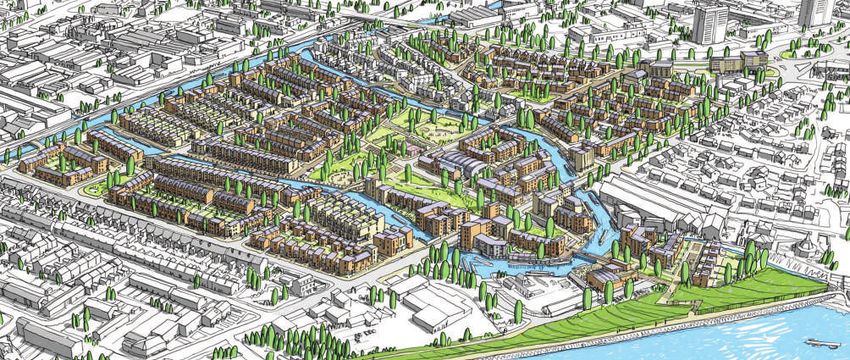
planning healthy-weight environments                                                                                                                                        planning healthy-weight environments
a TCPA reuniting health with planning project                                                                                                                         a TCPA reuniting health with planning project

                                                                                                        planning healthy-weight
                                                                                                        environments –
                                                                                                        a TCPA reuniting health with
                                                                                                        planning project

                                                                                                        Contents
                                                                                                                   Acknowledgements                                                                              4

                                                                                                                   Summary                                                                                       5

                                                                                                                   Introduction                                                                                  6

                                                                                                        Part 1:    Promoting healthy-weight environments

                                                                                                                   Obesity and healthy weight: an introduction                                                   8
                                                                                                                     Influence of place                                                                          8
                                                                                                                     What is a healthy-weight environment?                                                       9
                                                                                                                     Healthy-weight environment themes                                                          10

                                                                                                                   Collaborating for a healthy-weight environment                                               11
                                                                                                                     Themes and elements of a healthy-weight environment                                        12
                                                                                                                     Planning healthy-weight environments: an illustration                                      13

                                                                                                                   Using the planning process to promote healthy-weight environments                            16
                                                                                                                     Gathering evidence                                                                         17
                                                                                                                     Writing policies                                                                           17
                                                                                                                     Supporting neighbourhood planning and community engagement                                 17
About the authors                                                                                                    Assessing development proposals                                                            19
Andrew Ross works at Final Draft Consultancy and is a writer and researcher on planning, public                      Monitoring delivery                                                                        21
health and sustainability. He co-authored the TCPA’s Planning Healthier Places report in 2013 and the                Planning practice challenges to creating a healthy-weight environment                      21
TCPA 2012 handbook Reuniting Health with Planning. He has also guest edited a special health issue
                                                                                                        Part 2:    Project findings
of the magazine Town & Country Planning (November 2014). In 2011 he wrote the Local Government
Association (LGA) guide Plugging Health into Planning: Evidence and Practice. He is a Planning                     Project workshops                                                                            22
Associate for the Local Government Information Unit (LGiU), an Associate of the Living Space                         Who participated?                                                                          22
Project, a member of the Spatial Planning and Health Group (SPAHG), and sits on the Sustainable                      Findings                                                                                   22
Food Cities Steering Group. From January 2015 he will be based in Brisbane, contact
andrew.alex.ross@gmail.com                                                                                         Planning healthy-weight environments: concluding thoughts                                    26

Michael Chang is Planning Policy Officer at the TCPA. He has a background in town planning and
                                                                                                        Annex 1:   Guidance for healthy-weight environment themes                                               27
regeneration in New Zealand and the UK. He co-authored the TCPA guide Spatial Planning for              Annex 2:   Overview of public health evidence to support healthy-weight environment                     29
Health, published in 2010, and the TCPA Reuniting Health with Planning handbook in 2012, the                       themes
TCPA’s Planning Healthier Places report in 2013, and the Belfast Healthy Cities Reuniting Planning
and Health Resource Pack. He leads on the Association’s planning and health work, and his other
responsibilities include undertaking policy and project work on a range of national policy agendas,
including policy responses, developing planning guidance and delivering training on planning for
climate change, sustainable energy, housing, public health, green infrastructure, transport, and
culture, arts and leisure. The range of TCPA projects on planning and health can be accessed on
http://www.tcpa.org.uk/pages/health.html

                                                        2                                                                                               3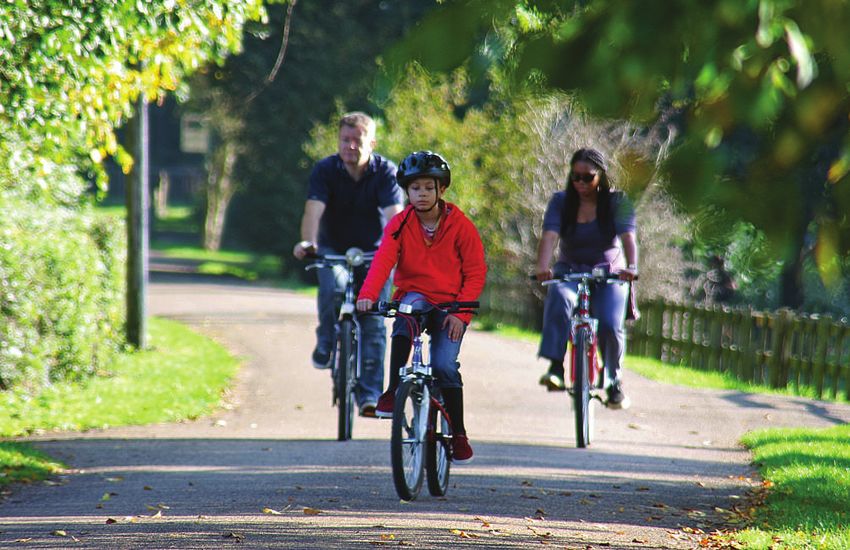
planning healthy-weight environments                                                                                                                                             planning healthy-weight environments
a TCPA reuniting health with planning project                                                                                                                              a TCPA reuniting health with planning project

acknowledgements                                                                                 summary
The TCPA would like to thank Public Health England, the Canal and River Trust, David Lock        Almost two-thirds of adults and one-third of children in       Collaboration
Associates, Hertfordshire County Council, Luton Borough Council, Lincolnshire County Council,    England are either overweight or obese; there is a             ● Creating a healthy-weight environment is an
Sandwell Council, Sefton Council, Stockport Council, Suffolk County Council and Learning for     similar picture across the UK. Obesity is a major risk           excellent focus for collaborative, joined-up working
Public Health West Midlands for supporting the project, as well as all those who hosted the      factor for a number of diseases, such as type 2                  within a local authority.
workshops and attended and contributed to project meetings. The TCPA would also like to thank    diabetes, cancer and heart disease. It also can affect
Yvette Ralston for her research support, and Caroline Brown of David Lock Associates for the     people’s self-esteem and their underlying mental               Masterplanning and design
illustration on pages 14 and 15. The TCPA is grateful for use of cover photographs supplied by   health. Reducing obesity, especially for children, is a        ● Healthy-weight elements such as sustainable
David Lock Associates and Andrew Ross.                                                           priority for Public Health England (PHE) and health              transport and access to healthy foods need to
                                                                                                 agencies across the UK. The causes of rapid increases            be considered early in the planning and design
                                                                                                 in the levels of obesity are complex, and the influence          process.
                                                                                                 of the environment where people live is one of the             ● Rural and urban areas face different challenges.
                                                                                                 factors.                                                       ● Landowners have an important role in enabling the
                                                                                                                                                                  creation of connected walking and cycling networks.
                                                                                                 Local authority planners have a key role in creating
                                                                                                 places that enable people to achieve and maintain a            Development management
                                                                                                 healthy weight. But they cannot do this on their own:          ● Minor design details have a cumulative impact
                                                                                                 planners must work closely with public health                    for creating healthy-weight environments.
                                                                                                 practitioners as well as other built and natural               ● In some places section 106 planning obligations are
                                                                                                 environment professionals, elected members and                   rarely delivering elements of a healthy-weight
                                                                                                 communities.                                                     environment.

                                                                                                 Part 1 of this document is a practical resource for            Behaviour change
                                                                                                 practitioners to use when working together to enable           ● People are most likely to be influenced by their
                                                                                                 the creation of healthy-weight environments through              environment when moving to a new home, but
                                                                                                 the English planning system. This resource draws on              often the design elements to help them maintain
                                                                                                 current evidence and practical experience, and will              or achieve a healthy weight are missing when
                                                                                                 help practitioners to identify common ground for                 they move into new developments.
                                                                                                 ongoing collaboration on this agenda. Part 2 sets out          ● Living environments need flexibility built in to
                                                                                                 key findings from a series of seven healthy-weight               accommodate lifestyle changes.
                                                                                                 environment workshops held in 2014 with local
                                                                                                 authority partners. These findings summarise existing          Monitoring and evaluation
                                                                                                 challenges, opportunities, and gaps in current policy          ● Currently, the local healthy-weight impacts of
                                                                                                 and practice in relation to using the planning process           planning policy and development schemes are
                                                                                                 to help create healthy-weight environments. They                 not being systematically evaluated.
                                                                                                 inform the TCPA’s own recommendations to
                                                                                                 government, published in a separate document.

                                                       4                                                                                                    5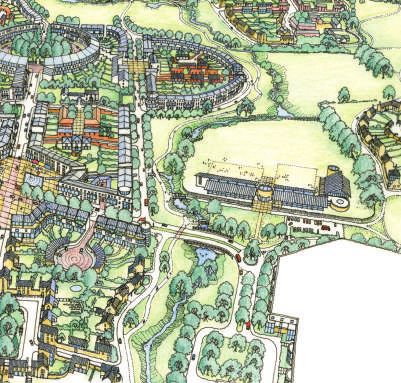
planning healthy-weight environments                                                                                                                                                                                   planning healthy-weight environments
a TCPA reuniting health with planning project                                                                                                                                                                    a TCPA reuniting health with planning project

                                                                                                                                                                                                                                                                       David Lock Associates
introduction
‘Changes in housing, water, and the physical environment were essential to controlling infectious disease.
Today, modifications of the food environment to address obesity, or of the physical environment to
promote physical activity, will be of central importance for chronic disease prevention and control.’
Dr Thomas Frieden, Director, Centers for Disease Control and Prevention (USA), quoted in Active Design
Guidelines: Promoting Physical Activity and Health in Design. New York City Department of Design and
Construction, 2010. http://www.nyc.gov/html/ddc/html/design/active_design.shtml

‘What has planning got to do with childhood obesity?’              to understand how they can help to create a healthy-
This rather blunt question was posed to us by a child              weight environment locally. They can also harness the
development expert at a European conference where                  knowledge and experience of elected members and
we had been invited to present the findings of previous            local communities to understand what matters to
Town and Country Planning Association (TCPA) work                  them, what they think makes it difficult to maintain
on reuniting public health and planning. We thought of             a healthy weight, and what needs to change. This
her challenge months later, when we noticed a billboard            collaborative work needs to feed into a national and
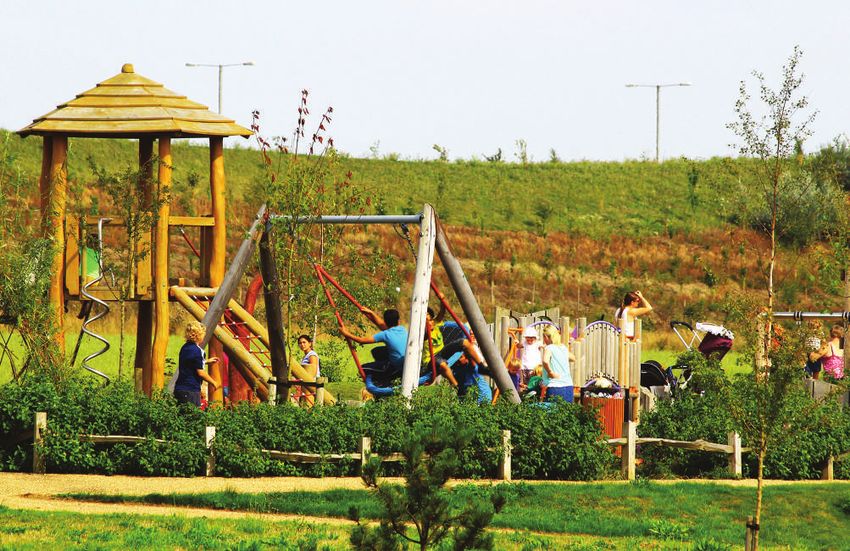
with the slogan ‘Kids need to be active for at least 60            local approach to reducing obesity which recognises        Opportunities for play and recreational activity are important elements of a healthy-weight environment
minutes every day’ perched on a traffic island amid a              that creating a healthy-weight environment is only
four-lane gyratory coursing towards an inner city                  one element of achieving systematic change.                ●   an overview of how to use the planning process to                 to better links between health and planning remains
centre. The mismatch between a well intentioned public                                                                            promote a healthy-weight environment.                             the lack of priority given to joint working. Providing a
health message and an environment that promotes                                                                                                                                                     setting for joint working is an important prerequisite
sedentary behaviour was stark: the lack of choice to be            About this document                                        There are a number of existing guides on discrete                     for the range of other things that will make
physically active is just one of the ways that planning                                                                       elements of the healthy-weight environment agenda –                   collaboration more effective – developing a shared
can potentially influence weight gain for children.                Part 1 of this document is a resource that policy and      such as physical activity, active travel, and food                    evidence base, getting public health input on planning
                                                                   development management planners and public health          growing – and this publication provides links to them.                policy and applications, evaluating health impact, and
Obesity has been described as a ‘normal response by                practitioners can use together to identify how the local   The emphasis in this document is on the need to take                  so on.3
normal people to an abnormal environment’.1 As the                 authority can shape the built and natural environment      a holistic approach to develop an integrated response
quote at the head of this section illustrates, the                 to help people to maintain a healthy weight, as one        to a complex problem.                                                 The TCPA has also published a set of recommendations.
physical environment influences how easy or difficult it           element in an overall strategy to reduce obesity. It is                                                                          These recommendations are available online, along
is to maintain a healthy weight. Local authority                   also a useful tool for development management              Part 2 summarises the national project that informs                   with further resources and information:4
planners potentially have a key role to play                       planners to use with urban designers and developers        this resource. The project centred around a series of                 ● a background research paper reviewing the evidence;
in shaping places that support people’s ability to                 to help them understand how they can contribute            seven workshops, organised in collaboration with local                ● the results of TCPA research on current Joint Health
achieve and/or maintain a healthy weight: making                   positively to this urgent national agenda.                 authorities, where participants discussed real-life                     and Wellbeing Strategies and Local Plans;
healthier choices easier.                                                                                                     development schemes against a set of criteria that                    ● a summary of the project workshop proceedings; and
                                                                   Part 1 provides:                                           reflected current knowledge about what might                          ● the results of an evaluation of the workshops based
But they cannot do this alone. Planning and public                 ● background to the obesity crisis and an introduction     constitute a ‘healthy-weight environment’. These                        on practitioner feedback.
health have shared roots, but decades of working in                  to the concept of a healthy-weight environment;          workshops reinforced our view that a primary obstacle
relative isolation has created barriers to better, joined-up       ● an explanation of the elements of a healthy-weight
working, such as a lack of shared language, evidence                 environment, including spatial criteria, public health
and priorities. The duty on local government to promote              evidence, and links to further guides and resources;
the health of its population2 provides fresh opportunities         ● an annotated illustration that can be used to engage
for policy and development management planners to                    public health practitioners, planners and other built
work collaboratively with public health practitioners                and natural environment professionals and elected
and other built and natural environment professionals                members to make progress on this agenda; and

1   ‘Urgently needed: a framework convention for obesity control’. The Lancet, 2011, Vol. 378 (9,793), p. 741.
    http://www.thelancet.com/journals/lancet/article/PIIS0140-6736%2811%2961356-1/fulltext                                    3    Breaking down professional silos greatly assists the integration of health into planning policy and decisions – see, for example,
2   The New Public Health Role of Local Authorities. Department of Health, Oct. 2012.                                              L. Carmichael, H. Barton, S. Gray and H. Lease: ‘Health-integrated planning at the local level in England: impediments and
    https://www.gov.uk/government/uploads/system/uploads/attachment_data/file/213009/Public-health-role-of-local-                  opportunities’. Land Use Policy, 2013, Vol. 31, 259-66. http://www.sciencedirect.com/science/article/pii/S0264837712001329
    authorities-factsheet.pdf                                                                                                 4    See the ‘Planning Healthy-Weight Environments’ webpage at http://www.tcpa.org.uk/pages/planning-out-obesity-2014.html

                                                               6                                                                                                                                7
planning healthy-weight environments planning healthy-weight environments
a TCPA reuniting health with planning project a TCPA reuniting health with planning project
part 1 PHE puts it bluntly:
‘If an individual is poor, he or she is more likely to
be affected by obesity and its health and wellbeing
consequences.’ 13
●
●
creating networks of high-quality cycling
infrastructure;20
increasing access to, and improving choice within,
the local food retail environment;21 and
promoting healthy-weight
● better connecting new or existing employment
Those living in deprived areas are also: opportunities to areas of high unemployment (for
● ten times less likely to live in the greenest areas example by creating walking or cycling links across
environments
compared with people in the least deprived areas;14 existing spatial barriers such as busy roads).22
● more likely to live near to fast-food outlets, which
contribute towards the disparity in levels of obesity
across the population;15 and What is a healthy-weight environment?
● more likely to feel unsafe in their neighbourhood,
obesity and healthy weight:
with consequent negative effects on their health, A healthy weight is defined through an individual’s
including a reluctance to take exercise.16 body mass index (BMI): a BMI of between 18.5 and 25
is classed as a ‘healthy weight’; BMI between 25 and
Planners have an enabling role to ensure that facilities 30 is classed as ‘overweight’, more than 30 is classed
an introduction
and infrastructure exist to give everyone the opportunity as ‘obese’.23 What this means is that an individual’s
to live in a healthy-weight environment. While this will body weight is ‘appropriate for their height and
still only ever be one element of an overall approach to benefits their health’.24 For the purposes of this
reducing obesity, a review of evidence on transport, document, we propose that:
physical activity and health has noted that ‘good
Obesity occurs when a person’s ‘energy intake from health.8 The financial consequences of dealing with the infrastructure is a prerequisite for the effectiveness of A healthy-weight environment supports
food and drink consumption is greater than energy increases in these illnesses threaten to ‘bankrupt the other, less tangible, measures’.17 For example, there are people in avoiding being overweight or
expenditure through the body’s metabolism and NHS’;9 the recently published NHS five-year strategy many non-planning reasons why a person may or may obese through how the place is designed
physical activity over a prolonged period, resulting in backs taking ‘hard-hitting’ action on obesity by not decide to participate in a programme of led walks and what it provides.
the accumulation of excess body fat’.5 Currently in supporting a range of lifestyle illness prevention recommended to them by their GP under a ‘social’
England 61% of adults – almost two-thirds – and 30% programmes.10 prescribing programme.18 But the programme cannot Specifically, a healthy-weight environment promotes
of children between the ages of 2 and 15 are classed be offered if the local area does not have parks that are physical activity of all sorts and ensures that sustainable
as overweight or obese. It is predicted that by 2050 attractive, safe and easy to get to. Research has suggested transport and active travel is built into everyone’s daily
60% of men and 50% of women will be obese.6 Influence of place a variety of interventions that planners can make in life.25 It helps people to access and choose healthier
deprived areas which would have a proportionately goods (such as food and drink) and services (such as
Reducing obesity, particularly among children, is one There is a complex web of societal, behavioural and greater impact than in other areas, including: healthcare) that support them in choosing a balanced
of the seven priorities of Public Health England (PHE).7 environmental factors that make it increasingly difficult ● increasing access to, and improving the quality of, diet, leading an active lifestyle and maintaining a
PHE aims to increase the proportion of children leaving for most of us to maintain a healthy weight: green space;19 healthy weight.
primary school with a healthy weight, accompanied by ‘The choices we make are influenced… by the day-
reductions in levels of excess weight in adults. Together to-day pressures we face, the behaviour of those
13 From Evidence into Action: Opportunities to Protect and Improve the Nation’s Health. Public Health England, Oct. 2014.
with the Department of Health, it hopes to achieve a around us, the sort of neighbourhood we live in and https://www.gov.uk/government/publications/from-evidence-into-action-opportunities-to-protect-and-improve-the-
sustained downward trend in the level of excess the prevailing culture relating to food and physical nations-health
weight in children, and a downward trend in the level activity which favours overconsumption and 14 Natural Solutions to Tackling Health Inequalities. UCL Institute of Health Equity, 2014.
of excess weight averaged across all adults by 2020. inactivity.’ 11 https://www.instituteofhealthequity.org/projects/natural-solutions-to-tackling-health-inequalities
15 The Built Environment and Health: An Evidence Review. Concept Series 11. Glasgow Centre for Population Health, 2013.
http://www.gcph.co.uk/publications/472_concepts_series_11-the_built_environment_and_health_an_evidence_review
Why is reducing levels of obesity important? Obesity is These factors can be exacerbated in deprived areas. 16 Ibid.
a major risk factor for a number of diseases, such as For example, children living in the most deprived areas 17 R.L. Mackett and B. Brown: Transport, Physical Activity and Health: Present Knowledge and the Way Ahead. University College
type 2 diabetes, cancer and heart disease. It also can are twice as likely to be obese as children living the London, for Department for Transport, 2011. http://www.ucl.ac.uk/news/pdf/transportactivityhealth.pdf
18 ‘Social prescribing’ provides a way of ‘linking patients’ in primary care and their carers with non-medical sources of support within
affect people’s self-esteem and their underlying mental least deprived areas.12
the community – a recent evaluation of the Rotherham Social Prescribing Pilot, funded by the NHS Rotherham Clinical
Commissioning Group, has been published by researchers at Sheffield Hallam University – The Social and Economic Impact of
5 Tackling Obesities: Future Choices. Foresight. Government Office for Science, 2007. Rotherham Social Prescribing Pilot: Main Evaluation Report. Centre for Regional Economic and Social Research, Sheffield Hallam
https://www.gov.uk/government/publications/reducing-obesity-future-choices University, 2014. http://www.shu.ac.uk/research/cresr/sites/shu.ac.uk/files/social-economic-impact-rotherham.pdf
6 Ibid. 19 Natural Solutions to Tackling Health Inequalities. UCL Institute of Health Equity, 2014.
7 From Evidence into Action: Opportunities to Protect and Improve the Nation’s Health. Public Health England, Oct. 2014. https://www.instituteofhealthequity.org/projects/natural-solutions-to-tackling-health-inequalities
https://www.gov.uk/government/publications/from-evidence-into-action-opportunities-to-protect-and-improve-the- 20 R. Aldred: Benefits of Investing in Cycling. Manchester. British Cycling, 2014.
nations-health http://www.britishcycling.org.uk/zuvvi/media/bc_files/campaigning/BENEFITS_OF_INVESTING_IN_CYCLING_DIGI_FINAL.pdf
8 Healthy Lives, Healthy People: A Call to Action on Obesity in England. HM Government, 2011, p.5. 21 Obesity: Working with Local Communities. NICE Guideline PH42. National Institute for Health and Care Excellence, 2012.
https://www.gov.uk/government/publications/healthy-lives-healthy-people-a-call-to-action-on-obesity-in-england http://www.nice.org.uk/guidance/ph42
9 S. Boseley: ‘Obesity could bankrupt NHS if left unchecked’. The Guardian, 17 Sept. 2014. 22 Planning Out Poverty. TCPA, 2013. http://www.tcpa.org.uk/pages/planning-out-poverty.html
http://www.theguardian.com/society/2014/sep/17/obesity-bankrupt-nhs-warning 23 Healthy Lives, Healthy People: A Call to Action on Obesity in England. HM Government, 2011.
10 Five Year Forward View. NHS England, 2014. http://www.england.nhs.uk/ourwork/futurenhs/ https://www.gov.uk/government/publications/healthy-lives-healthy-people-a-call-to-action-on-obesity-in-england
11 Healthy Lives, Healthy People: A Call to Action on Obesity in England. HM Government, 2011, p.19. 24 Healthy Weight Strategy for Nottingham City 2011-2020. Nottingham City Clinical Commissioning Group/Nottingham City Council,
https://www.gov.uk/government/publications/healthy-lives-healthy-people-a-call-to-action-on-obesity-in-england 2011, p.5. http://www.nottinghamcity.nhs.uk/healthy-living/child-obesity/871-healthy-weight-strategy.html
12 From Evidence into Action: Opportunities to Protect and Improve the Nation’s Health. Public Health England, Oct. 2014. 25 Everybody Active, Every Day: An Evidence-Based Approach to Physical Activity. Public Health England, 2014.
https://www.gov.uk/government/publications/from-evidence-into-action-opportunities-to-protect-and-improve-the- https://www.gov.uk/government/publications/everybody-active-every-day-a-framework-to-embed-physical-activity-into-
nations-health daily-life
8 9
planning healthy-weight environments planning healthy-weight environments
a TCPA reuniting health with planning project a TCPA reuniting health with planning project
collaborating for a healthy-
weight environment
This section sets out the themes and elements that format in which a range of local authority staff (see
contribute towards a healthy-weight environment and the bullet point above) discuss real-life development
includes an annotated illustration that shows how they applications against the healthy-weight environment
fit together spatially. Three ways of working with the themes with urban designers, housing associations
themes and the annotated illustration are suggested: and private-sector developers, community groups,
David Lock Associates
● Collaborative sessions within a local authority – Clinical Commissioning Groups, government
for example, in councils where there are only agencies (such as Sport England and Natural
nascent links between planning and public health, England), and special interest organisations.
the information in this section could be used to ● Development management engagement with urban
explore closer and stronger joint working and designers and developers through pre-application
co-commissioning of integrated planning to help discussions or other opportunities, such as a
Convenient, legible and safe cycling networks are vital parts of movement and access strategies tackle this key public health priority. Other relevant developer forum.
internal departments include transport planning,
Healthy-weight environment themes To help those actively considering how to address local economic development, regeneration and Box 1 sets out ten questions which can be used to
these issues locally, the list of themes and elements housing, leisure and countryside services, and ensure that the elements of planning for a healthy-
People live in a huge variety of settings, from that make for a healthy-weight environment set out on community development and behaviour change. weight environment remain a key focal point,
dispersed rural areas to large cities, and from new pages 12 and 13 include a set of planning considerations ● Collaborative sessions involving local authority staff regardless of the rationale for or participants in the
communities to regenerated existing buildings or that can be used to promote discussion and help bring and external stakeholders – in the TCPA’s experience discussion.
places. While there is no one-size-fits-all response to each element to life for participants. this approach works well through a workshop
these different places, there are common elements
that a collaborative approach to a healthy-weight Annex 1 provides guidance and other helpful
environment will need to consider. These are grouped information for each theme. To help participants Box 1
here into six themes: understand the importance of each spatial theme for Starter for ten: focusing discussion on healthy-weight environment elements
A Movement and access: Walking environment; reducing the number of people classed as obese or
cycling environment; local transport services. overweight, Annex 2 includes a selection of evidence The questions below will help to keep collaborative discussions focused on relevant aspects of a healthy-
B Open spaces, recreation and play: Open spaces; and further information. weight environment (although they may not all be relevant for every development type or circumstance).
natural environment; leisure and recreational 1 How is the use of walking, cycling and public transport services made easier than driving a car?
spaces; play spaces. 2 Is a supermarket or out-of-town retail development proposed? How will that impact on the viability of
C Food: Food retail (including production, supply and any proposed or existing local shopping? What are the implications for people who do not have cars
diversity); food growing; access. and for minimising car use?
D Neighbourhood spaces: Community and social 3 What is the proposed retail/food mix, and is it likely to make healthier choices easier for residents?
infrastructure; public spaces. 4 Does the proposal include employment, and does it prioritise creating infrastructure links to local areas
E Building design: Homes; other buildings. of high unemployment?
F Local economy: Town centres and high streets; job 5 How will new open spaces (and facilities such as playgrounds, food-growing schemes and nature walks)
opportunities and access. be managed and maintained? How will maintenance be funded?
6 How will existing/future residents and interest groups be involved in planning the development?
7 Does the design of the buildings encourage physical activity?
8 How can elements that enable behaviour change, such as wayfaring signs and lighting, be installed
before people move in?
9 Will there be spaces that enable people to meet each other and that are suitable for a range of uses,
depending on community priorities?
10 Does the proposed scheme connect to adjacent development via streets/paths that are safe and direct
for walking and cycling?
10 11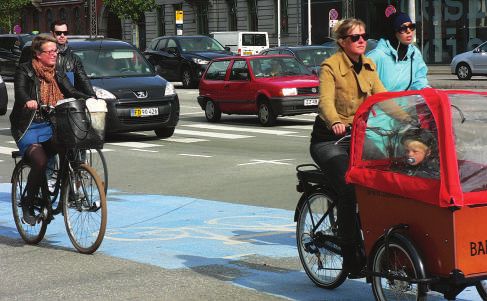
planning healthy-weight environments                                                                                                                                                                          planning healthy-weight environments
a TCPA reuniting health with planning project                                                                                                                                                           a TCPA reuniting health with planning project

Themes and elements of a healthy-weight environment
A Movement and access                                                                                                         D Neighbourhood spaces
Walking              ●   Clearly signposted street network with destinations within 400-800 metres (5-10 minutes’             Community and       ●   Community facilities are provided early as a part of new development to help people feel
environment              walk).                                                                                               social                  connected and to provide a local destination.
                     ●   Streets are connected to a coherent wider network designed to facilitate walking, including to       infrastructure      ●   Community facilities such as healthcare services and leisure centres are co-located if feasible.
                         public transport stops.                                                                                                  ●   Community facilities are easy to get to because they are conveniently located near to where
                     ●   Streets and the public realm are safe and accessible for all ages, and levels of disabilities.                               people live, are well signposted, and are close to public transport and on walking and cycling
                     ●   Well designed buildings overlook the streets without compromising home privacy and security.                                 networks.
                     ●   Walking is prioritised over private car use, and the speed of vehicles is managed.                                       ●   Healthcare and other community services have a travel plan that promotes sustainable
Cycling              ●   Direct, convenient, legible and safe cycling network design.                                                                 transport.
environment          ●   Appropriate segregation or shared surfaces between cyclists, pedestrians and vehicle traffic.        Public spaces       ●   Public spaces are flexible and durable and support civic, cultural and community functions,
                     ●   Streets/cycle paths are connected to coherent wider networks.                                                                such as local markets and food stalls.
                     ●   Area-wide cycle facilities are provided, including secure cycle parking, showering/changing                              ●   Public spaces are easy to get to by public transport and are on walking and cycling networks.
                         rooms, and clothes-drying and storage facilities.                                                                        ●   An attractive and well designed public realm promotes use and enhances safety.
                     ●   Vehicle speed is managed.
Local transport      ●   Local transport promotes sustainable travel modes over journeys by private cars.
                                                                                                                              E Building design
services             ●   Travel plans are implemented and monitored where relevant (including for large-scale                 Homes               ●   Adequate internal spaces for secure bike storage and internal movement.
                         residential development).                                                                                                ●   Homes include space for storing, preparing, cooking and eating home-made food.
                     ●   Existing transport infrastructure and services, such as rail and bus, are integrated effectively.                        ●   Homes are well insulated and quiet.
                     ●   School locations comply with local authority home-to-school transport legislative duties.                                ●   Development includes private or semi-private outdoor space, such as a front or back garden,
                                                                                                                                                      and/or adequate-sized balconies.
B Open spaces, recreation and play                                                                                                                ●   Car parking spaces per dwelling are minimised, and on-street car parking does not
Open spaces          ●   There is a planned network of high-quality green and blue spaces that can also be used for                                   compromise safe walking and cycling networks.
                         walking and cycling, amounting to a minimum of 40% of total development land.                        Other buildings     ●   Buildings have attractive, visible and signed stairwells close to the entrance.
                     ●   Open spaces cater for a range of uses with multiple social, health and environmental benefits.                           ●   Buildings include cycle racks, cycle storage and changing facilities.
Natural              ●   High-quality natural green open spaces of different sizes are easy to get to from dwellings –                            ●   Internal design and layout promotes physical activity.
environment              for example, no-one should live more than 300 metres from their nearest area of natural                                  ●   Car parking spaces are minimised, and car-share schemes have been considered.
                         green space of at least 2 hectares in size.                                                                              ●   Developments include a travel plan that promotes sustainable transport.
                     ●   Opportunities for passive and active play and activity that will not lead to environmental
                         degradation or loss of biodiversity.
                                                                                                                              F Local economy
                     ●   Consent obtained for public access to privately owned countryside adjacent to new development.       Town centres        ●   Development enhances the vitality and viability of the local centre by providing a more
                     ●   Development improves access to high-quality green spaces for people living in deprived               and high streets        diverse retail offer.
                         communities.                                                                                                             ●   The centre is easy to get to by public transport and is on walking and cycling networks.
Leisure and          ●   A range of sports and leisure facilities and pitches designed and maintained for use by the                              ●   Facilities are provided for people walking and cycling, such as benches, toilets and
recreational             whole community, not just schools and other institutions.                                                                    conveniently located secure bike storage.
spaces               ●   Facilities are co-located with other appropriate uses such as schools if feasible.                   Job                 ●   Offices and other employment sites are easy to get to by public transport, walking or cycling.
                     ●   Schools have adequately sized open spaces, including playing fields and opportunities for            opportunities       ●   Development provides job opportunities and training for local people.
                         food-growing.                                                                                        and access          ●   Development improves sustainable transport access to existing jobs.
Play spaces          ●   Wide range of high-quality play opportunities and experiences integrated into residential areas.
                     ●   Play spaces and facilities are challenging and fun for all children.
                     ●   Play spaces are easy and safe to get to by sustainable transport, and well over-looked to
                         ensure safety.                                                                                       Planning healthy-weight
                     ●   Streets are designed as places for incidental play.                                                  environments: an illustration
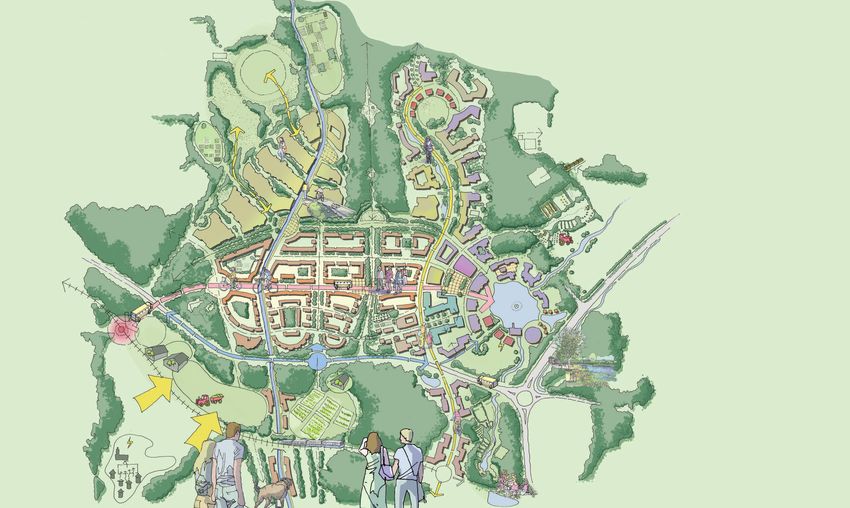
C Food                                                                                                                        The illustration on pages 14 and 15 depicts how the
Food retail          ●   Development avoids overconcentration of hot-food takeaways (A5 uses) in existing town                six themes fit together spatially in the context of a
                         centres or high streets, and restricts their proximity to schools or other facilities for children   ‘place’. It provides a useful starting point for
                         and young people and families.                                                                       highlighting and negotiating on particular issues in
                     ●   Shops/markets that sell a diverse offer of food choices are easy to get to by walking, cycling       discussions between developers, policy and
                         or public transport.                                                                                 development management planners, public health
                     ●   Leisure centres, workplaces, schools and hospitals with catering facilities have a healthier food    officers and others involved in the planning process.
                         offer for staff, students, and/or customers.
                     ●   Opportunities for supporting innovative approaches to healthy eating through temporary
                         changes of use have been explored.
Food growing         ●   Development maintains or enhances existing opportunities for food-growing, and prevents
                         the loss of food-growing spaces.
                     ●   Opportunities are provided for households to own or have access to space to grow food – for
                         example roof or communal gardens, or allotments.

                                                            12                                                                                                                           13
planning healthy-weight environments planning healthy-weight environments
a TCPA reuniting health with planning project a TCPA reuniting health with planning project
Does the JHWS refer to the influence of the built Practice Guidance (PPG) requires planners to take
environment in tackling obesity? account of obesity strategies (and healthy eating and
physical activity).30 In light of the results of the
research carried out for this project, it seems that most
Health and Wellbeing Boards might benefit from
reviewing and refreshing their JHWS to reflect the
links between obesity and place. This would allow
using the planning process 31%
planners to use local evidence and public health
priorities to justify the inclusion of obesity
considerations in local planning policy and decision-
to promote healthy-weight
making, for example in relation to hot-food takeaways.
69%
environments
Writing policies
There is currently no national planning policy guidance
that focuses specifically on reducing obesity. However,
planners are required to take account of evidence on
This section focuses briefly on the opportunities for It is written primarily for public health practitioners obesity via the Health and Wellbeing Board’s JHWS
moving forward the healthy-weight environment agenda and other non-planners who want to understand No Yes and obesity strategy. They are also required to
through the planning process, while recognising that how they can collaborate constructively with policy promote healthy communities, as set out in Section 8
this will only ever be one element of a local authority’s planners (who write the policy framework for a Fig. 2 Less than a third of Joint Health and Wellbeing of the National Planning Policy Framework (NPPF),
approach to reducing obesity. It is divided into sub- local area) and development management planners Strategies refer to the influence of the built environment when which includes creating a healthy environment.31
sections on: (who take decisions based on this framework) on citing obesity Planners can also use obesity evidence to strengthen
● gathering evidence; helping to create a healthy-weight environment the argument for achieving a range of existing policy
● writing policies; locally. handbook, Reuniting Health with Planning, and the objectives – including sustainable transport, adapting
● supporting neighbourhood planning and 2013 report Planning Healthier Places.26, 27 to and mitigating climate change, sustainable design,
community engagement; As background, Fig. 1 illustrates how public health local economic growth, and better-designed places
● assessing development proposals; and generally can interact with the planning process; (see Box 2). Public health practitioners can assist
● monitoring delivery. further guidance is also provided in the TCPA’s 2012 Gathering evidence planners through this process – the TCPA’s Planning
Healthier Places report provides further advice.32
Public health practitioners need to work closely with
Local (Spatial) Plan Development policy and development management planners to
development management establish what evidence can be used locally, and more Supporting neighbourhood planning
Role of local Work with planners to advise on drafting Work with planners (and developers) – generally to help interpret the fast moving evidence base and community engagement
public health of Local Plans and policies on how to especially at pre-application stage to in this area and its implications for policy and practice.28
teams maximise health gain (for example influence emerging masterplan designs The Localism Act 2011 introduced neighbourhood
promote active travel; access to green to ensure key local health issues are Health and Wellbeing Boards are responsible for plans, which allow town councils, parish councils
space; etc). Work with local NHS to addressed, and outline requirements for preparing Joint Health and Wellbeing Strategies and neighbourhood forums to develop plans for
ensure NHS infrastructure requirements section 106/CIL to support health and (JHWSs), based on priority health needs identified their local area that complement the local authority
are identified health infrastructure requirements through Joint Strategic Needs Assessments (JSNAs). planning framework. Neighbourhood planning
Ensure that appropriate references are Assess or prepare a Health Impact Research carried out for this project has found that, provides an opportunity for local areas to consider
made in plans from other statutory local Assessment unsurprisingly, reducing obesity is a priority for most health issues in local developments, and can be used
(health) strategies – Joint Health and JHWSs (89%).29 However, the number that make links to encourage local communities to build on and use
Support local planners in any planning
Wellbeing Strategy to the influence of the environment in which people local assets. Local planning authorities have various
appeals which may arise
Undertake a Health Impact Assessment on live is much lower, at only 31% (see Fig. 2). Planning supporting roles in the neighbourhood planning
the emerging policies and plan
26 A. Ross with M. Chang: Reuniting Health with Planning – Healthier Homes, Healthier Communities. TCPA, 2012.
Support planners to prepare for/present http://www.tcpa.org.uk/pages/reuniting-health-with-planning-healthier-homes-healthier-communities.html
evidence at an examination in public 27 A. Ross with M. Chang: Planning Healthier Places – Report from the Reuniting Health with Planning Project. TCPA, 2013.
http://www.tcpa.org.uk/pages/reuniting-health-with-planning-phase-2-project.html
28 For a fuller discussion of the uncertainties regarding evidence, see the project research review, at
Public Health Work with local public health teams to Work with local public health teams to
http://www.tcpa.org.uk/pages/planning-out-obesity-2014.html
England (PHE) advise and support (usually at PHE Centre advise and support (usually at PHE Centre 29 The study reviewed published Joint Health and Wellbeing Strategies in England – a summary of the research is available at
level and only if requested) level and only if requested) http://www.tcpa.org.uk/pages/planning-out-obesity-2014.html
30 ‘Health and wellbeing’. Planning Practice Guidance. Department for Communities and Local Government.
Provide national guidance and support (for
http://planningguidance.planningportal.gov.uk/blog/guidance/health-and-wellbeing/what-is-the-role-of-health-and-
example Obesity and the Environment wellbeing-in-planning/
briefings) 31 Section 8: ‘Promoting healthy communities’. National Planning Policy Framework. Department for Communities and Local
Government, Mar. 2013. https://www.gov.uk/government/publications/national-planning-policy-framework—2
Fig. 1 An overview of public health involvement in planning
32 A. Ross with M. Chang: Planning Healthier Places – Report from the Reuniting Health with Planning Project. TCPA, 2013.
Source: Public Health England’s Healthy People, Healthy Places programme http://www.tcpa.org.uk/pages/reuniting-health-with-planning-phase-2-project.html
16
17planning healthy-weight environments planning healthy-weight environments
a TCPA reuniting health with planning project a TCPA reuniting health with planning project
Box 2 Box 3
Existing planning policy drivers that support the creation of healthy-weight Viability and healthy-weight environments
environments
A key aspect of the assessment of any proposed scheme is viability: will the ‘cumulative burden’ of the Local
The questions below will help to keep collaborative discussions focused on relevant aspects of a healthy- Plan’s requirements for things such as design quality and sustainable transport remove the ability of a
weight environment (although they may not all be relevant for every development type or circumstance). landowner/developer to receive ‘competitive returns’ from their development?a
Build a strong, competitive economy (NPPF)
Feedback from the TCPA’s Reuniting Health with Planning programme suggests that viability testing’s current
● Identify priority areas for economic regeneration, infrastructure provision and environmental
focus on short-term developer profits is squeezing out other considerations that are important for
enhancement.
sustainable development, with considerable implications for creating health-promoting environments.b
Ensure the vitality of town and village centres (NPPF)
● Retain, enhance or create new attractive and competitive markets. However, there is evidence that, by considering the elements of a healthy-weight environment, designers
● Encourage residential development on appropriate sites. and developers could create more economically thriving spaces that would add value to their schemes, as
● Promote the retention and development of local services and community facilities. well as fulfilling national and local health policies. For example:
● Retailers report an increase in trade of up to 40% when places are made more attractive for walking.c
Manage patterns of growth to make the fullest possible use of public transport, walking and ● Places that are easier and more attractive to walk around (designed for so-called ‘walkability’) do better
cycling (NPPF) commercially (with an 80% increase in retail sales) and have higher housing values.d
● Give priority to pedestrians and cyclists, and give access to high-quality public transport facilities. ● The most valuable streets in London (as measured by rateable value per square metre) are those that
● Create safe and secure layouts that minimise conflicts between traffic and cyclists or pedestrians. have the best spatial accessibility.e
● Consider the needs of people with disabilities.
● Promote a mix of uses. This economic evidence can help to build the case for development management planners to require an
● Locate primary schools and local shops within walking distance of most properties. assessment of the health impact of a proposal, for example by requiring a Health Impact Assessment for
larger schemes.
Promote safe and accessible developments and routes (NPPF and PPG)
● Provide clear and legible pedestrian routes. a See paras 173-174 of the National Planning Policy Framework on ensuring viability and deliverability – National Planning Policy
Framework. Department for Communities and Local Government, Mar. 2012.
● Require high-quality public space and encourage active and continual use of public areas. https://www.gov.uk/government/publications/national-planning-policy-framework—2
● Connect places with each other and make moving through them easy. b Planning Healthier Places – Report from the Reuniting Health with Planning Project. TCPA, 2013.
http://www.tcpa.org.uk/pages/reuniting-health-with-planning-phase-2-project.html
Provide open space, sports and recreation facilities (NPPF) c The Pedestrian Pound: The Business Case for Better Streets and Places. Living Streets, 2013. http://www.livingstreets.org.uk/
● Identify specific needs. make-a-change/library/the-pedestrian-pound-the-business-case-for-better-streets-and-places
d N. Boys Smith, P. Murrain, D. Taylor and F. Terry: Mount Pleasant Circus and Fleet Valley Gardens: A Case Study of How Streets Are
● Do not build on existing open space, sports and recreational facilities.
More Popular, More Prosperous and a Better Investment. CREATE Streets/Legatum Institute. Legatum Institute, Sept. 2014.
● Protect and enhance public rights of way and access. http://www.li.com/activities/publications/mount-pleasant-circus-and-fleet-valley-gardens
e Ibid.
Promote access to healthier food (PPG and NICEa, b)
● Control the number of takeaways and other food outlets in a given area, particularly near schools.
● Encourage local provision of affordable fruit and vegetables. ownership and empowerment, which can potentially application (pre-application). To help raise awareness
● Discourage the provision of cheap, high-calorie food. be a prerequisite for promoting healthier lifestyles.35 of these issues, developer forums – which are hosted
● Provide safe places for food growing. by a local authority and bring developers active in a
There is also scope to involve communities in local area together to discuss relevant issues – could
Promote a low-carbon future and reduce air pollution mechanisms and structures that are established to include a session on healthy-weight environments.
● Plan for new development in locations and ways which reduce greenhouse gas emissions. manage and maintain open spaces and community This could also be an opportunity to better understand
a Preventing Obesity and Helping People to Manage their Weight. NICE Local Government Briefing. National Institute for Health buildings, such as a Community Land Trust or a how developers could be incentivised to provide the
and Care Excellence, 2013. http://publications.nice.org.uk/preventing-obesity-and-helping-people-to-manage-their- Development Trust. These are important elements of elements of a healthy-weight environment as part of
weight-lgb9/what-nice-says
a healthy-weight environment. their initial designs.
b Local Action to Prevent Type 2 Diabetes, including Strategy, Policy and Commissioning. National Institute for Health and Care
Excellence, 2014. http://pathways.nice.org.uk/pathways/preventing-type-2-diabetes/local-action-to-prevent-type-2-
diabetes-including-strategy-policy-and-commissioning Some local authorities will already have an established
Assessing development proposals protocol for what applications public health will
comment on. For those that do not, this resource can
process33 – the TCPA’s Planning Healthier Places report the facilities and spaces that would facilitate other Development management planners are responsible be used as a focus for initiating contact and discussion
provides further advice and information.34 interventions, such as community cooking shops, are for making decisions about applications for between public health practitioners, planners and
included in the plan. development in the local area, based on the Local other relevant sections of the council.
There is an opportunity for public health practitioners Plan and other relevant documents in the planning
to work with neighbourhood planning groups to Outside of neighbourhood planning areas, engaging framework. There are opportunities to raise the A key factor in planning decision-making is the
identify opportunities to create a healthy-weight communities meaningfully in decisions about their elements of a healthy-weight environment with financial viability of a scheme (see Box 3). There
environment. Such work could include ensuring that local area can help to give people a greater sense of developers as early as possible – and certainly as are concerns about the extra costs involved to a
part of discussions before they submit a planning developer of requiring the sorts of facilities and
33 Further information is available from the My Community Rights website, at http://mycommunityrights.org.uk/neighbourhood-
planning/
34 A. Ross with M. Chang: Planning Healthier Places – Report from the Reuniting Health with Planning Project. TCPA, 2013. 35 Fair Society, Healthy Lives: The Marmot Review. Strategic Review of Health Inequalities in England Post-2010. The Marmot Review,
http://www.tcpa.org.uk/pages/reuniting-health-with-planning-phase-2-project.html 2010. http://www.instituteofhealthequity.org/projects/fair-society-healthy-lives-the-marmot-review
18 19planning healthy-weight environments planning healthy-weight environments
a TCPA reuniting health with planning project a TCPA reuniting health with planning project
Canal and River Trust and the Homes and Communities Agency
Box 4
Planning healthy-weight environments
Healthy food and drink
Planning Practice Guidance (PPG) requires planners to create an environment that ‘promotes access to
healthier food’.a However, the term ‘healthy food’ does not sit within any category within the Use Classes
Order (the framework that enables planners to decide what is allowed to go where), and planners therefore
have no mandate to declare what food (or drink) is healthy and what is not. The public health profession
should consider how to use JSNAs and other tools to help define ‘healthy food and drink’ in a way that can
make it a material consideration that planners should take into account.
Minimising car use
There is often a tension locally about the extent to which making sustainable transport modes more
attractive requires measures to make travelling by car less convenient, such as by reducing car parking
provision. There are related health arguments for reducing traffic, such as the impact of poor air quality on
respiratory diseases and premature death (and, potentially, obesity),b and the detrimental impact of traffic on
social connections for people living on busy roads, which can lead to poorer mental health.c Strong political
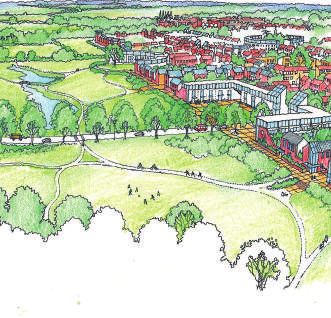
leadership is needed to make the case for reallocating space to sustainable transport and active travel, which A masterplan visualisation of the Icknield Port Loop development being undertaken by the Canal and River Trust and
the Homes and Communities Agency – integrated with the canal network, the development provides a new local park and a
should include the economic benefits of so doing.d This will be easier to achieve if public health evidence
walkable neighbourhood with home zones, play areas and an integrated pedestrian network
that helps to make the case locally is published in the Joint Health and Wellbeing Strategy.
Safety and sustainable transport
Sustainable transport and active travel policies – which favour developments that are easy to walk and cycle
Monitoring delivery ● evaluating the impact of all new developments on
people and their behaviour (not just whether
through – can run counter to Secured by Design policies, which broadly prefer to make it difficult for people
Local planning authorities are required to prepare an buildings and structures have been built or green
to walk easily through a site. Minimising fear of crime is a crucial variable that can influence people’s
annual Authority’s Monitoring Report (AMR) to help space etc. provided); and
willingness to walk. However, the evidence as to the most effective layout for achieving this is mixed,e and is
determine whether the policies in the Local Plan are ● exploring opportunities to apply for local public
at odds with evidence that supports direct routes for walking and cycling.
being implemented. health research grants to fund local evaluation
Active spaces initiatives in association with a local university
Active design guidance encourages planners and developers to locate facilities where they can be over- Public health practitioners should ensure that the and/or research centres.
looked by neighbouring development to improve safety and encourage people to use sustainable transport AMR includes commentary on the health impact of
to get there. However, some developers prefer to design schemes so that active spaces such as playgrounds development, especially in relation to being obese or
and football pitches are located away from housing. Their own marketing data indicates that people do not overweight. Practice is not well developed in this area, Planning practice challenges to
like living near the noise and potential nuisance of these facilities. Local authority planners need to share so there is an opportunity for public health practitioners creating a healthy-weight
good practice examples of active design as early as possible in the design process (see Annex 1 for guides to devise feasible measures to assess the effectiveness
and information sources). environment
of planning interventions.36 These should complement
Green and blue spaces relevant indicators set out in the Public Health Planning is always a process of balancing competing
Existing environments present various opportunities and constraints when taking a strategic approach to a Outcomes Framework (PHOF), such as the utilisation of priorities, and creating a healthy-weight environment
green infrastructure network that makes effective provision for physical activity. Planners can be unsure green space for exercise/health reasons.37 Possible is no different. Rarely will all the priorities align neatly
about the best package of open spaces to help increase physical activity for all age ranges and abilities in a measures include: in any plan or development; the aim is to secure as
local area, and about how ongoing maintenance and management would be funded. There are guides and ● devising a baseline using existing datasets, such as much benefit as possible.
tools available to inform these decisions (see the ‘Open spaces, recreation and play’ and ‘Neighbourhood data from the JSNA, GP surgeries, the National
spaces’ sections in Annex 1). Child Measurement Programme, and travel-to- Box 4 summarises some tensions in planning policy
a Planning Practice Guidance is available online at http://planningguidance.planningportal.gov.uk/ school surveys; that may arise when a local authority considers how
b ‘Overweight or obese people breathe more air pollutants’. Science Daily, 4 Feb. 2014 (reporting work at Université de Montréal). ● evaluating the impact of large-scale new to help create a healthy-weight environment, and
http://www.sciencedaily.com/releases/2014/02/140204101408.htm development through appraisal of design elements suggests some potential ways forward.
c Fair Society, Healthy Lives: The Marmot Review. Strategic Review of Health Inequalities in England Post-2010. The Marmot Review, that could be influencing behaviour change;
2010. http://www.instituteofhealthequity.org/projects/fair-society-healthy-lives-the-marmot-review
d A. Davis: Claiming the Health Dividend: A Summary and Discussion of Value for Money Estimates from Studies of Investment in
Walking and Cycling. Department for Transport, 2014.
https://www.gov.uk/government/uploads/system/uploads/attachment_data/file/371096/claiming_the_health_dividend.pdf
e For example a review of the evidence is provided in T. Lorenc et al.: ‘Environmental interventions to reduce fear of crime:
systematic review of effectiveness’. Systematic Reviews, 2013, Vol. 2, 30.
http://www.systematicreviewsjournal.com/content/2/1/30
services that are set out in Part 1. However, many of practitioners – along with other partners such as
the suggested elements could be achieved at little Local Enterprise Partnerships, Sport England, Local
extra cost by incorporating them into the design Nature Partnerships, and so on – in identifying funding
from the outset rather than requiring developer opportunities that could help developers to provide
36 Stockport Council is a pioneer of including health data and indicators in its AMR – see http://stockport-consult.limehouse.co.uk/
contributions to mitigate health impacts later. the elements of a healthy-weight environment without portal/pp/zzz_adopteddocuments/aaa_ldsamrsci/amr_1/
There is also a role for planners and public health additional cost. 37 The full set of PHOF indicators and data, by local authority, is available at http://www.phoutcomes.info/
20 21You can also read


