PPE: ARE YOU SAFE? ADAPTING TO THE NEW NORMAL: SPECIALTIES SPEAK OUT - Royal College of Nursing
←
→
Page content transcription
If your browser does not render page correctly, please read the page content below
PPE: ARE YOU SAFE?       KINDNESS IS KEY TO   ADAPTING TO THE NEW   NIGHTINGALE LEGACY
                         PROTECTING YOUR      NORMAL: SPECIALTIES   LIVES ON AFTER
                         MENTAL HEALTH        SPEAK OUT             200 YEARS
P10                      P12                  P14                   P16

ISSUE NO. 387 MAY 2020                                              RCN.ORG.UK/BULLETIN
2                             HELP AND ADVICE

                        Your COVID-19
                      questions answered
    Have you got a question about COVID-19 and how it affects you?
      See our online advice guide for all our latest information on issues related to the
           pandemic. It includes frequently asked questions on topics including:

         •    redeployment                              •   self-isolation
         •    PPE shortages                             •   pregnancy
         •    sick pay                                  •   underlying health conditions
         •    COVID-19 testing                          •   school closures.

             Answers are provided by RCN advisers in public health, infection control
                                   and employment relations

              Visit rcn.org.uk/covid-19-advice

      Always here for you
      Staff at RCN Direct are here to provide you with the help you need at this crucial
      time. We’re continually updating our online advice guide in response to your
      queries and concerns.
      If you can’t find what you're looking for, the best way to contact us is online
      at rcn.org.uk/get-help

RCN.ORG.UK/BULLETIN                                                              RCN BULLETIN MAY 2020
EDITORIAL                                                                      3

Please note: This issue of RCN Bulletin went to press on 24 April. For the latest information from the RCN, visit rcn.org.uk

‘We’ll build a better future for
nursing to honour those we’ve lost’

A special thanks for reading RCN Bulletin again   Protective equipment is still the biggest
this month – the team works hard to make          challenge for many of our members – seeing         The RCN represents nurses
sure members can see at a glance the support      it run out or fear that it soon will. I’ve spent   and nursing, promotes
we can provide for you. As your union and         days on the phone to ministers and officials,      excellence in practice and
professional body, the RCN represents nursing     sharing what you’ve told me. I won’t go easy       shapes health policies.
staff from across the UK in discussions with      on them until our members tell me it’s sorted.
                                                                                                     Editor: Kim Scott
governments, agencies and employers – to
                                                                                                     Email: bulletin@rcn.org.uk
amplify your voice and get it heard.              My heart sinks a little further with every         Web: rcn.org.uk/bulletin
                                                  announcement that one of our own has lost          Address: 20 Cavendish Square,
I’ve talked to more nursing staff, from every     their life – some nursed by their colleagues.      London W1G 0RN
country and setting, in the last six weeks        This week’s silence, after weeks of clapping,      Nurse recruitment advertising
than at any other time. And, in their different   showed the public gratitude and determination      Tel: 020 8423 1333
voices, there’s the same mix of fear and          to remember our nursing staff. No words            Email: advertising@rcni.com
determination. We’ve never known anything         here from me can do justice to their work and      Acceptance of an advertisement
of this magnitude in our professional or          sacrifice. They have my eternal thanks and,        does not constitute an
personal lives. But, against the odds, nursing    what’s more, a commitment to build a better        endorsement of a product,
staff are still managing to be that reassuring    future for nursing in their honour.                service or company, either by
face of health care – a testament to your skill                                                      the RCN or RCN Publishing.
and composure.                                                                                       For RCN country and regional
                                                                                                     contact details visit rcn.org.uk
But what do we do when that face is covered?                                                         © Copyright 2020. RCN
I got the answer last week when I worked a                                                           Publishing Company Limited and
shift at the Nightingale in London. Smize:                                                           The Royal College of Nursing.
to smile with your eyes. The protective                                                              Printed on 100% recycled paper
                                                                                                     manufactured in the UK.
equipment we’re wearing is vital but takes
a little humanity away from the job. I was                                                           RCN members illustrated on
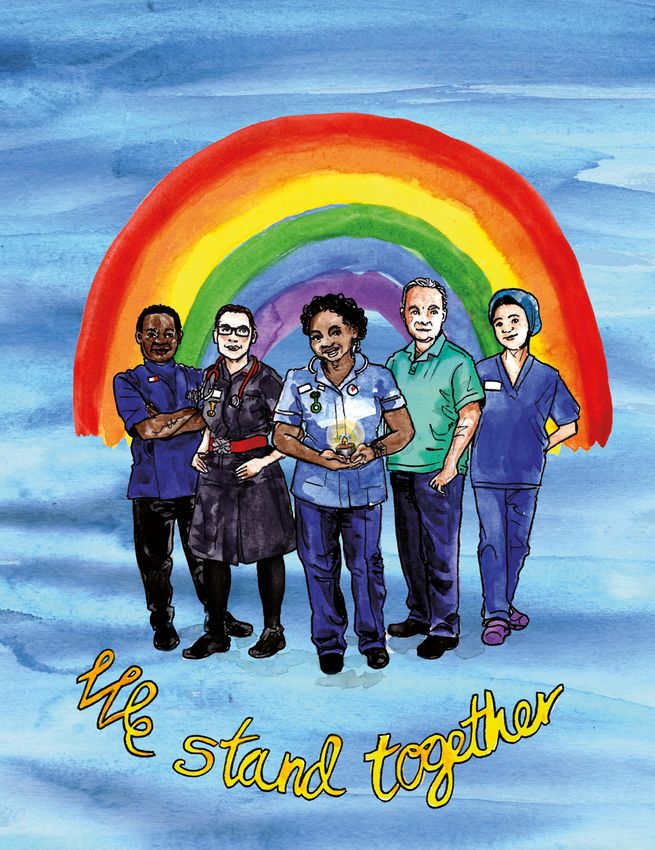
delighted when I saw nurses putting their face                                                       the cover by Jenny Robins
                                                  Dame Donna Kinnair
and first name on the front of their gowns too.   RCN Chief Executive & General Secretary

RCN BULLETIN MAY 2020                                                                                         RCN.ORG.UK/BULLETIN
4                                                         NEWS

Support for members working in care homes                                                       10k join temp register
We’ve set up a new support network          We’re also fighting to ensure members in            More than 10,000 people have joined the
for members working in care homes,          care homes, and the wider social care sector,       NMC’s COVID-19 temporary register since
who we know are facing incredible           across the UK get the personal protective           it opened at the end of March. The register
challenges during the COVID-19              equipment (PPE) and support they need.              was recently extended to include former
crisis. The network, which is open                                                              nurses and midwives who voluntarily left
to nursing staff caring for all ages        Commenting on the PPE supply issues in              the profession between three and five years
and clinical needs, includes a private      care homes, RCN Scotland Director and               ago, and UK-based nurses and midwives
Facebook group where members                Independent Sector Lead Theresa Fyffe, said:        with overseas qualifications awaiting their
can talk to others working in similar       “Every minute we wait for this to be resolved       final examination to join the permanent
settings, share good practice and raise     is a minute too long. All staff, no matter          register. More than 22,000 nursing and
concerns. Visit facebook.com/groups/        where they work, must feel safe. We will            midwifery students have opted to take
RCNCareHomeNetwork/                         continue to raise this issue until it is sorted.”   extended clinical placements as part of the
                                                                                                NMC’s efforts to bolster the workforce.
                                                                                                Visit tinyurl.com/nmc-temp-register

Nation honours nursing staff who’ve died

                                                                                                 Author
                                                                                                 Christie Watson
                                                                                                 is one of thousands
                                                                                                 returning to nursing

                                                                                                Return to practice
                                                                                                network
                                                                                                We've established a new network to
                                                                                                support nurses returning to clinical practice
                                                                                                during the pandemic. The network will
                                                                                                provide a safe space to connect and share
                                                                                                professional concerns or questions. Email
                                                                                                return.practice@rcn.org.uk to join.

A minute’s silence was held on              RCN Chief Executive & General Secretary
International Workers’ Memorial Day for     Dame Donna Kinnair said: “The silence is            Share your stories to
nursing staff who’ve died with COVID-19.
The silence was observed at 11am on
                                            a poignant reminder of the risks nursing
                                            staff run to keep us safe and is a show of
                                                                                                help us influence
Tuesday 28 April, honouring health, care    respect for those who’ve paid the very              We’re keen to hear your experiences of
and other key workers who’ve suffered       highest price. Their loved ones must know           nursing during the COVID-19 pandemic
the fatal consequences of contracting the   the levels of gratitude we feel as a nation.”       so we can support you more effectively
virus. Across the country, politicians,                                                         and increase our influence when talking
employers, people at work and those in      Dame Donna has written to the prime                 to politicians, officials and employers.
their homes joined the tribute.             minister demanding immediate clarity                Whatever the key issue is for you and
                                            on death in service benefits and financial          your workplace, you can tell us about it
The RCN led the call for the minute’s       support for families of nursing staff who’ve        by completing our short form at
silence, joining forces with the Royal      died due to COVID-19. We’re calling for             tinyurl.com/rcn-share-your-story.
College of Midwives and UNISON.             benefits to be provided retrospectively,            We’re running a slightly different project
Flags at the RCN’s headquarters were        from the start of the pandemic, and to              in Northern Ireland. Visit tinyurl.com/
flown at half-mast.                         apply to all health and care staff.                 rcn-sensemaker to find out more.

RCN.ORG.UK/BULLETIN                                                                                                 RCN BULLETIN MAY 2020
NEWS                                                                     5

                                              PPE remains top priority
                                              as survey reveals ‘gut-
                                              wrenching shortages’
Special plans to show
thanks on Nurses’ Day
Nurses’ Day takes place on 12 May to mark
the birth of Florence Nightingale 200 years
ago. In light of the COVID-19 pandemic,
we’re making special plans to shine a light
on your work and say thanks. We’re calling
on the public to get involved and urging
you to show yourself a little love at this
extremely challenging time. Visit
rcn.org.uk/nursesday to find out more.

 ‘Sensitivity and
 kindness must prevail’
 We've created new palliative care
 guidance to support you during this
 unprecedented time of increased
 deaths due to COVID-19. It says that
 advance care planning is vital to ensure
 people who are or who may become
 palliative during the pandemic have an
 opportunity to discuss their wishes.
                                              We’re continuing to push for proper access to PPE as
 Carolyn Doyle, RCN Professional Lead         thousands of you tell us you’re being asked to work without
 for Community and End of Life Care,
 said: “Conversations with people who         the right equipment or reuse items marked as ‘single-use’
 are approaching the end of their life are
 not always easy, but they are necessary.     Our survey, conducted over the Easter      unmask the gut-wrenching shortages
                                              weekend, showed that half of nursing       nursing staff are dealing with in all health
 “As a result of COVID-19, life expectancy    staff have felt pressure to carry out      care settings. It is little wonder they are
 may be shorter than previously expected      their work without the levels of           in such fear for their own safety and that
 and people and their families should,        protection set out in official guidance.   of their patients. This crisis is taking the
 as far as possible, be prepared for this.    This includes those working in the most    lives of nursing staff, and their colleagues
 Sensitivity and kindness must prevail,       high-risk environments, such as areas      feel they’ve been left exposed. All decision
 and dignity, respect and compassion          where patients with or suspected of        makers involved here need to get an
 must remain at the core of the delivery of   having COVID-19 are being treated          urgent grip on the situation. Nursing staff
 end of life care.”                           on ventilators.                            just want to do their jobs – they must be
                                                                                         given protection in order to do so.”
 Visit tinyurl.com/covid-19-                  We’ve shared the results directly with
 palliative-care (scroll to the drop-         associated government agencies and         You can read the full report on our
 down menu at the bottom) to find out         regulators, including the Health and       survey, which was completed by almost
 more. For information on verification        Safety Executive (HSE).                    14,000 members, on our website at
 of death, DNACPR recommendations,                                                       rcn.org.uk/publications (code: 009
 and links to further helpful information,    Commenting on the survey results, RCN      235). We’ll be running the survey again
 visit tinyurl.com/covid-19-dnacpr            Chief Executive & General Secretary        soon to collect further data on PPE and
                                              Dame Donna Kinnair said: “These figures    COVID-19 testing across the UK.

RCN BULLETIN MAY 2020                                                                                          RCN.ORG.UK/BULLETIN
6                                                         NEWS

RCN Foundation launches COVID-19
support fund for nursing staff
                                                                                             particularly those based in
                                                                                             intensive care units, about
                                                                                             the psychological impact of
                                                                                             caring for patients affected by
                                                                                             COVID-19. We expect to see
                                                                                             this increase so working with
                                                                                             our partners, we’ll ensure the
                                                                                             workforce receives the mental
                                                                                             health and wellbeing support it
                                                                                             needs during this time.”

                                                                                             Since the pandemic began, there
                                                                                             has been an increase in calls and
                                                                                             emails to the RCN Foundation
                                                                                             from individuals and companies
                                                                                             offering funds to support
                                                                                             nursing staff.
All online donations made to          the provision of emergency
the charity before 1 June will        hardship funds, making                                 “We’ve been really heartened by
go towards this urgent fund           financial awards quickly to staff                      members of the public who’ve
                                      experiencing economic difficulty.                      contacted us to say they’d like to
As the COVID-19 crisis deepens,                                           We’ll ensure       help,” added Deepa. “People are
the RCN Foundation has                The fund will also be used to       the workforce      recognising that this profession
launched a support fund to            provide psychological support to    receives the       is taking the brunt of the current
respond directly to the challenges    frontline care staff.               mental health      crisis and want to be standing
faced by nurses, midwives                                                 and wellbeing      shoulder to shoulder with them.”
and health care assistants.           RCN Foundation Director             support it needs
It will provide practical and         Deepa Korea said: “We’re                               Find out more at
psychological support, including      already hearing from nurses,                           rcnfoundation.rcn.org.uk

 NHS choir tops                       Carmel’s audio diary documents pandemic life
 the charts
                                                                                             Orthopaedic nurse and RCN
 The NHS Voices of Care Choir                                                                steward Carmel O’Boyle has
 has teamed up with Captain                                                                  recorded an audio diary of how
 Tom Moore and singer Michael                                                                COVID-19 has had an impact
 Ball to reach the top of the UK                                                             on her life.
 charts, with their cover of You'll
 Never Walk Alone.                                                                           The entries, recorded over four
                                                                                             weeks, chart her decision to
 The single was released on                                                                  move out of her family home,
 17 April and shot up the                                                                    dealing with the first deaths on
 charts, with the proceeds                                                                   her ward due to COVID-19, and
 boosting Tom's amazing                                                                      learning of the news that she
 fundraising effort for NHS                                                                  herself needs to isolate due to a
 Charities Together, which                                                                   chronic health condition.
 stood at more than £28 million
 as we went to press.                                                                        Listen to the diary at
                                                                                             rcn.org.uk/activate

RCN.ORG.UK/BULLETIN                                                                                    RCN BULLETIN MAY 2020
GOOD NEWS                                                                                     7

The big picture                                                                                         THE VIEW
                                                                                                        FROM HERE

                                                                                                      Lindsay Cardwell
                                                                                                      Chair of the RCN Nursing
                                                                                                      Support Workers Committee
                                                                                                      COVID-19 is presenting challenges for the
                                                                                                      whole health care team and huge numbers
                                                     From the heart                                   of nursing support workers are caring for
                                                                                                      frightened people, while dealing with their
                                                                                                      own personal concerns.
Artist Andy Leak has been sending out inspirational posters to NHS workplaces, including these ones
to teams at The Folkestone Health Centre and Central London Community Healthcare Trust (Alice Rae,    In care homes across the UK, support
pictured). See more of these on Instagram by searching The   view from here
                                                       #notestoNHS
                                                                                                      workers make up the majority of the
                                                                                                      nursing team. The emotional and
                                                                                                      physical work they undertake cannot be

    PATIENT PERSPECTIVE                              Feedback                                         underestimated. With relatives unable to
                                                                                                      visit residents, support workers are helping
                                                                                                      families in new ways while providing
                                                                                                      reassurance and care. Some have moved in
  Kate describes her experience                     I became   good friends with a woman in           to minimise the risk of exposure and others
                                                      Call to action
  of being treated on a                             the bed next to me, Marie. After three            are communicating final messages from
  designated COVID-19 ward                          days, I began to turn a corner and my             loved ones to residents.
                                                    fever broke. Marie wasn’t so lucky. I
  The ward sister, her eyes filled with             was  distraught
                                                      What          trying to help her with
                                                             I’m thinking                             Many are feeling the pressure though. My
  tears, was the first person to hold my            her oxygen mask as her breathing                  message to nursing support workers is this:
  hand since I’d been admitted to the               deteriorated one night. That’s when the           if you’re being asked to do anything you
  ward three days previously. In that               sister came in and held my hand. I was            feel you’re not appropriately trained to do,
  time, I hadn’t had a wash, brushed                crying
                                                      On theandweb
                                                                so was she. I told her, “But          or if you’re being told to put yourself in a
  my teeth or had my sheets changed.                you’re trained for this”. She said no-one         dangerous situation, be confident to raise your
  There was no toilet in the room I was             was trained for what was happening.               concerns. The RCN is here to support you.
  sharing with three other women,
  only one commode which was                        AsThe
                                                       theymonth
                                                            wheeled  Marie to a private room
                                                                   ahead                              It’s important that we recognise the impact
  barely changed. But I was so ill with             the next morning, I made sure I gave her          this global health crisis is having on all
  pneumonia from COVID-19, I didn’t                 a kiss and a hug and told her she wasn’t          health care staff. But it’s equally important
  really care.                                      alone. She died a few hours later.                to acknowledge the impact that nursing
                                                      In the media                                    support staff are making. As Chair of the
  Many of the staff made sure we had                Now home with my family, I know it will           RCN Nursing Support Workers Committee,
  our medication then left the room as              take a while to get over the virus physically     I have never been prouder to represent
  quickly as possible. It’s not that they           and I am exhausted. Mentally, I feel              support workers across the UK.
  were uncaring – I don’t blame them for            traumatised
                                                      In my dayfromjob my time on that ward,
  wanting to protect themselves.                    but I know I’m one of the lucky ones.             tinyurl.com/rcn-nswc

                                                     The way things were
RCN BULLETIN MAY 2020                                                                                                        RCN.ORG.UK/BULLETIN
8                                                           OPINION

    COMPASSION                                     What you’ve been saying
    IN DYING
                                                   Weekly morale boost                               to the home. This has been particularly
                                                                                                     difficult as it goes against our ethos, but
                                                   I’ve gone from feeling scared...to upset...       I am proud to say the entire staff team
                                                   to angry...to despaired....to terrified...to      has been amazing and innovative in using
                                                   broken....to proud and strong and that            technology to fill this gap for residents.
                                                   is because our country has shown that
                                                   it is behind us. Together we can achieve            Connie by email
                                                   anything...and boy has our country made
                                                   us feel empowered tonight.                        Two sides to student situation
                                                      Lucy on Twitter                                I was disappointed to only see one perspective
                                                                                                     on the proposals for student nurses in the last
                                                   Nursing home pride                                issue of RCN Bulletin. I believe there needs
                                                                                                     to be support and encouragement for those
 Sarah Malik                                       My focus as a nursing home manager is             nursing students who’ve decided not to go on
 Information line nurse                            on reducing the risks COVID-19 presents           an extended clinical placement. We feel very
                                                   to older people in my care. It’s a very           strongly about getting the correct training at
  The COVID-19 pandemic initially made             challenging time, protocols are evolving and      the right level and are looking at the bigger
  me question whether I should return to           changing, and everyone needs to work at pace      picture, not to mention the fact that we think
  frontline clinical nursing, but now I’m          delivering a quality service while dealing with   this is all very unsafe in so many ways.
  sure I’m helping people in a different way.      the anxieties of residents, staff and families.
                                                                                                     It would be nice to see as much support
  In the last few weeks, calls to the              One of the greatest challenges has been           for students who’ve made the decision
  information line at the charity I work           obtaining clarity on what PPE to wear             to opt out, and are sticking by the
  for, Compassion in Dying, have rocketed.         for different care needs. Given the               original NMC standards, not temporary
  People want to know what it’s like to die        global shortage of PPE there has been             government stipulations. There’s another
  with COVID-19, and what it will look like        considerable apprehension around our              side to the COVID-19 proposals for final-
  if they choose to die somewhere other            ability to keep these stocks replenished.         year nursing students; it also needs to be
  than in hospital.                                                                                  respected and heard.
                                                   The pandemic has necessitated many
  Many of the people who’ve contacted us           changes, including the restriction of visitors      Rachel by email
  are in higher risk groups and are aged 60
  or above. They're often organised planners
  who are very clear about what treatments
  they do, and crucially, do not want.               QUOTE OF THE MONTH
  Retaining control when they can no longer
  speak for themselves is really important.
                                                                 Nursing staff
  Staff on the frontline usually have the                        know what they
  chance to talk to people face-to-face about
  end of life care, where they can see people’s
                                                                 need to do to stay
  body language and react accordingly.                           safe. They will
  Having these conversations on the phone is
  hard and using our website can really help.
                                                                 be angered by
                                                                 any suggestion
                                                                                                     Offers for frontline workers
  Talking about end of life care is so important                 they cause PPE
  but I’m keen to ensure that people follow                                                          Explore Xclusive offers for frontline workers
  this up with the right documentation.                          shortages by                        including savings on tech to keep you
  It might seem complicated, but our                             misusing kit                        connected, fitness gear to help keep you
  step-by-step online guide shows that it                                                            motivated and much more.
  really isn’t, and it can be used alongside our     Susan Masters, RCN Director                     Simply login to rcn.org.uk/xtra to get started.
  free nurse-led information line service.           of Nursing, Policy and Practice,

 compassionindying.org.uk
                                                     on comments made in the
                                                     government’s daily press briefing
                                                                                                     Xtra benefits. Xtra easy.
                                                                                                     Register now at www.rcn.org.uk/xtra

RCN.ORG.UK/BULLETIN                                                                                                      RCN BULLETIN MAY 2020
OPINION                                                                                  9

  STAND TALL, BE PROUD                                                                           BEING
                                                                                                 REDEPLOYED

                                                                                               Shiny
                                                                                               Cardiac surgery nurse

                                                                                               Following two weeks of annual leave being
                                                                                               a mum to my curious two-year-old, I was
                                                                                               worried about returning to work. On my
                                                                                               first day back, I was redeployed to work in
                                                                                               a COVID-19 intensive care unit. The entire
                                                                                               hospital had changed to be able to deal with
                                                                                               the pandemic. While I’d heard some horror
                                                                                               stories, at my trust the strategic planning
                                                                                               was very impressive. All our PPE was
Not the NHS, but nurses too                                                                    displayed neatly, and I felt reassured that
                                                                                               I was supported and looked after.
Catherine applauds the hard work            Our nurses, like those in the NHS, are
and dedication of her nursing team          often working outside their usual scope            Stepping into the ITU, I realised things had
working in a private hospital               of practice. They are also scared they             completely altered. What was a cardiothoracic
                                            might catch the virus and take it home             high dependency unit two weeks ago was now
In October, I left the NHS after 32 years   to their families. Despite new fears and           a full to the brim COVID-19 intensive care
of service. I was persuaded to join Bupa    unprecedented challenges every day, we             unit, with every patient critically ill and being
Cromwell Hospital by my now manager,        pull together with resilience and fortitude.       supported on a ventilator.
and I have not regretted the decision
once. I am a lead nurse, working with a     I would never want to take anything away           It was the first time in two years that I’d
small senior nurse team and all of us are   from NHS nursing staff; the battle they are        had to use ventilators. Working out of my
passionate about nursing and determined     facing is huge and they are heroes. However,       comfort zone was nerve-wracking, the
to be the best we can be.                   given that we are all treating patients at         impact compounded by a new disease and
                                            this incredibly difficult time, I would like all   critically ill patients.
Like all nursing staff, our passion and     nursing staff to be able to access the support
resolve are being tested to the full at     being offered to NHS nurses, for example           All of us were sweating inside our PPE, with
this terrible time, but I am so proud of    priority access to supermarkets and discounts      the strap from the mask hurting my ears
how we have risen to the challenge. Over    on takeaway food and clothing. I’ve heard          and my nose bridge getting sore. Medication
the last few weeks, we have effectively     similar feedback from nursing staff working        was running lower than it did for a month in
become part of the NHS, taking patients     on the frontline in care homes too.                normal circumstances. Patients were relying
to free up beds and carrying out urgent                                                        on our management, while their families, not
cancer operations, which the NHS            We are really proud of the contribution            allowed to visit their loved ones, were crying
hospitals currently can’t accommodate.      we’re making to support the NHS and                over the phone as they tried to get updates.
To facilitate this, we opened our new       fight this national emergency. When                This was my harsh reality on just my first
ITU early, which took a huge amount of      I’m taking part in the Thursday evening            day, with many more to come.
work so that we could accept COVID-19       #clapforcarers, I’ll be doing so to applaud
patients, and we also quickly set up an     all nursing staff across the country, and I        rcn.org.uk/redeployment
HDU in the former ITU area.                 hope others will join me.

RCN BULLETIN MAY 2020                                                                                                  RCN.ORG.UK/BULLETIN
10                                                           PPE

Are you safe?
We’ve published advice for members who are worried about the
personal protective equipment (PPE) they're being given. It explains
when to raise the alarm about PPE and the steps to follow to do this

The UK government has outlined what PPE is recommended for use in different settings
and scenarios. Before raising concerns about PPE, check the guidance for your work area
and role at tinyurl.com/uk-gov-covid-ppe

  When should I escalate concerns about PPE?                                               4     If appropriate, ask your local RCN
                                                                                                 safety rep to check whether your
                                                                                           employer has made a report via RIDDOR
                                                                                           (The Reporting of Injuries, Diseases and
    If you have access to the right                                                        Dangerous Occurrences Regulations 2013).
    equipment and are given training                No further action
    and information on its use
                                                                                           5       Managers or supervisors should
                                                                                                   respond to your concerns in a
                                                                                           timely way, ideally before you’re put in a
    If you don’t have access to the                                                        situation where you may be at risk.
    right PPE as set out in the UK                  Escalate your concerns
    government guidance
                                                                                           6      If your concerns for safety aren’t
                                                                                                  resolved, your incident report
                                                                                           should be escalated, in accordance with
    If you have access to the right                                                        the local policy, to the board director
    equipment but have had no training              Escalate your concerns                 responsible for health and safety. You
    and information on its use                                                             should reiterate your concerns for
                                                                                           personal safety and state that you’ve not
                                                                                           received a satisfactory response from
    If you have access to the right                 Check guidance on expiry dates         your manager or supervisor.
    equipment but you’re concerned                  and third-party donations on
    about its quality, for example, if it
    has been donated by a third party
                                                    the page opposite. If you remain
                                                    worried about the quality of           7     You should not be bullied or harassed
                                                                                                 for raising legitimate concerns.
    or it is past its expiry date                   equipment, escalate your concerns

                                                                                           8      Contact the RCN if you need
                                                                                                  support with any of these issues, if
                                                                                           you are being bullied or harassed, and if
    If you have access to and are
    required to wear a specialist filtering                                                access to PPE continues to be a problem.
                                                    Escalate your concerns                 We will support you and provide advice on
    face piece respirator (FFP3 or 2)
    face mask but have not had a fit test                                                  escalation to external bodies.

                                                                                           9      We would advise you not to
                                                                                                  approach the media, post on social
How should I escalate my
concerns?
                                              2      Document your concerns using
                                                     your organisation’s reporting
                                              mechanisms, such as Datix and IR 1
                                                                                           media or contact any external body before
                                                                                           speaking to us for advice. You should
                                                                                           follow your local policy on speaking to the
                                              forms and through your line manager.         press and use of social media.

1     Raise concerns with your manager
      or supervisor, in writing if you
can, and if you have a local RCN safety
                                              Take photos of any equipment you feel is
                                              of poor quality.
                                                                                           10        If your employer does not
                                                                                                     provide you with appropriate
rep, let them know. See the RCN’s raising
concerns guidance at
rcn.org.uk/employment-and-pay/
                                              3      If there are dedicated staff
                                                     available within your organisation,
                                              such as PPE safety officers, or there’s a
                                                                                           PPE and a safe working environment,
                                                                                           you can refuse to care for a patient, but
                                                                                           you must follow our guidance (opposite)
raising-concerns                              helpline, contact them for further advice.   before making this decision.

RCN.ORG.UK/BULLETIN                                                                                           RCN BULLETIN MAY 2020
PPE 11
Please note: The advice published here has been edited to fit the available
space. Download the full guidance PPE: Are you Safe? (code: 009 232)
and Refusal to Treat (code: 009 231) from rcn.org.uk/publications
Where do I
stand on refusing 2 If the PPE you’ve been provided
is inadequate, escalate your
concerns to push for appropriate PPE
6 If you have exhausted all other
measures to reduce the risk and
you do not have appropriate PPE in
to treat patients? before you treat patients. line with the UK infection prevention
guidance, you are entitled to refuse
It’s unacceptable and a breach of safety
regulations for you to be put at risk due
to insufficient or inadequate PPE. We’ve
3 If appropriate PPE is not provided,
you must consider your own
safety. Under the NMC Code, the safety of
to work. This is a last resort and we
recognise what a difficult step this would
be for you. RCN advisers or your local rep
published guidance outlining where nursing staff remains a key consideration can support you. Visit rcn.org.uk/advice
you stand if your safety continues to alongside patient and public safety. All or call 0345 772 6100.
be compromised. This includes advice nursing staff, registered or not, have
on refusal to treat and the potential
legal consequences if you make such a
decision and it is later criticised.
employment law protections that allow
them to consider their own safety. 7 Keep a written record of your
safety concerns using local
incident reporting procedures, for
The guidance includes a decision route: 4 If you become unwell, you might
spread infection through your
community, including high-risk patients,
example DATIX, where possible.
Rest assured, if you
1 Read through our PPE
advice (opposite) and the UK
government’s infection prevention
or to your family. You may yourself be
vulnerable to infection.
refuse to treat a
patient because of
a lack of PPE, the
guidelines at tinyurl.com/uk-gov-
covid-ppe. If the PPE given to you is
right for your work setting, you should
5 You must take part in identifying
changes to the way you work to
reduce the risk to you, short of refusing
RCN will provide
you with legal
representation if
continue to work. to provide treatment at all. you need it.
What if there’s a shortage of Is it safe to use PPE which is Should I accept a donation
PPE in my workplace? past its expiry date? of home-made PPE?
The UK government has published PPE stock has been rotated from No, you must not accept any home-
guidance on managing shortages of emergency supplies to ensure items which made PPE donations. Your employer
PPE. You can read it at tinyurl.com/ have been there the longest are issued first. should provide you with high standard
ppe-shortages Members have raised concerns that some PPE that meets health and safety
of these products are past their marked standards to ensure it is fit for purpose
This guidance was developed without expiration date or have been relabelled. and provides reliable and effective
full and formal consultation with the protection against infection. Any
RCN. We think it’s unacceptable that We’ve received formal assurance personal protective equipment made by
any health care setting in the UK does from the NHS that all stockpiled hand, for example cotton face masks,
not provide PPE as required by the products being issued have passed will not provide the level of protection
Health and Safety Executive (HSE) and stringent independent tests and that required against COVID-19.
set out in the existing guidance. the “certified” PPE provided has a much
longer shelf-life than the date marked. If you have concerns about the standard
Only sound scientific evidence or safety of PPE provided by your employer, please
concerns should change this guidance. The Health and Safety Executive for escalate these as indicated opposite.
We have written to the HSE in the Northern Ireland has also confirmed
strongest terms to voice our concerns. that the PPE stock there, as part of a Anyone wishing to donate equipment to
Nursing staff must be afforded UK consignment, is covered by the the health service should visit gov.uk/
proper protection. same assurance. coronavirus-support-from-business
RCN BULLETIN MAY 2020 RCN.ORG.UK/BULLETIN12 M E N TA L H E A LT H
‘In a world where you can be
anything, be kind’
Earlier this year, this phrase captured the hearts of the nation. Now, as the devastation caused
by COVID-19 challenges our physical, emotional and psychological health, it takes on a whole
new meaning for nursing staff
Coping with threats
COVID-19 brings countless
dangers, not least the risk of
nursing staff infecting themselves
or their families because of
their work. But other, more
unexpected threats have also
emerged. Personal protective
equipment (PPE), for example,
has become another front in the
battle against the virus.
“How to wear it, when to wear
it, whether you’ve got enough,
whether you’re wearing it
properly – nurses are reporting
all those things,” says Catherine.
As a result PPE – designed to
protect from physical harm – can
also stir up all sorts of anxiety.
Then there’s the threat of moral
injury, the distress caused by
actions, or inaction, that go
As defences against a deadly “There’s value in not being against an individual’s ethical
pandemic, kindness towards your critical of each other,” she says. or moral code. Deciding who
nursing colleagues may seem “So rather than saying, ‘This to ventilate when equipment
inadequate but, says Catherine hasn’t been done’, try instead is in short supply, for instance,
Gamble, RCN Professional Lead ‘I’m concerned this need hasn’t You don’t need or having to prevent a family
for Mental Health, it can go a long been met’. Doing it that way to be in crisis member from visiting a dying
way in helping us come through means you avoid criticising to reach out for relative because of the risk
this crisis. each other.” of infection.
support
COVID-19 is ripping apart families And try not to be hard on Catherine cites in particular the
and communities, and those on the yourself, she advises. “Initially situation mental health nurses
frontline face an exhausting fight you think, right, I can handle can find themselves in of urging
to maintain their patients’ health this, it’s an emergency. But then social isolation among clients
while battling to protect their own it becomes a lifestyle and that’s whose mental health may be
physical and emotional wellbeing. what people are now having to threatened by lack of human
There are no easy solutions to consider. So, there’s something contact. “As mental health
this complex juggling act, but a valuable in each one of us saying nurses, we encourage people
combination of small actions can to ourselves, ‘You’re doing the to socialise so we’re doing
bring a degree of comfort or respite, very best you can in difficult completely the opposite of what
Catherine suggests. circumstances’.” Words by Daniel Allen our training tells us to,” she says.
RCN.ORG.UK/BULLETIN RCN BULLETIN MAY 2020M E N TA L H E A LT H 13
for those who have been on
Tips to safeguard your “Try to have a little bit of fun – it’s so sick leave with non-COVID-19
psychological wellbeing important to keep laughing if you can. symptoms, guilt over being
Expose yourself to things that lift you removed from the frontline.
• Focus on the basics of self-care – sleep, and bring joy.”
rest, routine, eating healthily, hydrating, Looking to the future
taking your breaks. “We’re trying to • Avoid unhelpful coping strategies.
remind people it’s a marathon, not a Tobacco, alcohol and other drugs To emerge from the pandemic
sprint and you need to maintain your “can worsen your mental and with your psychological health
wellbeing for the long haul,” says Sarah. physical wellbeing”, the World Health in good shape, Sarah says that
Organization (WHO) says. despite uncertainty over the
• Stay connected to family and friends. end point, it’s important to look
“That’s really important,” she says. • Make use of wellbeing apps and online forward. There are brighter days
resources, many of which have been ahead. “It can feel as though
• Find time to switch off. “That’s a made available free to NHS staff. And this is never going to end. But it
challenge because every time you put the use any support services offered by your won’t go on forever and we will
radio or TV on, COVID-19 is there. But employer. come through.”
try to step back and away from it when
you’re at home.” • RCN members can contact the Both Catherine and Sarah agree
counselling service for support on 0345 that one final piece of advice
• Engage in hobbies during your 772 6100. “We’re here to support you is critical. “You don’t need to
downtime – anything that’s creative and with any emotional issues you may be be in crisis to reach out for
distracting, such as baking. “Plug into facing both in your professional role or support,” Sarah says. “It’s really
your coping mechanisms,” says Sarah. home life,” says Sarah. important that, if you can, you
take a proactive approach. And
we are very happy to speak to
With no end in sight, what are challenges, Sarah says. “There’s people about a self-care plan or
the longer-term consequences a feeling among members we’ve just about how they’re feeling.
of working for so long at such spoken to of being forgotten.” People do sometimes think with
pressure and, in many cases, at counselling that you have to be
such personal risk? The close and rewarding There are lots in a bad place to approach us but
relationships staff often have of complex that’s certainly not the case.”
An obvious possibility is with residents can also mean issues that may
post-traumatic stress which, says heartbreak when any of those be storing up Catherine adds: “There's
Catherine, anyone who experiences residents die with COVID-19. mental health something very powerful in
extreme circumstances may be Sarah says: “We really want to the value of talking about our
problems for
vulnerable to. reach out to those members and vulnerabilities. It can be as simple
let them know that if they’re the future as admitting you don't have all
Sarah Murphy, who co-ordinates feeling isolated, we’re here and can the answers and asking for help.
the RCN counselling service, agrees be a support to them at this time.” This provides an opportunity
that PTSD among health care staff to problem solve and come up
is a real concern, compounded Members calling the counselling with ways to support each other.
by bereavement issues relating service are, as might be expected, The best way to do this is often
to lost loved ones and colleagues. reporting heightened anxiety, through networking, finding those
“We’re trying to anticipate what trouble sleeping, and fear of people like you and valuing each
may be a problem further down going to work and of what they others' contributions."
the line,” she says. “Our members might expose their families to
are not only losing patients but when they come home, says
family as well, who may have been Sarah. “We’ve also had a lot of Useful links
cared for in the same hospital people feeling very unsettled by Read more about COVID-19 and your mental wellbeing:
where the member works. redeployment, finding themselves tinyurl.com/rcn-mental-wellbeing
disorientated by changes
“There are lots of complex issues happening in the workplace.” Access the RCN counselling service:
that may be storing up mental rcn.org.uk/counselling
health problems for the future.” Callers are also worried about See WHO guidance on mental health during the
financial and employment issues, COVID-19 pandemic:
And nursing staff employed such as workplace hearings tinyurl.com/who-covid-19-mental-health
in care homes can face unique that have been suspended, or,
RCN BULLETIN MAY 2020 RCN.ORG.UK/BULLETIN14 SPECIALIST NURSING PERSPECTIVES
Adapting to a new normal
The COVID-19 pandemic is having an impact on nursing staff wherever they work.
Their response is demonstrating their resilience, flexibility and commitment to patients
Community care
District nursing is more challenging than ever, but the crisis is leading to improved
patient self-care, says Professor Julie Green, Chair of the RCN District and Community
Nursing Forum
District and of family cars to travel between visits increased self-care and enhanced support
community has also never been so challenging. for patients from extended family, friends
teams are busy Transporting clinical waste, returning and neighbours. Patients are choosing
caring for the home in uniform, donning and doffing to decline visits, preferring to avoid the
burgeoning housebound population, are all processes complicated by the potential threat that we may pose to
supporting patients with a range of environment in which we deliver care. them, and, as a result, are self-managing
complex conditions as well as providing their conditions like never before.
end of life care. Caseloads are expanding Alongside all this, a recent survey
exponentially and now include of forum members on the impact of Technology has proved invaluable too, for
rapid hospital discharges, often with COVID-19 has revealed confusion and online team meetings and virtual huddles
uncertainty about COVID-19 status. inconsistency with national guidance in supporting care delivery, team working
relation to PPE, a lack of available PPE, and staff morale.
Safety is a huge concern. Community staff but also inadequacies with what has
have reported being heckled and abused been recommended. COVID-19 has raised the profile of the
on occasions by patients, relatives and essential care delivered behind closed
the public, labelled as “disease spreaders” Despite this, there are positives. doors and we will use this opportunity to
for travelling in uniform between visits. “Critically cleansed” caseloads, with learn from the challenges and capitalise
But what choice do we have? The use only essential care delivered, has led to on the positives.
Continence care
Alison Wileman, Chair of the RCN Bladder and Bowel Forum, considers the different
ways forum members are responding to the crisis
Many forum What forum members are doing in this still trying to offer telephone or email
members are crisis seems to depend on where they’re advice services, but that’s becoming
being redeployed. based. In some places home visits are increasingly difficult to maintain.
If this is planned still possible for the most vulnerable
properly it’s an patients. But like many of our nursing Even before COVID-19 became nursing’s
opportunity to colleagues, those going into homes are biggest priority, our role was frequently
upskill, and to share our skills with other seen as a risk. One forum member was misunderstood. “All you do is pads,” I’ve
teams. Across the UK our specialist asked to stand in the garage while she heard too often. During this crisis we’re
work is being scaled back and this did an assessment. Of course, this was asking: what is essential nursing work?
leaves some of us feeling our roles are the right thing to do but this basic care Specialist bowel and bladder nursing
undervalued. One member told me their is not the usual gold standard we’re staff may not carry out immediately
service has been completely suspended used to providing. obvious “essential” work but what we
and everyone has been redeployed to do may help stop someone from falling;
a COVID-19 assessment centre. Other In other areas, some services are it might prevent infection and
staff are working with a team of district operating on a reduced basis, with a subsequent hospital admission; it
nurses, doing their routine catheter staff being redeployed for a portion of might be a lifeline to someone living
changes, among other work. their working time. Some members are with dementia.
RCN.ORG.UK/BULLETIN RCN BULLETIN MAY 2020SPECIALIST NURSING PERSPECTIVES 15
Defence nursing
CHILDREN’S
Defence nursing staff are helping to set up NURSING
new hospitals and testing centres, as well as
deliver vital equipment where it’s needed most,
says Chair of the RCN Defence Nursing Forum
Debra Ritsperis
Regular and In overseas locations such as the Falkland
reserve armed forces health care Islands, Cyprus, Canada, Kenya, Brunei
personnel, including nurses and health and the Caribbean, defence nurses will
care assistants, are among the tens of enhance critical care capability and assist
thousands Royal Navy, Army, Royal Air in COVID-19 management.
Force and civil servants assisting the
national COVID-19 effort. Defence nurses are supporting the
NHS in the logistics of providing
For nurses, a typical day might be spent armed forces support to ambulance Amy*
advising the build and supporting services and acquiring and delivering Specialist paediatric nurse
the workforce of additional hospital ventilators, oxygen and PPE to where
capacity, setting up COVID-19 testing it’s needed most. This COVID-19 My role involves working in the community
stations, providing routine worldwide or activity is in addition to routine with children who have very complex health
critical care air evacuation, or training defence primary health care provision needs. Many are in and out of hospital so
combat medical technicians in the for all armed forces personnel and I make sure care packages are in place so
specifics of COVID-19 nursing to be a maintaining training and clinical skills they can be cared for at home and attend
health care force multiplier. for routine national security roles. school once they’re discharged. Some have
very rare illnesses - cancer, spina bifida and
other, sometimes unknown, conditions.
Many are receiving palliative care or have
Flight nursing life-limiting illnesses which make them
Suddenly, people are travelling less, and this more susceptible to viruses that family
members might bring home.
has meant big changes for nursing staff in
the medical assistance industry says Kerryn Since the COVID-19 pandemic, the
McGowran, Chair of the RCN Critical Care and children's provision in local hospitals has
greatly reduced, meaning many children
Flight Nursing Forum
who would normally be looked after in
The response how COVID-19 is affecting different hospital are having to be cared for at home.
from forum locations in terms of clinical impact, In my team, we’ve had to decide who the
members has been nothing short health infrastructure and travel sickest children are, who’s safe, and who
of exceptional. Many flight and restrictions. Local health facilities we’re most worried about. The parents are
office-based nurses have voluntarily overseas may be overstretched, and also at risk of fatigue as they’re caring 24/7
returned to clinical settings to support an even closer vigilance is needed to and feel uncertain about having carers
their colleagues and provide care to medically monitor care being received enter their home.
patients. These nurses have a dynamic to ensure the best health outcomes,
skill set that is undoubtedly welcome especially in resource-poor countries. The pandemic has had a huge ripple effect
in the NHS. with many specialist and paediatric nurses
Repatriations have become logistically moving onto adult ITU wards. My caseload
These are uncertain times, given more challenging too. It’s much harder has increased significantly as there just aren’t
the reduction in global mobility, but to admit patients into UK hospitals and, enough nurses to care for these children right
our nurses are forward-looking and with borders closing at short notice, to now. Despite the challenges, we are finding
resilient. We’re proud and honoured to move them from one country to another. new ways of working and, in a way, this is
support them. To arrange for medical crew to collect giving parents more ownership, which will be
patients by air ambulance or commercial a good thing to continue once all this is over.
Nurses who remain in their roles carrier takes careful planning and
delivering telephonic triage have needed consideration due to enhanced
to quickly up-skill their knowledge of regulations around air travel. rcn.org.uk/forums
RCN BULLETIN MAY 2020 RCN.ORG.UK/BULLETIN16 NURSING HISTORY
Nightingale’s legacy
With Florence Nightingale’s 200th birthday falling during the COVID-19 pandemic, the
reforms she fought for feel more relevant than ever
RCN President Professor Anne
Marie Rafferty co-edited Notes
on Nightingale, a collection of
essays about her life and legacy.
“She was essentially a celebrity Nightingale’s
in her own lifetime and achieved compassion built
that iconic status early on,” says upon the science
Anne Marie. “Her image was and took care to
of great appeal to the public a new level
and must have been a source
of tremendous reassurance.
Many of those feminised virtues
– compassion, heroism and
sacrifice – are very powerful
during times of crisis and seem to
coalesce around female figures.”
Supplies and hygiene
Nightingale went from a
comfortable lifestyle into a
warzone, experiencing terrible
seasickness on the way out.
She arrived to big challenges.
She had to create a functioning
hospital, introduce hygienic
practices, and find supplies to
make it all possible.
Many of those issues sound
familiar during the COVID-19
Every year, on 12 May, we mark thorough education. A talented pandemic. “We’re getting the
International Nurses Day. It’s mathematician, she was also most timely reminder of the
not just a celebration of nursing, drawn to caring for the sick in her importance of Nightingale’s work,”
it’s also the birthday of one of family and community. says David Green, Director of the
the world’s most famous nurses, Florence Nightingale Museum.
Florence Nightingale. Many still know her as “the lady “Nightingale, as a leader of nurses,
with the lamp”, keeping watch over knew when to stand up for her
We knew 2020, two centuries injured soldiers in the Crimean nurses and patients. We have seen,
since her birth, would be a big War. Nightingale was recruited through the RCN and the chief
occasion. But with the COVID-19 by her friend and secretary of war nursing officer, that is still very
pandemic highlighting similarities Sidney Herbert to lead a mission much part of the role. Nurses will
between Nightingale’s experiences of nurses to Crimea in 1854. The fight to get the best resources they
and those of nursing staff today, war had been raging for a year, can for their team and the people
it’s taken on new significance. and newspaper reports of the they are looking after.”
terrible conditions for injured
Nightingale was named after soldiers shocked the British public. Nightingale also had “considerable
her birthplace – Florence, Italy. Nightingale’s party of nurses was skills in organising, leading and
Her parents were influential, sent to ease suffering in Crimea administration,” says Anne Marie,
upper-class, and gave her a and reassure citizens at home. which allowed her to oversee
RCN.ORG.UK/BULLETIN RCN BULLETIN MAY 2020NURSING HISTORY 17
Scutari Hospital and improve “The fact that she had data
conditions. One of the first quantification skills to create a
challenges on arrival in Crimea was record of what had happened was
finding supplies such as bed linen, another gift. That’s why she’s still
nightshirts, bandages and food: relevant,” says Anne Marie. “And
“The supply chain was deficient, that’s what we need to do today
a bit like us trying to wrangle PPE – we need to understand why
from the government.” this has happened, capture the
experiences of patients, and also
Project Nightingale is part of the capture the experiences of nurses.”
UK government’s response to
the pandemic. Seven hospitals Data also backed up her belief in
for COVID-19 patients have sanitation. She saw ventilation,
been announced, all named light, nourishing food and exercise
after Nightingale. “Like the new as necessary for good health. In
hospitals, Scutari was a pop-up hospitals, she believed beds should
field hospital,” says David. “It's be a certain distance apart and
a reminder about the need to nurses should wash their hands
improvise but provide the best regularly – all too familiar as
possible care you can under those we’re social distancing and ritually
improvised circumstances.” washing our own hands.
Naming the hospitals after Defining nursing
Nightingale brings back the Opposite page: an engraving of Florence Nightingale from 1873
vision of the lady with the lamp. Nightingale’s evidence-based and her famous Scutari lamp; above: Nightingale’s medicine chest,
part of the Florence Nightingale Museum’s collection
“It’s a symbol of safety, security, approach was one of the first
reassurance,” says Anne Marie. steps towards professionalising
“It evokes a collective memory nursing. In her time, nursing was with a desire to tackle suffering
of what Nightingale represents thought of as a domestic task done and inequality. “For Nightingale,
for a frightened British public, by women or religious figures. compassion built upon the science
the courage that nurses are Her 1859 book Notes on Nursing and took care to a new level,” says
demonstrating, and the fact that was meant mostly for a domestic
Had it not been David. “We’ve seen some fantastic
someone will be there for you.” audience but, for the first time, for Nightingale examples of that, particularly in
defined what nursing was. being nursed end of life care, with nurses going
Nightingale herself suffered in the herself, there the extra mile to make sure patients
line of duty. During the war, she The following year, she oversaw as would be no have not died alone. That is pure
came down with Crimean Fever, the first nursing school was set up Nightingale Nightingale in action – really
or brucellosis. “Had it not been for at St Thomas’ Hospital, London. story wanting to do the best for people.”
Nightingale being nursed herself, “She kept in touch by writing letters
there would be no Nightingale and helped to mentor some of the Many 200th birthday events have
story,” says Anne Marie. “She owed great leaders who trained there, been cancelled, but there are still
her life to one nurse in particular.” providing support and direction for ways to celebrate Nightingale’s
their careers,” says Anne Marie. big day. The Florence Nightingale
Statistical pioneer Museum has an online bicentenary
Nurses were sometimes exhibition to explore. Meanwhile,
Nightingale’s legacy goes beyond stereotyped as disreputable, like the day offers a moment to think
her nursing. Her contribution to Charles Dickens’ character Mrs of the hope nursing can bring.
statistics was recognised when she Gamp, and Nightingale wanted
became the first female member to change that and encourage Anne Marie says: “We could
of the Royal Statistical Society respect for nursing. “Today, the reflect on what it means to be
in 1858. She carefully collected public are hugely sympathetic to Words by Rachael a nurse, feel the power of our
data in Crimea and turned it the plight of nurses,” says David. Healy nursing community, and reach
into coxcomb charts (similar “When everyone joins in the clap out to nurses across the world
to pie charts) and bar graphs, for carers, I’m sure Nightingale Explore the who are doing amazing things
which helped her campaign for would be having a wry smile at Florence Nightingale every day. This virus is teaching
improvements in the British Army. how far things have come.” Museum’s bicentenary us the value of nursing, but we
One chart showed more soldiers exhibition at need to see that recognised and
were dying from disease than from Her dedication to evidence- florence-nightingale. built into our health system and
battle wounds. gathering and respectability came co.uk/200exhibits policy moving forward.”
RCN BULLETIN MAY 2020 RCN.ORG.UK/BULLETIN18 NURSING STUDENTS
‘It was a difficult decision and
I’m a little frightened’
During a short placement on an oncology ward, third-year nursing student Heather Massie
faced a tough choice about whether to continue her training caring for patients with COVID-19
really supportive during these difficult
times. “We’re touching base with each
other every day to help us get through,”
she says.
Time for reflection can also be at a
premium. “Psychologically, I don’t feel
many of us are prepared enough. When I
come home, I try to tune out and we’re all
trying to make sure there is the chance to
wind down,” she says.
But amidst the sorrow, there are some
uplifting moments too. “At my trust, one
patient in his 90s recovered and went
home,” says Heather. “It really warmed me
to see something positive. It made my day.”
“At the end of the second week of my Heather. “I’m a little bit frightened. I live
placement, the ward changed to looking with my parents and even though they’re Read the latest guidance for nursing
after COVID-19 positive patients,” not in the high-risk category, I still worry students at rcn.org.uk/covid-19/
Heather says. “I had a choice about about bringing COVID-19 home.” expanding-workforce
whether to continue with the placement
or not.” Initially she admits she was In practical terms, students have been
anxious. “But then I began to think asked to choose their ward preferences What’s happening with
through what I needed and whether it or say whether they’ve already had job apprentices?
was available. All the safeguards were in offers from particular areas, with the trust The Institute for Apprenticeships and
place and the ward manager was really trying to match them. “If I didn’t take this Technical Education has temporarily
supportive. I was given everything, option, I would have to defer the practice changed the end point assessment
including scrubs and face masks.” hours I need until after the pandemic is process for registered nurse and
over – and we have no idea when that will nursing associate apprentices. This
But it’s still been hard. “I’ve had a couple be,” explains Heather. change will only apply during the
of really tough days,” says Heather. COVID-19 crisis.
“Someone passed away and the family was Influencing national policy
unable to visit because they were self- During this emergency period,
isolating. I was with the patient, holding As the student member of the RCN’s Trade apprentices who have completed
their hand and making sure they knew Union Committee, Heather has also been the NMC approved programme,
they weren’t alone. That really got to me.” involved in discussions about how the new have been assessed by the NMC
scheme for final-year students works in as having permanently met the
Despite the emotional challenges, Heather practice. “We’ve been looking at whether requirements for professional
has opted to do an extended clinical students who opt to do this extended registration, and have passed through
placement, due to begin at the end of April. placement are employees and should be the apprenticeship gateway will be
paid,” she says. “The agreement is that’s considered to have met the end point
In the final six months of their what will happen.” assessment (EPA) requirements and
programme, both nursing and midwifery have achieved their apprenticeship.
students can now choose to complete As well as having supportive work Visit rcn.org.uk/covid-19/expanding-
their training in an appropriate placement colleagues, Heather has found being a workforce to find out more.
setting. “It was a difficult decision,” says member of the RCN Students Committee
RCN.ORG.UK/BULLETIN RCN BULLETIN MAY 2020You can also read


