SEXUALLY TRANSMITTED INFECTIONS 2016-2021 - GLOBAL HEALTH SECTOR STRATEGY ON TOWARDS ENDING STIs - World Health Organization
←
→
Page content transcription
If your browser does not render page correctly, please read the page content below

JUNE 2016

GLOBAL HEALTH SECTOR STRATEGY ON

SEXUALLY TRANSMITTED
INFECTIONS 2016–2021
TOWARDS ENDING STIs

GLOBAL HEALTH SECTOR STRATEGY ON

SEXUALLY TRANSMITTED
INFECTIONS 2016–2021
TOWARDS ENDING STIs

04          GLOBAL HEALTH SECTOR STRATEGY ON SEXUALLY TRANSMITTED INFECTIONS, 2016–2021

WHO/RHR/16.09
© World Health Organization 2016
All rights reserved. Publications of the World Health Organization are available
on the WHO website (www.who.int) or can be purchased from WHO Press,
World Health Organization, 20 Avenue Appia, 1211 Geneva 27, Switzerland
(tel.: +41 22 791 3264; fax: +41 22 791 4857; e-mail: bookorders@who.int).
Requests for permission to reproduce or translate WHO publications –
whether for sale or for non-commercial distribution– should be addressed
to WHO Press through the WHO website (www.who.int/about/licensing/copy-
right_form/en/index. html).
The designations employed and the presentation of the material in this
publication do not imply the expression of any opinion whatsoever on the part
of the World Health Organization concerning the legal status of any country,
territory, city or area or of its authorities, or concerning the delimitation of its
frontiers or boundaries. Dotted lines on maps represent approximate border
lines for which there may not yet be full agreement.
The mention of specific companies or of certain manufacturers’ products
does not imply that they are endorsed or recommended by the World Health
Organization in preference to others of a similar nature that are not mentioned.
Errors and omissions excepted, the names of proprietary products are
distinguished by initial capital letters.
All reasonable precautions have been taken by the World Health Organization
to verify the information contained in this publication. However, the published
material is being distributed without warranty of any kind, either expressed or
implied. The responsibility for the interpretation and use of the material lies
with the reader. In no event shall the World Health Organization be liable for
damages arising from its use.
The definitive versions of the global health sector strategies on HIV,
viral hepatitis and sexually transmitted infections, for the period 2016–2021,
can be found in the official records of the Sixty-ninth World Health Assembly
(document WHA69/2016/REC/1).
Design and layout by 400.co.uk
Printed by the WHO Document Production Services, Geneva, Switzerland.

GLOBAL HEALTH SECTOR STRATEGY ON SEXUALLY TRANSMITTED INFECTIONS, 2016–2021   05

CONTENTS

     01    Setting the scene: why the sexually                                          12
           transmitted infection response should
           be a global priority

     02    Framing the strategy                                                         18

     03    Vision, goal and targets and guiding principles                              24

     04    Strategic directions and priority actions                                    30

     05    Strategy implementation: leadership,                                         54
           partnerships, accountability, monitoring
           and evaluation
06           GLOBAL HEALTH SECTOR STRATEGY ON SEXUALLY TRANSMITTED INFECTIONS, 2016–2021

INTRODUCTION
AND CONTEXT

             The present global health sector
             strategy on sexually transmitted
             infections, 2016–2021 builds on
             conclusions from the evaluation of
             the implementation of the global
             strategy for the prevention and control
             of sexually transmitted infections
             2006–20151 and sets out a vision,
             goals, targets, guiding principles and
             priority actions for ending the sexually
             transmitted infections epidemic as a
             public health problem.

1 	Document A68/36 progress report G.
GLOBAL HEALTH SECTOR STRATEGY ON SEXUALLY TRANSMITTED INFECTIONS, 2016–2021                     07

           T    he 2030 Agenda for Sustainable Development2
                defines a set of ambitious global health goals and
           targets. Of particular interest to the proposed strategy
                                                                                            The strategy positions the health sector response to
                                                                                            sexually transmitted infection epidemics as critical to
                                                                                            the achievement of universal health coverage – one of
           is Goal 3: Ensure healthy lives and promote well-being                           the key health targets of the Sustainable Development
           for all at all ages (see Box 1), including its focus on                          Goals identified in the 2030 Agenda for Sustainable
           health-related areas.                                                            Development. The strategy, once adopted, and its
                                                                                            implementation will contribute to a radical decline
           This global health sector strategy on sexually
                                                                                            in new sexually transmitted infections and in deaths
           transmitted infections describes an important
                                                                                            related to such infections (including still births and
           component of the health sector contribution towards
                                                                                            cervical cancer), while improving individual health,
           the achievement of these targets. It outlines actions for
                                                                                            men’s and women’s sexual health, and the well-being
           countries and for WHO. If implemented, these actions
                                                                                            of all people. It will guide efforts to: accelerate and
           will accelerate and intensify the sexually transmitted
                                                                                            focus comprehensive prevention efforts through scaling
           infections response so that progress towards ending
                                                                                            up evidence-based combined behavioural, biomedical
           the epidemics becomes a reality. Furthermore, the
                                                                                            and structural approaches; facilitate people’s access to
           implementation of the global health sector strategy
                                                                                            information on their sexually transmitted infection
           on sexually transmitted infections, once adopted,
                                                                                            status; improve access to treatment and comprehensive
           will require political commitment and resources to
                                                                                            long-term care when needed; and challenge pervasive
           rapidly accelerate the response over the next five years
                                                                                            stigmatization and discrimination. The strategy
           and to sustain action through to 2030 and beyond.
                                                                                            promotes a people-centred approach, grounded
                                                                                            in principles of human rights, gender equality
                                                                                            and health equity.

          ENSURE HEALTHY
        LIVES AND PROMOTE
          WELL-BEING FOR
          ALL AT ALL AGES

2	United Nations General Assembly resolution 70/1 – Transforming our world: The 2030 Agenda for Sustainable Development,
   see http://www.un.org/ga/search/view_doc.asp?symbol=A/RES/70/1&Lang=E (accessed 13 April 2016).
08   GLOBAL HEALTH SECTOR STRATEGY ON SEXUALLY TRANSMITTED INFECTIONS, 2016–2021

     BOX 1. SUSTAINABLE DEVELOPMENT GOAL 3                      3.8 	Achieve universal health coverage, including
                                                                      financial risk protection, access to quality
     Ensure healthy lives and promote well-being                      essential health-care services and access to
     for all at all ages                                              safe, effective, quality and affordable essential
                                                                      medicines and vaccines for all
     3.1 	By 2030, reduce the global maternal mortality
                                                                3.9 	By 2030, substantially reduce the number of
           ratio to less than 70 per 100,000 live births
                                                                      deaths and illnesses from hazardous chemicals
     3.2 	By 2030, end preventable deaths of newborns                and air, water and soil pollution and contamination
           and children under 5 years of age, with all
                                                                3.a 	Strengthen the implementation of the World
           countries aiming to reduce neonatal mortality
                                                                       Health Organization Framework Convention on
           to at least as low as 12 per 1,000 live births and
                                                                       Tobacco Control in all countries, as appropriate
           under-5 mortality to at least as low as 25 per
           1,000 live births                                    3.b 	Support the research and development of
                                                                      vaccines and medicines for the communicable
     3.3 	By 2030, end the epidemics of AIDS, tuberculosis,
                                                                      and non-communicable diseases that primarily
           malaria and neglected tropical diseases and
                                                                      affect developing countries, provide access to
           combat hepatitis, water-borne diseases and
                                                                      affordable essential medicines and vaccines,
           other communicable diseases
                                                                      in accordance with the Doha Declaration on
     3.4 	By 2030, reduce by one third premature mortality           the TRIPS Agreement and Public Health, which
           from non-communicable diseases through                     affirms the right of developing countries to use to
           prevention and treatment and promote mental                the full the provisions in the Agreement on Trade-
           health and well-being                                      Related Aspects of Intellectual Property Rights
                                                                      regarding flexibilities to protect public health, and,
     3.5 	Strengthen the prevention and treatment of                 in particular, provide access to medicines for all
           substance abuse, including narcotic drug abuse
           and harmful use of alcohol                           3.c 	Substantially increase health financing and the
                                                                      recruitment, development, training and retention
     3.6 	By 2020, halve the number of global deaths                 of the health workforce in developing countries,
           and injuries from road traffic accidents                   especially in least developed countries and small
     3.7 	By 2030, ensure universal access to sexual and             island developing States
           reproductive health-care services, including         3.d 	Strengthen the capacity of all countries, in
           for family planning, information and education,            particular developing countries, for early warning,
           and the integration of reproductive health into            risk reduction and management of national and
           national strategies and programmes                         global health risks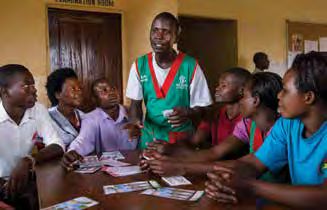
GLOBAL HEALTH SECTOR STRATEGY ON SEXUALLY TRANSMITTED INFECTIONS, 2016–2021                            09

            This strategy is fully aligned with the 2030 Agenda
            for Sustainable Development, and the drive towards                                  BOX 2. SPECIFIC POPULATIONS
            universal health coverage. It is also aligned with
            other key WHO global health strategies and plans,                                   Each country needs to define the specific populations
                                                                                                that are most affected by sexually transmitted infection
            including those for sexual and reproductive health,
                                                                                                epidemics. The response should be based on the
            HIV, violence against women and girls, adolescent                                   epidemiological and social context. Specific populations
            health, maternal, newborn and child health,                                         that focus on sexually transmitted infections will include
            noncommunicable diseases, integrated people-                                        populations most likely to have a high number of sex
            centred health services, viral hepatitis, tuberculosis,                             partners, such as sex workers and their clients. Other
            and blood safety.3                                                                  populations for consideration include men who have
                                                                                                sex with men, transgendered people, and people with
            Broad partnerships and strong links with other                                      an existing sexually transmitted infection, including
            health and development issues must be emphasized                                    people living with HIV. Many of these groups overlap
                                                                                                with groups recognized as key populations for HIV.
            in the next phase of the sexually transmitted                                       Other groups considered to be particularly vulnerable to
            infection response. The strategy takes into                                         sexually transmitted infections include young people and
            consideration the global health strategies of key                                   adolescents, women, mobile populations, children and
            development partners, including the Global Fund to                                  young people living on the street, prisoners, drug users
            fight AIDS, Tuberculosis and Malaria; the United                                    and people affected by conflict and civil unrest.
            States President’s Emergency Plan for AIDS Relief;
            GAVI Alliance; and the Global Strategy for Women’s
            Children’s and Adolescents’ Health (2016–2030).4
            The strategy defines the quality-assured sexually
            transmitted infection services that are essential for
            meeting people’s needs and preferences, and proposes
            actions to address the underlying determinants of
            sexually transmitted infection epidemics, including
            stigmatization and discrimination, and inequities
            that put people at greater risk for infection and limit                             The strategy also recommends approaches to minimize
            access to effective prevention and treatment services.                              the risk of financial hardship for people requiring
            Further, the strategy describes how to ensure                                       services, and embraces innovation to drive accelerated
            equitable coverage of services and maximum                                          progress. Many of the priority actions highlighted
            impact for all people in need, which includes a                                     draw on the strong body of evidence generated by the
            focus on both the general population and specific                                   implementation of the 2006–2015 strategy on sexually
            population groups (see Box 2).                                                      transmitted infections5 and responses around the world.6

3	Some of the key WHO global health strategies and plans are available online, including: three global health sector strategies for the
   period 2016–2021 for HIV, viral hepatitis, and sexually transmitted infections, see http://www.who.int/ reproductivehealth/ghs-
   strategies/en/ and http://www.who.int/hiv/strategy2016-2021/online-consultation/en/ (accessed 24 April 2016); another is the
   End TB strategy, see http://www.who.int/tb/strategy/en/ (accessed 20 April 2016). In addition, information is available on WHO’s
   advocacy role and on current online consultations, for example, Giving “voice to youth”, see http://www.who.int/reproductivehealth/
   en (accessed 20 April 2016); and the WHO Global action plan on antimicrobial resistance http://www.who.int/drugresistance/global_
   action_plan/en/ (accessed 24 April 2016).
4	The Global Strategy for Women’s, Children’s and Adolescents’ Health (2016–2030) is available at: http://www.
   everywomaneverychild.org/global-strategy-2 (accessed 22 April 2016);
5 	Global strategy for the prevention and control of sexually transmitted infections: 2006-2015, see http://www.who.int/hiv/pub/
    toolkits/stis_strategy[1]en.pdf (accessed 22 April 2016).
6 See document A68/36 progress report G (2015).
10      GLOBAL HEALTH SECTOR STRATEGY ON SEXUALLY TRANSMITTED INFECTIONS, 2016–2021

OUTLINE OF THE STRATEGY

The following five major sections underpin this strategy
(an overview of which is provided in Figure 1):

                  01            Setting the scene –
                                reviews the current status of sexually transmitted infection
                                epidemics and burden, identifies opportunities and challenges
                                for the future, and argues the case for adequate investment in
                                the health sector response to sexually transmitted infections.

                  02            Framing the strategy –
                                describes the three organizing frameworks for the strategy
                                (universal health coverage, continuum of sexually transmitted
                                infection services and the public health approach) and presents
                                the structure of the strategy.

                  03            Vision, goal, targets and guiding principles –
                                presents a set of impact and service coverage targets for 2020
                                and 2030 to drive the response.

                  04            Strategic directions and priority actions –
                                recommends actions to be taken for both countries and
                                WHO under each of five strategic directions.

                  05            Strategy implementation: leadership, partnerships,
                                accountability, monitoring and evaluation –
                                outlines the key elements of implementation.
GLOBAL HEALTH SECTOR STRATEGY ON SEXUALLY TRANSMITTED INFECTIONS, 2016–2021 11
Figure 1. Outline of the global health sector strategy on
sexually transmitted infections 2016–2021
VISION Zero new infections, zero sexually transmitted infection-related
complications and deaths, and zero discrimination in a world where everybody
has free and easy access to sexually transmitted infection prevention and
treatment services, resulting in people able to live long and healthy lives.
GOAL Ending sexually transmitted infection epidemics as major public
health concerns.
2030 TARGETS 90% reduction of T. pallidum incidence globally (2018 global baseline).
90% reduction in N. gonorrhoea incidence globally (2018 global baseline).
≤ 50 cases of congenital syphilis per 100 000 live births in 80% of countries
Sustain 90% national coverage and at least 80% in every district (or
equivalent administrative unit) in countries with the human papillomavirus
vaccine in their national immunization programme.
MONITORING AND EVALUATION
FRAMEWORKS Universal health coverage,the continuum of services; and, a public
health approach.
FOR ACTION
The three dimensions of universal health coverage
STRATEGIC STRATEGIC STRATEGIC STRATEGIC STRATEGIC
DIRECTION 1 DIRECTION 2 DIRECTION 3 DIRECTION 4 DIRECTION 5
Information for Interventions Delivering Financing for Innovation for
focused action for impact for equity sustainability acceleration
The “who”
and “where” The “what” The “how” The financing The future
STRATEGY Leadership, Partnership, Accountability, Monitoring & Evaluation
IMPLEMENTATION
COUNTRY ACTION COUNTRY PARTNER ACTION
WHO ACTION HQ, REGIONS AND COUNTRIES GLOBAL PARTNER ACTION01
SETTING THE SCENE:
WHY THE SEXUALLY
TRANSMITTED INFECTION
RESPONSE SHOULD BE
A GLOBAL PRIORITY
01GLOBAL HEALTH SECTOR STRATEGY ON SEXUALLY TRANSMITTED INFECTIONS, 2016–2021 13
The burden of morbidity and mortality worldwide resulting from
sexually transmitted pathogens compromises quality of life, as well
as sexual and reproductive health and newborn and child health
(see Figure 2). Sexually transmitted infections also facilitate indirectly
the sexual transmission of HIV and cause cellular changes that precede
some cancers. Sexually transmitted infections impose a substantial
strain on the budgets of both households and national health systems
in middle- and low-income countries, and have an adverse effect
on the overall well-being of individuals (Box 3).
BOX 3. THE HIDDEN TOLL OF SEXUALLY TRANSMITTED INFECTIONS
It is estimated that annually there are 357 million new cases of four
curable sexually transmitted infections among people aged 15–49 years
(see Figure 2): Chlamydia trachomatis (131 million), Neisseria gonorrhoeae
(78 million), syphilis (6 million), or Trichomonas vaginalis (142 million).*
The prevalence of some viral sexually transmitted infections is similarly high,
with an estimated 417 million people infected with herpes simplex type 2,
and approximately 291 million women harbouring the human papillomavirus.
The prevalence of these sexually transmitted infections varies by region and
gender. These epidemics have a profound impact on the health and lives of
children, adolescents and adults worldwide:
• Fetal and neonatal deaths – syphilis in pregnancy leads to over 300 000 fetal
and neonatal deaths each year, and places an additional 215 000 infants at
increased risk of early death;
• Cervical cancer – the human papillomavirus infection is responsible for an
estimated 530 000 cases of cervical cancer and 264 000 cervical cancer
deaths each year;
• Infertility – sexually transmitted infections, such as gonorrhoea and
chlamydia, are important causes of infertility worldwide;
• HIV risk – the presence of a sexually transmitted infection, such as
syphilis, gonorrhoea, or herpes simplex virus infection, greatly increases
the risk of acquiring or transmitting HIV infection (by two to three times,
in some populations);
• The physical, psychological and social consequences of sexually
transmitted infections severely compromise the quality of life of
those infected. ADEQUATE CONTROL
* Most recent estimates are for 2012. AND/OR ELIMINATION
OF SEXUALLY
TRANSMITTED INFECTIONS
WILL CONTRIBUTE TO
REDUCING DISEASE AND
HUMAN SUFFERING14 GLOBAL HEALTH SECTOR STRATEGY ON SEXUALLY TRANSMITTED INFECTIONS, 2016–2021
Complications due to sexually transmitted infections Limited data on sexually transmitted infections, in
have a profound impact on sexual and reproductive particular data disaggregated by sex, compromise
health. The numbers of men and women infected the global response. There is inconsistent reporting
with sexually transmitted infections are similar between and within regions and countries. The present
(with the exception of herpes simplex virus type strategy proposes a priority focus on two areas: firstly,
2), notwithstanding some regional differences on securing better data on the sexually transmitted
(see Figures 3(a) and 3(b)); however, complications infection burden by sex and by age group in order
disproportionately affect women in several ways. to measure progress towards the control of sexually
transmitted infections; and secondly, on identifying
priority areas for action.
02 – Couple in Sri Lanka.GLOBAL HEALTH SECTOR STRATEGY ON SEXUALLY TRANSMITTED INFECTIONS, 2016–2021 15
Figure 2. WHO estimates: 357 million new cases of
curable sexually transmitted infections in 2012
Curable STIs chlamydia, gonorrhoea, syphilis, trichomoniasis
18
MILLION
31
MILLION
142
64
MILLION
MILLION
39
63
MILLION
MILLION
WHO Region of the Americas
WHO African Region
WHO Eastern Mediterranean Region
WHO European Region
WHO South-East Asia Region
WHO Western Pacific Region
Source: Newman LM, Rowley J, Vander Hoorn S et al. Global estimates of the prevalence
and incidence of four curable sexually transmitted infections in 2012, PLosOne 2015.16 GLOBAL HEALTH SECTOR STRATEGY ON SEXUALLY TRANSMITTED INFECTIONS, 2016–2021
Figure 3(a). Estimated incidences of four curable sexually
transmitted infections, by region and sex, 2012
90
80
70
60 TRICHOMONIASIS
GONORRHOEA
MILLIONS
50
CHLAMYDIA
40 SYPHILIS
30
20 TRICHOMONIASIS
GONORRHOEA
10
CHLAMYDIA
0 SYPHILIS
AFR AMR EMR EUR SEAR WPR
Figure 3(b). Estimated prevalence of Herpes
simplex virus type 2, by region and sex, 2012
90
80
70
60
50
40
30
20
10
0
Africa Americas Eastern Europe South East Western
Mediterranean Asia PacificGLOBAL HEALTH SECTOR STRATEGY ON SEXUALLY TRANSMITTED INFECTIONS, 2016–2021 17
In recent years there have been notable achievements in Most of the tools required for reaching ambitious
advancing the sexually transmitted infection response. 2030 targets are available. Potentially vital innovations,
There has been an appreciable decline, for example, in such as point-of-care tests for sexually transmitted
the incidence of Haemophilus ducreyi (chancroid) in infections, vaccines against such infections and
general population syphilis rates, and in some sequelae multipurpose technologies are on the horizon.
of such infections, including neonatal conjunctivitis. Using them to full effect, however, will require a
An increase in the number of pregnant women screened rapid increase in investment in the sexually transmitted
for syphilis and HIV, with increased access to adequate infection response, focusing resources on the most
treatment, has helped underline the feasibility of dual effective programmes and on the populations and
elimination of mother-to-child transmission of HIV geographical locations where need is greatest, and
and syphilis. Furthermore, increased access to human linking sexually transmitted infection interventions
papillomavirus vaccination has already been shown to with other health services, to mutual benefit. These
reduce pre-cervical cancer lesions and genital warts. key directions are detailed in the present strategy.
Further acceleration of the global response will sustain
and build on these achievements and trigger further
successes in sexually transmitted infection management
and reduction.
PRIORITIZING THREE SEXUALLY TRANSMITTED
INFECTIONS FOR STRATEGIC GLOBAL FOCUS
The global health sector strategy on sexually transmitted WHO also recognizes the importance of Chlamydia
infections focuses primarily on three infections that trachomatis infection and the increasing rate of
require immediate action for control and that can infection in adolescents. However, because the best
be monitored: strategies to control and measure chlamydia infections
are still to be defined, further research and cost-
01/ Neisseria gonorrhoeae because of the rising risk
effectiveness analyses are encouraged. Furthermore,
of untreatable gonorrhoea and the risk of coinfection
WHO will catalyse the development of point-of-care
with other sexually transmitted infections including
testing as a critical step within the sexually transmitted
Chlamydia trachomatis
infection cascade and continuum of services.
02/ Treponema pallidum with the elimination of
congenital syphilis, which implies that strong systems
are in place to ensure screening and treatment of
all pregnant women and control of syphilis in
specific populations;
03/ Human papillomavirus with an emphasis on
vaccination towards the elimination of cervical cancer
and genital warts.
Cost-effective interventions exist for all three sexually
transmitted infections.02
FRAMING THE
STRATEGY
03GLOBAL HEALTH SECTOR STRATEGY ON SEXUALLY TRANSMITTED INFECTIONS, 2016–2021 19
The proposed strategy on sexually transmitted
infections is one of three related health sector
strategies for 2016–2021, designed to contribute to
the attainment of the 2030 Agenda for Sustainable
Development, and the Goals it enshrines. Health is a
major goal in this new Agenda, which reflects its central
role in alleviating poverty and facilitating development.
The present strategy positions the response to the
sexually transmitted infection burden within the
broader post-2015 development framework. It describes
the priority actions that are required in order to achieve
global targets related to sexually transmitted infections,
and how the response to such infections can contribute
to the achievement of universal health coverage and
other key health goals.
This strategy draws on three overarching frameworks:
universal health coverage; the continuum of services
relating to sexually transmitted infections; and the
public health approach.
UNIVERSAL HEALTH COVERAGE
Universal health coverage (see Figure 4) provides an As resources, efficiencies and capacities increase, the
overarching framework for the strategy. It comprises range of services provided can be expanded, the quality
three interlinked objectives: can be improved, and more populations can be covered
with less direct costs to those who need the services –
01/ improve the range, quality and availability of
a progressive realization of universal health coverage.
essential health interventions and services (covering the
Each country will need to determine the most suitable
range of services needed);
path towards universal health coverage based on its
02/ improve the equitable and optimal uptake of own country context, prioritizing and making trade-offs
services in relation to need (covering the populations in order to be able to move forward as rapidly as possible
in need of services); while ensuring programme sustainability, quality
and equity.
03/ reduce costs and provide financial protection
for those who need the services (covering the costs
of services).20 GLOBAL HEALTH SECTOR STRATEGY ON SEXUALLY TRANSMITTED INFECTIONS, 2016–2021
Using the perspective of universal health coverage
(Figure 4), the proposed strategy emphasizes the need
for: strengthening health and community systems;
identifying high-impact interventions; tackling the
social determinants that drive the epidemic and hinder
the response; and ensuring that people use the quality
health services they need without suffering financial
hardship or stigmatization. In particular, the strategy
addresses issues related to effective and equitable service
coverage, which includes overcoming barriers to care
and understanding the needs of women, adolescents
and specific population groups (see Box 3), including
those linked to increased vulnerabilities.
Figure 4. The three dimensions of universal health coverage: All people receive the services
they need of sufficient quality to make a difference without incurring financial hardship
REDUCE COST DIRECT COSTS
SHARING AND FEES PROPORTION OF
THE COSTS
COVERED
EXTEND TO
NON-COVERED INCLUDE OTHER
SERVICES
CURRENT
COVERAGE
SERVICES
WHICH SERVICES
ARE COVERED?
POPULATION
WHO IS COVERED?GLOBAL HEALTH SECTOR STRATEGY ON SEXUALLY TRANSMITTED INFECTIONS, 2016–2021 21
THE CONTINUUM OF SEXUALLY TRANSMITTED INFECTION
SERVICES AS AN ORGANIZING FRAMEWORK FOR SEXUALLY
TRANSMITTED INFECTION PROGRAMMES
While the concept of universal health coverage frames It identifies ways to ensure and improve the quality of
the overall strategy, the continuum of services that services, and proposes strategies to achieve financial
are needed to overcome sexually transmitted infection sustainability and minimize the risk of financial
epidemics provides a comprehensive service delivery hardship for people requiring such services.
framework for organizing strategic action (Figure
As people move along the continuum of sexually
5). That continuum spans the full range of required
transmitted infection services, there tends to be some
interventions – preventing, diagnosing, treating and
loss to follow-up (see Figure 5). The objective is to
curing – that is needed to achieve strategic targets
engage individuals as early as possible, retain them in
and includes all people: people reached by prevention
care and minimize any leakages along the cascade of
activities; people tested; people aware of their status;
service continuum.
people enrolled in care; people whose treatment has
started; people whose treatment is complete; people The strategy also makes a strong case for expanding
who are cured; and people accessing chronic care. the provision of good quality sexually transmitted
infection prevention and care more widely into the
The present strategy describes the priority actions for
areas of primary health care, sexual and reproductive
enhancing the impact and equity of sexually transmitted
health, and HIV services. It emphasizes opportunities
infection responses along that entire continuum, with
to increase coverage by working collaboratively with
special attention to reaching populations that are left
other government sectors, and with community-based
behind. Depending on the context, those left behind
organizations and private providers.
may include: women, men, adolescents, men who have
sex with men, sex workers, and transgender people.
Figure 5. The continuum of sexually transmitted infection services and the cascade
STI CASCADE
ALL PEOPLE PEOPLE AWARE OF ENROLLED TREATMENT TREATMENT CURED ACCESSING
PEOPLE REACHED BY TESTED STATUS IN CARE STARTED COMPLETED CHRONIC
PREVENTION CARE
ACTIVITIES
OF SERVICES
CONTINUUM
LINK CHRONIC
PREVENTION TESTING TREATMENT
TO CARE CARE22 GLOBAL HEALTH SECTOR STRATEGY ON SEXUALLY TRANSMITTED INFECTIONS, 2016–2021
A PUBLIC HEALTH APPROACH
The strategy is rooted in a public health approach It promotes the principle of Health in All Policies
that is concerned with preventing disease, promoting through, where necessary, legal, regulatory and policy
health and ensuring quality of life among the reforms. It aims to strengthen integration and linkages
population as a whole. It aims to ensure the widest between sexually transmitted infection services and
possible access to high-quality services at the population other services, improving both impact and efficiency.
level, based on simplified and standardized interventions
and services that can readily be taken to scale, including
in resource-limited settings. Through adopting a public
health approach, the strategy proposes:
• Standardized, simplified protocols and guidance;
• Integrated people-centred health services;
• Decentralized service delivery;
• A focus on equity;
• Community participation;
• The meaningful involvement of people most affected
by sexually transmitted infections;
• Leveraging public and private sectors;
• Ensuring services are free or affordable;
• Moving from an individual clinical focus to
population-based national plans.
04 – Women being screened for cervical cancer,
at a rural clinic, Kenya.GLOBAL HEALTH SECTOR STRATEGY ON SEXUALLY TRANSMITTED INFECTIONS, 2016–2021 23
THE STRUCTURE OF THE
PROPOSED STRATEGY
The proposed strategy describes five strategic directions, • Strategic direction 4 – Financing for sustainability
under which there are priority actions that countries – Addresses the third dimension of universal health
need to take. In addition, the support that WHO coverage by identifying sustainable and innovative
will provide in order to scale up a global response models for financing of sexually transmitted infection
is also described. Such a response capitalizes on the responses and approaches for reducing costs so that
opportunities provided thorough the frameworks people can access the necessary services without
emerging in response to the 2030 Agenda for incurring financial hardship.
Sustainable Development for ending the sexually
transmitted infection epidemics as major public • Strategic direction 5 – Innovation for acceleration
health concerns. – Identifies those areas where there are major gaps
in knowledge and technologies, where innovation
The five strategic directions (provided in Figure 1) in is required to shift the trajectory of the sexually
the present strategy for the period 2016–2021 include: transmitted infection response towards and beyond
• Strategic direction 1 – Information for focused the 2020 milestones.
action – Focuses on the need to understand the
sexually transmitted infection epidemic and response The proposed strategy outlines a pathway towards
as a basis for advocacy, political commitment, the goal of eliminating sexually transmitted infections
national planning, resource mobilization and as a public health threat by 2030. Impact and service
allocation, implementation, and programme coverage targets are defined for 2020 and 2030 to
improvement. measure progress towards the elimination goal.
To achieve these targets, action is required in five areas,
• Strategic direction 2 – Interventions for impact –
which are organized under five strategic directions.
Addresses the first dimension of universal health
coverage by describing the essential package of The five strategic directions and the priority actions are
high-impact interventions that need to be delivered informed by the evaluation of the implementation of
along the continuum of sexually transmitted the 2006–2015 sexually transmitted infections global
infection services to reach country and global targets, strategy7 presented to the Sixty-eighth World Health
and which should be considered for inclusion in Assembly in 2015.8 The evaluation emphasized a need
national health benefit packages. to: (1) strengthen surveillance and improve knowledge
of prevalence, etiology and antimicrobial resistance; (2)
• Strategic direction 3 – Delivering for equity – scale up sexually transmitted infection interventions,
Addresses the second dimension of universal health in particular for specific populations through ensuring
coverage by identifying the best methods and an appropriate enabling environment; (3) increase
approaches for delivering the continuum of sexually access to services by integrating the prevention and
transmitted infection services to different populations management of sexually transmitted infections into the
and in different locations, so as to achieve equity, broader agendas of HIV, sexual and reproductive health,
maximize impact and ensure quality. It includes a and other key platforms; (4) strengthen financing
critical focus on interventions and approaches focused mechanisms for relevant services and strengthening
on human rights, gender equality, and addressing human resource capacity; and (5) accelerate access to
barriers that undermine equitable access to services innovations through the development of point-of-care
for different populations and in different settings diagnostic tests and new preventive interventions, such
and locations. as vaccines, microbicides, suppressive therapy for the
herpes simplex virus, and HIV prevention and health
promotion methods.
7 See the progress report of the implementation of the global strategy for prevention and control of sexually transmitted infections:
2006–2015, at http://www.who.int/reproductivehealth/publications/rtis/STI-progress.pdf?ua=1 (accessed 22 April 2016).
8 See document A68/36 progress report G.03
VISION, GOAL,
TARGETS AND GUIDING
PRINCIPLES
The strategy outlines a vision,
goal, targets, milestones, the
broader impact, and guiding
principles for the global
health sector.
05GLOBAL HEALTH SECTOR STRATEGY ON SEXUALLY TRANSMITTED INFECTIONS, 2016–2021 25
The targets and milestones were proposed during a The proposed 70% targets were based on expert
WHO expert consultation on sexually transmitted consensus and are not informed by a modelling
infections in August 2014, which included country exercise. The human papillomavirus vaccine target is
representatives and experts in this area of public health. consistent with the targets identified in the Global
The choice of targets was influenced by the availability vaccine action plan.9
of cost-effective interventions that should be urgently
The global targets should be achieved by 2030, which
scaled up and the, use of existing indicators and
aligns with the timeline established for the Sustainable
reporting frameworks to reduce the reporting burden
Development Goals.10 The report to be produced in
of countries. These targets can be monitored through
2021 will measure the milestones, and an evaluation
the existing Global AIDS Response Progress Reporting
will be undertaken at that time on whether targets are
system (N. gonorrhoeae and T. pallidum), and the
on track. Any adjustments that are required to achieve
Global vaccine action plan (HPV vaccination).
the 2030 global targets may also be made at that time.
VISION GOAL
Zero new infections, zero sexually Ending sexually transmitted
transmitted infection-related infection epidemics as major
complications and deaths, and zero public health concerns.11
discrimination in a world where
everybody has free and easy access
to prevention and treatment services
for sexually transmitted infections,
resulting in people able to live
long and healthy lives.
GLOBAL TARGETS FOR 2030
A concerted effort to rapidly scale up effective interventions and services can achieve the
goal of ending sexually transmitted infection epidemics as public health concerns by 2030,
by reaching this ambitious set of targets (see Figure 6):
• 90% reduction of T. pallidum incidence globally (2018 global baseline);
• 90% reduction in N. gonorrhoeae incidence globally (2018 global baseline);
• 50 or fewer cases of congenital syphilis per 100 000 live births in 80% of countries;12
• Sustain 90% national coverage and at least 80% in every district (or equivalent
administrative unit) in countries with the human papillomavirus vaccine in their
national immunization programme.
9 See document WHA65/2012/REC/1, Annex 4.
10 A s mentioned, the Sustainable Development Goals and targets are identified in the United Nations General Assembly resolution 70/1 –
Transforming our world: The 2030 Agenda for Sustainable Development identifies see http://www.un.org/ga/search/view_doc.asp?symbol=A/
RES/70/1&Lang=E (accessed 22 April 2016).
11 Ending the sexually transmitted infection epidemics as major public health concerns is defined by the reduction in cases of N. gonorrhoeae and T.
pallidum; as well as by the elimination of congenital syphilis and of pre-cervical cancer lesions through the high coverage of human papillomavirus
vaccines.
12 A ligned with the Global guidance on criteria and processes for validation: elimination of mother-to-child transmission of HIV and syphilis, see
http://apps.who.int/iris/bitstream/10665/112858/1/9789241505888_eng.pdf? ua=1&ua=1 (accessed 25 April 2016).26 GLOBAL HEALTH SECTOR STRATEGY ON SEXUALLY TRANSMITTED INFECTIONS, 2016–2021
MILESTONES FOR 2020
Milestones for 2020 (see Figure 7) include: • 70% of countries deliver HPV vaccines through the
national immunization programme
• 70% of countries have sexually transmitted infection
surveillance systems in place that are able to monitor • 70% of countries report on antimicrobial resistance
progress towards the relevant targets in N. gonorrhoeae
• 70% of countries have at least 95% of pregnant • 90% national coverage sustained and at least 80%
women screened for HIV and/or syphilis; 95% of in every district (or equivalent administrative unit)
pregnant women screened for HIV and/or syphilis in countries with the human papillomavirus vaccine
with free, prior and informed consent; 90% of in their national immunization programme
HIV-positive pregnant women receiving effective
treatment; and 95% of syphilis-seropositive pregnant
women treated with at least one dose of intramuscular
benzathine penicillin or other effective regimen
• 70% of key populations for HIV have access to a
full range of services relevant to sexually transmitted
70%
infection and HIV, including condoms
• 70% of countries provide sexually transmitted
infection services or links to such services in all
primary, HIV, reproductive health, family planning,
and antenatal and postnatal care services OF COUNTRIES HAVE
SEXUALLY TRANSMITTED
INFECTION SURVEILLANCE
SYSTEMS IN PLACE
COUNTRY TARGETS FOR 2020
Informed by global goals and targets, countries should
develop as soon as practicable ambitious national goals
and targets for 2020 and beyond, taking into account
the country context, including the nature and dynamics
of country epidemics, populations affected, structure
and capacity of the health care and community systems,
and resources that can be mobilized. Targets should
be feasible and developed based on the best possible
data available on the sexually transmitted infections
situation, trends and responses, and monitored
through a set of standard and measurable indicators.
The targets should apply to everyone.GLOBAL HEALTH SECTOR STRATEGY ON SEXUALLY TRANSMITTED INFECTIONS, 2016–2021 27
Figure 6. Incidence targets: syphilis and gonorrhoea
SYPHILIS INCIDENCE
ACCELERATED
6.0 ACTION
2016-2021
5.0
90%
4.0 REDUCTION by 2030
(IN MILLIONS)
IN SYPHILIS
INCIDENCE GLOBALLY
3.0 (2018 BASELINE)
2.0
1.0
0
2010 2020 2030
YEARS
GONORRHOEA INCIDENCE
ACCELERATED
ACTION
90.0 2016-2021
90%
(IN MILLIONS)
REDUCTION by 2030
50.0
IN GONORRHOEA
INCIDENCE GLOBALLY
(2018 BASELINE)
10.0
2010 2020 2030
YEARS28 GLOBAL HEALTH SECTOR STRATEGY ON SEXUALLY TRANSMITTED INFECTIONS, 2016–2021
Figure 7. The strategy on sexually transmitted infections – 2020 milestones
70% 70%
• of countries have STI surveillance systems in place of key populations
• of countries have at least 95% of pregnant women screened for syphilis have access to
and 90% tested for HIV and 95% of HIV positive pregnant women a full range of
receiving effective treatment STI & HIV services,
• of countries provide STI services or links to such services in all primary, including condoms
HIV, reproductive health, family planning and ante- and post-natal care services
• of countries deliver HPV vaccines through the national immunization programme
• of countries report on antimicrobial resistance in N. gonorrhoeae
THE BROADER IMPACT
By saving millions of lives directly and indirectly, The proposed strategy will contribute to five of the
and by improving the health and well-being of an 13 health-related targets by 2030:
even greater number of people, an expanded and more
• Ending preventable deaths of mothers, newborns
effective response to sexually transmitted infections
and children under 5 years of age;
will contribute significantly to reaching universal
health coverage, realizing people’s overall right to • Ending epidemics of AIDS, and combatting
health, and achieving the 2030 Agenda for Sustainable hepatitis and other communicable diseases;
Development. The impact will be multiplied if actions • Reducing by one third premature mortality from
are underpinned by strong health and community noncommunicable diseases through prevention
systems, accompanied by strengthened responses in and treatment, and promoting mental health
other health areas, and address the social and regulatory and well-being;
factors that increase the risk of sexually transmitted • Ensuring universal access to services for sexual
infections and impede access to appropriate services. and reproductive health care, family planning,
In the 2030 Agenda for Sustainable Development, the information and education, and the integration
targets under Sustainable Development Goal 3 cover of reproductive health into national strategies
broad areas, and do not include a specific mention of, or and programmes;
targets for, sexually transmitted infections.13 Accelerated • Achieving universal health coverage, including
action to address 2020 targets related to sexually financial risk protection, access to quality essential
transmitted infections will enhance progress relating health care services and access to safe, effective,
to a number of 2030 Sustainable Development Goals. quality and affordable essential medicines and
vaccines for all.
13 United Nations General Assembly resolution 70/1 – Transforming our world: The 2030 Agenda for Sustainable Development,
see http://www.un.org/ga/search/view_doc.asp?symbol=A/RES/70/1&Lang=E (accessed 22 April 2016).GLOBAL HEALTH SECTOR STRATEGY ON SEXUALLY TRANSMITTED INFECTIONS, 2016–2021 29
Effective action addressing sexually transmitted The lack of specific sexually transmitted infection
infections will help: combat antimicrobial resistance; targets in the 2030 Agenda for Sustainable Development
eliminate adverse neonatal outcomes; reduce HIV can have implications for priority-setting by countries
transmission; prevent cancer; decrease the burden and, in particular, for the priority given to the
of infertility; and support the health and well-being measurement of sexually transmitted infection
of young people. indicators. It is crucial, however, to understand that
the fast and extensive implementation of the actions
outlined in this strategy will contribute substantially
to achieving the 2030 Agenda for Sustainable
Development.
THE GUIDING PRINCIPLES
The present strategy is rooted in a public health The following principles guide the strategy:
approach14 that is concerned with preventing disease,
• Universal health coverage;
promoting health, and prolonging life in the population
as a whole, and is designed to promote a long-term, • Government stewardship and accountability;
sustainable response. • Evidence-based interventions, services and policies;
• Protection and promotion of human rights, gender
equality and health equity;
• Partnership, integration and linkage with relevant
sectors, programmes and strategies;
• Meaningful engagement and empowerment of people
most affected by sexually transmitted infections.
06 – Members of a youth club
meet to discuss sex education and
family planning at a clinic, Uganda.
14 The core public health functions involve assessing and monitoring the health of specific most-affected populations to identify health
threats and priorities; formulating public policies to solve identified health problems and priorities; and ensuring that all populations
have access to appropriate and cost-effective care, and evaluating the effectiveness of that care.04
STRATEGIC
DIRECTIONS AND
PRIORITY ACTIONS
07GLOBAL HEALTH SECTOR STRATEGY ON SEXUALLY TRANSMITTED INFECTIONS, 2016–2021 31
STRATEGIC DIRECTION 1:
INFORMATION FOR FOCUSED ACTION
Knowing your sexually transmitted A robust strategic information system is a cornerstone
infection epidemic in order to for advocating, funding, strategically planning and
implement a tailored response implementing effective sexually transmitted infection
interventions, for monitoring and improving them,
and for providing evidence of their impact. It is
essential for countries to know their sexually transmitted
infection epidemics and to know the related responses
in order that up to date, accurate information guides
national responses.
STRATEGIC INFORMATION FOR ADVOCACY UNDERSTANDING THE EPIDEMICS
AND INVESTMENT
Knowing the epidemics includes understanding where,
With limited resources, countries need to build how and among whom new infections are occurring,
a strong, comprehensive case to justify the use of and identifying the factors that facilitate sexually
domestic resources for sexually transmitted infection transmitted infection transmission or limit access to
prevention and care, and to mobilize external resources. and use of appropriate services. Prevention, treatment
A well-functioning strategic information system is and care programmes can then be prioritized and
essential for rallying political commitment and for focused accordingly.
building a strong case for investment. It enables
countries to define and develop a budget for an Geographical and population mapping can help
effective package of interventions and services based countries design and implement the most efficient
on the country context, decide on the most appropriate and effective responses. Strategic information systems
allocation of resources across the different levels of should provide subnational and disaggregated data to
the health system, and identify potential and reliable monitor epidemic trends and to map the locations and
sources of funding. core groups among which most transmission of sexually
transmitted infections is occurring. This will enable
resources and services to be allocated, according to
where the greatest impact can be achieved.
IT IS ESSENTIAL FOR
COUNTRIES TO KNOW
THEIR SEXUALLY
TRANSMITTED INFECTION
EPIDEMICS AND TO KNOW
THE RELATED RESPONSES32 GLOBAL HEALTH SECTOR STRATEGY ON SEXUALLY TRANSMITTED INFECTIONS, 2016–2021
NATIONAL SEXUALLY TRANSMITTED A strong strategic information system that focuses on
INFECTION SURVEILLANCE sexually transmitted infection is required to: generate
data disaggregated by sex and age; and triangulate and
There are four core components of sexually transmitted synthesize data regularly from other data collection
infection surveillance: case reporting, prevalence systems covering other health-related topics, such as
assessments, assessment of the etiology of sexually HIV, and maternal, reproductive and child health.
transmitted infection syndromes, and monitoring
of antimicrobial resistance. Currently, most relevant Robust data on sexually transmitted infections make
national surveillance systems are based on universal it possible to focus related programmes more precisely
syndromic case reporting. and effectively, and to deploy or adapt services to
reach greater numbers of people in need. Civil society
Over time, countries should be assisted to move from is an important partner for strengthening strategic
syndromic to etiologic surveillance. This will require information systems, and for ensuring that data
not only strengthening of in-country laboratory are collected and used in an ethical manner that
capacity, but also the development and introduction benefits communities.
of affordable point-of-care sexually transmitted infection
diagnostics. National case reporting should focus on Surveillance data on sexually transmitted infections
syphilis, gonorrhoea, urethral discharge and genital can also be used as the basis for estimating national
ulcer disease. In addition, countries should conduct prevalence and incidence of syphilis and gonorrhoea,
routine syphilis prevalence monitoring of pregnant and congenital syphilis rates. Such estimates can
women and of specific populations, including men be used to assess progress towards the goals of the
who have sex with men, and sex workers; countries present strategy.
should also conduct gonorrhoea and chlamydia The potential impact of the introduction of
prevalence monitoring among the same populations pre-exposure prophylaxis of HIV infection in different
and among adolescents. communities should be monitored, including through
Every few years, countries using syndromic management the surveillance of sexually transmitted infections,
should conduct an etiologic assessment to inform sexual behaviour and drug resistance. While there is
treatment recommendations. All countries should currently no evidence for risk compensation in sexual
have an ongoing system in place to conduct routine practices, such as decreased condom use or more
gonococcal antimicrobial resistance monitoring. sexual partners, from studies or early programmes,
this important innovation should be monitored to
ensure its effectiveness and also to ensure that any
unanticipated consequences are addressed.
08 – Men who have sex with
men in a neighborhood park,
New Delhi, India.GLOBAL HEALTH SECTOR STRATEGY ON SEXUALLY TRANSMITTED INFECTIONS, 2016–2021 33
PRIORITY ACTIONS COUNTRIES PRIORITY ACTIONS FOR WHO
trengthen and integrate sexually transmitted
S rovide global leadership and assistance to countries
P
infection surveillance into the national health in strengthening sexually transmitted infection
information system as a part of health system surveillance and in using standard methodologies
strengthening, using standardized indicators and for such surveillance and estimation of the burden
methodologies as guided by WHO; ensure that data and impact; support the development of strategic
collection methods yield high-quality information, information systems and sexually transmitted
meet ethical standards, and do not pose risks for infection epidemics and response mapping, including
communities or the health care workers involved. the analysis of disaggregated data for monitoring
inequities; support countries in strengthening
Increase the “granularity” of data including through: case reporting, prevalence assessment, etiologic
enhanced sexually transmitted infection-related assessment and antimicrobial resistance monitoring;
disaggregated data collection based on different strengthen global systems for collecting and sharing
stratifiers that include age, sex, population and national surveillance data on sexually transmitted
location; involve affected communities and specific infections, including disaggregated data and analysis
populations to achieve high-quality data and analysis. for monitoring equity.
Identify specific populations who are most at risk for Provide guidance on the collection and analysis of
sexually transmitted infections and places where most disaggregated data based on different stratifiers and
of the transmission is occurring; establish mechanisms the involvement of affected communities and specific
to promote the participation of affected communities; populations, including key populations for HIV, in
conduct routine case reporting and periodic efforts to obtain high-quality data and achieve
prevalence assessment of core sexually transmitted high-quality analysis; use internationally endorsed
infections to assess the magnitude of the sexually methods for estimating the sizes of key populations
transmitted infection problem in target populations, for HIV and on setting programme targets for services
including by disaggregating the data; describe the for key populations for HIV.
sexually transmitted infection epidemics and measure
the impact in terms of sequelae and cost. Ensure linkages of some components of sexually
transmitted infection surveillance to existing
I nclude data on the risk factors and determinants of mechanisms including HIV and antimicrobial
sexually transmitted infections in order to understand resistance surveillance.
and address these determinants. Include a focus
on pre-exposure prophylaxis as appropriate. Use
both standard and innovative participatory survey
methodologies to develop accurate estimates of
key population sizes and detailed understandings of
subnational epidemics; integrate biological surveillance
with other programmes, such as a behavioural
surveillance survey in the HIV files – include contact
tracing and treatment of partners.
Strengthen national laboratory capacity through
quality assurance and the introduction of point-of-care
diagnostics to ensure routine monitoring of sexually
transmitted infections and antimicrobial resistance to
N. gonorrhoeae.34 GLOBAL HEALTH SECTOR STRATEGY ON SEXUALLY TRANSMITTED INFECTIONS, 2016–2021
TRACKING, MONITORING AND SHARING EVIDENCE NATIONAL STRATEGIC PLANNING, PROGRAMME
ON THE RESPONSE IMPLEMENTATION AND ACCOUNTABILITY
The strategic information system needs to be capable The strategic information system has to inform a
of collecting and analysing disaggregated data along national strategy and implementation plan that is
the entire continuum of care: prevention, treatment based on the country context, defines national targets
and care services to identify gaps in the coverage and is aligned with global targets. This national
and performance of services, and to determine areas strategy and implementation plan guides the national
requiring improvements. By identifying indicators health response to sexually transmitted infections.
for measuring progress and for monitoring and
The strategy should describe actions that need to
evaluating interventions, countries can assess, report
be taken to achieve the national targets, including
and improve services relating to sexually transmitted
identifying specific populations and priority locations
infections, and achieve greater equity in their responses.
based on local epidemiology, prioritizing evidence-
They can determine whether services are available
based and high-impact interventions and service
and being used, whether and where disparities and
delivery models that best suit the context, and
gaps exist, which delivery models are most effective
implementing a monitoring and evaluation framework
(for instance, through health facilities, community-
that can track progress towards the targets.
based services or other approaches), and which elements
require improvement. Linking the sexually transmitted There should be clear linkages between the present
infection response with other health and development health strategy and other relevant sectoral strategies,
initiatives requires greater integration of health other relevant disease-specific strategies, such as those
information systems and the alignment of reporting for tuberculosis, and sexual and reproductive health,
across health programmes. and broader national health and development
strategies. Each country should have a national
programme focusing on sexually transmitted
infections, with the necessary resources and capacity
to implement a relevant national strategy and plan,
and to monitor and report on progress.
Countries need to track, assess and report on progress
towards the agreed targets, using indicators on
availability, coverage outcomes and impact of services.
COUNTRIES NEED TO Benchmarking – or comparisons between and within
TRACK, ASSESS AND countries – should be used to assess performances.
REPORT ON PROGRESS Existing instruments should be used for measuring
TOWARDS THE AGREED progress in implementing policy, legal and structural
measures for enhancing the sexually transmitted
TARGETS, USING INDICATORS
infection response, including the National Composite
ON AVAILABILITY, COVERAGE Policy Index15 and the People Living with HIV
OUTCOMES AND IMPACT Stigma Index.16
OF SERVICES
15 The National Composite Policy Index is Appendix 10 in the 2010 Reporting document of the United National General Assembly
Special Session on HIV/AIDS, Monitoring the Declaration of Commitment on HIV/AIDS: Guidelines on construction of core indicators,
see http://data.unaids.org/pub/Manual/2009/JC1676_Core_Indicators_2009_en.pdf (accessed 22 April 2016).
16 For more information, see the People Living with HIV Stigma Index, at http://www.stigmaindex.org/ (accessed 22 April 2016).You can also read


