PREPARING FOR: TRIBAL ACCOUNTING & AUDIT IN 2021 - National Tribal Practice Team The information provided herein is for informational purposes ...
←
→
Page content transcription
If your browser does not render page correctly, please read the page content below

PREPARING FOR:
     TRIBAL ACCOUNTING & AUDIT IN 2021                                                                           National Tribal Practice Team

The information provided herein is for informational purposes only and should not be construed as financial, investment, tax, accounting or legal advice.
Corrine Wilson, CPA     Wesley Benally, CPA        Mike Dierlam, CPA    Colaine Curtis, MBA     Marcus Benally, MBA
Principal & National     Senior Manager &           Senior Manager     Accounting Specialist   Senior Audit Associate
   Tribal Practice     National Tribal Practice   mdierlam@redw.com          Manager           mbenally@redw.com
     Co-Leader               Co-Leader               602.730.3630       ccurtis@redw.com           602.730.3670
cwilson@redw.com        wbenally@redw.com                                 602.730.3605
   602.730.3609            602.730.3632
Ft. McDermitt Paiute       Navajo Nation            Cherokee Tribe       Navajo Nation             Navajo Nation
   Shoshone Tribe

                                                                                     Just some of the REDW
                                         TODAY’S SPEAKERS                            professionals who comprise our
                                                                                     National Tribal Practice Team.

                                                                                                             2
TODAY’S AGENDA
Updates
2020 Compliance Supplement & Addendum
CARES Act and Other Updates
CARES Act Provider Relief Fund
3
Wesley Benally, CPA
GASB UPDATES   Senior Manager & Co-Leader of
               National Tribal Practice

                                     4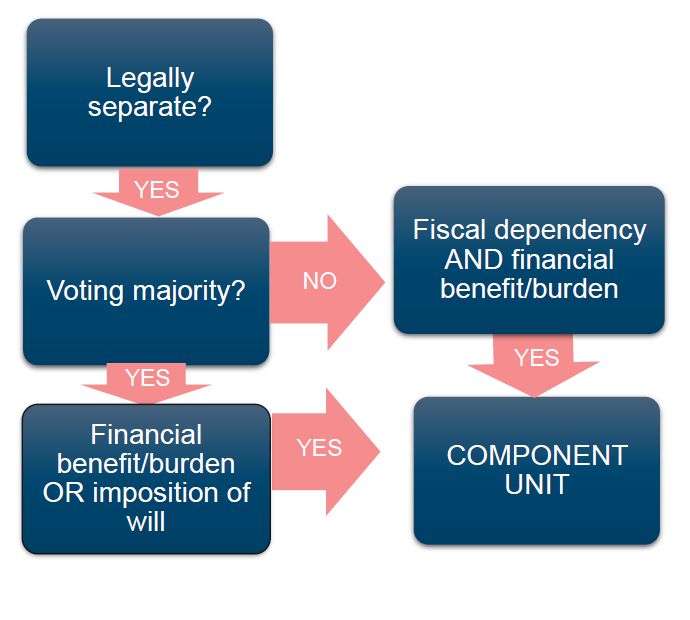
GASB UPDATES
Learning Objectives
Identify the effective dates for new GASBs and when they
apply to your organization
Obtain an understanding of key provisions and technical
bulletins of applicable GASB pronouncements for 2020 and
2021 and how they may apply to your tribal organization
5
POLLING QUESTION #1
Are you aware of, and prepared for, the GASB standards you need
to implement for your 2020 and 2021 audits?
Yes
No
Not sure
6EFFECTIVE DATES
FY Begins after FY Begins after FY Begins after FY Begins after
December 15, 2019 June 15, 2020 December 15, 2020 June 15, 2021
(FYE 12/31/2020 or (FYE 12/31/2020 or (FYE 12/31/2020 or (FYE 12/31/2020 or
9/30/21) 9/30/21) 9/30/21) 9/30/21)
• GASB 84 • Statement 93 • GASB 89 • GASB 87
• GASB 90 • GASB 92
• GASB 97
7BEGINNING AFTER DECEMBER 15, 2019
GASB 84 – Fiduciary Defines specific criteria to identifying activities
Activities for state, local governments and Tribes and
their entities, including those only engaged in
business-type activities.
Defines what should be reported as fiduciary
activities and how governments should report
fiduciary activities in general purpose external
financial reports.
Tribes need to re-assess their fiduciary
funds and pension funds, as there could be
changes.
8COMPONENT UNIT – YES OR NO
= Fund/BCU
Governmental = Primary
DCU government
Enterprise (legal entity)
= DCU
DCU
BCU = Financial
reporting
entity
Fiduciary
fund
PG Legal Entity
9CORE OF THE DECISION TREE
10PATH STEPS – COMPONENT UNIT/CONTROL NOT
IN QUESTION
Fiduciary Component Units that Provide Post-Employment Benefits
1 • Contributions are irrevocable (cannot be reversed)
• Plan assets are dedicated to providing benefits
• Plan assets are legally protected from creditors
Other Component Units Are Fiduciary Component Units If …
• Administered through trust agreement or equivalent when government itself is
2
not the beneficiary
• Dedicated to providing benefits to recipients in accordance with terms and
legally protected from creditors
• For the benefit of individuals and the government does not have administrative
or financial involvement assets
• For the benefit of organizations or other governments that are not part of the
financial reporting entity
11PATH STEPS – NOT COMPONENT UNIT/CONTROL
REVIEW REQUIRED
Post-Employment Benefits that are not Component Units are fiduciary if …
3
• The government controls the assets of the arrangement and the arrangement
contains the following:
• A pension or other post-employee benefit plan that is a trust as defined
by GASB 67
• Pension assets are not part of the reporting entity
• Other post-employee benefits are not part of the reporting entity
All other activities are fiduciary if the following are met …
4
• The government controls the assets
• The assets are not derived from specific sources
• Assets are administered through trust agreement (government not beneficiary)
• Assets are for the benefit of individuals and government does not have
administrative involvement
12EXAMPLE – PER CAPITA/MINOR TRUST FUNDS
A tribe has a minor trust fund for their minors 18 years and
younger that is currently not reported in the Tribe’s financial
statements as a fiduciary fund. In addition, based on the Tribe’s
Revenue Allocation Plan, gaming profits require contribution on a
yearly basis. In a review of trust documents, the Tribe can revoke
and take control of assets. Should the Tribe include the activity for
this trust fund as a fiduciary fund?
Yes or No?
13FY BEGINNING AFTER DECEMBER 15, 2019
GASB 90 – Majority Equity Interest Clarifies that a government with a majority equity
an Amendment of GASB Statements interest in an organization that remains legally
No. 14 and No. 61 separate after acquisition must report its equity
interest as an investment if:
it meets GASB’s investment definition, it would
be measured using the equity method.
For a majority equity interest in a legally separate
entity that does not meet the definition of an
investment:
the government is to report the legally separate
entity as a component unit.
14EXAMPLE – INVESTMENT VS. COMPONENT UNIT
GASB Codification 2600.116 provides an example to illustrate the “intent”
criteria for distinguishing an investment from a component unit. In that
example, a government purchases 100 percent of the stock of a concrete plant.
If the government’s intent in owning the concrete plant is to provide a
controlled source of concrete for its capital projects, it would be reported as
a component unit.
If the intent for owning the concrete plant is to earn income or profit, and
the present service capacity of the equity interest is based solely its ability
to generate cash or to be sold to generate cash, then the equity interest
meets the definition of an investment.
15FY BEGINNING AFTER DECEMBER 15, 2019
GASB 97 – Certain Component Unit This Statement has various effective dates. The
Criteria, and Accounting and Financial provisions effective for periods beginning after
Reporting for Internal Revenue Code December 31, 2019, include:
Section 457 Deferred Compensation
Plans Limitations of the application of the financial
burden criterion for contributions to post-
employment benefit plans to only defined benefit
pension plans and defined benefit other post-
employment benefits (OPEB) plans that are
administered through trusts.
This will reduce costs of reporting of certain
defined contribution pension plans as fiduciary
component units. This supersedes previous
guidance in Statement 84 and Implementation
Guide 2019-2.
16SECTION 457 PLANS
Section 457 –
Pension Plan Section 457 –
OPEB
17FY BEGINNING AFTER JUNE 15, 2020
GASB 93 – Replacement of Provides relief in applying generally accepted
Interbank Offered Rates accounting principles (GAAP) to contracts, hedging
relationships, and other transactions affected by
reference rate reform.
Requirements of this statement are effective for
reporting periods after June 15, 2020;
LIBOR - Paragraph 11b is effective for reporting
periods ending after December 31, 2021;
Leases - Paragraphs 13 and 14 are effective for fiscal
year periods beginning after June 15, 2021, and all
reporting periods thereafter.
Review existing debt agreements for interest rate
swaps
18LIBOR TO SOFR
LIBOR SOFR
19FY BEGINNING AFTER DECEMBER 15, 2020
GASB 89 – Accounting for Interest cost incurred before the
Interest Cost Incurred before end of a construction period will be
the End of a Construction expensed rather than included in
Period the historical cost/capitalization of a
capital asset reported in a business-
type activity or enterprise fund.
20FY BEGINNING AFTER JUNE 15, 2021
GASB 87 - Leases All leases will be recorded comparable to the
current guidance for capital leases.
A lessee government will recognize a lease liability
and intangible right-to-use lease asset at the lease
term’s beginning.
Rent expense under current guidance will be
replaced with interest and amortization expenses.
Lessors will record a lease receivable and deferred
inflow of resources at the lease term’s beginning.
The leased asset will not be derecognized.
Tribes should inventory all leases (expense and
terms) to assess and prepare for GASB 87.
21AREAS TO CONSIDER
Definition Control
Lease Term
22TIME PERIOD – LEASE TERM
Non-cancelable period
Period covered by lessee’s or lessor’s option to extend
Period covered by lessee’s or lessor’s option to terminate
23INTRA-ENTITY LEASES
Government and Enterprise contracts
Period covered by lessee’s or lessor’s option to extend
Period covered by lessee’s or lessor’s option to terminate
24EXAMPLE – BUILDING LEASE (INCENTIVE &
EXTENSION)
The Tribe leases a building to its Utility Authority (the “UA”), a
discrete component unit of the Tribe, for a non-cancellable term
of 10 years.
Fixed payments of $15,000 are due at the beginning of each year.
At end of the first year, the UA is entitled to a rebate of $5,000
(Incentive)
Three-year extension, likely to renew
Discount rate is 6%
25IMPLEMENTATION SUGGESTIONS
Debt limits
• Greater than year
and • Change in covenants
covenants
• Change?
Lease • Communicate
policies •
•
Procedures to identify leases
Capital asset policies
26GASB TECHNICAL BULLETIN 2020-1
CARES ACT Eligibility vs. Purpose Restrictions
Lost Revenues
Subsequent Events
PPP Loans
Operating vs. Non-Operating
Matching Theory
Infrequent Items
272020 COMPLIANCE SUPPLEMENT Mike Dierlam, CPA
& ADDENDUM Audit Senior Manager
282020 COMPLIANCE SUPPLEMENT UPDATES
Background on the 2020 Compliance Supplement & Addendum
and how these can be used by Tribal governments
Cover Key Updates to the 2020 Compliance Supplement
Review Important Material in the Compliance Supplement
Addendum
Need to know information related to COVID-19 and CARES Act
Single Audit Implications
29COMPLIANCE SUPPLEMENT 2020 DETAILS
Initial 2020 Compliance Supplement was released to the public on
August 14, 2020 – stating a later addendum for CARES Act.
On December 22, 2020, OMB released the addendum.
Applicable for audits of fiscal years beginning after June 30, 2019.
Most Tribes – audits for YE September 30, 2020 and December 31, 2020.
Both the supplement and addendum are publicly available at:
https://www.whitehouse.gov/omb/office-federal-financial-management/
30POLLING QUESTION #2
Does your organization review the annual compliance supplement
as part of your analysis of Federal grant compliance?
The compliance supplement was created for both auditors
and auditees. It is published to communicate the most
critical compliance attributes for each Federal award by CFDA
required to be used by auditors for a Single Audit
Communicates internal control standards for compliance
31HELPFUL USES FOR THE COMPLIANCE SUPPLEMENT
Becoming familiar with the applicable compliance attributes
for your Federal awards.
Preparing supporting documentation for auditors in advance
of the Single Audit.
Performing internal reviews of your program compliance
and internal controls for compliance per grant requirements.
Keep in mind that grant agreements with the grantor always
take precedence.
32COMPLIANCE SUPPLEMENT UPDATES
CARES Act has provided additional funds to many existing CFDA
numbers.
The majority of federal agencies have received additional funds
under the CARES Act.
Supplemental CARES Act funding should be tracked and
presented separately on the Schedule of Expenditures of
Federal Awards (SEFA).
May have same CFDA, but will need a separate line on the SEFA
33COMPLIANCE SUPPLEMENT UPDATES
Due to additional funds received under the CARES Act, many
Tribal governments may have provided resources to their
enterprises, departments, component units, etc.
Important to consider the potential Single Audit or Program-
Specific audit implications of allocating CARES Act funds to
other Tribal departments.
Documentation of the approach to the funding (Small-Business Grant,
Interfund Reimbursement, Subaward/Subrecipient agreement) is critical
to determine if a Single Audit is required for the Tribal entity.
Example: Tribal Water Department received $800,000 to make water
system improvements; a Single Audit may be required.
34COMPLIANCE SUPPLEMENT UPDATES - REPORTING
Most CFDAs require audit tests of reporting; most federal programs are
required to use Federal Funding Accountability and Transparency Act
reporting (FFATA).
For FYE September 30, 2020 audits, auditors are required to test FFATA
reporting for only the COVID programs listed in the addendum.
Except for Treasury CRF program, Reporting is considered subject to audit in the Part 2
Matrix.
For FYE December 31, 2020 audits, likelihood that FFATA reporting may be
applicable for all programs.
Tribes will need to closely review the terms and conditions of grant awards to
determine whether any of their grants require reporting under FFATA.
35COMPLIANCE SUPPLEMENT UPDATES - REPORTING
Requires reporting of subawards $25,000 or more
Includes subrecipients
Requires reporting of subcontracts $25,000 or more
for those that are federal contractors, not federal grants
Requires monthly reporting in the FFATA Subaward Reporting
System
36CRF TREASURY CLARIFICATION - TRIBAL ENTERPRISES
Treasury letter to NAFOA - November 20, 2020 (handout)
Clarifies audits of CRF funds that support tribal enterprises or entities, dependent on
structure of tribal entity and capacity in which it received payments.
For-profit subrecipients are not subject to Single or program-specific audit (2 CFR 200.501(h).
A Tribal Enterprise that is not separately incorporated and received payment for costs of re-opening
or covering operational expenses would be a beneficiary and not subject to Single Audit.
A Tribal structured non-profit entity that has not been separately incorporated and considered an
arm of the Tribe and has >$750,000 of CRF/federal funds, would be a subrecipient and subject to
Single Audit.
Tribes are responsible to ensure subrecipients and beneficiaries provide
necessary reporting and records to support the use of the CRF payments.
37COMPLIANCE SUPPLEMENT UPDATES
Existing programs may have compliance requirement changes
due to COVID-19 or other reasons.
Review the Compliance Supplement to check for any changes.
Appendix VII expanded to include the initial COVID-19
guidance.
Section 3-1 removed. This section previously included as part of
the transition to Uniform Guidance. Removed, as OMB
considers this transition to be complete.
38COMPLIANCE SUPPLEMENT UPDATES
Appendix V is the roadmap to changes found within the new
supplement.
6-compliance requirement for each CFDA mandate continues
Maximum of 6 compliance attributes can be identified as “subject to
audit” (exception for R&D clusters – 7)
Activities Allowed and Unallowed and Allowable Costs and Cost
Principles count as one requirement.
Some agencies have changed these, though the changes have
been minimal. Recommended to review Part 2 Matrix.
39COMPLIANCE SUPPLEMENT UPDATES
New Programs:
14.275 Housing Trust Fund
16.575 Crime Victim Assistance Grant Program
21.016 Equitable Sharing Program
93.686 Ending the HIV Epidemic: A Plan for America
Changes to a variety of programs: Head Start, CHIP, Economic
Development Cluster
Cross-cutting sections have been updated
Verify each award’s CFDA … sometimes they change from year to year!
40POLLING QUESTION #3
True or False: CARES Act funding awarded to Tribes which is
passed to the Tribe’s related parties may result in new sub-
recipient relationship. These relationships should be evaluated
by the Tribe prior to the commencement of the audit.
True. Tribes must have determined if awarding funds to a Tribal
entity results in a subrecipient relationship, in which case the
recipient of funds would potentially be subject to a Single Audit,
and the Tribe would need to perform subrecipient monitoring.
Review 2 CFR 200.330-.332 for subrecipient definition
41COMPLIANCE SUPPLEMENT – DECEMBER ADDENDUM
Paycheck Protection Loan Program Provider Relief Fund
($>600B) ($175B)
Federal Agency: SBA Federal Agency: HHS
For-profits, NFPs For-profits, NFPs, Governmental Entities
Is NOT in Compliance Supplement Is subject to Single Audit
CFDA No: 59.073 CFDA No: 93.498
Coronavirus Relief Fund Education Stabilization Fund
($150B) ($>600B)
Federal Agency: Treasury Federal Agency: Education
Governmental Entities and Tribes States, Schools, IHE
Is subject to Single Audit Is subject to Single Audit
CFDA No: 21.019 CFDA No: 84.425
42COMPLIANCE SUPPLEMENT – DECEMBER ADDENDUM
Coronavirus Relief Fund (20.019) applicable for many Tribal
governments. Per matrix, the following attributes are
applicable:
Activities Allowed/Unallowed & Allowable Costs and Costs Principles
Auditors will use Treasury’s guidance and FAQs as criteria
Period of Performance
Expenditures incurred after March 1, 2020
Reporting
Quarterly Financial Progress Report submitted on GrantSolutions portal
Subrecipient Monitoring, 2 CFR 200.330 - .332
43COMPLIANCE SUPPLEMENT – CRF
Allowable Activities have the following primary criteria:
Necessary expenditures incurred due to the public health emergency with respect to
COVID-19
Not accounted for in the government’s most recently approved budget as of March 27,
2020
Incurred during the period that begins March 1, 2020 and ends December 30, 2021
Governments are responsible for making determinations as to what
expenditures are necessary due to the public health emergency with
respect to COVID-19.
Treasury updated and published federal regulations in federal register on
January 15, 2021 (handout).
44CRF COMPLIANCE
Allowable examples of costs
Medical, testing, facilities, telemedicine
Public health, PPE, safety measures, technical assistance, disinfection,
communication
Payroll for public safety, public health, healthcare, human services,
direct administrative costs for CRF funds
Food delivery, distance learning, telework, sick pay and family pay
under FFCRA, prisons and jails, homeless populations
Economic support for grants to small businesses, payroll support,
unemployment insurance
45CRF COMPLIANCE
Not Allowable
Replacement of lost revenues
Payroll/benefits for employees who work duties are not substantially
dedicated to mitigating or responding to COVID-19
Expenses covered or reimbursed by other federal funding or PPP loans
Workforce bonuses other than hazard pay or overtime
Severance pay or legal settlements
Damages covered by insurance
46POLLING QUESTION #4
True or False: Tribal Governments should use the Treasury FAQs
to determine which expenditures are necessary to respond to
COVID-19 and the public health crisis.
False. Tribal governments make this determination.
Tribal governments should use the Treasury’s initial requirements, plus
the FAQs now published in the federal register, to ensure compliance.
Timing of approval and justification of spending is key to support the
allowability of the expenditures. FAQs available at the time of approval.
47COMPLIANCE SUPPLEMENT – DECEMBER ADDENDUM
Appendix VII of the Addendum will allow recipients and
subrecipients who have received CARES Act related funding a 3-
month extension for entities with original due dates of:
October 1, 2020 through June 30, 2021
Only for entities that received CARES Act funding
Still can be considered a low-risk auditee
No approval necessary for the extension
Grantees should document reason for any delayed filing of the audit,
which may be requested by auditors.
48COMPLIANCE SUPPLEMENT – DECEMBER ADDENDUM
Other miscellaneous items of note in the December Addendum:
Non-Federal entities that received donated PPE purchased with Federal
assistance funds should include the fair market value of the PPE at the
time of receipt in a stand-alone footnote to the SEFA, and mark as
“unaudited.”
Department of Transportation implemented a new cluster program:
Federal Motor Carrier Safety Assistance Cluster
Indian Community Development Block Grant – New Special Test Added
Special Provisions for ICDB – Cares Imminent Threat Grants
49CARES ACT AND OTHER UPDATES Colaine Curtis, MBA
Accounting Specialist Manager
50CARES ACT AND OTHER UPDATES
Employee Retention Tax Credit (ERTC)
Voluntary Families First Coronavirus Response Act (FFCRA)
Leave Provisions
Indirect Cost
Revisions to Uniform Guidance
Audit Considerations
Extensions
51EMPLOYEE RETENTION TAX CREDIT (ERTC)
Tribal Governments and Businesses (Enterprises) are eligible for
the ERTC
Eligible employers are those businesses with operations that
have been partially or fully suspended due to governmental
orders due to COVID-19, or
Businesses that have a significant decline in gross receipts
compared to 2019.
52EMPLOYEE RETENTION TAX CREDIT (ERTC) - CONT’D
Qualified Wages/Health Benefits per calendar quarter between
March 13, 2020 - December 31, 2020
Over 100 employees: ERTC applies to wages paid to employees NOT working (so for those
on Paid Admin Leave, or those the Tribe continued to pay even though they weren't working)
Under 100 employees applies to ALL wages (working or not)
Number of employees is per IRS aggregation rules
Credit is up to 50% of qualified wages/health benefits up to
$10,000 per EE, for a maximum ERTC credit of $5,000
53EMPLOYEE RETENTION TAX CREDIT (ERTC) - CONT’D
January 1, 2021 to June 30, 2021 (may be extended to the end
of 2021 – awaiting Congress)
Over/under 500 employees (per IRS aggregation rules) wages include
qualified health plan expenses incurred by employer 941 Reporting
Changes to Form 941 for COVID-19 related employment tax credits and other tax
relief
Credit is up to 50% of qualified wages/health benefits up to
$14,000 per EE, for a maximum ERTC calendar quarter credit of
$7,000
54EMPLOYEE RETENTION TAX CREDIT (ERTC) - CONT’D
Qualified wages exclude:
Wages/benefits used with PPP Loans
Wages/benefits funded from CRF funds
Wages for which the employer received tax credits per the EFFCRA
IRS Aggregation Rules – Determine the tribal entities that need
to be aggregated to calculate the total employees threshold,
then the qualified wages per each in the aggregation, each
individual EIN entity applies for their own ERTC
55VOLUNTARY FFCRA LEAVE PROVISIONS (THRU 3/31/21)
Families First Coronavirus Response Act (FFCRA) mandatory April 1,
2020 through December 31, 2020
Leave (like FMLA) for employees with COVID-19, or family with COVID-19
that they care for or were exposed, or children home
Should have adopted policy
May receive a payroll tax credit for wages paid for this leave, excluding
any wages covered by PPP or CRF
Employers may voluntarily continue paid leave to employees who
did not exhaust the leave in 2020 or at the discretion of the
employer to continue.
56VOLUNTARY FFCRA LEAVE PROVISIONS (THRU 3/31/21)
Leave provisions are a key component of the COVID Safe work
environment.
Opportunity for eligible employers to offer voluntary FFCRA leave in
order to limit employees coming to work sick
Federal Contract Considerations
2021 paid leave policies – consider opportunities within the workplace
57VOLUNTARY FFCRA LEAVE PROVISIONS (THRU 3/31/21)
The Tribal Coronavirus Relief Fund Extension, granted through
December 31, 2021, provides access to $8 billion of CARES Act
funding delayed in 2020.
Tribes may use this money to pay employees, subject to the
prohibition on “double-dipping” related to the payroll tax credit.
Tribes may maintain FFCRA-compliant leave policies as
appropriate.
58INDIRECT COST
Can the CRF be charged for indirect costs according to the
entity’s indirect cost rate? No.
CRF Guidance from Treasury states: “Payments from the Fund are not administered as
part of a traditional grant program and the provisions of the Uniform Guidance, 2
C.F.R. Part 200, that are applicable to indirect costs do not apply. Recipients may not
apply their indirect costs rates to payments received from the Fund.”
Expenditures related to the administrative expenses of CRF fund payments may be
charged if they represent an increase over previously budgeted amounts and are
limited to what is necessary.
59INDIRECT COST - CONT’D
IDC Proposal Example: Tribal entity has FYE 9/30/20 and COVID
related expenditures. Tribal entity will need to record the actual
amount spent on COVID expenditures through FYE 9/30/20 in its
direct cost base.
Tribes need to list CARES Act dollars separately on the SEFA
schedule, even if the same CFDA was used for CARES funding.
Direct costs for IDC-type costs may be paid with support, will be
subtracted from IDC pool in IDC proposal.
CARES Act fund expenditures with no IDC will be included in the IDC
direct cost base with any applicable exclusions.
60REVISIONS TO UNIFORM GUIDANCE
Revisions in the Final Guidance became effective on November 12,
2020, except for the revisions to 2 C.F.R. xx 200.216 and 200.340,
which became effective on August 13, 2020.
Pass-through entities are responsible for addressing only a subrecipient’s
audit findings that are specifically related to their subaward and not all of
the subrecipient’s audit findings.
Closeout Provisions: Revised from 90 days to 120 days
61REVISIONS TO UNIFORM GUIDANCE - CONT’D
Changes to the Micro-Purchase and Simplified Acquisition
Thresholds
Micro-purchase threshold increased from $3,500 to $10,000
Simplified acquisition threshold from $100,000 to $250,000
Expanded use of the Indirect de Minimus Rate
Does not apply to Indian Tribes
62REVISIONS TO UNIFORM GUIDANCE - CONT’D
2 CFR 200.322 Domestic Preferences for Procurement, to
maximize US goods, products and materials
2 CFR 200.216 and 200.471 – Prohibits purchases of certain
telecommunications and video surveillance services or equipment
from certain foreign entities (Chinese Telecommunications Ban)
Added “Never Contract with the Enemy” requirements to grants
and cooperative agreements >$50,000
63OTHER AUDIT CONSIDERATIONS
Davis Bacon – For CRF, Davis Bacon does not apply to construction
contracts as it is not specifically mentioned in the federal legislation
with any 2 CFR 200 citations or program requirements.
Local Education Agencies? Treasury CRF has a provision where LEAs
are not required to document the specific use of funds up to $500
per student. Auditors will consider internal controls over the process
and double dipping.
Hazard Pay limitations and policies – define eligible employees,
COVID-19 exposure risks, and reasonable amounts
64EXTENSIONS
The spend deadline for the Coronavirus Relief Fund has been
extended to 12/31/21.
Per Appendix VII in the Supplement Addendum, the extension
does not require individual recipients and subrecipients to seek
approval. However, it adds that recipients and subrecipients should
maintain documentation of the reason for the delayed filing.
Tribes are responsible and Treasury will look to them for
allowability of spending to subrecipients and beneficiaries.
65EXTENSIONS - CONT’D
Which year-end does the extension apply to?
Extended Due Date
Fiscal Year-Ends Normal Audit Due Date
(3-month extension)
March 31, 2020 December 31, 2020 March 31, 2021
June 30, 2020 March 31, 2021 June 30, 2021
September 30, 2020 June 30, 2021 September 30, 2021
There is no extension for December 31, 2020 year-ends.
66CARES ACT PROVIDER RELIEF FUND Marcus Benally, MBA
Senior Audit Associate
67LEARNING OBJECTIVES
Overview of the Provider Relief Fund (PRF)
Identify COVID-19 expense methodologies and lost revenue
calculations
Review audit and compliance requirements
68BACKGROUND
CARES Act Provider Relief Fund
The Provider Relief Fund supports American families, workers,
and the heroic healthcare providers in the battle against the
COVID-19 outbreak.
HHS has distributed $178 billion to hospitals and healthcare
providers on the front lines of the coronavirus response.
69PROVIDER RELIEF FUND
General Distributions Targeted Distributions
Initial Medicare Distribution High-Impact Area Distribution
Additional Medicare Distribution Rural Distribution
Medicaid, Dental and CHIP Skilled Nursing Facility Distribution
Distribution Indian Health Service Distribution
*Allocated $500M to 438 I/T/U
facilities
Safety Net Hospital Distribution
70PROVIDER RELIEF FUNDS ($178B)
Federal • Department of Health and Human Services (HHS)
Agency
• Governmental
Entity Type • Not-for-Profits
• For-Profits
CFDA • 93.498 – Provider Relief Funds
• 2020 OMB Compliance Supplement Addendum
71TERMS AND CONDITIONS
Indian Health Service Distribution
Recipient certifies that it provides or provided after 1/31/2020
diagnoses, testing or care for possible or actual COVID-19 cases
Not currently terminated from participating in Medicare or
precluded from receiving payment from Medicare Advantage or
Part D
Not currently excluded from participation in Medicare, Medicaid
and other Federal Healthcare programs
Billing privileges in good standing
72TERMS AND CONDITIONS - CONT’D
Recipient consents to the HHS publicly disclosing the payment that
recipient may receive from the PRF.
This disclosure may allow some third parties to estimate the gross receipts or
sales, program service revenue, or other equivalent information.
Recipient must maintain records and cost documentation as
described in:
45 CFR Section 75.302 – Financial Management
45 CFR Section 75.361-75.365 – Record Retention and Access
Recipient must allow cooperation in all audits the Secretary,
Inspector General, or Pandemic Response Accountability Committee
conducts to ensure compliance with terms and conditions.
73TERMS AND CONDITIONS - CONT’D
Recipient certifies the payment will only be used to prevent,
prepare for, and respond to Coronavirus.
Payment will reimburse recipient only for health care related
expenses or lost revenue that are attributable to Coronavirus
Recipient must certify that it will not use the payment to reimburse
expenses or losses that have been reimbursed from other sources or that
other sources are obligated to reimburse
Indian Health Service Relief Fund Payment Terms and Conditions:
https://www.hhs.gov/sites/default/files/terms-and-conditions-indian-health-
service-relief-fund.pdf
74POLLING QUESTION #5
Which of the following areas in regards to compliance with PRF
audit requirements does your organization find most challenging?
A. Financial statement preparation
B. Determining what belongs on the SEFA
C. Ensuring support is in compliance with PRF requirements
D. None of the above
75ACTIVITIES ALLOWED - HR 748-283 AND PL 16-139,
134 STAT. 622*
To prevent, prepare for, and respond to coronavirus,
domestically or internationally, for:
necessary expenses to reimburse, eligible health care providers for health care
related expenses … or
lost revenues that are attributable to coronavirus.
Funds are available for construction of temporary structures,
leasing of properties, medical supplies and equipment,
including personal protective equipment and testing supplies,
increased workforce and trainings, emergency operation
centers, retrofitting facilities, and surge capacity
*For all distributions except Skilled Nursing Facility Infection Control Distribution
76ACTIVITIES ALLOWED - HR 748-283 AND PL 16-139,
134 STAT. 622* - CONT’D
Payment means a pre-payment, prospective payment, or
retrospective payment
Note: PRF may be use for expenditures, lost revenues and/or a
combination of both
Documentation to support either expenditures or lost revenues must
clearly show how you met the terms and conditions
*For all distributions except Skilled Nursing Facility Infection Control Distribution
77ACTIVITIES UNALLOWABLE
HR 748-283 AND PL 116-139, 134 STAT. 622)*
These funds may not be used to reimburse expenses or losses
that have been reimbursed from other sources or that other
sources are obligated to reimburse.
*All distributions
78LOST REVENUE CALCULATIONS
Calculated using any reasonable method
Budget to actual – (2020 budget approved prior to 3/27/2020)
Year to Year OR Quarter to Quarter change
Include revenues from all sources that can be attributed to
COVID-19
Cancelled elective surgeries/procedures
Fewer outpatient visits
Awaiting HHS guidance on lost revenue calculation for 2021
79REPORTING
On January 15, 2021, the Department of Health and Human
Services (DHHS) announced a delay in reporting of the Provider
Relief Funds.
Recipients of Provider Relief Fund payments greater than
$10,000 to register to report on use of funds as of December 31,
2020 beginning January 15, 2021.
Recipients who have not used all of the funds after December
30, 2020, have six more months from January 1 – June 30, 2021
to use remaining funds.
80ACCOUNTING CONSIDERATIONS
Governmental Entities – GASB Not-for-Profit Entities – FASB
GASB 33, Non-exchange ASC 958-605
Transactions If conditions are deemed present,
Most likely include in non- release from liability as conditions
operating revenue are met
Consider treatment for net assets
with donor restriction
81SINGLE AUDIT & SEFA REPORTING
Fiscal Year Ending SEFA Inclusion How are amounts Other Information
CFDA No. 93.498 calculated?
Prior to 12/31/2020 Not included N/A Report 2020
expenditures & lost
revenue in 2021 audit
12/31/2020 2020 Expenditures & Based on 12/31/2020 SEFA amounts are
Lost Revenues amounts reported to based upon the
HHS 12/31/2020 PRF
report
After 12/31/2020 but 2020 Expenditures & Based on 12/31/2020 SEFA amounts are
before 06/30/2021 Lost Revenues amounts reported to based upon the
HHS 12/31/2020 PRF
report
06/30/2021 ? ? 2021 OMB Supplement
to provide guidance
82NEW SEFA DISCLOSURE – PPE
The SEFA will have to include a footnote with an amount of
donated Personal Protective Equipment (PPE) from federal
assistance
Can be marked unaudited
Information related to audit due dates and treatment of donated PPE can
be found in Part 8, Appendix 7 of Addendum of Compliance Supplement
Fiscal Year Ends after 12/31/2020 and before 6/30/2021:
Disclose that SEFA amounts are based upon the 12/31/2020 PRF report.
83AVAILABLE RESOURCES
HHS Website
CARES Act Provider Relief Fund | HHS.gov
FAQs
CARES Act Provider Relief Fund: FAQs | HHS.gov
GAQC
2020 OMB Compliance Supplement Web Page
84Corrine Wilson, CPA Wesley Benally, CPA Mike Dierlam, CPA Colaine Curtis, MBA Marcus Benally, MBA
Principal & National Senior Manager & Senior Manager Accounting Specialist Senior Audit Associate
Tribal Practice National Tribal Practice mdierlam@redw.com Manager mbenally@redw.com
Co-Leader Co-Leader 602.730.3630 ccurtis@redw.com 602.730.3670
cwilson@redw.com wbenally@redw.com 602.730.3605
602.730.3609 602.730.3632
Ft. McDermitt Paiute Navajo Nation Cherokee Tribe Navajo Nation Navajo Nation
Shoshone Tribe
CONTACT US! Please don’t hesitate to reach
out if you have questions.
85You can also read


