PRESS INFORMATION 2021 - International Garden Festival Hortillonnages Amiens - Art & jardins | Hauts-de-France
←
→
Page content transcription
If your browser does not render page correctly, please read the page content below
PRESS INFORMATION
   International Garden Festival
         Hortillonnages Amiens

                       2021
Art & Jardins I Hauts-de-France

                   Mapping of landscape productions & artistic creations
                            in the 5 departments of the Region

                                                                                                                                                 SUMMARY

                                                                                                                             International Garden Festival ǀ
                                                                                                                                    Hortillonnages Amiens
                                                                                                                                                12th édition

                                                                                                                                    Gardens of the Somme
                                                                                                                                                    Valley

                                                                                                                                        Gardens of Peace ǀ
                                                                                                                     Hauts-de-France - Belgium - Grand Est

                                                                                                                                        Citizens’ Gardens ǀ
                                                                                                                                              Mining Basin

                                                                                                                                      Vegetable Gardens ǀ
                                                                                                                           5 high schools - 5 departments -
International Garden Festival I                   Citizens’ Gardens | Mining Basin        Vegetable Gardens |
Hortillonnages Amiens 2021                            > Calonne-Ricouart : 2 gardens            5 high schools                                5 landscapers
> 28 gardens                                                        + 2 installations          - 5 departments
> 21 installations                                           + 1 scenographed path             - 5 landscapers
> 1 floating architecture                                      > Grenay : 1 garden            > Aisne : Chauny
> 1 photographic project                                                                            > Nord : Lille
                                    Gardens of Peace I Hauts-de-France - Belgium
                                                                                              > Oise : Clermont
Somme Valley                                                         > 14 gardens
                                                                                        > Pas-de-Calais : Calais
> Abbeville : 1 garden                           > 8 gardens planned in 2021-2022
                                                                                            > Somme : Amiens
> Long : 1 garden
                                                       Gardens of Peace | Grand Est
> Saint-Quentin : 1 garden
                                    > 8 gardens in progress and planned in 2021-2022
> 1 garden planned in 2021
Art & Jardins I Hauts-de-France

A label of artistic & landscaped creation                                                                                                To transform a cultural project into a societal and social project,
in the service of a territory                                                                                                            while questioning the challenges of tomorrow

Since 2017, at the initiative of the Hauts-de-France Region, Art & Jardins | Hauts-de-France has committed to a unique                   The principles and objectives of the association
landscape dynamic at the heart of public spaces. The garden, an authentic marker of people living together, is transformed
into a territory of creation and experimentation.                                                                                        • To assert itself as a production structure and to support landscape, architectural and plastic creation, with a particular focus
                                                                                                                                         on young designers;
After taking over the organisation of the International Garden Festival | Hortillonnages Amiens, we have initiated a project
around memory, with the Mission of the Centenary of the First World War, by creating the Gardens of Peace Trail in the Hauts-            • To question natural sites to enhance and preserve the patrimonial and cultural heritage while developing the attractiveness
de-France region and in Belgium. This trail has now been extended into the Grand Est region with the support of the Ministry             of the territory;
of the Armed Forces, which will make it possible to design a peace trail incorporating around forty gardens. We are continuing
with the landscape tour along the Somme River and we continue to promote the history of the Mining Basin by producing                    • To encourage professional integration with an insertion workshop and an accreditation for volunteering in civic service;
Citizens’ Gardens with the participation of the inhabitants. Since the autumn of 2020, in partnership with the education authorities
of Amiens and Lille, we will produce vegetable gardens in 5 high schools in the 5 departments of the Hauts-de-France.                    • To re-examine the nutritional capabilities of certain sites, and more broadly to integrate the societal and environmental issues
The gardens will be created by landscapers, teachers and students.                                                                       - particularly the question of water;

Now a member of Europa Nostra, we are strengthening our network of European partnerships. In the summer of 2021, our                     • To participate in the social and solidarity-based economy by distributing the food that is produced;
landscape and artistic creations will be displayed in a photographic exhibition organised by the Schloss Dyck Foundation in the
Rhineland. We continue our collaboration with the National School of Architecture in Marrakech, and we will be present again             • To encounter new audiences, especially the younger generation with little or no access to culture to raise their awareness of
at the 2022 edition of lille3000 UTOPIA. Our projects are also publicised through books, including a book on the productions             creation, landscape, food production, the issue of climate change, and to be involved in group and civic actions;
of the 2018-2020 Festival whose publication will coincide with the opening of the 2021 edition.
                                                                                                                                         • To encourage reflections about Peace, its memory, its preservation at a time when Europe is looking inwardly and when it is
The achievements of Art & Jardins | Hauts-de-France respond to various themes which allows us to transform a cultural project            essential to remember that European construction was built on peace and that peace is the future of our planet;
into a societal and social project, and to question the challenges of tomorrow. In supporting environmental awareness and
stimulating economic development through tourist attractiveness and job creation, the association has become an ambassador               • To build international partnerships around our artistic, ecological, social and societal approach and preoccupations.
for the territory. It thus materialises a cultural project shared with visitors and the inhabitants of the Hauts-de-France region.

I wish you a good read and look forward to welcoming you to our gardens very soon.

Gilbert Fillinger, Director Art & Jardins | Hauts-de-France

                                                                                                                                                                                                International Garden Festival | Hortillonnages Amiens - Agents of the insertion workshop on the plots

                                                                                                                          © Yann Monel                                                                                                                                                © Mathieu Farcy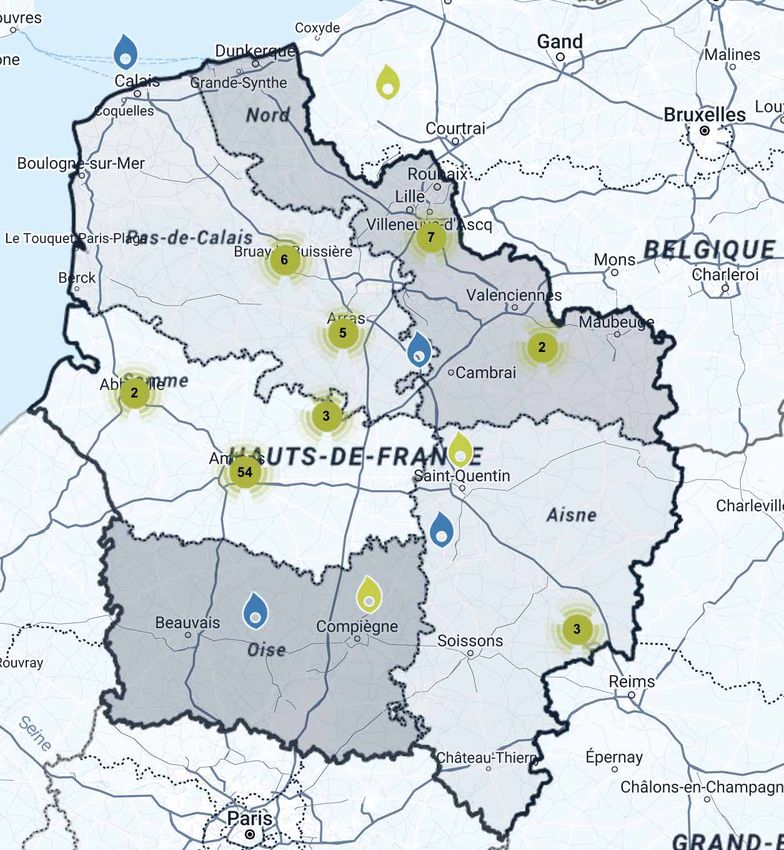
INTERNATIONAL GARDEN FESTIVAL
The 2021 edition
28 gardens, 21 installations,
HORTILLONNAGES AMIENS
1 floating architecture & 1 photographic project A landscaped & artistic voyage
An aesthetic & poetic escape
Camon > Clermont Lake
Floating reception architecture
• Alexis Deconinck, Origami / 2020 A 12th edition beneath the sign of the earth, of water and of nourishment
Gardens
• Florent Morisseau, Le potager embarqué
- Grand prix du concours national des jardins potagers 2012 / 2010 Created in 2010 by Gilbert Fillinger, then director of the Maison de la Culture in Amiens, the Festival aims to promote the
• Fanny Anthoine-Milhomme et Jean-Philippe Teyssier, work of young creative landscapers, architects and plastic artists in the Hortillonnages, an exceptional natural site in
L’île de la Pépinière / 2010 the Amiens Metropole.
• Wagon Landscaping avec Chloé Francisci,
Le jardin d’Érode - Prix AJAP 2016 / 2011
• Élyse Ragueneau, Astrid Verspieren et Xavier Dumont, The contemporary gardens and exhibits are situated on small islands and provide a poetic journey that invites the public
L’île perdu(e) / 2011 and the inhabitants to take a quirky, funny, critical and new look at this complex environment, its history and its
• Collectif Blah Blah Blah, Follow me I, 2013 + Follow me II / 2020 future. It is also an easy walk that questions the links between nature, culture, agriculture and heritage concerning the many
• Collectif Gama, Fragments - Prix AJAP 2016 / 2013
• Collectif PIP, Hydrophone / 2013 impacts caused by climate change.
• Kelly Lebourgeois et George Salameh, Enjeu de culture / 2014
• Collectif MaDe, Pop-Up Island / 2015 Located on different sites around the Clermont Lake in Camon and Rivery, and on the Fagots Island in Amiens, the
• Manon Bordet-Chavanes, Marie Bregeon et Johann Laskowski,
fifty productions fully integrate into their conception and design the contemporary issues of sustainable
Sphère nourricière - 3e prix jardin 2016 - jardin pédagogique -
Société Nationale d’Horticulture de France / 2016 development and the evolving environmental issues: preservation of the ecosystem, the weakening of the riverbanks,
• Collectif CLAP, Les berges sonores / 2016 water resources, food production and the quality of food.
© art & jardins | Hauts-de-France • Solène Ortoli, La chambre des lisières / 2018
• Stéphane Larcin et Baptiste Demeulemeester,
Cabotans maraîchers / 2019 The Festival’s philosophy is to recapture, enhance and perpetuate this green heritage supported by proposals for mediation
• Piano Paysage + Atelier L., Le jardin brise-lames / 2019 and workshops suitable for everyone. Added to this is the desire to participate in the social and solidarity-based
• Green Resistance, Île était une fois / 2019 economy by distributing the food that is produced, and also a social integration approach with the agents of the insertion
• Atelier du Dehors, Le banquet cornélien / 2020
workshop to support the artists with the maintenance of the gardens, and with volunteers in civic service as reception staff.
• Atelier eem, +2°C = 43 cm / 2020
• Atelier Faber, Roques / 2020
• Collectif Pop Up, À dans 10 ans... / 2020 Over the 11 editions, 170 works have been produced by 260 landscapers, architects and visual artists; and these have been
• Livia Kolb & Virginie Alexe, Élever la terre / 2021 appreciated by more than 450,000 visitors. For this 12th edition, 12 new exhibits will adorn the Festival route consisting
• Alix Eoche-Duval & Cyril Servettaz, 3 kilomètres à la ronde / 2021
• studio audal, Jardin fortifié / 2021
of 4 gardens, 4 installations, 3 student projects from the UFR des Arts - Université de Picardie Jules Verne and
• Sylvestre, Le rivage des cirses / 2021 1 photographic project from the Institute for photography in Lille.
Installations
• Boris Chouvellon, Miroir aux alouettes / 2014
• Cécile Meynier, Totem à salades / 2018
How to see the Festival?
• Simon Augade, Affaissement / 2019
• Raphaëlle Duquesnoy, Hortillophones / 2019 • On foot > accessible by the towpath to the Fagots Island, then to the Robinson Island and the Rivery Lake.
• Delphine Renault, Hutte / 2020 Free admission
• Yuhsin U Chang, Mémoire d’arbre / 2020 • By boat > rent an electric boat in Camon at the Port à Fumier, 35 rue Roger Allou, for a 2.5 hour trip from island to island.
• Bruno Grasser, La peau de chagrin / 2021
• Ilona Mikneviciute, Îlots / 2021 // NEW FOR 2021 > renewal of the boat fleet with 12 wooden electric boats //
• 3 projets étudiants UFR des Arts, Université Picardie Jules Verne, The rental price of an electric boat is based on the number of people, from 1 to a maximum of 6 per boat:
© art & jardins | Hauts-de-France
ALEA - Samarobriva - Tisser des liens / 2021 19 € > 1-2 pers. • 24 € > 3-4 pers. • 29 € > 5-6 pers. • free for under 3 years
plus an ASCO fee for the protection and preservation of the Hortillonnages: 1 € for 11 years old and over •
Amiens > Fagots Island
Gardens
0.50 € for 3 to 10-year-olds
• Andrew Fisher Tomlin et Dan Bowyer, Remnant / 2014 Reservations online at www.artetjardins-hdf.com
• Atelier du Gründberg, Small is beautiful -
Une houblonnière jardinée / 2015
• Agence Chorème, Le bois des rémanents - Prix AJAP 2018 / 2017
12th edition • from 22 May to 17 October 2021
Installations
• Charles-Henry Fertin, Module-mouvement n°13 / 2017 For more information on the Festival and its programming in the context of the COVID-19 health crisis,
• Julien Laforge, De bords à corps / 2017 please see our website www.artetjardins-hdf.com or call +33 (0) 6 78 53 55 92
• Yuhsin U Chang, Arcane / 2017
• Céline Lastennet, Vestige / 2018
• Raphaëlle Duquesnoy, Hortillophones / 2019
• Thomas Wattebled, Rien à ajouter / 2019
• Sylvie Bonnot, Géométrie de la chute / 2020
• Anne Houel, Cultures / 2020
• Céline Cléron, Nature permanente / 2021 Art & Jardins | Hauts-de-France is subsidised by the Hauts-de-France Region, the Somme Departmental Council
• Keita Mori, Navette / 2021 and Amiens Métropole. Institutional partners: Europe is involved in Hauts-de-France with the European Social Fund
- Prefecture of the Hauts-de-France Region - Maison de la Culture Amiens - Civic Service Agency - European Union.
Amiens > Robinson Island With the support of the Business Club : - Groupe Caisse des Dépôts-Mécénat - Gueudet Automobile - Groupe Duval -
Garden Fondation de France - Fondation d’entreprise AG2R La Mondiale - Fondation Crédit Coopératif - Fondation VINCI pour
• Isabel Claus, L’écrin du marais / 2010
la Cité - EDF - SOPELEC - Maisons Henri Devred - ENGIE - Fonds de dotation Crédit Agricole Brie Picardie Mécénat et
Installation
© Yann Monel Solidarité - ENEDIS.
• Pierre-Alexandre Rémy, Les Hortillonnages en pli / 2013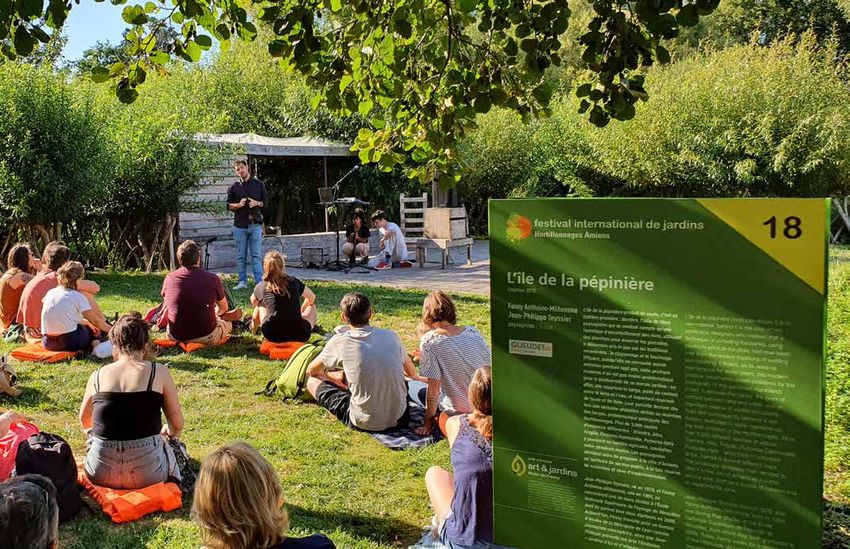
Alix EOCHE-DUVAL 3 kilomètres à la ronde / 3 kilometres around Élever la terre / Raise the earth Livia KOLB
Landscape Designer / France Landscape Designer - Illustrator / Morocco
Cyril SERVETTAZ Bees roam an area of up to 3 kilometres collecting pollen and nectar from the flowers they feed The garden is a story of traditional agriculture in a humid environment all over the world. It is a Virginie ALEXE
Landscape Designer / France on. The survival and well-being of a bee colony, like many other pollinating insects, depends on tribute to these unique and highly ingenious agricultures, which have learned over time to deal Urban landscaper / France
the ecological and agricultural diversity of the immediate environment. If we look at 3 kilometres with the fluctuations of water.
around the Hortillonnages this diversity can be found: a renowned market garden, large cereal
crops around Amiens and a few fruit trees scattered here and there in the mosaic of the market Water is a natural sculptor, it creates a landscape of contours, it designs a labyrinth. It allows the
gardeners and the allotments. irrigation and drainage of plots cultivated in wetlands. The scenography imposed by the course
of the water over the fragmented land becomes the structure of the garden. The abundance of
The approach of the landscapers is to make the garden a repository of the varietal richness water offers incredible biodiversity that gives the marshes a rare beauty and creates a particularly
present 3 kilometres around their garden. The garden resonates and enters into dialogue with fertile land. But «if water is the working tool of the market gardeners, excess water is their
its surroundings thanks to the foraging power of bees. It becomes a privileged place to collect permanent fear» stated Éric Mollard and Annie Walter. To prevent a flood, the market gardener
Alix Eoche-Duval is a graduate of the
National School of Architecture and the various pollens and nectars that can be found in the Hortillonnages. literally «raises» the land to cultivate his plot.
Landscape in Bordeaux. His thesis was
«Detroit: Discovering a New Urbanity». Since time immemorial the quality of pollination by the bees has improved the reproduction of Raise the earth sets out to discover these raised areas of earth in the landscape. The journey
This was an immersion in the heart of the the plants that nourish us. Some become tastier or more fertile others are sweeter or have a leads to five compositions, five fragments of traditional agricultural heritage. South American
communities that are reinventing this city. higher level and more qualitative oil content. It is therefore a story of co-evolution that is woven camellones are shaped by cultivation beds that remind us of a «corrugated iron» silhouette.
He bases his approach on interdisciplinarity, into this trio of Man / Bees / Production. It is this relationship of interdependence that is depicted Corn, beans and squash are grown there, the virtuous association of which - in the garden or on
enriched by collaboration with landscapers, and emphasised in this garden to focus the attention of the public on it. the plate - gives them the name of the «three sisters».
urban planners and architects. He has In the chinampas of Mexico, the nurseries are set up in boxes that contain fertile mud in which
specific know-how of design (school groups Three main themes of production are illustrated here, in three lines that echo the garden motif: a wide variety of plants are grown, including tomatoes.
with the Archi5 studio), consultation (Parc field crops, fruit trees and market gardening. Thai Hortillonnages are composed of long and narrow raised beds of crops. They are very
Robespierre in Bagneux), co-design and
productive, and flowers, vegetables, aromatics and fruit plants are all grown together. As for the
co-realisation (Workshop «All Over -
The three woven willow hives inserted within these three lines are positioned as guardians and mounds of Dugum Dani in Oceania, they allow the cultivation of tubers such as yams or taros.
architecture at the college») - Supervisor
(«International worksite» for the creation of guarantors of these rows, symbols of the food production that nourishes us. Four gardens can be seen along the walk.
the La Motte Festival garden) and animator The fifth space is dedicated to the Hortillonnages of Amiens a recursive image that opens onto
(Shared Gardens with La Sauge). The willow, a common plant in the Hortillonnages, becomes a motif for building and supporting the surrounding landscape.
these refuges for life. Across the world, cultivation techniques create a collection of shapes: ridge, mound, raised
Cyril Servettaz graduated from the National plank, platform, long strip of earth, cavaillon, ditch, furrow... Traditionally, they meet the needs of
School of Architecture and Landscape in The central deck is the symmetrical line separating the inaccessible area occupied by the plants. With this garden, the vegetation sublimates the curvature of the earth which is magnified Livia Kolb and Virginie Alexe form
Bordeaux. His taste for travel and new beehives from the rest of the garden. This central line acts like a point of geometric and mental here. a complementary team that combines
experiences led him to finish his studies in reflection on this interdependence and complementarity: Bees / Man / Food. artistic sensibility, botanical knowledge
Berlin, where his meeting with landscapers Raise the earth is an invitation to reflect on the earth as a heritage to be cherished and as a and technical know-how.
from the workshop le balto and Jan Becker The staging of the garden questions the importance of the agricultural diversity present in the nourishing substrate. They both originate from the Mediterranean
would be very rewarding and formative. which marks their sensitivity as landscapers
3 kilometres around, and therefore, questions us about the survival of bees and of our self-
Now back in France, he leads an and their attraction to tried and tested
sufficiency.
independent activity that combines field landscapes. In their landscape projects,
practice, design and teaching in landscaping. they imagine poetic spaces to talk about
His approach strives to provide simple heritage and local crafts. Interpreting the site’s
and fair answers, that are unique for each constraints and issues is also an opportunity
site. Plants, living matter bearing multiple to question representations.
meanings - whether already present on the Creation 2021 Creation 2021 Above all, they give pride of place to the
site or not, are always in the spotlight. Clermont Lake Clermont Lake diversity of living things in all their forms.
© Alix Eoche-Duval & Cyril Servettaz © Livia Kolb & Virginie Alexe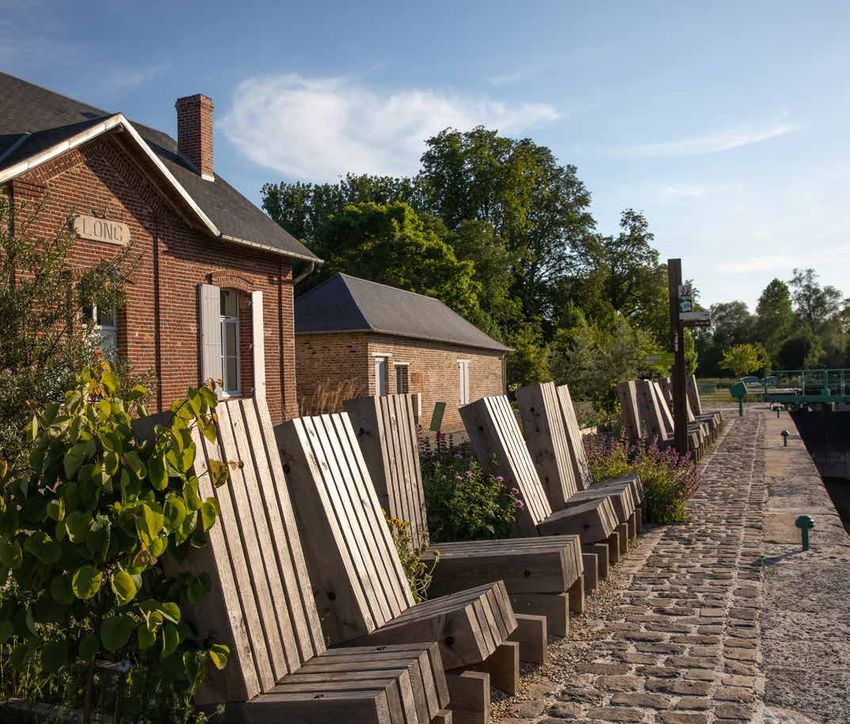
studio audal Jardin fortifié / Fortified garden Le rivage des cirses / The riverbank of Cirsium SYLVESTRE
Quentin Aubry Étienne Lapleau
Architect Engineer / France Human technological progress has always been able to draw on bio-imitation or even biomimicry. The market gardeners saw the fertile potential of the wild marshes long ago. They established a Landscape Designer / France
Zeger Dalenberg If we study the shape of whale tails to design airplane wings, or the eyes of moths to improve dialogue between water and land, between the habitat and human activity. Today, the power of Louis Richard
Landscape Architect / Netherlands screens, it is seldom for the benefit of nature. The number of aeroplane wings increases as nature is eroding the ancient structure of the water gardens. On the plains, intensive agriculture Landscape Designer / France
the number of whales declines, while the relentless light pollution from our screens gradually erases the old field boundaries and stretches the landscapes. Meanwhile, the valley bottoms are
reduces the territory of moths. Humanity recognizes itself as the main cause of climate change, closing, spontaneous natural dynamics resume and nature expresses its exuberance.
the destruction of environments and the extinction of hundreds of animal and plant species.
The market gardener looks at the meadow which has taken over the garden and his eyes
So now is the time to turn things around. are drawn to the Cirsium which grows on the fallow land with its large, pale coloured stems.
The marsh Cirsium, this old vegetable of the meadows, sown by the wind in the mixture of other
This time it is nature that draws on the resources of mankind. In the Hortillonnages of Amiens, grasses. Both thistle and vegetable, wild and companion of cultivated places, a little-known plant
a small island is the scene of a turnaround. A garden where military engineering technology, as belonging to an undervalued botanical genus, it stands on the border between the wild world
used in human citadels, becomes the inspiration for a fortified ecosystem. and the domestic world, charming the sight and the taste. The fate of a plant meets the history
The covered way where the soldiers stood guard is replaced by a thorny bank, populated by of Hortillonnages here.
plants with resplendent foliage and sharp thorns. It provides perfect shelter for reptiles and
rodents and keeps the invaders at bay. The garden stages this meeting and develops around the Cirsium oleraceum or cabbage thistle.
The flooded ditch, which together with the outer wall formed the city ramparts, is covered with For the picker, the presence of the cabbage thistle transforms the forest into a garden and the
aquatic plants. Logs provide the ideal habitat for amphibians and insects, protecting them from meadow into a crop. Growing spontaneously in damp places and on the banks of rivers in the
voracious fish and curious hands. north and east of France, the cabbage thistle finds a favourite territory in the Hortillonnages of
The suburbs and the city, where the people swarmed, turns into a dense vegetable wasteland, Amiens.
with many native flowers, where pollinators are busy. The whole thing is covered with mono-
specific nesting boxes for insects and arachnids. The visitor discovers this little-known plant in its environment among its companions of wet
Finally, where the castle created the attraction, a mound marks the observation area for the meadows and megaphorbiaies. The plant is described in the garden. It helps visitors to identify
human visitor. Humans do not have access to the fortress but do benefit from two viewpoints it and allows them to form a relationship with it.
which provide views of this protected ecosystem through the defences of the bank of thorns.
Inspired by the concept of para culture, a form of culture within the very heart of the wilderness,
The Fortified garden offers areas for the development and observation of species that are native Atelier Sylvestre considers the spontaneous environment of the Hortillonnages as a garden. The Sylvestre workshop, from the Latin sylva,
to the Somme. Using only recycled, natural and local materials, this is the opportunity to recreate When landing on Le rivage des cirses, the visitor is invited to dream of new forms of a garden «from the forest», is a partnership born from
valuable habitat, habitat which is quickly disappearing. An anthropodecentric design of a garden where the gardening gesture accompanies the dynamics of the environment. their meeting at the National School
which, in the long term, could allow the identification and re-establishment of species in decline. of Landscaping in Versailles.
The workshop’s approach is based on
Founded in 2020 in Rotterdam by Quentin observation of the site to design spaces that
Aubry and Zeger Dalenberg, studio audal is interact with the landscape and welcome
at the crossroads of the following disciplines: everything wild. The landscapers place the
architecture, town planning, design, art and gardening gesture in the movement of places,
landscaping. in the dynamic of their ecology. They conduct
By making narration its primary tool, studio their workshop projects with the joy of sharing
audal reveals the atmosphere of the contexts their relationship with the living.
and unfolds the history of its usage to link it Located in Touraine, the workshop is part of
to that of the project, from its concept to its the Nova-Bat cooperative and works
detail, and thus transports the reader-visitor Creation 2021 Creation 2021 in landscaping, from the creation of a garden
directly to the heart of an idea. Clermont Lake Clermont Lake to the design study.
© Collectif
© studio Pop Up
audal © atelier Sylvestre
Céline CLÉRON Nature permanente / Permanent nature La peau de chagrin / The skin of sorrow Bruno GRASSER
Artist / France Artist / France
Céline Cléron’s exhibits very often arise from a shift or a telescoping of things. She likes to Entitled La peau de chagrin, the exhibit is a reconstruction of a piece of road, an acknowledgement
establish a web of communication between history and nature, art and archaeology, or classical to the infrastructure project that would have built a road through the heart of the Hortillonnages,
works. Her creations bring to mind numerous images, each image revealing another, and evoking which is now protected. The symbol of an ecological struggle which, in 1974, succeeded in
stories where fabulous things are born from the prosaic while bringing a strange temporality cancelling a project for a bypass, the sculpture finally represents it, 47 years later.
to the present.
Driven by the increase in economic exchanges, the Amiens bypass extension project was directly
In her exhibit, ironically titled Nature permanente, she humorously mixes the archetype of related to an idea of growth, and the well-being of nature seemed to have been overlooked.
female anti-seduction - the curler - with the romantic and ornamental aura of the weeping willow Once again in today’s world, economic growth takes precedence over the preservation of
described in literature as the tree of melancholy and nostalgic memory. nature, and to safeguard it, is seen as a perpetual action, engaged as a safeguard against what
modernity hides within itself: a utilitarian vision of nature, considering it as a resource to be
Nature permanente is a cross between, a telescoping between the «hair» of the weeping willow exploited.
and an apparition almost animist, like a ghostly presence weaving a link between plant and
human. The object «curler» makes the weeping willow the subject and anthropomorphises If the Hortillonnages in Amiens has avoided an upheaval of its natural environment, it is clear
it, bringing it into the human sphere, giving it an ancestral «spirit» in the manner of animist that, insidiously, its space has been considerably reduced over the years, conceding 97% of the
ontologies. original 10,000 hectares to the development of the city around it.
The Fagots Island takes on the air of a sacred forest... The skin of sorrow refers to the novel by Honoré de Balzac in which the protagonist has the
opportunity to make his wishes come true at the cost of seeing the size of a piece of leather
For the artist, the relationship to memory like the game is woven into the distraction, like a decrease and gradually erode the lifespan of its owner. Satire on the conflict between desire and
persistent tension between what is fixed and what is in motion, between permanence and longevity, the character dies of bitterness, driven by a last desire, to live again.
impermanence, origins and evolution, fundamentals and inventions, the balance is played out in
the mischievousness of the artist and the pleasure of the visitor. The work uses this concentric mirror as a message medium which is more ambiguous than it
seems. This piece of the ring road floating in the water is an absurdity, the irony of an unrealised
dream of modernity, drifting with the forces that come and go. A symbol of a hard-won fight in the
form of an iceberg. Through this sample of the road which drifts, as if detached from the world,
there is almost the charm of a still life. However, the volume seems asleep, waiting. Its presence,
Céline Cléron uses a research technique that a potential link between the natural site and the city in the distance, sounds the alarm. In these
is memorial, historical, encyclopaedic and troubled waters, the sculpture is dissonant, formulating by making reality tremble through the
archaeological. Her exhibits emerge from an story of what could have happened, or perhaps what is already there.
encounter between memories often linked Bruno Grasser’s work is resolutely protean,
to her personal experience, her childhood it questions the movements of colliding
and the discovery of an object, a word or Permanent nature worlds, revealing fragile dreams.
a buried story. The materials used are as in situ installation The forms that the artist uses are imbued with
weeping willow and «curlers» The skin of sorrow nostalgia, no longer knowing to which world
fragile and precious as her reminiscences -
mixed technique: galvanized wire mesh, metal shade structures, red and blue anti UV plastic canvas, white PVC tubes sculpture they belong. They are copied from reality,
the result of a sensation, a game, a shock.
and table tennis balls polyethylene foam, bitumen and polyester pasted or even modified, projecting them
She often works in collaboration with artisans
to reactivate disappearing techniques and 100 cm x 35 cm (L x diam) 570 x 440 x 230 cm (L x W x H) onwards to a new trajectory.
gestures. Between discovery and teaching, Bruno Grasser could adopt the position
she creates poetic and humorous passages of Walter Benjamin’s storyteller in his
between different territories, different stories. Creation 2021 Creation 2021 eponymous book: to tell a story is always to
- Julie Crenn Fagots Island Clermont Lake tell it in one’s own way.
© Bertrand Huet / Tutti © Bruno Grasser
Ilona MIKNEVICIUTE Îlots / Islets Navette / Shuttle Keita MORI
Artist / Lithuania Artist / Japan
Safeguarding heritage sites and environmental issues are subjects to which Ilona Mikneviciute On the Île aux Fagots, we see a small golden boat called Navette floating on the water...
is particularly attached. The Amiens Hortillonnages is one of those exceptional ecosystems that In this region intimately linked to textiles since the Middle Ages, the boat symbolises for the artist
inspires her, with its landscapes that combine bodies of water, islets, gardens and cultures, the shuttle used on the looms, a tribute to the flourishing past of the Amiens textile industry.
in which the relationship between man and nature has been forged over the centuries. The artist here tries to promote the interaction between his practice of «drawing» by materialising
it, and the perception that the visitor may have of it when discovering it in a public space, that of
Developed by man since the Middle Ages, the Hortillonnages form a natural environment of the Hortillonnages.
marshes. The extraction of peat, used as fuel, has greatly contributed to the shaping of the
current site; human interventions have gradually redesigned the landscape. Like an echo of Since 2011, Keita Mori has been developing his own technique in his drawings: with a glue gun,
this relationship between man and nature, the artist proposes to create an enigmatic landscape he applies threads to paper or a wall. The uniform lines, obtained with the threads, symbolises
by designing a set of islands on Clermont lake. the component elements of a «system» or a «society»; they testify to a temporary and ambiguous
reality, to plastic research on «fragments of the world» such as movement, time and space.
The Islets, with rounded volumes and bloated shapes, evoke the peaks of volcanoes that
have emerged from the water. Composed of plants mounted on a light metal structure that is
By participating in the International Garden Festival | Hortillonnages Amiens, the artist explains
hollow inside, they are made using the technique of mosaic culture, a technique that consists
that he wishes to mark a decisive turning point in his artistic activities. If in recent years he has
of composing three-dimensional models of plants according to their colours and sizes.
focused on the art of drawing, with the act of «drawing lines», he has been exploring since 2021,
with the 10th year of the Bug Report series, new possibilities of creating three-dimensional work,
Rocking by the movement of the water, the islets contribute to the evocation of a utopian
landscape while questioning our ecological future. These mysterious installations, inscribed in and to produce some with objects related to textiles. With the shuttle crossing the fabric from
right to left, the artist reveals a new line. The chain of movements that pierces through both sides
the majestic Hortillonnages space, call for a return to nature, to a more natural environment.
of the material is also an allegory of «birth» which is repeated endlessly in the world in which
we live.
With Navette, it is an original «texture» of the city that reveals the invisible exchanges between
Lithuanian artist Ilona Mikneviciute has a large audience and a work of art, between a stable world and a moving world; as if the history Japanese artist Keita Mori lives and works in
lived and worked in France for 20 years. of Amiens had been woven again. Paris. After studying at the Tama University of
Sometimes staying away from the usual Art (Tokyo), he completed his training at the
places dedicated to creation and exhibition, University of Paris VIII in Master and at the
she develops projects that are often involved. National School of Fine Arts in Paris under
The relationships between the work, the place the sponsorship of the Government of Japan -
and the viewer are of particular interest to her. Agency for cultural affairs.
Ilona uses different media such as sculpture, In 2017, a personal exhibition was dedicated
installation and video. to him at the Drawing Lab Paris for the
Recently, her artistic research has prompted Islets opening of the centre. His works are part
installation Navette
her to take an interest in environmental in situ installation of several private and public collections
issues. It was by crossing art and ecology that 3 islands including «1 immeuble, 1 œuvre» under the
aluminium, polystyrene, potting compost and plants wood and gold leaf
she began to experiment with projects around aegis of the Ministry of Culture and
5 m x 4 m x 3 m (L x W x H) 577 x 100 x 68 cm (L x W x H)
the association of the living and the non-living the Emerige Endowment Fund (Massy),
in a sculptural form. the FRAC PACA (Marseille) and the FRAC
The visual artist thus questions a possible Nouvelle-Aquitaine MÉCA (Bordeaux).
cohabitation between the plant and the Creation 2021 Creation 2021 He is represented by the Galerie
sculpture. Clermont Lake Fagots Island Catherine Putman.
© Ilona Mikneviciute © Keita Mori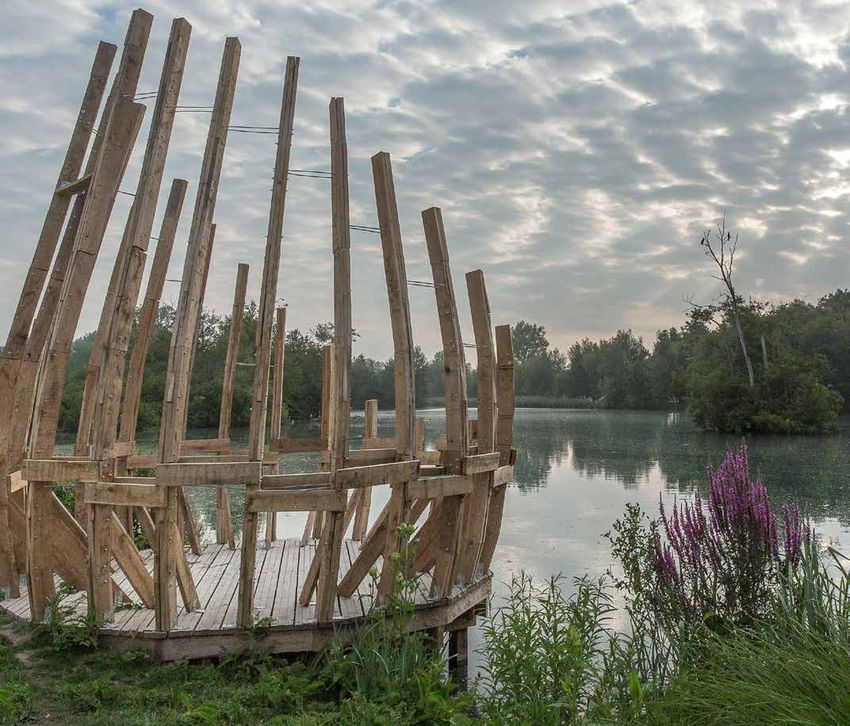
3 STUDENT PROJECTS                                           ALEA
UFR des Arts                                                 The exhibit is inspired by Jules Verne’s novel, Five Weeks in a Balloon (1863). It is a contemporary
                                                             delve into the universe of this writer from Amiens. The theme of travel is evoked by the crash of
University of Picardy
                                                             a hot air balloon, which is rather ironic given the current situation where travel is very restricted!
Jules Verne                                                  The balloon envelope is intriguing: why is this «aerial shipwreck» in the Hortillonnages? What
                                                             is it hiding? The accident would have certainly diverted travellers from their journey, leaving
Free-birds collective - ALEA
                                                             them unable to continue with their planned trip... ALEA here addresses the issue of failure and
Milena Oliveti - Chahinez Hannache - Théo Michau
A multicultural collective, Free-birds was naturally         its effects on each of us; what is the result of a crash in terms of changes and the adaptive
interested in the theme of travel and Jules Verne, an        capacities of humans? By locating this damaged giant in a fragile and isolated environment,
emblematic figure of the city of Amiens. The journeys        Free Birds hijacks the primary function of this balloon flying over the Earth: the eye is drawn to
of each member, and their view of the journey, a             new or even unknown sensations and emotions that appear, it is an experience that has become
promise of escape, have made it possible to imagine
                                                             rather common in these times of Covid-19.
a monumental installation that brings together their
visions.
                                                             Samarobriva
Les Éphémères collective - Samarobriva                       Samarobriva is the Gallo-Roman name for the city of Amiens. The Samarobriva project, examines
Oriane Limousin - Tatiana Cazes-Girard - Matteo Nicoli
- Adrien Gaudefroy - Savannah Salingue - Océane              the underground history of the city, on its secular strata which are superimposed over the
Duhamel - Kathleen Istas                                     centuries, and some of the remains are still visible in Place Gambetta. With a cabin overflowing
Les Éphémères is a group of seven students. Why              with silt, struggling to support all the material it contains, the Les Éphémères collective explores
Éphémères? All the projects produced by the group are        the notions of destruction, overflow and invasion. The silt flows from all of its doors and windows,
ephemeral, they are not intended to last. And, at the        sometimes spreading still further, forcing the visitor to walk around this mass of silt. The visual
end of the academic year, the group will be dissolved,
each member will move on. It is also a reference to the      effect is appealing it gives the illusion of a cabin overflowing with silt, that is filled with this
butterfly of the same name which only lives for a very       fertile quagmire, but it is just an illusion! There is not a handful of silt inside the cabin, it is only
short time...                                                deposited on the outside of the painted wooden structure which simulates muddy torrents...

The Tisserins Collective - Tisser des liens
Lucas Lefebvre - Maea Teriihoania - Ilana Oudaer -           Tisser des liens
Peroline Saintot - Anthony Lauvand - Arnaud Rouget -         The human hand unites with the machine to shape an environment combining weaving and nature.
Balsem Jeridi - Floriane Marie Joseph - Meriem Krikab -      With Tisser des liens, the collective imagined a space inside a shed to create an installation that
Nicolas Delahaye - Tony Nguyen                               echoes nature by mixing manual braiding of natural fibres and mechanical meshing of machined
The weaver bird weaves an elaborate, ball-shaped nest
with twigs and leaf filaments. The Tisserins collective is
                                                             materials. These practices of entanglement of materials are rooted in our history, they have
developing a similar approach by weaving and braiding        become industrialised, which has - unfortunately - led to a distance between the individual and                                                                                                                                                                  © art & jardins | Hauts-de-France
a sort of cocoon inside a cabin. The production of this      the work of the material; the hand is no longer the tool. And this link, in the absence of technical
project also allows this collective of eleven students to    education, is unravelling; we buy today without knowing or recognising. Through this disinterest,               The International Garden Festival | Hortillonnages Amiens is a festival of creation to be shared with family, alone or with friends
weave their own links in the same way that they weave                                                                                                                        a Festival of the senses, a Festival of emotions, a Festival of healing, between a stroll & a day-dream
                                                             culture and know-how are also lost. However, the techniques form a universal language that                      An acoustic concert with La Lune des Pirates at the Clermont Lake - Wellness time on the Île aux Fagots - Listening to Hortillophones and the surrounding sounds...
them in their exhibit between man and nature…
                                                             makes it possible to regroup and weave relations between generations and cultures: they are
                                                             silent witnesses of the past. If the link is the thread, each living species develops techniques to
Creations 2021                                               build an environment. This exhibit offers a new ecosystem combining primitive techniques and
Clermont Lake                                                current practices to perpetuate this thousand-year-old link between man and nature.

                                                               © Collectif free-birds                                                            © Collectif Les Éphémères

                                                                                                                            © art & jardins | Hauts-de-France

                                                                                               © Collectif Les Tisserins                                                                                                           © art & jardins | Hauts-de-France                                                          © art & jardins | Hauts-de-France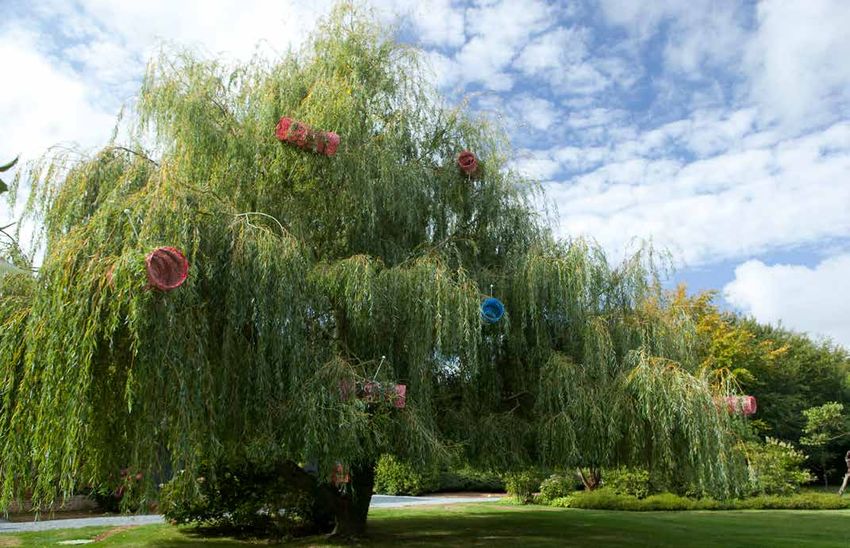
Once upon a time, the Festival in pictures #1                                                       Once upon a time, the Festival in pictures #2
                                                                                                                          visuals available for the press   visuals available for the press

Pierre-Alexandre Rémy, Hortillonnages en pli, 2013                                    Atelier du Dehors : Guillaume Besnier, Le banquet cornélien, 2020     Atelier du Gründberg, Small is beautiful - Une houblonnière jardinée, 2015                Florent Morisseau, Le potager embarqué, 2010
International Garden Festival ǀ Hortillonnages Amiens © Yann Monel                    International Garden Festival ǀ Hortillonnages Amiens © Yann Monel    International Garden Festival ǀ Hortillonnages Amiens © Yann Monel                        International Garden Festival ǀ Hortillonnages Amiens © Yann Monel

Simon Augade, Affaissement, 2019                          Collectif GAMA, Fragments, 2013                         Julien Laforge, De bords à corps, 2017    Green Resistance, Île était une fois, 2019                  Boris Chouvellon, Miroir aux alouettes, 2014              Solène Ortoli, La chambre des lisières, 2018
International Garden Festival ǀ                           International Garden Festival ǀ                         International Garden Festival ǀ           International Garden Festival ǀ                             International Garden Festival ǀ                           International Garden Festival ǀ
Hortillonnages Amiens © Yann Monel                        Hortillonnages Amiens © Yann Monel                      Hortillonnages Amiens © Yann Monel        Hortillonnages Amiens © Yann Monel                          Hortillonnages Amiens © Yann Monel                        Hortillonnages Amiens © Yann Monel

Stéphane Larcin et Baptiste Demeulemeester, Cabotans maraîchers, 2019                 Andrew Fisher Tomlin et Dan Bowyer, Remnant, 2014                     Collectif CLAP, Les berges sonores, 2016                                                  Raphaëlle Duquesnoy, Hortillophones, 2019
International Garden Festival ǀ Hortillonnages Amiens © Yann Monel                    International Garden Festival ǀ Hortillonnages Amiens © Yann Monel    International Garden Festival ǀ Hortillonnages Amiens © Yann Monel                        International Garden Festival ǀ Hortillonnages Amiens © Yann Monel
The 2020 edition of the Festival in pictures #3 The 2020 edition of the Festival in pictures #4
visuals available for the press visuals available for the press
Alexis Deconinck, Origami, 2020 Atelier Faber, Roques, 2020 Yuhsin U Chang, Mémoire d’arbre, 2020 Sylvie Bonnot, Géométrie de la chute, 2020
with the help of the students at the Faculty of Architecture La Cambre - Horta International Garden Festival ǀ Hortillonnages Amiens © Yann Monel a co-production lille3000 ELDORADO + Art & Jardins l Hauts-de-France 2019 International Garden Festival ǀ Hortillonnages Amiens © Yann Monel
of the University of Brussels International Garden Festival ǀ Hortillonnages Amiens © Yann Monel
International Garden Festival ǀ Hortillonnages Amiens © Yann Monel
Atelier du Dehors : Guillaume Besnier, Le banquet cornélien, 2020 Collectif Pop Up, À dans 10 ans..., 2020
a participatory garden created with Les Incroyables Comestibles, Les Recyclettes, International Garden Festival ǀ Hortillonnages Amiens © Yann Monel
the De la Graine à l’Assiette association and many volunteers
Atelier du Dehors : Guillaume Besnier, Le banquet Atelier eem, + 2°C = 43 cm, 2020 Atelier Faber, Roques, 2020 International Garden Festival ǀ Hortillonnages Amiens © Yann Monel
cornélien, 2020 International Garden Festival ǀ International Garden Festival ǀ
International Garden Festival ǀ Hortillonnages Amiens © Yann Monel Hortillonnages Amiens © Yann Monel
Hortillonnages Amiens © Yann Monel
Atelier eem, + 2°C = 43 cm, 2020 Delphine Renault, Hutte, 2020 Collectif Pop Up, À dans 10 ans..., 2020 Anne Houel, Cultures, 2020, with the support of IP2, Didier Webre
International Garden Festival ǀ Hortillonnages Amiens © art & jardins HDF International Garden Festival ǀ Hortillonnages Amiens © Yann Monel International Garden Festival ǀ Hortillonnages Amiens © Yann Monel International Garden Festival ǀ Hortillonnages Amiens © Yann MonelGARDENS OF THE SOMME
VALLEY
a landscape tour
along the river
In the Somme department, Art & Jardins | Hauts-de-France promotes the riverside and adjacent areas through artistic and
landscaped creations which highlight the incredible beauty that the river has symbolised since Antiquity, with its mosaic of
natural environments, the omnipresence of water and the great diversity of fauna.
The association has been invited to be part of the management of the project «Valley of the Somme, Ideal Valley»
by designing new gardens at the lock keepers’ houses and various emblematic sites along the valley. It is a route that
naturally extends that of the International Garden Festival | Hortillonnages Amiens, beyond the canals and streams, through
a landscape and artistic route from Saint-Quentin to the Bay of the Somme.
Three gardens can now be visited, a fourth will be completed in 2021:
Aisne • Saint-Quentin > La faille, Parc d’Isle, by Élise and Martin Hennebicque - Prix AJAP 2018
Somme • Abbeville > Coup d’œil entre deux eaux, Parc de la Bouvaque, by Atelier Les Jardiniers Nomades - Prix AJAP 2016
Somme • Long > Le jardin destock, Lock keeper’s house, by the Wagon Landscaping agency - Prix AJAP 2016
Abbeville - Atelier Les Jardiniers Nomades, Coup d’œil entre deux eaux
© Yann Monel
Long - Wagon Landscaping, Le jardin destock
Saint-Quentin - Élise et Martin Hennebicque, La faille
© art & jardins | Hauts-de-France © Yann MonelGARDENS OF PEACE
HAUTS-DE-FRANCE - BELGIUM - GRAND EST
A Peace Trail to visit
in the Hauts-de-France region A creative and landscaped journey
through the places of memory of the Great War
from Hauts-de-France to Belgium and the Grand Est
Aisne
The association Art & Jardins | Hauts-de-France and the Centenary Mission of the First World War have developed a creative
Craonne and innovative journey in the colours of the nations that were at war and who now embrace the cause of peace in the
• German Garden of Peace / 2018
• Italian Garden of Peace / 2018
contemporary world. An unprecedented landscaping project on the emblematic memorial sites of the First World War,
• Moroccan Garden of Peace / 2018 it is an invitation to landscape architects the world over, to trace lines of reflection in a contemporary world rich in planetary
Located in Vieux-Craonne, on the Chemin des Dames mixing, but also riven by economic, political and ecological upheaval.
Since 2018, the centenary year marking the end of the First World War, 14 Gardens of Peace have been created in the five
Nord
departments that form the Hauts-de-France Region. They offer a different, sensitive and complementary approach to
Le Quesnoy places of memory: from the moat of the Castle in Peronne to the moat of the Vauban fortifications in Le Quesnoy, from
• Belgian Garden of Peace / 2018 the Glade of the Armistice in the forest of Compiegne to the village of Vieux-Craonne on the Chemin des Dames, via Arras,
Interreg France-Wallonie-Vlaanderen Micro-projet | Microproject PLATo* Vimy, Neuville-Saint-Vaast, Notre-Dame-de-Lorette and also to Belgium at the Memorial Museum Passchendaele 1917.
• New Zealand Garden of Peace / 2018 Over the years, the Gardens of Peace have been created with the support of local communities and numerous sponsors.
© Yann Monel Located in the moat of the Vauban fortifications
Vimy - Canadian Garden of Peace - Collectif Escargo, Drapeau They bear witness to a necessary look to our future, to this peace that is always questioned, and create spaces for
rest and reflection.
Oise
In the Hauts-de-France, this Peace Trail has experienced such resilience among all generations of visitors and partners
Compiegne that the association would now like to extend it to other areas, that are also located on the front lines of the First World War.
• Franco-German Garden of Peace / 2018
Located near the Glade of the Armistice
This route will run from Belgium to Alsace via the Nord, Pas-de-Calais, Somme, Aisne, Oise, Ardennes, Marne, Meuse,
Moselle, the Meurthe-et-Moselle, the Vosges, the Bas-Rhin and the Haut-Rhin. Last November, a partnership agreement
was signed with the Ministry of the Armed Forces to produce gardens on the sites of the national necropolises of the Hauts-
Pas-de-Calais de-France and the Grand Est.
Arras
• Scottish Garden of Peace / 2018
By 2023, 40 Gardens of Peace will be produced. They will form a path of Peace that is unique in Europe, an echo of the
Located near to the Faubourg d’Amiens Military Cemetery circuit of Memory of the Great War.
© Yann Monel
Neuville-Saint-Vaast In 2021-2022, the Gardens of Peace trail in the Hauts-de-France will be enriched with 8 new gardens to the memory
Craonne - Moroccan Garden of Peace - Karim El Achak & Bernard Depoorter,
• Czech and Slovak Garden of Peace / 2019
Le Jardin des Hespérides of 8 nationalities:
Located next to the National Necropolis and the Monument
to the Fraternisations Nord • Flesquières > Franco-British Peace Garden, in progress
Pas-de-Calais • Arras, Carrière Wellington > New Zealand Peace Garden
Notre-Dame-de-Lorette Pas-de-Calais • Neuville-Saint-Vaast > Polish Peace Garden, in progress
• French Garden of Peace / 2018-2020 Pas-de-Calais • Richebourg > Portuguese Peace Garden + Indian Peace Garden
Located near the Ring of Memory
Somme • Amiens > Australian Peace Garden
Vimy Somme • Noyelles-sur-Mer > Chinese Peace Garden
• Canadian Garden of Peace / 2018 Aisne • Braine, Chemin des Dames > Danish Peace Garden
Located near the Canadian National Vimy Memorial Visitor Centre
In the Grand Est, the countries envisaged for the creation of the Jardins de la Paix in 2021-2022 are France, Germany,
Austria, Romania, Algeria, former Indochina (Vietnam, Laos, Cambodia), the United States of America, Russia and
Somme
a country in sub-Saharan Africa:
© Yann Monel Peronne Ardennes • Vouziers > National Necropolis of Chestres, with a Czech & Slovak garden
Compiegne - Franco-German Garden of Peace- Marc Blume, Gilles Brusset & • Irish and Northern Irish Garden of Peace / 2018 Marne • Sainte-Marie-à-Py and Souain-Perthes-lès-Hurlus > Monument to the Dead of the Armies of Champagne
Francesca Liggieri, Le troisième train
Located in the moat of the castle - Meuse • Douaumont > National Necropolis of Fleury-devant-Douaumont, with 4 gardens planned
Historial de la Grande Guerre
Moselle • Metz > National Necropolis of Chambière
Thiepval Meurthe-et-Moselle • Montauville > Le Pétant National Necropolis
• English Garden of Peace / 2018 Vosges • Ban-de-Sapt > National Necropolis of La Fontenelle
• Welsh Garden of Peace / 2018 Haut-Rhin • Wattwiller> National Monument of Hartmannswillerkopf
Located near the Visitor Centre - Museum,
in the wood leading to the Memorial
Belgique
Passchendaele
• French Garden of Peace / 2019
© art & jardins | Hauts-de-France Interreg France-Wallonie-Vlaanderen Micro-projet | Microproject PLATo*
Le Quesnoy - New Zealand Garden of Peace - Xanthe White, Rangimarie Located in a poppy at the Memorial Museum Passchendaele 1917CITIZENS’ GARDENS
MINING BASIN
Participatory gardens
in the heart of former mining towns
In the Mining Basin, listed as a World Heritage Site by UNESCO, Art & Jardins | Hauts-de-France is developing a project
based on participatory gardens to promote industrial heritage and to celebrate workers’ solidarity. Slag heaps, pits,
winding heads and miners’ houses are all elements of inspiration for the landscapers and artists who design the gardens and
the exhibits, with the complicity of the inhabitants, the schoolchildren and the users. This process of citizen consultation is
based on inclusive mediation; a participatory and civic approach supported by the Hauts-de-France Region, the Department
of the Pas-de-Calais, the Communities of Agglomerations Béthune Bruay Artois Lys Romane (CABBALR) and Lens-Liévin
(CALL), the Pays d’Art et d’Histoire of Lens-Liévin, Odyssey 2019 and the sponsors.
During the exchanges and meetings, there are questions of memory to preserve, stories to tell, traditions to perpetuate,
spaces to develop and natural areas to protect; all these approaches are integrated into the landscape and plastic
productions on the former Quenehem city of Calonne-Ricouart and on the l’îlot Saint-Louis of Grenay.
The Citizens’ gardens are an invitation for visitors to understand the industrial past of the Mining Basin and provides
a way for residents to re-invest in the public spaces of their towns. New projects are under consideration in the Pas-de-
Calais to extend this citizens’ journey to other areas of the Department, and other specific groups.
© Yann Monel In 2020, 5 gardens were produced in the Mining Basin:
Calonne-Ricouart - Green Resistance, Earth, slag heaps and earthlings Calonne-Ricouart • ancient city of Quenehem
> L’Aéroport - jardin d’atterrissage / The airport-landing garden by the Wagon Landscaping agency
> Terre, terrils et terriens / Earth, slag heaps and earthlings by the Green Resistance collective
> Paysage d’avant / Front landscape by scenographer Solène Ortoli
> Domostwo by the Franco-Polish duo Hélène Soulier & Ewa Rudnicka
Grenay • Îlot Saint-Louis
> Requalification of the îlot Saint-Louis where the Ferdinand Buisson school is located by the Atelier de l’Ours
© Gaël Chabin © Yann Monel
Calonne-Ricouart - Green Resistance, Earth, slag heaps and earthlings Calonne-Ricouart - Solène Ortoli, Front landscape
© art & jardins | Hauts-de-France © Ville de Grenay
Calonne-Ricouart - Wagon Landscaping, The airport-landing garden Grenay - Atelier de l’OursHAUTS-DE-FRANCE
VEGETABLE GARDENS
5 high schools - 5 departments - 5 landscapers
2020-2021
In partnership with the Rectorate of the Hauts-de-France academic region, the Academy of Amiens, the Academy of Lille,
and in conjunction with the services of the Hauts-de-France Region, the association Art & Jardins I Hauts-de-France
Calais - Pierre de Coubertin High School
launched in 2020 the creation of educational vegetable gardens in high schools in the region to make young people
aware of issues concerning nourishment as well as the challenges of «healthy eating» and short supply chains.
Inspired by models already developed in schools in urban areas of the Scandinavian countries and French systems
such as eco-delegates, Art & Jardins I Hauts-de France wishes to put high school students in a situation of reflection
facing the major issues of the contemporary world: environmental protection and sustainable development, awareness
of the principles of permaculture and the possibility of creating vegetable gardens, food self-sufficiency, preservation of water
resources, responsible spatial planning, civic responsibility, understanding plants, vegetables, fruits and their uses.
Supervised by young landscapers and teachers, high school students participate in these vegetable gardens
(preparation of the land, design of the gardens, choice of crops and all the components of a vegetable garden)
designed according to the principles of sustainable agriculture. They also ensure the maintenance and harvesting of
Chauny - High Schools the vegetable gardens with their teachers and certain technical services of the establishments. The crops will be used in the
canteens. Cooking workshops and meetings with nutritionists, dieticians or professionals from the local food industry can be
organised.
Art & Jardins I Hauts-de-France provides the establishments and their managers with all of its know-how and expertise,
both from the point of view of creation, animation and mediation. The landscapers with the teachers, apart from the
design and construction of the vegetable gardens, support the development of the various gardens and carry out educational
work. Technical teams and canteen staff are also involved in the various stages of the project to participate in the construction
of vegetable gardens, to introduce plantings suitable for the composition of menus and to involve high school students in the
preparation of meals.
In 2020-2021, this first process is being carried out in five high schools, each located in one of the five departments
of the Hauts-de-France Region:
Aisne • Chauny > High Schools with the Atelier de l’Ours
Nord • Lille > Louis Pasteur High School with Léonard Nguyen Van Thé
Oise • Clermont > Cassini High School with Rémi Algis (Atelier Rémi Algis) & Claire Vigé Hélie
Pas-de-Calais • Calais > Pierre de Coubertin High School with Green Resistance
Lille - Louis Pasteur High School Somme • Amiens > Delambre-Montaigne High Schools with Vergers Urbains, Atelier l’Embellie & Épigénie
As of last November, after having carried out the soil studies, the work of mediation and pedagogy with the high school
students began and will end in March. In the spring, the production of the vegetable gardens will begin. And, in June 2021,
the vegetable gardens will be inaugurated at the same time as the first harvests.
Clermont - Cassini High School Calais - Pierre de Coubertin High School Clermont - Cassini High School
Calais - Pierre de Coubertin High School Amiens - Delambre-Montaigne High Schools Clermont - Cassini High SchoolYou can also read


