PREVENTING OSTEOPOROSIS IN THE EU - EVENT REPORT | 2020 - 2021 EURACTIV.com
←
→
Page content transcription
If your browser does not render page correctly, please read the page content below
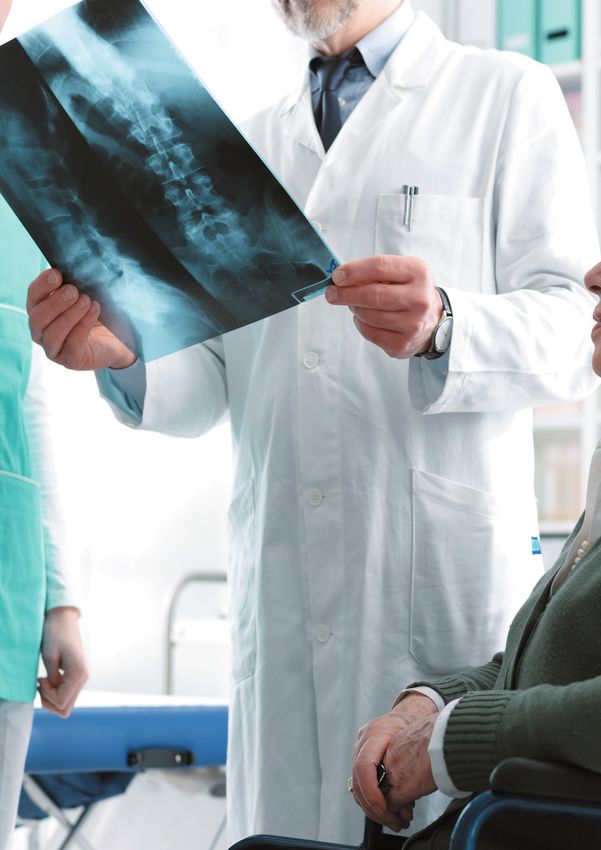
PREVENTING
OSTEOPOROSIS IN
THE EU
EVENT REPORT | 2020 - 2021

https://eurac.tv/9RQX

                        With the support of
PREVENTING
OSTEOPOROSIS IN
THE EU

EVENT REPORT            Osteoporosis is a chronic condition in which bones be-
                        come weak and brittle, leading to fractures and breaks
https://eurac.tv/9RQX
                        which often carry life-debilitating consequences.

                        As well as causing considerable mental and psycholog-
                        ical distress, they also severely impair people’s abilities
                        to participate in normal life and their ability to work.

                        In the EU alone, it’s estimated that 22 million women
                        and 5.5 million men suffer from the bone condition, re-
                        sulting in 3.5 million fractures a year, which costs an
                        estimated €37 billion, or around 3% of overall health-
                        care costs.

                        But osteoporosis is often wrongly assumed to be a nat-
                        ural consequence of ageing, rather than a preventable
                        disease.

                        In this event report, EURACTIV takes a closer look at
                        the bone condition and ways in which it can be pre-
                        vented.
Contents
                              Osteoporosis prevention can
                    start in the womb, says health expert    4
            Broken bones, shattered lives: call for action
                        as EU faces rise in osteoporosis     6
Pandemic could have far reaching effects on bone health,
                                           expert warns      8
          Osteoporosis and fragility fractures: An urgent
                    priority for European policymakers       10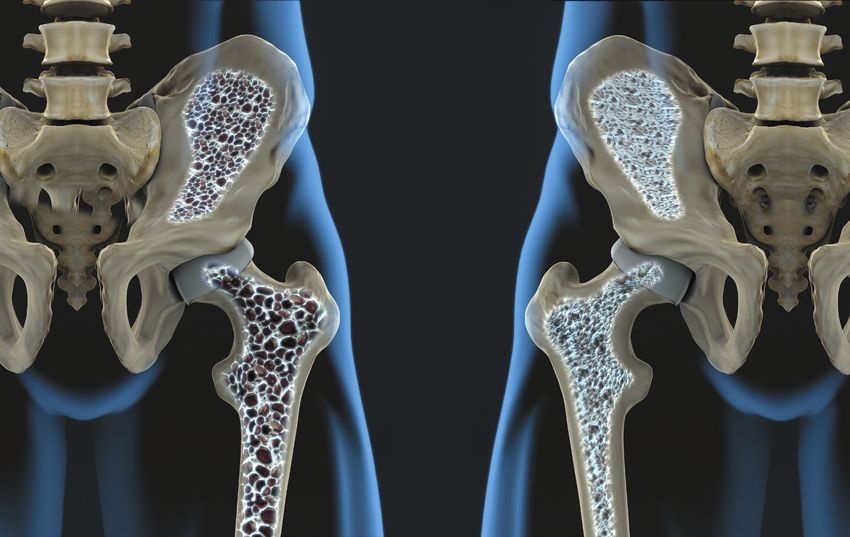
4                                         EVENT REPORT | PREVENTING OSTEOPOROSIS IN THE EU | EURACTIV

                 Osteoporosis prevention can
                      start in the womb,
                     says health expert
                                     B y N a t a s h a F o o t e | E U R A C T I V. c o m

                                                             Early preventative action is of paramount importance according
                                                             to Professor Cooper, president of the International Osteoporosis
                                                                             Foundation. [SHUTTERSTOCK]

T
       he narrative that osteoporosis     cost-efficient    osteoporosis-related            health problem,” Cooper stressed,
       is a natural consequence of        fracture prevention, something he                 highlighting that there are 3.5 million
       ageing must be challenged and      says is well-substantiated in scientific          osteoporosis-related fragility fractures
emphasis must be given to a smarter       literature.                                       in the EU each year, which cost an
way of screening to reduce the risk                                                         estimated €37 billion, or around 3% of
of fracture and the associated costs,         Osteoporosis is a chronic condition           overall healthcare costs.
the president of the International        in which bones become weak and
Osteoporosis     Foundation,     told     brittle, leading to fractures and breaks              As populations age, this cost is
EURACTIV in an interview.                 which often carry life-debilitating               predicted to increase by 25% by 2025,
                                          consequences.                                     with fracture-related costs projected
    Professor Cyrus Cooper outlined                                                         to increase to €47.4 billion by 2030.
a three-step strategy for effective and       “These fractures are a huge public

                                                                                            Continued on Page 5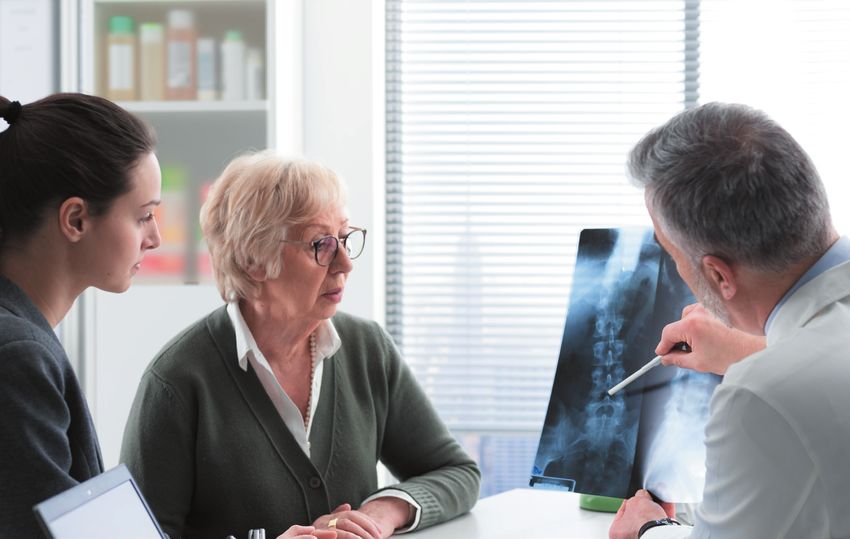
EVENT REPORT | PREVENTING OSTEOPOROSIS IN THE EU | EURACTIV                       5

Continued from Page 4

      However,      osteoporosis     is      those most at risk; and prevention        Tool (FRAX), to evaluate the 10-year
  often incorrectly assumed to be a          over the whole life course, which can     risk of fracture as a basis for further
  natural part of ageing, rather than a      start from pregnancy.                     intervention.
  preventable disease.
                                                “There are parts of the                   By altering the screening
       “When I started out, osteoporosis     environment       which       influence   approach in this way, three major
  was seen as an inevitable consequence      bone density from before you’re           studies conducted in the EU
  of ageing, like grey hair,” Cooper said,   born and from a very young age,”          demonstrated a considerable benefit.
  emphasising that research over the         he said, adding that vitamin D
  ensuing decades has now identified         supplementation        in     pregnant        One British study found that this
  its risk assessment and treatment.         women during winter months and            led to a 26% reduction in hip fractures
                                             maintaining calcium levels in young       across 5 years, while all studies
     This must now be reflected              children has been shown to give           showed a reduction in osteoporotic
  in the way in which we approach            children a better trajectory.             fractures.
  osteoporosis care, he said, both for
  the human cost and the economic                Whereas secondary prevention              Later screening was also found to
  burden of the condition.                   is already practised to a greater or      reduce the associated costs to as little
                                             lesser extent across EU member            as £10,000 per QALY.
      “Osteoporosis      should       join   states, Cooper stressed that more
  hypertension, diabetes, and high           emphasis must also be given to                Cooper said that on the back of this
  cholesterol as one of the disorders        primary prevention.                       new research, experts working in the
  where you’ve got a known risk                                                        specialty agree that a stronger focus
  factor and a load of interventions,            In the past, screening practises      must be given to screening practices,
  and you need to link data so that          have been shown to be inefficient,        although he stressed that getting a
  the interventions can be used most         costing around €100,000 pounds            consensus from national screening
  effectively for those at a higher risk,”   per     quality-adjusted     life-year    councils is a “big challenge”.
  he said.                                   (QALY,) something Cooper says is
                                             “economically unjustifiable”.                One way which Cooper thinks
      These risk factors, he added,                                                    could help improve osteoporosis care
  should be seen in the same way that           QALY is a generic measure of           and prevention is via the use of data
  blood pressure is related to stroke        disease burden, with one QALY             and digital technologies.
  risk.                                      equalling one year in perfect health,
                                             used in economic evaluation to assess         “I think that the use of big data
      Early preventative action is           the value of medical interventions.       is an absolute priority and must be
  therefore of paramount importance,                                                   used more,” he said, adding that this
  Cooper underlined, saying that,               The   average    willingness-to-       must be facilitated at the EU level.
  thanks     to    in-depth    research,     pay threshold is valued between
  screening programmes have been             €20,000-30,000 per QALY in the EU.            “EU   policy    can   definitely
  refined to offer optimal outcomes.                                                   enhance the sharing of routine
                                                 However, Cooper cited new             health statistics, amalgamation of
      He highlighted a three-pronged         studies which have demonstrated           risk models across EU countries,
  approach: secondary prevention,            promising results by increasing the       standardisation of integrated care
  focusing on appropriate post-              average age in which people are           pathways and electronic health
  fracture care; primary prevention,         screened from 50-64 to 70-85, and         records. All could be facilitated
  which involves the implementation          introducing a simple questionnaire,       by current EU harmonisation
  of screening programmes to detect          known as a Fracture Risk Assessment       programmes,” he said.
6                                          EVENT REPORT | PREVENTING OSTEOPOROSIS IN THE EU | EURACTIV

            Broken bones, shattered lives:
           call for action as EU faces rise in
                      osteoporosis
                                      B y N a t a s h a F o o t e | E U R A C T I V. c o m

                                                                EU policy has been slow to keep pace with medical and clinical
                                                              advancements, leaving millions of people – mostly older women –
                                                           without access to the care and support they need to live full, independent
                                                                                    lives. [SHUTTERSTOCK]

E
      U policy action on osteoporosis      Partnership in conjunction with                     the care and support they need.
      is lagging behind, even though       a group of experts, aims to better
      methods already exist to prevent     manage osteoporosis and its related                     “The time has come for urgent
the chronic bone disease. But a new        complications.                                      action on osteoporosis, uniting
policy toolkit aims to help change this.                                                       patient, carer and clinical leadership
                                              By summarising the key actions                   with wider societal and political
   In an effort to align health policy     for policymakers alongside country-                 advocacy actors in order to strengthen
with the latest tools and procedures,      specific resources, the report aims                 the call for change,” the report urges.
the new toolkit, developed by health       to ensure that EU policy helps those
policy consultancy, the Health Policy      suffering from the condition access                     Osteoporosis is a chronic condition

                                                                                                Continued on Page 7
EVENT REPORT | PREVENTING OSTEOPOROSIS IN THE EU | EURACTIV 7
Continued from Page 6
in which bones become weak and have been identified in order to slow, effective policy change,” but that “the
brittle, leading to fractures, known or even reverse, bone weakening, assembly of a robust clinical evidence
as ‘fragility fractures’, and breaks subsequently reducing the risk of a base must antecede translation
which often carry life-debilitating fracture. through the implementation of
consequences. policy change”.
“We now know what works in
These fractures are a major a clinical setting for osteoporosis, “We have proved that this is
cause of disability and early we’ve identified a means of a cost-effective use of healthcare
death in older adults. As well as predicting fracture risk, we have a resources that works in the UK, and
causing considerable mental and panoply of interventions that reduce now we want to bring post-fracture
psychological distress, they also fractures in those who are high risk, care on a larger scale to European
severely impair people’s abilities to and that is the basis that we need policy,” he added.
participate in normal life and their to communicate as the evidence
ability to work. to policy makers,” Professor Cyrus Ed Harding, managing director
Cooper, President of the International at the Health Policy Partnership,
With a hip fracture, for example, Osteoporosis Foundation, stressed said that he hoped this toolkit would
40% of patients cannot walk during a recent event marking the enable advocates to communicate the
independently, while 10–20% need launch of the toolkit. urgency for action on osteoporosis
permanent residential care. Despite this, EU policy has been and fragility fractures, adding that
slow to keep pace with medical the costs of inaction on this matter
In the EU alone, it’s estimated that and clinical advancements, leaving make a clear economic case for
22 million women and 5.5 million millions of people – mostly older change.
men suffer from the bone condition, women – without access to the care
resulting in 3.5 million fractures and support they need to live full, “Osteoporosis and fragility
a year, which costs an estimated independent lives. fractures need to be framed as part
€37 billion, or around 3% of overall of a solution for wider health system
healthcare costs. As it currently stands, across priorities and societal interests,”
Europe, almost 70% of women over he said, stressing its importance in
This number is set to increase 70 who have osteoporosis have not response to health system pressures
dramatically in the coming decades been diagnosed, and even after and contributing to the effective use
due to ageing populations and a fracture, 60–85% of women do of resources.
lifestyle changes, with fracture- not receive treatment to prevent
related costs projected to increase to subsequent fractures from occurring.
€47.4 billion by 2030.
Cooper emphasised that effective
However, clear, actionable steps clinical practice is “at the heart of8 EVENT REPORT | PREVENTING OSTEOPOROSIS IN THE EU | EURACTIV
Pandemic could have far
reaching effects on bone health,
expert warns
B y N a t a s h a F o o t e | E U R A C T I V. c o m
There must be a stronger focus on prevention and more work must
be done to educate and reorientate the way people think about bone
health, according to Jane Barratt, secretary-general of the international
federation of ageing. [SHUTTERSTOCK]
T
he COVID pandemic may have both in terms of delaying crucial early Highlighting the importance of
far-reaching consequences diagnosis of bone issues, but also the prevention and promotion of bone
on bone health, due to a lack of day to day physical activity health as an issue, she also raised
combination of lack of physical which could have a huge effect on concerns that, with economies reeling
activity and late diagnosis, according bone health,” Barratt told EURACTIV. from the effects of the pandemic, bone
to Jane Barratt, secretary-general of health may not receive the attention
the international federation of ageing. She added that the effects of this that it merits.
will not be felt immediately, but in the
“There is no question that COVID years to come. “Investments in preventative
is having an impact on bone health, measures as a percentage of GDP are
Continued on Page 9EVENT REPORT | PREVENTING OSTEOPOROSIS IN THE EU | EURACTIV 9
Continued from Page 8
already shamefully low,” she stated, to have a conversation about bone of developing and maintaining
adding that this is something that health which is separated from age,” the functional ability that enables
may only worsen as health care she said, stressing that “chronological wellbeing in older age.
services come under strain and face age is not the same as bone health
budgetary cuts in the future. age” and that bone health is strongly Functional ability is about having
linked with what happens over the the capabilities that enable all people
This is despite the fact that course of an individual’s lifetime. to be and do what they have reason to
bone fragility carries “devastating” value, Barratt explained, highlighting
consequences. As such, there must be a stronger that bone health underpins the goals
focus on prevention and more of the healthy ageing decade and, as
“Hip fractures are particularly work must be done to educate and such, should be placed high on the
devastating, and osteoporotic falls reorientate the way people think priority list.
are increasing. This means people about bone health.
are not able to retain function, and “This new way of approaching
require long term care which is both In particular, she highlighted healthy ageing is a great opportunity
costly and means people are unable the role of intergenerational to raise the profile of bone issues,
to live their lives the way they want,” programmes, including more work and this has to be reflected health
she said, adding that there is simply done at the school level, to teach investments in the future,” she said.
not enough policy focus on the issue. about nutrition and bones, as well as
the importance of regular exercise in
For example, in the EU alone, it early age.
is estimated that 22 million women
and 5.5 million men suffer from “We need to talk about the
the bone condition, resulting in 3.5 importance of bone health from
million fractures a year, which costs an early age,” she stressed, adding
an estimated €37 billion, or around that education programmes must
3% of overall healthcare costs. take into account the fact that the
level of health literacy varies within
One of the biggest challenges populations.
is the perception that bone health
is an issue of the elderly, rather This more integrated approach to
than something to focus on the bone health is in line with the new
importance of bone health over the way of thinking about growing older,
life course. as seen in the recently launched
UN decade of healthy ageing 2021-
“We have to figure out a way 2030, which focuses on the process10 EVENT REPORT | PREVENTING OSTEOPOROSIS IN THE EU | EURACTIV
PROMOTED CONTENT
Osteoporosis and fragility fractures:
An urgent priority for European
policymakers
Video by Amgen
Video: https://eurac.tv/9RQ_
To find out more information, download the ‘Osteoporosis and fragility fractures’ policy toolkit
at https://www.osteopolicynetwork.org/THE D U TCH B I D F O R E M A
From London to...
the Amsterdam
Metropolitan Area
For information on
EURACTIV Event Reports...
Contact us
Natasha FOOTE
Reporter, Agriculture & Health
natasha.foote@euractiv.com
tel. +33 (0) 76 969 5136
Teresa DOMINGUEZ
EU Affairs Manager
teresa.dominguez@euractiv.com
www. net h e rlan d sfo re m a.e u tel. +32 (0) 2 788 3693You can also read


