Professional Gardener Program - 2018 Course Catalog - Longwood Gardens
←
→
Page content transcription
If your browser does not render page correctly, please read the page content below

Professional Gardener
                        Longwood Gardens
                        Mission, Vision, and Values

Program
                        Mission
                        Longwood Gardens is the living legacy of
                        Pierre S. du Pont, inspiring people through
                        excellence in garden design, horticulture,
                        education, and the arts.

2018 Course Catalog     Vision
                        Longwood Gardens is one of the great
                        gardens of the world. We strive for
                        innovation in horticulture and display.
                        We present the arts in an unparalleled
                        setting to bring pleasure and inspire the
                        imagination of our guests. We contribute
                        to society through excellent and diverse
                        education programs, horticultural
                        research, environmental stewardship,
                        and cultural and community engagement.

                        Values
                        Excellence–We continue Pierre S. du Pont’s
                        passion for excellence through
                        innovation, creativity, experimentation,
                        and professional development.

                        Professional Leadership–The advancement
                        of public horticulture is central to our
                        role as a global leader in our field. We
                        actively share intellectual capital, provide
                        mentorship, and embrace collaboration.

                        Fiscal Alignment–Our sound governance
                        and financial practices support our mission
                        and vision while ensuring that Longwood
                        thrives in perpetuity.

                        Stewardship–We are committed to
                        conservation and sustainable practices.

                        Community Engagement–We strive to
                        ensure that we are relevant, accessible,
                        and welcoming to everyone.
Overview

Table of
Contents
Longwood Gardens’ History . . . . . . . . 3                       Grade Grievance . . . . . . . . . . . . . . .        14
Professional Gardener Program . . . . . 4                         Attendance . . . . . . . . . . . . . . . . . . .     15
Academic Calendar . . . . . . . . . . . . . . . 5                 Learning Disabilities . . . . . . . . . . . .        15
   December 2019 Graduating Class . . 5                           Academic Dishonesty Policy. . . . . .                15
           First Year . . . . . . . . . . . . . . . . . 5         Academic Violations . . . . . . . . . . . .          15
           Second Year . . . . . . . . . . . . . . 5              Withdrawing from the Professional
           Ongoing . . . . . . . . . . . . . . . . . 5            Gardener Program . . . . . . . . . . . . .           16
Course Descriptions . . . . . . . . . . . . . . . 6               Compensation & Benefits . . . . . . . .              16
   Horticulture. . . . . . . . . . . . . . . . . . . . 6          Professional Gardener Stipend . . . .                16
   Landscape Design. . . . . . . . . . . . . . . 8             Professional Gardener Alumni
   Plant Science . . . . . . . . . . . . . . . . . . 9         Association . . . . . . . . . . . . . . . . . . . . .   17
   Supporting and                                                 Professional Gardener Alumni
   Professional Courses. . . . . . . . . . . . 10                 Association Annual Symposium . . .                   17
   Business . . . . . . . . . . . . . . . . . . . . . 10       Education Programs & Resources . .                      18
   Chemistry . . . . . . . . . . . . . . . . . . . . 10           School & Youth Programs. . . . . . . .               18
   Mathematics . . . . . . . . . . . . . . . . . . 10             Co-Op Program . . . . . . . . . . . . . . . .        18
   Mechanical Agriculture. . . . . . . . . . 10                   College & University Internship
   Soil . . . . . . . . . . . . . . . . . . . . . . . . . 10      Programs . . . . . . . . . . . . . . . . . . . .     18
   Speech . . . . . . . . . . . . . . . . . . . . . . 10          International Internship &
Continuing Education Courses . . . . . 11                         Training Programs. . . . . . . . . . . . . .         18
   Drop/Add Policy for Continuing                                 Longwood Gardens
   Education Courses . . . . . . . . . . . . . 11                 Fellows Program . . . . . . . . . . . . . . .        18
Horticulture Work Experience                                      Continuing Education Program. . . .                  18
Descriptions . . . . . . . . . . . . . . . . . . . . 11           Longwood Library. . . . . . . . . . . . . .          18
Study Abroad . . . . . . . . . . . . . . . . . . . 12          2018 Longwood Gardens Seasons . .                       19
Professional Gardener
Program Policies. . . . . . . . . . . . . . . . . 13
   Academic Policy . . . . . . . . . . . . . . . 13
   Cumulative Graduation/
   Retention GPA. . . . . . . . . . . . . . . . . 13
   Academic Notice. . . . . . . . . . . . . . . 13
   Academic Probation . . . . . . . . . . . . 13
   Pass-No Pass Option. . . . . . . . . . . . 13
   Course Exemptions. . . . . . . . . . . . . 14
   Course Grade of “Incomplete” . . . . 14
                                                               Information, including but not limited
   Grading System . . . . . . . . . . . . . . . 14             to course sequence, course description,
   Grade-Point Average Calculation . . 14                      and program policies, is subject to
   Grade Report & Official Transcript . 14                     change without notice.

2 Professional Gardener Program
                                                                                                                            longwoodgardens.org
Longwood Gardens’ History

Exquisite flowers, majestic trees, dazzling         Pierre S. du Pont was the great-
                                                    grandson of Eleuthère Irénée du Pont
                                                                                              Longwood’s foremost influence on
                                                                                              American horticulture has been through

fountains, extravagant Conservatory, starlit        (1771–1834), who arrived from France
                                                    in 1800 and founded the DuPont
                                                                                              its Education programs, in keeping with
                                                                                              Mr. du Pont’s desire to establish “a school

theatre, thunderous organ—all describe the
                                                    Chemical Company. Pierre turned           where students and others may receive
                                                    the family business into a corporate      instruction in the arts of horticulture and
                                                    empire in the early 20th century and      floriculture.” Since 1958, thousands of
magic of Longwood Gardens, a horticultural          used his resulting fortune to develop
                                                    the Longwood property, which he
                                                                                              students from all over the world have
                                                                                              participated in one or more of Longwood’s
showstopper where the gardening arts are            purchased at 36 years-of-age in order
                                                    to save an existing 15-acre arboretum
                                                                                              intensive programs, ranging from
                                                                                              internships to the two-year Professional

encased in classic forms and enhanced               from destruction.
                                                    Pierre S. du Pont’s purchase of the
                                                                                              Gardener Program to the Longwood
                                                                                              Fellows Program. Graduates have gone

by modern technology. Many generations              property to save the trees reflects
                                                    an acute awareness of plants and
                                                                                              on to leadership roles in many of the
                                                                                              country’s top horticultural institutions.

helped create Longwood Gardens, but one             gardens dating from his childhood.
                                                    The du Pont family had a long tradition
                                                                                              The public has embraced Longwood
                                                                                              Gardens with great enthusiasm. Its

individual—Pierre S. du Pont (1870–1954),           of gardening, and Pierre would
                                                    turn out to be one of its greatest
                                                                                              early heritage is rich, and its modern-
                                                                                              day additions exemplify the finest in

industrialist, conservationist, farmer, designer,
                                                    gardeners. Pierre followed no grand       contemporary horticulture. Yet most
                                                    plan for Longwood; rather, he built       of its public appeal is due to Pierre du
                                                    the gardens piecemeal, beginning          Pont’s innate sense of the garden as
impresario, and philanthropist—made the             with the 600-feet long Flower Garden
                                                    Walk in 1907. Although his later
                                                                                              theatre, tying Longwood directly to the
                                                                                              great gardens of Italy and France, and
most enduring contribution.                         gardens would draw heavily on Italian
                                                    and French forms, this early effort
                                                                                              to the spectacular world’s fairs that
                                                                                              proclaimed the triumph of technology.
                                                    reflected what he termed an “old-         Longwood combines the gardening
                                                    fashioned” influence, with nostalgic      arts with technology, and the results
                                                    cottage-garden flowers, exuberant         are unforgettable.
                                                    shrubs, rose-laden trellises, and even
                                                    a shiny gazing ball. The scale was
                                                    grand and the accessories quaint.

3Professional Gardener
   Professional        Program
                Gardener Program              3                                                                                          3
Professional Gardeners                                                                         Professional Gardeners
Professional
Gardener Program

The Professional Gardener Program
is Longwood Gardens’ two-year college-
level program in professional horticulture.
Planning for the Professional Gardener
Program began in 1969, and the first class
of six students started the Program on
July 13, 1970. Today, Longwood selects up
to ten students each year, matriculating
in January to participate in this unique
two-year combination of inspiring
academic curriculum and hands-on
experiential learning.
Graduates of this program are prepared for employment as professional horticulturists
in public, private, and commercial horticulture. Additionally, articulation agreements
with select universities afford Professional Gardener alumni the opportunity to transfer
their coursework and continue studying toward a BS degree.
The following information pertains exclusively to the Professional Gardener Program.

Opposite
Professional Gardener Students and Longwood Staff installing A Longwood Christmas.

Professional
4 Professional
             Gardener
               Gardener
                      Program
                        Program                                                            4   longwoodgardens.org      4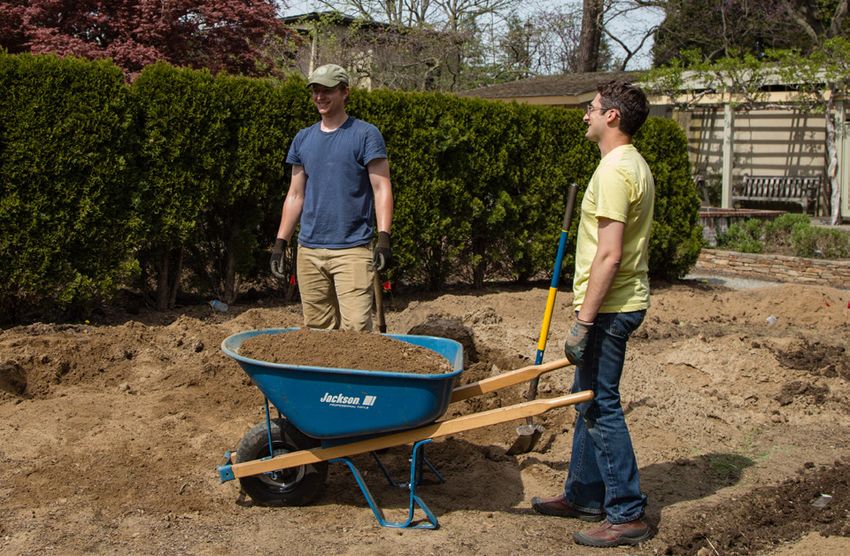
Professional Gardener Program                                                        Professional Gardeners

Academic Calendar
DECEMBER 2019 GRADUATING CLASS                                                   DECEMBER 2019 GRADUATING CLASS
FIRST YEAR                                                                       SECOND YEAR

Winter Semester                          Fall Semester                           Winter Semester                         Fall Semester:
January 4–March 30, 2018                 September 17–December 14, 2018          January 3–March 29, 2019                September 16–December 13, 2019
12-week semester                         13-week semester                        12-week semester                        13-week semester
(No classes on Thursday and Friday       (No classes during Thanksgiving week)   (No classes on Thursday and Friday      (No classes during Thanksgiving week)
of the PGAA Symposium)                                                           of the PGAA Symposium)
                                          BUS 1012: Business Management                                                    HORT 1711: Horticulture Internship
 HORT 1711: Horticulture Internship       LAND 1612: Introduction to Landscape    PLNT 1023: Plant Pathology               HORT 2813: Study Abroad
 HORT 1013: Principles of Horticulture               Design                       PLNT 2113: Plant Propagation             LAND 2693: Capstone Garden Project
                                          HORT 1313: Greenhouse Management        LAND 2653: Landscape Design &
                                          HORT 1652: Floral Design                           Construction
Spring Semester                           HORT 1033: Entomology                   HORT 2713: Arboriculture & Pruning     ONGOING
April 2–June 22, 2018                     HORT 1222: Conservatory Plant           HORT 2323: Floricultural Crop
12-week semester                                     Identification &                        Production                  Continuing Education plant identification
                                                     Management                   HORT 2623: Woody Ornamental Plants     courses are used to fulfill the
 CHEM 1112: Chemistry in Horticulture     HORT 2613: Herbaceous Ornamental                   (last 7 weeks)              requirements for the following course
 LAND 1012: History & Theory of                      Plants (first 7 weeks)                                              (see specific requirements on page 20).
            Landscape Design
                                                                                                                           HORT 2642: Ornamental Plants
 MATH 1493: Applications of Modern                                               Spring Semester
            Mathematics                                                          April 1–June 21, 2019
 MCAG 1211: Equipment Operation &                                                12-week semester                        All PG students in a given graduating class follow the
            Maintenance
                                                                                                                         same schedule of coursework. There is no opportunity to
 SPCH 1713: Speech Communication                                                  HORT 1711: Horticulture Internship
 HORT 2513: Fruit & Vegetable Culture                                             HORT 2021: Garden Practicum            create a customized plan of study.
 HORT 2613: Herbaceous Ornamental
            Plants (last 7 weeks)
                                                                                 Summer Semester
                                                                                 June 24–September 13, 2019
Summer Semester                                                                  12-week semester
June 25–September 15, 2018
12-week semester                                                                  SOIL 1123:   Fundamentals of
                                                                                               Soil Science
 HORT 1711: Horticulture Internship                                               PLNT 1223:   Weed Identification
 HORT 1021: Garden Practicum                                                                   & Management
                                                                                  PLNT 2413:   Plant Ecology &
                                                                                               Sustainable Practices
                                                                                  HORT 2913:   Turfgrass Management
                                                                                  HORT 2623:   Woody Ornamental Plants
                                                                                               (first 7 weeks)

5 Professional Gardener Program                                                                                                                         longwoodgardens.org
Professional Gardener Program

Course                                                                                   Horticulture, Landscape Design,
Descriptions                                                                             and Plant Science
One-thousand-level courses are typically first-year courses, and two-thousand-           HORT 1013: Principles of Horticulture
level courses are typically second-year courses. The last digit of the course number     Students are exposed to a foundation of the principles of horticultural science with
indicates the number of units (credit hour equivalents) associated with the respective   an emphasis on the biology and technology underlying the use and production of
                                                                                         horticultural crops and landscape plants.
course.
                                                                                          Theory                                                                             32 hours
Many courses include online learning (longwoodgardens.org/education). Students are
provided user IDs and passwords to access instructors’ presentations, resource links,     Lab                                                                                32 hours
assessment tools, discussion boards, and more to support their learning.                  Prerequisites                                                                          none
Not all courses will have an online component.

                                                                                         HORT 1021 & 2021: Garden Practicum
                                                                                         Students collect, plant, and care for ornamental plants while creating and maintaining
Course Key                                                                               a landscape design in an assigned plot. The practicum allows students an opportunity
HORT-Horticulture                                                                        to grow a wide variety of plants, learn valuable horticultural skills, and showcase their
                                                                                         creative talents. Students label all plant material in their plots and maintain their plots
LAND-Landscape Design                                                                    and containers using good horticultural practices for two years.

PLNT-Plant Science                                                                        Theory                                                                              0 hours
                                                                                          Lab                                                                                32 hours

Supporting & Professional Courses                                                         Prerequisites                                                                          none

BUS-Business
CHEM-Chemistry                                                                           HORT 1222: Conservatory Plant Identification & Management
                                                                                         Learn the identification, culture, and use of indoor foliage and flowering plants and the
SOIL-Soil                                                                                management of the interior environment pertinent to home, garden, institutional, and
MATH-Mathematics                                                                         commercial applications. Course covers at least 150 plants.

MCAG-Mechanical Agriculture                                                               Theory                                                                             16 hours
                                                                                          Lab                                                                                32 hours
SPCH-Speech
                                                                                          Prerequisites                                                                   HORT 1013

6 Professional Gardener Program                                                                                                                                     longwoodgardens.org
Professional Gardener Program

HORT 1313: Greenhouse Management                                                            HORT 2323: Floricultural Crop Production
An introduction to the management of a greenhouse and the manipulation of its               Solve problems and make decisions with respect to the production and sale of high quality
environment to support plant growth. In addition, students will learn introductory crop     cut and potted crops, including but not limited to chrysanthemum and poinsettia. Height
management practices, such as container selection, root media selection, watering           control and plant nutritional management and monitoring will be part of the decision-
techniques, fertilization practices, and seed propagation. Students form management         making process. In addition to crop production skills, each student will discover more
teams that work in concert to manage the greenhouse structure, and environment, potting     about greenhouse facility management, leadership and team-building skills, and post-
shed (head house) and support services, pest monitoring and management, and fertility       production management and marketing of floriculture crops.
management.
                                                                                             Theory                                                                          32 hours
 Theory                                                                         32 hours
                                                                                             Lab                                                                             32 hours
 Lab                                                                            32 hours
                                                                                             Prerequisites                                                        HORT 1013 & 1313
 Prerequisites                                                                HORT 1013

                                                                                            HORT 2513: Fruit & Vegetable Culture
HORT 1652: Floral Design
                                                                                            Investigate the cultural requirements of a variety of fruit and vegetable crops with an
Master the principles and elements of floral design. Creative use of materials will be      emphasis on residential/landscape use and culture. Lectures, open discussions, studies,
emphasized to encourage the use of diverse materials, general knowledge of tools,           and demonstrations are used throughout the course. The lab component will include
mechanics, containers, trends in the industry, and a thorough knowledge of cut flower       the scheduling, planting, maintenance, and harvest of a small fruit and vegetable garden
identification and requirements.                                                            during the growing season. Crops will be marketed to a certified green restaurant.

 Theory                                                                         16 hours     Theory                                                                          32 hours
 Lab                                                                            32 hours     Lab                                                                             32 hours
 Prerequisites                                                                      none     Prerequisites                                                        HORT 1013 & 2512

HORT 1711: Horticulture Internship                                                          HORT 2613: Herbaceous Ornamental Plants
Gain hands-on, practical experience and reflect on the horticultural work PG students       Experience and participate in the identification, ornamental characteristics, pest and
undertake during internships. See Horticulture Internship descriptions on page 11.          disease problems, cultural requirements, and garden uses of herbaceous ornamental
                                                                                            plants. This course covers more than 180 annuals, biennials, bulbs, and perennials.
 Theory                                                                           0 hours
 Lab                                                                            32 hours     Theory                                                                          32 hours

 Prerequisites                                                                      none     Lab                                                                             32 hours

 Grading Option:                                                                    P/NP     Prerequisites                                                                      none

HORT 2113: Plant Propagation                                                                HORT 2623: Woody Ornamental Plants
Discover the propagation of ornamental plants by asexual and sexual methods, including      Learn the identification, ornamental characteristics, pest and disease problems, cultural
seed, cuttings, grafting, and micro-propagation.                                            requirements, and garden uses of woody plant material. This course covers nearly 250
                                                                                            deciduous trees, deciduous shrubs, broad-leaved evergreens, and conifers.
 Theory                                                                         32 hours
                                                                                             Theory                                                                          32 hours
 Lab                                                                            32 hours
                                                                                             Lab                                                                             32 hours
 Prerequisites                                                        HORT 1013 & 1313
                                                                                             Prerequisites                                                                      none

7 Professional Gardener Program                                                                                                                                     longwoodgardens.org
Professional Gardener Program

HORT 2642: Ornamental Plants                                                                  LAND 1012: History & Theory of Landscape Design
Explore the identification, ornamental characteristics, pest and disease problems, cultural   Observe and identify the key factors that influence how we understand the history of
requirements, and garden uses of herbaceous and woody plant material. This course             designed landscapes.
covers more than 120 ornamental plants. The course is taught through the Certificate of
Merit in Ornamental Horticulture series—see information regarding Continuing Education         Theory                                                                        32 hours
courses on page 20.                                                                            Lab                                                                            0 hours
 Theory                                                                           28 hours     Prerequisites                                                                    none
 Lab                                                                              12 hours
 Prerequisites                                                                        none    LAND 1612: Introduction to Landscape Design
                                                                                              Explore the use of plant materials in landscape composition. The course combines spatial
                                                                                              definition of various gardens with plant selection. This course places a heavy emphasis on
HORT 2713: Arboriculture and Pruning                                                          landscape uses and four-season appearance of a group of ornamentally useful herbaceous
Practice and master the concepts and techniques of arboriculture, such as climbing,           and woody plants. Students will also design and budget their display gardens. The course
pruning, cabling, bracing, planting, evaluating trees for hazards, and safety. This course    teaches both hand drawing and CAD.
prepares students for the International Society of Arboriculture Certified Arborist
Examination.                                                                                   Theory                                                                        16 hours
                                                                                               Lab                                                                           32 hours
 Theory                                                                           32 hours
                                                                                               Prerequisites                                                              LAND 1012
 Lab                                                                              32 hours
 Prerequisites                                                                 HORT 1013
                                                                                              LAND 2653: Landscape Design & Construction
                                                                                              Landscape Design & Construction assists students in developing a basic framework for
HORT 2913: Turfgrass Management                                                               observing, analyzing, and creatively combining basic elements of garden design. Students
Discover the fundamental aspects of turfgrass science including identification,               learn basic construction skills needed in landscape designs by designing and constructing
propagation, fertilization, pest control, and other soil-plant relationships.                 a seasonal garden installation in the Gardens. Students also will complete construction
                                                                                              documentation, plant procurement, and interpretive material for their display gardens.
 Theory                                                                           32 hours    The course teaches both hand drawing and CAD.
 Lab                                                                              32 hours     Theory                                                                        16 hours
 Prerequisites                                                                 HORT 1013       Lab                                                                           64 hours
                                                                                               Prerequisites                                                      LAND 1012 & 1612

8 Professional Gardener Program                                                                                                                                     longwoodgardens.org
Professional Gardener Program

LAND 2693: Capstone Garden Project                                                            PLNT 1223: Weed Identification & Management
This course inspires students with an authentic, project-based learning experience through    Observe and prepare the ecology, biology, and identification of major weed species.
installation and maintenance of a seasonal display garden within the Gardens. Students        Students also will learn how to develop effective integrated weed management programs.
will work in teams to maintain their own ornamental display gardens throughout the growing
season and communicate through interpretative material and garden seminars the successes       Theory                                                                        32 hours
and failures of their respective gardens with the Gardens’ guests.                             Lab                                                                           32 hours
 Theory                                                                           0 hours      Prerequisites                                                   HORT 1013, SOIL 1123
 Lab                                                                            96 hours
 Prerequisites                                                 LAND 1012, 1612, & 2653        PLNT 2413: Plant Ecology & Sustainable Practices
                                                                                              Explore and amalyze major conceptual issues and areas of current research in plant
                                                                                              ecology, environmental analysis, and sustainable design with focus on the preparation of
PLNT 1023: Plant Pathology                                                                    ecologically based designs for individuals and communities. Topics include distribution
Investigate basic components of an integrated pest management (IPM) program.                  and abundance of plant species, hydrology, habitats, ecotypes, animal/plant relationships,
The biology of diseases is presented. The identification of biological control agents,        management techniques, and current ecological research on environmental issues such
abiotic/biotic diseases, and associated damage/symptoms/signs is taught. Control              as climate change and invasive species.
recommendations for common diseases are discussed. The information is presented
in a field and laboratory environment.                                                         Theory                                                                        32 hours
                                                                                               Lab                                                                           32 hours
 Theory                                                                         32 hours
                                                                                               Prerequisites                                    HORT 1013, LAND 1012 & SOIL 1123
 Lab                                                                            32 hours
 Prerequisites                                                                HORT 1013

PLNT 1033: Entomology
Explore basic components of an integrated pest management (IPM) program. The biology
of pest/beneficial insects and mites is presented. The identification of biological control
agents, insect/mite pests in greenhouses and urban landscapes, and associated damage/
symptoms/signs is taught. Control recommendations for common pests are discussed.
The students will be involved in field and laboratory activities ranging from rearing
beneficials to spray applications. Students will gain experience scouting, diagnosing
plant pests, and practicing integrated pest management strategies.

 Theory                                                                         32 hours
 Lab                                                                            32 hours
 Prerequisites                                                                HORT 1013

9 Professional Gardener Program                                                                                                                                      longwoodgardens.org
Professional Gardener Program

                                                                                           MCAG 1211: Equipment Operation and Maintenance
Supporting and                                                                             Explore and participate in the practice of proper operation, repair, and maintenance of a
Professional Courses                                                                       wide range of heavy and light equipment used in the horticultural field (front-end loaders,
                                                                                           backhoes, and 2-cycle and 4-cycle engines used in trucks, mowers, tillers, trimmers, etc.).
                                                                                           Students also will be introduced to the basics of equipment selection techniques and
                                                                                           methods of inventory stocking and control in a maintenance shop environment.
BUS 1012: Business Management
Gain an understanding of business and accounting practices as they pertain to the field     Theory                                                                          0 hours
of horticulture and landscape design. This course covers business communications,           Lab                                                                            32 hours
accounting and record keeping, government regulations, labor relations, and business
plan development.                                                                           Prerequisites                                                                      none

 Theory                                                                         32 hours
 Lab                                                                             0 hours   SOIL 1123: Fundamentals of Soil Science
 Prerequisites                                                                     none    Students will unearth the physical, chemical, and biological properties of soil and how they
                                                                                           function to support plant growth. Nutrient management, air/water relationships, and use
                                                                                           of county soil survey are included.
CHEM 1112: Chemistry in Horticulture                                                        Theory                                                                         32 hours
Examine essential concepts of chemistry as applied to horticulture and allied sciences.     Lab                                                                            32 hours
Selected topics in inorganic, organic, and biochemistry will be discussed.
                                                                                            Prerequisites                                                                      none
 Theory                                                                         32 hours
 Lab                                                                             0 hours
                                                                                           SPCH 1713: Speech Communication
 Prerequisites                                                                     none
                                                                                           Study the theory and master the art of public speaking in a variety of communication
                                                                                           contexts. Students will develop the skills necessary to use communication as a problem-
                                                                                           solving tool in the community. Special emphasis is placed on the student’s performance
MATH 1493: Applications of Modern Mathematics
                                                                                           as a sender and receiver of messages directed at social action. Students will become
Examine and prepare arithmetic, algebraic, and geometric skills routinely used by          confident and comfortable speaking in a variety of public forums, with a strong emphasis
professional horticulturists. These mathematical skills are applied to routine problem-    on development and delivery of computer-aided presentations.
solving tasks such as: determining the area of landscape features; estimating quantities
of plant materials for landscape plantings; determining the amount and allocation of        Theory                                                                         48 hours
greenhouse growing area; determining volumes of landscape materials such as mulch,          Lab                                                                             0 hours
soil, and topdressing material; formulation of root media; determining the volume of
growing containers; and fertilizer, pesticide, and growth regulator-use calculations.       Prerequisites                                                                      none

 Theory                                                                         48 hours
 Lab                                                                             0 hours
 Prerequisites                                                                     none

10 Professional Gardener Program                                                                                                                                  longwoodgardens.org
Professional Gardener Program
Continuing Horticulture Work
Education Courses Experience
PG students must complete a total of two (2) courses in the Certificate of Merit in Professional Gardener students participate in one-month horticulture rotation
Ornamental Horticulture series, offered through Continuing Education. The final grades experience in Longwood Gardens’ vast indoor and outdoor areas. Students must rotate
received in the two (2) courses taken in the Ornamental Plants category will be averaged through the eight areas below to satisfy requirements. Additional areas of rotation are
to calculate the final grade of record for HORT 2642. listed afterward.
Longwood Gardens will pay for the first two (2) Certificate of Merit courses, for which
each PG student registers. PG students are responsible to pay the published Employee, Arboriculture
Student, Volunteer (ESV) rate for any subsequent Certificate of Merit courses for which Students observe and practice tree care skills amid an excellent collection of century-old
they register. specimens, trimmed allées, and woodland areas. The work involves tree climbing and pruning
and requires the use of hand tools, chain saws, chippers, and bucket trucks. Duties may include
tree trimming and cabling, bracing, hedge pruning, and tree health evaluation.
Conservatory Management
HORT 2642: Ornamental Plants Students work on seasonally changing displays, including annuals, perennials, tropical
Choose two courses from the following: plants, and bulbs. Students may work with palms, aquatics, orchids, bananas, roses, ferns,
succulents, bonsai, espaliered fruit, and Mediterranean flora. Duties include grooming,
• Conifers • Deciduous and Flowering Shrubs
planting, and maintaining plant displays.
• Broad-Leaved Evergreens • Sun Perennials
• Native Plants • Vegetables Greenhouse Production
• Deciduous Trees Students gain greenhouse experience in propagation, pruning, and general care of ornamental
plants for use in the Conservatory displays. Assignments include potting and transplanting
Drop/Add Policy For Continuing Education Courses seedlings, cuttings, bulbs, and mature plants as well as pinching, tying, and changing
PG students may drop a Certificate of Merit course no later than the end of the business plantings in the Conservatory displays.
week following the second class session. No requests to drop a Certificate of Merit
course will be granted after the conclusion of the second business week. Students will be Turf Management
responsible for any grade received in a course they fail to drop before the end of the second Students discover how the lawns and grounds of a public garden are maintained. Participants
business week. mow lawns, weed and edge beds, prune shrubs and trees, prepare soil and compost,
and assist in other general and special maintenance projects important to outdoor display
PG students may add a Certificate of Merit course after said course commences no later horticulture.
than the start of the second class session. After the second class session, PG students will
not be permitted to add a Certificate of Merit course. Nursery Management
Students attain many nursey skills, such as propagation, potting, labeling, record-keeping,
pruning, and transplanting techniques through involvement with the day-to-day operation of
Longwood’s nursery. Students prune, maintain, and evaluate woody and herbaceous plant
material and conduct general maintenance including weeding and mulching. Additionally,
students prepare trees and shrubs for transport and installation in the display gardens by hand
digging, ball-and-burlapping, or using a tree spade.
Outdoor Display
Students preserve herbaceous and woody plants in several sections of the Gardens. Duties
include planting, weeding, mulching, watering, pruning, staking, and fertilizing. Students may
work with woody plants, herbs, bulbs, ground covers, roses, vegetables, and fruits in some
of Longwood’s most intensively cultivated areas. In addition, students may prepare trees
and shrubs for transporting from the nursery to the display area by hand digging, ball-and-
burlapping, or using a tree spade.
11 Professional Gardener Program longwoodgardens.orgProfessional Gardener Program
(Horticulture Internship Descriptions Continued) HORT 2813: STUDY ABROAD
Each class of Professional Gardener students will travel abroad as a group for seven
Research
to ten days during the second year of the Professional Gardener Program, usually in
Research involves evaluation and development of new ornamental plants for
the spring semester. Students are responsible for raising the majority of the funds for
greenhouse and outdoor display. Student duties include plant maintenance, plant
the trip through plant and book sales, honey sales, and other means of fundraising.
propagation, data collection, labeling, and record keeping. Students may also work
Additional funding will be provided by Longwood Gardens. Students are not required
with the plant curatorial staff.
to take personal time for this study abroad. Each student must secure his/her passport
Integrated Pest Management at least six months prior to the trip.
Students gain practical experience by assisting the Plant Health Care Division staff The study abroad is an integral component of the Professional Gardener Program. The
in scouting for and diagnosing pest problems throughout the Gardens—indoors and primary goal is to provide Professional Gardener students with an opportunity to visit
outdoors. Students perform applied research projects, design, implement pest sampling public and private gardens, commercial greenhouses, nurseries, botanical centers, etc.
and monitoring programs, and develop lectures and displays concerning IPM. Students Students plan and organize the trip under the guidance of the Coordinator of Domestic
may apply a variety of biological, cultural, and chemical controls, and evaluate the & International Studies, and are always accompanied by at least one chaperone.
effectiveness of these treatments. A Pennsylvania Pesticide Applicator’s License may
be required and can be obtained while at Longwood Gardens. During the trip, students will be required to keep an online journal, including digital
photographs to chronicle their experience. Upon returning, Professional Gardener
Additional Rotation Areas students will give a formal presentation, including the use of digital media, to
(this is a partial list of suggested work areas) Longwood staff, instructors, and Longwood’s guests.
Past classes of Professional Gardener students have studied abroad in the United
Carpentry Shop
Kingdom, the Netherlands, Germany, Spain, South Africa, and China.
Education
Library and Archives
Marketing and Public Relations
Masonry Shop
Natural Lands Management
Plant Records
Plumbing
Security
Visitor Programs
12 Professional Gardener Program longwoodgardens.orgProgram Policies
Professional Gardener
Program Policies Academic Policy will be used to calculate the student’s
Cumulative Graduation/Retention GPA.
Cumulative Graduation/Retention GPA The opportunity to rectify a failed course
Professional Gardener Program students will be granted only once throughout
are required to pass all academic courses the entire two-year program. A student
Students are expected to become familiar in order to graduate from the Program. who fails to achieve the minimum course
The minimum Cumulative Graduation/ grade while on Academic Probation will
be dismissed from the Program. Should
with all policies and procedures as outlined
Retention GPA is 2.00 (1.70 for students
with less than 20 units attempted). a student fail another course, he/she will
be dismissed from the Program. Dismissal
in Longwood’s Employee Policy Manual Academic Notice
A student with less than 20 units
from the Program is final. There will be
no opportunity for reinstatement after
and Longwood’s Student Orientation attempted and 1.70 to 1.99 Cumulative
Graduation/Retention GPA will be placed
dismissal.
Manual. The following section is meant to on Academic Notice. A student on
Academic Notice must raise his/her
GPA Below 2.00
In order for a student placed on Academic
complement, not replace, the guidelines Cumulative Graduation/Retention GPA Probation for receiving a Semester GPA
to 2.00 by the time he/she has attempted below 2.00 to rectify his/her academic
standing, he/she must maintain a
set forth in the manuals by supplementing
20 units or more, or he/she will be
dismissed from the Professional Gardener minimum Cumulative Graduation/
Program. Dismissal from the Program Retention GPA of 2.00 and achieve a
and highlighting key issues that pertain to is final. There will be no opportunity for
reinstatement after dismissal.
Semester GPA of 2.00 or above for all
subsequent semesters. A student who
Professional Gardener students. Academic Probation
receives a Semester GPA below 2.00 for
two academic semesters or who fails
A minimum course grade of 65% (D) in to achieve the minimum Cumulative
each course and a minimum semester Graduation/Retention GPA will be
GPA of 2.00 must be attained in order to dismissed from the Program. Dismissal
remain in good standing. A student who from the Program is final. There will be
fails a course or falls below the minimum no opportunity for reinstatement after
Semester GPA will be placed on Academic dismissal.
Probation and will have one semester to
rectify his/her standing. Pass-No Pass Option
Certain courses, e.g. HORT 1711, are
Course Failure offered only on a Pass-No Pass basis. A
In order for a student placed on Academic grade of “NP” is given for unsatisfactory
Probation for receiving a failing grade work, including that evaluated as “D+”
in a course to rectify his/her academic or below in courses on the Pass-No Pass
standing, he/she must repeat the failed grading system. Neither units nor grade-
course or take a course deemed equivalent points for “P” or “NP” will be used in
by the Vice President, Education, and calculating grade-point averages.
Coordinator of Domestic & International
Studies and achieve the minimums stated
above. After having repeated the course
or completing an equivalent, the student’s
original course grade will be denoted as
“*F” and will remain on the student’s
transcript; however, it will no longer impact
that semester’s GPA or the Cumulative
Graduation/Retention GPA. The grade of
the repeated course or course equivalent
13 Professional Gardener Program longwoodgardens.orgProgram Policies
Course Exemptions Course Grade of “Incomplete” Grading System
Longwood Gardens recognizes that In the case of extenuating health or family
students enter the Professional Gardener emergency situations, a grade of “I” can
Program with various backgrounds and be assigned for incomplete work in a Grade Course Percent Course Grade-Points (per course’s semester units)
experiences. Under certain circumstances, course. This grade is only available to a A 93-100 4.00
a student may apply to be exempt student who has satisfactorily completed A- 90-92 3.67
from a course by demonstrating to the at least two-thirds of the coursework and B+ 87-89 3.33
satisfaction of the course instructor, the has averaged “D” (65–66%) or better B 83-86 3.00
Coordinator of Domestic & International on this work. The course instructor will B- 80-82 2.67
Studies (DIS), and the Vice President, determine what coursework must be C+ 77-79 2.33
Education, an equivalent level of completed to satisfy the requirements C 73-76 2.00
knowledge and understanding of the for the course. The student will have C- 70-72 1.67
course content either by: six months in which to satisfy those D+ 67-69 1.33
requirements and complete the course. D 65-66 1.00
1. Receiving a passing grade of “C” or
Upon successful completion of the course, FProgram Policies
The Vice President, Education, will issue every effort to accommodate students Academic Dishonesty Policy a. The quotation or other use of another
a written decision on the appeal and a with documented learning disabilities by person’s words, ideas, opinions,
description of the proposed resolution, if providing reasonable accommodations Adapted from the University of Delaware thoughts, or theories (even if
any, no later than 15 working days after to ensure that the student has equal Policy Manual. paraphrased into one’s own words)
its submission. The decision of the Vice opportunity for success in the Professional All students must be honest and forthright without acknowledgment of the source;
President, Education, is final. Gardener Program. in their academic studies. To steal the or
No grade will be changed as a result of words or ideas of another, to cheat on b. The quotation or other use of facts,
Definitions an assignment, or to allow or assist
a grade grievance complaint, except that statistics, or other data or materials
the DIS Office is authorized to change the 1. Student with a learning disability: any another to commit these acts corrupts that are not clearly common
student’s grade in the following situations: student who has or is regarded to the educational process. Students are knowledge without acknowledgment
have a physical or mental impairment expected to do their own work and neither of the source.
• When the student and the faculty give nor receive unauthorized assistance.
that substantially limits his/her ability
member agree; OR 2. Fabrication: the use of invented
to perform adequately in a classroom Any violation of this standard must be
• If the Coordinator of Domestic and information or the falsification of
environment reported to the Coordinator of Domestic
International Studies approves the research or other findings. Fabrication
student’s appeal; OR 2. Classroom accommodation: any & International Studies. The course includes, but is not limited to:
• If the Vice President, Education, alteration in the manner in which instructor, in consultation with the
Coordinator of Domestic & International a. The false citation or
approves the student’s appeal a specific class is conducted at the
Studies, and the Vice President, acknowledgment of a direct or
request of a student. Alterations
Education, will decide the appropriate secondary source, including the
Attendance may include, but are not limited to:
course of action based upon the severity incorrect documentation of a source;
Attendance is mandatory for all class testing time limits, providing special
sessions, including Continuing Education tutoring, and/or providing course of the act, which may include a grade b. The citation, in a bibliography or
plant identification courses and “plant materials in alternative formats, (e.g. of “F” on the associated assignment; a other list of references, of sources
walk” labs that are used to satisfy audio notes). Appropriate classroom course grade of “F”; a course grade of that were not used to prepare the
the academic requirements of the accommodations will be made after “F!”, indicating that a student received academic work;
Professional Gardener Program. Students consulting with a psycho-educational a failing grade as a result of academic
dishonesty; or dismissal from the c. The inclusion in an academic work of
are responsible for all content, quizzes, consultant.
Professional Gardener Program. Students falsified, invented, or fictitious data
exams, and assignments for each class
who receive one “F!” and, then, violate or information, or the deliberate and
session. Unexcused absences will result Determination of Eligibility
the Academic Dishonesty Policy for a knowing concealment or distortion
in a grade of “0” for any assignments, Any student with a prior diagnosis of
second time will be dismissed from the of the true nature, origin, or function
quizzes, or exams conducted during a learning disability that may have a
Professional Gardener Program. Dismissal of such data or information; or
the absence. Excused absences for current impact on academic performance
medical and/or personal reasons will be should present the Coordinator of from the Program is final. There will be d. The unauthorized submission of an
assessed on a case-by-case basis at the Domestic & International Studies and/ no opportunity for reinstatement after academic work prepared totally or in
discretion of the instructor, Coordinator or the Vice President, Education, dismissal. part by another.
of Domestic & International Studies, recent documentation of the presence
Academic Violations 3. Cheating: an act or an attempted act of
and Vice President, Education. Students of the disability in question and prior
1. Plagiarism: the inclusion of someone deception by which a student seeks to
are responsible for any and all content, accommodations that were made in an
else’s words, ideas, or data as one’s misrepresent that he/she has mastered
quizzes, exams, and assignments missed academic environment. Documentation
own. When a student submits information that has not been mastered
during an excused absence, and it is the from a licensed psychologist within the
academic work that includes or knowingly and willingly assists
student’s responsibility to schedule past three years is the only documentation
another’s words, ideas, or data, another in this process. Cheating
make-up sessions with the instructor. deemed acceptable. As necessary,
whether published or unpublished, includes, but is not limited to:
Longwood Gardens’ Office of Human
Learning Disabilities Resources and Risk Management and the source of that information must a. Copying of all or any portion of
In accordance with the Americans with the Education Department will consult be acknowledged with complete and another’s academic work and
Disabilities Act (ADA) of 1990 and Section with appropriate psycho-educational accurate references and, if verbatim submitting it, in part or in its entirety,
504 of the Rehabilitation Act of 1973, professionals to develop appropriate statements are included, with as one’s own;
Longwood Gardens ensures that enrolled accommodations and communicate those quotation marks as well. By submitting
students with a documented disability accommodations to course instructors. work as his/her own, a student certifies
are protected from discrimination and the originality of all materials not
assured equal access to educational otherwise acknowledged. Plagiarism
programs. Longwood Gardens will make includes, but is not limited to:
15 Professional Gardener Program longwoodgardens.orgProgram Policies
b. Allowing another person to copy academic exercise or to change grades will be used in semester and
one’s own academic work—whether a grade; Cumulative GPA calculations.
intentionally or recklessly;
d. Continuing to work on an academic A student wishing to return to the
c. The unauthorized use or possession exercise after the specified allotted Professional Gardener Program must
of a class textbook, notes, or any time has elapsed; or submit his/her application by the deadline
other material or electronic device to for application to the Professional
e. Bribing another person to obtain
complete or prepare an academic work; Gardener Program as published on the
an academic exercise, including
Longwood Gardens website. The student’s
d. The unauthorized collaboration with answers to questions of an un-
application will be evaluated on the same
any other person on an academic administered academic exercise.
criteria as all others received in that year’s
exercise, including collaboration
application pool. Readmission is not
on a take-home or make-up Withdrawing from the Professional
guaranteed.
academic exercise; Gardener Program
If a Professional Gardener student should Compensation & Benefits
e. The unauthorized use of electronic
decide to withdraw from the Program, Refer to the “Student Orientation Manual”
instruments, such as cell phones,
he/she should initiate the withdrawal in for full descriptions of all policies and
PDAs, or personal response
person with the Coordinator of Domestic procedures, student requirements,
systems (clickers) to access or share
& International Studies, the Vice President, compensation, student benefits, safety,
information; or
Education, and the Human Resources Red Lion Row community, and emergency
f. The unauthorized completion for Administrator. Should a Professional contact procedure.
another person of an academic Gardener student be unable to appear in
work, or permitting someone else person, the withdrawal may be initiated Professional Gardener Stipend
to complete an academic work for through postal mail or FAX to the Office Professional Gardener students receive a
oneself, including through the use of of Domestic & International Studies. stipend via direct deposit on Thursdays on
personal response systems (clickers). a biweekly schedule. Each student should
Prior to Week Nine: A student who
enroll in direct deposit during orientation.
4. Academic Misconduct: any other withdraws from the Professional Gardener
act that impinges or disrupts the Program prior to the start of the ninth
educational process. Academic week of a semester, or proportionate
misconduct includes, but is not period of a short course, will receive a
limited to: grade of “W” (withdrawn) on his/her
academic record. Neither units nor grade-
a. The unauthorized possession,
points for “W” will be used in calculating
copying, distribution, sale, or other
grade-point averages.
transfer of all or any part of an
academic exercise or the answers or Weeks Nine and Ten: A student who
solutions to an academic exercise, withdraws during weeks nine or ten of a
whether or not the exercise has been semester, will receive a grade of “WP”
administered; (withdrawn-passing) or “WF” (withdrawn-
failing), where passing is defined as
b. Changing, altering, attempting to
a grade of “D” (65–66%) or above, as
change or alter, or assisting another
assigned by the instructor of each course.
in changing or altering any grade
Neither units nor grade-points for “WP” or
or other academic record, including
“WF” will be used in calculating grade-
grades or records contained in a
point averages.
grade book or computer file, that is
received for or in any way attributed After Week Ten: A student who withdraws
to academic work; from the Professional Gardener Program
after the end of the tenth week of a
c. Entering any building, facility, office,
semester, will receive a grade of “A,” “A-,”
or other property, or accessing any
“B+,” “B,” “B-,” “C+,” “C,” “C-,” “D+,”
computer file or other record or
“D,” “F,” “P,” or “NP” as assigned by the
storage for the purpose of obtaining
instructor of the course. The assigned
the answers or solutions to an
16 Professional Gardener Program longwoodgardens.orgProfessional Gardener Alumni Association
Professional Gardener
Alumni Association
The Professional Gardener Alumni Association was organized in 1976 to promote
communication and to disseminate information among graduates of the Professional
Gardener Program as well as others in horticulture. Each current Professional Gardener
student is an honorary member of the Professional Gardener Alumni Association and
can become a full member upon graduation.
The Executive Board of the Professional Gardener Alumni Association is a volunteer
committee of Professional Gardener alumni who meet quarterly. Officers of the
Executive Board are elected by the Professional Gardener Alumni Association
membership and serve a two-year term.
The Executive Board publishes The Grapevine, a quarterly newsletter highlighting
alumni events and activities, organizes and hosts a bi-annual Professional Gardener
reunion for members at Longwood Gardens, leads periodic community service events
for Professional Gardener Alumni Association members and honorary members,
and awards an annual travel grant to a graduating student of the Professional
Gardener Program.
Professional Gardener Alumni Association Annual Symposium
In addition, a subcommittee of the Executive Board organizes and hosts an annual
symposium each February, entitled Today’s Horticulture, which has become well-known
in the Mid-Atlantic region as the annual kick-off to the gardening season. All Professional
Gardener students must participate in the Professional Gardener Alumni Association
Symposium and associated Plant Sale.
17 Professional Gardener Program
17 Professional Gardener ProgramOverview
Education Programs International Internship & Training Programs
Dr. Russell J. Seibert, Longwood’s first director, was a major influence in the establishment
of the International Gardener Program. While visiting foreign botanical institutions
& Resources and becoming acquainted with horticulturists throughout the world, he promoted the
opportunity for individuals to come to the United States and experience horticulture at
Longwood. In 1957, two foreign students arrived at Longwood as trainees in horticulture.
Longwood’s founder, Pierre S. du Pont, envisioned the establishment of “a school Longwood offers both intern and trainee programs, sponsoring visas for International
Students as nine-month Exchange Visitors through the US Department of State Bureau of
where students and others may receive instruction in the arts of horticulture and Educational and Cultural Affairs. International interns and trainees learn through hands-
floriculture.” Today, Longwood staff members and contract instructors carry out on experience, working directly with Longwood staff selectively in the following areas:
this important aspect of the original charter through several programs dedicated Ornamental Horticulture, Education, Library Science, and Marketing and Public Relations.
to teaching the art and science of horticulture to students of varied backgrounds Longwood Fellows Program
and goals. The Fellows Program is a 13-month, immersive learning experience designed to
help individuals prepare for tomorrow’s leadership challenges. Central to the mission
Longwood’s programs include the School & Youth Program, the Co-Op Program, of the Fellows Program is leader education. Fellows have ample opportunity to
the College & University Internship Program, the International Internship and develop and refine their leadership skills through exposure to thought leaders and content
Training Programs, the Professional Gardener Program, the Fellows Program, and spanning topics from organizational behavior and strategic planning to human resource
management and marketing analytics. By living and learning in a close-knit community
the Continuing Education Program. All programs center on using the vast resources environment, Fellows develop deep professional and personal relationships with one another
of Longwood Gardens to inspire students to learn and continually seek the highest and Longwood staff.
level of quality, excellence, and professionalism in their work.
Continuing Education Program
Longwood’s Continuing Education program offers courses designed for horticultural learning at
all levels—from individuals with a passing interest in horticulture to those who make horticulture a
School & Youth Programs central part of their lives. In addition to individual courses, Longwood offers Certificates of Merit in
Developed in 2007 for students in grades K–12, these on-site and online curriculum- Ornamental Horticulture, Floral Design, and Landscape Design.
based programs are designed to nurture student curiosity while focusing on learning.
Each lesson features people and places that are uniquely Longwood, while connecting to Individuals in all of Longwood’s student programs are encouraged to take advantage
national education standards in Arts & Humanities, Language Arts, Mathematics, Science of the Continuing Education course offerings at a discounted cost while at Longwood.
& Technology, and Social Studies. Students participate in hands-on discovery learning while A course catalog and information is provided during student orientation.
experiencing the art and science behind the beauty of Longwood Gardens.
Longwood Library
Co-Op Program The Longwood Library contains a 38,000-volume working collection, including horticultural
In 2012, Longwood Gardens piloted a Co-Op program for students enrolled in their senior periodicals and reference books and electronic resources. The hours are
year of high school or enrolled in an undergraduate technical college program. Longwood 8 am–5 pm Monday through Friday. Additional or extended hours are possible if there
developed the Co-Op Program to build interest in public horticulture careers through hands- is sufficient need and use. Computers with Internet access are available when the
on training coupled with academic learning through the students’ home institution. Co-Op Library is open. Contact the Librarian with questions about items available for use in
students apply for opportunities in Horticulture, Education, and various shops within our the Library. Students may use the Library during working hours with permission from their
Facilities Department (Carpentry, Paint, HVAC, Mechanics, Masonry, Welding, Power work supervisor.
Plant, etc.).
College & University Internship Program
In 1957, Longwood Gardens began a Summer Laboratory in Ornamental Horticulture, which
offered a ten-week practical work experience. In 1983, Longwood initiated the College &
University Internship Program with outdoor and indoor horticulture positions available from
ten weeks to ten months. Today, Longwood offers internships in 15 different areas, training
students by complementing their college education with practical, hands-on, professional
experience. Students apply for and work in a specific area of Longwood that will best serve
their career objectives.
18 Professional Gardener Program longwoodgardens.orgExperience Our
Seasons in 2018
Orchid Extravaganza
January 20–March 25
Escape the winter doldrums and relish the colorful beauty of Orchid Extravaganza.
Thousands of blooming orchids fill our warm Conservatory, arching over
walkways, overflowing from baskets, and forming elaborate arrangements
and artful displays. In March, our Winter Blues Festival features the sounds of the
blues against a stunning backdrop of blue-flowering plants in our Conservatory.
Spring Blooms
March 31–May 6
The landscape bursts with color as vibrant tulips, daffodils, wisteria, and
flowering trees herald spring’s arrival. Explore our inspiring beauty as you
bask in the emerging warmth of spring.
Festival of Fountains
May 7–September 30
Fountains dance, colorful gardens flourish, and our historic trees offer shady
respite from summer’s warmth. At night, music fills the Gardens as you dine under
the stars and our Illuminated Fountain Performances amaze. Six special evenings
feature Fireworks & Fountains Shows for an unforgettable spectacle.
Autumn’s Colors
October 5–November 18
The red, gold, and brown hues of fall fill our Gardens. In late October, our
Conservatory is home to our Chrysanthemum Festival, one of the largest and oldest
chrysanthemum displays in North America. Thousands of chrysanthemums are
nurtured and trained, some for more than a year, by our expert horticulturists to
resemble orbs, spirals, shields, pagodas and more.
Stay Connected
A Longwood Christmas
November 22, 2018–January 6, 2019
A half-million twinkling lights, thousands of poinsettias, and magnificently
Join in the conversation &
decorated trees herald the arrival of A Longwood Christmas. Festive performances
“Like” us on Facebook at
share the sounds of the season and illuminated fountains dance to music.
Facebook.com/LongwoodGardens
Phone: 610.388.1000
Website: longwoodgardens.org
© Longwood Gardens
19 Professional Gardener ProgramYou can also read


