Queensland: Bizarroland - Robert Whyte - harpo Publishing
←
→
Page content transcription
If your browser does not render page correctly, please read the page content below
Queensland: Bizarroland
                                                                            Robert Whyte

                                                                            As a writer and artist with a swag of pen names, Robert was one of those
                                                                            around the fringes of The Cane Toad Times first collective in the late 1970s,
                                                                            notably seeing Damien Ledwich’s small comic books. In 1980 he left for
                                                                            Sydney, followed by London and Vienna. Back in Melbourne in 1983, he
                                                                            hung around with the Melbourne collective of Cane Toad Times writers,
                                                                            and joined the Brisbane group when he returned in 1986. This is his take
                                                                            on the antecedents of The Cane Toad Times and ToadShow’s musicals.

                                                                            OUR SLASH-AND-BURN ‘PROGRESS OR perish’, reef-mining,
                                                                            sand‑mining, anything-mining government was peculiarly Queensland. Deeply
                                                                            racist, sexist and homophobic, the Coalition government was tentative at first,
                                                                            but suppressing anti‑war and anti‑apartheid protesters emboldened them
                                                                            behind the bullying bluster of their new Lutheran leader, Joh Bjelke‑Petersen.
                                                                                 The key moment was the Springbok tour in 1971. The declared State of
                                                                            Emergency giving the police special powers to deal with ratbag, long-haired
                                                                            protesters was welcomed by conservative Queenslanders. They liked the
                                                                            strongman leader getting those hippy, pot-smoking students off the streets
                                                                            and into the back of a paddywagon.
                                                                                 The tenor of the times was so strange, crossing the border into
                                                                            Queensland was not just a journey back in time, but also to a shift sideways
                                                                            to bizarro-world. The banning of schoolbooks like Catcher in the Rye made
                                                                            people everywhere else think Queensland was just plain weird.
                                                                                 Meanwhile, the babies who had boomed were now at university.
                                                                            Unbelievably, southern newspapers like Nation Review were allowed across
                                                                            the border. The long, somnambulist regime of the Liberals in Canberra was
                                                                            falling apart and 1969 brought Whitlam’s collective of irrepressible talent to
                                                                            within a few seats of victory.
                                                                                 In south-east Queensland the no-fun conservatives hated young
                                                                                                                                                              Opposite: Trades Hall
                                                                            radicals and anything they were involved in. In 1967, the summer of love
                                                                                                                                                              in 1928, where FOCO
                                                                            was something to be feared and kept out. But somehow it was creeping in.          was later located.
                                                                            Television! Newspapers! Radio! Books! All elements of sedition.                   STATE LIBRARY OF
                                                                                                                                                              QUEENSLAND

40   Eccentric Voices: A scrapbook of Brisbane cultural history 1965–1995   Eccentric Voices: A scrapbook of Brisbane cultural history 1965–199541
Backed by a compliant police force ready to do the             profit. They were graduates of the school of hard knocks and had no idea
                                      government’s bidding to suppress radicals, feminists, nature         their suppression of youthful protest would create a generation of activists.
                                      conservationists and communists, the conservative government’s            But it did. If you can’t join ’em, beat ’em. Thus a strong counterculture
                                      pressure-cooker effect on a growing youth demography caused          emerged, not to threaten the ruling elite, but to live life to the full in spite
                                      the usually disparate streams of anti‑establishment writing,         of them. The timeline of the underground culture runs something like this:
                                      visual art, theatre, film and music, to coalesce into a cohesive     FOCO 1968, HARPO 1971, Myopia 1972, 4ZZ 1975 (soon to become 4ZZZ),
                                      counterculture. The fight to save Fraser Island and the Great        Cane Toad Times 1 1977, Semper 1978, Time Off 1979, La Bamba 1982, Cane
                                      Barrier Reef, anti‑war marches and anti‑apartheid protests           Toad Times 2 1983, ToadShow musicals 1990.
                                      brought together dissidents of all ages. This was serious.                The years 1971 and 1972 were those of the big anti‑war moratoriums and
                                            But kids also want to have fun.                                1971 was the year protesters were charged by police down the hill outside
                                            There was no fun to be had in Brisbane, especially on a        the Tower Mill during anti‑apartheid protests opposing the South African
                                      Sunday night, so the kids created their own.                         Springbok tour.
FOCO held events for
members on Sunday          Looking back, it is clear there was a continuous Brisbane underground                FOCO, named after the Foco revolutionary cells of Che Guevara and
evenings.              1968–1989, in a time of increasingly conservative and reactionary                   Régis Debray, was a collective of signed-up members. It was created, ironically,
FRYER LIBRARY
                       Queensland governments. What was special in 1968 was the coming of age              by the laws against charging admission to venues on Sunday nights (the
                       of the baby boomers. Huge numbers of young people were radicalised by               Christians’ holy-day). The organisers (the trade unions’ Eureka Youth League
                       the anti‑war movement opposed to Australia’s involvement in Vietnam.                and student radicals) got around the restrictions by signing up each patron
                       Nationalism and patriotism in both Australia and America was fading, as             at the door with a 30-cent membership of FOCO (not the same as charging
                       television broadcast uncensored war news in graphic detail. It was not only a       admission at all). The venue was Trades Hall, at the junction of Turbot and
                       moral objection to an ugly, seemingly senseless war we didn’t understand, it        Upper Edward Streets, Brisbane, transformed into a fusion of red-and-black
                       was also self-interest. We didn’t want to get drafted, have our long hair cut off   politics, speeches, theatre, rants, poetry readings, folk music, visual art, film
                       and go to a scary jungle and die.                                                   screenings and other seditious activities going on in several rooms, the biggest
                           Through this period we saw a rapidly widening gulf between young and            room becoming a rock music venue featuring the likes of Mick Hadley and the
                       old, especially in Brisbane. The strange political circumstance of Queensland,      Coloured Balls, Lobby Loyde and the Wild Cherries, and The Living End.
                       where a solid Labor majority was blown apart by the ALP’s internal split                 FOCO was one of three main sites of radicalism, the others being the Red
                       in 1957, had left the Country Party and Liberal Party unassailable for the          and Black Bookshop in Elizabeth Arcade and the student union building at
                       next thirty-three years. It was an unprepared, fearful, but self-righteous          the University of Queensland in St Lucia. The high school student magazine
                       and authoritarian conservative government, increasingly conflating young            Myopia was a Cane Toad Times predecessor, a mixture of radical protest and a
                       people with reds under the beds, the yellow peril and sex before marriage.          forum for our own writing and art.
                       Not to mention trippy, pot-infused psychedelia, which they thought must                  At the same time there was a similar magazine called HARPO,
                       be an outbreak of contagious mental illness needing to be eradicated. The           coincidentally an acronym for ‘how about resisting powerful organisations’
                       Country Party and Liberal Party reign was not that of a connected, natural          but actually called HARPO just because it was a funny name. HARPO
                       government. It was an accident of Labor’s political suicide. It had no sense of     was a FOCO spin-off. HARPO also put on ‘Harpo’s Nite Out’ featuring a
                       society – in fact, it ruled in fear of it.                                          combination of political theatre and live music, notably Mackenzie Theory.
                           Truth be told, the conservative Queensland government was a rural                    FOCO, HARPO and Triple Zed shared personnel devoted to creating an
                       political gerontocracy, supported by white-shoe real-estate salesmen,               alternative mainstream, the lifeblood of which was rock ’n’ roll.
                       tree‑clearing graziers, holier-than-anyone churchgoers and brown-paper-bag               Conservatism and official corruption, aided by the gerrymander – an
                       business leaders. They were isolated in a simplistic world of exploitation and      unfair electoral system to prevent populous places getting their fair share of

42                     Eccentric Voices: A scrapbook of Brisbane cultural history 1965–1995                Eccentric Voices: A scrapbook of Brisbane cultural history 1965–199543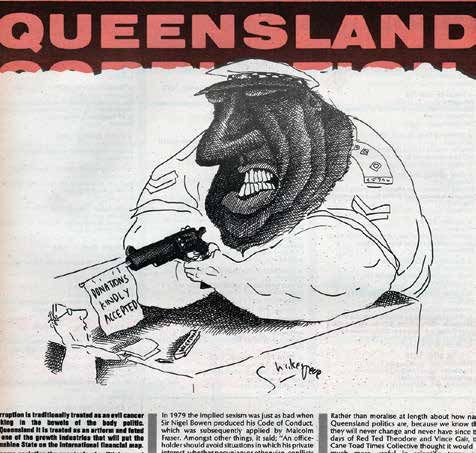
political representatives, skewed in favour of Queensland’s fervently Christian    when they wore union badges to work on 18 January 1912. They then marched
                       rural rump – had the effect of turning radical and creative young people into      to Brisbane’s Trades Hall, where a meeting was held, with a mass protest
                       rock stars, at least within their own subculture, which was a critically massive   meeting of 10,000 people held that night in King George Square. On the second
                       conglomerate, not to mention a storkful of baby boomers.                           day of the strike over 25,000 workers marched from Trades Hall to Fortitude
                            It was a tribal collusion of merging self-interests. Yet it was part of the   Valley and back with over 50,000 supporters watching from the sidelines.
Cartoon by Damien      buzz that gave The Go‑Betweens and The Saints confidence to feel like global           Brisbane was the first place in the world to foment the second wave of
Ledwich appeared in    rather than parochial players.                                                     feminism, when in 1965 Merle Thornton and her friend Rosalie Bognor
The Cane Toad Times,        Queensland back then was difficult to talk about as a state. It had an        chained themselves to the public bar of the Regatta Hotel (where women
Summer 1988.
                       identity (or at least state boundaries so we knew where it was) but its bizarre    were prohibited from drinking).
                                                                                                                                                                                             Owned at the time
                       geography made coherence impossible. Queenslanders can’t agree on daylight             In 1972 the ‘Bjelkemander’ saw Bjelke‑Petersen emerging victorious as          by a branch of the
                       saving (because days in Mount Isa don’t even remotely resemble days in             premier despite his party only receiving 20 per cent of the vote, a smaller        Australian Labor
                                                                                                                                                                                             Party, Baroona
                       Brisbane) and it seems they can’t agree on anything else either. The north         percentage than the Liberals (22.2 per cent) and Labor (46.7 per cent). Due
                                                                                                                                                                                             Hall was a popular
                       is secessionist. The west is just plain weird, too big, too dry, too famous for    to the Bjelkemander the Country Party won twenty-six seats. Combined with          venue in the 1970s
                       pioneers in aviation and labour history.                                           the Liberals’ twenty-one seats, this gave the Coalition forty-seven seats to       and 1980s.
                                                                                                                                                                                             STATE LIBRARY OF
                            The concept of State of Origin is illuminating. ‘Let us be represented by     Labor’s thirty-three, consigning Labor to opposition even though it won far        QUEENSLAND
                       players you poached for your southern teams. No, they don’t live or work here,     more actual votes.
                       because we haven’t grown up yet, but they are ours.’ This has a strange feeling        In 1978, three years after Malcolm Fraser and John Kerr had steamrolled
                       of ‘feedlots’ growing stock for the ‘proper’ states as opposed to Queensland,      the brief hope of Whitlam’s progressive government, there was a general
                       where you can get ‘organically grown young men, picked fresh from the fields’.     mood of anger and despair. It had been a brief shining moment, never mind
                            We can blame history. Queensland began, while still part of the colony        the economy. Whitlam had introduced grants to artists, even Queensland
                       of New South Wales, as the only white Australian settlement to exclude free        artists (shock horror), and infiltrated Queensland with progressive ideas by
                       settlers. The Moreton Bay penal colony was made up exclusively of convicts         funding community arts, resulting in agit-prop street theatre satirising the fat
                       and soldiers. It was a prison for the ‘worst of the worst’, double offenders –     cats in George Street.
                       not only having the gall to steal a rich man’s spoon in England, but doing it          For artists and writers in 1978, having had a glimpse of what life could
                       again in Australia.                                                                be like under a progressive government, it was particularly galling. Being in
                            Brisbane itself, named after a governor and astronomer, was a peculiarly      touch with the world and responding to the world’s ideas was not admired
                       inappropriate place for a town, on a barely navigable river, so lacking in key     here. Queensland was like the Vichy government, a vacuous convenience
                       resources (necessary to build prisons and windmills) they burned hundreds          sheltering an illegitimate usurper. Joh famously said: ‘We are not Australians,
                       of tonnes of live oysters to obtain lime.                                          we are Queenslanders!’
                            It has to be said that compared with the rest of Australia, Queensland            As young artists, we had been emerging from the underground,
                       is conservative. Two per cent more than in the southern states vote for the        encouraged by the federal seachange, but now abandoned before we had been
                       conservative side of politics in federal elections.                                passed the baton. In this climate, we folded back in on ourselves mumbling
                            Yet Queensland’s history is full of paradoxes.                                the mantra of ‘make do’. The question for young artists, writers and musicians
                            It saw the first Labor government in the world in 1899 (when Queensland       was not how to succeed, it was how to survive.
                       towns were seething with Chartist lefties, and even arch-conservatives were            Our generation still had access to books (a big mistake?) and feeling quite
                       reading Marx).                                                                     anti‑establishment, tried to find resonance in anti‑establishment activity
                            It saw one of the biggest worker protests in the country ever, when           elsewhere, groups and movements that could be called ‘avante-garde’. We had
                       members of the Australian Tramway Employees Association were dismissed             been to the State Library, then in William Street, and read through the 800s

44                     Eccentric Voices: A scrapbook of Brisbane cultural history 1965–1995               Eccentric Voices: A scrapbook of Brisbane cultural history 1965–199545
4ZZZ Radiothon
     in the Dewey Decimal System. We had seen new-wave cinema at the National                                                                                              at the University
     Film Theatre in Creek Street. We watched Bunuel films at Schonell Theatre.                                                                                            of Queensland
     We read Alain Robbe-Grillet and Nathalie Sarraute. We wanted to be part of                                                                                            helped boost station
                                                                                                                                                                           finances, 1982.
     the modern world, even though we didn’t understand the appeal of Rothko                                                                                               PETER FISCHMANN,
     (and maybe we still don’t).                                                                                                                                           STATE LIBRARY OF
                                                                                                                                                                           QUEENSLAND
         What about America? Were they avant-garde? For some reason we didn’t
     think of American art as particularly anti‑establishment. It looked more like a
     ‘new mainstream’ of the privileged, simply intent on cutting ties with Europe.
     We preferred their sources and influences, Dadaism and Surrealism, Fauvism,
     Futurism and the Bauhaus, Klee, Kandinsky, Schwitters and Chagall.
         Perhaps we were in a state of ‘ideal innocence’ – being able to make
     judgements across the whole timeline of global art and literature, removed
     somewhat from the enticing allure of the New York art market and Sorbonne’s
     intellectuals (influencing Sydney and Melbourne). As The Go‑Betweens put it:
                Karen yeah-yeah, Karen yeah-yeah                                       anti‑establishment tendencies like the successors of Fluxus, Anna Banana,
                Helps me find Hemingway                                                neo-Dada, Vile magazine and mail art.
                Helps me find Genet                                                        In visual art the aesthetic was everything and probably still is. The works
                Helps me find Brecht                                                   were images, objects or environments that demonstrated some organising (or
                Helps me find Chandler                                                 disorganising) visual principles. You knew and recognised the aesthetic of
                Helps me find James Joyce                                              Pollock, de Kooning, Giacometti or Hollie.
                She always makes the right choice.                                         So what could young Brisbane artists make of all this? We felt part of a
         We managed a few sparkles in the shadows, but it was all rather furtive.      disappearing and fragmenting, once-vibrant counterculture. I imagine we
     What we managed to do did not threaten the mainstream. Some of us                 wanted to revive it, not for politics, but for art, for creative explorations and
     were seeking ways to be accepted by the Queensland Art Gallery and other          social identity, a place to belong.
     venues with an openly modernist stream intertwined with their mostly                  The importance of 4ZZZ as the hub with connecting spokes to everything
     conservative outlooks.                                                            alternative in Brisbane’s youth subculture can’t be overestimated. It was
         The alternative scene was flourishing because printing was not expensive      tribal and inclusive. People might say it was judgemental, favouring certain
     and postage even cheaper. Small-press books and magazines catered for slighter    styles and groups, but it really wasn’t. They played Gino Vanelli alongside
     and more experimental works than mainstream publishers, and of course for         the Buzzcocks. It was, if anything, eclectic, and it was once again both
     up-and-coming writers. In some senses it was a proving ground, in others it       (a) kids rejecting mainstream culture as fake, oppressive and corrupt, and
     was its own medium with identifiable characteristics of style and content.        (b) kids making their own fun. In retrospect, because the establishment
         There were a number of catalogues of international ‘little magazines’         culture was a hotchpotch of fakery, empty platitudes and self-serving
     floating around and it seemed easier to get published in these than in            delusion, our activities, even though underground, represented the real
     Australia. For magazine publishers in the UK and especially America, it may       culture of Brisbane in the 1970s, not because they were great, but because
     have been simply a novelty effect.                                                they were genuine.
         These international outlets were not particularly avant-garde, but once           After 4ZZZ was chucked off the Queensland University campus, the
     you started looking between and beyond them at smaller and quirkier               second collective of The Cane Toad Times carried the baton, once again
     things being published, you soon became aware of more experimental,               propelled by the anti‑Joh melting pot. But that’s another story.

46   Eccentric Voices: A scrapbook of Brisbane cultural history 1965–1995              Eccentric Voices: A scrapbook of Brisbane cultural history 1965–199547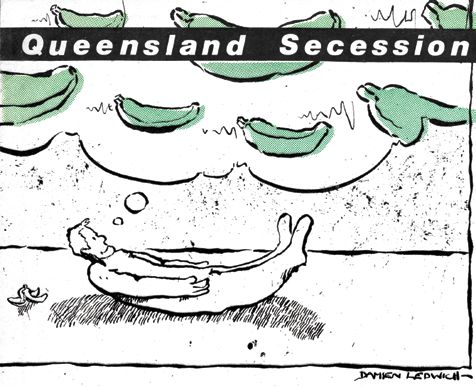
Before Fitzgerald … there
                                                                            was The Cane Toad Times
                                                                            Robert Whyte

                                                                            In this essay for the Queensland State Library’s exhibition of The Cane
                                                                            Toad Times, Robert Whyte digs into the history of the two collectives that
                                                                            coalesced around the spirit of creative rebellion in the 1970s and 1980s.
                                                                            In a deeply conservative state The Cane Toad Times was just one of many
                                                                            facets of a vibrant progressive community, whose origins go back as far as
                                                                            the liberal teachings of John Dunmore Lang (1799–1878), who agitated for
                                                                            rights, freedoms and respect for Aboriginal people in the colonies. Many
                                                                            progressive artists, writers and performers in Queensland, often with a
                                                                            multicultural background, sided with the labour movement in resisting the
                                                                            attempts of the conservative wealth class to control the hearts, minds and
                                                                            souls of Queenslanders.

                                                                            What’s the difference between a Queenslander and
                                                                            a cane toad?

                                                                            NOT MUCH, APPARENTLY. Both are reviled and ridiculed. Both inspire
                                                                            fear and loathing, especially in the south. Both are shrouded in tales of
                                                                            embarrassing bungles, all-consuming appetites and environmental destruction.
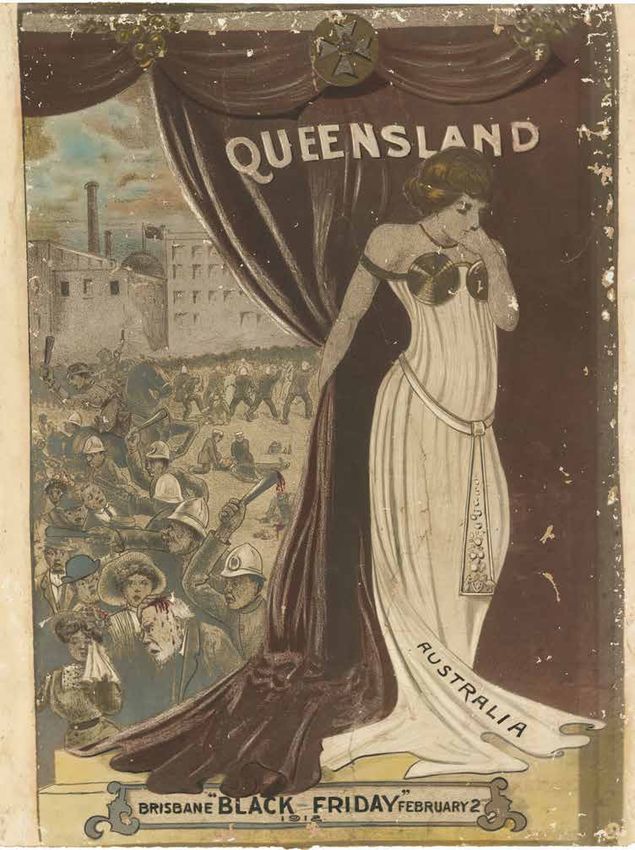
                                                                                On Black Friday, 2 February 1912, protesters supporting the General
                                                                            Strike were savagely attacked in a banned street march.1 In Jim Case’s cartoon
                                                                            Black Friday, we see Australia turning away, letting the curtain fall back to
                                                                            conceal the appalling brutality of the police. Sound familiar?
                                                                                                                                                              Opposite: Black
                                                                                Move forward sixty-five years to Queensland, 1977.
                                                                                                                                                              Friday by Jim Case,
                                                                                Joh Bjelke‑Petersen is a decade into his despotic, erratic and vainglorious   which originally
                                                                            reign. The rule of the peanut farmer from Kingaroy had seen the banning of        appeared in The
                                                                                                                                                              Worker in 1912, was
                                                                            the soundtrack of the musical Hair, a state of emergency declared to protect
                                                                                                                                                              a commentary on the
                                                                            a team of rugby union footballers, the banning of political demonstrations        General Strike.
                                                                            and the arrest of hundreds of street-marching protesters. Joh fed the chooks,     STATE LIBRARY OF
                                                                                                                                                              QUEENSLAND

48   Eccentric Voices: A scrapbook of Brisbane cultural history 1965–1995   Eccentric Voices: A scrapbook of Brisbane cultural history 1965–199549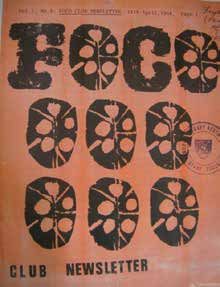
as he called the media, incomprehensible babble about revolting students,              There was something deeply disturbing about the readiness of
                          communists, despicable homosexuals – don’t you worry about that. In a truly        Queenslanders to support Joh’s Canberra bashing. He said Queensland
                          bizarre rise to supreme executive power over a cowed Cabinet, this Lutheran        would run its own affairs, and have its own flag, its own seat in the United
                          conservative believed he was chosen by God to lead Queensland, claiming his        Nations and even its own currency, the Queensland dollar. During a Japanese
                          fifteen years living alone in a converted cow shed, clearing forty hectares of     trade mission he announced, ‘I am here to say we are not Australians – we
                          brigalow a day, gave him a better education than an Oxford degree.2                are Queenslanders.’4
                               Was Joh some Queensland Rasputin, dabbling in the black arts,
                          hypnotising the bewildered masses, reducing them to fawning, dribbling             The cane toad
                          idiots? Hardly. His workaholic, anti‑greenie, anti‑intellectual strongman-on-
                          a-mission act (two parts racist, three parts sexist, four parts homophobic)        IN 1977 JOHN JIGGENS and other co‑founders of The Cane Toad Times
Bill Thorpe illustrated
                          resonated deeply with the prejudice and backwoods suspicion of many                were ruminating over a variety of tropical produce when someone suggested
Flark March’s ‘The
Great Banana War’,        Queenslanders, especially outside the major towns, where a country vote            the cane toad as their satirical Queensland champion. They all laughed. The
The Cane Toad             could be worth up to five times as much as a vote in the city.                     cane toad was repulsive, but also a heroic and ultimately hilarious celebration
Times Giant Mutant
                               In the 1971 Queensland state election Joh’s Country Party somehow             of a super fit, with an out-of-my-way komodo-dragon-like swagger of
Cane Toad issue,
October 1977.             grabbed the largest number of parliamentary seats with the smallest number         invincibility, deadly poison sacs and morose frown. The idea was simply
                                                                    of primary votes. Labor won half the     funny. And so The Cane Toad Times was born.
                                                                    two-party preferred vote, but ended          The original Cane Toad Times collective was a group of young
                                                                    up with only 41 per cent of the seats    Queensland writers and friends who had met at the University of Queensland
                                                                    to the Coalition’s 59 per cent. Hmm.     in the 1970s, including John Jiggens, David Richards, Gerard Lee, Ian
                                                                    Does that seem fair to you?              Roberts, Bill Thorpe, Sue McLeod and Janice Knopke, who teamed up with a
                                                                         As time went on, protests were      group of cartoonists from 4ZZZ‑FM’s Radio Times, including Matt Mawson,
                                                                    crushed, venues shut down and young      Terry Murphy, Damien Ledwich and Ross Hinckley.
                                                                    people fitted up, busted and harassed.       The year of 1977 began two crucial years of pitched battle on the campuses
                                                                    Joh’s mangled rants about getting rid    and streets of Brisbane. The battle was between Joh and his cohort of white-
                                                                    of communists and unions, weeding        shoe-brigade property developers, industrialists and open-cut profiteers on
                                                                    out troublemakers and atheists,          one side, and on the other a rag-tag alliance of civil liberties lawyers, Marxists,
                                                                    became inextricably interwoven with      students, academics, unionists, musicians, actors and feminists.
                                                                    notions of Queensland pride. There           In May 1977 the first issue of The Cane Toad Times hopped off the presses.
                                                                    was widespread nodding agreement         On its cover was a world-weary Silver Jubilee Cane Toad Queen. So began a
                                                                    with Joh’s disgust with gays, greens,    tradition where no cow was too sacred, no poon left unlampooned. It was a
                                                                    blacks and reds. Protesters were         declaration of independence, a generation claiming its own space, its own fun.5
                                                                    misfits and malcontents, typified            One of the key contributors was Matt Mawson, cartoonist and layout artist
                                                                    by Joh as ‘friends of the dirt’, the     from the first issue in 1977 and a major force in the second collective, 1983–
                                                                    ‘anti‑nuclear lot’ and the ‘everything   90. Matt was a link between the two groups, along with Damien Ledwich and
                                                                    for the Aborigines crowd’. By 1983,      Terry Murphy, both of whom also worked on 4ZZZ’s Radio Times.
                                                                    Joh’s Nationals were ruling in their         Matt remembers the first collective produced the magazine at the Planet
                                                                    own right with the simple slogan         Press building in Spring Hill, where games of indoor cricket occurred in
                                                                    ‘Joh. Queensland.’3                      breaks between sessions of magazine production. John Jiggens held editorial

50                        Eccentric Voices: A scrapbook of Brisbane cultural history 1965–1995               Eccentric Voices: A scrapbook of Brisbane cultural history 1965–199551
meetings at his home in Miskin Street, Toowong. The illustrators could
get creative with the Cane Toad Times layout – Damien and Matt would
encourage each other to push the limits.6
Over the next fourteen years there would be twenty-two issues of The
Cane Toad Times, produced by the two collectives. The first collective
produced seven issues from 1977 to 1979. The second collective produced
fifteen issues between 1983 and 1990. Originally a stapled quarterfold,
the magazine assumed its eventual tabloid size by the fourth issue,
There were seven issues
The Incredible Peanut. of The Cane Toad Times
The first collective was proudly countercultural, selling ads to alternative Version 1.0, 1977–79.
businesses like Rocking Horse Records and staging benefits including The
Cane Toad Hop, Joys for the Jaded, The Deranged Ball and The Night of the
Lesser Suave. The punk band Razar, managed by Ian Roberts and famous
for their anthem ‘Task Force’, were frequent performers, as were The
Go‑Betweens and The Riptides. The magazine proclaimed The Cane Toad
Times represented ‘hope for oppressed minorities and depressed majorities in
the sugar cane republic’.7
History was not kind. The flickering flame of hope represented by The
Cane Toad Times was soon snuffed out. By 1979 when The Cane Toad Times The legacy of The Cane Toad Times Version 1.0 was its seven issues, Royal
Version 1.0 folded, Joh Bjelke’s jackboot tactics kicked the crap out of the Cane Toad, May 1977, The Cane Toad Goes to Mullumbimby, July 1977,
political and cultural left in the protest movement. Many retired to the Giant Mutant Cane Toad, October 1977, The Incredible Peanut, December
relative safety of academia. Others left the state. The Cane Toad Times fizzled 1977, Phantoad, April 1978, From Behind the Peanut Curtain, June 1978, and
out while an increasingly successful Joh presided over a churchy, holier-than- Juvenile Delinquency, June 1979.
thou, whiter-than-white conservative establishment. This thin veil of Sunday
School and pumpkin scones barely concealed a deeply corrupt police force The road to Fitzgerald, 1983–1990
in bed with politicians, prostitution racketeers, SP betting, drug laundering,
illegal casinos and payoffs. BY THE EARLY 1980s Queensland was a national disgrace, a disturbingly
Chris Masters, whose Four Corners exposé ‘The Moonlight State’ would corrupt joke. The Queenslanders who remained were the butt of this joke,
help bring down the corrupt regime, explained: ‘Hector Hapeta’s main happily kicked by the southern media.
brothel, Top of the Valley, commanded a useful corner position at a major In 1983 Anne Jones and Damien Ledwich took the long view. Joh
Fortitude Valley junction. It seemed to me that, in the tradition of giant Bjelke‑Petersen couldn’t last forever. Labor was back in power nationally and
pineapples and giant prawns you see at coastal tourist towns, a giant penis was supporting the Queensland political and cultural left with arts funding,
would have not been out of place. It would have been no less blatant.’8 notably funding the Popular Theatre Troupe, an agit-prop ensemble satirising
During this time when political protest was being crushed out of existence, Joh’s banana republic in factories and shopping centres. Raymond Evans, in
the cultural left rallied around the successful FM radio station 4ZZZ and the his 2007 History of Queensland,9 places The Cane Toad Times in the broad
Brisbane music scene. Oddly, radio leaves barely a mark in history; on the context of Queensland radicalism, flying the ‘freak flag’ with radio station
airwaves your polemic floats away in the breeze. The Cane Toad Times was one 4ZZZ. However, this referred more to the first Cane Toad Times, for which
of very few products to remain as a transcript of the times. Ray was a contributing cartoonist, than the second.
52 Eccentric Voices: A scrapbook of Brisbane cultural history 1965–1995 Eccentric Voices: A scrapbook of Brisbane cultural history 1965–199553Cane Toad Times
editors of the
undermine the family and totally destroy western civilisation as we know it.
mid‑1980s, ‘We’re Just Here for the Fear – Queensland Paranoia’, written by ‘Someone
Anne Jones, Else’, set the tone. ‘Someone Else’ was Steve Stockwell, who went on to
Damien Ledwich,
Robert Whyte and
become Professor of Journalism at Griffith University.
Mark Bracken. Among Cane Toad Times editors, it was Damien Ledwich who was
STEVE HAMILTON, most insistent on the need to seize the mainstream publishing tools of
FROM THE CANE TOAD
TIMES ARCHIVES mass production and wide circulation. He was not interested in one-off
performance, or appealing to the arts ghetto.
The Cane Toad Times editorial process was a friendly one, with food,
drink and plenty of laughter, but it was a tough school. Good ideas got
better, bad ones got dumped. The individual voice of the ‘auteur’ was happily
sacrificed for finely honed material forged by the group. No‑one was too
precious about their ideas and even lame jokes with the germ of a good gag
were thrashed out around the table.
The hard work paid off. Like 4ZZZ before it, talent at The Cane Toad
Not in the least bit freaky, Anne Jones and Damien Ledwich were Times was recognised by southern journalists, illustrators and writers, who
both 4ZZZ and Semper alumni, equipped with radio and newspaper got on board for the crazy ride. Queensland was the funniest show in town.
communication skills. From the start they took a direction setting them apart High-quality humour and invective started pouring in when each theme
from the first collective – there were no reviews. When the leading lights of for the coming issue was announced. Two telling issues were #4 Food and
the ‘counterculture’ either left, or were headhunted by emerging youth culture Corruption, then #5 Death and Style.
venues in the southern states, or hid out in the establishment to outlast the The Cane Toad Times was not opposed to those ‘in power’ so much as
Joh years, there was nothing to review. intent on bypassing and ignoring them, except to poke fun at their obvious
Queensland was not only a literary and arts vacuum; in 1983 it was a stupidity and evil. Costs were covered by rocketing sales when distribution
journalism-free zone. Reporting in The Courier‑Mail, until Phil Dickie began in newsagents went Australia-wide, plus Cane Toad Hops, alcohol-fuelled
his investigations into corruption in 1986, was as far from genuine journalism benefits with bands and T‑shirt sales. Sympathetic southern editors gave the
as you could get, selling papers with puff pieces, hokey meat-pie philosophy editors paid work writing or cartooning for their papers and the obvious
and a-nod-and-a-wink to the blind horse gobbling up Queensland mineral quality of the innovative layout of The Cane Toad Times got the design and
wealth, environment and real estate. writing team work producing stuff for other people.
The Cane Toad Times 1983–90 was a mixture of hard-hitting journalism, The Cane Toad Times’ finest moment was probably Issue 4’s detailed list of
rants, cartoon strips, parodies, lists, short stories, quizzes and bold graphic everything rotten in the state of Queensland. Compiled by Stephen Stockwell,
design. It rejected anything needlessly obscure, pretentious or arty. It was not this built on Kev Hooper’s landmark revelations of corruption under
a place for self-indulgence or celebrity. Its famous campaign against ‘creeping parliamentary privilege. There was also a less strident but equally insightful
poetism’ was really a rallying call to seize back the mainstream in the absence side, representing Queensland in short stories such as ‘Bobby Skurm’ by
of any meaningful culture in Queensland. Denis Peel, set in the late 1950s about the first kid to skateboard down Camp
An eight-point list of aims in Issue 1 of The Eccentric Voice was not Hill, ‘Denying the Faith’ by Errol O’Neill, about an exchange between a state
kidding when it asked its writers, illustrators and readers to boldly go where school kid and two Catholic boys, and Sean Mee’s ‘Des ne refuse rien’, about
no poet has been before, to seek out and vigorously oppose creeping poetism going to the dump – all celebrating quintessentially Queensland experience
in all its earthly manifestations, to wipe poetry off the face of the earth, to and finding admirers further afield.10
54 Eccentric Voices: A scrapbook of Brisbane cultural history 1965–1995 Eccentric Voices: A scrapbook of Brisbane cultural history 1965–199555‘Queensland
Corruption’ by
A photo of 7.30 Report anchor Quentin Dempster tearing open his business
Stephen Stockwell, shirt to reveal a Tony Fitzgerald Fan Club T‑shirt underneath made it into
illustrated by John The Courier‑Mail. ALP leader Wayne Goss was photographed wearing one on
Shakespeare,
appeared in The
his daily run.
Cane Toad Times, The Tony Fitzgerald Fan Club T‑shirts sold like hot cakes, especially to
Summer 1985. the media and staff assisting the inquiry.
Corruption: The board game, the game that gets you rotten, appeared in
The Cane Toad Times Issue 11, spring 1988. The idea came from editor Mark
Bracken. It featured all of the elements being investigated by the Fitzgerald
Inquiry: vice, crime and gambling (and one not under investigation, drugs).
These were the halcyon days of The Cane Toad Times. The lid was
lifted off the can of corrupt worms, releasing a sickening, embarrassing
stench. On TV, there were nightly reenactments of Fitzgerald Inquiry
hearings. Comedians like Gerry Connolly and Max Gillies made hay. Still
in government but reeling in the polls and staggering with the dead weight
of Joh Bjelke‑Petersen at the helm, the Nationals in parliament rebelled and
deposed their leader, choosing Mike Ahern instead.
Addled, arrogant and – let’s face it – nutty as a fruitcake, Joh asked the
governor of Queensland to sack all his ministers so he could continue to
rule. The governor declined. The house of jokers and wild cards was falling.
A can of worms: Fitzgerald lifts the lid By 2 December 1989 it was all over. Cleanskin lawyer Wayne Goss and
Labor swept to power. Former civil liberties lawyer and ALP state secretary
WHAT A DELICIOUS IRONY it is to know that Rupert Murdoch caused Peter Beattie was given the job of chairman of the parliamentary committee
the downfall of Joh Bjelke‑Petersen and his cronies. In 1987 Murdoch bought overseeing the Criminal Justice Commission, now the Crime and Misconduct
The Courier‑Mail. Not being a Queenslander, Rupert had no particular Commission. Beattie went on to be Queensland premier.
interest in protecting those in high places, mired in corruption. After all,
here was a great story begging to be told, a story that would sell papers. New The Cane Toad Times today?
editor Greg Chamberlain and chief-of-staff Bob Gordon wanted to find out
who owned Sin Triangle in the Valley. THE CANE TOAD TIMES was not the most important thread in the
The task was taken up by Phil Dickie and the rest, as they say, is history. fabric of its time; it is simply one of the very few remaining ones. Because
Phil Dickie’s newspaper reports led to the broadcast on Four Corners of much of the history of the era went unrecorded, the physical existence of a
‘Moonlight State’. Having watched the Four Corners exposé, acting premier mass‑circulation national newspaper-cum-magazine meant The Cane Toad
Bill Gunn ordered an inquiry the following day, 11 May 1987. Who knows Times survived where other products faded and disappeared. Even during its
what would have happened had Joh not been overseas? life, back issues were eagerly sought by new readers, and many full sets are in
The Fitzgerald Inquiry, led by Tony Fitzgerald QC, ran from May 1987 existence in private collections and in libraries.
until July 1989. For the editors and contributors of The Cane Toad Times, If The Cane Toad Times were to exist today, it would be made to last. It
the Fitzgerald Inquiry was heaven on a stick. The Cane Toad Times set up would not be a Twitter feed with a half-life of a nanosecond. It would not be a
what was called the Tony Fitzgerald Fan Club. In reality it was just a T‑shirt. Facebook page. It would not serve the cults of personality or celebrity. Much
56 Eccentric Voices: A scrapbook of Brisbane cultural history 1965–1995 Eccentric Voices: A scrapbook of Brisbane cultural history 1965–199557of its material would be group written. It would be funny. Twenty years after
it appeared, it would still be funny.
It would get its writers and illustrators noticed. It would appeal to people
appalled by the commercial media’s race to the bottom and exasperated by
vacuous consumerism, kneejerk xenophobia and the useless fiddling while
our biome burns.
It would do stuff, not just talk about it. It would consider poetry
and post‑modernism both soft targets, and move on to something more
substantial to ridicule.
A critical culture capable of questioning everything is not something
that just happens. It takes just a bit more effort than a blog. Until you can get
past your personal problems (no‑one’s interested), your job (not even you’re
interested) and your hobbies (yawn) – you’re not participating in the world,
let alone changing it. It’s not about you.
Pick a theme. Get some friends. Make something good and make it last. It’s
that simple. And remember, if it was any good they wouldn’t need to call it art.
The fifteen issues of The Cane Toad Times, 1983–90 were:
• Queensland 1983 • Cars and Romance 1987
• Religious Mysteries 1984 • Fear and Clothing 1988
• Sex, Leisure and • The Birthday Issue 1988
Technology 1985 • Music and Money 1988
• Food and Corruption 1985 • Art and Perversion 1989
• Death and Style 1986 • Superstition 1989
• Science Fiction and the • Sydney Exposure 1990
Family 1986 • Green and Bear It 1990.
• Hot Summer 1987
Endnotes
There were 15 issues of
1 Evans, Raymond, A History of Queensland, Cambridge University Press, 2007
The Cane Toad Times
2 ibid.
3 ibid. Version 2.0, 1983–90.
4 ibid.
5 Stockwell, Stephen, ‘Alternative Media in Brisbane: 1965–1985’, Queensland Review,
14(1), 2007: 75–87
6 Personal communication, Wednesday, 10 August 2011
7 The Cane Toad Times Warts and All Best of Collection 1977–1990 Special Edition, 2005
8 ibid.
9 Evans, Raymond, A History of Queensland, Cambridge University Press, 2007
10 Stocks, Simon, ‘The Cane Toad Times: Queensland – Warts and All’, Queensland Review,
5(1), May 1998
58 Eccentric Voices: A scrapbook of Brisbane cultural history 1965–1995 Eccentric Voices: A scrapbook of Brisbane cultural history 1965–199559Satire and social change:
The Cane Toad Times
Social Alternatives Vol. 8 No. 3, 1989
Robert Whyte
This was the year leading up to the Labor victory in Queensland after
thirty-three years of conservative rule. It was a year of high visibility and
expectations of the Left. The end was nigh. Joh had been dumped by
his own party the year before (at first refusing to go and locking himself
in his office). In the social scene of Brisbane at the time, The Cane Toad
Times collective was rubbing shoulders with left-wing academics. In this
spirit of bonhomie Reba Gostand of Social Alternatives invited Robert
Whyte to write about the history and significance of The Cane Toad Times.
It was Robert Whyte’s first brush with academia. Reba was enormously
generous in explaining that if you added the sources of the material you
included, with footnotes, your writing changed from clumsy plagiarism into
proper scholarship.
THE LEVEL OF SUBVERSIVE humour in a society is a traditional indicator
of the need for social change. Humour, as a strategy for deflating and
exposing despotic politics, can be reassuring for those who share it. When
this humour is published it can help bring about the change it advocates.1
In Wit as a Weapon, Egon Larson2 notes that humour takes on the role
of the vox populi in countries lacking free elections or properly functioning
parliaments. In Nazi Germany, manifestations of this type of humour were
called ‘whispered jokes’.3
Freud would probably have agreed. In his analysis of humour, he finds Opposite: ‘All in
that the political joke represents a rebellion against authority and a release a Day’s Work (of
Art)’ by Judy Dunn
from its pressure by both pointing out the targets for subversion and, through appeared in The Cane
ridicule, subverting them.4 It is this combination of ‘subversion’ and ‘release’ Toad Times Religious
that has created a satiric tradition, both in texts and cartoons. Mysteries issue in
Winter 1984.
60 Eccentric Voices: A scrapbook of Brisbane cultural history 1965–1995 Eccentric Voices: A scrapbook of Brisbane cultural history 1965–199561This cartoon by
The first satirical magazines had their roots in the gossip sheets of Damien Ledwich
England at the end of the eighteenth century. In order to circumvent the appeared in The
draconian libel laws of the time, they soon fell into the habit of adding a Cane Toad Times
Queensland issue
telling illustration to their innuendoes, thus the modern cartoon was born. in 1983.
As Horn says in his 1980 World Encyclopaedia of Cartoons,5 ‘the cartoon
embodies freedom of expression at its simplest and most direct’.
This freedom of expression was used to telling effect. The forerunners
of today’s humour and satire magazines all had their origins in social
criticism. Magazines like Satirist, Town Talk, La Caricature, Le Charivari
and The Scourge featured scathing attacks on the status quo.6 The Scourge
was an avowedly political monthly, featuring the talents of George and
Robert Cruikshank, known by their noms-de-plume as Tom & Jerry. The
Cruikshanks, Hogarth, Gillray and Rowlandson developed the beginnings
of a universal language. Even the self-satisfied Punch had its origins in social
criticism, although it soon became a staunch upholder of the British Empire,
at the same time sniping at its glaring shortcomings, as befits a sarcastic but
rather charming member of the family. Basing The Cane Toad Times in Brisbane has been something like the
While social criticism remains the basic function of satire, its tone varies practice of Spartan home economics, leaving the newborn out on the hillside
in the proportions of amusement and contempt it combines. The contempt, overnight. If you can survive in Queensland you can survive anywhere.
which is not simply shocked revulsion but is based on a moral judgement, The Cane Toad Times is a humour magazine. It combines the traditions
combines with amusement, which may range anywhere between a sour grin of Private Eye, National Lampoon, Nation Review and Matilda, and throws in
at the incongruity of the human condition and a delighted roar of laughter at a bit of its own for good measure. Its meat and drink is social and personal
the exposure of an absurd fraud.7 politics. Its method is satire.
In Australia, the essentially British tradition of the satirical magazine was Queensland’s social and political geography is so exaggerated, it tends to
perpetuated by Smiths Weekly and The Bulletin. Later, as rapid social change overwhelm most other forms of cultural mapping. A place that experienced
occurred in the late 1960s and early 1970s, a newspaper that accompanied the first Labor government in the world (which caught Lenin’s attention in
and sometimes provoked change was Nation Review, still remembered for its his review of world socialism) and now is ruled by fundamentalist farmers is
Leunig cartoons.8 bound to create great targets for satire.
Cartoons still remain in the mainstream press, but the need for satirical The Cane Toad Times is peculiarly Queensland, in traits that are shared
magazines seems to have waned, except in Queensland, which continues by its counterculture and culture alike – extreme yet robust; nationally
to awaken energetic individuals and groups to the possibilities of artistic significant, yet hardly acknowledged; progressive in its construction, yet
endeavour in a climate of paranoia, brutal racism, high-level political classical in form. In a media marketplace that primarily sustains specialist
corruption and moral restrictions. magazines of review, The Cane Toad Times has always insisted on original
This is a climate that creates a vigorous underground culture. It has material. It has never published reviews. Even in commentary on world
inspired a strong tradition of political theatre with the Popular Theatre events, like Salman Rushdie’s exile or Tammy Bakker’s perfidy, contributions
Troupe, La Bamba, Rock & Roll Circus, and now the Brisbane Theatre to The Cane Toad Times must pass the test as art, as well as life.
Company. And Queensland hosts Australia’s only surviving national The Cane Toad Times is a thirty-six-page tabloid quarterly with a colour
satire magazine. cover, revived in this form in 1983 by Anne Jones, Matt Mawson and Damien
62 Eccentric Voices: A scrapbook of Brisbane cultural history 1965–1995 Eccentric Voices: A scrapbook of Brisbane cultural history 1965–199563Ledwich, who gathered a group of Brisbane people together to work on it. conservatism, the media, Big Things and poetry. By 1988, having covered
It was a fertile pond of talent. A commitment to an openness of editorial themes such as Religion, Sex, Leisure and Technology, Food and Corruption,
structure is reflected in much of its material, which lampoons right-wing Death and Style, The Cane Toad Times was taking on more contemporary
politics and celebrates the imaginative fictions of everyday life. fiction, resulting in the Summer Holiday Reading issue, #7.
Design and production over the period of 1983–88 have involved Damien Steven Stockwell, writing under the pseudonym ‘Someone Else’ wrote
Ledwich as a central figure, Matt Mawson, Malcolm Enright, Robert Whyte, ‘Queensland – We’re Only Here for the Fear’. A graphic by Lisa Smith
Anne Jones, Lisa Smith, Michael Barnett, Terry Murphy and Mark Bracken. demonstrated the counterculture view of the establishment, a rigged game
A strong motivating force for these people has been the desire to participate overseen by a pig with a dog. Animal Farm overtones of tyranny pervaded
in mainstream media and create an alternative to outlets owned by a few all. But the article was not paranoiac. It was reasonable and quite everyday in
powerful businessmen. The Cane Toad Times contains artworks and writings its analysis.
of about forty contributors per issue and is distributed Australia-wide in Stockwell followed this with another major piece in #4, 1985 (Food and
editions from 4000 to 15,000. It currently sells about 7500 per issue. Corruption issue). Under the title of ‘Queensland Corruption’, illustrated by
In the early issues there was a tendency towards a private language to John Shakespeare, he detailed thirty-eight much talked-about cases of serious
handle the countercultural discourse with the result that some of the humour corruption, from the National Hotel Royal Commission to Top-level Ted.
was dependent on in-jokes. By issue #6, though, the humour and the discourse All cases became the stock in trade of the Fitzgerald Inquiry three years
strengthened and began to become more general in its appeal, and its effect on later. Stockwell, under his nom-de-plume Clifford Clawback, also ventured
society. In #6, Anne Jones reviled Joh in one article and conservative mores in into fiction, with a large excerpt from his novel in progress: ‘The Day the
another. Both articles relied heavily on commonsense argument. Minister Lost Control’. The novel also covered the ground the Fitzgerald
The Cane Toad Times (second collective) #1, the Queensland issue, Inquiry was to look at later.
which first hopped off the news stands in 1983, outlined the targets for The interest in the public politic was balanced in #4 with a review of
satire that were to become constant themes for future issues – Queensland ‘urban myths’, fictions that have become cultural icons, such as the leather
strip hanging from the back bumper bar to prevent car sickness and
‘No Escaping It’ by
Judy Dunn appeared
half‑filled bottles of water to stop dogs shitting on your lawn.
in The Cane Toad The types of ‘high art’ cartooning that went well with these stories and
Times Food and their analysis was exemplified by Judy Dunn’s ‘No Escaping It’, featuring a
Corruption issue
in 1985.
restaurant diner whose table is the (small) world of no way out.
By issue #8 (Cars and Romance), local politics had taken on national
significance with the Joh for Canberra campaign. The Cane Toad Times came
home to roost. A parody of ‘The Plain Truth’ was particularly savage on the
New Right in general and the ludicrous leader in particular.
By issue #9 (Fear and Clothing), the Fitzgerald Inquiry was in full swing
and The Cane Toad Times was gaining national publicity with its T‑shirts, first
a T‑shirt showing Joh as Hitler, with the slogan from the movie The Fly: ‘BE
AFRAID, BE VERY AFRAID’ and then the Tony Fitzgerald Fan Club T‑shirt,
with a Ricardo caricature of the untouchable QC with powerful hand lens.
Both T‑shirts proved immensely popular.
Issue 11 (Music and Money) took the Queensland corruption mania
to a new high – a boardgame in which the bagman distributed money, and
64 Eccentric Voices: A scrapbook of Brisbane cultural history 1965–1995 Eccentric Voices: A scrapbook of Brisbane cultural history 1965–199565Times, skating on the thin ice of defamation (with the help of an excellent
defamation lawyer), keeps on keeping on. And with strong views on personal
politics to peddle, seems unlikely to run out of material.
Endnotes
1 Schutz, Charles E., Political Humor: From Aristophanes to Sam Ervin, Fairleigh Dickinson
University Press, 1977
2 Larsen, Egon, Wit as a Weapon: The Political Joke in History, F. Muller, London, 1980
3 Hartmann, Rudi, Flüsterwitze aus dem Tausendjährigen Reich (Whispered Jokes from the
Thousand Year Reich), Knaur, 1983
4 Schwartz, Joel, ‘Freud and Freedom of Speech’,The American Political Science Review, Vol.
80, No. 4 (December 1986), pp. 1227–48; Zijderveld, Anton C., ‘Jokes and Their Relation
to Social Reality’, Social Research, Vol. 35, No. 2 (Summer 1968), pp. 286–311
5 Horn, Maurice, and Marschall, Richard (eds), The World Encyclopedia of Cartoons, Gale/
Cengage Learning, 1980
6 Encyclopædia Britannica/Caricature, 1911; Holme, Charles, Frantz, Henri, Uzanne,
Octave, Preston, Edgar, and Chisholm, Helen, Daumier and Gavarni (with critical and
biographical notes), Offices of ‘The Studio’, 1904
7 Feinberg, Leonard, Introduction to Satire, Iowa State University Press, 1967
8 Australian Left Review, Issues 5–16, 1967
Cartoon by Deborah
Brown from the
back cover of The
Cane Toad Times
Superstition issue,
Autumn 1989.
‘Little Runaway’ by politicians distributed favours, in rackets such as Vice, Gambling, Drugs and
Damien Ledwich
Crime. By issue #11 there was an air of celebration. The vainglorious premier
appeared in The
Cane Toad Times had come to an inglorious end, and the National Party was in tatters. Wayne
Queensland issue Goss was the most popular leader in Australia. To a great degree The Cane
in 1983.
Toad Times had done its job.
Queensland conservatism still had its Mike Aherns and his vision of
mediocrity in a State of Amnesia, but there was a tawdry air of finality
hanging over the forces of the right, The Cane Toad Times’ prime target.
This led to a rush of positive cartoons and articles, mingling ‘we told you
so’ with ‘watch the right crumble and die’, before The Cane Toad Times veered
off again with new themes to lampoon.
Issue #12 poked fun at the pretension of the artworld, in Art and
Perversion, and #13 looked into (what else) … superstition, poking fun at ‘The
New Age’. The tradition of satire is a strong one in this country, as the immense
popularity of television comedy still shows. Satire in print, however, is scarce
and often actionable. With Matilda sued out of existence, The Cane Toad Times
now has no national competitor. Although literary humour journals are often
mooted in the southern states, they rarely appear. Meanwhile The Cane Toad
66 Eccentric Voices: A scrapbook of Brisbane cultural history 1965–1995 Eccentric Voices: A scrapbook of Brisbane cultural history 1965–199567You can also read


