QUO VADIS, A film by Jasmila Žbanić - Indie Sales
←
→
Page content transcription
If your browser does not render page correctly, please read the page content below
A film by Jasmila Žbanić

QUO VADIS,
  AIDA?
Bosnia-Herzegovina,
                                         Austria, Romania,
                                         Netherlands, Germany,
                                         Poland, France,
                                         Norway, Turkey

                                         103 Min.
                                         Bosnian, English, Dutch
                                         Flat (1:85), 5.1 sound

QUO VADIS,                               INTERNATIONAL SALES
                                             Indie Sales

AIDA?
                                             Nicolas Eschbach
                                                neschbach@indiesales.eu
                                             Florencia Gil
                                                fgil@indisales.eu
                                             Simon Gabriele
                                                sgabriele@indiesales.eu
                           Grbavica –
                           Golden Bear   INTERNATIONAL PRESS
                                             Magali Montet
                           Berlinale           magali@magalimontet.com
A film by Jasmila Žbanić   2006                +33 6 71 63 36 16

2                                                                         3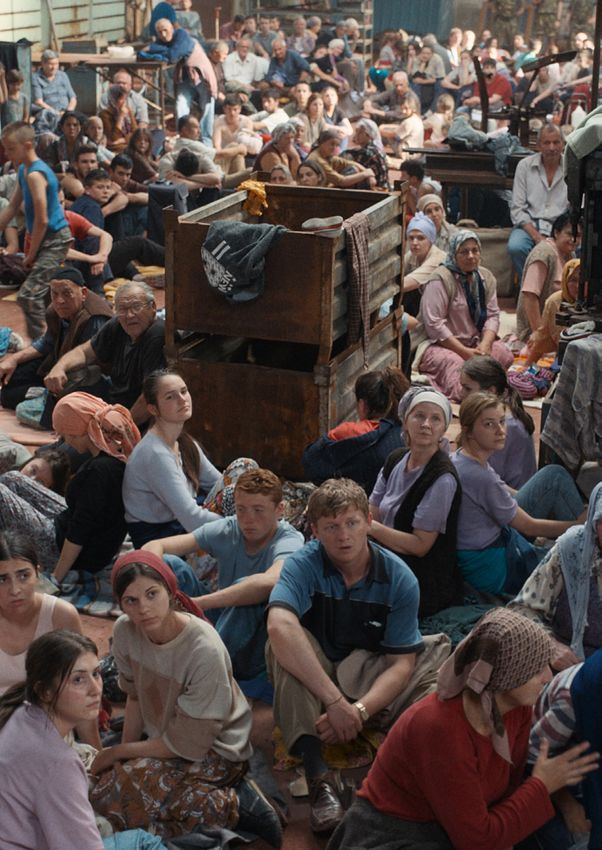
Screenings
Schedule

VENICE FILM FESTIVAL
PRESS & INDUSTRY

THU. 3,            8:30 AM    @ SALA DARSENA
THU. 3,            11 AM      @ SALA GRANDE

PUBLIC

THU. 3,            4:30 PM    @ SALA GRANDE (Gala screening)
THU. 3,            6:30 PM    @ ROSSINI 1 and IMG CANDIANI 1
THU. 3,            8:30 PM    @ ARENA LIDO and ARENA GIARDINI
FRI. 4,            8:30 AM    @ PALABIENNALE
FRI. 4,            9:30 AM    @ ROSSINI 1 and IMG CANDIANI
FRI. 4,            8:30 AM    @ SALA PASINETTI
                   11:30 AM
                   7:00 PM
                   10:00 PM
FRI. 4,            7:45 PM    @ SALA PERLA 2

TORONTO INTERNATIONAL
FILM FESTIVAL
PRESS & INDUSTRY

SAT. 12,           11 AM      @ TIFF DIGITAL CINEMA PRO

PUBLIC

SUN. 13,            4:30 PM   @ TIFF BELL LIGHTBOX CINEMA 4
MON. 14,           6 PM       @ BELL DIGITAL CINEMA
SAT. 19,           12 PM      @ TIFF BELL LIGHTBOX CINEMA 1

4                                                               5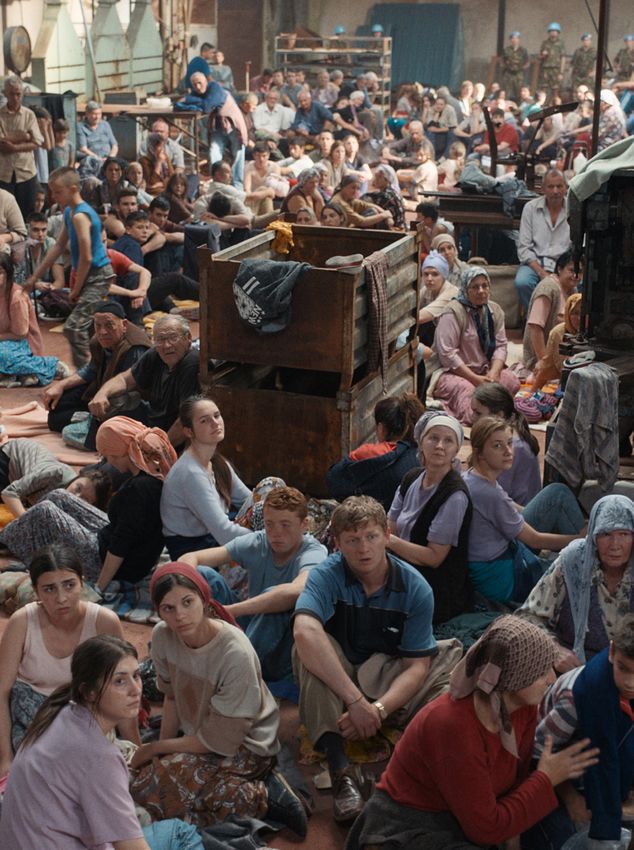
Synopsis
           Bosnia, July 11th 1995.   the UN camp. As an insider to
                                     the negotiations Aida has ac-
               Aida is a trans-      cess to crucial information that
lator for the United Nations in      she needs to interpret. What
the small town of Srebreni-          is at the horizon for her family
ca. When the Serbian army            and people - rescue or death?
takes over the town, her fam-        Which move should she take?
ily is among the thousands of
citizens looking for shelter in
6                                                                   7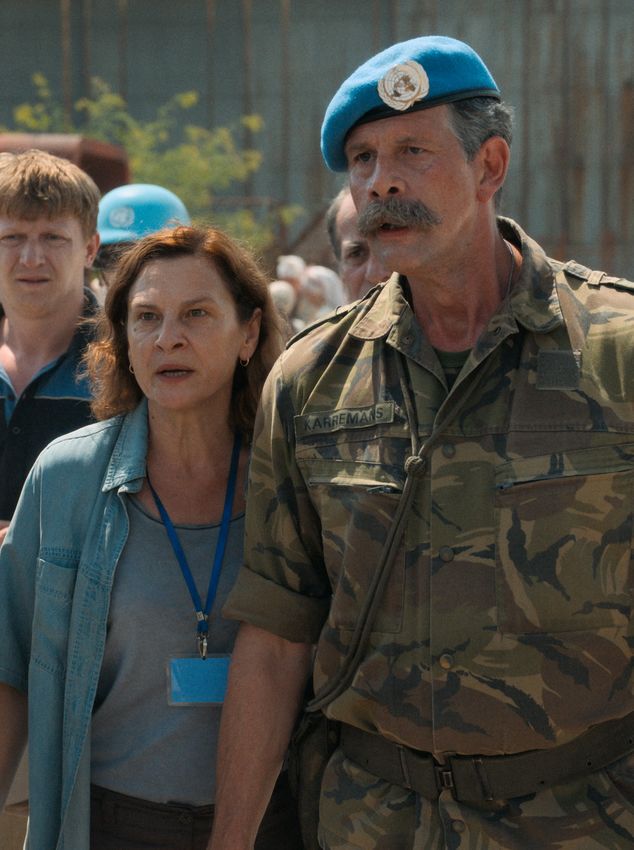
Jasna Đuričić, Izudin
Cast

Bajrović, Boris Ler, Dino
Bajrović, Boris Isaković

   Jasmila Žbanić
Writer
                       Damir
                          Producers

Ibrahimović, Jasmila Žbanić
     Bosnian, English, Dutch
Languages

    Deblokada (Bosnia)
Producers

          Coop99
Co-producers & partners

Filmproduktion (Austria),
Digital Cube (Romania),
N279 (Netherlands), Razor
Film (Germany), Extreme
Emotions (Poland), Indie
Prod (France), Torden Film
(Norway), TRT (Turkey), ZDF
ARTE (Germany)

8                                     9
Jasmila Žbanić
                 Born in Sarajevo in 1974, Jasmila is a graduate of her na-
                 tive city’s Academy of Dramatic Arts, Theatre and Film Di-
                 recting Department. Before filmmaking, she also worked

Screenwriter
                 as a puppeteer in the Vermont-based Bread and Puppet
                 Theater and as a clown in a Lee Delong workshop.

                 Her feature debut GRBAVICA won the 2006 Berlinale

and director
                 Golden Bear (as well as the Prize of the Ecumenical Jury
                 and the Peace Prize), the AFI (American Film Institute)
                 Fest Grand Jury Prize, Grand Prix Odyssey of the Europe-
                 an Council and was sold to 40 territories with great suc-
                 cess. Nomination Best film and Best acress European Film
                 Award.

                 ON THE PATH, Jasmila’s second feature film, premiered
                 at the 2010 Berlinale, in the Competition section. The
                 film had worldwide distribution on 25 territories and won
                 numerous awards including Filmkunstfestival Schwer-
                 in Award for Best Director, Golden Apricot IFF Yerevan –
                 FIPRESCI Prize, Pula Film Festival 2010 – Golden Arena
                 for Best Director, Nomination – European Film Award for
                 Best Actress.

                 Jasmila’s third feature, FOR THOSE WHO CAN TELL NO
                 TALES, made its world premiere at the Toronto Film Fes-
                 tival and won the 2013 Femme de Cinema Award at Les
                 Arcs European Film Festival. LOVE ISLAND premiered at
                 Locarno film festival Grand Palace and was screened at
                 TV ARTE for more then half a million viewers. ONE DAY
                 IN SARAJEVO experimental documentary had an inter-
                 national premiere at DOC LEIPZIG DOCUMENTARY FILM
                 FESTIVAL and 30 more festivals world-vide.

                 All her films were produced through Deblokada, an artists’
                 association that she founded.

                 Jasmila’s films and video works have been displayed at
                 dozens of art exhibitions worldwide such as Manifesta
                 3, the Istanbul Biennial, Kunsthalle Fridericianum Kassel,
                 Swedish Contemporary Art Foundation, New Museum in
                 New York...

                 She is the recipient of the 2014 KAIROS Prize which honors
                 European artists whose work is judged to have a major cul-
                 tural and social impact.

10                                                                      11
Interview
Jasmila Žbanić

Tell us about this particular story and what it                The sense of security, the trust in insti-   was destroyed connections to other coun-            it because we were driven by the need to tell
has meant for you in your life. Where were you           tutions like the UN, was lost and thousands of     tries became limited - we were left in a film       this story because we believe it is a story not
in 1995, how old were you, and has this been a           people died-many more mourned for them.            production desert. So, production wise and          only about Bosnia or the Balkans but about
passion of yours to tell this story on film?                   Personally, Srebrenica is very close to      because of the standards we set for this film       human beings, how we behave towards each
                                                         me because I survived the war in Sarajevo          it was a big challenge.                             other when we are unleashed from morality,
     Jasmila            The systematic execution         which was also under siege and we could                  After the war and the internal division       when we destroy every human form.
     of over 8,000 residents of the east Bosnian         have easily ended up as Srebrenica did. I          of Bosnia, Srebrenica remained in the part
     town of Srebrenica at the end of the Bosnian        always thought someone must make a film            of the country run by Bosnian Serbs. Our        How did it start to emerge in your head that you
     war (1992-95) is a huge trauma for all              about what happened there, but I never             government has many right-wing politicians      would try to make a film about Srebrenica?
     Bosnians.                                           thought it should be me. Yet the story always      who are still denying that the genocide in
            During the war Srebrenica was de-            haunted me. I read everything I could about        Srebrenica happened. They celebrate war             Jasmila           I was reading a lot, listen-
     clared a UN safe zone for civilians and cit-        Srebrenica and only after four films did I feel    criminals as heroes denying the Hague In-           ing to many women and their stories about
     izens. However, when Bosnian Serb forces            ready to do this one – knowing there would         ternational Criminal Court’s decision that          their sons, husbands, brothers, fathers who
     overran the town in July 1995, the outgunned        be many obstacles.                                 what happened in Srebrenica constitutes a           were abandoned by the UN and captured by
     UN troops who requested help from the UN                                                               genocide. Thus, another enormous obstacle           the Bosnian Serb army. These stories which
     in New York were totally let down together       What were the obstacles?                              was politics.                                       were every day in the media deeply affected
     with the population.                                                                                         Yet on the other hand many people             me emotionally. Today, 25 years later, 1700
            Srebrenica is a 40 minute flight from        Jasmila          Bosnia is a country that pro-     did want this film to be born and were really       people are still missing. The story of Srebren-
     Vienna, less than two hours from Berlin and         duces only one film per year. We have almost       supportive. Many Bosnians helped. Also we           ica is a drama that completely consumed
     it is scary to think that such an act of geno-      no industry and our Film Fund is very small.       have 9 European countries who are co-pro-           me as a filmmaker.
     cide happened directly in front of European         We received only 5% of the budget from the         ducers, who wanted this story to be told.
     eyes - after we all repeated a million times        Film Fund. Bosnia used to be part of a big-              Damir Ibrahimovic, our main produc-
     over “Never again”.                                 ger story with Yugoslavia and its strong film      er, made so many brave and risky choices. It
                                                         industry but after the war where everything        took us years to make this film. But we made

12                                                                                                                                                                                                          13
How did you deal with dramaturgy – it is a Tell us about the character of Aida.
fiction film based on true events?
Jasmila Her character is between
Jasmila I had felt a huge responsibil- two worlds: she is Bosnian, her family is in
ity in how I chose to tell these events. Some- the same situation as thirty thousand other
times it felt as if I was walking in a minefield. I residents of Srebrenica, yet she works for the
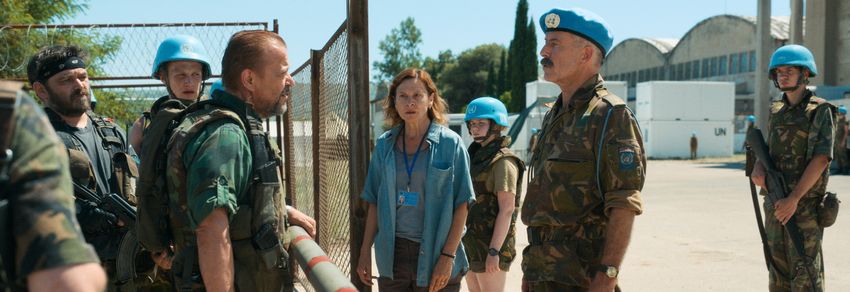
was committed to creating a film that would UN making her position ambiguous. She be-
enable people to understand these 100 min- lieves in the UN. She believes a UN base is
utes, to understand the story while at the the safe place for her family and that she has
same time remaining truthful to the emo- certain privileges because she works for the
tions, characters and facts. I was aware that UN. The film is her journey when everything
it was not possible to tell every aspect of this falls apart.
complicated historical situation story. I had to
make choices. Obviously, there’s so much in the film that
I had to fictionalize many things because shows your creative skills, it’s an incredibly
film has its own rules. For example, in reality tense film to watch. But let’s look at the cast-
a lot of her theatre performances and oth- You had great ensemble of actors. Tell us about
Dutch UN commander Karremans had several ing first: the performance of your actress. Did
er films. She has profound acting skills and them.
meetings negotiating the town’s destiny with you target her early on? And how did you work
incredible energy. She is truthful, precise, al-
Bosnian Serb general Mladic in Hotel Fontana. together?
ways expecting the best and totally trusting Jasmila All the actors are diamonds
There are video clips of these meetings availa-
the director, a joy to work with. Our cooper- for me: Izudin Bajrović (Nihad), Dino Barjović
ble on the internet. Yet it didn’t work in the film Jasmila When the script was ready
ation felt so natural. After reading rehearsals, (Sejo, who is also the real son of Izudin) and
to have several scenes, so I decided to make it to be shared with the team, I started talking
where we discussed every situation, and did Boris Ler (Hamdija). Izudin brings the energy
into one scene. I had to dramatize certain ele- about actors with producer Damir Ibrahi-
a lot of improvisations. For example, the his- of a Bosnian man who is at the same time
ments, invent characters. movic, and we immediately said “It’s Jas-
tory of the family: how she met her husband, naive, intelligent and good-hearted but gets
A very valuable book for me was UN- na, we don’t have to search any further”. I
how they got married, how their kids went many things wrong.
DER THE UN FLAG by Hasan Nuhanovic worked with Jasna Djuric in my film “For
to school… everything before the moment the Emir Hadžihafizbegović (Special Or-
whose story inspired the film. those who can tell no tales’’. I have also seen
film begins. We rehearsed in the apartment rizonti Award for Best Actor at Venice 71).
where we later shot the film. Nothing of this When we were shooting the scene where
was in the script or in the film but it was im- he, as a Serbian soldier, entered the base full
portant for the actors and I to feel the past of refugees, his acting felt so real that two
and to bring this backstory in the film even if female extras fainted. These women were
it is invisible. kids during the Bosnian war and his acting
Then we rehearsed the entire film in triggered old traumas. It was very emotional
continuity in actual locations. This was cru- for Emir and all actors to play these roles.
cial as our crazy shooting schedule which The Dutch actors were also great to
had to adapt to the actors’ availability was work with, I loved them so much especially
totally out of continuity. Our actors are from Raymond Thierry who found his Franken in a
all over: Netherlands, Belgium, Serbia, Po- way that allowed the audience one moment
land, Romania, Croatia, Bosnia- adjusting to understand him and the other moment
to their timetable was a nightmare. So, go- you want to die because he is not doing an-
ing through the film in continuity allowed the ything. I must also mention Johan Helden-
actors to memorize the energy, the level of bergh, the Belgium actor who plays Karre-
emotions, the rhythm for each scene. At that mans, who created amazing different layers
stage DOP Christine Maier and I designed of the complicated position of his character.
each shot. As for Mladic the main question was:
how to portray him since he is still alive?
Everybody knows what Mladic looks like. Not
many people know what Karremans looks
14 15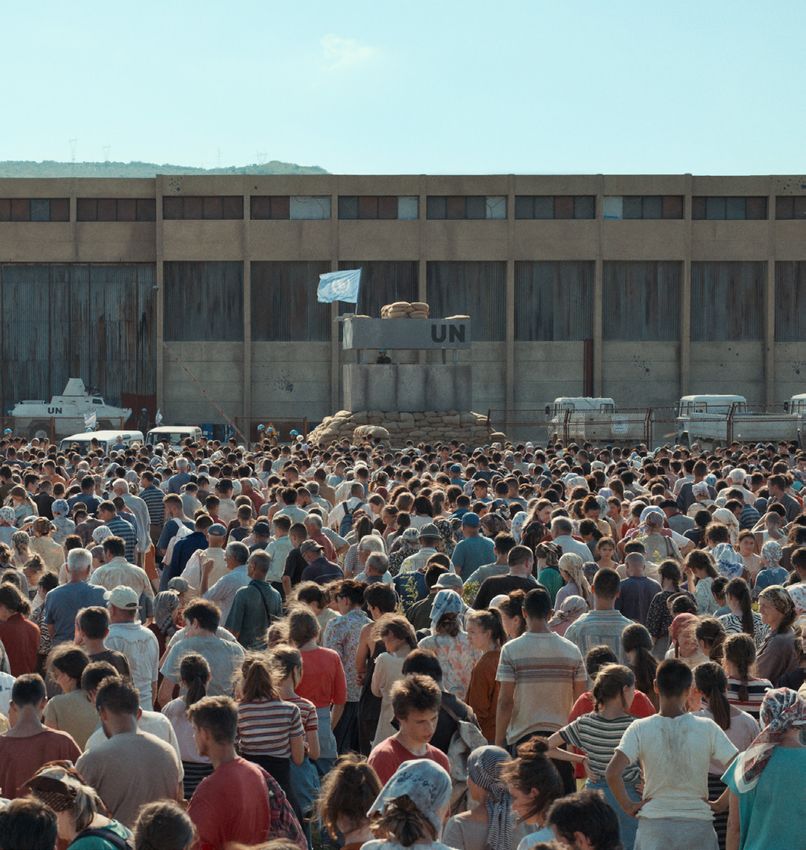
Nations are not important for films and there, but we had to modify the look of it ac-
should not be important in life either. cording to the feeling we wanted the space to
convey. This location needed to be Nowhere,
Do we assume now that Mladic was always we needed a big field where people could
going to kill the men? Were these negotiations stand, and a road which led them to life or
just a performance? death. Surprisingly it was very hard to find a
convenient place to shoot in Bosnia, despite
Jasmila In 1991, the leader of Bos- the fact that there are so many abandoned
nian Serbs Radovan Karadzic (sentenced factories there. We found the perfect location
to life in prison for war crimes) said in Par- an old concentration camp during the war,
liament that if Bosnia does not stay in Yu- so we couldn’t use it. We shot it in the build-
goslavia Muslims will disappear in the hell ing next to it. Many locations were places of
of war because they cannot defend them- violence, even schools.
selves. There is footage of this statement on Some of our extras were actually for-
YouTube. Thus, began the genocide proven mer prisoners. Discovering this was a very
in the cases of Karadzic, Mladic and others. strange. We were shooting a scene where
Every small town on the border of Bosnia men are forced to climb on a truck, so we
with Serbia had 3000, 4000 citizens bru- told extras how to do it. One man respond-
tally killed in May 1992. What happened was ed:” That is not the way they took us”. I did
obviously planned. not understand at the beginning. He contin-
ued, “I was here, in this camp for 12 months
What about the UN. They were in a really tough and this is not how soldiers gave us orders”.
position, since nobody supported them. How This man explained what actually happened
do you want them to be perceived? and we filmed it according to his instructions.
That is how I found out that many people of
Jasmila This film is not against the our 400 extras were actually former prison-
institution and ideas that the UN stands for. ers of the Heliodrom camp.
On the contrary, my film warns us that we The interiors were in Stolac ; the exteri-
must improve and support our institutions. ors in Mostar 40 minutes away. We shot first
The UN was blocked politically by certain the interiors and then the exteriors which is
world politicians. To abandon Srebrenica pretty complicated. We shot the exterior in
was primarily a political decision. Everything June and July in 40 degree heat; Everyday
possible was done to tie the hands of the we had about 10 emergency interventions,
UN. But that does not exonerate the Dutch. people fainting from the heat. I fainted only
They had a lot of prejudices toward Bosnians once (laughing).
Muslims, as well as a quite colonial view of
people in general. Florence Hartmann ex- How did you create the incredible sense of ten-
like. We explored different methods – not to ris found an original and powerful approach plains this in her book “The blood of Real- sion throughout the film?
show him, to film him only from behind but that is so truthful to this story. politik”. I recommend this book because it is
we did not want to make a mysterious fig- not only about Srebrenica but about how the Jasmila While writing the script I
ure out of him. He is a human being, yes, he Is it significant that some actors who are Ser- political system functions. If Srebrenica hap- wanted to have a thriller element, to have this
is a war criminal but not a mythical figure, bian played roles of Bosnian Muslims and the pened now in 2020 it would have the same big flow of energy of Aida’s attempts to res-
he is flesh and blood. We wondered which other way around? outcome! The EU would not move a finger! cue her family. During the editing I worked
actor can deliver his inner energy, who can This terrifies me. with the wonderful editor Jaroslaw Kaminski
embody this personality. And we choose the Jasmila No, I don’t care about na- (Ida, Cold War), our main concern was that
amazing Boris Isakovic. He has an incredi- tionality; I choose the best actors. We all Where did you film the UN base? Srebrenica is not so known and it is important
ble acting range and energy. There is a lot speak the same language and have a com- that the audience understands the premise.
of video footage of Mladić available, but Bo- mon history and culture; we look the same. Jasmila We built it. The hall was When one makes a film about the Hol-
16 17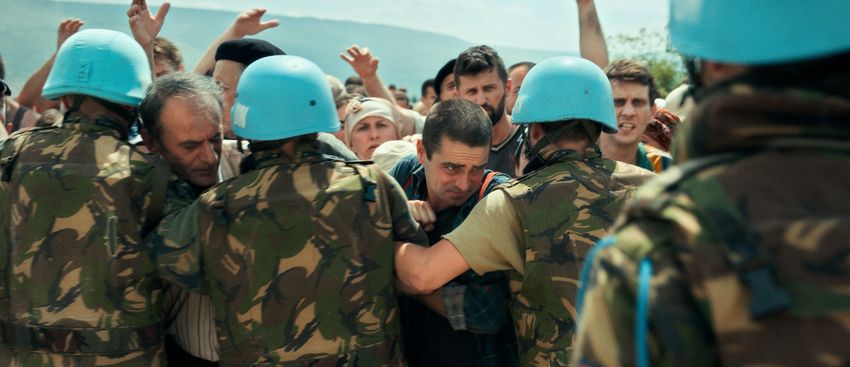
ocaust one can count on the fact that peo-           lot of consequences on our lives. But this is
     ple know a lot about it, so there is no need         my first war film with tanks, guns, soldiers…
     to explain. But with Srebrenica’s genocide it is     As a feminist I see a war as a male game.
     not like that. For example, we did a test with       Virginia Woolf put it nicely: “War is a man’s
     Jarek’s students from the editing department         game ... the killing machine has a gender and
     in Lodz film school who are in their 20s. Five       it is male”. I believe every war is just a plat-
     of them had heard of Srebrenica but did not          form for sociopaths and psychopaths. While
     know what exactly happened and ten of them           we are talking right now, some people are
     never even heard of it. I think this is the situa-   getting very rich from wars. Actually, a few
     tion with most of Europe not to mention other        get rich and millions suffer.
     parts of the world.                                         This film shows the patriarchal and bu-
            The film must function for people who         reaucratic structure of war. Responsibility is
     don’t know it’s history.                             always with the authority somewhere else.
                                                          It shows the woman in the labyrinth of this
This film is not a historical documentary where           system and consequences. For me, war is
is the heart of your story?                               this: a women laying down, shot in the back,
                                                          while solders loot her home.
     Jasmila           Aida’s drama and her emo-                 Narratives of wars are usually wrapped
     tions are the heart of this story. I want peo-       in decorations of freedom, democracy and
     ple to take away the feelings and questions          justice so we don’t notice the truth behind
     the film raises. If Dutch soldiers had more          the narrative nor its inherent banality. We
     empathy, would this tragedy have had such            need narratives which show us what is hid-
     a terrible outcome? Even if institutions and         den, to show stories from other perspectives.
     governments let us down, we still have free-
     dom to feel for others and help others. We
     are constantly led by feelings of selfishness
     – capitalism needs selfishness to survive,
     but it is leading our Earth and all of us to-
     wards disaster.
            I would love for people to connect to
     the story of Srebrenica with their own lives
     and question who would be there for them in
     difficult times. How many things would have
     been different if we had more solidarity?
            Also, there is a question of the trauma
     we transfer to our children: both children of
     perpetrators and children of victims. There is
     a huge amount of energy that perpetrators
     invest in denial creating a massive burden
     for the next generations.

Some of your films are about the war others
aren’t. How does this film sit with the rest of
your work?

     Jasmila          Most of my films are af-
     ter-war films, stories of life today affected by
     the past. This war that we survived still has

18                                                                                                           19
20 21
Filmography/Videography
     AIRBORNE [2019], documentary film, screenplay and directed by
     Jasmila Žbanić.

     ONE DAY IN SARAJEVO [2015], documentary film, produced,
     screenplay and directed by Jasmila Žbanić.

     LOVE ISLAND [2014] – feature film, screenplay by Jasmila Žbanić
     and Aleksandar Hemon, directed by Jasmila Žbanić.

     FOR THOSE WHO CAN TELL NO TALES [2012] - feature film,
     screenplay by Kym Vercoe, Jasmila Žbanić, Zoran Solomun; directed by
     Jasmila Žbanić

     ON THE PATH [2010], feature film, screenplay and directed by
     Jasmila Žbanić.

     PARTICIPATION [2008], short feature film, part of the “Stories of the
     Human Rights”, script and direction by Jasmila Žbanić.

     BUILDER’S DIARY [2007], documentary film, screenplay by Boris
     Dežulović, directed by Jasmila Žbanić, 2007; Festivals: Diagonale Austria

     GRBAVICA [2006], feature film, screenplay and directed by Jasmila
     Žbanić.

     BIRTHDAY [2004], part of the omnibus LOST AND FOUND,
     documentary film, script and direction by Jasmila Žbanić.

     IMAGES FROM THE CORNER [2003], documentary film, script and
     direction by Jasmila Žbanić.

     TO AND FRO [2002], short feature film, script and direction by
     Jasmila Žbanić.

     WE LIGHT THE NIGHT [1998], documentary film, created by Sead
     and Nihad Kreševljaković, Jasmila Žbanić, directed by Jasmila Žbanić.

     LOVE IS... [1998], short feature film, script and direction by Jasmila
     Žbanić

     AFTER, AFTER [1997], documentary film, script and direction by
     Jasmila Žbanić.

     AUTOBIOGRAPHY [1996], script and direction by Jasmila Žbanić.

22                                                                               23
www.indiesales.eu
32, Rue Washington 75008 Paris, France
+ 33 1 44 83 02 27You can also read


