RAH INTENSIVE CARE - Intensive ...
←
→
Page content transcription
If your browser does not render page correctly, please read the page content below
Royal Adelaide Hospital Intensive Care Unit                                                 Issue 5 - September 2018

     RAH INTENSIVE CARE

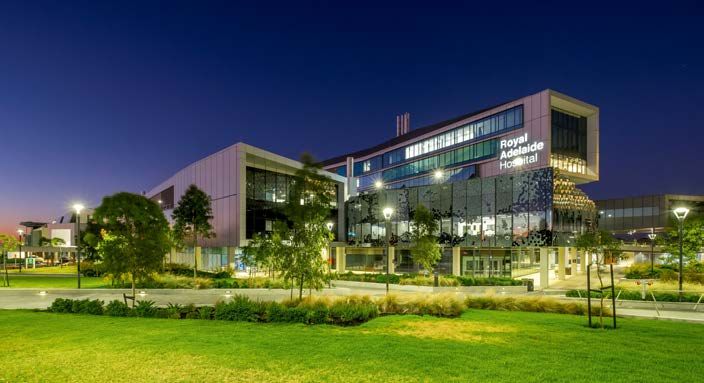
We finally moved into the new RAH in September 2017 (pictures within….), and it is evidently the 3rd most
expensive building in the world! It was an enormous logistic exercise moving a hospital of that size and was an
interesting experience for all involved. It is still in the centre of Adelaide, at the opposite end of North Terrace to
the old hospital, and incorporates a total of 3.8 hectares of landscaped environment, including more than 70
internal themed (eg Aboriginal and Spinal Garden) courtyards and sky gardens across the 9 levels. This creates a
1.6 hectare footprint of greenspace within the hospital. There are 700 overnight beds and 100 day beds. Right
next door is the South Australian Health and Medical Research
Institute (SAHMRI), which is South Australia's first independent
health and medical research institute, and is home to more than
700 researchers.

Training and Research remain major foci of our Unit, and in this
Newsletter we highlight some of our achievements over the past
12 months. We have also included some information about the
new hospital and ICU, the role and activities of SAICA, travel logs
from some of our registrars from overseas (and tips for future
registrars), our mentoring program, and a list of upcoming local
courses. This is an annual publication, so if you are aware of any
other achievements that we have unfortunately omitted, please
let us know!

                                        RAH ICU Facts and Figures
The Royal Adelaide Hospital ICU is the busiest Level 3 Unit in South Australia, and in the 12 months from July 2017
to June 2018, we admitted 3466 patients. Of all the patients admitted during that time, 68% were unplanned.
About 14% were direct admissions following cardiac surgical procedures, 10% were trauma, 7% following
neurosurgery, 7% thoracic surgery, 9% ‘sepsis’, 5% pneumonia without sepsis, 4% drug overdose, 3% ENT surgery,
3% following cardiac arrest, and 2% gastrointestinal bleeding. Operating theatres were the source of admission for
49% of our patients, 32% were admitted directly from the Emergency Department, 14% from the wards, and 4.4%
were transferred directly from another hospital to our ICU.

The Unit currently has 44 Registrars (42 FTE) on the roster (17 registered with the CICM) from a variety of
backgrounds and training programs, and with very different levels of experience and long-term goals.

                                              www.icuadelaide.com.au                                                      1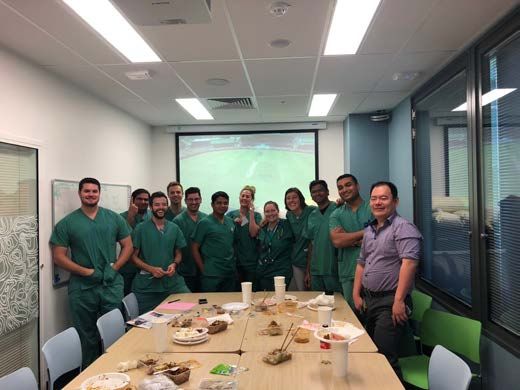
Royal Adelaide Hospital Intensive Care Unit                                                       Issue 5 - September 2018

                                               Education and Training
Congratulations to Nikki Yeo who              Australia and New Zealand (photo             The 5th Trainee Lecture Series day
passed the CICM Fellowship Exam in            below).                                      was held in November, and was
October, and has now moved to                                                              chaired by one of our Chief Registrars,
                                              There were once again over 30 faculty,
Cambridge for 12 months to work as                                                         Michael Davies. Speakers were
                                              including 11 from the RAH and 7 from
a Clinical Fellow in the Neurosciences                                                     Michael Stokes (Cardiology), Ben
                                              interstate. Hot Case practice sessions
and Trauma Critical Care Unit in                                                           Reddi (ICU), Michelle Damin
                                              were held at the RAH, QEH, FMC and
Addenbrookes in London.                                                                    (Haematology) and Emily Rowe
                                              LMHS. The 2019 Course was flooded
                                                                                           (Infectious Diseases), and it was
After also passing the Fellowship             with applications, filling up within 24
                                                                                           attended by over 30 registrars from
Exam last year, Jacob Abraham left us         hours. Increasing numbers of trainees
                                                                                           across the State.
in August to work as a Senior                 are sitting the Fellowship Exam, and so
Registrar at Flinders Medical Centre          if you are planning to sit in 2020, make     There is a comprehensive 2-day
(FMC), before taking up a 12 month            sure you apply for the course as soon        orientation program around the
Critical Care Echocardiography                as registrations open in September           major registrar changeover dates (in
Fellowship at St George and St                next year or you are likely to miss out.     February and August) for registrars
Vincent’s Hospitals in Sydney this            However, it is important to note that it     new to the Unit, including a half-day
year.                                         is very much focused on preparing            Postoperative Care of the
                                              candidates for the Exam, rather than         Cardiothoracic Patient Course, an
Congratulations also to Tim Webber
                                              trying to teach the intensive care           extended patient-scenario discussion,
for passing the CICM Primary Exam.
                                              curriculum in 3 days. Candidates are         and a session on CVC insertion.
The Eleventh Annual Tub Worthley              therefore expected to have done
                                                                                           The weekly BICMed Course that we
Travelling Scholarship was won by             significant preparation beforehand.
                                                                                           have run for more than 10 years
Kristin Hayres (FMC) in May this year
                                              The South Australian Primary                 (developed by one of our past
for her presentation, ‘Objective
                                              Examination Course was held twice in         registrars, Nai An Lai) has been
measurement of physical function
                                              2018, but this will be reduced to only       replaced this year with a series of
prior to and following critical illness’.
                                              one course in 2019. Mark Finnis has          specific topic-based sessions at
This is awarded for the best registrar
                                              been coordinating it for many years          regular intervals within the Tuesday
research presentation at the annual
                                              now, with assistance from a number of        Registrar Teaching Sessions.
South Australian ANZICS meeting.
                                              the RAH and FMC Intensivists. It is an
Registrars from the RAH who                                                                A list of upcoming local ICU Courses is
                                              intensive 5 days, but excellent
presented their research on the night                                                      included at the end of this Newsletter.
                                              preparation for the CICM (and ANZCA)
were Sam Gluck, Emily Gannon, Nikki
                                              Primary Exam. Places are limited to 24
Yeo and Minny Ohja. As an aside,
                                              and it also invariably over-subscribed -
Kristin joined us from FMC in August
                                              so make sure you register early.
for the next 12 months, and we
welcome her to the Unit.                      The South Australian Critical Care
                                              Ultrasound Course is a 2-day course on
The 35th running of the South
                                              focused cardiac, lung, abdominal and
Australian Intensive Care Fellowship
                                              procedural ultrasound relevant to
Exam Course was held in February
                                              critical care, and is held twice a year.
this year, with 30 candidates from

                                            Registrar Mentoring Program
We run a formal mentoring/support program for all trainees in ICU at the RAH. This process is separate from any skill or
competency-based assessment and is aimed purely at providing psychological, emotional and practical support for our
junior doctors. Our aim is therefore for it to remain completely separate from any formal College assessments. This
program and any discussions or conversations are confidential and will not be shared with any external person or group
unless at the express wish of the trainee concerned.

A number of the Consultants have volunteered to participate and feel this is worthwhile. They will work in pairs and each
trainee will be assigned to one pair in the first instance. We hope that this will ensure easy availability and access to at least
one of their mentors at all times and also addresses any potential personality differences which may arise. This is not
designed to limit access to any of the consultant group, as it is recognised that trainees will have multiple mentors over their
career, often with a specific focus at a particular time. They are therefore encouraged to use any and all opportunities to
communicate and engage with any consultant as they need. The main purpose of this formal process is to help and support
trainees in whatever way possible and to try to ensure that nobody falls between the cracks.
                                                  www.icuadelaide.com.au                                                            2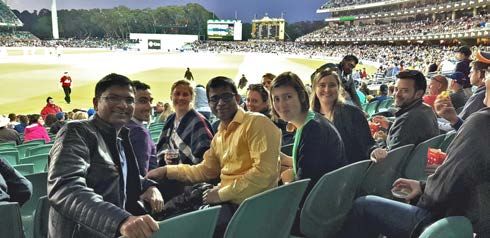
Royal Adelaide Hospital Intensive Care Unit                                                         Issue 5 - September 2018

                             Research Publications July 2017 - June 2018
1. Reddi B, Finnis M, Udy AA, Maiden M, Delaney A, Bellomo R, Peake S; ARISE Study Management Committee and the
    Australian and New Zealand Intensive Care Society Clinical Trials Group. The relationship between the change in central
    venous pressure and intravenous fluid volume in patients presenting to the emergency department with septic shock.
    Intensive Care Med. 2018 Jul 20. doi: 10.1007/s00134-018-5314-6.
2. Maiden MJ, Finnis ME, Peake S, McRae S, Delaney A, Bailey M, Bellomo R. Haemoglobin concentration and volume of
    intravenous fluids in septic shock in the ARISE trial. Crit Care 2018 May;22(1):118.
3. Kar P, Jones KL, Plummer MP, Ali Abdelhamid Y, Giersch EJ, Summers MJ, Hatzinikolas S, Heller S, Horowitz M, Deane AM.
    Antecedent Hypoglycemia Does Not Attenuate the Acceleration of Gastric Emptying by Hypoglycemia. J Clin Endocrinol
    Metab. 2017 Nov 1;102(11):3953-3960.
4. Plummer MP, Notkina N, Timofeev I, Hutchinson PJ, Finnis ME, Gupta AK. Cerebral metabolic effects of strict versus
    conventional glycaemic targets following severe traumatic brain injury. Crit Care. 2018 Jan 25;22(1):16. doi: 10.1186/
    s13054-017-1933-5.
5. Chapple L, Deane A. From dysmotility to virulent pathogens: Implications of opioid use in the ICU. Curr Opin Crit Care
    2018;24(2):118-123.
6. Chapple LA, Chapman M, Shalit N, Udy A, Deane A, Williams L. Barriers to Nutrition Intervention for Patients With a
    Traumatic Brain Injury: Views and Attitudes of Medical and Nursing Practitioners in the Acute Care Setting. JPEN J
    Parenter Enteral Nutr. 2018 Feb;42(2):318-326.
7. Richmond KM, Warburton KG, Finney SJ, Shah S, Reddi BA J. Routine CT scanning of patients retrieved to a tertiary centre
    on veno-venous extracorporeal membrane oxygenation: a retrospective risk benefit analysis. Perfusion. 2018 Mar
    1:267659118763266. doi: 10.1177/0267659118763266.
8. Hohl A, Zanela FA, Ghisi G, Ronsoni MF, Diaz AP, Schwarzbold ML, Dafre AL, Reddi B, Lin K, Pizzol FD, Walz R. Luteinizing
    Hormone and Testosterone Levels during Acute Phase of Severe Traumatic Brain Injury: Prognostic Implications for Adult
    Male Patients. Front Endocrinol (Lausanne). 2018 Feb 13;9:29.
9. Flabouris A, Mesecke M. Rapid Response Team Calls that overlap in time: Incidence and associated outcomes. Crit Care
    Resusc. 2017 Sep;19(3):214-221.
10. Bellomo R, Kellum JA, Ronco C, Wald R, Martensson J, Maiden M, Bagshaw SM, Glassford NJ, Lankadeva Y, Vaara ST,
    Schneider A. Acute kidney injury in sepsis. Intensive Care Med. 2017 Jun;43(6):816-828.
11. Ou L, Chen J, Hillman K, Flabouris A, Parr M, Assareh H, Bellomo R. Hospital variability of postoperative sepsis and sepsis-
    related mortality after elective coronary artery bypass grafting surgery. Journal of Critical Care. 2018 Jul 17;47:232-7.
12. Ovenden C, Plummer MP, Selvanderan S, Donaldson TA, Nguyen NQ, Weinel LM, Finnis ME, Summers MJ, Ali Abdelhamid
    Y, Chapman MJ, Rayner CK, Deane AM. Occult upper gastrointestinal mucosal abnormalities in critically ill patients. Acta
    Anaesthesiologica Scandinavica 2017. 61(2):216-223.
13. Deane AM, Hodgson CL, Young P, Little L, Singh V, Poole A, Young M, Mackle D, Lange K, Williams P, Peake SL, Chapman
    MJ, Iwashyna TJ. The rapid and accurate categorisation of critically ill patients (RACE) to identify outcomes of interest for
    longitudinal studies: a feasibility study. Anaesth Intensive Care. 2017 Jul;45(4):476-484.
14. Gluck S, Chapple LA, Chapman MJ, Iwashyna TJ, Deane AM. A scoping review to determine the use of wearable devices to
    evaluate outcomes in survivors of critical illness. Critical Care and Resus. 2017 Sep;19(3):197-204.
15. Davies ML, Chapple LS, Chapman MJ, Moran JL, Peake SL. Protein delivery and clinical outcomes in the critically ill: a
    systematic review and meta-analysis. Crit Care Resusc 2017 19(2) 117-127.
16. Deane AM, Lamontagne F, Dukes GE, Neil D, Vasist Johnson L, Hacquoil K, Ou X, Richards D, Stelfox HT, Mehta S, Day AG,
    Chapman MJ, and Heyland DK. Nutritional adequacy therapeutic enhancement in the critically ill: A randomized double
    blind, placebo controlled trial of the motilin receptor agonist camicinal (GSK962040): The NUTRIATE Study. J Parenter
    Enteral Nutr. 2018 Jul;42(5):949-959.
17. The TARGET investigators (with Chapman MJ co-chair and chief investigator) on behalf of the Australian and New Zealand
    Intensive Care Society Clinical Trials Group. Statistical Analysis Plan for The Augmented versus Routine approach to
    Giving Energy Trial (TARGET). Crit Care Resusc 2018; 20 (1): 15-21.
18. The TARGET investigators (with Chapman MJ co-chair and chief investigator) on behalf of the Australian and New Zealand
    Intensive Care Society Clinical Trials Group. Study Protocol for The Augmented versus Routine approach to Giving Energy
    Trial (TARGET). Crit Care Resusc 2018; 20 (1): 6-14.
19. Ridley ER, Peake SL, Jarvis M, Deane AM, Lange K, Davies AR, Chapman MJ, Heyland D. Nutrition therapy in Australia and
    New Zealand Intensive Care Units: An international comparison study. J Parenter Enteral Nutr. 2018 Apr 27. doi: 10.1002/
    jpen.1163.
20. Schoeman T, Sundararajan K, Micik S, Sarada P, Edwards S, Poole A, Chapman M. The impact on new-onset stress and
    PTSD in relatives of critically ill patients explored by diaries study (The “INSPIRED” study). Aust Crit Care. 2017 Dec 15. pii:
    S1036-7314(17)30263-1. doi: 10.1016/j.aucc.2017.11.002.

                                                   www.icuadelaide.com.au                                                              3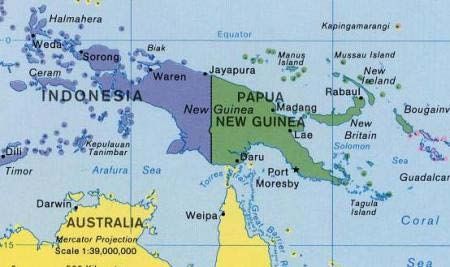
Royal Adelaide Hospital Intensive Care Unit                                                       Issue 5 - September 2018

21. Sampson B, Wilson S, Finnis M, Jones P, Hodak A, O’Connor S, Chapman M. Physiological management of brain dead
    organ donors in South Australian Intensive Care Units. Accepted by Progress In Transplantation 2018.
22. Arabi Y, Casaer MP, Chapman MJ, Heyland D, Ichai C, Marik PE, Martindale RG, McClave SA, Preiser J-C, Reignrier J, Rice
    TW, Van den Berghe G, van Zanten ARH, Weijs PJM. The Intensive Care Medicine Research Agenda in Nutrition and
    Metabolism in Adults. Invited review. Intens Care Med 2017 Sep;43(9):1239-56.
23. Deane AM, Peake SL, Chapman MJ. The disconnect between nutrition guidelines and evidence: How much protein
    should I prescribe to this critically ill patient? Crit Care Resusc. 2018 Mar;20(1):3-5.
24. Chapple L, Weinel L, Ali Abdelhamid Y, Summers M, Nguyen T, Kar P, Lange K, Chapman M, Deane A. Observed appetite
    and nutrient intake three months after ICU discharge. Clin Nutr. 2018 May 9. pii: S0261-5614(18)30174-2. doi: 10.1016/
    j.clnu.2018.05.002.
25. Stevens NE, Chapman MJ, Fraser CK, Kuchel TR, Hayball JD, Diener KR: Therapeutic targeting of HMGB1 during
    experimental sepsis modulates the inflammatory cytokine profile to one associated with improved clinical outcomes. Sci
    Rep. 2017 Jul 19;7(1):5850.
26. Sun EW, de Fontgalland D, Rabbitt P, Hollington P, Sposato L, Due SL, Wattchow DA, Rayner CK, Deane AM, Young RL,
    Keating DJ. Mechanisms Controlling GlucoseInduced GLP-1 Secretion in Human Small Intestine. Diabetes. 2017 Aug;
    66(8):2144-2149.
27. Yandell R, Chapman MJ, O’Connor S, Shanks A, Lange K and Deane AM. Postpyloric feeding tube placement in critically ill
    patients: Extending the scope of practice for Australian dietitians. Nutr Diet. 2018 Feb;75(1):30-34.
28. Yandell R, Wang S, Bautz P, Shanks A, O'Connor S, Deane A, Lange K, Chapman M. A retrospective evaluation of nutrition
    support in relation to clinical outcomes in critically ill patients with an open abdomen. Aust Crit Care. 2018 Jun 11. pii:
    S1036-7314(17)30318-1. doi: 10.1016/j.aucc.2018.04.004.
29. Gluck S, Chapple LS, Chapman MJ, Iwashyna TJ, Deane AM. A scoping review of use of wearable devices to evaluate
    outcomes in survivors of critical illness. Critical Care Resuscitation. 2017 Sep;19(3):197-204.
30. Maclure PT, Gluck S, Pearce A, Finnis ME. Patients retrieved to intensive care via a dedicated retrieval service do not have
    increased hospital mortality compared with propensity-matched controls. Anaesth Intensive Care. 2018 Mar;46(2):
    202-206.
31. Gluck S, Summers MJ, Goddard TP, Andrawos A, Smith NC, Lange K, Iwashyna TJ, Deane AM. Wide Disagreement
    Between Alternative Assessments of Premorbid Physical Activity: Subjective Patient and Surrogate Reports and
    Objective Smartphone Data. Crit Care Med. 2017 Oct;45(10):e1036-e1042.
32. Ali Abdelhamid Y, Plummer MP, Finnis ME, Biradar V, Bihari S, Kar P, Moodie S, Horowitz M, Shaw JE, Phillips LK, Deane
    AM. Long-term mortality of critically ill patients with diabetes who survive admission to the intensive care unit. Crit Care
    Resusc. 2017 Dec;19(4):303-309.
33. Du YT, Kar P, Abdelhamid YA, Horowitz M, Deane AM. Glycated haemoglobin is increased in critically ill patients with
    stress hyperglycaemia: Implications for risk of diabetes in survivors of critical illness. Diabetes Res Clin Pract. 2018 Jan;
    135:73-75.
34. Hermanides J, Plummer MP, Finnis M, Deane AM, Coles JP, Menon DK. Glycaemic control targets after traumatic brain
    injury: a systematic review and meta-analysis. Crit Care. 2018 Jan 19;22(1):11. doi: 10.1186/s13054-017-1883-y.
35. Raith EP, Ihle JF, Jamieson J, Kalff A, Bosco J. Idiopathic systemic capillary leak syndrome presenting as septic shock: A
    case report. Heart Lung. 2018 Jul - Aug;47(4):425-428.
36. Aung M, Raith EP, Williams E, Burrell A JC. Severe meningococcal serogroup W sepsis presenting as myocarditis: A case
    report and review of literature. Journal of the Intensive Care Society (In Press)
37. Rajendran V, Sundararajan K, Sawka A. Aortocaval Fistula Presenting as Type 2 Acute Myocardial Infarction in a Patient
    with Severe Arteriopathy. Indian J Crit Care Med. 2018 May;22(5):372-374.
38. Nguyen TAN, Ali Abdelhamid Y, Weinel LM, Hatzinikolas S, Kar P, Summers MJ, Phillips LK, Horowitz M, Jones KL, Deane
    AM. Postprandial hypotension in older survivors of critical illness. Journal of Critical Care. 2018 Jun; 45:20-26.
39. Lee HX, Hauser M, Jog S, Bautz P, Dobbins C. Non-operative management of isolated single abdominal stab wound: is it
    safe? 2018. ANZ J Surg 88:565–568.
40. Neuts A, Stessel B, Wouters PF, et al. Selective suprascapular and axillary nerve block versus interscalene plexus block
    for pain control after arthroscopic shoulder surgery: a noninferiority randomized parallel-controlled clinical trial. Reg
    Anesth Pain Med. 2018 Apr 14.

Book Chapters
1. Maiden M, Chapman MJ. Multi-Organ Dysfunction Syndrome. 2017. Oh’s Intensive Care Manual. Bersten AD, Soni N (Ed).
   Butterworth Heinemann. 8th edition.
2. Chapple L, Chapman M. Nutrition support in the critically ill surgical patient, Chapter in: Operative techniques and recent
   advances in acute care and emergency surgery, 2018; Editor: Aseni P, De Carlis L, Grande AM, Mazzola A. Springer, In
   press.
                                                  www.icuadelaide.com.au                                                            4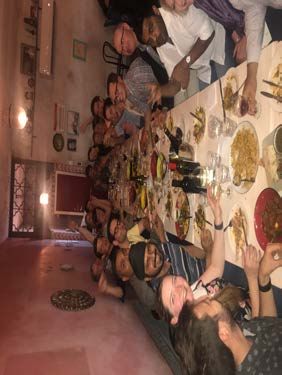
Royal Adelaide Hospital Intensive Care Unit                                                      Issue 5 - September 2018

3. Bear D, Chapple L, Puthucheary Z. Rehabilitation: Nutritional strategies, Chapter in: Post-intensive care syndrome; A
   European Society of Intensive Care Medicine textbook series ‘Lessons from the ICU’, 2018; Editors: Preiser, J-C, Herridge
   M, Azoulay E. In press.
4. Rayner CK, Chapman MJ. Chapter 16: Nutrition and Parenteral Nutrition. Modern Gastroenterology for General
   Surgeons. 2018.

A selection of presentations at scientific meetings
1. Chapple L. American Society of Parenteral and Enteral Nutrition, Nutrition Science and Practice
    Conference, Jan 2018 (Las Vegas, US). Pathways to a research career: How to stay in the research arena.
2. Gluck S. The Society of Critical Care Medicine's Critical Care Congress, Feb 2018 (San Antonio, US). Global
    position system derived values to describe outcomes after critical illness: an exploratory observational
    study.
3. Maiden MJ, Bilgrami I, Birardar V, Collins K, Crozier T, Duke G, Hunning E, Sun L, Wiharto M. Australia &
    New Zealand Intensive Care Society Annual Scientific Meeting, Oct 2017 (Gold Coast, Australia). Obstetric
    critical care admissions in Australia and New Zealand.
4. Chapman M. Australian & New Zealand Intensive Care Society 20th Annual Meeting on Clinical Trials in
    Intensive Care, Mar 2018 (Noosa, Australia). Update on TARGET study.
5. Chapple L. Australian & New Zealand Intensive Care Society 20th Annual Meeting on Clinical Trials in
    Intensive Care, Mar 2018 (Noosa, Australia). TARGET Point Prevalence study.
6. Deane A and Poole A. Australian & New Zealand Intensive Care Society 20th Annual Meeting on Clinical
    Trials in Intensive Care, Mar 2018 (Noosa, Australia). LUCID update.
7. Gluck S. South Australian Association of Internal Medicine Workshop, Aug 2018 (Adelaide, Australia).
    Smartphone data as a patient outcome.
8. Gluck S. Australia & New Zealand Intensive Care Society Annual Scientific Meeting, Oct 2017 (Gold Coast,
    Australia). Smartphone step-counts reliably and consistently estimate step-counts from a dedicated
    pedometer. Matt Spence Medal Presentation Session.
9. Gluck S. Australia & New Zealand Intensive Care Society Annual Scientific Meeting, Oct 2017 (Gold Coast,
    Australia). Global position system derived values to describe outcomes after critical illness: an exploratory
    observational study. Best Medical Free Paper Session.
10. Raith E. ANZCA Perioperative Medicine Special Interest Group Meeting, Oct 2017 (Sydney, Australia).
    Outcomes for Patients Admitted to ICU with Malignancy in Australia & New Zealand: 2000-2016.
11. Raith E. College of Intensive Care Medicine Annual Scientific Meeting, May 2018 (Hobart, Australia).
    Malignancy: No Longer A Death Sentence.
12. White M. Intensive Care Society of Ireland Annual Scientific Meeting, Jun 2018 (Dublin, Ireland). Fluids – An
    Update.
13. White M. Intensive Care Society of Ireland Annual Scientific Meeting, Jun 2018 (Dublin, Ireland). Future of
    our Intensive Care Units: Training / Retention.

PhD Students
2016 -   Yasmine Ali Abdelhamid (University of Adelaide)
2017 -   Samuel Gluck (University of Adelaide)
2018 -   Tej Murthy (University of Adelaide)

                                                                              Simulation Sessions
                                                                  Multidisciplinary simulation sessions involving
                                                                  ICU Registrars are held twice a week in our Sim
                                                                    Lab. They are facilitated by ICU Simulation
                                                                     Clinical Nurses and our Chief and Senior
                                                                  Registrars. Registrars complete an on-line BLS/
                                                                      ALS Moodle, and at least one practical
                                                                            simulation every 3 months.

                                                 www.icuadelaide.com.au                                                        5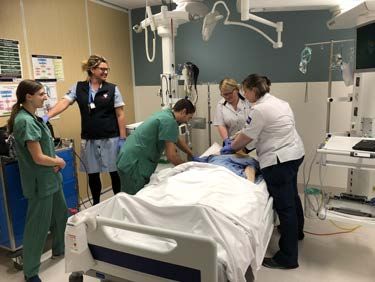
Royal Adelaide Hospital Intensive Care Unit                                                         Issue 5 - September 2018

                                                     Research Grants
2018-20 Chapman M, Deane A, Soenen S, van Loon L, Jones K, Chapple L. NHMRC Project Grant.
        Project Title: Protein Absorption and Kinetics in Critical Illness (APP1144496)
        Value: $1,233,268

2018-19 Chapman MJ, Deane AM, Young PJ. Hospital Research Foundation; Translational Project Grant.
        Project Title: The effect of protein dose on clinical outcomes in critically ill patients (TARGET_Protein)
        Value: $250,000

2018     Chapple L, Chapman M, Summers M, Jones K, Deane A. American Society Of Parenteral And Enteral Nutrition Grant.
         Project Title: The effect of standard versus energy dense feeds on gastric emptying and glucose metabolism in
         critically ill patients.
         Value: $25,000 USD

2018     Gluck S, Worthington M, Nadel M, Finnis M, Chapman M, Iwashyna TJ, Deane AM. Royal Adelaide Hospital Clinical
         Project Grant.
         Project Title: An open-source smartphone application to monitor patients prior to and following elective coronary
         artery bypass grafting: A prospective cohort study (The SMART-HEART Study).
         Value: $16,805

2018     Chapple L, Summers M, Weinel L, Chapman M. Royal Adelaide Hospital Clinical Project Grant.
         Project Title: Resolution of Elements Influencing Nutritional STatus After criTical illnEss (REINSTATE trial).
         Value: $49,959

2018     Gluck S. Society Of Critical Care Medicine.
         Project Title: Thrive Peer Support Collaborative (ICU Survivors).
         Value: $1,000 USD

2018     Raith E, Bellette J, Starney L, Millar J, d’Udekem Y. WCH Foundation MS McLeod Departmental Grant.
         Project Title: The characteristics and outcomes of children undergoing cardiac surgery in Australia.
         Value: $10,000

2017-21 Ridley E, Chapple L, Davies A, Deane A, Hodgson C, Cooper J, Bailey M. Baxter Healthcare Corporation, Global Scientific
        Review Council.
        Project Title: Intensive nutrition in critically ill adults: A pilot randomised controlled study.
        Value: $2,400,000

2017-21 Deane AM, Finfer S, Cook D, Myburgh J, Young P, Guyatt GH, Chapman MJ and Venkatesh B. NHMRC Project Grant.
        Project Title: Re-EValuating the Inhibition of Stress Erosions (REVISE): Gastrointestinal bleeding prophylaxis in ICU
        Value: $2,955,164

2017-18 Deane A, Poole A, Kar P, Finnis M, Martensson J, Finfer S, Horowitz M and Bellomo R. Intensive Care Foundation Grant.
        Project Title: Liberal glUcose Control in critically Ill patient with pre-existing type 2 Diabetes (LUCID): a phase IIB multi-
        centre single-blinded parallel group randomised control trial.
        Value: $25,000

2017     Ali Abdelhamid Y, Jones K, Horowitz M, Kar P, Phillips L, Nguyen T and Deane AM. Royal Adelaide Hospital NHMRC
         ‘Near Miss’ Grant.
         Project Title: Prevalence, mechanisms and impact of post-prandial hypotension in elderly survivors of ICU.
         Value: $49,207

2017     Chapman M, Deane A, Soenen S, Van Loon L, Jones K, Chapple L, Yandell R, O’Connor S, Horowitz M, Lange K. Royal
         Adelaide Hospital NHMRC ‘Near Miss’ Grant.
         Project Title: Protein absorption and kinetics in critical illness.
         Value: $57,205

2017     Stephens JE, Jones KL, Rayner CK, Kar P, Deane AM and Horowitz M. Royal Adelaide Hospital Research Fund.
         Project Title: Acute hypoglycaemia and gastric emptying – ‘dose-response’ and impact on oral drug absorption.
         Value: $30,000

                                                   www.icuadelaide.com.au                                                                6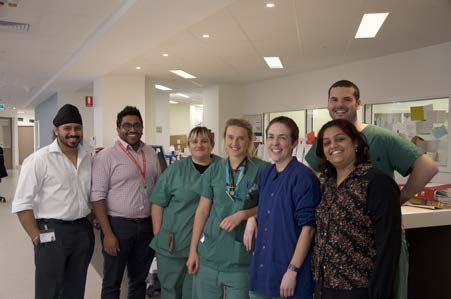
Royal Adelaide Hospital Intensive Care Unit                                                      Issue 5 - September 2018

2017    Horowitz M, Rayner CK, Jones KL, Feinle-Bisset C, Chapman MJ, Deane AM. Rebecca L Cooper Medical Research
        Foundation Grant.
        Project Title: Magpix multiplex for analysing gut hormones.
        Value: $25,000

2017    Chapman M, Deane A, Soenen S, Chapple L. The University Of Adelaide Investment For Success NHMRC Near Miss
        Grant.
        Project Title: Ultrasound probe for Measurement of muscle thickness.
        Value: $10,080

2017    Chapple L, Summers M, Deane A, Chapman M. AusPEN Project Grant.
        Project Title: Long-term effects of critical illness on energy intake, appetite, gastric emptying and appetite-regulating
        hormones in adult survivors of intensive care unit admission.
        Value: $20,000

2015-19 Chapman MJ, Peake S, Bellomo R, Horowitz M, Davies AR, Deane AM. NHMRC Project Grant.
        Project Title: The Augmented versus Routine approach to Giving Energy Trial (TARGET).
        Value: $3,534,236

2015-19 Young PJ, McArthur CJ, Henderson SJ, McGuinness SP, Freebairn RC, Parke RL, Mackle DM, Peake SL, Chapman MJ,
        Bellomo R. Health Research Council Of New Zealand Project Grant.
        Project Title: The Augmented versus Routine approach to Giving Energy Trial (TARGET).
        Value: $1,200,000 NZD

2013-18 Horowitz, M, Wittert G, Clifton P, Rayner C, Chapman I, Feinle Bisset C, Jones K, Noakes M, Chapman M, Nguyen N.
        NHMRC CRE Grant 1041687.
        Project Title: Centre of Research Excellence in Translating Nutritional Science to Good Health.
        Value: $2,499,990

Current Research Funding Scholarships
2019 - 2022:    NHMRC Early Career Fellowship. Optimal protein dose to attenuate muscle atrophy, improve functional
                recovery and increase survival in critically ill patients.
                Investigator: Chapple L. Value: $327,192.00.

2018 - 2019:    The Hospital Research Foundation Early Career Fellowship.
                Investigator: Chapple L. Value: $240,000.

2018 - 2020:    Faculty of Health and Medical Sciences Divisional Scholarship (University of Adelaide).
                Investigator: Murthy T.

2017 – 2018:    European Society of Parenteral and Enteral Nutrition Fellowship
                Investigator: Chapple L. Value: €49,988

2017 - 2019:    Royal Adelaide Hospital AR Clarkson Scholarship
                Investigator: Gluck S. Value: $150,000

2016 – 2018:    Royal Adelaide Hospital AR Clarkson Scholarship
                Investigator: Ali Abdelhamid Y. Value: $300,000

                                                             Tuesday Journal Club and Registrar Teaching
                                                                Journal Club is held every Tuesday afternoon, where 3
                                                             registrars present and critique a combination of recent and
                                                                seminal journal articles. This is followed by a Registrar
                                                             Teaching Session which varies in content between registrar-
                                                              led presentations, senior registrar-led topic teaching, and
                                                               ECHO/ultrasound teaching. Sanjeev Grewal is seen here
                                                                              sharing pearls of wisdom…

                                                 www.icuadelaide.com.au                                                            7
Royal Adelaide Hospital Intensive Care Unit                                                      Issue 5 - September 2018

                  ICU Registrar Involvement in Research and Clinical Audits
Research
Registrars, and ICU (CICM) trainees in particular, are actively encouraged to participate in research on the Unit, both in terms of
personal research and larger trials. Significant support is also available for CICM trainees for their Formal Project
requirements, and they are encouraged to present and publish their results.

The Tub Worthley Travelling Scholarship Dinner is run annually in May with the support of Pfizer, and provides trainees with an
excellent opportunity to present their research to Intensive Care colleagues from across the State, and compete for the
Scholarship.

Trainees are also encouraged to present their research at the annual Australian and New Zealand Intensive Care Society
(ANZICS) ASM and the CICM ASM.

Clinical Audits
It is also an expectation that all CICM trainees at the RAH will undertake a clinical audit every 6 to 12 months in an aspect of
critical care practice that interests them, which they will present at one of the weekly ICU Clinical Audit meetings. We also
recommend that residents and registrars not in the CICM training program take the opportunity to undertake a clinical audit
and they will be actively encouraged and supported to do so.

Upon successful completion, registrars may also have the opportunity to present their findings further afield depending on
the quality and findings of their audit. They will be presented with a formal document of completion that can be used in
support of future competitive applications.
This audit activity will also form an important component of the training assessment for CICM trainees.

                                           More About the New RAH

The ICU is an adult, quaternary-referral, general Unit, with a very broad casemix, including Cardiothoracic Surgery,
Neurosurgery, Spinal Surgery, Vascular Surgery, Gastrointestinal and Hepatobiliary Surgery, ENT, Trauma, Burns, Cardiology,
Respiratory Medicine, Gastrointestinal Medicine, Oncology and Haematology, and Renal Medicine (including transplantation).
The Unit currently runs as 4 pods of 12 beds, but is expandable to 60, and then 72 beds, in the future. Hopefully, a long time in
the future…. We work in teams, and during the day, each Pod has its own ICU Consultant, Chief or Senior Registrar, 2 other
Registrars, and often 5th or 6th year medical students. A further Registrar performs a Consult role, reviewing patients on the
wards or in the Emergency Department. At night, there are 6 Registrars in house, one in each of the Pods, and a further two
who have oversight and consult roles.

                                                  www.icuadelaide.com.au                                                           8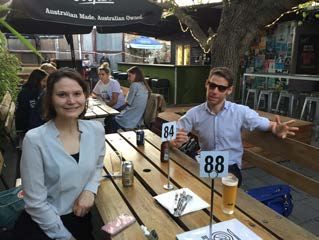
ICU Registrar Travel Stories

                                Emily                                                                    Valerie
What an amazing year!... I moved over from the UK to Adelaide              Before moving to Australia I finished my training in Anaesthetics
nearly a year ago for an Australian adventure, and so far everything       and ICU in Belgium. After spending a year working and living in
has exceeded my expectations!                                              South Africa, I thought it’d be a good idea to get another
Work is great, everyone in the unit is welcoming and friendly and          experience abroad and so I packed my bags and came to Adelaide.
I’ve never worked in a department that gets along so cohesively.
                                                                           As convinced as I was that I came here to work, turns out that’s just
And to top it off the RAH covers a multitude of specialties so the
ICU experience is priceless.                                               an excuse to get as much travelling done as is humanly possible.
                                                                           Certain rules must be followed, or not, depending on your level of
The work-life balance is perfect, giving me the time to explore both
                                                                           adventuring. Night drives are good for seeing kangaroos from up
Adelaide, (currently working my way through cellar door bingo) and
                                                                           close in the spotlight of your car, drives after night shift are good
wider Australia (nearly all states checked, territories still to go!)
                                                                           for sponsoring the caffeine industry, and camping in 40 degree
Adelaide is an excellent place to live; it’s such a friendly city with
                                                                           weather will get you an AKI!
great restaurants and bars. It’s surrounded by gorgeous beaches
and amazing wine country - why would you want to be anywhere               But look on the bright side, Australia has something to offer for
else?!                                                                     everyone! Just on Adelaide’s doorstep there is enough wineries to
                                                                           keep you going for a few years, lots of kayaking opportunities in
Australia is blessed with incredible variety; from the outback’s dry
                                                                           Second Valley, the Coorong and even Port Adelaide, hiking around
red deserts to the tropical rainforests of the east coast. You’d need
                                                                           Deep Creek or Flinders Ranges, and definitely go to Kangaroo
a lifetime to explore it all but some of my travel highlights include:
                                                                           Island for a combination of all of the above.
• Sailing through the Whitsunday islands and diving the Great
                                                                           But there’s so much more, if you are willing to drive the distance!
  Barrier Reef; swimming with turtles, stingrays and sharks!
                                                                           My favourites were definitely whale shark diving in Exmouth, the
• Road-tripping up the West coast, bush camping and swimming               views in Tasmania, swimming through gorges in Karinjini National
  with whale sharks in Ningaloo WA.                                        Park and sailing the Whitsundays!
• Kangaroo Island is definitely my favourite though ... a best-bits         Some advice that I would like to share though:
  mini Australia! Gorgeous beaches with white sand and crystal
                                                                           • It doesn’t matter what SPF you use, just reapply often, and even
  seas, wild kangaroos (obviously), koalas, echidnas and dolphins,
                                                                             Aussies get it wrong.
  beautiful wineries with delicious wine and amazing views!
                                                                           • As some consultant (whose name I won’t mention) believes,
                                                                             vitamin B does not work against midges.
                                                                           • You will not die in Coober Pedy! Unless you’re blind and do
                                                                             manage to fall in a hole.

                                                                           • You might get murdered
                                                                             in Salt Creek, do not go
                                                                             camping by yourself!

                                                                           • If anyone would have
                                                                             died in Australia, it
                                                                             would’ve been me, so you
                                                                             are all good! Enjoy!

                                                                     Laetitia
          I moved to Australia in February 2017 after I have finished my training in anaesthesia in Belgium. My initial plan was to
          stay in Australia for one year and then go back home to start working in a hospital where I could do both anaesthesia
          and ICU.

          Because of an unexpected change in my life, I decided to stay longer in Australia. I have been here for 1.5 years now
          and I am having the time of my life. The colleagues in ICU have been very supportive and I made friends for a lifetime.

          I have never had so much time in my life to travel. I love living in this country. The people are lovely, the weather is
          great, the nature is awesome and I love my job.

          My favourite places are: Cairns, Western Australia, Flinders
          Ranges and Tasmania. But to be honest, every place in
          Australia is unique and amazing. What I love about Adelaide is
          that it is one big town. Living here is not as expensive as
          Melbourne and Sydney and there are many stunning places
          close by: Barossa, Clare Valley, McLaren Vale, Port Noarlunga,
          Victor Harbour.

          Thank you all for these precious memories.

                                                         www.icuadelaide.com.au                                                                    9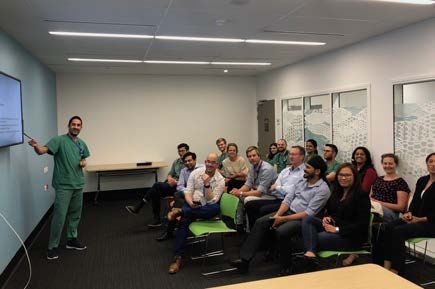
Royal Adelaide Hospital Intensive Care Unit                                                    Issue 5 - September 2018

                                South Australian Intensive Care Association

SAICA is a not-for-profit association that oversees a number
                                                                  • sponsorship of first Cardiac Advanced Life Support (CALS)
of educational courses in South Australia as well as
                                                                    Course to be held in South Australia
promoting, encouraging and financially supporting
educational and research activities in the area of Intensive      • Departmental Crit-Iq website subscription for ICU
Care Medicine.                                                      Registrars and Consultants
It also awards travel scholarships to assist Intensive Care       • Survey Monkey and Dropbox subscriptions
registrars and Honours/PhD students to present their
                                                                  • financial assistance for the transport of obsolete
research at international or national meetings.
                                                                    equipment and supplies from the old RAH to areas in need
Activities this year have included;                                 in Papua New Guinea (see below)
• upgrade of ALS resuscitation model (iSimulate) for QEH and      • covering the cost of this Newsletter
  FMC ICUs
• purchase of 2 cardiothoracic re-opening mannikins               Application forms for travel scholarships can be obtained by
                                                                  contacting;
• purchase of 2 ultrasound probes
                                                                  Nick Edwards
• sponsorship of Echopraxis website upgrade
                                                                  C/- ICU, Royal Adelaide Hospital
• sponsorship of Hot Case phone app for CICM trainees             chopper45@iprimus.com.au
• sponsorship of ICU Trainee Lecture Series day

                    Papua New Guinea and the old Royal Adelaide Hospital
When the old RAH closed in 2017, a considerable amount of medical equipment and supplies was not required in the new
hospital and was donated in kind by the South Australian Government to interested organisations. SAICA was approached by
Shila Paia, a PhD candidate at Flinders University, who established the Soil Child Program which aims to address poverty in
remote communities in Papua New Guinea. Soil Child and its partnering organisations (Fulcrum Aid and Women in
Development Foundation (PNG)) were keen to access some of the equipment, but there was no funding to actually transport it.

SAICA therefore agreed to donate funds for the purchase of a shipping container, land and shipping transport costs, and
customs and other costs, to move the supplies from Adelaide to Lae Port in PNG, and then to health facilities in two provinces.
In these provinces, there are 2 regional hospitals, 56 rural health centres and 158 community aid posts.

In addition, following an earthquake in the PNG Highlands earlier this year, a number of fundraisers gathered a large stock of
blankets, clothes, toys and books. Accordingly, when the container was packed in August 2018, the remaining space was filled
with these items.

The container has recently left Adelaide, and hopefully a shipment of this size will make a significant difference for those
communities.

Further information can be found at https://fulcrumaid.com.au/projects2/three-plus-papua-new-guinea.

                                                  www.icuadelaide.com.au                                                     10
Royal Adelaide Hospital Intensive Care Unit Issue 5 - September 2018
Upcoming Intensive Care Courses 2018 / 2019
SOUTH AUSTRALIAN INTENSIVE CARE FELLOWSHIP EXAM (TUB’S) COURSE
13-15 February 2019.
30 candidates. For ICU Registrars within 12 months of the CICM Adult Fellowship Examination.
Conducted over 3 days, with sessions on the written paper, vivas, investigation interpretation, paediatrics and hot cases (at 4
hospitals). There is little didactic teaching, with the focus very much on practical sessions and trial exams. Further information
at http://www.icuadelaide.com.au/course_fellowship.html
Applications are closed.
Enquiries to Dr Nick Edwards, c/- ICU, Royal Adelaide Hospital.
Email: chopper45@iprimus.com.au
SOUTH AUSTRALIAN CICM PRIMARY EXAMINATION COURSE
1 course in 2019 (July) - dates to be confirmed.
24 candidates. For Registrars preparing for the CICM (or ANZCA) Primary examination.
Application forms available at http://www.icuadelaide.com.au/course_primary.html.
Enquiries to Dr Mark Finnis, c/- ICU, Royal Adelaide Hospital.
Email: mark.finnis@adelaide.edu.au
SOUTH AUSTRALIAN CRITICAL CARE ULTRASOUND COURSE
6-7 September 2018. And March 2019 (date to be confirmed).
16 candidates. 2 day course on focussed cardiac, lung, abdominal and procedural ultrasound relevant to critical care.
Enquiries to Dr Michael Farquharson, C/- ICU, Royal Adelaide Hospital.
Email: michael.farquharson@sa.gov.au
BASIC ASSESSMENT AND SUPPORT IN INTENSIVE CARE (BASIC) COURSE
November 2018 and February 2019 (dates to be confirmed).
25 candidates. 2 day course. Further information on the course at http://wwww.aic.cuhk.edu.hk/web8/index.htm.
Enquiries to Dr Ken Lee, C/- ICU, Royal Adelaide Hospital.
Email: Kenneth.Lee@sa.gov.au
POSTOPERATIVE CARE OF THE CARDIOTHORACIC PATIENT (PCCP) COURSE
9 August 2018 and February 2019 (date to be confirmed).
An internal 1 day course for RAH Registrars who will be looking after cardiothoracic patients in the ICU.
Enquiries to Dr Jon Fraser, c/- ICU, Royal Adelaide Hospital.
Email: jdfraser62@gmail.com
CARDIOTHORACIC ADVANCED LIFE SUPPORT (CALS) COURSE
2 courses in November / December 2018 (dates to be confirmed). 6 courses per year.
14 candidates. 1 day course for RAH medical and nursing staff.
Enquiries to Dr Jon Fraser, c/- ICU, Royal Adelaide Hospital.
Email: jdfraser62@gmail.com
www.icuadelaide.com.au 11Royal Adelaide Hospital Intensive Care Unit Issue 5 - September 2018
Some Recent Celebrations and Farewells
Contact
Any feedback about this Newsletter, or achievements/details you would like included in the
next Newsletter, should be directed to Dr Nick Edwards (chopper45@iprimus.com.au).
www.icuadelaide.com.au 12You can also read


