Recent EEE Components R&D and Evaluation for space applications - Wenyan Wang () , Ying Zhang China Aerospace Components ...
←
→
Page content transcription
If your browser does not render page correctly, please read the page content below

Recent EEE Components R&D and
Evaluation for space applications

    Wenyan Wang (wangwy09@gmail.com) , Ying Zhang
China Aerospace Components Engineering Center (CACEC),
        China Academy of Space Technology (CAST)

             Mar. 11-15, 2019, ESCCON 2019
Contents
Introduction
New technology or parts
Anti-fuse parts based on MTM
65nm RH design platforms
100V Input DC/DCs
High voltage CMOS technology
CMOS visible light image sensor
Quality assurance
Summary & about CACEC
1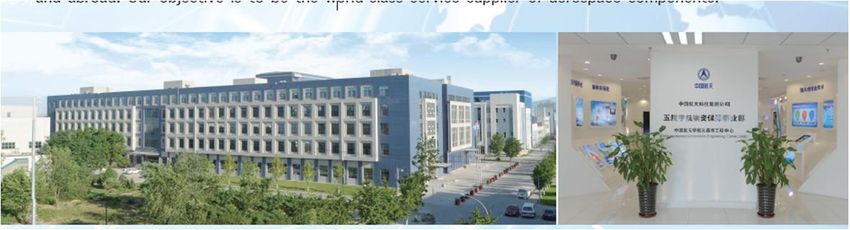
Contents
Introduction
New technology or parts
Anti-fuse parts based on MTM
65nm RH design platforms
100V Input DC/DCs
High voltage CMOS technology
CMOS visible light image sensor
Quality assurance
Summary & about CACEC
2
Strategy of CAST EEE Parts
Goal:
Achieve autonomous control of aerospace components
Support the independent development of aerospace
missions
Action:
Miniaturize equipments into parts such as SiP, SoC or
ASIC
Develop new type parts according to application
requirements of space equipments
Take sufficient verification and validation for new
developed parts to ensure the success of aerospace
missions
3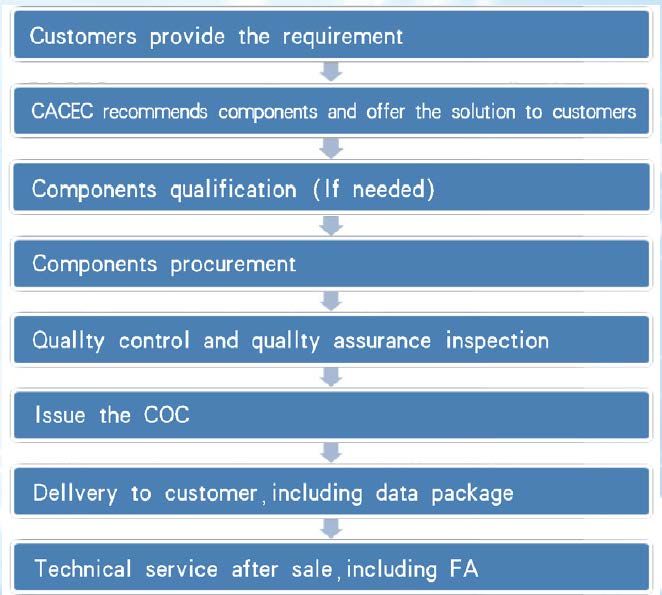
Research & Development Flow of New Parts
Goal: • Aerospace costumer, e.g. CAST, puts forward
Demand parts development needs.
A
proposal
• Management agency reviews the needs and
R&D program make approvals for feasible needs.
approval
• R&D company develops the parts according to
R&D costumer’s requirements.
implement
• The developed parts are examined and verified
Verification by the third party organization.
and validation • The costumers carry out the validation to judge
whether the parts are to meet the requirements .
• The qualified parts enter CAST’s PPL.
Selection and • The costumers select and apply the adaptable
application parts according to the PPL.
4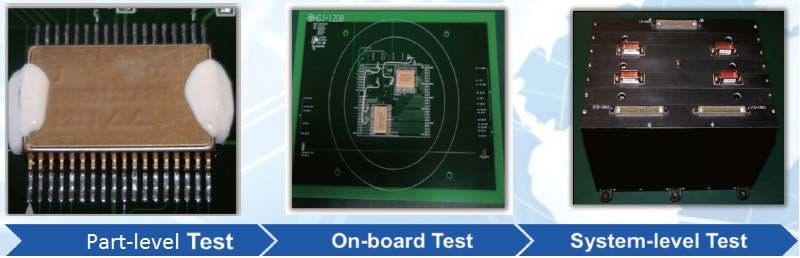
Contents
Introduction
New technology or parts
Anti-fuse parts based on MTM
65nm RH design platforms
100V Input DC/DCs
High voltage CMOS technology
CMOS visible light image sensor
Quality assurance
Summary & about CACEC
5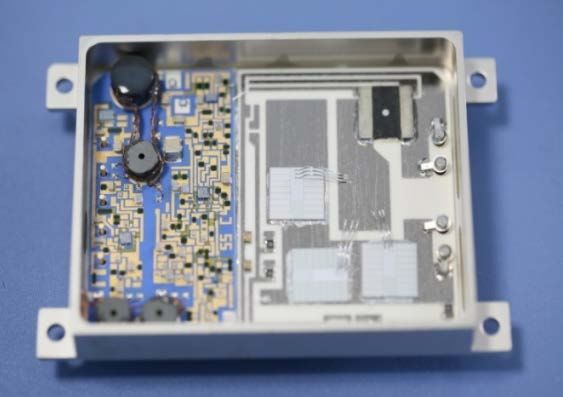
Anti-fuse parts based on MTM
BL
AF2
Amorphous Silicon
CE_OE_PE AF1
metal
Radiation harden
WL1 WL2
anti-fuse CMOS
The schematic of memory cell with a MTM anti-fuse structure plateform
1.0μm 0.6μm 0.28μm 0.18μm
LET (SEL) ≥ Cell TID ≥
75MeVcm2/mg 2000krad(Si)
The SEM images of the cross-sections of the MTM
anti-fuse structure before and after being programmed
6
Co60 r-ray test
Leakage current
IV characteristics
Breakdown voltage
Programming resistor
Leakage Current (A)
Programming characteristics
1E-14
1E-13
1E-12
1E-11
1E-10
1E-9
1E-8
1E-7
1E-6
1E-5
1E-4
1E-3
0.01
0.1
1
0
Reliability Test for MTM anti-fuse cell
2
Roff>200M Ω
Life expectancy is greater than 20 years
4
Voltage Bias on Top Electrode
Voltage Bias on Bottom Electrode
6
BV (V) Roff(Ω)
Ron
Voltage (V)
UCL
LCL
6.4
6.8
5.2
7.2
6
8
UCL
1e+10
1e+11
200
150
2e+10
LCL
0
2e+9
1e+8
1e+9
50
8
CG1Y0G.1
LOT ID
CG1Y0G.1
LOT ID
CG1Y0G.1
LOT ID
CG1Y0G.2
CG1Y0G.2 CG1Y0G.2
10
CG1Y0G.3
CG1Y0G.3
CG1Y0G.3
CG1Y0G.4
CG1Y0G.4
CG1Y0G.4
CG1Y0G.8 CG1Y0G.8
CG1Y0G.8
CH9X5U.13 CH9X5U.13
CH9X5U.13
CH9X5U.2 CH9X5U.2
CH9X5U.2
CJ1Y0F.1 CJ1Y0F.1
CJ1Y0F.1
CJ7V16.1 CJ7V16.1
CJ7V16.1
CK190S.1
CK190S.1
CK190S.1
CK1W0V.1
CK1W0V.1
Anti-fuse parts based on MTM
CK1W0V.1 CK5K0X.1
CK5K0X.1
CK5K0X.1 CK6X03.1
CK6X03.1
CK6X04.1
CK6X03.1
CK6X04.1
CK6X05.1
CK6X04.1 CK6X05.1
PH6VOR.1
CK6X05.1 PH6VOR.1
PHAE0U.1
PHAE0U.1 PHAE0U.1
PHAE0V.1
PHAE0V.1 PHAE0V.1
PHDU02.2
PHDU02.2 PHDU02.2
PJ5515.2
PJ5515.2
PJ5515.2
PK2E0N.1
PK2E0N.1
PK2E0N.1
7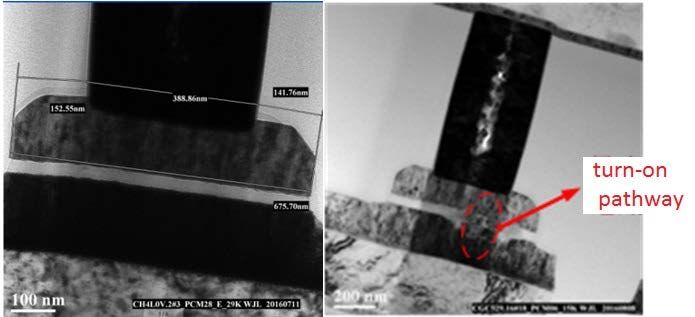
Anti-fuse parts based on MTM
Series PROM Part No.1 Part No.2 Part No.3
parts have Supply Voltage 5V±0.5V 3.3V±0.3V
Volume 64Kbit 256Kbit 256Kbit
entered CAST’s
Package CFP28/CDIP28
PPL.
Read rate ≤65ns ≤45ns ≤65ns
The anti-fuse Static current ≤1mA
30K gates FPGA ESD ≥2000V
based on MTM TID ≥100k rad(Si)
will be released in LET(SEL) ≥99.8MeV•cm2/mg
LET(SEU) ≥37MeV•cm2/mg
winter, 2019.
The 0.13um process
development is on going and it can
support 2M~4M gates FPGA.
8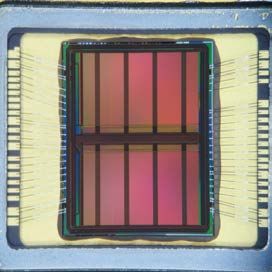
Radiation-Hardened 65nm Platforms
China has developed 0.5μm,
0.18μm and 65nm ASIC design
platforms, supporting RH ASIC
with a scale up to 50 Million
gates
3 mature platforms, including
65nm: 50Mgate, 0.18μm: 5Mgate
and 0.5μm: 500kgate, are
thoroughly verified by ground
Roadmap of RH ASIC
tests and flight experiences
Plentiful IP resources, complete sets of design kits and fluent
design flow make ASIC design easy, fast and reliable
The next-generation (28nm) platform is under development and to
be released in Winter, 2019
9Radiation-Hardened 65nm Platforms Library Main Features 11-track height 3 VTH (RVT/HVT/LVT) for all core cells Includes SEU hardness options (high/medium/low) Supports both wire bonding and flip-chip Hard Macros Process: 65nm 1P10M CMOS, Voltage: 1.2/3.3, FTYP(MHz): 300 SRAM: SP/DP, up to 160 kbit/module, access time < 3ns PLL: 100MHz-1.5GHz, jitterRMS 99 MeV/mg/cm2, SEU Rate: 2000V 10
Radiation-Hardened 65nm Platforms
SRAM IP (Fully hardened) Main Features
SRAM Type Address Depth Bit Width
Single/Dual Port 256 ~ 4096, increment 128 2 ~ 40
Size Access Time (ns) Power (uA/MHz) Area (um2)
256x2 1.70 5.15 7565.481
Single
2048x2 2.20 21.43 24857.78
Port
4096x40 2.70 97.70 541639.1
256x2 1.82 4.12 17637.1
Dual
2048x2 2.25 17.56 52900.16
Port
4096x40 2.81 78.16 854977.5
Volume/module: 512 bits to 160k bits
Access Time:Radiation-Hardened 65nm Platforms
Product Types
Product type Main Features Radiation Hardness
System Gates: More than 12M
TID>300 krad (Si)
ASIC Gates
SEL>99 MeV·cm2/mg
Or 72 SRAM modules, 1.26M bits in
SER300 krad (Si)
Capacity: 64M/39M/32M/19.5M
SEL≥99 MeV·cm2/mg
SRAM bits
SER500K Rad (Si)
Max Frequency: 300MHz
SEL>99 MeV·cm2/mg
CPU with SRAM, PLL and DDR2/3
SER300K Rad (Si)
Data rate: 400Mbps
SEL>99MeV·cm2/mg
Spacewire with PLL and LVDS interface
SERRadiation-Hardened 65nm Platforms
Description (LCDSP1601ARH:A RH Heterogeneous Multi-core Digital Signal Processor)
•65 nm CMOS Technology External System Clock 25MHz 1-02 1-03
•1 PowerPC Processor with ISA 2.05 LCDSP1601ARH QDRII+ SRAM CCGA1284
External System Reset >1ms Controller
–Out-of-order, superscalar with 4 launches
–32K Byte L1 P-Cache/32K Byte L1 D-Cache/256K Byte L2 Cache 1-00 0-00 0-01 0-02 0-03 JTAG
S_D_Mem S_D_Mem
•16 Autonomous Digital Signal Processors with Revealer-ISA, Each With DSU
UART3
Core0
32KB
S_I_Mem
Core1 Core2
32KB
S_I_Mem
Core3 JTAG Clock 10MHz
–Revealer-ISA: 32bit Instruction Set facing to digital signal processing UART2
CGU 32KB 32KB
–64K Byte D-Memory/64K Byte P-Memory UART1 0-10 0-11 0-12 0-13 1-13
S_D_Mem S_D_Mem
UART0
•Network on Chip(NoC) Interconnection and Communication Architecture 32KB RGU Core4
32KB
S_I_Mem
Core5 Core6
32KB
S_I_Mem
Core7
DDR2/DDR3
Controller
–4×4 2D Mesh NoC based on GALS Architecture Local
Memory
32KB 32KB
VDD 2.5V
–Fault Tolerant Routing, 102.4Gbps Communication Bandwidth per Direction ProgEn 0-20 0-21 0-22 0-23
PMU S_D_Mem S_D_Mem
•4 Channels of RapidIO 2.2 IGU
HPI Core8
32KB
S_I_Mem
Core9 CoreA
32KB
S_I_Mem
CoreB
VDD 1.2V
–2.5Gbps per Lane, 4 Lanes per Channel, supports 1x/4x mode Global Control
32KB 32KB VDD 1.5V
•2 DDR SDRAM Controllers 0-30
S_D_Mem
0-31 0-32
S_D_Mem
0-33 VDD 1.5/1.8V
–Supports DDR3-800, DDR2-400, DDR2-533, DDR2-667, DDR2-800 Memory CoreC
32KB
S_I_Mem
CoreD CoreE
32KB
S_I_Mem
CoreF AVDD 2.5V
Controller
•1 QDR SDRAM Controller 32KB 32KB
AVDD 1.2V
–Compliant with CYPRESS QDRII+SRAM Power PC 1-30 1-31 1-32 1-33
Rapid IO_0 Rapid IO_1 Rapid IO_2 Rapid IO_3
•Package: CCGA1284 4× 4× 4× 4×
Rapid IO Clock
125MHz×16
DDR2/DDR3
•Peak Power: 16W(80 percent of Peak Performance) Controller ×
1 1
× ×
1 1
×
1
×
1
× ×
1 1
×
1
×
1
× ×
1 1
×
1
×
1
× ×
1 1
×
Feature LCDSP1601ARH Block Diagram
•Parallel Access to computing and storage in Revealer-ISA Based on Hardware
pipeline driven by Instruction
–27.56us for 1024-point FFT with 1 DSP(Single Precision Floating Point Complex)
–3.65us for 1024-point FFT with 10 DSP(Single Precision Floating Point Complex)
–31.6ms for image matching with 16 DSP(512×512,128×128)
•Dynamic Reconfigurable ALU
–Supports Butterfly operation, Complex multiplication, Matrix operation, Vector
operation, etc
•Anti-irradiation Performance
–TID ≥150Krad(Si), LET ≥75MeV•cm2/mg, SEU ≤1E-5Error/device·day
• Peak Performance: 102.4GMACs@400MHz, 51.2GFLOPs@400MHz LCDSP1601ARH Chip
13Radiation-Hardened 65nm Platforms
Description (LSP0201RH:A Radiation-hardened Dual-core PowerPC Processor)
Processor Subsystem PowerPC 470 PowerPC 470 MII/
GMII/
32-Bit Embedded PowerPC 470 Superscalar Superscalar
Processor
Superscalar
Processor MPIC
32KB L1 I/D Cache with Parity Check Inst- Data- Inst- Data- PHY PHY
DMA
256KB L2 Cache with 64+8 ECC Cache Cache Cache Cache
Ethernet
Dual-Core SMP Architecture, 400MHz L2 Cache L2 Cache DCR
RapidIO PCIe
Fixed-Point Performance:2000 DMIPS
Floating-Point Performance:171.4 MFLOPS Snp M0 Snp M1
Memory Subsystem
Processor Local Bus (PLB)
DDR2/3, 4GB, with 32+8 ECC
EMIF(SRAM/PROM/IO), 4GB, with 32+8 ECC SPI Space
EMIF
On-Chip SRAM, 32KB, with 8+5 ECC DDR2/3
SRAM
GPIO UART
(TC/TM)
CAN 1553B
Wire
PHY
PROM
SRAM
LVDS
I/O
Peripheral & Communication Subsystem LSP0201RH block diagram
4-way SPI,4-way UART, 32-way GPIO, 2-way CAN, 4-way DMA
2-way 1553B with 1/4/10Mbps, 3-way SpaceWire with 200Mbps Reliability Parameter
4-lane RapidIO with 2.5Gbps/lane TID ≥ 100krad(Si)
2-lane PCIe with 5Gbps/lane LET ≥ 75MeV.cm2/mg
1-way Ethernet with 10/100/1000Mbps SEU ≤ 1E-5Error/device.day
Multi-Processor Interrupt Controller(MPIC) with 128 Sources Operating Temperature:-55℃~125℃
Hierarchy Interconnection with DCR and PLB ESD ≥ 2000V
Application Field Product Status
Spaceborne intensive task control 65nm CMOS technology
Real-time network communication and data processing Release time: 2019
14Radiation-Hardened 65nm Platforms
Design Service for RH ASICs
We and our partner BMTI are willing to transfer our latest technology for customers
to implement their radiation-hardened products, and can provide customers with
licensed radiation-hardened libraries, IPs and experienced design services
Service modes can be various with multiform
inputs and outputs, and customers can
choose any mode according to their situation
15Radiation-Hardened 65nm Platforms
Design Service for RH ASICs
Our ASIC service is not limited to design, but also includes services in wafer
fabrication interface, package design, packaging, testing and screening per
customers’ request
Several customers from Russia have shown their interests in our ASIC
techniques and a few of them have been working with us on IPs and design
service
16Radiation-Hardened 65nm Platforms
Design Service for RH ASICs Foundry Wafer
RTL Source Code
Customer Test Bench Code
(usually FPGA verified)
Modification
Prototype
Suggestion
Customer Packaging
&BMTI Code Check
Fail
Customer
Pass or BMTI
Prototype Fabrication
Synthesis ATE Testing
Customer
db+verilog
Phase
or BMTI
DFT
Customer Application
BMTI’s design kits are fully Verification
After wafer fabrication from out sources,
Design compatible
•
with
Physical Designstandard VLSI
Floor Plan
BMTI has the ability to do packaging,
Product
Phase design flow
•
•
CTSand main-stream EDA
P&R lef+anlef+lib+xrc testing and screening
Packaging and according to
tools •
•
Timing Analysis
SI Analysis
+cdb
China’s or customer-own
Testing standard
National Military
• Power Analysis Customer
or BMTI Standard
Customer Physical Product Detailed
and/or Cdl+gds+Drc+lvs+
Burn-in Screen
Verification Specfication
BMTI • DRC/LVS
dfm+esd
• DFM
• ESD
Customer's
Customer or Special Request
Inspection and
Post-layout
BMTI or
Identification
Verification Third Party
• Formality ccsm+verilog
• Function
• Timing
Flight Model
Product
Foundry Tape Out GDSII
17100V Input DC/DC
The aerospace anti-radiation DC/DC converter consists of two
series of 20-50V and 80-120V products, covering 28V, 42V and
100V input voltage bus, which can provide stable voltage and
power for the spacecraft's electronic circuits
No common mode turn-on
Single-end risk, easy to integrate
Topology
structure operating point does not
Magnet-isolated drift with the radiation
feedback
Controller, VDMOS,
RH Die operational amplifier
Anti-radiation
Die selection
design technology
Radiation test Bipolar test: 0.1rad/s
assessment MOS test : 50rad/s
Offset voltage, offset
Error feedback current, impedance
Compensation matching
optimization
design Reduce electronic Resonant reset and lossless
stress of absorption circuit
transistors
18100V Input DC/DC
Product Feature
Product Type 28V & 42V Series 100V Series
Input voltage 20~50V 80~120V
Typical input voltage 28V, 42V 100V
Output power 1.5W~65W 5W~65W
Typical frequency 500kHz 300kHz
3.3V、5V、12V、 15V、 ±5V、
Output voltage ±12V、±15V、 5V&±12V、
5V&±15V
Feedback Magnetic isolated
TID ≥100krad(Si)
LET ≥75MeV·cm2/mg
PWM controller, VDMOS,
Internal key die RH operational amplifier, are radiation
hardened
19SSPC (Solid State Power Controller)
The aerospace anti-radiation solid-state power controller
(SSPC) is an intelligent switching device that integrates the
conversion function of the relay and the circuit protection function
of the circuit breaker.
No contact, no electronic arc, no noise, fast
response, long life, low electromagnetic
interference
High reliability and easy remote control
Input voltage: 10 ~ 120V
Output current: 1A、3A、10A、15A
I2 t overcurrent protection with thermal
memory
TID ≥ 100krad(Si)
LET ≥ 65MeV·cm2/mg
20High Voltage CMOS Technology
Anti-radiation high-voltage integrated circuits developed by fully
dielectric isolation SOI technology have many advantages.
Small leakage Small parasitic
Eliminate Small isolation current & capacitance &
crosstalk area and high high temperature less parasitic
and SEL integration resistance effects
21High Voltage CMOS Technology
The part's gate and drain have a maximum operating voltage of
36V or higher
leakage current under 30V leakage is less than 10pA/μm@125°C
After 100 krad (Si) of total dose irradiation, the device functions
normally and there is no significant change in leakage current.
Anti-radiation harden structure fully dielectric isolation SOI process
22High Voltage CMOS Technology
12 part numbers have been developed and entered CAST PPL.
Typical products are as follows:
Over
TID SELMeV·c
Part No. Function Voltage Ron ton voltage
rad(Si) m2/mg
protect
JHSR18XX 16-ch ±15V ≤3kΩ ≤1us ±35V 100K 75
JHSR05XX Dual 8-ch ±15V ≤2kΩ ≤1us ±25V 100K 75
JHSR05XX 16-ch ±15V ≤2kΩ ≤1us ±25V 100K 75
JHSR5XX 8-ch ±15V ≤2kΩ ≤1us ±25V 100K 75
16-ch
JADR5XX with ±15V ≤450Ω ≤400ns / 100K 75
register
JHSR2XX 4-ch SPST ±15V ≤100Ω ≤130ns ±17V 100K 75
JHSR3XX 双路DPST ±15V ≤75Ω ≤500ns / 100K 75
23CMOS Visible Light Image Sensor
The LCIS64M has high quality optoelectronic properties,
reliability and radiation resistance for spacecraft applications.
Property: High quality:
8192×8192 active pixels on 5.67um pitch Dynamic range:>67dB
Frame rate 2.3frames/sec, 8 analog outputs Dark current:<30 pA/cm
2
High reliability: High radiation resistance
Quality Grade:C1 in GJB 5968-2007 TID:>50krad(Si)
2
ESDs:≥ 1000V SET: > 99.8 MeV·cm /mg
The LCIS7P5M is a Back Side The LCIS225M is a Back Side
Illuminated CMOS visible image sensor . Illuminated CMOS visible image sensor .
2560×3072 active pixels on 7.5um pitch 15000×15000 active pixels on 7.5um pitch
Frame rate 30frames/sec, global/rolling Frame rate 6frames/sec, global/rolling
21 pairs of LVDS digital outputs 126 pairs of LVDS digital outputs
Release time: 2019 Release time: 2019
24Contents
Introduction
New technology or parts
Anti-fuse parts based on MTM
65nm RH design platforms
100V Input DC/DCs
High voltage CMOS technology
CMOS visible light image sensor
Quality assurance
Summary & about CACEC
25Quality Assurance
Qualities of Monolithic ICs and Hybrid ICs
The screen terms are done 100% according to GJB597B for
monolithic ICs and GJB3438A for Hybrid ICs. The experiment
methods are made reference to GJB548B. The qualities of the
products are class S and B for monolithic ICs and class K and
H for Hybrid ICs, respectively.
Class S and B correspond to class V and Q of MIL-PRF-38535,
and Class K and H correspond to class K and H of MIL-PRF-
38534. And GJB548B is equivalent to MIL-STD-883.
Application Validation
26Quality Assurance
Application Validation
Part-level
Intrinsic Accelerated
function & Constructio Limited
n analysis life
performance stress test
assessment
• Completeness • Design • Limited tem- • 1000h
of function • Manufacture perature test • 2000h
• Test coverage process • Limited ele-
• Consistency of • Materials ctrical stress
parameters test
On-board & system level
Function & Adaptability to Comprehensive
Environmental Assembly evaluation and
performance adaptability development
typical
adaptability environment
of application application
• Electrical environment • Adaptability to • Evaluation on
• Basic of application • Assembly
functional process development aerospace
• Thermal environment availability
performance of application features software
• Analysis of
• Electrical • Mechanical • Assembly • Compiler application notes
characteristics environment of structural adaptability • Design of typical
application application
of application • Space radiation features
• Specific environment
functional • (SEU,SEL, TID)
performance • Combined space
environment
27Contents
Introduction
New technology or parts
Anti-fuse parts based on MTM
65nm RH design platforms
100V Input DC/DCs
High voltage CMOS technology
CMOS visible light image sensor
Quality assurance
Summary & about CACEC
28Summary
In order to achieve autonomous control of aerospace
components, we have developed a large number of
new parts for space missions.
According to our industry situation for space
components R&D, In addition to take the ordinary
quality assurance methods, we also conduct
application validations for new developed parts to
ensure the quality and reliability of space
components.
At present, we have already formed a certain ASIC
development capability to meet the needs of the
domestic space missions, and we can also provide
ASIC customized services for other aerospace
partners.
29About CACEC
China Aerospace Components Engineering Center (CACEC)
,founded in 1984, is affiliated with China Academy of Space
Technology (CAST). CACEC has created an integrated service
system on components engineering service and procurement
service for 30 years, including components selection, qualification,
application validation, procurement, quality assurance as well as
logistics & storage. So far, CACEC has offered services for more
than 130 spacecrafts both at home and abroad. Our objective is to
be the world-class service supplier of aerospace components.
30About CACEC
Main Products
CACEC offers a wide range of products with more than 1,200 types,
covering almost all categories of aerospace components. Most of
the high-reliable components have been applied in Chinese satellite
projects with successful flight experience, CACEC devotes to
improve quality assurance services on newly developed
components for space applications. Typical products: FPGA,
DC/DC, SoC, SiP, VDMOS, ASIC, DSP, Line Receiver/Driver,
Microprocessor, ADC&DAC, Memory, high power transistor.
31About CACEC
Components
procurement &
supply service
FLOW
32About CACEC
Components procurement & supply service
CACEC has both components engineering center and procurement
center together in space application area. Service mode: One-stop
shop solution
33Thank you for your
attention
34You can also read


