Refugee and Asylum Seekers Update - UNHCR
←
→
Page content transcription
If your browser does not render page correctly, please read the page content below

UKRAINE
                                                                            Thematic Updates | April 2018

Refugee and Asylum Seekers
Update

             Children playing during the celebration of the World Refugee Day in Kyiv. Joint workshops and entertainment
             for children from refugee families and host communities educate the youngest about tolerance and inclusion.
             Photo: UNHCR/Anton Fedorov

Overview
Ukraine is a destination and transit country for persons with international protection needs as well as economic
migrants seeking to enter the European Union (EU). The Ukrainian asylum system still requires improvement to
meet international standards. Since 2011, Ukraine has two forms of protection: refugee status and complementary
protection, though the recognition rate is low. Refugees and asylum seekers have little chance of becoming self-
sufficient. While some do manage to integrate, those facing particular protection risks and the socially vulnerable
have very limited prospects for sustainable integration in Ukraine. Racism and xenophobia, a generally poor
economic situation, legislative discrepancies and corruption all hinder the integration of refugees. Many asylum
seekers and refugees choose to move on to third countries in search of effective international protection and better
integration prospects.

Existing weaknesses in the national asylum system are exacerbated by the ongoing conflict in eastern Ukraine and
resulting internal displacement. The conflict and the economic situation have placed further pressure on
government services, including high inflation and increased living costs. The majority of refugees in Ukraine have
no prospects for safe and dignified voluntary repatriation; UNHCR continues to advise against their return.
Resettlement to third countries is used as a protection tool for a small number of the most vulnerable refugees,
facing serious risks that cannot be addressed effectively in Ukraine.

www.unhcr.org                                                                                                              1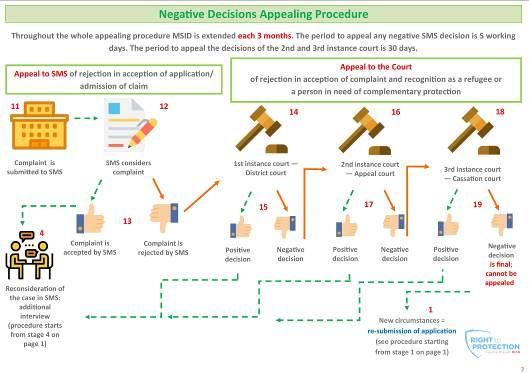
REFUGEES AND ASYLUM SEEKERS UPDATE > Ukraine / APRIL 2018

Refugee Population of Ukraine (as of 1 January 2018)

    Refugees and persons             Countries of origin                                  Host regions
          granted
  complementary protection                                                        16%
                               Afghanistan                     1410                                  Kyiv
             1830                     Syria            483                  4%                       Odesa
               men                                                                       40%
                                  Armenia            192                    5%                       Kharkiv
   3,257       767              Azerbaijan           149                           35%               Zakarpattya
  persons   women                  Russian…          150                                             Other
               660                 Somalia           132
            children                 Other               741

Asylum seekers in Ukraine

                                             New asylum seekers in 2017 : main countries of origin

                                      Afghanistan                                                          17%

                                Russian Federation                                          13%
   UNHCR estimate - 5,500
        persons                        Bangladesh                                 10%

                                             Syria                         8%

                                              Iraq               5%

Trends
Despite the large influx of refugees and migrants through the Mediterranean and                             Arrivals from 2012 to 2017
Balkans routes, there has been no evidence during 2016 and 2017 of a                                     1,860
                                                                                                               1,3101,1731,443
significant increase in the number of new arrivals in Ukraine. Moreover, after
four years of stable numbers of new arrivals, 2016 and 2017 saw the number of                                                  656 774

new asylum seekers fall by more than half, from 1,433 new applicants in 2015 to
656 new applicants in 2016, and 774 in 2017.                                                             2012 2013 2014 2015 2016 2017

Syrians
As of 1 January 2018, 452 Syrians were granted protection, including 53 with refugee                              New applications
status and 399 with complementary protection. There are around 600 Syrian asylum                                 267
seekers in Ukraine. The majority of Syrians who applied for asylum in Ukraine before
2016 were applicants sur place (such as former students), whereas the number of                                        136
applications for asylum from newly arrived Syrian nationals is decreasing and can be                                         72   65
attributed to stricter border controls. Only 72 Syrians applied for asylum in 2016 and
65 in 2017. The majority of Syrian nationals currently residing in Ukraine have never                            2014 2015 2016 2017
applied for asylum. They regularized their stay in the country through other legal
means (e.g. residence permit). The State Migration Service (SMS) continues to reject asylum claims of Syrians.
Through training and during meetings with migration officials, UNHCR pursues its advocacy work to convince the
Government that the above considerations cannot be grounds for rejection. Deportation to Syria is not enforced,
but many Syrians have to stay in Ukraine illegally following rejections of their asylum application.

www.unhcr.org                                                                                                                            2
REFUGEES AND ASYLUM SEEKERS UPDATE > Ukraine / APRIL 2018

Key concerns and UNHCR’s response
In 2002, Ukraine acceded to the 1951 Convention Relating to the Status of Refugees and the 1967 Protocol and
has since developed a relevant national legislative framework, starting with the Law “On Refugees and Persons in
Need of Complementary or Temporary Protection in Ukraine”, of 8 July 2011 (the Refugee Law).

■   UNHCR documented one case of indirect refoulement in July 2017 concerning a Russian Federation citizen
    who had applied for asylum in Ukraine and had been accepted into the procedure. Despite Ukrainian
    authorities being obliged to protect the person from removal pending a final decision on his asylum application
    in Ukraine, including possible appeals (see annex for details of the application and appeals process), he was
    forcibly returned to the border with Belarus from where he was later on arrested and allegedly returned to the
    Russian Federation.

■   Access to the territory remains a concern for UNHCR. Though national legislation envisages the right and
    procedures to apply for asylum at the border, in practice border control is very restrictive. The situation is
    particularly worrying in transit zones at international airports and ports, where access is granted at the
    discretion of the State Border Guard Service (SBGS). UNHCR advocates for unimpeded access for itself and
    its partners, as well as Free Legal Aid Centre (FLAC) lawyers, to independently monitor access to asylum
    procedures, and to provide legal assistance to asylum seekers in these zones. In the meantime, UNHCR
    continues to conduct ad hoc protection interventions at entry border crossing points directly and through its
    NGO partners. Through these interventions, 13 asylum seekers were granted access to the territory and the
    asylum procedure in 2016, and only six persons in 2017. Despite UNHCR’s interventions, more than 40
    persons who informed UNHCR of their intention to apply for asylum in 2017 were not admitted to the territory.

Free Legal Aid Centres (FLAC)
As of 1 July 2015, government-run free legal aid centres have become operational and available to asylum
seekers in the RSD process. However, free legal aid advocates still lack specialized skills required to assist
asylum seekers and refugees. Supporting FLAC with the aim to progressively developing their capacity in the
area of asylum is one of the UNHCR Ukraine strategic priorities. Directly and through its partners, UNHCR
provides expert support to the free legal aid system in regions where most asylum applications are received. In
the meantime, UNHCR continues to provide free legal assistance to eligible PoCs through its partners enabling
asylum seekers to pursue asylum claims, and providing recognized refugees access to their rights.

■ The Government refugee status determination (RSD) procedure has improved thanks to UNHCR’s capacity
    development activities spanning many years and the current Government’s clear tendency to align with EU
    standards. However, the recognition rate dropped in 2016 to 14 per cent, compared to 22 per cent in 2015, and
    37 per cent in 2014. In 2017, it increased again to 29 per cent, though with a higher number of rejections in
    admissibility. Positive trends were observed in judicial reviews in 2014-2017, with courts giving a significant
    number of decisions in favour of asylum seekers. Since 2015, UNHCR partners have been allowed to monitor
    the work of asylum authorities in Kyiv and Odesa. At the same time, only 71 persons received protection in
    2016 (22 granted refugee status and 49 complementary protection), and 95 in 2017 (21 granted refugee status
    and 74 granted complementary protection) showing the continued need to closely monitor the government RSD
    process.

    Remaining weaknesses in RSD procedures include:
    ■   No effective interpretation
    ■   Unreasonably short appeal times

www.unhcr.org                                                                                                       3
REFUGEES AND ASYLUM SEEKERS UPDATE > Ukraine / APRIL 2018
■ Rejected asylum seekers are not informed of the reason for rejection
■ High turnover rate among government caseworkers
■ Requirement to confirm residency registration
■ Refugees and asylum seekers mention incidents of corruption
■ Reception conditions provided by the Government offer a limited number of spaces for newly arrived asylum
seekers in Odesa and Zakarpattya regions. A recently opened Temporary Accommodation Center (TAC) in Kyiv
region is not fully operational due to objections from the local community. In total, only 350 places are available
in TACs in Ukraine, a significant number requiring renovation. TAC settlement procedures are lengthy and
bureaucratic.
■ Ongoing state medical reform is negatively affecting asylum seekers. While free of charge healthcare in
Ukraine is scarce for Ukrainian citizens and recognised refugees who are entitled to it, ongoing medical reforms
exclude asylum seekers from any free medical services, including urgent medical assistance and initial medical
examinations, raising serious concerns. UNHCR and its partners are advocating the Ministry of Healthcare to
revise the changes to healthcare legislation depriving asylum seekers from free basic medical assistance.
Detention of migrants and asylum seekers in Ukraine
According to Ukrainian law, a person who is in the country without a legal basis for stay is guilty of an
administrative violation. Similarly, an individual who crosses or attempts to cross a state border irregularly is guilty
of an administrative violation. In practice, this usually occurs when persons attempt to enter EU countries outside
designated state border crossing points and detained without passports and/or the required visas. Persons
committing such violations are subject to forced return or expulsion from Ukraine if they cannot prove a legal basis
for stay in Ukraine. Pending their forcible expulsion, they may be detained at a Migrant Custody Centre (MCC).
There are currently two functional MCCs in Ukraine, in the Chernihiv and Volyn regions. A third MCC in Mykolaiv
region is planned to open during the second quarter of 2018.
The October 2017 amendments to the Code of Ukraine for Administrative Justice increased the maximum
detention period from 18 to 24 months, and periodic court review to be conducted only every 6 months (previously
every 3 months).
In 2017, 67 asylum applications were submitted from the two operational MCCs, though not a single detained
person was recognised as a refugee or as a person in need of complementary protection. However, during the
year, 148 persons were released from MCCs by court decisions, which overturned forcible expulsion decisions
(including five Syrians and four Somalis).
During 2017, SMS provided UNHCR and its partners with access to persons of concern at MCCs for monitoring
purposes, as well as for the provision of legal assistance. However, from January 2018, SMS decided to restrict
access to UNHCR partners without valid reasons and with no information on the duration of the restriction.
The Department on Foreigners and Stateless Persons of the State Migration Service is the main counterpart
of UNHCR in Ukraine. SMS was established in 2010 as a government institution coordinated by the Minister of
Interior. Through SMS, the Minister implements the state migration policy on combating illegal migration,
citizenship, registration of refugees and other categories of migrants. The SMS is responsible for implementation
of the Refugee Law. SMS’s Headquarters in Kyiv coordinates the work of 12 regional branches that conduct first
instance RSD. Decisions to grant protection are made at the central level. The central SMS and courts conduct
appeals.
www.unhcr.org 4REFUGEES AND ASYLUM SEEKERS UPDATE > Ukraine / APRIL 2018
Quality Initiative project in Eastern Europe and the South Caucasus (QIEE)
UNHCR works with the Government of Ukraine to improve asylum procedures, including through the EU-funded
Asylum Systems Quality Initiative project in Eastern Europe and the South Caucasus. The first phase of this
project ended in mid-2015 and Phase II of the Quality Initiative project 2015-2017, focused on capacity
development of asylum authorities as well as courts and the SBGS. Since the beginning of 2018 the activities
under the QIEE will continue without any specific timeframes. QIEE project covers six countries (Armenia,
Azerbaijan, Belarus, Georgia, Moldova, and Ukraine) and is coordinated by the UNHCR Regional Protection
Support Unit in Tbilisi.
UNHCR’s strategy
UNHCR adopted a multi-year, multi-partner protection and solutions strategy setting out UNHCR’s engagement
plans for Ukraine for a period of five years, during 2018-2022. The strategy aims to achieve protection and durable
solutions for IDPs, refugees, and stateless persons throughout the country. Detailed programmatic priorities are
based on the following components:
■ Continuous monitoring of the situation and the provision of legal assistance to ensure that persons of concern
(PoC) are adequately protected;
■ Provision for the basic needs of the most vulnerable refugees and asylum-seekers, with a particular focus on
women at risk, unaccompanied and separated children, persons with disabilities and persons with specific
protection needs (including LGBTI persons), using cash-based interventions where possible;
■ Capacity building and advocacy activities with Government entities, national and local authorities, for an
improved national asylum system aligned with international standards, as well as the strengthening of the
capacity of national NGOs to advocate for, protect and assist refugees;
■ A focus on integration, employing a community-based approach and addressing the specific needs of refugee
women.
Durable solutions
UNHCR strives to achieve three durable solutions:
Voluntary repatriation is facilitated on a case-by-case basis where applicants are eligible, there are no
concerns about voluntariness, and return can take place in safety and dignity.
Local integration of refugees and those granted complementary protection is supported by Ukraine’s Refugee
Law, giving refugees the same rights and obligations as Ukrainian nationals, including the right to employment,
education and social assistance. While UNHCR has a number of success stories thanks to individual support
to refugees (e.g. allocation of small business grants), there are various obstacles to local integration: the
Strategy on the Integration of Refugees until 2020 is not being implemented; there is a lack of political will
among state agencies, besides SMS, to be actively involved in local integration efforts and provision of
assistance to refugees; insufficient funds are allocated to integration initiatives, and there is a general lack of
awareness on refugee issues.
Other obstacles and challenges to local integration include:
■ No social benefits for asylum seekers
■ Newly recognized refugees receive a one-time grant of less than USD 1
■ No social housing
■ No language courses
■ In practice, formal employment is not available to asylum seekers
■ No social inclusion
www.unhcr.org 5REFUGEES AND ASYLUM SEEKERS UPDATE > Ukraine / APRIL 2018
■ Increasing xenophobia and prevalent discrimination
■ No right to naturalization for persons granted complementary protection
Resettlement by granting UNHCR Mandate refugee status for identified cases facing serious risks that cannot
be addressed effectively in Ukraine. However, Mandate refugee status is not recognized by the authorities and
therefore does not confer any legal rights in Ukraine. UNHCR submitted 32 cases (58 persons) for
resettlement in 2015, 21 cases (31 persons) during 2016, and 25 cases (43 persons) in 2017. 27 refugees
departed to resettlement countries in 2015, 49 in 2016, and 33 in 2017.
Working in partnership
UNHCR works in coordination with the Government, international organizations, local and international NGOs.
UNHCR’s main Government partners are the State Migration Service; State Border Guard Service; Higher
Administrative Court; Ombudsperson of the Ukrainian Parliament (Verkhovna Rada); and the Ministry of Social
Policy.
UNHCR provides financial support to five NGO partners assisting refugees and asylum seekers, including
protection and legal aid, and conduct advocacy and capacity building activities. These partners are: Kyiv: Right to
Protection (R2P), Rokada Lviv, Lutsk, Chernihiv and Kharkiv: Right to Protection Odesa: Desyate Kvitnya,
Zakarpattya: International Fund for Health Well Being and Environment Conservation (NEEKA)
CONTACTS
E-mail: ukrki@unhcr.org, Tel: +38 044 288-9710
LINKS
UNHCR Ukraine:www.unhcr.org.ua/en - Twitter:www.twitter.com/UNHCRUkraine
Facebook:www.facebook.com/UNHCRKyiv - Flickr:www.flickr.com/photos/unhcr_ukraine
www.unhcr.org 6REFUGEES AND ASYLUM SEEKERS UPDATE > Ukraine / APRIL 2018 Annex www.unhcr.org 7
You can also read


