KEY STRATEGIC OBJECTIVES - UNHCR Global Focus
←
→
Page content transcription
If your browser does not render page correctly, please read the page content below
REGIONAL SUMMARIES | A S I A A N D T H E PAC I F I C                                                                                    REGIONAL SUMMARIES | A S I A A N D T H E PAC I F I C

                                                             “In 2020, UNHCR will focus on the search for solutions in the Asia
                                                             and the Pacific region. Too many refugees, IDPs and stateless persons in
                                                             and from the region have been facing precarious situations for too long,
                                                             generously hosted by countries and communities who have received
                                                             too little support. The Global Compact on Refugees and the Global
                                                             Refugee Forum give us a unique opportunity to turn the tide. It is time
                                                             to broaden responsibility for protecting the displaced and stateless
                                                             in the region and express solidarity through practical measures that
                                                             concretely improve their lives.”
                                                             Indrika Ratwatte
                                                             Director, Regional Bureau for Asia and the Pacific

                                                             KEY STRATEGIC OBJECTIVES

                                                             Ensuring inclusive protection                        In the Islamic Republics of Iran and
                                                             and assistance                                       Pakistan, the Office will play a catalytic role
                                                                                                                  in channelling additional investments into
                                                             In 2020-2021, UNHCR will protect,
                                                                                                                  national public service delivery systems
                                                             empower and build the resilience and
                                                                                                                  to support the inclusive policies of the
                                                             self-reliance of people of concern in the
                                                                                                                  host governments benefitting both host
                                                             Asia and the Pacific region, with continuing
                                                                                                                  communities and refugees, pending their
                                                             focus on refugees from Afghanistan
                                                                                                                  return to Afghanistan.
                                                             and Myanmar and support for the main

Asia and
                                                             countries that host them, namely the                 In a region with 2.4 million IDPs, and in              The new Policy
                                                             Islamic Republics of Pakistan and Iran,                                                                     on “UNHCR’s
                                                                                                                  line with UNHCR’s new IDP Policy, UNHCR                Engagement
                                                             as well as Bangladesh. In addition to                will take a more decisive and predictable              in Situations
                                                             the protection priorities in those major                                                                    of Internal
                                                                                                                  approach when responding to situations

the Pacific
                                                                                                                                                                         Displacement”
                                                             operations, UNHCR will undertake a wide              of internal displacement, notably in
                                                             range of protection activities for people            Afghanistan, Myanmar and the Philippines.
                                                             of concern across the region. To ensure              It will better protect and assist IDPs and
                                                             access to asylum, UNHCR will conduct
                                                                                                                  will support governments to develop and
                                                             refugee status determination in countries
                                                                                                                  implement legal and policy frameworks                   POLICY ON UNHCR’S

                                                                                                                                                                                                     © UNHCR/Anna Hellge
                                                                                                                                                                          ENGAGEMENT IN SITUATIONS

                                                             without national asylum procedures such                                                                      OF INTERNAL DISPLACEMENT
                                                                                                                                                                          UNHCR/HCP/2019/1

                                                                                                                  for preventing, responding and resolving
                                                             as in India, Indonesia, Malaysia, and
                                                                                                                  internal displacement.
                                                             Thailand, and advocate for the adoption
                                                             of national refugee legislation while
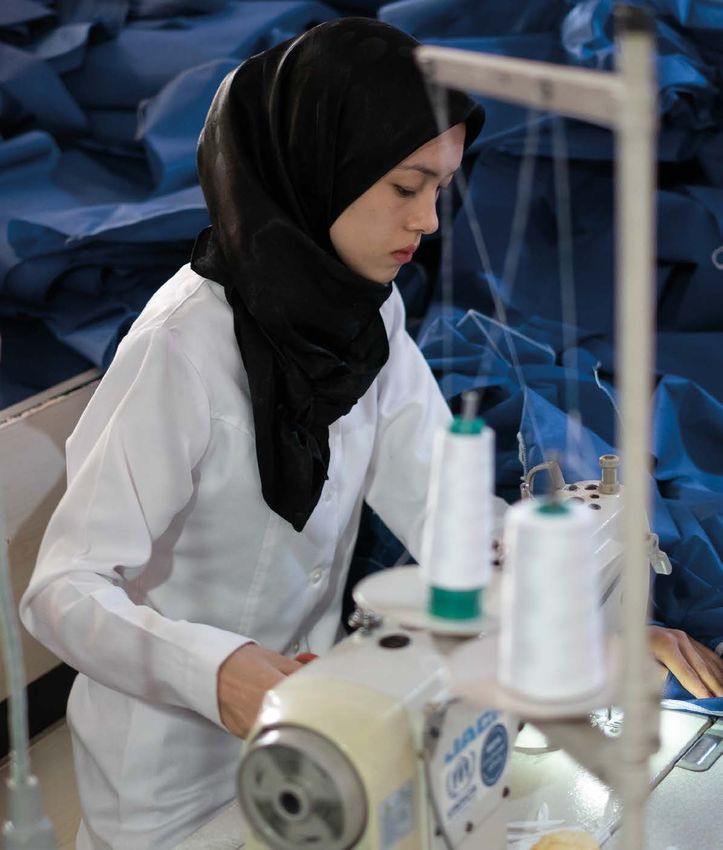
Khadijeh Rahimi, a nineteen-year-old Afghan refugee, works                                                        Promoting innovative solutions in
at a tailoring workshop supported by UNHCR and managed       supporting the responsible institutional
by Zeynab Shaban, a refugee as well, in Shiraz,                                                                   protracted and emergency situations
in the Islamic Republic of Iran.                             structures. In Central Asia, UNHCR will
© UNHCR/Morteza Nikoubazl
                                                             support States, such as Kyrgyzstan, to               UNHCR will support multi-stakeholder
                                                             strengthen national asylum systems.                  efforts to address the root causes of

84 UNHCR GLOBAL APPEAL 2020-2021                                                                                                                     UNHCR GLOBAL APPEAL 2020-2021 85
REGIONAL SUMMARIES | A S I A A N D T H E PAC I F I C REGIONAL SUMMARIES | A S I A A N D T H E PAC I F I C
displacement in countries of origin, improve In Bangladesh, UNHCR will build on the and reinforce social inclusion by improving organisations. Together, they will
conditions for return and facilitate voluntary comprehensive biometric registration of all access to public services and cohesion with forge operational synergies, enhance
and informed repatriation and sustainable refugees from Myanmar—conducted jointly host communities. humanitarian-development cooperation,
reintegration, where appropriate. with the Government of Bangladesh in and drive resource mobilization in the
In South-West Asia, UNHCR will plan for the 2019—to better target and more efficiently Reducing and preventing spirit of the Global Compact on Refugees,
return of approximately 60,000 Afghan deliver assistance. Data-driven analysis statelessness and protecting through a “whole-of-society” approach.
refugees from the Islamic Republics of Iran of the refugee population in Bangladesh stateless persons
In Bangladesh, for instance, UNHCR
and Pakistan, and will leverage humanitarian will allow for more informed consultations
With an estimated 1.7 million stateless will strengthen its partnership with the
and development partnerships in support of with refugees about their intentions and
persons in the region, and many others at World Bank and Asian Development
communities across Afghanistan that have the conditions in their places of origin.
risk, addressing statelessness is a priority. Bank, focusing their contributions to the
the potential to receive returning refugees In Myanmar, UNHCR will continue working
The Office will strengthen its engagement development of Cox’s Bazar District.
and IDPs. with UNDP and the Government to
with States and other partners, building This is where the vast majority of refugees
implement quick impact-projects that
In line with the “Solutions strategy for on recent breakthroughs in the region from Myanmar are hosted, and where
improve conditions for communities in
Afghan refugees to support voluntary and pursuing the goals of the #IBelong both they, and host communities, face
Rakhine State.
repatriation, sustainable reintegration and Campaign to End Statelessness by 2024. shared challenges such as environmental
assistance to host countries” (SSAR) and UNHCR will pursue solutions for refugees by To prevent and reduce statelessness, degradation, water scarcity and
the Global Compact on Refugees, UNHCR advocating increased resettlement as well UNHCR and relevant States will seek to competition for livelihoods.
aims to link its short- to medium-term as complementary pathways for admission help an estimated 24,900 people confirm
UNHCR will engage in approaches to
community-based protection projects to to third countries. In 2020, UNHCR will their nationality in 2020. In South-East Asia,
better protect, assist and find solutions for
longer-term development programmes in pursue the voluntary repatriation of some UNHCR will work with States to build on
people of concern. In Myanmar, UNHCR
20 priority areas for return and reintegration. 4,000 Sri Lankan refugees from India. progress made in addressing statelessness.
will advocate establishing a coordinated,
These projects include providing cash The Government of Japan is doubling its
In Central Asia, the Government of multi-partner approach to improving
assistance and in-kind support to vulnerable resettlement quota in 2020, and expanding
Kyrgyzstan announced in 2019 the conditions in Rakhine State and building
families, improving access to adequate its selection criteria to all refugees within
complete elimination of all known cases confidence among refugees.
shelter, expanding education and skills Asia. In Nepal, UNHCR will prioritize
of statelessness in the country—almost
training, providing entrepreneurial enabling solutions and building the For the Afghan refugee situation, UNHCR
14,000 individuals. UNHCR will support
support, implementing quick-impact self-reliance of the 6,500 Bhutanese will work with multiple partners to find
improvements to the country’s draft
livelihood initiatives and developing public refugees who remain. UNHCR’s engagement solutions for refugees and ensure their
statelessness determination procedure and
infrastructure such as schools, healthcare will strengthen livelihood opportunities, return is sustainable, in line with the SSAR,
continue to promote registration of all births
facilities, community centres and roads. enhance community-based protection building upon the Comprehensive Refugee
and documentation of all citizens. Building
Response Framework in Afghanistan and
upon these successes, UNHCR will reinforce
the Global Refugee Forum commitments.
its strong collaboration with governments
© UNHCR/Jim Huylebroek
In Afghanistan, an innovative in Kazakhstan, Tajikistan, Turkmenistan and Promoting a people-centered approach,
partnership informing Uzbekistan to resolve statelessness. UNHCR will seek to ensure that host
UNHCR’s response communities are included in area-based
In the Afghan context, Diversifying partnerships to promote approaches, strengthening co-existence
understanding the protection and livelihood an inclusive, multi-stakeholder with people of concern. It will also
needs of people of concern and the general
population, as well as their perceptions of
approach pro-actively engage refugees and
migration and potential flight, necessitated an returnees to empower them and encourage
UNHCR will focus on building and
innovative approach. UNHCR Afghanistan their participation in decision-making
launched a mobile phone survey project for strengthening partnerships that assist,
processes.
returnees, IDPs and the population generally, protect and enable solutions for people
to provide pivotal data to inform its response. This enabled quick, large-scale surveys and data of concern, including with development
analysis in real time across challenging geographies. A collaboration with Orange Door Research
actors, international financial institutions,
also saw the opening of a call centre in Kabul.
civil society, academia and regional
86 UNHCR GLOBAL APPEAL 2020-2021 UNHCR GLOBAL APPEAL 2020-2021 87REGIONAL SUMMARIES | A S I A A N D T H E PAC I F I C REGIONAL SUMMARIES | A S I A A N D T H E PAC I F I C
MAJOR SITUATIONS IN ASIA AND THE PACIFIC IN 2020 With approximately 9.1 million people of concern to UNHCR in the Asia and the Pacific region, in 2020,
UNHCR will respond to a broad set of multifaceted situations of displacement and statelessness.
The Global Compact on Refugees will catalyse positive regional developments, helping guide the
management of complex situations and the achievement of solutions.
AFGHANISTAN
Afghans will be the largest refugee population of concern to UNHCR in the region in 2020, 40 years
since their displacement began. The international community’s recent commitment to greater and more
equitable burden and responsibility-sharing, enshrined in the Global Compact, is important to redoubling
collective efforts to enable solutions for Afghan refugee returnees while standing in solidarity with the
principal host countries. With the SSAR the overarching policy and operational framework for
strengthening support for host countries while creating the conditions for sustainable return and
reintegration, UNHCR will support the launch of a dedicated SSAR Support Platform for the Afghanistan
1.4 million situation.
REFUGEES IN PAKISTAN
In the Islamic Republic of Iran, UNHCR will support the Government’s inclusive policies, notably in the
1 million areas of education and healthcare. It will also support greater opportunities for self-reliance and portable
REFUGEES IN THE
ISLAMIC REPUBLIC OF IRAN skills, and enhanced access to social safety nets for vulnerable refugees, all while seeking durable
60,000 solutions. In Pakistan, UNHCR will support the Government implement its Comprehensive Policy on
RETURNEES Voluntary Repatriation and Management of Afghan nationals. It will also promote support for refugees and
ISLAMIC
host communities through the Refugee Affected and Hosting Areas programme, focusing on enhancing
2 million access to and quality of national education, healthcare, skills training and self-reliance initiatives. In both
REPUBLIC
OF IRAN AFGHANISTAN
INTERNALLY DISPLACED
countries, UNHCR will facilitate voluntary repatriation as the preferred (regional) durable solution for PAKISTAN
Afghan refugees, while continuing efforts to promote and facilitate complementary pathways and
increase resettlement quotas from the Islamic Republic of Iran. BANGLADESH MYANMAR
Inside Afghanistan, an estimated 2 million people will remain internally displaced. UNHCR will promote L2
comprehensive solutions benefitting both returning refugees and local communities by strengthening
community-based protection initiatives. These will provide access to education, skills training and
livelihood opportunities and healthcare, while building community infrastructure and services to support
sustainable reintegration.
MYANMAR
UNHCR will work with the Government of Bangladesh and partners in Cox’s Bazar to meet the needs of some
900,000 Rohingya refugees seeking sustainable solutions. The conclusion of the joint registration of
refugees with the Government by 2020 will enable more targeted assistance. Priorities include engaging
Kachin State
refugees in child protection, prevention of sexual and gender-based violence through community-based
education, legal aid and mental health support; providing the most vulnerable families with transitional
shelters/material and core relief times; and maintaining a critical health and nutrition response.
900,000 In Myanmar, UNHCR will advocate for improved conditions in northern Rakhine State and for refugees to
ROHINGYA REFUGEES make voluntary and informed decisions on their sustainable return. In central Rakhine State, where there are
in Cox’s Bazar, Bangladesh
an estimated 128,000 IDPs, UNHCR will advocate that the Government’s plan for the closure of the IDP Shan State
BANGLADESH (North)
80% camps is implemented in line with international human rights standards.
WOMEN &
CHILDREN Cox's Bazar MYANMAR
128,000
INTERNALLY DISPLACED AGE AND GENDER BREAKDOWN Rakhine State
in central Rakhine State
REFUGEES AND ASYLUM-SEEKERS | January 2019
9.1 million
25%
2020 PLANNING FIGURES FOR PEOPLE OF CONCERN IN
ASIA AND THE PACIFIC
50%
REFUGEES 4.1 million Situation L2 Level of emergency
ASYLUM-SEEKERS 183,000
CRRF country Refugee camp
RETURNEES (REFUGEES AND IDPs) 608,000
15%
IDPs 2.4 million 60+ IDP initiative IDP camp
STATELESS PERSONS 1.7 million 18-59 Rohingya refugee
OTHERS OF CONCERN 161,000
12-17 UNDER 18 outflow
5%
5-11
0-4 48%
88 UNHCR GLOBAL APPEAL 2020-2021 UNHCR GLOBAL APPEAL 2020-2021 89REGIONAL SUMMARIES | A S I A A N D T H E PAC I F I C REGIONAL SUMMARIES | A S I A A N D T H E PAC I F I C
B U DG E TS F O R A S I A A N D TH E PAC I FI C | US D
IMPLICATIONS OF Vulnerable refugee women of reproductive age
UNDERFUNDING would be denied sanitary items. Within Afghanistan, PILLAR 1 PILLAR 2 PILLAR 3 PILLAR 4
the lack of funding would limit, for example, the 2019 2020 2021
In the past few years, a shortfall in funding has provision of adequate shelter and schools, as well OPERATION Current budget Refugee Stateless Reintegration IDP
TOTAL Proposed budget
(as of 30 June 2019) programmes programmes projects projects
limited UNHCR’s ability to respond to the needs of as community access to potable water for returning
populations of concern in the region and deliver key refugees and IDPs. ASIA AND THE PACIFIC
activities, including protection interventions and core Regional Bureau for Asia and 3,860,000 10,014,160 10,014,160 10,358,563
relief items. In Bangladesh, each year the monsoon season the Pacific1
requires significant resources to ensure a speedy and Regional activities for Asia 1,412,004 1,975,000 1,975,000 2,850,000
and the Pacific1
In Malaysia, underfunding means that the needs of efficient lifesaving response—particularly for shelter, SUBTOTAL 5,272,004 11,989,160 - - - 11,989,160 13,208,563
vulnerable groups, in particular women and children, infrastructure and public health. Without adequate
cannot be adequately addressed. Opportunities funds, UNHCR’s resources will only meet critical CENTRAL ASIA
to promote and secure durable solutions through Kazakhstan Multi-Country 5,528,849 2,260,530 910,765 - - 3,171,295 2,859,492
gaps and longer-lasting impacts will be minimal for
voluntary return, local integration or resettlement to a Office2
refugees and host communities. Kyrgyzstan 813,836 608,450 104,300 - - 712,750 700,000
third country will not be possible.
Tajikistan 2,333,462 1,191,247 828,753 - - 2,020,000 2,020,702
In the Philippines, limited resources could limit
Despite the enormous scale of the challenges SUBTOTAL 8,676,147 4,060,227 1,843,818 - - 5,904,045 5,580,194
the identification and solutions efforts for people
and complexities in Afghanistan, it remains one of
at risk of statelessness in Mindanao. Planned EAST ASIA AND THE PACIFIC
UNHCR’s most underfunded situations worldwide. In
solutions interventions will be restricted to the target Australia Multi-Country 3,154,621 3,276,343 109,134 - - 3,385,477 3,466,511
the two main hosting countries, underfunding strains Office3
population in Zamboanga.
host communities, puts protection space at risk, China 5,102,589 4,290,027 150,000 - - 4,440,027 3,900,000
and impacts access to education and basic health In Sri Lanka, limited resources and a growing number Japan 3,539,131 3,392,628 59,802 - - 3,452,430 3,477,108
Republic of Korea 2,072,827 1,944,507 99,840 - - 2,044,347 2,902,610
services. In the Islamic Republic of Iran, specifically, of refugees may restrict refugee assistance, due to
SUBTOTAL 13,869,168 12,903,505 418,776 - - 13,322,280 13,746,228
underfunding would mean UNHCR could not provide limited resettlement submissions and departures in
support and essential drugs to several health posts. 2019 and 2020. SOUTH ASIA
India 16,168,231 13,490,296 159,249 - - 13,649,545 9,531,841
Nepal 5,500,000 5,061,358 438,642 - - 5,500,000 2,575,164
Sri Lanka 4,102,765 3,702,874 78,535 - - 3,781,409 3,781,408
Regional Bureau | 1% Regional activities * SUBTOTAL 25,770,996 22,254,528 676,426 - - 22,930,954 15,888,413
Other operations | 3% India | 2%
SOUTH-EAST ASIA
Nepal | 1% Bangladesh 307,553,397 308,670,324 - - - 308,670,324 288,940,721
Pakistan | 13% Indonesia 8,229,348 6,875,981 361,577 - - 7,237,557 7,348,455
Bangladesh | 40% Malaysia 17,949,196 22,258,740 873,100 - - 23,131,840 25,136,435
Myanmar 38,724,000 5,333,631 27,178,950 - 12,413,948 44,926,529 45,340,359
Philippines 3,662,017 666,236 392,433 - 2,599,349 3,658,017 3,658,017
Thailand Multi-Country 19,589,586 18,639,328 1,232,395 - - 19,871,723 20,216,218
Islamic Republic
Office4
of Iran | 13%
ASIA AND THE PACIFIC Thailand Regional Office 7,978,810 - - - - -
2020 BUDGET SUBTOTAL 403,686,354 362,444,239 30,038,455 - 15,013,297 407,495,991 390,640,205
$777 million
SOUTH-WEST ASIA
Afghanistan 121,705,680 22,923,827 - 67,377,447 26,819,333 117,120,607 118,120,607
Iran (Islamic Republic of) 98,916,706 98,662,025 - - - 98,662,025 98,221,684
Pakistan 99,201,669 72,292,663 580,000 26,789,059 - 99,661,722 99,763,396
Afghanistan | 15%
SUBTOTAL 319,824,055 193,878,515 580,000 94,166,506 26,819,333 315,444,354 316,105,687
Thailand
Multi-Country Office | 2% Indonesia | 1% TOTAL 777,098,725 607,530,174 33,557,475 94,166,506 41,832,630 777,086,785 755,169,290
Myanmar | 6% Malaysia | 3%
1
Regional Bureau and regional activities cover the whole Asia and the Pacific region.
2
Coordinates activities in Kazakhstan and covers Turkmenistan and Uzbekistan.
3
Coordinates activities in Australia and covers New Zealand, Papua New Guinea and the Pacific Islands.
* Less than 0.5% 4
Coordinates activities in Thailand and covers Cambodia, Lao People’s Democratic Republic and Viet Nam.
90 UNHCR GLOBAL APPEAL 2020-2021 UNHCR GLOBAL APPEAL 2020-2021 91You can also read


