RELIGION & INNOVATION AT FBK - ISR ISR - Fondazione Bruno Kessler
←
→
Page content transcription
If your browser does not render page correctly, please read the page content below

RELIGION
& INNOVATION
AT FBK

                               ISR
                               CENTER FOR
                               RELIGIOUS STUDIES
               FONDAZIONE
               BRUNO KESSLER

                               ISR
                               CENTER FOR
                               RELIGIOUS STUDIES
               FONDAZIONE
               BRUNO KESSLER
RELIGION
& INNOVATION
AT FBK

                               ISR
                               CENTER FOR
                               RELIGIOUS STUDIES
               FONDAZIONE
               BRUNO KESSLER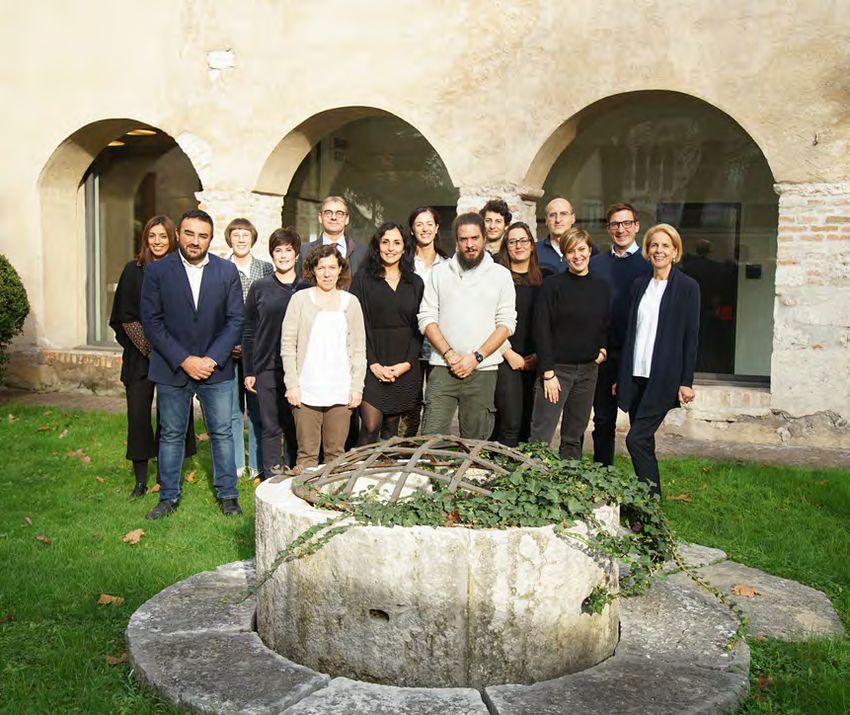
Center for Religious Studies
via Santa Croce, 77
I - 38122 Trento
https://isr.fbk.eu/en/

Director
Marco Ventura

Editor in Chief
Chiara Zanoni

Cover and layout design
BigFive

Printing
Nadia Premiazioni srl, Corso Centrale 20, 38056 Levico (TN)

Published with the financial support of the Autonomous Province of Trento

We are grateful to the Archivio fotografico e Mediatica of Mart, Museo di arte moderna e
contemporanea di Trento e Rovereto for their generous permission to reprint the picture
Fulmine compositore (p. 6) by notorious local artist Fortunato Depero (1892-1960)

ISBN 978-88-98989-47-8

Copyright 2019, FBK Press - Fondazione Bruno Kessler, Trento
RELIGION
& INNOVATION
AT FBK

TA B LE
O F C O NT E NT S

            Foreword                                           4

            01 Trento                                          7

            02 Fondazione Bruno Kessler for AI of the Future   11

            03 The Center for Religious Studies                15

            04 Religion & Innovation                           23

            05 Fields of Application                           27

            06 Project Portfolio                               33

            Selected Publications                              37

            Partners                                           38

            People                                             39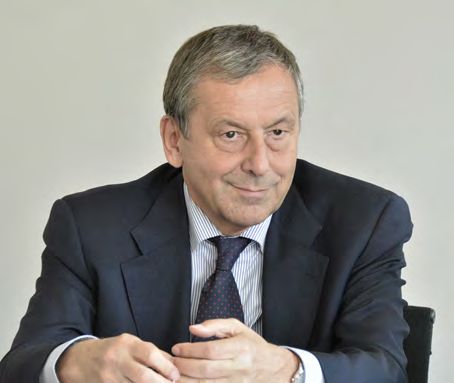
R E L I G I O N & I N N O VAT I O N AT F B K

FOREWORD

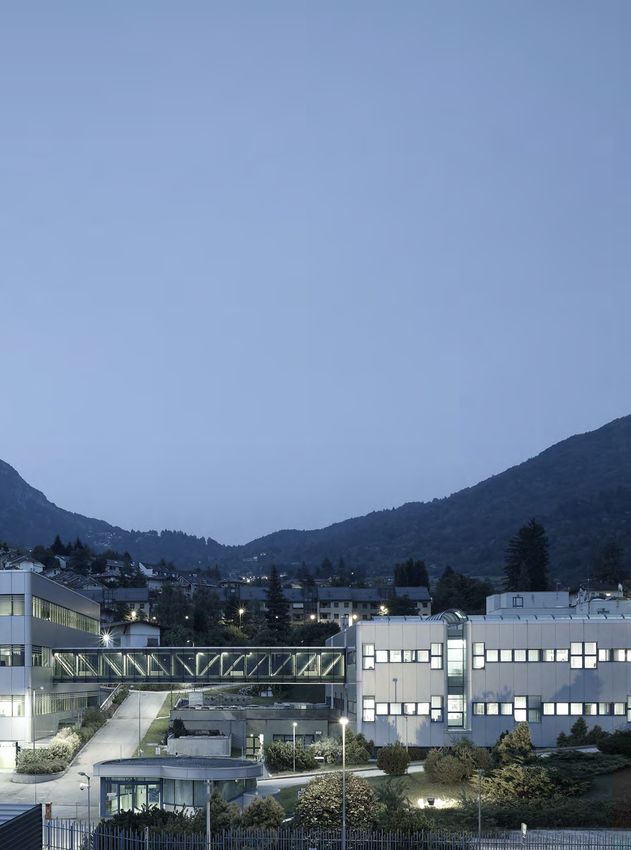
Fondazione Bruno Kessler is a research
institution centered on innovation and on the
transfer of outputs to broader society and the
market place. Through its work, FBK embodies
the “circular process of knowledge”: a first
phase where public funding is converted into
training, knowledge and scientific excellence is
followed by a second phase, where knowledge
is translated into growth and enhanced
productivity, against the backdrop of global
sustainable development.

Thus, research and innovation coexist at FBK and
influence a wide range of scientific issues and
fields of application, from digital technologies to
micro-systems, from historical sciences to the
relationship between religion and innovation.
Research and innovation at FBK give birth to
services and solutions that hinge on a new
generation of AI, that does not supplant human
beings in the workplace and in life, but rather
contributes to their increased wellbeing.

4
FOREWORD

Thanks to the vast array of competencies present within
its research centers and to a model which integrates the
humanities and the social sciences with scientific and
technological research, the Foundation is able to ensure that
AI-based innovation in science and technology is attuned to
social and cultural innovation. The Center for Religious Studies
(ISR), alongside all other research centers, is part of this
journey. By collaborating with local, national and international
partners, the Center strives to fulfil its mission of interpreting
the relationship between religion and innovation, whilst also
contributing to its improvement in contemporary society.

This task invests the researchers working at the Center
with great responsibilities; yet it also gives them a singular
opportunity to be part of a unique endeavor in the Italian and
global landscape.

Francesco Profumo
President, Fondazione Bruno Kessler

                                                                     5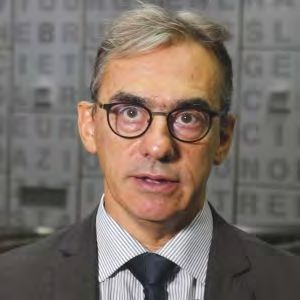
R E L I G I O N E E I N N O VA Z I O N E I N F B K
T I TO L O

                                                            01

                                                            TRENTO

F. Depero, Fulmine compositore, 1926 (Mart, Fondo Depero)
© FORTUNATO DEPERO, by SIAE 2019

                                                                            38
R E L I G I O N & I N N O VAT I O N AT F B K
TRENTINO At a crossroads between Central Europe and the
Mediterranean, East and West, the Italian region of
Trentino and the adjoining Alto Adige/South Tyrol
have historically acted as a space for interaction and
dialogue between different civilizations, worldviews and
innovative ideas.
AN AUTONOMOUS With over 541.000 inhabitants and a solid tradition of
entrepreneurship and cooperative entrepreneurship,
PROVINCE Trentino offers among the highest standards of living in
Italy and Europe. The Autonomous Province of Trento
has a unique historical and cultural identity, which
encapsulates both its Italian and its Austro-Hungarian
heritage. Thanks to its special Statute, based on a 1946
bilateral agreement between Italy and Austria, the
local government has a degree of autonomy in decision
making, allowing for many important decisions to be
taken in accordance with the specific needs of the local
community. In Trentino, over 118.000 people volunteer in
the main areas of public life, such as eldercare, education
and training, health, environmental conservation and
mountain preservation. These people constitute the
human capital of a region founded on the principles of
community and solidarity, that looks towards the global
challenges of the future.
TRENTINO
€ 36.100
5 41.098
GDP per capita in Trentino
(In Italy: €28.500; EU: €30.000)
Residents
1 18 . 3 9 7 4 6 . 42 7 1 .0 0 0 4 8 3 .7 3 3
Local residents involved Active Trees Sleeping
enterprises per resident accomodation
in volunteering activities
(20% of which for turist
women-led
enterprises)
8T R E N TO
TRENTO: The Council of Trent, hosted in Trento between
CITY OF THE 1545 and 1563, represented an attempt at bridging
COUNCIL OF TRENT the divide between Catholics and Protestants.
The Council marked the beginning of the Counter-
AND OF ALCIDE Reformation of the Catholic Church and as such,
DE GASPERI fittingly took place in Trento, an Italian city ruled
by a Prince Bishop, which echoed the German
model of the Early Middle Ages. In 1965, the
Catholic Church abolished the cult of Simone of
Trento, who had been revered for five centuries as
an alleged victim of a ritual killing blamed on the
Jewish community.
In Trento, the Italian and the Central European
cultures intersect in religion and public life. In the
first half of the 20th century, these two cultures
informed the vision of the great statesman Alcide
De Gasperi, native to Trentino, who played a
pivotal role in Italy’s membership in the Atlantic
Alliance and was amongst the founding fathers of
the European integration process and the single
market.
1563 Closing of the Council of Trent
1964 Pope Paul VI entrusts Trento
with the mission of ecumenical
dialogue.
9R E L I G I O N & I N N O VAT I O N AT F B K 35
T I TO L O

02

FONDAZIONE
BRUNO KESSLER
FOR AI
OF THE FUTURE

40 years’ expertise in the humanities,
science and technology for AI of the
future.

                                           34
R E L I G I O N & I N N O VAT I O N AT F B K
FONDAZIONE THE 2018-2027
BRUNO STRATEGIC
KESSLER PLAN
Born in 1962 as the Trentino The Foundation’s 2018-2027 Strategic
Institute of Culture and converted Plan aims to test a new model of
in 2007 into a private foundation Artificial Intelligence – one that
cofinanced by the Autonomous collaborates with people and does
Province of Trento, Fondazione not replace them – applicable both to
Bruno Kessler consists of 6 scientific/technical and socio-cultural
research centers employing 400+ innovation. The chief objective is to
researchers. Qualified personnel render AI a useful tool for sustainable
offers administrative and research development in the following key areas:
support and a specialized library • Cyber Security
and 7 laboratories provide the • Digital Society
staff with the necessary tools to • The Environment and Energy
achieve scientific excellence via an • Health and Wellbeing
interdisciplinary effort. Particular • Smart Industry
attention is dedicated to issues The ISR makes its very own
such as Internet of the future, cyber contribution to the implementation of
security, quantum technology, FBK’s Strategic Plan 2018-2027 with its
sensors, data science, and cognitive 2019-2021 Strategic Plan.
computing.
2018 - 2 0 2 7
FBK’S STRATEGIC PLAN FOR AI
2 019 - 2021
ISR’S STRATEGIC PLAN: “RELIGION AND INNOVATION FOR THE AI SOCIETY”
12FONDAZIONE BRUNO KESSLER
THE CONTRIBUTION The Center for Religious Studies contributes to FBK’s 2018-2027
Strategic Plan with its solid expertise, accumulated in the 43 years
OF THE CENTER FOR following its inception and with its mission statement on religion
RELIGIOUS STUDIES and innovation, adopted in 2016. Thanks to the growth instigated
by its 2016-2018 Strategic Plan, the ISR currently collaborates with
other centers within the Foundation in order to better understand
the anthropological, philosophical, legal, social and political impli-
cations of the digital revolution and AI, and investigate solutions to
emerging problems. Researchers’ expertise vis-à-vis the relation-
ship between religion/spirituality and various forms of innovation
allows them to contribute to FBK’s work through their research
and action research on value and values. On the one hand, the
ISR focuses on the value of innovation; on the other hand, it also
explores the value conflicts associated with the development of
AI and with an increasing diversity of religions, cultures, belief
systems and lifestyles in the digital society.
4 00+
Center
FBK RESEARCHERS for Communication
and Information
Technology
ICT Research
Center for Materials Institute for
and Micro-systems the Evaluation
of Public Policies
6 CENTERS
CMM
IRVAPP
Center for REsearch
Center for And Telecommunication
Religious Studies Experimentation for
NETworked communities
ISR
Italian-German CREATE-NET
Historical Institute
ISIG
13R E L I G I O N & I N N O VAT I O N AT F B K 31
T I TO L O

03

THE CENTER FOR
RELIGIOUS STUDIES

Faith and values, identities and symbols, lifestyles and practices play
a pivotal role in the future of our interconnected and fragile world,
where AI is revolutionizing the face of humanity. Each day our Center
endeavors to build strong, prosperous and cohesive societies, by joining
forces with researchers of other centers within FBK and research
institutions in Trentino, Italy, Europe and worldwide. Furthermore,
we collaborate with religious communities and communities of faith,
governments, international organizations, for profit and non-profit
organizations. We are part of the Fondazione Bruno Kessler, a model
institution that conducts innovative research, striving to marry the
social sciences, the humanities, and scientific and technological
research in view of the AI of the future. Throughout its history, our
Center has always relied on cutting-edge methodologies and content.
Accordingly, in 2016 we embraced the mission of research and action
on the relationship between religion and innovation. In the following
three years, we have strengthened the resolve that we are in fact on
the right path. Our position paper on religion and innovation, published
in February 2019, shapes our challenge to ourselves and our partners,
present and future.

Marco Ventura
Director of the Center for Religious Studies

                                                                      30
R E L I G I O N & I N N O VAT I O N AT F B K
The Center for Religious Studies (known as the Insti- encounters, opening its doors to guests of great
tute for Religious Studies up until 1998) was founded spiritual and intellectual acumen, such as the
by Bruno Kessler, the then President of the Autono- Dalai Lama, the then Cardinal Ratzinger, José
mous Province of Trento, and Monsignor Iginio Rog- Casanova, Charles Taylor and Jürgen Moltmann.
ger on 29 December, 1975 as a non-faith based insti- After the September 11 attacks, the Center host-
tution for research in theology and religious studies. ed discussions on religious fundamentalism and
the relationship between Islam and religious tol-
19 7 5
erance. In light of the perceived cultural clashes,
researchers at the Center addressed the debate
between creationists and evolutionists and tack-
FOUNDATION OF THE CENTER led issues related to Gender Studies. At the ISR,
FOR RELIGIOUS STUDIES atheists, agnostics, and the unaffiliated have al-
ways been able to express and share their views
Those were the post-1968 years, marked by the oil on spirituality.
crisis, controversies over the consumerist model
and the need to create different forms of social
interaction and novel religious expressions. The 2 01 5
Center responded to these new social and cultural
needs by providing a platform for innovative, inter- THE CENTER COMMEMORATES 40 YEARS
national, and interdisciplinary research on religion SINCE ITS FOUNDATION.
and spirituality.
Over time, collaborations within the Fondazione Today, the role of religions in public life is a political
Bruno Kessler have grown and intensified, espe- hot potato. Our secularized and pluralistic society
cially with researchers at the Italian-German His- has in part taken a distance from traditional reli-
torical Institute working on the history of religion, gions, broadening the range of spiritual alternatives.
and researchers at the Center for Information and In this context, our Center continues to emphasize
Communication Technology investigating the so- that a community focused on innovation necessarily
cial impact of AI. Over the years, the Center has requires a space for reflection, expression, analysis
become a locus for theoretical reflections and and investigation of existential questions.
16THE CENTER FOR RELIGIOUS STUDIES
17R E L I G I O N & I N N O VAT I O N AT F B K
TIMELINE
1962 1963 1973
The Trentino Institute of Culture (ITC), Trento commemorates the 400th The Italian-German Historical
incubator of the University of Trento anniversary since the end of the Institute led by Paolo Prodi,
and predecessor to FBK, is founded. Council of Trent with an international is the first center to be
conference titled “The Council of Trent created within the
and the Tridentine Reformation”. In 1965 Trentino Institute of Culture.
an inquiry led by the Catholic Church
and supported by Mons. Iginio Rogger
leads to the abolition of the anti-
Semitic cult of Simone of Trento.
1985 1986 1991
The IRST, under the The Institutional Course The ISR hosts a conference
leadership of Luigi Stringa, of Religious Science (later titled: “Man, technique and God”,
is one of the first research known as Advanced Course organized by Massimo Baldini,
centers in Europe to conduct in Religious Studies), training Edoardo Benvenuto and
research on artificial Catholic religion teachers Karl Neufeld.
intelligence. In 1989 the IRST working in Italian public
holds the 1st conference of schools, is launched. It will be
the Italian Association for terminated in 2018.
Artificial Intelligence.
18THE CENTER FOR RELIGIOUS STUDIES
1975 1976
The Institute for Religious Studies (ISR), The Center for Scientific and Technological
dedicated to research in the religious and Research (IRST), precursor of the future
theological field, is founded within the Trentino scientific/technological centers of the future
Institute of Culture. The Institute, led by Mons. Fondazione Bruno Kessler, is founded within
Iginio Rogger, is responsible for scholarships, the Trentino Institute of Culture.
conferences and publications.
1997 1999 2000
Under the guidance of Antonio The Institute for Religious The “Annali
Autiero (1997-2011), the ISR Studies (ISR) becomes the di studi religiosi”
marries individual research Center for Religious Studies, are launched.
projects with collective and maintaining its original
longitudinal research on Public acronym.
Theology; the Future of Human
Nature; Bioethics and
Gender Studies.
19R E L I G I O N & I N N O VAT I O N AT F B K
2001 2004 2006
The Dalai Lama Cardinal Ratzinger The Italian-German Historical Institute
visits the Center. visits the Center. (ISIG) organizes the conference: “The
Secular State and its Present-Day
Transformations” under the scientific
responsibility of Gian Enrico Rusconi
and Ernst-Wolfgang Böckenförde.
2013 2014 2015
Under the scientific André Comte-Sponville José Casanova gives
responsibility of Adriano gives a lecture titled: a lecture on: ”The Jesuits
Prosperi, the ISR & ISIG “Atheism and Spirituality”. and Globalization”.
organize the international
Conference: “Trent & Beyond.
The Council, other Powers,
Other Cultures”.
20THE CENTER FOR RELIGIOUS STUDIES
2007 2010 2012
The Trentino Institute The ISR holds Led by Alberto Bondolfi
of Culture becomes the the international (2012-2015), the ISR
Fondazione Bruno Kessler. conference: “Catholic focuses its research on
Theological Ethics Interreligious Dialogue and
in the World Church” Applied Ethics.
2016 2018
The 2016-2018 Strategic Plan is produced under the guidance FBK adopts the 2018-2027 Strategic Plan
of Marco Ventura and the Center embraces the mission for AI of the future. The ISR publishes its position
“Religion and Innovation”. paper on “Religion and Innovation.
Calibrating Research Approaches and Suggesting
Harvey Cox holds the 1st Davide Zordan Lecture titled:
Strategies for a Fruitful Interaction”.
“The Market as God”
Heiner Bielefeldt holds the IV Bruno Kessler Lecture titled:
“The Provocative Potential of Religious Freedom”
Jürgen Moltmann holds a lecture titled:
“The Earth as a Shared Home”
The CREATE-NET Center, specializing in Next Generation
Internet, joins FBK, becoming its 6th research center.
21R E L I G I O N & I N N O VAT I O N AT F B K 23
T I TO L O

04

RELIGION
& INNOVATION

                      22
R E L I G I O N & I N N O VAT I O N AT F B K
RELIGION & INNOVATION
Our mission is to unpack and enhance the relationship between religion
and innovation. Our contribution in this regard is not merely analytical
and interpretative, but also proactive and experimental, through
engagement with grassroots organizations and civil society.
We firmly believe that the relationship between religion and innovation
is crucial in the pursuit of sustainable development.
SUSTAINABLE
DEVELOPMENT
RELIGION
INNOVATION
established emerging to be developed
24R E L I G I O N & I N N O VAT I O N
We critically assess the relationship between religion
and innovation from 3 points of view:
INNOVATION IN RELIGION RELIGION IN INNOVATION RELIGION OF INNOVATION
We attempt to come to grips We investigate the We seek to explore the fideistic
with the various processes by contribution of religion component of innovation,
which religious communities in all its multifaceted namely, innovation as faith,
“innovate”, in particular through manifestations, from myth and belief.
the interpretation of texts, innovation in science
theoretical reflection, the and technology, to social
transmission and reinvention and cultural innovation
of traditions and institutional and innovation in politics
changes. and the law.
The 3 dimensions of the relationship INNOVATION IN RELIGION
between religion and innovation
RELIGION RELIGION
OF IN
INNOVATION INNOVATION
25R E L I G I O N & I N N O VAT I O N AT F B K
11 RECOMMENDATIONS
Our mission is congruent with the 40-year-long In 2018, FBK-ISR researchers drafted the position
legacy of our research center, with FBK’s mission, paper “Religion and Innovation: Calibrating research
as well as Trento’s religious and civic history. In approaches and suggesting strategies for a fruitful
fact, at the very heart of the ISR’s comparative- interaction”, which puts forward 11 recommenda-
ly brief history and Trento’s century-long one, lie tions to investigate and improve the interaction
the study of change, the deliberation on whether between religion and innovation in contemporary
change is right or wrong, decisions for or against societies. The position paper, adopted in December
change, experiments in innovation and transfor- 2018 and published in February 2019 is available on
mations within religious communities and civil the Center’s website at the following link: https://isr.
society. fbk.eu/en/about-us/position-paper/
OUR 2018 POSITION PAPER
1
RELIGION
AND INNOVATION
CALIBRATING RESEARCH APPROACHES
AND SUGGESTING STRATEGIES
FOR A FRUITFUL INTERACTION
Position paper of the Center for Religious Studies
Fondazione Bruno Kessler
2605 FIELDS OF APPLICATION
R E L I G I O N & I N N O VAT I O N AT F B K

FIELDS OF APPLICATION
Between 2016-2018, the Center’s work has focused
on 4 research areas:

      1        CONFLICTS

     2         SPIRITUALITY AND LIFESTYLES

     3         TEXTS, DOCTRINES AND TRADITIONS

     4         VALUES, SCIENCE AND TECHNOLOGY

For further information on the research areas, please refer to the Center’s website https://isr.fbk.eu/en/

28
F I E L D S O F A P P L I C AT I O N
In line with FBK’s 2018-2027 Strategic Plan, the research areas for 2016-2018
converge in four fields of application for 2019-2021.
The convergence of research areas and fields of application allows the Center
to further develop its interdisciplinary approach and amplify its local, national
and international impact.
1 2
INCLUSIVE AND SAFE SOCIETIES SUSTAINABLE DEVELOPMENT
Key themes: Cyber Security, Diversity, Inclusion, Key themes: Healthy Lifestyles, Inter-Faith Forums,
Interreligious/Intercultural Dialogue, Radicalization, Spirituality and the Environment
Safety
Sustainable development is not only the backdrop
This field of application examines the manifold of our mission on religion and innovation, but is
forms of conflict and violence worldwide, as well as also, in its SDG formulation given in the UN sys-
the strategies employed by public and private actors tem, a specific field of application. We therefore
to build societies that can promote, insofar as pos- focus on the potential incentives for the promotion
sible, safety and inclusion. While particular attention of attitudes, behaviors and social practices that
is devoted to the role of religions and religious and draw on sustainable development and we look at
faith-based communities, our (action) research ex- the specific role of religious communities and tra-
tends to the study of social tension, violent radicali- ditions in nurturing such behaviors and practices.
zation, cyber security, diversity and intercultural and We work with platforms for interreligious dialogue,
interreligious dialogue. We explore the relationship such as the G20 Interfaith Forum and faith-based
between freedom and security through the lens of companies and organizations, including those ac-
religion and innovation, pooling FBK’s transversal tive in the field of global health. We evaluate the
competencies on AI technologies and on their so- potential of the spiritual dimension to inspire the
cio-cultural and political implications. In collabora- quest for healthy lifestyles (for instance in rela-tion
tion with the FBK Research and Innovation Unit for to waste and food shortage) and novel trajectories
Schools we analyze the vital role played by schools in the relationship between religion and the envi-
and education in strengthening inclusion. ronment, spirituality and the mountain. Our work
fits nicely within the framework set by FBK’s 2018-
2027 Strategic Plan, which strives towards an AI for
sustainable development.
29R E L I G I O N & I N N O VAT I O N AT F B K
3 4
ETHICS AND RIGHTS TIME/SPACE MOBILITY
Key themes: Ethical & Legal Issues in AI; Key themes: Augmented Realities; Digital Religions;
Human-Centered Technology; Religious Innovation Eternity; Globalization; Migration; (Post-)Secularism
This field of application explores the ethical, norma- Mobility is a key interpretative tool to make sense of
tive and legal issues arising from the development contemporary societies. We conceptualize mobility
of new technologies and the related forms of exclu- as a dynamic phenomenon involving both the spatial
sion (e.g. digital) that derive from their enhanced us- dimension (movement of people, ideas, goods, data,
age in everyday society. We turn to tradition and re- capital and services) and the temporal one (the ac-
ligious innovation in an attempt to identify the seeds celeration or individual appropriation of time, the
of a potential collaboration between human beings crafting of historical memory, the projection beyond
and machines and a human-centered dimension of human time, eternity and eschatology). Through re-
new technologies. This area of application enquires search and experimentation, this field of application
into the possibility of extending rights, duties and investigates mobility through the lens of the global
ethical norms to machines and novel AI technology. and the local; religious practice in the urban and
virtual space (i.e. digital religions and augmented
realities); the sacred and its trajectories across time
(i.e. secularism and post-secularism); and the spa-
tio-temporary dimension of contemporary religious
geopolitics.
30F I E L D S O F A P P L I C AT I O N
ISR’S STRATEGIC PLAN 2019-2021
__
4 FIELDS OF APPLICATION
IGION & I
REL NN
OV
ATI
ISR
ON
AI FONDAZIONE
CENTER FOR
RELIGIOUS STUDIES
BRUNO KESSLER
ISR
1 INCLUSIVE AND SAFE SOCIETIES
CENTER FOR
RELIGIOUS STUDIES
FONDAZIONE
BRUNO KESSLER
2 SUSTAINABLE DEVELOPMENT
3 ETHICS AND RIGHTS
4 TIME/SPACE MOBILITY
31R E L I G I O N & I N N O VAT I O N AT F B K 13
T I TO L O

06

PROJECT
PORTFOLIO

                    12
R E L I G I O N & I N N O VAT I O N AT F B K
PROJECT PORTFOLIO
OF THE CENTER’S ACTION-RESEARCH
ARGUING RELIGION of FBK’s ICT collaborates with the ISR For further information
on the Center’s research
FoA: Inclusive & Safe Societies on this project.
projects, please consult
The aim of this research project is the Center’s official website.
to improve our understanding of ar- ETHICS, RELIGIONS AND HEALTH
gumentation-based responses to FoA: Sustainable Development,
religious disagreements. Building on Ethics & Rights
past and ongoing ISR research in the Combining theoretical exploration
fields of secularity, post-secularity, and action research, this project as-
and argumentation theory, the pro- sesses the impact of patients’ ethical
ject addresses a range of questions and religious beliefs on medical prac-
about the various forms of religious tices and realities, as well as the ways
disagreements and the meaning and in which novel medical approaches
goal of “arguing religion”. can affect faith, religious practice
and spirituality. Bio-medicine, neu-
ATLAS OF RELIGIOUS OR BELIEF rosciences, and the identification of
MINORITIES RIGHTS ethically-sustainable approaches and
FoA: Ethics & Rights; Time/Space interventions that can promote the
Mobility health and wellbeing of individuals
The aim of this research project, con- and communities are core concerns
ducted in collaboration with FBK-ICT, of this research project.
is to produce an interactive web-
based atlas mapping the social and FREEDOM OF RELIGION OR BELIEF
legal rights of religious minorities in FoA: Inclusive & Safe Societies
the OSCE region. Ethics and Rights
This project aims to promote and pro-
BOOSTING EUROPEAN SECURITY tect religious freedom and freedom of
LAW AND POLICY belief at the regional, national and in-
FoA: Inclusive & Safe Societies ternational levels. Among the various
Funded as a Jean Monnet Project outputs is the co-production alongside
(2018-2020), in partnership with the the Universities of Cambridge and Lux-
University of Siena, the European embourg and subsequent publication
Center for Minority Issues of Flensburg of the 2017 Annual Report on Freedom
and Matej Bel University, this project of Religion or Belief and Religious Tol-
promotes awarenessraising and dis- erance, commissioned by the Europe-
semination of knowledge and skills in an Parliament Intergroup. The project
relation to security and its role in the also entails contributions to the activ-
process of European integration, with ities of the OSCE, the G20 Interfaith Fo-
a specific focus on migration data and rum and the European Consortium for
capital flows. The Cybersecurity Unit Church and State Research.
34PROJECT PORTFOLIO
GLOBAL FAITH-BASED HEALTHCARE individuals and society. The focus is
SYSTEMS on a lifestyle shift that represents
FoA: Ethics & Rights, Inclusive & Safe both a form of spiritual innovation
Societies; Sustainable Development and a creative answer to certain
Spearheaded by Georgetown Universi- forms of modern idolatry, such as the
ty in collaboration with the ISR and the cults of acceleration and newness.
Health and Wellbeing Unit of the ICT
at FBK, this project seeks to reflect RELIGION AND DIGITAL
on and devise methods and strategies TECHNOLOGIES
to improve the global health servic- FoA: Inclusive & Safe Societies;
es provided at the international, na- Time/Space Mobility
tional and local levels by international This project explores the impact
faith-inspired organizations. of the rapid and all-encompassing
spread of novel digital technologies
HATE SPEECH ONLINE on communities, practices and re-
FoA: Inclusive & Safe Societies; ligious beliefs. In collaboration with
Time/Space Mobility FBK-ICT it unpacks the various in-
This project, in collaboration with the teractions between religion and AI,
Smart Cities and Communities Unit of religion and social media, religion and
FBK-ICT, looks into the prevention and virtual/augmented reality technology.
contrast of youth’s dangerous speech-
es. The focus is on discourse which RELIGION AND VIOLENCE
instigates hate and discrimination FoA: Inclusive & Safe Societies,
based on religious or ethnic belonging, Time/Space Mobility
gender and sexual orientation, in the The project examines the relationship
context of schools and education. One between religion and violence, by look-
of the project’s key activities is the “DI- ing at religion not as an independent
CO-DI-NO” Initiative (Hate speech and and decontextualized variable, but as
young people’s digital cultures), fund- deeply interlinked with politics, soci-
ed by Fondazione Intercultura. ety, culture, the economy and ethics.
The Religion and Violence Project cap-
THE MOUNTAINS AND SPIRITUALITY italizes on the outcomes of the two
FoA: Sustainable Development “Exiting Violence” Conferences, held
The aim of this project is to identify, in Trento in 2017 and in Washington
describe and investigate the spiritual DC in 2018, in collaboration with Reset
transformation that is taking place Dialogue and Georgetown University,
today at the boundaries of religion, respectively.
35R E L I G I O N & I N N O VAT I O N AT F B K
10 RESEARCH PROJECTS
RESEARCHLINES PROJECTS FIELDS OF APPLICATION
2016-2018 2019-2021
1 Arguing Religion
Atlas of Religious or
2 Belief Minorities Rights
Boosting European
3 Security Law and Policy Inclusive
Conflicts
& Safe Societies
Ethics, Religion
Spirituality 4 & Health
Sustainable
& Lifestyles
Development
Freedom of Religion
5 or Belief
Texts, Doctrines and
Ethics
Traditions
Global Faith-based and Rights
6 Healthcare Systems
Values, Science
Time/Space
and Technology Hate Speech Online
7 Mobility
Mountains
8 & Spirituality
9 Religion and Digital
Technologies
10 Religion
& Violence
External funding (% added to funding from the Autonomous Province of Trento)
2 017 20 % 2 018 11 %
36S E L E C T E D P U B L I C AT I O N S
SELECTED PUBLICATIONS 2016-2018
BOOKS ANNALI DI STUDI RELIGIOSI
Martha Nussbaum, La speranza degli afflitti. Il lutto e i fonda- The “Annali di studi religiosi” is a digital open-access journal,
menti della giustizia, edited by Paolo Costa (Lampi) Bolo- published once a year and presenting articles written by
gna, EDB, 2016 | ISBN 978-88-10567-22-7 ISR researchers and other scholars on subjects related to
religious transformations, with a special focus on contem-
Harvey Cox, Il mercato divino. Come l’economia è diventata porary society.
una religione, edited by Paolo Costa (Lampi), Bologna,
EDB, 2017 | ISBN 978-88-10567-68-5 The journal, which publishes articles in various languages, is
on the list of class A scientific publications of ANVUR (Italian
Michela Catto - Claudio Ferlan (eds.), I gesuiti e i papi (Annali National Agency for the Evaluation of Universities and Re-
dell’Istituto storico italo-germanico. Quaderni, 97), Bolo- search Institutes) in area 11 - sector A5: Ethno-anthropolo-
gna, Il Mulino, 2016 | ISBN 978-88-15-26660-6 gical sciences. Moreover, it is also listed as indexed journal
in SCOPUS, the largest international database of peer-re-
Lucia Galvagni - Lucia Pilati (eds.), Trapianti e traffico di or- viewed literature.
gani nella società globale, Trento, FBK Press, 2017 | ISBN
ISSN 2284-3892
978-88-98989-34-8; e-ISBN 978-88-98989-33-1
books.fbk.eu/asr
Jürgen Moltmann - Piero Stefani - Paolo Trianni, La terra
come casa comune. Crisi ecologica ed etica ambientale
(Nuova Serie, 33), Bologna, EDB, 2017 | ISBN 978-88-10-
EDITORIAL STAFF
41532-0
Maria Ballin
Debora Tonelli, Der Dekalog. Eine retrospektive Betrachtung,
Lorenzo Cortesi
Stuttgart, Katholisches Bibelwerk, 2017 | ISBN 978-34-
60033-94-8 Adalberta Bragagna
Friederike Oursin (Coordinator)
Michela Catto - Adriano Prosperi (eds.), Trent and Beyond.
The Council, other Powers, other Cultures (Mediterranean
Nexus 1100-1700. MED-NEX, 4), Turnhout, Brepols Pub-
lishers, 2017 | ISBN 978-2-503-56898-0
Heiner Bielefeldt, Il potenziale provocatorio della libertà re-
ligiosa | The Provocative Potential of Religious Freedom
(Bruno Kessler Lectures, 3), Trento, FBK Press, 2017 |
ISBN 978-88-98989-31-7; e-ISBN 978-88-98989-32-4
open access
Anthony Carroll, ll giardiniere invisibile. Credere, non credere,
cercare, edited by Paolo Costa (Lampi), Bologna, EDB,
2018 | ISBN 978-8810559390
See the full list of publications on the web pages of individual Please refer to the Center’s website for a complete list of rese-
researchers on our website. archers’ publications.
37R E L I G I O N & I N N O VAT I O N AT F B K
PARTNERS
Around the world In Italy In Trentino
Al-Farabi Kazakh National Amnensty International Italia Arcidiocesi di Trento
University, Almati Centro Studi Confronti, Roma Azienda Provinciale per i Servizi
Blanquerna Observatory of Eurac Research, Bolzano Sanitari, Trento
Communication, Religion, and Centro per la Cooperazione Inter-
Festival dei Diritti Umani, Milano
Culture Ramon Llull University, nazionale, Trento
Barcelona Fondazione Intercultura Onlus,
Roma Fondazione Franco Demarchi,
Brigham Young University, Provo Trento
Fondazione per le scienze reli-
Centre national de la recherche Istituto provinciale per la ricerca
giose Giovanni XXIII, Bologna
scientifique Alsace, Strasbourg e la sperimentazione educativa,
Forum per i problemi della pace
Erasmus University Rotterdam Trento
e della guerra, Firenze
European Academy of Religion, Museo delle Scienze di Trento
Regione Lazio
Bologna Ordine dei Medici, Chirurghi e
Reset Dialogues on Civilizations
Friedrich-Schiller-Universität Odontoiatri della Provincia Autono-
Jena Rete Dialogues - MIUR ma di Trento
Georgetown University, Wa- Save the Children Italia Religion Today Film Festival,
shington Ufficio nazionale antidiscrimina- Trento
Humboldt-Universität zu Berlin zioni razziali, Roma Trento Film Festival
Institut für die Wissenschaften Università di Modena e Reggio Università di Trento
vom Menschen, Wien Emilia
Institut national de la recherche Università di Padova
scientifique, Québec Università di Siena
Moonshot Countering Violent Università La Sapienza, Roma
Extremism, London
Università Tor Vergata, Roma
Pushkin Leningrad State Univer-
Università Vita-Salute San
sity, St. Petersburg
Raffaele, Milano
The Woolf Institute, Cambridge
Universität Erfurt
Universität Innsbruck
Universität Wien
Université catholique de Lille
Université de Strasbourg
University of Cambridge
University of Exeter
University of Helsinki
University of Luxembourg
University of Roehampton,
London
Uppsala University
38PEOPLE
PEOPLE 2016-2018
Hosted Students and Scholars
28
Director Head of Library, Publishing
Marco Ventura Israilova Assel and Research Support Services
Damiano Bondi Chiara Zanoni
Pierluigi Consorti
Researchers Matteo Corsalini
15
Pasquale Annicchino Dinara Dauletbekkyzy Staff
Stefano Biancu Elisa Egidio Graziella Di Bella
Michela Catto Carlo Fracalanza Elisabetta Lopane
Paolo Costa * Federico Gravino Isabella Masé
Osvaldo Costantini Bruno Iannaccone Moira Osti
Raphaël Durante Kaiyrzhan Karlygash Antonella Vecchio
Valeria Fabretti Dauren Kassainova Clara Zeni
Silvio Ferrari ** Zhanbolat Khumarkhan
Lucia Galvagni * Zemmouri Layachi
Maria Chiara Giorda Asia Leofreddi
Sara Hejazi Costanza Leuzzi
Boris Rähme * Ali Zou Mahfoud
Irene Scarascia Botelho Moniz
Debora Tonelli * Krystyna Mykhaiuk
Alessandra Vitullo Caterina Nemenko
Enrica Perconti
Permanent researcher
*
Anastasia Piazzi
Distinguished Fellow
**
Viktor Polekto
Chiara Rota
Matthew Rowley
Tokzhan Rysbek
Sarah Sciò
Talasbayev Shalkar
Jeroen Temperman
394
PE O PLE
Relatori e ospiti Lucia Busatta Severino Dianich Luca Guglielminetti
Speakers and Guests Luciana Caenazzo Donatella Dolcini Bruno Haas
Alexander Agadjanian Massimo Campanini Katherine Dormandy Batul Hanife
245
Petr Agha Heidi Campbell Rod Dreher Dorota Hartman
Sandra Agudelo-Londono Barbara Carnevali Dolina Drong (sr Leah) Mohammed Hashas
Caterina Aiena Anthony Carroll Rosanna Ducato Uri Hasson
Wanda Albert Arnaldo Casali Bogi Eliasen Ari Haukkala
Roberto Alciati Carlo Casonato Fiona Ellis Nicole Heydt
Stefano Allevi Thomas Cattoi Elena Erigita Mark Hill
Maria Alwuas Marco Cavana Giulia Evolvi Yass Hind
Marta Angelilli Sergej Chapnin Marcello Farina Timothy Hutchings
Alessandro Aresu Leonardo Chelazzi Anna Fedele Vincenzo Idone Cassone
Sharon Assaf Marco Clerici Oliver Feeney Alessandro Innocenti
Stefanie Bair Bob Clifford Richard Feldman Bette Jacobs
Maurizio Balistrieri Jean Philippe Cobbaut Heike Felzmann Tim Jensen
Godin Benoît Roberto Colombo Jude Lal Fernando Irene Jillson
Massimo Bernardi Bruce Compton Francesca Ferrando Rachel Jonker
Daniele Bertini Pierluigi Consorti Daniele Ferrari Anna Karapetyan
Enrico Bertoni Guido Convents Kevin Fitzgerald Geert Keil
Vidur Bharatram Lorenza Coraiola Paola Gabrielli Chae Young Kim
Akeel Bilgrami Harvey Cox Mehgan Gallagher Elizabeta Kitanovic
Judd Birdsall Riccardo Cristiano Franco Garelli Karna Kjeldsen
Alessandro Bonardi Aleš Črnič Edoardo Geat Michael Kleinschmidt
Alberto Bondolfi Mariano Croce Fred Gedicks Tobias Knoll
Matteo Bortolini Andrew Crompton Adele Gerardi Louis Komjathay
Giancarlo Bosetti Fred Dallmayr Alberta Giorgi Gudrun Krämer
Danial Botros Rocco D’Ambrosio Anthony Marko Glavinic Kosovare Krasniqi
Marian Burchardt Marco De Michelis Melanie Goisauf Dorota Krekora-Zajac
Paolo Branca Marc DeGirolami Hedva Goldschmidt Claudia Lauro
Nibras Breigheche Patrick J. Deneen Maria Stella Grando Leo Lefebure
Luigi Bressan Cyril Dépraz Manlio Graziano Valeria LencioniMassimo Leone Paolo Napoli Elisa Rapetti Davide Tacchini
Winfried Löffler Paolo Naso Ian Reader Lea Taragin-Zeller
Michele Loi Federico Neresini Francesca Rizzo Harriet Teare
Alain Loute Stefano Nobile Loreta Rocchetti Mattia Thibault
Monica Lugato Salvör Nordal Harmut Rosa Tomi Thomas
Maria Therese Lysaught Ana Nordberg Andrea Rota Marta Tomasi
Dorothee Mack Mary Okumu Musumba Naftali Rothenberg David Tombolato
Beena Devasia Madhavath Vozna Olha Francesco Rovero Roberto Toniatti
Katia Malatesta Vincenzo Pace Olivier Roy Daniella Tourgeman-Glass
Pierre Mallia Claudio Paravati Mohammed Hamid Sadek Paolo Trianni
Gerard Mannion Marc Pares Alessandro Saggioro Federica Turco
Clive Marsh Monica Pavan Brunetto Salvarani Isacco Turina
Jordan Breger Marshall Irene Pedretti Colleen Scanlon Dmitry Uzlaner
Gillian Martin Joonas Pennanen Christoph Schamberger Gaetano Valenza
Lucia Martinelli Renata Pepicelli Brett Scharffs Magali Van Reeth
Deborah Mascalzoni Marinella Perroni Vincent Sekhar Adrian Vermeule
Marco Mazzaglia Cinzia Piciocchi Simone Semprini Terry Vrijenhoek
Alberto Melloni Enrico Piergiacomi Bernadette Schramm Kirmo Wartiovaara
Valentina Meneghini Sami Pihlström Andrey Shishkov André Wénin
Werner Menski Lucia Pilati Vladimir Shmalyj Bruce Wilkinson
Giulia Mezzetti Andrea Pin Cristina Simonelli Matthias Wjst
Silvia Mocchi Mariana Pirazzi Pamela Slotte Karen Yeung
Jürgen Moltmann John Pittard Gagan Sood Ahmed Zamal
Martin Maria Morales Barbara Poggio Nada Soufiani Nereo Zamperetti
Adnane Mokrani Fabio Poiesi Michele Spanò Lorenzo Zani
Gloria Moran Ralf Poscher Federico Squarcini Andrea Zanotti
Michael Moreland Riccardo Pozzo Marija Stamenic Raffaello Zini
Michael Morrison Gianluigi Prato Piero Stefani Margherita Zonca
Frank Moulaert Kerstin Radde-Antweiler Kristina Stoeckl Selene Zorzi
Mark Movsesian Goran Radovanovic William Storrar Silvia Zullo
Cecilia Mundaca-Shah Vojin Rakic Marco Stranisci
5R E L I G I O N E E I N N O VA Z I O N E I N F B K 2
You can also read


