RESCUE NIGERIA Project - THE MANIFESTO
←
→
Page content transcription
If your browser does not render page correctly, please read the page content below

Project
RESCUE
NIGERIA
THE MANIFESTO
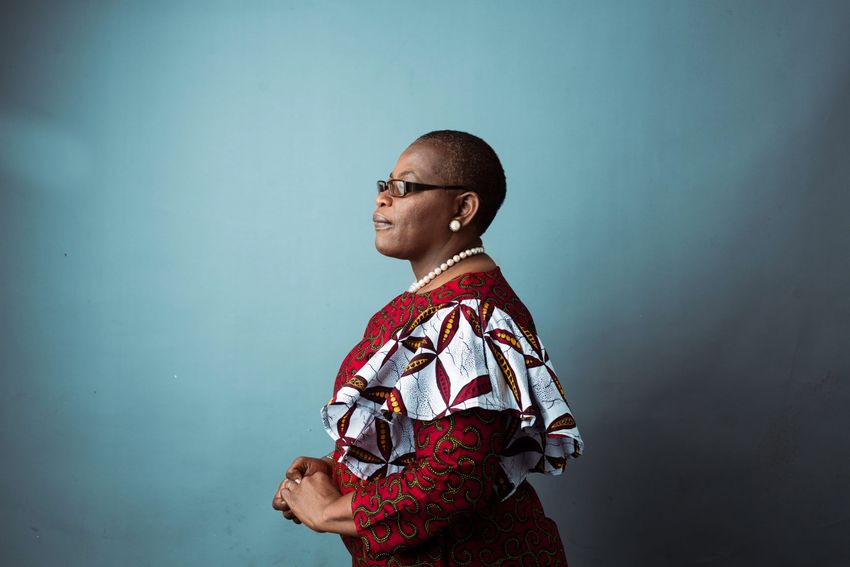
Creative Direction: @themadamezeta
Photography: @niyiokeowostudio
Styling: @thenojcompany
Makeup: @eyesome_beauty

Obiageli Ezekwesili
PROJECT RESCUE NIGERIA

     Obiageli Ezekwesili

      #Hope2019 #Oby2019
My Journey to
Running for Presidency
I have never liked politics; that is well known to people participate in politics is that you end up being governed
far and close to me. That I have been fighting for, and by your inferiors.” The arrogance that may be implied
doing work to promote good governance for over three in this assertion is mitigated by the fact that most
decades of my professional life is also known to many Nigerians agree with this obvious fact—if politics were
around the world. They can attest that in my time football, we have consistently failed to play with our
out, in and again out of government, I have been a A-Team. The legendary Prime Minister of Singapore,
consistent voice and model for quality and sacrificial Lee Kwan Yew—who led his country from third world
leadership. This is pivotal to take Nigeria to the zenith country to first—was known to assert that “no country
of her potentials. Like many of our citizens today, I can develop beyond the quality of its political leader-
bear a deep level of disappointment in the Nigerian ship.” Nigeria is a poster country for the truism in Mr
political class for evident nonchalance in the face of Lee’s assertion.
degenerating conditions of our country.
It was in becoming spurred on to a new kind of citizen
At no time did this deep angst become more manifest action by this critical awakening of my political
than the early days of January 2018 when our country, consciousness that I began to work with other concerned
government, leadership and people appeared to, once Nigerians to mobilise the public to issue a “red card” to
again, watch on helplessly and hopelessly as a new round the status quo dominant political class. The metaphor of
of massacring of innocent citizens went on, almost a red card which is issued to one who in the field of play
daily, in the North Central region of Nigeria. The runs foul of the game, is a powerful one for Nigerians
contours of the consequences of bad leadership, poor who are well known lovers of football. Our existing
governance and paralysing failure were etched on the political class—regardless of which of the two dominant
distressed faces of Nigerians as the world watched in acronyms have held sway in office—have without any
wonderment at how a country so potentially great could doubt, earned a red card for remaining indifferent to the
be so dysfunctional. That the country found itself yet security, economic, social, humanitarian and other
again at the mercy of a new set of killers of innocent distresses that envelop the people they were elected to
citizens, under a new administration, drives home the govern. For all of us who were determined to act out our
fact that our political class is the problem. It also makes new political consciousness, a new dawn had broken.
it clearer that the solution lies with us: the citizens.
And that we must urgently solve the problem, should With the Red Card Movement, we started a vigorous
Nigeria be rescued from collapse. campaign across the six geopolitical zones enlightening
citizens’ on the dangers of continuing to vote for the
Plato was right all along. The philosopher had said same class of political Siamese Twins of bad politics and
in 347BC that “one of the penalties for refusing to governance failure. With the analytical, factual and
P RO J E C T R E S C U E N I G E R I A 3M Y J O U R N E Y T O RU N N I N G F O R P R E S I D E N C Y
empirical evidence of the failures—also validated by the media and public. To my eternal regret, what followed
masses—we decried a politics and governance that has among the PACT initiators was a tragic reminder of the
offered nothing but economic misery and social chaos same ailment that afflicts the old order political class
to our citizens. Concurrently, we began to encourage the that we seek to dislodge. That one was wilfully dragged
emergence of a new type of political actors who possess by some of the PACT initiators and maliciously
significant leadership skills—character, competence and maligned was profoundly disappointing but what cost
capacity—necessary to chart a new direction for can one not pay for nation building? The significance of
Nigeria. In our quest to midwife the “Disruptive the PACT fiasco was how closely the old order politi-
Political Class”, we convened a "Summit of The Alterna- cians followed the process and mocked citizens with
tives”—a two-day series of lectures and panel sessions in taunts: “I thought you said the ‘New Ones’ are different
Abuja for all new, and relatively new, political actors from us”, “Please show us your credible alternatives”. The
and parties. The vision was to build a coalition prepared height of the unsavoury state that our citizens move-
to work together, to present a strong and formidable ments found ourselves was when an expectedly exhaust-
counter-narrative to the cyclical nation-building ed Nigerian public gradually began to resign themselves
failures of the dominant political order. We went on to to “choosing between the ‘lesser’ of two evils’’ in the 2019
build a political movement of citizens working with elections. By this statement we had basically regressed to
those who have a passion to run for office to stand up the 2015 elections because, the same was said at that time
against the entrenched political class. Our vision is the by many people on the 2015 elections that produced the
#NewNigeriaOfOurDream. present administration. The prospect that this was the
end of the road for our movement for a new kind of
The citizen-led process proceeded with plans to next politics that put citizens’ wellbeing above that of their
host technical sessions among the parties and candi- politicians was too distressful to accept. It was at that
dates to begin negotiating alliances and coalitions for a instant that I whose detest for politics is widely known
successful bid by citizens and the new political order. At began to critically analyse what options one had
the same time, there was a parallel initiative among concerning my congenital and restless passion to see
some of the “new politicians” to work together was on. Nigeria and Nigerians attain our greatness.
It was from this parallel initiative that I received an
invitation from the Presidential Aspirants Acting On the morning of 25 June 2018, when global news
Together (PACT) which stated that “in recognition of reports conveyed that Nigeria has overtaken India as the
your support to develop a functional democratic system country with the most EXTREMELY POOR people in
in Nigeria, we are pleased to invite you to oversee the the world, despite India’s population being seven times
election of a credible consensus presidential candidate larger ours, I crossed into a Rubicon moment. The news
for the 2019 election. We believe that you have a major that 86.9 million Nigerians assesses to be living in
role to play in making this project a success. We shall extreme poverty, 44% of Nigeria’s estimated 197.5 million
follow a transparent democratic process to produce a citizens are extremely poor was the straw that broke the
consensus presidential candidate and we (all new breed camel’s back. I detest politics, true. But I detest more
presidential aspirants) have agreed to work together governance failure and arrested development, which
with the emergent consensus candidate.’’ I accepted to have made almost half of the country extremely poor.
be the independent observer of their process, elated at There should have been a fierce governance response to,
the fact that the emerging new political class was, on its the poverty news. In fact, there should have been an
own, taking and showing leadership for the same ideals urgent presentation on the Federal Government’s plan to
of our citizens’ movement. not only lift those already part of the 86.9million in
extreme poverty but to reverse the trend of many more
On the set date, the PACT initiators held their process falling into poverty, and finally, to grow a prosperous
which I transparently observed and reported to the Nigeria with equal opportunity for all citizens to thrive.
P RO J E C T R E S C U E N I G E R I A 4M Y J O U R N E Y T O RU N N I N G F O R P R E S I D E N C Y
As had been the case with the last administration and their name. It is evident that Nigerians patience for
with the current one there was a tepid reaction and ‘business as usual’ regarding the politics of this country
buck passing. In effect the people would risk electing in has worn thin and they have begun the search for an
2019 another set of politicians from the same pool , alternative: a credible, untainted, and passionate leader
those who still do not show any form of regret for the with a track record for success at the highest levels of
failure any form of regret at the failure that made us leadership.
overtake India on the 2017 World Poverty Map 2017.
This non-chalant attitude in the face of the most The #HOPE2019 agenda of the Obiageli Ezekwesili
embarrassing evidence of government failure, by our old candidacy for President on the platform of Allied
order political class had enough force to compel me to Congress Party of Nigeria (ACPN) is therefore
make my decision to run for the office of the President predicated on the necessity for urgent rescue of the
in 2019. I carry within my bones the fiercest sense of country from further descent into economic, social, and
urgency for us to lift those millions of our citizens out of political failure. This manifesto document presents how
crippling poverty and since one does not see anyone the ACPN Government under the leadership of Obiageli
within the horizon that can, with character, competence Ezekwesili will tackle the myriad of issues that Nigeria
and capacity, lead the #ProjectRescueNigeria that is and Nigerians face. The Development Agenda is made up
required to reverse the poverty trend, I arose to do so. of costed solutions. This document not static. It is a
document that solicits the input of all citizens who
With Nigeria’s population projected to rise to 264.1 desire to enter the #NewNigeriaOfOurDream—
million (2030) and 410.6 million (2050), and given that a prosperous, stable and harmonious nation. Our
Nigeria’s median age in 2050 will only be 22.4 years old manifesto is a living document for you, the citizen
(slightly up from 17.9 in 2018), Nigeria, especially its that has decided to activate your powerful
young people (most of them unborn), faces an increas- #OfficeOfTheCitizen and join us to #Fight4Naija
ingly bleak future unless its citizens stand up and halt in preparation to realise our collective dream
its decline. Nigerians cannot afford to wait four more of a Great Nigeria.
years for another perceived strong man, nor to settle for
a lesser of two evils that is neither focused on convinc-
ing Nigerians that they have a roadmap to the future
they deserve, nor possess any reformist credentials to
Welcome!
P RO J E C T R E S C U E N I G E R I A 2Table of Content My Journey to Running for Presidency 3 The Oby2019 Governance Trend Dashboard 7 Fundamental Economic Beliefs, Principles and Applications 11 Human Capital Development - The Oby 2019 Plan 12 Health System Reform 16 The Economy 18 Oil Sector Reform 22 Agriculture 23 Regional Development 24 Infrastructure for the 21st Century 26 Power 28 Housing 30 Environment and Climate Change 31 Claiming the Fourth Industrial Revolution: Science Technology and Innovation 32 Tackling the Cancer of Corruption: Good Governance, Transparency, Accountability and Anti-Corruption 33 Intelligent Government – No Bureaucratic Stress Administration 35 Foreign Affairs 36 Restructuring for Economic Prosperity, Stability and Harmony 39 Human Security 41 Relationship with the Media and Citizens Sector 42 Tracking the Sustainable Development Goals 43 The Three Arms in for National Development 44 A Team of Equals: Constituting an Effective Cabinet to Deliver Results 45 Epilogue 46
The OBY2019
Governance Trend
Dashboard
The #NewNigeriaOfOurDreams which we                                 consistent with SDG4 at all levels and phases, will
will build from 2019 will be measured on                            translate to a highest score of knowledge capital.
five planks of progress.
As your president, I shall daily focus my gaze on                   3. Increasing rate of longevity which we shall measure
these five specific and measurable outcome indica-                    by life expectancy at birth. Today, Singapore’s life
tors of development:                                                expectancy is 85 years, Nigeria’s life expectancy is a mere
                                                                    52 years. Our agenda to overhaul the health system,
1. Rising standard of living driven by productivity,                ranging from community, secondary and tertiary health
competence, the creation of jobs which we shall measure             care, will have positive effects on Nigeria’s life expectan-
by real GDP per capita accompanied by the GNI                       cy.
coefficients to ensure lowest inequality levels. It is a pity
that Singapore which got its independence five years                 4. Improving state of human security conditions which
after Nigeria now has a real GDP per capita of $57,722,             we shall measure by improving our scores on the Global
while Nigeria’s GDP per capita as at 2017 was $1,951. The           Fragility Index. Today, we are the 14th most fragile
key plank shall be the lifting of 80 million Nigerians out          country in the 2018 Fragile States Index by The Fund for
of poverty through raising productivity and competi-                Peace. This is beyond unacceptable.
tiveness of the economy.
                                                                    5. Improving equality of rights and opportunities
2. Growing knowledge capital which we shall measure                 which we shall measure by the Universal Human Rights
by adult literacy. Today, adult literacy in Singapore is            Index and the Freedom in the World Index. Today, we
98%, while adult literacy in Nigeria is just 57%. Our               maintain a dismal aggregate score of 50/100 in the
emphasis on universal access to quality education,                  latter report.

Diagnosing the Nigerian Development Problem
1. Productivity and competitiveness of the Nigerian economy:
For a nation of our size and potential, our low real Gross Domestic Product of $375.77 billion after 58 years of
independence is terribly underwhelming. Unlike China which grew in double digits over almost three decades to
 become a $14 trillion GDP economy, Nigeria’s growth has been trapped in cycles of boom and bust in the classic
evidence of oil price volatility and effects of Dutch disease, which has led to the decline of other sectors in favor of oil.
We need a bold economic vision to define a pathway of double-digit inclusive economic growth over the next decade.
That is exactly what an ACPN administration will ensure.

     P RO J E C T   R E S C U E   N I G E R I A                                                                           7
Low real Gross Domestic Product
of $375.77 billion after 58 years
of independence
NIGERIA’S GROWTH HAS BEEN TRAPPED IN CYCLES OF BOOM AND BUST 2
2. POVERTY AND INEQUALITY:
Extreme poverty in Nigeria is increasing by nearly six people every minute. But that is not even the worst part. Accord-
ing to the World Poverty Clock, if the current trends continue—or to put it another way, if we continue to elect this
poverty-bringing APC/PDP leadership—the number of people living in extreme poverty in Nigeria would increase from
about 88 million today to 120 million in 2030. That means that in the next 12 years, over 30 million more Nigerians will
join the infamous number of extremely poor people who live on less than N700 per day. When a country has a GINI
coefficient above 35 percent, it means its income inequality is very high. Nigeria’s GINI coefficient is between 46 and 60
percent. Such levels of extreme inequality have destabilising implications for the country. Tackling the inequality and
lifting 80 million Nigerians out of poverty will be the mission of my presidency. We need to start the deliberate hard
work of pulling ourselves, our friends, our families and our communities from this destructive poverty tsunami sweeping
through our nation. Time is not on our side.
88, 000,000 NI GERI ANS 3 0 , 0 0 0 , 0 0 0 M OR E
LIVING I N E XTREME N IG E R IAN S B Y 2 0 3 0
POVE RTY TO DAY.
That means that in the next 12 years, over 30 million more Nigerians
will join the infamous number of extremely poor people who live on
less than N700 per day.
P RO J E C T R E S C U E N I G E R I A 83. INSECURITY AND CONFLICTS:
Nigeria is now the 14th most fragile nation in the world on the Fragile States Index, and the 16th most dangerous
country to live in the world, according to the Global Peace Index. The country faces at least 14 major security
threats—terrorism, herders-farmers clashes, kidnappings, organised crime, trafficking, and more—across different
regions. Our young girls go to school in the morning to pursue dreams of a better life, but end up at night in terrorists’
dens, raped and traumatised. Entire communities and even local government areas in this country have been driven into
hunger and poverty, as their sources of livelihoods are completely wiped out due to insecurity. The value of a Nigerian
life has been devalued and cheapened. This has to stop.
NIGERIA IS NOW THE
MOST FRAGILE ECONOMY
14th 16th
MOST DANGEROUS COUNTRY
IN THE WORLD ON THE
FRAGILE STATES INDEX
& IN THE WORLD ACCORDING TO
THE GLOBAL PEACE INDEX
4. ILLITERACY:
13.5 million children, and counting, are out-of-school. That is more than the entire population of Benin Republic. Even
those who have the ‘privilege’ of attending our schools these days receive an education that is unfit for purpose and the
competitive and productive country we intend to build. Education will be the number one priority of my government.
As Bill Gates, the founder of one of the most innovative companies in the world, said, “Education is like a master switch
that opens up all sorts of opportunities for individuals and societies.” I intend to turn on that switch if elected your
president.
13,500,000 children TH AT IS M OR E TH AN TH E
and counting are E N TIR E POPU L ATION OF
B E N IN R E PU B L IC .
out-of-school
P RO J E C T R E S C U E N I G E R I A 95. HEALTH AND WELLBEING CHALLENGES:
The World Health Organization (WHO) ranks the Nigerian healthcare system as 187th out of 190 healthcare systems in
the world. Just last month, the World Bank released its first ever Human Capital Index, and Nigeria was in the bottom 6
out of 157 countries ranked. Health is that it is a fundamental human right. Nigeria loses too much when its human
capital do not live healthy lives. Health is central to lifting our people out of poverty; it is central to ensuring that we
have a competitive and productive economy. And in my government, it will occupy a central place.
***
The Nigerian healthcare system
ranks as 187th out of 190 healthcare
systems in the world.
190 WORLD HEALTHCARE SYSTEMS RANKING
1st 14th 94th 140th 179th 187TH
France Greece Bahamas Kenya Somalia NIGERIA
6. INFRASTRUCTURAL DEFICIT:
Our country has become notorious for its horrible infrastructure—roads that are simply death traps, epileptic electricity
supply, insufficient broadband connectivity, underwhelming rail and ports development. There is little physical links and
connectivity for development due to infrastructure deficit in both urban and rural centres. We must heed the lesson in
the well-known Chinese mantra: “if you want to improve the lives of your people, connect them to markets by giving
them roads.” This is what we will do.
7. STRUCTURAL FAULTS:
Our current federal structure simply does not work. The structure of a federation is its skeleton. A functional structure
gives shape, support, and aids the movement of the federation. No wonder Nigeria is handicapped under this dysfunc-
tional structure. There was a time when the APC agreed on the need to restructure the federation and devolve more
powers to the regions and states. The party campaigned in 2015 on a manifesto that propagated the doctrine of restruc-
turing. President Buhari went along with it every step of the way because it is all about getting into power for him. He
won and then began to renege on his promises, including restructuring. He suddenly remembered all the reasons why
“structure is not the problem” with Nigeria.
P RO J E C T R E S C U E N I G E R I A 1 0Fundamental Economic Beliefs,
Principles and Applications
• A strong belief in the dominant economic role of the private sector and a commitment of our government
to launch vigorous market economy reforms. Through policy, effective regulation and catalytic public investment in
the provision of basic services for people and businesses, we will accelerate and expand the sources of growth in
the economy.
• A massive deregulation programme of the Nigerian economy to unleash the depth of competition and efficiencies
necessary for higher and deeper economic growth and expansion. The division and rebalancing of roles between
business and government will reduce opportunities for corruption and bottlenecks that limit the competitiveness of the
Nigerian economy.
• A commitment to pursuing inclusive growth which is a necessity for lifting the poor to an improved state of well-be-
ing. Research, including the economic miracle of China, in the last three decades have provided strong evidence that
the poor are faster lifted out of poverty in a market economy cushioned by relevant safety nets.
• A dedication to improving the productivity and competitiveness of Nigeria and Nigerians in every sector of economic
activity by removing barriers and providing a menu of sound policy measures.
• A deliberateness in easing the Doing Business environment, not just for major businesses in Nigeria, but for Micro,
Small and Medium Enterprises (MSMEs), which are the lifeblood of our economy.
The principal way for people to earn income is by doing and rewards private capital and not one that retards and
profitable work. Social safety nets like cash transfers to punishes effort. It is then that our people—young
the poorest and most vulnerable may be necessary, but women, and men inclusive—will have massive job
they must only be a negligible complement to the core opportunities. When many more Nigerians attain
agenda of governing to enable private sector be the improved income levels from jobs in the private sector
engine room of inclusive economic growth through or their own enterprise, millions of citizens will start
massive job creation. When people have profitable work being pulled out of poverty.
to do, it further boosts the inclusive growth and produc- However, our people can only start earning improved
tivity of our economy. Clearly, there is a link joining all levels of income when they have the capacity and skills
our concepts together and it is sound economic thoughts that all modern economies offer the world of investors.
in governance. Our country’s growth and productivity That is why EDUCATION IS OUR NEW OIL. That is
can only resume and expand annually, when businesses why, for our administration, Human Capital Develop-
invest massively in rewarding sectors of our economy. It ment is the epicentre of our Vision of a New Direction
is the role of government to signal the private sector for Nigeria.
through sound policies of a New Nigeria that enables That is why human capital is our new economy.
P RO J E C T R E S C U E N I G E R I A 1 1Human Capital Development:
The Oby 2019 Plan
Education has proven itself as the bedrock of human the right economic, social and political measures to
progress. It improves the status of citizens of any constantly grow and improve their capacities to build
society, providing individuals with the capacity to a modern economy is the mission of our ACPN
function and contribute to economic development with administration that I shall lead.
inter-generational benefits that stabilise the future.
Human development progress is therefore a key feature For our government, every citizen shall be accorded
of stable societies. Little wonder that countries with the highest premium. Our citizens are more important
lower Human Development Indicators tend to be more to us than oil, gas or any minerals.
brittle and prone to conflict. The lower the human
development score of a country, the higher the level of Education is the New Oil, Human Capital is the New
poverty, and in a viciously cyclical way, such widespread Economy.
poverty becomes a causative factor itself for lower
human development and a trigger for conflict The Reality Today:
and insecurity of all kinds. Nigeria’s education sector has long fallen into decay
resulting in massive dysfunction with attendant effects
The theory of human capital may have its limitations of lowering the learning outcomes and relevance of
and criticisms but economic evidence throughout knowledge and skills of its products to the society.
history has shown that nations which invested in and Obiageli Ezekwesili as Minister of Education between
empowered their citizens as a matter of deliberate 2006-2007 is generally acknowledged for the ambitious
economic policies have performed better than those reform programme articulated to address the CRISIS
which approached development differently. These days (the theme of her reform agenda at that time). Dogged
more than at any other time in history, the economic by many problems, the education sector is in systemic
health of a country depends upon the skills, knowledge, chaos. They range from poor educational planning, poor
and capacities of its people. This transcends economic policy making processes devoid of use of evidence-based
health, because research evidence abound that the (data-backed) methods, poor inspections, monitoring,
overall stability and harmony of any nation is deter- evaluations and quality assurance systems, inadequate
mined by how much equal access to quality education it and low quality teachers, irrelevance of curriculum,
offers her citizens. absence of instructional and teaching materials, low
absorption and adoption of technology, poor physical
Our administration will anchor our development vision infrastructure, poor governance of education across
on Human Capital-Centred Economic Development. political systems, poor budgeting for education resulting
Our vision shall be one that places primacy to the life in low investment in core educational items and hence
of Nigerian citizens. Keeping citizens alive and taking mismatch between funding and performance.
P RO J E C T R E S C U E N I G E R I A 1 2H u m a n C a p i t a l D e v e l o p m e n t : Th e O b y 2 0 1 9 P l a n
Often the key challenge that the public raises on for money from existing budgetary allocations. Rather
education is inadequate funding. However, funding is than simply fund education, it is important that we
not the most critical problem of the education sector. begin investing in education. Research has shown that
There are serious structural and systemic issues the quality of teachers and faculty determine learning
which have made the educational sector in Nigeria outcomes more than any other variables in education;
dysfunctional. The sector will therefore need to improve as such, we will focus more on the capital component
its priorities, while ensuring that they do deliver value of education including developing teachers.
1. REDUCE THE NUMBER OF reasonable distance of their place of work. This initiative
OUT OF SCHOOL CHILDREN (OOSC) serves as a financial inducement towards teachers
BY 20% ANNUALLY: becoming house owners. Housing for teachers tackles
poverty which currently plagues workers in this field
Cut this number down to 5.4 million by 2023, build and discourages most from aspiring to be teachers.
teacher efficacy and teacher expertise.
Obiageli “Oby” Ezekwesili, in her ten-month tenure as c. Teachers Regulatory Council:
minister of education ensured a reduction of (500,000) In partnership with the National Union of
out-of-school children. Using the Universal Basic Teachers, Academic Staff Union of Universities,
Education Commission’s incentivising funds to states state governments and other stakeholders in the
once again as our handle, our ACPN administration education sector, there will be a creation of a unified
will seek to attain gender parity in education concur- payment package for teachers at all levels which allows
rently with our goal of reducing the number of OOSC. for a progressive and adaptable structure for the
This approach will embed the diversity of girl-child allocation of rewards and benefits.
education initiatives within our obligation to SDG 4
on ensuring universal access to quality education
to all citizens. 3. CURRICULUM UPGRADE:
Implement a review of the curriculum used to educate
2. TEACHER ADEQUACY AND QUALITY: our nation’s future across all tiers of education, ensuring
a focus on skills and trends significant to the evolving
a.Teachers Top Talent (TTT): and growing economy. Areas such as the creative arts as
A programme focused on establishing and continuously well as Information Technology skills such as Artificial
expanding the practice standards of Nigeria’s teachers Intelligence and Big Data are sectors that students
through vertically-oriented training which equips them at all tiers should at least possess a foundational
with classroom management skills. The principal aim of knowledge of.
this imitative is to both retrain teachers within the
existing workforce and attract top talent into teaching
by offering financial inducements. 4.EARLY CHILD CARE:
b. Housing all teachers: Decades of research have provided evidence that it is
No teacher in full-time employment should be unable between birth and age three that the human brain
to live in comfortable accommodation, within develops most of its neurons. Unfortunately, more than
70% of Nigerians have pre-school children without
P RO J E C T R E S C U E N I G E R I A 1 3H u m a n C a p i t a l D e v e l o p m e n t : Th e O b y 2 0 1 9 P l a n
access to Early Child Care Education. Without the right funding provided by the state, and respect for academic
policy response, society traps itself deeper into inequali- freedom and human rights.”
ty. Research has also shown that the educational
outcomes available to children born to uneducated Therefore, our administration will end the current
parents are stunted even before they begin education. centralised control of universities by the federal govern-
For a nation with an illiteracy rate of close to half the ment (or state governments over their own funded
adult population, this poses a challenge for a generation, universities) which over the decades stifled their growth
before their birth. Mitigating this will require and performance. Most top-ranking government-owned
innovative public and community-funded schemes to universities around the world are known to thrive as a
enable the children of the poor have solid early child result of deft balancing of the need for accountability
care and pre-school education. for public resources on the one hand and preservation
of their academic freedom on the other. Granting
autonomy to federal universities will enable
5. SPECIAL NEEDS EDUCATION: institutional differentiations through a competitive
race to the top of their performance in how they
The knowledge that between 15-20% of children who attract the best students and top faculty. The Federal
attend public schools have one type of learning defect or Government’s current budgetary funding for such
another which the poor segment of our country are universities will be converted to annual grants that
seldom able to handle alone, will compel our adminis- are indexed to accountability, performance, results.
tration to reopen the Policy on Special Needs Education The overriding objective will be for our public
which was first comprehensively formalised during the universities to deliver quality tertiary education
tenure of Obiageli Ezekwesili as minister of education. at cost effective tuition for their students. University
autonomy incentivises individual universities to pursue
innovative methods of raising funds beyond tuitions
6. TERTIARY INSTITUTIONS and government budgets. University autonomy will
TRANSFORMATION: especially deepen research capabilities and building of
partnerships within the tertiary education system.
a. TwentyToTheRanking: This policy will also change university leadership and
One of the signature programmes of our administration governance thereby insulating the institutions from
would be TwentyToTheRanking. This initiative will political appointment of vice chancellors that has,
focus on the transformation of 20 Nigerian universities over the decades, compromised academic quality
to raise them up to the league of world class institutions and performance.
within a seven-year period.
c. Student Finance:
b. Grant Autonomy to Federal Universities: Our administration will ensure that no individual with
A core policy change that can facilitate #TwentyTo- the requisite qualification and desire to pursue a
TheRanking is that our government will grant full university education is deprived of such opportunity
autonomy to public universities. The 1997 UNESCO solely on account of their inability to pay tuition. Our
recommendation concerning the status of higher government shall design and execute a solid financing
education teaching personnel defines university autono- model that allows for students that meet the require-
my as “that degree of self-governance necessary for ments for a tertiary education to fund their education,
effective decision making by institutions of higher relying on a mix of financial aids, scholarships and
education regarding their academic work, standards, student loans.
management and related activities consistent with
systems of public accountability, especially in respect of
P RO J E C T R E S C U E N I G E R I A 1 4H u m a n C a p i t a l D e v e l o p m e n t : Th e O b y 2 0 1 9 P l a n
d. Diaspora Education Network: During my time as the minister of education, there was
Nigeria’s accomplished diaspora populace present a already serious challenge of a mismatch between youth
great opportunity to direct skill and expertise from burgeoning, unemployability and limited economic
various disciplines into strategic development initia- opportunities. To respond to the challenge at that time,
tives, while simultaneously incentivising foreign-based a major skills development programme was designed,
Nigerians through a simplified return process which and a new level of certification introduced to our
emphasises the benefits of mentorship. education system. There was a design and addition of
Vocational Enterprise Institutions and Innovation
e. Review the National Universities Commission Enterprise Institutions as national certifications accred-
mandate on institutions and courses accreditation ited and regulated by the National Board for Technical
processes to include private sector representation and Education (NBTE). There are currently over 200 Voca-
involvement. tional Enterprise Institutions (VEIs) and Innovation
Enterprise Institutions (IEIs) which are imparting skills
f. Maximise use of the National Council on Education in areas as diverse as cosmetology, welding, fashion
(NCE) to share best practices on education reforms with design, electrical installation, paralegal studies, film &
state governments. For example, our administration will TV production, hospitality, among others.
especially use the NCE to push for improvement in
performance of Nigeria on the SDG4 specific indicators.
7. MASSIVE SKILLS DEVELOPMENT Our government will
THROUGH GET-A-SKILL (GAS) push the Get-A-Skill (GAS)
PROGRAMME:
programme in partnership
Produce a minimum of 300,000 market-relevant skills with the private sector -
annually with an aim to triple the number to 900,000 in industry, trade groups
five years. Our government will push the GAS and professional bodies.
programme in partnership with the private sector to -Obiageli Ezekwesili
ensure more such institutions come on board.
Signature Policy:
Human Capital Development does not revolve around
acquiring a university degree alone. Not everyone can or
will attend universities, but every single Nigerian can
get a skill. That’s why the ACPN government will launch
a massive national skills programme called Get-A-Skill.
Our government will push the GAS programme in
partnership with the private sector- industry, trade
groups and professional bodies.
P RO J E C T R E S C U E N I G E R I A 1 5Health System
Reform
We all know that an unhealthy populace is a poor conditioned to negotiated performance indices. The
populace. No anti-poverty agenda can stand without a indicators linking resources to performance would
solid health strategy. include the power of feedback on quality of service in
the hands of those the private providers serve—the
The central plank of our health agenda is to build a citizens. Through a sound result-based primary health
functional health system that serves the needs of care service, we will target the poor in our rural commu-
different segments of our population. The specific nities. To ensure ownership of their health services, our
objectives include to reverse and significantly reduce by approach shall support a negligible but mandatory basic
50% the negative trend of maternal and infant mortality user fees by health beneficiaries with most of cost borne
rate, child mortality rate, as well as needless deaths by federal and state governments under a burden
caused by non-communicable diseases while also sharing arrangement.
reversing the trend of medical tourism.
•
• The ACPN government’s deep reforms of the
Our government will broaden the National Health Nigerian health system, will also focus innovative
Insurance Scheme (NHIS) to ensure universal coverage ideas on improving secondary and tertiary healthcare.
in a decade. Every Nigerian will be migrated in the We shall combine radical investment in the
system, starting with those currently earning an income. development of smart technologies for disruptive
innovations in the delivery of medical services with
• a strong emphasis on standards to move toward
We will also support research and development for international best practices.
vaccines. We will champion engagement with interna-
tional pharmaceutical companies on cost-effective
vaccines and medicines that will effectively tackle The central plank of our
disease burdens especially malaria and other tropical health agenda is to build a
diseases that hit us disproportionately. functional health system
•
that serves the needs of
At the level of primary health care, we will adopt a different segments of
Public Private Partnership (PPP) model that outsources our population.
the management of primary health centres to private
providers whose payments by our government and
supported by states and local governments will be
P RO J E C T R E S C U E N I G E R I A 1 6H E A L T H S Y S T E M R E F O R M
• •
We will also attract at least three top-quality global Over the years, there has been a disturbing rise in the
health providers to be linked with the Nigeria Health number of healthcare professionals leaving Nigeria for
Insurance Scheme in each sub-region. other countries in search of better opportunities. Our
government will introduce a system of benefits which
• come into effect at various stages of a medical worker's
Mobile health has witnessed incredible take-up in career from their last year at university, while also
comparable African nations, revolutionising the way increasing workplace security and accountability.
medical counsel and intervention is sought and deliv-
ered. This government will take a broad and intricate •
approach to improving access to healthcare by targeting It is understood that the number of medical practi-
communities most at risk of particular diseases, illnesses tioners who may not have plans to seek employment
and emergencies by establishing small but efficient elsewhere are still insufficient to cater to a rapidly
“teaching clinics” which provide general counsel, growing population. In addition to massive recruitment
administer treatment for location-specific infirmities, efforts from among currently unemployed, underem-
such as river blindness, while training interested ployed and the occupationally mobile, this government
community members as potential medical practitioners will create exchange programmes between Nigerian
who can better serve their communities and earn a hospitals and that of other nations in order to build
living wage. Tele-health and virtual clinics will be expertise and foster knowledge sharing channels which
implemented to improve access to healthcare while also can be leveraged on by private and public health facili-
significantly cutting costs. ties.
• • Two matters of great concern which form critical
An important part of improving the quality of health- parts of our government's health agenda are population
care delivery in government-run hospitals will be the management and malnutrition. Nigeria, currently the
optimisation and automation of patient data collation. 7th most populous country in the world, will increase
By equipping major state facilities with strong technolo- with a projected 214.7 million in population to 411
gy capacity in order to record and analyse patient million by 2050. The dangers are real and fast approach-
physiological and contextual data, doctors can make ing. This government will work to reduce fertility rates
better decisions at critical moments and improve to figures which are sustainable per household and
workflow efficiencies. community by providing compulsory family planning
education for new couples while making resources for
reproductive health available at local outlets and city
centres.
P RO J E C T R E S C U E N I G E R I A 1 7The Economy
ECONOMIC MANAGEMENT living in extreme poverty is to provide them with two
APPROACH things: 1) the capacity and 2) the economic opportunities
Our focus shall be on building a rapidly expanding that, raise the income of this class of Nigerians by at
economy powered by the private sector based on an least 50% above the international poverty line of $1.90
economic structural change agenda. (official equivalent estimate is N691.60 rounded up to
Our administration shall offer the country a sound mix N700 a day within four years. Economic management of
of fiscal and complementary monetary policies of an our administration will channel a diversity of efforts at
independent Central Bank to achieve stable exchange achieving this outcome. On the one hand, a strong mix
rate, single digit inflation, real sector enabling interest of evidence-based set of policies that raise capacity and
rate, real GDP growth, and lowest levels of unemploy- productivity of these millions of Nigerians to work or
ment. Achieving macroeconomic stability necessary for produce more so they can earn more. And on the other
consumer and investor confidence in the economy shall hand, market friendly policies that open-up new
be the cornerstone of our Federal Government’s fiscal opportunities or deepen existing ones for private sector
strategy. We shall implement key sectoral and structural investments in the economy.
policies and undertake reforms that create strong
institutions which are anchored on the rule of law. In Our bold approach shall be to roll back the crippling
view of the acute deficit of critical infrastructure and control and over-regulation of the economy by govern-
human capital, our administration will focus our ment and its institutions. The curtailing of government
budgetary resources on effective investment priorities to from continuing to excise dominant discretionary
achieve more with less. We shall target a return to powers which are often abused by public officials will
average annual growth rate of six to seven per cent per not only help accelerate economic growth but also
annum which was achieved over a decade and a half prevent opportunities for grand corruption. (Design)
period until 2015 when growth fell to below three per
cent and subsequently collapsed further into a recession. PRODUCTIVITY
Our vision is to sustain and broaden an upward trend of Produce More, Earn More Vision:
growth buoyed by increasing productivity and competi- The government will partner with the private sector to
tiveness of the Nigerian economy until it begins to identify critical measures necessary to increase Nigeria’s
achieve double-digit levels in the outer years. productivity to at least N3,800/hour over the next four
years. By introducing a range of policy measures, such as:
Our economic agenda stands on an urgent need to cutting a wide variety of bureaucratic and regulatory
increase and accelerate growth of individual and bottlenecks in all sectors, providing the right mix of
household income as the pathway out of poverty. The critical infrastructure and relevant training, skills and
most viable pathway to lift the 86.9 million Nigerians capacities for the business sector, which will unleash
P RO J E C T R E S C U E N I G E R I A 1 8T H E E C O N O M Y
higher labour productivity and consequently, improve The Ezekwesili led government will move to embed the
the income growth for individuals, households, business- Productivity and Competitiveness agenda within
es and government. initiatives that offer incentive for the nation's informal
businesses and workers to, on their own, enter the
Through the Productivity and Competitiveness initia- regulatory framework which enables adequate access to
tive, our goal is to achieve sectoral economic structural government support, accounting, tax reform necessitat-
transformation. This will lead to productivity boosts ed by a larger number of registered workers, and the
and expansion in new opportunities that create jobs in capitalisation of investment in domestic industries.
some key sectors like Agriculture, Fisheries, Livestock In order to revitalise key aspects of the economy and
and Agribusiness where more than one-third of Nigeria’s implement dramatic reform, the government will pay
active labour population are found. There will be jobs significant attention to the informal sector, as the
from light manufacturing industries, construction, principal creator of employment and as a catalyst for
housing and public works, renewable solutions, services growth and development.
]including trade, telecom and technology, domestic
tourism, and creative industries. These industries not Furthermore, it is important to acknowledge the
only hold the key to putting more Nigerians to work but barriers to entry and expansion that exist even in the
provides a much-needed boost to the nation’s productiv- informal sector. This government will create platforms
ity. Promoting and supporting these industries will which connect entrepreneurs in vocational trade—which
occur through a mix of sound policies on trade, tax, makes up a majority of informal sector work—to
infrastructure, skills, training, and; research and devel- professionals who provide mentorship on how to scale
opment. and put them on the path to registering their businesses.
But all this is only possible by vastly restructuring and
INFORMAL SECTOR FOCUS increasing the capacity of the nation's MDAs (Minis-
A majority of those operating in the economy are in the tries, Departments, Agencies) which will be a top
informal, low productivity sectors. While previous priority of this government.
governments have focused largely on the formal sector in
their poverty reduction and ease of doing business Our plan to take 80m out of poverty will be
schemes, the informal sector, which International targeted at the following:
Monetary Fund (IMF) estimates as over 60% of the
Nigerian economy ($240bn) has been left to flounder. 1. Deepen private sector role and investment in the
Unable to tackle the factors which lead to informality, economy through sectoral and structural economic
such as low level of education, previous governments transformation agenda.
have chosen either to ignore the problem or militate
against it. The informal sector suffers also low produc- 2. Design and implement a high productivity and
tivity due to high business costs which outstrip earnings. competitiveness agenda
These barriers often mean that those that work the .
hardest in our economies fail to earn a decent living. 3. Collaborate with the private sector for deliberateness
Investments in the formal sector over the last couple of in a massive job creation agenda.
years, while significant, have not yielded the kind of
growth rates achieved by the informal sector, which 4. Restructure Federal Government Budget to increase
grew at an annual average rate of about 8.5% between scale of capital investment and efficiency of public
2015 and 2017, in comparison with the formal economy spending on basic services for citizens and businesses.
which grew by 0.8% in 2017.
5. Effective productive safety net programmes targeting
However, increased informality left unchecked only the poorest and most vulnerable in the country.
could lead to higher rates of poverty and inequality.
P RO J E C T R E S C U E N I G E R I A 1 9T H E E C O N O M Y
MEDIUM AND SMALL-SCALE Our vision is to spur the emergence of thousands of
ENTERPRISES (MSMES) community providers of energy solutions all over the
Medium and Small-Scale Enterprises (MSMEs) play a country.
key role in our economy. They account for almost half of
the country’s Gross Domestic Product (GDP) and •
employ over 80% of the labour force. However, a myriad Innovate a N50 Billion Catalytic Facility: Through this,
of government regulations makes it impossible for these we will provide single-digit loans for businesses to
businesses to survive, from obscure rules and regulations promote structure for trade and micro businesses.
hampering business operations to the undue complica- Nigeria has a huge informal retail space which needs
tion of routine business issues. Outstripping outdated support using a private sector approach. The administra-
regulations and regular meetings with stakeholders in tion will, through low-cost entry fiscal incentives,
the informal economy to identify “government-created” capture 10m Nigerians engaged in informal trade/pro-
barriers to their success so that they can be eliminated is duction activities in our database. Using the Catalytic
a key initiative that will be embarked on. Facility, our government will work with credible
financial inclusion institutions to provide innovative
bundled services of finance and business capacity
Signature Policy: development to beneficiaries of the programme. Our
The ACPN government will launch #BizLift, which will administration’s source of funding for this programme
be an online portal and national telephone helpline that shall be from a mix of development finance institutions.
will offer guidance and advisory services to SMEs The expected indirect effect is to reach 30m Nigerians.
employing between 10 and 199 people.
•
Some of the Signature Economic Policy programmes Small-scale Sustainable Mining: Our administration
that this administration will initiate are: will implement the economic linkages in mining sector
through a “Making-The-Earth-Work-For-Us” programme
• in the Nigerian minerals sector. The programme shall,
Light Manufacturing Industries & Renewable Energy over four years, target 10,000 small-scale miners with
Programme: Our government will facilitate the attrac- a special focus on Women-in-Mining. The programme
tion of at least 100 Asian manufacturing plants which will be cognisant of the vast but largely unexplored
have become non-competitive in countries of origin to opportunities in the 430 locations across Nigeria
install operations in Nigeria. The complementary policy, where there are occurrences of one or more 34
infrastructure and skills ecosystem necessary for success
shall be part of the broader private sector deepening
agenda of our administration. This initiative, alongside
A myriad of government
the rest of our economic structural change agenda, shall
aim to raise the share of manufacturing in our GDP by regulations makes it impossible
at least five per cent annually starting from 2021. for these businesses to survive,
from obscure rules and
•
Launch a Renewable Energy Market Growth Strategy regulations hampering
in Nigeria: The proliferation of renewable energy business operations to the
solutions and their regulatory framework are behind the
undue complication of
global curve in Nigeria and our administration shall
trigger bold policy measures to unleash the market and routine business issues.
at same time reduce energy poverty in our communities.
P RO J E C T R E S C U E N I G E R I A 2 0T H E E C O N O M Y
types of minerals. We shall launch a Beneficiation and revenue generating performances across all
Support agenda for private sector to encourage domestic federations. The creative and sports sectors will have a
and export supplies of raw materials by our mining funding window of support in the form of performance
sector. We have a vision of increasing mining sector grants to the tune of N100 billion over a four-year
contribution to GDP from below one per cent to at least period. The target is to reach 7.5m Nigerians directly and
three per cent between 2020-2022 and then five per cent indirectly with this programme.
in the outer years with capacity to create at least 150,000
new jobs and income opportunities.
ECONOMIC TEAM
•
The Creatives, Sports and Nation Building: Tagged Our administration shall recruit the best cast of talents
“Soft Power”, our programme will target Nigeria’s robust home and abroad to be responsible for delivering on the
creative industry including motion picture, which has bold and ambitious programme of creating prosperity
grown despite government investment and support. The and lifting 80 million Nigerians out of poverty into our
plan will be to invest in academies that nurture talents Presidential Economic Team. The technical competen-
in design, editing, directing, acting and other critical cies sets required from members of the economic team
components. We will work with the private sector to shall be complemented with the political economy skills
deepen the quality of our output and craft a global of the non-core team members who shall represent
appeal. The sports sector will be freed up from govern various segments of the Nigerian public on the
ment interference to chart a new path of self-sustained expanded team under the chair of the president.
P RO J E C T R E S C U E N I G E R I A 2 1Oil Sector
Reform
• •
End Fuel Subsidy Regime and Fully Deregulate Sector: Signalise structural shift in petroleum and gas sector for
The most pressing reform is the immediate removal of development of value chain productive activities as a
the fuel subsidy. A subsidy that costs N1.3 trillion, yet key component of the Massive Jobs Agenda. Reforming
provides little or no benefits to the most vulnerable the oil sector for structural productivity gains is critical,
members of society, must be discontinued. Cancelling regardless of the vision of our government to move away
the fuel subsidy allows the country to focus on the from resource dependency.
equally important task of deregulating the entire oil
sector including the Nigerian National Petroleum •
Corporation (NNPC), ensuring that it is subject to the The monies saved from subsidies will go into the
competition and discipline of the open market. creation of a $1.5 billion Infrastructure Fund account-
able to the Nigerian people and also sign binding
• Service Level Agreements (SLAs) on performance and
Furthermore, an enhanced Federal Government led accountability.
version of the Petroleum Industry Governance Bill shall
be championed by our administration and complement- •
ed by a proposal for an amendment of the Nigeria Our presidential candidate has no interest in becoming
Extractive Industries Transparency Initiative, (NEITI the “president of the NNPC” when there are more
Act) to achieve better governance, transparency and important national issues begging for attention.
accountability in the sector.
The fuel subsidy
costs every Nigerian
6,636 naira and 87 kobo
P RO J E C T R E S C U E N I G E R I A 2Agriculture
A majority of those operating in this sector are in the project by tying it to the product of comparative
informal, low productivity sectors. Our government advantage in each state of the federation. This project
will prioritise the creation of enabling ecosystems and will enrol individual entities and processing
platforms. These will increase access to financial services cooperatives of at least 5000 per state involved in
for smallholder farmers and agricultural SMEs who have agro-processing, export management and storage
for so long been unbanked; this is an important step in management. With an average household of 6 persons,
boosting productivity. Furthermore, it will be necessary with an indirect effect, the goal will be to lift a
to establish lending schemes such as Commercial minimum of 25m from poverty through agriculture
Agricultural Credit Scheme (CACS) at state and local with sustained BOOST in productivity and income over
community levels which not only ensure wide reach to a 4-year period. Working with the Bank of Agriculture
farmers and other actors, but also provide necessary and the Central Bank, and by harmonising the existing
financial management training. multiple agricultural support schemes, the Federal
Government will spread its the BOOST of agriculture
and agribusiness productivity.
SIGNATURE
AGRICULTURE POLICY: •
The Agriculture Productivity Raising the Rate of Technological Adoption in Agri-
culture: As with everything else, technological advances
“Boost” Programme. have drastically altered the scale, methodology and
implements required of various farming techniques, and
•
called into question the usefulness of many still utilised
Our focus will be to boost the productivity of at least 1
on our farms. Most farmers do not have access to
million smallholder farmers per state. Our government
modern technology and are therefore forced to use
will provide packaged interventions to be known as
obsolete tools and techniques that may have averse
‘BOOST’. Each intervention comprises high yield crops,
low-cost new tech irrigation systems, access to more
reliable fertiliser supply chain, land access and titling,
improved market access, regulations and structure,
The goal will be to lift a
access to and adoption of information technology for minimum of 25m from
smallholder farmers. To promote agribusiness value-ad- poverty through agriculture
dition, a complementary scheme of guarantees and
structured payment for scale investments by coopera-
with sustained BOOST in
tives will be initiated. Working with state governors, our productivity and income
government will activate the agribusiness development over a 4-year period.
P RO J E C T R E S C U E N I G E R I A 2 3You can also read


