RESEARCH - Recce Pharmaceuticals
←
→
Page content transcription
If your browser does not render page correctly, please read the page content below

Top 250 researchers V University-business collaborations V Best 10 books

RESEARCH

                                                                                           2020
  Historian                                                                       Robot expert
  Agnieszka Sobocinska                                                              Inkyu Sa
  dissects our                                                              makes autonomous
  idealism P33                                                               vehicles safer P24

                                      vital
                                     to our
                                     future
  Geophysicist                                                                  Vision scientist
  Dietmar Müller                                                             Fiona Stapleton
  uncovers earth’s                                                                prevents eye
  secrets P21                                                                     disease P30

SEPTEMBER 23, 2020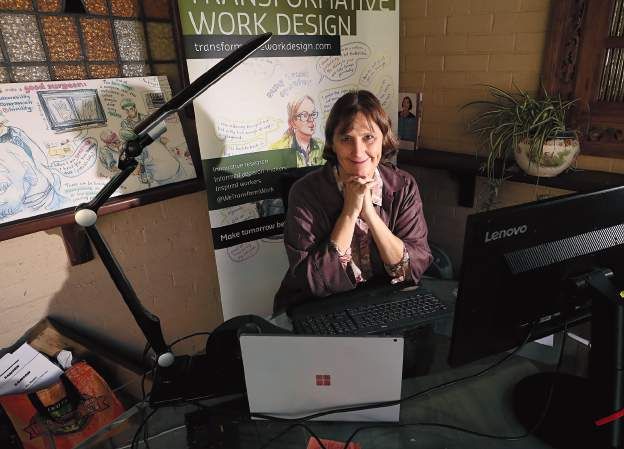

CRICOS No. 00114A

Foreword Contents
8
How we chose the best
Using data analytics, we found Australia’s best
researchers in more than 250 fields
10
Top of the world
These nine researchers lead the world, among
them Caroline Homer.
11
Lifetime achievers
P
Australia’s top 40 researchers who’ve made a
difference through their career long contribution
re-COVID-19, one of the great joys of being Education Minister was visiting 16
Australia’s universities to see firsthand the world-leading research taking place Business, Economics & Management
in our backyard. Whether it is research to improve ethical machine decision Sharon Parker, improving the design of work
making, the development of a new breed of pineapple that is resistant to 19
premature flowering or unlocking the secrets of the universe by studying Dark Chemical & Material Sciences
Matter, the breadth, depth and quality of Australian research demonstrates the Maria Forsyth, creating the batteries of the future
strength of the sector. 20
Research can save lives, make us healthier and protect our communities and Physics & Mathematics
the environment. It also helps us understand more about ourselves, our history and our future. Dietmar Müller, uncovering earth’s past secrets
Research will be essential to help power Australia’s coronavirus recovery. The productive capacity 24
of our nation will rely on educated workers, able to access innovation and research, to drive
Engineering & Computer Science
opportunity. Inkyu Sa, making autonomous vehicles safer
This means strengthening the link between research and outcomes. As we have seen through
28
the global research effort to find a vaccine for COVID-19, Australians are best served by
Health & Medical Sciences
encouraging international research collaborations that are in our national interest. Patrick McGorry, improving youth mental health
It is also important that international research collaborations are carefully balanced against Fiona Stapleton, preventing eye disease
Australia’s national interests, including our national security, values and ethical standards. The 32
Morrison Government takes the threat of foreign interference seriously and we are taking action
Humanities, Literature & Arts
to protect Australian research. Our Government wants universities working with industry and Agnieszka Sobocinska, dissecting our idealism
other organisations to commercialise research, turn ideas into jobs, and deliver economic growth.
34
The stories of the researchers in these pages are wonderful examples of the innovation and
Social Sciences
collaboration that takes place across the research sector. Charles Hunt, creating conditions for peace
Everyone in higher education must get better at telling these stories and making them relevant Alina Morawska, helping parents do better
for every Australian. 39
By demonstrating the value of our research, we continue to make the case for investment and Life Sciences & Earth Sciences
we also inspire the next generation of scientists and researchers. Nigel Cook, building the minerals industry
43
Dan Tehan Rising stars
Federal Minister for Education Australia’s top 40 early career researchers, the
leaders of the future
48
Global research collaborations
The universities which do best in working with
global elite institutions
RESEARCH 49
Editor Tim Dodd Business research collaborations
Art Director Samantha Yates
The universities which do best in working with
business
Sub-editors Justine Costello, Michael Ellis
Writers Tim Dodd, Jill Rowbotham, Julie Hare, Sian Powell 50
Advertising Marion Leddy Top ten books
+61 2 9288 2458 marion.leddy@news.com.au The academic books with the most impact in the
last decade
Printed by PMP Print, 31 Heathcote Road, Moorebank 2170 for the proprietor and publisher. Nationwide News Pty Ltd (ACN 008 438 828)
of 2 Holt Street, Surry Hills, NSW 2010, for insetion in The Australian on September 23, 2020
4 R E S EA RC H THE AUSTRALIAN H SEPTEMBER 23, 2020
Research at the
University of
Southern Queensland
is innovative, responsive
and intrinsically linked to the
communities we serve. Our track
record of targeted impact is
made possible by our dedicated
research institutes and centres.

Institute for Life                              Institute for Advanced
Sciences and the                                Engineering and Space
Environment (ILSE)                              Sciences (IAESS)

Improving food security and increasing the      IAESS researchers are working with more
resilience of Australia’s agricultural sector   than 70 aerospace, defence, agricultural
are key areas of focus for researchers          machinery and civil engineering companies
within ILSE.                                    to deliver knowledge, cutting-edge
                                                technologies and industry solutions at the
ILSE’s Centre for Applied Climate
                                                forefront of discovery.
Sciences’ Drought and Climate Adaptation
Program delivers state-of-the-art climate       Researchers from the Centre for Future
prediction tools to enable Australian           Materials are revolutionising the Australian
agricultural producers to strengthen farm       rail industry through the production and
management and resilience to drought.           installation of fibre reinforced polymer
                                                composite bridge sleepers across the
The Centre for Crop Health is improving
                                                country, including the iconic Sydney
the profitability and productivity of globally
                                                Harbour Bridge’s rail deck.
important crops such as wheat, barley,
lentils, oats and sorghum through the           USQ’s Mount Kent Astronomical
development of disease resistant varieties,     Observatory provides the only ground-
advanced diagnostics and the biological         based support in the southern hemisphere
control of pests.                               to NASA’s Transiting Exoplanet Survey
                                                Satellite with the expertise of researchers
The Centre for Sustainable Agricultural
                                                in the Centre for Astrophysics.
Systems conducts broad-ranging
and multi-disciplinary research that            Australian farmers are among the first in
enhances the management of agricultural         the world to benefit from the Centre for
enterprises as complex systems embedded         Agricultural Engineering’s research into
within and dependent on their natural           machine vision technologies and remote
environments, maximising production and         operation systems such as automated
conservation outcomes.                          irrigation and driverless tractors.
USQ’s world-class
research delivers
world-changing
results
Learn more about USQ Research
usq.edu.au/research

Institute for Resilient
Regions (IRR)

IRR works with communities to build an
innovative and thriving regional Australia
that is a great place to live and work.
The Institute’s Centre for Health Research
is addressing the significant disparities
in 5-year cancer survival rates that exist
between urban and rural cancer patients
by examining the journey from diagnosis
through to treatment.
The Rural Economies Centre of
Excellence is taking a multi-disciplinary
approach to addressing regional and rural
problems and opportunities, providing
solutions that integrate the economics
of innovation with world-leading
technical expertise in regional economic
development and agriculture.
Researchers from IRR’s Centre for
Heritage and Culture have uncovered
the contentious history of Australia’s
early Native Mounted Police through the
discovery and careful investigation of their
remote campsites.

CRICOS QLD 00244B NSW 02225M | TEQSA PRV12081

A year like no other
In the most challenging year Australia has faced in nearly a century, our researchers continue to
demonstrate their excellence and their commitment to solving real problems

T
            his year, 2020, has been like no other. First came the
            bushfire disaster, then the COVID-19 crisis. One
            consequence was that the value of the research which
            Australia’s scientists, academics and other specialists carry
out in our universities and research institutions became clearer than
ever. Much of the research community was mobilised to carry out
vital work, often under intense pressure in emergency conditions.
    People from across the spectrum of research fields –
immunologists, biochemists, epidemiologists, public health
specialists, legal experts, economists, psychologists, educators, social
workers and more – came together to deal with complex problems
in a pandemic situation, the scope and intensity of which no one
living alive today has ever dealt with.
    This year in The Australian’s Research 2020 magazine, we salute
our researchers, who have proved their value to Australia as never
before. Given the debt we owe to our research community, this year’s
edition of the Research magazine is more relevant than ever.
    Again we name Australia’s top researchers in 255 individual fields
of research. We make this choice objectively, using data analytics
based on where individual researchers publish and how many
citations they have. We also name the Australian university, or other
research institution, which leads in each of these fields, and this
choice is also determined by the data. The winning institution is the
one whose researchers’ papers – published in the top 20 journals in
the field in the past five years – has the most citations.
                                                                            I                       have worked together to publish the Research magazine in this
                                                                                                    format, and each year we look for new stories, relevant to the
    In a few cases, well-known names appear as the leading                  At the University of    Australian research community, which can be drawn from the data.
researchers. For example, psychiatrist Patrick McGorry, a tireless          Queensland a team led       This year we’ve chosen to examine the research collaboration
campaigner for improving youth mental, who was named as                     by (from left) Trent    which Australian universities undertake with industry, and with the
                                                                            Munro, Paul Young,
Australian of the Year in 2010, is the leader in the field of psychiatry.                           world’s top universities (see pages 48, 49). We also looked at academic
                                                                            and Keith Chappell,
    But the vast majority of the researchers whose names are revealed       are now testing a       books, and have built a top 10 list (see page 50).
in these pages are not widely known, except to their peers.                 COVID-19 vaccine            There’s one final important thing to say about this year’s Research
    This magazine is an opportunity for their excellence to be              based on their          magazine: We also honour Australia’s 40 top researchers, who have
recognised, and for us all to learn about fascinating avenues of            revolutionary           made an outstanding contribution to their discipline over the course
inquiries and important discoveries which would otherwise be little         “molecular clamp”       of their careers (in contrast to the research leader named in each
noticed by the wider public.                                                technology              field, who is there because of their recent performance).
    It is also an opportunity to shine a light on the research work of                                  And, also, we name 40 promising early career researchers who are
lesser-known universities and institutions. While the Group of Eight                                strong candidates to be Australia’s research leaders of the future.
universities carry most of Australia’s research load, many other                                        In the current environment, in which we may see major cuts to
institutions shine. For example, we find that the University of                                     research funding that could hamper the prospects of our future
Wollongong is Australia’s leading research institution in algebra,                                  research stars, it’s critical for universities and government to look to
while the University of Southern Queensland leads in the field of                                   the future and plan how Australia’s coming generation of research
composite materials.                                                                                talent can fulfil it’s potential.
    Just as we have found Australia’s top researcher in each field, we
have also looked globally to identify the world’s best in each of the                               Tim Dodd, Higher Education Editor, The Australian
255 fields of research we examine. In nine of these fields, the top                                 doddt@theaustralian.com.au
researcher in the world is in Australia (see page 10).                                              Paul McCarthy, CEO, League of Scholars
    This is the third year that The Australian and League of Scholars                               paul@leagueofscholars.com

8   R E S EA RC H      							                                                                                             THE AUSTRALIAN        H   SEPTEMBER 23, 2020
their work.                                           Institution abbreviations
                                                           We also name the top Australian institution in
                                                      each field of research, which is determined in a      Austin Health Austin
                                                      similar way. The top institution is the one           Australian Catholic University ACU
                                                      which has the most citations from research            Australian Defence Force Academy ADFA
                                                      published in the top 20 journals in that particular   Australian National University ANU
                                                      field in the last five years. Non-university          Australian Nuclear Science and Technology
                                                      organisations such as the CSIRO and medical           Organisation ANSTO
                                                      research institutes are also in the mix.              Baker Heart and Diabetes Institute Baker
                                                           We also saw a need to recognise research         Bond University Bond
                                                      excellence in other ways, honouring both              Bureau of Meteorology BoM
                                                      those who have made an outstanding                    Burnet Institute Burnet
                                                      contribution to their discipline through their        Charles Darwin University CDU
  From left: Paul McCarthy                            career, and the up-and-comers who will be the         Charles Sturt University CSU
  and Rasika Amarasiri                                top researchers of the future.
                                                                                                            Commonwealth Scientific and Industrial Research
                                                           We do this by naming 40 lifetime achievers       Organisation CSIRO
                                                      and 40 distinguished early career researchers.        Curtin University Curtin

How we did it                                              These are selected using a methodology
                                                      based on the annualised h-index – that is, the
                                                                                                            Deakin University Deakin
                                                                                                            Edith Cowan University Edith Cowan
We use data science to                                researcher’s h-index divided by the number
                                                                                                            Flinders University Flinders
                                                      of years in their career. This approach rewards
analyse the world’s                                   both excellence and consistency, and research
                                                                                                            Griffith University Griffith
research output                                       by eminent bibliometrics scholar Anne-Wil
                                                                                                            James Cook University JCU
                                                                                                            La Trobe University La Trobe
                                                      Harzing shows that the annualised h-index is
                                                                                                            Macquarie University Macquarie
We’ve taken the data-driven route to analyse          the best way of comparing different researchers
                                                      at different career stages, and those who             Monash University Monash
and profile the best researchers and research
institutions in Australia.                            work in different fields.                             Murdoch University Murdoch

     It is an approach that is now possible                League of Scholars’ data pool on research is     Peter MacCallum Cancer Centre Peter Mac
because of the volume and quality of                  deep, and this year we’ve used it to present          QIMR Berghofer Medical Reasearch Institute
information available online about research.          information in three new areas.                       QIMR Berghofer

     We turned to talent discovery and research            We show which universities and research          Queensland University of Technology QUT

analytics firm League of Scholars to help us          institutions collaborate most with the world’s top    RMIT University Melbourne RMIT
gather publicly accessible data. League of            10 research universities (as listed by the            Royal Botanic Gardens Victoria RBG Victoria
Scholars co-founders Paul McCarthy and                Academic Ranking of World Universities), and          Royal Children’s Hospital Melbourne RCH Melbourne
Rasika Amarasiri are pioneers of this approach,       we show which universities and research               Swinburne University of Technology Swinburne
compiling information on the world’s research         institutions collaborate most with business. Both     University of Adelaide Uni of Adelaide
papers, including authorship, when papers             of these measures are based on the number of          University of Canberra Uni of Canberra
were published, where they were published and         co-authorships of research papers. Finally, we        University of Melbourne Uni of Melb
numbers of citations.                                 reveal the top 10 scholarly books published by        University of Newcastle Uni of Newcastle
     This rich trove of data can be mined in many     Australian academics in the past 10 years,            University of New England UNE
ways and we’ve used it here to present as full a      based on the number of citations they have            University of New South Wales UNSW
picture as possible of Australian research.           received.
                                                                                                            University of Queensland Uni of Qld
     The core of the magazine is the lists of top          Our results, of course, are dependent on the
                                                                                                            University of South Australia UniSA
researchers and top research institutions in          data sources used (in our case mainly Google
                                                                                                            University of Southern Queensland USQ
each of eight major discipline areas. Each            Scholar) and the algorithms used. One
                                                                                                            University of the Sunshine Coast USC
discipline is divided into granular research fields   acknowledged drawback of the use of global
                                                                                                            University of Sydney Uni of Sydney
which largely follow the taxonomy used by             information is that fields of research which are
                                                                                                            University of Tasmania Uni of Tasmania
Google Scholar. (We have left out a handful of        focused on Australia can be underemphasised.
fields where Australian research is not strong.)           But we also believe the approach we have         University of Technology Sydney UTS

     In each of 255 fields we name the                used yields advantages. For example, it gives         University of Western Australia UWA

Australian-based researcher whose papers              more attention to humanities and social               University of Wollongong Uni of Wollongong
published in the 20 top journals in their field in    sciences than many other measures of research         Victoria University VU
the past five years have had the most citations       impact, it reveals which Australian scholars are      Walter and Eliza Hall Institute of Medical Research WEHI
by other researchers.                                 having global impact and it is up to date.            Western Sydney University Western
     The number of citations is, of course, an             We welcome your feedback.
excellent indicator of the impact and quality of      Tim Dodd

SEPTEMBER 23, 2020       H   T H E A U S T R A L I A N 										                                                                                    R E S EA RC H   9
Top of the world
                Nine researchers in Australian institutions are not only leaders in their field in this country, but they also
                hold the remarkable distinction of being the top researchers in their field globally. This means that
                no other researcher in the world has a higher number of citations from papers published in the
                last five years in the 20 top journals in that particular field.

                                                                         Homer began developing her scholarly skills
                                                                     while working as a clinical trials nurse with HIV             Australian-based
                                                                     patients at St Vincent’s Hospital in Sydney.                  researchers who
                                                                     “Suddenly I worked out there were other things to             lead the world
                                                                     think about ... not just medications and treatments
                                                                     and models of care,” she says. “I had some good               Field Chemical Kinetics &
                                                                     research training at that time.”                              Catalysis
                                                                                                                                   Global field leader
                                                                         Homer returned to midwifery at St George                  Shaobin Wang,
                                                                     Hospital under the mentorship of one of the early             Uni of Adelaide
                                                                     researchers in the field, Lesley Barclay.                     Field Mechanical Engineering
                                                                         “As a midwife, I wanted to make a difference to           Global field leader
                                                                     all women, not just one woman at a time,” Homer               Jie Yang, RMIT
                                                                     says. “So that’s the research endeavour. The                  Field Mining & Mineral
                                                                     opportunity to influence more broadly, both at an             Resources
                                                                     educational level and other systems level, was                Global field leader
                                                                                                                                   Ranjith Pathegama Gamage,
                                                                     incredibly inspiring, and what I wanted to do for the         Monash
                                                                     rest of my career.”
                                                                                                                                   Field Developmental
                                                                         In a 15-year stint at the University of
                                                                                                                                   Disabilities
                                                                     Technology, Sydney, continuity of care was a major            Global field leader
                                                                     research theme, after a major review established              Cheryl Dissanayake, La Trobe
                                                                     that pregnant women preferred to deal with a small            Field Plastic &
                                                                     number of practitioners, be cared for in the                  Reconstructive Surgery
                                                                                                                                   Global field leader
                Caroline Homer                                       community and see midwives throughout.
                                                                         While Homer’s academic career grew, she
                                                                                                                                   Anand Deva, Macquarie
                Midwifery researcher,                                continued to practise – two years ago she delivered           Field Pregnancy & Childbirth
                Burnet Institute                                     the fourth child for one patient.                             Global field leader
                                                                                                                                   Caroline Homer, Burnet
                Leading researcher in the                                International work in developing countries has
                                                                                                                                   Field Asian Studies & History
                world in the field of                                been another strand of her scholarship. Her most
                                                                                                                                   Global field leader
                                                                     influential papers, she thinks, were part of a 2014
                pregnancy and childbirth                             Lancet series on midwifery. “One of them showed
                                                                                                                                   Vedi Hadiz, Uni of Melbourne
                                                                                                                                   Field Educational
                                                                     that if you implement this whole package of                   Psychology & Counselling
                Her year in a Malawi mission hospital in 1992        interventions ... you’ll reduce your maternal death           Global field leader
                showed Caroline Homer the difference between         rate, your still-birth rate and your neonatal death           Andrew Martin, UNSW
                midwifery in the advanced and developing worlds,     rate considerably, somewhere between 50 and 80                Field Higher Education
                and gave her the sense of purpose that has           per cent,” Homer says. “That work is used now in              Global field leader
                propelled her ever since.                            the World Health Organisation and the United                  David Boud, UTS
                    “That sorted me out, really, as a midwife,       Nations Population Fund.”
                because the need for what midwives can do all over       Now she is studying the indirect effects of
                the world became so clear: our capacity to make a    COVID-19 in Australia and internationally, with
                difference to women’s lives, poor women but also     many mothers and children expected to die, not
                rich women,” says Professor Homer, who is            from the disease but because they are no longer
Aaron Francis

                co-program director of maternal, child and           accessing maternal health services.
                adolescent health at Melbourne’s Burnet Institute.   Jill Rowbotham

                10   R E S EA RC H    							                                                                                THE AUSTRALIAN   H   SEPTEMBER 23, 2020
T
his Lifetime Achievers Leaderboard
Lifetime Achievers
lists the five top researchers from
Australian universities and research
Leaderboard institutions in each of the eight major
discipline areas. To identify the five
top researchers in each area we
Research
calculate an annualised H-index for
each of them. The H-index, named for
physicist Jorge Hirsch who suggested
superstars
it in 2005, is defined at the highest
number H such that a given researcher has published H
papers which have been cited H times. It measures both
productivity and impact. For example, if a researcher
has published 50 papers each with at least 50 citations,
but has not managed to go one better and publish 51
These are Australia’s top 40 papers each with at least 51 citations, then their H-index
researchers, measured by their is 50. We then divide the H-index by the number of
years that a researcher has been active (since their first
performance over their career citation) to obtain an annualised figure.
Business, Economics & Management
Sara Dolnicar Neal Ashkanasy Rob Raven Sharon Parker Ian Phau
Tourism & Hospitality Human Resources & Business, Economics & Human Resources & Marketing
Organisations Management Organisations
At the University of At Curtin University, his
Queensland, her research At the University of At Monash University, he At Curtin University, she research interests
interests include market Queensland, he researches researches dynamics and researches job and work include country image,
segmentation methodology leadership, organisational governance of sustainability design, proactive behaviour, luxury branding, brand
and survey measures. culture, ethics and emotions. transitions. wellbeing and job performance. counterfeiting and piracy.
Chemical & Material Sciences
Shizhang Qiao Yusuke Yamauchi Shaobin Wang Hongqi Sun Yoshio Bando
Materials Engineering Materials Engineering Chemical Kinetics & Ca- Chemical Kinetics & Catalysis Materials Engineering
talysis
At the University of At the University of At Edith Cowan University, At the University of
Adelaide, his research Queensland, he researches At the University of Adelaide, his his research includes novel Wollongong’s Australian
interests are synthesis design of nanocrystals and research includes nanomaterial catalysis and advanced Institute for Innovative Materials
and characterisation of nanoporous materials. synthesis and application for oxidation processes. he researches nanomaterials
nanomaterials. adsorption and catalysis. and electron microscopy.
SEPTEMBER 23, 2020 H T H E A U S T R A L I A N R E S EA RC H 11Lifetime Achievers Leaderboard Research Superstars
Engineering & Computer Sciences
Dacheng Tao Peng Shi Dietmar Hutmacher Qing-Long Han Chunhua Shen
Computer Vision & Pattern Automation & Control Theory Biomedical Technology Automation & Control Theory Computer Vision & Pattern
Recognition Recognition
At the University of Adelaide, At the Queensland University At the Swinburne University
At the University of Sydney, he researches systems of Technology, he researches of Technology, he researches At the University of Adelaide,
his research focus is artificial and control theory, and biomaterials, biomechanics, power system stability his research interests are
intelligence. computational intelligence. medical devices and tissue and control, and wireless statistical machine learning
engineering. communication. and computer vision.
Health & Medical Sciences
Sarah Medland Richard Ryan Louisa Degenhardt James Sallis Grant Montgomery
Genetics & Genomics Social Psychology Addiction Public Health Genetics & Genomics
At the QIMR Berghofer At the Australian Catholic At UNSW Sydney, her At the Australian Catholic At the University of
Medical Research Institute, University, his research diverse epidemiological University, he researches Queensland, his research
she researches genetic includes human motivation studies include analysis of promoting physical activity, includes genomic mapping
and environmental factors and personality development large-scale community and and policy and environmental for risk of endometriosis and
influencing mental health. and well-being. clinical population surveys. influences upon it. melanoma.
Humanities, Arts & Literature
Michael Haugh Larissa Hjorth Fengyi Jin Alastair Pennycook Adrian North
Communication Communication Sex & Sexuality Foreign Language Learning Music & Musicology
At the University of At RMIT University, her At UNSW Sydney, At the University of At Curtin University, his
Queensland, his linguistics research fields include mobile his research includes Technology, Sydney, his research includes music and
research in pragmatics media and mobile art. epidemiology of sexually research includes implications wellbeing in specific and
includes analysing face, (im) transmitted infections and of the global spread of general populations.
politeness and teasing. HPV-related anal cancer. English.
12 R E S EA RC H THE AUSTRALIAN H SEPTEMBER 23, 2020Life Sciences & Earth Sciences
Lidia Morawska Wenshan Guo William Laurance Ben Hayes Ian Paulsen
Environmental Sciences Environmental Sciences Biodiversity & Conservation Animal Husbandry Life Sciences &
Biology Earth Sciences
At the Queensland At the University of Technology, At the University of
University of Technology, Sydney, she researches At James Cook University, his Queensland, he researches At Macquarie University, his
she researches air quality’s innovative water and research includes impacts of genetic improvement of research interests
impact on health and the wastewater treatment, and intensive land uses on tropical livestock, crop and pasture include microbiology and
environment. reuse technologies. forests. and aquaculture species. microbial genomics.
Physics & Mathematics
Ray Frost Benjamin Eggleton Shi Xue Dou Andrey Miroshnichenko Ping Koy Lam
Spectroscopy & Optics & Photonics Condensed Matter Physics & Optics and Photonics Physics & Mathematics
Molecular Physics Semiconductors
At the University of At UNSW Sydney, his At the Australian National
At the Queensland University Sydney, his research At the University of research interests include University, his research
of Technology, his research interests include optical Wollongong, his research nonlinear optics and includes quantum optics,
interests include vibrational communications technology. interests include energy nanophotonics. optical metrology and
spectroscopy. materials research. nonlinear optics.
Social Sciences
Herbert Marsh Julie Henry Tan Yigitcanlar Andrew Martin David Treagust
Educational Psychology & Cognitive Science Urban Studies and Planning Educational Psychology & Science & Engineering
Counselling Counselling Education
At the University of At the Queensland
At the Australian Catholic Queensland, she University of Technology, he At the UNSW Sydney, he At Curtin University,
University, his research researches how social researches contemporary researches educational his research interests
includes self-concept cognition and prospection urban planning and motivation, engagement and include how interventions
and motivation. are disrupted by normal adult development challenges. achievement. can enhance students’
ageing and clinical illness. understanding of science.
SEPTEMBER 23, 2020 H T H E A U S T R A L I A N R E S EA RC H 13Business, Economics &
Management
Australia’s research field leaders
These 16 scholars are Australia’s leading researchers in business,
economics and management – one selected from each of the
16 fields in this discipline. They are the researchers with the highest
number of citations from papers published in the last five years in
the 20 top journals in their field. In each field we also name
Australia’s top research institution, the one with most citations in
the top 20 journals in the field in the last five years.
Field Accounting & Taxation Field Entrepreneurship & Innovation
Field leader John Dumay, Macquarie Field leader Allan O’Connor, UniSA
Lead institution Macquarie Lead institution Macquarie
Field Business, Economics & Field Finance
Management (general) Field leader Dirk Baur, UWA
Field leader Rob Raven, Monash Lead institution Macquarie
Lead institution Monash
Field Game Theory and Decision Science
Field Development Economics Field leader Haris Aziz, UNSW
Field leader Emilia Tjernstrom, Uni of Sydney Lead institution Monash
Lead institution Monash
Field Human Resources & Organisations
Field Economic History Field leader Sharon Parker, Curtin Sharon Parker
Field leader Laura Maran, RMIT
Lead institution Uni of Melbourne
Lead institution Monash Organisational
Field Economic Policy
Field International Business behaviour expert
Field leader Debdulal Mallick, Deakin
Field leader Bo Bernhard Nielsen,
Uni of Sydney Curtin University
Lead institution QUT Lead institution Monash Research leader in
Field Economics Field Marketing the field of human
Field leader Paul Raschky, Monash
Lead institution Monash
Field leader Tom Chen, Uni of Canberra
Lead institution Griffith
resources and
Field Educational Administration Field Strategic Management
organisation
Field leader Bob Lingard, Uni of Queensland Field leader Morgan Miles, CSU
Lead institution Deakin Lead institution Uni of Newcastle
Back in 1930, John Maynard Keynes,
Field Emergency Management Field Tourism & Hospitality one of the most influential thinkers of
Field leader Douglas Paton, CDU Field leader Noel Scott, USC the 20th century, wrote in an essay
Colin Murty
Lead institution CDU Lead institution Griffith
predicting the future of work: “For the
16 R E S EA RC H THE AUSTRALIAN H SEPTEMBER 23, 2020If you give people
autonomy and
agency and you
trust them, they
usually do a
good job
five key principles – stimulating,
mastery, agency, relational and tolerable
– that if adopted can guarantee
fulfilling and rewarding work.
Parker’s research interests are now
branching out into neuroscience: how
different work design combinations
impact cognitive functioning and
whether SMART jobs can protect
against Alzheimer’s.
Next year, she will launch what she
hopes will be a 20-year study to track
10,000 individuals’ work experiences,
with a particular focus on the impact of
automation on jobs. It’s called WALC
(Work Across Life and Careers).
Of course, the work revolution
thrust upon almost the entire economy
by the pandemic is rich pickings for
Parker and her team. Their recent
article in the Harvard Business Review
explored how managers are coping with
first time since his creation, man will be Institute. Her central focus is on the Amazon warehouse. having staff working remotely during
faced with his real, his permanent design of work: what makes jobs “Our research suggests, if you give COVID. For many, not so well.
problem; how to occupy the leisure rewarding, meaningful, healthy, people autonomy and agency and you Parker and her co-authors found
(time).” Keynes’ utopian 15-hour week productive and stimulating. trust them, they usually do a good job. that 40 per cent of the 215 managers
hasn’t eventuated. The opposite is true. “From a psychological perspective, They will be trustworthy and they will surveyed had low self-confidence in
“Greedy jobs” eat up 15-hour days when work is well-designed, workers deliver on expectations.” their ability to manage staff who were
for some; the gig economy depletes have interesting tasks, autonomy over She says most jobs are a hangover working remotely, and a similar number
financial security for others. those tasks, a meaningful degree of from history – including the nine-to- thought staff were slacking off,
What is common in a surprising social contact with others and a five work day. Rarely, however, do incompetent or lacked essential skills
number of jobs – not matter how elite or tolerable level of task demands,” managers ask the question: Could this compared to in-office colleagues.
pedestrian – is how badly designed they Parker says. job be done in a different, more “The picture is a not a rosy one,”
are, says Sharon Parker, an Australian For many, jobs are tedious, efficient, more creative and better way? they write, with staff feeling distrusted
Research Council Laureate Fellow and uninspiring, repetitive, dull and To address the lack of design, Parker and micromanaged by bosses who
professor of organisational behaviour at exhausting – whether we work in a and her team have designed a don’t feel in control.
Curtin University’s Future of Work high-end consultancy firm or an framework called SMART. It embodies JULIE HARE
SEPTEMBER 23, 2020 H T H E A U S T R A L I A N R E S EA RC H 17PARTNER CONTENT
U
niversities play pivotal roles for Advanced Engineering and Space Sciences
in the economic, social and houses a long duration hypersonic wind tunnel
cultural development of that delivers hypersonic flows of up to Mach 7.
Australia. We do this not just Researchers from the institute are working
by educating the next with more than 70 aerospace, defence, agriculture
generation of leaders, but by machinery and civil engineering companies to
problem-solving and helping realise opportunities deliver knowledge, cutting-edge technologies and
for stronger, more resilient economies and industry solutions at the forefront of discovery.
communities. USQ’s Institute for Resilient Regions works
As we begin to take stock of the impact of with regional communities to build an innovative
COVID-19, it is clear the research expertise and and thriving regional Australia that is a great place
innovation enterprise offered by universities will to live and work. A long-term collaboration
be essential parts of the post-pandemic recovery. between the institute’s Centre for Health Research
The University of Southern Queensland (USQ) and Cancer Council Queensland is addressing the
has a long history of providing reliable and significant disparities in five-year cancer survival
independent advice to governments, industry and rates between urban and rural patients by
the general community on a range of global issues conducting a comprehensive examination of the
and we are well equipped to contribute to the journey from diagnosis through to treatment.
Research
recovery effort. Our targeted, applied research is The partnership is driven by a shared
complemented by purposeful engagement with commitment to promoting the health and
expertise is key to
local communities through to global communities wellbeing of Queenslanders, specifically through
of practice, government and business. research that addresses fundamental issues in
post-pandemic
Improving food security and increasing the policy development and the delivery of social and
resilience of our agricultural sector are two areas economic infrastructure accessible to all
recovery
of focus for researchers from USQ’s Institute for Australians.
Life Sciences and the Environment through While USQ’s research and its translation into
engagement with agricultural end-users to deliver real-world applications is crucial to the future of
innovative solutions in crop health, natural Australia’s communities, and the creation of new
resource management and climate science. industries to support our post-COVID economy,
The institute’s Centre for Crop Health is the challenges and opportunities do not stop there.
partnering with the Grains Research and This unique facility is enabling USQ to work with USQ understands innovation and change can
Development Corporation (GRDC) to improve the global partners to bring light to new worlds and be achieved only by standing beside our partners,
profitability and productivity of globally important advance our understanding of the solar system. local industries and communities and exciting the
crops such as wheat, barley, lentils, oats and The Mount Kent observatory is the only next generation to tackle these opportunities.
sorghum. USQ is giving Australian farmers access facility in the southern hemisphere providing USQ researchers are working collaboratively
to pathogen-resistant varieties of key crops dedicated ground-based support for NASA’s (including internationally), finding solutions where
combined with proven expertise in controlling Transiting Exoplanet Survey Satellite (TESS). Our others see problems, and building partnerships
pests and disease, increasing yield performance observatory is contributing to the discovery and along the value chain. The University of Southern
and minimising production costs. Through characterisation of nearby exoplanetary systems Queensland’s track record shows universities can
meaningful on-farm engagement, USQ’s Centre using a state-of-the-art array of 0.7m aperture build value, create opportunities and to inspire
for Applied Climate Science is delivering improved telescopes and a specialised spectrograph. young Australians wanting to shape their own
climate prediction tools to strengthen farm In partnership with the German Aerospace futures.
management and resilience to drought. Our Centre (DLR), Mount Kent is the base for a To find out more visit usq.edu.au/research.
research is ensuring the profitability of Australian SMARTnet geostationary space debris monitoring
grain growers and livestock industries and shaping telescope that helps to track and record space junk.
the future of global food production. With a focus on hypersonic propulsion
USQ’s Centre for Astrophysics has established systems, machine learning and machine vision
a reputation as a world leader in space sciences. technologies and a rocket fuel development Professor John Bell
We are renowned for our Mount Kent facility, USQ is making significant developments Deputy Vice-Chancellor
(Research & Innovation)
Astronomical Observatory, the only professional in automated agricultural infrastructure and
University of Southern Queensland
astronomical research facility in Queensland. advanced materials engineering. USQ’s Institute
18 R E S EA RC H THE AUSTRALIAN H SEPTEMBER 23 2020Chemical & Material Sciences
Australia’s research field leaders
These 17 scholars are Australia’s leading researchers in Field Analytical Chemistry
Field leader Nam-Trung Nguyen, Griffith
chemical and material sciences – one selected from each Lead institution UNSW
of the 17 fields in this discipline. They are the researchers Field Biochemistry
with the highest number of citations from papers published Field leader David Komander, WEHI
Lead institution Monash
in the last five years in the 20 top journals in their field. In each
Field Ceramic Engineering
field we also name Australia’s top research institution, the Field leader Inna Karatchevtseva, ANSTO
one with most citations in the top 20 journals in the field Lead institution UNSW
in the last five years. Field Chemical & Material Sciences (general)
Field leader Philip Gale, Uni of Sydney
Lead institution Uni of Adelaide
Field Chemical Kinetics & Catalysis
Field leader Shaobin Wang, Uni of Adelaide
Lead institution Uni of Adelaide
Field Combustion & Propulsion
Field leader Evatt Hawkes, UNSW
Lead institution UNSW
Field Composite Materials
Field leader Yiu-Wing Mai, Uni of Sydney
Lead institution USQ
Field Crystallography & Structural Chemistry
Field leader Stuart Batten, Monash
Lead institution UNSW
Field Dispersion Chemistry
Field leader Rico Tabor, Monash
Lead institution Uni of Queensland
Field Electrochemistry
Field leader Maria Forsyth, Deakin
Lead institution Uni of Wollongong
Field Inorganic Chemistry
Field leader Peter Junk, JCU
Lead institution Curtin
Field Materials Engineering
Field leader Shizhang Qiao, Uni of Adelaide
Maria Forsyth Lead institution Uni of Wollongong
Chemist, Deakin University Field Medicinal Chemistry
Field leader Vicky Avery, Griffith
Research leader in the field of electrochemistry Lead institution Griffith
Field Nanotechnology
It took Maria Forsyth a while to settle on her real research interests. Beginning with a broad Field leader Hoe Tan, ANU
foundation of study in materials engineering and chemistry, she sailed through her doctorate at Lead institution Uni of Wollongong
Monash University. With a questing mind, she worked on materials for new optic fibres and Field Oil, Petroleum & Natural Gas
chemistries for improved in-vitro fertilisation methods, before her focus moved to polymer Field leader Zhejun Pan, CSIRO
electrolytes in safer solid-state capacitors for implantable defibrillators.
Lead institution Curtin
Finally, she settled in her long-term field of expertise: energy storage and corrosion. Forsyth Field Organic Chemistry
is now an acclaimed expert in the field. Deakin University built a lab in Melbourne according Field leader Thanh Vinh Nguyen, UNSW
Lead institution Uni of Queensland
to her specifications. She leads collaborative global research into novel types of batteries and
corrosion inhibitors, and is working with industry to bring environmentally sound and ethical Field Polymers & Plastics
battery manufacturing to Australia. Field leader Cyrille Boyer, UNSW
Alan Barber
Lead institution UNSW
Continued next page
SEPTEMBER 23, 2020 H T H E A U S T R A L I A N R E S EA RC H 19Continued from previous page
Physics & Mathematics
With her research teams around the world, Forsyth
is calibrating, testing and refining prototype batteries, Australia’s research field leaders
looking for ideal combination of strengths.
“The holy grail for batteries is a high-energy These 21 scholars are Australia’s leading researchers in
density battery, which means it has a lot of juice in it, chemical and material sciences – one selected from
you can drive a car a long way – the battery will last for
each of the 21 fields in this discipline. They are the
a week or more between charges,” she says. “And you
want a battery that will run for thousands of cycles researchers with the highest number of citations from
before you have to throw it out.” papers published in the last five years in the 20 top journals
Such a battery would not only be a boon for in their field. In each field we also name Australia’s top
renewable energy storage and the electric machines of
the future, but also for remote and impoverished research institution, the one with most citations in the top 20
communities in the developing world, where charging journals in the field in the last five years.
a smartphone to stay abreast of market prices and find
buyers can make all the difference to people’s lives.
Forsyth’s fascination with the field matured during
her Fulbright scholarship postdoctoral research at
Northwestern University in the US. She was interested
in new energy technologies, and whether electrolyte
materials could be used in devices. “Back then, you
didn’t have to make a device,” Forsyth says. “You just
had to make a material, measure its properties and say,
Field Acoustics & Sound Field High Energy & Nuclear Physics
‘this could be useful for a device’.” Field leader Nicole Kessissoglou, UNSW Field leader Bruce Yabsley, Uni of Sydney
In the years since her early research, she and her Lead institution UNSW Lead institution Uni of Sydney
collaborators have found a novel salt-based electrolyte Field Algebra Field Mathematical Analysis
increases the efficiency of lithium-ion batteries and Field leader Aidan Sims, Uni of Field leader Yihong Du, UNE
prevents them burning or exploding. They are now Wollongong Lead institution UNSW
working on new sodium-ion batteries and new battery Lead institution Uni of Wollongong
Field Mathematical Optimisation
electrode materials using nickel and manganese, as Field Astronomy & Astrophysics Field leader Guoyin Li, UNSW
well as biomass carbon from organic waste, while Field leader Joss Bland-Hawthorn, Lead institution UNSW
Uni of Sydney
trying to steer away from cobalt, mostly mined in Field Mathematical Physics
Lead institution ANU
Africa – often in a particularly unethical way. Field leader Ian Marquette, Uni of Queen-
Field Computational Mathematics land
Growing up in a traditional Greek family wasn’t an
Field leader Fawang Liu, QUT Lead institution Uni of Queensland
easy ride for a gifted daughter. Neither of Forsyth’s
Lead institution Monash
parents had much education and she was expected to Field Nonlinear Science
Field Condensed Matter Physics & Field leader Tonghua Zhang, Swinburne
get married and perhaps find a secretarial job. Semiconductors Lead institution UWA
Forsyth did get married, and she did have two Field leader Cornelius Hempel, Uni of
children, but she insisted on following an academic Sydney Field Optics & Photonics
path. “I was a geek,” she recalls. Lead institution Monash Field leader David Moss, Swinburne
Field Discrete Mathematics Lead institution ANU
“I always wanted to know how things work. How
the electricity gets to the pole.” Field leader David Wood, Monash Field Physics & Mathematics (general)
Her field continues to expand in new and Lead institution Monash Field leader Kavan Modi, Monash
Field Electromagnetism Lead institution UNSW
unexpected ways. A year ago the federal government
funded the Future Batteries Industries Co-operative Field leader Yingjie Jay Guo, UTS Field Probability & Statistics with
Lead institution Macquarie Applications
Research Centre, led from Western Australia, and Field leader Robert Kohn, UNSW
industries are collaborating with Forsyth and her Field Fluid Mechanics Lead institution Monash
colleagues to develop future electrolyte systems for Field leader Ivan Marusic,
Uni of Melbourne Field Pure & Applied Mathematics
next-generation batteries. Lead institution Uni of Melbourne Field leader Lishan Liu, Curtin
“The idea is to establish an ecosystem of industries Lead institution Monash
Field Geometry
here in Australia, to not just dig resources up and sell Field leader Brett Parker, Monash Uni Field Spectroscopy & Molecular Physics
them, but actually add value to the product and add Lead institution Monash Field leader Daniel Kosov, JCU
value to the resource,” Forsyth says. Lead institution Uni of Melbourne
Field Geophysics
“And to actually make batteries here.” Field leader Dietmar Müller, Uni of Sydney Field Thermal Sciences
Sian Powell Lead institution Uni of Melbourne Field leader Jiyuan Tu, RMIT
Lead institution Uni of Adelaide
20 R E S EA RC H THE AUSTRALIAN H SEPTEMBER 23, 2020millennia passing in seconds. “I’ve spent much of my
career looking at the evolution of the Earth in the last
200-250 million years, from the time when the Pangea
supercontinent existed to today,” Müller says.
“But we are now pushing the tectonic
reconstructions and the dynamic models of the
Earth’s interior much further back in time. There
was a previous supercontinent, Rodinia, that existed
about 1.1 billion years ago.”
He and his colleagues are now working on models
that reach back that far. In one of his most-cited
projects, Müller and his team used big data
analysis to build the first digital map of the age of the
world’s ocean floor. They have also predicted –
correctly – where opal deposits might be found in
northern NSW, and uncovered a link between
certain very large earthquakes and the structure of
the Pacific Ocean’s crust. They are now working
with a large mining company to develop and apply
new “deep time” data-analysis techniques that could
help find copper deposits.
Müller first studied science at Christian-Albrecht
University of Kiel in northern Germany, and with
an undergraduate degree under his belt, he moved
to the US, winding up at the renowned Scripps
Institution of Oceanography at the University of
California in San Diego.
But we are now In 1993, with a doctorate from one of the world’s
pushing the foremost oceanographic institutes, Müller began
tectonic looking for a job. Sydney University responded to
reconstructions one of his applications and, after a phone interview,
offered him work as a lecturer.
and the
He had never been to Australia, but Müller bought
dynamic a one-way ticket. He has worked the same university
models of the ever since and married an Australian fellow geologist.
Earth’s interior Müller was in the US, though, at just the right time.
much further In the mid-80s, the first computers were becoming
useful scientific tools, and many of the huge computing
back in time. advances were happening in Texas and California – to
the delight of US-based scientists.
“There was a generation of 3D graphics computers
that came out which didn’t exist in Germany at all,”
Dietmar Müller Müller says, adding that with negligible power (about
Geophysicist, University of Sydney the same as a tablet today), one of these early
Research leader in the field of geophysics computers had a graphics interface linked to a
computer the size of a fridge. “It was really attractive,
because at that time the first software was being
Dietmar Müller’s primary research focus is the physical fabric of the world and how it has evolved developed to manipulate images of tectonic plates on a
over more than a billion years, reaching back to a time when life as we know it didn’t exist. spherical surface: the globe,” he says.
Using the latest advances in machine learning and computing technology, the Sydney Müller was on hand when this revolutionary
University geophysicist and his colleagues use the geophysical and geochemical signatures of technology was first offered to geophysicists and he
preserved rock to reconstruct the way continents have formed, collided and disintegrated, and the has used it ever since. “I was one of the few people who
implications for today’s world. had this technology at my fingertips,” he says.
Professor Müller and collaborating scientists around the world have built powerful interactive “This is how I became truly fascinated by plate
Britta Campion
online tools to better visualise the Earth’s plate tectonic evolution. Using 4D computer models, the tectonics and deep geological time.”
movements of continents and the evolution of ocean basins can be seen in a time-lapse movie, with Sian Powell
SEPTEMBER 23, 2020 H T H E A U S T R A L I A N R E S EA RC H 21Research at ACU
18th INFORTHENURSING¹
WORLD
26th IN THE WORLD FOR
SPORT SCIENCE2
Top 75 FOR EDUCATION¹
Top 200 FOR PSYCHOLOGY¹
Top 250 FOR ARTS AND
HUMANITIES 3
¹ Academic Ranking World Universities Subject Rankings 2020
² Academic Ranking of World Universities, Special Focus Institution
Ranking of Sport Science Schools and Departments 2018
3
Times Higher Education Subject Rankings 2020
Dianoia Institute of Mary MacKillop Institute for Institute for Humanities and
Philosophy Health Research Social Sciences
Dianoia is dedicated to ground-breaking The Mary MacKillop Institute for Health The newly opened Institute for Humanities
research in the central areas of analytic Research (MMIHR) works towards better and Social Sciences continues our growth in
philosophy, including metaphysics, health outcomes in Australia and around the liberal arts.
epistemology, logic, ethics and metaethics, the world.
Current research explores histories of
aesthetics, social and political philosophy,
Director Professor John Hawley, who leads the displacement from early modern times to the
and the philosophy of mind, language,
Exercise and Nutrition research program, is present day.
religion, and science.
co-investigator on a Medical Research Future
Fund study of how time-restricted eating can Institute Director Professor Joy Damousi
Our ARC-funded research includes case
improve glycaemic control. leads an ARC project on the aftermaths of war
studies on the Banking Royal Commission and
between 1815-1950 across Europe, Asia, and
Paris Climate Agreement addressing ethics
Leading the Behaviour, Environment and America, with an emphasis on displacement,
of corporations and group responsibility, and
Cognition research program, Professor Ester refugees and long-term trauma.
work on the physics of time in collaboration
Cerin has received NHMRC funding to
with researchers from the University of Professor Sheila Fitzpatrick is undertaking
explore the impact of the built and natural
Sydney’s Centre for Time. research on an ARC project on Russian
environment, air pollution, and noise on
cognitive decline in older adults in Australia displaced persons after the Second World War
Other international collaborations include
and the UK. and their resettlement in Australia.
work on mental content with New York
University, and a new project led by Dianoia’s Professor Susan Broomhall is collaborating
A new Bone Health and Fractures research
Professor John Hawthorne with Professor on a major EU study of the forced movement
program led by Professor Mattias Lorentzon
Timothy Williamson at Oxford University and of peoples across the Mediterranean from
is investigating the efficacy of two food
researchers from the University of Southern 1492-1923, through analysis of religious
supplements in affecting gut bacteria and
California that seeks to create formal models of persecution, slavery and indentured labor, and
improving bone health in postmenopausal
knowledge. environmental and social catastrophe.
women.World-leading
research in a
changing world.
At Australian Catholic University (ACU), our research seeks to achieve excellence
in our priority areas of education, health, theology and philosophy and other liberal
arts, which are underpinned by our commitment to the common good.
Learn more about research at ACU
acu.edu.au/research
Institute for Learning Institute for Positive Institute for Religion and
Sciences and Teacher Psychology and Education Critical Inquiry
Education The Institute for Positive Psychology and The Institute for Religion and Critical
The Institute for Learning Sciences and Education (IPPE) undertakes research in Inquiry (IRCI) straddles three research
Teacher Education (ILSTE) undertakes education, Indigenous education, human programs: Biblical and Early Christian
studies in partnership to improve motivation and behaviour. Studies, Medieval and Early Modern
educational outcomes and life chances for Studies, and Religion and Theology.
The Positive Psychology research program,
all children and young people.
led by Professor Philip Parker, includes IRCI also leads a node of the ARC Centre of
Current ARC projects examine young randomised control trials as well as the use Excellence for the History of Emotions.
children’s learning in the digital society; of cutting-edge statistical methods applied
ARC-funded research includes Institute
equipping learners with coding skills; the role to large-scale longitudinal or cross-country
Director Professor Peter Howard’s project on
of standards in assessment; multi-literacies in survey data.
the Sistine Chapel in the 15th century, and Dr
learning science; and workforce issues in the
Professor Herb Marsh is collaborating with the Matthew Champion’s DECRA on medieval and
early childhood sector.
University of Luxembourg on an international early modern perceptions of time.
A team led by Institute Director Professor study of students’ academic self-concepts. With
Associate Professor Matthew Crawford is
Claire Wyatt-Smith is investigating the quality Professor Richard Ryan, he also leads an ARC
collaborating with Ca’ Foscari University
and impact of teacher education programs Linkage project mapping policy interventions
of Venice on his DECRA on the 5th century
in preparing the nation’s next generation to changes in principals’ motivation and
bishop and theologian, Cyril of Alexandria.
of teachers. Generating new knowledge wellbeing.
about the Australian Tertiary Admission Other international collaborations include
Leading the Motivation and Behaviour
Rank (ATAR) as a predictor of becoming a Professor Christopher Ocker’s project with
research program, Professor Chris Lonsdale’s
successful teacher, the project is also revealing New York University/Abu Dhabi researchers
teacher training interventions have been
patterns in preservice teacher progression into exploring Christian-Muslim entanglements in
delivered in hundreds of schools across
employment. the medieval and early modern worlds.
Australia and internationally. His ARC project,
with a consortium of international universities,
examines the effects of children’s exposure to
electronic screens on their development.You can also read


