RISKS OF LINKING THE EU ETS TO OTHER CARBON MARKETS - TOWARDS A GLOBAL CARBON MARKET
←
→
Page content transcription
If your browser does not render page correctly, please read the page content below
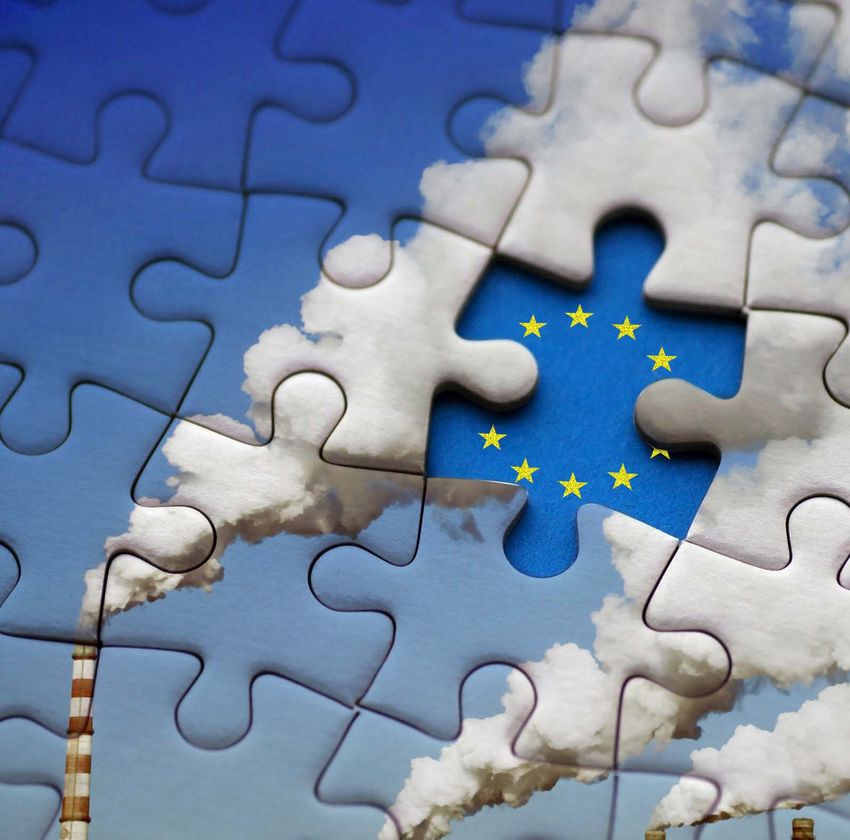
TOWARDS A GLOBAL CARBON MARKET
  RISKS OF LINKING THE EU ETS TO
        OTHER CARBON MARKETS
                            May 2015

                                  1
Executive summary
    The number of regions and countries that are putting a price on carbon pollution is vastly increasing. Nearly 40
    countries already price carbon or plan to do so, including China that will roll out a national carbon market from
    2016 onwards. Linking these different carbon markets is being envisaged by several European policymakers.

    For example, the European Commission continues to see the development of an international carbon market as
    a major way to reduce emissions. Several EU Member States have already mobilized 50 million dollars for the
    World Bank’s Partnership for Market Readiness (PMR), an initiative for preparatory work and capacity building
    to establish carbon markets in emerging economies. Concretely, the European Commission aims to initial1 an
    agreement to link the Swiss and the EU’s Emissions Trading Systems in the first half of 2015. This is significant
    because it would be the first time the EU ETS is linked to a carbon market outside the EU’s jurisdiction and
    would set the precedent for how to link to other carbon markets in the future.

    The main benefits of linking are cost-efficiency as a result of increasing the pool of emissions reductions
    available, which could allow countries to increase their climate ambition. However, if not designed carefully,
    these lower costs may come at the price of reduced overall emissions abatement, lower domestic investments
    and co-benefits as well as a loss of public funds.

    There are also concerns that linking the EU ETS with foreign trading schemes would allow foreign allowances
    and credits to enter the EU’s carbon market and undermine the EU’s decision to achieve at least 40% emissions
    reductions domestically by 2030 (relative to 1990). The decision to achieve the EU’s 2030 climate target wholly
    through domestic means was announced as part of the EU’s 2030 energy and climate policy framework in
    October 2014 and confirmed in the latest EU submission of its climate pledge towards the Paris climate treaty.

    Finally, current rules do not allow the European Parliament to participate in the linking negotiations and do not
    provide public access to crucial documents.

    The ongoing negotiations to link the EU ETS with the Swiss carbon market and the upcoming proposal to
    revise the EU’s carbon market, expected in the third quarter of 2015, provide unique opportunities to address
    unresolved issues outlined in the policy brief.

    Key recommendations include:

    •   A decision to link the EU ETS with other carbon markets should be accompanied by an increase in the EU’s
        emission reduction target

    •   The upcoming EU ETS revision must introduce safeguards for any decisions to link the EU ETS with other
        carbon markets, e.g. an assessment of the fair share of the climate ambition of the respective jurisdiction,
        the inclusion of aircraft operators, the exclusion of international offsets, the existence of equivalent price
        and supply management and a robust allowance allocation method

    •   The upcoming EU ETS revision should introduce public review of linking proposals and rules, including
        a strengthened role of the European Parliament, improved transparency and public access to relevant
        documents

    •   Ongoing negotiations with Switzerland should set a positive precedent and avoid jeopardizing the EU ETS
        revision

2
What is linking of carbon markets?
 Linking allows companies to purchase and use allowances from             linked systems. Quebec and California were the first ones to link
 another trading system for their compliance obligations. To link         their carbon markets and held their first joint auction in November
 carbon markets, compatible registries and requirements for               2014. Recently Ontario announced that it will also join the Quebec-
 the measurement, reporting and verification (MRV) are needed.            California carbon market.
 Linking will result in a harmonization of the carbon price within the

 State of play of EU’s linking objectives
 Several players in the EU, including Member States like the UK and       EU ETS through their membership of the European Economic Area
 Germany, the European Commission and industrial groups like              agreement, linking with Switzerland would be significant because
 Dow Chemicals, have highlighted the importance of linking the            it would be the first formal process to link the EU ETS with a carbon
 European carbon market to other carbon markets as the main tool          market outside the EU’s jurisdiction, setting a precedent for future
 to reduce global emissions and address carbon leakage2. Although         linking negotiations with other jurisdictions, such as South Korea
 a linkage between emerging carbon markets and the EU ETS is              and ultimately China. The negotiations with Switzerland were
 not expected to happen in the foreseeable future, negotiations           temporarily put on hold when Switzerland voted to control and
 to link the EU ETS with Switzerland already started in 2010 when         restrict immigration autonomously in February 2014. However, in
 the European Commission requested and received a negotiation             March 2015 a seventh round of negotiations between the Swiss
 mandate from the Council.                                                and EU took place where both sides confirmed their desire to
                                                                          clarify the outstanding issues as soon as possible in order to initial
 While Norway, Iceland and Liechtenstein are already covered by the       the linking agreement in the first half of 20153.

 Linking carbon markets in the context of the EU’s domestic 2030 target
 It is unclear how linking other carbon markets to the EU ETS             and undermine the domestic nature of the target. This goes against
 can be done as part of the EU’s climate goal to reduce domestic          the decision by EU leaders to meet the at least 40% climate target
 greenhouse gas emissions by at least 40% by 2030 without the             solely by domestic climate actions. To ensure that the possible
 use of international credits. Although the Commission highlights4        inflow of foreign emission allowances does not cause a reduction
 that linking does not affect the domestic nature of the 2030             in EU’s domestic climate action, linking the EU ETS with another
 climate target, linking the EU ETS with another system could             carbon market should be coupled with an increase in EU’s climate
 effectively allow foreign allowances into the EU’s carbon market         ambition.

 Linking procedures in the EU ETS
 Current EU rules allow the EU ETS to be linked to any compatible         give its approval, but has no role during the negotiation process
 ETS in a country or sub-national region with an absolute cap on          as is not allowed to access the negotiation mandate or any other
 its emissions. Linking carbon markets relates to a field in which        relevant documents.
 the EU has exclusive competence (“concluding international
 agreements”), which means that the European Commission                   A proposal to revise the EU’s carbon market, expected in the third
 initiates and conducts the linking negotiations acting on the            quarter of 2015, could potentially change these EU rules for ETS
 mandate it receives from the Council. Once an agreement has been         linking by giving the European Parliament a say in when and how
 achieved, it is signed by the Commission and the Council. The            to link the EU ETS with other emissions trading systems.
 European Parliament is consulted on the final agreement and must

Risks of linking carbon markets
Certain stakeholders suggest that linkage could lower the                 price in the two systems before linking takes place, the economic
overall costs of reducing carbon emissions, which allows                  benefits do not materialize since linking will not make achieving
countries to adopt more ambitious climate policies. However,              the targets much cheaper. Similarly, linking the EU ETS with a
lower costs for EU companies will only be achieved by linking             higher cost system, would increase the costs for EU companies but
the EU ETS to a lower-cost carbon market with a lower ambition            would also see higher abatement and co-benefits.
level which would cause a raise of the carbon price in the low-
cost system while the carbon price in the EU ETS is lowered.              Linking carbon markets can also result in uncertainty for price or
This could come at a price in the form of reduced emissions               supply controls, lack of control over the types of carbon offsets
abatement, lower domestic investments and co-benefits as well as          used in the linked jurisdiction and can cause perverse incentives.
a loss of public funds. On the other hand, if there is a similar carbon
                                                                                                                                               3
The figure below shows how linking a high ambition system (system 1) to a low ambition system (system 2) will result in increased
emissions and a lower carbon price in the high ambition system and a transfer of funds from the higher to the lower ambition system.
System 1. High cost System 2. Low cost
Price Price
Allowances
P1 Funds
PLink
P2
cap eLink Emissions eLink cap Emissions
(Zetterberg, 2012)
Linking carbon markets is still very much untested and faces limit on the price in both of the linked systems. Even if in the
several challenges: EU ETS such a price cap has not been introduced. Equally,
the supply control in the EU ETS (the market stability reserve)
• Reduced overall emissions abatement if systems have can only function effectively if it also applies to the carbon
over-allocated allowances that would otherwise be retired markets that are linked to the EU ETS.
or unused: The existence of surplus allowances not only
suppresses the carbon price but can also cause less overall • No control over carbon offsets: Offsets available in one
abatement: If one of the systems is over-allocated – such carbon market would also impact the linked carbon market
as the EU ETS – the system with the shortage of emission even if that system restricts its use. This is because the ETS
allowances is able to use the surplus allowances from the that allows for the use of carbon offsets frees up domestic
over-allocated system. This could result in the situation where allowances that could be sold to the linked ETS. In that case it
companies in the previously sufficiently capped system will be would be impossible for the EU ETS to know the origin of the
able to emit more compared to the situation without linking. allowances andtt the overall linked system would therefore be
using international offsets. In the EU ETS registry for example,
• Less domestic investment and co-benefits in the higher price offset credits are exchanged into allowances and therefore
jurisdiction: Linking the EU ETS to a lower price system could offsets and allowances are not distinguishable. See box below
incentivize European companies
to purchase allowances from the
system where emission reductions
are cheaper, rather than investing
this money in technologies to
reduce their own emissions. EU ETS Other ETS
Since it would be cheaper to pay
for emission reductions abroad,
linking could result in increased
emissions in Europe and lower co-
benefits associated with domestic
mitigation like a reduction of local
air-pollutants.
• Loss of public funds in the higher
price jurisdiction: After linking
the EU ETS to a lower-price carbon No offsets Carbon offsets
market, the carbon price in the EU
ETS would be lowered. This means
that EU governments are faced with
a loss of public funds since the revenues from auctioning their • Perverse incentives: The prospect of higher revenues may
allowances will be lower. cause countries to relax their cap to sell more allowances
to the linked system which will weaken the overall climate
• Uncertainty for price or supply controls: If one of the systems ambition.
has introduced a price cap, this cap would provide the upper
4Lack of public participation and transparency
There is a lack of transparency about ongoing negotiations to link linking could have on the EU’s environmental standards show how
the EU and the Swiss ETS. For example, there is no public access to important it is to allow for public participation e.g. in the form of a
the negotiation mandate or other relevant documents, and little, public consultation, to increase the stakeholder involvement and
if any, information on the progress of the negotiations. The only to release all relevant information on the linking negotiations.
information on the linking discussions made publicly available are However, current EU rules do not provide for this.
provided by the Swiss government that publishes a press release
after each negotiation round. Also the European Parliament has no say during the linking
negotiations and cannot gain access to crucial documents
Although the impact of a potential link to the Swiss ETS is including the negotiation mandate. This is especially relevant
relatively small, future talks to link the EU ETS with for example because regulatory interventions to change EU’s climate standards
the South-Korean or the Chinese carbon market could have far are likely to become more difficult to achieve once jurisdictions
reaching implications for EU’s climate policies. The impact that outside the EU have a stake in the EU’s climate standards.
State of play between EU and Swiss linking negotiations
The EU and Switzerland have been negotiating on linking their
carbon markets since 2010. At the seventh round of negotiations
in March 2015, both sides confirmed their wish to clarify the
outstanding issues as soon as possible in order to initial the
linking agreement in the first half of 20156. This would be the first
time the EU ETS would be linked with a third country’s carbon
market.
One of the remaining open issues in the EU-Swiss linking
discussions is how to deal with emissions from aviation, since
Switzerland has been reluctant to include this sector in its carbon
market. This stands in contrast with the EU approach, where
in principle emissions from all flights from, to and within the
European Economic Area (EEA) are included in the EU ETS. Other
outstanding issues relate to registry and auctioning.
The Swiss emissions trading system started in 2008 with a 5-year It is yet unclear how the effort of the Swiss 2030 target will be
voluntary phase. For the second commitment period 2013-2020, distributed amongst the Swiss sectors and which sectors will be
changes to the Swiss ETS have been introduced with the aim to able to use offsets. Therefore it is impossible to say if the Swiss
increase compatibility with the EU ETS. For example, Switzerland’s ETS will face the same level of stringency as the EU ETS after 2020.
2020 target is the same pledge as the EU: to reduce GHG emissions If Switzerland decides to allow the use of international offset
by 20% compared to 1990 levels. credits within its carbon market after 2020, these offset credits
could enter the EU ETS through the backdoor, even though the EU
One difference between the EU and the Swiss climate policies has explicitly excluded international offsets from the EU’s 2030
is the level of ambition for the year 2030, since Switzerland has 40% target.
announced to reduce its emissions by 50% compared to 1990
levels, of which at least 30% must be achieved by Switzerland For Swiss policymakers on the other hand, the surplus of more
itself. The remaining up to 20% will be attained through purchasing than two billion emission allowances in the EU ETS could be
international offsets. This is lower than the EU’s 2030 climate problematic, since this surplus could jeopardize the level of
target of at least 40% domestic emission reductions, for which the abatement in the overall system.
use of international offsets is excluded.
Prospects for linking the EU ETS to other carbon markets
In summary, the following three design features are crucial for • The type of price or supply controls, since after linking these
linking carbon markets based on the risks identified earlier: price controls would also apply to the EU ETS even though
they were not introduced in the EU. Meanwhile the EU’s
• The Stringency of the target because linking the EU ETS to supply control (the market stability reserve) needs to apply to
a lower-cost system could lead to reduced overall emissions all linked systems.
abatement, less domestic investments and co-benefits and
loss of public funds in the EU. Based on the compatibility of these core design features, the
prospect of linking the EU ETS to other carbon markets is not
• The use of international offsets or problematic domestic promising. The below table compares the key design features of the
offsets, because after linking these offsets would enter the EU EU ETS with seven existing carbon markets in other jurisdictions:
ETS through the backdoor.
5Stringency of target Compatibility with EU
Use of offsets Price/supply controls
compatible ETS?
CO2 reduction compared
Supply control: market
to 1990 is 20 % by 2020 No use of international
EU ETS stability reserve (MSR).
(LRF 1.74%) and 40% by offsets after 2020.
No price controls.
2030 (LRF 2.2%).
Swiss 2030 target Unclear yet; depends
Same 2020 target as the allows for up to 20% on post-2020 stringency
Swiss ETS EU (LRF 1.74%). Lower international offsets, No price or supply of Swiss ETS + use of
overall domestic 2030 unclear if offsets are controls. offset, and the effect
target (30%). allowed in Swiss ETS on EU’s supply control
post-2020. (MSR).
California has less
stringent target of
There is an auction floor No; California allows
stabilizing 1990 California allows offsets
Quebec-California ETS price and soft price forestry offsets and
emissions by 2020, from forest sinks.
ceiling. there are price controls.
Quebec has same 2020
target as EU.
Chinas has a relative No; Chinese pilots have
All pilots have price
target of 40-45% CO2 No, forestry offsets no absolute caps, allow
Chinese ETS pilots stabilization measures.
intensity reduction by allowed in certain pilots. forestry offsets and have
2020. price controls.
South Korea has a No; South-Korea has
CCS offsets and Government can
relative target of 30% lower ambition, allows
South Korea ETS international offsets intervene in market for
reduction compared to international offsets and
(post- 2020) are allowed price stabilization.
BAU by 2020. has price controls.
There is no ETS cap, land No; New-Zealand has no
There is unlimited
use sector is included, There is a fixed price cap, allows unlimited
New Zealand ETS access to international
only 1 credit needed for option (price ceiling). international offsets,
offsets.
every 2 tonnes of CO2. and has a price ceiling.
No; Kazakhstan has
Hardly any emission reductions required, no clear price signal or trade,
lower ambition, no
Kazakhstan ETS problems with verification of emissions data, unlimited amount of domestic
clear price signal, little
offsets allowed.
trades.
Covers power sector
only, 2.5% annual Offsets from There is an auction floor No; US RGGI allows
US RGGI reduction up to 2020, afforestation and price and implicit price forestry offsets and has
automatic removal agriculture are allowed. ceiling. price controls.
surplus allowances.
6Conclusions and Recommendations
The difficulties for developing rules for the transfer of carbon Ongoing negotiations to link the EU’s and the Swiss carbon market
credits at the international level has already resulted in first might have few implications because of the relatively small size
steps towards a bottom-up approach to linking individual carbon of Switzerland. However, the precedent created by such a move
markets via political bilateral agreements. Proponents of such an is likely to have far reaching implications and left unaddressed,
approach have so far not resolved the many risks and barriers that can cause reduced overall emissions abatement, lower domestic
are amongst the reasons for the gridlock in developing a global investments and co-benefits as well as a loss of public funds while
carbon market under the UN’s climate change convention umbrella. making it more difficult to uphold the democratic control over
domestic climate policies.
To address the risks outlined in this policy brief, the following recommendations are made:
• A decision to link the EU ETS with other carbon markets should be accompanied by an
increase in the EU’s emission reduction target
Linking the EU ETS to another carbon market automatically allows for an inflow of foreign emission allowances into the EU ETS which
dilutes the domestic nature of the EU’s at least 40% emission reduction target. Given that the main objective of linking carbon markets
is to reduce costs for European companies, such a higher target is therefore possible at no additional cost.
• The upcoming EU ETS revision must introduce public review of linking proposals and rules
To date, European policymakers and the general public have been kept in the dark about the linking negotiations between the EU and
Switzerland. Given the far reaching implications on the integrity of climate policy in the respective jurisdictions, the upcoming proposal
to revise the EU ETS should strengthen the democratic process surrounding the linking negotiations. In particular it should:
• Introduce the ordinary legislative procedure for decisions to link the EU ETS with other carbon markets
• Improve transparency about negotiation meetings and provide public access to the linking negotiation mandate and other
relevant documents
• Improve public participation, for example by holding a public consultation before the linking negotiations start and by
organizing stakeholder meetings during the negotiations rounds, including a strengthened role of the European Parliament
• The upcoming EU ETS revision must introduce principles and safeguards for any decisions
to link the EU ETS with other carbon markets
Linking the EU ETS to carbon markets in foreign jurisdictions can have profound implications for Europe’s climate standards. To ensure
that ETS linking will not compromise the integrity of EU’s climate ambition, the upcoming proposal to revise the EU ETS should therefore
include the following principles and criteria for potential foreign carbon markets that intend to link to the EU ETS:
• Emission reduction targets should correspond to their fair share of the global emissions trajectory that is in line with limiting
warming to no more than 2°C
• No use of international offsets or domestic offsets with questionable benefits (e.g. temporary removal credits from forestry,
carbon capture and storage offsets)
• No oversupply of emission allowances
• Existence of equivalent price and supply management to the EU’s market stability reserve and a robust allowance allocation
method
• Ongoing negotiations with Switzerland must set a positive precedent and avoid jeopardizing
the EU ETS revision
While the upcoming ETS revision proposal is only expected in summer 2015, the European Commission aims to finalize the ongoing
negotiations with Switzerland in the first half of 2015. The upcoming decision to link the EU and Swiss carbon markets therefore provides
a unique opportunity to apply the safeguards and criteria outlined above and should in particular result in:
• A decision to increase the EU’s 2030 climate reduction target beyond 40%
• A decision by Switzerland to include aircraft operators and exclude the use of international offsets post-2020 in its ETS
71. Initialling happens when the negotiators agree on the wording. They initial each page of the
agreement, thus concluding the negotiation stage. The agreement is now available in written
form, but it is still confidential and not yet binding. See here
2. http://europa.eu/rapid/press-release_MEMO-14-40_en.htm
3. http://www.bafu.admin.ch/emissionshandel/10923/10926/15178/index.html?lang=en
4. http://europa.eu/rapid/press-release_MEMO-14-40_en.htm
5. http://www.bafu.admin.ch/emissionshandel/10923/10926/15178/index.html?lang=en
6. http://www.admin.ch/aktuell/00089/index.html?lang=en&msg-id=56394
Contact:
Femke de Jong, Policy Officer
femke.dejong@carbonmarketwatch.org
8You can also read


