Rookies: celebrating the first year The turbulent '70s Redefining the classroom - RTOERO Magazine - RTO/ERO
←
→
Page content transcription
If your browser does not render page correctly, please read the page content below

RTOERO Magazine   Fall 2020

                                        Rookies:
                                     celebrating
                                   the first year

                              The turbulent ’70s

                                     Redefining
                                  the classroom
...for the experience

            15
            night
                                 RAMBLAS TO ROYALTY
                                 Barcelona to London aboard Insignia                                                                                                                                     Book with Mer
                                                                                                                                                                                                        receive FREE prit and
                                                                                                                                                                                                                         e-paid
                                                                                                                                                                                                              gratuities
                                                                                                                                                                                                      TRAVELERS AS
                                                                                                                                                                                                                      SU
                                                                                                                                                                                                       Best Price Gu RANCE:
                                                                                                                                                                                                      No-Penalty Caarantee &
                                                                                                                                                                                                                      ncellation
                                                                                                                                                                                                      Plus 5% off for
                                                                                                                                                                                                                      RTO/ERO
                                                                                                                                                                                                             members

  Now with 10% exclusive Canadian resident savings!                                                                                     Personalize your experience
  VISITS TO: Alicante, Almeria, Gibraltar,                                            Veranda fares from only                           with OLife Choice.
                                                                                  $
                                                                                        9590
  Seville, Lisbon, Oporto, La Coruña,                                                                                                   Enjoy roundtrip airfare* • FREE Shipboard Credit
  Bilbao, Bordeaux and more!                                                                                                            and free internet,       • FREE Shore Excursions
  Departs June 2, 2021. Book by September 30, 2020                                                                                      plus choose one:         • FREE Beverage Package
  *“Airfare” does not include ground transfers, and offer applies to coach, roundtrip flights only from the following Canadian airports: YOW, YUL, YVR, YYZ. Gateways are subject to change at any time. Airfare is available from all other Canadian
  gateways for an additional charge. “Airfare” includes all airline fees, surcharges and government taxes. Airline-imposed personal charges such as baggage fees may apply. Offers and fares are subject to change. Contact Your Travel Advisor for
  current pricing. 10% Canadian Resident Savings promotion is capacity controlled, available for Veranda staterooms and above, and proof of Canada residency is required at time of booking. All fares are per person in Canadian dollars, valid for
  residents of United States and Canada, based on double occupancy (unless otherwise noted), for new bookings only and may be withdrawn at any time. Oceania Cruises reserves the right to correct errors or omissions and to change any and all
  fares, fees, promotions and surcharges at any time. Other restrictions may apply.       ON-4499356/4499372 | BC-34799 | QC–7002238

           Call 1-877-872-3826 or visit RTOtravel.ca/Oceania-Cruises
000014 _Merit RTO and ARTA Ads Oceania _30JUN20.indd 1                                                                                                                                                                         2020-07-30 1:22 PM

Now, more than ever, we need your support
The COVID-19 pandemic has shone a light on the
need to focus more effort and resources on the
issues that affect Canadian seniors. By funding
critical geriatric research and innovative programs
for seniors, we’re helping to do just that.

Please consider making a donation
to the RTOERO Foundation today.
There are three ways to donate:
Mail: Send a cheque to
18 Spadina Rd.,
Toronto, ON, M5R 2S7
Phone: Call 1-800-361-9888 ext. 271
Online: Visit embrace-aging.ca
 and click the Donate button

Thank you so much for your support.

Note: The foundation issues a charitable
tax receipt for all donations of $20 or more.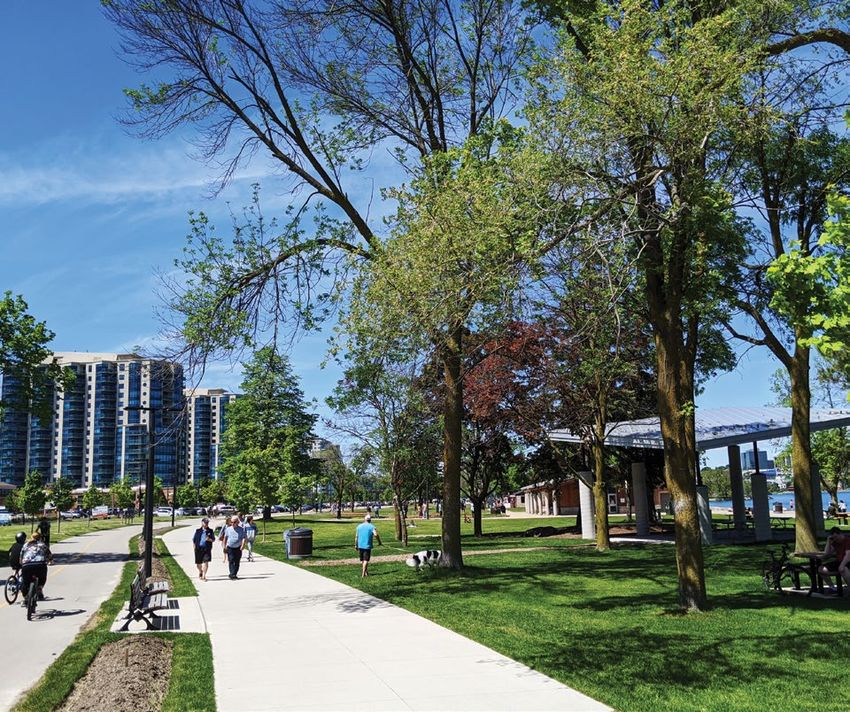
contents

                                                                                           17

                                                                                                                                                               On the cover
                                                                                                                                                               Left photo, Jan Haskings-Winner
                                                                                                                                                               Right photos, Linda Hutsell-Manning

                                                                                                                                                                    forward
                                                                                                                                                                5	Contributors

                                                                                                                                                                6	Letters
LEFT PHOTO, TORONTO STAR PHOTOGRAPH ARCHIVE; TOP AND RIGHT PHOTOS, LINDA HUTSELL-MANNING

                                                                                                                                                                7	From the Chair

                                                                                                                                                                8	From the Editor

                                                                                                                                                                9	From the CEO

                                                                                                                                                                    foundation
                                                                                                                                                               10	All the comforts of home

                                                                                           		 features                                                              advocacy
                                                                                                                                                               12	Is your community

                                                                                           17 Rookies: celebrating the first year                                   age-friendly?

                                                                                           		Excited? Anxious? Raring to go? How do you remember
                                                                                                                                                                    health matters
                                                                                              your first year?
                                                                                                                                                               14	Vaccines aren’t
                                                                                                                                                                    just for kids
                                                                                           23 Teaching in troubled times                                       16	Are you getting
                                                                                           		    Redefining the classroom and bringing learning to life             enough protein?

                                                                                           28 Teaching and the turbulent ’70s                                       departments
                                                                                                                                                               34	Homegrown holiday
                                                                                           		    The birth of the Elementary Teachers’ Federation of Ontario
                                                                                                                                                               40 Taking care of business

                                                                                           32 From pastor to prof                                              42	Spotlight on

                                                                                           		    How happenstance opened the door to an unexpected career      44	First person

                                                                                                                                                                                    fall 2020        1
JOINT PAIN SHOULD NOT
STOP YOU FROM MOVING!
Genacol ® Pain Relief is a natural and lasting
solution to reduce joint pain in less than 5 days.

Why it’s so effective?
Genacol®’s exclusive AminoLock® Collagen is
scientifically proven by 3 clinical studies to reduce
joint pain associated with osteoarthritis.

Natural Soluble Eggshell Membrane includes
essential nutrients that quickly reduce pain and
inflammation and improve joint mobility and flexibility.

                                                                                             Genacol
                                                                                                               ®

Try Genacol Pain Relief today
                    ®                                                      A CANADIAN LEADER
                                                                               IN JOINT HEALTH
and feel the difference!                                                        SINCE 20 YEARS

Available at:

                                                                                                                   (in selected stores)

         $
            5
                                    TO THE CONSUMER: Limit of one original coupon per product. Please be advised that the retailer is in its
                                    right to refuse this coupon. Find out before you go to the checkout. In the case of a retailer’s refusal, contact
                                    Genacol at 1.888.240.3002 or by email at info@genacol.ca for a refund. Limit one coupon per product. It is            This product may not be right for you.

                      OFF           forbidden to sell and/or to make several copies of the coupon. Rebate applicable only in-store. No coupons              Always read and follow the label.
                                    received by mail at Redemco will be reimbursed directly to consumers. VALID UNTIL NOVEMBER 30TH 2020.

       On the purchase of           TO THE RETAILER: Corporation Genacol Canada Inc. will reimburse this coupon for the face value plus the established
     one Genacol Pain Relief        handling fee. Failure to send in, upon request, evidence that sufficient stock was
          90 capsules               purchased to cover the coupons presented will void coupons. A reduction in any
     VALID UNTIL                    applicable taxes payable is included in the coupon face value. Valid in Canada only.
                                    For redemption, this coupon must be received by mail before FEBRUARY 28TH 2021
  NOVEMBER 30TH 2020                to: REDEMCO INC., C.P. 128, Longueuil, Quebec, J4K 4X8.

Always read the label to make sure that this product is right for you.                                                                                       painrelief.genacol.ca
keep in touch!                                           Fall 2020
                                                         rtoero.ca

                                                         Publisher RTOERO
                                                                                       Volume 19, Number 3

The RTOERO online community is fun, active               Editor-in-Chief Stefanie Martin

and engaged. Connect with our growing group              Executive Editor Charlotte Empey

for updates on news and events near you,                 Production Consultant Sharon Carnegie,
exclusive contests, retirement tips and more.            Creative Print 3 Inc.

                                                         Creative Direction Hambly & Woolley Inc.

                                                         Translation Spectrum Translations

                                                         Copy Editor Tina Anson Mine

                                                         Contributing Writers Pauline Anderson,
                                                         Fran Berkoff, Karin DesChamp, Stuart Foxman,
                                                         Alison LaMantia, Howard Moscoe,
                                                         Lesley-Anne Scorgie, Joyce Spence,
                                                         Ylva Van Buuren, Doug Wallace, Martin Zibauer

                               Follow us!
                                                         Board of Directors
                                                         Chair Martha Foster, mfoster@rtoero.ca
                                                         Vice-Chair Rich Prophet
                                  facebook.com/rto.ero   Directors Jacqueline Aird, Louise Guérin,
                                                         Martin Higgs, William Huzar, David Kendall,
                                  @rto_ero               Claudia Mang, Gayle Manley

                                                         Chief Executive Officer Jim Grieve

                               Watch!
                                  RTOERO                 18 Spadina Road, Toronto, Ontario M5R 2S7

                                                         Telephone 416-962-9463 | Fax 416-962-1061
                                                         Toll-free 1-800-361-9888 | Email info@rtoero.ca
                                                         Website rtoero.ca

                                                         RTOERO is divided into 51 districts and has over
                                                         81,000 members.

                                                         Renaissance is published quarterly by the RTOERO
                                                         organization in Toronto, Ontario, and provides RTOERO
                                                         members with content on topics of interest to the
                                                         retired education community across Canada.

                                                         ISSN 1709-2736 (Print)
                                                         ISSN 2562-9751 (Online)

                                                         Views expressed in Renaissance are those of the
                                                         writers and do not necessarily reflect the official
                                                         position of RTOERO.

                                                         Advertising Marlene Mignardi
                                                         Dovetail Communications Inc.
                                                         mmignardi@dvtail.com

                                                         Publication of an advertisement does not constitute an
                                                         endorsement by RTOERO of any product or service.

                                                         Renaissance est également disponible en français.
                                                         Si vous désirez recevoir la version française de ce
                                                         magazine, veuillez communiquer avec le bureau.

                                                         MOVING?
                                                         Update your mailing and email addresses
                                                         by contacting the Membership Department.
                                                         Email membership@rtoero.ca or call,
                                                         toll-free, 1-800-361-9888.

                                                                                              fall 2020        3
Parkland Lifestyle Residences offers beautiful accommodations, exceptional
   dining, and unparalleled service for active retirees. Whether you’re interested in
   socializing, arts and culture, fitness or all of the above, you will find everything
           at Parkland has been designed to keep you doing what you love.

         Multiple on-site dining venues                      Social and fitness programs
         All utilities and communication                     Balconies with exceptional views
         services included
                                                             Valet parking and self-parking
         Large suites with chef ready kitchens
         and insuite washer and dryer                        Chauffeur and concierge service
         Staff onsite 24 hours a day                         Additional services available

      For more information or to make a suite reservation, contact one of
     our knowledgeable Lifestyle Consultant’s at the residence nearest you.

Parkland on Eglinton West              Parkland on the Glen          Parkland Ajax (Coming in 2022)
4650 Eglinton Avenue West              1665 The Collegeway           3 Rossland Road West
Etobicoke                              Mississauga                   Ajax
416-997-2647                           905-820-8210                  905-424-9369

                                       experienceparkland.com
contributors

You’ve                             We asked Joyce Spence,
                                   Howard Moscoe and Karin DesChamp

worked hard                        to share a life lesson.

to make a
                                    JOYCE SPENCE
                                   “I am a good listener — and not a
                                    storyteller. I had the responsibility of
difference                          the house and family when my husband,
                                    Murray, was teaching. When he came
during your                         home after a long day, he would listen to
                                    my tales about our three sons’ activities.
life.                               We would laugh together, and he would
                                    chat with the boys. Unity/harmony was
                                    our theme.”
                                                       —District 23 North York

                                    HOWARD MOSCOE
                                   “In Grade 10, I learned a valuable lesson.
                                    I was a pubescent hoodlum. My
                                    interest in my friends and social life far
                                    exceeded any academic ambitions, so I
                                    failed that year. But my parents moved,
                                    and I repeated Grade 10 at a new
                                    school. I didn’t know a soul, so while
                                    others fooled around between classes,
                                    I read the next chapter in the history
                                    book. I discovered if you did some
                                    preparation, people actually thought
                                    you were smart — even if you weren’t.
                                    I won the grade history prize that year
                                    and vowed never to go into another
                                    situation unprepared.”
Making a difference                                    —District 23 North York
doesn’t have to
stop there.                         KARIN DESCHAMP
                                   “The word forgiveness reminds me of a
There’s an easy way                 quote from Anne Lamott: ‘Not forgiving
to leave a legacy.                  is like drinking rat poison and then
                                    waiting for the rat to die.’ My ability to
Call 1 866 340-8223                 learn how to forgive has released the
or email us today at:               shackles that bound me to the past and
fdn@united-church.ca                now allows me to live my life wholly,
                                    with self-assured serenity.”
Be sure to mention                                   —District 36 Peterborough
the code ‘Renaissance’
to get your free copy
of our Will Workbook.

 Focusing on the Future Together
 1 866 340-8223
 fdn@united-church.ca
 www.unitedchurchfoundation.ca

                                                                fall 2020   5
letters

Reader
                                                                                         COVID-19 REMINDER
                                                  Our summer issue                       As we mentioned in our last
                                                                                         issue, Renaissance is planned
                                                  struck a chord!                        and produced months before the

letters
                                                                                         magazine lands in your mailbox.
                                                                                           Some of the stories might not
                                                                                         align with current COVID-19 best
                                                                                         practices — if we’re still not able
                                                                                         to travel, add our “Homegrown
                                                                                         Holiday” feature (page 34) to your
I just received the summer 2020 issue of Renaissance magazine. I am a
                                                                                         bucket list for the day we can!
nature lover, so I enjoyed the articles relating to travel, boating, backpacking and
                                                                                           Rest assured that RTOERO
cottage life. I can’t participate in most of these activities because I’m not as young
                                                                                         continues to follow the advice of
as I used to be, but the magazine helped me enjoy memories of my younger years.
                                                                                         the Canadian government on all
Thank you so much. I just can’t put the magazine on the shelf — it is on my coffee
                                                                                         COVID-19 protocols. Stay safe, stay
table so I can review the wonderful stories.
                                                                                         healthy and enjoy this issue.
—Joyce Spence (District 23 North York)
                                                                                         Take care,
I have not received my copy of Renaissance yet, but I think it was a very
                                                                                         Stefanie Martin
wise decision to email the gentle COVID-19 notice about the stories. With so many
                                                                                         Editor-in-Chief
changes, in so many different areas, it can be difficult to keep track of what we can
do, and when and where. This was a great jog to our memories before we even read
the summer issue. Thanks, and well done.

                                                                                           Exclusively
—Jeannine Butler (District 18 Haliburton, Kawartha Lakes)

Thank you for the summer issue of Renaissance. The features are very
interesting and meaningful. Congratulations to those who took the time to write
articles of such high quality. This was also the case with the spring issue — I keep      for RTOERO
                                                                                            members
it for reference because it was very rich in content. Please accept my appreciation
and congratulations.
—Jeannine Lalonde (District 27 Ottawa-Carleton)

Lesley-Anne Scorgie’s column “What’s your burn rate?” (Summer
2020) was very useful. One suggestion: Under the category “Gifts and
other,” perhaps you should have added a mention of charitable donations for
those of us with poor memories!
—Ralph Gorcey (District 19 Hastings and Prince Edward)

It was gratifying to see a feature on Bermuda in your summer issue.
I lived there for six years and loved it. The people are very friendly. It is truly a
beautiful country — small, but with lots to see and do. You cannot rent a car but you
can rent a moped (driving on the left, as the article mentioned, is no problem for
me, coming from Scotland), ride the pink buses or go by taxi (which is somewhat
expensive). However, you should visit a grocery store, because the prices will shock     As a benefit of RTOERO membership,
you. The high cost of living was one reason I left.                                      you receive a paid or digital subscription
   The best time to visit is from May through early June. That is when the islands       to our award-winning Renaissance
are at their floral best, although flowers bloom all year round. The high humidity       magazine. Each quarterly issue brings
begins in mid-June and there is no relief, day or night, until mid-October. You          you the information you want to live a
can sleep well in an air-conditioned hotel room, however.                                healthy, active life in retirement.
—Lawrence Fotheringham (District 33 Chatham-Kent)                                        $5 from your annual membership dues is allocated
                                                                                         to your one-year paid subscription to Renaissance
I am a 30-plus-year member of RTOERO, living alone in the beautiful                      magazine and is non-refundable.

town of Almonte, Ont., in Mississippi Mills. I’ve by and large enjoyed getting
Renaissance, leafing through it and consigning it to the recycle pile.
   However, the summer issue held my attention for several days. I enjoyed reading       WE WANT TO HEAR FROM YOU!
about dragon boat racing, as I was a war canoe captain for many years at Carleton
Place Canoe Club. I’m going to try two of the recipes, and the financial article on      We welcome your feedback, so please
burn rate was very useful.                                                               send your letters to renaissance@
   So, here I am wondering what held my attention — I read the issue from back           rtoero.ca. Letters may be edited for
to front.                                                                                length and clarity at the discretion of
   I wonder if I will get the same enjoyment from the fall issue.                        the editor.
—Cliff Bennett (District 29 Lanark)

6
from the chair

                                 Back to                                        The lasting impact
                                                                                of lifelong learning

                                 school                                                 by Martha Foster

                                           When you’ve been involved in education, you have
                                           a particular mental image of “back to school.” Regardless
                                           of where you worked, that first day back after the summer
                                           holiday was always a bit chaotic: You were happy to see
                                           friends and colleagues, a bit confused (“Where is that class?”)
                                           and excited (“Who will I be teaching?”).
                                              Now that you’re retired, going back to school means
                                           something different but no less engaging. For example,
                                           classes don’t have to start the day after Labour Day. Just
                                           before I began writing this column, I signed up for an
                                           eight-week course, which started in the middle of May — not
                                           September. As retired educators, we can sign up for courses
                                           offered throughout the year, at times that best suit our lives.
                                              Another difference: You can take a course just because.
                                           When you were working, you registered for training you
                                           needed to enhance your teaching or add to your qualifications.
                                           Now you can register just because you’re interested. My career
                                           specialty was science, but I later moved into governance. When
                                           I first retired, I volunteered at a small museum that focused
                                           on local events that happened during the early to mid-19th
                                           century. Suddenly, my interests went in a completely new
                                           direction. This former science aficionado is now taking courses
                                           and signing up for conferences and workshops on the War of
                                           1812, spinning, weaving and historical cooking — and loving it.
                                              Now that you’re retired, you also have the opportunity to
                                           take advanced studies in your teaching specialty or a whole
                                           new area of interest. (When I finish my term at RTOERO,
                                           I would love to get my PhD in food history.) You can study
                                           online or take in-person classes, depending on which method
                                           best suits your learning style. Bonus: Many universities offer
                                           seniors free enrolment.
                                              Every class you take will expand your outlook and open up
                                           your understanding of the world. Learning helps keep your
                                           mind active, stimulates new interests and improves your
                                           health and well-being. Honest!
                                              So, as students return to their lessons this fall, explore what
                                           going back to school can mean for you. Discover something
                                           that captures your imagination and explore where education
                                           can take you. You might be surprised.

                                           Enjoy the learning,
                                           Martha
PHOTO, LAURA ARSIE PHOTOGRAPHY

                                                                                               fall 2020   7
from the editor

Lessons                                   Back to school doesn’t
                                          always mean going to class

learned                                                       by Stefanie Martin

                  Whether you’re attending school as a student or
                  contributing to the education sector as staff, fall has
                  a familiar feeling for just about everyone: It’s back-to-school
                  time! I was (and still am) that kid who loved getting ready
                  to return to the classroom. I looked forward to shopping for
                  new notebooks, binders, pens, pencils and highlighters —
                  seriously! And as much as our members love the RTOERO
                  pocket planner, I loved my annual school agendas.
                     In this issue of Renaissance, we’re inviting you to get into the
                  back-to-school groove. RTOERO members have shared stories
                  from their first year of teaching (page 17), while others have
                  written about their experiences teaching in non-traditional
                  classrooms (page 23) — including at a psychiatric hospital, a
                  young offenders’ unit and a home for pregnant teens.
                     RTOERO member Howard Moscoe (District 23 North
                  York) takes us back to the 1970s and the events that led to the
                  birth of the Elementary Teachers’ Federation of Ontario in
                  the 1990s (page 28), while Joyce Spence (District 23 North
                  York) shares her husband’s career story, “From pastor to
                  prof” (page 32).
                     But back to school doesn’t have to mean in a classroom —
                  real or virtual. Whether you sign up for a course or embrace a
                  new hobby, or an unexpected experience simply lands at your
                  feet, life regularly takes us back to school; hence the term
                  lifelong learning. We have sure learned that lesson during the
                  global pandemic, when we’ve been forced to find new ways to
                  connect socially and revamp our daily routines. We all have
                  been challenged to adapt (and fast!) to new circumstances.
                     As we move further into this new normal, we are reminded
                  that we are constantly learning. It is never too late to challenge
                  yourself, whether that means studying a new language, trying
                  out new technology or simply attempting a new recipe. These
                  are all learning experiences that help us grow.
                     At RTOERO, we are continuously learning from you, our
                  members; we love to hear your feedback. Please share your
                  ideas and thoughts about Renaissance with us any time by
                  emailing renaissance@rtoero.ca.

                  Happy reading,
                  Stefanie
                                                                                        PHOTO, COURTESY OF STEFANIE MARTIN

8
from the chief executive officer
How shall we greet We need a sincere
new way to say hello
one another now? by Jim Grieve
I have been thinking a good deal about the post-pandemic
new normal. We will emerge slowly from this self-isolation, but how
will we have been changed by the experience? Nobody I speak with
expects that we will simply go back to how we operated before.
For instance, we’ll need a new and sincere way to greet one another.
In all cultures, family, friends and colleagues do this as a sign of
recognition, affection, friendship and/or reverence. Depending on
the occasion and the culture, that greeting may take the form of a
handshake, a hug, a bow, a nod or cheek kisses. Seems to me, whether in
business or familiar settings, we expect these practices to change.
The handshake, even when it morphed into the fist bump, is a serious
potential way to exchange the virus, so it cannot remain a standard
greeting. Meanwhile, some say hello to others with cheek kisses or big
hugs, both of which have the same capacity for viral exchange. These
customs, too, will need to disappear in a post-pandemic world if we are
to remain safe.
But what can replace these familiar and traditional greetings?
• Do we move to the bow that is so revered in Japanese and
other cultures?
• Do we look to Star Trek and adopt Spock’s Vulcan greeting —
the V created by separating the middle and ring fingers — while
saying, “Live long and prosper?”
• Do we use American Sign Language for a hug — arms
crossed against the chest — which was made famous in the
film Black Panther?
Maybe. But I have another idea.
The late Dr. Dan Offord, one of my mentors, developed and ran the
Offord Centre for Child Studies at McMaster University. He was also
the owner and operator of Christie Lake Kids summer camp for very
special children in eastern Ontario. He always started his speeches,
lectures or training sessions with the greeting, “How are the children?”
Dr. Offord had heard this a lot when he worked in Africa. Adults
greeted one another with these words, expressing a beautiful
reverence for the potential of all children and for one another.
I loved that sentiment and adopted this greeting in my work with
early-years professionals.
I also learned a lot from Indigenous leaders, who deeply respect
and honour the role of the Elders in their communities, depending on
them to convey the wisdom and language so essential to sustaining
culture. Perhaps, in response to the tragedy that unfolded in Canada’s
long-term care homes during the COVID-19 pandemic, we should ask
every day, “How are the elders?”
Now, what if we put those two greetings together?
PHOTO, PAUL ORENSTEIN
Don’t be surprised, when we next see each other, if I use a new
greeting that is both a sincere welcome and a reminder of what is so
precious in our lives: “How are the elders and the children?”
Stay safe, healthy and connected,
Jim
fall 2020 9foundation
All the comforts Cohousing and cohabitation
keep seniors socially connected
of home by Ylva Van Buuren
In 2016, the number of Canadians crisis provides a grim lens into the lives including reduced cognitive function and
aged 65-plus exceeded that of of many seniors who live in isolation. poorer mental health, and increased risk of
children under 15 — and that number Data from the Canadian census shows heart attack, stroke, depression, falls and
is expected to grow. The majority of that almost one-quarter of seniors aged premature death. People who feel lonely
older adults prefer to age in place safely 65 and older live alone. According to or socially isolated often use health and
and comfortably for as long as they can. Statistics Canada, as many as 1.4 million support services more often.
But what if they live alone? seniors report feeling lonely. The solution? Many experts point
The social isolation we have Loneliness and social isolation can to cohousing.
experienced during the COVID-19 have profound health consequences, This concept — creating shared
communities for seniors and others —
was born in Denmark in the 1960s and
is gaining momentum around the world.
And for good reason: It may be the
answer to the challenges of affordable
housing, access to health services and
social isolation many seniors face.
Sharing resources offers financial
advantages, of course, but the social
interaction and sense of community it
encourages make the biggest impact on
health and well-being.
There are lots of ways to realize cohousing.
Here are three of the most common.
PHOTO, TATOMIROV. ILLUSTRATION, TWILIGHTMOON
Social isolation is the number 1
emerging issue facing Canadian
seniors. It is a priority issue for
the RTOERO Foundation in its
mission to create a better future
for older adults. Cohousing
and cohabitation are promising
strategies to keep seniors socially
connected and to avoid the
physical and mental issues that
can result from living in isolation.
10Your friends at the RTOERO
Foundation wish to thank
every member who
“[Cohousing] supported the Engage: End
downsizes liabilities
Isolation campaign last year.
The passion and generosity
[and] upsizes quality of our donors is what allows
us to help build a better
of life.” future for Canadian seniors.
—
Charles Durrett, The RTOERO Foundation is grateful to
The Senior Cohousing Handbook Johnson Inc. for their ongoing
commitment to enhancing the quality
Share your home of life for older Canadians. Johnson's
Toronto HomeShare (torontohomeshare.com) provides a way support contributes to research that
for seniors to age in place and enjoy some company. “The will help RTOERO members and
city-funded program brings together two generations that future generations of seniors live
actually have very similar needs,” says Raza M. Mirza, network healthier and more connected lives.
manager for National Initiative for the Care of the Elderly.
A program social worker matches the homeowner with the
student, who commits to helping around the house in exchange
for reduced-rate rent. Both parties bring their personal wisdom Title Sponsor
and insight, and friendships often develop. There is also a Barrie,
Ont., HomeShare, and potential programs are in the works with
Ontario Tech University and Simon Fraser University. Canada
Mortgage and Housing Corporation is helping develop a tech
platform that will take the program national.
Set up house with friends Campaign partner
Living with friends is becoming an increasingly attractive
option. One example, reported by the CBC, saw three baby
boomer friends downsize and pool their finances and furnishings
so they could purchase a home to share. Everyone has their own
bedroom, but they share everything else, including bills, cleaning To learn more about social isolation please join the
and maintenance, common spaces and sometimes meals and Foundation's Facebook group
activities. The best part: “There’s always someone around for a facebook.com/groups/endisolation
walk, a talk or just a simple hello,” said one of the women.
Buy into a cohousing development
A cohousing community combines private dwellings with
shared resources and community living. At West Wind Harbour
Cohousing in Sooke, B.C., for example, there are 34 self-contained
units and 7,000 square feet of shared space, with everything from
a communal kitchen, art rooms and guest suites to a rooftop
garden and dock. “I wanted my own home and my own space,” says
West Wind Harbour member Georgina Patko. “This community
appealed to me because I would be an equal, contributing member,
and the community would keep me engaged and interested.”
fall 2020 11advocacy
Is your community Senior-focused
neighbourhoods contribute
age-friendly? to healthy, active living
by Alison LaMantia
did
you know?
There are almost 6.6 million
Canadians who are 65 or older, and
centenarians (who are 100-plus years
old) are projected to become the
fastest-growing age group. We need to
continue the shift in thinking toward
elder-friendly environments and
protecting the rights of older
people. It affects us all.
Shade structures
and more places to
rest were added to
Centennial Park along
Barrie’s waterfront,
creating a welcoming
environment for
people of all ages.
When we think of health and the needs of everyone,” says Cheryl details that support age-friendliness
well-being, we often focus on Dillon, accessibility and diversity adviser are what I hear about most,” says
nutritious eating, fitness activities for the City of Barrie in central Ontario. Dillon. Those details include additional
and mindfulness practices. But the In 2018, Barrie was one of 40 Ontario outdoor seating, shade structures,
community we live in matters too. communities recognized by the transit improvements and increased
The World Health Organization province for efforts to become more crosswalk times.
(WHO) says our environment plays age-friendly. The city’s action plan, While Barrie has achieved about
an important role in determining our based on the principles outlined in 75 per cent of the city’s goals in the
physical and mental health status, the WHO’s age-friendly cities guide, current plan, Dillon says implemen-
PHOTOS, ALISON LAMANTIA
and how well we adjust to the loss of was driven not by staff ideas but by the tation doesn’t stop. They’re starting
function and other challenges. In short, needs and opinions of residents. an evaluation process developed by
senior-friendly communities can help “The upgrades made in our downtown the Public Health Agency of Canada
us age well. and along the waterfront to improve (PHAC). “We know that as we grow,
“The wonderful thing about working the accessibility and age-friendliness of develop and change as a community,
to meet the needs of older adults is we’re our outdoor public spaces are positive our Age-Friendly Community Plan will
creating communities that better meet things people appreciate. But the little grow, develop and change too,” she says.
12advocacy
Do you know someone retiring
from the education sector?
RTOERO now offers
free virtual Retirement
Planning Workshops
for anyone in the
education community!
They’ll learn more about:
· Planning for their financial future
· Their pension
Increased crosswalk time in areas of the city that have larger concentrations of older adults is one of · Health benefit needs in retirement
the details of the City of Barrie’s Age-Friendly Action Plan that residents appreciate.
· RTOERO benefit plans
What’s an age-friendly provincial and territorial governments · Retirement insights from peers
community? and community partners — to develop
According to the Government of resources and share experiences with For a full schedule of upcoming
Canada, “In an age-friendly community, citizens and organizations that are webinars and to register, visit
the policies, services and structures interested in promoting senior-friendly rtoero.ca/join-us/retirement-
related to the physical and social policies. Its easy-to-navigate Age-Friendly planning-workshops.
environment are designed to help Communities in Canada: Community
seniors ‘age actively.’ The community is Implementation Guide is packed with
set up to help seniors live safely, enjoy practical information to help kick-start
good health and stay involved.” initiatives and evaluate results.
The WHO has also published an
Why we need age-friendly age-friendly cities guide, which covers:
communities
• They support well-being by • Outdoor spaces and buildings
addressing the social determinants • Transportation
of health, including housing, food • Housing
security, social inclusion and access • Social participation
to services. • Respect and social inclusion
• They foster respect for everyone, • Civic participation and employment
regardless of age, creating a • Communication and information
more accepting, supportive and • Community support and health
equitable society. services
• They support independence by
helping us age in place safely — Three ways you can help
that is, to stay in our homes or • Share positive images of aging.
communities as long as we wish or Stereotypes in the media
are able to. perpetuate ageism.
• Learn what your local community
How a community becomes is doing to be more age-friendly.
age-friendly Check your municipality’s website
Municipalities across Canada have or speak with your councillor about
age-friendly community initiatives in ways you can push for change.
place. These include implementing • Get involved. Lend your voice to
changes to policies, services and structures advocacy efforts through RTOERO
related to the physical and social and other groups. Municipalities
environment in order to better support are well positioned to address many
and enable older people to age actively. factors that make communities
PHAC has created the Age-Friendly age-friendly, but it goes beyond the
Communities (AFC) model and promotes local level. Age-friendliness requires
its adoption throughout Canada. It works action in many sectors and across
with a variety of groups — including levels of government.
fall 2020 13health matters
Vaccines aren’t Older adults also need protection
against infectious diseases
just for kids by Pauline Anderson
A vaccine for the novel coronavirus Some may have missed recommended guidelines, but not all are covered by
that causes COVID-19 is likely still childhood vaccines, while others, who provincial health-care plans.
a ways off. When it is available, it could did get their shots, may find that their Shachar stresses that, although it
be a game changer for seniors, who are protection against certain diseases might be convenient to get a shot for
at higher risk for this serious respiratory decreases with age. In both cases, a fresh the flu (and possibly shingles) at your
illness — especially those with an dose — or a booster — may be in order. local pharmacy, it’s important to let your
underlying condition, such as high blood We asked Dr. Orli Shachar, a family family doctor know so they can update
pressure, heart disease or diabetes. physician at Women’s College Hospital your records. And if you plan to travel
In the meantime, though, older adults in Toronto, to help sort out which to areas such as Africa or Southeast Asia,
should protect themselves against vaccinations older adults need and when consider a visit to a travel-medicine
infections for which there are vaccines, they should get them. These vaccine clinic, which can offer a specialized
including the flu, pneumonia and shingles. recommendations are based on Ontario assessment of your vaccine needs.
Influenza
Seniors are more likely than younger people to
experience serious complications from the flu. That’s
why you should get an annual flu vaccine, which is
updated each season to keep up with changing strains.
Those 65 or older should get the high-dose flu
vaccine. Compared to the regular vaccine, this
version offers better protection against viral strains
that are more common in older people.
Pneumonia
Seniors are also at greater risk for pneumococcal
disease, which is caused by Streptococcus
pneumoniae. This bacterium can produce invasive
pneumococcal infections, including pneumonia. Two
vaccines protect against these infections: pneumococcal
conjugate 13-valent (Prevnar 13) and pneumococcal
polysaccharide 23-valent (Pneumovax 23).
Experts recommend vaccination for everyone
over 65, as well as for people 50-plus who have
compromised immune systems or are otherwise at
higher risk. In the past, healthy older adults were
advised to get solely the Pneumovax 23 vaccine, but
a newer guideline recommends that, for additional
protection, they receive the Prevnar 13 vaccine first
and then the Pneumovax 23 vaccine a minimum of
PHOTO, MONKEY BUSINESS IMAGES
eight weeks later.
Shingles
Shingles is the reactivation of the chickenpox virus,
which can lie dormant in nerve endings for years. It
can cause a blistering rash and an even more painful
complication called postherpetic neuralgia.
There are two shingles vaccines: Zostavax and
Shingrix. Shingrix is a newer vaccine and is thought
14health matters
to be more effective at both reducing the risk of
getting shingles in the first place and of developing
postherpetic neuralgia after the fact.
The shingles vaccine is recommended for all
adults over 50 who have had chickenpox. To extend
your immunity, you might consider getting the
vaccine even if you’ve had shingles — but you have
to wait a year after your case resolves.
Tetanus, diphtheria and pertussis
It’s important for all adults to keep their tetanus
and diphtheria immunizations up to date. This
means getting a booster every 10 years. If you also
need your whooping cough — a.k.a. pertussis —
booster, you can get a three-in-one vaccination.
Measles, mumps and rubella
It is generally presumed that most people born
before 1970 have acquired natural immunity to
these viruses. However, you may need a measles,
mumps and rubella booster if you travel to areas
with outbreaks or are otherwise at higher risk. A as unique
blood test can check for antibodies to determine if
you’re immune. as your eyes
Polio
A booster shot typically is not recommended for
older adults unless they’re heading to an area At IRIS, our eye care professionals know
experiencing an outbreak.
your eyes are unique and that your vision
Hepatitis A and B needs special attention. We provide
Although not routine, some doctors may recommend
seniors at risk for liver-related conditions get a hundreds of brand-name fashion frames
vaccine against hepatitis A and/or hepatitis B. from the world's leading designers, a wide
The shots are available separately or combined,
depending on your needs. selection of sunglasses, and benefits like
However, if you’re travelling or in another our No-Matter-What Guarantee and
situation that increases risk, talk to your doctor
about additional protection. interest-free financing so you can see
what you love and love what you see.
Human papillomavirus (HPV)
Grade school students now get a vaccine against
this virus, which can cause genital warts and
cancer. The vaccine is recommended for adults RTOERO members benefit from IRIS
up to age 45; beyond that, the need for coverage is
determined on a case-by-case basis and depends Advantage offers like $150 towards
on your sexual history.
the purchase of eyewear and
Meningococcal disease prescription sunglasses.
Meningococcal disease can include infections of
the lining of the brain and spinal cord, as well as
bloodstream infections. A vaccination against GO TO IRIS.CA/ADVANTAGE
this disease is not routinely recommended for
older adults unless they have specific underlying ACCESS CODE: RTOERO
medical conditions.
fall 2020 15health matters
Are you getting A healthy diet includes
enough protein to live well
enough protein? by Fran Berkoff, registered dietitian
I expect you’re savvy about nutrition, but did you know FOOD SOURCE PROTEIN (GRAMS)
that as we age we need more protein?
Protein is your body’s building block; you need this nutrient to 3/4 cup (175 millilitres) 16
maintain and repair muscles, skin, nails and hair. As we get older, shelled edamame
we’re at higher risk of developing sarcopenia, or age-related loss
of muscle mass, which can negatively affect your quality of life in 3/4 cup (175 millilitres) cooked lentils, 13
many ways. For example, you may find it more difficult to get up kidney beans or black beans
from a chair, lift your grandbabies or carry bags of groceries — and
3/4 cup (175 millilitres) firm tofu 12
falls and fractures are more likely.
1 cup (250 millilitres) cooked whole 9
How much is enough? wheat pasta
The current recommended protein intake for adults (men and
women) is 0.8 grams per day for each kilogram of body weight. 1 cup (250 millilitres) cooked quinoa 8
However, many experts believe this figure is too low and suggest
that healthy adults over 65 consume 1.2 grams per kilogram 2 tbsp (25 millilitres) peanut 8
of body weight each day; if you’re ill or undernourished, you or almond butter
need even more. This means a 75-kilogram (165-pound) person
needs 90 grams of protein a day. Research also suggests that 1/4 cup (50 millilitres) almonds, 7
getting your protein over the course of the day is more effective sunflower seeds or hemp seeds
than having it all at one or two meals.
Let’s bring this into your kitchen. Here are some delicious If you’re looking to incorporate more plant-based protein dishes
options to try. in your diet, try these ideas out.
• Open-face “quesadillas” made with mashed black beans instead
FOOD SOURCE PROTEIN (GRAMS)
of chicken, and a whole wheat pita instead of two tortillas
• Greek yogurt smoothie made with a spoonful of peanut
4 ounces (125 grams) cooked meat, 25–35 or almond butter
fish or chicken • Bean- or lentil-based soup
• Vegetarian chili made with kidney beans, black beans
1 can (120 grams) tuna, drained 32 or chickpeas
• Shelled edamame in salads or as snacks
3/4 cup (175 millilitres) 18 • Pasta fagioli made with just beans and pasta (no sausage)
plain Greek yogurt • Layered bean dip made with black and/or kidney beans,
3/4 cup (175 millilitres) plain yogurt 10 tomatoes, onions, cilantro and guacamole
• If you order in, pad Thai with tofu, plant-based bowls,
1 cup (250 millilitres) milk 8 vegetarian pizza, falafels or vegetarian roti
or soy beverage
Adding it up
1 ounce (30 grams) cheddar cheese 7 Eating shouldn’t involve too much math, so don’t fret about
getting an exact number of grams every day. Just plan each
1 large egg 6 meal around a protein source and you’ll likely hit your target.
Breakfast, however, is often light on protein, so here are a few
1/2 cup (125 millilitres) cottage cheese 4
ideas to give it a boost.
• Greek yogurt parfait with fruit, granola and a sprinkle of nuts
What about alternate sources? • Bowl of oatmeal made with milk or soy beverage, topped with
With many of us moving to a more plant-based diet, I’m often a handful of seeds or a spoonful of peanut or almond butter
asked if it’s possible to get enough protein without eating meat. • Tofu scramble or scrambled eggs
The answer? A definite yes. Excellent sources of plant protein • Whole wheat wrap made with hummus and beans
include lentils, beans, soybeans, tofu, tempeh, edamame, nuts
and seeds. And whole grains, such as quinoa, contain protein too. And while you’re at it, don’t forget exercise. Physical activity,
So what does that mean for meal planning? Try adding these especially resistance training, is important for maintaining muscle
plant-based protein sources to your meals. mass as we age — and it’s never too late to get started.
16feature
rookies:
celebrating
the first year Excited? Anxious? Raring to go?
How do you remember your first year?
by Martin Zibauer
will just have to make the best of it,” thought
Linda Hutsell-Manning (District 30 Northumberland) in
July 1963, when she saw the classroom. She had taken two
years off after teachers’ college and needed her first job to
secure a permanent teaching certificate.
The town schools in Cobourg, Ont., where she lived, “treated
me like I had leprosy,” she says. “Like there was something
morally wrong because I got married and had a child when
I should have been teaching.” So she answered an ad for a
position in a one-room schoolhouse in a nearby rural township
and, to her surprise, got the job.
The school had been built in 1860. “Inside the front door
was a little hallway. And on either side of that hallway were
two pit toilets, which were just like outhouses, but inside,”
she says. She remembers a large classroom with a wood stove
and a hardwood floor — and six big windows. “I thought how
RIGHT PHOTO, MICHAEL LAMPERT
wonderful that was,” she says, not realizing that, in winter,
snow would drift in and collect on the windowsills.
In her first year, Hutsell-Manning had no curriculum to follow, 1963
Linda Hutsell-Manning
only blank report cards listing the subjects that had been taught in front of the one-
before. So she developed curriculum as she saw fit. “I made an room schoolhouse
extra $300 a year because I was considered the principal as well where she spent her
first year teaching.
as the teacher. I could have discussions with myself,” she says,
laughing. “I had to make a huge number of decisions on the spot.”
fall 2020 17The challenge, she discovered, was keeping the children,
who were in grades 1 through 8, occupied and focused. She
drew on the two years she had spent as a student in a two-room •••••
schoolhouse. “I adored the teacher,” she says. “She was so
organized, with all this seatwork laid out on the boards.” Principals and vice principals face
Hutsell-Manning followed that lead, spending about three hours first-year excitement regardless
every evening writing notes and lessons, which she rewrote of how long they have been in the
TODAY
on the chalkboards every morning. “I always included a lot of school system before they took on
Linda
questions,” she says, which gave her time to teach one group of their new roles.
Hutsell-Manning
students while the others worked at their desks — or listened in.
In 2019, Hutsell-Manning wrote about being a new teacher Lise Gravelle (District 43 Nipissing)
in her book Fearless and Determined: Two Years Teaching in remembers how excited she was as she
a One-Room School. (For more information and to order, visit mingled with staff and students in the
lindahutsellmanning.com.) She left the school when it closed school yard that first morning.
permanently in 1965. Her time there, she says, was “one of Then the bell rang and the excitement
the most challenging and great experiences of my life.” moved to the classrooms.
“As I entered my office,” she says, “it hit
me how solitary the position is if you let it
be that way. I vowed to visit classrooms as
Front Road
School West, often as I could so that I could continue to
Hutsell-Manning’s share in the excitement of learning.”
first assignment. Interacting with all staff on a
daily basis became part of Gravelle’s
professional practice.
“In my Principal’s Qualification
Program courses nobody mentioned how
important it was to develop a family team
atmosphere in all aspects of school,” she
says. “From then onward I met every
bus in the morning to welcome staff and
students every day. If you put people first
at all cost everything else will fall in place.”
What advice would
a former principal or
vice principal offer a
newbie today?
“It took me a little too long to realize that
my custodian and office administrator we
re my frontline workers!”
Marilyn Malton (District 14 Niagara)
PHOTOS, COURTESY OF LINDA HUTSELL-MANNING
“Ninety percent of parents share a
Facebook page. Parents often prefer to
use it to vent publicly about their concerns
instead of speaking to administration or
teachers. Staff are hung out to dry! Damage
done! My advice: build relationships early
on and quickly, and take the time to invite
parents in to discuss issues. They often
become allies and great ambassadors
within the community.”
Carol Chouinard (District 3 Algoma)
18•••••
The late ’60s were a period of change. Tom Peets
(District 24 Scarborough and East York) started teaching
in 1967 at a small school in an East York neighbourhood that
was growing rapidly, with a large influx of Italian and Greek
immigrants. St. Aloysius, only a few years old, was already
adding a new wing.
With much of the school a construction zone, Peets was
assigned a portable for his Grade 7 class. “It was primitive. No air
conditioning, but we always had heat — often too much,” he says.
“At the beginning and end of the school year, it was a sauna.”
Before his first class, he says, “I was scared. Excited but
apprehensive.” But he quickly connected with the four other
new hires at the school and the rest of the staff. “We’d rely on
each other, and we had a lot of fun. People were envious of
anyone who worked at St. Al’s.”
Sports leagues extended the network of social and
professional connections to other schools. When Peets couldn’t
walk with his basketball team to a nearby school, “we’d just
bundle kids into a Volkswagen Bug, kids sitting on each other
and no one wearing seatbelts,” he says. “It sounds crazy today.”
The construction on site provided a learning opportunity, he
says. “I could see progress every day, and it was instructional for
the kids to see how the school was being built, especially since
many had parents working in the trades.” But until construction
finished, the gym was off limits. If the students couldn’t go
outside for phys-ed, “we’d push the desks in the portable to
each side and play floor hockey in the middle,” says Peets — 1966 “The class was so unsettled, I had to
girls playing one shift while the boys sat waiting on the desks. Tom Peets as a take a step back,” Milla says. She decided
Toronto Teachers’
That year, Expo 67 and centennial celebrations were in College student. to introduce new methods gradually.
full swing, and the Leafs were the Stanley Cup champions. Because the children had little experience
Americans had experienced race riots that summer and would working in groups, “we started with
go on to lose Martin Luther King Jr. and Robert F. Kennedy the partner work. Then, when we went to
TOP AND CENTRE PHOTOS, COURTESY OF TOM PEETS. BOTTOM PHOTO, COURTESY OF ANNA MILLA
next spring. Peets responded by bringing current events into group work, I chose the groups, rather
the curriculum. “The kids were aware of what was going on,” than letting the students choose.”
he says, “so I tried to give them some background and history The contrast between old and new
to understand it.” teaching played out across the hall.
A few years before, Bill Davis, then minister of education, Milla’s counterpart was an older teacher
commissioned the Hall-Dennis Report into Ontario’s education who avoided group work and required
system. Released in 1968, “it was revolutionary,” says Peets. students to raise their hands and wait
The report proposed a shift from traditional teaching, with its to be called on. “My classroom was
emphasis on discipline and rote learning, to student-centred considered noisy compared to hers,”
teaching, and it launched a decade or so of experimentation and she says, her tone sharpening slightly,
TODAY
change in Ontario schools. “because my kids were engaged.”
Tom Peets
Anna Milla (District 11 Waterloo), who became a friend of She learned just how engaged they
Peets’s in later years, was in teachers’ college in 1968. “We all were in late November that year, when
received a copy of the Hall-Dennis Report. I highlighted a lot she contracted mumps. “I was so run
of pages in mine,” she says. The report’s suggestion that “the down. Starting to teach is a challenge
walls should come down for teaching, and the students should to your immune system — you really
lead the learning,” says Milla, were immediately modelled in have to toughen up,” she says. Being
teachers’ college, where her instructors encouraged group sick and off work after taking on a large
work, team teaching and the open-concept school model. class with occasional discipline issues
“They went gung-ho with us. We were the first crop.” prompted doubts about her career
All of her plans and new-teacher idealism changed, however, choice. But then her principal hand-
when she walked into her freshly assigned Grade 5 classroom delivered a stack of get-well cards made
at St. Bernadette Catholic Elementary School in Kitchener, by her students. “I knew they really
Ont., in September 1969. Like DiFrancesco, her first class had TODAY missed me and appreciated me,” she
38 students — and 27 of them were boys. Anna Milla says. “So I hung in there.”
fall 2020 191979
Marie Gabriel’s first For many students, vocational schools
year included planning offered opportunities to study subjects
a student-led fashion
show that brought in they cared about and could succeed in,
hundreds of attendees. along with incentives to build literacy
and numeracy skills. The kids in Gabriel’s
••••• sewing classes, for example, “would
realize they needed to read to follow
It was the last week of August 1979. Marie Gabriel directions and use math to measure.”
(District 28 Region of Durham), following the advice In her first years as a teacher, she
she’d received during teacher training, was visiting her realized how important mentoring
new school to see her classroom, “but the floors were being was in education. “Our staff room was
waxed and I couldn’t get in!” she says. It wasn’t until the first like a professional development day,
morning of classes that she would walk into her room, as the every day,” Gabriel says. Teachers
freshly minted sewing and textiles teacher at General Vanier would discuss strategies that worked
Secondary School in Oshawa, Ont. Meeting her students for (or didn’t) with different students. The
TODAY
the first time, she says, “I remember thinking, ‘Are they really technological education teachers would
Marie
trusting me with all these kids?’” give one perspective on instructing
Gabriel
The school administrators trusted her with more than students; the academic teachers would
the children. Every year, the school hosted a fashion show, suggest another. The school encouraged
complete with student-produced sets, decor, lighting, printed teachers to learn from one another.
invitations and, of course, clothes. Gabriel’s predecessor had Gabriel would spend time in an English
started the event, which had grown into a showcase for the class, for example, and English teachers
vocational school and its students and attracted an audience would participate in her sewing class.
of about 400, largely made up of parents, educators and local Later, Gabriel went on to specialize in
business owners. “It wasn’t even the end of October, and co-operative education and, eventually,
PHOTOS, COURTESY OF MARIE GABRIEL
other teachers were telling me what had been done in past trained other teachers in the field. She
years and asking me what I was planning,” she remembers. shifted to the other side of the mentor
Vocational schools in the late ’70s were looked down relationship and began helping new
on, says Gabriel, as places to send students who weren’t teachers who had benefited from better
succeeding in academically oriented schools. It was a narrow teacher training. “Young teachers have
view, she feels, based on many teachers’ limited experience. a longer runway to learn and be better
“When all you’ve ever done is go to university,” she says, prepared for the classroom,” she says.
“you don’t understand that fixing a car is as important as Not everything has changed, though, for
memorizing Shakespeare; more important, in fact, in the first-year teachers. “They still have that
real world.” deer-in-the-headlights look every time.”
20The First Day dawned. Imagine!
I wasn’t as excited as I thought I should
be. On this momentous occasion I wore
an olive green cotton dress, purchased
especially for the event. I also wore tan
coloured shoes and nylons. Oh dear,
here we go on a siege of girdles and
stockings — really grown-up and proper
and professional. On this first day after I
had delivered my first sermonette, we set
1955 about at some work. We did an arithmetic
Ruth Bender’s diary test. We also wrote a composition on
reveals the surprise
and delight she felt in Summer Holiday. This was the extent to
her first year at Bear which we taxed our brains on the first day.
Creek Public School I spent the rest of Tuesday, September
near London, Ont.
6, 1955, preparing for Wednesday. Real
excitement crept in now, I could scarcely
sleep at all. Ah, ready for our first day of
hard work.
Bear Creek, a small one-roomed,
siding-covered building housed our
huge population of 8 pupils. For the
first long while, I kept looking around
for the rest, always feeling most of them
were away sick. Gazing down from my
place on the platform on the friendly and
well-scrubbed young faces, I didn’t see
one of whom I expected trouble. (the calm
••••• before the storm) Shirley, the biggest and
oldest girl was in grade 8. Allen Eden, the
When Jonathan Arnel’s mother died, he discovered first of the gang to arrive at school was
her diary among her treasures — it was a record of her in grade 7, although by far the oldest in
first year of teaching at Bear Creek Public School, a one-room the school. Margaret Grigg and David
school on Bear Creek Sideroad near London, Ont. The year Buchanan were in grade 5. Joyce, bright
was 1955. Ruth Bender was 20 and far from home, and her eyes, Fitzgerald was the youngster in
diary offers a lively glimpse into her caring, compassion and grade 4. Later on she joined the grade
commitment to teaching. Here is an excerpt from her very fives, rank and file. Two Annas —
first day. Leivington and Buchanan — comprised
grade 3. Jennifer Leivington a sweet
“The way I carried on I suppose everyone thought that I little tot in grade 1, concluded roll call
supposed in my narrow little mind that I was the first person to for a few months.”
ever teach school! All summer I squawked about all the work I
PHOTO, COURTESY OF JONATHAN ARNEL
should be doing. Naturally all my (or at least most) efforts were
verbal. I came down here on the Monday before school although
mentally I had been here long before that. As a result of coming
Monday, I missed a Literary Picnic. I snooped around in the
desk (it seemed so strange to be actually supposed to be doing
it). I cleaned out the cupboard eliminating things I need most
and keeping many useless articles. Isn’t that the conventional
procedure to cleaning? I also unpacked some new books which
I pretended I knew where to put. All the time I was there I kept
rehearsing the first day. The Big Day!
fall 2020 21You can also read


