School Programs - Powder Valley Conservation Nature Center - Fall 2018 - Spring 2019 - MDC Discover Nature
←
→
Page content transcription
If your browser does not render page correctly, please read the page content below
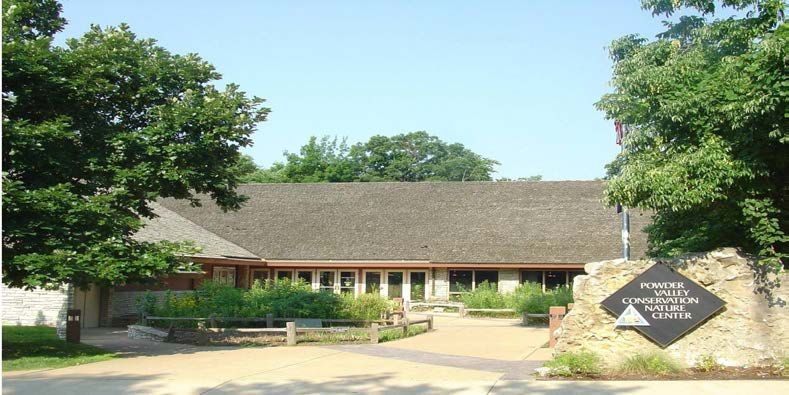
School Programs
           Fall 2018 – Spring 2019

Powder Valley Conservation Nature Center
               11715 Cragwold Road
             Kirkwood, Missouri 63122
                   314-301-1500
           www.mdc.mo.gov/powdervalley

          Serving Nature and You!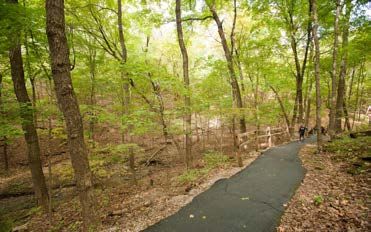
Reservation Information
Programs available Wednesday–Friday
Sept 26–Dec 7, 2018 and Feb 13–May 10, 2019

To reserve a school program, complete the Program Request Form available online at
http://mdc.mo.gov/powdervalley or call 314-301-1500 and request a copy of the form.
All requests received by Saturday, August 18, 2018 will be in the program lottery.
Requests received after that date will be considered depending on program availability.

You will be notified of the status of your request by Friday, August 24, 2018.

                                Application Instructions

  Follow these steps to enter the school program lottery.
        1. Download and save the application form.
        2. Complete and save the form.
   3. Email the completed form to:
  		ProgramRequests@mdc.mo.gov
        OR
    Mail the completed form to:
  		      School Program Request
  		      Powder Valley Conservation Nature Center
  		      11715 Cragwold Rd.
  		      Kirkwood, MO 63122
        OR
        FAX to: 314-301-1501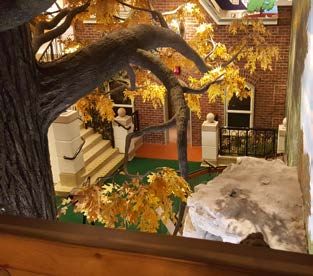
Group Options
                      Pre K–2nd grade single and double programs are 1 ½ hours and include
                      indoor and outdoor components. We recommend one adult chaperone per
                      four students.

                      3rd–12th grade single and double programs are 2 hours and include both
                      indoor and outdoor components. We recommend one adult chaperone per
                      six students (3rd–5th grade) or eight students (6th–12th grade).

PLEASE NOTE:
School programs require a minimum of 10 students.
Single and double group options do not include time for exploring the exhibits. If you wish
to explore the exhibits, please allow extra time after your program.

         *Check this out!
         A self- led interpretive guide is also available if a
         naturalist-led program is not possible. This guide is
         designed to enhance an on-your-own field trip;
         sent upon request. Please send request to
         ProgramRequests@mdc.mo.gov

 DOUBLE GROUP SIZE            TRIPLE GROUP SIZE                     QUADRUPLE GROUP SIZE

 Pre K–K: 21–40 students;     Pre K–K: 41–60 students;              Pre K–K: 61–80 students;
 1st–12th: 26–50 students.    1st–12th: 51–75 students.             1st–12th: 76–100 students.

 Minimum time scheduled:      *Minimum time scheduled:             *Minimum time scheduled:
 1½ hours– PreK-2nd           2½ hours or 3 hours with lunch break 3 hours or 3½ hours with lunch break
 2 hours– 3rd-12th
                              Includes one self-guided rotation     Includes two self-guided rotations.

  *A rotational schedule of activities will be sent a month in advance for Triple and Quad Groups.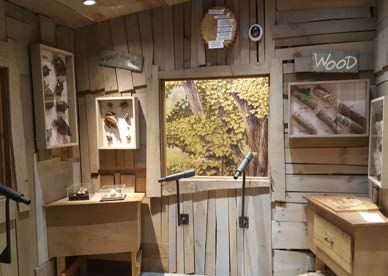
School Programs
                    Sept 26–Oct 19, 2018 and March 27–May 10, 2019

 Pre K–K                                                          3rd–5th Grade
 Amazing Amphibians!                                              Web of Life
 How do amphibians grow? How are they                             Nature weaves an intricate web, and every species is
 different from other animals? Discover the                       accounted for, from the smallest microbe to the largest
 answers to these questions through mimicry                       predator. Become familiar with consumers, producers,
 and live animals.                                                and decomposers as you classify
                                                                  organisms by their roles in the food
                                                                  chain. As part of the program, you
 Pre K–2nd Grade                                                  will be able to put your new food web
                                                                  knowledge to use when you dissect an
 Budding Biologists 1-Hour Hike                                   owl pellet in the classroom.
 What do biologists study? Explore outdoors and learn to
 distinguish between living and non-living things. Work as
 field scientists to examine the forest floor.                    5th–12th Grade
 Insect Inspectors                                                Outdoor Adventures
 Did that critter have six legs or eight? Was it a spider or an   Venture into the forest to explore nature
 insect? Catch and observe all kinds of insects living right      using compass and GPS. Learn the basics
 under your nose.                                                 of how to use these tools, then set off on
                                                                  an adventure to discover nature. With
 Seeds on the Move                                                teamwork and observations of the land,
 (Formerly Let’s Pollinate!)                                      students will navigate through ecology
 Flowers can’t walk, swim, or fly, so how do they spread to       theme-based orienteering courses.
 different places? Learn about pollination, seed dispersal,
 parts of flowers, and types of seeds through games
 and hands-on exploration. Outside, we will see what              Watershed Wonders
 is happening in the garden and try to observe some               (Please note program length:
 pollinators in action.                                           Single and Double groups - 3 hours
                                                                  Triple and Quadruple groups - 4 hours)
 Get a Life Cycle!                                                All life, including humans, depends on water. Learn
 (Recommended for Grades 1 and 2)                                 about watersheds, and how the biotic and abiotic factors
 How do life cycles differ within the animal world? Explore       within a watershed affect our waterways through hands-
 metamorphosis and growth through the fascinating lives of        on experiences and investigations. Explore an aquatic
 insects, amphibians, and birds. Outdoors, search for animals     ecosystem by testing the water quality and sampling for
 in different life stages.                                        aquatic macroinvertebrates.

All Grades
One Hour Seasonal Hikes
Discover the seasons and what’s happening in the forest through observations and hands-on outdoor
activities. Each hike is unique as students observe the natural changes occurring throughout the year.
School Programs
Sept 26–Dec 7, 2018 and Feb 13–May 10, 2019
Pre K–K 3rd–12th Grade
Bird Buddies Survival Skills
Explore the characteristics of birds through Do you have what it takes to survive when lost in the
hands-on activites and mimicry. Go on a bird wilderness? Learn about tools and skills that may be useful
hike and make a pair of binoculars to take in a survival situation. Discover how to build a shelter and
home. create a fire during a hands-on learning experience.
I Like to Move It, Move It! The following two programs are for Single and
Double groups only.
Take a close look at animal movement and behavior. Learn
how animals use different parts of their bodies to function
Nature Journaling
and survive in the wild. Dramatic play, live animals, and a
Art, science, and language arts all come together in this
hike will be a part of this “moving” experience!
study of the natural world. Students will learn to use
Pre K–2nd Grade poetry, writing, map-making, and sketching to record the
observations they make as they sit quietly in the forest.
Tools and a take-home journal will be provided.
Furry, Feathered, Scaly, or Smooth?
Want to learn what animals feel like and how their outer
Who Will Survive?
layers keep them protected? We’ve got you covered!
Become an endangered species from
Warm up to the world of animal coverings and the special
Missouri and learn about the hardships you
adaptations that help them survive in their environments.
must go through to survive every day. This
program turns Powder Valley into a giant
Mammalogy for Minis game board as you move from station to station. Learn
Walk in the tracks of a rabbit and about the needs of your species: Food, habitat, water, and
burrow like a mole! Become a different learn about threats from humans in this interactive program.
mammal by observing and behaving
like several Missouri mammals. Explore mammal traits and
hike to find some furry residents of Powder Valley.
4th–12th Grade
CSI: Critter Scene Investigation
3rd–5th Grade A conservation crime has been committed! Uncover
the mystery by engaging in scientific investigations to
Creatures of Habitat determine what really happened. Discover how conservation
A habitat provides food, water, shelter, and space for the agents use evidence to solve crimes against nature with
animals living there. It sounds nice and easy, but life in hands-on investigations and lab tests.
the wild is tough. Learn how animals use their diverse
adaptations to survive in their habitats. Be prepared to
explore the habitats of Powder Valley.
MAD Wildlife
Seasonal changes affect the behavior of plants and animals. Sign Up Now!
Winter is one of the most stressful times of the year for
most organisms. Students will participate in
* Fun facts about critters
activities to learn how different species use * Wild jobs
Migration, Adaptation, Dormancy, or other
* Nature activites
strategies to survive during these seasonal
changes. * And more!
…Go to xplormo.orgHands-on experiences in nature can
help Missouri’s K-12 students become
life-long conservationists. Get teacher
training, instructional units, and
funding for equipment and field trips.
Contact your local Conservation Education Consultant
to learn more about Discover Nature Schools.
St. Charles, Lincoln, and Warren Counties
Kim Cole
Kim.Cole@mdc.mo.gov Grades 9-12
636-441-4554 ext. 4126
St. Louis County (South)
David Bruns Grades 6-8
David.Bruns@mdc.mo.gov
314-301-1506 ext. 4212 Grades 3-5
St. Louis City and County (North)
Matthew Magoc
Matthew.Magoc@mdc.mo.gov
314-301-1506 ext. 4215
Grades K-2
Crawford, Franklin, Jefferson, and Washington Counties
Sam Faith
Sam.Faith@mdc.mo.gov
696-451-3512 ext. 6031
For current information on conservation programs, Pre-
K
teacher workshops, and more publications, check
out our website at mdc.mo.gov.Are you a teacher or youth leader? Interpretative Self-Guided Tour
“Discover Nature Trunks” are packed A self- led interpretive guide is also
with teaching resources and FREE to available if a naturalist-led program is
check out for up to 2 weeks! not possible. This guide is designed to
enhance an on-your-own field trip;
To reserve call 314-301-1500. send request to:
ProgramRequests@mdc.mo.gov.
Want to discover even more?
“Discover Nature Backpacks” are Now Available:
designed to enhance your adventure
at Powder Valley! Check out our biodiversity
Topics include: project on iNaturalist.org or
• Trees the smartphone app and even
• Invertebrates add your own observations to
• Pond & Stream help others discover the plants
• Birds and wildlife of Powder
Valley!
*Ask a staff member at the visitor’s
desk for more informationServing Nature and You!
Powder Valley Conservation Nature Center
11715 Cragwold Road
Kirkwood, Missouri 63122
314-301-1500
www.mdc.mo.gov/powdervalley
This 112-acre wildlife refuge is managed by the Missouri Department of Conservation.
The main showplace of the center is the 3,500 square feet with two floors of interactive
exhibits focusing on wildlife in an urban setting. The area has three trails, one of which has
interpretive signs and is disabled accessible. Help get students outside and closer to nature!You can also read


