Strategies to ensure the safety, health and wellbeing of students and school staff
←
→
Page content transcription
If your browser does not render page correctly, please read the page content below
Outdoor teaching
                                       and COVID-19

                                       Strategies to ensure
                                       the safety, health and
                                       wellbeing of students
                                       and school staff

                                       Created by graduate students in
                                       2e cycle en plein air at UQAM

                                       with the collaboration of the
                                       Monique-Fitz-Back Foundation,
                                       the Fédération des éducateurs et éducatrices
                                       physiques enseignants du Québec and the
                                       Réseau des unités régionales
                                       de loisir et de sport

                                       This document is evolving. To view the most updated
                                       version, please visit enseignerdehors.ca

2e cycle - Intervention en plein air
Returning to school after the                             Guidelines to consider from                  How can I prepare to
confinement period involves many
challenges for school staff. Some of
                                                          the direction générale de la                 teach in an outdoor
these challenges can be alleviated                        santé publique2                              environment?
through the use of outdoor spaces
around the school. Outdoor spaces have                    1  Outdoor spaces should be                  The following section contains
been identified as important for the                       prioritised for teaching subjects such       recommendations specific to teaching
learning, health and wellbeing of                                                                      outside, whether on school grounds, or in
                                                          as, but not limited to, physical
students, as discussed in the brief on                                                                 nearby parks and green spaces.
                                                          education, because the virus can’t
outdoor activity Quebecers on the Move
Outdoors! published by the Ministère de                   survive for as long outdoors as it does
                                                                                                       Organise the use of outdoor spaces
l’éducation et de l’enseignement                          indoors.
                                                                                                       in order to avoid contact between
supérieur (MÉES).
                                                                                                       different groups.
                                                          2  It is essential to always keep 2
However, despite the fact that virus                      metres of distance between people,           Identify appropriate areas close to the
propagation is less likely outdoors ,
                                                          regardless of the activity or the            school (school yard, school gardens, parks,
measures must be put in place in order
to limit transmission of COVID-19 in
                                                          intensity of the activity. Given the         green spaces, etc.). Contact your
outdoor spaces1.                                          larger space, it is easier for students to   municipality to find out which parks are
                                                          maintain this distance in an outdoor         open and what restrictions are in place.
This document provides practical                          setting.
                                                                                                       Create a diagram to identify the zones
recommendations for school staff in
                                                                                                       that will be used by your groups3.
order to make outdoor learning
                                                          3  It is recommended that students
accessible to all students, while
                                                          do NOT share any materials. In the
respecting the directives of the MÉES
and of Quebec’s Public Health Expertise                   event that materials are shared, it is
and Reference Centre (INSPQ).                             necessary to disinfect them
                                                          frequently.

Drafting committee                                        4  For any first aid intervention, be
2e cycle en plein air – UQAM - Patrick Daigle, doctoral   prepared with a procedural mask,
student, Yannick Lacoste et Joanie Beaumont, master's
students
                                                          gloves, and gown.

                                                                                                                             2
Fondation Monique-Fitz-Back - Julie Moffet,
projects coordinator

Collaborators
                                                                                                                                             3
Myriam d’Auteuil - Sport et Loisir Montréal
Jean-Philippe Ayotte-Beaudet - Université de Sherbrooke
Amandine Caudron, Valérie Bilodeau,
                                                                                                             1
COP-plein air-CSMB

Translation and editing
Holly McIntyre, Sarah-Maude Dumont

For all questions : daigle.patrick@uqam.ca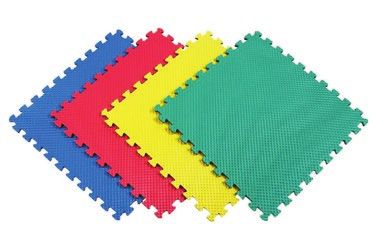
Create a schedule and a reservation              How can I prepare my                            Find out from your administration or
system for outdoor learning areas, and           group to go outside?                            your municipality, as applicable, if you
make this schedule accessible to all                                                             are allowed to set up shelters and
school staff (on line calendar, in the           Prepare the outdoor activity                    coverings such as a tarp to protect
staff room, etc.)                                                                                students from rain or sun, or to do specific
                                                 Inform parents and students that you will       activities
Establish a communication protocol               be using outdoor spaces as teaching
between the teachers who are outside             spaces.                                         Organise the group before
and the school secretary or main                 Check the weather and let parents know          going out
office (for example, phone or                     what each student will need to bring            Explain the rules and the objectives of
walkie-talkie) in order to manage the            (appropriate clothing, sunscreen, hat,          the activity before leaving the classroom.
movement of groups of students in                water bottle, hand sanitizer, etc…). Suggest
case of emergency.                               leaving these items at school for future use.   Establish routines that allow students to
                                                                                                 respect physical distancing while moving
                                                 Prepare your teaching materials as well
If your school has a garden,                                                                     through the school.
                                                 as sanitary materials required for the
information and recommendations                                                                   Get dressed in small groups in the corridor
                                                 group (clipboards, magnifying glasses,
regarding its use should be made                                                                  or in the classroom, depending on the
                                                 water, soap, sanitizer, basic first aid kit
available to all school staff4.                                                                   situation
                                                 with gloves, tissues…).
                                                                                                   While moving through the school, stay in
If possible, create a station for                Pay attention to the route to access the          line, 2 meters apart at all times.
washing hands outside with soap                  outdoor area: for example, are there
                                                                                                 Stop to use the washroom and wash
and water or with an alcohol based               funnels where children will have less
                                                                                                 hands. Once outside, it may be
solution (hose, temporary sink, spray            space to pass and where physical
                                                                                                 complicated to go back in for bathroom
bottle of alcohol based solution…)               distancing will be more difficult?
                                                                                                 emergencies.
                                                 Examples: Water fountain, fence opening,
                                                 doorways, narrow hallways or passages…)
       TIPS and TRICKS
       Here is an example of documents                                                                  TIPS and TRICKS
       prepared by prepared by David Simard                                                             Use a plastic bin to transport the
                                                        TIPS and TRICKS
       and David Dumas, two teachers from                                                               material that will be shared by the
                                                        Provide an object to sit on the floor
       the Assomption school in Granby :                                                                students while limiting the use of this
                                                        such as a towel, floor mattresses or
       https://drive.google.com/drive/folders/                                                          type of material to
                                                        foam mats
       1yMCBplxMCmT9DETH4OR1MYtmj                                                                       the strict minimum
       RXwr9Oc?fbclid=IwAR05D3GJRBN4
       BvbjxdXWy6HQXkYtM3LFY2zJTy_N
       I1jshD8_Z4JbtAIEggM
Organise the group once Once back in the classroom Outdoor teaching resources
you are outside
Debrief the outing with your class (what For activity ideas, visit (french only):
https://enseignerdehors.ca/
Clearly delineate the area your group will went well, what could we improve for next
Schoolyard activity guides:
use and where they can sit (chalk marks time, etc.). http://www.greenschoolyards.org/guides
on the ground, rocks, sticks, jump ropes…). https://outdoorclassroomday.com/resources/lesson-ideas/
Disinfect any material that was shared
As in class, each student will have their Introductory guide to outdoor teaching (in French) published by
(ex: balls, hoops, sticks)7. It is strongly the Monique-Fitz-Back Foundation
“own” place outside.
advised to avoid the sharing of material https://docs.wixstatic.com/ugd/
9cc112_563d3360ec824b1a9e117eb30249b63c.pdf
Plan to wash hands periodically (soap among students unless absolutely
Risk management reference guide for outdoor education :
and water or sanitizer) depending on the necessary, or to establish a strict protocol Standard policies and practices for Quebec schools (FÉÉPEQ):
activity (contact with objects, sharing of to clean all material between users8. https://cdn.ca.yapla.com/company/CPY1BPUKeLFWgyVphXqCE
rvb0/asset/files/documents/Outdoor-education-risk-managme
objects…). nt-manuel.pdf
Disinfect any surfaces that are
Some tips Quebecers on the move outdoors! Brief on outdoor activity.
http://www.education.gouv.qc.ca/fileadmin/site_web/
frequently touched (examples: picnic Consider which daily routines could take documents/loisir-sport/Avis_plein_air_VA.pdf
tables, sheds, accessories, etc)5, 6 place in an outdoor space: for example, À nous de jouer! L’extérieur, un terrain de jeu complet publié par
le Ministère de l’Éducation et de l’enseignement supérieur
Prioritize activities that allow children to welcoming students in the morning, or https://hydria-a.cogescient.ca/tmvpa/776e1ce1-64f3-4956-8063-
stay two metres apart from one another snack time.. It is also possible to eat lunch 5729d126b8e4/17-00395_L-exterieur-terrain-de-jeu_WEB.pdf?h
=76d89cb42ccafa19196f26646ff441d0
and avoid touching their faces. For outside on nice days in order to avoid
For advice and information about outdoor resources available in
activity ideas, visit the site transitioning through the school. your region, you can communicate with your Unité régionale de
loisir et sport (French only) :
enseignerdehors.ca or the Récit. When planning educational activities, http://www.education.gouv.qc.ca/en/nous-joindre/unites-
regionales-de-loisir-et-de-sport-urls-french-only/
choose simpl activities that require little or
no materials, that allow two metres of Colloque plein air: https://colloquepleinair.ca/
physical distancing and that minimize
TIPS and TRICKS environmental impact9.
For the littles ones, consider
holding a 'practice' to learn 1. https://www.quebec.ca/education/prescolaire-primaire-et-secondaire/
how to transition from indoor to During this unprecedented time, etablissements-scolaires-prescolaires-primaires-secondaires-covid19/mesures-de-
securite-pour-les-travailleurs-et-les-enfants-dans-les-ecoles-primaires-et-les-
students may be experiencing high
services-de-garde-en-contexte-de-covid-19/
outdoor areas, and how to 2. https://www.youtube.com/watch?v=FjouTTWF9wE&fbclid=IwAR0WxLwI_
p7VX3c2tiVMqmv5mC5f_Orc1mOgL1QZ4HxhPTkpDHHK4qlgaTo
maintain 2 meters distance in levels of stress. Research has shown 3. http://www.education.gouv.qc.ca/fileadmin/site_web/documents/ministere/
OutilPratiqueOP2_SchemaCourActuelle.pdf
outdoor spaces. that being in the outdoors has 4. https://www.inspq.qc.ca/sites/default/files/covid/2982-jardins-communautaires-
collectifs-covid19.pdf
mitigating effects on stress10. To 5. https://www.inspq.qc.ca/sites/default/files/covid/2984-travailleuses-services-garde-
covid19.pdf
maximize the potential of the 6. https://www.inspq.qc.ca/covid-19/environnement/nettoyage-surfaces
7. https://www.inspq.qc.ca/sites/default/files/covid/2984-travailleuses-services-garde-
outdoors, be calm, enjoy the sun, the covid19.pdf
8. https://www.inspq.qc.ca/covid-19/environnement/nettoyage-surfaces
wind or the shade of the trees, and 9. https://www.sanstrace.ca/accueil
10. Nilsson, K., Bentsen, P., Grahn, P., & Mygind, L. (2019). De quelles preuves scientifiques
share your well-being with your
disposons-nous concernant les effets des forêts et des arbres sur la santé et le
bien-être humains ? [What is the scientific evidence with regard to the effects of
forests, trees on human health and well-being?]. Sante Publique, S1(HS), 219-240.
students. doi:10.3917/spub.190.0219You can also read


