SECRET PROVENCE - JONGLEZ PUBLISHING
←
→
Page content transcription
If your browser does not render page correctly, please read the page content below
J E A N - P I E R R E C A S S E LY

 SECRET
PROVENCE

JONGLEZ PUBLISHING
from marseille to toulon                                                           from marseille to toulon
aubagne                                                                                           saint-zacharie

                                  THE FAIRIES OF THE HUVEAUNE
                                  • Marie, the source fairy: Les Martelières, 83640 Saint-Zacharie              3
                                  • Ubelka, the bridge fairy: Moulin Saint-Claude, 13390 Auriol                 4
                                  • Manon, the riverbank fairy: Parc de l’Ilot des Berge, 13400 Aubagne 5
                                  • Gyptis, the Vieux Moulin fairy: Parc du Vieux Moulin, 13010 Marseille
                                  (stolen in 2014)

                                                                                “
                                  • Ophélie, the lake fairy: Parc Borély, 13008 Marseille                       6

                            S     ince 2013 some striking sculptures of
                                  young women, often in strange poses,
                                  have appeared in four towns along the
                            Huveaune: Saint-Zacharie, Auriol, Aubagne
                            and Marseille. Called “the fairies” by their
                                                                                      aluminium fairies
                                                                                              on the banks
                                                                                        of the Huveaune
                                                                                                             Five

                            creators, artists Lucy and Jorge Orta, they
                            were commissioned by the Riverbanks and Culture Association formed of
                            residents of the valley of the Huveaune in connection with Marseille being
                            European Capital of Culture in 2013.
                               The creation of the fairies was intended to focus attention on the natural
                            and cultural heritage of the Huveaune and to strengthen ties between people
                            living in the different communities through which the 48.4 km river flows.
                            The Huveaune, which has no tributaries, rises in the Sainte-Baume mountains
                            and flows into the Mediterranean in Marseille, near the beaches of the Prado.
                               Starting upstream, the first of the fairies is in the village of Saint-Zacharie in
                            the ZAC (Joint Development Zone) Les Martelières. To find it, drive towards
                            Nans-les-Pins, cross the school roundabout and park on the left at the right-
                            angled bend at the Hostellerie de la Foux (now closed). Cross the road and walk
                            down to the Huveaune. Marie, the source fairy, kneels above the water, drinking
                            from her hand. Her name alludes to Marie-Madeleine, whose tears are said to
                            have created this river at the time she lived in the grotto of the Sainte-Baume.
                               The second statue, the bridge fairy Ubelka (after the Celto-Ligurian
                            name for the river, meaning “destructive one”), is dressed in vivid red and
                            has a witch-like appearance. To find her, take the road from Auriol towards
                            Roquevaire as far as the former Saint-Claude mill where there is a car park on
                            the left side of the road. The mill is now the premises of the Espace Culture et
                            Loisirs d’Auriol.
                               No car is required to reach the riverbank fairy, Manon (an obvious reference
                            to Manon des Source by Pagnol, who was born in this town). From the town
                            centre of Aubagne, pass the supermarket in Avenue Gabriel Péri. The small Ilot
                            des Berges Park, where the fairy awaits you, is just beyond.
                               Sadly, Gyptis, the Vieux Moulin fairy, who once stood in the Vieux Moulin
                            Park in Marseille’s 10th arrondissement, was stolen in 2014.
                               Last but not least, the fifth fairy, Ophélie, the fairy of the lake, is to be found
                            in Marseille’s Park Borély.
 22       SECRET PROVENCE                                                                     SECRET PROVENCE       23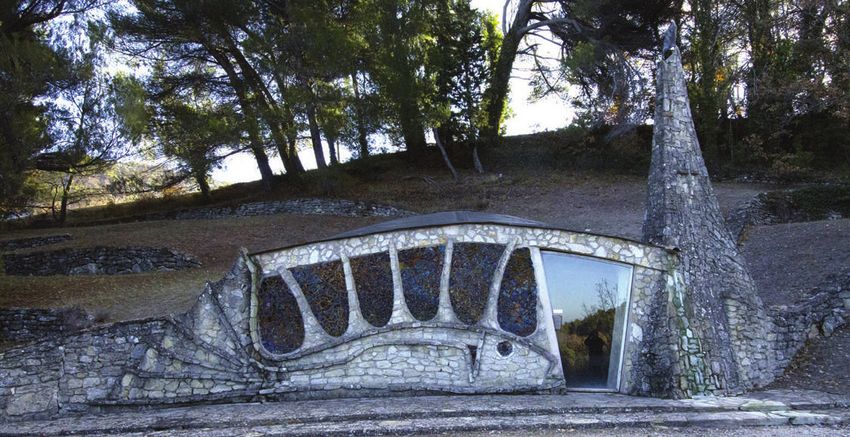
from marseille to toulon                                                                                                                     from marseille to toulon
gémenos                                                                                                                                                                 gémenos

           THE PRIORY OF SAINT-JEAN-DE-GARGUIER                                        8
           2237, route de Saint-Jean-de-Garguier, 13420 Gémenos
           • Accomodation, restaurant and room hire enquiries: 04 42 32 21 26                 Thanks to the copious inscriptions and coins found in the valley during
           • Religious activities and chapel visits (by appointment): 06 59 47 22 33
                                                                                           archaeological excavations, we know that Gargarius was the largest Gallo-

 “
           www.prieuresaintjeandegarguier.fr
                                                                                           Roman centre in the Huveaune valley in the 1st century BC following the
                                                                                           conquest of Provence by Julius Caesar. In the Gallo-Roman period, as well
                                                                                           as thermae there stood a Greek temple dedicated to Bacchus and Diana. The
                                                                                           place of pagan worship was transformed into a church shortly after the Edict
                            A
                                       F  ar from being just a little country chapel       of Milan in 313 AD, which permitted Christian worship in the Roman Empire
                 spectacular              like so many others, Saint-Jean-de-              before it later became obligatory.
                                          Garguier is the oldest known parish in              A true cultural and commercial crossroads, Gargarius, which would later
                   collection       the diocese of Marseille. The priory is situated       become Gargarie, witnessed an influx of large numbers of pilgrims. It is not
                  of ex-votos       in the commune of Gémenos where it borders             known when the worship of John the Baptist first began, though it continues
                                    with those of Aubagne and Roquevaire. Its              to this day. It would appear that when the pagan temple was converted into a
                                    unique collection of 300 ex-votos is displayed         church the people wished to continue the symbolism of purification by water.
  in a spectacular manner on the walls of the chapel. Some of them date from               Whereas earlier they came to the thermae to do their ablutions and worship
  the 17th century.                                                                        pagan divinities or the Emperor, now, in the Christian tradition, baptism
     In antiquity the only hamlet on the Aubagne plain was Gargarius. Its name             purified them, allowing them to find a new life in God. Who better to embody
  is Hellenic in origin; gargar means seed. It seems to date from the time of              that symbolism than John the Baptist? The name Saint-Jean-de-Garguier is
  the foundation of Marseille: to feed the population of the new Phocaean city             simply Saint John the Baptist to which the name of Gargarie was added (and
  some of its inhabitants set off in search of cultivable land, settling on the plain      later changed to Garguier).
  to plant wheat and vines. The small hamlet quickly grew into an important                   During the first decade of the current millennium, the diocese of Marseille
  crossroads with a large market. By the 2nd century BC it was already well                decided to commission some major works (2003–2013) to restore to this place
  known and people travelled from afar to buy raw materials.                               the radiance seen here today.

 26       SECRET PROVENCE                                                                                                                             SECRET PROVENCE      27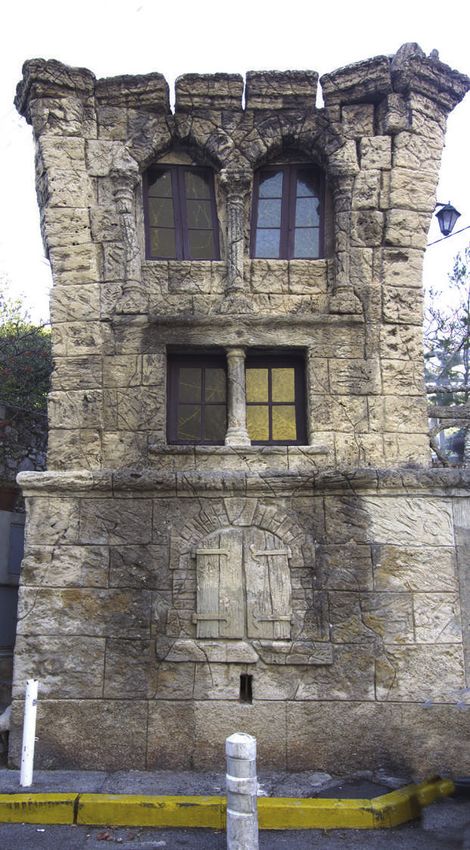
from marseille to toulon
                                                                                toulon

     MONSIEUR NOBLE’S                                                           49
     FALSE MEDIEVAL TOWER
     Rue Beaussier, Quartier du Mourillon, 83000 Toulon

                                                 “
     • Visits are not permitted, but the important parts can be seen from the
     street

W          hile most people who live in Toulon
           know the Maison du Fada (“The
           Crackpot’s House” in the popular
parlance of the midi!), the majority are not
                                                       Crackpot’s House
                                                                             The

familiar with the intriguing story of how, at the end of the 19th century, this
tower came to be built in the new quartier of Le Mourillon for one Jean Noble,
an entrepreneur in the field of public works.
    Noble had acquired three plots of land on which to construct three blocks of
adjoining urban residential buildings. He reserved one of them for himself and
his family. It had a garden that at the time extended as far as the sea.
    In 1898, at a time when some of his workers had been temporarily laid off,
he offered to one of them, Louis Borfiga, the opportunity to create the exterior
of his building. Borfiga, like Noble, came from Menton and had arrived in
Toulon only a short time before. “Have fun!” was the only architectural brief
that Noble supplied.
     So, to Noble’s delighted surprise, Borfiga created a rock façade in the form
of a crenelated tower. At its top he placed three cement figures fashioned in
the image of three local characters: the widow Sellier (who sold newspapers),
a fisherman, and the woman who sold fish. Unfortunately, the three characters
became seriously damaged (one of them was destroyed completely) by
celebratory arms fire at the time of the Liberation in 1944.
    If you get lost in the winding streets of Le Mourillon, simply ask for di-
rections to the Maison du Fada, because that is the nickname that the people
of Le Mourillon have given it; Le Corbusier’s Cité Radieuse in Marseille was so
named in a similar fashion.
    The rock construction of the Noble house has been registered as an historic
monument since 2014.

                                                              SECRET PROVENCE     81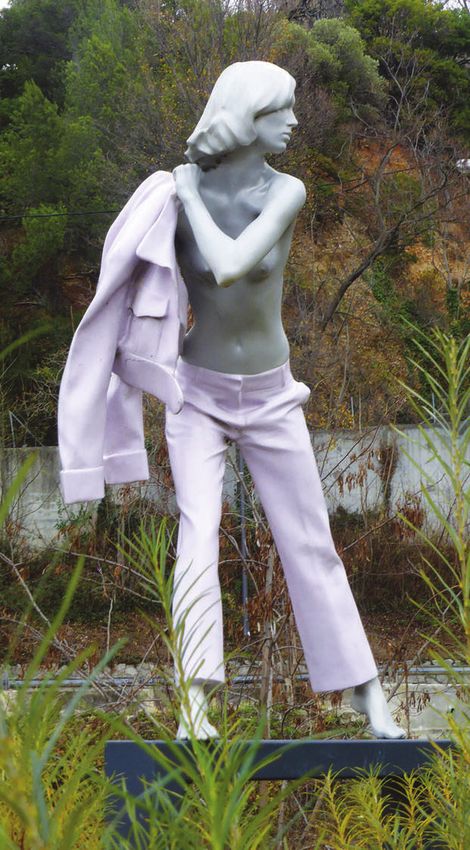
provence verte and central var                                              provence verte and central var
                                                                                                 le plan-d'aups

                                      THE COMPAGNON’S MONUMENT                                                  10

                                                                                 “
                                      Chemin du Canapé, La Sainte-Baume, 83640 Le Plan-d’Aups
                                      • Longitude 43°20’11’’N – Latitude 5°44’2244E

                                 A      t the start of the Chemin du Canapé,
                                        leading to Saint Mary Magdalene’s
                                        Grotto, an obelisk has been greeting
                                 pilgrims since 2011. This is the chef-d’œuvre
                                 de réception (masterpiece of reception) that led
                                                                                               Where Mary
                                                                                         Magdalen       spent
                                                                                         her final years?
                                 to a stonecutter – who went by the nickname
                                 Languedoc Coeur Simple – achieving the status of Compagnon du Tour
                                 de France des Devoirs. This monument bears witness to the centuries-old
                                 presence of the Compagnons in this spot, where their patron saint, Mary
                                 Magdalene, is said to have spent her final years (see previous page).
                                    The obelisk is engraved on its four sides and at the top. The engraving
                                 around the base reads, “According to legend Maître Jacques lived at la Sainte-
                                 Baume following the construction of the temple in Jerusalem, more than nine
                                 centuries before Mary Magdalene. He was master craftsman to King Solomon
                                 and a friend to Père Soubise, the son of a stonecutter from southern Gaul.
                                 At the age of 15 he set off for Greece to perfect his craft and was one of the
                                 founding fathers of the Compagnons du Tour de France. His body rests in
                                 peace not far from here.”
                                    On the west side, under the heading “Solomon’s Wisdom”, are the words
                                 “Justice, temperance, prudence, strength”. On either side of the text stand the
                                 columns of Solomon’s temple. Before they were defaced, the star of David,
                                 the square and compass, sledgehammer, chisel and stonecutter’s ruler also
                                 featured, as well as a pentacle, the symbolic five-pointed star with a plumb
                                 line incorporating the circle and square from the Vitruvian Man. Contrary
                                 to popular belief, these symbols are not Masonic (see following double page).
                                    Lower down on the same side, three symbols representing the three
                                 theological virtues appear: the anchor for hope, the cross for faith and the
                                 heart for charity.
                                    The text on the second side reads: “Over there suddenly appearing from the
                                 shadow a white cloister is revealed to us above a dark forest, in the rocks that
                                 guard our secrets.”
                                    On the third side: “An oratory in hard rock where our marks brave the
                                 weather and beneath the moss the gentle murmur of water that sings as it
                                 trickles from the rock.”
                                    On the fourth side: “In this grotto where Mary Magdalene strove long for
                                 Forgiveness, where kings and great men, and even queens came to pray like
                                 the Compagnons.”
                                    One of the top surfaces depicts the eye of God, the latin phrase Noli me
                                 tangere (said by Jesus to Mary Magdalene after his resurrection), and the
                                 alpha and omega of the Greek alphabet representing Christ’s eternity.

                                  For information about the Compagnons, see following double page.

                                                                                              SECRET PROVENCE    109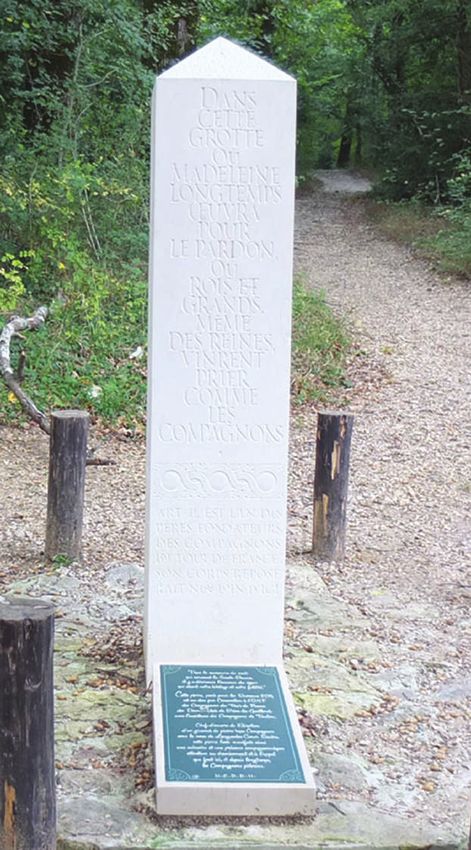
around l’étang de berre and salon-de-provence                                                                   around l’étang de berre and salon-de-provence
aubagne                                                                                                                                                             marignane

                                                                                              THE RAIMU MUSEUM                                                           5
                                                                                              27, cours Mirabeau, 13700 Marignane
                                                                                              • 04 42 41 52 10 – 04 94 54 18 00
                                                                                              • www.musee-raimu.com
                                                                                              • museeraimu@yahoo.fr
                                                                                              • Daily, 10am–12:30pm and 2:30pm–6pm, closed on Sunday mornings
                                                                                              and Tuesdays ; 1st of July–1st of September: 10am–12:30pm and 3:30pm-

                                                                                                                                       “
                                                                                              7am, closed on Sunday mornings

                                                                                         O      rson Welles once hoped to meet
                                                                                                Raimu, but it turned out that he
                                                                                                had died just a few days earlier. The
                                                                                         famous American filmmaker expressed
                                                                                                                                                           “I wanted
                                                                                                                                                              to meet
                                                                                                                                             the greatest actor
                                                                                         his disappointment in a single sentence,                      in the world”
                                                                                         “I wanted to meet the greatest actor in the
                                                                                         world.”
                                                                                            The museum dedicated to Raimu provides an opportunity to rediscover the
                                                                                         magic and personality of this highly individual actor; an actor who continues
                                                                                         to fascinate us today, not only for the roles given to him by Marcel Pagnol,
                                                                                         but also because of the large number of his films that are of note in the history
                                                                                         of cinema. Visitors are welcomed by the actor’s granddaughter, Isabelle
                                                                                         Mohan. The museum traces his early days in theatre – before Jules Muraire
                                                                                         had become Raimu – then charts his cinema career through original posters,
                                                                                         manuscripts, contracts, costumes, and over 200 period photographs, as well
                                                                                         as memories of Marius, The Baker’s Wife (La Femme du Boulanger) and, of
                                                                                         course, the hat that accompanied the iconic coat in his last film, The Eternal
                                                                                         Husband (L’homme au chapeau rond).
                                                                                            The museum houses a private collection that includes some of his clothes
                                                                                         (Raimu was a very elegant dresser) as well as furniture from his house in
                                                                                         Bandon and his apartment on Rue Washington in Paris.
                                                                                            From one wall there is a kindly wink from the comic strip depicting Raimu,
                                                                                         and plates from the four Asterix volumes in which René Goscinny based
                                                                                         characters on him: Asterix and the Banquet, Asterix and the Golden Sickle,
                                                                                         Asterix and the Cauldron and Asterix in Corsica.
                                                Photos: OT Marignane - Germain Thyssen

156       SECRET PROVENCE                                                                                                                              SECRET PROVENCE   157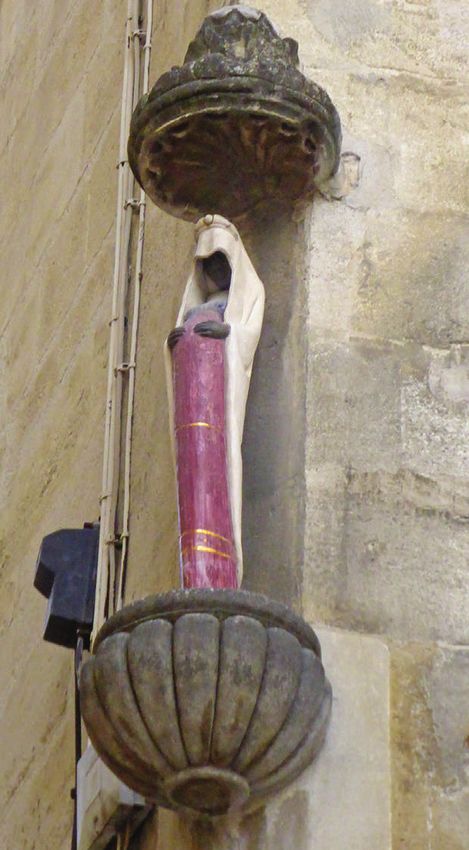
camargue and alpilles                                                           camargue and alpilles
saint-rémy-de-provence                                                               saint-rémy-de-provence

                              THE ILLUMINATIONS OF                                                      23
                              AUGUSTIN GONFOND
                              Alpilles Museum
                              Place Favier, 13210 Saint-Rémy-de-Provence
                              • 04 90 92 68 24
                              • museedesalpilles@mairie-saintremydeprovence.fr
                              • 2 May to 30 September, Tuesday–Sunday 10am–6pm; 1 October to 30
                              April, Tuesday–Saturday 1pm–5:30pm. Closed on 1 January, 1 May and
                              25 December

                         T     he most fascinating section of the
                               Musée des Alpilles, which was created
                               in 1919 and housed in the magnificent
                         Mistral de Mondragon mansion, contains
                         the illuminations of Augustin Gonfond, born
                         in Saint-Rémy-de-Provence in 1849. From
                         the start one is transported into the graphic
                         universe of medieval illumination. There are
                                                                         “              Magnificent
                                                                               illuminations from
                                                                                  the 19th century

                         angels and demons, plant life, animals both real and imaginary, landscapes,
                         monuments and people. But the story unfolding here has nothing to do with
                         the Middle Ages, it is about the life of the artist.
                             Like Vincent Van Gogh – a contemporary and neighbour, although
                         they never actually met – Augustin Gonfond’s creation was nourished by
                         insufferable pain. He was inflicted with great misfortune having lost his three
                         daughters when they were still very young. He dedicated a part of his work to
                         them, creating magnificent images, including portraits and locks of their hair,
                         telling the story of their lives surrounded by fine paintings.
                             Gonfond died in 1909. A devout Catholic, he held the view that the world
                         was divided into three parts as set out in his books and pictures: at the top is
                         Good, which includes “good” animals (e.g. ladybirds, butterflies, doves) and
                         “good” plants; at the bottom is Evil, populated by bats, demons and scorpions;
                         and between the two is the visible world where Good and Evil come face to
                         face.

222   SECRET PROVENCE                                                                 SECRET PROVENCE    223
avignon region
                                                                                avignon

     STATUE OF THE PREGNANT BLACK VIRGIN                                         5
     Rue Espérandieu (opposite the Palais du Roure), 84000 Avignon

T      he statue of the Virgin located in a
       small niche in Rue Espérandieu is one
       of the more unusual ones featured in
the Oubliées d’Avignon project (see the box
below). Apart from the fact that she is black
(see Symbolism of the black Virgin, page         “                A doubly
                                                                   unusual
                                                              Virgin Mary

356), the style of the Virgin facing the Palais du Roure further diverges from
the traditional Virgin and Child in that here she is pregnant, her prominent
stomach accentuated by the protective hands she places upon it.
   Such representations are particularly rare, having been proscribed by
the Council of Trent, which, in the 16 th century, forbade “uncustomary
depictions in churches”. Only 12 others exist in France: at Reims (Marne),
Brioude (Haute-Loire), Plomeur (Finistère), Laroque-des-Albères, Prades and
Perpignan (Pyrénées Orientales), Chissey-sur-Loué (Jura), Oulchy-le-Château
(Aisne), Arcachon (Gironde), Belpech and Cucugnan (Aude), and Cornillon-
Confoux (Bouches-du-Rhône, see page 205).
   The pregnant Virgin is by artist Francis Blot, sponsored by EDF and GDF
utility companies.

  LES OUBLIÉES D’AVIGNON

  In 1992 the city council and Young Chamber of Commerce launched a
  competition entitled Les Oubliées d’Avignon (The Forgotten Statues of
  Avignon), which aimed to repopulate the niches in streets that had been
  abandoned by their saints. Out of nearly 250 niches only 180 still remain,
  and about a quarter of them are empty. For each new installation a sponsor
  is sought, who is then partnered with an artist; their names appear on a
  plaque beside the niche once the replacement work is housed in it.
  It is worth taking a detour to see some of the other oubliées: Saint Vincent
  in the Rue du Puits de la Reille by D. Fabre and F. Bordas, who preferred
  engraving on a plate of glass to the usual stone statue; the angel bearing
  the head of John the Baptist in Rue Saint-Jean-le-Vieux, chosen by artist
  Jeanne Mettra, evokes a different aspect of the saint from the one seen
  further up the same street, focussing instead on his sacrifice at the whim
  of Herodias, who demanded his head from Herod; and finally the Virgin and
  Child on the corner of Rue Joseph Vernet and Rue Petite Lanterne, which at
  first sight seems to follow tradition ... until you notice her cheerful smile
  and skirt above her knees – a fanciful touch by the artist Francis Lievore
  that certainly would not have been tolerated in the past.

                                                              SECRET PROVENCE     239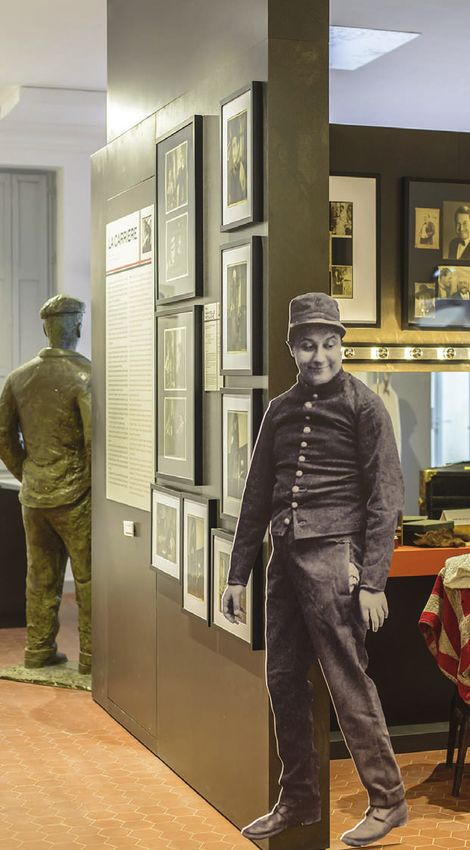
avignon region
                                                                                                                                                    saint-saturnin-lès-avignon

                                                                                           THE WHITE NATIVITY                                                          18
                                                                                           OF SAINT-SATURNIN-LÈS-AVIGNON
                                                                                           Saint-Saturnin Church, Place de l’Eglise, 84450 Saint-Saturnin-lès-Avignon
                                                                                           • From 10 December to 31 January, then from 2 to 4 February for the

                                                                                                                                        “
                                                                                           White Nativity: 9am–12pm on Saturdays and 2.30pm–5.30pm on
                                                                                           Saturdays and Sundays of December and January
                                                                                           • Everyday from 23 December to 7 January

                                                                                      E      very year from 2 February, the 11 th
                                                                                             century Saint-Saturnin Church in the
                                                                                             village of Saint-Saturnin-lès-Avignon
                                                                                      sets up a “white Nativity” that is well worth
                                                                                      visiting. Its purpose is to celebrate the Pre-
                                                                                                                                                           A crèche
                                                                                                                                                    that doesn’t
                                                                                                                                                        celebrate
                                                                                                                                           the birth of Jesus
                                                                                      sentation of Jesus at the Temple, 40 days after
                                                                                      the Nativity (see box below).
                                                                                         While a number of parishes in the Vaucluse keep this tradition, it is well
                                                                                      known that Saint-Saturnin-lès-Avignon is where the most spectacular display
                                                                                      can be found. In fact, its Advent scene occupies a space of 52 square metres
                                                                                      and requires 200 hours to set up.
                                                                                         This reconstruction of a Provençal village, faithful down to the last detail,
                                                                                      takes pride of place every year, with ever-changing decors being used to
                                                                                      display the characters according to the imagination of its creator. Two hundred
                                                                                      individual characters are used in the display – ninety people and more than a
                                                                                      hundred animals. Nearly 40 of the santons (traditional Provençal figurines)
                                                                                      actually move.
                                                                                       THE PRESENTATION OF JESUS AT THE TEMPLE – CANDLEMAS
                                                                                       The Presentation of Jesus at the Temple is an event from the life of Jesus
                                                                                       related in the Gospel according to Saint Luke (2:22). In compliance with
                                                                                       a requirement of Jewish law, namely that “Every male that openeth the
                                                                                       womb shall be called holy to the Lord” (Exodus 13:2, 11-13), the infant
                                                                                       Jesus’ parents presented him at the Temple of Jerusalem. There he was
                                                                                       received by the elderly Simeon, who informed Mary that she would know
                                                                                       suffering. Anna, the daughter of Phanuel, was also present. At 84 years of
WHY “WHITE”?                                                                           age, she prophesied the deliverance of Jerusalem.
The “white Nativity”, a typically Provençal tradition, probably owes its name to       The Christian celebration associated with this event takes place 40 days
the fact that a white sheet was used to cover over the Christmas Nativity before       after Christmas, i.e. 2 February in the Gregorian calendar.
it was taken down.                                                                     Candlemas (the candles symbolise the fact that Jesus is considered the light
It is made up of a number of santons representing the characters from the              of the world), an alternative name for the celebration of the Presentation of
Presentation at the Temple. While some come from the Christmas Nativity (such          Jesus at the Temple, was originally a pagan celebration of light.
as Mary, Joseph and Baby Jesus), other characters (the High Priest, Anna,
daughter of Phanuel and the prophet Simeon) are from the Gospel according to           OTHER WHITE NATIVITIES IN PROVENCE
Saint Luke, which relates the event.                                                   There are other white crèches in the region in addition to the one in the Church
Originally, a special ceremony accompanied the setting up of the white crèche:         of Saint-Saturnin-lès-Avignon: in the Church of Saint-Peter (see photo opposite
                                                                                       page) and in the Carmelite Church in Avignon; in the Church of Our Lady of
before mass on 2 February, children singing canticles would lift Baby Jesus from       Nazareth at Pernes-les-Fontaines; in Saint-Siffrein Cathedral in Carpentras;
the Christmas Nativity scene and carry him in a procession to lay him on the altar.    and in Aix-en-Provence, both in the cathedral and the Church of the Holy Ghost.

260   SECRET PROVENCE                                                                                                                                SECRET PROVENCE      261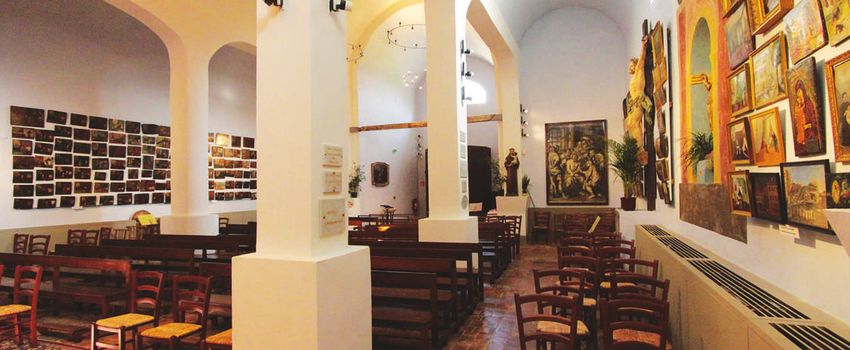
luberon                                                                                                                                                          luberon
apt                                                                                                                                                                          apt

       LA SANTONNE CHAPEL                                                       13     teacher and modern art lover who had promised himself during the Algerian
       Chemin de la Santonne, 84400 Apt                                                war that if he came out of it alive he would create a chapel. On his return he
       • Drive towards Buoux on the D113 from Apt. When roughly level with the         kept his promise and threw himself into constructing the edifice with his own
       plateau des Claparèdes turn right into Chemin de la Santonne. The chapel is     hands on land that he owned.
       near the end of the road but on the side of an unnamed secondary road to the        Standing in front of the chapel is the best way to take in its comprehensive
       right. Keep a sharp lookout; the top of the bell tower is a helpful landmark
       • At all times. Push the glass door firmly and close it properly when leaving   design. It sits comfortably among the curves of the landscape and blends with

 “
                                                                                       it as a result of the materials used – the mostly skilfully assembled stones,
                                                                                       which even form the belfry.
                                                                                           The inside is as spectacular as the outside. In the middle of a shell-shaped

                                   T
                                         his chapel is one of the most striking of     nave there is a Christ on the cross, carved in an almost abstract style from the
                                                                                       trunk of an olive tree. The ceiling is supported by a ribbed vaulted structure,
              A shock to                 the many religious buildings described
                                                                                       in the centre of which is a glass oculus depicting a fish, allowing light to enter.
                                         in this guide, not only because of its
            the system,             architecture, unique in terms of both harmony      Powerful mosaics in the apse project different colours within the chapel,
         both aesthetic             and inventiveness, but also because of its total   reminding us of the types of stone found in the vicinity. Text on the altar gives
           and spiritual            integration with nature, not to mention the        a fascinating insight into the art of the creator of this little masterpiece.
                                    intense flow of energy it imparts.                     It is impossible to say whether you would want this place to be more widely
     The building was not modelled after a certain school or a particular style.       known, because it is the mystical power of its isolation that dazzles the senses
  According to its creator, it was simply his modest contribution to art for future    of anyone coming here – an effect that is probably heightened in anyone who
  times: “Total Visual Art”. It was conceived and built by Roger Petit, an English     chances upon it.

304   SECRET PROVENCE                                                                                                                                 SECRET PROVENCE   305
luberon luberon
simiane-la-rotonde simiane-la-rotonde
THE WINTER SOLSTICE IN THE ABBEY 18
In 1996 the A.T.H.R.E. (Art, Tradition, History, Research and Environment)
OF VALSAINTES Association took over the abbey and began restoration. Since 1999, part of
Abbey of Valsaintes, Boulinette, 04150 Simiane-la-Rotonde the buildings and the garden, now dedicated to roses, have been open to
• 04 92 75 94 19 • www.valsaintes.org • info@valsaintes.org the public. The rose garden has received the accolade of Jardin Remarquable
• April, daily, 2pm–6pm ; from1 May to 30 September, daily, 10.30am–
“
7pm ; from 1 October to 1 November, daily, 2pm–6pm (outstanding garden) from the Ministry of Culture.
The main event of the year occurs at the winter solstice: during an extremely
moving service a beam of white light travels across the chapel, giving visitors
an opportunity to witness how the monks left nothing to chance when it came
to the orientation of their churches.
Every year, the association publishes on its website details of the date and
T
Watching as the he Abbey of Notre-Dame de Valsaintes, time when the phenomenon will take place. Musicians are an integral part of
sun travels across also known as Simiane Abbey (or the event, providing an accompaniment to the movement of the sun’s rays as
Boulinette Abbey), is a Cistercian abbey they pass through the oculus and cross towards the altar.
the chapel founded in the 12th century by the monks of It is an interesting fact that the phenomenon was actually spotted by chance
the Abbey of Silvacane who occupied it until during the restoration of the building. Since then it has provided this rapturous
the Revolution. It is situated in the commune moment when observers can follow the beam with their own eyes as it moves
of Simiane-la-Rotonde in the Alpes-de-Haute-Provence département. in deep silence – a focus for the contemplation of 80 people.
310 SECRET PROVENCE SECRET PROVENCE 311haute-provence haute-provence
volonne volonne
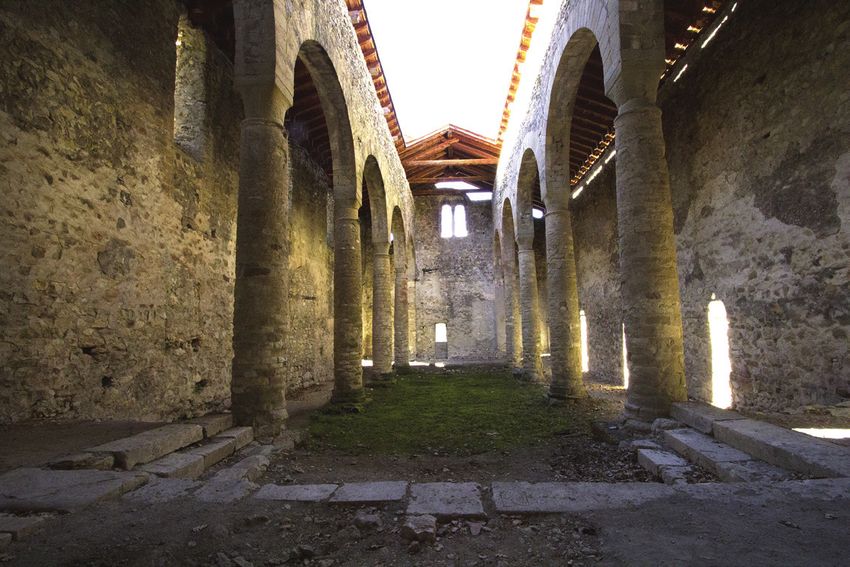
SAINT MARTIN CHURCH IN VOLONNE 10
Saint-Martin Church An unusual feature of the area, it was built following the layout of a basilica:
“
Saint-Martin on the outskirts of Volonne a central nave enclosed by an interior colonnade supporting a now absent
roof. Five bays with two side aisles of the same length lead to an apse and two
apsidioles. Its size is impressive: 24.6-metres-long by 10.6-metres-wide.
Faith
S ituated in the middle of the countryside, NEARBY
without a roof Saint Martin Church (noteworthy for THE GYPSITE CARVINGS OF VOLONNE 11
having no roof) leaves visitors with the The Castle, Place du Château, 04290 Volonne
unforgettable impression of certain English or Built in the 17th and 18th centuries, the Château de Volonne is adorned
Italian abbeys that are similarly open to the elements. with magnificent gypseries (decorations sculpted in gypsum) dating from
Probably constructed about 1050, it appears that Saint Martin Church the very early years of the 17th century. There are fine ribbed vaults with
was originally a priory called Saint-Martin-de-Cornillon, a dependent of the corbels, consoles decorated with foliage, and doors topped with female-
powerful Abbey of Saint Victor in Marseille. It would become a parish church headed monsters. Also worth noting are the barrel vaults above the stairs
in the 15th century despite its (and the surrounding cemetery’s) considerable with their adornments of intricately depicted vases of flowers and various
distance from the town centre. other things. You reach the vaults through an open door on the right hand
The church lost its roof during the Wars of Religion, but it was replaced side of the building.
early in the 17th century. Fire destroyed the new roof once again in 1830, In the Town Council chamber, which can be seen during opening hours,
and it remained in this state, the nave filled with debris, until 1971 when its there are further gypseries to be enjoyed. These are finished in fine gold and
classification as an historic monument came to the rescue. wonderfully depict the first hot air balloons.
342 SECRET PROVENCE SECRET PROVENCE 343haute-provence
oraison
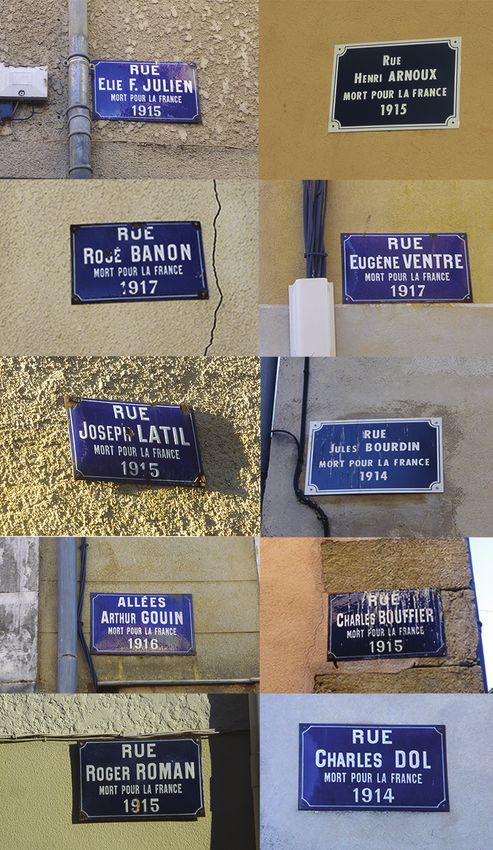
STREET NAMEPLATES OF ORAISON 19
“
04700 Oraison
O ne thing about the town of Oraison that
strikes visitors as they walk through
the commune is that almost all of the
streets are named after soldiers who died for
France.
Streets
named after
soldiers who died
for France
It was Mayor Victor Gérard (in office from
1919 to 1941) who took the initiative of best-
owing upon the streets of the village the names of each of the 63 soldiers from
Oraison who died during the Great War (1914-1918). Oraison’s population at
the time was just over 1700 inhabitants.
Plaques were ordered from an enamel manufacturer in Villeurbanne and
placed in the streets where the victims lived. Oraison would become the only
village in France to have most of its streets, squares and avenues named after
its children who gave their lives for their motherland.
In 1950 Marcel Sauvecane, then mayor, completed the work of remembran-
ce begun by his predecessor. He added the names of 13 Oraison soldiers who
died for France during the Second World War (1939–1945).
NEARBY
RELIQUARY OF THE TRUE CROSS 20
Church of the Invention of the True Cross
Montée du Théâtre, 04700 Lurs
• During the ‘ fête votive’ (celebration of the village’s patron saint) on the
last Sunday of July and on European Heritage Days
The Church of the Invention of the True Cross of Lurs rarely opens. For a
long time it held a relic of the True Cross of Jesus, brought back by Pierre de
Sabran, Bishop of Sisteron, from the Second Crusade (1147–1149).
During the Revolution, the reliquary of Lurs was buried at a distance from
the village to protect if from the widespread looting of churches. However,
once things had calmed down nobody was able to locate its hiding place. It
was not until many years later that a shepherd, seeing a light shining above
a bush, sent for the priest. The priest, also guided by the light, succeeded in
digging up the lost reliquary.
It is now safely hidden away in a bank vault and cannot be viewed. But if you
look to the right of the choir of the Church of the Invention of the Holy Cross
you can still see the box that once held the relic.
SECRET PROVENCE 351J E A N - P I E R R E C A S S E LY
SECRET
PROVENCE
A moondial in the Alpilles, a village in the Haut-Var without
which Louis XIV might never have been born, a theory that Saint
Sarah was actually the daughter of Jesus and Mary Magdalene, a
night spent in a bubble or up a tree, a statue of “The worst damned
German poet of the lot”, a private Coca Cola museum in Avignon,
an antipope who disappeared in the Lubéron, a Masonic sundial,
a rather unusual marriage door, traces of the Resistance still
surviving in Manosque ...
There is so much more to Provence than pictures of lavender fields
and pretty villages with people playing pétanque and drinking
pastis.
Wander off the beaten track and you will find that Provence is
teeming with curiosities to surprise and intrigue you, whether
you are just visiting or you live there and thought you knew it well.
JONGLEZ PUBLISHING
3 6 8 PAG E S
€ 18,95
£ 14.99
US $ 21.95
ISBN : 978-2-36195-311-9
info@jonglezpublishing.com
www.jonglezpublishing.comYou can also read


