Sharing our Experience - Kieran Killoran, Managing Director Wilo Australia Pty Ltd.
←
→
Page content transcription
If your browser does not render page correctly, please read the page content below
Sharing our Experience
Kieran Killoran, Managing Director Wilo Australia Pty Ltd.
Contents

1. The Wilo Story (so far!)

2. The Wilo Group today

3. Australia – facts and figures

4. Wilo Australia Pty Ltd

5. Issues to Consider if Coming to AU

6. Wilo’s view of the future

2   Webinar: Smart Cities in Australia 2021

1. History of Wilo

                                 Wilo
     Formation of the                              Acquisition of                      Own                                        Acquisition   Acquisition
                            international:                          Formation of                   Acquisition of   Acquisition
         company                                 the French pump                    production                                    Weil Pump      American
                             Formation of                           the Wilo-LG                         the         of Mather
    Messingwarenfabrik                             manufacturer                    of electronic                                   and Scot        Marsh
                                 own                                 Pumps Ltd.                     EMU Group,       & Platt,
      Louis Opländer                                  Pompes                         devices,                                       Pump,         Pumps,
                             subsidiaries                              Korea                        Hof/Bayern        India
      Maschinenbau                                   Salmson                        Dortmund                                         USA            USA
                                abroad
                                                       1984

                                                                                         2001
          1872

                                  1965

                                                                         2000

                                                                                                       2003

                                                                                                                       2005

                                                                                                                                       2017

                                                                                                                                                   2019
3      Webinar: Smart Cities in Australia 2021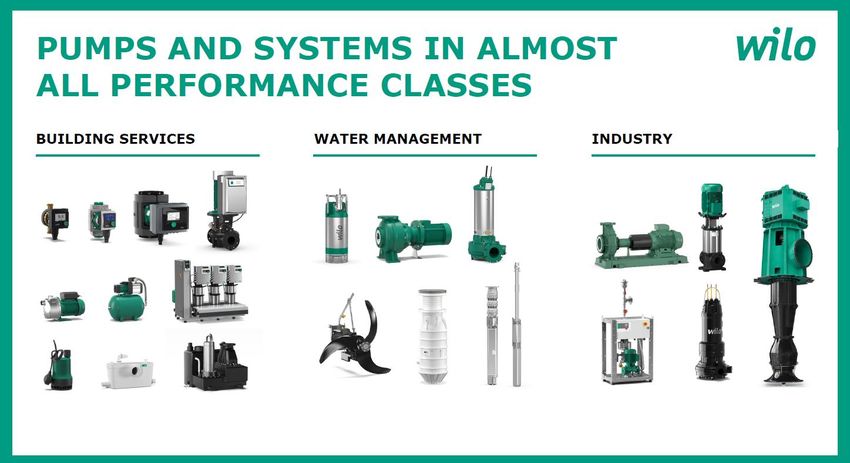
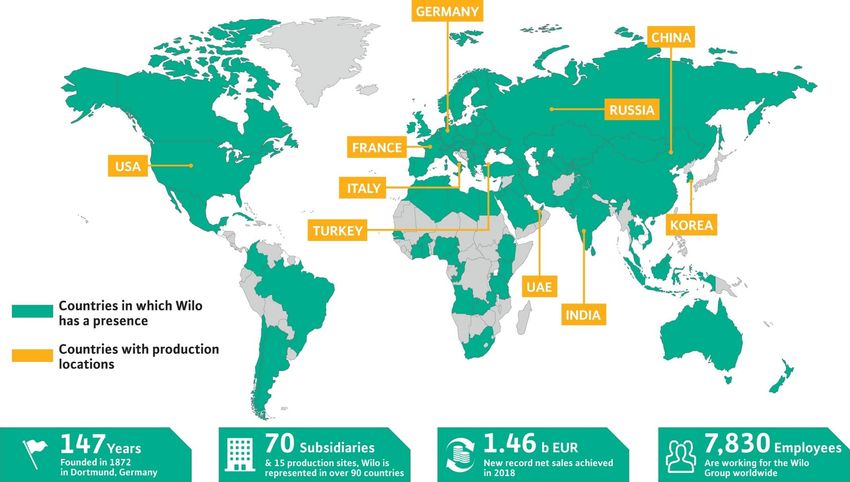
2. Wilo Group Overview
    WILO is one of the world’s leading manufacturers of pumps and pump systems

4    Webinar: Smart Cities in Australia 2021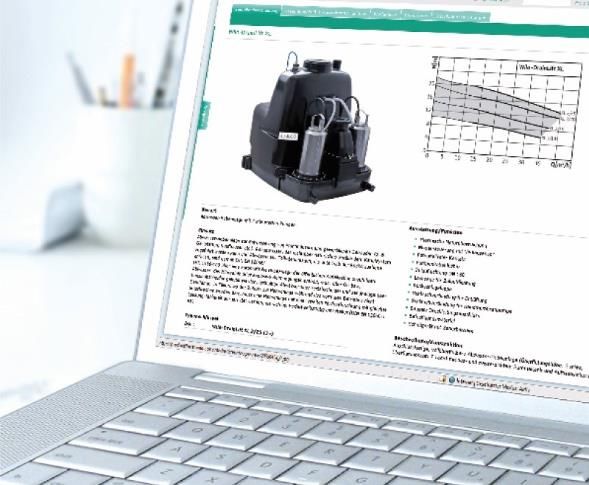
3. Australia – Facts & Figures

                                                                         Political Situation                                 Economic Situation
    Population:                    25Mio       Local Government is responsible for services to        - GDP – IMF forecast 2021-2022-2023:
                                               local area (parks, garbage, town planning etc.),                       Growth of 3% - 2.8% - 2.6%
    GDP/Capita:                    44,K€       State/Territory Government is responsible              - growing inflation (→ 1.3% in 2021 to 1.9% by
                                               respectively for schools, hospitals etc. across the    2023)
    Unemployment:                   6.6%       6 States and 2 Territories,
                                                                                                      - Unemployment rate set to increase to 7.7% in
                                               Federal Government responsible for taxation,           2021 before declining to 6.7% in 2022.
    Currency                         AUD       defence, immigration, trade, foreign affairs etc.
                                               Current Federal Government is a conservative
    Currency Rate                  0,61€
                                               coalition, dominated by the Liberal Party.

    kW/h*:                         0,17€*                          Building Construction                                        WM Construction
                                                                                                      With a high percentage of the population living in
                                     75 €B     Residential Building activity is expected to decline
    BSR Construction:                                                                                 cities and connected to existing water and
                                               in 2021 but will be partly offset by an increase in
                                                                                                      sewerage infrastructure, the market for the Water
                                               other building and construction activities, however
    BSC Construction:                23 €B                                                            Management segment in AU is currently a
                                               not enough to prevent a decline overall. Growing
                                                                                                      replacement market. However longer term
                                               Infrastructure Construction spending will be
    CW Connection:                     98%                                                            projection is that due to urban population growth
                                               sufficient to stabilise the amount of building and
                                                                                                      in Sydney and Melbourne, there will be need for
                                               construction work to be done in 2021-22 and lead
                                       95%                                                            investment in new water infrastructure to support
    WW Connection:                             to a return to growth in 2021-22.
                   *= in 2021                                                                         the population growth.

5    Webinar: Smart Cities in Australia 2021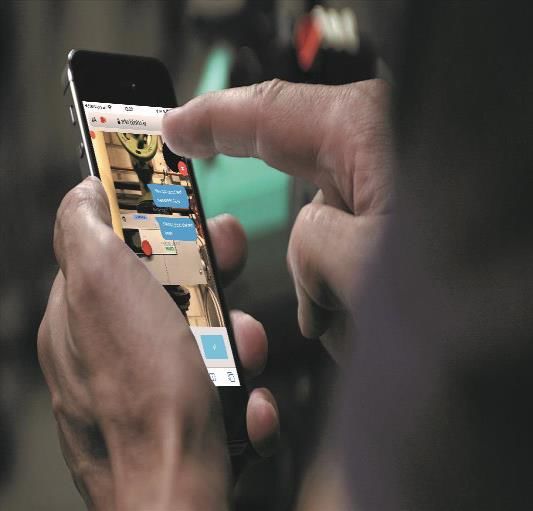
4. Wilo Australia Pty Ltd (WAU)

•       Wilo bought the existing Distributor, Auric Industries in 2011.

•       Subsidiary HQ based in Brisbane, Queensland (3rd largest city).

•       Auric main focus was on in-line circulator pumps sold to OEM’s for Solar Hot Water Systems. Huge Solar
        Renewables incentives at the time.

•       Other Market Segments were not focused on so much (Water Utility, Industrial).

•       Routes to markets for other segments were established. Water Utility (Direct); Industrial (indirect via
        System Builders); Building Services Commercial (Indirect via HVAC Contractors); Building Services
        Residential (Indirect via Plumbing Wholesalers and Small Pump & Irrigation shops)

•       Challenge for young Wilo Subsidiary was the competition were already present with local subsidiaries for up
        to 35 years prior and there was established relationships within the individual market segments.

•       Competition had early mover advantage with some heavily investing in their supply chains including local
        assembly to reduce lead times from Europe ensuring JIT production or local stock.

    6   Webinar: Smart Cities in Australia 2021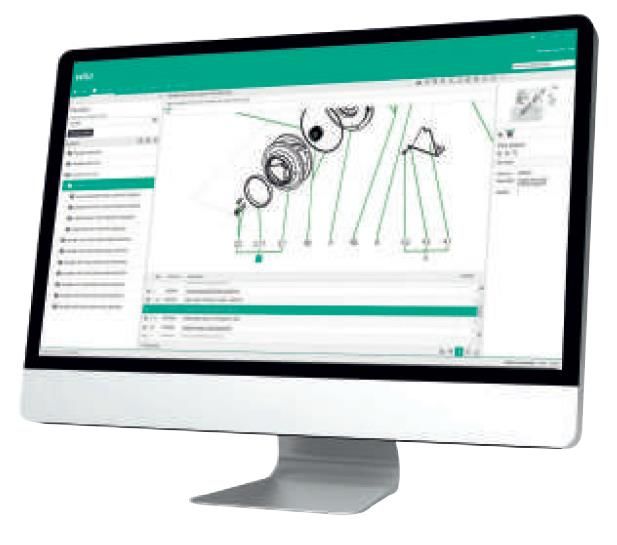
5. Issues to Consider if Coming to AU
    • Australia’s cities and towns are geographically dispersed (land area 7.7M sq. km) but its population is concentrated in the 3
      largest capital cities, all of which are on the eastern seaboard. 43% of the population live in Sydney, Melbourne and Brisbane.

    • This brings into consideration things like:

              1. where to base your business (Brisbane to Sydney is 1,000 km and it’s another 1,000 km from Sydney to Melbourne),

              2. will you promote your business in every State and Territory,

              3. how to provide an after-sales service offering if you’re not physically present in all locations.

    • Australia is at the opposite end of the earth to Europe. The lead time for sea cargo has blown out to as much as 12 weeks in
      recent times due to covid-19 quarantine restrictions at a number of the intermediate ports.

    • Certain segments of the market are price-sensitive and open to purchasing the generally cheaper Asian imports.

    • Our experience suggests there is a degree of reluctance on the part of some purchasing managers (particularly in the municipals)
      to try “something different”. If your competitors have been in AU for a long time, you will need to know your points of difference
      to compete in that replacement market.

    • You will need to be aware of when the Councils or other statutory bodies open up their preferred supplier/equipment lists for
      interested parties to apply. If you miss the process, it can be years before it opens again.

    • To secure projects, you will need to get to know as many consultants and lead contractors as possible. Be aware of any past
      issues with these parties, anywhere in the world, as they can hold a grudge.

    • Australia has a heavily-regulated economy, with many consumer protection laws. Suggest anyone thinking of setting up in AU take
      expert advice on where their products sit in the regulatory framework. See next slide for the WAU context.

7     Webinar: Smart Cities in Australia 2021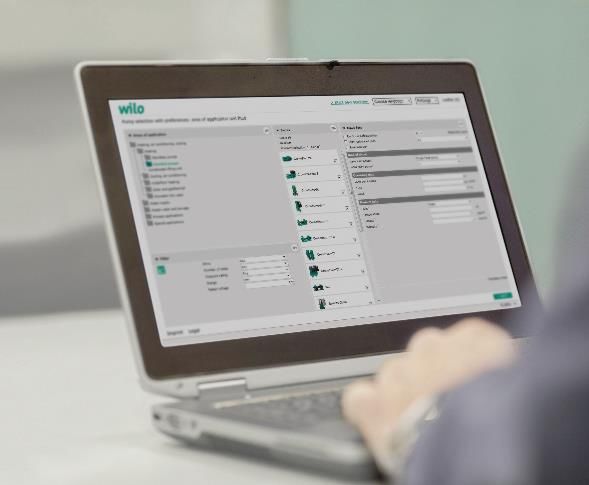
5 (cont.). Issues to Consider When Coming to AU

Product Compliance – meeting national norms & regulatory requirements.

1.    Electrical Compliance to AS/NZS standards.
      •          Register household products on EESS

2.    Communication and mandatory marking (RCM):
      •          ACMA (Australian Communications & Media Authority)
      •          EMC (Electromagnetic Compatibility)
      •          Bluetooth Certification.

3.    Greenhouse & Energy Minimum Standards (GEMS) Act 2019.

4.    Watermark & Drinking Water Approval
      •      Note that ACS, DVGW/KTW, WRAS are not accepted. AS/NZS4020 only.
      •      Some products also require to be approved for Watermark labelling.

8    Webinar: Smart Cities in Australia 2021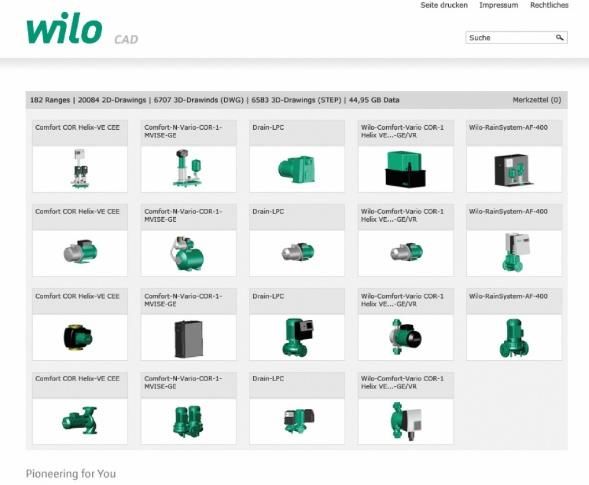
6. Wilo’s View of the Future - Megatrends

9   Webinar: Smart Cities in Australia 2021

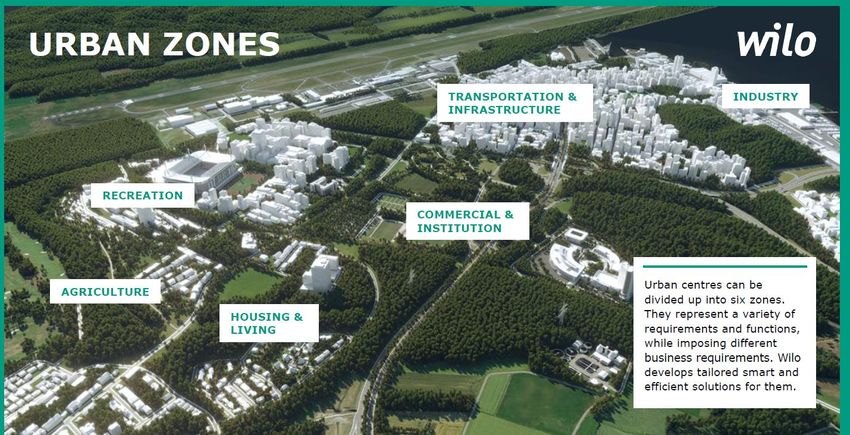
6 (cont.). Wilo’s View of the Future - Urban Zones

10   Webinar: Smart Cities in Australia 2021
6 (cont.). Wilo’s View of the Future – Solutions for Urban Zones

11   Webinar: Smart Cities in Australia 2021
6 (cont.). Wilo’s View of the Future – Digital Solutions

Select 4 Online – the                           Product catalogue          Wilo Spare Parts Catalogue   Wilo CAD Catalogue
pump consultant

Remote Tech Support –                           Social Media
Wilo Live Assist

                                                Twitter @WiloPumpsAus
                                                Instagram @wiloaustralia
                                                Facebook Wilo Australia
                                                LinkedIn Wilo Group

12    Webinar: Smart Cities in Australia 2021
6 (cont.). Wilo’s View of the Future - Future Trends for Australia’s
Smart Cities
• Continued migration from rural to urban population centres.
• Sydney and Melbourne will become global smart cities.
• Doubling of their populations by 2050.
• Huge infrastructure investment for transport (metro, rail, airports)
• Growing populations will require housing, schools, hospitals, sports facilities
• Utilities need to keep up to provide Water, Wastewater, Electricity. Retail Sales of Hot
Water Domestic
pumps
• Continued investment in Renewables (Solar, Hydro, Wind). 1500
1000
500
• Australia will become a Green Hydrogen Energy exporter (Joint Plan). 0
• More Energy Efficiency regulation on a product level (Similar to ErP Directive). Non-Smart Smart
13 Webinar: Smart Cities in Australia 2021Any questions? 14 Webinar: Smart Cities in Australia 2021
You can also read


