SKI WELL, BE WELL WINTER 2020-21 - NORTH CAROLINA SKI AREAS OPERATING BEST PRACTICES - Sugar Mountain Resort
←
→
Page content transcription
If your browser does not render page correctly, please read the page content below
SKI WELL, BE WELL
NORTH CAROLINA SKI AREAS OPERATING BEST
PRACTICES

WINTER 2020-21
FOUNDED IN 1976, THE NORTH CAROLINA SKI AREAS ASSOCIATION
  serves as the state’s trade association. Its purpose is to foster, stimulate and promote skiing and
snowsports, as well as safety in skiing and snowsports in North Carolina and to encourage cooperation
and assistance from State agencies. North Carolina ski area owners and operators have a long history
    of developing best practices for ski, snowboard, and lift safety. The Association supports the
    nationally-accepted Your Responsibility Code, which defines the basic tenets of slope safety.

 OUR COMMITMENT
 The North Carolina ski and snowboard industry values
 and prioritizes the health and safety of its guests,
 staff and local communities. We demonstrate this
 commitment by implementing the following operating
 best practices for the 2020-21 winter season, or for as         Gunther Jochl, President,
 long as needed, scaled appropriately in response to the         Sugar Mountain Resort
 COVID-19 pandemic.

 North Carolina ski industry leaders from all six resorts
 established these foundational best practices according
 to scientific guidelines put forth by infectious disease
 experts, including the CDC and WHO. North Carolina ski
 areas will comply with additional federal, state and local       Ski areas are committed to
 regulations as they are implemented.
                                                                 supporting healthy and thriving
 Snowsports are a way for people to play in wide-open          local communities. We will continue
 spaces, and to take advantage of the mental and physical        to partner with local agencies to
 health benefits of outdoor recreation. For decades,
 ski area owners and operators have managed skier              maintain the success and character
 numbers and safety in daily operations, collaborating          of the places in which we operate.
 with fellow industry experts to offer safe and memorable
 experiences. The North Carolina Ski Areas association
 is committed to providing outdoor recreation in ways
 that promote health and safety, and reduce the risk of
 infection.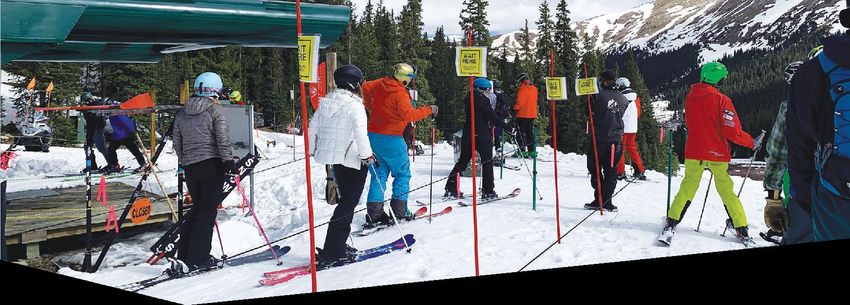
A LETTER FROM NCSAA’S PRESIDENT

 Since the outbreak of the COVID-19 virus, the North
 Carolina ski industry leaders have listened and learned,
 and responded by implementing the guidelines outlined
 by Governor Cooper and the CDC to their summer and
 fall operations. The results are exciting and encouraging.
 Positive COVID-19 cases within the communities of all six
 ski areas continues to be significantly lower than the state
 average. Employment remains stable. Local businesses
 are operating within state guidelines and we look forward
 to continuing safe operation during the winter season. A
 refreshing level of respect and compassion is felt
 throughout North Carolina’s outdoor community. Most
 importantly, we are committed to the health and well-
 being of those living in and visiting our mountain
 communities.

 Kimberley Jochl
 President
 North Carolina Ski Areas Association

“We look forward to welcoming guests to the slopes this winter!”
Chris Bates, President, Cataloochee Ski Area

                              2
BENEFITS AND ADVANTAGES OF SKI AREAS
Ski areas provide low-risk outdoor recreation opportunities for millions of Americans.
Here’s what makes the ski industry uniquely positioned to do so:

                                         Space
                                         North Carolina ski areas provide hundreds of acres
                                         of land for outdoor recreation. Ski area operators are
                                         experts at monitoring and managing the flow and
                                         volume of traffic in their outdoor spaces.

                                         Natural Outdoor Environment
                                         The majority of time spent at a ski area is spent outside in
                                         the fresh air, cruising down runs.

                                         Standard Gear
                                         Face coverings, including neck gaiters, goggles, gloves
                                         or mittens, and helmets are standard pieces of skiing or
                                         snowboarding gear.

                                         Slope Safety Etiquette
                                         Long-standing skiing and snowboarding etiquette requires
                                         guests to respect one another and give space between
                                         themselves and other skiers and riders. Safe skiers leave
                                         space between other skiers.

                    Roger Dow, President and CEO of U.S. Travel Association

                                                         3
Health Benefits
Snowsports provide numerous proven health and wellness
benefits to participants. According to the WHO, “regular
physical activity benefits both the body and mind.” The
organization says that physical activity increases strength
and fitness, reduces the risk of cardiovascular and other
physical ailments and improves mental health, specifically
reducing the risk of depression..1
1
    World Health Organization, Q&A: Be Active During COVID-19 (accessed August 2020)

Shared Responsibility for Safety
It is up to every individual, both ski area employee and
guest, to do their part to help protect the health and safety
of our skiing and snowboarding community. Following
requirements to mitigate the risk of infection is part of the
social contract between ski area operator and guest.

Touchless Transactions
Many ski areas have adopted technologies to reduce
personal contact between employees and guests. These
include touchless payment and access technologies, such
as RF (radio frequency) scanning of tickets and
passes.

                   4
SAFE WORKING, SAFE RECREATING
Here is how North Carolina ski areas are helping to keep their employees, guests and
communities healthy:

 Face Coverings are Required

         spaces, except when eating or drinking.

                                  Physical Distancing
                                  Ski areas will create operational plans that allow for appropriate
                                  spacing between parties. This includes but is not limited to the
                                  following parts of the operation: lift queues, ticket queues, ski and
                                  snowboard lessons, employee spaces, and food and beverage outlets.

Cleaning and Disinfection
Ski areas will adopt cleaning and disinfection strategies for all areas of their
operation, including high-touch areas such as restrooms, restaurants, dining
facilities, ticket offices, and rental shops. All cleaning products used will follow
CDC and EPA guidance on agents which are effective against COVID-19.

                                  Operating Plans
                                  Ski areas will review and amend both their overall and individual
                                  departmental operating plans to: comply with local regulations;
                                  maintain physical distancing requirements; and adhere to cleaning and
                                  disinfection best practices.

INDOOR SPACES: Ski areas comply with local             OUTDOOR SPACES: Ski areas have created detailed,
regulations regarding the management of                scalable operating plans for the management of outdoor
indoor spaces.                                         spaces including base areas, lifts and ski terrain.

   Enhanced health and safety measures are in place in every
  part of our operation Brad Moretz, President, Appalachian Ski Mtn.

                                                       5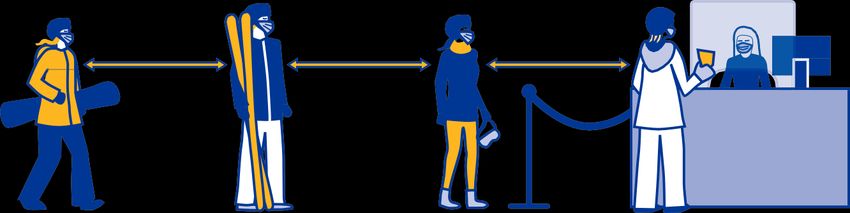
Communication
                              Ski areas will communicate their plans and requirements to guests prior to
                              their arrival at the ski area, stressing the shared responsibility in keeping
                              our slopes safe. Guests will be made aware of their obligations, including
                              the requirement to wear a face covering whenever physical distancing
                              cannot be achieved. Ski areas will also post on-site signage notifying
                              guests and employees of required best practices to help stop the spread.

Reporting and Notification
Ski areas will comply with state and local public health orders and follow CDC
best practices when reporting a positive case of COVID-19 at their resort.
Employees will be trained in these practices by ski area leadership.

  OUR INDUSTRY’S GOAL IS TO KEEP GUESTS SKIING AND SNOWBOARDING
Skiing is a weather-based business requiring the          offer low-risk, high-value recreation and it is our
daily scaling of operations to respond to current         goal to provide that to our guests, even if some
conditions. As such, our industry is uniquely             indoor or close-contact activities have to be scaled
prepared to pivot its operations.                         back or put on hold. The ski industry is committed
                                                          to a collaborative relationship with state and local
We are confident in our expertise of managing             authorities to work together for solutions to keep ski
outdoor recreation spaces. Skiing and snowboarding        areas open, and to keep guests and staff safe.

                               Employee Training
      Ski area employees are trained in COVID-19 safety and disinfection
        protocols, consistent with recommendations from the CDC.

                                                                Stay home or go home
Employee                                                        when experiencing the
Wellness Checks                                                 following symptoms:
Ski areas perform daily wellness checks of all        • muscle aches • diarrhea           • congestion or runny nose
employees prior to the start of their shifts.         • headache                          • nausea or vomiting
                                                                      • cough
Employees will be sent home or asked to stay          • loss of smell
home if they have come into contact with a positive      or taste     • sore throat
COVID-19 case and/or exhibit relevant symptoms.
                                                      6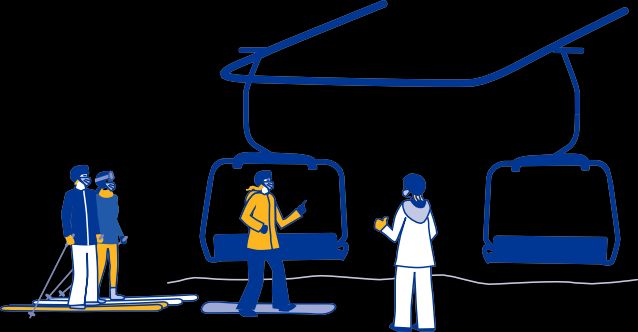
LIFTS
There are thousands of outdoor recreation options but what makes the ski industry different is its uphill
transport: aerial ropeways like chairlifts, trams and gondolas, and surface conveyors. Of these, chairlifts
are the most common.
The National Ski Areas Association (NSAA) serves as the secretariat of the American National
Standards Institute Accredited Standards Committee B77, which develops design requirements,
specifications for training, and operation and maintenance requirements for aerial ropeways.
NSAA believes that ski areas can effectively operate their ropeways without additional risk of infection
by setting forth these best practices.

                                     Lift Queues

Loading the Chair
Guests will be asked to self-group and load the chair with their
traveling party. Lift attendants will not require guests to ride a
chairlift with people they do not know. High capacity chairlifts
may be the exception, and may be loaded in a way that
allows for physical distancing.

                          Riding the Chair
                          The average chairlift ride is 7 minutes,
                          considerably shorter than most transportation
                          activities such as riding a bus or taking a trip
                          in an airplane. The average chairlift travels at
                          approximately 5 mph, 7 feet every second,
                          providing constant directional air flow. Chairs
                          are spaced approximately 50 feet apart.
                          Express lifts, found at many ski areas and
                          resorts, travel at nearly 17 mph, with chairs
                          spaced over 100 feet apart.

Unloading the Lift
Standard ski area safety rules and on-mountain signage require that
people clear the unload area quickly after disembarking. Once clear of
the chair, skiers and riders have wide open spaces on which to slide.

                                                      7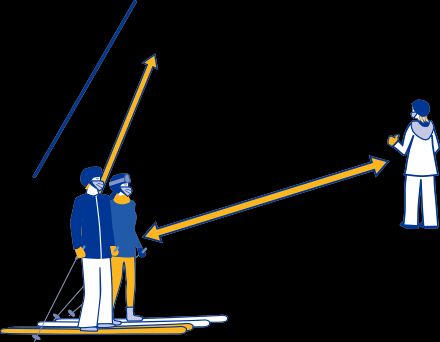
“We have every reason to believe that the success of summer
            season will carry over to our winter season.“
            Ryan Costin, President, Beech Mountain Resort

Open Air Chairlifts
The majority of our lifts are open air chairs where the rider experiences a
constant flow of fresh, clean air.

Chairlifts check the boxes for
low-risk transportation and recreation.
       Face coverings required

       Outdoor environment

       Skiers and snowboarders will ride the lift with their traveling party

       Lift rides are generally 5-10 minutes, and almost always under 15 minutes

       Lifts travel between 5 and 17mph, creating constant one-way directional airflow

       Chairs are typically spaced 50 or more feet apart

The North Carolina ski industry is committed to
providing outdoor recreation in ways that reduce
the risk of infection.

                                                    8
ENDORSEMENTS                                            All six North Carolina ski areas have advised
                                                        the creation of this document and endorse its
                                                        contents
  North Carolina Ski Areas
  Association Board of Directors
  President: Kimberley Jochl, Sugar Mountain Resort
  Vice President: Chris Bates, Cataloochee Ski Area
  Treasurer: Erich Schmidinger, Sugar Mountain Resort
  Secretary: Ryan Costin, Beech Mountain Resort
  Brad Moretz, Appalachian Ski Mtn.
  Orville English, Wolf Ridge Ski Resort
  Chris Green, Sapphire Valley Ski Area
                                                                          Haywood County Chamber of Commerce
  Alpine Ski Center                                                       Haywood County TDA
  American Association of Snowboard Instructors                           Madison County Chamber of Commerce
  Asheville Chamber of Commerce                                           Madison County TDA
  Avery County Chamber of Commerce                                        Maggie Valley Chamber of Commerce
  Banner Elk Chamber of Commerce                                          National Ski Areas Association
  Banner Elk TDA                                                          National Ski Patrol
  Beech Mountain Chamber of Commerce                                      Professional Ski Instructors of America
  Beech Mountain TDA                                                      SIA Snowsports Industries America
  Blowing Rock Chamber of Commerce                                        Ski Country Sports
  Blowing Rock Tourism Development Authority                              Village of Sugar Mountain TDA
  Boone Area Chamber of Commerce                                          Visit NC
                                                                          Watauga County TDA

Disclaimer: This document is not to be cited as a “standard”. The endorsers have pledged to maintain these practices based on
best available information at the time of publication. Each retains the right to implement new and different practices and
to discard others as experience warrants.
This document does not in any way establish a cause of action against NCSAA as publisher.

                                                               9
You can also read


