STABILIZE CONFLICT-AFFECTED AREAS - SAR A FRAMEWORK FOR MAXIMIZING THE EFFECTIVENESS OF U.S. GOVERNMENT EFFORTS TO - US Department of State
←
→
Page content transcription
If your browser does not render page correctly, please read the page content below
SAR
               STABILIZATION
               ASSISTANCE REVIEW

     A FRAMEWORK FOR MAXIMIZING THE
EFFECTIVENESS OF U.S. GOVERNMENT EFFORTS TO

STABILIZE CONFLICT-
  AFFECTED AREAS
                     B
                    2018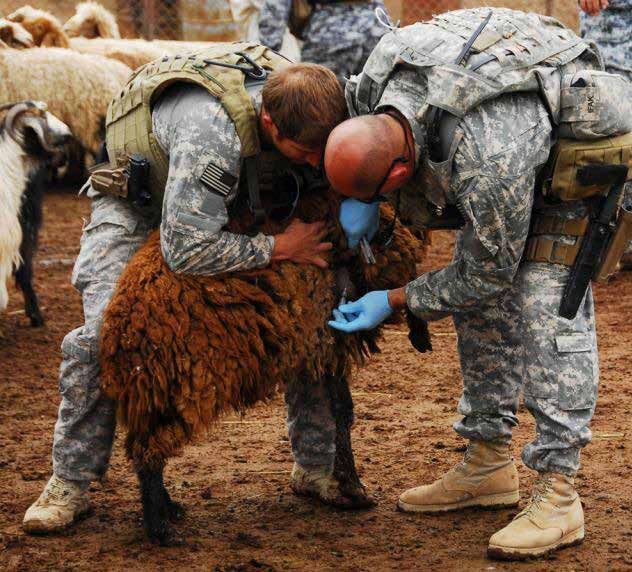
FOREWORD FROM SECRETARY OF STATE, USAID
ADMINISTRATOR, AND SECRETARY OF DEFENSE

I
  ncreasing stability and reducing violence in conflict-affected areas are essential to realize
  America’s national security goals and advance a world in which nations can embrace their
  sovereignty and citizens can realize their full potential. The United States and our allies face an
increasingly complex and uncertain world in which many of our adversaries sow instability and
benefit from it. Protracted conflicts provide fertile ground for violent extremists and criminals to
expand their influence and threaten U.S. interests. These conflicts cause mass displacements
and divert international resources that might otherwise be spent fostering economic growth
and trade.
The U.S. Armed Forces and our allies and partners are defeating the Islamic State of Iraq and
Syria (ISIS) and other terrorist groups on battlefields in Iraq, Syria, and elsewhere, but we are
entering a new phase in this struggle. We must consolidate security gains, reduce levels of local
instability, and work with local partners to peaceably manage change and provide legitimate
and responsive governance. Our national experience over the past two decades has taught us
that it is not enough to win the battle; we must help our local partners secure the peace by
using every instrument of our national power.
At the same time, we must resist the temptation to throw more money at these complex
problems. American taxpayers are right to demand tough scrutiny of such investments.
Transitioning too quickly to large-scale reconstruction and longer term development efforts can
backfire without a clear strategic and political approach. Our organizations must more rigorously
define stabilization missions based on national security interests and undertake institutional
reforms based on hard-learned lessons. We must press our international partners to share the
costs for these efforts, and hold our local partners accountable for demonstrating sustained
leadership and progress.
To meet these imperatives, our Departments and Agency are recommending steps to maximize
the effectiveness of U.S. Government efforts to stabilize conflict-affected areas. This report
outlines a framework to systematically apply lessons from the past; to strategically and selec-
tively direct our resources; to increase burden-sharing with key international partners; and to
improve the efficiency and impact of our efforts.
We have approved this report as the first step in a process to position the U.S. Government’s
defense, diplomatic, and development capabilities to meet strategic stabilization requirements.
We are committed to advancing this process together. Reducing armed conflict is a perennial
challenge, and there are many factors that are outside of our national control. By refining our
respective organizational roles and capabilities and institutionalizing discipline and learning
in our approach, we will increase our likelihood of success and improve accountability to the
American taxpayer.

                                                  i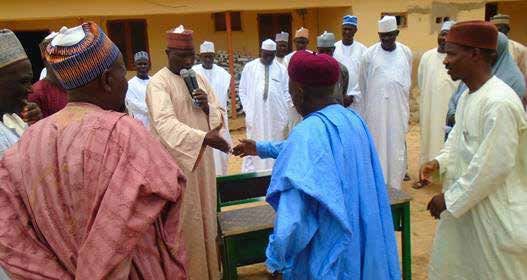
CONTENTS
FOREWORD.  .  .  .  .  .  .  .  .  .  .  .  .  .  .  .  .  .  .  .  .  .  .  .  .  .  .  .  .  .  .  .  .  .  .  .  .  .  .  .  .  .  .  .  .  .  .  .  .  I

ABOUT THE REVIEW.  .  .  .  .  .  .  .  .  .  .  .  .  .  .  .  .  .  .  .  .  .  .  .  .  .  .  .  .  .  .  .  .  .  .  .  .  .  .  .  .  .  .  . III

EXECUTIVE SUMMARY.  .  .  .  .  .  .  .  .  .  .  .  .  .  .  .  .  .  .  .  .  .  .  .  .  .  .  .  .  .  .  .  .  .  .  .  .  .  .  .  .  .  . 1

INTRODUCTION.  .  .  .  .  .  .  .  .  .  .  .  .  .  .  .  .  .  .  .  .  .  .  .  .  .  .  .  .  .  .  .  .  .  .  .  .  .  .  .  .  .  .  .  .  .  . 2

THE IMPERATIVE FOR A REVITALIZED APPROACH TO STABILIZATION .  .  .  .  .  .  .  .  .  .  .  .  .  .  .  .  . 4

LESSONS FOR EFFECTIVE STABILIZATION .  .  .  .  .  .  .  .  .  .  .  .  .  .  .  .  .  .  .  .  .  .  .  .  .  .  .  .  .  .  .  . 6
     Set realistic, analytically-backed political goals .  .  .  .  .  .  .  .  .  .  .  .  .  .  .  .  .  .  .  .  .  .  .  .  .  .  .  .  .  .  .  .  .  .  .  .  .  .  .  .  . 6
     Establish a division of labor and burden-sharing among international donors and local actors that
     optimizes the strengths of each.  .  .  .  .  .  .  .  .  .  .  .  .  .  .  .  .  .  .  .  .  .  .  .  .  .  .  .  .  .  .  .  .  .  .  .  .  .  .  .  .  .  .  .  .  .  .  .  .  . 6
     Use data and evaluation systems to assess strategic progress and hold partners accountable.  .  .  .  .  .  .  .  .  .  .  .  .  .  .  .  . 6
     Forward deploy U.S. Government and partnered civilians and establish local mechanisms that enable
     continuous engagement, negotiation, targeted assistance, and monitoring.  .  .  .  .  .  .  .  .  .  .  .  .  .  .  .  .  .  .  .  .  .  .  .  .  .  . 7
     Start with small, short-term assistance projects and scale up cautiously.  .  .  .  .  .  .  .  .  .  .  .  .  .  .  .  .  .  .  .  .  .  .  .  .  .  .  . 7
     Prioritize, layer, and sequence foreign assistance to advance stabilization goals .  .  .  .  .  .  .  .  .  .  .  .  .  .  .  .  .  .  .  .  .  .  .  . 8
     Link subnational engagements with national diplomacy to advance stabilization.  .  .  .  .  .  .  .  .  .  .  .  .  .  .  .  .  .  .  .  .  .  .  . 8
     Reinforce pockets of citizen security and purposefully engage with security actors.  .  .  .  .  .  .  .  .  .  .  .  .  .  .  .  .  .  .  .  .  .  . 8
     Seek unity of purpose across all lines of effort .  .  .  .  .  .  .  .  .  .  .  .  .  .  .  .  .  .  .  .  .  .  .  .  .  .  .  .  .  .  .  .  .  .  .  .  .  .  .  .  .  . 9
     Employ strategic patience and plan beyond stabilization for self-reliance.  .  .  .  .  .  .  .  .  .  .  .  .  .  .  .  .  .  .  .  .  .  .  .  .  .  .  . 9

LOOKING AHEAD: A FRAMEWORK FOR U.S. STABILIZATION .  .  .  .  .  .  .  .  .  .  .  .  .  .  .  .  .  .  .  .  .  . 10
     Establish Strategic Engagement Criteria and Priorities to Guide Stabilization.  .  .  .  .  .  .  .  .  .  .  .  .  .  .  .  .  .  .  .  .  .  .  .  .  10
     Pursue a More Purposeful Division of Labor and Burden-Sharing with Multilateral Bodies,
     While Mobilizing Other Bilateral Donors on Stabilization.  .  .  .  .  .  .  .  .  .  .  .  .  .  .  .  .  .  .  .  .  .  .  .  .  .  .  .  .  .  .  .  .  .  .  .  11
     Define Department and Agency Roles and Responsibilities for Stabilization to Improve Performance.  .  .  .  .  .  .  .  .  .  .  .  . 11
     Build the Capacity of a U.S. Expeditionary Civilian Workforce to Meet Stabilization Objectives and
     Establish Policies to Allow for Co-Deployment .  .  .  .  .  .  .  .  .  .  .  .  .  .  .  .  .  .  .  .  .  .  .  .  .  .  .  .  .  .  .  .  .  .  .  .  .  .  .  .  .  12
     Leverage Flexible Funding to Enable Sequenced, Targeted Approaches to Assistance .  .  .  .  .  .  .  .  .  .  .  .  .  .  .  .  .  .  .  .  . 13
     Promote Conflict-Sensitive Approaches to Justice and Security Sector Assistance .  .  .  .  .  .  .  .  .  .  .  .  .  .  .  .  .  .  .  .  .  .  14
     Institutionalize Learning, Evaluation, and Accountability in Our Approach.  .  .  .  .  .  .  .  .  .  .  .  .  .  .  .  .  .  .  .  .  .  .  .  .  .  .  15

CONCLUSION.  .  .  .  .  .  .  .  .  .  .  .  .  .  .  .  .  .  .  .  .  .  .  .  .  .  .  .  .  .  .  .  .  .  .  .  .  .  .  .  .  .  .  .  .  .  .  15
     Stabilization Assistance Review Leads .  .  .  .  .  .  .  .  .  .  .  .  .  .  .  .  .  .  .  .  .  .  .  .  .  .  .  .  .  .  .  .  .  .  .  .  .  .  .  .  .  .  .  .  .  16
     Contributing Writers/Analysts.  .  .  .  .  .  .  .  .  .  .  .  .  .  .  .  .  .  .  .  .  .  .  .  .  .  .  .  .  .  .  .  .  .  .  .  .  .  .  .  .  .  .  .  .  .  .  .  .  .  16
     Acknowledgements .  .  .  .  .  .  .  .  .  .  .  .  .  .  .  .  .  .  .  .  .  .  .  .  .  .  .  .  .  .  .  .  .  .  .  .  .  .  .  .  .  .  .  .  .  .  .  .  .  .  .  .  .  .  .  . 16

                                                                                             ii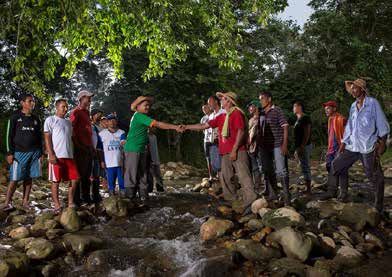
We will give priority to strengthening states where state weaknesses or failure
      would magnify threats to the American homeland…Political problems are at
      the root of most state fragility.
                      —National Security Strategy of the United States of America (December 2017)

                        ABOUT THE REVIEW
The Stabilization Assistance Review was led by the Department of State’s Of-
fice of U.S. Foreign Assistance Resources (F) and the Bureau of Conflict and
Stabilization Operations (CSO); the Office of Transition Initiatives (OTI), Office
of Conflict Management and Mitigation (CMM), and Bureau of Policy, Planning,
and Learning (PPL) in the U.S. Agency for International Development (USAID);
and the Office of the Deputy Assistant Secretary of Defense for Stability and
Humanitarian Affairs (SHA), and the U.S. Army Peacekeeping and Stability Op-
erations Institute (PKSOI).
The Review was conducted through several research methods, including:
1. Literature review of more than                     4. Qualitative questionnaire
   300 articles and reports;                             completed by six DoD combatant
2. Analysis of eight cases of current                    commands;
   or past U.S. engagements in                        5. Quantitative survey of more than
   conflict-affected areas;*                             125 U.S. Government experts; and
3. Interviews of more than 250                        6. Quantitative analysis of U.S.
   experts inside and outside                            foreign assistance spending in
   of government, including key                          conflict-affected areas from Fiscal
   international partners;                               Year (FY) 2009 to FY 2017.

*Afghanistan, Iraq, Kosovo, Libya, Mali, Nigeria, Pakistan, and Somalia

                                                iii
SAR: STABILIZATION ASSISTANCE REVIEW

EXECUTIVE SUMMARY

T
        he United States has strong      Over the past year, the Department        ◆◆ Promote a fair, purposeful division
        national security and eco-       of State (State), the U.S. Agency            of labor with national partners
        nomic interests in reducing      for International Development                and international donors.
levels of violence and promoting         (USAID) and the Department of             ◆◆ Clarify agency roles and respon-
stability in areas affected by armed     Defense (DoD) have reviewed the              sibilities to improve performance
conflict, especially to consolidate      significant lessons learned from             and reduce duplication.
security gains against the Islamic       past stabilization efforts. The princi-
State of Iraq and Syria (ISIS) and       ples for effective stabilization have     ◆◆ Improve the capacity of our
other non-state armed groups. At         been widely studied, but they have           civilian workforce to address
the same time, there is no appetite      not been systematically applied              stabilization needs in tandem
to repeat large-scale reconstruction     and institutionalized. The review            with the U.S. military and part-
efforts, and therefore our engage-       has shown that the performance               ner forces; and
ments must be more measured in           of U.S. stabilization efforts has con-    ◆◆ Sequence and target our assis-
scope and adaptable in execution.        sistently been limited by the lack           tance to conflict-affected areas
The United States must be more           of strategic clarity, organizational         in a more measured fashion.
selective and targeted about how         discipline, and unity of effort in        Now is the moment to focus
we define stabilization missions,        how we approach these missions.           and revitalize how the United
deploy our limited resources,            In response, this report outlines         States approaches stabilization.
burden-share with local and inter-       how the United States can improve         Stabilization is a critical part of how
national partners, and ultimately
produce more tangible, long-term
outcomes for our taxpaying public.
                                             This report defines stabilization as a political endeavor to
Stabilization is an inherently
political endeavor that requires
                                             create conditions where locally legitimate authorities and
aligning U.S. Government efforts             systems can peaceably manage conflict…
—diplomatic engagement, for-
eign assistance, and defense
—toward supporting locally legit-        the outcomes of our stabilization         the United States seeks to address
imate authorities and systems to         efforts through more efficient and        conflict-affected states, as part
peaceably manage conflict and            disciplined bureaucratic structures,      of a spectrum that also includes
prevent violence. Stabilization          processes and engagement with             both conflict prevention and longer
requires adaptive and targeted           international partners. Specifically,     term peacebuilding and reconcili-
engagement at subnational and            our proposed framework includes           ation. Through these reforms and
national levels. More important          steps to:                                 sustained leadership, the United
than dollars spent is having a           ◆◆ Establish a U.S.-Government            States can avoid mistakes of the
singular, agreed-upon, strategic            wide definition of stabilization.      past and better advance America’s
approach to unify efforts in sup-                                                  national security interests in con-
port of a consolidated local impact      ◆◆ Develop and evaluate political         flict-affected environments.
executed through sequenced and              strategies based on evidence
contextual assistance.                      and rigorous analysis.

                                                         1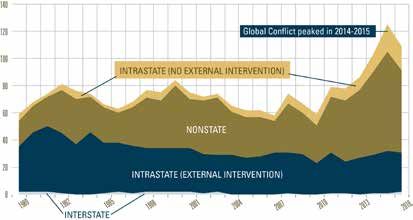
SAR: STABILIZATION ASSISTANCE REVIEW

INTRODUCTION

D
        espite global gains in
        prosperity, armed con-
        flicts in many parts of the
world remain as complex and
intractable as ever. Continued
gains are by no means guar-
anteed. An increasing trend in
internationalized and non-state
conflicts (reflected in Figure 1)
has resulted in crises that are
more protracted, violent, and
difficult to solve. According to
data from the Uppsala Conflict
Database, unresolved griev-
ances and often a failure to            Figure 1: Number of violent conflicts per year (at least 25 fatalities per year). Source:
                                        Uppsala Conflict Data Project
address political reform mean
that more than one-half of
armed conflicts that achieve           These persistent armed con-                   resources spent outside our
peace lapse back into vio-             flicts directly affect the security           borders. Our taxpaying public
lence—at a median of seven             interests of the United States                is demanding greater account-
years—often introducing                and our allies by creating insta-             ability of our resources and
new grievances and actors to           bility that terrorist and criminal            their impact. Moving forward,
perpetuate bloodshed. More             organizations and competitors                 our stabilization efforts must
recently, the conflict landscape       exploit. Recognizing this threat,             be better prioritized and mea-
is increasingly exacerbated by         the United States and our                     sured and our partners must
the rise of ISIS and competing         Coalition partners are actively               carry their fair share of the
networks of non-state armed            working in Iraq, Syria, Libya,                burden. New ways of think-
and extremist groups.                  Nigeria, and elsewhere around                 ing and operating are needed
These armed conflicts have dire        the world to defeat ISIS and                  to reduce dependencies on
consequences for the people            other transnational terrorist                 U.S. Government assistance,
residing in affected countries         groups. As the Coalition makes                increase cost-sharing, and
and impose a significant secu-         security progress against ISIS,               scope realistic outcomes for
rity and financial burden on           it is essential to consolidate                stabilization efforts. We cannot
American and international             operational gains through                     continue to employ the same
taxpayers as well as the global        strategic political engagement                approaches or tools in these
economy. Over the past decade,         and targeted assistance to                    endeavors and expect different
the U.S. Government has con-           establish basic security and                  results.
sistently provided more than           restore responsive, legitimate                To this end, the Department of
one-third of its foreign assis-        governance.                                   State (State), the U.S. Agency
tance to countries with ongoing        At the same time, there is no                 for International Development
violent conflicts [see Figure 2].      public appetite to repeat the                 (USAID) and Department of
Similarly, these same countries        large-scale reconstruction                    Defense (DoD) have reviewed
account for the vast majority of       efforts of the past. The United               past stabilization efforts in
the peacekeeping budget of the         States and other countries are                conflict-affected areas and iden-
United Nations (UN).                   scrutinizing and reducing the                 tified steps to more effectively

                                                           2
SAR: STABILIZATION ASSISTANCE REVIEW
UKRAINE
SYRIA
AFGHANISTAN
IRAQ
PAKISTAN
LIBYA
MYANMAR
MALI
SUDAN YEMEN
PHILIPPINES
NIGERIA SOMALIA
SOUTH
CAMEROON
SUDAN
DEMOCRATIC
REPUBLIC
OF THE CONGO
Figure 2: Map of select countries with more than 1000 battle-related deaths over the last five years (Source: Uppsala Conflict Data
Project) where internationally-supported “stabilization” efforts have been active.
leverage the U.S. Government’s with related ongoing processes essential for addressing today’s
diplomatic, defense, and for- at the UN and World Bank. challenges and advancing U.S.
eign assistance resources in This report outlines findings national security. The second
these difficult environments. from the Review and presents section describes the core prin-
The Stabilization Assistance consolidated approaches to ciples and lessons learned for
Review (“the Review”) built on maximize the impact of U.S. the U.S. Government’s stabiliza-
many of the findings from the engagement as well as reduce tion. The third and final section
“2016 Department of Defense inefficiencies and wasteful outlines a proposed framework
Biennial Assessment of Stability spending. The first section for the U.S. Government’s
Operations Capabilities.” The outlines why a narrowed, revital- efforts to advance stabilization
Review was also coordinated ized approach to stabilization is in conflict-affected areas.
We will work to consolidate military gains against ISIS, al Qa’ida, and other
terrorist organizations and stabilize liberated areas by supporting local partners
that can reestablish the rule of law, manage conflict, and restore basic services.
—State and USAID Joint Strategic Plan, FY 2018-2022
3SAR: STABILIZATION ASSISTANCE REVIEW
THE IMPERATIVE FOR A REVITALIZED
APPROACH TO STABILIZATION
T
he United States and selective and targeted about access to dispute resolution,
our partners need a new how we engage in stabilization deliver targeted basic services,
and more disciplined environments to maximize the and establish a foundation for
approach for conducting sta- value of American and interna- the return of displaced people
bilization in conflict-affected tional taxpayer resources.The and longer term development.
areas. This approach includes revitalized approach to stabili- Stabilization is distinct from
analyzing risks and focusing our zation outlined here can help humanitarian assistance, which
efforts on what is absolutely target diplomatic engagement the U.S. Government provides
necessary to achieve stability, in these environments toward impartially on the basis of need,
rather than pursuing disparate advancing a strategy connected from longer term reconstruction
agendas all at once. A critical to stabilization outcomes, and development activities.
first step toward more harmo- enable greater sequencing and Although context-dependent,
nized stabilization efforts is layering of assistance to sup- stabilization is intended to be
agreeing on the core tenets port locally legitimate actors, short-term in nature (typically
of the concept itself. Despite achieve cost-saving efficiencies, between one and five years).
significant international experi- and foster a better division Without first achieving legiti-
ence over recent decades, the of labor between the U.S. mate political stability, longer
concept of stabilization remains Government and international term development efforts are
ill-defined and poorly institution- donors and institutions. unlikely to take root and can
alized across government and With these lessons in mind, even exacerbate lingering
multilateral structures. This lack State, USAID, and DoD have conflict dynamics. Stabilization
of standardization in definition developed a refined definition starts to set the conditions for
and process leads to repeated of stabilization that can guide building legitimate societal and
mistakes, inefficient spending, our efforts in this regard. We governing institutions. USAID
and poor accountability for define stabilization as a political defines these as institutions
results. endeavor involving an inte- that are inclusive, responsive,
Now is the moment to refo- grated civilian-military process and accountable to all groups,
cus and revitalize the U.S. to create conditions where including minority and marginal-
Government’s approach to locally legitimate authorities ized populations. The nature of
stabilization. There is a clear and systems can peaceably relations among identity groups,
imperative from policymakers manage conflict and prevent the capacity of civil society to
to consolidate security gains a resurgence of violence. engage government, and the
in ISIS-affected areas through Transitional in nature, stabili- extent of economic opportu-
stabilization. At the same time, zation may include efforts to nity all affect the legitimacy of
policymakers want to be more establish civil security, provide state-society relations.
We define stabilization as a political endeavor involving an integrated civilian-military
process to create conditions where locally legitimate authorities and systems can peaceably
manage conflict and prevent a resurgence of violence. Transitional in nature, stabilization
may include efforts to establish civil security, provide access to dispute resolution, and
deliver targeted basic services, and establish a foundation for the return of displaced
people and longer term development.
4SAR: STABILIZATION ASSISTANCE REVIEW
U.S. Army civil affairs forces provide veterinarian assistance to Iraqi communities following
successful operations against ISIS. Photo: USASOC
In the past, there has been a
rush to initiate high-cost, sec-
toral programming before there
is a foundation of inclusive polit- 3.0
ical systems, basic security, and 2.8
a reliable and legitimate partner
government at the national 2.6
Economic Policy
level. A deliberate approach
2.4
focusing planning and opera- Education
tions on stabilization outcomes 2.2
can ensure the right condi- Economic Performance
tions are in place for broader 2.0
development resources to be 1.8
Peace & Security
well-spent. At the same time,
it is imperative that stabilization 1.6 Democracy, Human Right & Governance
efforts incorporate transition
1.4
plans to economic growth, 2005 2006 2008 2008 2009 2010 2111 2012 2013 2014
private sector vibrancy, and Figure 3: The State/USAID “Country Data Analytics” index average scores for the 16
responsive governance, with conflict-affected countries identified in the previous map over the past 10 years. This
an end state of self-sufficiency, figure shows a measurable decrease in peace and security scores, while health and
lest any progress achieved by education have improved.
those activities is not sustained
and lost.
5SAR: STABILIZATION ASSISTANCE REVIEW
USAID is helping to bring community leaders together in northeastern
Nigeria to build trust and restore stability in areas affected by Boko Haram
and ISIS-West Africa. Photo: USAID
LESSONS FOR EFFECTIVE STABILIZATION
D
esigning and pursuing about which specific legitimate donor’s comparative advantage.
stabilization are com- political systems and actors Multilateral approaches to sta-
plex tasks involving we will support, why and how, bilization, particularly by the UN
many context-specific factors and associated tradeoffs. This and World Bank, can mobilize
that are outside of a single strategy should be based on a contributions by other bilateral
actor’s control. Our approach clearly articulated and achiev- partners. Multilateral partners
must be flexible and adjust as able political end state. It should bring different strengths and
non-state armed groups adapt, include a realistic assessment weaknesses, and the U.S.
and address the political chal- of the level of commitment and Government should engage
lenges of possible spoilers to risk tolerance required to imple- when they have a comparative
stabilization. Yet even as we ment the strategy. With a clear advantage. For example, the
remain agile, we must apply political strategy and defined end World Bank has mobilized funds
evidence-based lessons to state, we can delineate a phased for Yemen, but turned to the UN
increase the chances of suc- approach to target and sequence for implementation.
cess. The Review identified the our engagement and assistance
following set of core principles programs—as well as those of Use data and evaluation systems
that undergird effective stabili- others— in a unified fashion. to assess strategic progress and
zation efforts. hold partners accountable
Establish a division of labor Although stabilization requires
Set realistic, analytically-backed and burden-sharing among flexible and adaptive mecha-
political goals international donors and local nisms, teams should identify
actors that optimizes the strengths
Stabilization is inherently politi- clear strategic-level political
of each
cal, which means it must focus objectives at the outset to track
on local, national, and/or regional There needs to be a clear and analyze impact on an itera-
societal and governing dynam- understanding at the outset tive basis. This approach should
ics, agents, and systems that of a stabilization effort of what comprise metrics to ensure that
lead populations toward inclu- the partner nation govern- the host-nation partner is follow-
sive, non-violent settlement and ment is willing and expected ing through on commitments
agreement. Its success depends to deliver in terms of political and fully embracing mandated
on having a goal-oriented political and financial commitments. anti-corruption and transpar-
strategy that aligns with local There should also be a clear ency efforts. Tying diplomatic
interests. Through analysis and division of labor among inter- engagement and assistance
deliberate iterative planning, national donors, based on to local qualitative impacts
stabilization requires decisions analysis that accounts for each rather than solely quantitative
6SAR: STABILIZATION ASSISTANCE REVIEW
activity outputs and using stra-
tegic level analysis will enable Conflict
senior policymakers to consider Mitigation &
Stabilization
whether policy adjustments are
required to achieve objectives. Humanitarian 13% Other
Peace &
The Review’s case study in 26% Security
Afghanistan found that using 11%
consistent data tied to specific Governing Justly
political objectives—and sharing Economic & Democratically
relevant information across U.S. Growth
Investing 15%
Government Departments and 15% in People
(e.g., Health,
Agencies—would have enabled Education)
better review and analysis by 20%
policymakers.
Figure 4: State/USAID foreign assistance to the 16 conflict-affected countries identified
Forward deploy U.S. Government in the previous map from Fiscal Year (FY) 2009 to FY 2016, by designated program goals/
and partnered civilians and areas. Analysis of spending trends in case-study countries reinforced the need for
establish local mechanisms that greater flexibility, sequencing and/or integration of non-humanitarian assistance in
enable continuous engagement, conflict-affected areas.
negotiation, targeted assistance,
and monitoring programs and strategy to keep achieve local outcomes and
pace with the evolving politi- build momentum. Smaller proj-
Deploying civilian stabilization cal dynamic. For example, the ects driven by host-government
experts on the ground to work Review’s case study analysis and communities in support of
with and alongside deployed showed that State and USAID a unified political strategy and
military elements is essential have worked closely with the diplomatic engagement are
to success because it enables UN and third-party contractors best suited to achieve short-
a unified approach and helps in Somalia and Syria to improve term stabilization objectives
ensure the overarching political our monitoring of local dynam- and to set the stage for even-
strategy is driving all mission ics that informs and connects tual management, financing,
components. The “2016 DoD programming to overall politi- and ownership by national
Biennial Assessment of Stability cal objectives. Still, significant governments or regional
Operations Capabilities” cited security limitations on U.S. administrations. For exam-
as a critical shortfall the lack Government civilian presence in ple, the Review’s case study
of institutionalized DoD mech- conflict and post-conflict areas showed that in northeastern
anisms to enable regular impede our ability to identify Nigeria, the U.S. Government
collaboration with interagency and respond to emergent polit- has worked effectively at the
and international partners. It is ical opportunities and quickly community level to develop
imperative to have civilians with adapt our programs. a nuanced village-by-village
the appropriate knowledge and understanding of stabilization
skill sets on the ground and able Start with small, short-term challenges and political dynam-
to engage with citizen groups, assistance projects and scale up ics fueling violent extremists.
analyze local dynamics, iden- cautiously Such a focused understanding
tify the right local partners to enables the United States to
According to multiple studies,
advance the political strategy, target assistance to support
targeted and smaller programs
and routinely monitor and adjust stability and diminish the appeal
are better at the outset to
If we are to achieve our strategic objectives in a conflict, American policymakers must accept that the
political dimension is indispensable across the spectrum of conflict.
—Dr. Nadia Schadlow, Deputy Assistant to the President of the United States, War and the Art of Governance:
Consolidating Combat Success into Political Victory (2017)
7SAR: STABILIZATION ASSISTANCE REVIEW
of extremists. Operating within of development and security study of Mali showed that fail-
and in cooperation with local sector assistance should be ure to achieve a durable political
communities allows increased considered through that lens. settlement at the national level
local support and the ability to In some cases, certain types can undermine local stabiliza-
build legitimacy from the bot- of assistance should be delayed tion efforts. Assistance targeted
tom up by strengthening local or sequenced if they cannot be at the subnational level is most
political and social systems. This accountable or implemented effective when it is informed by
approach is true not only of bilat- successfully without adequate national-level policy reforms.
eral funding, but multi-donor stability.This process includes However, in other cases such as
efforts as well. Large-scale proj- being deliberate and precise Syria today, subnational engage-
ects run a higher risk of creating about how and when we seek ment will need to begin first,
perverse incentives, distorting to promote private sector while national-level dynamics
the local economy, and being investment, taking into account are still being resolved. This
manipulated by corrupt actors the risks and challenges. process requires a flexible
who benefit from the conflict. Greater consideration of the approach, recognizing that
Often a country’s absorptive exact role of the private sector subnational dynamics can vary
capacity after conflict remains as well as the appropriate ratio radically from one geographic
low and realistic expectations for immediate versus long-term region to another.
are needed about the time it will funding needs (including inter-
take to strengthen local and/or national donors) is necessary. If Reinforce pockets of citizen
national ownership. engaged effectively, the result security and purposefully engage
would be cost-savings in the with security actors
Prioritize, layer, and sequence short-term and enable better Stabilization is most likely to
foreign assistance to advance overall development outcomes be successful where there is
stabilization goals in the long run. Unfortunately, in basic security on the ground.
If stabilization is a top goal for many cases, this lack of prioriti- Basic security is defined as
international engagement in a zation has resulted in disparate minimum conditions where
country, then the full range of and competing assistance U.S. assistance partners can
non-humanitarian assistance efforts that made engagement operate and monitor activities,
the U.S. Government allo- ineffective. access appropriate local stake-
cates to that country should holders, and where security
be considered in terms of how Link subnational engagements with actors can engage in building
it can advance the established national diplomacy to advance trust with local communities.
political and diplomatic strategy stabilization Furthermore, focusing on pre-
without creating dependency. Both national and subnational cise subnational areas where
Stabilization assistance is not engagements are needed to there are pockets of security is
an entitlement, and continued advance stabilization, and need more likely to succeed because
U.S. Government assistance to be eventually nested together there will be an ability to work
should depend on results. to achieve optimal effect. For consistently with local actors,
Program planning and design example, our Review’s case including local security forces.
Stability gains are not sustainable without citizen-responsive governance. Early
transition work lays the foundation for long-term development by promoting
reconciliation, jumpstarting local economies, supporting emerging independent
media, and fostering lasting peace and democracy through innovative
programming and evidence-based approaches.
—USAID Administrator Mark Green, speaking to the House Appropriations
Committee, November 1, 2017
8SAR: STABILIZATION ASSISTANCE REVIEW
Young activists attend a peace rally in Ansongo in northern Mali where
local actors demanded rebels to sign the Algiers Peace Deal. Photo: USAID
The Review’s case study of operations may have destabiliz- generalizable to all cases, but
Afghanistan showed that most ing effects. Stabilization cannot in no case should it be open-
experts, including the U.S. be an afterthought. Rather, it ended. While stabilization
Special Inspector General for needs to be fully integrated efforts are intended to create
Afghanistan Reconstruction, and elevated across lines of targeted short-term effects, it
concluded that prioritizing effort. It should be incorpo- usually requires time to achieve
U.S. stabilization programs in rated into campaign planning durable and legitimate political
areas without local-level com- as early as possible to help settlements at local and national
mitments to reduce violence shape operational design and levels. Strategic and resource
and increase physical security strategic decisions. The “2016 planners should take this reality
negatively affected overall DoD Biennial Assessment into account to build realistic,
momentum toward stability. Operations Capabilities” rec- flexible, and achievable mile-
Alternatively, tailored place- ommended that civil-military stones and enable consistent
based assistance strategies annexes be drafted for all funding. Effective stabiliza-
that marry violence-reduction Combatant Command con- tion efforts also intentionally
and citizen security efforts with cept plans and operations incorporate linkages to longer
targeted law enforcement have plans, with interagency input. term development efforts into
proven successful in stabilizing Close civilian-military planning planning. Multilateral develop-
some of the most at-risk locales and coordination has been a ment banks, other donors, and
in Central America. key determinant in effective the private sector should be
stabilization outcomes across part of the process as early as
Seek unity of purpose across all all cases examined. For possible, while being realistic
lines of effort example, in Pakistan, close about the challenges and risks
One of the greatest challenges synchronization of stabilization in post-conflict investment cli-
to stabilization is that different programming with security mates. Stabilization should also
U.S. Departments and Agencies operations facilitated targeted, include strategic communica-
have different priorities, and impactful programming. tion strategies that emphasize
regional and international actors host-nation ownership from the
often have other agendas that Employ strategic patience and outset to avoid creating depen-
work at competing purposes. plan beyond stabilization for self- dencies or local resentment.
reliance
Counterterrorism operations
are prioritized in many conflict There is no single set time
environments today, but some frame for stabilization that is
9SAR: STABILIZATION ASSISTANCE REVIEW
LOOKING AHEAD: A FRAMEWORK FOR
U.S. STABILIZATION
A
revitalized approach to regions, and then conduct
89%
how the United States deliberate strategic planning
works to stabilize rel- to contend with stabilization
evant conflict-affected areas challenges. Key criteria for
—an approach that takes into determining whether, when, of surveyed USG experts
account the current imperatives and how to pursue a stabiliza- Support development of a
and past lessons—needs orga- tion mission should include the defined interagency strategy and
nizational structures, budgets, assessed U.S. national interest; implementation plan for places
processes, capabilities, and national and local partner own- where U.S. policymakers determine
personnel that are fit for this ership; risks, constraints and that the U.S. has a vital national
purpose. Most of the above opportunities in the operating interest in pursuing stabilization.
findings are not new, but they environment; the level of risk
have not been systematically we are willing to assume; and a political strategy for the sta-
applied or institutionalized in the level of sustained resources bilization mission.
how we approach stabilization we are willing to commit. Key elements to address in the
in conflict-affected areas. State, As noted above, success- political strategy include: part-
USAID, and DoD have identified ful stabilization begins with ner nation goals and capacity;
the following areas to improve developing an outcome-based the defined U.S. Government
how our Departments and political strategy that outlines interests and areas in which
Agency work individually and our core assumptions and interests may compete; map-
together to advance stabiliza- achievable end states and ping key actors; desired political
tion goals. guides all lines of effort—dip- end states and objectives; the
lomatic engagement, defense, interests and goals of partners;
Establish Strategic Engagement foreign assistance, and private anticipated resource require-
Criteria and Priorities to Guide
sector engagement where ments; the role of different U.S.
Stabilization
appropriate—to ensure unity Government actors and inter-
The U.S. Government should of purpose within the U.S. national donors; mechanisms
institutionalize a process by Government. In those places for civil-military coordination;
which we identify conflict-af- of highest priority for stabiliza- assessment of risks; and stra-
fected countries/regions that tion, State, USAID, and DoD tegic analytics to track over
warrant increased attention, should work with the relevant time and measure progress.
assess the U.S. interests and U.S. Embassy, regional bureau, The strategy must then be insti-
priorities for advancing sta- Combatant Commands, and tutionalized into Department
bilization in these countries/ other stakeholders to develop and Agency plans and reviewed
A wise approach to reform [of stabilization and reconstruction operations] would
aim at producing a unified system that plans and executes operations integratively,
averts significant waste, increases the likelihood of tactical success, and better
protects U.S. national security interests.
—Final Report of Special Inspector General for Iraq Reconstruction,
Learning from Iraq, March 2013
10SAR: STABILIZATION ASSISTANCE REVIEW
on a regular basis to assess its missions. Similarly, the United Define Department and Agency
effectiveness and make adjust- States should actively engage Roles and Responsibilities
ments as needed. with the World Bank and the for Stabilization to Improve
regional development banks as Performance
Pursue a More Purposeful Division it considers significant expan- Clear lines of authority
of Labor and Burden-Sharing sions in its engagement and between and within U.S.
with Multilateral Bodies, While funding in conflict-affected Government departments and
Mobilizing Other Bilateral Donors areas. agencies would improve effec-
on Stabilization
At an operational level, we tiveness, reduce duplication
Engaging in stabilization should continue to engage and confusion, enable greater
missions means the U.S. pooled donor mechanisms in accountability, and fully opera-
Government must advocate some cases to mobilize other tionalize a whole-of-government
that our partners co-invest with partner resources. We should approach. The U.S. Government
purpose in line with mutually press that donor coordination should formally define lead
agreed strategic outcomes. bodies approach these pooled agency roles for stabilization
Developing coordinated donor financing mechanisms strategi- missions, with State as the over-
approaches toward fragile and cally, building on best practices all lead federal agency for U.S.
post-conflict contexts based on for risk-mitigation, local govern- stabilization efforts; USAID as
lessons learned has increased ment support, accountability the lead implementing agency
significantly over the past and monitoring, as well as for non-security U.S. stabiliza-
decade and spurred new inter- flexible structures. We should tion assistance; and, DoD as a
national frameworks such as also actively engage with these supporting element, to include
the New Deal for Engagements pooled funding mechanisms providing requisite security and
in Fragile States, but these to ensure they reinforce our reinforcing civilian efforts where
efforts have not yet resulted political objectives, and mobi- appropriate. DoD is refining its
in standardized or efficient lize donors to take on greater stabilization policy to incorpo-
approaches adaptable across costs. The U.S. Government rate the concept of “Defense
conflicts. Effective donor coordi- and international community Support to Stabilization.” Other
nation includes pressing donor should be clear on our expec- Departments and Agencies,
partners to develop systematic tations of the financial and including members of the
approaches and share the bur- political responsibilities of each Intelligence Community, can
dens and risks of stabilization. partner-nation government. also play critical supporting
At a policy level, State and Financing mechanisms should roles.
USAID should seek dedicated reflect the capacity level at the With clear roles, State, USAID,
dialogues with the Organization outset with clear guidance on and DoD should then ensure
for Economic Cooperation and measuring progress over time. that we each have the appro-
Development (OECD), UN, In some cases, other donors priate structures and staff in
World Bank, and other regional could want to build on our place to perform these roles in
and international organiza- implementation mechanism.
86%
tions to press for coordinated Through targeted agreements
reforms in how they approach bilateral donor funding can
and invest in conflict-affected flow through existing U.S.
areas. The U.S. Government Government procurement
should encourage the UN of surveyed USG experts
mechanisms. One example is
to adopt a single common the United Kingdom’s recent Are not clear which U.S. Government
approach to stabilization that agencies have lead responsibility for
contributions to a USAID-led
can integrate efforts across different elements of stabilization.
stabilization program in Libya.
its peacekeeping and political
11SAR: STABILIZATION ASSISTANCE REVIEW
an efficient, coordinated fash- Build the Capacity of a U.S. deploy and have the support
ion. For example, State should Expeditionary Civilian Workforce systems to do so.
institutionalize a structure that to Meet Stabilization Objectives
Specifically, the START frame-
can lead and coordinate inter- and Establish Policies to Allow for
Co-Deployment work for both Washington and
agency stabilization analysis, abroad should streamline roles
policy formulation, and strategic To advance stabilization suc- and procedures; establish an
planning as well as diplomatic cess, the United States requires enduring human resources,
engagement. At the same time, a mechanism to rapidly deploy training, and operational sup-
USAID should designate and civilian-led stabilization teams port platform; provide expanded
empower an entity to serve as into conflict-affected areas to authorities to deploy civilians
its technical lead for stabilization assess local conditions, engage with and alongside DoD oper-
to engage with the interagency local authorities, and direct ational and tactical elements;
and support relevant regional and monitor programs. We and, when necessary, recruit
bureaus and Missions in coordi- have faced delays in the past and deploy further qualified
nating, planning, implementing, in deploying civilian experts surge personnel. The teams can
and monitoring non-security alongside U.S. military ele- be tailored to specific planning
stabilization assistance in con- ments —despite overwhelming and implementation objectives
flict-affected environments. policy consensus—because of based on the directive and
This process would help ensure a lack of standing authorities needs of the relevant Chief of
coherent management and and structures, missing critical Mission.
implementation of this type of opportunities to address over-
U.S. assistance. DoD should lapping civilian and security Establishing interoperable,
assign stabilization planners objectives. State, USAID, and co-deployable capabilities
throughout the Department, DoD should work together depends on instituting more
especially at the Geographic to develop a framework for flexible security and risk-man-
Combatant Commands, and Stabilization, Transition, and agement standards and making
ensure professional military Response Teams (START) that strategic investments in human
education prepares future lead- can support Chiefs of Mission resources and training. State
ers to operate effectively with and Combatant Commands to and USAID should review and
civilian partners at the strategic, coordinate, plan, and implement adapt existing risk-management
operational and tactical levels. a U.S. Government stabiliza- standards and processes to
Recognizing the interlinkages tion response in conflict areas. provide leaders and employees
between our organizations, This approach would build on with accepted approaches to
these respective entities must lessons from, and address defining and making decisions
be prepared to train, exercise, shortcomings of, the previous in the face of challenging, fluid,
and work closely together to Civilian Response Corps, by and unclear circumstances.
advance integrated stabilization setting up a much smaller and These mechanisms must
efforts before a contingency dedicated set of stabilization take into account the central
occurs. specialists who can rapidly issue of Departments’ and
Agencies’ unique authorities
If you take good people and good ideas and you match them with bad processes,
the bad processes will win nine out of ten times.
—General James N. Mattis USMC (ret.) interview with Peter Robinson
at the Hoover Institution, March 6, 2015
12SAR: STABILIZATION ASSISTANCE REVIEW
U.S. Special Operations Forces engage in Shura discussion with Afghan elders about security and governance. Photo: DoD
and regulations governing secu- bolster these efforts, DoD is State and USAID to assess
rity responsibility. reviewing whether to request and respond to emergent sta-
At the same time, State, USAID, new authorities to support the bilization requirements, while
and DoD should pre-identify and deployment of civilian advisors bilateral and regional funds can
prepare a pool of civilians with for stabilization on a non-reim- provide consistency over time.
requisite experience who can bursable basis. The new Counter-ISIS Relief
deploy on short notice to sup- and Recovery Fund provided
port joint stabilization missions, Leverage Flexible Funding to Enable by Congress is another good
Sequenced, Targeted Approaches example of the kind of flexible
drawing heavily from existing
to Assistance funding that is useful. The U.S.
State staff with experience
working in conflict environ- Stabilization does not require Government should continue to
ments and incorporating lessons extremely high funding levels; engage with Congress to build
from their experience. State rather, stabilization depends confidence and support for this
and USAID will need to max- on consistent, flexible funding goal to increase our flexibility to
imize and expand agile hiring accounts unencumbered by respond quickly to stabilization
mechanisms of non-tenured Congressionally-directed ear- needs.
staff to fill critical gaps that marks, that can enable agile, State and USAID should also
can incentivize expeditionary targeted, and sequenced engage with other donors to
missions and enhance reten- approaches to stabiliza- better coordinate their dedi-
tion. State, USAID, and DoD tion programming. Existing cated funds for stabilization
should reinforce and formalize funding accounts, such as and associated efforts in con-
existing joint training efforts to “Peacekeeping Operations” flict-affected areas. The UN
meet minimum and prerequi- and “Transition Initiatives,” Peacebuilding Fund and World
site deployment standards. To provide critical authorities for Bank’s State and Peacebuilding
13SAR: STABILIZATION ASSISTANCE REVIEW
throughout all efforts. A sim-
ilar effort is needed to align
and adapt justice and security
sector assistance programs
in these environments. In
support of counterterrorism
objectives, the international
community is providing high
volumes of security sector
training and assistance to many
conflict-affected countries, but
our programs are largely discon-
nected from a political strategy
writ large, and do not address
the civilian-military aspects
required for transitional public
USAID is supporting communities in the wake of Colombia’s civil war to solidify and citizen security. More focus
the peace process and promote reconciliation PHOTO. Photo: Juan Carlos
Sierra/USAID
needs to be placed on helping
security forces to secure pop-
ulation centers and restore
Fund as well as the United function in challenging environ- trust with local communities.
Kingdom’s Conflict, Stability, ments. Where we are pursuing This approach is true not only
and Security Fund are important stabilization programming in for U.S. programs, but also for
models for operational reform conflict-affected areas, State other donor efforts.
in support of stabilization. and USAID should work to In addition, more efforts and
We should seek to promote adapt and align procurement resources need to be tailored
greater alignment and ratio- tools for security and non-se- to address trauma and psy-
nalization of how these funds curity assistance and delegate chosocial well-being within
are deployed along with the authorities closer to the field. conflict-affected communities,
relevant U.S. accounts, based promote local justice and the
on their respective strengths Promote Conflict-Sensitive rule of law, and address local
and limitations. Approaches to Justice and
grievances related to access
Security Sector Assistance
At the same time, State, to justice and corruption con-
USAID, and DoD need to put The U.S. Government and cerns. The ability of the state
in place appropriate structures other donors need to carefully to re-establish order, security
and mechanisms to better use tailor all assistance and training and the rule of law will greatly
our existing flexibilities and programs in conflict-affected influence the extent of popular
resources. We should be more environments to ensure they support for stabilization and
disciplined in assessing the mutually advance stability and longer term reform. USAID
risks of prematurely providing do not inadvertently exacer- experience in conflict-affected
certain types of assistance in bate conflict dynamics. Over environments suggests that
conflict-affected environments the past decade, USAID has three areas are paramount
before there is a foundation developed important guidelines for immediate engagement:
of legitimate political order, for conflict-sensitive democracy access to justice, particularly
basic security, and appropriate and governance, education, and for marginalized populations;
anti-corruption controls. Flexible economic growth programming mechanisms that promote
and adaptive procurement in conflict-affected areas, which peaceful, fair, and transparent
mechanisms are also crucial to the Agency should streamline
14SAR: STABILIZATION ASSISTANCE REVIEW
management of disputes; and and accountability. Likewise, the conflict environment and
transitional justice. we should take a balanced track them consistently over
Justice sector programming approach in our reaction to time, while also allowing for
in conflict-affected areas often and willingness to work with flexibility to adjust indicators
focuses heavily on promoting informal and formal systems. based on what we are learning.
formal national and criminal The U.S. Government should This process can facilitate more
justice-focused institutions expand and strengthen its insti- rigorous reviews by policy-
based on Western domestic tutional capabilities to undertake makers to determine whether
experiences, missing oppor- this critical local rule of law adjustments are needed in our
tunities to advance local and programming where needed political strategy and objectives.
civil solutions in more fluid and ensure longer term rule of As part of this effort, we should
environments. It is critical to law and justice programming use evidence and analytics to
build the legitimacy of formal is coordinated and aligned with rigorously assess our polit-
institutions over time, but in stabilization efforts. ical strategy and the political
many conflict-affected areas, interests of our national and
much of the population looks to Institutionalize Learning, local partners. If they are not
Evaluation, and Accountability in living up to their commitments,
local, tribal, religious, or other
Our Approach we should be prepared to
non-government justice insti-
tutions to resolve disputes and Finally, to be successful, sta- change course. If our political
assert legal rights. We should bilization requires a regular objectives are infeasible due
work with international partners feedback loop that involves to misalignment with local
to deepen our understanding experimentation, learning, political interests, we must
of local needs in these envi- adaptation, and accountabil- be willing to adjust political
ronments and consider local ity. This approach is critical at objectives. Accordingly, stabi-
precedent regarding adminis- both the program and strategic lization will ultimately not be
tration of justice, particularly levels. We should identify indi- successful if our partners are
with respect to reconciliation cators to measure changes in not fully invested in a collective
undertaking.
CONCLUSION
A
dvancing the United and international partners to area. The challenge today is to
States’ top foreign pol- achieve a fair division of labor apply that experience, talent,
icy priorities requires and burden-sharing, and pro- and learning in a systematic
a revitalized approach to how mote conditions to maximize fashion. With sustained lead-
we work to stabilize con- our assistance resources and ership and dedicated, efficient
flict-affected areas. We cannot promote long-term self-suffi- organizational structures and
continue to take the same ciency. This approach is not easy frameworks, we can achieve
approach and expect different to get right, but our Review that and thereby avoid costly
results. We need a disciplined has affirmed that there is tre- mistakes, increase our likely
approach to how we set our mendous talent, expertise and dividends, and do right by our
strategic goals, maintain priori- willingness to succeed across taxpaying public.
ties, engage with local, national, the U.S. Government in this
15SAR: STABILIZATION ASSISTANCE REVIEW
STABILIZATION ASSISTANCE REVIEW LEADS
Kristen Cordell Sara Reckless
Senior Advisor (USAID/PPL) Transition Advisor (USAID/OTI)
Peter Quaranto Kelly Uribe
Senior Advisor, Peace and Security (State/F) Senior Policy Advisor (OSD/SHA)
Patrick Quirk, Ph.D.
Senior Policy Advisor (State/CSO)
CONTRIBUTING WRITERS/ANALYSTS
COL Charles Anderson Kevin Melton
Stability/Security Advisor (PKSOI) Transition Advisor (USAID/OTI)
Monica Azimi LtCol Daniel O’Connor
Foreign Service Officer (USAID/CMM) Marine Corps Fellow (State/F)
Melissa Duell, Ph.D. MAJ Wes Wilhite
AAAS Research Fellow Army Fellow (State/F)
(State/CSO)
ACKNOWLEDGEMENTS
The Stabilization Assistance Review would not have been possible without the generous time and
support of many individuals and organizations. Several people from the lead organizations provided
research and analytic support in the form of case studies, literature reviews and other contributions,
including Toshiro Baum, Annie Bird, Jessica Bryant, Lisa Campbell, Audra Dykman, Benjamin
Fisher, Tammy Fitzgerald, Bill Flavin, Jason Fritz, Lani Fuata, Kendra Helmer, Bruce Hemmer, Joel
Hirst, Stephanie Hurter, Dara Katz, Amanda Kelly, Angie Kochukudy, Shadrach Ludeman, Kaleigh
MacLaughlin, Adam Mausner, Nicholas Marinacci, Carolyn Mattick, Ryan McCannell, Raymond
Millen, Adam O’Brien, Patrick Olson, Keith Proctor, Ian Reese, Col. Aaron Reisinger, and Ken Spear.
In addition, inputs from across the U.S. Government were critical to scope the study and refine its
core findings and recommendations. Special thanks go to State’s Bureau of International Narcotics
and Law Enforcement Affairs and Bureau of Near-Eastern Affairs, the Office of the U.S. Special
Envoy to the Counter-ISIS Coalition, USAID’s Bureau of Afghanistan and Pakistan Affairs, Bureau
of Middle Eastern Affairs, and Office of Civil-Military Cooperation, and U.S. Special Operations
Command, and the Special Inspector-General for Afghanistan Reconstruction for critical contributions
to shape the content of this report. Special thanks also go to Frances Brown and Tess McEnery
for providing critical support for the Review at the National Security Council. Representatives from
multilateral organizations, international organizations, and partner government stabilization units
also provided essential inputs, especially Australia, the European Union, Germany, the OECD,
the World Bank, the United Kingdom, and the UN. Countless stabilization experts from academic
institutions, civil society groups, and non-governmental organizations provided inputs through
interviews and roundtables. The SAR team is especially grateful to the Alliance for Peacebuilding
(Melanie Greenberg and Elizabeth Hume), Brookings Institution (Bruce Jones and Tarun Chhabra),
Center for Strategic and International Studies (Melissa Dalton), the Empirical Study of Conflict
Project (Jacob Shapiro and Radha Iyengar), the Heritage Foundation (James Carafano), RAND
(Rebecca Zimmerman, Seth Jones and Charles Ries), and U.S. Institute of Peace (Beth Cole and
Rusty Barber) for convening roundtables with top experts to offer insights for the Review.
16You can also read


