State Infrastructure Strategy Submission - Tourism Council WA
←
→
Page content transcription
If your browser does not render page correctly, please read the page content below
State Infrastructure Strategy Submission
Thank you for providing Tourism Council WA with the opportunity to comment on the State Infrastructure
Strategy Discussion Paper. Tourism Council WA is the peak body representing tourism businesses, industries
and regions in Western Australia. The Council promotes the value of tourism, facilitates sustainable tourism
development and advocates industry policy on behalf of members.
This submission covers the following key areas:

Part I
WA
 Tourism Infrastructure
                                                                    Part 2
                                                                    Critical
                                                                            Issues
      Part 3
      Policy
            Recommendations
                                                               Part 4
                                                               Priority
                                                                       Tourism
                                                               Infrastructure Projects
Part I
WA Tourism Infrastructure
1.1 The WA Tourism Economy                                                              1.2 Tourism distribution chain
Tourism economic activity is generated by visitor spending while
                                                                                             and infrastructure
travelling to, and staying in, a destination away from their usual                      The distribution chain for tourism product works in two ways.
environment for leisure, business, education and other purposes.                        Firstly, tourism product such as accommodation is distributed
Tourism is a significant industry in the WA economy, generating                         worldwide through online booking systems. These bookings can be
100,900 total Full Time Equivalent jobs (direct and indirect) and                       made directly between consumer and tourism product or through
creating $12.2 billion Gross State Product for the year 2018-19 .                       intermediaries such as travel agents and inbound tour operators.
It also provides an important hedge and diversification from the                        This is known as the Global Distribution System and includes airlines,
resources and agricultural sectors.                                                     accommodation, vehicle rental, tours, attractions and experiences.

Tourism economic activity differs significantly depending on the type                   Secondly, the visitor journeys to the destination where they
of visitor. Visitor types are mainly differentiated by purpose of visit                 consume tourism product such as hospitality, retail, tours,
and by source market. The purpose of visit, in order of scale, are:                     attractions and experiences. Tourism distributes the customer to
                                                                                        the product, rather than the product to the customer.
•    Leisure (holiday makers and visiting friends or relatives)
                                                                                        The role of tourism marketing is to brand and promote the
•    Business visitors
                                                                                        attractions and experiences that journeys and destinations offer.
•    Business events (delegates) and major events (attendees)                           This drives online bookings linking the tourism product to the
•    Education (students)                                                               visitor through the distribution chain.
•    Other
                                                                                                        Marketing             Bookings
The source markets are:
•    Domestic - Daytrips (more than 40 kms from home)
                                                                                                                                            Long Distance
•    Domestic - Intrastate Overnight                                                                                                         Transport
•    Domestic - Interstate                                                              Attractions &
                                                                                         Experiences
•    International
Each of these visitor types differs significantly in their visitor
expenditure, length of stay, time of stay, destinations visited and                                                                        Local
products consumed in Western Australia. Each of these visitors                                                                            Transport
                                                                                          Accommodation
has a different distribution chain and infrastructure use.                                   & Hospitality
                                                                                                                      Precincts
                                                                                                                       & Parks

                                                                                        Tourism product relies on different infrastructure throughout
 Type                          Infrastructure and Product
                                                                                        the distribution chain. For some infrastructure, such as airports
 Attractions                   Facilities that attract visitors by featuring events,
                                                                                        and accommodation, tourism may be the primary use. For other
                               exhibits, experiet nces entertainment or the
                               environment e.g. stadium, national park, etc.            infrastructure, such as roads and local amenities, tourism shares
                                                                                        facilities with other users. Tourism often adds value to existing
 Access                        Facilities that provide visitors with long distance
                               and local transport services to and within a             infrastructure primarily provided for residents.
                               destination e.g. road, airport, jetty, etc.
                                                                                        Tourism product adds value to physical infrastructure by
 Accommodation                 Facilities to accommodate visitors or staff e.g. staff   adding equipment, furniture & fittings, food & beverage, labour,
                               housing, camping grounds, serviced apartments,
                                                                                        creativity, performance, design and interpretation. This creates an
                               hotels, hospitality, etc.
                                                                                        experience which attracts and provides services to visitors.
 Amenities                     Facilities that underpin visitor services e.g. power,
                               water, sewerage, toilets, car parking, digital           Tourism infrastructure is the chain of infrastructure and facilities
                               network, signage, etc                                    used by visitors along the visitor journey and at a local level to
                                                                                        create a destination.

Tourism Research Australia, State Tourism Satellite Accounts, 2018-19

                                                                                        Tourism Council WA    / State Infrastructure Strategy Submission       3
1.3 Value of WA Tourism Infrastructure
Infrastructure enables the development of tourism product                                                 Western Australian tourism product generates significant economic
such as events, exhibitions, guest services and attractions that                                          return from the infrastructure it operates from, as demonstrated
drive tourism demand; and the transport, food services and                                                below.
accommodation that supply visitors. For example, a physical
infrastructure venue is required to host an event that attracts
visitors; and a road for tour operators to use for coach services.

 Tourism Product                                                                Enabling Infrastructure                             WA Direct Tourism Gross Value Added
 Experiences and Events
 • Exhibits                                                                     •   Museums, galleries and cultural facilities
 • Lookouts and trails                                                          •   National, zoological and botanical parks
 • Rides and tours                                                              •   Amusement and theme parks
 • Gambling services                                                            •   Casino, racetracks and gaming facilities                      $940 million
 • Entertainment                                                                •   Convention, exhibition and meeting spaces
 • Business events                                                              •   Stadia and sporting venues
 • Sporting events                                                              •   Theatres and entertainment venues
 • Theatrical shows
 Education and Training                                                         •   Education facilities (e.g. campus)                            $463 million
 Accommodation
 • Hotels, motels, hostels, resorts                                             •   Accommodation property (room stock)
 • Caravan parks                                                                •   Precincts and foreshores
                                                                                                                                                   $975 million
 • Serviced or private apartments
 • Student housing
 • Staff housing
 Retail and Hospitality
 • Shop/store operations                                                        •   Retail and hospitality property                               $1,437 million
 • Restaurant/bar/cafe operations                                               •   Precincts and foreshores
 Local Transport
 • Bus and taxi services                                                        •   Bus ports
 • Urban rail services (e.g. Transperth)                                        •   Roads                                                          $199 million
 • Ferries and water taxis                                                      •   Railway
                                                                                •   Jetties, wharves and marinas
 Long Distance Transport
 • International and domestic flight services                                   •   Airports
 • Trans-oceanic and coastal cruises                                            •   Passenger shipping ports
                                                                                                                                                  $1,258 million
 • Rail services                                                                •   Railway
 • Coach services                                                               •   Roads
 • Vehicle rental, repairs and fuel sales
 Other                                                                          •   Miscellaneous infrastructure                                   $276 million
Source: Tourism Research Australia, State Tourism Satellite Account, 2018-19

4          / State Infrastructure Strategy Submission                          Tourism Council WA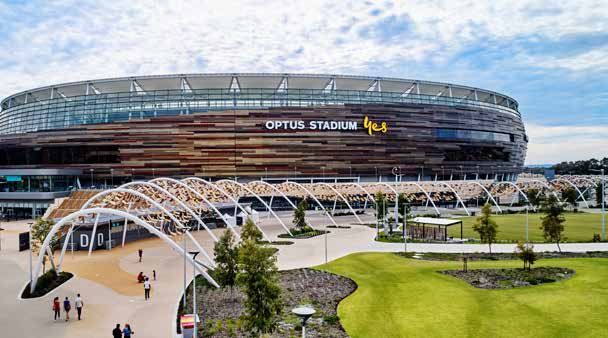
1.4 Visitor Infrastructure Needs
When examining capacity and future demand to inform                               Example | Forrestfield-Airport Link: The new Forrestfield-Airport
infrastructure planning and development all users need to be                      Link train line will be used by budget conscious out-of-state leisure
considered, including visitors. Visitors move in different patterns to            travellers from the airport and across the rail network to the city
non-visitors and use infrastructure in a distinctive way. For example,            and destinations such as Fremantle and Mandurah. There is likely
visitors are more likely to utilise public transport outside of peak              to be an increase in the demand for accommodation and other
work times than non-visitors.                                                     core tourism infrastructure in suburbs along this train line such as
                                                                                  Subiaco and West Leederville as visitors use these locations as their
It is therefore important to not only include visitor numbers in
                                                                                  base when visiting Perth. Facilities planning in these locations needs
infrastructure planning but also their distinct patterns of behaviour.
                                                                                  to consider the increase in demand from these visitors for accurate
Without this, the cost benefit analysis undertaken will be understated
                                                                                  capacity planning and the full economic and social impact.
or inaccurate as numbers and resultant economic and social impact
are not inclusive of all users and their patterns of behaviour.                   Each visitor type has distinct behaviours which shape how they
                                                                                  engage with local infrastructure. A summary of the key tourism
                                                                                  infrastructure underpinning each product requirement is shown below.

 Primary Purpose of Travel                          Key Destination Infrastructure                    Tourism Product
 International student                              • Student housing                                 • Medium-term accommodation
                                                    • Local transport (roads, railways, etc)          • Urban rail services, bus and taxi services
                                                    • Education institution capacity                  • Education course/degree
 Business event delegate                            • Meeting capacity (hotel meeting rooms and       • Business event
                                                       convention space)                              • Hotels, apartments, motels, holiday homes
                                                    • Accommodation room stock                           and resorts
 Major event attendee                               • Stadia, sporting venues and recreational        • Event
                                                       facilities                                     • Takeaway meals and restaurants
                                                    • Hospitality property
 Business/Corporate visitor                         • Accommodation room stock                        •   Hotels, apartments, motels, holiday homes
                                                                                                          and resorts
 Leisure visitor (holiday maker and                 •   Attractions (e.g. national parks, museums,    •   Exhibits, rides, recreation, tour operators, etc.
 visiting friends or relatives)                         galleries, casino, etc)                       •   International and domestic services, rail
                                                    •   Long-distance transport (e.g. airports,           services, coach services, etc.
                                                        roads, railways, shipping ports)
Figure 3: Tourism Infrastructure by Visitor Type.

                                                                                    Tourism Council WA    / State Infrastructure Strategy Submission          5
1.5. Public and Private Tourism Infrastructure and Product
Visitors use tourism product which requires tourism infrastructure.            The public infrastructure is typically owned and operated for
Tourism product is usually privately operated but often relies on              multiple policy objectives in addition to tourism. The public
public infrastructure. There are a number of public and private                ownership or operation of infrastructure can significantly affect
ownership-operator models for tourism infrastructure and product.              the capacity and competitiveness of tourism product.
Tourism product often adds value to land, assets and                           While accommodation is typically privately owned and operated
infrastructure owned and operated by the public sector. These                  infrastructure, there are few tourism attractions, tours, events and
private tourism products operate through leases, licences,                     experiences where the essential infrastructure is privately owned
concessions and other permits to use the public infrastructure.                and operated.

Infrastructure Example            Infrastructure Owner              Infrastructure Operator      Tourism Product Operator
Road                              Public                            Public                       Public – TransWA
                                                                                                 Private - Tours, buses and self-drive.
Perth Zoo                         Public                            Public                       Public – Exhibits
                                                                                                 Private - Hospitality
Perth Stadium                     Public                            Private                      Private – Event, attractions and tours

Rottnest Island                   Public                            Public                       Public – Accommodation
                                                                                                 Private – Accommodation, tours, retail, etc
CBD Hotel                         Private                           Private                      Private – hotels, motels, etc

1.6. Prioritising WA Tourism Infrastructure Needs
With limited resources to invest, it is critical to select infrastructure      The highest priority identified across the industry and across
of the highest economic, social and environment returns. Tourism               destinations was for attractions. There has been significant
Council WA conducted a survey of public and private tourism                    underinvestment in private attractions, primarily because they are
operators to assess tourism infrastructure need.                               not approved by government land and infrastructure managers.
                                                                               Attractions are a high priority across all WA destinations, but
Respondents prioritised the types of infrastructure needed as:
                                                                               particularly Perth where they are needed to attract visitors to
1. Attractions                                                                 the state and extend visitors’ stay in CBD accommodation. Perth
2. Transport                                                                   simply does not have enough things to do.
3. Precincts and Amenities                                                     Transport infrastructure priorities vary significantly from
4. Accommodation                                                               destination to destination within Western Australia. Transport
                                                                               needs are primarily roads within and between major destinations.
                                                                               Amenities and facilities significantly impact the visitor experience.
                                                                               These needs are typically small projects which vary considerably
                                                                               between destinations.
                                                                               Accommodation was the lowest priority identified by the tourism
                                                                               industry. Until recently the private sector has been able to
                                                                               invest in capacity to meet demand, particularly with the recent
                                                                               development of Perth hotel accommodation. However, commercial
                                                                               accommodation development has now slowed significantly due
                                                                               to an unlevel playing field and supply uncertainty, arising through
                                                                               commercial short stay use of residential buildings via Airbnb.
                                                                               The two most acute accommodation issues across destinations
                                                                               are the lack of regional resorts and the lack of regional staff
                                                                               housing. Unlike short stay apartments, resort style accommodation
                                                                               drives visitor demand as well as supplying visitor accommodation
                                                                               needs. These resorts require land with high natural value, which is
                                                                               typically crown land. This resort style accommodation investment
                                                                               struggles to pass through government approval processes.

6      / State Infrastructure Strategy Submission    Tourism Council WA
Part 2
Critical Issues
There are four critical issues regarding tourism infrastructure that are highlighted as part of this submission:

2.1 Demand Peaks and Non-Peaks                                         2.2 N
                                                                            atural Environment, Climate Change
Tourism experiences strong peaks and non-peaks in demand and
                                                                           and Sustainability
visitation throughout the year. Peaks can be time of day, days of      Tourism is one of the few sustainable and renewable uses of the
the week or weeks of the year. Peaks significantly differ depending    natural environment that adds real economic value. Western
on the destination, visitor type and product consumed.                 Australian tourism is highly reliant on the natural environment,
Peaks are caused for multiple reasons:                                 particularly national parks and protected areas. Tourism is exposed
                                                                       to the impact of climate change on the natural environment and
•   Natural seasonality e.g. wet and dry in northern WA, whale         on consumer perceptions of the state as a destination.
    migration and wildflower season.
                                                                       There are a number of issues related to the environment:
•   Social fluctuations e.g. dining times, weekends, public holidays
    and school holiday.                                                •   Consumption of transport services by tourism does result in
                                                                           carbon emissions, and this is compounded by the vast land
There are significant infrastructure capacity constraints during
                                                                           mass of Western Australia.
peaks when demand spikes. When this occurs there are
queues, congestion, environmental impacts and forgone visitor          •   There is limited use of pricing or booking systems to manage
expenditure and economic benefit.                                          demand or impact on protected areas. This results in a
                                                                           high volume, high impact, low return tourism model in
                                                                           environmentally sensitive areas.

        Western Australian
                                                                       •   Visitor perception of Western Australia as a responsible
                                                                           destination.

     tourism is highly reliant
    on the natural environment

                                                                       Tourism Council WA   / State Infrastructure Strategy Submission    7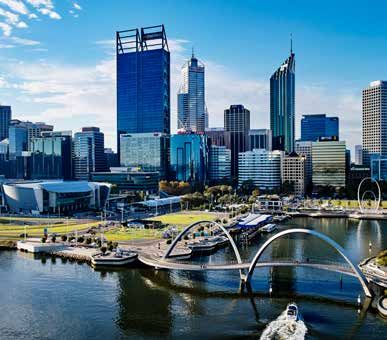
2.3 Public Land for Attractions                                                                                             2.4 J ourney and Destination
Attractions are essential components for any successful tourist
                                                                                                                                 Infrastructure Planning
destination. They provide something for visitors to do and can                                                              Visitors journey from their source market through to destinations
be the major driver of a decision to visit a location. There is a                                                           and onward to other destinations. Destinations are not defined by
need for new attractions that offer a high value experience that                                                            government boundaries but by visitor behaviour.
patrons are willing to pay for to generate a return on infrastructure
investment and development.                                                                                                 A destination comprises a main transport access point,
                                                                                                                            accommodation hub and attractions within a return day trip
Attractions require locations of high natural, social or heritage                                                           to the accommodation. A significant challenge for tourism
value. Land with these values is typically crown land managed by                                                            infrastructure planning and delivery in Western Australia is that
government authorities ranging from Swan River Trust to National                                                            our destinations are typically broader than our local government
Parks and local government.                                                                                                 areas, unlike competing destinations such as the Gold Coast,
While often set aside for public use and enjoyment, there has                                                               Brisbane and Cairns in Queensland.
been little private investment in new attractions and experiences                                                           Infrastructure and facilities are typically evaluated, planned and
on crown land. This is not due to a lack of visitor demand                                                                  delivered as stand-alone projects. This infrastructure planning
or private sector interest in investment. Nor is investment in                                                              and delivery is split across State Government Departments based
attractions hampered by environmental or safety approvals.                                                                  on their specific remit such as transport, national parks, etc, and
Private attractions are lacking due to public land managers not                                                             across Local Government Authorities in the destination.
granting permission for the land use via a lease or licence.
                                                                                                                            For example, an additional attraction in a destination can trigger
Consequently there has been no new major attractions (over                                                                  an additional overnight stay for a visitor. This additional overnight
50,000 patrons per annum) developed in Perth for more than                                                                  stay increases the return on investment for other infrastructure
25 years. Most of Perth’s existing attractions are also State                                                               such as accommodation, airports and roads in the destination.
Government owned and operated and there are few private sector                                                              The attraction could be a small facility such as a zipline on public
attractions compared with other Australian destinations. There is                                                           land managed by a State Department. The accommodation that
also limited diversity in permitted visitor use across crown land .                                                         benefits could be in a separate LGA to the attraction.
There are several major hurdles to the creation of new attractions                                                          For tourism, infrastructure is best planned and evaluated from the
on public land:                                                                                                             perspective of visitor journeys and destinations. A cluster of small
•     Nearby local residents and existing users of public land                                                              projects and facilities across a range of Departmental portfolios
      (NIMBYs) who oppose facilities which would attract more                                                               and LGAs in a destination will often have a more significant impact
      visitors to the public land and those who oppose private                                                              than a single major project. These clusters are best identified by
      investment in public land as a matter of ideology.                                                                    the tourism industry and destination marketing bodies which best
                                                                                                                            understand visitor journey and destination behaviour.
•     Public land managers whose jurisdiction, culture and
      governance model prioritises the interests of local residents
      and existing users, compared with the broader public interest
      of visitors to the local area and the economic and social value
      to Western Australia.
•     The multiplicity of public land managers and government
      authorities with the power of veto over a proposed attraction
      and lack of a single authority in government to approve an
      attraction.

By comparison with other destinations, Perth has a limited number of non-government attractions operated by non-profit or private sector organisations. Attractions which are operated by private sector organisations are dedicated
to providing experiences which attract patrons. They do not require taxpayer funding to start, develop or market their experiences to the world. For example, Fremantle Markets attracts more than two million visitors each year and is a
private sector attraction.

8          / State Infrastructure Strategy Submission                           Tourism Council WA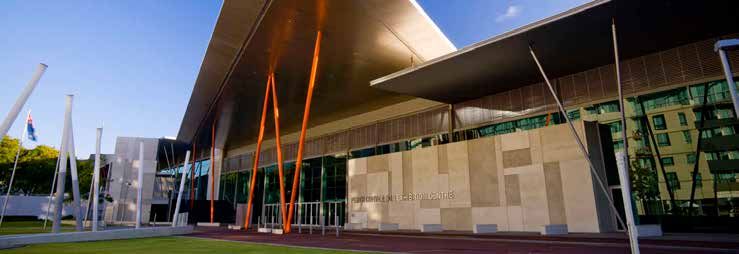
Part 3
Policy Recommendations
Tourism Council WA recommends the following policy reforms for consideration and inclusion in the State
Infrastructure Strategy.

3.1 Addressing peaks and non-peak periods                           Dynamic Pricing for Public Infrastructure

Rather than simply building infrastructure to meet peak tourism      Together with online booking systems, dynamic pricing (also
demand, policy reforms can address issues arising from peaks and     referred to as surge or demand pricing) allows for flexible prices
troughs in tourism.                                                  set by current market demands. Dynamic pricing is used by
                                                                     the private sector to mitigate fluctuations in tourism demand.
Booking Systems for Public Tourism Infrastructure                    For example, airlines and accommodation utilise the Global
                                                                     Distribution System (GDS) where pricing changes every 30
Online booking systems are an effective demand management            minutes based on bookings and online search behaviour.
tool when capacity is limited in peak periods. Booking systems
are most effective when coupled with pricing. However even if        Visitor use of public sector tourism facilities are often not charged,
visitor use is booked but not priced, booking systems can prevent    or are charged at a fixed rate. This means dynamic pricing cannot
onsite congestion, queues and poor visitor experience. Booking       be used to increase demand in non-peak periods with discounted
systems curtail demand when physical or environmental capacity       fees, nor prevent congestion or queues in peak periods with
is reached and visitor use can no longer be reserved. This enables   premium pricing.
the visitor to select non-peak periods when capacity is available.   Fixed user charges per guest are sometimes levied on tourism
Bookable tourism facilities and product attracts visitors to a       operators, for example National Park entry fees and Rottnest Island
destination because it provides the visitor with confidence before   landing fees. These fixed charges also become a dead weight on
they travel that they will be able to use the facility. Bookable     the operator’s ability to use dynamic pricing to manage demand.
product also makes marketing more effective by converting            Pricing public tourism facilities would also generate revenue
destination appeal into a booking. Bookable product can also be      streams to fund infrastructure to meet demand during peaks and
included in travel packages.                                         revenue to fund marketing to raise demand in non-peak periods.
Booking systems are widely used by tourism operators but are         Pricing can also signal the value of the tourism experience
often not used for public assets which are not priced. State         and increase demand and yield. Pricing for public tourism
Government could investigate the use of booking systems for          infrastructure can also be varied to meet social objectives, such as
all public tourism infrastructure. This could include bookings of    free or discounted use for school groups during non-peak periods.
campsites, parking bays and other visitor use.                       Dynamic pricing could be introduced for public tourism
                                                                     infrastructure by:
                                                                     •   User charges levied on tourism operators should be a
                                                                         percentage or flexible charge, rather than a fixed rate, to
                                                                         enable dynamic pricing by the tourism operator.
                                                                     •   Pricing such as entry fees or parking charges should be
                                                                         introduced when public tourism assets are first developed or
                                                                         undergo a major upgrade.
                                                                     •   State Government should invest in digital technology to
                                                                         enable dynamic pricing. For example campsite booking
                                                                         systems for National Parks.
                                                                     •   Highway tolls be introduced on State Route 2 (Kwinana
                                                                         Freeway/Forrest Highway) that charges a higher rate on a
                                                                         Friday night ahead of a long weekend to alleviate the traffic
                                                                         congestion as holiday makers move south.
                                                                     •   State Government agencies could actively promote
                                                                         discounted prices to drive demand in non-peak periods and
                                                                         build community acceptance of pricing.

                                                                     Tourism Council WA   / State Infrastructure Strategy Submission      9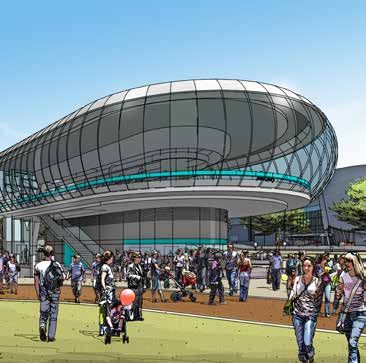
Staggering School Holidays                                                3.2 U
                                                                               nlocking public land for tourism
Western Australia’s most extreme tourism peak is during to school             attractions
holidays when a large portion of the population in Perth seeks
to travel at the same time to regional destinations which do not          Fundamentally the system is not working to enable investment
have the capacity to accommodate and serve them. This peak                in new, diverse and sustainable attractions on crown land.
creates congestion, increased prices for visitors and a lower             Policy reform can enable the development of this critical tourism
quality experience.                                                       infrastructure need.

Accommodation occupancy in regional WA is typically about                 Transition to a single Parks WA agency
50-60% per annum because visitors are turned away during                  Currently WA public land reserved for visitor use and enjoyment is
school holidays when occupancy is at 100%, but intrastate                 managed by separate management authorities including Rottnest
visitor demand then sharply declines outside school holidays and          Island, Perth Zoo, Kings Park, Swan River Park, Whiteman Park
occupancy drops. Private tourism operators market to out-of-state         and National Parks. The narrow remit of these authorities tends
visitors to lift demand outside of school holidays and use dynamic        to create a focus on local residents and existing users rather than
pricing to manage intrastate demand as occupancy rises and falls.         the broader public interest of potential visitors from across WA.
Western Australians often express a view that WA is an expensive          Management of parks and visitor precincts could be combined
holiday destination but that is largely because they are looking          in a single agency such as Parks Victoria. A single agency could
at prices during peak periods when Western Australians wish to            better plan and deliver public and private sector attractions
travel at the same time.                                                  across the State.
Staggering a two week school holiday by school districts across a
                                                                          Establish a Tourism Events and Activation Act
four week period would effectively halve congestion. By spreading
demand more visitors could be accommodated, prices would                  A Tourism Events and Activation Act would enable the State
reduce and the visitor experience would improve.                          Government to identify a tourism event or attraction as a state
                                                                          significant project and appoint a single approval authority for the
Employers and workers would also benefit with the parental
                                                                          project (such as the Planning Minister).
workforce being able to stagger leave rather than all requesting
for the same two-week period.                                             Projects would still be subject to separate environmental and
                                                                          safety approvals. However, these projects would have a single
Staggering school holidays is practised in other countries such as
                                                                          land use approval authority, rather than be subject to veto by
Germany, France and the Netherlands. It should be a particular
                                                                          any one of a number of local or state government authorities.
consideration for Western Australia compared with other States,
                                                                          The single authority would apply a state-wide public interest
due to the significant population imbalance between Perth and
                                                                          test rather than a local interest test and would make a decision
regional destinations.
                                                                          at arms-length from both local opposition groups and tourism
Managing Residential, Staff and Visitor Accommodation Supply              development proponents.
The lack of regional staff housing, particularly for peak tourism         The proposed WA Tourism Events and Activation Act has
periods has become more extreme due to Airbnb. Regional Airbnb            precedents in major events and planning legislation in
properties built and approved for residential use move into the           Queensland, New South Wales and Victoria.
short stay market to realise higher returns during peak periods.
Airbnb does not lead to building additional room stock or capacity,
rather the supply of short stay accommodation is increased but
the supply of residential accommodation is simultaneously reduced
as owners switch markets for existing rooms.
This process is intensifying tourism peaks as more visitors come
to regional towns during peak periods but displace residents
and workers at the same time through reduced residential rental
properties. Local infrastructure comes under strain as amenities
were developed for residents rather than visitors during peak
periods. The process is referred to as ‘over tourism’ and results in
higher prices and poorer experiences for visitors and residents alike.
The recent Parliamentary Inquiry into Short Stay Accommodation
made recommendations for a registration system that would
enable local authorities to better manage the impact of Airbnb.
Implementing these recommendations would assist to minimise
‘over tourism’, address staff housing shortages and provide
confidence for private sector investment in additional commercial
accommodation.

10      / State Infrastructure Strategy Submission   Tourism Council WA
3.3 Evaluating Tourism Infrastructure Assessment Criteria
When assessing tourism infrastructure projects several criteria should
Tourism infrastructure projects are best assessed for their
be considered beyond direct cost benefit analysis. Respondents to
impact on the destination, rather than solely on their direct
the tourism infrastructure survey identified the following criteria (in
economic return. Small projects should be bundled from across
order of importance) for evaluating tourism infrastructure:
Departmental portfolios and Local Government Areas and
assessed for their cumulative impact on the destination. 1. Enhancing the quality of the visitor experience
2. Increasing visitor numbers and removing capacity constraints
Defining Destinations
3. Increasing visitor expenditure
Destinations are not defined by state borders or local government
4. Dispersing visitors to regional destinations
areas; destinations are defined by visitor choices, travel behaviour
and tourism product use. While not a perfect system, the current 5. Preserving culture, heritage and the environment
structure of Tourism Regions and Sub Regions used by Tourism 6. Addressing peak periods and seasonality issues
WA and the regional tourism organisations is the best available 7. Diversifying visitor markets
structure for assessing tourism destination infrastructure.
8. Preventing or mitigating climate change impacts
Transport infrastructure for visitor journeys to and within
The tourism infrastructure priorities identified in this submission
a destination is best assessed at the Tourism Region level.
have been selected based on these criteria.
Attractions, amenities and accommodation are best assessed at
the Sub Region level. Tourism Infrastructure Planning and Clustering
Tourism Region Sub Region State Departments, Regional Development Commissions and Local
Destination Perth Avon Valley Government Authorities will all plan and propose infrastructure
Visitor Spend: $4,394M Fremantle & Rottnest priorities based on their geographic and portfolio remit.
Overnight Visitors: 5.7M Mandurah, Peel & Rockingham Infrastructure WA could engage the tourism industry via Tourism
Perth City Council WA and destination marketing bodies via Tourism
Sunset Coast & Gingin Western Australia to assess infrastructure priorities from a tourism
Swan Valley & Perth Hills prospective. The primary purpose of this assessment would be to:
Australia’s South West Blackwood River Valley
• Identify infrastructure gaps in the tourism distribution chain
Visitor Spend: $1,706M Great Southern
across along key visitor journeys and in key destinations.
Overnight Visitors: 3.3M Margaret River Region
Bunbury Geographe • Cluster smaller related projects at the destination level
Southern Forests • Evaluate the tourism impact of infrastructure on the
Australia’s North West Broome & Dampier Peninsular destination such as the ability to supply peak periods or drive
Visitor Spend: $1,084M The Kimberley demand in non-peak periods.
Overnight Visitors: 1.6M The Pilbara
Australia’s Coral Coast Indian Ocean Drive
Visitor Spend: $766M Ningaloo Reef
Overnight Visitors: 1.1M Shark Bay
Australia’s Golden Outback Esperance & the South Coast
Visitor Spend: $630M Wheatbelt & Wave Rock
Overnight Visitors: 1.3M Kalgoorlie & Goldfields
Gascoyne Murchison
Perth is the priority destination for tourism infrastructure because
it is the gateway destination for international and interstate
visitors to regional WA. Investment in Perth infrastructure which
attracts out-of-state demand benefits all WA tourism regions as
does reducing Perth capacity constraints.
Perth is the priority
destination for
tourism infrastructure
Tourism Council WA / State Infrastructure Strategy Submission 11Part 4
Priority Tourism Infrastructure Projects
Based on previous research papers and the recent tourism industry survey, Tourism Council WA has identified a
range of critical tourism infrastructure projects and clusters. These projects have been evaluated in line with the
issues and recommendations in this submission.
The following priority projects are proposed for inclusion in the State Infrastructure Strategy.
Priority Infrastructure Projects Funding Type Destination Impact
Expansion of PCEC Public & Attraction Perth City Increase visitation
Business event delegates have high daily spend and raise Private Increase visitor expenditure
demand for CBD hotels, tours and attractions. PCEC is the Enhance visitor experience
oldest convention and exhibition centre of any State. All
Addressing peaks and
other States have built new or expanded facilities. PCEC is
seasonality
no longer a competitive venue to attract existing business
events and lacks the floor space to grow visitation. This is Diversifying visitor markets
the primary infrastructure supply constraint in WA tourism.
See Appendix 1 Missing Pieces: PCEC Expansion
Electric Vehicle Network (EVN) Public Access All Dispersing visitors to the regions
An EVN is the new infrastructure needed to mitigate climate Enhance visitor experience
change impacts for visitor journeys in our ‘Road Trip’ State. Prevent & mitigate climate
The EVN will also assist branding and our reputation as change
a sustainable destination. The EVN must be designed to
supply the next generation of EV campervans and recreation
vehicles and long haul coaches. The EVN needs to connect
to SA and NT border for trans-Australian journeys.
Perth Riverside Attractions Cluster Private Attraction Perth City Enhance visitor experience
A cluster of private and public attractions along the Increasing visitor expenditure
Swan River to connect and activate key precincts such Diversifying visitor markets
as Elizabeth Quay and Kings Park. A major outdoor
attraction such as the Perth Cable Car is needed plus a
diverse range of smaller facilities. Require EOIs for land
release and acceptance of market-led proposals together
with reform of land use approvals for attractions.
See Appendix 2 - Missing Pieces: The Perth Cable Car
See Appendix 3 - New Perth Attractions
Staff Housing and Regional Resorts Private Accommodation All Regions Addressing peaks and
This project requires implementation of the registration & Public seasonality
system for short stay accommodation and release of Enhance visitor experience
public land to provide certainty and attract private Increase visitor expenditure
accommodation development for staff housing and/
or resorts. Public investment in additional housing for
seasonal workers in tourism and agriculture will also be
required to address market failure. The project will drive
high yield tourism through enhanced staff customer
service and resort facilities.
12 / State Infrastructure Strategy Submission Tourism Council WAPriority Infrastructure Projects Funding Type Destination Impact
National Aboriginal Cultural Centre Public Attraction Perth City Enhance visitor experience
Dedicated ‘national’ facility for world class interpretation Increasing visitor expenditure
of aboriginal culture. Requires unique design and Swan Preserving culture and heritage
River location as part of the attractions cluster. and the environment
See Appendix 4 - The Next Generation of Australian Icons
Kimberley Event Centre Public & Attraction Broome & Addressing peaks and
A multipurpose event centre to attract event attendees Private Dampier seasonality
to Broome in non-peak periods. Will maximise value of Peninsular Dispersing visitors to the regions
existing accommodation and aviation infrastructure. The Diversifying visitor markets
centre would also extend the season for leisure aviation
services and seasonal workers. Could be coupled with
staff housing development and a permanent Aboriginal
cultural exhibit. Would be developed on gifted private
land that is development ready and engage private
operators of catering and events integrated with existing
accommodation and hospitality staff and capacity.
See Appendix 5 – Kimberley Convention and Exhibition
Centre
Australia’s Coral Coast (ACC) Cluster Public Attraction ACC Enhance visitor experience
ACC has experienced strong growth, enabled by Transport Increase visitation
investment in Indian Ocean Drive and destination Amenities Dispersing visitors to the regions
marketing. The destination lacks the amenities to maintain
Preserving the environment
a quality visitor experience and needs new facilities to
attract repeat self-drive visitors.
Cluster includes jetties and marine tourism facilities along
the coast and islands. National park attractions, trails and
facilities upgrades, and pink lake visitor amenities. This
is a cluster of small projects along the road journey and
destinations from Perth to Shark Bay.
Busselton Jetty Underwater Discovery Centre Public Attraction Margaret Increase visitation
Busselton Jetty is at capacity. The Underwater Discovery River Region Enhance visitor experience
Centre would create a new world class attraction for first Dispersing visitors to the regions
time visitors and drive repeat visitation.
See Appendix 4 - The Next Generation of Australian Icons
Rottnest Island Infrastructure Cluster Public & Attraction Preserving culture and heritage
Upgrade of essential infrastructure and visitor amenities. Private Amenities and the environment
Development of new public attractions and further
development of private tourism facilities.
Australia’s South West Trails Cluster Public Attraction ASW Increase visitation
Development of walking and mountain bike trails across Transport Dispersing visitors to the regions
land tenures. Particularly loop trails. Amenities
Tourism Council WA / State Infrastructure Strategy Submission 1314 / State Infrastructure Strategy Submission Tourism Council WA
Tourism Council WA / State Infrastructure Strategy Submission 15
T: (08) 9416 0700 F: (08) 9472 0111
PO Box 91 Burswood WA 6100
www.tourismcouncilwa.com.au
You can also read


