Stepping up the Transition - Driving growth and value Investor Update - Repsol
←
→
Page content transcription
If your browser does not render page correctly, please read the page content below

Investor          Stepping up the Transition
 Update           Driving growth and value
  February 2021

                                               1
Disclaimer

ALL RIGHTS ARE RESERVED

© REPSOL, S.A. 2021

This document contains statements that Repsol believes constitute forward-looking statements which may include statements regarding the intent, belief, or current expectations of Repsol and its management, including statements with respect to
trends affecting Repsol’s financial condition, financial ratios, results of operations, business, strategy, geographic concentration, production volume and reserves, capital expenditures, costs savings, investments and dividend payout policies. These
forward-looking statements may also include assumptions regarding future economic and other conditions, such as future crude oil and other prices, refining and marketing margins and exchange rates and are generally identified by the words
“expects”, “anticipates”, “forecasts”, “believes”, estimates”, “notices” and similar expressions. These statements are not guarantees of future performance, prices, margins, exchange rates or other events and are subject to material risks,
uncertainties, changes and other factors which may be beyond Repsol’s control or may be difficult to predict. Within those risks are those factors described in the filings made by Repsol and its affiliates with the “Comisión Nacional del Mercado de
Valores” in Spain and with any other supervisory authority of those markets where the securities issued by Repsol and/or its affiliates are listed.

Repsol does not undertake to publicly update or revise these forward-looking statements even if experience or future changes make it clear that the projected performance, conditions or events expressed or implied therein will not be realized.

This document mentions resources which do not constitute proved reserves and will be recognized as such when they comply with the formal conditions required by the system “SPE/WPC/AAPG/SPEE/SEG/SPWLA/EAGE Petroleum Resources
Management System” (SPE-PRMS) (SPE – Society of Petroleum Engineers).

In October 2015, the European Securities Markets Authority (ESMA) published its Guidelines on Alternative Performance Measures (APMs). The guidelines apply to regulated information published on or after 3 July 2016. The information and
breakdowns relative to the APMs used in this presentation are updated quarterly on Repsol´s website.

This document does not constitute an offer or invitation to purchase or subscribe securities, pursuant to the provisions of the Royal Legislative Decree 4/2015 of the 23rd of October approving the recast text of the Spanish Securities Market Law and
its implementing regulations. In addition, this document does not constitute an offer to purchase, sell, or exchange, neither a request for an offer of purchase, sale or exchange of securities in any other jurisdiction.

The information contained in the document has not been verified or revised by the External Auditors of Repsol.

                                                                                                                                                                                                                                                             2
Strategic Plan 2021-2025:
Delivering a compelling investment case into the Transition

                                    ‒ A legacy double-geared engine providing cash-flow and solid foundations for the Transition

                                    ‒ Profitable business platforms with leading advantaged positions: Iberia & Downstream

                                    ‒ New operating model, catalyzing value transparency & De-carbonization
                 Leading the
                                    ‒ Leading shareholder distribution with a top quartile remuneration
                journey             ‒ Preserving our financial strength

 to an ambitious
                                    ‒ A profitable ambition of net zero emissions and multienergy company growth (FCF growth)
 destination                        ‒ Distinctive potential for transformation to 2030 in terms of speed, intensity and feasibility

       A profitable company in the Energy Transition with strong cashflow growth & capital discipline                                 3
Index

01. Repsol: New corporate model
02. Path to 2030
03. Strategy 2021-2025
04. Business strategies
05. Stepping up energy transition
06. SP summary
07. Delivery 2020

Repsol: New corporate model

01.

Early movement: New Repsol corporate model for increased
  accountability and value transparency
                                                                                                                   REPSOL Group
                                                           Group Corporate Center (Governance, Financial and Strategic Management and Integration synergies)
                                                                                             Group Global Services (Efficiency and Scale)

         Upstream                                                             Industrial                                     Customer-centric                        Low-carbon generation
         Upstream                                                             Refining1               Biofuels               Mobility       P&G Retail               Renewables
                                                                              Trading                 Chemicals              LPG            Energy solutions         Conventional low-carbon generation
                                                                              Wholesale & Gas Trading                        E-Mobility     LAS2                     Energy Management
                                   2019                                                      2019                                           2019                                                2019
EBITDA                           €4.3 B                                  EBITDA              €2.0 B                   EBITDA                €1.0 B             EBITDA                           €0.04 B

CAPEX                            €2.5 B                                  CAPEX               €0.9 B                   CAPEX                 €0.4 B             CAPEX                            €0.2 B
                                                                                                                                                                                                2020
P1 Reserves:                     2.1 Bboe                                Refining capacity   1.0 Mbbl/d               # Clients             24 M
                                                                                                                                                               Capacity:                        3.3 GW
Production:                      709 kboe/d                              Chemical sales      2.8 Mt/y
                                                                                                                                                                 Of which RES (inc. hydro)      1.1 GW

                Yield and Focus                                               Yield and New Platforms                      Yield and Transformation              Business Build              EQUITY PARTNERs
                                                                                                                                                                                                  or IPO

                                                                         New corporate model enabling value crystallization
1. Refining Spain and Peru R&M 2. Lubricants, Asphalts and Specialties                                                                                                                                    6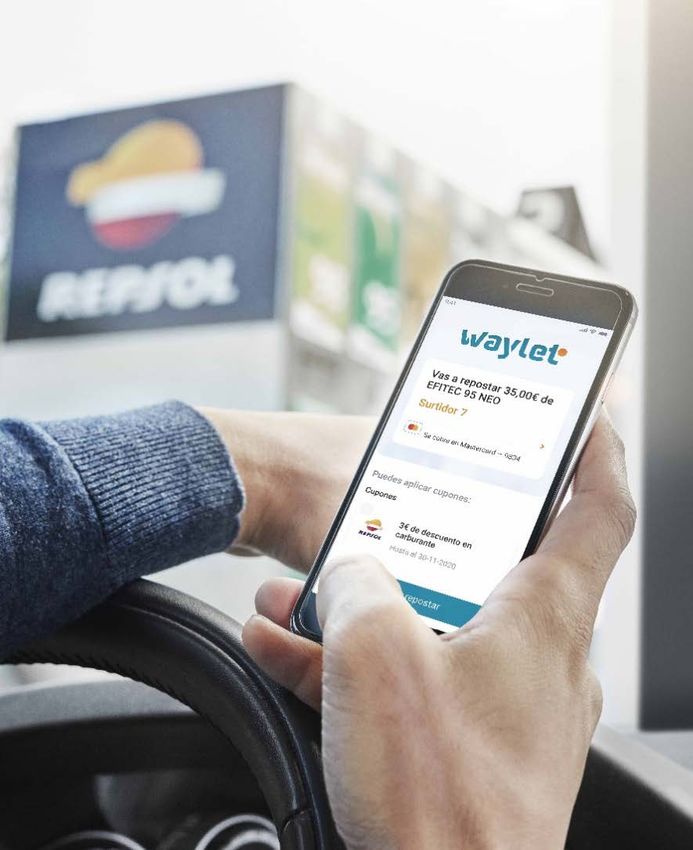
Clear logic for Repsol new corporate model

       Clear differentiation of businesses profiles and equity stories within the Group

       Alignment of cost of capital with business profile for each business

       Ability to develop appropriate partnerships for each business

       Value crystallization and transparency

       Acceleration of new ways of working                                                7
Path to 2030

02.

Ambitious transformation journey to thrive in Energy Transition

  De-carbonize                                                                  New operating
   the portfolio               Profitable                 Four verticals        model

                            FCF growth                      New partnerships
                                               Path to
                                                2030
                               Advantaged                 Value
                             transformation               crystallization

                  Towards Net Zero emissions             Leading investor proposition
                                                                                                9
Repsol 2030: A more sustainable, balanced and profitable company

                                 Transforming the company's portfolio                                                                                                                               Strong cash-flow growth
                       CE 2019                                 CE 2025                                   CE 2030                                                                                                    FCF (B€)
                              8%                                      7%                                      10%                5 % Low Carbon Retail
             2%                                                       12%                                                                                                                                                                                     Customer centric business
                                                                                                              25%                                                                              x 2.6                                                          Renewables
                             34%
                                                                      37%                                                                                                                                                                                     Industrial transformation
                                                                                                                                                                                                                                                               (circularity, H2 & e-fuels)

                                                                                                              35%                10 % Low Carbon Industrial                                                                                                   Upstream flexibility

                             55%                                                                                                                                                                                           3.4
                                                                      44%
                                                                                                              30%                                                                         1.3

                  CE Total: €31 B                                                                    2030 Ambition                                                                       20192                            2025                         2030

                          2%                                                                                40%1             % Low Carbon Businesses                                     6.22                              8.2                 EBITDA (B€)

         Customer Centric Business                      Low Carbon Generation                       Industrial             Upstream

                    2030
                     2030Repsol's
                          Repsol'sLow
                                   LowCarbon
                                       Carbonbusiness:
                                              business:~40%
                                                        ~40%ofof
                                                               CECE                                                                                                                         Growing 2030 FCF well above 2025

1. Increase in low carbon CE through investments in low carbon generation, new industrial low carbon platforms (circularity, H2 & e-fuels, etc.), decarbonization through efficiency initiatives, e-mobility, and value-added services, among others
2. In homogeneous price basis @$50/bbl & $2.5 HH                                                                                                                                                                                                                                             10
Note: CE of RES considering consolidation by the proportional method. Capital employed figures not including Corporation (€2 B in 2019)
Strategy 2021-25: 03.
Delivering financial targets while transforming the company
Ambition 21-25

                       2021 - 2022                                                                      2023 - 2025

               Ensuring strong                                                          Accelerating transformation and delivering
       performance and financial strength                                                                 growth
     In an uncertain economic and commodities environment

                 ‒ Efficiency & capital discipline                                             ‒ Portfolio optimization & new business platforms

                 ‒ Capex reduction                                                             ‒ Metrics growth & high Capex intensity
                 ‒ Prudent financial policy and commitment with current credit rating          ‒ ROCE and gearing

                                                       Self-financed plan @$50/bbl & $2.5 HH
                                                            Ensuring shareholder value maximization
                                                                                                                                                   12
Scenario assumptions
Projections (2021-2025)
2021 2022 2023 2024 2025
Brent price ($/bbl) 50 50 50 50 50
Henry Hub Price ($/Mbtu) 2.5 2.5 2.5 2.5 2.5
Repsol Refining Margin indicator ($/bbl) 3.5 4.0 4.5 5.2 5.8
Spanish average power price (€/MWh) 42.5 42.5 42.5 42.5 42.5
± $10/bbl BRENT ± $0.5/Mbtu HH ± $0.5/bbl Refining margin
CFFO1 Sensitivities
± €540 M/y ± €164 M/y ± €92 M/y
13
1. Average value for the 2021-2025 period. Note: Average exchange rate assumed for the period 2021-2025: 1.13$/€Strong growth in per share metrics driving valuation upsides
+20%CAGR +7%CAGR +10%CAGR
FCF per share CFFO per share Adjusted Net Income per share
3.2
5.7 2.2
0.6
€/sh €/sh +7% €/sh
CAGR 4.6 +10%
2.1 CAGR 1.5
+20%
CAGR
5.0 1.8
2.6
2.1
3.3 1.0
0.8
Adjusted1 2019 2025 Adjusted1 2019 2025 Adjusted1 2019 2025
Acid scenario @$40/bbl Brent & $2.5/Mbtu HH High scenario @$60/bbl Brent & $3/Mbtu HH
1. 2019 @$50/bbl & $2.5 HH
Note: Base scenario @$50/bbl & $2.5 HH; Nº of shares in 2019 (1,527) vs 2025 (1,327, subject to Base Case price deck) 14Self-financed plan
Cash generation
Cumulative sources and uses of cash, 2021-2025 (B€) 2021-2025 B-even post-dividends ($/bbl)
Shares buyback
Divestments1 29.4 29.4 & Optionalities
1.4 1.4 2.0
0.4 0.6
5.0 4.7
4.4
Dividends
Financials2
$50/bbl
9.3
FCF BE
(inc. SBB)
CFFO
18.3 Capex
12.6
< $45/bbl
Sources Uses FCF BE
pre-SBB
Corporate Low carbon gen. CCB Industrial Upstream
1. Includes RES portfolio divestments. Other potential inorganic transactions driven by new corporate model, are not included in this Sources and Uses of cash. 2. Includes interests and others as dividend to minority shareholders and hybrid bond interests
3. Debt B-even is 10$/Bbl lower, considering debt deconsolidation of the Equity part in the international RES roadmap, and excess-cash from Optionalities 15Discipline, flexibility and transformation
Capex 21-25
Building up transformation within 2021-2025 Profitable decarbonization
Capex (B€/y)
IRR-WACC2 (%)
4.0
0.4
3.6
>10% €5.5 B
0.2 0.3
0.9
(30% of total CAPEX)
0.8
Capex to Low Carbon1
0.9
projects in 2021-2025
2.5
1.6
0%
2019 Avg. 2021-2025
5.5
Customer-Centric Business Low carbon Generation Industrial Upstream
2021-25 Low Carbon CAPEX (B€)
1. Includes low carbon generation investments, new low carbon platforms, decarbonization efficiency investments, e-mobility, and value-added services. 2. Specific WACC per each business
Note: Not including Corporation in capex numbers. 16Legacy and new businesses driving portfolio performance along the Transition
Contribution to portfolio financial profile 21-25 Contribution to carbon
intensity reduction
Focus and Low carbon strategies
Efficiency and
21-25 Net Cash Contribution New platforms efficiency
Industrial1 CIRCULAR LOW CARBON
E&P
FCF Transform ECONOMY PRODUCTS
generating 2.0
CCB
business +€5.1 B PORTFOLIO
FCF 21-25 +€4.5 B DECARBONIZE
+€3.6 B FCF 21-25
FCF 21-25 CUSTOMER
Business
build CENTRIC
Growth
Low
business Carbon
Generation
- €2.3 B LOW CARBON
FCF 21-25 GENERATION
Capital Employed 2025 21-25 Capital Investment
1. Industrial includes Refining Spain and Peru R&M, Chemicals, Trading & Wholesale Gas businesses
Note: Corporate values not considered 17Leading distribution and clear capital allocation framework
Capital allocation 21-25
Resilient shareholder distribution Capital allocation priorities
€/share
>1.00 If Price deck 4 Extra shareholder distribution
0.89
SBB
SBB improves
SBB
0.60 SBB 3 Additional Low carbon CAPEX
0.70 0.75
0.65
€0.6/sh 0.60
dividend
+25% 2
committed Shareholder distribution
@$40/bbl At base case
2021 2022 2023 2024 2025
1 Value CAPEX
RESILIENT
DIVIDEND GROWING DIVIDEND
If Price deck
Buyback
worsens 0 CAPEX flexibility
Dividend ADDITIONAL DISTRIBUTION (SBB)1
1. 200 M shares in the SP period: 50 M sh/y in 2022-25. €1.4-2.0B cash sources allocated to SBB FINANCIAL DISCIPLINE 18Specific gearing target range, preserving a strong financial structure
2021-2025 gearing1 25% average Strong Liquidity Position
Proforma 2020 (Billion €)
9.1
3.4 Debt Maturities
€8.2 B 5.7
3.9 2.9
Proforma 2020 2021-22 2023-25
Same Debt with strong EBITDA growth Committed Credit lines Cash & Eq. Maturities
‒ Current liquidity covering > 1.3 times total maturities in the whole period
‒ Gearing1 threshold clearly below 30%
‒ Affordable and well-distributed maturities through the SP horizon
‒ Diversified financing sources including hybrids
1. Gearing ratio defined as reported net debt / (net debt + equity) 19Business strategies 04.
Setting the new business priorities

     Upstream                    Industrial               Customer-centric     Low-carbon generation

  Yield and Focus         Yield and New Platforms   Yield and Transformation    Business Build
                                                                                                 21
Repsol E&P priorities 2021-25
1 FCF as a priority
(Leading FCF B-even)
2 Resilient
Value delivery
3 Focused
portfolio 4 Tier 1 CO2
emissions
− FCF breakevenFocus on capital efficiency and cash generation
Upstream
FCF (B€) @50/2.5 FCF BE, Brent ($/bbl) OPEX reduction (B€) Emissions reduction (Mt CO2)
-20% -15%
x 1.5 -75%
4.50.9 < 50
2.1 10.3
0.6 1.8
< 40
-0.1 2.5
Av. 2016-18 Av. 2019-20 Av. 2021-25 2016-2020 2021-2025 Av. 2016-20 Av. 2021-25 2020 2021-2025
2025 2030
Cash generator role Cash resilience Operational excellence Zero routine
Flaring reduction -50%1
flaring
Methane intensity -25%2Focus portfolio and capex allocation: Playing to our core areas Upstream Portfolio span reduction from >25 to
Focus portfolio and capex allocation: projects self-funded 21-25
     Upstream
                                               Resilient and Flexible capital program
                                        Alaska Pikka (USA)
High grading portfolio supporting carbon intensity reduction
Repsol to become tier 1 lowest carbon intensity High growth new barrels with lower
with a 75% reduction emission intensity
Emissions reduction
Emissions intensity per barrel produced (kgCO2/boe) New production pushes down emissions intensity projects in most
8,0 intensive assets
Tier 3 (>40) Tier 2 (>20) Tier 1 (Setting the new business priorities
Upstream Industrial Customer-centric Low-carbon generation
Yield and Focus Yield and New Platforms Yield and Transformation Business Build
27Maximizing yield and developing the next wave of profitable growth
Refining1 Chemicals Trading
‒ ‒ ‒ Maximizing margin across businesses
1 Net Cash Margin 1Q Solomon
and Wood Mackenzie
Differentiation with high value
products
Maximize the integration
and value from assets through a highly integrated position
Yield ‒ Advantaged position
‒ Growth in incoming ‒ Incremental growth in key
Cash generation in a opportunities products and markets
‒ Enhancing competitiveness and CFFO (B€)
complex environment ‒ Feedstock flexibility: 60% Recovery precovid
operational performance levels by 2023
LPGs to crackers vs 25% EU
average
2
2 ‒ Automated and self-learning plant optimization based on real-time data
Digitalization ‒ Enhance asset availability to maximize output and optimize maintenance costs (-5% by 2025)
1
Industry 4.0 driving integration ‒ Integrating value chain management through planning models based on AI and machine learning
& improved decision making
‒ Smart energy optimizers to reduce consumption and GHG emissions (-0.1 Mt CO2)
0
Avg ’15-’19 Avg ’21-’22 Avg ’23-’25
‒ ‒ ‒ IMC
3 Leadership in new low-
carbon businesses
Circular platforms
(recycling and chemicals
Grow in low carbon
businesses (biogas/biofuels, $/bbl 6.6 3.8 5.2
(hydrogen, waste to x, etc.) from waste) CO2, etc.)
New platforms
Resilient and cash generator also in a
complex environment
28
1. Includes Spain and Peru R&MSolid cashflow generation and new businesses build up
Industrial
FCF (B€) CAPEX (B€)
+ 50% 0.9
2025 BE1 reduction
0.2
>$1.5/bbl
1.3 0.9
0.9 0.7
CO2 reduction2 by 2025
0.6
> 2 Mt CO2
2019 Av. 2021-22 Av. 2023-25 2019 Av. 2021-25
Low carbon
1. For Refining business 2. Scope 1+2+3 emissions 29Maintaining competitiveness in a complex environment
Refining
Strong focus on
Maximizing margins competitiveness increase Reducing breakeven to
Refining Margin Indicator
support cashflow
projections progressively recovering1 Maximizing margins
generation
/ Maximizing margins
− Supply chain: Greater integration with EBITDA refining margin breakeven
Repsol contribution margin indicator ($/bbl) Trading / Petrochemicals @Repsol contribution margin indicator ($/bbl)
6.6 − Further digitalization of planning and
5.8 operation
1.6 4.0
3.5 1.6 − Operational excellence: Energy Intensity
1.4
1.6 1.7 Index (25-25 Plan), up to 97% operational
5.0 4.2
2.3 availability, yields optimization
1.9
'15-’19 Avg 2021 2022 2025 Opex Optimization25/25 decarbonization program with strong contribution to margin
improvement and CO2 reduction
Maximizing energy efficiency with attractive returns New low carbon business selected projects
C43: Waste & UCOs Investment Capacity
Industrial energy efficiency treatment plant
250 kta Sustainable biofuels
2021-2025 Advanced HVO plant - Reducing 900
kt/y CO2 emissions
€188 M
300 kta From waste per year
• Adopting best-in-class Cartagena
technologies Chemicals circularity Investment Capacity
‒ Zero project: chemical recycling of
>20% -0.8 Mt used plastics
€70 M 74 kta Circular polyolefins2
• Exploration of energy ‒ Reciclex project: mechanical
estimated IRR CO2 reduction1 recycling of polyolefins
Puertollano
use opportunities and
utilities optimization Biogas generation plant from Investment Capacity
urban waste
• Digitalization of
€0.4 B >200 Biogas to substitute traditional fuel
consumption
€20 M 10 kta Urban waste
Total Initiatives Petronor
operations and Capex identified
integration with AI Net zero emissions fuel plant Investment Capacity
E-fuel production from renewable
hydrogen (electrolysis) and CO2 €60 M 10 MW Electrolyzer
Petronor
31
1. Scope 1+2 emissions 2. Recycle 20% equivalent of our polyolefins production by 2030, target to which other technologies will also contribute (e.g. gasification)Setting the new business priorities
Upstream Industrial Customer-centric Low-carbon generation
Yield and Focus Yield and New Platforms Yield and Transformation Business Build
32Strong and growing profits and cash generation
Customer-Centric Businesses Strategy 2021-25
Mobility leader in
Key Longstanding Iberian
continuous
High-growth power
foundations Energy Leader customer business
transformation
Multi-energy
Cross-sell to current customers and channels, adding new services (E-Mobility, Energy Services & Advanced mobility services)
Strategic drivers Customer centricity
in Energy Roll out the new transversal loyalty program, developing engagement with end customers
Transition
World-class digital
Expand digit platforms for customer engagement (Waylet & Vivit apps), with AI based personalization and advanced pricing
Ways of
More autonomous management, strengthening entrepreneurship culture
working
33Launching Repsol's Transversal Loyalty Program to orchestrate
customer-centric multienergy approach across customer base
Engage customers repsol.es
>8 M
customers Transversal
by 2025 loyalty Program
>35 M >24 M >10 M 2M
Repsol registered Repsol digital Mobility ‒ Integrated customer data Home app
Repsol customers app
Energy customers customers customers ‒ Seamless customer experience
‒ Data driven personalization
‒ Promotions and benefits
‒ Partner ecosystem
Cross-sell multi-energy
Other digital
assets
New transversal loyalty program to reach 8 M customers (100% digital) and generate incremental margin by 2025 34Growth ambition with strong FCF generation
Customer Centric Business
Digital customers ('000) EBITDA (B€) FCF (B€)
X 1.3
X 1.4
X 4.0
8,000 1.4 0.8
0.6
1.0 0.5
0.9
2,000
2020 2025 2019 2020 2025 2019 2020 2025
P&G +
1,100 k 2,000 k Mobility contribution margin (M€) x 1.15
E-Mobility
customers Non-oil contribution margin (M€) x 1.25
35Setting the new business priorities
Upstream Industrial Customer-centric Low-carbon generation
Yield and Focus Yield and New Platforms Yield and Transformation Business Build
36Developing a competitive RES player with international platforms
Estimated low carbon operating capacity (GW)1 Capex (B€) Gross EBITDA2 (M€)
− Launch organic growth – development
Phase I of Ready to Build and earlier stage
2019 3.0 Gw assets
X8
x8
− Develop RES capabilities and project
pipeline
1.4
− Build and put in operation pipeline, with 331
Phase II more than 500 MW per year in early-
2020-2025
7.5 Gw stage assets
− Create international platforms 0.6
0.2 40
2019 2020 2025 2019 2025
− Accelerate organic development to
Phase III more than 1 GW per year
2026-2030 15 Gw − Optimize portfolio with an opportunistic
Spanish average power price
42,5 €/MWh
approach
1. RES: Considering 100% in Spain and International (excl. Chile) and 50% JV stake in Chile 2. Excludes structure costs. 2025 EBITDA estimated assuming 2025 consolidated capacity is operating during the whole year for comparative reasons. Figure considering only estimated operating 37
capacity of 7.4 GW is €321 M Note: Gross Capex, capacity, and gross EBITDA considers 50% WI in Chile and 100% WI in Spain and rest of the world. EBITDA and Capex figures do not include cogenerations)Strong portfolio of advanced stage projects with short term material growth and
robust profitability
Spain Chile
Boosting project
returns through +3-4%
482MW 1
275 MW
management IRR3
PI 175 MW
Add. pipeline
DELTA 335 MW
Elena 2021 (137.5 MW) excellence and scale
2022 (137.5 MW)
Castilla y León 2021/2022 Aragón 2020
Antofagasta 385 MW
PE 2023
‒ Reduced development costs
Cabo
39 MW
DELTA II 860 MW
Leonés
2020 ‒ Best-in-class construction and operations
5 MW III
Windfloat Aragón 2021/2023
2020 ‒ Energy management
‒ Optimized financing structure
Kappa 90 MW
126 MW Cabo Atacama
Castilla la 55 MW 2022
2021 Leonés
Mancha 2021
III
SIGMA 204 MW Valdesolar 264 MW
Andalucía 2022 Extremadura 2021
Spain4 International
Aguayo project (Cantabria), 2025 1.0 GW 1.4 GW 0.7 GW 2025 0.7 GW 1.3 GW
pumped storage of 1,000 MW, Operating capacity Under High visibility Capacity
construction pipeline 2030 2.0 GW 2.3 GW 1.7 GW 2030 3.1 GW 3.6 GW
to start construction in 2022/23 @ End 2020 COD2
1. Greenfield projects with interconnection rights, including solar hybridization projects in wind portfolio
2. COD: Commercial Operation Date 3. Estimated figures average for wind and solar projects without selling down equity stakes Note: Considering 50% JV stake in Chile 38
4. Not including other conventional generation as Cogeneration (622 MW) and CCGTs (1,648 MW)Repsol RES project portfolio in Spain and Chile with attractive economics
Low carbon generation
Wind Solar Levered
IRR
34
32
29
28
30 10% - 12%
SPAIN 28
25 25
(3 projects) (3 projects)
40 30
35
35 22 12% - 18%
CHILE 31 24
20
(3 projects) (3 projects)
1. Note 1: Repsol COD 2020-23 projects Levelized Cost of Energy vs. BNEF1 Spain LCOE references. Note 2: Repsol COD 2021-23 projects Levelized Cost of Energy vs. BNEF1 Chile LCOE references. Note 3: BloombergNEF models estimate LCOEs range for each technology and geography in a 39
given period. Repsol projects’ LCOEs are calculated with the same methodology used by BNEF. Comparable LCOEs from BNEF used for each set of projects. Average case from BNEF taken. Note: 1.15 $/€ exchange rate used in LCOEs figures for Chilean assets.Stepping up energy transition 05.
Decarbonization is an opportunity to build business platforms
as technology evolves
                                                                                      2025-2030                             +2030
                                                 2020-2025

                                                       Advanced biofuels,
                                                       biogas and recycling
            Industrial transformation
                                                                        Renewable hydrogen                           Synthetic fuels (e-fuels)

                                                        Hybrid plants
            Renewable generation
                                                                                     Stationary energy storage

                                        Low carbon power retail
                                        + Energy Solutions
            Customer-centric
            businesses                        Dual-platform advanced mobility

                                                     Natural Climate Solutions1
            Carbon sinks
                                                                                  Carbon Capture Utilization & Storage

 1. Forestry JV
                                                                                                                                                 41
Ambition to become a leader in the Iberian Peninsula
Renewable Hydrogen
Clear ambition2 to become Iberian leader
Multi-technology Renewable H2 capacity
approach under development 1.2
providing flexibility, [GWeq]
and optimizing production Electrolysis Biomethane Photoelectrocatalysis
in existing SMRs1 proprietary technology
0.4
2025 2030
Transportation Industrial
Largest H2 consumer and e-fuel feedstock 64 kt/y
H2
production3
192 kt/y
(72%) and producer in Spain leveraging SSs to other players
Privileged integrated position allowing
arbitrage between self-consumption Gas network injection Electricity storage Repsol to become an active H2 player
blended with gas for for flexible power across uses, and a strategic partner to develop the
and other final uses
residential and industrial use generation Government ambition
1. Steam reformer 2. Repsol's hydrogen ambition conditioned to access to regulatory changes and availability of EU recovery funds Plan
3. Considering a ratio of 0.02 t/h per MW and 8,000 hours of operation per year based on Repsol's past projects 42Repsol with clear advantages in renewable hydrogen production
Renewable Hydrogen
Repsol's with an advantageous position resulting in tier#1 LCOH1 ~30% Spain, the best EU location to produce hydrogen with
lower vs. a local renewable H2 producer electrolyzers
− Renewable H2 production from biomethane to become competitive in the short term ‒ Lower production costs due to better renewable resource
− Integration in current sites and with own renewable power generation ‒ Spain reaching renewable H2 (with electrolyzers)
competitiveness five years before Germany
Renewable H2 production cost for an av. player in Spain (€/kg) Production cost via electrolysis in 20302 (€/kg)
Competitiveness of electrolytic vs.
-20-40% fossil fuel H2, expected by 2030, +35% production cost
production cost could be brought forward by
‒ Technology cost reduction
-30% (massive adoption)
-30% ‒ Higher carbon price
‒ Regulatory mechanisms, as/if
Av. player Av. player needed
Spain Germany
2019 2030
1. Levelized Cost of Hydrogen assuming 50% of the renewable H2 production made with biomethane and the remaining 50% with electrolyzers. 2. Spain with an average LCOE of €33.2/MWh and Germany with an av. LCOE of €48.3/MWh in 2030
Repsol best positioned to lead H2 development and cost competitiveness as the main consumer in Spain
(vs. non-consuming players interested in high prices to drive production) 43Repsol becoming an advantaged producer
Sustainable biofuels
Repsol best positioned for sustainable Reaching > 2 Mta of sustainable With a multi-technology and raw
biofuels production biofuels in 20301 material approach
Sustainable biofuels gross production (Mta) Use of wastes as feedstock
Already a leading biofuels producer, and
first biofuels marketer in Spain Biomass
(66% share) Updated ambition: from 600kt of HVO
to >2 Mt of sustainable biofuels Organic wastes
Leveraging our tier one industrial sites to
produce biofuels in own facilities through X3
modifications of current units
− Lower Capex: €1000/t of peer's new plants) Lipid wastes
> 2.0
Average projects IRR >15% Refused Derived Fuel
0.7 1.3
‒ > 65% of biofuels produced from waste by 2030 (up to
Current Total 2025 2030 plan 100% potentially to satisfy market or regulation demands)
Positioning, scale and relevance of our Capacity capacity2 ‒ Large availability of required feedstock with flexibility
industrial hubs key to secure feedstock between alternatives
Repsol with a leading sustainable biofuels ambition ‒ ~4 Mt of waste3 to be used as raw materials by 2030
1. Gross volumes 2. Expected capacity of sustainable biofuels by 2025 includes: 700 kt/y from current existing capacity, 250 kt/y capacity from the advanced biofuels plant in Cartagena, 130 kt/y capacity from a gasification plant to produce methanol and ~300 kt/y capacity through 44
modifications in existing units. 3. Gross volume. It includes Repsol’s whole circular strategy: biofuels, circular chemical products and plastics and biogas productionCII evolution: Repsol speeds up the transformation by increasing its carbon
reduction targets from 20% to 25% by 2030
CII reduction breakdown by decarbonization lever A clear decarbonization pathway towards net zero in 2050
% CII reduction (baseline 2016) % CII reduction (baseline 2016)
0
-20 -12%
2.9%
-25%
-40
-60 -50%
Further Technology
25% evolution and
-80 offsetting initiatives
supporting Net zero
-80%
2019 Efficiency Portfolio Low Carbon Low Technology 2030 -100
Transfor- Fuels & Carbon Breakthroughs 2015 2020 2025 2030 2035 2040 2045 2050
mation Circularity Power Gen & Carbon Sinks
De-carbonization commitments High-Tech Scenario
45SP summary 06.
Delivering a compelling investment case into the Transition
     Strategic Plan 2021-2025. Driving growth and value with capital discipline

                                                                      FCF generation                            FCF 21-25: €2.2 B/y

                                                                      Profitable business platforms
                                                                                                                EPS 25: €1.8/share
                                                                        ‒ 2021-22: Resilience and Strength
                                                                                                                CFFO/share +7% CAGR 19-25
                                                                        ‒ 2023-25: Accelerate transformation
                                                                      New Operating model                       RES partner or IPO
                                                        Leading the
                                                                      Top quartile distribution                 DPS: €0.6/sh 2021 ; €0.75/sh 2025
                                                     journey                                                      • SBB: 50 M share/y from 2022
                                                                      Prudent financial policy                  Gearing 21-25: ~25%

          to an ambitious                                                                                       12% CII reduction by 2025
                                                                      Profitable and achievable Net Zero
                                                                                                                ROACE 25 +2 p.p.
          destination                                                 Distinctive ambition for transformation   30% low carbon CAPEX 21-25

Note: Targets at Strategic Plan price deck ($50/bbl and $2.5/Mbtu)                                                                                  47
Main business value growth and ESG KPIs and commitments
Low-carbon ESG
Upstream Industrial Customer-centric
generation
FCF (B€) 2021-25 @50/2.5 FCF (B€) 5.1 EBITDA (B€) Low-carbon capacity (GW) 2025
Peru R&M
X5 x2.5 12% IIC reduction1
5.1 + 0.34
Chemicals 1.4 7.5
4.5 4.3 LAS4
Trading 3 LPG 1st quartile in CHRB2
P&G Retail
Refining
1.0 3.0
New Platforms Mobility At least 40% of LTI for
Yield
Efficiencies /
CEO and senior
BE reduction 2019 2025 2019 2025 management linked to
0.9 Digital Digital +4.5 GW of RES sustainability goals
2016-2020 2021-2025 2016-2020 2021-2025
customers 8M capacity increase in
in 2025 2019-2025
1. 2016 baseline 2. Corporate Human Rights benchmark. 3. WHT&G included 4. Lubricants, Asphalts and Specialties Note: 2019 @$50/bbl & $2.5 HH
48Delivery 2020 07.
Resilient performance in 2020 and delivery on long-term strategic objectives
Key messages

                                                  • Resilience Plan delivered over initial targets
                    Finished 2020 in stronger
                                                  • Lower Net Debt and robust balance-sheet
                            financial position
                                                  • Delivered on shareholder commitments and decarbonization targets

                   Solid 4Q20 results close to    • 4Q20 adjusted net income in line with 4Q19
                            pre-COVID levels      • Strong performance of Customer-Centric businesses

                                                  • Positive CFFO in all segments
                        Strong FCF and lower
                                                  • €2 Bn of FCF in 2020 (€ 0.8 Bn organic)
                                 breakevens
                                                  • $30 /bbl Upstream breakeven. Exploration success.

                                                  • Sound investment proposition into the Energy Transition
                                                  • Growth platforms to 2025+
                   New Strategic Plan to 2025
                                                  • Legacy businesses as cash generators
                                                  • Progress in 2020 towards SP 2021-2025 targets

                2021 still in “resilience mode”   • Uncertainty and volatility despite recent oil price strength
                                                                                                                       50
Organic FCF BE at ̴ $30/bbl. Exploration success. Progress in decarbonization.
Operational highlights – Upstream
Opex reduction Successful highly selective drilling program in 2020 270,000 Tons of CO2e reduction in 2020 (2)
(€Bn)
2.1 -10% Alaska
1.9 New production 2021-2025 pushes down emissions intensity
‒ Mitquq and Stirrup
Gulf of Mexico
‒ US – Monument and Blacktip-2
‒ Mexico – Polok and Chinwol
2019 2020
Colombia
FCF increase ‒ Lorito
(€Bn) 1.2
+61%
0.8
Remarkable success rate: 7 discoveries out of 9 wells completed in 2020
Focused exploration: 8 of 9 wells drilled in productive basins. Exploration Sakakemang:
costs 27% lower than in 2019. CCS project in FFD phase with 1.5-2 Mt CO2 per
2019 2020 High impact: Polok (Mexico), Stirrup (US Alaska) and Monument (US year captured
GoM) included in WoodMackenzie Top 10 discoveries of 2020 (1)
(1) WoodMackenzie (2) Through 51
Top 10 commercial & economically viable discoveries. energy efficiency, methane and flaring initiativesLower Refining margins and demand. Chemicals resilient through the crisis
Operational highlights - Industrial
• All refineries under operation in 2020 • International margins gradually recovered to 2019 levels
Refining
Chemicals
Repsol assets • Reduced breakeven to minimum levels • Sales in line with 2019
Resilient through
remained among
• Positive refining margin indicator in COVID-19 crisis • 4Q20 better demand and margins
most competitive 4Q20 (2.2 $/bbl on average in 2020)
in Europe
Acceleration of capacity adjustments Utilization of Repsol’s refining capacity
European refinery rationalization announcements (kbbld)
Distillation utilization Conversion utilization
0 (%) (%)
88
-1.000 78 103
2020 Europe closures
announced 86
-2.000
(~1/3 of the total capacity
rationalized after global
-3.000 14% of
financial crisis)
European
-4.000 capacity
2007-2017 (10 years) 2020-2021 (>1year)
IHS and internal source 2019 2020 2019 2020
52Progress in the transformation of the Industrial business
Operational highlights - Industrial
Sustainable 1.3 Mt by 2025 Renewable 0.4 GWeq by 2025 Advanced decarbonization projects
biofuels >2 Mt by 2030 Hydrogen 1.2 GWeq by 2030
Cartagena: 1st advanced biofuels plant Leading H24All European Consortium to Bilbao: net-zero emissions fuels plant
in Spain produce renewable Hydrogen in Spain
Using CO2 and green hydrogen generated
250,000 Tn/y operational in 2023 100 MW Alkaline electrolyzer plant with renewable energy
Reduction of 900,000 Tons/y of CO2
emissions Bilbao: urban waste-to-gas generation
1st operational photoelectrocatalysis pilot
Capex: €188 M plant in 2020 plant
Puertollano: 1st biojet producer in Spain
7,000 Tn in 2020
Savings of 440 tons of CO2 emissions
Tarragona: Biojet production
10,000 Tn in January 2021
Savings of 630 tons of CO2 emissions
53All businesses generated a higher operating result in 4Q20 than in 4Q19
Operational highlights - Commercial and Renewables
• Strong 4Q20 operating result Lubricants,
Mobility
Asphalts • Lower costs
• Sales in Service Stations -23% 2020 in
Spain vs. 2019 and • Contribution of International
expansion (South East Asia, Mexico)
• > 2 Million digital clients Specialties
Electricity • +12% growth of retail client base in 2020
Transportation fuel demand monthly variation in Spain
2020 vs. 2019 and Gas • +50% growth of client base since 2018
• Chile JV:
March April May June July August Sept. Oct. Nov. Dec.
• Start of commercial operation Cabo
Leones III
-11% -10% -10% -13% -14%
-24% -19% • FID Atacama, 14 years PPA
-28%
-42%
-61%
Source: CLH
54Road to Net Zero: surpassed CO2 reduction targets for 2020
Operational highlights – Emission reductions
Delivered 2020 carbon intensity reduction target
Carbon Intensity Indicator reduction 2019-2020 All businesses
% CII reduction (baseline 2016)
reduced - 5%
2019 2020
CO2 emissions in CII
in 2020 (-3.7% excluding
COVID effect)
vs. 2016
Accumulated reduction
2.9% from 2014
3%
2020 CII reduction 3.7%
target
COVID 2.4 CO2e
effect1
million tons 0.3 CO2e
5% Million tons Above target
• 1 Even without the lower activity due to COVID-19 Repsol reduced its CII over the 2020 3% target
for 2014-2020
CII: Carbon intensity indicator 552021: ongoing transformation in a resilience scenario
Outlook
Low-carbon
Upstream Industrial Customer-centric
generation
FCF generation Transformation and operational Resilient and benefiting from
+710 MW
Flexible capex efficiency context improvement
Competitiveness programs to deliver €400 M of savings in 2021
Production ~ 625 kboed
Refining Margin $3.5 /bbl
Indicator
EBITDA CCS (1) ~ €5.3 Bn • 30% higher than in 2020
Capex ~ €2.6 Bn • >25% deployed in Low Carbon platforms
Net debt ≤ €6.8 Bn • In line with 2020 (exc. hybrids transactions of 2021)
(with leases)
Dividend €0.6 /share • From July dividend will be only in cash
(1) @ $50/bbl Brent, $3/MMBtu HH and $1.18/€. 56Investor Stepping up the Transition
Update Driving growth and value
February 2021
57You can also read


