Supporting People Affected by the Christchurch Mosque Attacks - National response and recovery plan to 15 March 2020
←
→
Page content transcription
If your browser does not render page correctly, please read the page content below
Supporting
People Affected
by the
Christchurch
Mosque Attacks
National response and recovery plan
to 15 March 2020

2019

Released 2019                         health.govt.nz
Citation: Ministry of Health. 2019. Supporting People Affected by the Christchurch
Mosque Attacks: National response and recovery plan to 15 March 2020. Wellington:
Ministry of Health.

Published in July 2019 by the Ministry of Health
PO Box 5013, Wellington 6140, New Zealand

ISBN 978-1-98-856899-7 (online)
HP 7172

This document is available at health.govt.nz

                  This work is licensed under the Creative Commons Attribution 4.0 International licence.
                  In essence, you are free to: share ie, copy and redistribute the material in any medium or
                  format; adapt ie, remix, transform and build upon the material. You must give
                  appropriate credit, provide a link to the licence and indicate if changes were made.
Contents
Introduction 1
Purpose 2
Support and recovery key messages 3
Key lessons from overseas experience and research 5
Key principles guiding this plan 6
Affected populations and communities 7
Roles and responsibilities 9
Goals and outcomes – 3–12 months post-event 10
Expected Outcome #1: Enable normal grieving and recovery 11
Expected Outcome #2: Support and treat mental distress 12
Expected Outcome #3: Promote wellbeing, coping, and recovery 14
Expected Outcome #4: Enhance community cohesion 15
Actions in Christchurch 16
Specific actions and interventions at the local level 16
Actions and planning at the national level 18
National Telehealth Service 1737 (run by Homecare Medical) 18
National coordination of wellbeing promotion resources 19
Next steps and communication 21
Appendix 1: Immediate and short-term actions by agencies 22
List of Tables
Table 1: Roles and responsibilities 9
List of Figures
Figure 1: Diagram showing the general phases of disasters and how they can
impact on survivors psychologically and socially 4
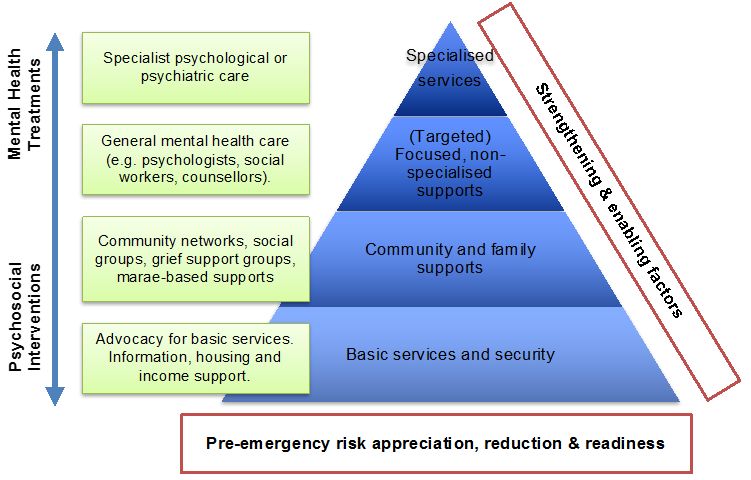
Figure 2: Tiered model of psychosocial interventions 4
SUPPORTING PEOPLE AFFECTED BY THE CHRISTCHURCH MOSQUE ATTACKS:
NATIONAL RESPONSE AND RECOVERY PLAN TO 15 MARCH 2020 iiiFigure 3: The different people and communities affected by the Christchurch
mosque attacks 8
SUPPORTING PEOPLE AFFECTED BY THE CHRISTCHURCH MOSQUE ATTACKS:
iv NATIONAL RESPONSE AND RECOVERY PLAN TO 15 MARCH 2020Introduction
On Friday 15 March 2019, a gunman entered two mosques in Christchurch, New
Zealand. He shot 91 people, killing 51 and wounding 40. A number of other people
were physically injured, and a large group of New Zealanders watched the video of the
attack, which was livestreamed and shared widely on Facebook.
The Ministry of Health (the Ministry) recognises responding to and recovering from
these shocking and horrific attacks will take time and will require effort and resources
from many parts of society.
SUPPORTING PEOPLE AFFECTED BY THE CHRISTCHURCH MOSQUE ATTACKS:
NATIONAL RESPONSE AND RECOVERY PLAN TO 15 MARCH 2020 1Purpose
This document sets out the national approach and actions the Ministry will undertake,
as well as how other agencies are involved, and includes information from:
• The Ministry of Health, which is responsible for coordinating the provision of
psychosocial 1 support and provides the required health and disability services by
funding, planning and providing services
• Canterbury District Health Board (CDHB), which is responsible for coordinating the
provision of psychosocial support services at the local level, and advising non-
governmental organisations and primary health organisations on the type and
nature of services needed for ongoing psychosocial support.
This national plan complements the local CDHB Wellbeing and Mental Health Recovery
Plan, which can be found on CDHB’s website.
The Ministry continues to work with CDHB to monitor the demand for services and
ensure people are able to access the support they need.
The National Health Emergency Plan (Ministry of Health 2015) specifies the general
roles and responsibilities of the health and disability sector (including all providers of
psychosocial support services) across all components of emergency management.
The Ministry has produced the Framework for Psychosocial Support in Emergencies
2016 (the Framework) 2 to guide the planning and delivery of the psychosocial response
and recovery from emergencies.
1
‘Psychosocial support’ is a term used in the Framework for Psychosocial Support in Emergencies. The
Framework notes the term ‘psychosocial’ reflects the interrelationship between individual psychological
and social factors.
2
Ministry of Health. 2016. Framework for Psychosocial Support in Emergencies. Wellington: Ministry of
Health. https://www.health.govt.nz/publication/framework-psychosocial-support-emergencies
SUPPORTING PEOPLE AFFECTED BY THE CHRISTCHURCH MOSQUE ATTACKS:
2 NATIONAL RESPONSE AND RECOVERY PLAN TO 15 MARCH 2020Support and recovery
key messages
The Christchurch mosque attacks of 15 March 2019 have been very distressing for
those directly impacted. Victims, witnesses and their families and whānau are more
likely to have an ongoing need for support into the future.
Most people affected by the attacks in Christchurch will experience some level of
distress, and all those affected are likely to benefit from some form of support.
Following an emergency, distress is more prevalent than mental health disorders, and
is usually short-lived.
The primary objectives of psychosocial recovery are to minimise the physical,
psychological and social consequences of an emergency and to enhance the
emotional, social and physical wellbeing of individuals, families, whānau and
communities.
The Framework for Psychosocial Support in Emergencies explains that support aims to
improve wellbeing, which refers to three core domains:
1. supporting and promoting human capacity (strengths and values)
2. improving social ecology (connections and support, through relationships, social
networks and existing support systems of people in their communities); and
3. understanding the influence of culture and value systems and their importance
alongside individual and social expectations.
Distress and grief are normal reactions and the majority of people will recover with
time. Others may need a bit more support and some may be at risk of developing
more severe and long-lasting symptoms. The impacts may be immediate or delayed.
All could benefit from a community-wide response based on the Framework for
Psychosocial Support in Emergencies in terms of faster recovery and improved
wellbeing. Some are likely to benefit from a more formal or professional intervention.
Figure 1 shows the phases of disasters and Figure 2 shows the range of interventions
and responses required to meet the needs of those affected.
SUPPORTING PEOPLE AFFECTED BY THE CHRISTCHURCH MOSQUE ATTACKS:
NATIONAL RESPONSE AND RECOVERY PLAN TO 15 MARCH 2020 3Figure 1: Diagram showing the general phases of disasters and how they can impact
on survivors psychologically and socially
Source: https://www.samhsa.gov/dtac/recovering-disasters/phases-disaster
Figure 2: Tiered model of psychosocial interventions
Source: Adapted from IASC (2007).
SUPPORTING PEOPLE AFFECTED BY THE CHRISTCHURCH MOSQUE ATTACKS:
4 NATIONAL RESPONSE AND RECOVERY PLAN TO 15 MARCH 2020Key lessons from
overseas experience and
research
• Early and proactive outreach is needed to identify and engage those directly
impacted by the event.
• Addressing barriers in access to care: The effectiveness of usual referral pathways
may be limited, and a flexible referral approach is needed.
• Targeting at-risk groups is a key task. This can be achieved through screening to
identify need and target interventions. 3
• Research indicates that brief, trauma-focused Cognitive Behaviour Therapy (CBT)
during the first few weeks after a shocking event leads to a reduction in Post-
Traumatic Stress Disorder (PTSD) symptoms. 4
• Available evidence suggests that the expression of symptoms associated with stress
reactions (including PTSD) is similar in victims across cultures.4
• Culturally specific elements of a psychosocial response should include providing
information in the minority group’s first language, and involving key figures from
the affected community.4
• Social support and bonding are important to reduce the negative psychobiological
outcomes after trauma. It is also important to recognise the value of existing and
emerging support networks and the relevance of community- and family-based
supports.3
• Research needs to be integrated into disaster response planning.
3
Reifels L, Pietrantoni L, Prati G, et al. 2013. Lessons learned about psychosocial responses to disaster and
mass trauma: an international perspective. European Journal of Psychotraumatology 4:
10.3402/ejpt.v4i0.22897. doi:10.3402/ejpt.v4i0.22897.
4
Te Brake H, Dückers M. 2013. Early psychosocial interventions after disasters, terrorism and other
shocking events: is there a gap between norms and practice in Europe? European Journal of
Psychotraumatology 4: 10.3402/ejpt.v4i0.19093. doi:10.3402/ejpt.v4i0.19093.
SUPPORTING PEOPLE AFFECTED BY THE CHRISTCHURCH MOSQUE ATTACKS:
NATIONAL RESPONSE AND RECOVERY PLAN TO 15 MARCH 2020 5Key principles guiding
this plan
• Promote human rights and equity.
• Promote a sense of safety, self and community efficacy, empowerment,
connectedness, calm and hope.
• Trauma-informed care principles will inform interventions.
• Culturally and linguistically appropriate support will be provided.
• Support will be on the basis of people’s identified need 5.
5
A full set of guiding principles is set out in the Framework for Psychosocial Support in Emergencies.
SUPPORTING PEOPLE AFFECTED BY THE CHRISTCHURCH MOSQUE ATTACKS:
6 NATIONAL RESPONSE AND RECOVERY PLAN TO 15 MARCH 2020Affected populations
and communities
Those directly impacted by the attacks include the victims and their families and
whānau. It is anticipated that this group of people may experience the biggest impact
on their wellbeing, and are more likely to have ongoing needs into the future.
Emergency response workers (including those in the Emergency Departments) and
those who witnessed the attacks are likely to benefit from support. There is also a large
group of New Zealanders who watched the livestream video of the attack, and could
be considered in some sense to be ‘witnesses’. The impact of watching the video is
hard to quantify, however, we have received feedback that people are experiencing
distress as a result of this.
The wider Muslim communities in Christchurch and New Zealand are also likely to
benefit from support following the attacks. Along with grief and loss, we are aware of
concerns about safety following the attacks.
Refugees and migrants make up part of several groups affected by the attacks.
Refugees and migrants often have special and unique requirements in terms of
therapeutic interventions to support their mental health and wellbeing. 6
The wider population of Christchurch are also experiencing a level of distress following
the attacks, which have occurred in the context of a community that is recovering from
the Canterbury earthquakes. There have been reports of people in Christchurch feeling
re-traumatised by the attacks.
Distress related to the attacks is not limited to those living in Christchurch. Many
people throughout New Zealand were profoundly shocked and saddened by this
horrific act of violence.
No matter how long the post-emergency period continues, coordinating timely and
appropriate interventions to support people and communities affected must be based
on an accurate assessment of need. 7
6
See refugee health publications on the Ministry of Health website, at
https://www.health.govt.nz/our-work/populations/refugee-health/refugee-health-publications,
and eCALD resources at www.ecald.com, such as
https://www.ecald.com/assets/Resources/Working-with-Refugees-Asylum-Seekers-Migrants.pdf
7
For further information on identifying psychosocial support needs see the Framework for Psychosocial
Support in Emergencies p. 34.
SUPPORTING PEOPLE AFFECTED BY THE CHRISTCHURCH MOSQUE ATTACKS:
NATIONAL RESPONSE AND RECOVERY PLAN TO 15 MARCH 2020 7Figure 3: The different people and communities affected by the Christchurch mosque
attacks
New Zealand population
Population of Ōtautahi/Christchurch
Muslim community
in Wider Muslim
Victims & Ōtautahi/ community
their families Christchurch In New Zealand
Refugees & migrants
Front line
Witnesses & People who saw
health
online video
workers, first
responders &
ED staff
SUPPORTING PEOPLE AFFECTED BY THE CHRISTCHURCH MOSQUE ATTACKS:
8 NATIONAL RESPONSE AND RECOVERY PLAN TO 15 MARCH 2020Roles and
responsibilities
The Ministry and CDHB have distinct roles in planning and implementing a support
and recovery plan, as noted above. The Ministry will work closely with CDHB to ensure
that efforts are coordinated, cohesive and appropriately resourced, and to avoid
duplication.
Table 1 sets out the areas of responsibility for both agencies in relation to the groups
and communities identified above.
Table 1: Roles and responsibilities
Target population Lead agency
Victims and their families (including refugees and migrants) CDHB
Frontline health workers including first responders and emergency CDHB
department workers
Muslim communities in Canterbury (including refugees and migrants) CDHB
Witnesses of the attack CDHB
Christchurch population CDHB
School and early learning communities (including school leaders, CDHB,
teachers, young people, children, families/whānau) Ministry of Education
Wider Muslim community in New Zealand (including refugees and Ministry of Health
migrants)
People who experienced distress as a result of watching the video Ministry of Health
All New Zealanders Ministry of Health
SUPPORTING PEOPLE AFFECTED BY THE CHRISTCHURCH MOSQUE ATTACKS:
NATIONAL RESPONSE AND RECOVERY PLAN TO 15 MARCH 2020 9Goals and outcomes –
3–12 months post-event
Support people and communities affected by the Christchurch mosque attacks to cope and recover
Expected outcomes
1 Enable normal 2 Support and treat 3 Promote wellbeing, 4 Enhance community
grieving and mental distress coping and recovery cohesion
recovery
Actions for 3–12 months post-event
1.1 Support local level 2.1 Resource organisations 3.1 Promote public 4.1 Promote
response and care to identify and engage wellbeing and mental community
coordination affected populations health literacy initiatives to
1.2 Work in 2.2 Collaborate with 3.2 Promote wellbeing enhance community
collaboration with agencies to streamline campaigns (both locally cohesion and social
other agencies to access pathways and and nationally) support
ensure basic lift barriers to access 3.3 National coordination 4.2 Provide advice to
needs are met (eg, support of wellbeing promotion organisations to
housing, financial 2.3 Support the national resources engage affected
needs, telehealth response populations
immigration 4.3 Promote resources
2.4 Support Canterbury
status) for workplace
DHB’s local response
wellbeing
2.5 Build workforce
capability in trauma- 4.4 Promote positive
informed approaches diversity messages
2.6 Build workforce cultural
capability and
resources
Resources
• Imams and • National Telehealth • Mental Health • The Office of Ethnic
spiritual leaders Service Foundation Communities
• Ministry of Social • Kāhui Tū Kaha • Health Promotion • Mana Ake
Development Case • Workforce centres Agency • New Zealand Police
Management (LeVa, Te Pou o te • All Right? campaign • City leaders and
model Whakaaro Nui, Te Rau • Five Ways to Wellbeing Canterbury
• Ngāi Tahu Ora and Werry communities
• Ministry of Health
• Victim Support Workforce Whāraurau)
National response • Human Rights
• Ministry of Education Commission
• Canterbury Resilience
hub
Specific interventions at a local and national level are outlined in more detail in each of
the four tables below. Each table aligns with an expected outcome and accompanying
actions, linked with the framework of the table above.
SUPPORTING PEOPLE AFFECTED BY THE CHRISTCHURCH MOSQUE ATTACKS:
10 NATIONAL RESPONSE AND RECOVERY PLAN TO 15 MARCH 2020Expected Outcome #1: Enable normal grieving and recovery
Action Lead agency Resources Target population
1.1 Support local level Provide leadership to the people of Canterbury and support and Imams and spiritual leaders The All Right? campaign Muslim community,
response and care manaakitanga to those directly affected and the many visitors Ngāi Tahu (refer to page 17) Canterbury population
coordination and dignitaries
Work with the families of the deceased, the injured and their MSD Victim Support, CDHB, Victims and whānau of
families, and witnesses to the event, and link them through to Pegasus Health the directly affected
counselling and primary mental health services as needed
1.2 Ensure basic needs Ensure basic needs are met through the Case Management MSD CDHB Victims and whānau of
are met (housing, model the directly affected
financial needs,
Collaborate with CDHB to ensure barriers are lifted to access Ministry of Health CDHB Victims and whānau of
immigration status)
healthcare services the directly affected
SUPPORTING PEOPLE AFFECTED BY THE CHRISTCHURCH MOSQUE ATTACKS:
NATIONAL RESPONSE AND RECOVERY PLAN TO 15 MARCH 2020 11Expected Outcome #2: Support and treat mental distress
Action Lead agency Resources Target population
2.1 Resource Collaborate with organisations to coordinate local response to MSD CDHB, Pegasus Health, Victim Muslim community,
organisations to the mosque attacks and streamline pathways to primary mental Support, Refugee Resettlement Canterbury population
identify and engage health and social services Centre, Canterbury Charity
affected Hospital
populations
Add capacity from Kāhui Tū Kaha Muslim Team (Auckland-based CDHB Pegasus Health, Kāhui Tū Kaha Victims and whānau of
NGO) while local Muslim capability is built the directly affected
Engage with the Muslim community to develop understanding CDHB Kāhui Tū Kaha, local community Muslim community in
of need groups Christchurch
Coordinate responses and resources across health and other Ministry of Health CDHB, Pegasus Health, National All New Zealanders
agencies, as well as provision of tools and online resources Telehealth Service, MSD
Link with Government departments and other agencies at a Ministry of Health MSD, Oranga Tamariki, MoE, All New Zealanders
national and local level New Zealand Red Cross,
Salvation Army, Victim Support
2.2 Collaborate with Waive co-payments for general practice visits, effective CDHB Primary health, funding from the Muslim community in
agencies to immediately for one year Ministry Christchurch
streamline access
Waive fees for access to primary mental health interventions, CDHB Primary health and NGOs, with Muslim community in
pathways and lift
effective immediately for one year funding from the Ministry Christchurch
barriers to access
support Monitor and work with DHBs across New Zealand to respond to Ministry of Health DHBs All New Zealanders
increased demand
2.3 Support the Ensure adequate resourcing for telehealth services (1737 and Ministry of Health National Telehealth Service, All New Zealanders
national telehealth other mental and physical services) funded by the Ministry
response
2.4 Support Canterbury Extend time-limited funding that was allocated to Christchurch Ministry of Health CDHB Christchurch population
DHB’s local following the earthquakes, including for primary and community
response mental health workers and community grants
SUPPORTING PEOPLE AFFECTED BY THE CHRISTCHURCH MOSQUE ATTACKS:
12 NATIONAL RESPONSE AND RECOVERY PLAN TO 15 MARCH 2020Action Lead agency Resources Target population
2.5 Build workforce Engage with Muslim psychologists to focus on workforce CDHB NZ Muslim Psychologists Muslim community in
capability in development and Post Traumatic Stress Disorder (PTSD) Collective, Muslim clinicians, and Christchurch
trauma-informed treatment interventions the Muslim community
approaches
Link with national workforce centres to build capability to Ministry of Health Workforce centres (LeVa, Te Pou All New Zealanders
implement trauma-informed approaches o te Whakaaro Nui, Te Rau Ora
and Werry Workforce
Whāraurau)
2.6 Build workforce Develop a local Muslim workforce by engaging with the Muslim CDHB NZ Muslim Psychologists Muslim community in
cultural capability community Collective Christchurch
and resources
Facilitate community workshops to build trust with the directly CDHB NZ Muslim Psychologists Muslim community,
affected and facilitate access to clinical support Collective, Muslim clinicians, and Canterbury population
the Muslim community
Provide cultural competence training, clinical advisory, NZ Muslim CDHB Muslim community in
supervision and peer support Psychologists Christchurch
Collective
Link with national workforce centres to support training to Ministry of Health Workforce centres (LeVa, Te Pou All New Zealanders
enhance cultural capability of the health workforce o te Whakaaro Nui, Te Rau Ora
and Werry Workforce
Whāraurau)
SUPPORTING PEOPLE AFFECTED BY THE CHRISTCHURCH MOSQUE ATTACKS:
NATIONAL RESPONSE AND RECOVERY PLAN TO 15 MARCH 2020 13Expected Outcome #3: Promote wellbeing, coping, and recovery
Action Lead agency Resources Target population
3.1 Promote public Take leadership of national wellbeing promotion in response to Ministry of Health CDHB and the All Right? The Muslim population,
wellbeing and the mosque attacks and link New Zealanders at a national level campaign, MHF, HPA, National all New Zealanders
mental health Telehealth Service
literacy
Identify key stakeholders within the Muslim community and MHF, the All Right? Ministry of Health The Muslim population
reorient existing tools and resources to reach the Muslim campaign, HPA across New Zealand
community
Promote wellbeing and recovery for schools and early learning Ministry of Education School and early learning School staff and young
communities communities people
3.2 Promote wellbeing Encourage engagement with the ‘Five Ways to Wellbeing’ (refer Ministry of Health CDHB and the All Right? All New Zealanders
campaigns (both to page 19) campaign, MHF, HPA, National
locally and Telehealth Service
nationally)
Reorient existing tools and resources to promote population MHF, the All Right? HPA, Ministry of Health All New Zealanders
level positive mental health promotion campaign
Apply a wellbeing lens over existing resources HPA National Depression Initiative All New Zealanders
Work with Muslim clinicians to reorient existing online resources National Telehealth 1737 service, funded by the The Muslim population
Service Ministry across New Zealand
3.3 National Establish and manage virtual Resilience Hub, an online resource CDHB Local resources Canterbury population
coordination of to access information and connect with health and other
wellbeing agencies as required
promotion
Establish a governance group to link wellbeing campaigns and Ministry of Health CDHB and the All Right? The Muslim population,
resources
promote population level wellbeing and access to support campaign, MHF, HPA, National all New Zealanders
Telehealth Service
Link with wellbeing promotion agencies and guide callers into National Telehealth Ministry of Health, CDHB, MHF, All New Zealanders
services where appropriate Service HPA
SUPPORTING PEOPLE AFFECTED BY THE CHRISTCHURCH MOSQUE ATTACKS:
14 NATIONAL RESPONSE AND RECOVERY PLAN TO 15 MARCH 2020Expected Outcome #4: Enhance community cohesion
Action Lead agency Resources Target population
4.1 Promote community Coordinate City Leaders’ meetings to stay connected, share CDHB City leaders and Canterbury The wider Canterbury
initiatives to enhance information and guide direction communities population
community cohesion
Oversee the integration of mental health specialists into CDHB Christchurch resettlement services Muslim community and
and social support
Christchurch resettlement services to provide support to refugees in Christchurch
refugees relocated to the Christchurch region
4.2 Provide advice to Support school communities with information resources and Mana Ake Ministry of Education, CDHB, Muslim community,
organisations to direct contact with children and families/whānau as needed National Telehealth Service Canterbury population
engage affected
Provide a fact sheet and information pack for all schools in the New Zealand Police CDHB, National Telehealth Service The wider Canterbury
populations
Canterbury region population
Contribute to all-of-Government coordination, including Ministry of Health MSD, MoE, MoJ, ACC, DIA, MBIE, All New Zealanders
helpline and fact sheets Oranga Tamariki, National
Telehealth Service, MHUD
4.3 Promote resources Ensure access to existing workplace wellbeing resources and Ministry of Health MHF All New Zealanders
for workplace additional support as needed
wellbeing
4.4 Promote positive Promote new wellbeing promotion campaign specific to the CDHB The All Right? campaign, MHF, Muslim community,
diversity messages mosque attacks National Telehealth Service Canterbury population,
all New Zealanders
Collaborate with Human Rights Commission and other Ministry of Health Human Rights Commission, Office All New Zealanders
agencies to promote diversity and social inclusion campaigns of Ethnic Communities
SUPPORTING PEOPLE AFFECTED BY THE CHRISTCHURCH MOSQUE ATTACKS:
NATIONAL RESPONSE AND RECOVERY PLAN TO 15 MARCH 2020 15Actions in Christchurch
In terms of the high-level response, CDHB continues to:
• engage widely with the Muslim community to understand their needs and
aspirations
• meet with other agencies to share information and coordinate activities
• work with the Ministry of Social Development (MSD) and others to oversee the Case
Management/Navigation model
• expand clinical leadership to provide a wide range of perspectives
• meet with funders to work out how money will be allocated for people accessing
mental health services
• plan and implement initiatives for the coming months, including how people from
the impacted communities can lead the response.
Specific actions and interventions at
the local level
• Primary mental health has added capacity from Kāhui Tū Kaha Muslim Team
(Auckland-based NGO) – this is agreed while local Muslim capability is built.
• CDHB is working on the development of a local Muslim workforce to pick up the
role of Kāhui Tū Kaha when they transition back to Auckland. CDHB are engaging
with key people from the Muslim community and working with the NZ Muslim
Psychologists Collective to support the development of the new team.
• The NZ Muslim Psychologists Collective will provide cultural competence training,
clinical advisory, supervision and peer support as well as taking a lead role in the
delivery of community wellbeing workshops.
• CDHB is starting community workshops (psychoeducation sessions) to provide a
means of building trust with the directly affected, particularly in the Muslim
community, and facilitate access to clinical support. The workshops will be
facilitated jointly by Muslim people and health clinicians.
• Primary and specialist health services are collaborating to meet the needs of victims.
People discharged from hospital have a wrap-around package of care.
• The All Right? campaign 8 has rolled out a new wellbeing promotion campaign
specific to the mosque attacks, tailored to the whole community. This has been well
received and reached a much wider audience with requests for resources coming in
8
The All Right? campaign is a Healthy Christchurch initiative, and a partnership between the Public
Health Unit at CDHB and the Mental Health Foundation.
SUPPORTING PEOPLE AFFECTED BY THE CHRISTCHURCH MOSQUE ATTACKS:
16 NATIONAL RESPONSE AND RECOVERY PLAN TO 15 MARCH 2020from across New Zealand. Resources are being translated into several languages
including Arabic, Somali, Urdu, Hindi, Dari, Nepali and Tigrinya.
• The Mana Ake 9 project team established a hub based at the Canterbury Design Lab
to triage requests for support and they have connected with all schools to
determine and respond to need.
• The ‘Leading Lights’ website (one of the Mana Ake initiative’s key elements) is
supporting the Mana Ake response across the education sector.
• ACC are continuing to receive claims for mental injury.
• Operational group for integrated service response for families impacted has been
set up to review multi-agency families and resolve issues through a lead contact.
• The Canterbury Charity Hospital is providing free counselling sessions following the
attacks.
The response aims to ensure that existing resources are reprioritised to meet
immediate needs. Appendix 1 shows how other agencies are currently working to
respond to support needs.
9
Mana Ake – Stronger for Tomorrow provides support for children aged 5 to 12 years across Canterbury.
There are 62 FTE Mana Ake kaimahi working in 165 Canterbury primary schools. The final complement
of 18 kaimahi were welcomed on 1 April 2019.
SUPPORTING PEOPLE AFFECTED BY THE CHRISTCHURCH MOSQUE ATTACKS:
NATIONAL RESPONSE AND RECOVERY PLAN TO 15 MARCH 2020 17Actions and planning at
the national level
The Ministry team continues to work with CDHB and other agencies to support and
coordinate the provision of support at a national level.
Two national resources, ‘Coping after a traumatic event’, and ‘Supporting your kids
after a traumatic event’ have been produced and published in English, Arabic, Farsi,
Indonesian, Malay, Somali, Turkish, Urdu , NZ Sign Language and Easy Read:
www.health.govt.nz/our-work/mental-health-and-addictions/mental-
health/mental-health-advice-coping-after-traumatic-event
The Ministry continues to:
• coordinate the provision of tools and on-line resources
• coordinate responses and resources across health and other agencies
• support and enable efforts to increase access to primary health care (including
primary mental health interventions) for those directly impacted by the attacks
• enable development of additional resources for all those affected, both locally and
nationally, including culturally and linguistically appropriate resources
• support and enable psychosocial support interventions targeted to Muslim
communities to ensure culturally and linguistically appropriate responsive services
• support training for trauma-informed care for the wider health workforce
• contribute to the all-of-Government helpline and fact sheets
• link with other Government departments, including the MSD, Oranga Tamariki, the
Ministry of Housing and Urban Development (MHUD) and the Ministry of Education
(MoE), as well as agencies such as the New Zealand Red Cross, Salvation Army and
Victim Support at a national and local level.
National Telehealth Service 1737
(run by Homecare Medical)
The 1737 service was utilised in the days following the mosque attacks and has been
promoted throughout the crisis response, ensuring all New Zealanders have easy
access to virtual support and counselling.
SUPPORTING PEOPLE AFFECTED BY THE CHRISTCHURCH MOSQUE ATTACKS:
18 NATIONAL RESPONSE AND RECOVERY PLAN TO 15 MARCH 2020Access to free support from a trained counsellor is available nationally through the
1737 service, 24/7 and was widely promoted as a form of psychological first response
during and since the attacks. Contact volumes remain higher than normal, coming
from Canterbury and across New Zealand. The 1737 provider, Homecare Medical, has
reported a concerning level of ongoing contacts with distress and trauma directly
related to the event.
The total number of sessions delivered through 1737 from 15 March to 29 May 2019
was 33,079 with the provider reporting volumes 25 percent higher than normal (media
reporting and community events continue to trigger increases in contacts). The
psychological impacts are not confined to the Canterbury region, with over 25 percent
of contacts coming from the Auckland region.
The Ministry continues to actively support Homecare Medical and DHBs have allocated
additional staff for the 1737 roster. More than 150 mental health professionals have
been working on the telehealth response.
National coordination of wellbeing
promotion resources
The Ministry has established a governance group with wellbeing promotion and service
delivery agencies to link wellbeing campaigns and collaborate on a ‘layered’ approach
to promote population level wellbeing and access to support. This governance group
will take leadership of national wellbeing promotion in response to the mosque attacks
and encourage engagement with the Five Ways to Wellbeing. 10 It will strive to link
people at a national level to ensure New Zealanders feel connected and supported.
Actions from the Wellbeing Promotion Governance Group aim to ensure consistency of
high level population messages and health promotion and align with
recommendations set out by He Ara Oranga (Report of the Government Inquiry into
Mental Health and Addiction). 11 The group will meet on a six-weekly basis to provide
updates, link initiatives and plan for the coming months.
The ‘layered’ approach outlines three layers of wellbeing promotion, listed on page 20.
The governance group identified the agencies that will take the lead within each layer
to support the needs of Muslim communities across New Zealand and the wider New
Zealand population.
10
The Five Ways to Wellbeing are evidence-based actions important for the wellbeing of individuals and
communities. The five actions are: Connect, Give, Take notice, Keep learning, and Be active.
11
He Ara Oranga, the report of the Government Inquiry into Mental Health and Addiction, was published
in November 2018 as a result of the Inquiry, which involved widespread public consultation. He Ara
Oranga outlines a set of 40 recommendations to transform New Zealand’s approach to mental health
and addiction.
SUPPORTING PEOPLE AFFECTED BY THE CHRISTCHURCH MOSQUE ATTACKS:
NATIONAL RESPONSE AND RECOVERY PLAN TO 15 MARCH 2020 191. Population level positive mental health promotion:
a. The Mental Health Foundation (MHF) and the All Right? campaign will
align initiatives, reorient existing tools and resources and agree on
consistent messaging and behaviour change promotion to the wider New
Zealand population.
b. MHF and the All Right? campaign will identify key stakeholders within the
Muslim community, coordinate focus group testing, connect with the
Health Promotion Agency and reorient existing tools and resources to
reach the Muslim community.
2. Resources and public campaigns to support individuals and/or whānau in mental
distress:
a. The Health Promotion Agency/Te Hiringa Hauora (HPA) will review its
existing online resources, such as the National Depression Initiative, 12 and
apply a wellbeing lens over these products to support the wider New
Zealand community who may be experiencing mental distress.
b. HPA will identify key stakeholders and work with the wider Muslim
community to identify and develop approaches to support this community
who may be experiencing mental distress. HPA will ensure its messages
support other wellbeing promotion activities.
3. Enabling access to community and clinical services, particularly for populations
who may face barriers:
a. The National Telehealth Service will seek opportunities to link with other
wellbeing promotion agencies and media and continue to guide callers
into appropriate services through a range of channels.
b. The National Telehealth Service will summarise and present data of people
who contact the mental health helplines to better understand
demographics of the population seeking help. The National Telehealth
service will also work with the Ministry of Health to explore the Umeed 13
phone and online counselling service for Muslim communities.
12
The National Depression Initiative focuses on reducing the impacts of depression and anxiety through
early recognition and appropriate treatment (depression.org.nz and thelowdown.co.nz).
13
Umeed is a virtual counselling service created in response to the mosque attacks. The model allows
clients to choose a mental health professional with specific language and cultural capacity for their
mental health needs.
SUPPORTING PEOPLE AFFECTED BY THE CHRISTCHURCH MOSQUE ATTACKS:
20 NATIONAL RESPONSE AND RECOVERY PLAN TO 15 MARCH 2020Next steps and
communication
The Ministry has consulted and will continue to liaise with Government departments,
CDHB, and other agencies such as HPA, MHF, the All Right? campaign, and the
National Telehealth Service in the development of this plan. This plan will guide the
longer term response and recovery actions at the national level. This iteration of the
plan covers ongoing and future actions for the next nine months, following 15 March
2019.
This plan is a living document that the Ministry will continue to review and develop as
the longer term impacts of the attacks become clearer. The plan will be published on
the Ministry website as it is updated.
The Ministry will continue to ensure access to appropriate support and interventions,
reviewing actions under this plan and making any recommendations for further
support based on identified needs, ongoing coordination and support for CDHB’s
recovery plan.
SUPPORTING PEOPLE AFFECTED BY THE CHRISTCHURCH MOSQUE ATTACKS:
NATIONAL RESPONSE AND RECOVERY PLAN TO 15 MARCH 2020 21Appendix 1: Immediate
and short-term actions
by agencies
Agency/ provider Response provided Target population
Health sector • Helpline: anyone can call or text All New Zealanders.
(summary) 1737 and talk to a trained
counsellor. This is a free
24/7 service.
• CDHB are coordinating and
prioritising health services to meet
demand.
• Primary mental health services are New Zealand resident or citizens,
available through general practice. fee may apply to non-residents.
Travel insurance may cover.
Ministry of • Provided trauma support directly Canterbury primary and
Education into schools. intermediate students.
• In partnership with Canterbury
Health System, supporting schools
through Mana Ake workers,
resources and information.
New Zealand Police • Police Family Liaison teams have Those directly affected.
now transitioned across to MSD
integrated whānau wellbeing
response services.
• Police are continuing to work with
those directly affected as witnesses
in preparation for court
proceedings.
Victim Support • Immediate emotional support in a • Family members of someone
crisis. who has died.
• Practical support such as • People who were admitted to
completing forms, applying for hospital following the attack,
grants. and their family members.
• Emergency grants and financial • Witnesses to the attack.
assistance.
• Information and advice. NB: Don’t need to be New
• Someone to listen and talk with. Zealand citizen or resident.
• Referral to counselling and other
government and community
services.
SUPPORTING PEOPLE AFFECTED BY THE CHRISTCHURCH MOSQUE ATTACKS:
22 NATIONAL RESPONSE AND RECOVERY PLAN TO 15 MARCH 2020Agency/ provider Response provided Target population
ACC • Paying for medical care. • People injured in the attack,
• Weekly compensation for loss of their family and support
earnings. people.
• Help at home. • People who lost a loved one
in the attack.
• Childcare and help at home to care
for children.
For families who have lost a loved one: NB: Includes visitors who have
been injured in New Zealand.
• Help with funeral costs.
• Survivor grants for families.
• Ongoing support for children in
New Zealand when a
parent/caregiver has died.
• Weekly compensation for families.
Ministry of Social • The MSD is leading the integrated People affected by the
Development (Work whānau wellbeing response, Christchurch tragedy or who need
and Income) focused on bereaved families, the to travel to Christchurch because
injured and their families. of it (don’t have to be on a
• Payments for urgent or unexpected benefit).
costs such as food, bedding, petrol
and other travel costs within New
Zealand.
• Advance payment of benefit of up Those who have lost income due
to six weeks. to workplace closed, cannot travel
• Emergency Benefit for people who to work or need to stay with
don’t qualify for any other benefit. family/whānau.
• Civil Defence Payment for loss of Having to leave home due to
income. living in an area within a Police
cordon, providing a place to stay
• Civil Defence Payment for having to
for friends or family, food,
leave home.
clothing or bedding.
SUPPORTING PEOPLE AFFECTED BY THE CHRISTCHURCH MOSQUE ATTACKS:
NATIONAL RESPONSE AND RECOVERY PLAN TO 15 MARCH 2020 23You can also read


