1999-2003 Community Health Profiles - South Park Super Neighborhood
←
→
Page content transcription
If your browser does not render page correctly, please read the page content below
City of Houston
1999-2003            Department of Health and Human Services
                     Office of Surveillance and Public Health Preparedness

  Community Health Profiles

   South Park
Super Neighborhood

                          Providing Health Information
                             for Community Action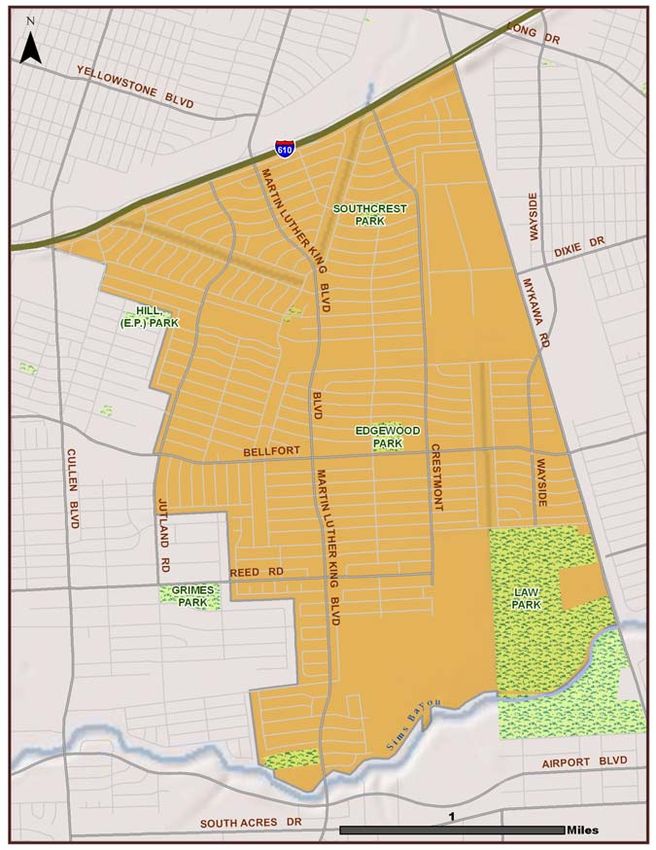
Community Health Profiles 1999-2003

                                                       This community health profile highlights impor-
          Introduction                                 tant health issues facing the residents of the
                                                       South Park Super Neighborhood.

                                                       In Houston, a “super neighborhood” is a geo-
                                                       graphically defined area where residents, civic
                                                       organizations, institutions and businesses work
                                                       together to identify, plan, and set priorities to
                                                       address the needs and concerns of their com-
                                                       munity. The boundaries of each super neighbor-
                                                       hood rely on major physical features such as
                                                       bayous or freeways to group together contigu-
                                                       ous communities that share common physical
                                                       characteristics, identity or infrastructure. South
                                                       Park Super Neighborhood will hereinafter be
                                                       referred to as “South Park”.

                                                       It is the intention of the Houston Department of
                                                       Health and Human Services (HDHHS), in devel-
                                                       oping health profiles such as this, to promote a
                                                       better understanding by local residents, commu-
                                                       nity-based organizations, community leaders,
                                                       medical providers, and the public health commu-
                                                       nity of the unique character and circumstances
                                                       of our various communities, and to draw atten-
                                                       tion to those matters that contribute to the great-
                                                       est of health disparities among the citizens of
                                                       our growing, culturally and ethnically diverse
                                                       city.

            Table of Contents                          This profile also represents an effort on the part
                                                       of HDHHS to provide a “baseline” of indicators
                                                       of health in our communities, against which fu-
                                                       ture trends in conditions can be measured and
         Community Resources………...................3    monitored, and appropriate public health ac-
         The Super Neighborhood at a Glance..….4       tions, taken.
         Major Causes of Death…………….…..….6
         Years of Potential Life Lost…….….…..….7       We hope that this health profile will support
          Maternal and Child Health.......…….….....8   these efforts in South Park and across the City
         Births to Teen Mothers…….…….....…..…9         of Houston.
         Infant Mortality…………………….….......10
         Leading Causes of Hospitalization……...11
         Crime………………………...………….....12
         Tuberculosis……………………………….13                        Stephen L. Williams, M.Ed., M.P.A.
         Drowning and Submersions……....…..…13               Director
         Food-related Illness……………………....13                 Houston Department of Health and
         Environmental Healt h & Safety……….…14              Human Services
         HIV/A IDS……………………………….….15
         Gonorrhea………………………………....16
         Syphilis……………………………………..17
         Chlamydia……………………………….…18
         Technical Notes…………………………...19

2   The Health of South Park Super Neighborhood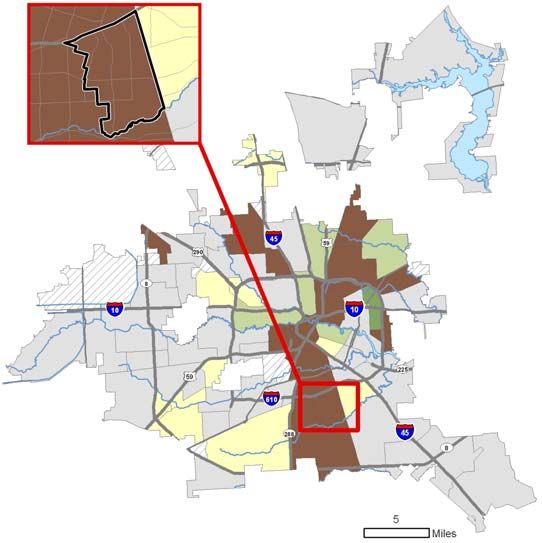
Community Health Profiles 1999-2003

                       The health of a community depends to a great
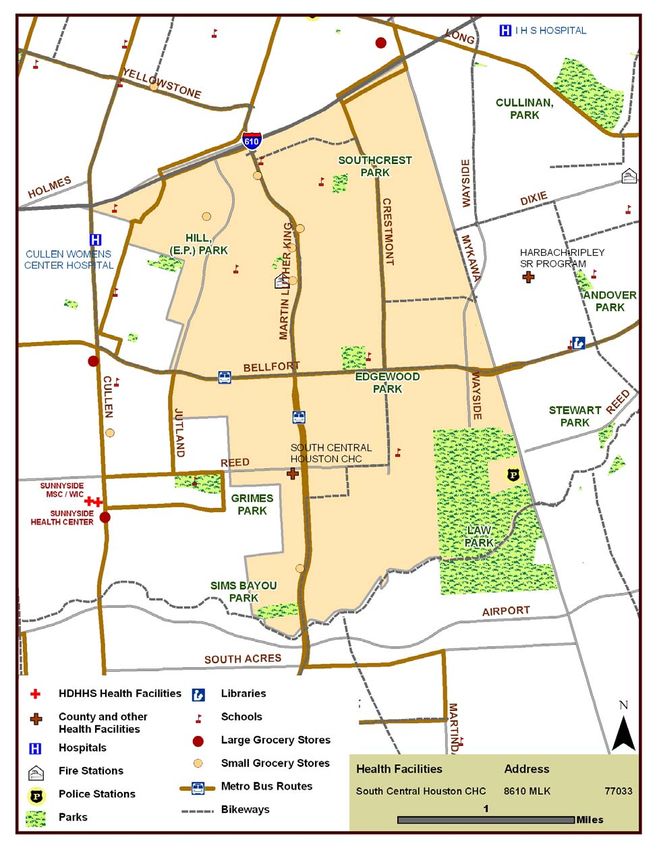
Community Resources    extent upon the availability and accessibility of
                       its resources.

                 The Health of South Park Super Neighborhood               3
Community Health Profiles 1999-2003

                South Park                                  The total population of South Park was 21,991, according
                                                            to the 2000 census.*
                at a Glance
                                                                                                65+ Yrs 0-4 Yrs
      Age                                                                                  60-64 11%      7%
                                                                                                               5-9 Yrs
                                                                                            Yrs
                                                                                                                 9%
                                                                                            6%
      At the time of the 2000 census, one-third of                                       50-59                         10-19
      South Park residents were under the age of                                          Yrs                           Yrs
      20. More than half (56%) were between 20                                            12%                           17%
      and 64 years of age, and 11% were 65 or                                               40-49
      older.                                                                                 Yrs                20-29
                                                                                                      30-39      Yrs
                                                                                            12%
                                                                                                       Yrs       13%
                                                                                                       13%

      Race, Ethnicity, National Origin
                                                                                                          White Non-
                                                                                                           Hispanic
                                                                                                 Hispanic
      The majority of residents in South Park were                                                            1%
                                                                                                   16%
      Black. Hispanics were the second largest eth-
                                                                                       Asian and
      nic group, though they comprised only 16% of
                                                                                       other Non-
      the population; 2% were of other races.
                                                                                        Hispanic
                                                                                           1%
      Of the total population, 75% were native Tex-
      ans; 9% were foreign born.

                                                                                                                Black Non-
                                                                                                                 Hispanic
                                                                                                                   82%

      Employment

      A large proportion (55%) of South Park resi-                                    Not in the
                                                                                                                         Employed
      dents, ages 16 and over, were either unem-                                     Labor Force
                                                                                                                           45%
      ployed or were not in the labor force in 1999.                                    48%

                                                                                                        Unemployed
                                                                                                           7%

      * Data Source: U.S. Census 2000. Total population was calculated from census block-level data using Summary File 1. For pur-
      poses of describing demographics using Summary File 3, the super neighborhood is defined by the following census geographies:
      Tracts 3321 through 3324; Tract 3318, Block Group 2; Tract 3319, Block Groups 2 & 3; and Tract 3320, Block Groups 1 & 2.

4   The Health of South Park Super Neighborhood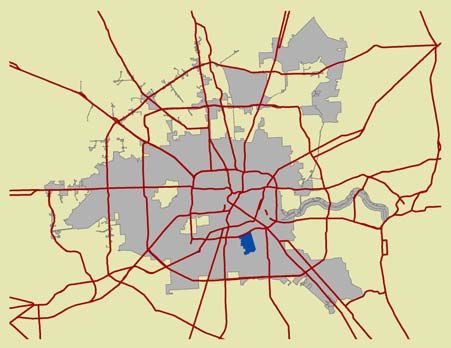
Community Health Profiles 1999-2003

Poverty                                                                                                Income less
                                                                       Income                            than the
                                                                    greater than                       poverty level
Twenty-eight percent of the population in                                                                  28%
                                                                     or equal to
South Park was below the poverty level in
                                                                      tw ice the
1999. Fifty-seven percent of all residents
                                                                    poverty level
in the super neighborhood had incomes                                    43%
less than twice the poverty level.

Of those living below the poverty level,                                                       Income
40% were children under 18 years of age;                                                     greater than
9% were adults 65 and older.                                                                 the poverty
                                                                                            level but less
                                                                                           than tw ice the
                                                                                             poverty level
                                                                                                 29%

Education

Forty percent of South Park residents,             Graduate degree and higher       2%
ages 25 and over, reported that they had
not graduated from high school.
                                                               Bachelor degree        4%

Nearly one-third (32%) of residents re-
                                                              Associate degree       3%
ported a high school diploma (or the
equivalent) as their highest level of educa-
                                                       Some college, no degree                           19%
tional attainment.
                                               High school graduate / equivalent                                          32%
Twenty-eight percent of residents had
attained education beyond the high school
level, with 9% earning a college degree.           9th to 12th grade, no diploma                               25%

                                                           Less than 9th grade                     15%

                                                                                    Percent of Residents (25 and older)

                 Moved from
    Moved from                                                Population Stability
                  different
     different      State Moved from
     county in       1%     elsew here                 The majority (71%) of the residents of South Park
      Texas
                               1%                      had lived in the same house since 1995. One-
        2%
                                                       quarter moved to South Park from other locations
 Moved from                                            in Harris County between 1995 and 1999.
     other
  location in                                          Four percent of residents moved to the area from
                                 Same
    Harris                                             outside Harris County between 1995 and 1999.
                                 house
    County
                              since 1995
     25%
                                  71%

                                                                      Data Source: U.S. Census 2000, Summary File 3

                                                The Health of South Park Super Neighborhood                                     5
Community Health Profiles 1999-2003

                                                           During the years 1999-2003, the residents of the super
       Major Causes of                                     neighborhood had higher overall and cause-specific annual av-
                                                           erage mortality rates from leading causes than that of Houston
            Death                                          as a whole.

                 Leading Causes of Mortality, South Park, Houston, Texas, 1999-2003
                                                                                                                         South Park -
                                                                 South Park                         Houston               Houston
         Rank Cause of Death                                  Deaths     Rates*                      Rates*                Rates
                  All Causes                                     1232             1386.7               898.2                  488.5
             1    Heart Disease                                  358               401.9               262.0                  139.9
             2    Cancer                                         313               326.9               197.6                  129.3
             3    Stroke                                          87               107.3                76.0                   31.3
             4    Accidents                                       56                55.8                34.8                   21.0
             5    Diabetes Mellitus                               45                55.5                28.0                   27.5
                  Chronic Lower Respiratory
             6    Disease
                                                                  36                39.5                31.9                       7.6

             7    Kidney Disease                                  27                33.6                15.8                   17.8
             8    Homicide                                        33                32.5                11.1                   21.4
             9    Septicemia                                      26                29.5                18.1                   11.4
            10 Influenza and Pneumonia                            22                 --                 20.0                       --

                        Other Causes of Death of Particular Interest, South Park,
                                     Houston, Texas, 1999-2003

                                                                                                                           South Park -
                                                             South Park                               Houston               Houston
       Cause of Death                                   Deaths        Rates*                           Rates*                Rates
       Coronary Heart Disease                              212                   243.4                   174.1                     69.3
       Bronchus-Lung Cancer                                100                    96.5                    52.8                     43.7
       Motor Vehicle Accident                              25                     24.5                    13.2                     11.3
       Firearm Related                                     23                      --                      7.4                      --
       Drug-Induced Cause                                   9                      --                      8.2                      --
       Cervical Cancer                                      6                      --                      2.2                      --

       *Age-adjusted mortality rates: annual average deaths per 100,000 population; census 2000 populations as the denominators;
       age-adjusted to the 2000 US Standard Million; deaths with known age and disease information.
        - - Numbers of deaths were too small for rate calculation.

                                           Data Sources: Texas Department of State Health Services, Vital Statistics; US Census, 2000

6   The Health of South Park Super Neighborhood
Community Health Profiles 1999-2003

                                                          Years of Potential Life Lost (YPLL) is an indicator of prema-
Years of Potential                                        ture mortality. This indicator suggests social and economic
                                                          loss owing to premature death. It also gives information on
 Life Lost (YPLL)                                         the specific causes of deaths affecting younger age groups.

 Leading Causes                                     Houston
                                                                               Rate of Years of Potential Life Lost
 of Premature               YPLL        YPLL         YPLL
 Death                      Rate*       Rate**       Rate**                               (YPLL Rate)
 Heart Disease              1522.9      1623.9         689.3              At every age of death, there is a certain number
 Cancer                     1284.4      1358.8         816.3              of years of “expected life” that are not lived, and
                                                                          are therefore “lost”. The amount of lost years of
 Accidents                  1130.9      1234.6         779.0              life often differ by cause of death. Many people
 Homicide                    983.5      1075.4         407.5              consider death before the age of 65 years as
 HIV/AIDS                    627.4       736.1         335.1              premature. In this community, more years of life
                                                                          were lost prematurely due to heart disease, can-
 Conditions
                                                                          cer, accidents, homicide and HIV/AIDS related
 Originating in the          515.8         --             -
 Perinatal Periods                                                        deaths in this community than any other causes.
 Stroke                      255.9         --             -               The age-adjusted annual average YPLL rates
 Suicide                     195.5         --             -               for heart disease, cancer, accidents, homicide
 Chronic Lower                                                            and HIV/AIDS were higher in the super
 Respiratory                 163.7         --             -               neighborhood than those in Houston overall.
 Disease                                                                  Comparison of other age-adjusted YPLL rates is
 Chronic Liver                                                            not possible because of the relatively small
                      163.7                --             -               number of deaths occurring before age 65 in
 Disease-Cirrhosis
 Specific Causes of Interest                                              South Park. YPLL is not reported where fewer
                                                                          than 5 deaths occurred.
 Firearm Related             817.7         --             -
 Motor Vehicle
                             795.2         --             -                   Leading            Male YPLL          Female YPLL
 Accident
 Coronary Heart                                                               Causes of          Rates              Rates
                             699.0       712.8         376.1                  Premature          (number of         (number of
 Disease
                                                                              Death §            deaths)            deaths)
 Bronchus-Lung
                             426.8       455.4         153.2
 Cancer                                                                       Heart Disease       2056.6 (84)          1042.4 (47)
 Drug-Induced                                                                 Accidents           1840.6 (34)          492.0 (11)
                             160.7         --             -
 Cause
                                                                              Homicide            1477.6 (23)           538.7 (9)
NOTE: Special cause of death categories may not be mutually exclusive.
* Crude annual average YPLL per 100,000 population under age 65 years.        Cancer              1378.3 (61)          1199.9 (64)
** Age-adjusted annual average YPLL per 100,000 population under age of
65, standardized for 2000 US Standard Million.                                HIV/AIDS           1054.2 (21)            243.1 (5)
- - Number of deaths too small for age-adjustment.                            Specific Causes of Interest
- Houston data not presented because comparison data were not available
for the community.                                                            Firearm Related     1326.4 (18)           359.8 (5)
                                                                              Motor Vehicle
    Differences in YPLL rates between                                                             1250.8 (18)           385.1 (6)
                                                                              Accident
        Men and Women, 1999-2003                                              Coronary Heart
                                                                                                  1071.5 (47)          363.7 (19)
                                                                              Disease
Premature deaths from heart disease, accidents,
                                                                          §
homicide, cancer and HIV/AIDS had higher im-                               Ranked by Male YPLL Rate
pact on annual average YPLL rates among males                             Note: Annual average YPLL rates might be unstable due to small
                                                                          number of premature deaths.
than females in this community.

                                      Data Sources: Texas Department of State Health Services, Vital Statistics; US Census, 2000

                                                                The Health of South Park Super Neighborhood                                7
Community Health Profiles 1999-2003
Prenatal care is the care a woman gets during pregnancy.
Maternal and Child Both prenatal care and birth weight are good indicators of a
newborn’s chances of survival, growth, long term health,
Health and psycho-social development.
Entry into Prenatal Care by 80% 75.0%
72.5% 72.5%
Percentage Entering Prenatal Care
Trimester of Pregnancy, 70% 1st Trimester
1999-2003 60% 2nd Trimester
3rd Trimester
A slightly higher proportion of White 50%
women (75.0%) than Black (72.5%) and No Information
40%
Hispanic (72.5%) women in South Park No Prenatal Care
entered prenatal care during the first tri- 30%
5.0% 17.2% 22.4%
mester. A small proportion of Black and
20% 10.0% 2.1%
Hispanic women entered prenatal care 1.9%
10.0% 5.3%
very late in their pregnancy, or received 10% 1.5%
2.9% 1.7%
no care at all. However, 10% of WhiteCommunity Health Profiles 1999-2003
Teenage childbearing is associated with negative consequences for
Births to Teen the children born of teen mothers. In addition, there are important
social and economic costs to individuals as well as the society as a
Mothers result of births to teenage mothers.
10-14 Years 160 147.6
South Park
40-49 Years Old 15-17 Years 140
Houston 118.8
Births per 1,000 females
Old 1% Old
120
1% 8%
30-39 Years 100
18-19 Years
Old Old 80
20% 57.0
13% 60 48.1
40
20
2.8 1.9
20-29 Years
0
Old
10-14 Years Old 15-17 Years Old 18-19 Years Old
57%
Births by Age of Mother,1999-2003 Births to Teen Mothers,1999-2003
A total of 2,043 births were recorded over The annual average birth rate for 15-17
the period 1999-2003 among mothers in year-old teens in South Park (57.0 per
South Park. One out of every 5 of these 1,000 females aged 15 to 17 years) was
births was to a young mother (10-19 years 19% higher than the rate in Houston over-
of age). all. The birth rate among 18-19 year-old
females in South Park was 24% higher
than the total Houston rate.
Births to Teen Mothers by Super
Neighborhood, 1999-2003
South Park was among the neighborhoods
with elevated annual average rates of
births to teen mothers (15-17 years of
age).
Data Sources: Texas Department of State Health Services, Vital Statistics; US Census 2000
The Health of South Park Super Neighborhood 9Community Health Profiles 1999-2003
Infant mortality annualis the death
average
of rate
infants
is the
in the
death
firstofyear
infants
of life.
in theInfant
first
Infant Mortality mortality
year of life.
rateIt is(IMR)
one ofisthe
one
most
of the
important
most important
indicators of indicators
the health of of
the
a
health of a community.
community. The HealthyThe People
Healthy
2010
People
goal is
2010
to eliminate
goal is todisparities
eliminate
disparities
among racial
in infant
and ethnic
mortality
groups
among withracial
infant
andmortality
ethnic groups.
rates (IMR)The
targeted
above thegroups
national areaverage.
African American,
The targetedAmerican
groupsIndian,
are African
Alaskan Ameri-
Na-
tive and
can, American
PuertoIndian,
Rican populations.
Alaskan Native and Puerto Rican populations.
Infant Mortality Rate,
1999-2003
14 South Park
The annual average infant mortality 11.7 Houston
Infant Deaths per 1,000 live births
12
rate in South Park was 26% higher 10.5
than Houston’s IMR and 73% higher 10
than the Healthy People 2010 goal of 7.8
4.5 infant deaths per 1,000 live births. 8
6.2 Healthy People
Ninety-four percent (94%) of all infant 2010 goal
6
deaths were among Blacks in thisCommunity Health Profiles 1999-2003
Much of the information on health issues that the super
Leading Causes of neighborhood residents face on a daily basis is not
readily available. The leading causes of hospitalization
Hospitalization provide a partial picture of those conditions.
Principal Diagnosis, Multiple Level
Counts
Clinical Classification of ICD 9
1 Diseases of the circulatory system 2624 In South Park, during the years 1999-2002, the
Diseases of the heart 1696 most common causes of hospitalization were
related to issues of cardiovascular and cere-
Cerebrovascular disease 443 brovascular diseases, childbirth and perinatal
Hypertension 275 period conditions, respiratory infections/
diseases, or mental related disorders.
2 Complications of pregnancy; childbirth; and the
puerperium 1743
Note that only the most common conditions are
Complications mainly related to pregnancy 561 listed under each major category of diagnosis,
Indications for care in pregnancy; labor; and and that the sum of these counts may not
375
delivery equal the total counts for the category.
Complications during labor 313
3 Certain conditions originating in the perinatal
period 1525
Liveborn 1485
Other perinatal conditions 22
Short gestation; low birth weight; and fetal
10
growth retardation
4 Diseases of the respiratory system 1250 8 Neoplasms 844
Benign neoplasms 253
Respiratory infections 514
Maintenance chemotherapy;
Asthma 266 106
radiotherapy
Chronic obstructive pulmonary disease and Secondary malignancies 97
190
bronchiectasis
9 Diseases of the genitourinary system 600
5 Mental disorders 1041
Diseases of the urinary system 361
Schizophrenia and related disorders 408
Diseases of female genital organs 197
Affective disorders 284
Diseases of male genital organs 42
Other psychoses 115
10 Symptoms; signs; and ill-defined
conditions and factors influencing health
6 Diseases of the digestive system 1020 status 581
Lower gastrointestinal disorders 276 Factors influencing health care 360
Upper gastrointestinal disorders 153 Symptoms; signs; and ill-defined
221
conditions
Biliary tract disease 132
7 Injury and poisoning 957
Complications 480
Fractures 216
Open wounds 60
Data Source: Texas Department of State Health Services, Texas Health Care Information Collection
The Health of South Park Super Neighborhood 11Community Health Profiles 1999-2003
The crime
The crime
rate inrate
urbanin urban
areasareas
is of concern
is of concern
to thetoresidents,
the residents,
law enforcement
law enforcement and
Crime the local
andgovernment.
the local government.
Crimes place Crimes
stress
place
on the
stress
residents
on the of
residents
neighborhoods
of neighbor-
and
affect hoods
their well-being.
and affectOf their
particular
well-being.
concern
Of particular
are violentconcern
crimes are
that violent
threatencrimes
resi-
dents’that
lives,
threaten
such asresidents’
those involving
lives, such
firearms.
as those involving firearms.
Overview of Crime, 1999-2003
Violent Crime per 1,000 residents
16 14.8
South Park
Narcotic 14 Houston
11.5
Drug Law Alcohol 12
Related Related 10
Violent 7% 1% 8
Crime 5.1
Crime in 6 4.3
12%
South 4
Burglary Park 2
10% 0
Other Firearm Related Crime All Violent Crime
Other Crime
Assaults
50%
20%
Violent Crime, 1999-2003
Narcotic
Drug Law The annual average rate of violent
Alcohol
Related crime in South Park was 14.8 per 1,000
Violent Related
4% population, 29% higher than the Hous-
Crime 1%
9% Crime in ton rate as a whole. The firearm-related
Houston violent crime rate in South Park was 5.1
Burglary
per 1,000 population, 19% higher than
10%
the rate in Houston overall.
Other Other Crime
Assaults 62%
14%
Rate of Violent Crime by
Super Neighborhood,1999-2003
South Park was among the neighbor-
hoods with high annual average rates of
violent crime.
Data Source: Houston Police Department
12 The Health of South Park Super NeighborhoodCommunity Health Profiles 1999-2003
Tuberculosis (TB) is caused by a specific type of bacteria that spreads
Tuberculosis from person to person through the air. TB typically affects the lungs but
can also affect the brain and other organs. If this disease is left un-
treated it can be fatal.
From 1999 to 2003, 22 newly-acquired cases of tuberculosis were identified among residents of South
Park, representing 1.7% of all cases diagnosed in Houston in that period. The annual average rate in
South Park was 20.0 per 100,000 population, compared to 13.6 per 100,000 population in Houston as a
whole. Both rates appeared much higher than the national Healthy People 2010 target of 1 case per
100,000 population.
The majority (72.7%) of these cases were Black adults between 20 and 64 years of age.
Data Source: HDHHS, Bureau of TB Control
Drowning and Drowning and submersion injuries are often unintentional and are
preventable through increased awareness of precautions that can be
Submersion taken in and around bodies of water.
Fewer than 5 drowning or submersion cases were reported among South Park residents from 1999-
2003.
Data Source: HDHHS, Bureau of Epidemiology
Many food-related diseases are easily preventable. Eating well-cooked
Food-borne foods, keeping cooking areas free of contamination by thoroughly
cleaning surfaces touched by raw meats and poultry, hand washing
Diseases before handling food, and avoiding unpasteurized products are some of
the measures that people can take to lower their risk of food-related
disease.
Typically Reported Number of
Food-related diseases are typically under-reported. It is Diseases Cases
likely that many more cases occurred from 1999 to 2003
Hepatitis A 12
than were actually reported to health officials.
Shigellosis 6
Salmonellosis 9
AmebiasisCommunity Health Profiles 1999-2003
Chemical emissions and waste released into the air, soil,
Environmental and water can affect everyone. Knowing the locations and
types of potential polluters allows residents to better monitor
Health and Safety the potential environmental impact on their communities.
Regulated Facilities
The Environmental Protection Agency (EPA)
and the Texas Commission on Environmental
Quality (TCEQ) administer programs which
monitor and regulate facilities with the potential
to release significant amounts of hazardous
chemicals to the environment.
Within one mile of South Park, there are 13
Toxic Release Inventory (TRI) reporting facili-
ties, 10 Large Quantity Generators (LQG) of
hazardous waste, 3 facilities that treat, store, or
dispose of hazardous waste, and 1 major storm
water discharging facility.
These facilities are regulated under one or more
of the following federal statutes: the Emergency
Planning and Community Right-to-Know Act
(EPCRA), the Comprehensive Environmental
Response, Compensation, and Liability Act
(CERCLA), the Resource Conservation and Re-
covery Act (RCRA), the Clean
Air Act, and the Clean Water
Act.
The EPA provides reports
concerning federally regu-
lated facilities through an
online application called Envi-
rofacts (www.epa.gov/enviro/
index.html).
Houston Houston
Type of Regulated Facility Count Type of Regulated Facility
Count
Toxic Release Inventory (TRI) Facilities 302 Major Dischargers of Air Pollutants 71
(all reporting years) Radioactive Waste Sites 4
Major Storm Water Runoff Facilities 56 Current Superfund Sites 12
Hazardous Waste Treatment, Storage, 35 Former Superfund Sites 5
or Disposal (TSD) Facilities Active Landfills 9
Large Quantity Generators (LQG) of 132 Inactive Landfills 2
Hazardous Waste Closed Landfills 18
Data Sources: Environmental Protection Agency; Texas Commission on Environmental Quality
14 The Health of South Park Super NeighborhoodCommunity Health Profiles 1999-2003
HIV (Human Immunodeficiency virus) attacks the immune system and can
HIV/AIDS progress to Acquired Immune Deficiency Syndrome (AIDS). HIV is primar-
ily transmitted through unprotected sex or sharing needles with someone
infected with the virus. It can also be transmitted before or during birth and
from breast milk from mother to child. Many of those infected are unaware
of their HIV status, and therefore can transmit the disease unknowingly.
120 107.7 Other/
Cases per 100,000 population
100 Unknow
Unknown n
Mother w / 20%
HIV Risk
80
63.3 1%
Hetero-
60 Male to sexual
Male Sex Contact
40 & IV Drug 41%
Healthy People Use
20 2010 Goal: 3% Male to
1 new HIV case Male Sex IV Drug
0 20% Use
ZIP code 77033 Houston 15%
New HIV Diagnosis Rate, 1999-2003 HIV Risk Factors, 1999-2003
The annual average rate of new HIV diagnosis in Fifty-eight percent of new HIV infections oc-
the zip code 77033 (which includes South Park) curred in males in South Park. In one-fifth of
was 70% higher than the Houston-wide rate during all cases, the mode of transmission was un-
the period 1999-2003; the rate of 107.7 cases per known. Heterosexual contact accounted for
100,000 population was far above the Healthy Peo- about 41% of all reported cases. This was
ple 2010 goal of less than 1 new case per 100,000 followed by male-to-male sex (20%) and use
population. of IV drugs (15%). Three percent of new in-
fections occurred in those reporting male-to-
male sex and IV drug use.
Rates of New HIV Diagnosis
by Zip Code*, 1999-2003
The annual average rate of new HIV diagno-
sis in zip code 77033 was higher than that of
many other zip codes in the city.
* Annual average rates are calculated only for those zip codes that Data Source: HDHHS, Bureau of Epidemiology
lie predominantly within the boundaries of the city of Houston.
The Health of South Park Super Neighborhood 15Community Health Profiles 1999-2003
Gonorrhea is a sexually transmitted disease (STD) caused by bacteria.
Gonorrhea If untreated, it can cause serious and permanent health problems in
both women and men. It also places infected persons at greater risk
for HIV. Though rare, it can result in death if untreated.
New Gonorrhea Infection by Age, 700 637
Cases per 100,000 population
Sex, Race/Ethnicity 600
500
The annual average rate of new gonorrhea
cases in South Park was almost 4 times the 400
rate in Houston overall; both rates were 300
much greater than the Healthy People 2010 167
200 Healthy People
goal of less than 19 cases per 100,000
population. 100 2010 Goal:Community Health Profiles 1999-2003
Syphilis is a sexually transmitted disease (STD) and is passed from person to
Syphilis person through direct contact with a syphilis sore. Sores occur mainly on the
external genitals, vagina, anus, or in the rectum. Transmission occurs due to
unprotected sex. The sores may also occur in lips and mouth. Untreated
syphilis can progress into more serious conditions affecting the nervous sys-
tem, heart and other organs, seriously impairing health.
19 yrs and
50 yrs and younger
Cases per 100,000 population
120 older 6%
100.0
100 16% 20-29 yrs
old
80
21%
60
38.0
40
Healthy People
20 2010 Goal:Community Health Profiles 1999-2003
Chlamydia is the most frequently reported sexually transmitted disease
Chlamydia (STD) in the nation. Women are more commonly screened for the infection
than are men, and those 15 to 24 years of age appear to be the most af-
fected, nation-wide. The symptoms are usually mild and not easily recog-
nized, causing many with the infection not to seek treatment. If untreated,
chlamydia can cause infertility in women.
8,000
Rates of Chlamydia, 6977 South Park
Cases per 100,000 population
7,000
1999-2003 Houston
6,000
The annual average rate of chlamydia in- 5,000 4621
fection in South Park was 695 per 100,000
4,000 3158
population, almost 2.5 times the rate in
Houston overall. Black women between the 3,000
ages of 15 and 24 years had the highest 2,000 1651
rate of infection in South Park, a rate 51% 695
1,000
higher than that of the same group in 285
Houston overall. 0
15-24 year old 15-24 year old All Race Groups
Black females Hispanic females
Chlamydia Infection By Age, Sex,
White
and Race/Ethnicity, Other
1%
Asian
1999-2003 8%Community Health Profiles 1999-2003
Technical Notes
The Community Health Profiles Project attempts to provide the most recent statistical information avail-
able on the health of communities. The 1999-2003 series represents a “baseline” against which changes
in the health indicators of communities can be evaluated over time. Data used to compile this profile are
derived from a variety of sources — local, state, and national. These data sources may collect informa-
tion on different cycles and therefore gaps in available years of data may be observed within a single
profile.
Except where noted otherwise, rates are calculated using 2000 census data for each community, includ-
ing age, race, and sex distributions. Agreement between race/ethnicity classifications in the data used in
this report and those derived from the census is imperfect; disease registries do not uniformly capture
ethnicity along with race and categories of “Black”, “White,” “Asian,” and “Other” may overlap with
“Hispanic” ethnicity. Despite potential overlap, in this profile, “Black” is meant as “non-Hispanic Black,”
“White” as “non-Hispanic White,” and “Hispanic” as being persons of any race and of Hispanic/Latino
culture and origin. The profiles group a range of years of data and present them, where most appropri-
ate, as annual average incidence of the indicator. If the total number of events is less than five, the as-
sociated rate is considered unreliable and is not reported; however for Leading Causes of Death, the
minimum number of deaths for reporting age-adjusted rates is set at 25. Statistics presented in profiles
of super neighborhoods, medically-underserved areas (MUAs), and other geographies are based upon
successful geocoding of the residence of individual cases within the boundaries of those geographic
entities. The denominator in all cases is the year 2000 census, as the estimated “average” population for
each year of the analysis period. Background Houston rates and Healthy People 2010 goals have been
used for most indicators as a standard for comparison.
Mortality data: Mortality data have been obtained at the address level from the Texas Department of
State Health Services for 1999-2003. The YPLL statistics are computed using 65 years of age as the
end point. Crime data: Data for 1999-2003 have been acquired from the Houston Police Department at
the address level of the site of the incident. HIV/AIDS data: As of this report, data were only available at
the zip code level.
Other notes
Data for a number of additional indicators considered important for a community’s assessment of its
health and health planning efforts were not available at the time of printing of this document. These indi-
cators, including various injury indicators, and more community-specific behavioral data are being col-
lected or researched for potential inclusion in the future published version of this report.
Community Health Profiles City of Houston
Department of Health and Human Services
Community-specific public health profiles on
medically-underserved areas and the 88 super Stephen L. Williams, M.Ed., M.P.A.
neighborhoods of Houston are available from Director
the Houston Department of Health and Human
Services at www.houstontx.gov/health. Re- Community Health Profiles
ports can also be requested by e-mail at we- Produced by
badmin@cityofhouston.net, or by writing to: Community Health Statistics
Office of Surveillance and Public Health
Preparedness
Community Health Statistics
Office of Surveillance & Public Health Preparedness Raouf Arafat, M.D., M.P.H.
Houston Department of Health and Human Services Assistant Director
8000 N. Stadium Dr., 4th floor
Mark Perry, M.P.H.
Houston, Texas 77054 Editor
The Health of South Park Super Neighborhood 19About Community Health Statistics (CHS) Community Health Statistics (CHS) is a program within the divi- sion of the Office of Surveillance and Public Health Preparedness of the Houston Department of Health and Human Services (HDHHS). It is comprised of epidemiologists, statisticians, and GIS analysts who acquire data through collaboration with multi- ple partners within and outside the department for analysis, inter- pretation, and sharing of information on local health issues. Our mission is to serve the needs of HDHHS, and the needs of the scientific community, and general public as a resource for data and information on the indicators and the determinants of the health and well-being of geographically-defined communities, as well as of other distinct population groups within the city of Houston, Texas.
You can also read


