MADAGASCAR'S EXPERIENCE WITH SWAPPING DEBT FOR THE ENVIRONMENT
←
→
Page content transcription
If your browser does not render page correctly, please read the page content below
MADAGASCAR’S EXPERIENCE WITH
SWAPPING DEBT FOR THE ENVIRONMENT
Debt-for-Nature Swaps and Heavily Indebted Poor Country
(HIPC) Debt Relief

                                Background Paper for the
                              Vth World Parks Conference
                                    Durban, South Africa

                                                    Melissa Moye
                               WWF Center for Conservation Finance

                                                 Jean-Paul Paddack
                                             WWF Madagascar and
                                     West Indian Ocean Programme
MADAGASCAR’S EXPERIENCE WITH
SWAPPING DEBT FOR THE ENVIRONMENT:
Debt-for-Nature Swaps and Heavily Indebted Poor Country
(HIPC) Debt Relief
Background Paper for the
Vth World Parks Congress
Durban, South Africa
Melissa Moye
WWF Center for Conservation Finance
Jean-Paul Paddack
WWF Madagascar and
West Indian Ocean Programme
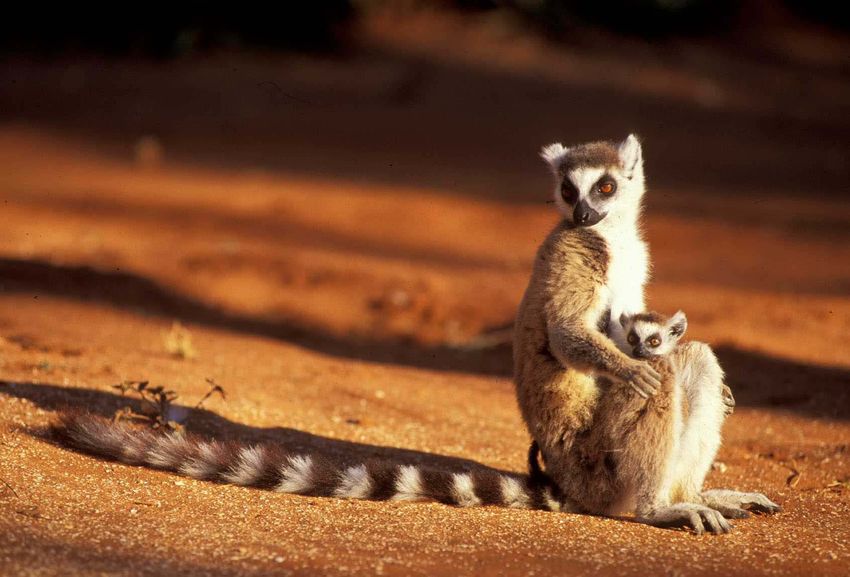
Cover Photo:
© WWF-Canon / Kevin SCHAFER
Ring-Tailed Lemur
Lemur Catta
The Spiny Forest
MadagascarAcknowledgement The authors are grateful to the many individuals who contributed to preparation of this case study, with special thanks to WWF colleague Sarah Koteen.
Introduction

Recognized as a megadiversity country, nearly 98 percent of Madagascar’s land
mammals, 92 percent of its reptiles, and 80 percent of its plants are found
nowhere else on Earth. With 71% of the population living below the poverty line,
Madagascar is also one of the poorest countries in the world. Burdened with
high levels of external debt, Madagascar has limited domestic resources to
counter the environmental degradation caused by excessive reliance on
agriculture and increasing population pressures in rural areas.

Madagascar is one of only a few countries in the world that has had experience
with both commercial and bilateral debt-for-nature swaps and has also committed
to allocate a portion of Heavily Indebted Poor Country (HIPC) debt relief savings
to the environmental sector (Bolivia and Tanzania are others). In 2003, the
Government of Madagascar signed a debt swap agreement with the German
Government, which is expected to capitalize the new Madagascar Foundation for
Protected Areas and Biodiversity and provide support for the Association
Nationale pour la Gestion des Aires Protégées (ANGAP - Parcs Nationaux
Madagascar), Madagascar's National Association for the Management of
Protected Areas. This paper reviews Madagascar's experiences with debt-for-
nature swaps and focuses on current efforts to use a third debt relief tool which
integrates environmental priorities into Madagascar's Poverty Reduction Strategy
Paper (PRSP) through HIPC debt relief.

1. Early Experience with Debt-for-Nature Swaps

         1.1 Commercial Debt-for-Nature Swaps

Beginning in the 1980s, Madagascar's commercial debt was discounted in the
secondary market for commercial debt. In 1989, Madagascar became the first
country in Africa to negotiate a debt-for-nature swap.1 Based on their experience
with debt-for-nature swaps in Latin America, conservation organizations such as
Conservation International (CI), Missouri Botanical Garden and WWF were able
to introduce the debt-for-nature swap concept in Madagascar. Given the
importance of Madagascar's biodiversity, the Dutch International Cooperation
Agency (DGIS) and the U.S. Agency for International Development (USAID)
provided funds to purchase commercial debt from Madagascar's creditors and
Deutschebank also donated debt for a swap. The conservation organizations
negotiated the swaps with the assistance of financial intermediaries, such as
Bankers Trust and ING Bank, who arranged for purchase of the debt and

1 The first swap, agreed with WWF (with funding provided by WWF and USAID), financed a $2.1 million conservation
program in protected areas.

_____________________________________________________________________________
Madagascar's Experience Swapping Debt for the Environment                    4
facilitated its conversion with Madagascar's Central Bank (later the Ministry of
Finance).
From 1989-96, CI, Missouri Botanical Garden and WWF negotiated nine
commercial debt-for-nature swaps in Madagascar, which generated $11.7 million
in conservation funds (see Annex 1). The conservation organizations signed
debt-for-nature agreements with the Government of Madagascar that identified
the programs to be funded and the amount of debt eligible for conversion. For
example, in its first phase, the WWF Debt-for-Nature program trained over 320
nature protection agents, foresters who focused on involving communities in
forest management. A second complementary phase introduced Forest Support
Units, consisting of two specialized ingénieurs forestiers, to reinforce
participatory forestry management.2
As shown in Annex 2, these early swaps involved purchase of commercial debt
at 50% of face value. In exchange for cancellation of the debt, the Government
of Madagascar agreed to pay the equivalent of 100% of face value in Malagasy
francs. In 1994, the redemption price was reduced to 75% of face value of the
debt.
"There was an atmosphere of excitement at the time of the negotiation of Madagascar's
first debt-for-nature swap ― the first in Africa ― on all sides. Malagasy officials,
Congressmen, bankers involved in the transaction and conservation NGO representatives
alike were all in a state of complete enthusiasm and exhilaration. No major difficulties
were encountered when the swap was presented to the National Assembly. It may not be
as easy today to find opportunities for such debt swaps because of the nature and
structure of today's debts, but they should nonetheless be analyzed as serious
opportunities where they exist."
Léon Rajaobelina
Conservation International
1.2 Introduction of Bilateral Swaps
Paris Club. Since 1981, Madagascar has negotiated debt restructuring
agreements with the so-called "Paris Club" of bilateral creditors eleven times.
Beginning in 1997, Madagascar became eligible to negotiate swaps with bilateral
creditors based on the inclusion of a debt swap clause in its agreement with
Paris Club creditors.3 Madagascar's most recent agreement with the Paris Club,
dated March 7, 2001, provides debt reduction on "Cologne terms" of up to 90%
for eligible debt.
2 ARCADIS Euroconsult 2001.
3 See http://www.clubdeparis.org under Madagascar.
_____________________________________________________________________________
Madagascar's Experience Swapping Debt for the Environment 5Madagascar's Paris Club Debt Swap Clause
On a voluntary and bilateral basis, the Government of each creditor country or its appropriate
institutions may sell or exchange, in the framework of debt for nature, debt for aid, debt for
equity swaps or other local currency debt swaps:
(i) all Official Development Assistance (ODA) loans;
(ii) the amounts of other outstanding credits, loans and consolidations mentioned in paragraph
1 above, up to 20% of the amounts of outstanding credits as of December 31, 1994 or up to
an amount of SDR 20 million, whichever is higher.
Tany Meva. In 1996, USAID financed a debt relief operation for the Government
of Madagascar. USAID provided $30 million in non-project assistance to
Madagascar, of which $27 million was used to service external debt. In
exchange, the Government of Madagascar agreed to implement several new
programs, including the creation of a $12 million equivalent local currency
(Malagasy franc) endowment fund for the Foundation Malgache en
Environnement Tany Meva (Malagasy Environmental Foundation). One of the
prerequisites for the creation of Tany Meva was the passage of a new law on
foundations,4 which provided the legal framework for the Governments of
Madagascar and the United States to "found" Tany Meva. As Madagascar's first
environmental foundation, Tany Meva provides grants to local communities and
not-for-profit organizations.5
1.3 Lessons Learned from Early Swaps
Financial Management. These early debt-for-nature transactions were
negotiated during a period of high inflation in Madagascar. As a result, the
beneficiaries were all faced with the challenge of managing local currency
counterpart funds that were rapidly depreciating. Greater emphasis was placed
on ensuring that projects had the capacity to absorb funds on a timely basis. The
Government of Madagascar also authorized Tany Meva to invest a portion of its
local currency endowment funds offshore on an exceptional basis. The
Government sought to mitigate any potential inflationary impact of swaps on the
economy by limiting the total amount of counterpart funds available for swaps
during a given period.
4 Republic of Madagascar 1995. Law No. 95-028 relating to foundations.
5 Gaylord 2003.
_____________________________________________________________________________
Madagascar's Experience Swapping Debt for the Environment 6Grants Management. Since its creation in 1996, Tany Meva's grants program
has primarily financed small grants (less than $10,000) for a period of one year.
A recent evaluation of Tany Meva's grants program found that the broad
biodiversity objectives funded by Tany Meva's grants program made it difficult to
measure program impact. In addition, the short-term nature of its grants limited
the sustainability of Tany Meva's grants program. Grant management
procedures were also cumbersome, resulting in delays in disbursement. As a
result of the evaluation, Tany Meva is now in the process of adopting a program
approach with targeted thematic and geographical priorities for its grants
program. To increase its program impact, Tany Meva will also disburse
$1,000,000 each year instead of the $600,000 disbursed in previous years.
Grants management procedures will also be streamlined.6
2. Debt Relief Mechanisms in the 21st Century
2.1 Selection of Debt Relief Mechanisms
Although Madagascar’s environmental sector has benefited from significant
foreign donor assistance over the past ten years, financial assistance remains
insufficient to support operational costs for Madagascar’s existing protected
areas network, much less finance conservation of the 90 percent of the country’s
forests (7 million hectares) existing outside of the national protected areas
network. In 2000, a Sustainable Financing Commission was set up to design a
sustainable financing strategy for Madagascar's third Environmental Program
(EP3) under the country's 15-year National Environmental Action Plan (NEAP),
the first of its kind in Africa. Composed of both governmental and non-
governmental members, the Commission developed its strategy through
feasibility studies, learning about experiences in other countries through a study
tour to Brazil, Costa Rica, Mexico and the USA, as well as reaching out to
sustainable financing experts through an international symposium. The
Commission identified both bilateral debt swaps and HIPC debt relief as two
promising financing mechanisms that were both feasible to implement and could
result in substantial funding for the environmental sector. It also recommended
the creation of a trust fund for protected areas and biodiversity as an "anchor" for
the sustainable financing strategy and the most effective way to manage funding
generated through debt relief and other financing mechanisms.
2.2. Heavily Indebted Poor Country (HIPC) Debt Relief
Madagascar is one of over 40 countries to benefit from the HIPC initiative.
Launched in 1996, by the International Monetary Fund (IMF) and the World
6 Andriamahenina 2003.
_____________________________________________________________________________
Madagascar's Experience Swapping Debt for the Environment 7Bank, the HIPC initiative is the first comprehensive effort to eliminate unsustainable debt owed by the world's poorest, most heavily indebted countries. In exchange for debt relief, debtor countries commit a portion of debt relief savings to priority programs for poverty alleviation as identified in the country's Poverty Reduction Strategy Paper (PRSP), a three-year strategy document aimed at integrating macroeconomic and sector strategies in achieving poverty reduction targets. The PRSP, which is prepared by countries in collaboration with the IMF and the World Bank, incorporates contributions from civil society as well as donors and government ministries. The environment is considered to be a crosscutting theme in poverty reduction strategies. 7 Madagascar was declared eligible for HIPC in 2000 and projected to receive the equivalent of $62 million annually in debt relief from bilateral and multilateral creditors.8 In its interim PRSP, the Government committed 10%, 10% and 8% each year for the first three years, for the environment, security and gender.9 This was projected to amount to an estimated $3 million per year for the environment, but it was never transformed into actual budgetary allocations. Madagascar's final PRSP, which was issued in July 2003, identifies environmental priorities and mainstreams the environment into sector policies, including energy, tourism and mining, which have important impacts on the environment.10 Among the priorities identified are: • environmental impact evaluations for all new projects • consolidation of the existing protected areas network • creation of new conservation sites and voluntary protected areas • sustainable management of coastal and marine ecosystems • sustainable financing for protected areas (trust fund, green taxes) • reforestation In 2003, for the first time, the Ministry of Environment, Water and Forests received 4 billion Malagasy francs (about $660,000) in HIPC debt relief budgetary allocations. Although this was less than half the Ministry's budget request of 9 billion Malagasy francs, the HIPC debt relief financing provides important support for local populations participating in reforestation and production of non-timber forest products, such as aromatic plants, medicinal plants and essential oils, as well as for environmental education activities.11 7 For more information on HIPC debt relief, see http://www.worldbank.org/hipc 8 World Bank 2000. 9 Republic of Madagascar 2000. 10 Republic of Madagascar 2003. 11 Republic of Madagascar, Ministry of Environment, Water and Forests 2003. _____________________________________________________________________________ Madagascar's Experience Swapping Debt for the Environment 8
Madagascar's Ministry of Economy, Finance and Budget has indicated that that it
will consider earmarking HIPC debt relief budgetary allocations for Madagascar's
protected areas through a capital contribution to the Madagascar Foundation for
Protected Areas and Biodiversity. The budget request will be submitted to the
Government in the form of a business plan to be prepared by the Trust Fund
Steering Committee (responsible for design of the new Foundation) in
collaboration with the Ministry of Environment, Water and Forests.

         2.3. Bilateral Debt Swap with Germany

Bilateral debt swaps continue to be of interest to the Government of Madagascar
for debt excluded from HIPC treatment. Since some bilateral creditors have
provided as a much as 100% debt relief for eligible debt under HIPC, there is
less incentive to participate in debt swaps for a large share of Madagascar's
bilateral debt. The German debt swap described below converted debt that was
excluded from HIPC treatment.

Under the April 2003 debt relief contract and special convention between the
Governments of Germany and Madagascar12, the Government of Germany
agreed to cancel Euro 23.3 million in exchange for the Government of
Madagascar paying Euro 13.8 million in counterpart funds over a twenty-year
period. The Government of Madagascar has committed to channel Euro 10.2
million through the Madagascar Foundation for Protected Areas and Biodiversity
with an initial capital contribution of Euro 1.7 million to be deposited by December
15, 2003, and Euro 425,000 to be paid in annual installments through 2023.
Madagascar's Ministry of Economy, Finance and Budget indicated that it is
prepared to pay debt swap proceeds in Euros. This funding is contingent on the
Madagascar Foundation being created with a management structure and
financial systems acceptable to the German Government. ANGAP will also
receive Euro 3.9 million in funding for designated protected areas.

3. Key Factors for Success

A number of factors have been critical for the successful introduction of debt
relief mechanisms in Madagascar, but the most important has been on-going
advocacy by the Ministry of Environment, Water and Forests, conservation
organizations and donors for the environment to be funded through debt relief
mechanisms.

12 Kreditanstalt für Wiederaufbau (KfW) and Republic of Madagascar 2003.

_____________________________________________________________________________
Madagascar's Experience Swapping Debt for the Environment                    9
3.1 Key Actors
The introduction of debt relief mechanisms in Madagascar has been feasible
because of the interest of key actors, including:
Government of Madagascar: Over many years of implementing debt-for-nature
swaps, the Government of Madagascar has demonstrated its willingness to
allocate budgetary resources for swaps, in spite of difficult economic conditions.
Government Ministries, such as the Ministry of Economy, Finance and Budget13
and the Ministry of Environment, Water and Forests, have also gained technical
expertise in implementing debt relief operations. Although the Ministry of
Environment, Water and Forests recognized the need to advocate for HIPC debt
relief allocations, early efforts to obtain budgetary allocations were hampered by
the limited capacity of Ministry staff to analyze poverty-environment linkages and
present them effectively through the budget cycle.
Creditors/Donors: Madagascar's creditors/donors have also supported debt
relief in exchange for the environment:
• The German Development Bank (KfW) not only negotiated the bilateral debt
swap, but has also provided technical assistance to the Trust Fund Steering
Committee.
• The World Bank has housed the Donor Group for Rural Development,
Environment and Food Security (see below), supported efforts to ensure
that the environment is fully integrated into Madagascar's PRSP, continues
to finance the Trust Fund Steering Committee and intends to channel some
of its EP3 funding through the new Foundation.
• USAID has financed sustainable financing initiatives, continues to support
Tany Meva and also intends to channel some of its EP3 funding through the
new Foundation to build its capacity.
Conservation NGOs: CI and WWF have played a key role in helping to
negotiate the bilateral swap and, along with the Government of Madagascar, will
be founders of the new Foundation that will manage debt swap proceeds. Since
both organizations have representatives with economic policy backgrounds14,
they are well placed to participate in the policy dialogue on Madagascar's Poverty
Reduction Strategy and have made specific recommendations regarding
environmental priorities and targets for the PRSP.
13 Note that the Central Bank was originally in charge of negotiating debt swaps.
14 For example, CI's representative was the first Governor of Madagascar's Central Bank, and also Minister of Finance.
_____________________________________________________________________________
Madagascar's Experience Swapping Debt for the Environment 103.2. Strategic Partnerships
The Donor Group for Rural Development, Environment and Food Security has
proven to be an effective means of exchange among donors and international
conservation NGOs, and was the first forum where the issue of integrating the
environment into Madagascar's PRSP was discussed.15 As described above, the
Sustainable Financing Commission played a key role in identifying debt relief
mechanisms. The Trust Fund Steering Committee has followed up on many of
the recommendations of the Commission.
3.3. Policy Environment
The link between debt relief and the environment has long been recognized in
Madagascar because of the early experience with debt-for-nature swaps. As a
result, it has been relatively easy to convince the Government of Madagascar to
support debt relief mechanisms compared to other countries without this
experience. This has been reinforced by the Government's strong commitment
to the environmental sector, although competing demands from other priority
sectors, such as education, health, infrastructure and justice, have limited funds
available for debt-for-nature. The political crisis in 2002, following the December
16, 2001 presidential election, delayed the implementation of debt relief
mechanisms and further constrained fiscal resources available for the
environmental sector.
The preparation of Madagascar's third Environmental Program (EP3) is currently
driving donor and government programs for the environment. As a result, debt-
for-nature initiatives reflect EP3 priorities and strategies for implementation. At
the World Parks Congress, President Marc Ravalomanana announced his
Government's commitment to triple the island's protected area coverage,
increasing the size of the network to 6 million hectares of forests, wetlands and
marine areas under formal protection in the next five years.16 This renewed
Government commitment reinforces the need for sustainable financing for both
existing protected areas and new protected areas and conservation sites.
3.4. Outside Assistance
Poverty-Environment Linkages. In a desk review of PRSPs, Madagascar
ranked 12th among 40 countries that had drafted PRSPs (mostly interim), with a
score of 1.1 out of 3.17 Although Madagascar scored relatively well on its interim
15 Keck 2003. For more information, see the website for the Secrétariat Multi-Bailleurs: http://www.smbmada.net
16 WWF 2003.
17 Bojö and Chandra Reddy 2002.
_____________________________________________________________________________
Madagascar's Experience Swapping Debt for the Environment 11PRSP, the study concluded that most countries had not yet fully developed
environmental priorities, targets and indicators in their PRSPs. This was the case
with Madagascar's interim PRSP, although much progress has been made in the
final PRSP.
In Madagascar, outside assistance was critical in analyzing the link between
poverty and the environment, including:
• The International Resources Group (IRG) PAGE project (funded by USAID)
analyzed forestry-poverty linkages, providing input for the interim PRSP.18
• Recommendations from a World Bank evaluation of the environmental
dimensions of Madagascar's interim PRSP led to renewed consultations on
environmental aspects of the PRSP.19
• WWF's Macroeconomics Policy Office (MPO) analyzed the root causes of
biodiversity loss in Madagascar.20
3.5. Sharing Benefits
Although the global biodiversity value of Madagascar's natural resources is
universally recognized, the domestic case for investment in protected areas has
only recently been made. As part of preparation for EP3, the Agence française
de développement (AFD) and the World Bank commissioned an economic
analysis that showed that investment in the protected areas network is
economically justified in Madagascar based on ecotourism and hydrological
services benefits.21 Ten protected areas offer ecotourism benefits and twenty
protected areas provide hydrological services, including irrigation and potable
water. As a result, it was demonstrated that increased investment in protected
areas could contribute to poverty alleviation in Madagascar. The analysis
showed similar results for the creation of conservation sites managed by the
Ministry of Environment, Water and Forests, and added the potential benefit of
carbon sequestration through forest restoration.
18 Winterbottom 2001.
19 N’Guessan 2002.
20 Montayne 2002.
21 Carret and Loyer 2003.
_____________________________________________________________________________
Madagascar's Experience Swapping Debt for the Environment 124. Recommendations Some of the lessons learned from the early swaps have been applied in designing the German bilateral debt swap and HIPC debt relief operations. In pursuing future debt relief mechanisms, it is recommended that: 1. Debt-for-nature swaps and HIPC debt relief for the environment are sustainable financing options for countries with high levels of debt, and should be considered systematically in implementing a sustainable financing strategy for the environmental sector. 2. Environmental actors can work effectively together through coordination mechanisms like Madagascar’s donor group and the Sustainable Financing Commission to advocate for debt relief for the environment. 3. Environment actors need to be more involved in financial issues, and interact with financial and planning ministries on an on-going basis regarding fiscal aspects of the environmental sector, including the sector’s potential contribution to economic growth and poverty alleviation. 4. Program objectives for debt relief operations need to be focused, with performance-based indicators clearly identified from the beginning. 5. Financial management for debt swap proceeds should reflect best practice international standards for fund management, including grants management, accounting and asset management. _____________________________________________________________________________ Madagascar's Experience Swapping Debt for the Environment 13
5. Further Information

For further information about this case study and debt relief mechanisms, please
contact:

Jean-Paul Paddack
Regional Representative
WWF Madagascar and West Indian Ocean Programme Office
B.P. 738
101 - Antananarivo, Madagascar
Tel: (261) 20 22 348 85
Fax: (261) 20 22 348 88
E-mail: jppaddack@wwf.mg
http://www.panda.org

Melissa Moye
Director
Center for Conservation Finance
World Wildlife Fund
1250 24th St., NW
Washington, DC 20016, USA
Tel: (202) 778-9678
Fax: (707) 313-2853
E-mail: melissa.moye@wwfus.org
http://www.worldwildlife.org/conservationfinance

_____________________________________________________________________________
Madagascar's Experience Swapping Debt for the Environment                   14
Documents and Individuals Consulted

Andriamahenina, Fenosoa. 2003. Tany Meva, Interview, Antananarivo, October
21.

ARCADIS Euroconsult. 2001. Mid-Term Review Mission, Debt-for-Nature
Swap/Forestry Support Unit Project Madagascar. Final Report. Arnhem, July.

Bojö, Jan, and Rama Chandra Reddy. 2002. Poverty Reduction Strategies
and Environment, A Review of 40 Interim and Full Poverty Reduction
Strategy Papers. World Bank, Washington, DC. Environment Department
Paper No. 86, Environmental Economics Series, June.

Carret, Jean-Christophe, and Denis Loyer. 2003. Comment financer
durablement le réseau d'aires protégées terrestres á Madagascar? Apport
de l'analyse économique. Agence française de développement and World
Bank.

Gaylord, Lisa. 2003. USAID, Interview, Antananarivo, October 23.

Guerin-McManus, Marianne. 2003. Conservation International. E-mail
communications, November.

International Monetary Fund and the International Development Association.
2002. Madagascar: Joint Staff Assessment of Poverty Reduction Strategy
Paper Preparation Status Report. Washington, DC, December 6.

Keck, Andy. 2003. International Resources Group, Washington, DC, Interview,
April 18.

Lowery, Porter P. and Christian Camara. 2003. Missouri Botanical Garden, E-
mail communications, November.

Kreditanstalt für Wiederaufbau (KfW) and Republic of Madagascar. 2003.
Contrat de Remise de la Dette. April 16.

Kreditanstalt für Wiederaufbau (KfW) and Republic of Madagascar. 2003.
Convention Spéciale. April 16.

Montayne, Dawn. 2001. Root Causes Analysis, Spiny Forest Ecoregion.
WWF Macroeconomics Policy Unit, Washington, DC, April.

N’Guessan, MGbra. 2002. Intégration des dimensions environnmentales
dans le Document de Stratégie de Réduction de la Pauvreté de
Madagascar. World Bank Mission Report, June 11-28.
_____________________________________________________________________________
Madagascar's Experience Swapping Debt for the Environment                   15
Rabesahala, Henri. 2003. Steering Committee for Foundation for Protected
Areas and Biodiversity, Interview, Antananarivo, October 23.

Rakotoarimanana, Erich Albert. 2003. Ministry of Environment, Water and
Forests, Interview, Antananarivo, October 21.

Rakotobe, Tovondriaka. 2001. Gestion durable des ressources naturelles et
réduction de la pauvreté. Document établi dans le cadre de la préparation du
PEIII. Office Nationale de l'Environnement, Antananarivo.

Rajaobelina, Léon. 2003. Conservation International, Telephone Interview,
November.

Republic of Madagascar. 1995. Law No. 95-028 on foundations. Antananarivo.

Republic of Madagascar. 2000. Interim Poverty Reduction Strategy.
Antananarivo, November 20.

Republic of Madagascar, Ministry of Environment, Water and Forests. 2003.
Requête de Financement IPPTE. Antananarivo, March 2.

Republic of Madagascar. 2003. Document de Stratégie de Réduction de la
Pauvreté. Antananarivo, July.

Van Nieuwkoop, Martien. 2003. World Bank, Interview, Antananarivo, October
25.

Winterbottom, Robert. 2001. Reflections on Improving the Management of
Forest Resources in Madagascar. International Resources Group,
Washington, DC. Prepared for USAID-Madagascar.

World Bank. 2000. World Bank and IMF Support Debt Relief for
Madagascar. Washington, DC, Press Release, December 22.

WWF. 2003. Commercial Debt-for-Nature Swaps. Center for Conservation
Finance, Washington, DC. http://www.worldwildlife.org/conservationfinance

WWF Conservation Strategies Unit. 2002. Mapping the Connections: Poverty-
Environment Lessons from Madagascar. Washington, DC.

WWF. 2003. Madagascar commits to triple the size of the island's network
of Protected Areas. Gifts to the Earth #92, September 16.
http://www.panda.org/gtte

_____________________________________________________________________________
Madagascar's Experience Swapping Debt for the Environment                   16
Annex 1

                                    Madagascar Commercial Debt-for-Nature Swaps

  Date         Purchaser/Donor          Face Value        Purchase     Conservation                        Purpose
                                          of Debt           Price         Funds
                                                                                      First debt-for-nature swap in Africa. WWF Debt-
 7/17/89       WWF ($250,000)           $2,111,112        $950,000      $2,111,112    for-Nature program: three-year conservation
               USAID ($700,000)                                                       program in protected areas: Andringitra, Marojejy,
                                                                                      Mandena. Training and equipment for 400
                                                                                      employees of the Ministry of Water and Forests to
                                                                                      act as "nature protection agents"
                                                                                      WWF Debt-for-Nature program: Andringitra,
 8/21/90             WWF                 $919,364         $445,891       $919,364     Marojejy, Mandena.

Exchange                              includes interest
Agreement
                                                                                      COEFOR - project to improve national natural
  1/91                CI                 $119,000          $59,000       $119,000     forest management systems - resulted in first
                                                                                      national map of Madagascar's forest estate.
                    UNDP                                                              Zahamena reserve - base-line surveys of socio-
                                                                                      economic conditions in project development
                                                                                      planning.
                                                                                      2 transactions. Missouri Botanical Garden
 3/8/93        Missouri Botanical        $725,000         $362,500       $725,000     Research and Conservation Program, including
                    Garden                                                            support for capacity building of national botanical
                                                                                      institutions, training programs for Malagasy
                                                                                      students and technical personnel, botanical
                                                                                      research and inventories.
                                                                                      Administered by Activity Continuation Trust
  10/93               CI                $3,200,000        $1,500,000    $3,200,000    (ACT). Zahamena reserve

                    USAID

                                        $1,867,500        $909,412      $1,867,500    2 transactions. Support for local communities in
10/13/93             WWF                                                              forestry activities. Training and support for village
                                                                                      groups, nature protection agents and foresters.
                    USAID                                                             Creation of Directorate of Environment and
                                                                                      Forests (DEF) technical teams to manage specific
                                                                                      natural forests and DEF Coordination Unit.
                                                                                      Beza Mahafaly 5-year project, including salaries,
 4/29/94             WWF                $1,340,469           $0         $1,072,376    site up-keep, construction, local development
                                                                                      projects, training for villagers and foresters,
               Deutschebank debt                                                      research (80%). WWF Representation (20%).
                    donation
                                                                                      Administered by Activity Continuation Trust
  5/94                CI                 $200,000          $50,000       $160,000     (ACT). Zahamena reserve

                                                                                      Forestry support unit 8-year project. Training for
 2/13/96             WWF                $2,000,000           N/A        $1,500,000    foresters for improved management of Malagasy
                                                                                      humid forest. Support for villagers to manage
               DGIS (Netherlands                                                      forests. Forest sites: Tsitongambarika,
                 Development                                                          Tolongoina, Andravory, Antsiraka, Ankarahaka,
                 Cooperation)                                                         Vondrozo
 TOTAL                                 $12,482,445                     $11,674,352

            Sources: CI, Missouri Botanical Garden, WWF. Summarized from WWF Center for Conservation
            Finance. 2003. Commercial Debt-for-Nature Swaps. www.worldwildlife.org/conservationfinance

            _____________________________________________________________________________
            Madagascar's Experience Swapping Debt for the Environment                   17
Annex 2: Commercial Debt-for-Nature Swap Transaction in Madagascar
Assumptions
• Madagascar Commercial Debt Trading at 50% of Face Value
• Redemption Rate in local currency = 75%
• Counterpart payment made in Malagasy francs (FMG)
$2mm Debt
Presented to
$1mm Central Bank
Donor of Funds to Conservation for cancellation Republic of
Purchase Organization Madagascar
Sovereign Debt
$1mm $2mm Face $1.5mm
(50% of Value of (75% of Face
Face Value) Debt Value)
Local
Creditor Conservation
Projects
Result: $1mm Donation generates $1.5mm in Conservation Funding
_____________________________________________________________________________
Madagascar's Experience Swapping Debt for the Environment 18World Wildlife Fund WWF Madagascar and West Indian Ocean Programme 1250 24th Street, NW B.P. 738 Washington, DC 20037 101 – Antananarivo USA Madagascar Tel: 202-293-4800 Tel: (202) 22 348 85 Fax: 202-293-9211 Fax: (261) 20 22 348 88 www.worldwildlife.org www.panda.org WWF’s mission is the conservation of nature. Using the best available scientific knowledge and advancing that knowledge where we can, we work to preserve the diversity and abundance of life on Earth and the health of ecological systems by • protecting natural areas and wild populations of plants and animals, including endangered species; • promoting sustainable approaches to the use of renewable natural resources; and • promoting more efficient use of resources and energy and the maximum reduction of pollution. We are committed to reversing the degradation of our planet’s natural environment and to building a future in which human needs are met in harmony with nature. We recognize the critical relevance of human numbers, poverty, and consumption patterns to meeting these goals. © 2003 WWF. All rights reserved by World Wildlife Fund, Inc. Logo © 1986, WWF - known internationally as the World Wide Fund for Nature, ® Registered Trademark owner. Printed on recycled, recyclable paper, using soy-based ink.
You can also read


