Technical and Business Alignment Workshop for Confluence and Jira - Understand your Jobs to be Done to drive adoption and utilization
←
→
Page content transcription
If your browser does not render page correctly, please read the page content below

Technical and Business Alignment
Workshop for Confluence and Jira
Understand your Jobs to be Done to drive adoption and utilization
Adoption Workshop                                                                                     2

      Introduction
      As every technical stakeholder knows, successful software adoption depends on proper
      alignment between the tool and task at hand, and clarity about the jobs that need to be
      done.

      While that sounds simple enough, many business stakeholders often fall short of success.
      They lack the needed guidance to get the most from tools and technologies they use such
      as Confluence and Jira. Our adoption/utilization workshop was specifically created to
      address that gap.

      This step-by-step guide will empower your team to exceed expectations and get the most
      out of Confluence or Jira while reducing adoption risk, by aligning four key actions:

      •   Agree on the use case, its participants and their responsibilities

      •   Capture the Jobs to be Done for the use case to succeed

      •   Map those Jobs to be Done to the capabilities of the apps

      •   Identify gaps and determine needed additional capabilities/add-ons

      Do this and you’ll come away with a clearer picture of what success means for your end
      users. You’ll also gain greater clarity in how Confluence and Jira can support your product’s
      success.

      If questions arise along the way, remember the ServiceRocket team is here to help. After
      all, it’s our mission to enable millions of heroes, just like you.

      Let’s get started!

www.servicerocket.com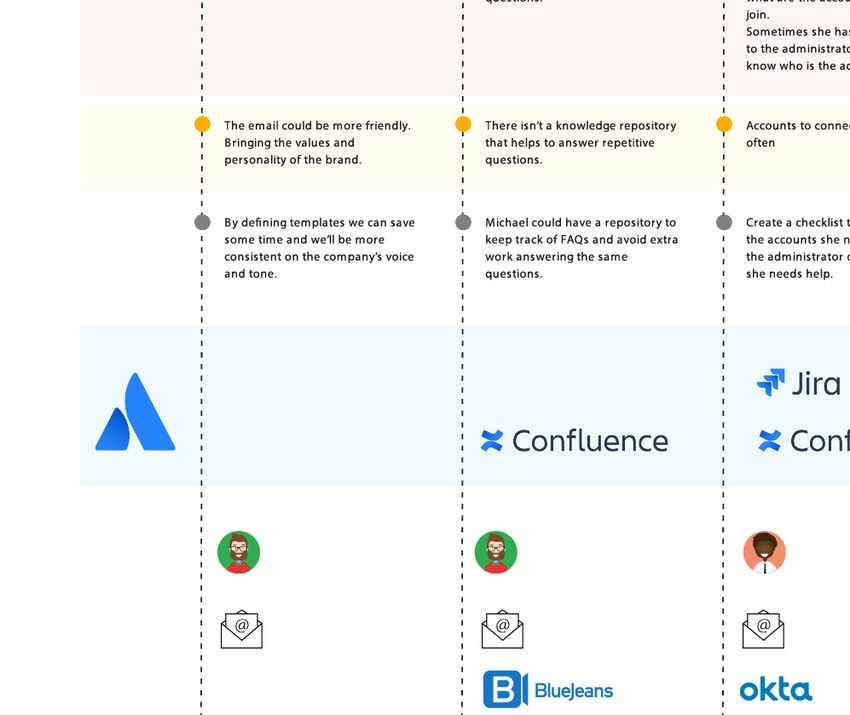
GUIDEBOOK

www.servicerocket.com

Adoption Workshop                                                                                   4

      STEP 1: Getting Started

      Define your Use Case

      Before you gather people together for your workshop, you’ll want to identify a specific use
      case that could benefit from some analysis, and ultimately, from better app usage. What is
      it that you want to improve?

      For example, your use case might be to maintain:

      •   The workflow of customer enhancement requests between Sales and Engineering
      •   A customer directory with contact info and service preferences
      •   A product catalog with descriptions and authorized partner discounts

      For our example in this document, we’ll use a product catalog for Confluence use case.

      Once you’ve captured your workflow, create a brief description that captures what the
      business will gain from this use case. These are your outcomes.

www.servicerocket.com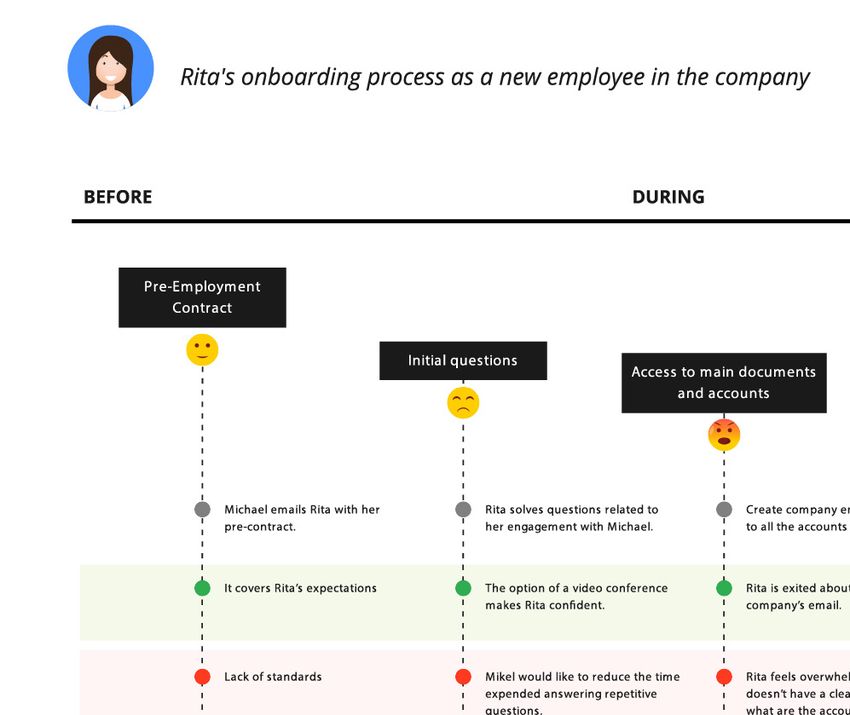
Adoption Workshop                                                                                      5

      Identify your Participants

      Once you know your use case, turn your focus to who to invite. Which of your colleagues
      should you attend the workshop? Select people who represent important personas/roles
      in your use case and who play a significant part in the use case workflow.

      Sharing your use case summary in the invite and any assumptions you have about their
      role in its workflow is a great way to kick things off and get them thinking about the task at
      hand. Of course, you can also reiterate it at the start of the session to help focus your time
      together.

www.servicerocket.com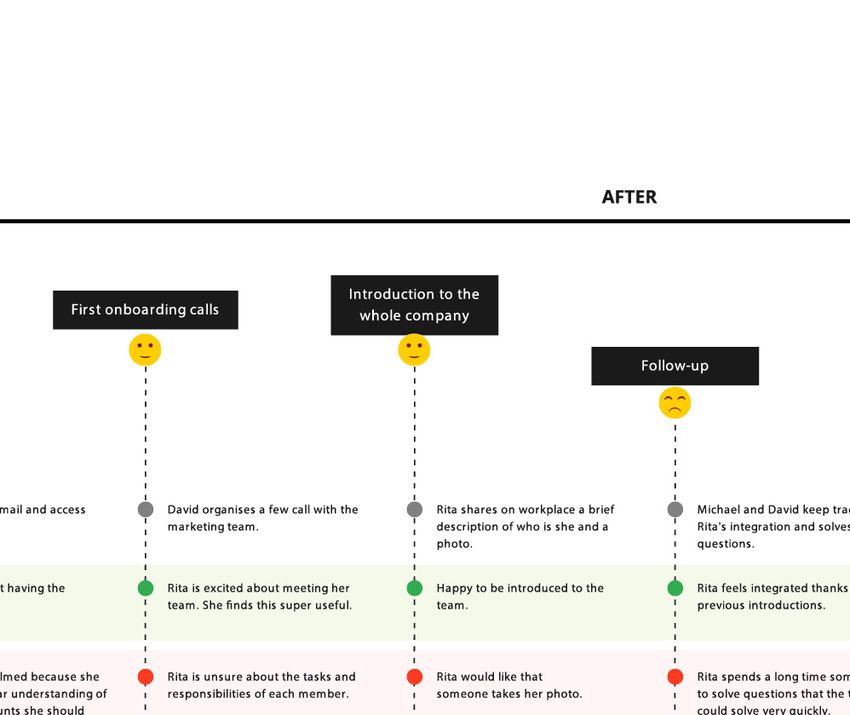
Adoption Workshop                                                                                  6

      Workshop Supplies and Preparation

      Here’s what you’ll need:
      •   Large index cards
      •   Sticky notes
      •   Sticky dots
      •   Persona stickers
      •   Plenty of markers and pens
      •   Tape (have more than one on hand)
      •   A white board or other surface to organize your cards and sticky notes
      •   Pizza and soda (optional)

      Time Check: Optimally you’ll want to allocate a minimum of one hour for your workshop.
      Alternatively, you can divide the workshop into two sessions. Groups that have worked
      together before can make a great deal of progress in 90 minutes. If possible, we recommend
      scheduling a two-hour block of time for this Job to be Done.

www.servicerocket.com
Adoption Workshop                                                                                        7

      STEP 2: Workshop People First

      In this part of the workshop, you want to focus on your participants. They are the source
      of its success.

      In your introduction, confirm the use case that you are focused on and its broad goals. Get
      everyone’s buy-in, as it will provide a consensus as you work through the workshop.

                 Hint: Many opportunities for improvement will be uncovered in your discussions.
                 Not all of them will involve your use case. To keep things focused, let everyone know
                 you’re taking notes so their ideas won’t be lost, as you steer the conversation back
                 to the core use case.

      Personas
      The first interactive activity to have participants fill out is a persona index card. It should
      include their name and role. If possible, provide them with persona stickers to add to their
      card and ask them to add a fun fact about themselves.

                 Hint: You can ask them to do this as they arrive while you’re waiting to start the
                 meeting. Alternately, you can create a persona form in advance that lets people self-
                 select their personas.

www.servicerocket.com
Adoption Workshop                                                                              8

      In our sample below, the persona cards are based on maintaining a product catalog with
      product descriptions, pricing and discounts.

                        Name                                      Name

                        Role                                      Role

         Fun Fact                                    Fun Fact

                                            Name

                                            Role

                               Fun Fact

      Ask your participants to place their completed persona cards on the whiteboard.

www.servicerocket.com
Adoption Workshop                                                                                 9

      Responsibilities and Key Tasks

      Once the cards are assembled on your whiteboard, ask everyone to write down their
      primary responsibility and related key tasks on sticky notes.

      For example, our sample use case participants may say:

      Michael, our Product Manager:
      •   Responsibility: That salespeople and partners have access to accurate product
          descriptions
      •   Key Task: Regular updates of product and new product descriptions

      For Gillian, our Growth Manager:
      •   Responsibility: That salespeople and partners have access to accurate product pricing
      •   Key Task: Updating of product pricing

      For James, the Partner Manager:
      •   Responsibility: That salespeople and partners have access to their partner discounts
      •   Key Task: Ensuring that partners are seeing/getting the correct discounts

      Your participants will then place their sticky notes below their persona card.

www.servicerocket.com
Adoption Workshop                                                                                      10

                        Now, using additional sticky notes, ask them for more detail on the
                        tasks. For example:

                        •   Are there secondary tasks that support these tasks?
                        •   How does the work make you feel?
                        •   How often do you perform this function?
                        •   Is it complex or tedious?
                        •   What’s working well?
                        •   What happens if this doesn’t work well?
                        •   What unmet needs do you have?
                        •   What gaps or issues do you see?
                        •   Are there opportunities for improvement?

                        Have them add their notes below their persona card.

                 Hint: During preparation, print sticky labels that can be added to the sticky notes
                 for the question types: Frequency, Complex/Tedious, Feelings, Unmet Needs, When it
                 goes wrong, etc.

www.servicerocket.com
Adoption Workshop 11
COMPLEX / TEDIOUS
FREQUENCY FREQUENCY
FREQUENCY
FEELING WHEN IT DOES NOT WORK
COMPLEX / TEDIOUS
FREQUENCY
UNMET NEED
WHEN IT DOES NOT WORK
www.servicerocket.com
www.servicerocket.com
www.servicerocket.comAdoption Workshop 12
Identify What is most Important
Next, you’ll want to prioritize and order these notes with a round of voting. Using sticky
dots, ask participants to rank their tasks using one, two or three dots, with three being top
priority.
Once they’ve completed this task, take a few minutes
for discussion. Ask them to briefly explain their
rankings.
As the moderator, make a mental note of the key
ideas you’re hearing. For instance, what’s working and
what isn’t working so well? What values are emerging
from the discussion? What areas generate the greatest
complexity -- and what is their level of complexity?
These will be important considerations as you start to
identify how Confluence and/or Jira can improve the
process.
www.servicerocket.comAdoption Workshop 13
STEP 3: Workshop the Jobs To Be Done
Now that you’ve prioritized the use case tasks, let’s take a deeper look at the use case’s
workflow and requirements—the steps that are required to get these things done. This
information will help target problem areas and align them with the capabilities of apps
such as Confluence and Jira.
We’ll do this by asking participants to dive deeper into their prioritized tasks using the
following form. This form vertically breaks out this information by category starting with
the tasks. It horizontally breaks out the process as a beginning/middle/end sequence.
Beginning Middle End
Tasks
Actions
Requirements
Risks
Feeling/Thinking
Opportunities/Expectations
Tools
People
www.servicerocket.comAdoption Workshop 14
Ask your participants to map out their steps horizontally.
What are the high-level steps or sub-tasks required to
complete the job, from start to finish? How long does it
usually take? How often do you do it?
Ask them to go through all the steps identified. Define
what is happening in each of them, discuss the emotions
that people have along their journey. Are they happy or
frustrated? Note also who is involved in the process and
the tools they use. What are the opportunities to improve
the experience and make it more efficient?
Be sure to take time to define the business requirements
for each task. This information will be critical as you map
the technical requirements to the tools. These types of
business requirements are critical to understanding how
your team can get the most out of your Atlassian products.
Hint: In our example, James, the Partner Manager, needs to control who can see the
partner discounts, since this catalog is shared between internal sales people and
external partners. This suggested we’ll need an add-on to secure and encrypt some
of the information on the Confluence page.
www.servicerocket.comAdoption Workshop 15
Share the Knowledge and Wrap-up
When participants are done adding sticky notes to the board
or completing the worksheet, ask them to present their results
to the entire group. This will organically lead to clarifications as
other participants make comments and ask questions. This is
one of the most rewarding parts of the workshop.
Your participants have just provided you with a clear outline of
what they need to accomplish. Now you know their Jobs to be
Done. Take a few minutes to summarize what you have learned
and the process you will follow next to put this information to
work. (See the conclusion for more details).
www.servicerocket.comAdoption Workshop 16
STEP 4: Identify the Gaps and Needed
Functionality
Now it’s time to organize and consolidate the information you’ve gathered. This process
will allow you to align Confluence and Jira with the requirements and characteristics of your
business stakeholders’ Jobs to be Done.
So what should you know after this workshop? Let’s use a modified story model to capture
your top line:
As the technical stakeholder,
• responsible for the successful adoption and utilization of Confluence/Jira,
• my success depends on [name of key personas]
• accomplishing his/her specific Jobs to be Done
Now that you have that story, let’s create a story for each of your key personas. Here is an
example:
As the Partner Manager,
• responsible for our low-friction partner sales process,
• my success depends on our partners
• accessing product information and their distinct discounts quickly and securely
The last line of the story, which is the action line, should capture the key requirements,
concerns and opportunities for that persona.
With this information you (and your team) can quickly verify what your business stakeholders
need to accomplish and why. Additionally, this will help you frame how to design their use of
Confluence or Jira.
www.servicerocket.comAdoption Workshop 17
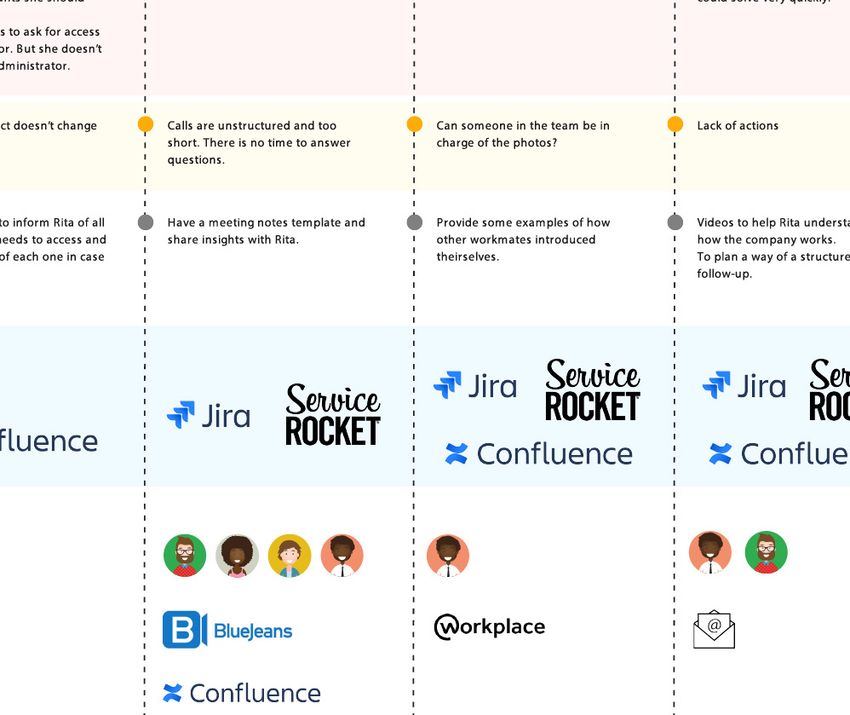
Now that you have the story and action line, we want to line up and compare this information
in a chart format. It should include:
• Jobs to be Done
• The emotion
• The story
• Key tasks
• Specific requirements
• Atlassian tools and add-ons
• Other technologies that are needed
HR Onboarding Workflow Example
www.servicerocket.comAdoption Workshop 18
Most of these items have been generated during the workshop
and are easy to paste into the form. The challenge here is to
evaluate all of these data points to determine how Confluence or
Jira can be best used to fulfill your participant’s needs.
In some cases, you will find gaps in capability, or determine that
the solution using Confluence or Jira natively could be made less
cumbersome with an add-on.
As we mentioned, James, the partner manager, has different
discounts available for various partners. Using Confluence, it is
possible to create a secure page for each partner, but that might
become hard to manage. In this case, the technical stakeholder
responsible for James’ success might recommend an add-on,
such as ServiceRocket’s Security and Encryption for Confluence,
to create password protected discounts.
The story-based analysis above will allow you to quickly
understand your business stakeholders’ goals and align the
capabilities you provide to their Jobs to be Done.
Hint: If you’re ambitious, we recommend doing a Problem Solution Fit model to
clearly identify your value proposition for each persona. This is the kind of work we
typically do in our ServiceRocket workshops. We’ve included an example of this with
our templates. Contact us if you are interested in some guidance from our expert
consultants.
www.servicerocket.comAdoption Workshop 19
Conclusion
We live in a very connected world. Fortunately, there are amazing modern
tools for communication and collaboration—Confluence and Jira from
Atlassian are two great examples. But more importantly, we live in a world
where each individuals’ success is connected more and more closely to the
success of others.
If your success depends on how well your Confluence/Jira users do at their
jobs, it’s well worth it to organize a workshop to understand what they need
to accomplish. Doing so will help you reference their Jobs to be Done and
consider their perspective, as you implement Confluence and Jira. Alignment
is key.
There are thousands of Confluence and Jira add-ons. There are even more
critical decisions that organizations like yours need to make to get the most
out of their investments and achieve their business objectives. We’d like to
help.
Whether you are a customer or not, ServiceRocket is a partner in your
business success. We see our mission as creating millions of heroes like you
-- individuals who exceed expectations and support a web of success in their
organizations. Reach out to us, and let’s explore your Jobs to be Done and
how we can help.
CONTACT US TODAY
www.servicerocket.comAbout ServiceRocket
ServiceRocket, the world’s premiere Atlassian Platinum Solutions Partner, provides the
services, training, and support to deliver superior value for every on-premise and cloud-
based Atlassian system. ServiceRocket’s global operations boast a team of experienced
certified consultants and engineers, available 24/7 worldwide customer support, and
a robust ecosystem of purpose-built applications designed to enhance the value and
utility of Atlassian solutions. Atlassian administrators, users, and power users from
thousands of leading worldwide organizations depend on ServiceRocket’s experienced
team of professionals to plan, design, implement, and support business-accelerating
solutions. Never Atlassian alone.
Learn more at atlassian.servicerocket.com.
Palo Alto, California, USA Santiago, Chile
ServiceRocket Inc ServiceRocket SpA
2741 Middlefield Road, Suite 200 Mariano Sanchez Fontecilla 310,
Palo Alto, CA, 94306 Office 4148
(888) 707-0088 Las Condes, Santiago
Sydney, Australia London, England
ServiceRocket Pty Ltd, Level 3 ServiceRocket Limited
17-19 Alberta Street 1st floor West Davidson House,
Sydney, NSW, 2000 Forbury Square, Reading
Australia Berkshire,
+61 2 9900 5700 +447848282125
Kuala Lumpur, Malaysia Singapore, Singapore
ServiceRocket Sdn Bhd ServiceRocket
Suite 3B-3A-3, Plaza Sentral, 80 Robinson Road, #02-00
Jalan Stesen Sentral 5, Singapore 068898
Kuala Lumpur Sentral, 50470
+603 2726 2300
The right partner can make all the difference.
You’ve got Atlassian. We’ve got your back.You can also read


