The BP Deepwater Horizon Disaster: An Overview of Immediate and Long-Term Legal and Environmental Consequences - Leake & Andersson
←
→
Page content transcription
If your browser does not render page correctly, please read the page content below
The BP Deepwater
  Horizon Disaster:
 An Overview of Immediate
     and Long-Term
 Legal and Environmental
      Consequences

   W. Paul Andersson, Esq.
   Edward T. Hayes, Esq.
          ALFA INTERNATIONAL
International Law Practice Group Seminar
    September, 2010--Paris, France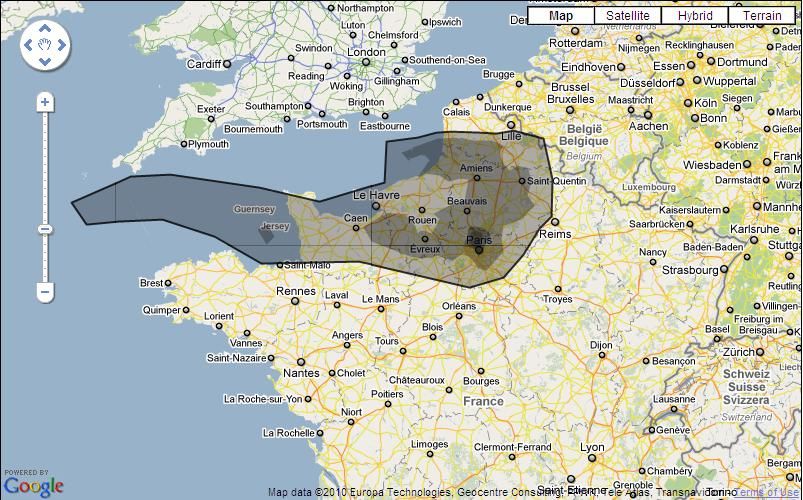
Fleet Specifications
The DEEPWATER HORIZON is a Reading & Bates
                                                       Classification         ABS
Falcon RBS8D design semi-submersible drilling unit
                                                       Flag                   Marshall Islands
capable of operating in harsh environments and water   Accommodation          130 berths
depths up to 8,000 ft (2.438m).                        Helideck               Rated for S61-N
                                                                              Helicopter
                                                       Moonpool               21ft x 91ft
                                                       Station Keeping        Dynamically Positioned
                                                       Max Drill Depth        30,000 ft / 9,144 m
                                                       Max Water Depth        8,000 ft / 2,438 m
                                                       Operating Conditions   Significant Wave: 29 ft;@
                                                                              10.1 sec; Wind: 60 knots;
                                                                              Current: 3.5 knots

                                                       Storm Conditions       Significant Wave: 41 ft @
                                                                              15 sec; Wind: 103 knots;
                                                                              Current: 3.5 knots
                                                       Rig Type               5th Generation
                                                                              Deepwater
                                                       Design                 Reading & Bates Falcon
                                                                              RBS-8D

                                                       Builder                Hyundai Heavy
                                                                              Industries Shipyard,
                                                                              Ulsan, South Korea
                                                       Year Built             2001
February, 2010
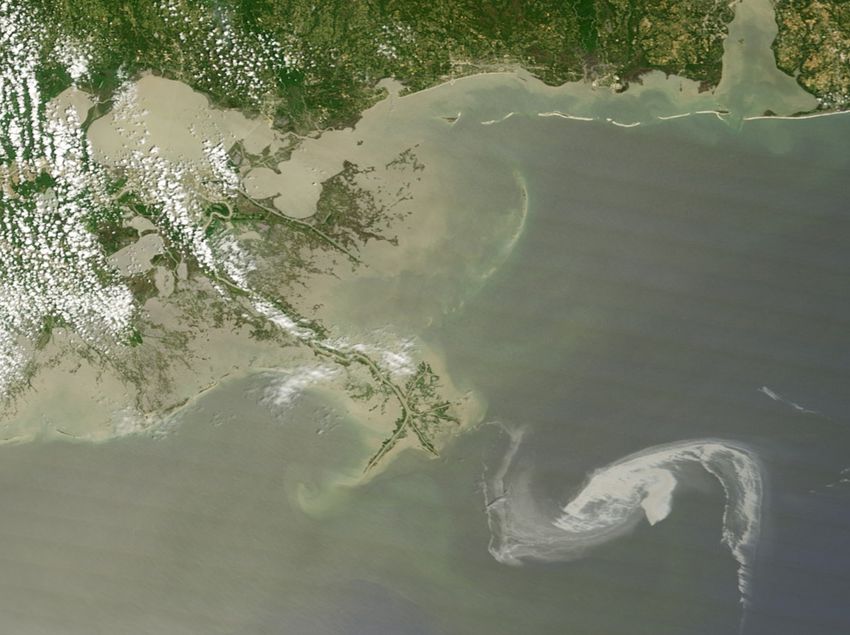
Drilling begins in the Macondo Prospect approximately 41 miles (66 km) southeast of Louisiana
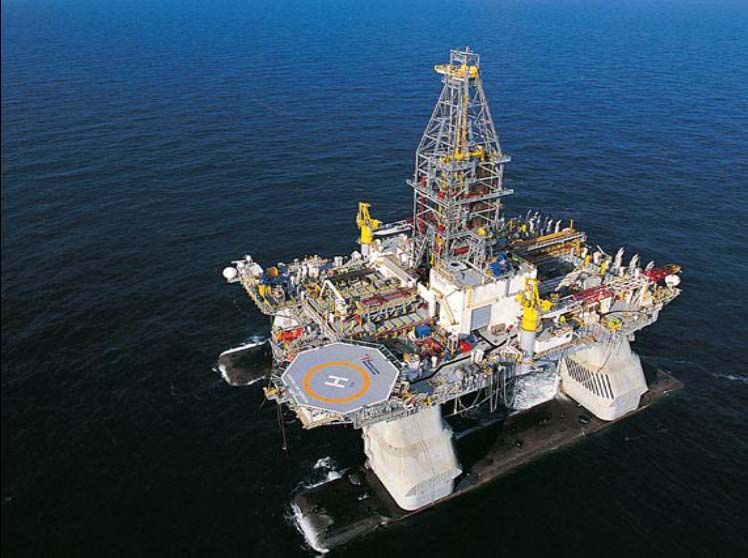
April 20, 2010
Explosion occurs, followed by fire and sinking of rig
126 Crew on board: 11 workers died, 4 critically injured, 111 workers rescued

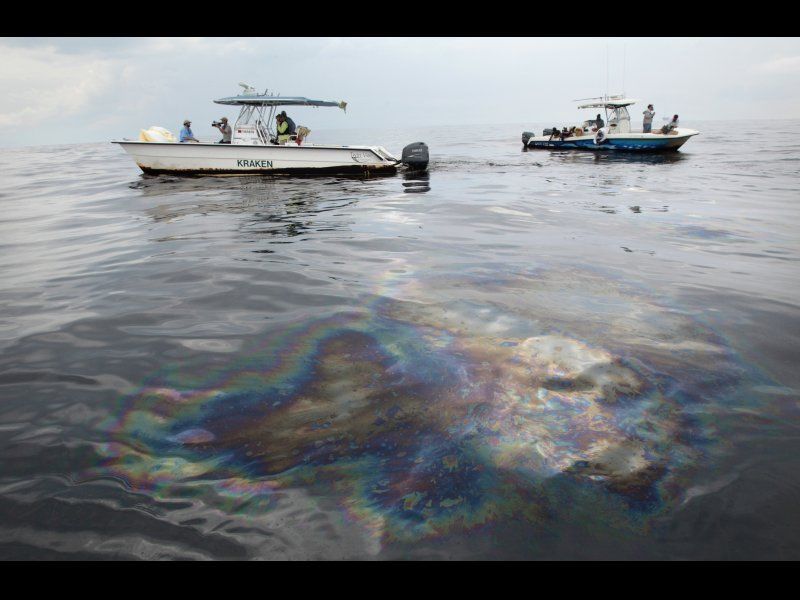
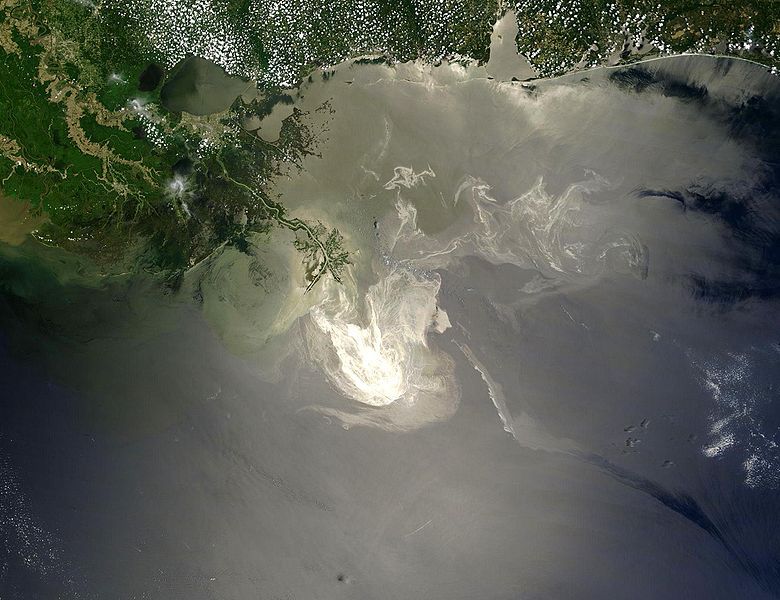
Steadily Increasing Flow of Oil Threatens Gulf Coast

April 24 - BP reports oil leaking at rate of 1,000 barrels (160 cubic metres) per day

April 28 - National Oceanic and Atmospheric Administration estimates oil leaking at rate of 5,000
    barrels (790 cubic metres) per day

April 30 - Oil first reaches land at Venice, Louisiana

May 27 –Oil leaking at estimated rate of 12,000 to 19,000 barrels (1,900 to 3,000 cubic metres) per
   day

June 10 – Oil leaking at estimated rate of 25,000 to 30,000 barrels (4,000 to 4,800 cubic metres) per
   day

June 15 – Oil leaking at estimated rate of 35,000 to 60,000 barrels (5,600 and 9,500 cubic metres)

July 15 – A cap is placed over the well, stopping the flow of oil for the first time

August 2 – Final estimate of oil leak: 4.9 million barrels
          – Per barrel fine under US law: USD$1,100.00: potential BP fine
          USD$5,390,000,000.00
          – Over 2 million gallons of chemical dispersant Corexit (banned in UK) used to dilute oil
Largest Oil Spills
- in millions of gallons
1. Kuwait (1991) 300mm
2. Gulf Coast Deepwater Horizon 205+mm
3. Mexico-Ixtoc (1979) 138mm
4. Trinidad (1979) 90mm
5. Uzbekistan (1994) 84mm
6. Persian Gulf (1983) 80mm
7. Angola (1991) 80mm
8. South Africa (1983) 79mm
9. France (1978) 69mm
Notable Absence??
. . . 34. Exxon Valdez (1989) 11mm9. Paris, France (1978) – 69mm gallons
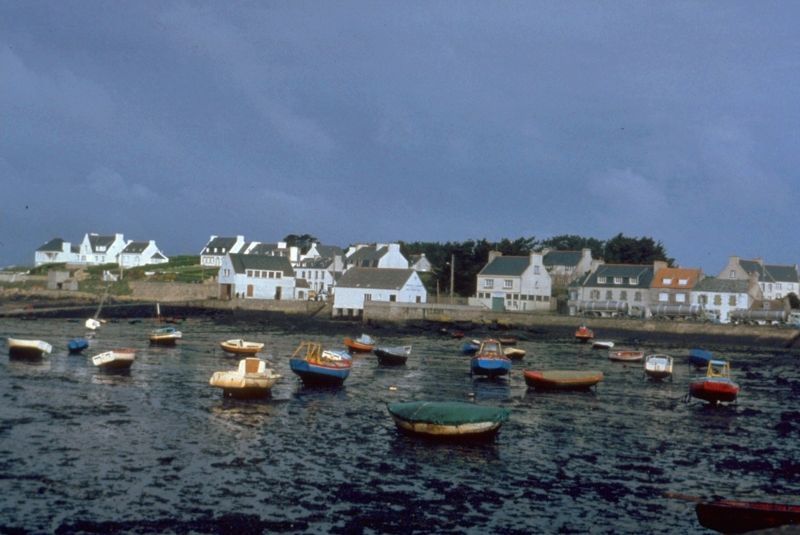
Amaco Cadiz tanker runs aground on Portsall Rocks near the coast of Brittany
Largest oil spill of its kind to that dateOiled beach in Brittany
View of BP oil slick transposed over Paris, France as of July 6, 2010
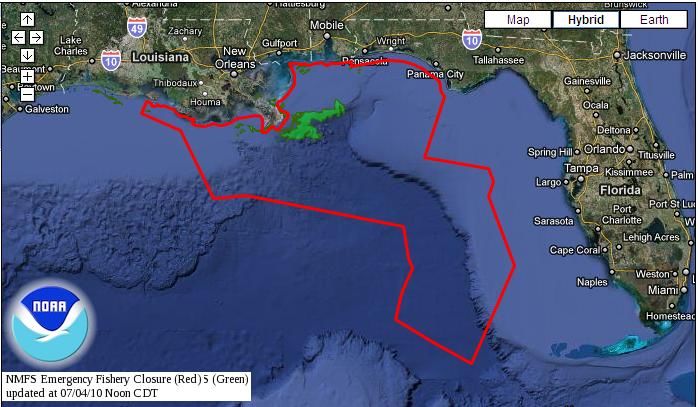
Fishing Closures (July 4, 2010)
US System for Regulation of Large-Scale
      Marine Environmental Disasters

Two primary statutory schemes and issues related to
  Deepwater Horizon:

1. Shipowner’s Limitation of Liability Act (1851)
   - 46 United States Code § 30501 et seq.
   - Pertains only to Personal Injury and Death Claims

2. Oil Pollution Act (1990)
   - 33 United States Code § 2701 et seq.
   - Pertains to Environmental Response and Economic
   Damage Claims
Shipowner’s Limitation of Liability Act
46 USC 30501 et seq.
• Enacted to promote maritime commerce by protecting shipowners
from unlimited liability associated with large losses
• Shipowner’s limitation laws date back to Middle Ages
• First codified by King Louis XIV in Marine Ordinance of 1681
• English Parliament enacted first statute in 1734 relieving shipowners
from liability for acts of master and crew to the extent of the value of
the ship, its equipment, and freight
• Early American courts did not recognize limitation and American
shipowners experienced a competitive disadvantage to their English
brethrenUS Shipowner’s Limitation of Liability
• US law enacted in 1851 to limit liability of the vessel owner for personal injury or
death claims to the value of the vessel and pending freight after the loss
• Limitation is granted if the shipowner proves that the loss occurred without his privity
or knowledge (Actual knowledge of events leading to loss)
• Deepwater Horizon is a VESSEL under the terms of the Act (self-propelled)
• May 13, 2010 – Transocean, owner and operator of Deepwater Horizon, files request
in US District Court in Houston, Texas to limit liability under the statute to USD$27
million, the value of the rig sitting on the ocean floor
– Value of rig prior to sinking was approx USD$650 million
• US Liability Act widely viewed as anachronistic and inequitable in modern day with
availability of marine insurance
• Two separate bills pending in US Congress (S3478 and H.R. 5503) to retroactively
repeal the Shipowner’s Limitation of Liability ActOil Pollution Act
33 U.S.C. § 2701 et seq.
• Prior to 1989, the US did not have comprehensive legislation
regarding oil pollution and oil disasters
• March 24, 1989: Exxon-Valdez disaster in Prince William Sound
• 11 million gallons of oil are spilled (205 million in Deepwater
Horizon)
• No overriding federal rules and regulations regarding
environmental response or payment of economic damages
• Under then existing maritime law, recovery for economic
damages limited to those who sustained property damage
• No recovery for lost profits or economic losses unless oil damaged
your property-Robins Dry Dock rule (275 U.S. 303 (1927))
• Exxon Valdez disaster highlighted the need for a federal
coordinated environmental response and economic loss
schemeOil Pollution Act – Liability
33 USC §2701 et seq.
• Establishes comprehensive scheme for reacting to and addressing large-scale oil related
environmental disasters
• BP Deepwater Horizon Disaster is first large-scale application of Oil Pollution Act
• Strict liability statute that imposes liability upon the “Responsible Party” for environmental clean-
up, remediation and economic losses
• Responsible Party is generally defined as the owner of the vessel, oil well, etc. that is the
source of the oil discharge
• Federal Government establishes and names the Responsible Party
• BP named responsible party in Deepwater Horizon incident
• Environmental Removal Costs and Damages
• Responsible Party liable for ALL removal costs and damages to natural resources, real
property
• Includes reimbursement to federal and state governments for their efforts
• Economic Damages
• Responsible Party liable for ALL Lost Profits and Loss of Earning Capacity for those who
depend upon the natural resource, including lost taxes and revenues suffered by
municipalities
• Statutorily abrogates the Robins Dry Dock rule (allows downstream businesses to receive
compensationOil Pollution Act – Liability
33 USC §2701 et seq.
• No punitive damages
• Exxon-Valdez litigation lasted nearly 20 years over issue of punitive damages
• Liability limited to the total of all environmental clean-up costs, plus $75,000,000
• Liability limit does not apply if the incident was proximately caused by
• acts of gross negligence or willful misconduct, or
• violation of Federal safety, construction, or operating regulation
• BP conceded it has excess liability in Deepwater Horizon
• Statute establishes a Claims Process to administer environmental and economic damage claims
• Responsible Party administers the process and all claims must first be presented to
Responsible Party before lawsuit
• BP handled the claims process initially but under severe criticism for low payments, process
turned over to Mr. Ken Feinberg (agent orange, 9/11, Virginia Tech)
• BP established USD$20billion fund for Mr. Feinberg to administerCurrent Status of BP Deepwater Horizon
• As of July 28, 2010 at least 300 federal lawsuits filed in 12 different states
– Almost all name BP, Halliburton, Transocean, and Cameron as defendants
• Examples of lawsuits:
– Wrongful death claims by families of rig workers
– Economic injury claims by fishermen, processors, docks, distributors,
wholesalers
– Personal injury claims by relief workers exposed to oil and dispersants
– Shareholder suits against BP for gross negligence and decrease in share value
– State and municipal pension funds with BP holdings claiming decreased value
– Restaurants, Bars, Hotels, Condo Owners, Tourist Attractions, Bait and Tackle
Shops
• All lawsuits consolidated into one proceeding before one judge in New Orleans under
rules of Multi District Litigation
• Open question whether claims settled in BP claims process will require release of all
parties that may have played a separate role in causing the accidentCurrent Status of BP Deepwater Horizon &
Federal Response
• US federal government imposed a deepwater drilling moratorium to study the causes of the
disaster
– 80 percent of offshore oil production comes from deep water off Louisiana
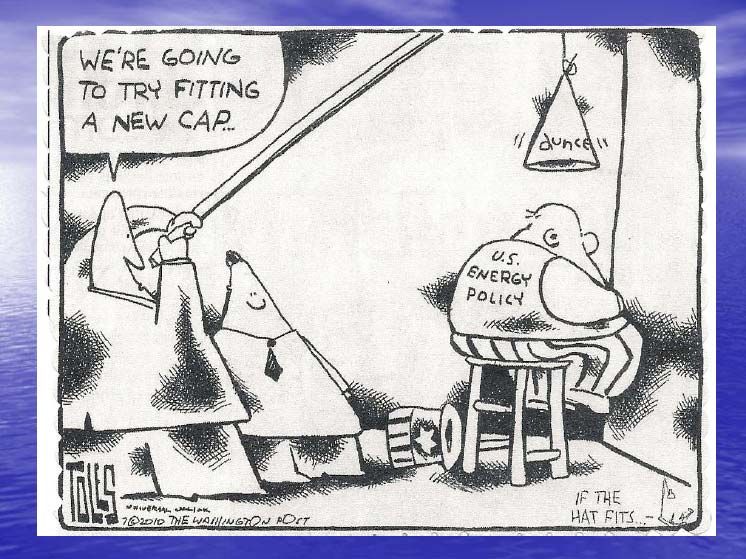
• President Obama has used disaster to emphasize need for comprehensive energy reform
• American Clean Energy and Security Act of 2009 (ACES)
– A cap-and-trade global warming reduction plan designed to reduce economy-wide
greenhouse gas emissions, compared to 2005 levels
– Requires 20 percent of electricity from renewable sources and increased energy efficiency by
2020
– Performance standards for new coal-fired power plants and increased research for nuclear
energy
• Current Status of ACES
– Passed House with minimum 219 votes (H.R. 2454)
– Stalled in Senate Committee on Environment and Public Works (S. 1733)EU System for Regulation of Large-Scale
Marine Environmental Disasters
• Environmental and economic issues largely reserved
to Member States
• EU maintains two primary programs for addressing
large-scale disasters
1. Community Civil Protection Mechanism
• Council Decision 2007/779/EC, Euratom of 8 November
2007
2. Convention for Protection of the Marine Environment of the
North-East Atlantic
• Created in 1972 and expanded in 1974, 1992 & 1998Community Civil Protection Mechanism
Council Decision 2007/779/EC
• Establishes a cooperation mechanism among Member States to “improve
coordination of civil protection assistance intervention in major
emergencies, including accidental marine pollution.”
• Any participating country inside or outside the EU can request assistance if
affected by a major disaster
– 30 states currently participate: EU-27, Iceland, Liechtenstein and
Norway
• Elements of Program
– European Commission establishes Monitoring and Information Centre
(MIC)
– European Commission assumes responsibility for managing and
mobilizing resources, intervention teams, and operations coordination (if
necessary)
– Member States identify teams available for intervention within 12 hours
following request, including experts and military resourcesCommunity Civil Protection Mechanism
Council Decision 2007/779/EC
History of Deployments:
1. September, 2005: Hurricane Katrina
– US sent formal request for aid, including first aid kits,
blankets, water trucks and 500,000 meals ready to eat
2. August, 2006: Conflict in Lebanon
– Response to oil spill off the coast of North Beirut and
Humanitarian assistance
3. January, 2010: Haiti Earthquake
– Water purification modules from France provide 20,000
litres of water per day
4. May, 2010: Poland Floods
– France, Germany and others provide high capacity pumps
to supplement national capabilitiesConvention for Protection of the Marine
Environment of the North-East Atlantic
• Regional Convention of 15 governments of Western
European Coast and EC to protect marine
environment of North-East Atlantic
• Began in 1972 with Oslo Convention against dumping
• Paris Convention 1974 broadens to include land based
sources and offshore industry (oil and gas)
• Two conventions updated and unified in 1992 OSPAR
convention
• New annex on biodiversity and ecosystems adopted in
1998 to cover non-polluting human activities that can affect
the sea
• Administered by OSPA Secretariat
• Central guiding feature is “Polluter Pays Principle”: Polluter
pays costs for environmental prevention, control and
reduction measures (OPA-Responsible Party)Where next?
• BP Deepwater Horizon disaster illustrates complex relationship
involving reliance on natural resources
– Necessity for deepwater exploration weighed against potential harmful
environmental consequences
– US legal structure applies mostly after the fact once disaster strikes
– US needs to focus more on prevention efforts (moratorium seeks to
address)
– US structure for post-disaster clean-up and compensation is good but
has systemic problems
• Liability limits
• Polluter as Responsible Party creates conflict of interest (want to limit
exposure and payments)
– EC structures for environmental response are good, but no European
structure in place to handle large-scale economic damages
• Could be too much for Member-States to handle
• EC should study OPA as applied in Deepwater Horizon for future effortsYou can also read


