The FAA Civil Aerospace Medical Institute...
←
→
Page content transcription
If your browser does not render page correctly, please read the page content below
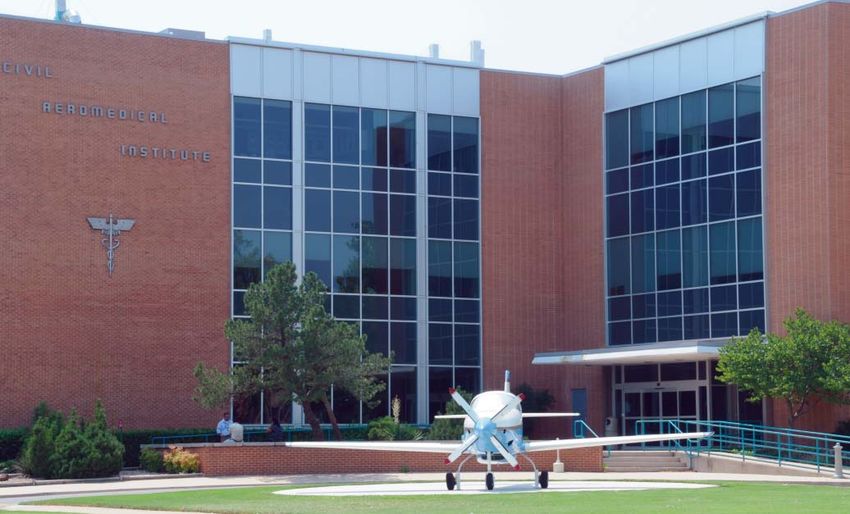
Welcome to
                       The FAA Civil Aerospace
                         Medical Institute...

The Civil Aerospace   CAMI                     is the medical
                                               certification, research,

Medical Institute     education, and occupational health wing of the
                      FAA’s Office of Aerospace Medicine. The goal of
                      our activities is to enhance aviation safety.
                           After America’s first successful flight in
                      1903, the first aviation fatality could not be far
                      off. Amazingly, five years would pass before the
                      first fatal accident. But since then, safety has
                      been an important concern. In 1926, the Civil
                      Aeronautics Act marshaled the talents of the
An International      medical profession to certify that all aviators are
Resource              physically fit to fly.
                           Thus, our principal concern at CAMI is
                      the human element in flight—pilots, flight
                      attendants, passengers, air traffic controllers—
                      and the entire human support system that
                      embraces civil aviation. We study the factors
                      that influence human performance in the
                      aerospace environment, find ways to understand
                      them, and communicate that understanding to
                      the aviation community.
                           The Institute’s people—researchers,
                      physicians and other medical specialists,
                      engineers, educators, pilots, technicians, and
                      communicators—all merged as a team in 1961
                      at our centralized Oklahoma City facility. Since
                      then, the CAMI team’s synergistic products
                      serve people everywhere as they safely and
                      routinely achieve one of the oldest of human
                      dreams: Flight!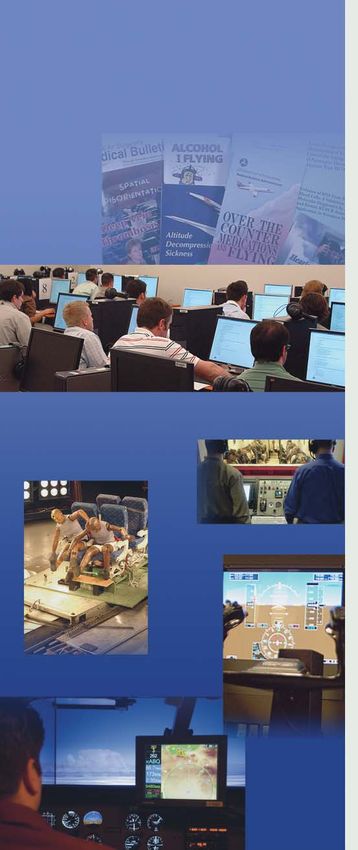
Aerospace Medical Certification

                                                             ince 1926, the Federal Aviation Administration
                                                         S   has developed and utilized health standards for
                                                         airmen to assure the safety of all who fly. By federal
                                                         law, all aviators must be medically certified. About
                                                         a half-million airman medical certificates are issued
                                                         each year on the basis of physical examinations, all of
                                                         which require prompt review by the Aerospace Medical
                                                         Certification Division’s staff.
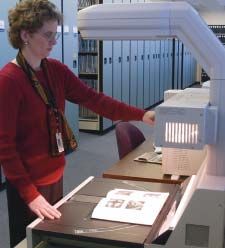
                                                               To manage this massive data influx, a new
                                                         Internet-based system was developed. Called the
                                                         Document, Imaging, and Workflow System, it now
                                                         receives about 1,800 examinations each day via the
                                                         Internet. This extraordinary computer system makes
                                                         it possible for reviewers to resolve medical cases on
                                                         standard office computer stations. Before the new
                                                         system was implemented, examinations submitted
                                                         for review were mailed in, copied, then distributed,
                                                         reviewed, resolved, and, finally, stored on shelves—a
                                                         colossal storage and retrieval problem.
                                                               Today, medical records are stored in digital form,
                                                         allowing faster retrieval, review, and more accurate
                                                         certification decisions to be made.

        he Civil Aerospace Medical Institute has
 T      more than a dozen complex labs and large-
scale, computerized health system and performance
databases. Our most important resource is our staff.
These professionals are dedicated to their work at the
Institute—serving an aviation community and public
that rely upon safe, dependable air transportation.

                                                         Medical examinations from aviation medical examiners are
                                                         transmitted via the Internet and reviewed by an Aerospace
                                                         Medical Certification Division legal examiner or physician.

                                                                  Bottom line: Greatly enhanced service
                                                                       to the aviation community.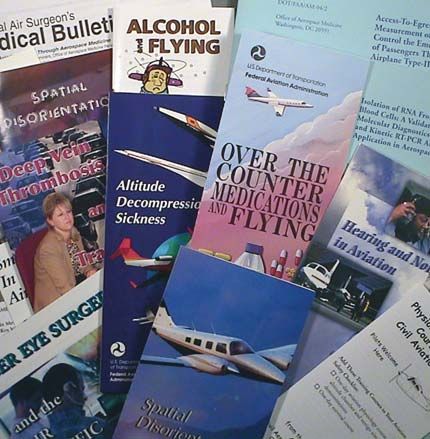
Aerospace Medical Education                                        Aerospace Human
                                                                              Factors Research
T    he FAA is required by the U.S. Congress to pro-
     mote the safe and efficient use of America’s airspace.
One way the Civil Aerospace Medical Institute promotes
aviation safety is through aerospace medical education
                                                              H      uman factors scientists study the behavior and
                                                                     performance of people, both in laboratory stud-
                                                              ies and while at work in aviation environments. Hu-
programs that:                                                man factors are the characteristics of human beings that
• Train and evalu-                                            are applicable to the design of systems and devices of
ate the performance                                           all kinds. These include selecting the right person for
of Aviation Medical                                           the job and determining the skills, tasks, training, and
Examiners, a special-                                         equipment that influence performance, especially for
ized group of 3,700                                           safety-critical jobs like those of aircrew members and air
physicians located                                            traffic controllers.
in the U.S. and in                                                  Aviation is a demanding work environment; our
about 100 countries                                           scientists look for ways to achieve harmony between
around the world,        An aviation medical examiner
                                                              individuals and their tasks, between the operator and the
appointed by the FAA and staff member view self-              computer, aircraft, or display.
to perform the re-       directed refresher training
quired airman medical program in their office.
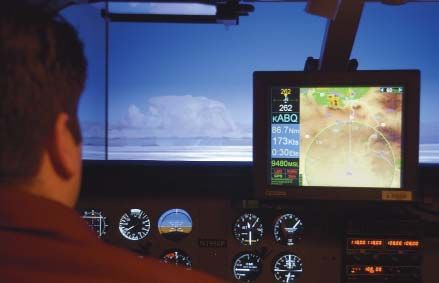
examinations.                                                  A pilot, serving
                                                                  as a research
• Train civil avia-                                           subject, flies the
tion pilots and FAA                                           CAMI Advanced
aircrews in avia-                                                General Avia-
tion physiology and                                              tion Research
                                                                      Simulator
global survival skills.                                           during an as-
                                                               sessment of the
• Disseminate                                                   human factors
aeromedical infor-                                                 of advanced
mation to the civil     CAMI’s General Aviation Pilot                  displays.
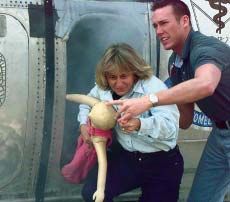
aviation community Trainers teach pilots to recognize
through publications and manage the symptoms of
(print and online) and spatial disorientation.
participation (lectures                                                                               New Advanced
and practical demonstrations) in the National Aviation                                                Air Traffic Con-
Safety Program.                                                                                       trol Research
                                                                                                      Simulator.
• Provide specialized aerospace medical library services.                                             Researchers
                                                                                                      validate design
                                                                                                      objectives to
                                                                                                      ensure that
                                                                                                      controllers
                                                                                                      and equip-
                                                                                                      ment perform
                                                                                                      harmoniously.

       Bottom line: Resources that directly                         Bottom line: Improving performance,
            enhance aviation safety.                                efficiency, and overall aviation safety.
Aerospace Medical Research                                         Occupational Health
   erospace medical issues are studied by scientists,
A  engineers, and technical specialists working in two
major laboratories.
             Bioaeronautical Sciences Research
                                                             C    AMI’s health professionals administer Federal
                                                                  Aviation Administration occupational health
                                                             programs for agency employees at the Mike Monroney
• Supports aircraft acci-                                    Aeronautical Center. These programs are mandated by
dent investigation through                                   the Occupational Safety and Health Act; and Executive
medical and toxicological                                    Order 12196, Occupational Safety and Health Programs
analysis.                                                    for Federal Employees. They also provide professional
• Researchers develop                                        advice and technical knowledge to the Federal Air
improved analytical pro-                                     Surgeon and other agency officials. A professional,
cedures and evaluate pilot                                   technical, and clerical staff manages programs in
performance-related aspects
                                                             occupational medicine, clinical services, and industrial
of drugs and alcohol.
• Medical and accident                                       hygiene.
                                The CAMI Toxicology Lab
databases support research      assists in determining the
activities regarding pilot cer- medical causes of fatal
tification and performance. aviation accidents.
· Atmospheric radiation research and analysis relative to
aircraft occupant safety and health.
              Protection and Survival Research
• Biodynamic and cabin
evacuation research to im-
prove occupant survivability
in aircraft accidents.
• Physiological aspects of al-
titude and the aircraft envi-
ronment research to support
improved protective systems
and safety procedures.
• Medical and vision re-        Smoke evacuation study in
search to support the certifi- realistic conditions.
cation of aircrew.                                             Occupational health
                                                                  programs help to
                                                                improve the health
                                                                 and safety of FAA
                                                                   employees who
                                                                work in potentially
                                                               hazardous locations
                                                                across the country.

    The 747 Aircraft Environment Research Facility being
       utilized for evaluation of simulated emergency
                      aircraft evacuation.

 Bottom line: Applied medical research teams evaluate
 the adverse events that occur in aerospace operations            Bottom line: Occupational health programs
and discover methods to enhance human safety, security,            improve the safety and health standards
               health, and performance.                           of employees and the aviation community.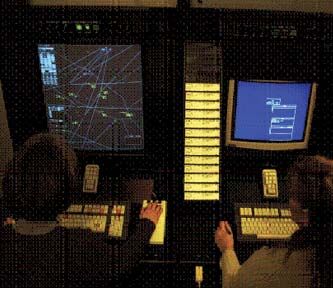
The Civil Aerospace Medical Institute is located at the Mike Monroney Aeronautical Center in Oklahoma City, Oklahoma.
                       For more information about programs, services, and publications, visit our Web site:

              GENERAL INFORMATION                                                   FOR PILOTS
                 FOR PHYSICIANS
                                                                                 www.faa.gov/ ( + )
                                                               •    Medical certification information for pilots
                    www.faa.gov/ ( + )                         . . .licenses_certificates/medical_certification/get
•    How to become an aviation medical examiner                • Locate an aviation medical examiner in your area
•    Continuing medical education for aviation medical         . . .pilots/amelocator
     examiners                                                 • Pilot and air traveler safety information
. . .other_visit/aviation_industry/designees_                  . . .passengers/fly_safe/health
     delegations/designee_types/ame/ametraining                • Physiological Training and Basic Survival Classes
• Guide for Aviation Medical Examiners                         . . .pilots/training/airman_education
. . .about/office_org/headquarters_offices/avs/offices/
     aam/ame/guide
                                                               Or write:
                                                               Director, Civil Aerospace Medical Institute, AAM-3
                   FOR RESEARCHERS                             Federal Aviation Administration
•    Office of Aerospace Medicine Technical Reports            P.O. Box 25082
. . .library/reports/medical/oamtechreports/index.cfm          Oklahoma City, OK 73125

                                                                                           Publication AM-400-04/1 (rev.11/09)
                                                                                                 Federal Aviation Administration
Written by                                                                                     Civil Aerospace Medical Institute
Michael E. Wayda                                                                    Aerospace Medical Education Division, AAM-400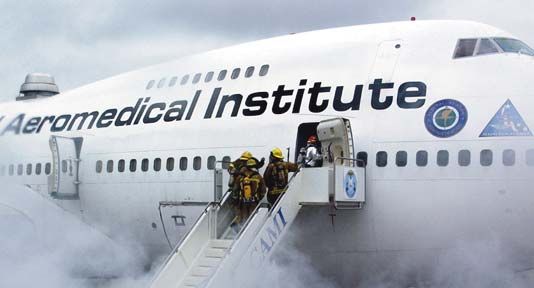

You can also read


