THE LANDSCAPE OF EDUCATOR PREPARATION - EDPREPLAB POLICY SUMMIT: JANUARY 26, 2021
←
→
Page content transcription
If your browser does not render page correctly, please read the page content below
E D U C AT O R P R E PA R AT I O N L A B O R AT O R Y

 EdPrepLab Policy Summit:
  The Landscape of
Educator Preparation
                  January 26, 2021
Moderator
            Steve Wojcikiewicz

            Senior Researcher and Policy Advisor
            Learning Policy Institute

                               #EdPrepLab | EdPrepLab.org
Agenda
• Welcome and Introduction
• Presentation
• Panel Discussion
• Summary Remarks
•Q&A
• Upcoming Events and Closing

                                #EdPrepLab | EdPrepLab.org
EdPrepLab Directors

  Maria E. Hyler                                 Jessica Charles
  Director, EdPrepLab                            Director, Educator Preparation Network,
  Deputy Director, Washington DC Office &        EdPrepLab
  Senior Researcher, Learning Policy Institute   Director of Scholarship on Educator Practice,
                                                 Bank Street Graduate School of Education

                                                                   #EdPrepLab | EdPrepLab.org
EDPREPLAB NETWORK

                    #EdPrepLab | EdPrepLab.org
EdPrepLab Strategic Priorities

                   Practice

          Policy         Research

                                    #EdPrepLab | EdPrepLab.org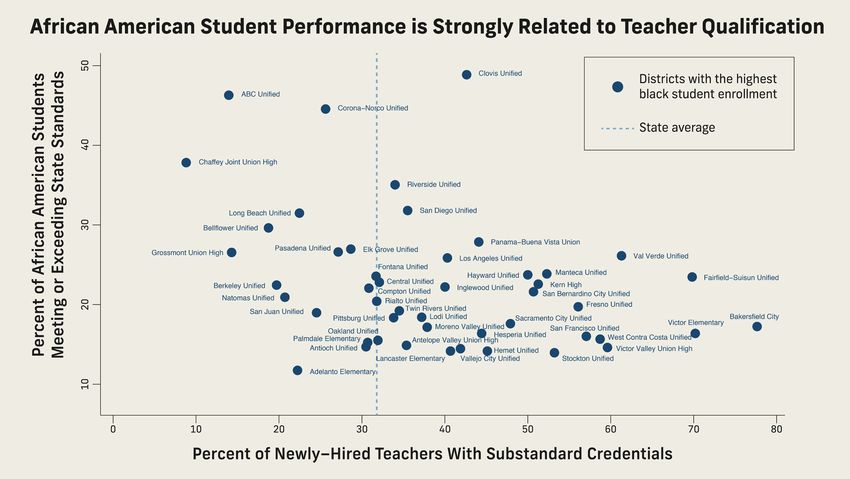
The Work of EdPrepLab
                      Conference                     Inquiry
                     Presentations                     and
                                                                          Practice and
                                                     Working
Policy                                               Groups
                                                                            Inquiry
Briefs                                                                       Briefs

                               Policy     Practice
            Convenings
                                                               Learning
                                                                 Cafes

                                     Research
   Policy
  Forums
                                                                      Cross-
                   Website                      Webinars           Institutional
                                                                     Research
Policy for Professional Preparation
                   Linda Darling-Hammond

                   President and CEO
                   Learning Policy Institute

                                      #EdPrepLab | EdPrepLab.org
Educator Preparation as a
       Path to Social Justice

Linda Darling-Hammond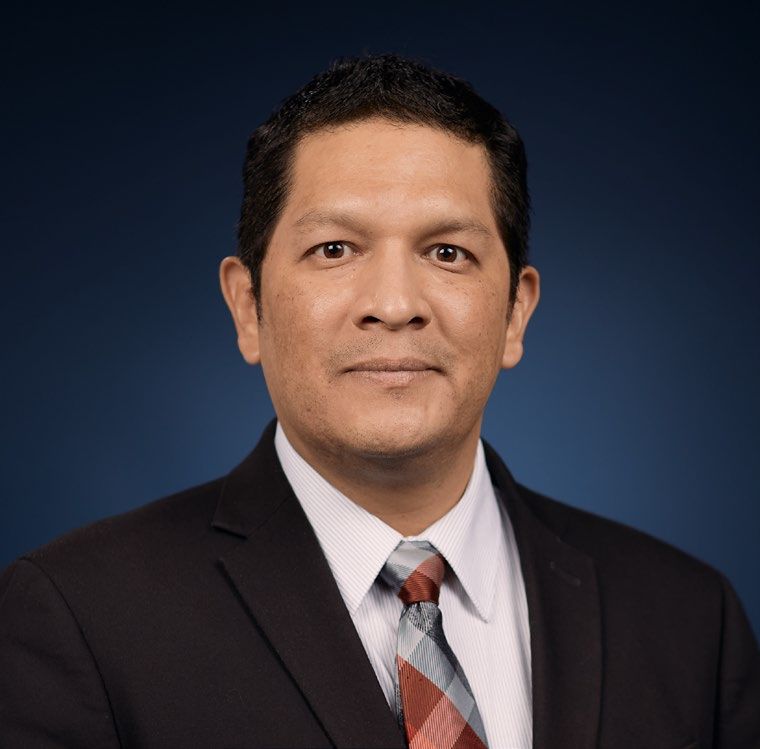
Such Moments often Lead to
     Generational Social Changes

11
Restarting & Reinventing School
Principles from the Science
    of Learning & Development
▷   Relationships are the essential ingredient that catalyzes
    healthy development and learning.
▷   Children actively construct knowledge by connecting
    what they know to what they are learning within their
    cultural contexts.
▷   Learning is social, emotional, and academic.
▷   Students’ perceptions of their own ability influence
    learning
▷   Adversity affects learning: Effective schools must be
    trauma-informed and healing-focused.
                                                                13
The Context • Yawning equity chasms that threaten major segments of society … and draw attention to systemic racism • The largest economic disparities since 1929 • “Aggressive neglect” of our children: Poverty, homelessness, food insecurity • Schools as one of the few safety nets in many hard-hit communities • Inequitable school resources
The Effects of Inequality
15
“               I’m concerned about food, jobs, money,
                my education. Racism toward Asian
                Pacific Islander folks is a big concern for
                us too. I miss being around my friends,
                and I’m feeling really, really depressed,
                but I can’t really tell my family.

                                                                     —Oakland Student

Source: Partnership for the future of learning. (2020). Every school every community. Beyond COVID-19.
The Anatomy of Inequality
Inadequate understanding of Implicit bias adds:
learning, development, and • Assumptions that students
pedagogy leads to: are incapable and poorly
Dysfunctional
• Poorly organized instruction schools behaved
often focused on low-level • Assumptions that families
skills don’t care and will not
Unequal acc
acces
ess
s to
• Few tools to scaffold learning cur
urrriculum
ulum support their children
or respond to needs • Harsh, discriminatory
• Exclusionary discipline treatment
• Inability to teach Inequitable distribution of • Activation of stereotype
heterogeneous classes; hence well-qualified educators threat, undermining
tracking follows confidence, growth
• Failure to understand students’ mindset, & performance
social, emotional, and Unequal school resources
academic needs
Poverty and segregation% of Newly Hired Teachers on Substandard
Credentials in Districts w/ the Most Low-
Achieving African American Students
Fresno Unified
Lancaster Elementary
Los Angeles Unified
Oakland Unified
Sacramento City Unified
San Francisco Unified
San Bernardino City Unified
West Contra Costa Unified
State Average
0% 10% 20% 30% 40% 50% 60% 70%What Boosts Achievement for
African American Students?
• Having fully prepared, experienced, and Board Certified
teachers predicts achievement gains more than race
and parent education combined. [Clotfelter, Ladd, &
Vigdor]
• Having a black teacher for even one year significantly
increases achievement, graduation rates, and college
going for black students [Dee; Grissom & Egalite]
• Being in a school with wraparound services & supports
improves achievement & graduation rates [Meier, Oakes,
& Daniel, 2017]Racial Justice demands fully-prepared and well- supported teachers in every school, especially for children who are furthest from opportunity
Educators Need:

  Knowledge of and
                             Development of practices        Development of an
   support for child
                              that support integrated     inquiry-based curricular
 development: social,
                               social, emotional, and    vision that supports whole
 emotional, cognitive,
                              cognitive development            child progress
   moral, physical

Development of cultural      Development of skills for   Development of practices
    knowledge and            both scaffolding learning          for teaching
competence, including        and engaging in trauma-         metacognition and
capacity to engage with         informed, healing-       strategies for “learning to
 families / communities          oriented practice                  learn”
How Educator Learning Happens
CREATE EXPERIENCES DEVELOP SUSTAIN THESE
THAT MODEL EQUITABLE RELATIONSHIPS THAT THROUGH
AND EMPOWERING SUPPORT CHANGE COMMUNITIES OF
PRACTICES PRACTICE
EVERYTHING STUDENTS NEED FOR THEIR LEARNING,
EDUCATORS NEED AS WELLAlternatives to lowering the bar
Residencies in
    High-Need Communities

                                                                                                  Financial support for residents
1   Strong district/university
    partnerships                                                                     5            in exchange for a 3- to 5-year
                                                                                                  teaching commitment
    Coursework about teaching

2   and learning tightly integrated
    with clinical practice
                                                                                                  Cohorts of residents placed in
                                                                                                  “teaching schools” that model
    A full-year residency teaching
                                                                                     6            good practices with diverse
                                                                                                  learners and are designed to
3   alongside an expert mentor
    teacher
                                                                                                  help novices learn to teach
    High-ability, diverse candidates                                                              Expert mentor teachers who co-
    recruited to meet specific                                                       7            teach with residents

4   district hiring needs, typically                                                              Ongoing mentoring and support
    in fields with shortages
                                                                                     8            for graduates

     Source: Learning Policy Institute, The Teacher Residency: An Innovative Model for Preparing Teachers https://learningpolicyinstitute.org/product/teacher-residency
Policy Strategies
Leverage High Quality Practice Enable Quality Learning
• Strengthen standards to include culturally • Support clinical partnerships and
responsive, restorative, SOLD-aligned residencies for all candidates
practices • Invest in mentoring, professional
• Improve program quality learning, and feedback for teachers
• performance-based accreditation and principals
• performance assessments for • Redesign schools for strong
licensure relationships & collaboration
Strengthen Attractions to the Profession
• Underwrite educator training
• Adequately fund teacher & leader education as
a clinical practice profession
• Create career laddersThe Anatomy of Equity
The Anatomy
Innovative & of Equity
Effective
Schools
21st Century
Curriculum &
Assessment
Well-prepared and well-
supported educators
Equitable school resources
Supports for Children: Food, Housing,
Health Care, Preschool + Academic
Supports“
“It is from numberless diverse acts of courage
and belief that human history is shaped. Each
time someone stands up for an ideal, or acts to
improve the lot of others, or strikes out against
injustice, s/he sends forth a tiny ripple of hope,
and crossing each other from a million different
centers of energy and daring, those ripples build
a current which can sweep down the mightiest
walls of oppression and resistance.”
Robert F. KennedyPanel Discussion and Q&A
Steve Wojcikiewicz Mónica Lynn M. Gangone Noe Ortega
Byrne-Jiménez
Senior Researcher and Executive Director President and CEO Acting Secretary
Policy Advisor University Council for American Association of Pennsylvania Department
Learning Policy Institute Education Administration Colleges for Teacher of Education
Education (AACTE)
@LPI_Learning @DrMoniByrne | @UCEA @LynnMGangone | @AACTE @PDESecretary | @PADeptofEd
#EdPrepLab | EdPrepLab.orgContinuing our Discussion
- Policy and Practice Conversations -
Friday, January 29, 2021
1:00 p.m. – 2:00 p.m. ET
Tuesday, February 2, 2021
3:00 p.m. – 4:00 p.m. ET
Thursday, February 4, 2021
1:00 p.m. – 2:00 p.m. ET
Check your email for a registration link
EdPrepLab.orgUpcoming Events
- Learning Café Series -
Simulations for Deeper Learning
Friday, February 19, 2021
3:00 p.m. – 4:00 p.m. ET
Social Emotional Learning in a Virtual Environment
Friday, March 12, 2021
3:00 p.m. – 4:00 p.m. ET
Sessions are also scheduled for March, April, and May.
Check your email for invitations and registration links
EdPrepLab.orgThank You
EdPrepLab Stay Informed
Twitter
edpreplab.org @LPI_Learning
@bankstreetedu
Learning Policy Institute Email
bit.ly/LPIupdates
learningpolicyinstitute.org
Bank Street Graduate School of Education
graduate.bankstreet.edu
The Educator Preparation Laboratory is supported by the Carnegie Corporation of New York,
the William & Flora Hewlett Foundation, and the W. Clement and Jessie V. Stone Foundation.
#EdPrepLab | EdPrepLab.orgYou can also read


